
Almost everything you need for a wind chime is already in your junk drawer, your recycling bin, or the dish you keep meaning to throw out: orphaned keys, empty coffee cans, a chipped teacup, a fistful of leftover beads. What separates a chime from a tin-can rattle is rarely the materials and almost always one measurement, which is the whole point of section three.
The list below runs from the dead-simple (a strand of keys you can build in ten minutes) to two genuine heritage traditions worth knowing about, the Japanese furin and the doorway witch bell, with notes on the cord that decides whether your piece survives one summer or ten.
Before you cut anything, decide which of these four voices you want. It quietly determines your material.

Bright and metallic
Keys, flattened silverware, aluminum conduit. The sound carries across a yard and cuts through traffic noise.
Best for: an open porch where you want to actually hear it
Soft and earthen
Bamboo and terracotta knock rather than ring, a low woody or clay tone that fades fast.
Best for: a small balcony or a bedroom window, nothing that travels
Glassy and clinking
Sea glass, beads, a single glass bell. A quiet tinkle that does most of its work with light, not sound.
Best for: a sunny window or a sheltered eave
Deep and resonant
Long, thick metal tubes tuned to real notes. One low bell tone you feel as much as hear.
Best for: makers willing to drill and tune (see section three)
1. Old key chimes: a jar of skeleton keys becomes a brass jingle
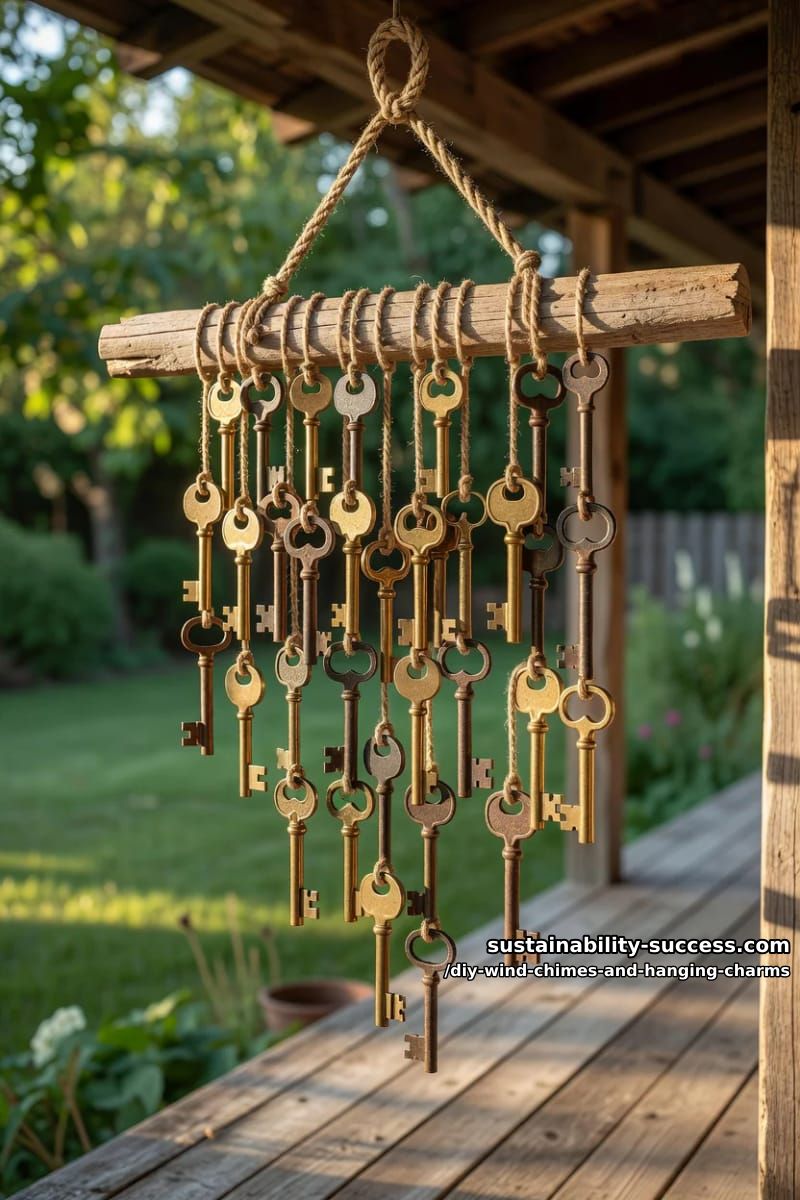
Start here if you have never made a chime, because there is nothing to cut. Tie a coffee tin's worth of mismatched keys to a driftwood stick or a metal ring at staggered heights so they overlap and clink against each other in a breeze. Brass and bronze keys give a softer, rounder clink than steel ones, which read sharper and a little thin. This is the section that absorbs every "I have a drawer of keys that fit nothing" problem, and it is the most honestly upcycled piece on the list: no new material enters the house.
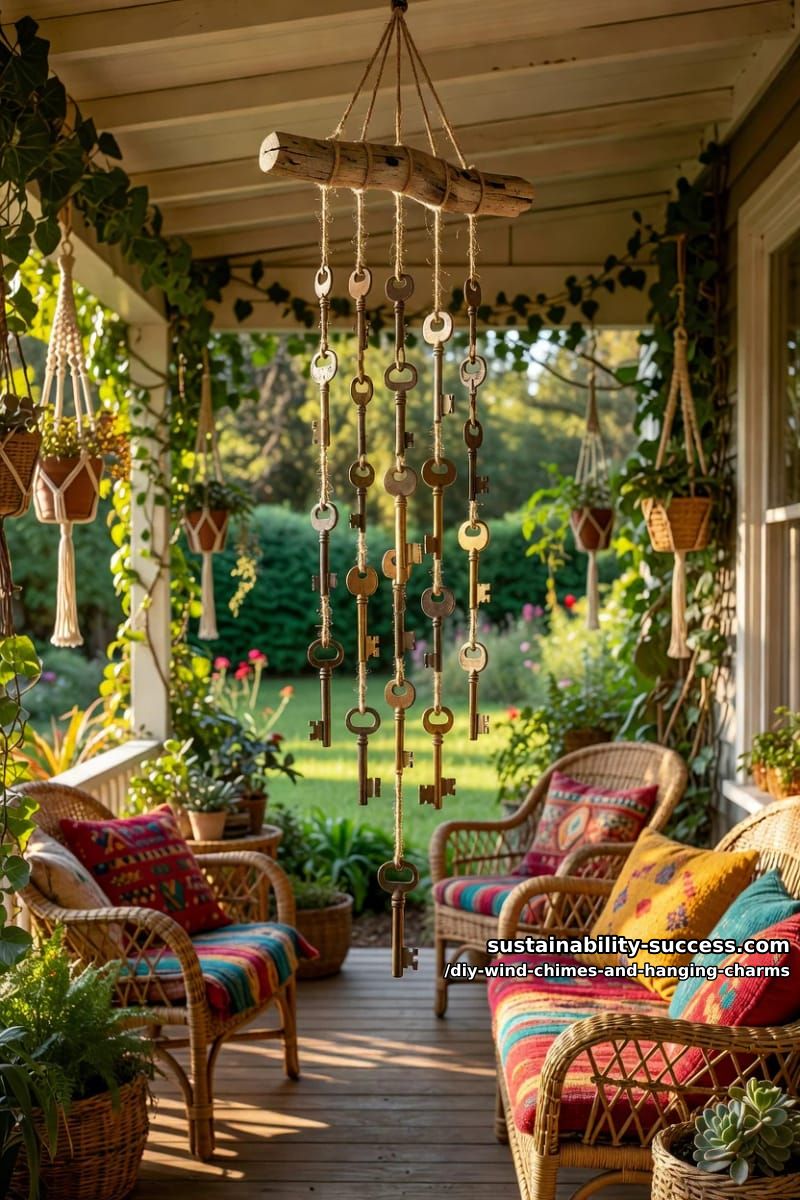
Two real notes. Hang them close enough to actually strike (a key swinging in empty air is silent), and use a single key, a heavy washer, or a flat metal tag as the clapper in the center so even a light gust sets the cluster off.
2. Bamboo tube wind chime, cut at the nodes for a mellow knock
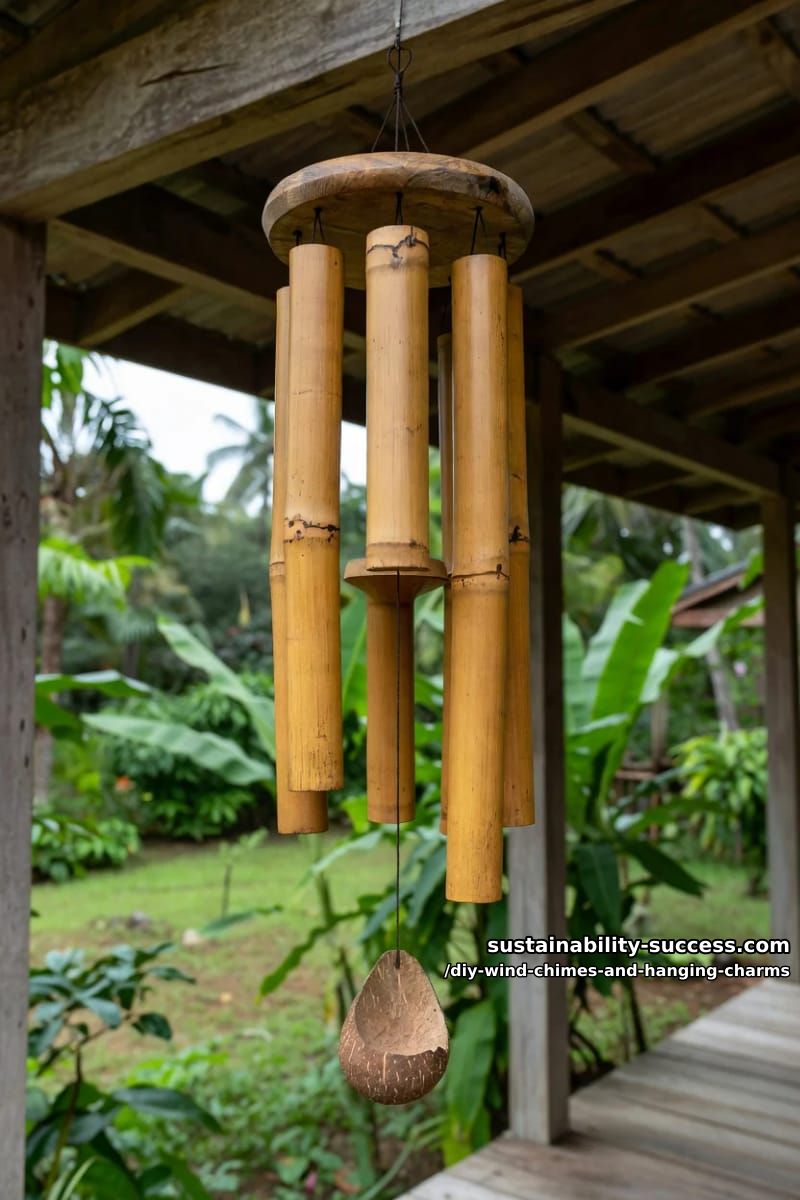
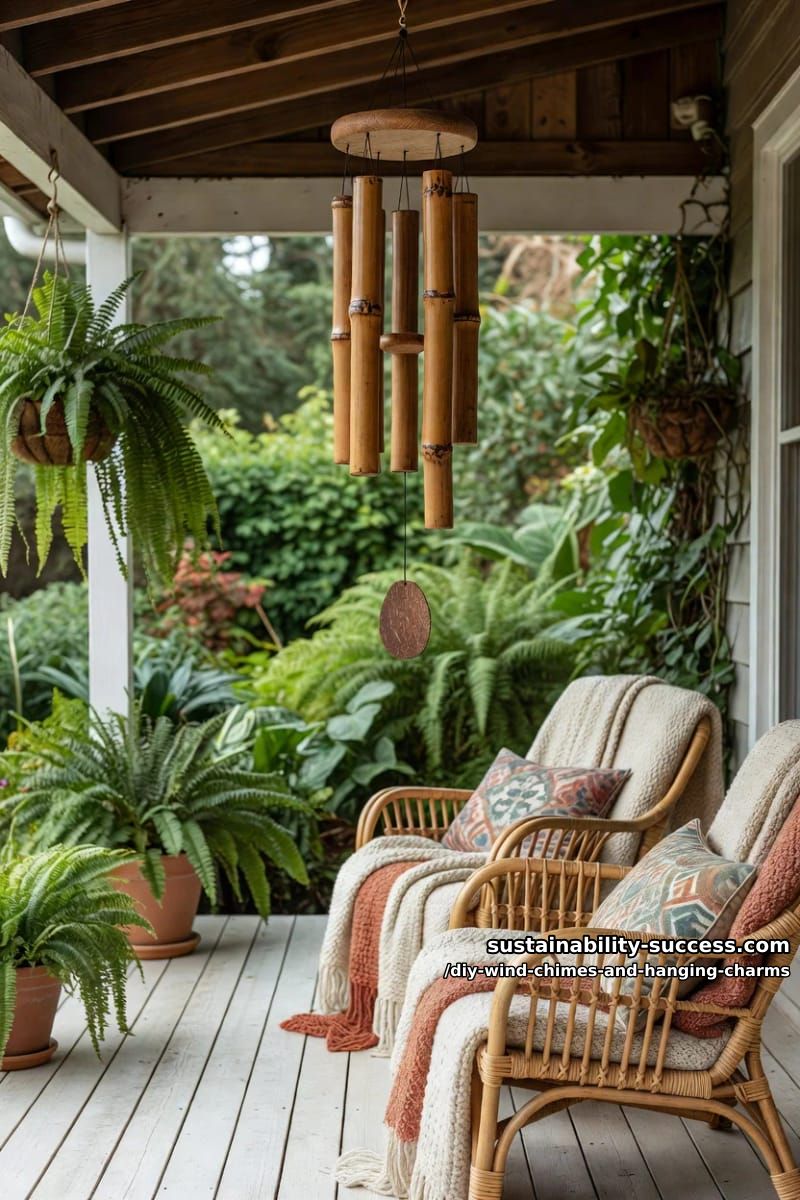
Bamboo is the material for anyone who finds metal chimes grating, and it is about as low-impact as a craft material gets. Cut the tubes into varied lengths and cut each piece at a node, which keeps the tube strong and leaves a closed end that enhances resonance; six to eight pieces gives a balanced spread of tones. Longer tubes make lower, deeper sounds and shorter ones ring higher, so vary the lengths on purpose rather than evenly. Sand the inner rims smooth, then seal the bamboo against weather: a thin coat of a natural oil like linseed, coconut, or tung protects it without harsh chemical sealers and brings out the color. Re-oil it once a season and it will outlast three plastic chimes from the garden center.
3. Tuned copper or EMT pipe chimes on a pentatonic scale
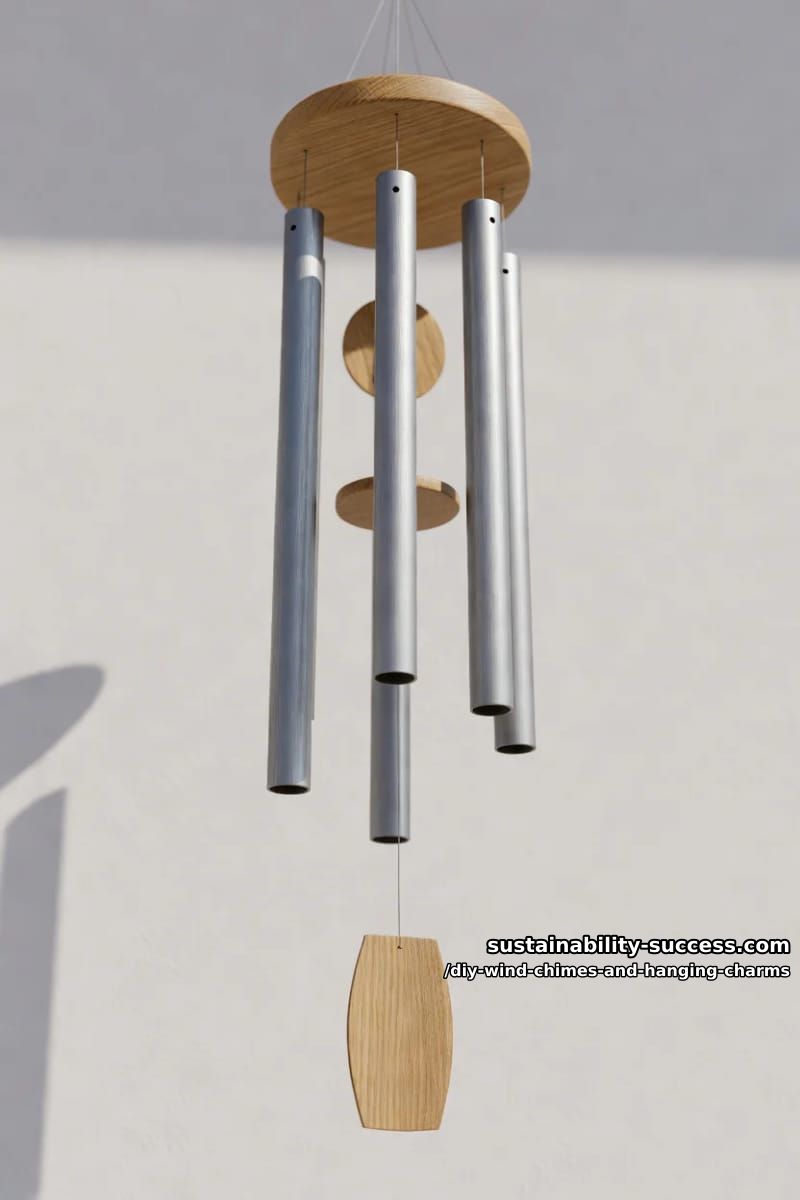
If you want a chime that plays actual notes instead of clattering, the secret is where you drill the hanging hole, not how long the tube is. Drill it so the top edge of the hole sits at the point 22.4 percent of the tube's length down from the end, and the chime rings like a bell. Hang it from the very top, the way a lot of beginners and a few lazy manufacturers do, and you get what one chime maker memorably called a windy day at the muffler shop.
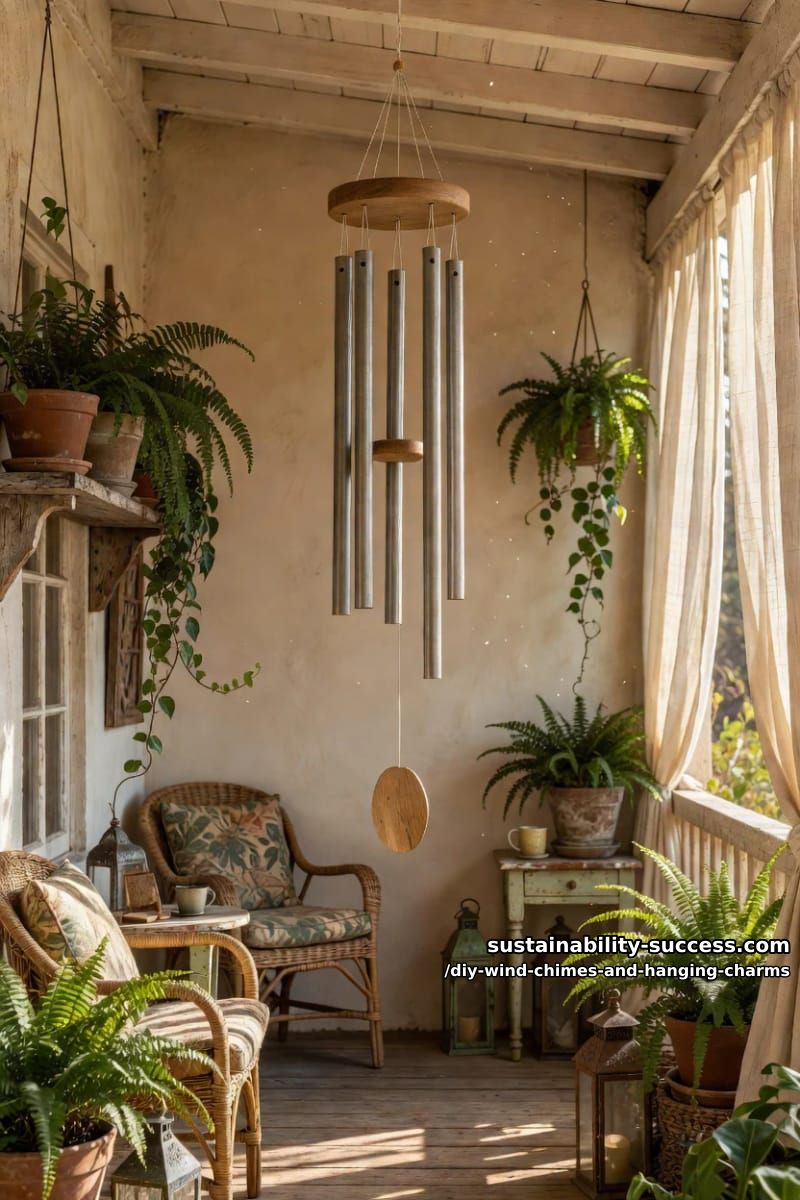
Here is my contrarian take: skip the pretty copper. Copper tubing actually sounds dull, it is expensive, and it tarnishes. Galvanized steel EMT electrical conduit is cheap, sold everywhere, rust-resistant, and produces a genuinely pleasant chime tone; aluminum is favored for a warm sound and easy cutting. Tune the set to a pentatonic scale so it never sounds wrong: no combination of pentatonic notes is considered dissonant, which matters because the wind plays your tubes in random order. You can derive lengths by ear or use Lee Hite’s open-source chime calculator, the spreadsheet most serious builders rely on.
Pitch comes from length and wall thickness.A 27-inch length of one-inch type M copper rings at roughly middle C;between two tubes of the same length, the one with the thicker wall sits higher in pitch.
Find the node.Support the tube at the fundamental node, about 22.42 percent from the end, for the longest sustain and the true bell sound; hanging it near the end kills the ring.
Drill carefully.Position the hole so its top edge lands on that node point, not centered on it, so you do not move the sweet spot.
Hang the striker so it strikes near the middle of the tubes, with a flat wind sail below the shortest one to catch the breeze.
4. Nested tin can wind chime from the recycling bin
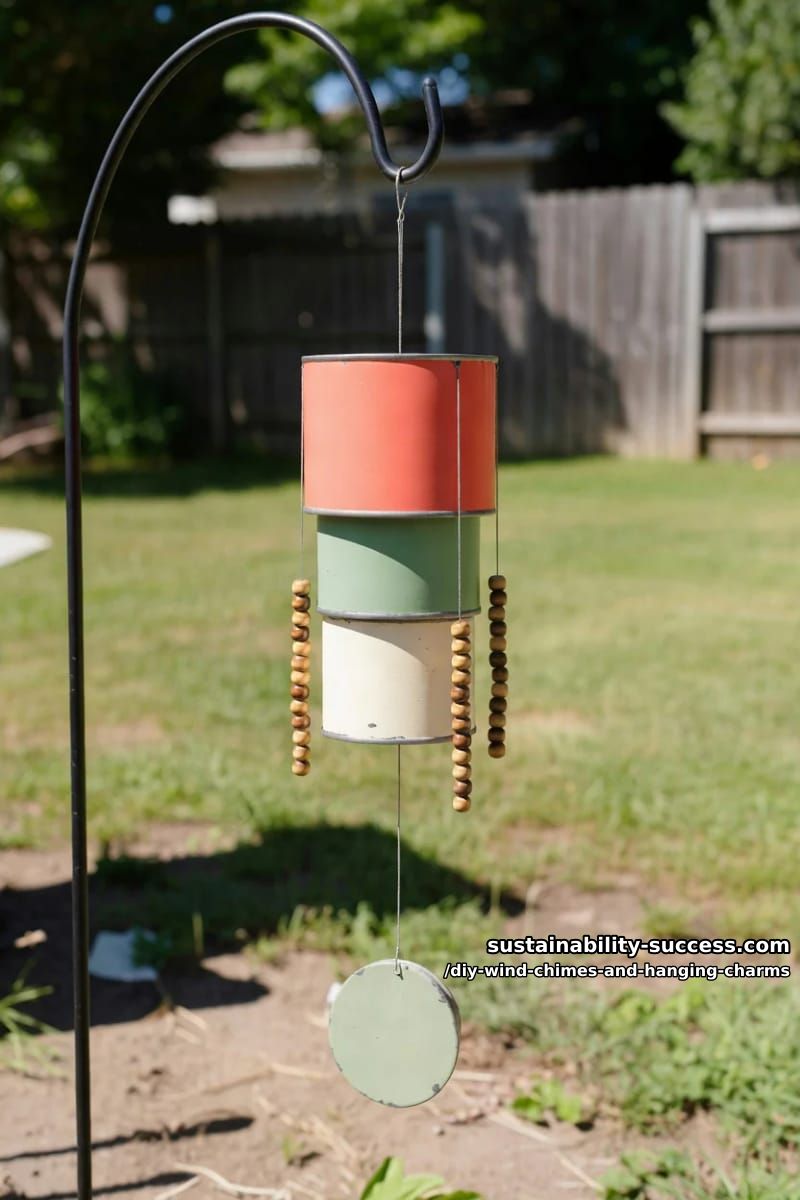
This is the under-five-dollars project and the one to make with kids. Use two or three clean cans of different sizes, one narrow enough to nest inside the next, and hang them upside down; a repurposed jar lid tied to the bottom works as the wind sail that gets everything moving. A soup can inside a coffee can clanks more than it tinkles, so add a few small bells or beaded strands if you want a sweeter sound. Sand the cut rim first so nobody gets a sharp edge.
The step everyone skips is the one that matters: two coats of clear polyurethane is the difference between a chime that lasts one summer and one that lasts three. Bare steel left in the rain rusts fast and leaves orange streaks down your siding.
It is almost never the chime, it is the string.Monofilament fishing line is sensitive to sun and heat,andmono typically lasts only one to three years while braided line can last close to a decade.Restring with braided line orUV-, rot-, and mildew-resistant nano paracordand your piece survives. One more trap for metal chimes:stainless steel leader wire has a galvanic reaction with aluminum, copper, and bronze and is not recommended outdoors,so match your wire to your tube metal.
5. Terracotta pot wind chime with an earthen bell tone
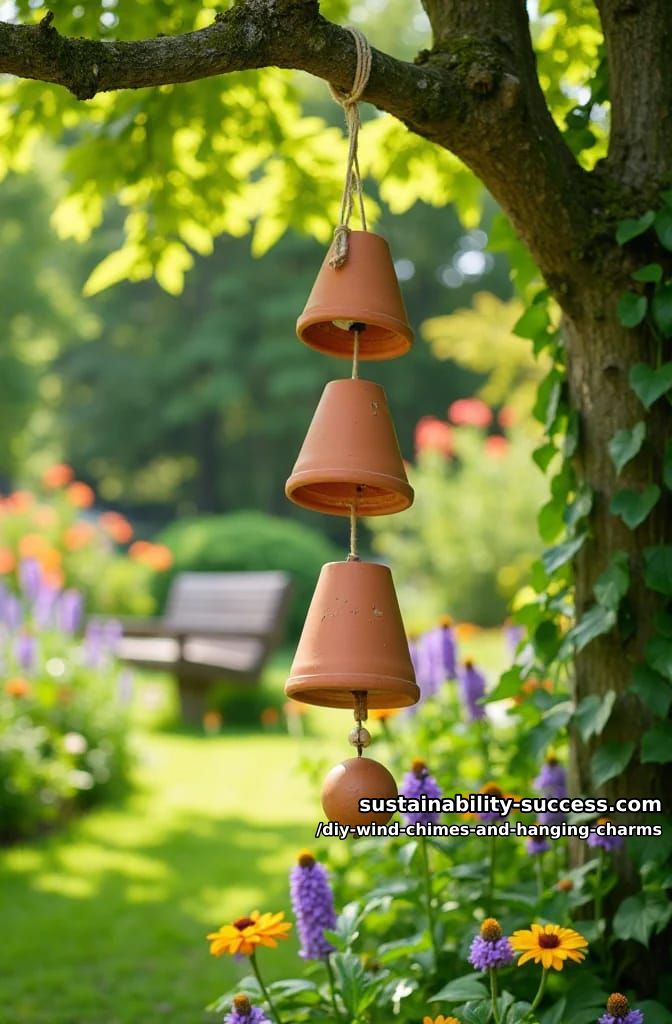
Stack graduated clay pots upside down on a single cord run through their drainage holes, drop a wooden bead inside each as a clapper, and you get a low, clay-bell knock that suits a garden better than any metal. Different pot sizes ring at different pitches when they tap, and the beads add the weight that makes them swing into each other. There is real heritage here: terracotta means “baked earth” in Latin, it is simply fired clay, and it has been in use for thousands of years, with figures in Greece dating back as far as 3,000 BC. Two practical cautions: string it on paracord or jute, and bring it in over winter so the clay does not crack in a freeze.
6. Vintage silverware wind chime from flattened, stamped spoons
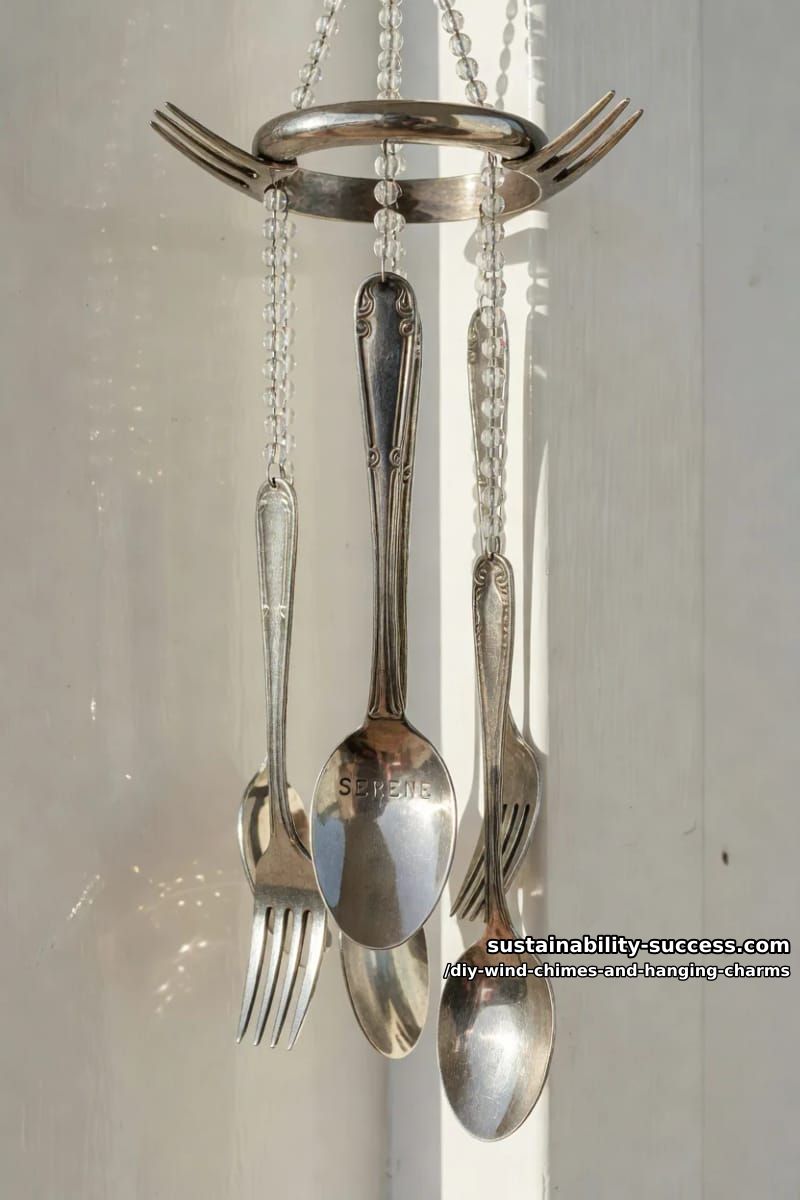
Thrift-store flatware makes the most charming chime on this list, and it is built to last because the silverware already survived decades of dishwashing. Flatten spoons in a vise or on concrete under a towel, drill a hole near the handle tip, and hang everything from a bent fork or an old colander. Skip the knives: their thick hollow handles clunk instead of ping, and they are a pain to drill; spoons and forks make the prettier sound. Use silver plate rather than stainless if you can find it, because it is softer and far easier to flatten, drill, and stamp.
The detail that lifts it from junk-drawer craft to gift is stamping the handles. A short word like Joy, Faith, or Love punched into a flattened spoon personalizes the whole piece. You need one tool for that, and a real letter-stamp set beats trying to improvise.
Hardened HRC 58-62 steel stamps bite cleanly into soft silver plate in one or two hammer strikes, which is exactly what you want on a curved spoon.

7. Sea glass and shell suncatcher mobile
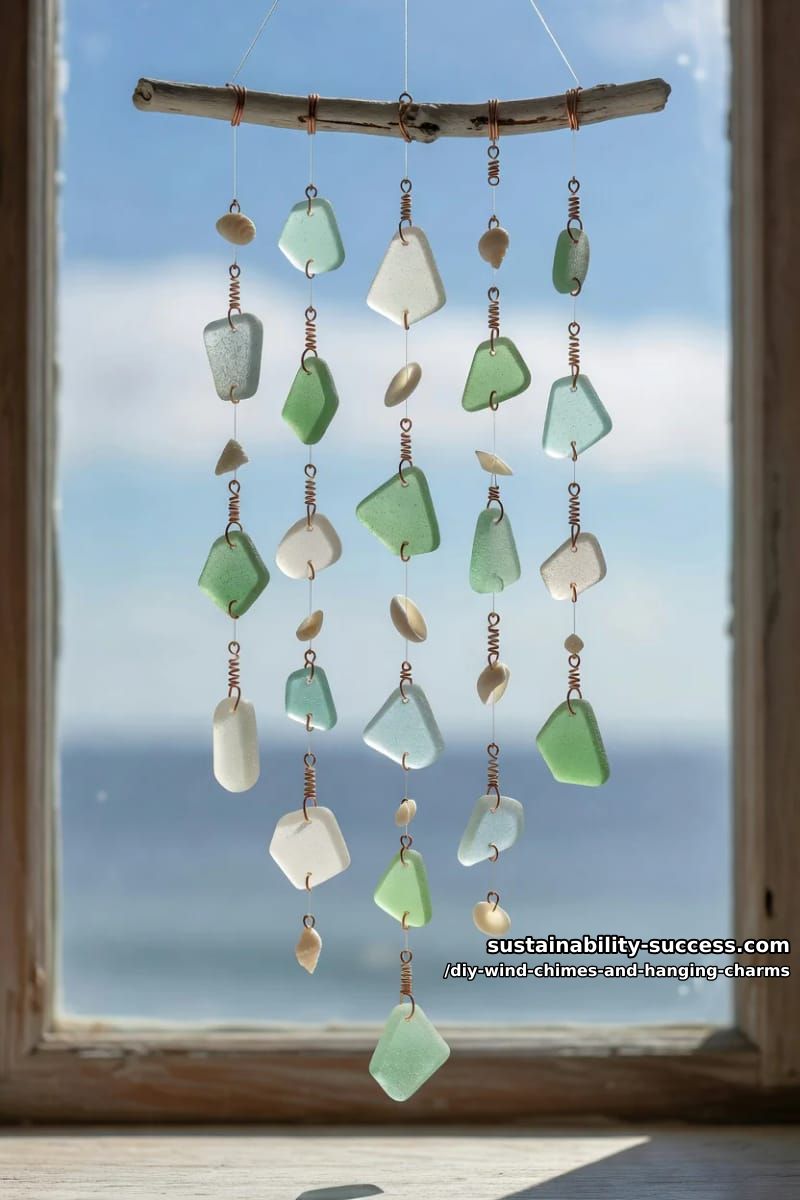
This one is mostly about light, with sound as a bonus. Sea glass is broken glass that the ocean has tumbled smooth and frosted over years, nature’s own recycling, which makes a beach-walk mobile one of the purest reuse projects you can build. The genius move for beginners is to skip drilling entirely: wrap each piece in thin wire and hang it on near-invisible line so the mobile looks like it is floating. Mix in a few small shells and hang the whole thing in a window where the sun can pass through the frosted glass. The clink is faint, which is the trade you make for that glow.

8. Furin-inspired glass bell with a paper tanzaku sail
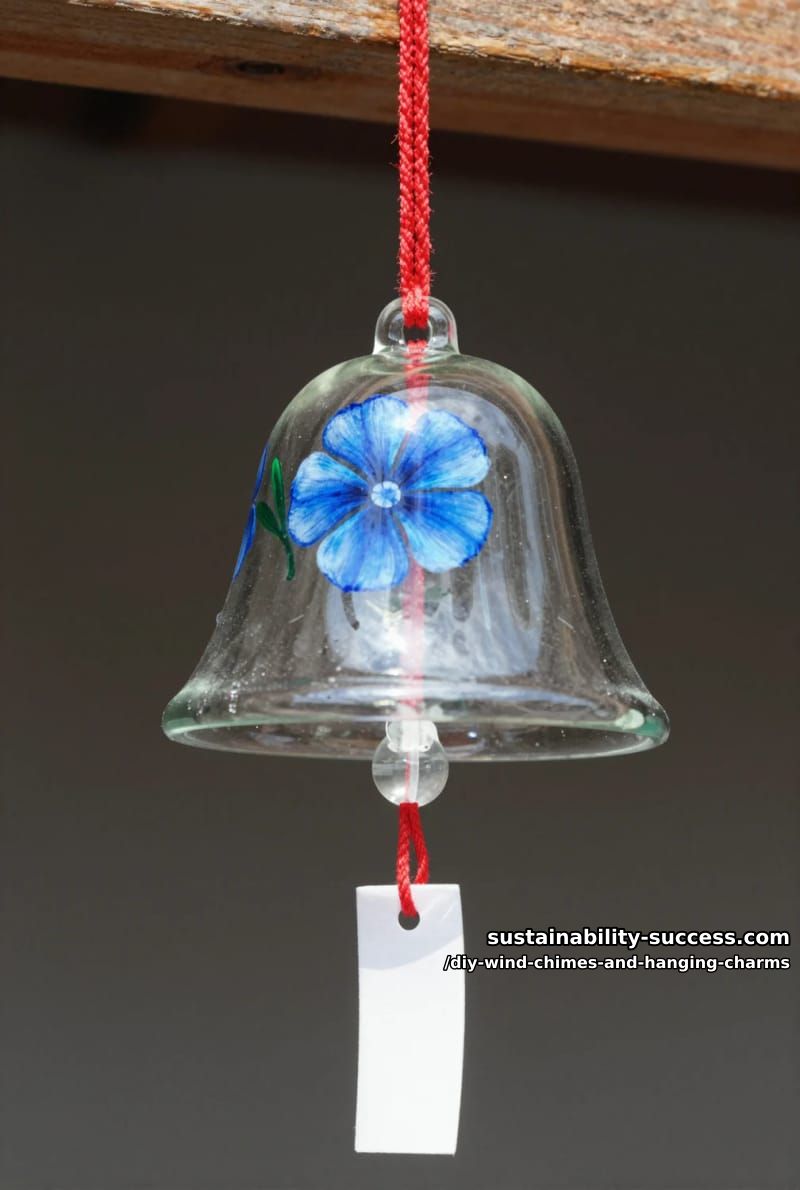
The Japanese furin is the most refined idea here, and you can approximate it with an inverted glass jar, a small teacup, or a bottle, a bead clapper on a string, and a paper strip below. The tradition runs deep. Furin trace back to metal wind bells hung in Chinese bamboo forests, then to Japan’s Heian period when they hung at Buddhist temples as talismans to ward off evil spirits; glass furin came later, in the late Edo period. Heian nobles later hung them on their own porches as a protective charm.
Two design choices are worth copying. A strip of paper called a tanzaku hangs from the clapper and acts as a sail, so the bell rings on the lightest breeze, and the rim is left deliberately rough because a smooth glass edge rings too pure and thin while the jagged edge adds harmonics and a warmer tone. If you want the real thing rather than a copy, know that only two Tokyo studios are still permitted to make true Edo Furin, and cast-iron Nambu furin from Iwate ring at around 3,000 Hz, a frequency said to have a calming effect. Even a jam-jar version captures the idea: a single clear note that decays slowly, meant to ring occasionally rather than constantly.
9. Broken china and teacup wind chime
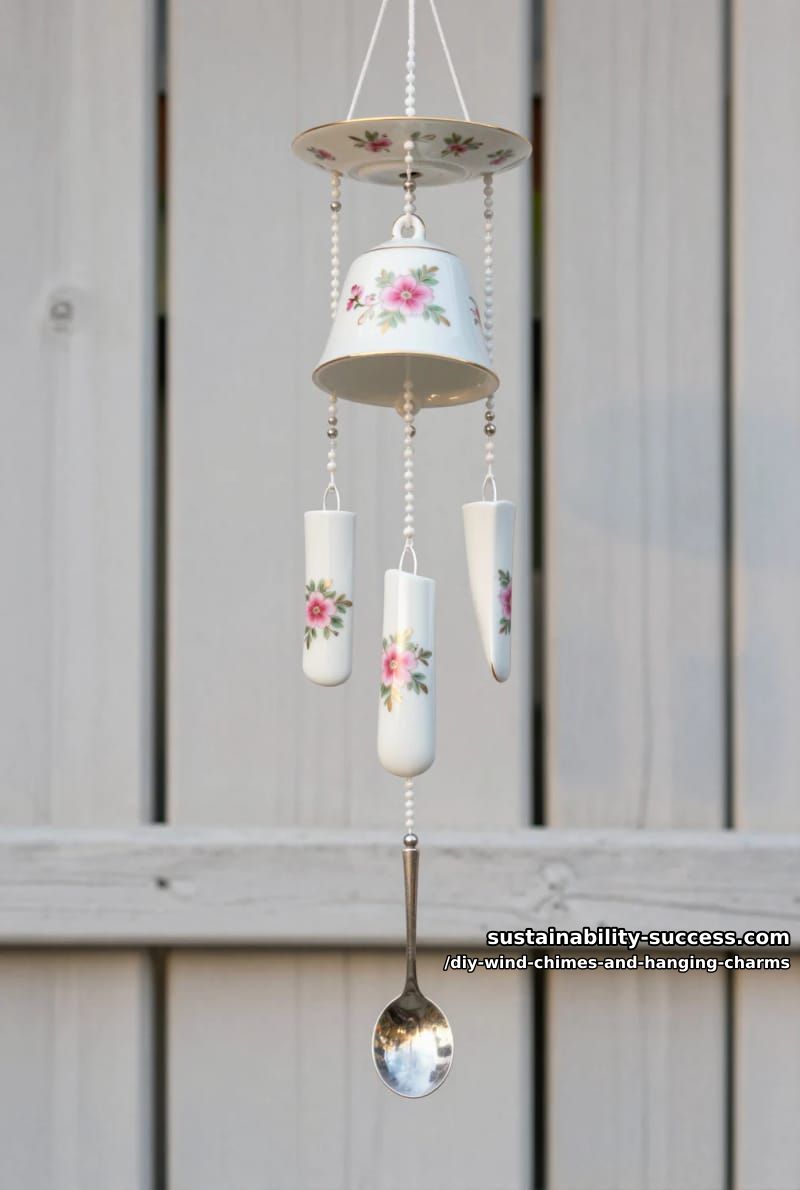
Do not bin the chipped teacup, hang it. A cracked cup as the bell, its saucer as the top disc, and a few shards and a teaspoon below makes a chime with the same spirit as kintsugi, the Japanese art of repairing breakage instead of hiding it. The one real skill is drilling ceramic without shattering it: use a diamond-coated bit and keep it wet, because drilling glass or china dry cracks it almost every time. Work slowly, let the bit do the cutting, and keep a shallow bath of water over the piece.
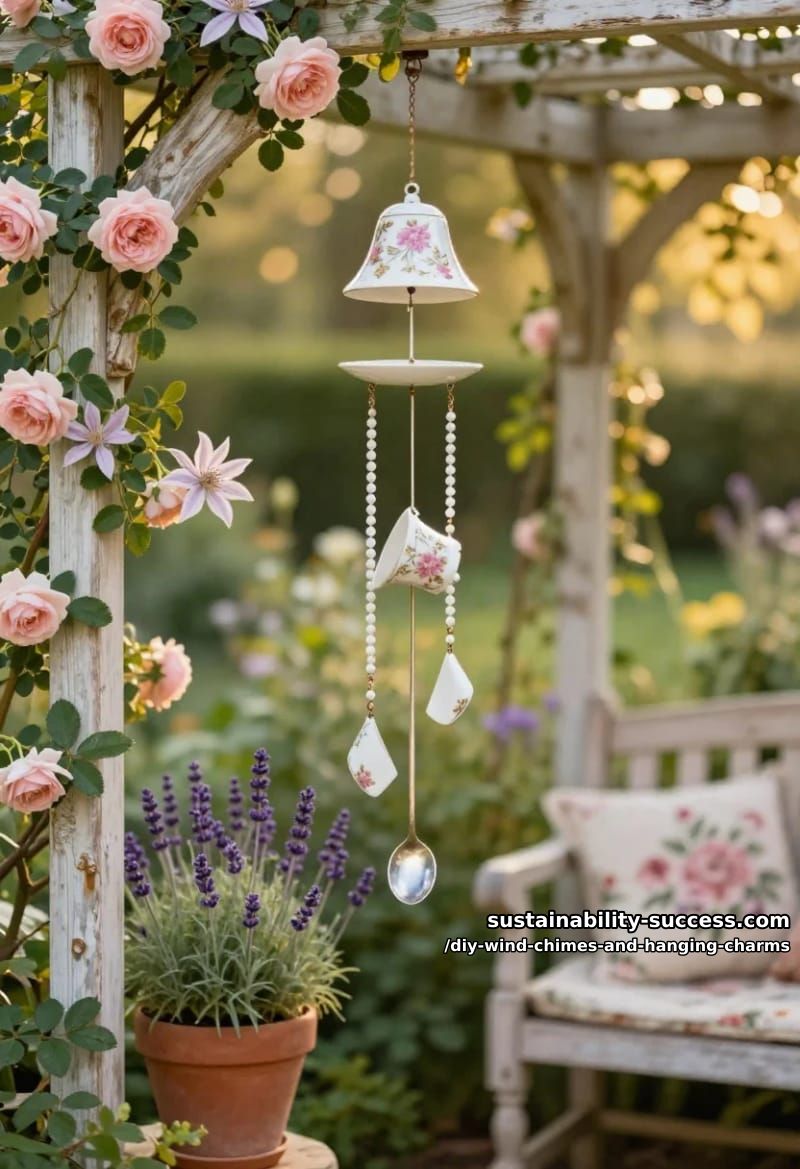
A graduated set covers teacup bases, saucers, bottles, and sea glass in one buy, so you are not matching a single bit to every project.

10. Witch bells: a doorway charm strand that earns its keep
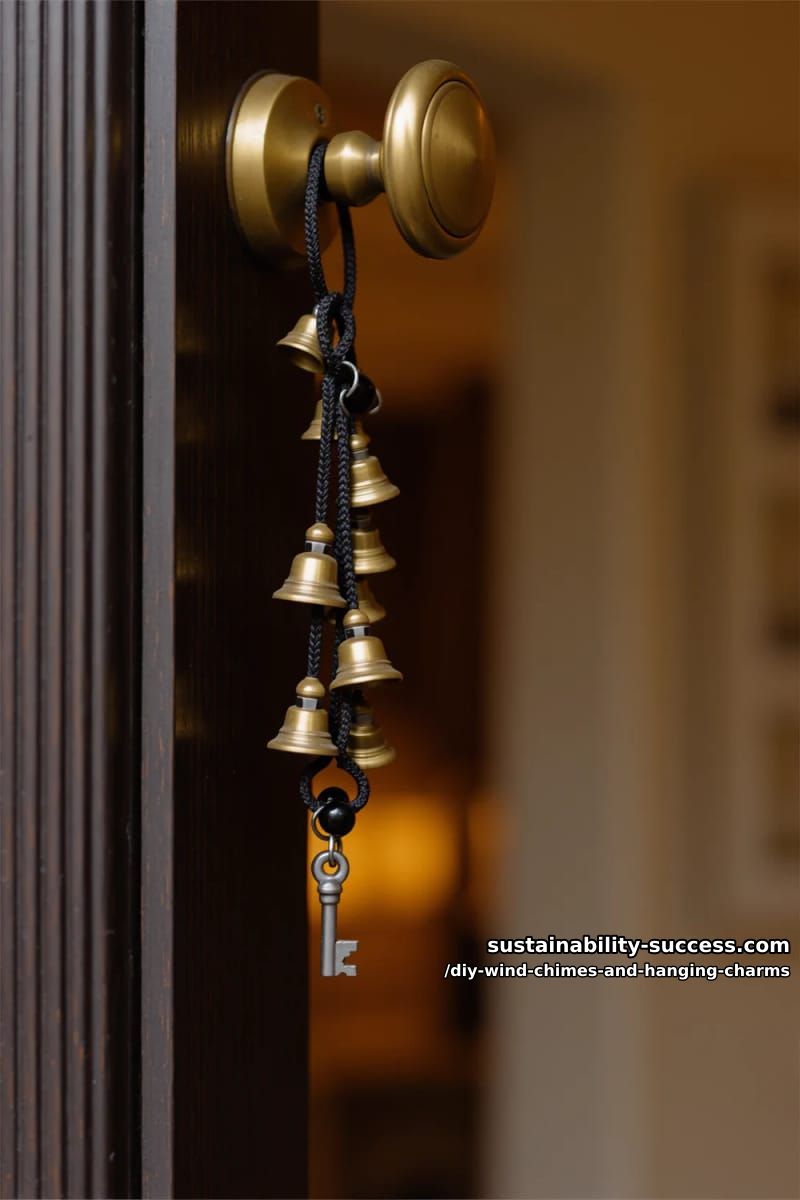
This is the “hanging charm” in the article’s title, and it lives indoors on a doorknob rather than out in the wind. The folklore is old and well documented. Witch bells trace to European Roman, Celtic, and pre-Christian traditions, where bells rung near doors and windows were believed to create a sound barrier that repelled negative intent. Hung on the front door, they ring every time it opens, which is said to set the tone and push bad energy out while letting good in.
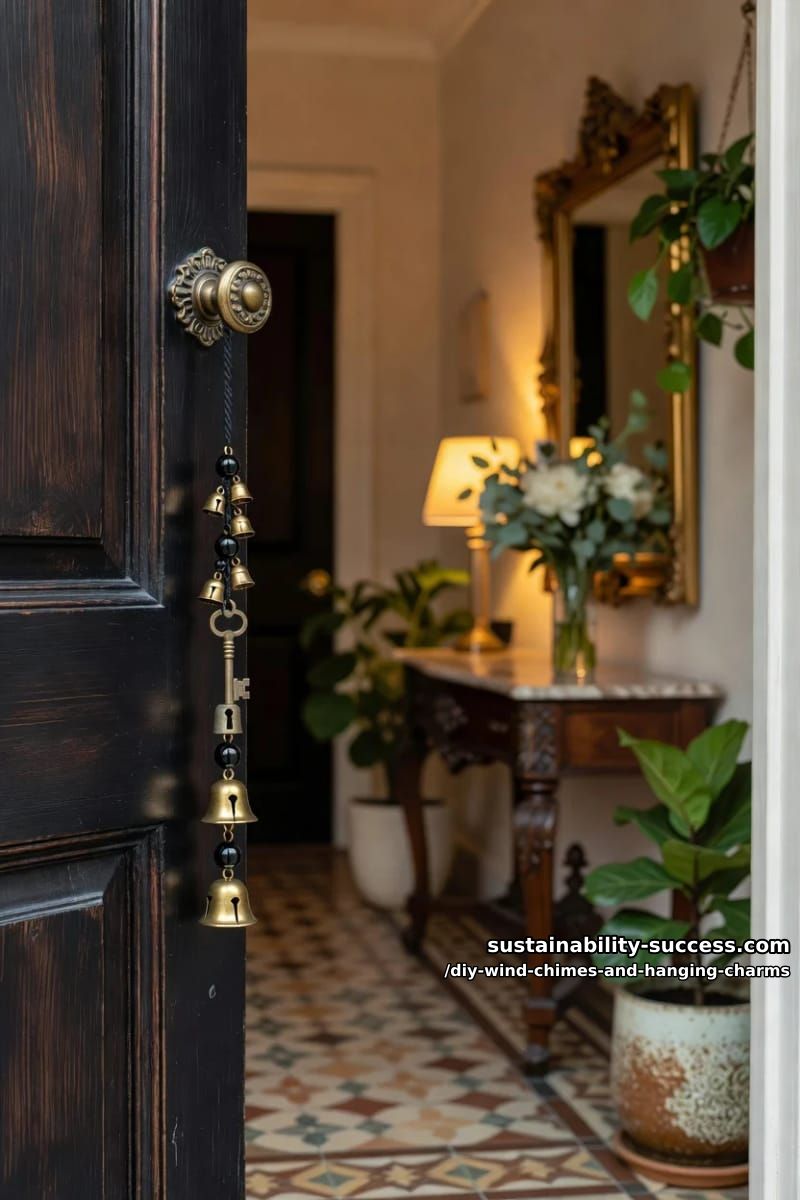
To build one, string metal bells onto twine with charms worked in, and lean into the upcycle: a skeleton key from section one, a pendant, a few beads. One charming wrinkle in the tradition is worth honoring if you are making it for someone else. Witch bells are meant to be received as a gift rather than bought for yourself, so this is the project to make for a friend’s new home.
11. Beaded suncatcher chime in one color story
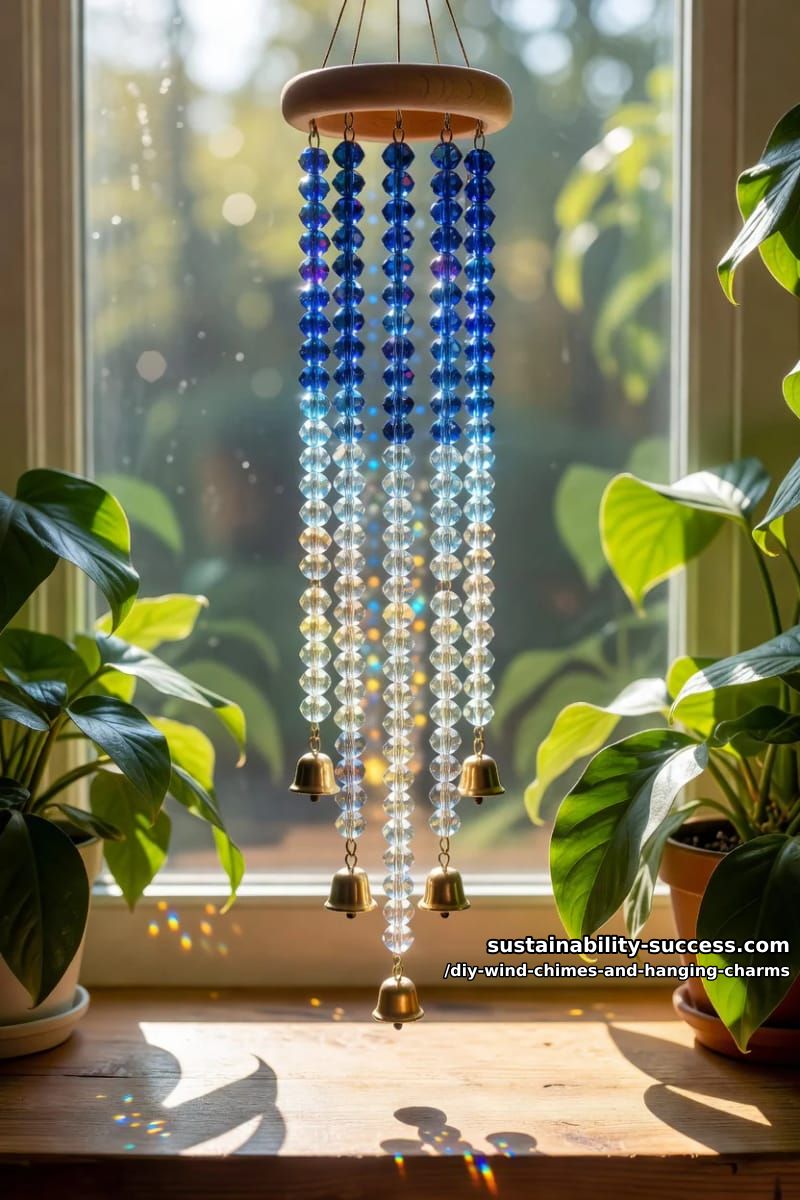
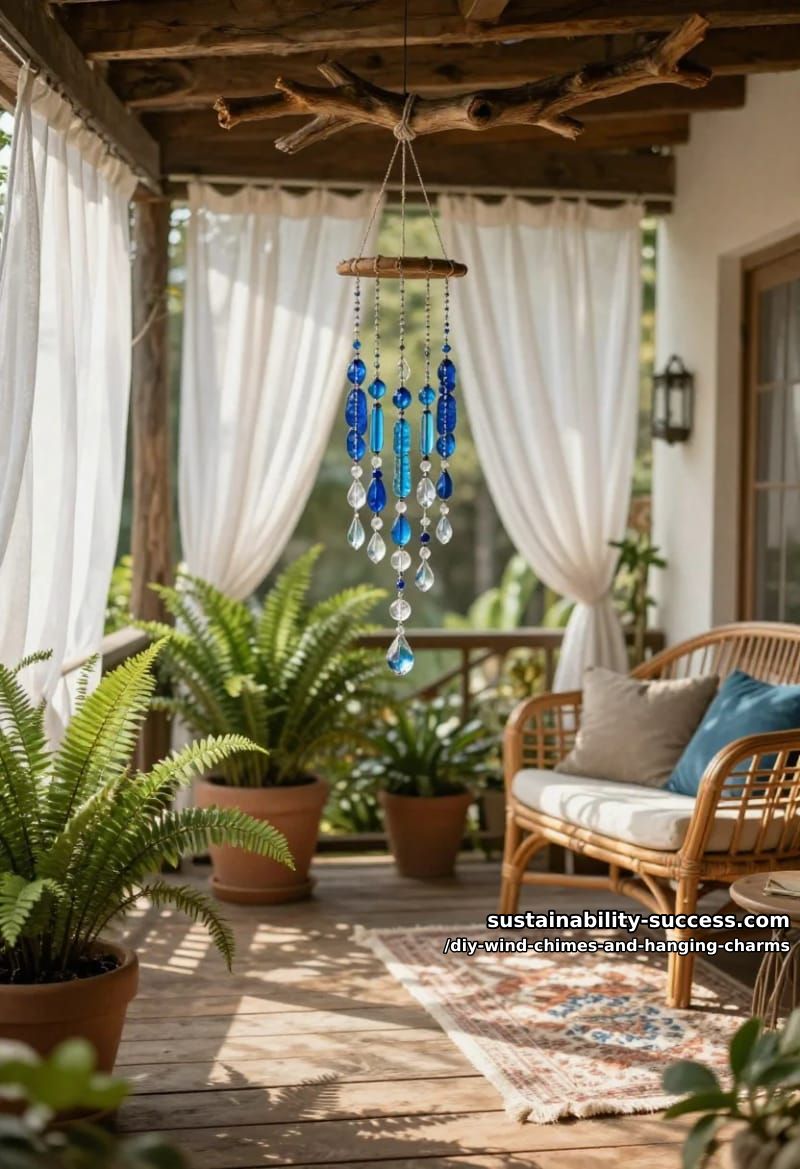
The fix for a leftover-bead chime looking like leftover beads is restraint: string one color family in a gradient and it reads deliberate instead of like the bottom of a craft drawer. Faceted glass or crystal beads throw light the way sea glass does but with sharper sparkle, and they are nearly silent, so add a small bell at the end of each strand if you want sound. This is the project that finally empties the bead stash you have been guilting yourself over, which is its own kind of sustainability.
12. Driftwood and foraged charm mobile
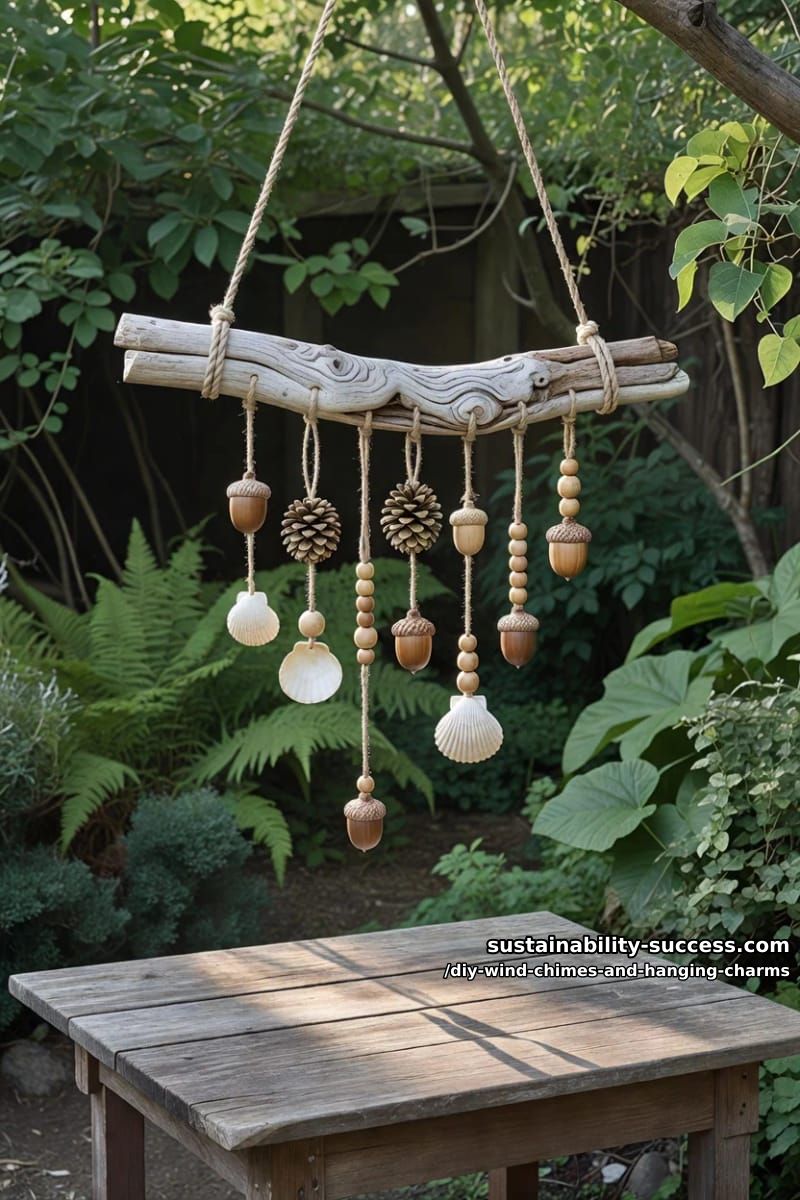
This is the free one, and the only piece that hangs horizontally like a mobile rather than dropping in a vertical column. Suspend a driftwood branch level from two cords and hang foraged danglers below it at staggered lengths: acorn caps, seed pods, a pinecone, flat stones, wood beads. The trick is balance, so tie the heavier finds toward the center and adjust until the branch sits level. It makes very little noise, which is the honest trade for a piece built entirely from a walk in the woods and a length of twine.
Conclusion
If you have never built one, start with the key cluster or the tin cans, where a mistake costs nothing, then graduate to the EMT pentatonic set once you trust yourself with a drill and that 22.4 percent measurement. Match the build to where it will hang: bamboo and terracotta for a close balcony, aluminum or silverware where you actually want the sound to carry, the furin and the beaded suncatcher where light does the work. Whatever you make, spend the extra dollar on braided line or paracord instead of the monofilament in the garage, because that single choice is what decides whether you are admiring this thing in five years or restringing it next spring. And bring the terracotta inside before the first hard freeze.