
Most denim crafts fail the same way: they look like denim crafts. The fix is to stop treating dead jeans as blue fabric and start using what makes them denim, the felled seams, the gold topstitching, the pockets, the way indigo goes pale at the knees. Everything below is built from jeans you would otherwise bin, costs close to nothing, and turns on one specific decision that decides whether it reads as decor or as a third-grade art project. Two of them I would skip, and I will say which.

1. Patchwork denim throw pillow covers
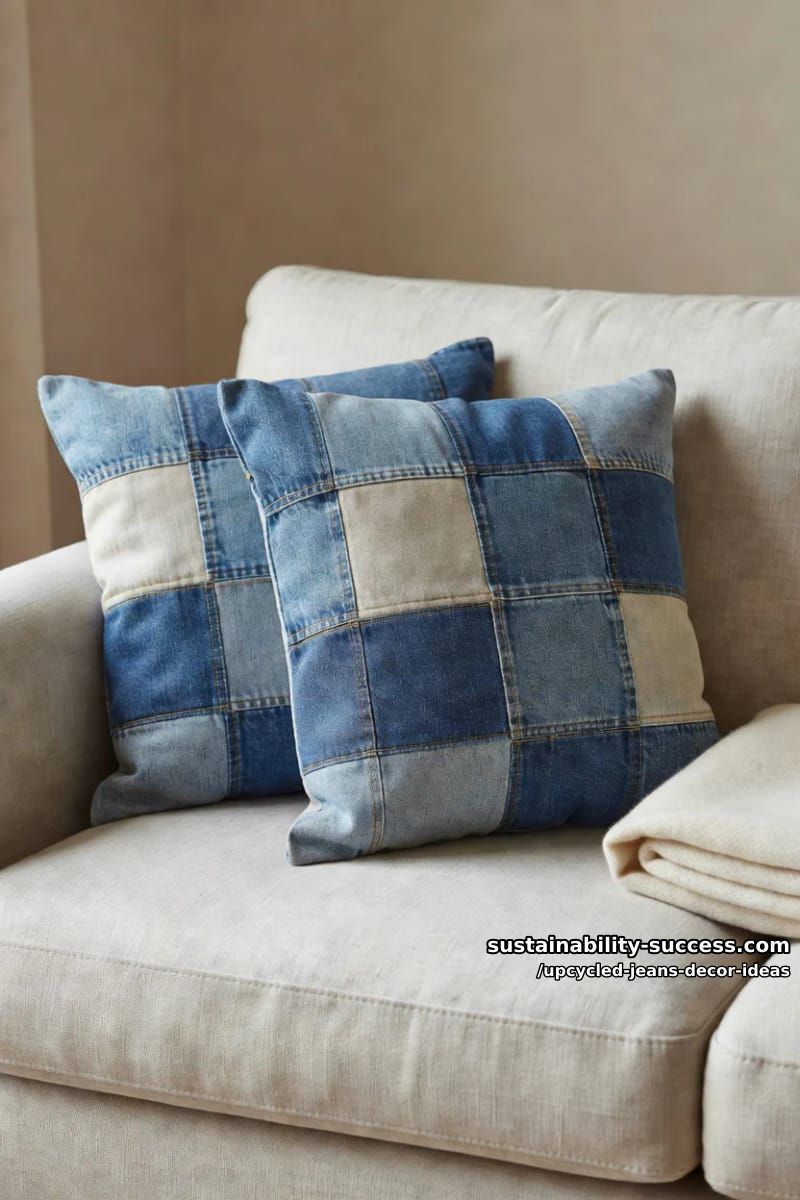
A patchwork denim pillow cover only looks deliberate if you cut so each square keeps a seam or a hem, then arrange them so the topstitching lines almost meet across the patches. Six-inch squares, three washes, an envelope back so you never fight a zipper. The whole front is one afternoon of straight seams.

Do this
- Cut from soft, broken-in jeans; worn twill presses flat and feeds through the machine without skipping.
- Keep a felled seam or a stretch of contrast topstitching in most squares so the grid has line and rhythm.
- Hold yourself to two or three washes so it reads composed instead of scrappy.
Avoid
- Stiff raw selvedge for small squares; the seam allowances stack up thick and your needle will jam.
- Stretch jeans with elastane, which ripple and refuse to lie flat once pieced.
- Bleached or painted novelty washes; they date the piece almost immediately.
What I would not do is graduate this into a full denim patchwork quilt. People keep trying. The result is heavy, hot to sleep under, and it fades unevenly into something muddy after a year. The Pottery Barn-style denim throw exists for a reason: a quilt's worth of denim wants to be a couple of pillows and nothing more.
2. A pendant lampshade rewrapped in denim
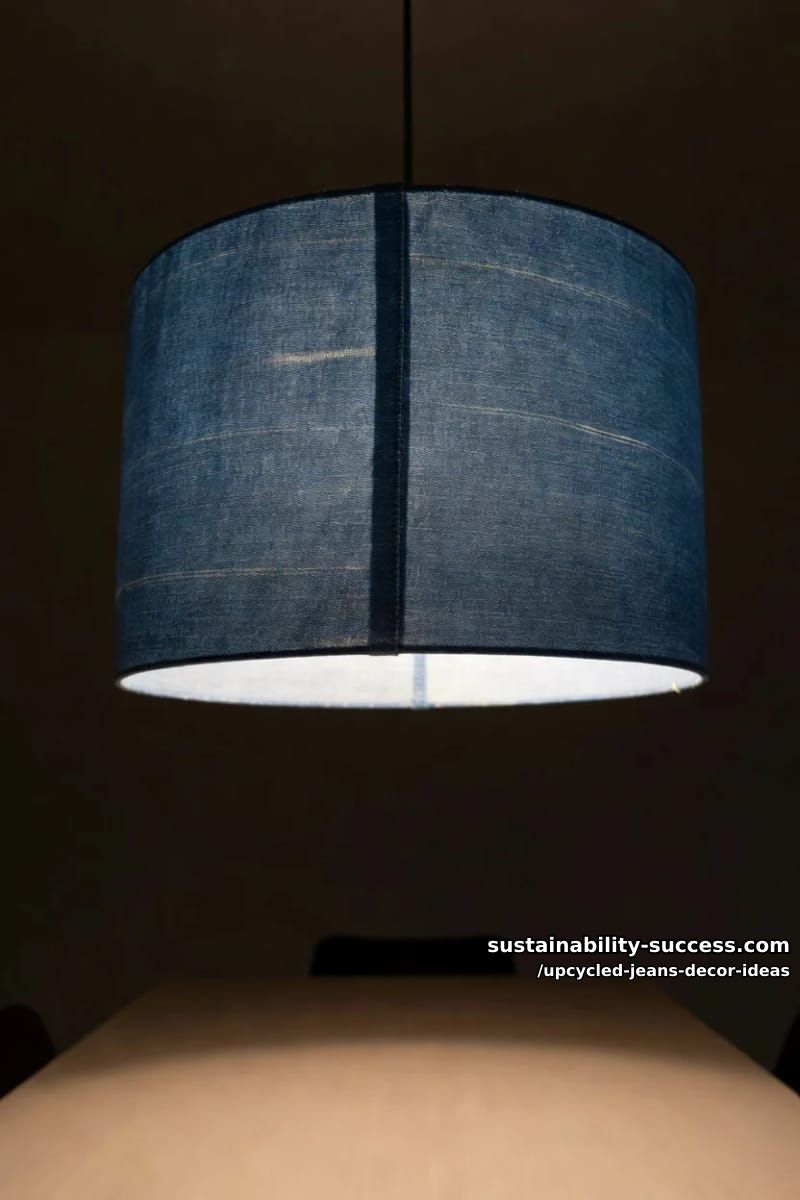
Slide a single jean leg over a plain drum lampshade and you have a denim pendant in about ten minutes, as long as you only run an LED bulb inside it. Cut the leg to the height of the shade, slip it on like a sock, and glue just the top and bottom edges to the inside of the rim. Line the leg's own outseam up with the shade's seam and it disappears.

Fabric pressed against a hot bulb is how lampshade fires start. Incandescent and halogen bulbs run hot enough to scorch denim and worse. Use an LED bulb only, since they stay cool, and never wrap a bare-bulb fixture or a shade whose frame lets the fabric touch the bulb. If the fixture has no rigid inner shade holding the cloth away from the lamp, pick a different project.
3. Plant pot sleeves cut from old jean legs
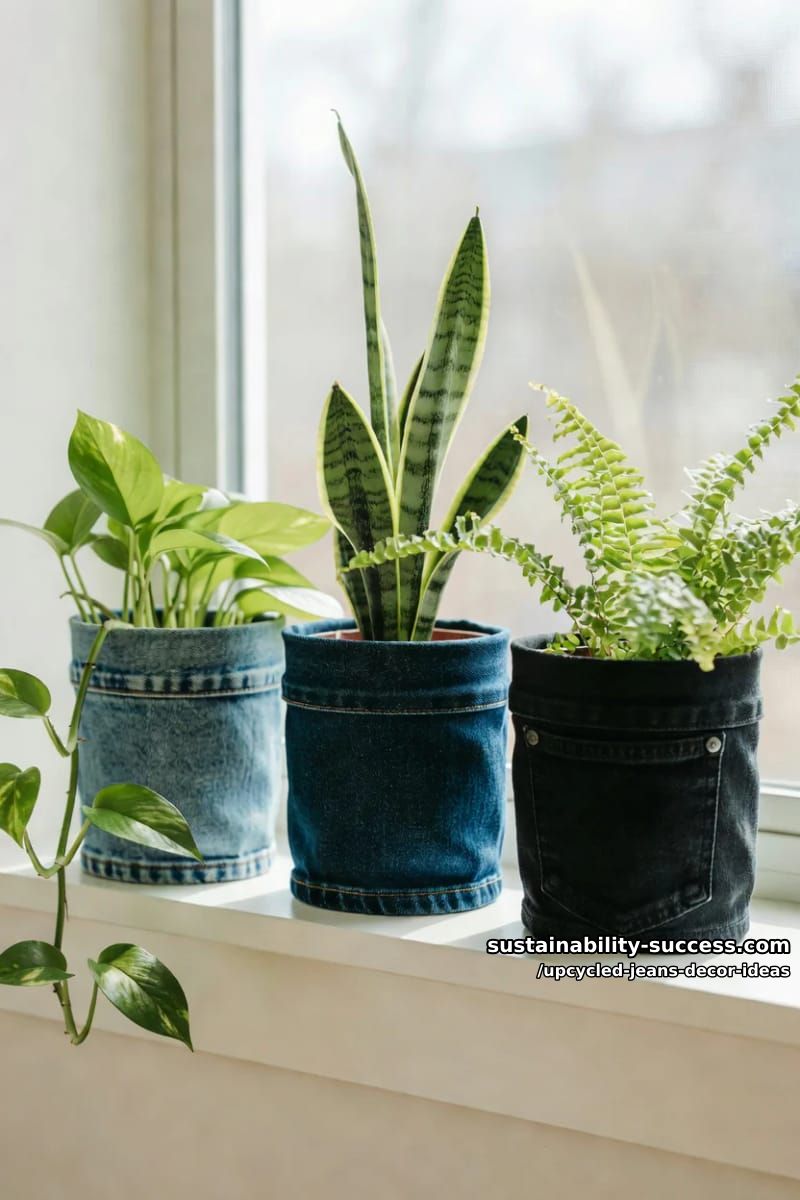
A jean leg cut to length and pulled over a plastic grow pot turns a $3 nursery container into something you leave out on purpose, and it needs no sewing at all. Use the ankle hem as the finished bottom edge, then fold the raw top down into a cuff or glue a quick hem. If the leg is too wide, run a line of fabric glue down a new seam and trim the excess once it sets.

This is the project to start with if you have never made anything from old clothes. It is forgiving, it is free, and a slightly wonky cuff just reads as casual. The one thing worth buying is a good no-sew adhesive, because hot glue goes brittle and peels off in the sun.
Dries clear and flexible, survives the wash, and bonds denim to denim without a needle, which is the whole point here.

4. A woven denim wall hanging that grades light to dark
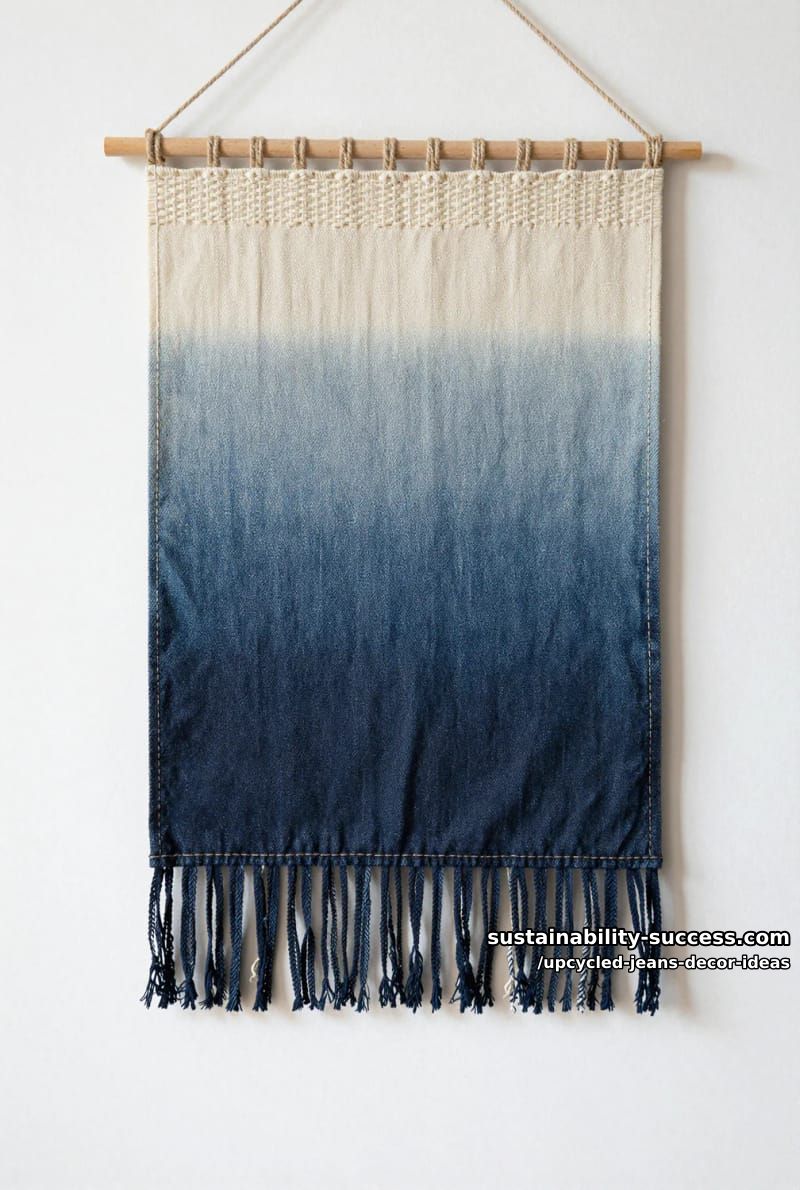
Sort your strips by wash and weave them dark at the bottom climbing to light at the top, and a denim wall hanging stops looking like rag weaving. Warp a set of strips over a wooden dowel, weave plain over-under, and finish the bottom with a fringe of pulled threads. Skip the gradient and you have made a flat blue rectangle.
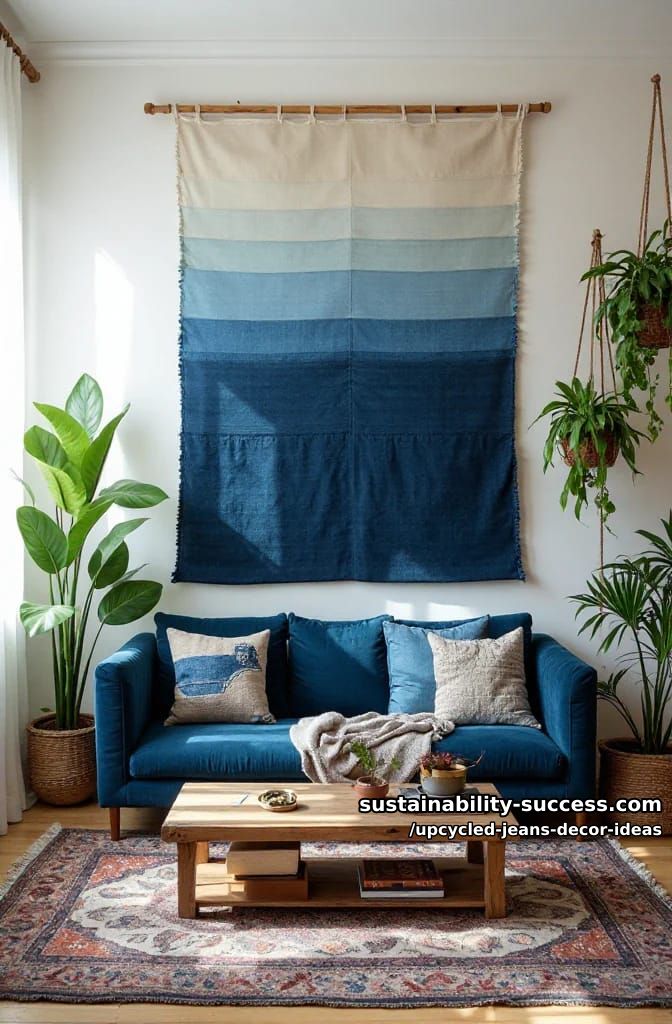
You want four or five genuinely distinct washes for the fade to register: an ecru-pale knee panel, a stonewash, a mid indigo, a dark raw, and something close to black if you have an overdyed pair. Acid-wash is the one to leave out. It drops a hard, chalky stripe into the run that reads 1987 no matter what sits on either side of it.
5. Coiled denim rope bowls and catch-alls
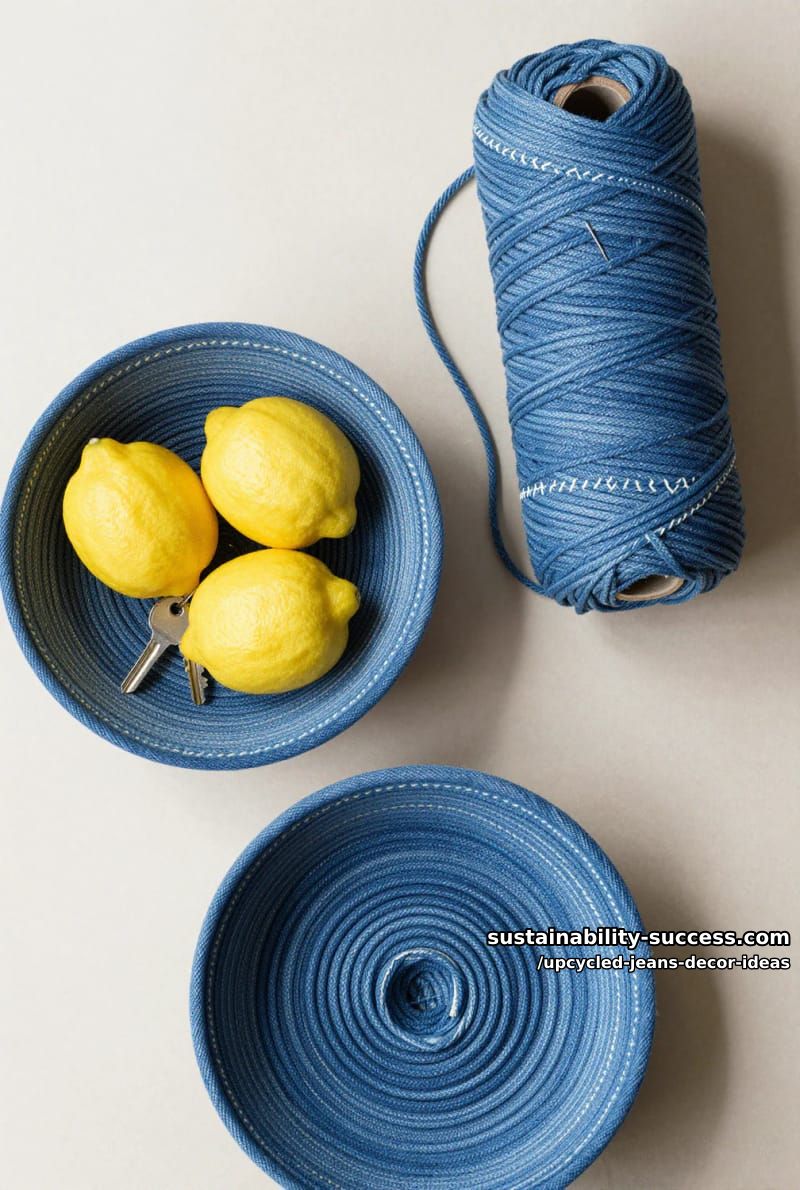
Twist long denim strips into one continuous cord, then coil and zigzag-stitch it into a bowl for keys, fruit, or loose yarn. The trick that makes it work is the join: splice strips end to end on a shallow diagonal so the seam vanishes inside the twist instead of bulging.
- Strips: cut roughly one inch wide along the leg, joining end to end on a long diagonal so the joints disappear when twisted.
- Cord: fold each strip in thirds with the raw edges tucked inward, then twist; run two strips together if you want a heftier rope.
- Coil: wind a tight flat spiral for the base, then start stacking the cord upward against the outside of the previous round to raise the walls.
- Stitch: a wide machine zigzag catches both coils at once; by hand, whip-stitch every half inch through the touching edges.
6. A braided denim floor rug
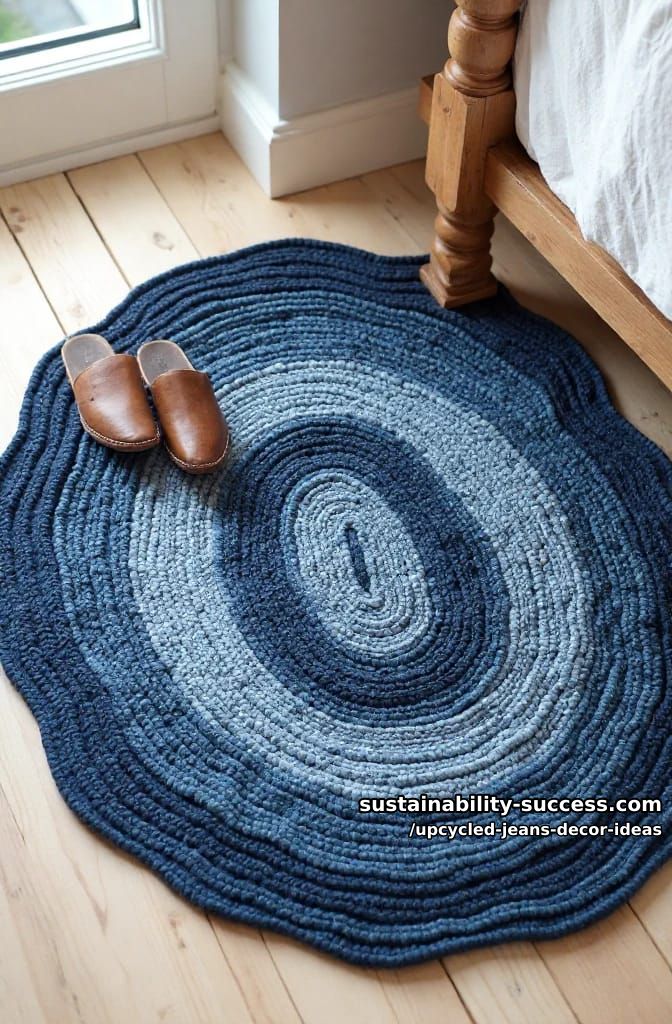
A braided denim rug needs a backing, or it curls at the edges and sheds indigo lint, which I learned the slow way.
The version that ends up on Pinterest is strips hot-glued in a spiral onto a doormat. Mine looked fine for two weeks and then started leaving blue fuzz on the floor every time someone walked across it. Braid three strip-ropes, coil the braid into an oval, lace the rounds together with waxed thread, and only then commit it to a backing.
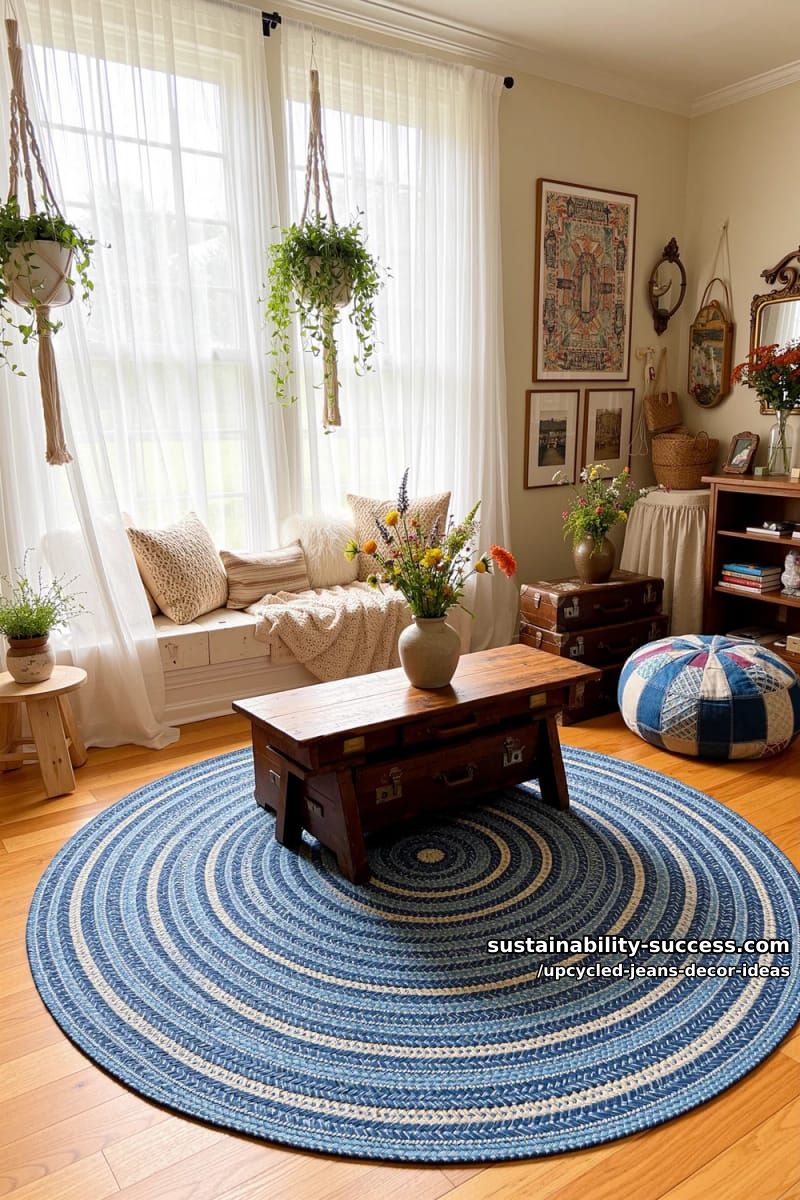
That backing is the part nobody photographs and the part that matters. A piece of rug canvas stitched to the underside keeps the oval flat, and a thin nonslip pad under that stops it sliding on a hard floor. Without both, you have made a tripping hazard that also stains your socks.
7. Denim storage bins that actually stand up
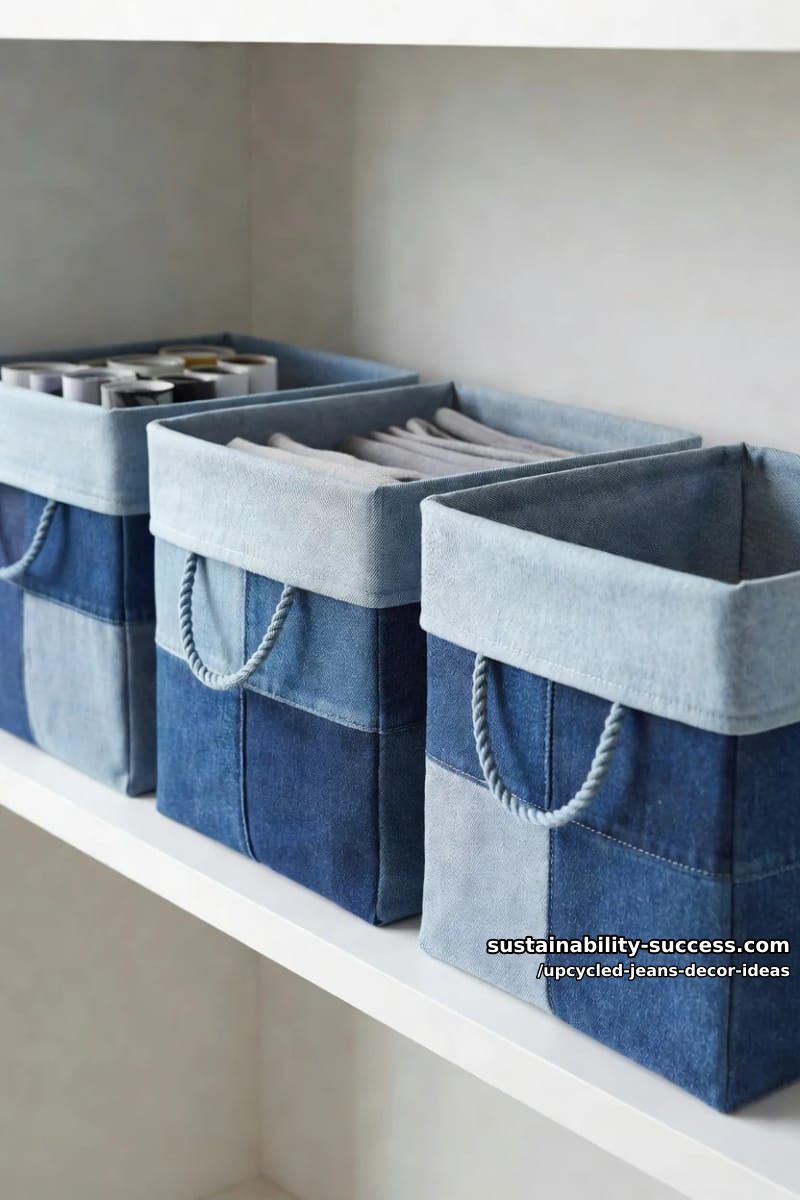
The difference between a denim bin that holds a crisp square and a sad slumping sack is one layer of fusible fleece ironed to the inside before you sew. Cut two leg panels for the sides and a base, fuse the fleece to each, box the corners, and fold the top into a contrast cuff. The fleece is what gives the walls the stiffness to stand on their own.
One 9-inch cube bin
Two jean legs, an evening, mostly things you already own.
If your only purchase is the interfacing, a single bin costs less than a fast-food lunch, and one package of fleece stiffens three or four of them.
What it takes
| Qty | Item | Spec | Price |
|---|---|---|---|
| 2 | Jean legs | from one old pair, your own pile | Free |
| 1 | Pellon 987F iron-on fusible fleece | one package covers several bins | $7 to $12 |
| 2 | Rope handles (optional) | cotton rope offcut | $0 to $4 |
| , | Thread, sewing machine | already owned | $0 |
| Total, buying interfacing only | $7 to $16 | ||
Prices are approximate ranges as of June 2026; verify before purchase.
8. A framed denim pocket-and-seam wall collage

Cut the back pockets off five or six different pairs, mount them in an even grid inside a deep frame, and the existing topstitching gives you the design lines for free. Vary the washes deliberately, pale to dark, and let the original rivets and fade marks stay; those are the parts that make it read as a study of the fabric rather than a scrapbook page.

Use a shadow-box frame or a foam board you can pin into, since the pockets have depth. Keep the spacing tight and identical between pieces. Done right this gets more comments than anything else on the list and asks less skill than the rug, the bins, or the bowls.
9. A frayed-edge denim table runner
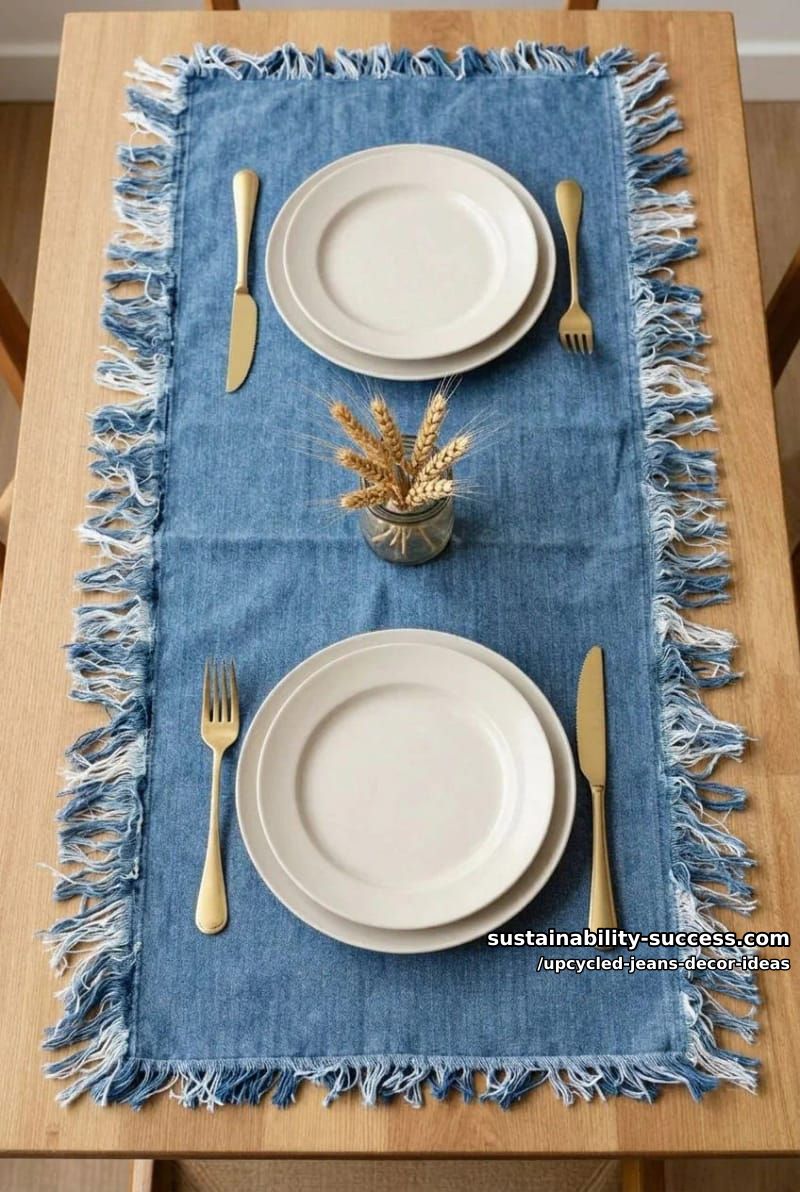
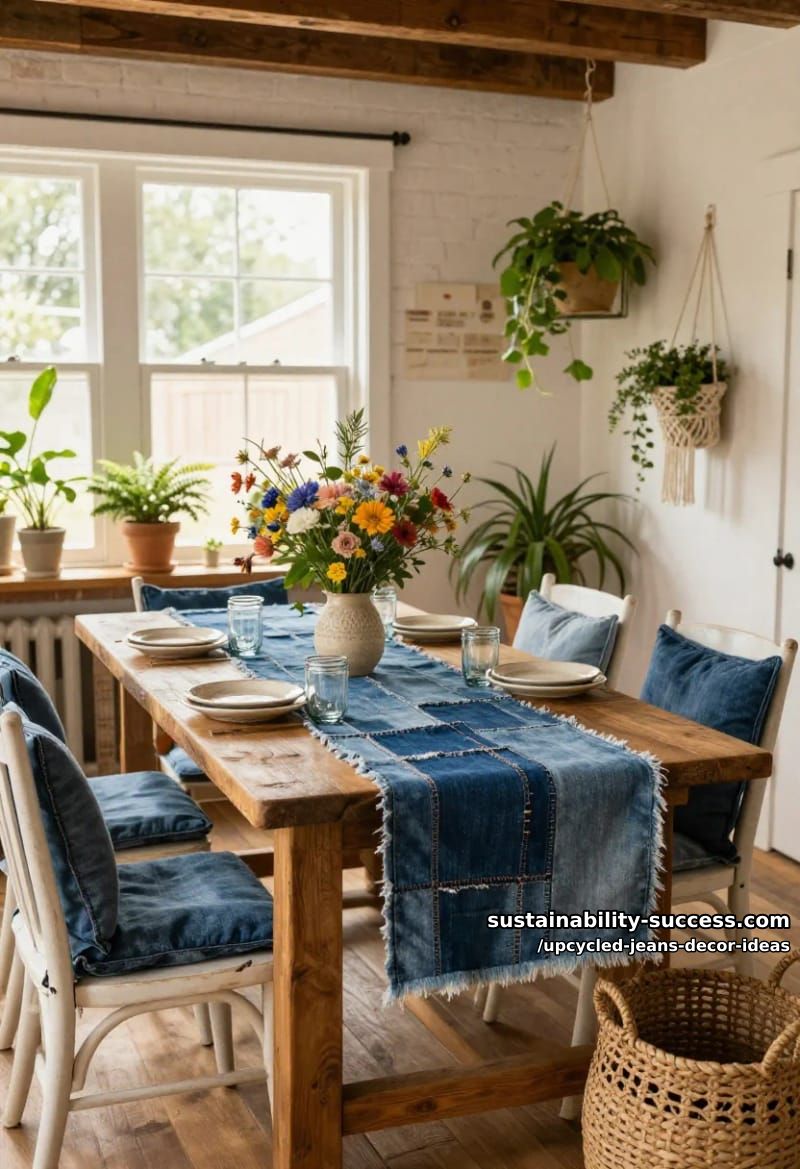
Run a strip of denim down the center of the table and decide the edges first, because you commit to a look the moment you cut them. Pull threads for a soft fringe, fold and topstitch a clean hem, or band the edges in contrast cotton; each ages differently and asks for different upkeep.
| Edge finish | Look | Holds up to | Effort |
|---|---|---|---|
| Frayed | Casual, soft, lived-in | Gentle wash, line dry; it will shed a little forever | Lowest: just pull the threads |
| Hemmed | Crisp, tailored | Regular machine wash and dry | Medium: fold and topstitch both edges |
| Bound | Graphic, with a contrast trim line | Heavy use; the cut edge is sealed inside the binding | Highest: cut and attach binding |
10. Layered denim coasters
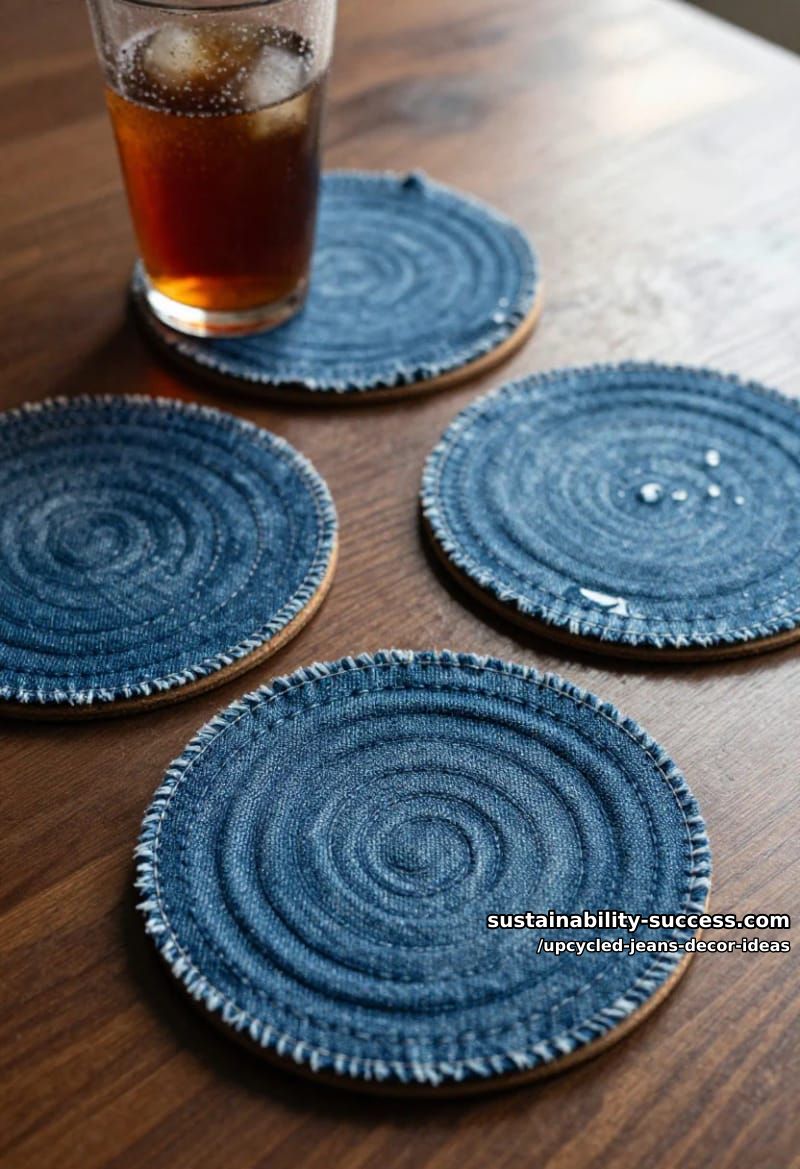
Stack three denim circles, topstitch them in a spiral, and you get a coaster that drinks up a sweating glass better than cork does. Leave the edges lightly frayed for texture. The no-sew route is to coil a cut-off waistband flat and glue it, which takes about twenty minutes for a set of four.
One real decision: back them with a cork or felt disc, because three layers of damp denim left flat on bare wood can leave a faint mark of their own. If you want the coasters to fade and soften over time, leave them raw and unsealed. (I do. They look better in year two than year one, which is not something I can say about much else in my apartment.)
11. A denim wreath for the seasonal shelf
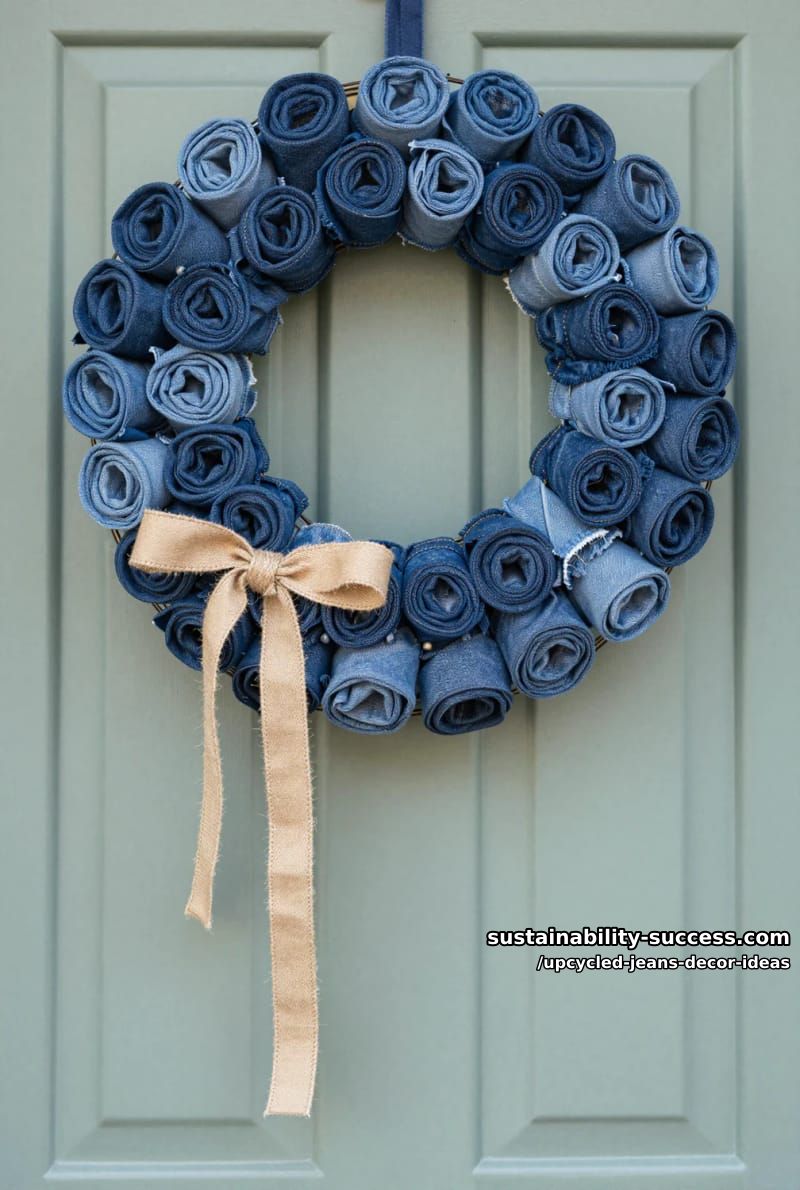
Tie rolled denim rosettes and short strips densely around a wire ring and add exactly one non-denim accent, not five. The density is what reads as intentional; a sparse wreath shows its frame and looks unfinished. Pack it until no wire shows, then stop.

The failure mode here is the craft-store impulse to layer in plaid ribbon, burlap, fake berries, and a monogram all at once. That version looks like a clearance bin. Pick a single accent, a length of jute, one sprig of brass bells at the holidays, a strip of leather, and let the denim carry the rest.
Conclusion
If you are only going to make one thing, make the pot sleeves or the coasters: free, fast, and almost impossible to ruin. Save the rug for after you trust your sewing machine, and back it before it ever touches the floor. The pocket collage is the sleeper of the list, the lowest skill for the highest payoff. And keep a bag going somewhere in a closet, your denim morgue, so the next time a pair dies at the knee you already know where the good pockets and the dark washes are headed.