
The button jar is the original circular economy: a lifetime of fasteners snipped off worn-out shirts, inherited from somebody's sewing tin, and rattling around waiting for a second job. The eleven projects below run from a five-minute fridge magnet to a thread-wound Dorset button that has been made by hand in England since 1622, with a rainbow wreath, a pearly-style jacket, and a window suncatcher in between.
A few lean entirely on what you already own; one or two are worth buying a material for. And before you reach for the hot glue, there is a hard rule buried in here about which buttons you should never commit to a craft, because some of the discs in that jar are worth more than the thing you would glue them to.
1. A sewn button monogram you can take apart later
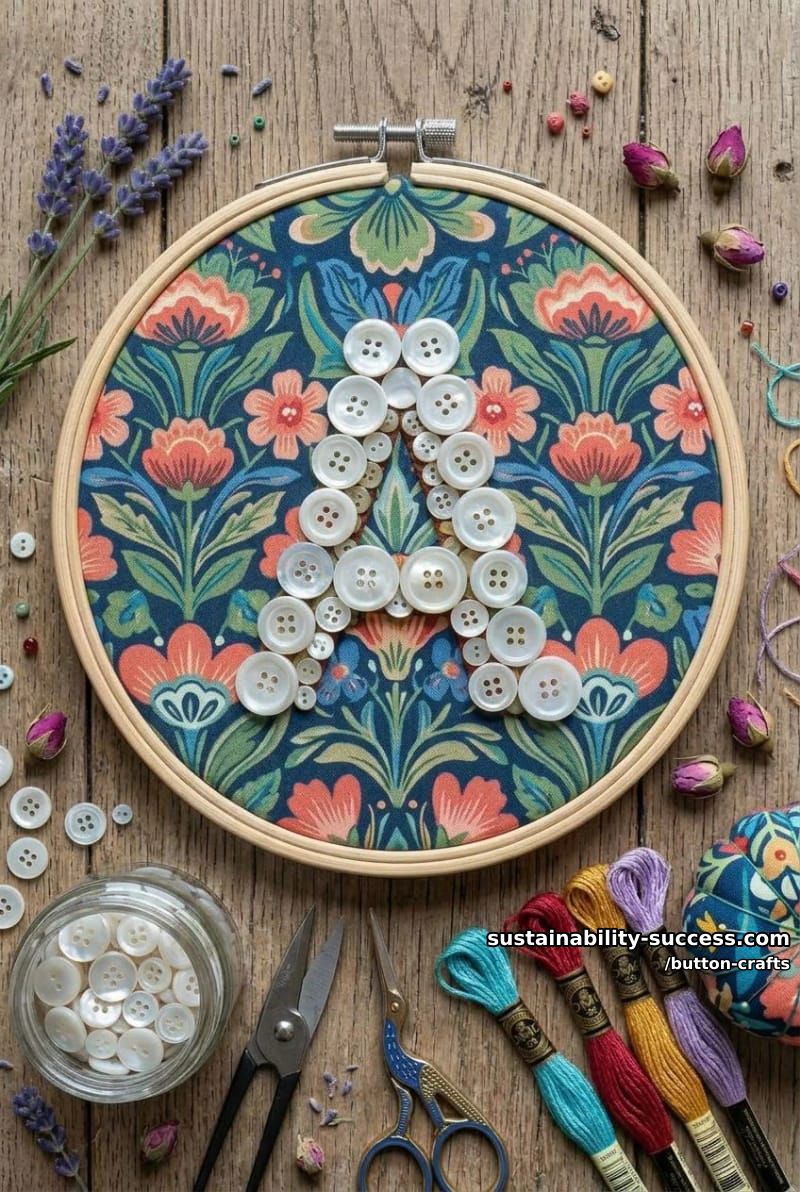
Sew the monogram, do not glue it, and the buttons go back in the jar the day you tire of it. Stretch a piece of linen or quilting cotton over a 10 to 12 inch embroidery hoop, pencil your initial, then lay the buttons inside the outline before you commit a single stitch. The non-obvious move is to photograph the layout on your phone once it looks right, because you will knock it askew the moment you thread the needle, and the photo is how you put it back.
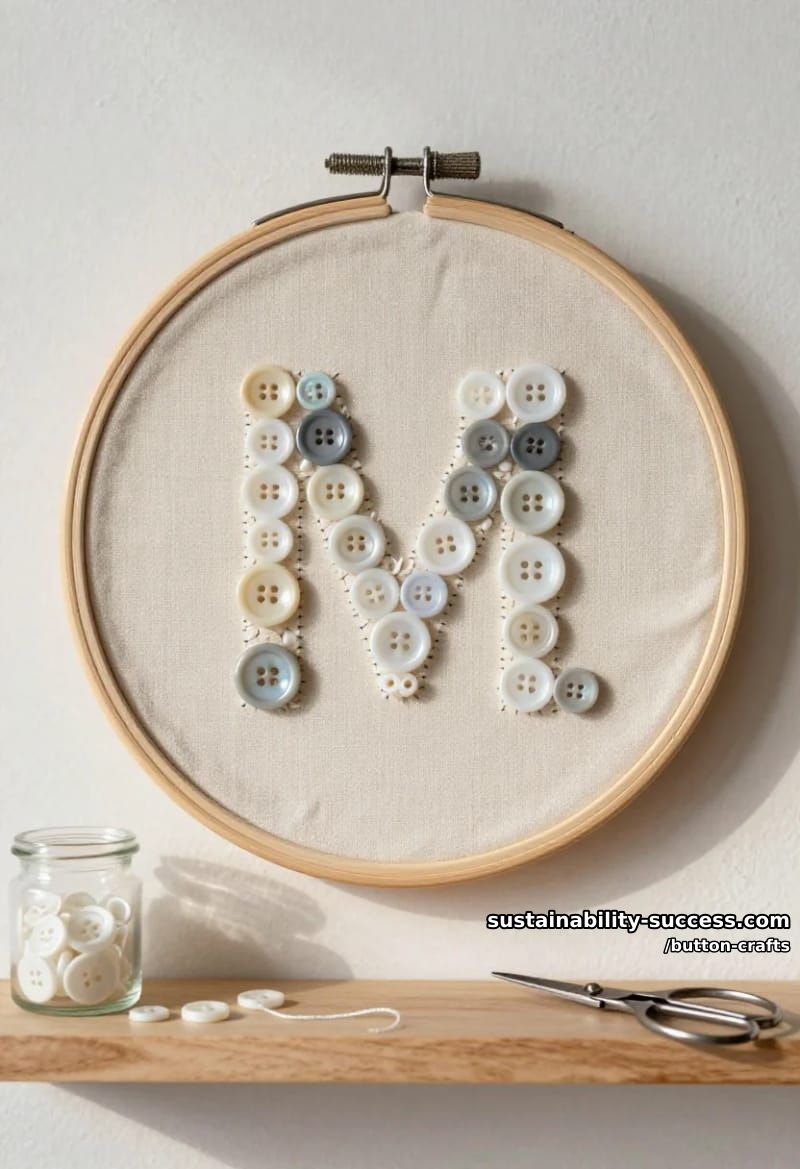
Keep to one color family. A single letter in graded mother-of-pearl whites reads quiet and a little expensive; the same letter in every color you own reads like a primary-school project. Glued monograms on burlap were everywhere around 2012 and they have aged badly. Linen, real thread, and a recoverable result is the version worth your evening.
2. Dorset buttons: a 400-year-old jewelry craft you wind by hand
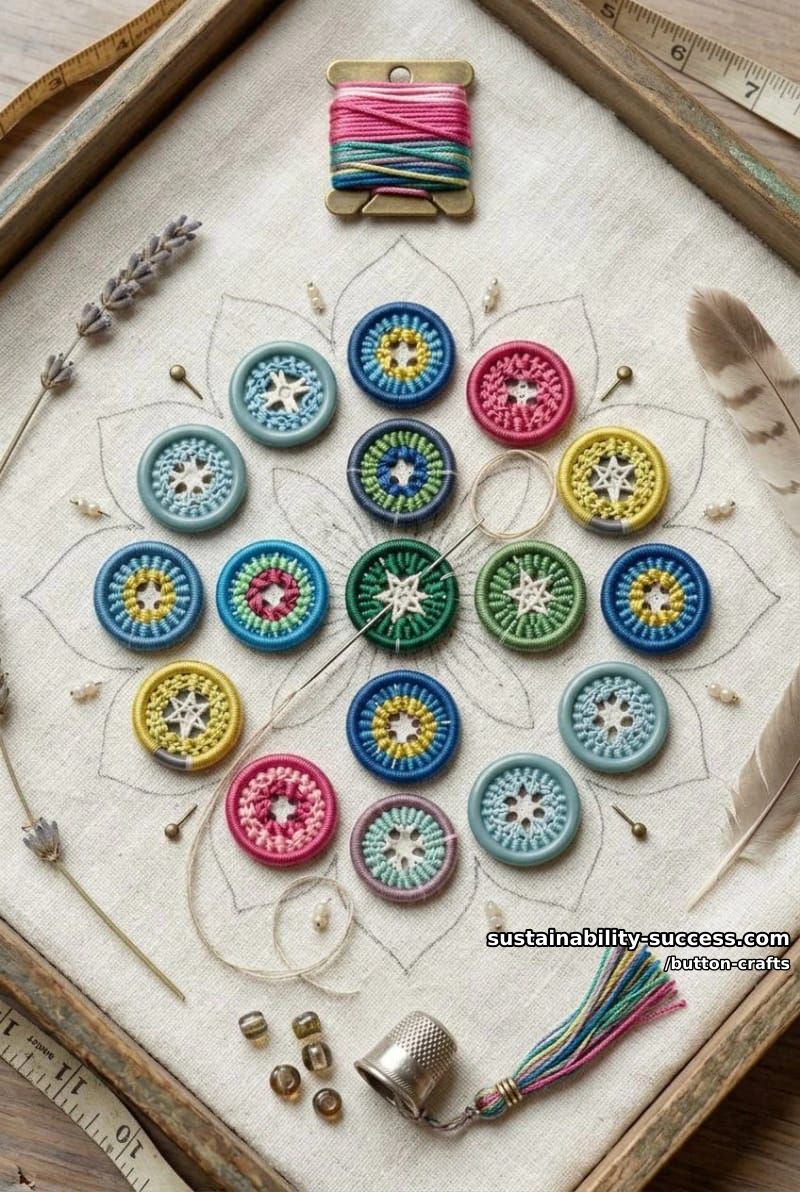
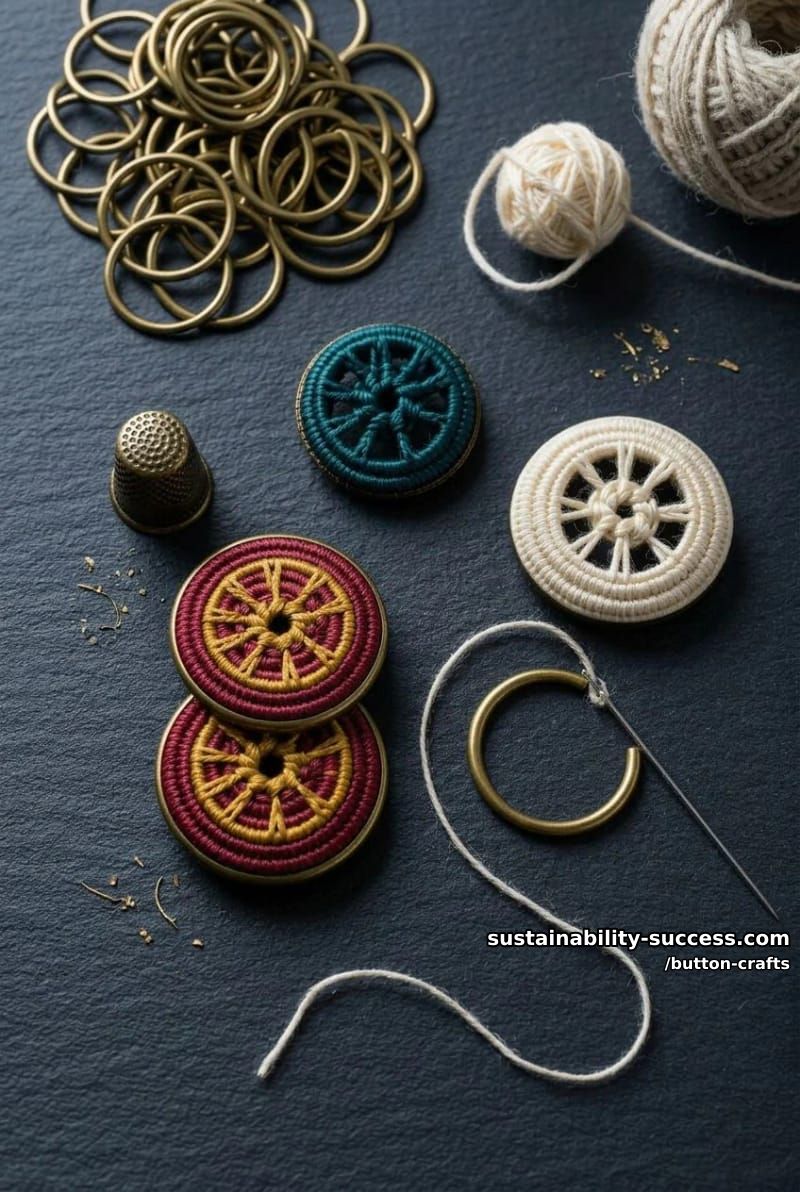
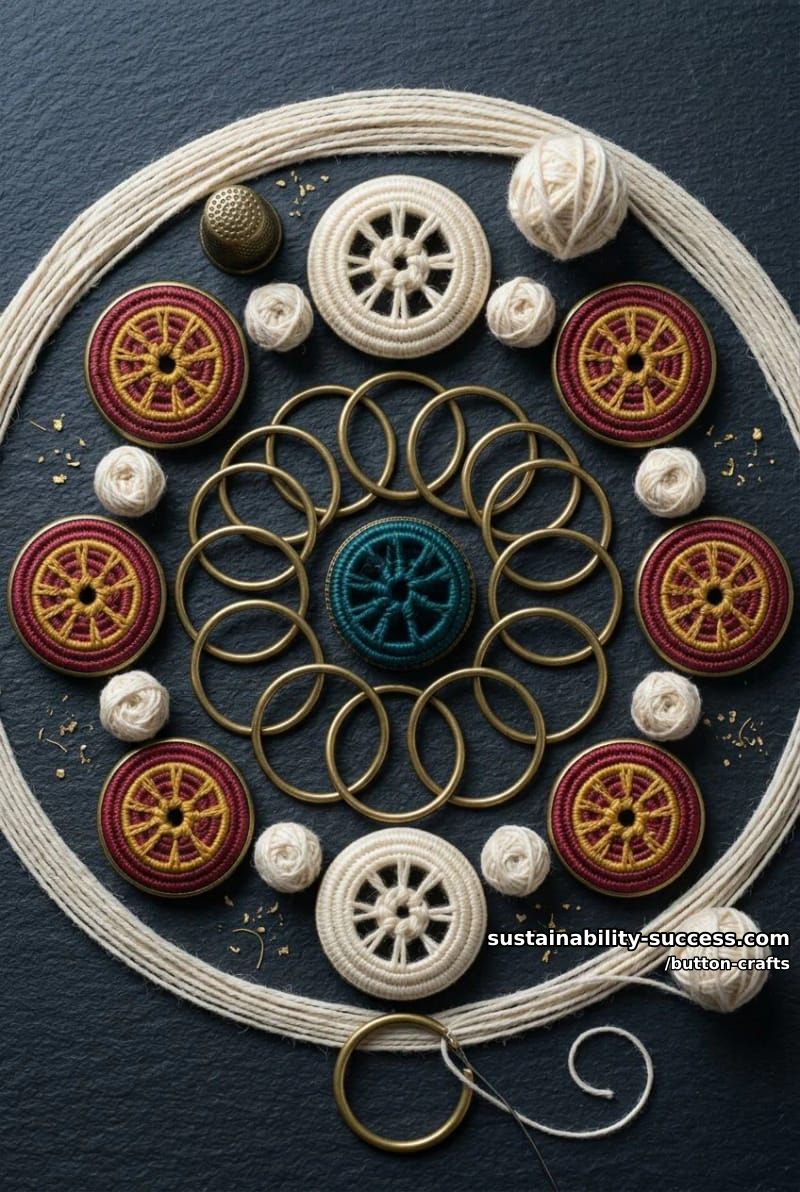
A Dorset button is just thread wound over a ring, and it is the most sustainable button you can make: no plastic, no mold, no waste, and a closure that outlasts the garment it fastens. The craft is named for the English county where Abraham Case set up the first commercial button-making operation in Shaftesbury in 1622, and it employed thousands of rural outworkers until a button-making press shown at the 1851 Great Exhibition put them out of business almost overnight. A skilled buttoner could turn out six dozen a day. The skill passed mother to daughter, was nearly lost, and in 2017 the Heritage Crafts Association added button making to its register of endangered crafts.
Start with the wheel, which is the pattern nearly everyone learns; the high tops and knobs that came first are the ones almost no one can make anymore. You need a solid ring (a brass curtain ring works, which is exactly what the trade switched to), a tapestry needle, and a few yards of perle cotton from your stash.
Casting: work blanket stitch around the ring until the metal disappears under a sleeve of thread.
Slicking: rotate the ridge of stitches to the inside so the outer edge is smooth.
Laying: carry the thread back and forth across the ring to lay down spokes, like a cartwheel.
Rounding: weave a spiral out from the center over and under the spokes. Stop early for a spoked look, keep going for a solid woven dome.
3. A button bowl molded over a balloon
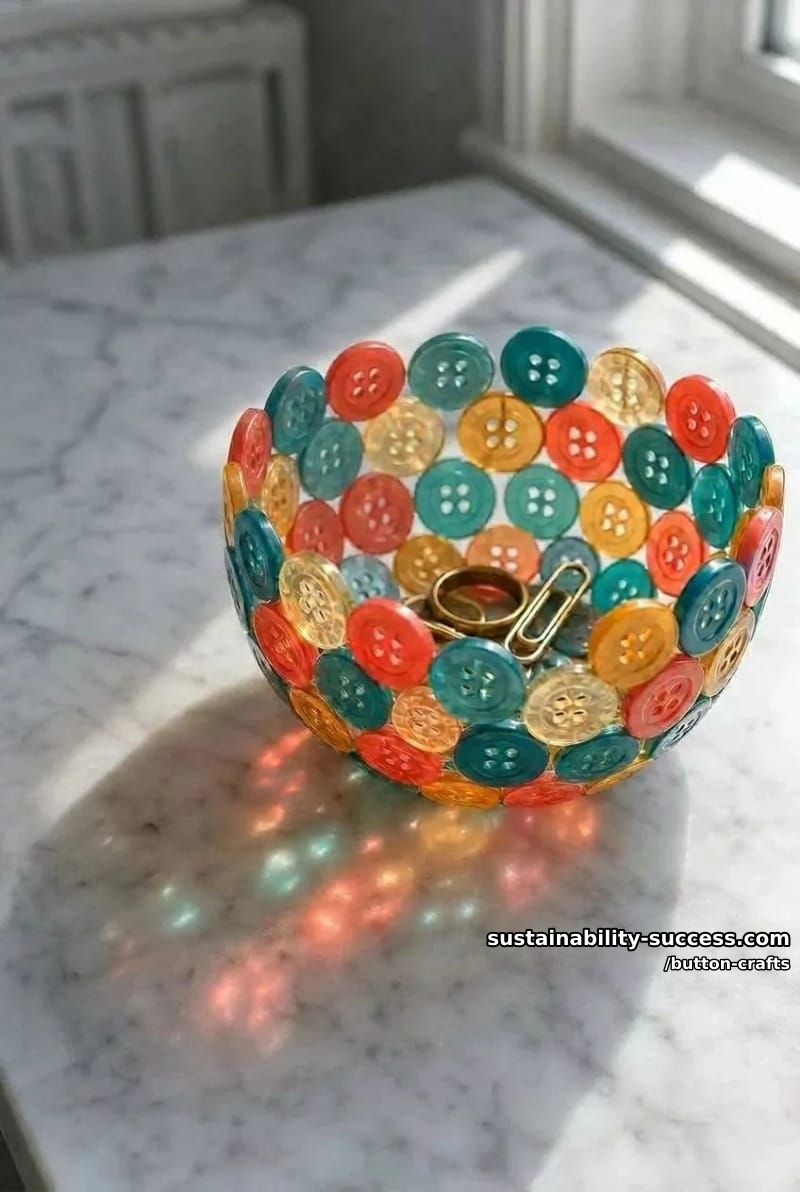
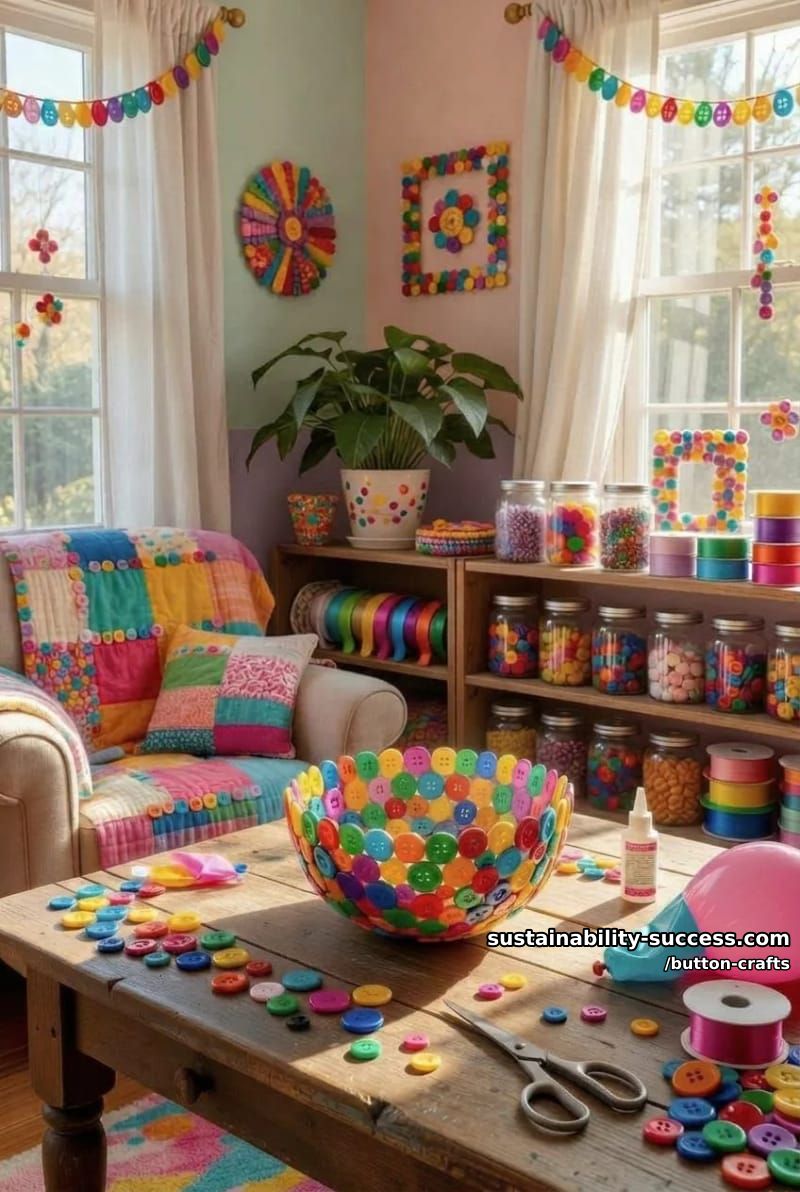
Blow a balloon up to about six inches, rest it in a cup to hold it steady, and glue buttons over the bottom half with a brush-on decoupage medium, overlapping every edge so the discs lock into each other. Two or three coats, a full day to dry, then pop the balloon and peel it away from the inside. What you get is a lacy trinket dish for rings, paper clips, and earrings, never for food. Smear the balloon with a thin film of petroleum jelly first so it releases cleanly.
Do
- Commit the common buttons: the plain plastic and resin discs you own by the hundred.
- Pick a tight palette (three or four colors) so the lattice reads as a bowl, not a jumble.
Avoid
- Hot glue. It yellows, strings, and shows white between the buttons.
- Gluing anything you’d miss. Carved mother-of-pearl, military brass, and old Bakelite belong back in the jar, not under sealer.
A water-based gloss that dries clear, doubles as the sealer coat, and cleans up with soap and water while wet.

4. A pearly-style button jacket, charity-king division
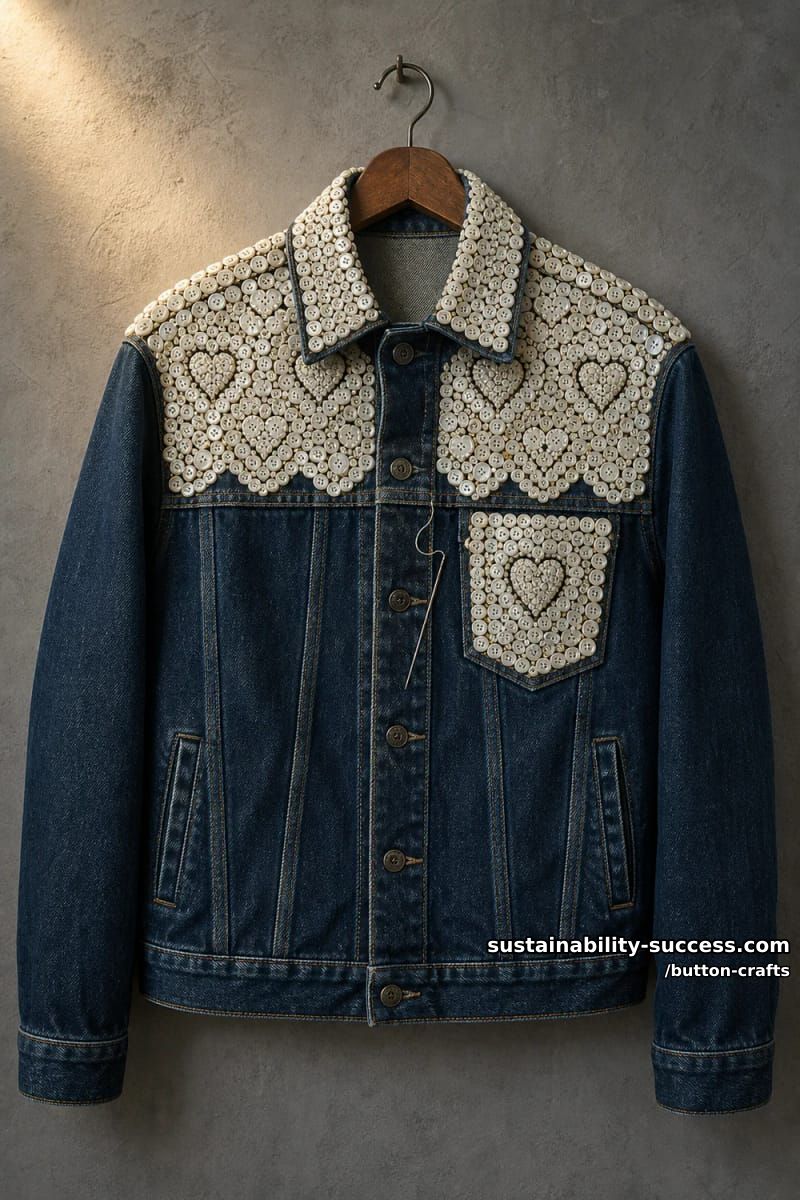
Cover part of a thrifted jacket in buttons and you are working in a real London tradition. Henry Croft, an orphan street sweeper born in the St Pancras workhouse, sewed mother-of-pearl buttons all over a suit in the 1870s to draw a crowd while collecting for charity, and the pearly kings and queens have been a fixture of the city ever since. A full “smother” suit carried thousands of buttons and could weigh as much as 30 kilograms; the designs spell out hearts, doves, and horseshoes, and a pearly suit is famously never finished.
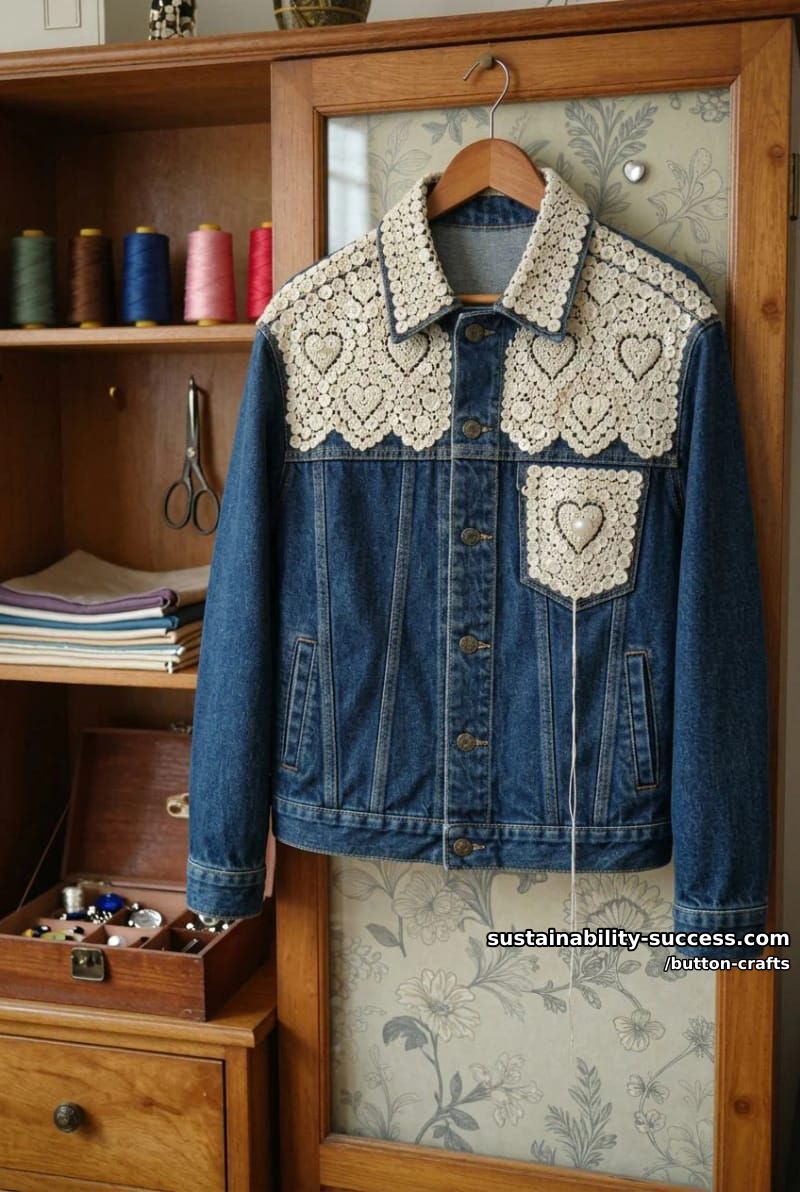
You do not need to smother a whole jacket on the first night, and frankly you will give up if you try. Do a collar, one pocket flap, or a single motif on the back, sewing straight through denim with a doubled thread. Mismatched buttons are fine; the originals were whatever Croft could scrounge. It is also the least fast-fashion thing you can do to a tired jacket, which is to make it the one nobody else has.
5. A stacked button bracelet on memory wire
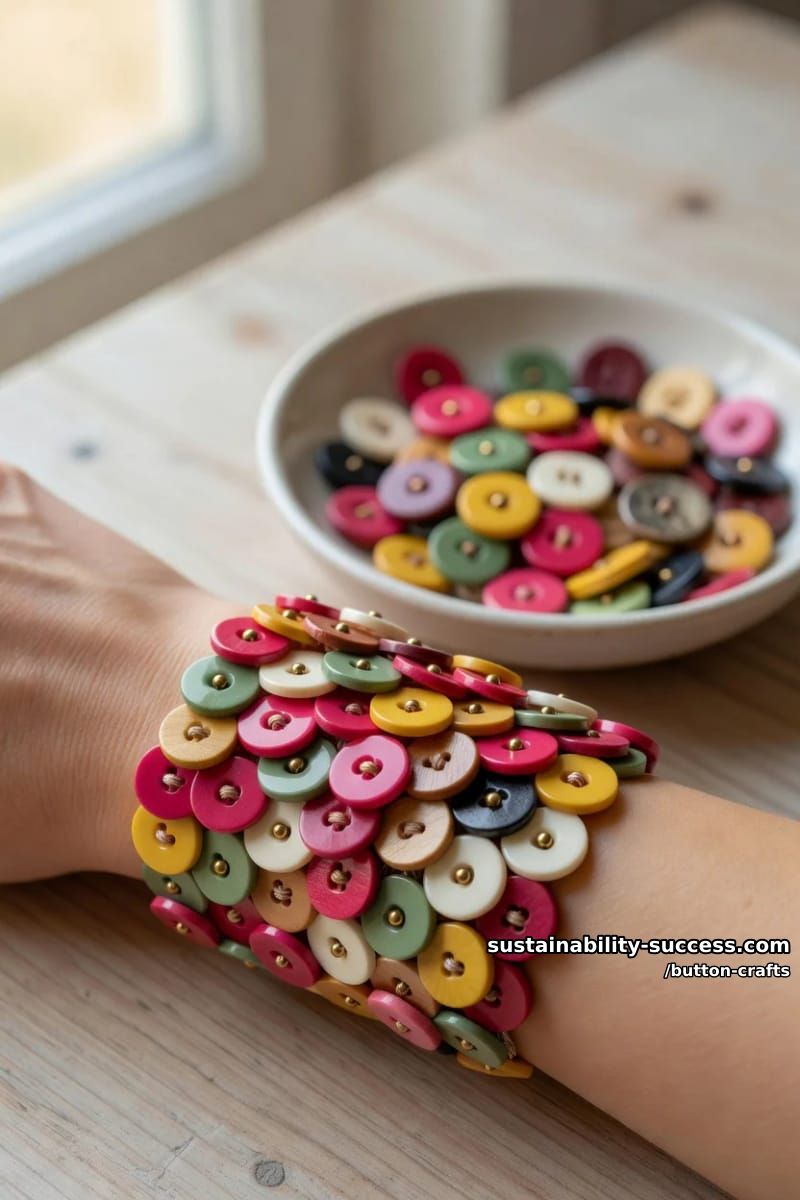
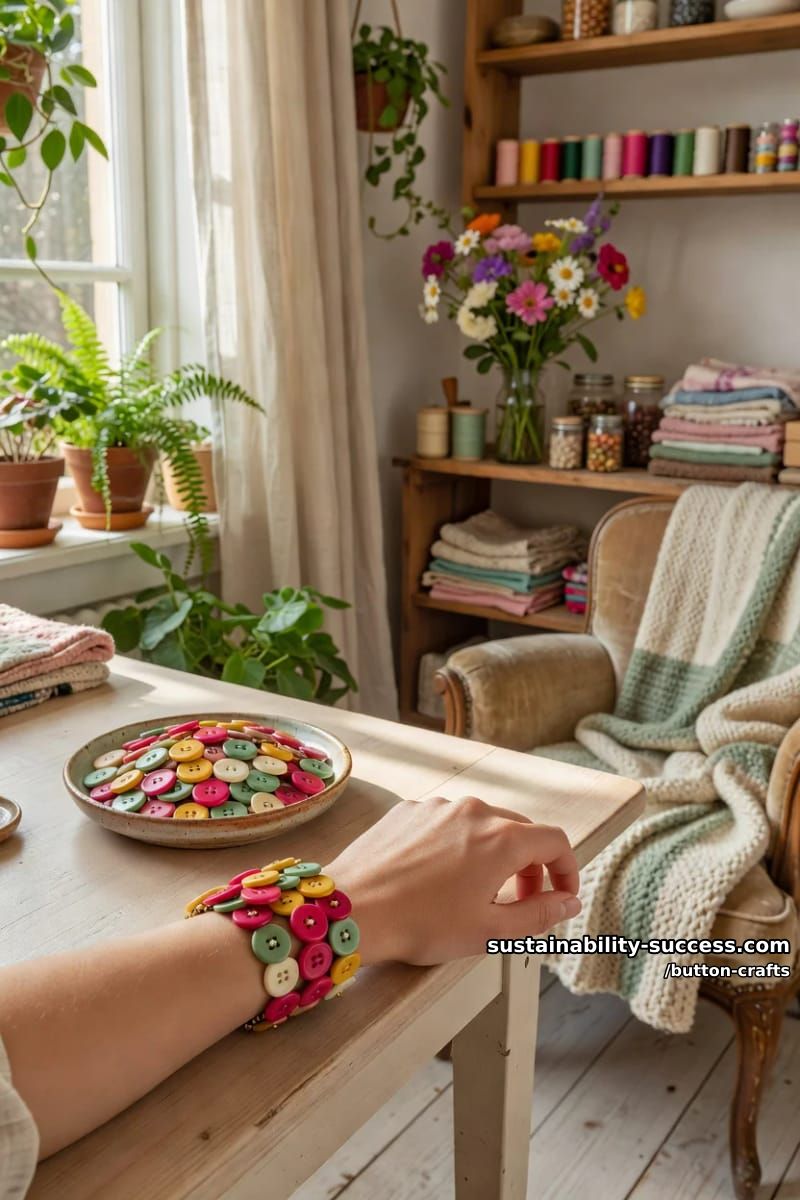
Thread buttons onto a coil of memory wire, up through one hole and down through the next, and they tile around your wrist like scales with no clasp to fuss with. This is the project for orphans: the single survivor of a lost set, the spare that came stapled inside a coat, the one pretty button you could never bear to use. Stack two buttons with a seed bead pinning the center if you want height, and mix your sizes on purpose, because a band of identical buttons looks like a sample card.
6. Button magnets that turn the fridge into a gallery
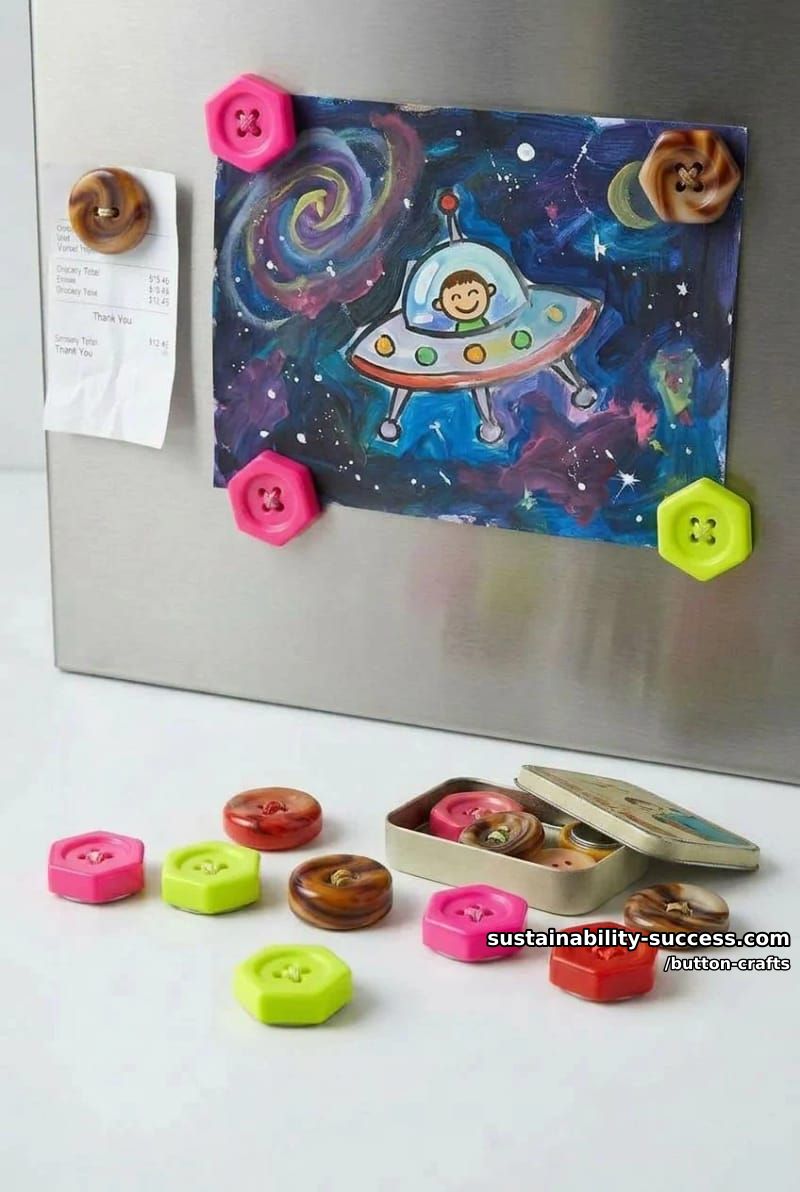
Stick a small magnet to the back of a chunky button and you have the fastest gift in this list, six of them on a card in under ten minutes. Flat two-hole and four-hole buttons sit flush against the magnet; shank buttons need the loop nipped off with side cutters first, or they wobble and won't grip. Peel-and-stick discs are quickest, but a dot of E6000 holds far longer if you want them to survive a busy kitchen.
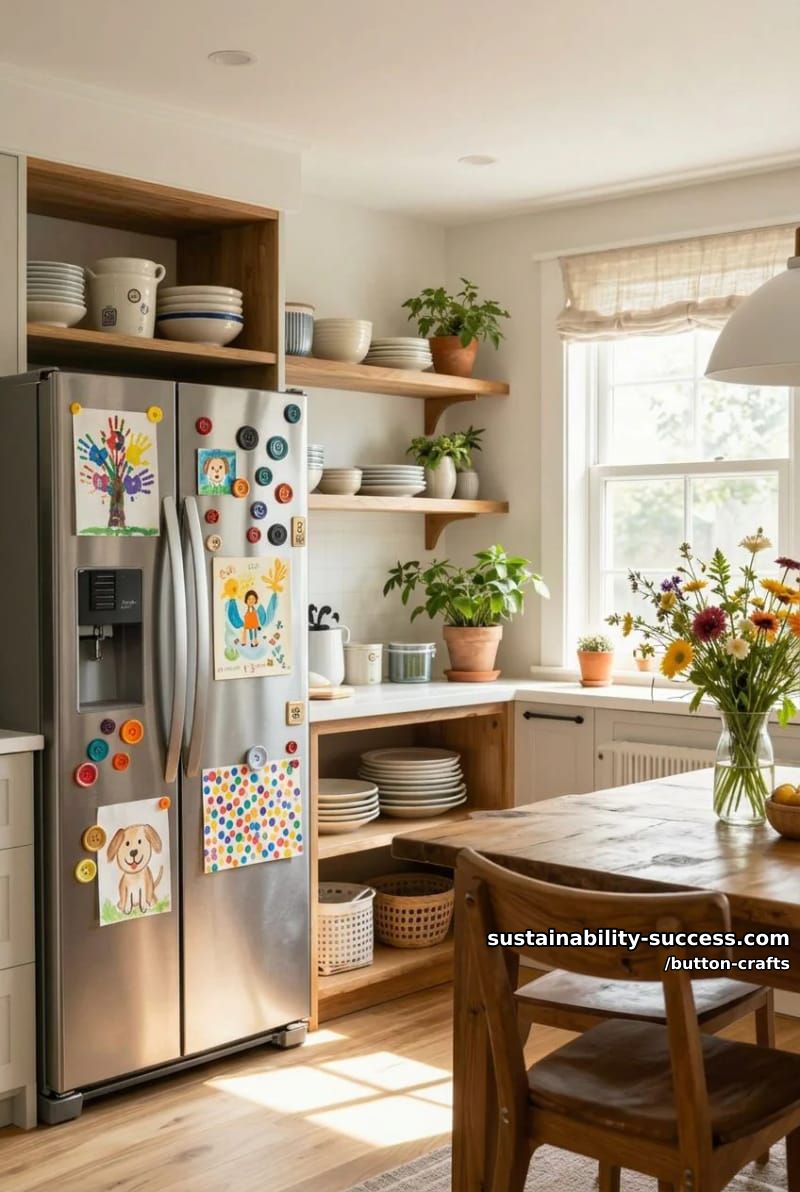
For backing, a roll of half-inch self-adhesive magnetic discs covers dozens of buttons and costs next to nothing per magnet.
7. A felt button board for small hands
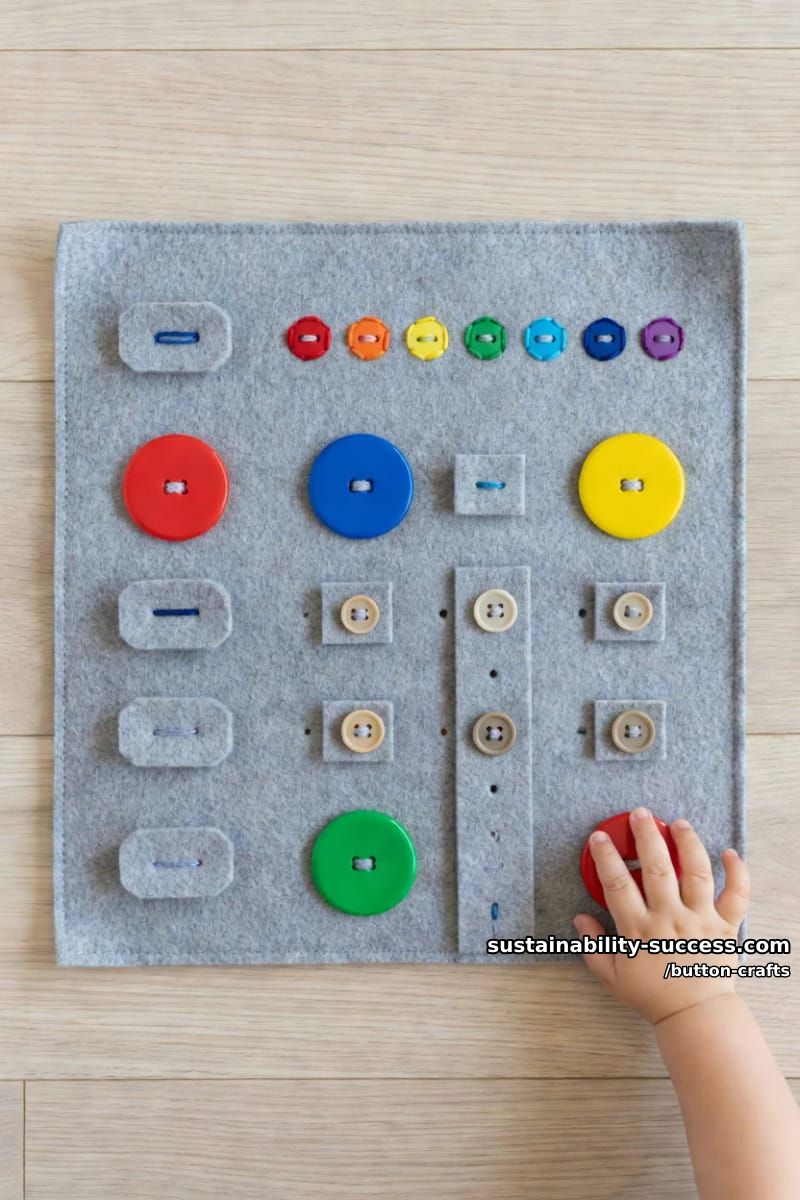
Sew big buttons onto a felt mat with loops, lacing holes, and a buttonhole strip, and you have a quiet busy board that works on dexterity, color naming, and the genuinely hard toddler skill of pushing a button through a slot. Use buttons an inch or larger, sew every one down hard, and keep the whole thing to colors a two-year-old can name.
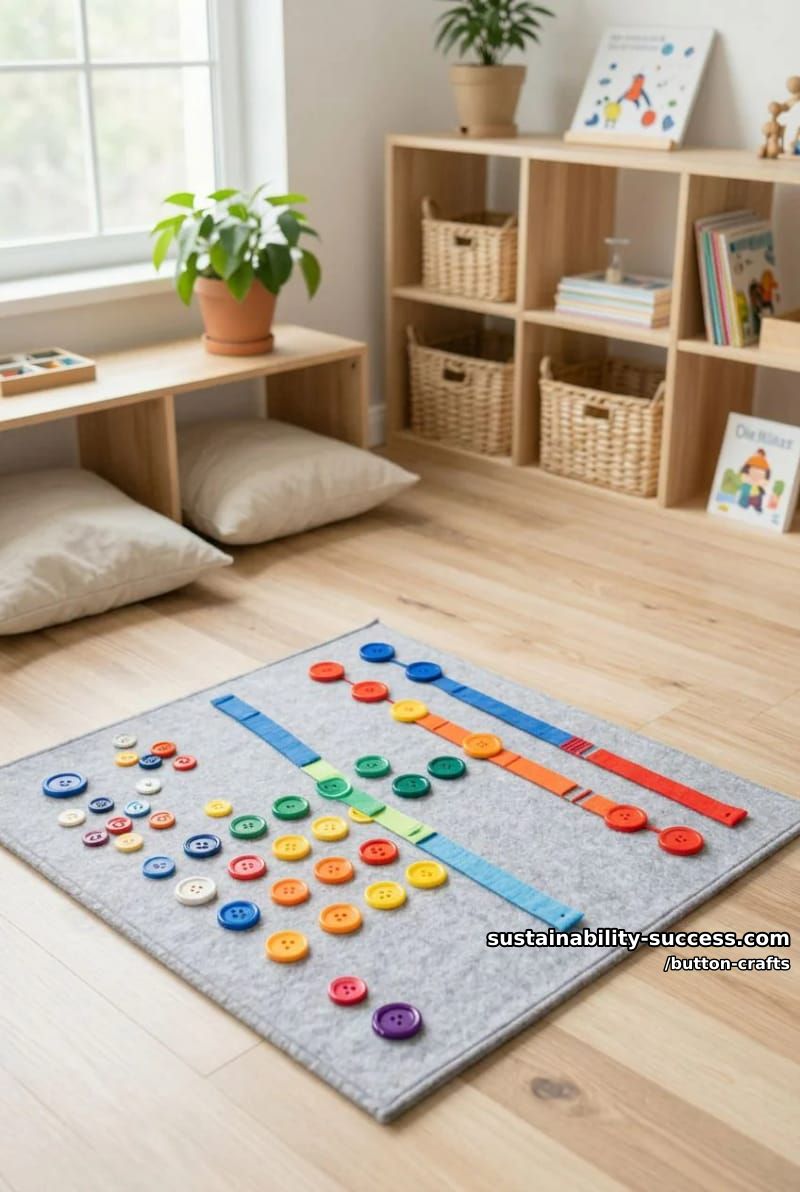
Loose buttons are a choking hazard and swallowed magnets are a medical emergency, so this is a sewn-down, supervised toy only. Never glue buttons onto anything a small child will handle, and keep the magnet projects above well out of their reach.
8. Button mosaic art: painting a picture in discs
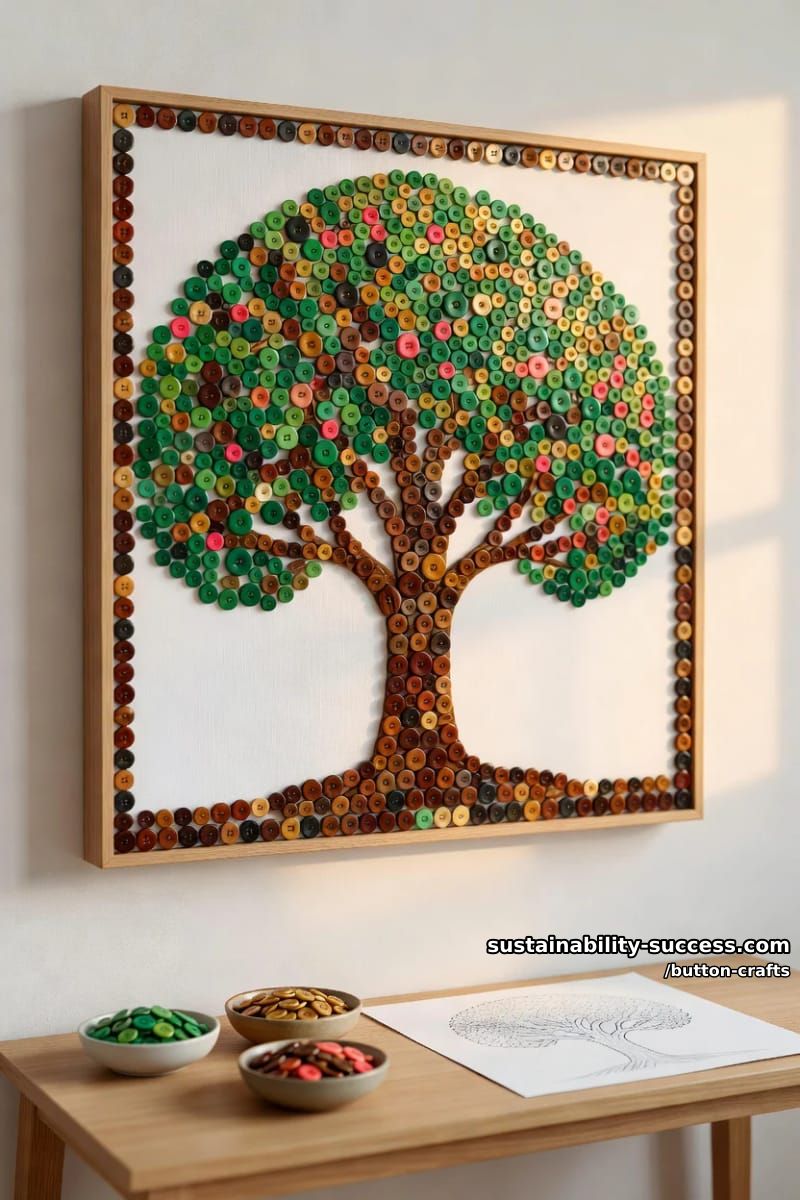
Treat buttons like tile and you can build any simple bold shape: a tree, a heart, a state silhouette, a hot-air balloon. Sketch the outline in pencil, glue the edge buttons first to lock the shape, then fill inward, mixing diameters so small buttons fill the gaps the big ones leave. A salvaged cabinet door or a raw wood round makes a better base than canvas, which sags under the weight once the glue dries.
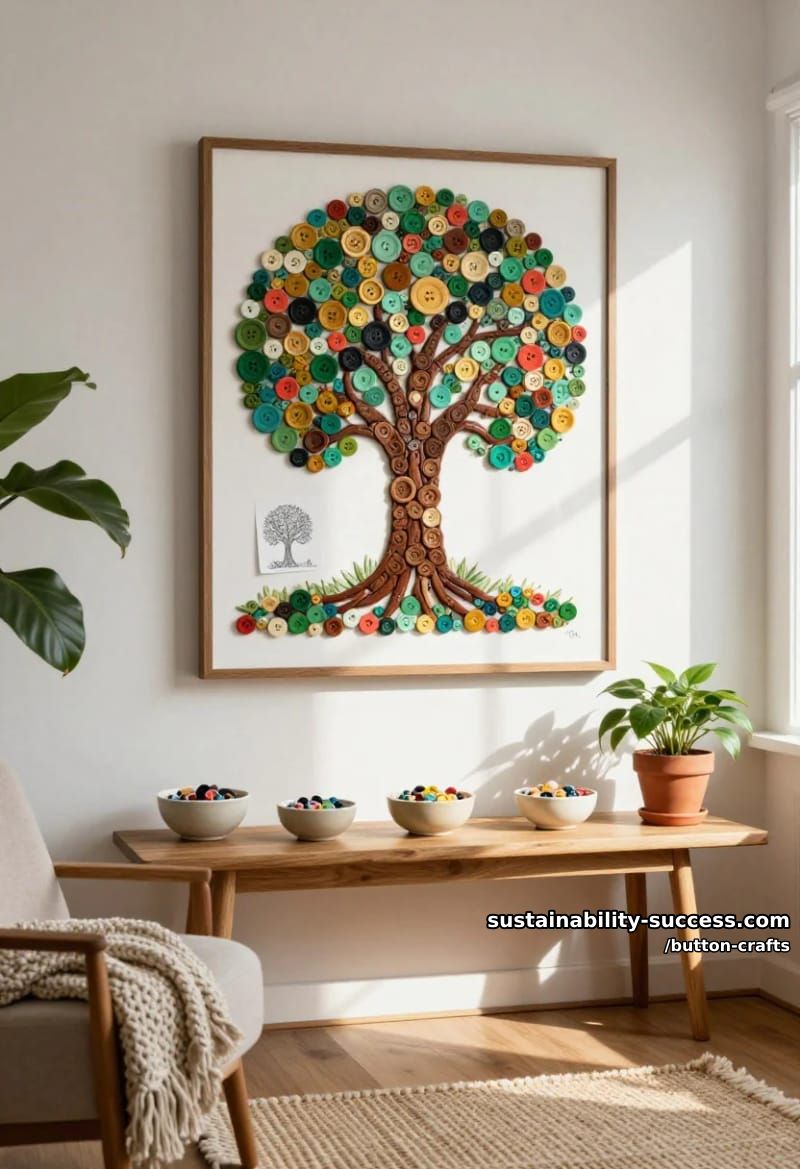
Step back and squint at your layout before you glue. If the image still reads, your light-to-dark contrast is carrying it; if it dissolves into noise, the colors are too evenly matched. Buttons make a picture through value, not hue, which is why a monochrome ombre mosaic often looks more grown-up than the full rainbow.
9. A glass button suncatcher for a sunny window
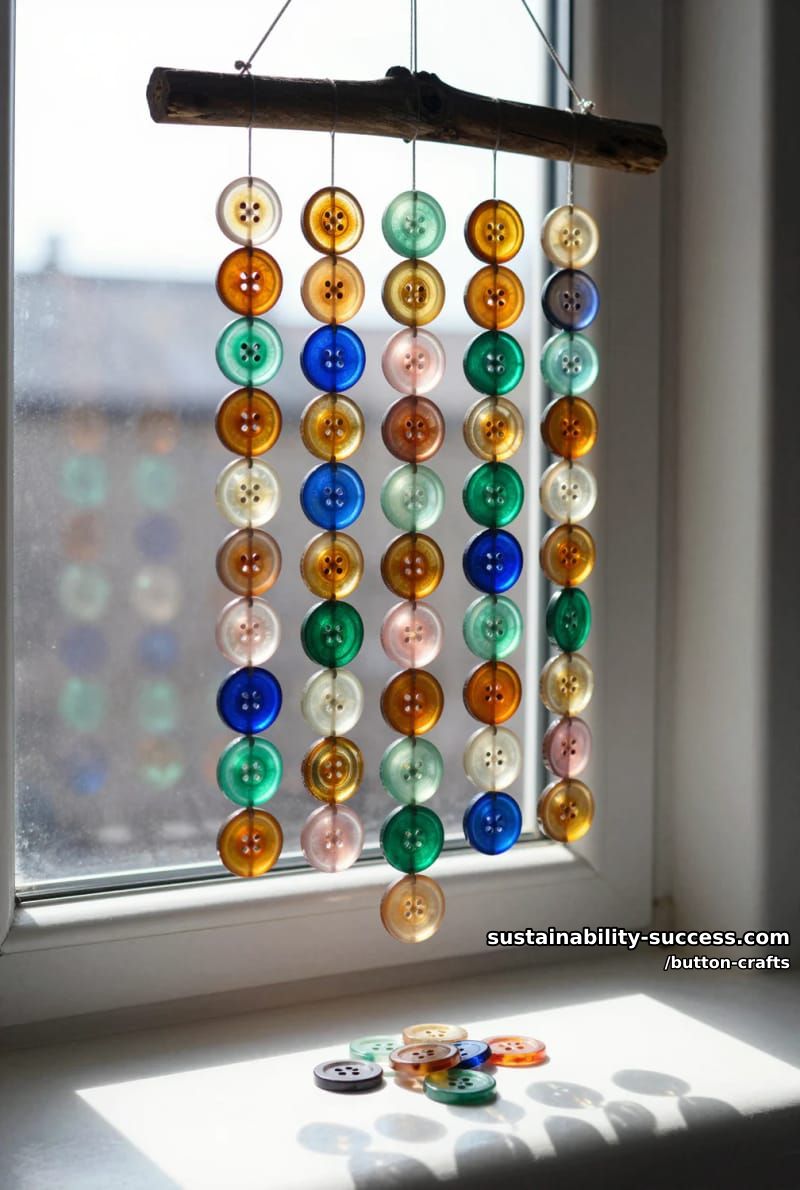
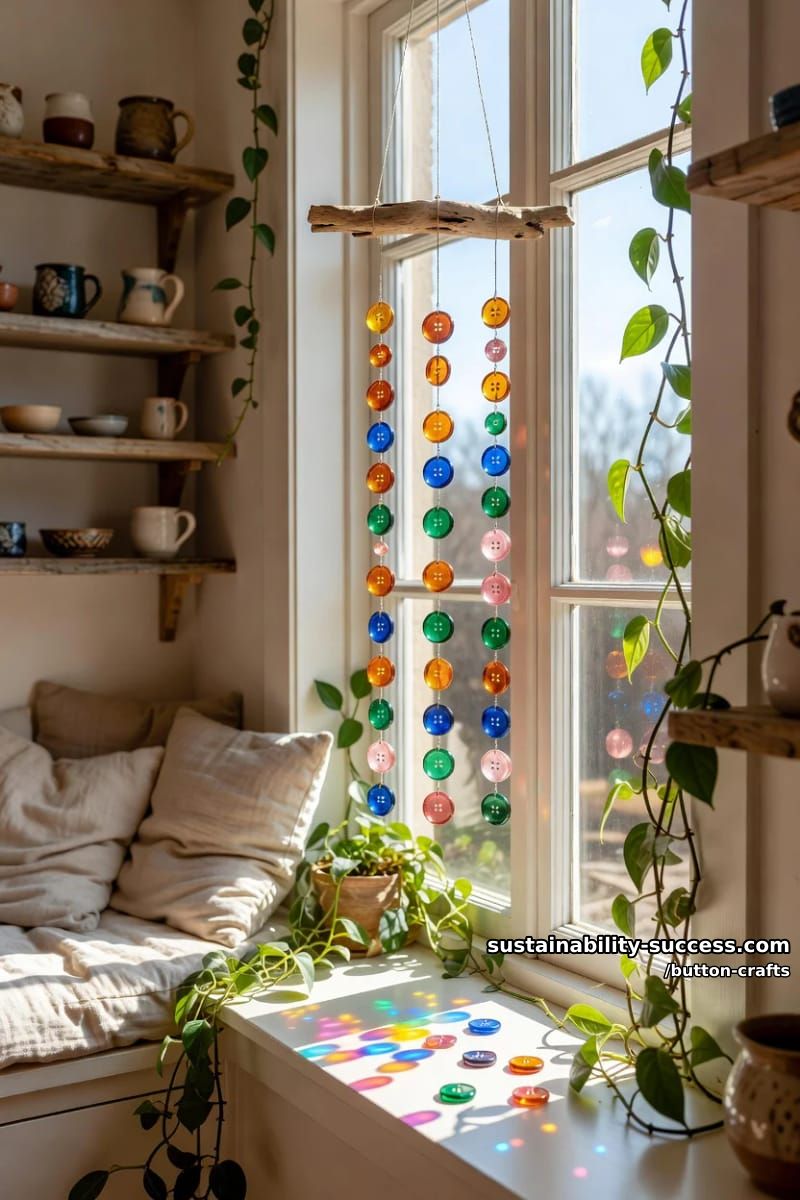
This is the one project where the material does all the work, so raid the jar for glass only. String translucent buttons (clear, colored, or the faceted vintage Czech glass collectors prize) on monofilament in a few hanging columns from a twig or a small hoop, and hang it where the afternoon sun hits. The light comes through and throws colored coins across the sill. Opaque plastic stays flat and dead in the same spot, which is exactly why those go in the wreath instead.
10. Button earrings in shell and vegetable ivory
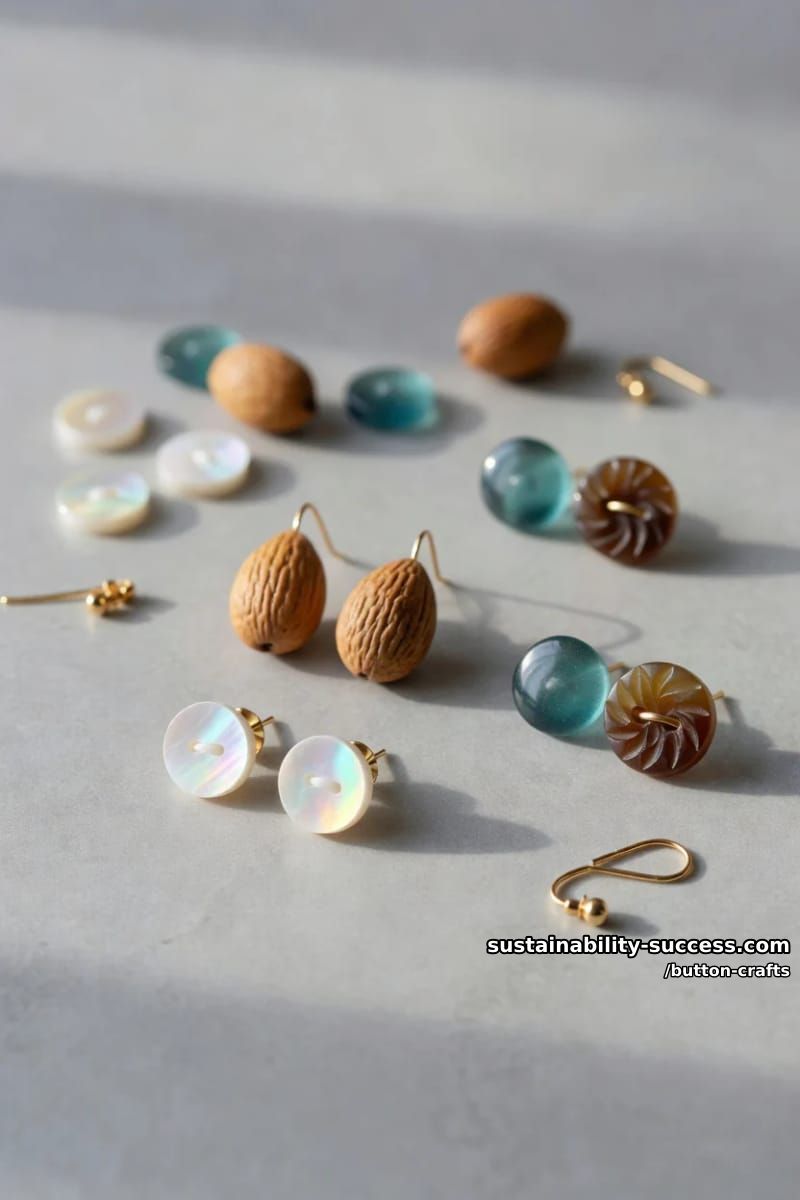
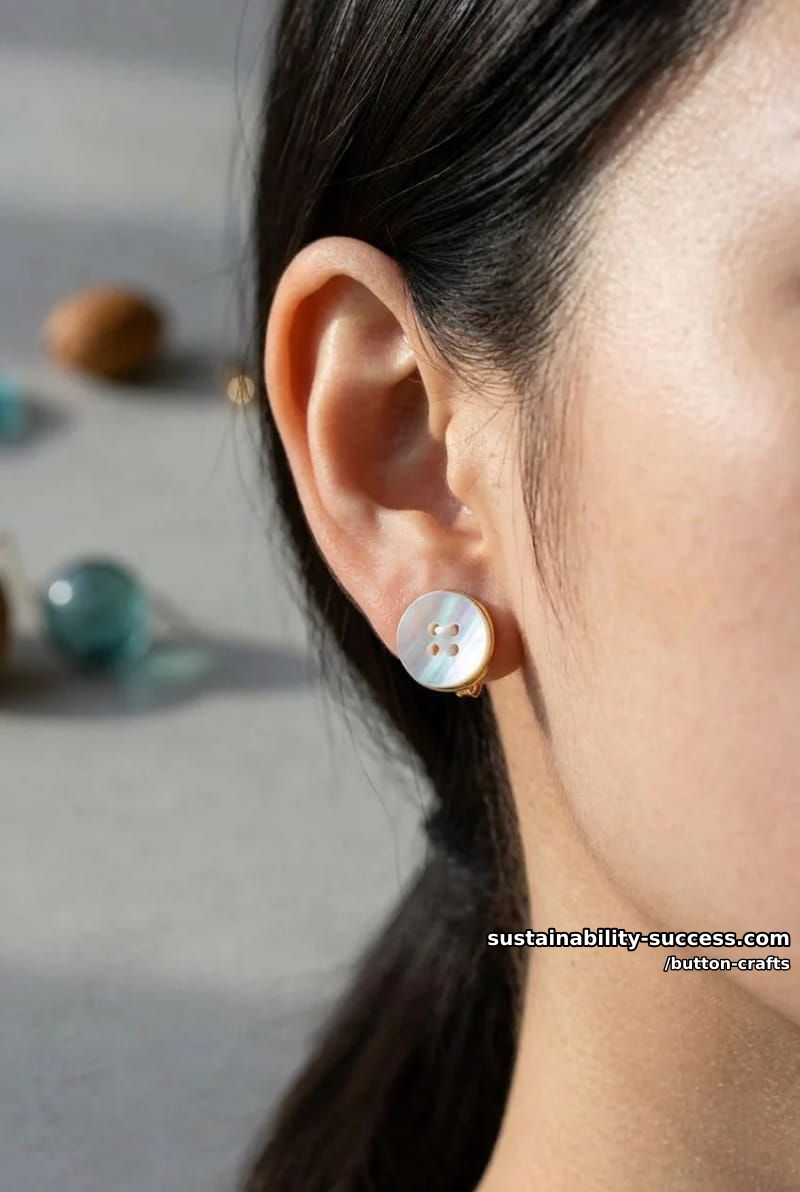
Small buttons become earrings two ways: glue a flat-back to a stud post with E6000, or wire a shank button onto an ear hook. The mismatched pair, two different buttons worn together, is the version that looks intentional rather than thrifty. Up this close the material is the whole story, so this is where the natural buttons earn their keep, and where it helps to know what you are looking at.
| Material | Look and feel | Why it is low-impact | Best in |
|---|---|---|---|
| Mother-of-pearl (shell) | Cool, heavy, rainbow sheen | Natural nacre; vintage stock keeps old shells in use | Studs, monograms |
| Corozo (tagua nut) | Warm grain, takes dye deeply | Nuts gathered after they fall; the palm is never cut | Drop earrings, cuffs |
| Horn and bone | Matte, marbled, lightweight | Traditional byproduct material, fully biodegradable | Rustic mosaics |
| Vintage glass | Faceted, translucent, weighty | Reusing 50-plus-year-old stock; no new firing | Suncatchers |
| Casein and early plastics | Deep color, often carved | Collectible; keep these out of glue projects | Statement pieces |
Corozo is worth seeking out on its own merits. The tagua nut is called vegetable ivory for its dense white interior, and the trade is one of the genuinely good ones: harvesters take only nuts that have already dropped, the industry supports tens of thousands of families in Ecuador, and a standing tagua palm earns more than the cattle ranching that would otherwise clear the same forest. Mother-of-pearl carries a heavier history. By 1905, Muscatine, Iowa was cutting roughly 1.5 billion shell buttons a year, about a third of the world’s supply, until the river mussels were fished out and plastic took the trade. The vintage shell buttons in your jar are quite literally what is left.
Real nacre in four sizes, so you can match a stud to an earlobe and still have larger ones for a monogram.

11. A button wreath that empties the jar
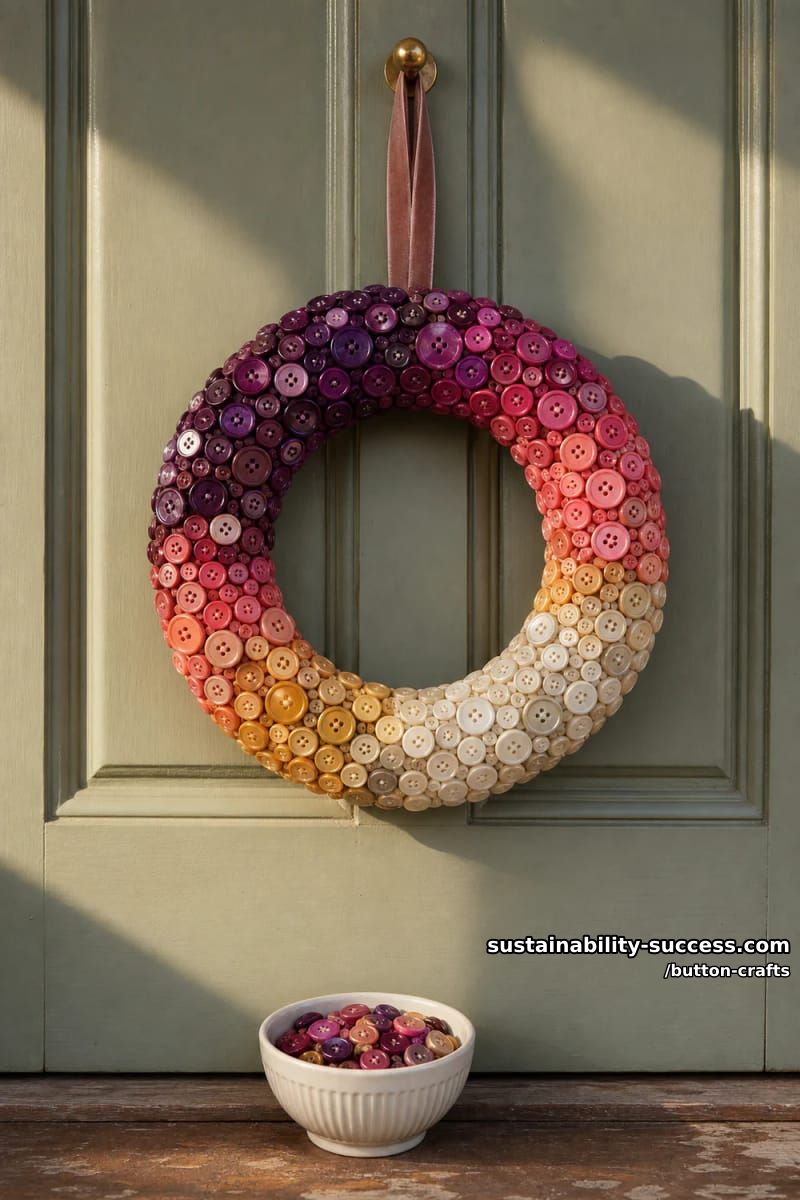
A wreath is how you burn through a jar fast, because a 12 inch ring swallows several hundred buttons before it looks full. Wrap the foam or wire base in felt or ribbon first so no bare form peeks through the gaps, then glue buttons in overlapping clusters, or push pearl-head pins through them into a foam ring if you would rather not glue. A color gradient running around the ring looks deliberate; a true scatter looks like a spill. This is the right home for all the plain plastic buttons too dull for jewelry.
A 12-inch gradient wreath
Foam ring, felt-wrapped, roughly 350 to 500 mixed buttons
If your stash runs thin halfway around (it will), a bulk bag tops it up for a few dollars. Here is what the door wreath above actually costs to build from scratch.
Shopping list
| Qty | Item | Spec | Price |
|---|---|---|---|
| 1 | Wreath form | 12 in foam or straw ring | $6 to $10 |
| 1 | Hygloss assorted craft buttons, bulk | mixed colors and sizes | $14 to $22 |
| 1 | Felt or ribbon | to wrap the base | $3 to $6 |
| 1 | Tacky glue or pearl-head pins | low-temp glue if gluing | $4 to $8 |
| Total | $27 to $46 | ||
Prices are approximate ranges as of June 2026; verify before purchase.
Conclusion
If you are new to working with buttons, make the magnets first. They teach you which buttons sit flat, how a shank gets in the way, and which adhesive actually holds, all in ten low-stakes minutes, and then the bowl and the mosaic make sense. Save the Dorset wheel for an evening when you want something slow and quiet in your hands, because it is closer to needle lace than to gluing.
The one thing worth repeating: before any button goes under glue or onto a balloon, sort out the carved shell, the deep-colored early plastics, and anything stamped with a regiment or a maker's name. Those go back in the jar. The plain resin discs by the hundred are what the wreath is for.