
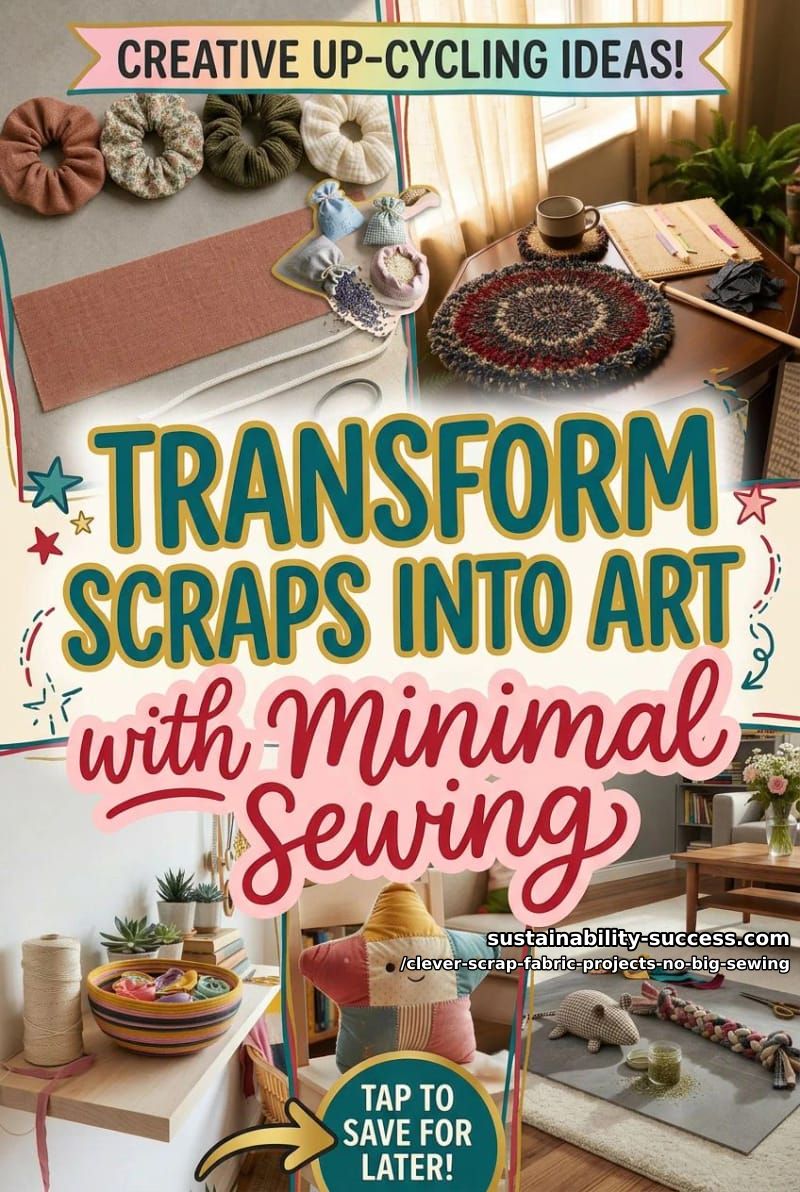
A remnant bin has a tipping point. One day it's a useful stash, and the next it's a guilt pile, and the answer is definitely not another drawstring tote. The twelve projects here work the smallest offcuts. Rolled fabric beads that string up like tiny quilt blocks. Boro patches that turn a worn knee into the best part of the jeans. A coiled bowl. Suffolk puffs gathered the way East Anglian housewives did them back in the 1600s, and a proddy coaster worked like the hearth rugs miners' wives made in County Durham. Most want a hand needle and a free afternoon rather than a machine, and all of them come out of the same old habit: using cloth until there's nothing left to use.
1. Rolled fabric scrap beads strung into a necklace
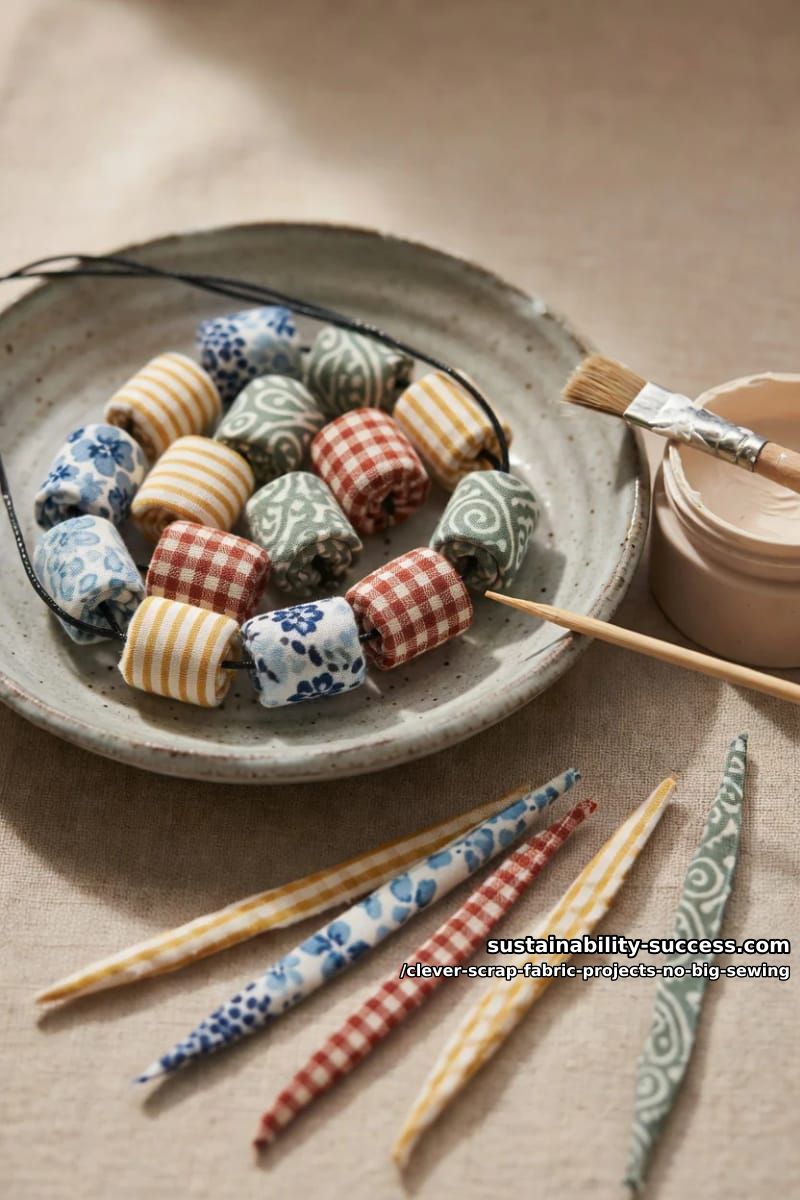
Cut a long skinny triangle , about an inch across the base, tapering to a point over 10 to 12 inches , and that's one bead. Roll it tight around a bamboo skewer from the wide end, brush the last two inches with fabric glue or Mod Podge, and let it dry before you slide it off. The print spirals as it wraps, so a busy floral and a plain stripe come off the same pair of scissors looking nothing alike.
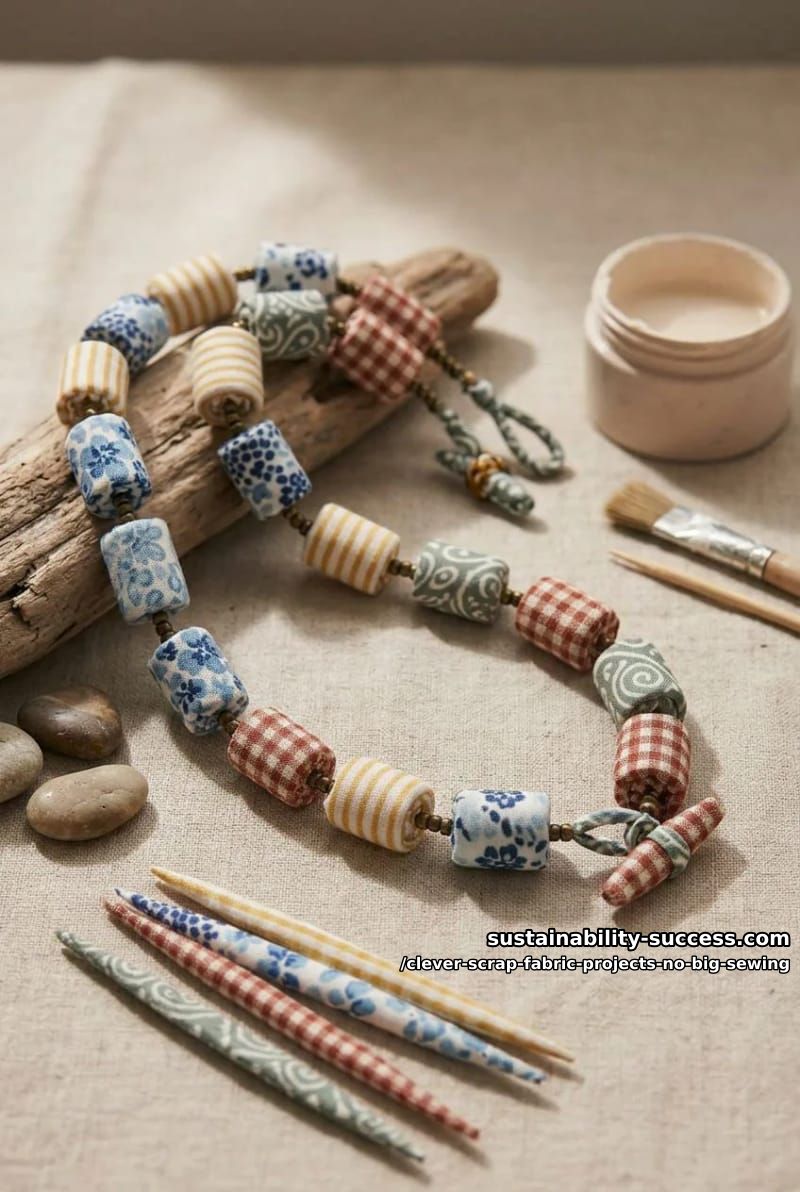
I'll take these over the polymer-clay version every craft blog seems to push. They weigh nothing on the ear, and up close the prints read like miniature patchwork. Seal each finished bead with a thin coat so humidity doesn't warp it, then string them on waxed cotton with a knot between each one. A handful costs basically nothing, which is the whole reason you went digging through the scrap bin to begin with.
2. Boro patches that mend a worn knee with visible stitches
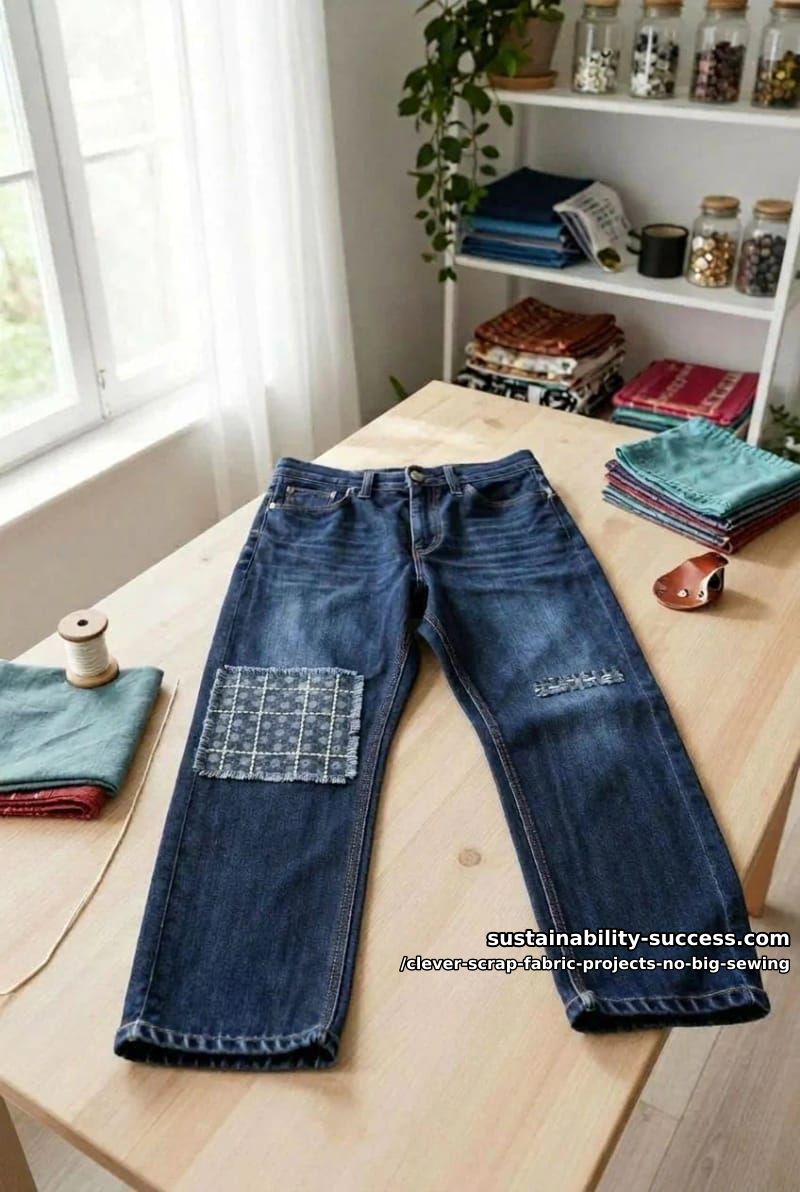
A boro patch makes the hole the most interesting thing about the garment. You back the damage with a scrap and stitch through both layers in steady rows of running stitch, and that's the whole mechanic. The technique comes out of the Tohoku region of northern Japan, where rural households patched and re-patched cotton and hemp across generations because cloth was scarce and the winters were long. That same mottainai ethic , a refusal to waste anything that still has use left in it , runs under almost everything on this list.
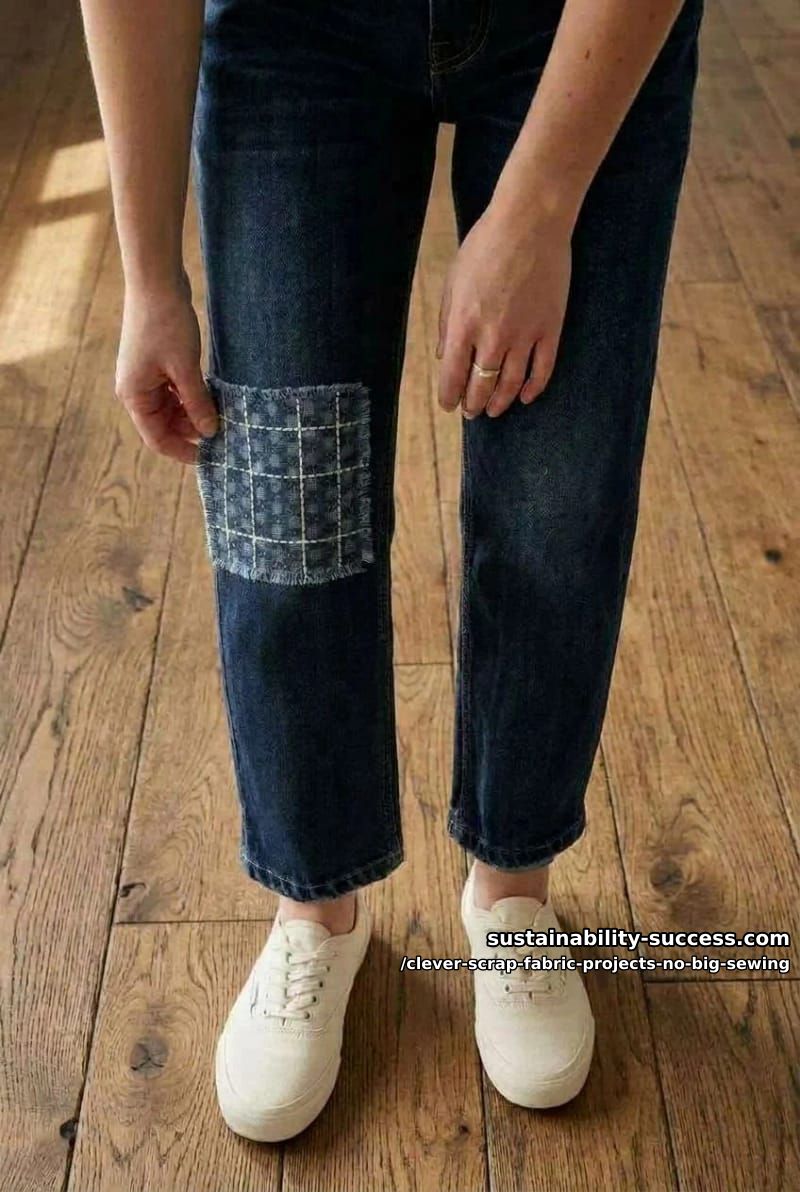
Start with jeans. The denim is sturdy, the indigo is traditional, and nearly everyone owns a pair gone thin at the knee or the seat. Use sashiko thread, thicker and less glossy than embroidery floss, so the stitches sit up and show instead of sinking in. White on indigo is the classic, but I'm partial to a worn chambray shirt patched in washed teal, which looks just as deliberate and a little less expected.
A starter kit saves you the hunt for the one needle long enough to load eight stitches at a time, and that loaded needle is the whole trick behind a clean sashiko line.

3. Knotted scrunchies from quilting offcuts
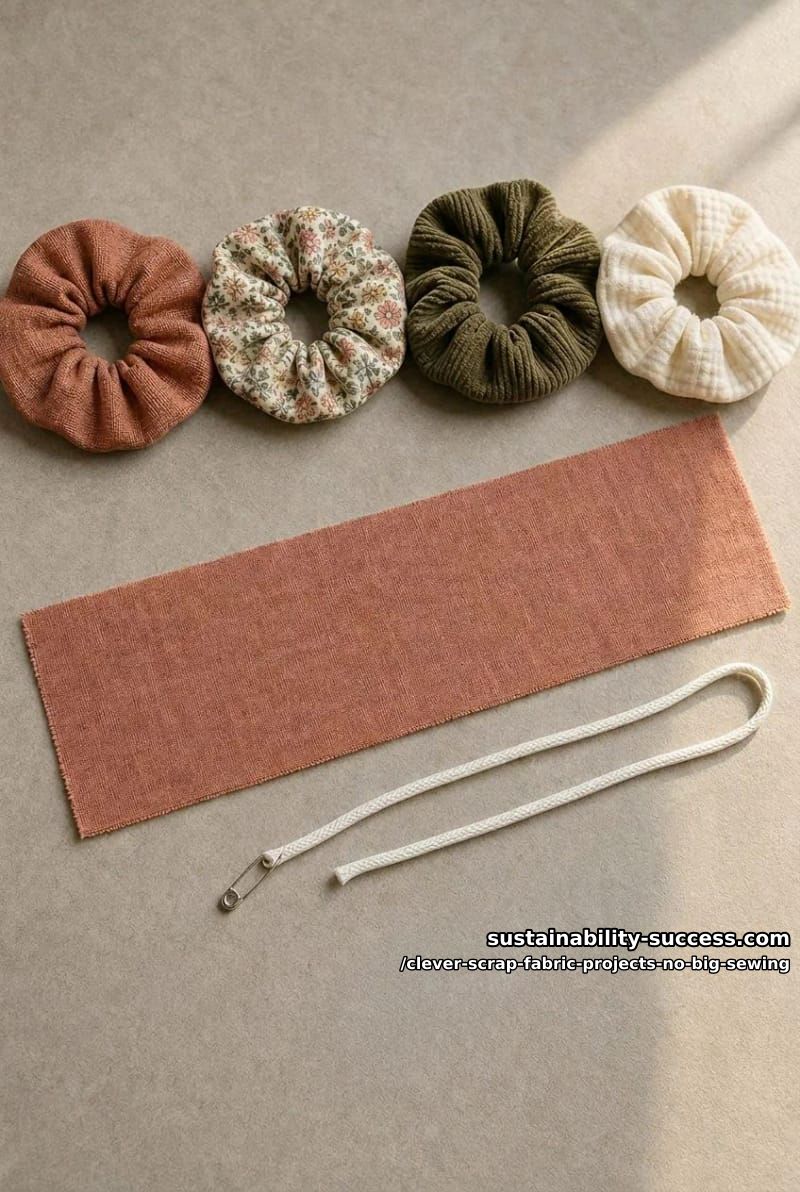
Scrunchies are the fastest way to burn through narrow strips. Cut a rectangle around 4 by 18 inches, fold it right sides together, sew the one long tube seam, then close the gap by hand. Feed quarter-inch elastic through with a safety pin, knot it, tuck the opening shut. Fifteen minutes, less once you quit measuring.
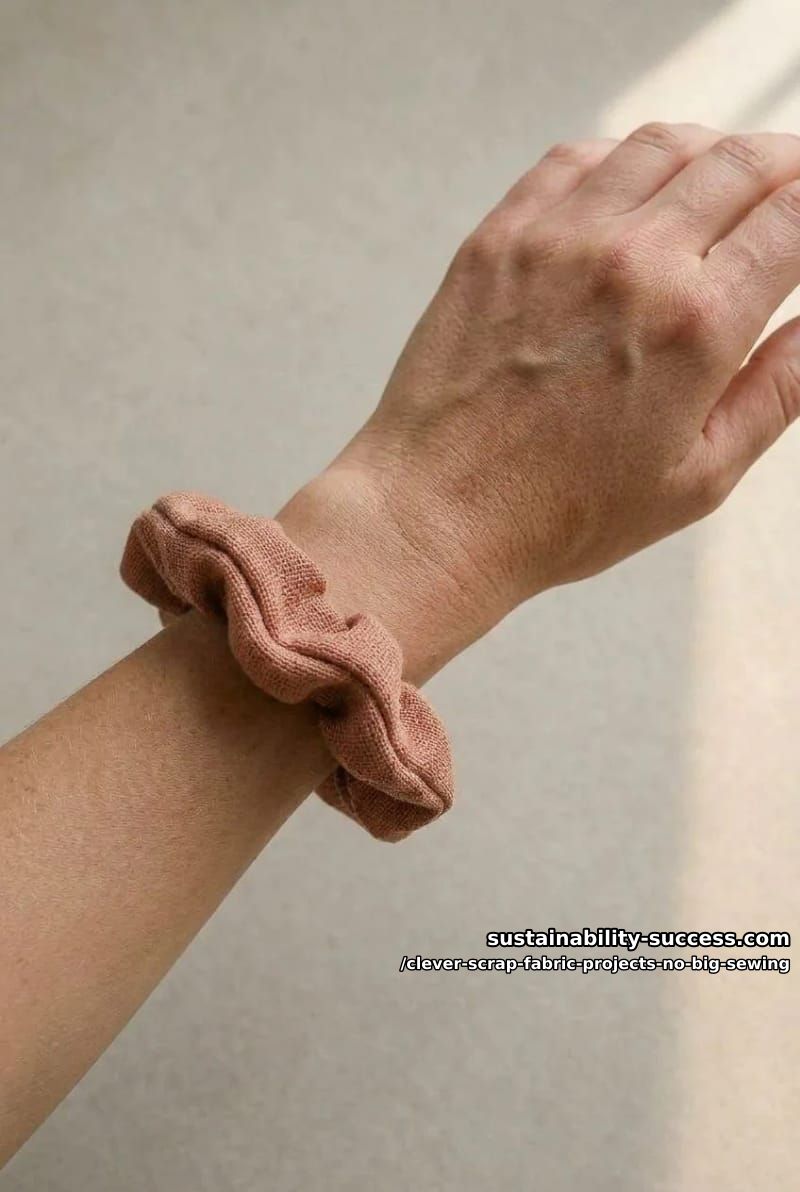
Where they go wrong is weight, so match the cloth to the job instead of grabbing whatever's on top of the pile.
Do this
- Lightweight cotton, double gauze, or silk , these keep the gathers soft and full.
- Cut on the straight grain. Go bias only if you’re after extra drape.
- Keep the strip to at least 18 inches, or the finished gathers look stingy.
Avoid
- Heavy denim or canvas. It bunches into stiff lumps instead of ruffles.
- One-directional nap, if you actually care which way the pile ends up sitting.
- Loosely woven linen frays badly , zigzag the raw edge before you start.
4. A coiled fabric bowl wrapped over cotton cord
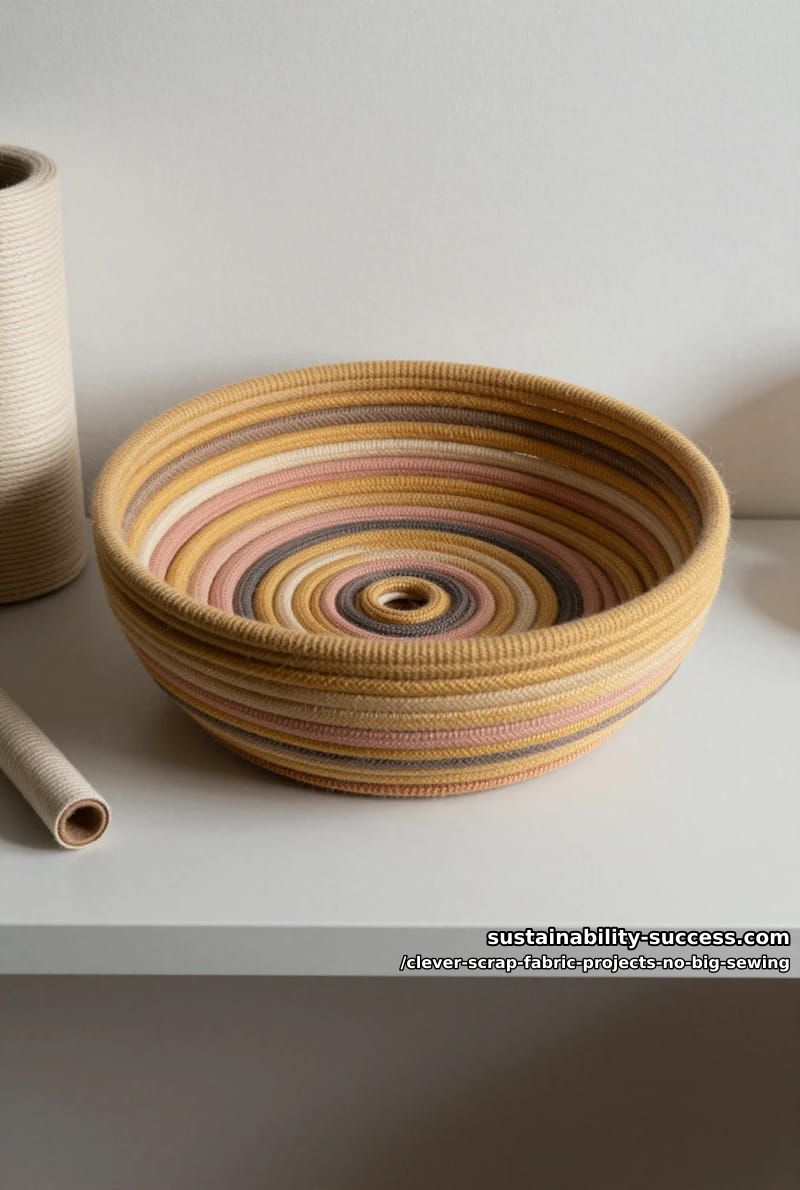
A coiled bowl is a rope basket shrunk down. Wrap fabric strips around a length of cotton piping cord, then spiral the wrapped cord around itself, fixing each coil to the one before it. Stitch the coils with a machine's zigzag if you've already got one out, hand-tack them, or glue them for zero sewing at all. The shape is just a function of how tightly you stack the coils as they climb.
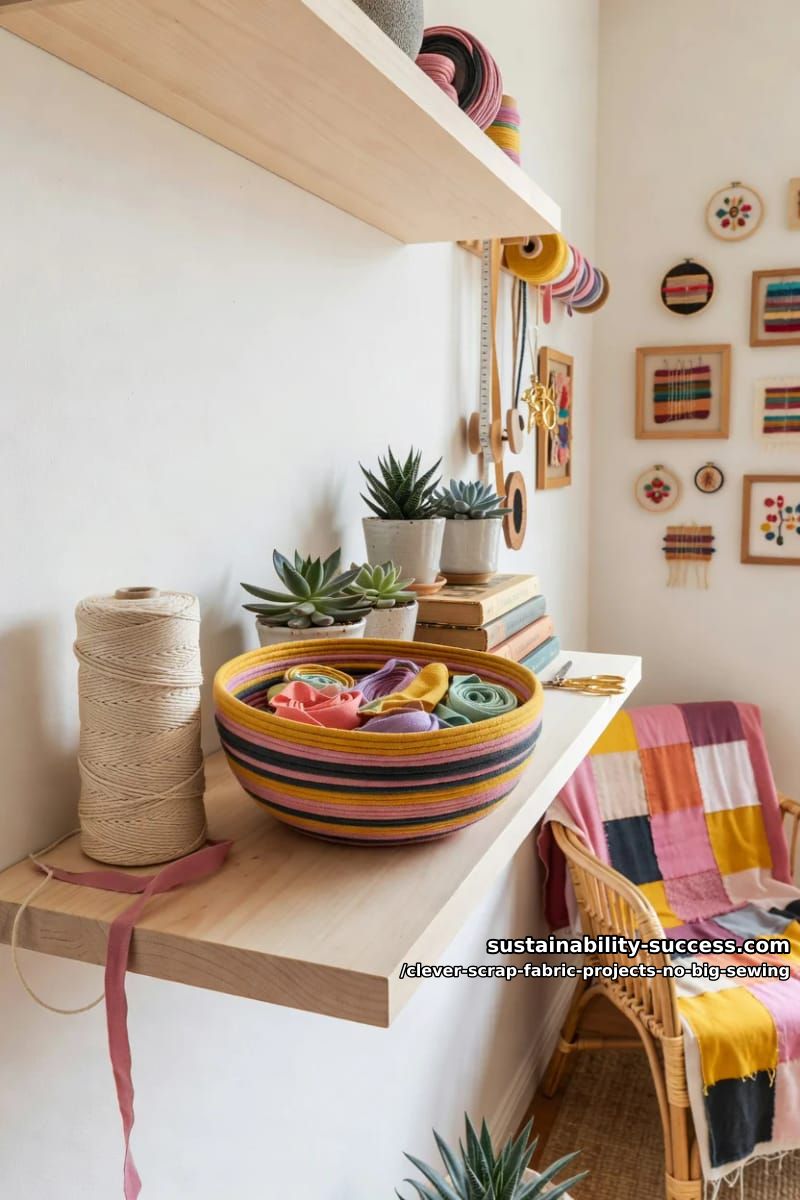
Base: keep the first three or four coils flat against the table so the bottom sits level.
Walls: begin angling each new coil up and outward , the steeper you stack, the taller and narrower the bowl gets.
Join: catch each coil to its neighbor every half inch, no further, or the wall sags between stitches.
Rim: taper the last six inches of cord down to nothing and tuck it under the final coil, so there’s no blunt end left showing.
Five-thirty-seconds cotton cord hits the sweet spot: thin enough to coil tight, thick enough that the bowl holds itself up. One 80-yard spool makes several.

5. Furoshiki wraps and gift bags from larger remnants
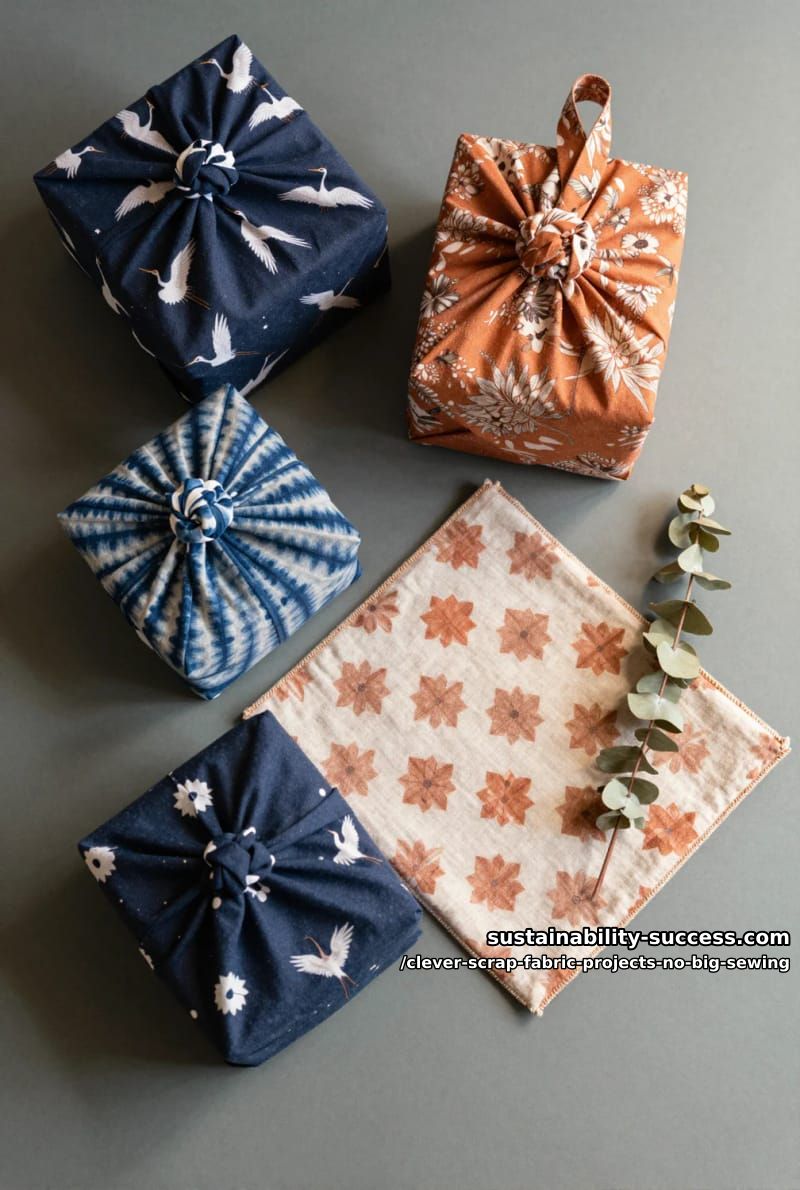
Furoshiki is the Japanese practice of wrapping and carrying things in a single square of cloth, and a larger remnant is exactly what it wants. Hem a square on all four sides , no closures, no handles , and the same piece will wrap a box, sling a bottle, or knot up into a quick shopping bag. The cloth goes back to Japan’s Nara period, when it protected temple treasures long before anyone used it to bundle bathhouse clothes.
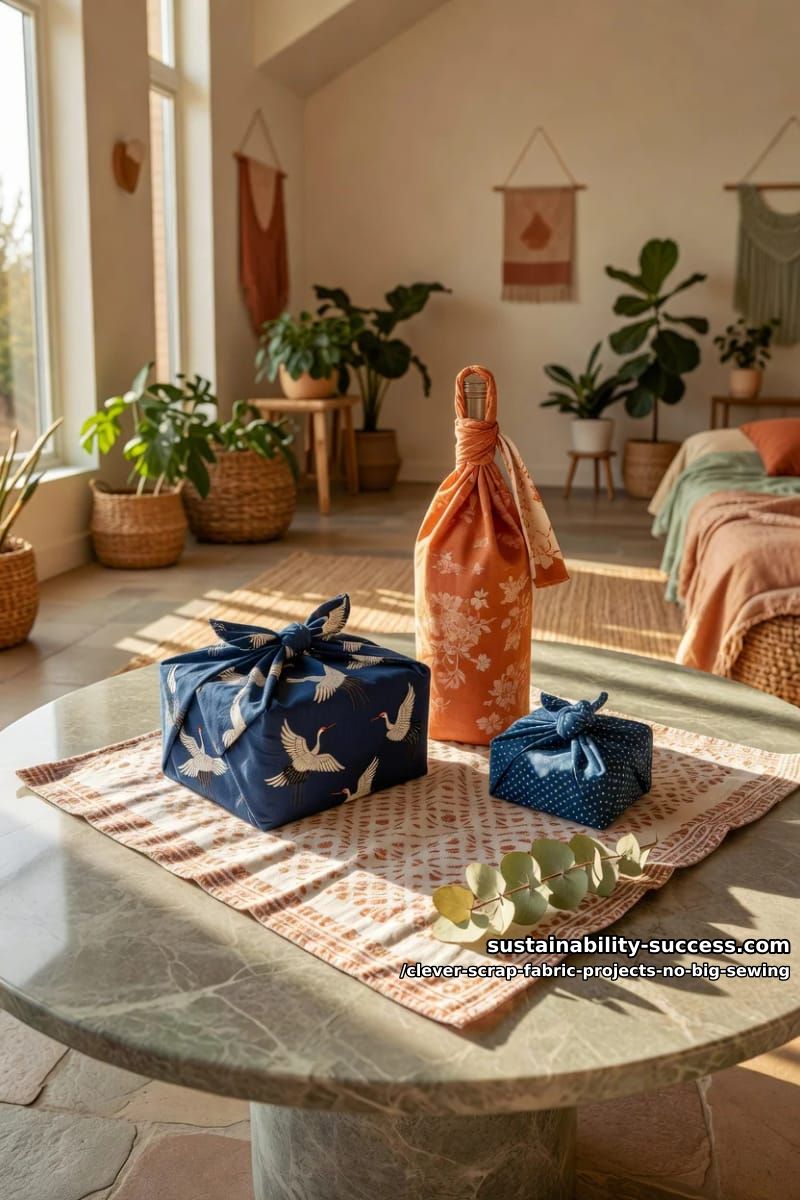
One sizing rule is worth committing to memory: the cloth should run about three times the longest edge of whatever you're wrapping. An 18-inch square handles a book; a 28-inch square covers most boxes. In 2006, Japan's environment minister Yuriko Koike pushed a "mottainai furoshiki" aimed squarely at cutting plastic-bag waste, which makes a hemmed scrap that rare bit of gift wrap the recipient actually hands back, or keeps and reuses for years.
6. Hoop wall art from a fabric scrap collage
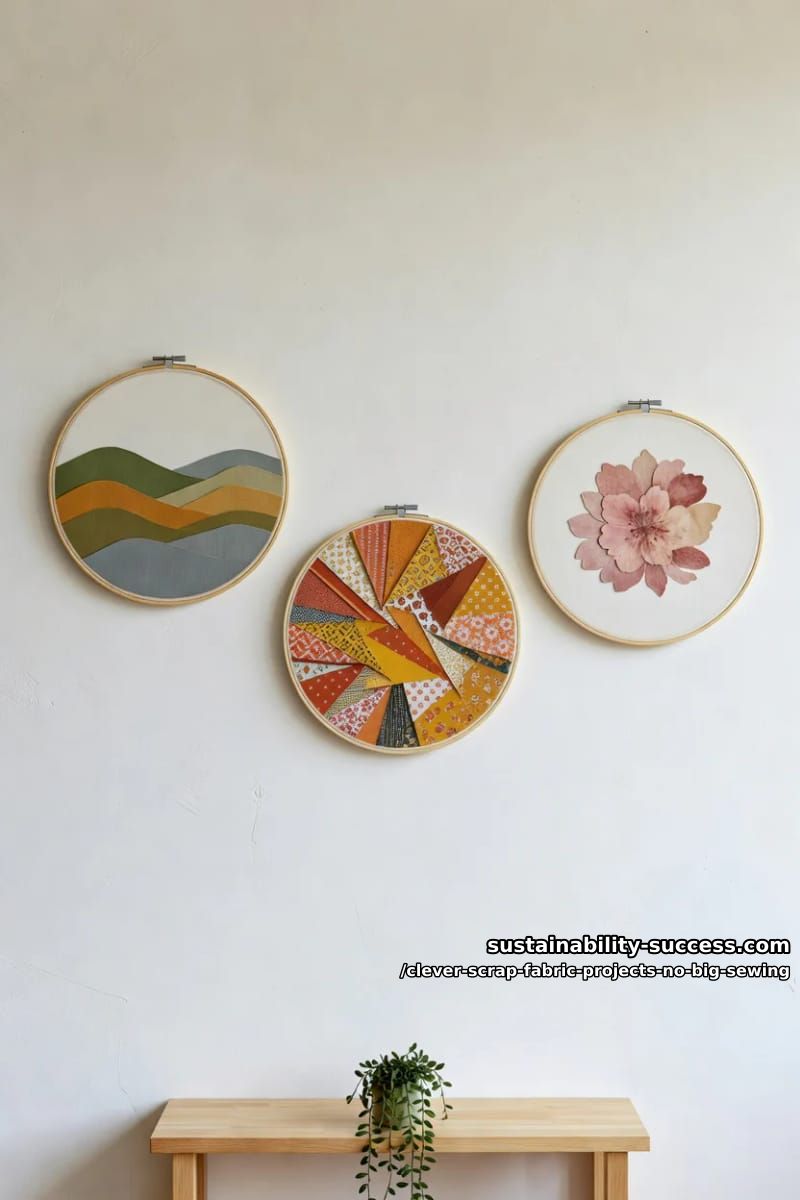
An embroidery hoop turns any flat scrap into framed wall art in under five minutes, no needle required. Lay the fabric over the inner ring, press the outer ring down over it, tighten the screw, trim the excess to about half an inch. For a collage, glue smaller scraps onto a plain backing fabric first, then hoop the whole thing.
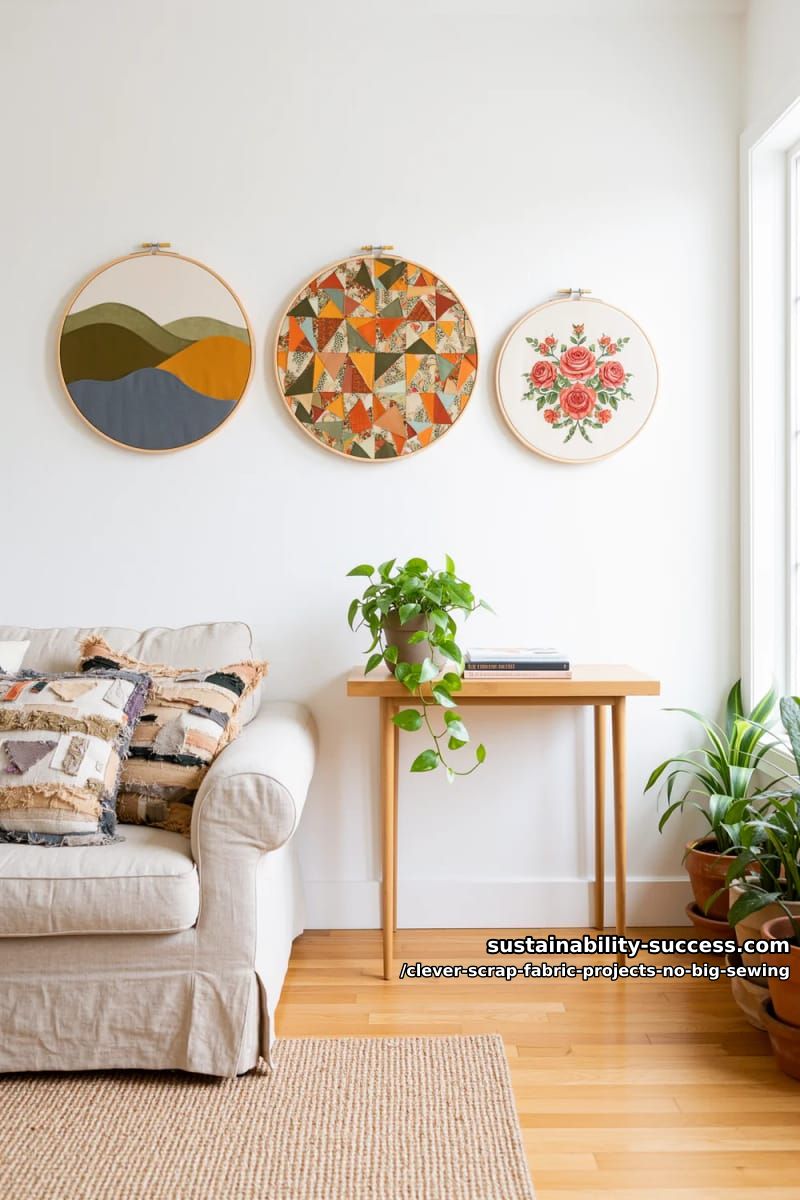
Clusters beat singles. Work in odd numbers and change up what's inside each one , a cut-up landscape, a field of patchwork triangles, one oversized floral centered like a portrait. To clean up the back, run a gathering stitch around the trimmed edge and pull it tight, or just glue a felt circle over it.
A bulk set of matching 6-inch hoops keeps a whole wall consistent: Caydo 12-piece 6-inch bamboo embroidery hoops run about $12 to $20, with plenty left over for gifts.
7. No-sew fabric pumpkins, stuffed and tied
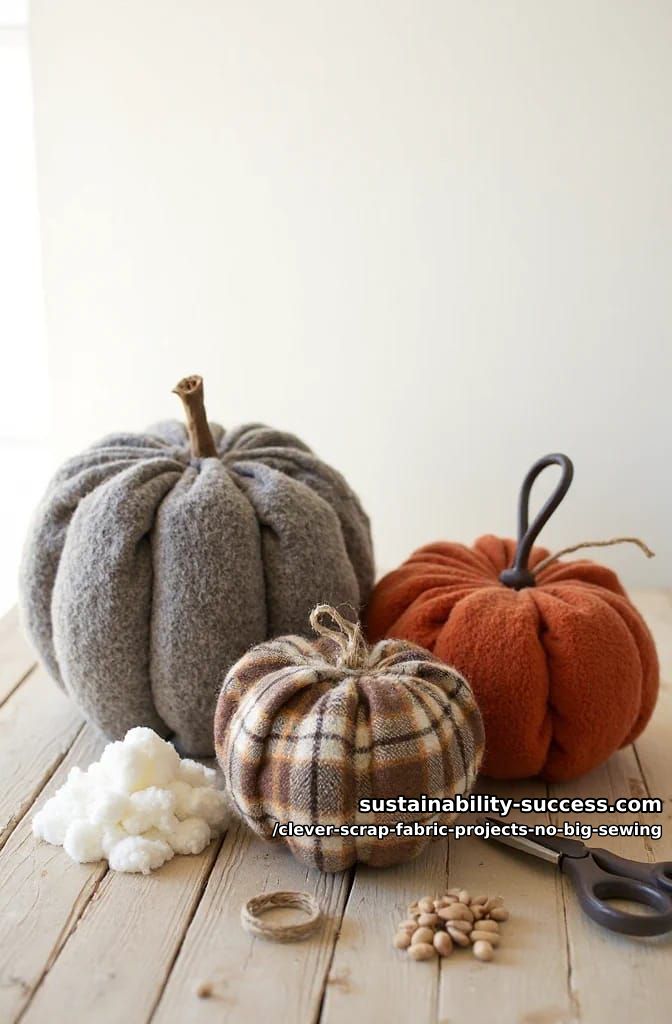
A fabric pumpkin is a stuffed circle cinched at the top. Cut a circle around 14 inches across, mound stuffing in the middle, gather the edges up into a bunch and hold it with a rubber band. Wind twine from the base up and over to press in the vertical sections, then shove a real twig into the top for the stem. Skip woven cotton here , sweater sleeves and old flannel shirts hold the ridges far better, because the knit and the brushed nap grip themselves.

Thin quilting cotton stuffed with fiberfill alone gives you a floppy, top-heavy blob. Drop a half cup of dried beans or rice into the base to weight it, then fill the rest with stuffing. That ballast is the difference between a pumpkin that stands and one that tips over like a beanbag.
8. Suffolk puff garland and brooches
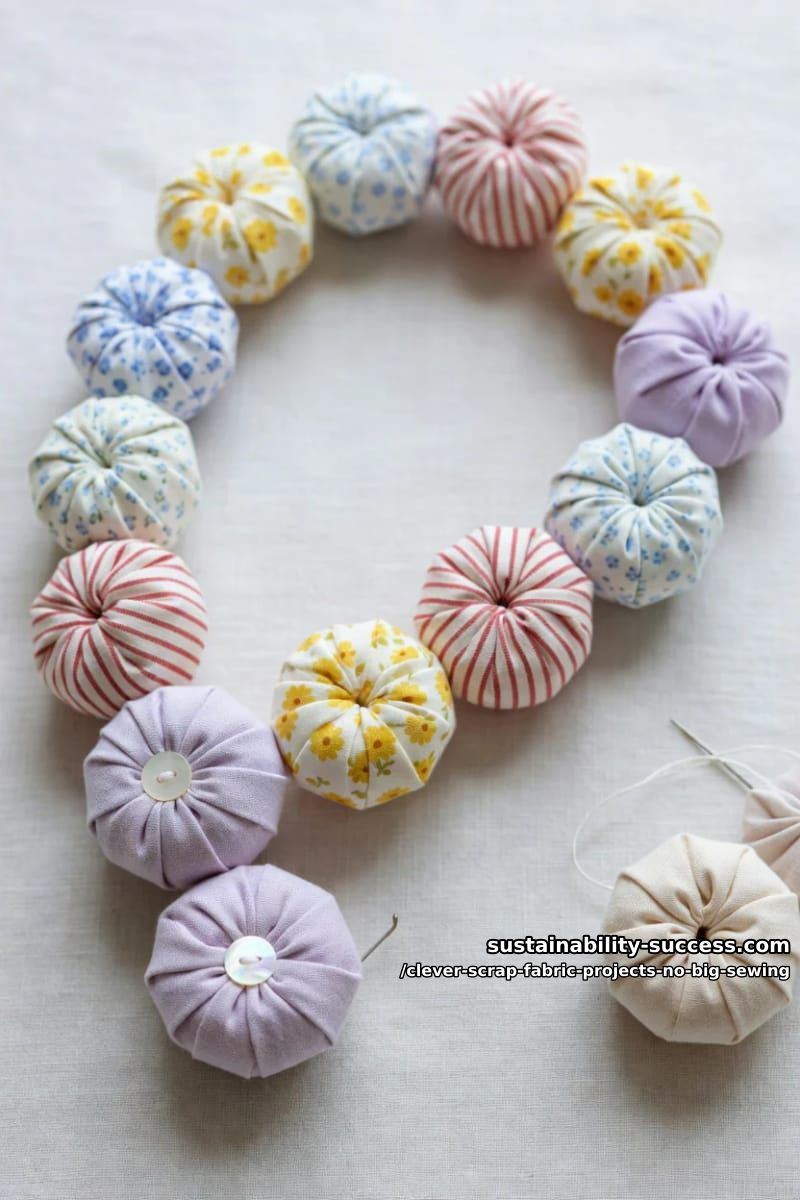
A Suffolk puff is a circle of fabric gathered down into a flat, ruffled disc, and it might be the most portable hand-sewing going: running stitch around the edge, a tug to gather, a knot to finish. Cut the circle about two and a half times the diameter you want the finished puff to be, because the gathering swallows more than half. The English have been making these since at least 1601, when thrifty Suffolk households turned worn-out clothes into puffs and stitched them up into coverlets.
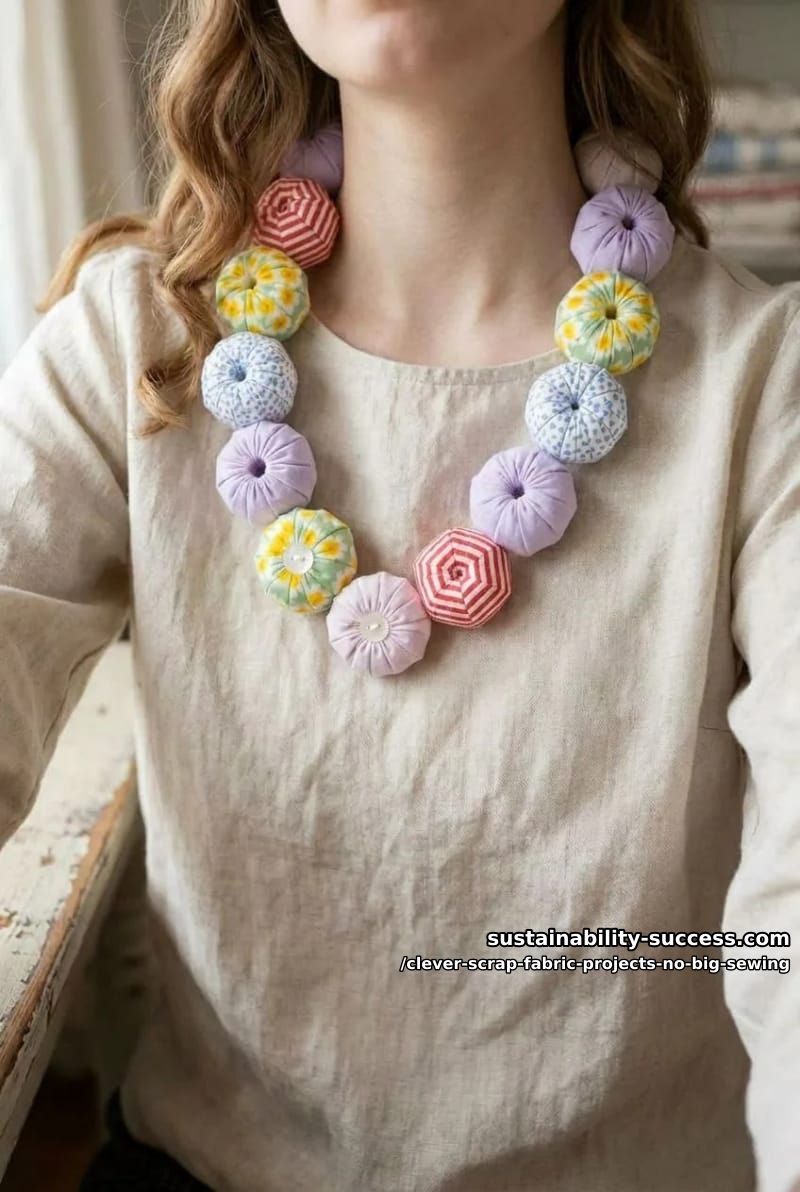
I wrote these off as twee for years. Then a friend strung two dozen of them into a window garland and I changed my mind in about a minute. Stack two with a button through the center, add a pin, and you've got a brooch; sew a little cluster onto a hair clip instead. This is the project you pick up and put down between everything else you're doing.
9. A small patchwork plushie for the deepest scraps
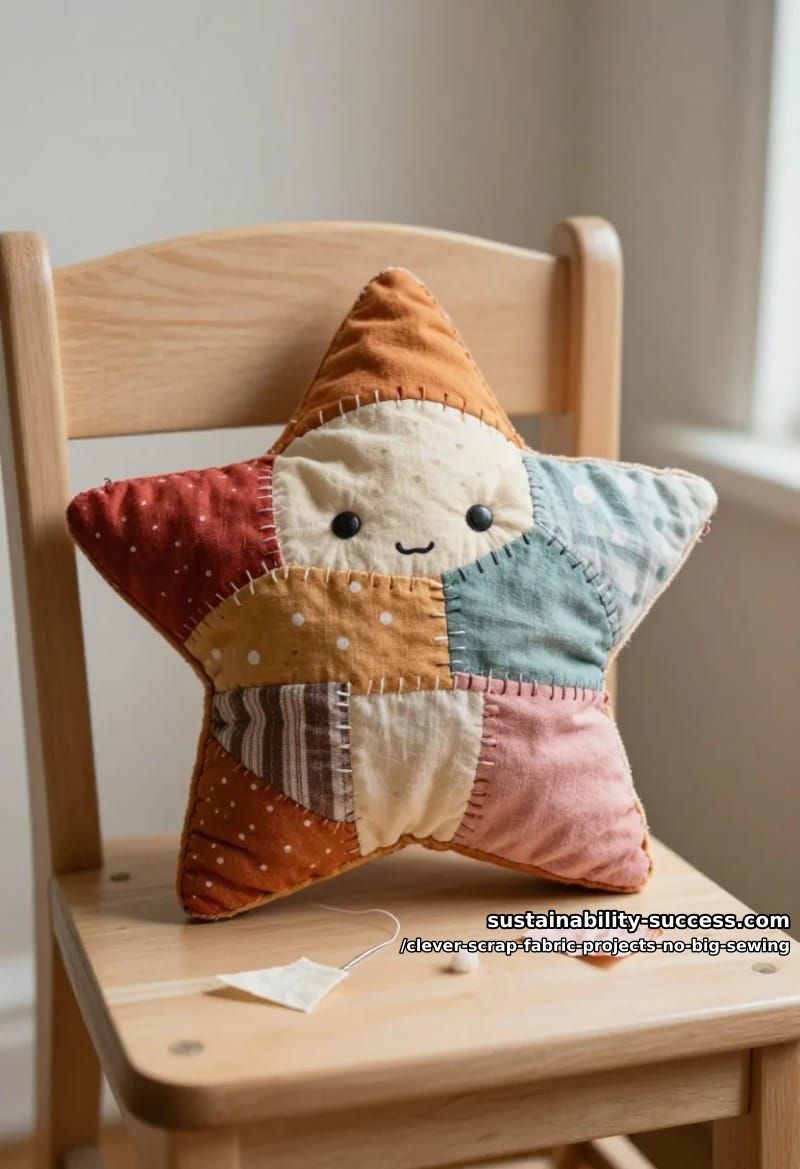
A plushie pieced from scraps forgives almost everything. Hand-stitch four or six patches into a panel, cut two simple shapes , a star, a heart, a fat little ghost , sew them right sides together with a gap left open, turn it, and stuff with the smallest scraps you'd otherwise toss. No pattern, no zipper, and crooked seams only make it read more handmade.
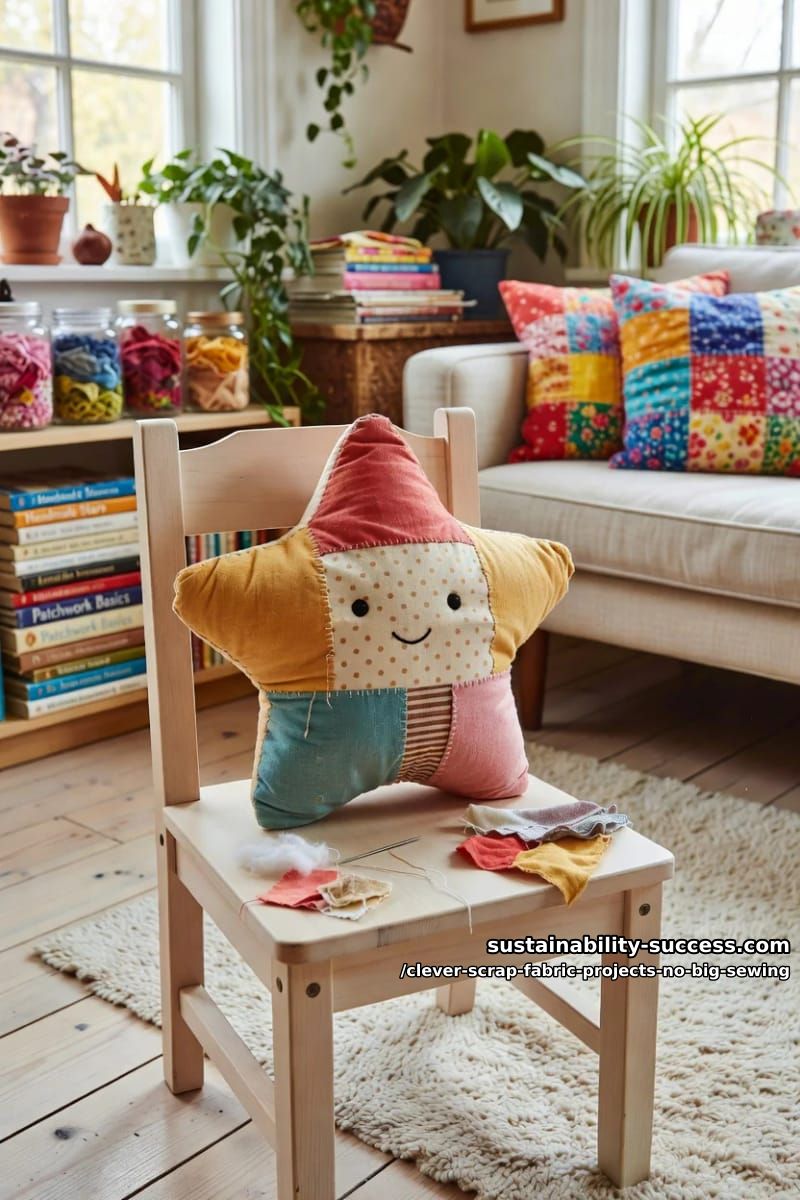
Pull patches from a random bin and the instinct is to sort by color. Ignore color. Sort by value instead, meaning how light or dark each scrap reads in a black-and-white photo. A plushie pieced from three lights, two mediums, and one dark looks composed even when the colors clash, because the eye clocks contrast before it clocks hue. An all-medium pile, however pretty each piece is on its own, goes muddy.
10. Catnip mouse and a braided pet tug
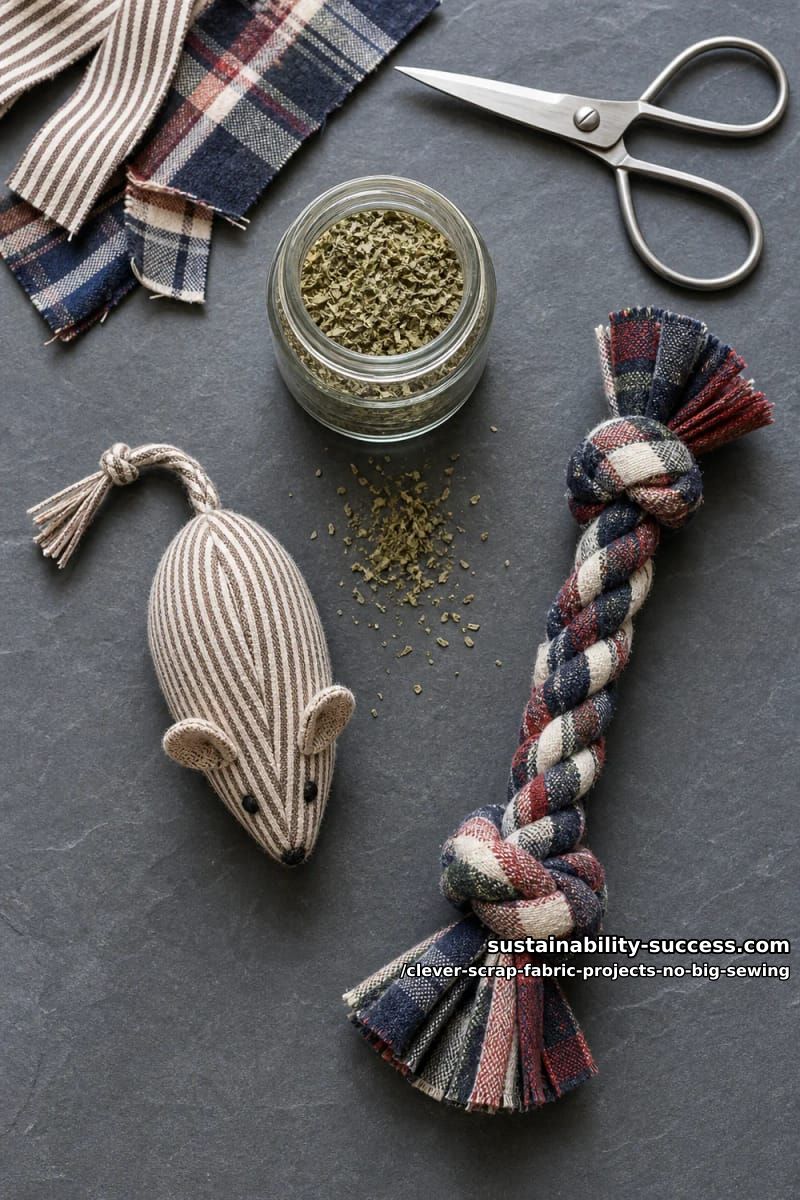
A catnip mouse needs next to nothing: two small fabric ovals, a pinch of dried catnip worked into the stuffing, a strip knotted on for a tail. For dogs, plait three strips of old flannel or fleece into a tug and knot both ends hard. Between them they swallow the scraps too small and too odd for anything else.
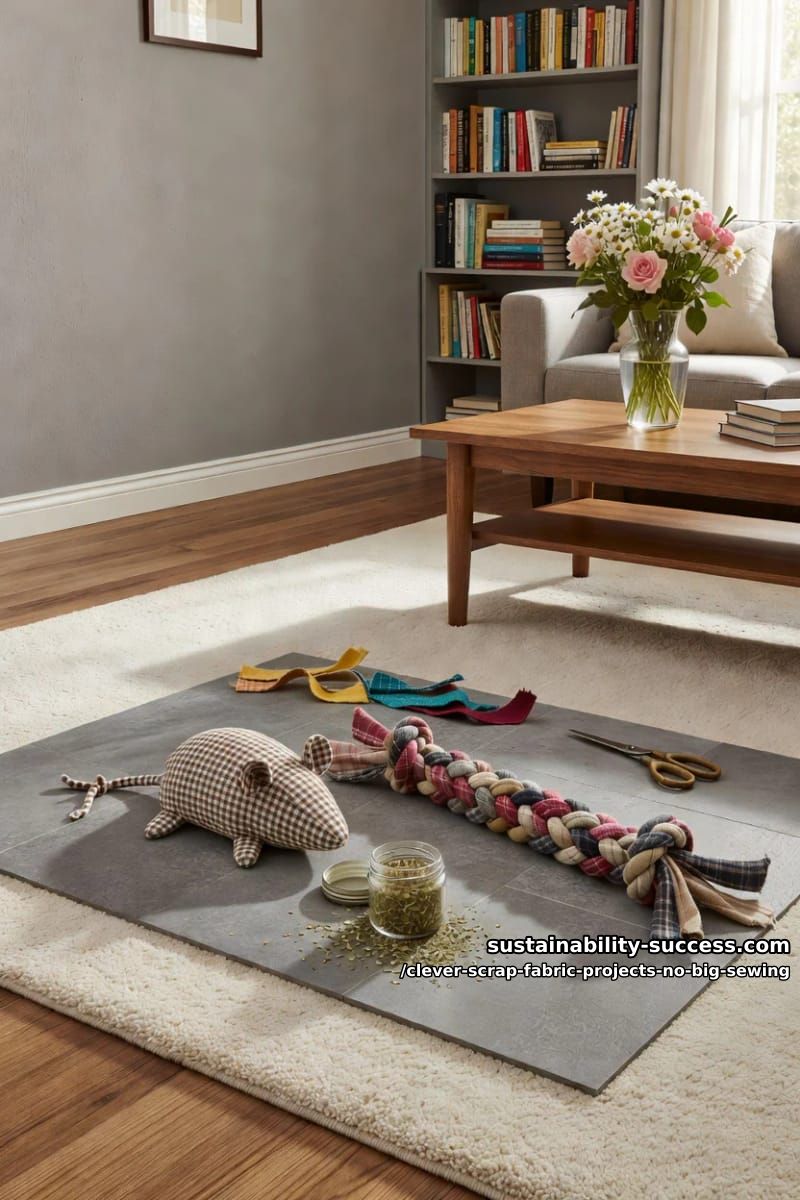
One safety line matters more for pets than for people. Skip loose fiberfill and button eyes on any toy headed for an animal that shreds things, because swallowed stuffing and plastic eyes mean a vet visit. Stuff the mouse with more knotted scraps instead, and stitch every seam twice.
A bulk bag of Frontier Co-op organic catnip, 1-pound refills these for a year at roughly $20 to $30, far less than the pre-made toys you’ll watch get shredded inside a week.
11. A proddy coaster or chair pad from fabric strips
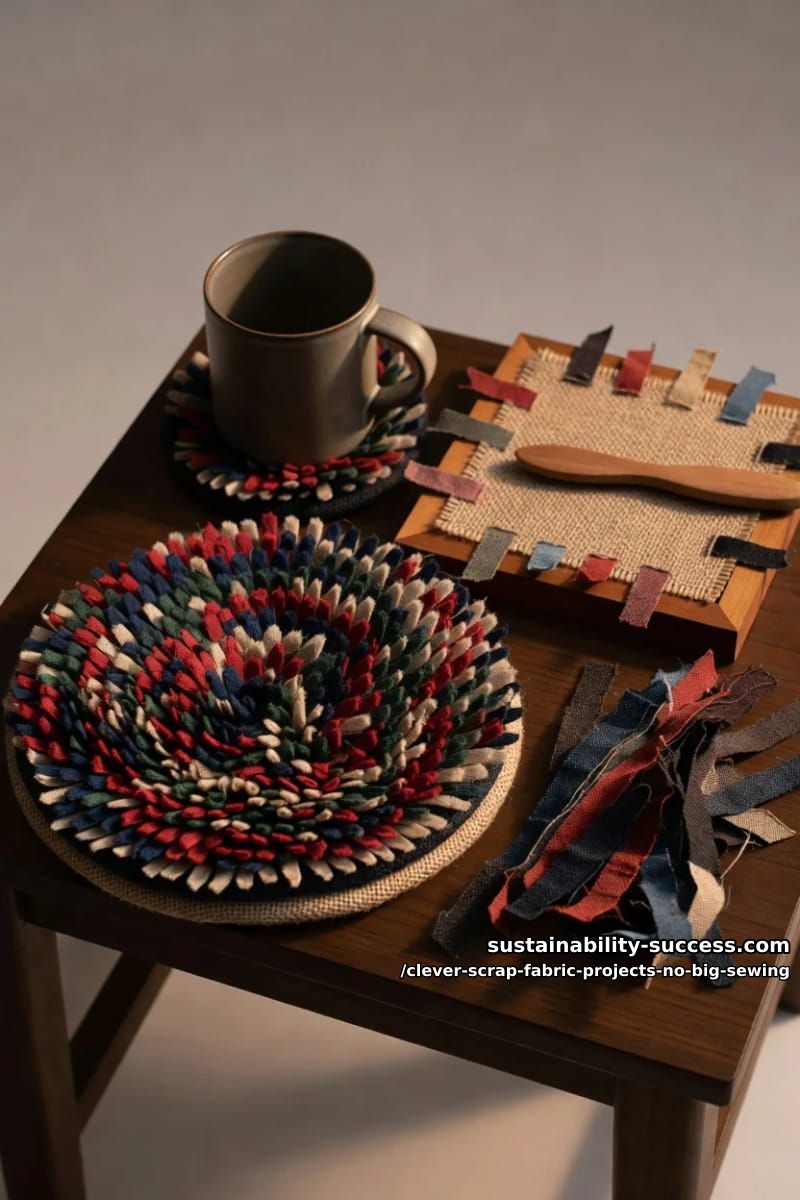
You make a proddy mat by poking short fabric strips through a burlap backing, one at a time, until the whole surface stands up in a thick shaggy pile , no sewing anywhere in it. Cut your strips roughly one inch by three, push both ends through neighboring holes in the hessian with a prodder (an old pencil filed to a point does the job), and pack them in tight. At coaster or chair-pad scale it's a genuinely small afternoon; a full rug would eat weeks.
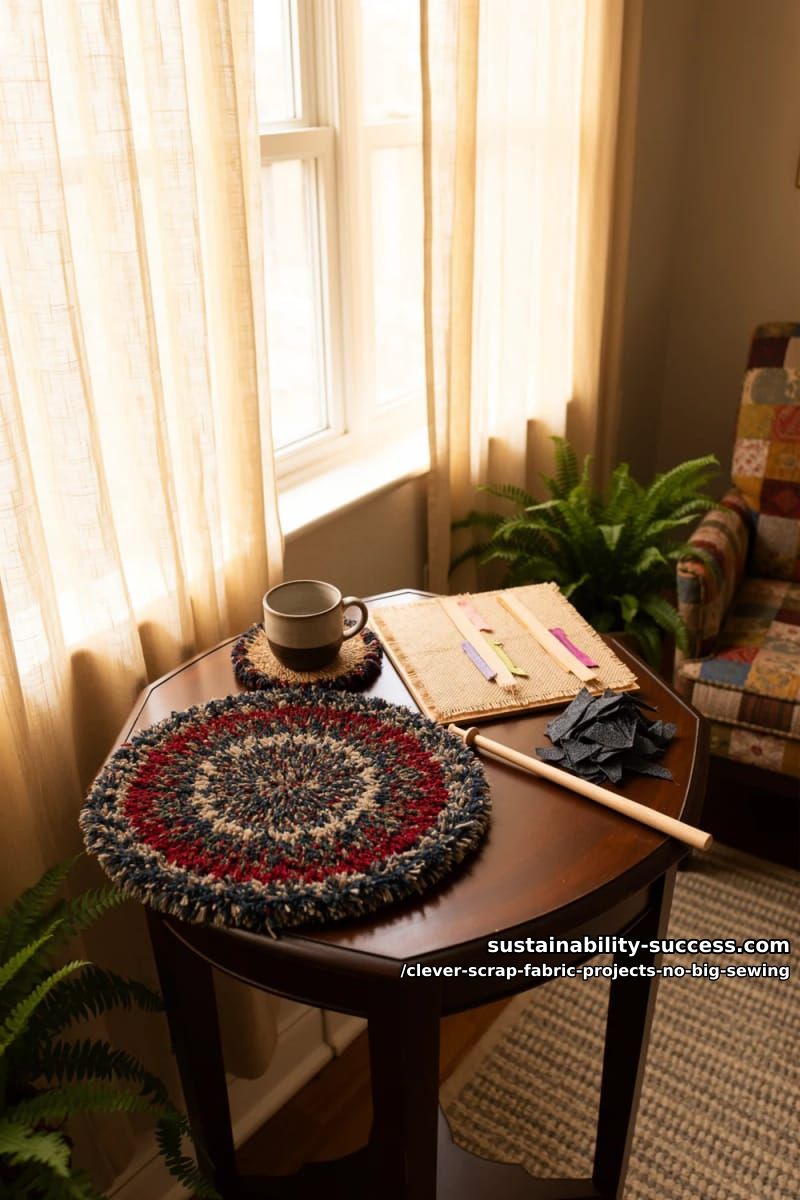
The craft is northern English to the bone , proddy, proggy, or clippy depending on which county you’re standing in , and it was worked from worn woollen clothes over a backing cut out of old food sacks. Heritage Crafts still tracks rag-rug making as a living tradition. The classic farmhouse layout is a diamond in the center with a dark border around it, the border there to hide the dust. Wool holds the pile better than cotton; cotton works, but it packs flatter, so save your heaviest offcuts for this.
12. Lavender sachets and rice hand warmers
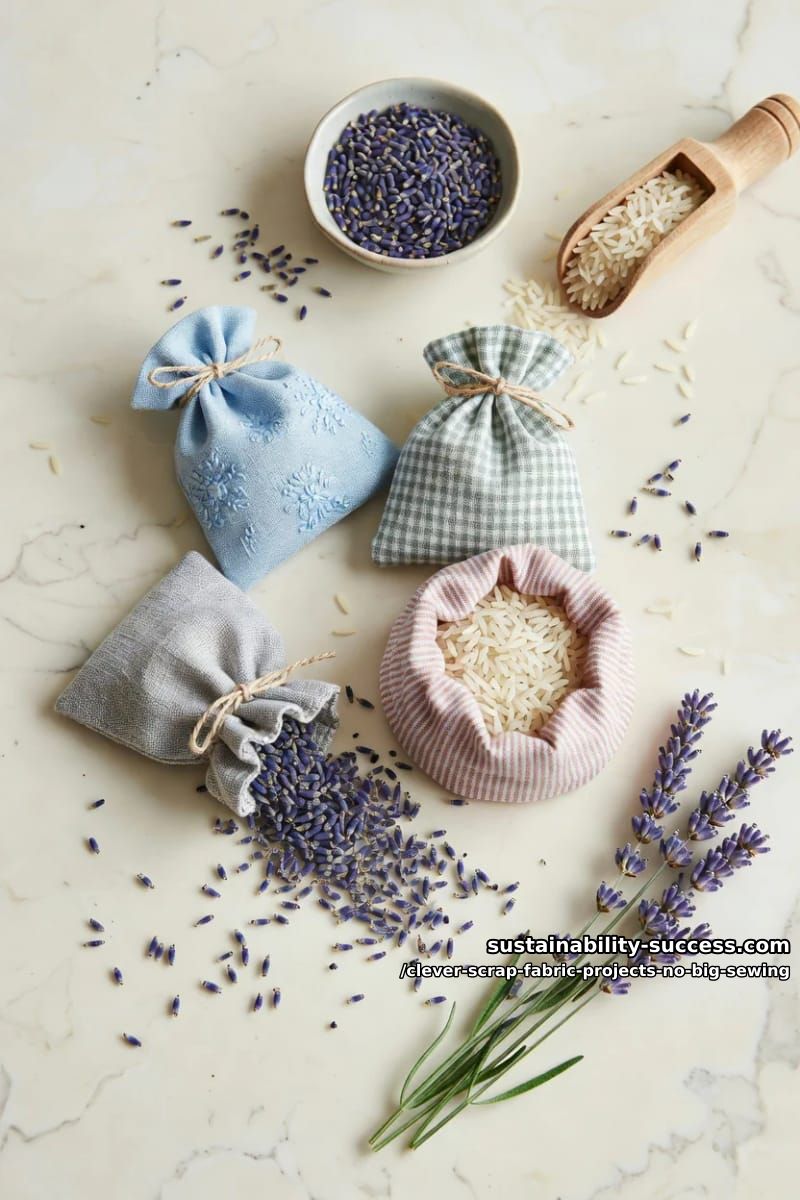
A drawer sachet is the simplest closed pouch there is: fold a small fabric square, stitch two sides, fill it with dried lavender, close it up. Make the same pouch a bit bigger, fill it with uncooked rice instead, and you've got a microwave hand warmer that holds heat for fifteen minutes after 30 seconds on high. Throw a spoon of lavender in with the rice and it warms and scents in one go.
Hand this one to a beginner or a kid , a crooked seam vanishes the moment the pouch is full. Tuck the sachets into a sweater drawer or a suitcase. Lavender fades over a season, so give the pouch a squeeze to wake it back up, or top it off.
For sachets that actually keep their scent, start with real buds: Starwest Botanicals dried lavender flowers, 1-pound bulk bag, usually $15 to $25, fills a dozen pouches.
Conclusion
Work from the bottom of the bin up, if you want a route through all this: the tiniest slivers go into rolled beads and Suffolk puffs, the medium strips into scrunchies and sachets, the heavy woollen offcuts saved back for the proddy coaster. The boro patch is the one I'd learn first regardless, because it's the only project here that also rescues clothes you already own, and a mended knee gives back more than it costs. The catnip mouse will take the lint-edged shreds even the beads turn down. Past that, throw the dead stuff out , not every scrap is worth saving, and pretending otherwise is how the bin became a guilt pile in the first place.