
The thing nobody tells you about a branch tree in a studio is that the branch is the easy part. A handful of bare manzanita or birch limbs costs almost nothing; the real problem is where it goes when your whole apartment is one room and the floor is already spoken for by the bed, the desk, and the one chair guests sit in. Most of the ideas below never touch the floor at all. They climb the wall, hang off the ceiling, or sit in a weighted pot small enough for a side table, and the boho part is mostly what you drape on them once they are up.
A few of these are ten-minute, picture-strip jobs; one or two ask for a weekend and a bag of plaster. I have flagged which is which, plus the one spot studio renters reliably get burned: hanging real weight over the bed, which 3M itself will tell you not to do, and they are right.

Branch trees that climb the wall
A flat branch tree taped straight to the wall

The lowest-effort branch tree in a studio is a flat triangle of bare limbs stuck to the wall, and it looks deliberate the moment you add a string of lights. You are drawing the shape of a tree in two dimensions instead of three, which means it occupies roughly the depth of a picture frame and you can still walk past it without turning sideways. Lay the branches out on the floor first, get the silhouette right, then transfer it up piece by piece so you are not guessing.
Anchor each limb with rated adhesive strips on a clean, painted wall (wipe it with rubbing alcohol first, and if you painted recently, 3M says wait a week for the paint to cure). The honest limit here is weight: keep the whole thing to bare, dry branches and lightweight ornaments, because a single large picture-hanging strip set holds about four pounds and a knot of green, sap-heavy branches will outrun that fast.
Birch branches fanned across the headboard wall
Treat the wall behind the bed as the canvas and let three or four tall birch branches fan upward from behind the headboard like a sparse, open tree. It does the boho job better than most actual trees because the negative space between bare white limbs is the whole look, and a studio has no room for a fat seven-footer anyway. Keep it to feather-light branches and skip anything ceramic up there.

3M prints it on the package: do not use picture-hanging strips over a bed. Adhesive fails gradually as it warms and ages, and the failure you want is a branch sliding down a blank wall, not one landing on your face at 3 a.m. If you want branches behind the bed, mount them low and light, keep the heavy ornaments on a floor-standing piece elsewhere, and re-check the strips every few weeks. Same logic kills the idea of gluing branches straight to a rental wall, which trades your deposit for a craft project.
One horizontal branch hung from the ceiling
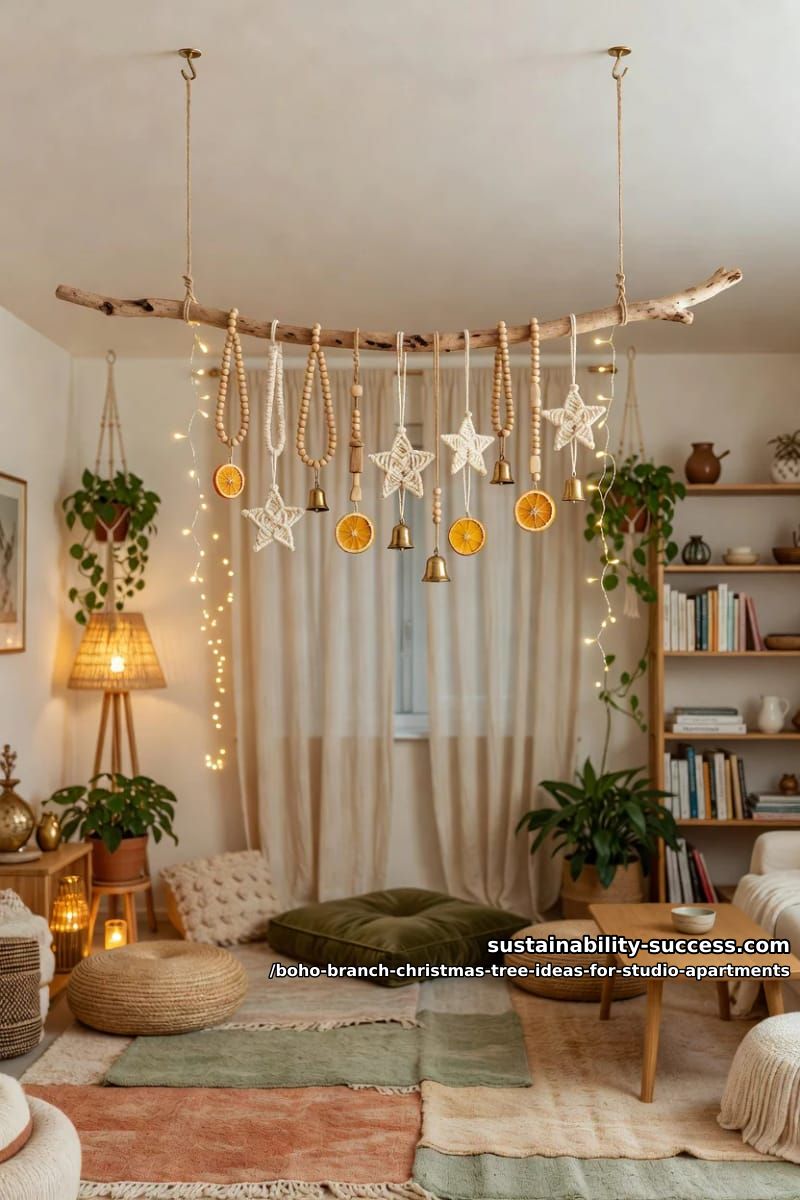
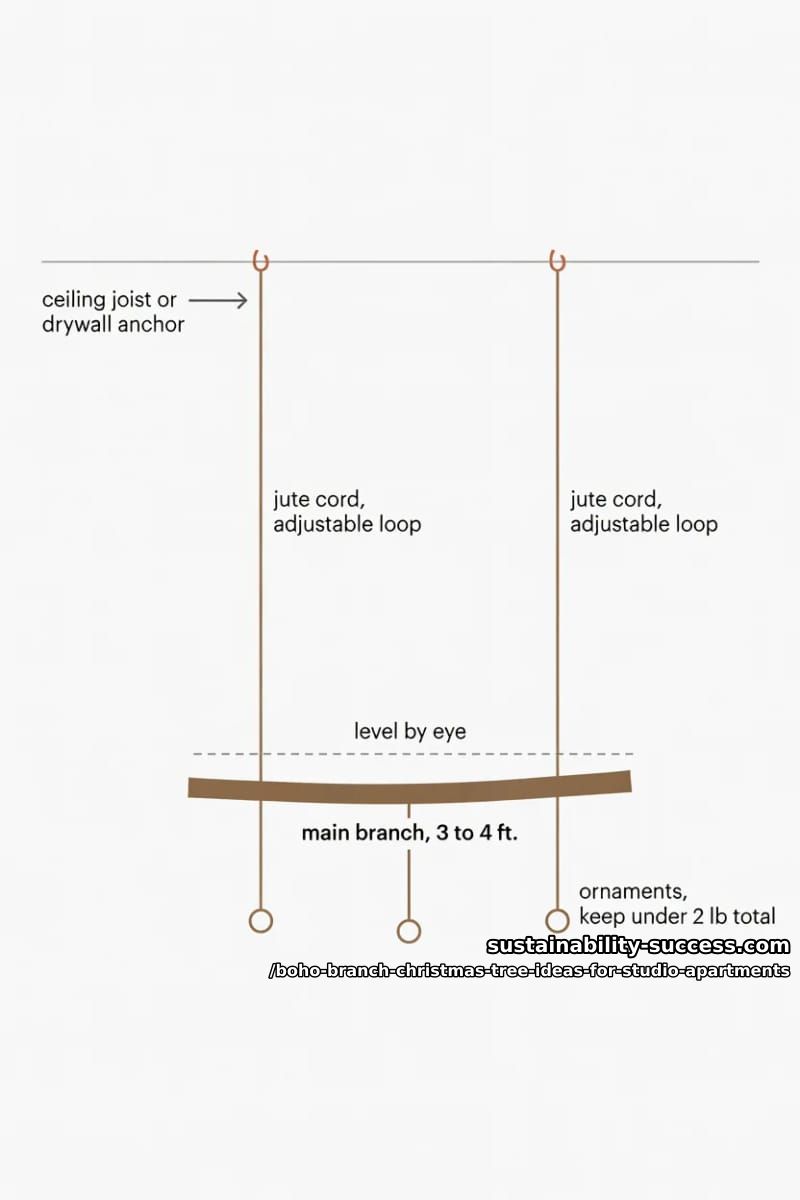
Suspend a single long branch horizontally from the ceiling and hang your ornaments off it, mobile-style, so the tree lives in the air above a corner you cannot otherwise use. This is the move when there is genuinely no wall and no floor to give, which in a studio happens more than you would think. Two ceiling hooks and a length of jute, leveled by eye, and the ornaments do the rest.
Standing branch trees for a corner you can spare
A manzanita branch in a weighted vessel
If you have one square foot of side table or floor, a sandblasted manzanita branch in a weighted pot is the most tree-like option, with the open, sculptural silhouette that reads boho rather than Charlie Brown. Real manzanita is sold by the branch through event-decor suppliers like ShopWildThings and Branches and More, often sandblasted to a smooth pale finish, and a two-foot piece behaves like a small tree you can actually decorate. The catch is balance: a top-heavy branch in an empty vase tips the first time the radiator kicks on and dries the wood further.

Fill the vessel with something heavy and cheap. Play sand, aquarium gravel, or a quick pour of plaster of Paris all work; the sand version lets you reposition the branch and pull it out for storage. Set the vessel itself on the floor in the corner if you want height, or keep it tabletop for a piece you can move when you need the surface back.
| Branch type | Look | Where to get it | Watch for |
|---|---|---|---|
| Sandblasted manzanita | Smooth pale wood, dense open branching | Event-decor suppliers, Etsy, by the branch | Shipping costs as much as the branch |
| Birch | White bark, tall and straight, sparse | Craft stores, foraged in some regions | Reads Scandi more than boho on its own |
| Driftwood / grapevine | Twisted, weathered, gray | Foraged, or craft-store grapevine | Irregular, harder to stand upright |
| Eucalyptus / dried foliage | Soft, gray-green, slightly leafy | Florists, dried-stem shops | Sheds; lasts one season |
| Store-bought twig bundle | Uniform, often pre-lit | Target, Amazon, big-box | The pre-lit ones can look like an airport runway |
A driftwood ladder tree built from stacked limbs
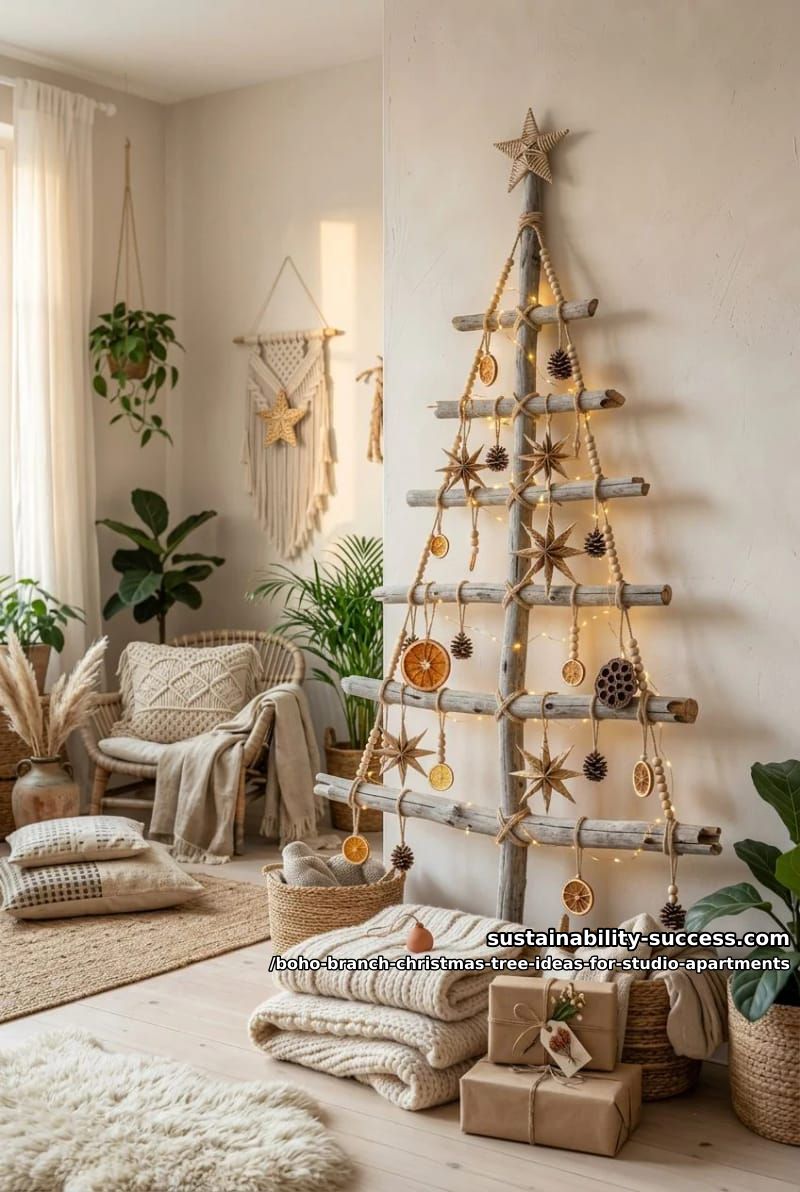
Stack progressively shorter horizontal limbs up a central vertical branch and you get a flat, tiered tree shape that leans against the wall and takes up about four inches of depth. It is the most maker-ish idea here, a weekend with jute lashings or a hot-glue gun, but it folds flat and stores behind a bookshelf the other eleven months. Lash the crosspieces longest at the bottom, shortest at the top.
A tall bare-branch bundle in a basket-wrapped pot
Bundle several tall straight branches together, sink them in a weighted pot, and hide the pot inside a woven basket for an instant floor tree that costs the price of the basket. I used to push the foraged-twig version on everyone until I watched a bone-dry oak branch shed bark across a friend's rug by mid-December, so dry the branches indoors for a week and shake them hard outside before they come in. A seagrass or water-hyacinth basket does the heavy lifting on the boho front.

The boho layer: what goes on the bare branches
Wood beads and jute for a neutral branch tree
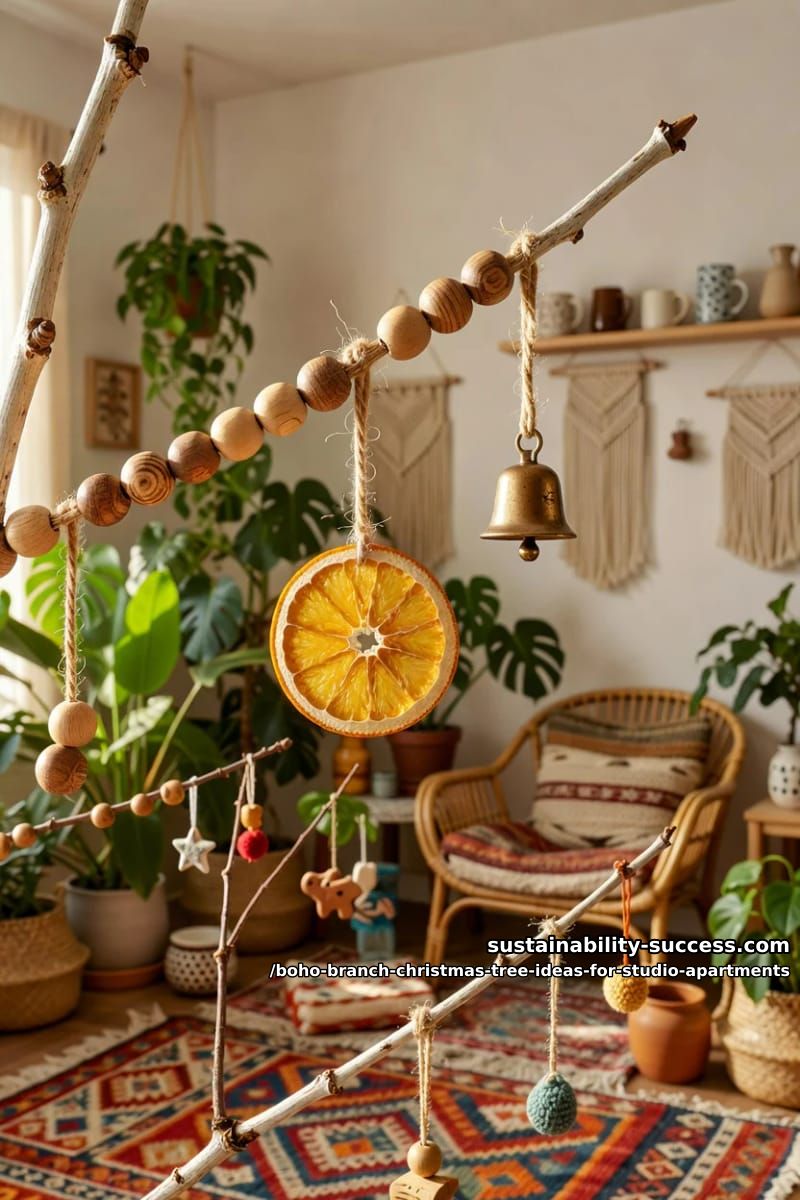
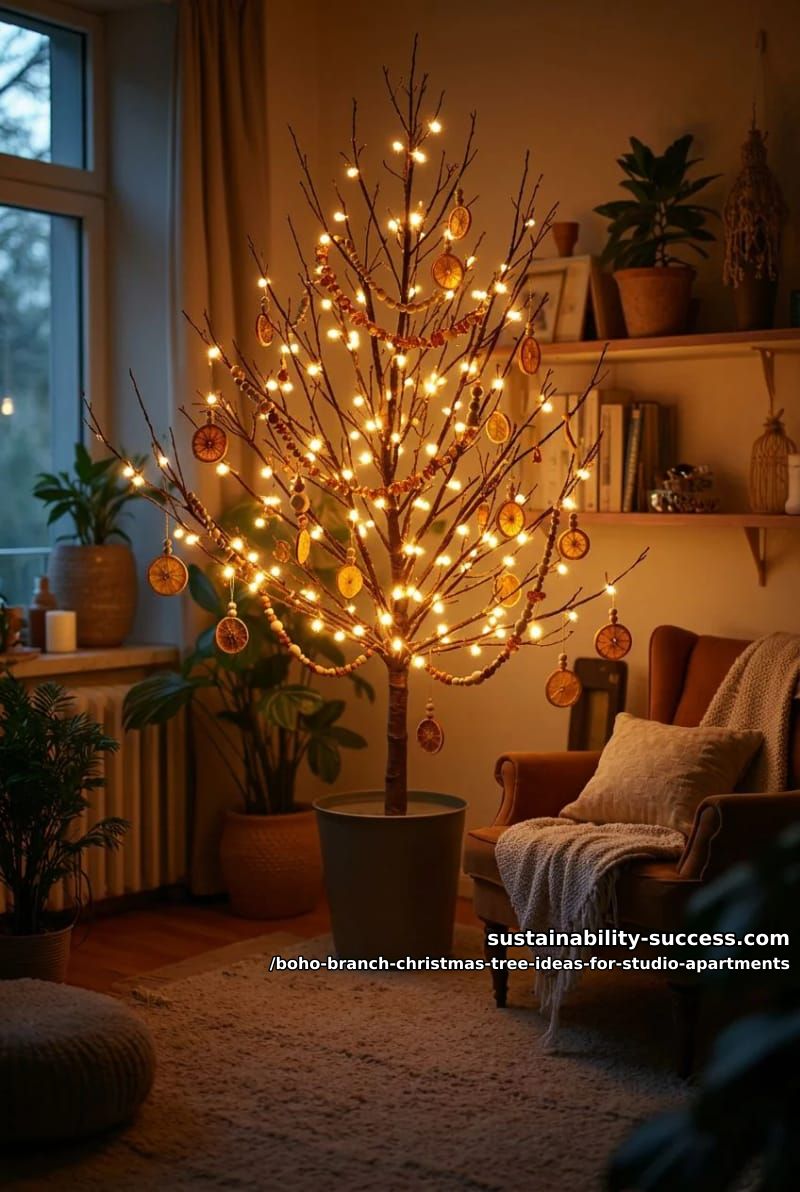
Keep the palette to two or three natural materials and the branch tree reads boho instead of cluttered: raw wood beads, jute or twine, and one warm metal like brass. A natural 9-foot natural wood bead garland winds through bare limbs and does most of the work for a few dollars. Add dried orange slices you make yourself (sliced thin, two to three hours at 200°F) for the burnt-sienna pop against all that pale wood.
Macrame and crochet ornaments on a branch tree
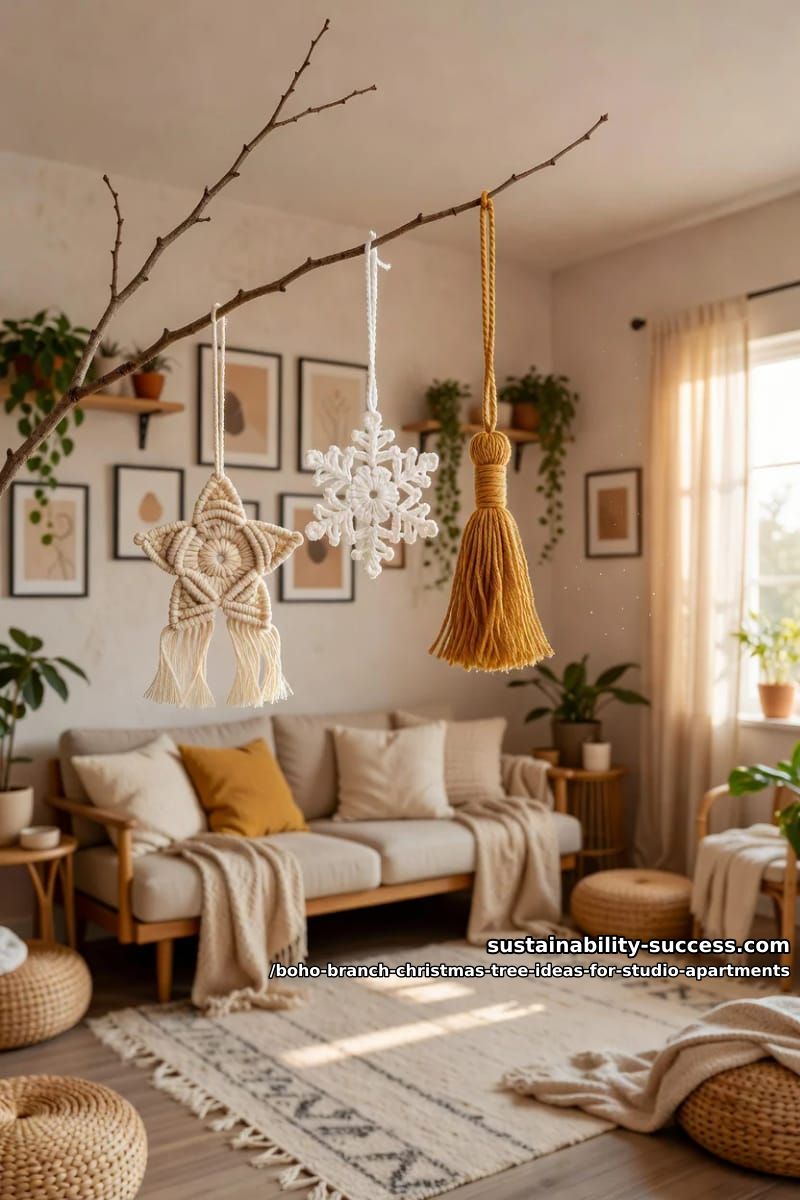
Soft fiber ornaments are what separate a boho branch tree from a generic minimalist one, and they weigh almost nothing, which matters when your tree is taped to drywall. Small macrame stars, crochet snowflakes, and tassel garlands hang well on thin twigs that would sag under heavy ceramic. Etsy is full of handmade sets for a few dollars each if you do not crochet, and a beginner can knock out simple wrapped-yarn stars in an evening.
Pampas plumes worked into the branches
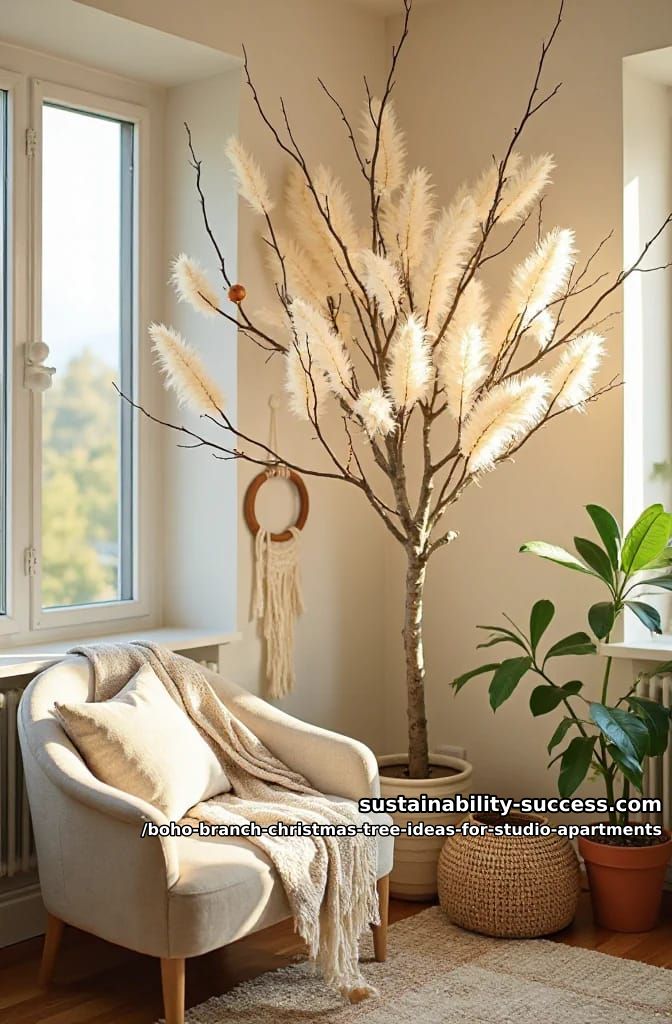
Tuck a few pampas grass plumes among the bare limbs and the whole thing softens into that feathery, dried-arrangement look the boho Christmas pins are built on. A little goes far; three or four stems threaded near the top beats a full bouquet that swallows the branch shape. Dyed cream or left natural both work, though the bleached-white ones shed less.
Warm fairy lights threaded through the limbs
Lighting is what turns a stick arrangement into a tree after dark, and for a studio the spec that matters is the power source. Battery or USB copper-wire fairy lights mean the tree can hang from the ceiling or float on a wall nowhere near an outlet, instead of trailing an extension cord across your only walkway. Warm white, not cool white; the cool ones make dried branches look clinical.
A wall branch tree for about $40 in a 400-square-foot studio
No floor space, rental walls, one nearby outlet
Foraged branches kept the cost near zero; the spend went on the bits that make it look finished and the strips that hold it up without wrecking the wall.
Shopping list
| Qty | Item | Spec | Price |
|---|---|---|---|
| 5 to 7 | Bare branches | Foraged, dried indoors a week | $0 to $15 |
| 1 set | Command 20 lb XL picture-hanging strips | Holds ~5 lb per pair, removable | $10 to $14 |
| 1 | suddus 33 ft battery fairy lights, warm white | 100 LED, copper wire, timer | $9 to $13 |
| 1 | Wood bead garland | 9 ft natural | $8 to $12 |
| 1 batch | Dried orange slices | DIY, 200°F oven | $2 to $4 |
| Total | $29 to $58 | ||
Prices are approximate ranges as of the 2025 holiday season; verify before buying.
The studio-only move
A lit branch tree that doubles as a room divider
Stand a wide, tall branch arrangement where you want to break a studio into zones and it works as both a tree and a see-through screen between, say, the bed and the living area. This is the one idea on the list that earns its footprint, because it is doing two jobs a fir could never do: a solid divider would wall off light in an already-small room, and bare lit branches suggest a boundary while letting the whole space stay open and bright. Sink the branches in a heavy planter or a couple of weighted floor vases spaced along a line, lace them with warm lights, and you have soft zoning that packs away after the holidays.

Do this
- Weight every standing vessel with sand or plaster before you decorate it; a decorated branch is more top-heavy than it looks.
- Use battery or USB fairy lights so the tree is not tethered to one outlet.
- Hold the palette to two or three materials.
Avoid
- A full-size fir blocking your only walkway.
- Heavy ceramic ornaments on thin twigs. They sag, then they snap.
- Gluing branches to a rental wall, or hanging weight over the bed.
Conclusion
The order that keeps you from redoing the whole thing twice: solve weight and placement first, hang or stand the bare branches second, and only then reach for the wood beads and the lights. A wall silhouette or the ceiling-hung horizontal branch costs almost nothing and undoes in five minutes, so start there if you are renting and unsure; save the plaster-weighted manzanita and the room-divider for the year you know exactly which corner you can give up. And forage if you can, but dry the branches indoors for a week first, unless you enjoy vacuuming bark out of a rug in December.