
Calling a cedar garland "sustainable" because it's real instead of plastic skips the part that actually matters: where the greenery came from and where it ends up in January. A 9-foot rope trucked in from a commercial cutting operation, wired to a foam base, and bagged for the landfill after three weeks is not obviously greener than the faux garland a neighbor reuses for a decade.
The fresh stuff earns its green credential through sourcing and disposal, so the ideas below are built around free or foraged cedar, compostable trimmings, and a couple of tricks for keeping the rope alive long enough that you don't replace it twice. A few of these I learned the slow way.

Cut your own cedar garland before you buy one
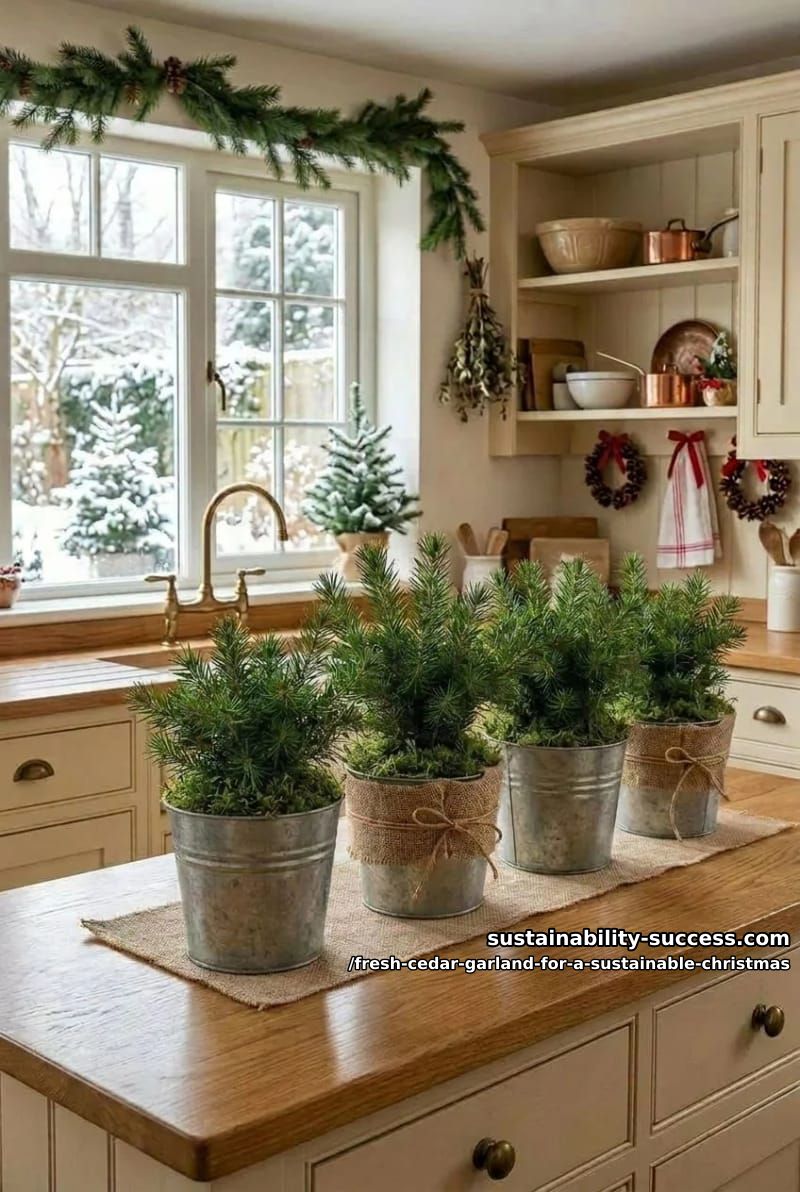
Most of what gets sold as "cedar garland" is foliage you can gather for free if you look. Tree lots bale and bin the lower branches they trim off trunks; ask, and they'll usually hand you a bag. Your own yard may already grow the right material: western red cedar (Thuja plicata), incense cedar, Leyland cypress, or the arborvitae hedge nobody admits to liking. December pruning is good for the plant and good for your mantel, which is the rare overlap where the cheap option is also the responsible one.
One caution before you go reaching over a fence. Foraging has rules, and "it was hanging into the sidewalk" is not consent.
Do this
- Ask your local tree lot or a garden center for the offcuts they’re already throwing out.
- Cut from your own arborvitae, Leyland cypress, or true cedar while you’re pruning anyway.
- Take a little from many spots on a plant so no single branch reads as bald.
Avoid
- Stripping a living tree to make one long rope.
- Cutting on public or park land without checking whether it’s allowed (often it isn’t).
- Grabbing unknown evergreens. Yew looks festive and is toxic to pets and kids.
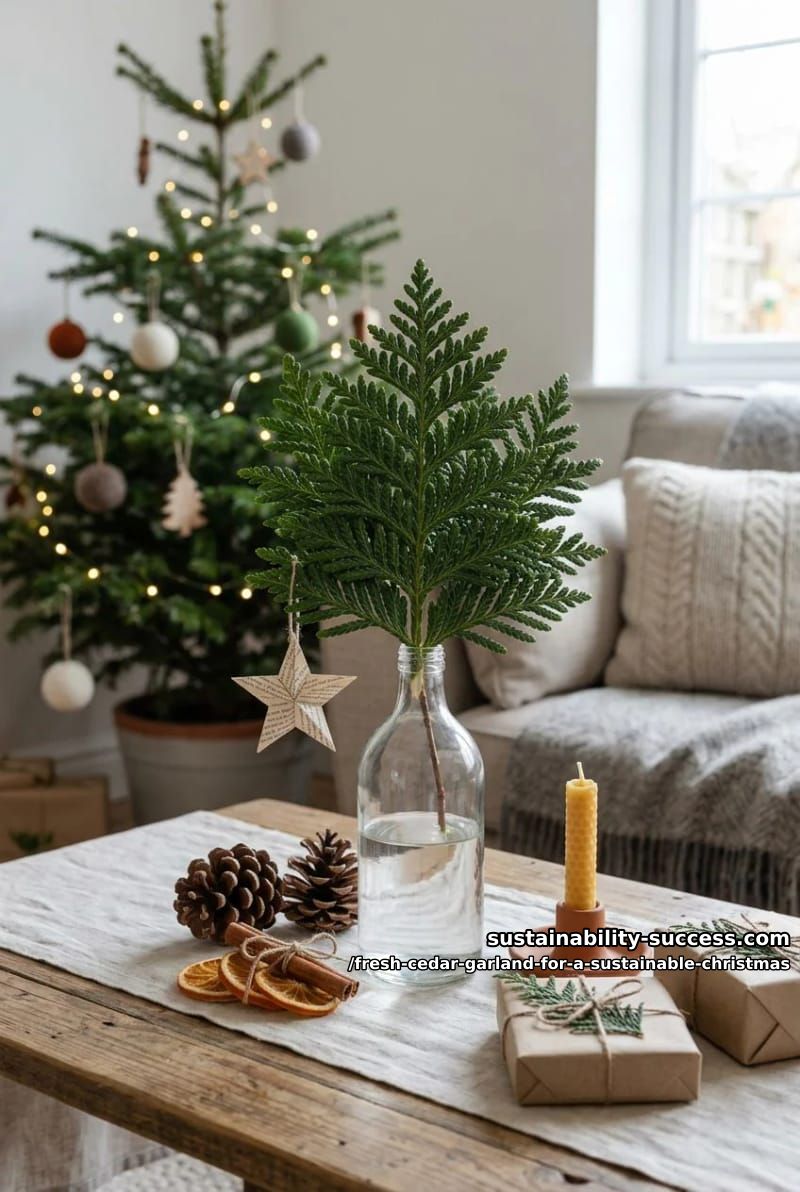
Drape the mantel in cedar, dried citrus, and pinecones

The mantel is where cedar does its best work, and the accents are where you keep the whole thing compostable. Skip the glitter picks and the wired plastic berries; reach for dried orange and grapefruit slices, pinecones from the yard, a few cinnamon sticks, maybe dried bay or eucalyptus if you have it. Everything on that mantel should be something you could throw on the compost pile in January without flinching, which is a useful test for any holiday material. The citrus you can dry yourself in a low oven over an afternoon, and your kitchen will smell like the season for free.

Fresh cedar garland is not automatically greener than faux
If you'll reuse it for ten years and store it well, a faux garland can be the lower-footprint choice, and I'd rather say that out loud than pretend otherwise. The honest comparison isn't "real plants good, plastic bad." It's a few competing factors: how far the greenery traveled, how long the faux one lasts before it sheds and gets binned, and what happens to each at the end. A cheap faux garland (the kind that photographs fine and feels like a shower loofah) cracks after two seasons and lives in a landfill forever. Locally foraged cedar that goes back to the earth is hard to beat. A premium real-touch faux kept for a decade is genuinely defensible.
| Factor | Foraged / local fresh cedar | Imported fresh garland | Quality faux, reused 10+ yrs |
|---|---|---|---|
| Upfront cost | Free to low | $30 to $70 per 6 to 9 ft | $60 to $150 once |
| Lifespan | 2 to 4 weeks | 2 to 4 weeks | Many seasons |
| Transport footprint | Minimal | Refrigerated long-haul | One-time shipping |
| End of life | Compost or mulch | Compost if unwired | Landfill, eventually |
Read across the columns and the answer stops being a slogan. Forage if you can, buy local fresh if you can't, and if you're going faux, spend once on something that won't shed by year two.
Soak the garland overnight so it lasts the whole season

Cedar drinks through its foliage, not just its cut ends, so the single best thing you can do is submerge the whole rope in cool water overnight before you hang it. I used to skip this step and wonder why my mantel garland was dropping needles by week two; the soak is the difference between a rope that holds into the new year and one that crisps before the relatives leave. Once it's up, mist it every few days, keep it away from heat vents, and it'll reward you. For a length you want to stretch even further, a floristry standby is a soak in roughly one part glycerin to two parts warm water, which keeps the foliage supple rather than brittle.
Evergreen foliage gets more flammable as it dries, and a crisp garland near a lit candle, a fireplace, or a hot incandescent bulb ignites fast. Keep it watered and misted, keep open flame well clear, and use battery or LED lights rather than old warm-running string sets. If it’s shedding needles at a touch, it’s past its useful life; take it down.
Wrap the staircase with cedar and reusable twine, not floral wire
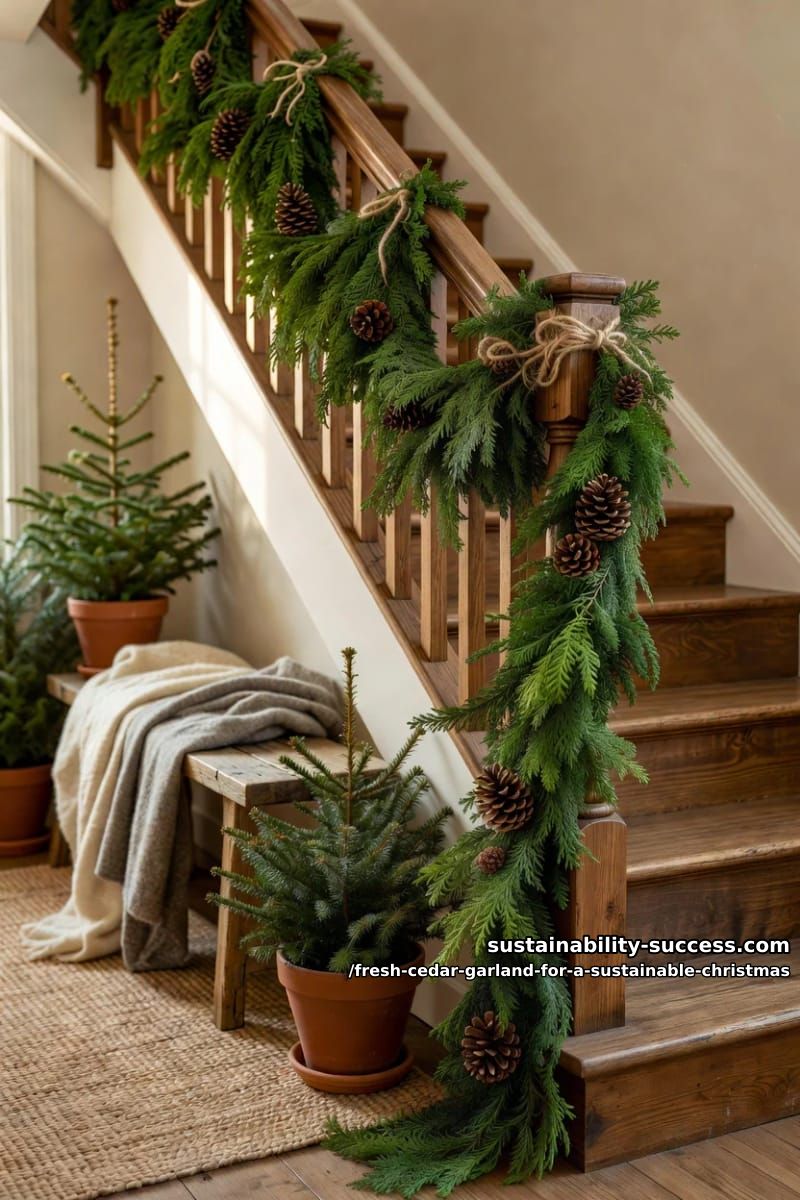
Garden twine or jute does everything green floral wire does on a banister, and you can compost it with the cedar instead of fishing little wire twists out of the trim in January (a chore I performed for several Januaries before I learned). Tie loose loops every couple of feet, let the garland swag a little between ties rather than pulling it tight, and tuck the cut ends under so the rope reads continuous. Reusable cloth ribbon over the twine if you want color.
Frame the front door with cold-hardy cedar
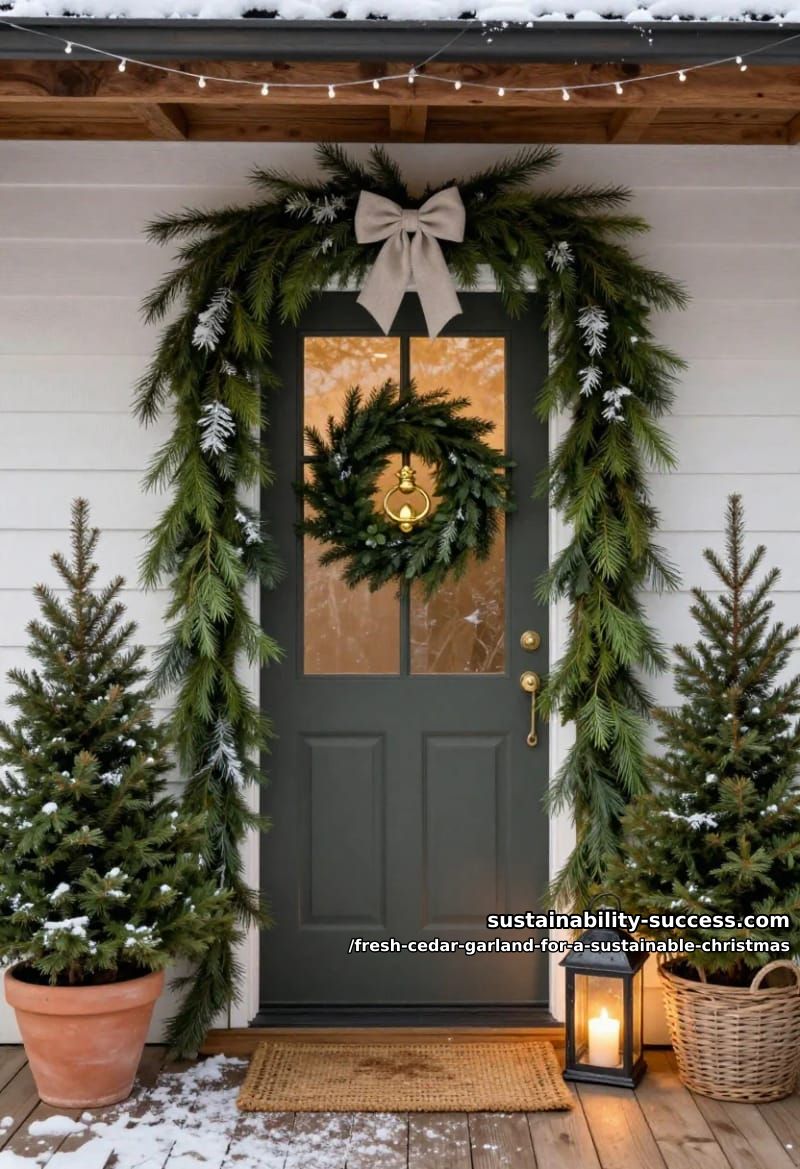
Cold actually helps you here. Outdoors in freezing weather, cedar can hold its color and structure well past when an indoor garland would give up, sometimes into late January, because the chill slows it down. Run it up one side of the door frame, across the top, and down the other; anchor with twine to existing hooks or a tension rod rather than nailing into trim. In a hard-freeze climate this is the longest-lasting placement you've got.

Mix cedar with juniper, fir, and magnolia for texture that holds
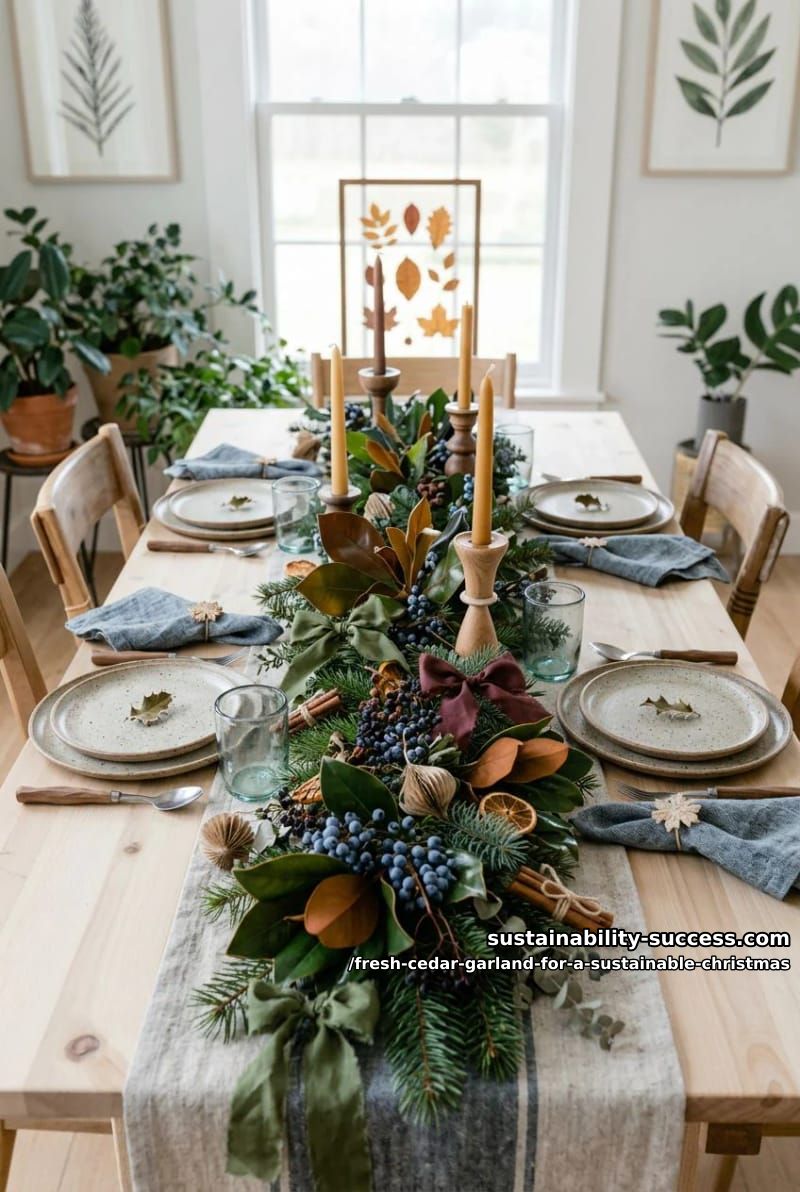
Cedar alone reads a little flat, both in texture and in how long it lasts, so blending in other foraged greens buys you both depth and durability. Noble fir and juniper hold their needles longer than cedar does and add a different green; juniper's dusty blue berries give you color without a single plastic pick; magnolia leaves bring a broad, glossy shape and a brown suede underside you can flip outward for contrast. Boxwood and seeded eucalyptus work too if they grow near you. The mix also means that when the cedar starts to tire, the sturdier greens carry the arrangement another week.

Run a low cedar garland down the table between the candles
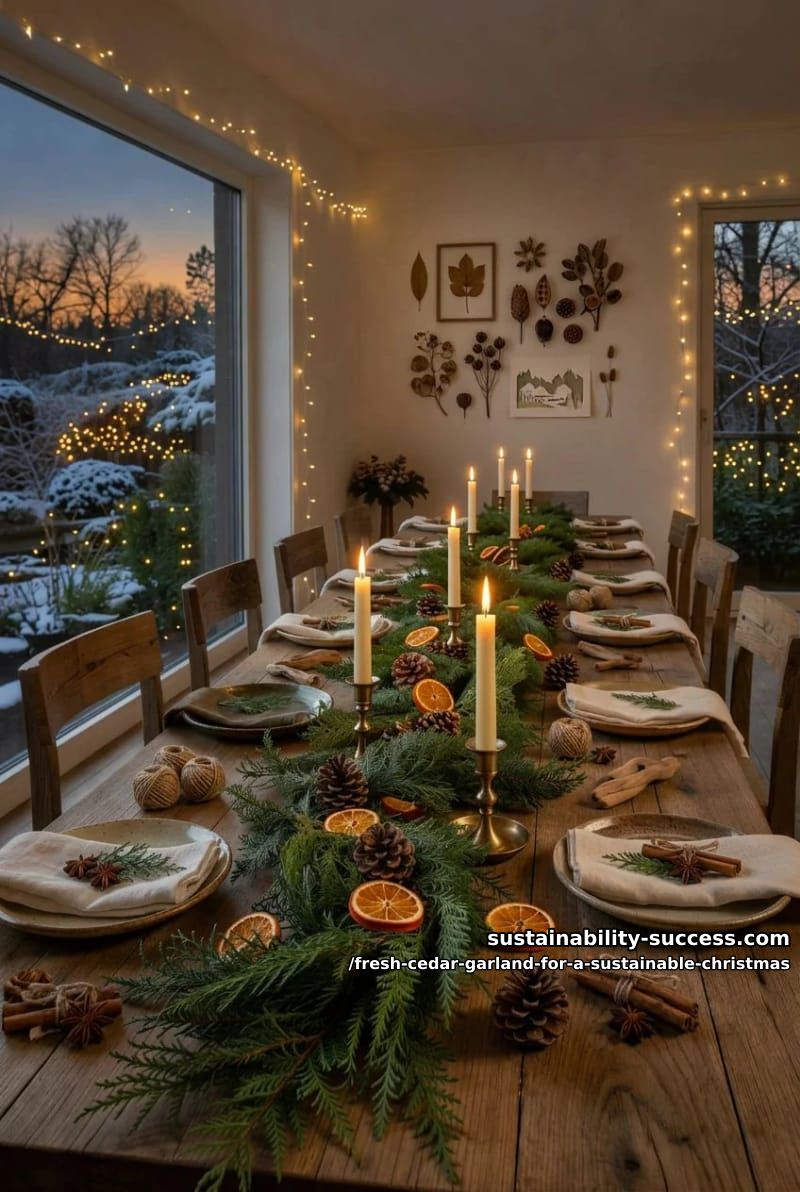
Keep it low and keep it watered, and a cedar runner turns the table into the cozy center of the evening. The trick is height: a tall, bushy garland blocks faces across the table, so thin it out and let it lie nearly flat between low candlesticks. Fresh cedar near open flame is the one place to repeat the fire warning, so check that the foliage near each candle stays damp and trimmed back, or switch to flameless tapers and lose nothing in the glow.
Give the spent cedar a second life instead of the trash

The garland's last act is the most sustainable one, and it's a small project rather than a trip to the bin. Strip the wire and twine, then chip or cut the foliage into the compost or use it as mulch around acid-loving shrubs. Save a handful of the better sprigs to dry for scented sachets or drawer fresheners; bundle others with twine into kindling for the first fires of the new year. The rope that decorated your mantel becomes mulch, sachets, and fire-starters, and nothing leaves in a plastic bag.
Conclusion
If you're starting from scratch, the order that works is source first, preserve second, style last: track down free or local cedar, give it the overnight soak before anything else, then decide between the mantel, the banister, and the door.
The faux-versus-fresh matrix is the part most "green Christmas" pieces won't tell you straight. Fresh isn't a free pass, and a well-kept faux garland isn't a sin; the footprint lives in the miles traveled and the January fate, not in the material itself.
One last thing I'd push you on: don't let the garland end up in the trash after all that. The compost-and-sachet step at the end is what actually closes the loop, and it takes about ten minutes. Skip it and you've just made a slightly prettier version of the disposable version.