

Empty soup cans make a better Christmas lantern than half the pre-lit resin things at the garden center, and they cost nothing. The catch is that a porch in December is wind, freeze-thaw, and low slanting light, so the tin can lanterns that photograph well on a craft blog in July come apart on a real railing by New Year's. These seven are picked for the cold version of the job: punch patterns that read in the dark, finishes that survive sleet, an arrangement for the rail, and a lighting call most tutorials get backward.
1. Punched-pattern lanterns with a single Christmas motif

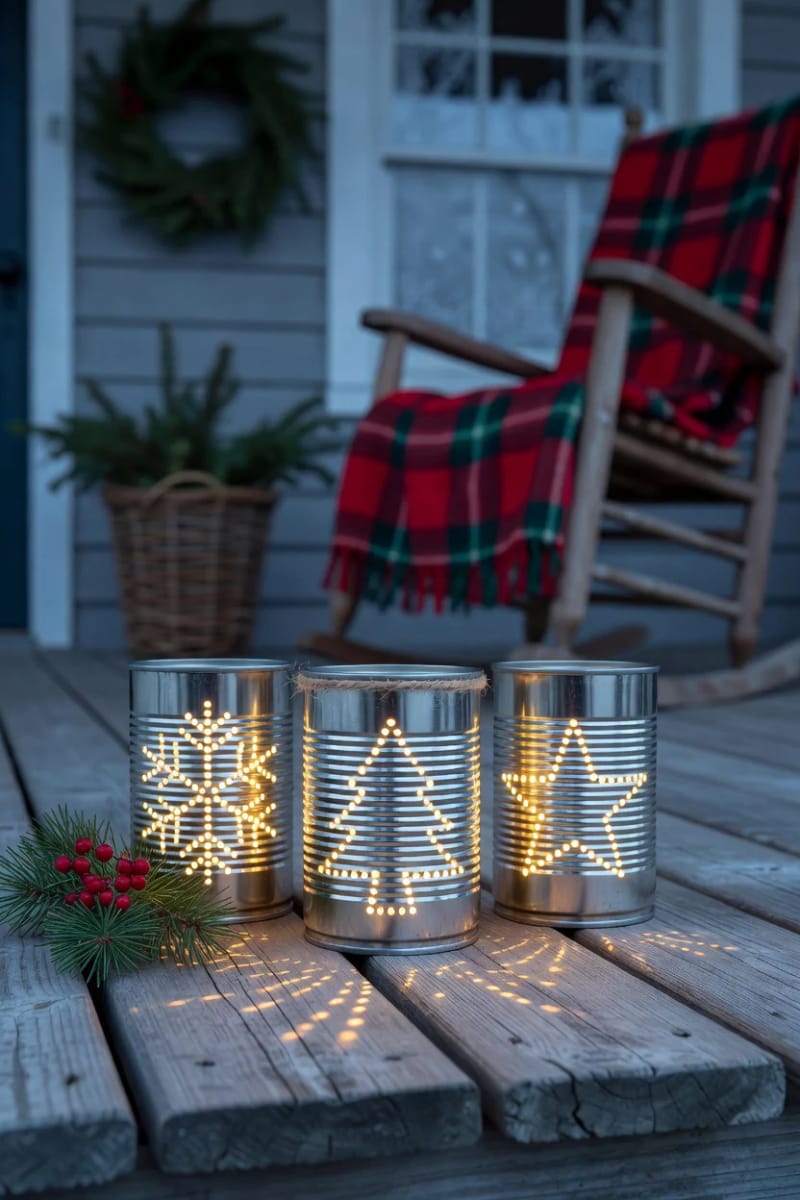
Punch one bold shape, not an allover field of dots. A single six-point snowflake, one fir tree, or one fat star reads across a dark yard; the dense lacy patterns every tutorial pushes just smear into a glowing blur once you back up ten feet, and up close they make the can look like it rusted through.
The freeze trick that keeps the wall from crumpling
Fill the can with water and freeze it solid overnight before you punch. The ice backs the thin steel so the wall takes a nail without denting inward, and it holds the can still while you hammer. Mark your pattern on paper, tape it around the frozen can, then drive a finish nail or an awl through each dot with a couple of taps; work top to bottom, keep the spacing loose, and set the whole thing in the sink to thaw when you're done.
Motifs that read from the sidewalk, and the ones that turn to mush
Big, simple, and open wins. Snowflakes, single trees, five-point stars, a plain heart: all legible at twenty feet. Script words, tiny borders, and anything with strokes closer than a pencil-width blur together the second there's real distance or a little frost on the metal. (I'd skip the cursive "Merry Christmas" entirely; it photographs sweet on a table and vanishes on a porch.)
2. Punch a word across a row: NOEL, JOY, or one big initial
Line up four cans and punch a single fat letter into each, so the row spells a word when it's lit. It turns a repetitive craft into one graphic piece, and it's the kind of thing that stops people on the walk.
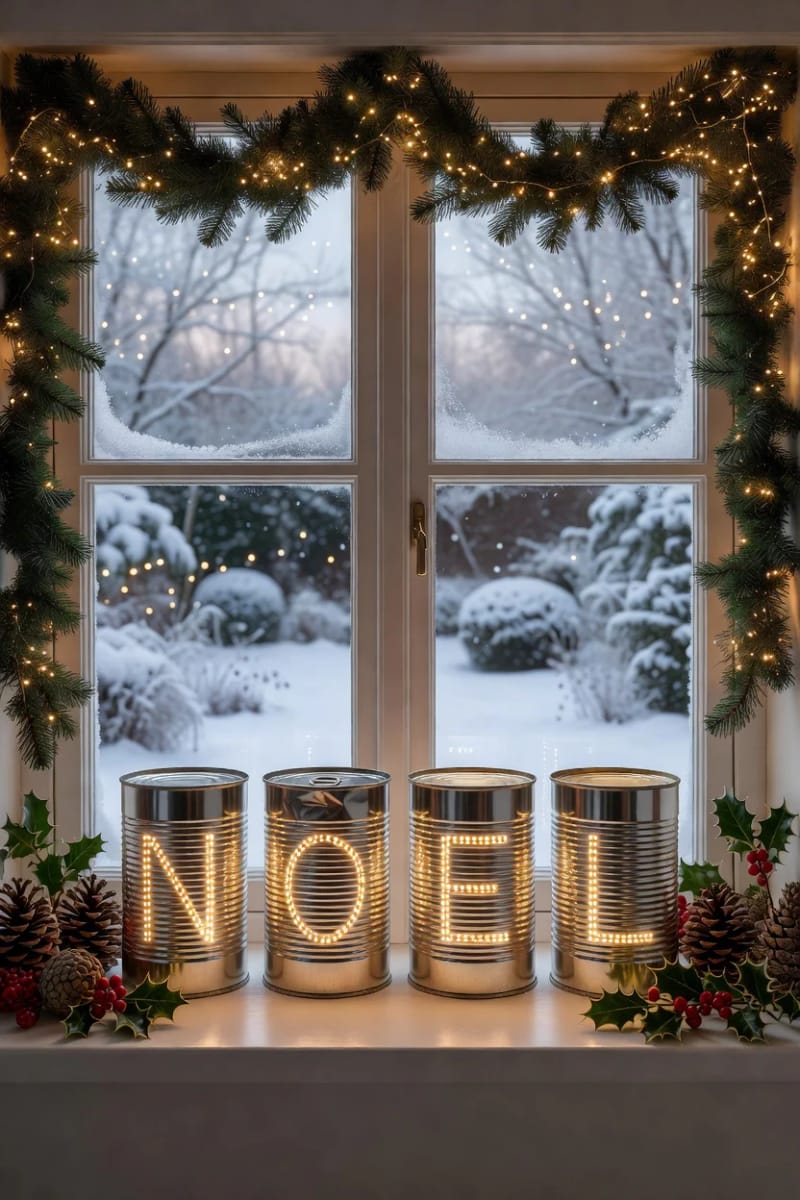
Keep the letters wide and blocky, since thin strokes lose their shape in punched holes. A paper template taped around each can keeps them even, and if you want the row to survive being bumped, weight the bottoms with a handful of gravel under the light.
3. Aged-copper and verdigris finishes instead of primary red and green

Refinish the raw tin in a metal-look finish and you get a palette that reads Christmas without the kindergarten red-and-green. Aged copper, brushed brass, a verdigris green settled into the seams: the holidays via a patina, not a poster paint. It also hides the printed label ghost and the odd dent that give away a soup can.
An all-surface metallic spray built for exterior use is the one to reach for here, because craft acrylics chalk and peel through a wet winter. Spray two light coats, let the recesses go darker on their own, and if you want the verdigris look, dry-brush a thin blue-green over copper and wipe most of it back off. Matte holds up better than gloss outdoors; the sheen on gloss shows every water spot.
All-surface metallic that grips bare steel and takes UV and rain, so the finish doesn’t chalk off by January. Aged copper reads festive without going primary.

4. Silhouette shadow lanterns that throw a scene on the wall
Cut one clean silhouette instead of a pattern of dots, and the lantern stops being a glowing can and starts projecting a picture: a reindeer, a row of trees, a single tall star thrown large across the porch wall behind it. This is the idea people remember.
Cut a window, not a peppering of dots
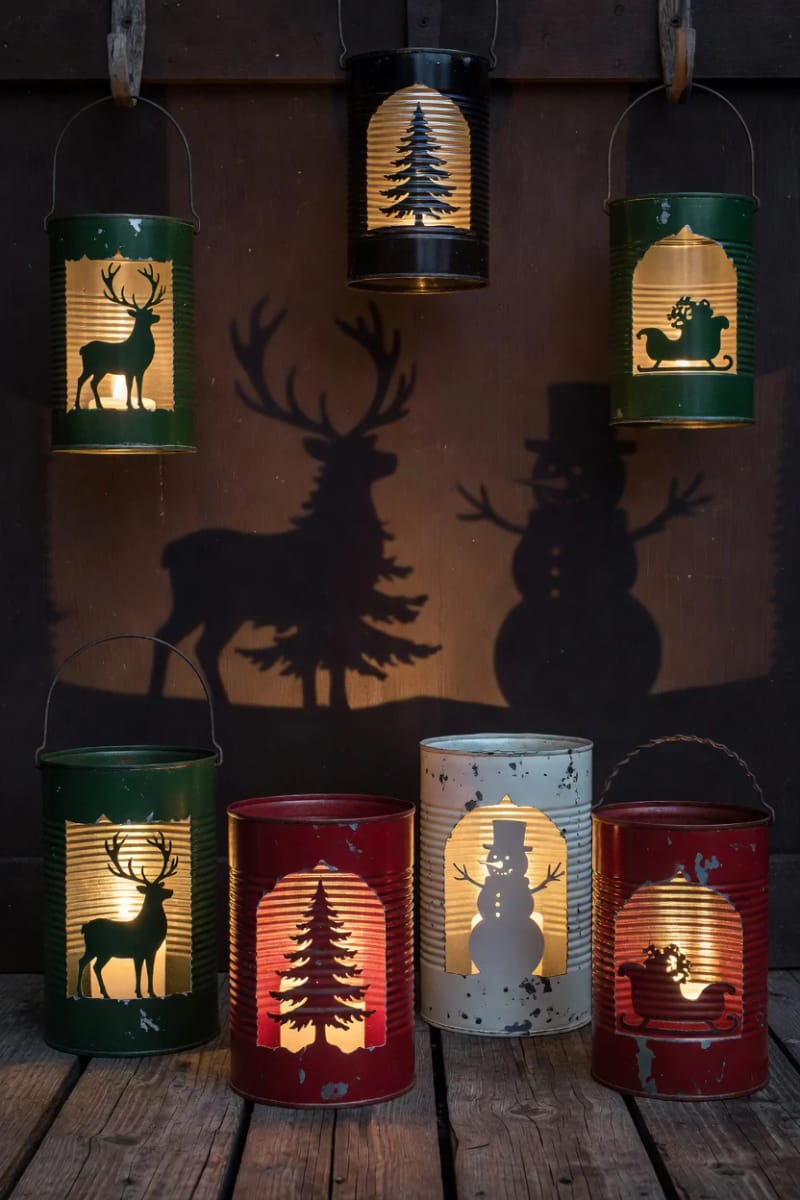
Drill a starter hole, then open the shape with tin snips or a rotary tool and file the edge so it doesn't catch you. Back the cut window on the inside with parchment or vellum; it diffuses the light and softens the shadow's edge so the projected shape looks intentional rather than raw.
Where the light has to sit for the shadow to land
Geometry does the work. Put the light source low and centered in the can, set the can eight to twelve inches off a pale wall, and the closer it sits the smaller and sharper the shadow; back it away and the shape grows and softens. A porch light or a busy background washes the whole effect out, so this one wants a dim corner and a plain surface to throw against.
5. A hanging garland of lanterns down the porch rail
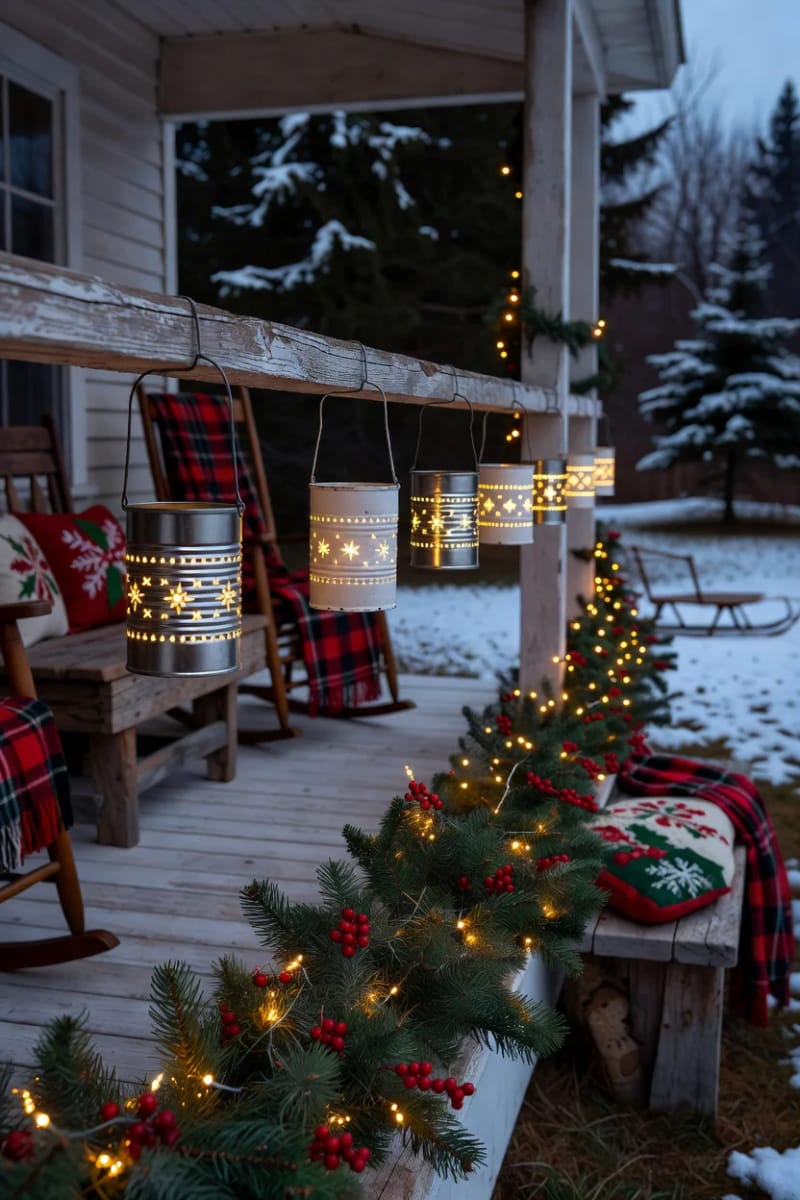
Run a line of small hanging cans along the top rail or off the eave and you get a lit garland instead of a few scattered pieces. Smaller cans (tuna, cat food, single-serve soup) hang better than tall ones and don't spin as much.
Hardware that gets through a nor'easter
Punch two holes across from each other near the rim, thread a length of galvanized or coated wire through, and twist it tight into a handle; skip the bare steel wire, which rust-stains your railing after the first rain. Hang each can from an S-hook so you can lift them down to swap lights, and anchor both ends of the run so a gust can't swing the whole string into the siding.
Do this
- Thread handles through two punched holes and twist them tight, using galvanized or coated wire so it won’t bleed rust onto the rail.
- Weight the bottoms and tie down both ends of the run; wind turns a loose line of cans into a wind chime against your house.
Avoid
- Thin craft wire. It kinks, snaps in the cold, and a dropped can dents the deck.
- Real tea lights up here.
6. Winter lighting: skip the real tea light, mostly
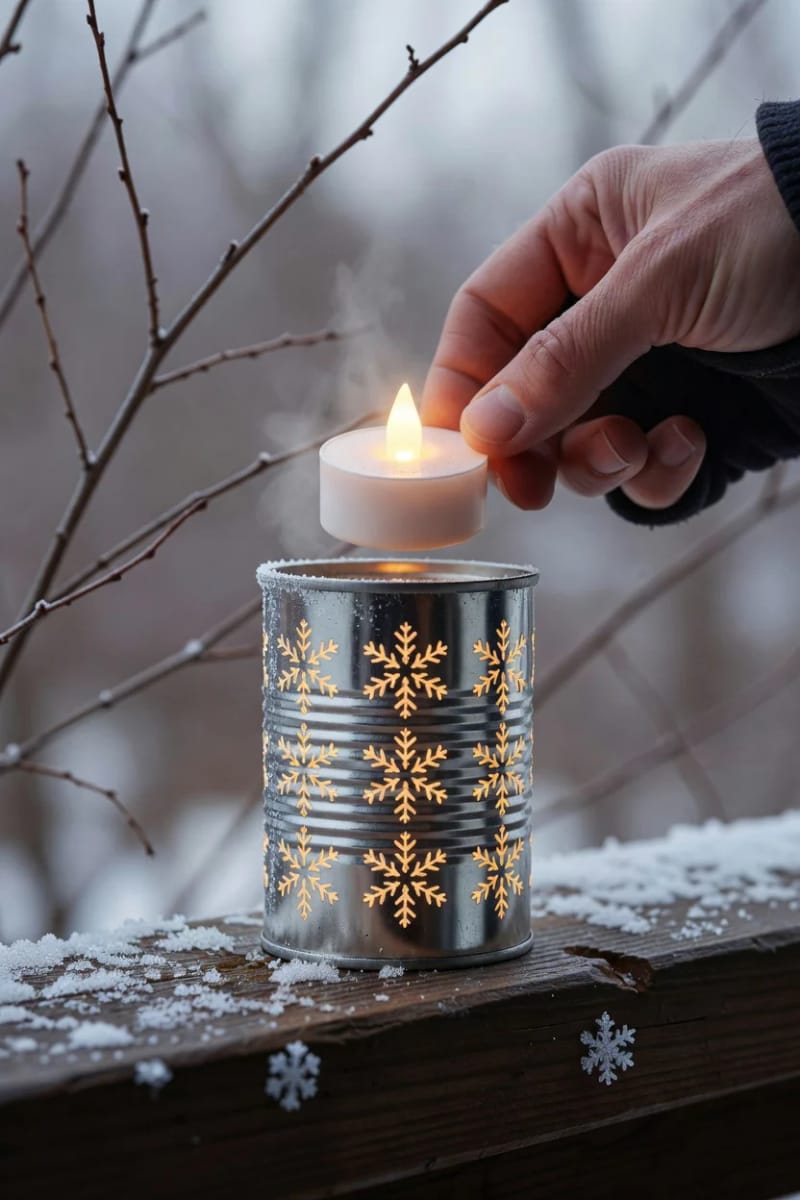
On an exposed December porch a warm-white battery LED beats a real flame nine times out of ten. Wind snuffs a tea light in minutes, cold burns wax down faster, and an open flame a few inches from dried pine is exactly the fire you don't want unattended. Save the real candle for a sheltered nook by the door where nothing can blow into it.
Why a real flame fights you out here
A tea light's little pool of wax hates moving air and freezing metal. Wind pushes the flame around until it drowns itself or gutters out; the cold tin acts like a heat sink and shortens the burn; condensation beads inside the can and can put it out from below. And a lantern packed near a garland is a hot metal cylinder sitting in kindling.
| Light source | Cold | Wind | Run time | Fire risk |
|---|---|---|---|---|
| Real tea light | Burns faster | Blows out | 3 to 4 hrs | High near greenery |
| Solar LED | Fine | Immune | Dim on short days | None |
| Battery LED | Fine to freezing | Immune | 200+ hrs a cell | None |
Solar in low winter sun, and where it fails
Solar is the set-and-forget option, but December is its worst season. Short days and a low sun angle mean the panel banks less charge, so the glow is dimmer and quits earlier than it does in July, and a dusting of snow on the panel stops it cold. Face the panel due south, expect a softer light, and don't count on it past mid-evening. Battery tea lights sized for a can are the reliable middle: a coin cell runs a couple hundred hours, and many have a dusk timer so the row lights itself.
A real flame left burning near a pine garland, a wreath, or wood siding is how a decorative porch catches. The can also gets genuinely hot to the touch. If you use a wax tea light at all, keep it away from greenery, never leave it lit while you’re out or asleep, and put it out before you go to bed.
Warm-white, flicker, and a coin cell rated past 200 hours, sized to drop straight into a can. The set is cheap enough to light a whole rail.

7. Oversized #10 can floor lanterns flanking the door
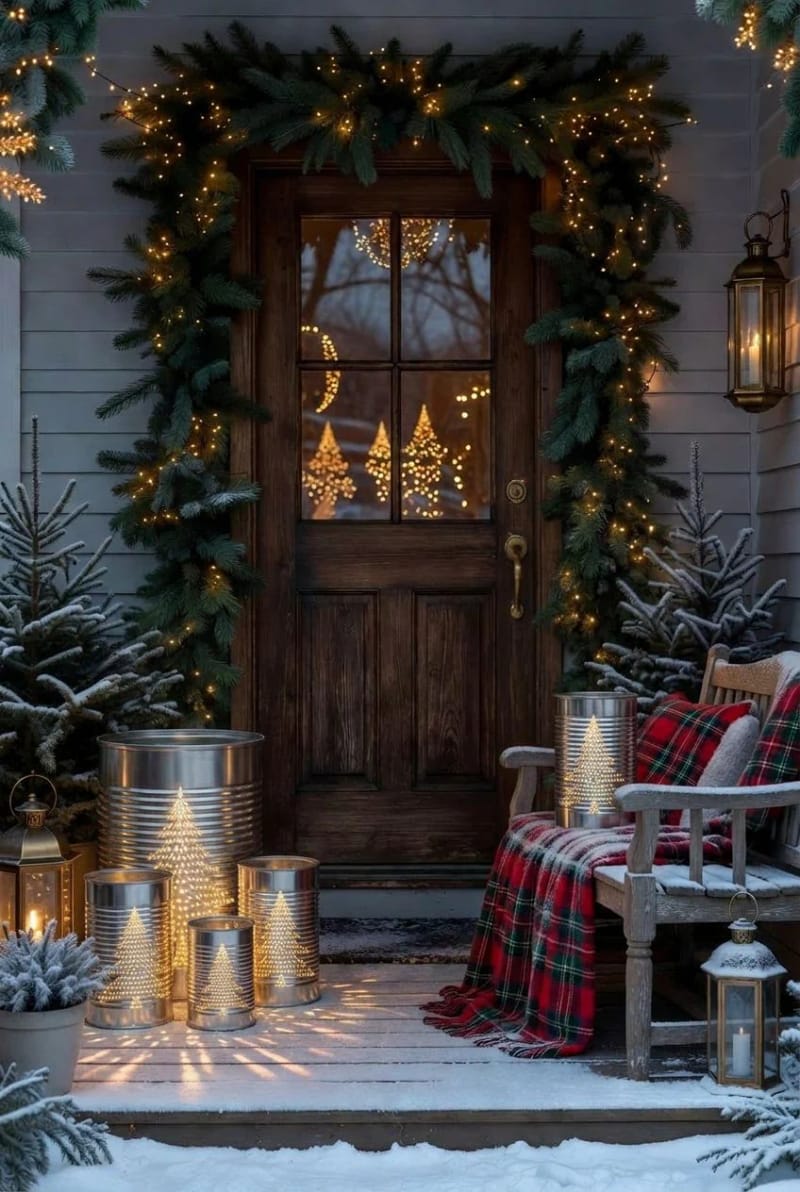
Go big and go in twos. A pair of #10 restaurant cans (the giant ones, around six to seven inches tall and wide) reads as intentional floor lanterns flanking the door, where a scattering of soup cans just reads as clutter. Restaurants and school cafeterias throw these out daily; ask, and you'll have a stack.
Sizing the pair to your doorway
Two is the whole idea. Match the heights, punch them with the same motif you used elsewhere so the porch looks composed, and if you want more presence, nest a smaller punched can on top of each for a stacked totem. A brick or a bag of sand inside keeps them from tipping in wind.
A pair for a standard 36-inch front door
Two #10 cans, about 7 in tall, one optional nested can each
Set one can on each side of the threshold, roughly a foot out from the frame so people don’t kick them. Punch a tall fir tree that runs most of the height so the shape reads from the street, weight each with sand, and drop in one of the larger battery pillars rather than a tea light, since a can this size swallows a small light. Echo the same tree on a soup can up on the rail and the whole porch looks like one set instead of a pile of projects.
Conclusion
If you make one thing this year, make the punched pair from idea one and stand them by the door; it's the most payoff for an hour with a nail and a frozen can. Layer out from there as you have time: the aged-copper finish keeps the raw tin from looking like recycling, the rail garland fills the horizontal span, and the two #10 cans anchor the ends. The freeze trick is the step people skip and regret, so don't. And keep a real flame off the railing and out of the greenery; a warm-white LED at dusk does the same job, and you won't spend the evening watching it.