
A single pair of adult jeans carries enough usable denim for one large stocking, and almost every part earns a place: the back pocket becomes a working front pocket, the felled side seams read as ready-made piping, and the hems save you from finishing an edge. This list is 13 distinct designs, sorted less by how they look than by the one construction move that makes each one work, from a no-sew version that never touches a machine to a bleach-stenciled snowflake and a garland of pocket-sized stockings cut from the scraps.

1. Back-pocket denim stocking

Cut the stocking so the jeans' back pocket lands on the front and you get a built-in spot for a candy cane or a folded note without sewing a single extra piece. The catch is placement. A pocket slapped dead-center on the leg looks like exactly what it is, a leftover. Angle the template across the pocket instead, so it sits high and slightly off to one side, and keep the original topstitching and rivets in frame, because that gold stitching is the whole reason to start from real jeans rather than a bolt of new denim. If you want the pocket to hold weight, reinforce the top two corners with a short bar tack or a hand-sewn triangle, since a decorative pocket full of chocolate coins will sag by the second week.
Back pockets from men's jeans run larger and squarer, women's smaller and more curved, so raid the biggest pair in the donation bag if you want a pocket that fits an adult hand.
2. Boro-mended indigo denim stocking
Skip trying to hide the wear on your oldest jeans and stitch into it instead. Boro is the Japanese practice of patching indigo cloth with overlapping scraps and rows of running stitch, and a stocking is a forgiving place to try it because nobody grades your corners. Layer a few darker denim patches over the thin knees or frayed hems, then cover the whole front in loose rows of sashiko-style running stitch in ecru or mustard, roughly a quarter inch per stitch, not aiming for straight. The unevenness is what separates it from a machine-quilted look. Use a heavier thread, either sashiko thread or two strands of embroidery floss, and a long-eyed needle, because regular sewing thread disappears into the twill and you lose the texture you did all that stitching for.
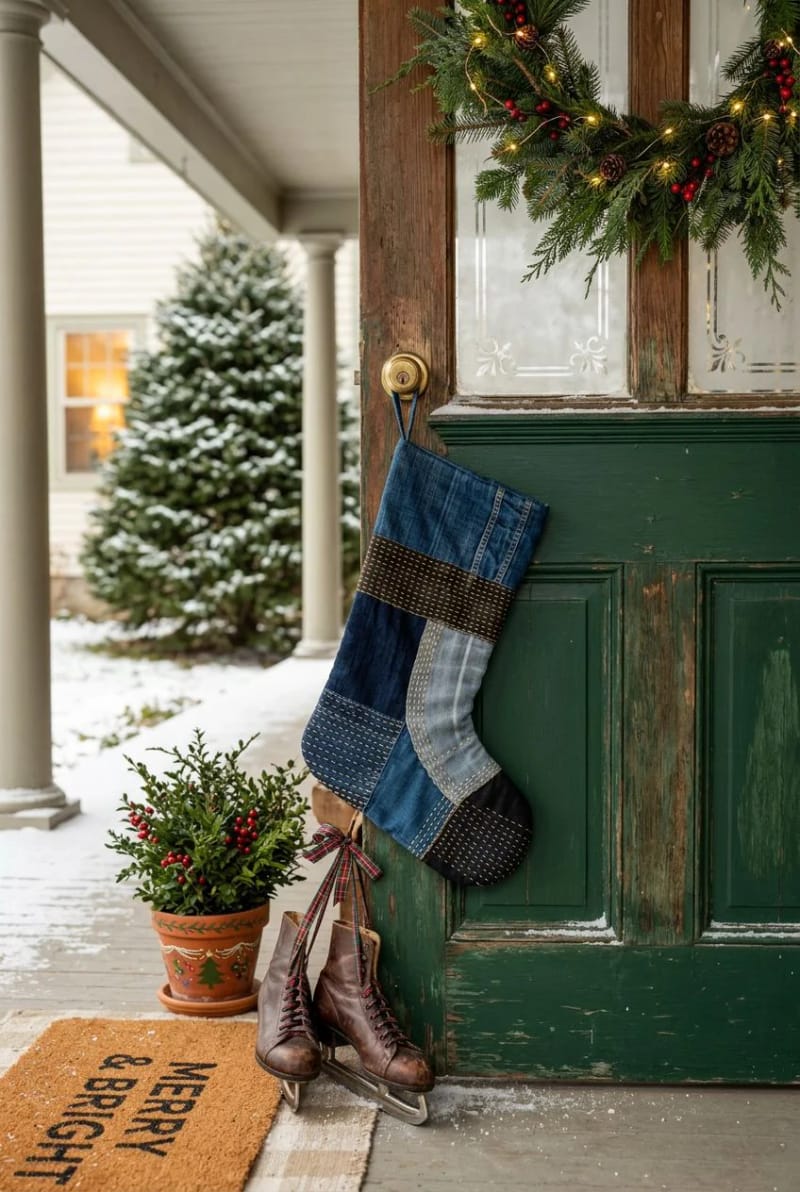
This is the one design where sun-faded, blown-out jeans beat good ones. Dark, even denim gives the pale stitches nowhere to read.
3. Buffalo-plaid cuff denim stocking
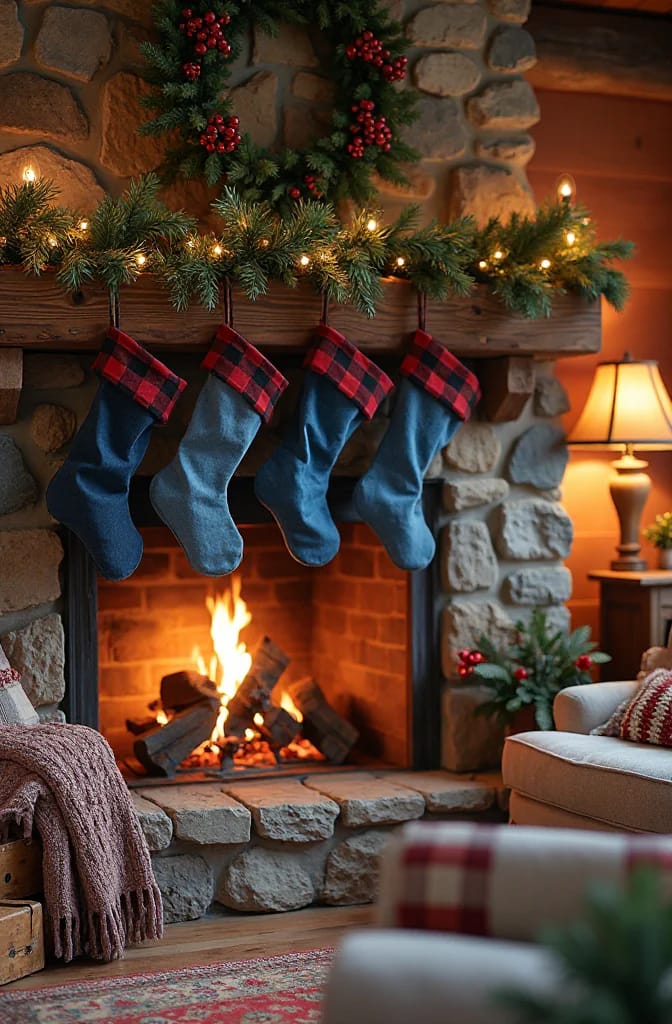
Sew a wide band of red-and-black buffalo check across the top and you cover the least interesting part of the stocking, the plain cuff, with the pattern that reads Christmas from across the room. Cut the plaid on the straight grain so the checks stay square, fold it double for weight, and let it flop over the denim by three or four inches. A flannel shirt from the same donation bag is the obvious source, and its existing hem gives you a finished edge for free. One caution: buffalo check and a busy stonewash fight each other, so pair the plaid with a darker, flatter denim and let the cuff do the talking.
4. Patchwork denim stocking in mixed washes
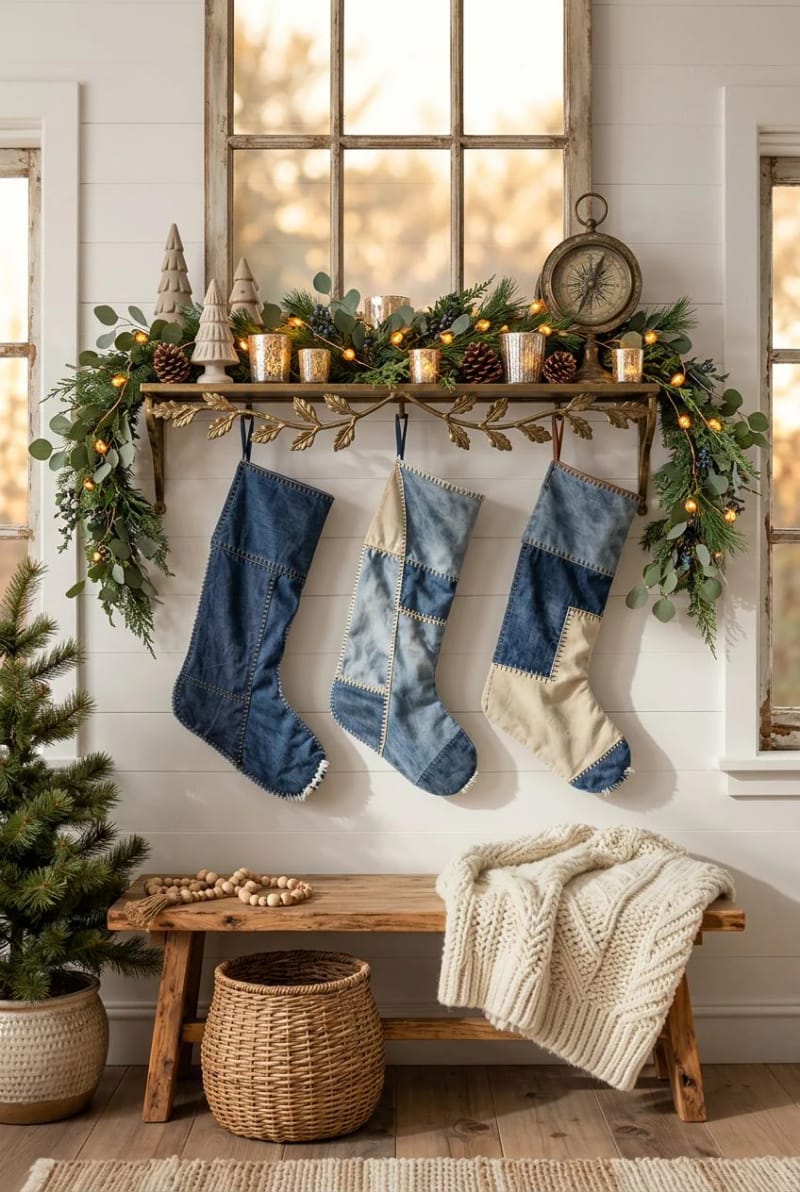
Piece the whole body from squares of different jeans and the range of blues does the decorating for you. Sort your scraps into three rough values, a dark rinse, a mid indigo, and a pale stonewash, then set them so the darkest sit at the toe and heel where a real stocking carries the most visual weight. Irregular beats a strict checkerboard here; a perfectly regular grid reads store-bought. Press every seam open or to one side before you join rows, because denim-on-denim allowances stack up fast and a lumpy patchwork never lies flat against a mantel.
5. No-sew denim stocking with fusible web
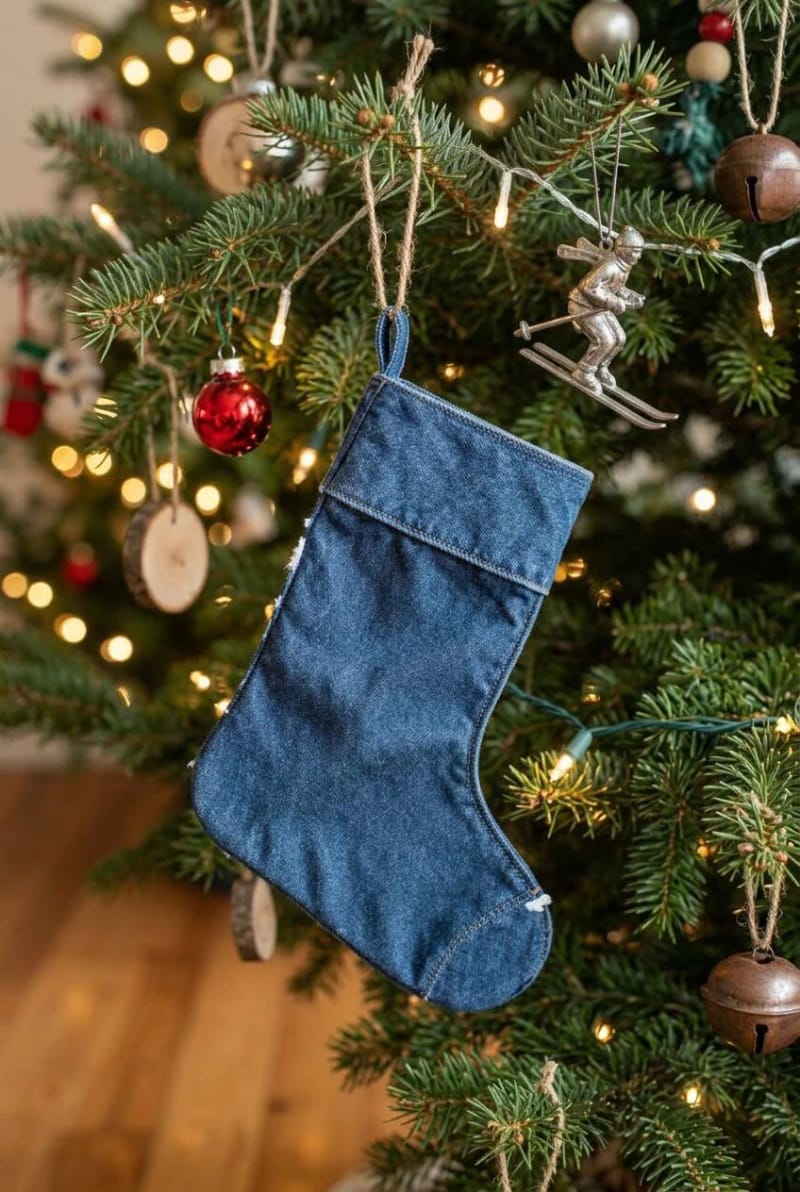
You can build a whole stocking without a machine using fusible web and an iron. Denim's raw edges will fray a little at the bonded seam, which on this design is the finish, not a flaw to fix.
- Cut two identical denim stocking shapes, plus a hanging loop from a belt loop or a strip of waistband.
- Iron fusible web to the wrong side of each layer, peel the paper backing, and fuse a lining or second denim layer so nothing shows through.
- Press fusible hem tape between the two halves around the curved edge, front and back, then run the iron slowly so the adhesive melts all the way through the thick denim.
Fusible bonds hold a decoration that hangs, not one a toddler swings from. If it needs to carry real weight, add a line of fabric glue along the inside of the seam and clamp it with clothespins while it cures.
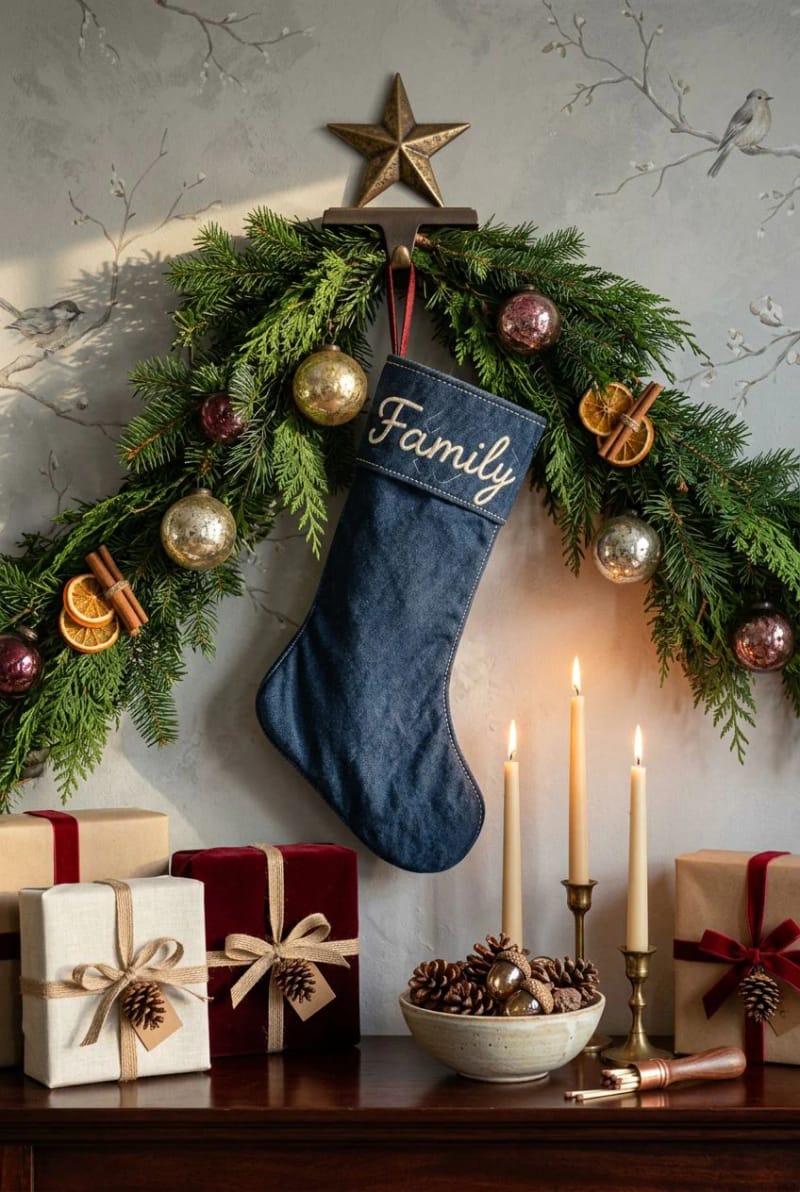
6. Embroidered-name denim stocking
Stitch the family name across the cuff and the stocking stops being generic decor and becomes the one that comes out of the box first every year. Chain stitch and back stitch both hold up on denim, and chunky chain stitch in white or gold floss shows best against dark indigo. Draw your letters with a water-soluble pen or tailor's chalk first, and keep them on the cuff or upper third, because the toe curves and your lettering will curve with it. If freehand makes you nervous, most home machines have a blanket or satin stitch that will outline a simple monogram.
7. Cowboy-boot denim stocking
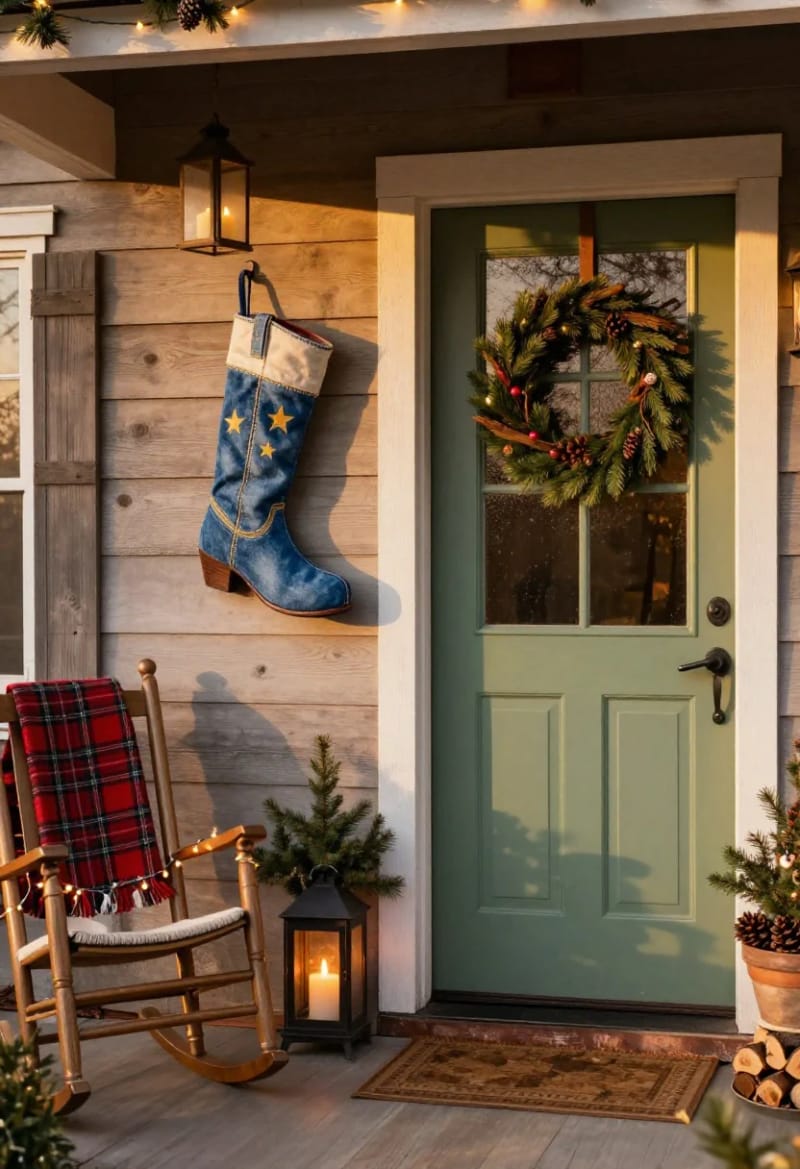
Cut the stocking as a cowboy boot instead of the standard hook shape and you land the western look the denim already points toward. The silhouette is the trick: a squared toe, a raised heel, and a straight boot shaft. Add two short pull-straps or a ribbon loop at the top, topstitch a simple star or a curved yoke on the shaft in gold thread, and if you kept a jeans hem, run it up the back of the boot as the seam. Real boot stockings run taller and narrower than a classic stocking, so size the template long or it reads as a lumpy sock.
8. Rag-quilt denim stocking with frayed seams
Sew this one inside out on purpose so every seam allowance sits on the outside, then wash it and let the edges bloom into soft denim fringe. Rag-quilt construction means you stitch the layers with the raw edges facing out, clip into those allowances every quarter inch without cutting the stitch line, and a run through the washer and dryer chews them into that fringed border. Denim frays into a heathered fringe because the warp is indigo and the weft is white, so the tips come out pale.

Two warnings from the mechanics of it: leave a half-inch allowance minimum or there is nothing to fray, and clean the lint trap twice, because the first wash of a denim rag project sheds like a golden retriever in June.
The waistband, the flat-felled seams, and any spot where four layers of denim stack are where universal needles snap and stitches skip. Switch to a denim needle in 100/16 or 110/18 before you reach those zones, lengthen the stitch to about 3.5 millimeters, and hand-walk the flywheel over the thickest bumps instead of powering through. Grade the seam allowances too, trimming each layer to a different width so they do not pile into a single hard lump the needle cannot pierce.
9. Overall-bib denim stocking with the buckle intact
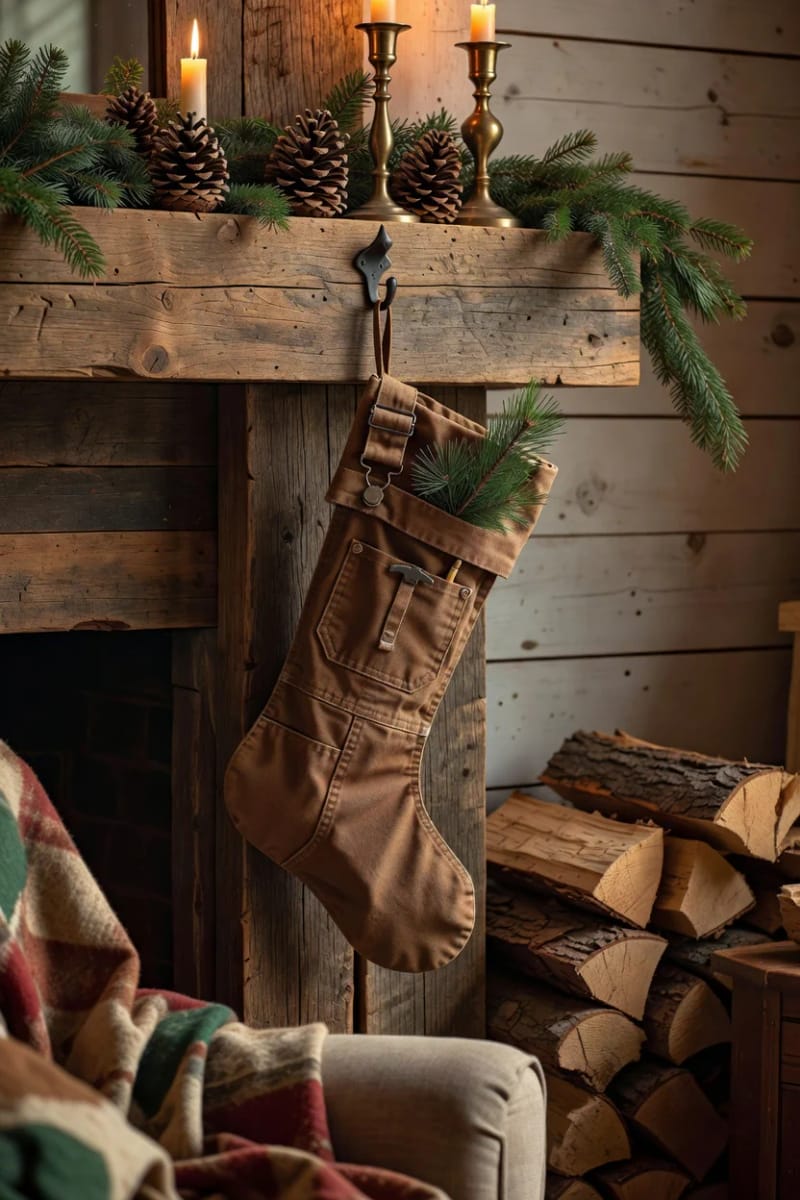
If your donation pile has a pair of bib overalls or overall shorts, cut the stocking so the bib's buckle and strap become the hanging hardware at the top. The metal that makes overalls annoying to wear is the exact detail that makes this stocking look designed rather than improvised. Position the template so one adjustable buckle sits at the top corner, let the strap loop over the mantel hook or a nail, and keep the buckle as a visible closure. Carhartt-style workwear in that faded barn-brown duck cloth works even better than blue denim here, if you can find a worn-out pair.
The bib pocket, the one with the pencil slot and hammer loop, transfers straight onto the front if you cut carefully around it. That single pocket carries more character than anything you could applique on.
10. Bleach-stenciled denim stocking
Lay a snowflake or star stencil on a finished dark-denim stocking, dab on a bleach gel, and the indigo lifts to a warm caramel-orange where the bleach lands. Chlorine bleach does not turn indigo white; it strips it toward orange and tan, which is why a bleached snowflake on navy denim glows amber rather than reading as a clean cutout. Use a bleach pen for crisp small motifs or a cut-freezer-paper stencil ironed down for larger ones, work outdoors or over a sink, and rinse in cold water with a splash of hydrogen peroxide the moment the color shifts, or the bleach keeps eating the fibers after you have stopped watching.

Test on a hidden scrap of the same jeans first. A ten-ounce stonewash and a fourteen-ounce raw selvedge will bleach to completely different tones from the same gel.
11. Felt-appliqué denim stocking
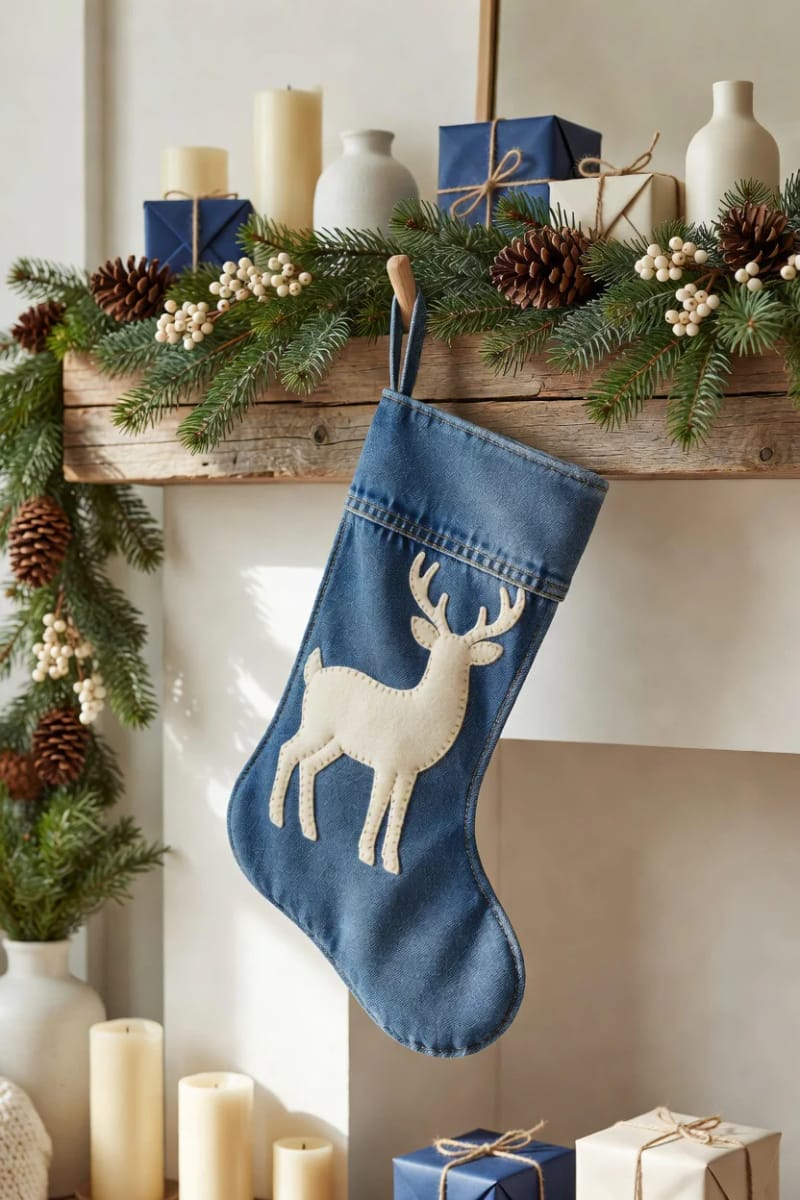
Cut simple shapes from wool felt, a tree, a single deer, three stacked ornaments, and stitch or fuse them onto the denim for color that survives being handled every December. Felt is the right partner because it does not fray, so you can cut a clean shape and blanket-stitch the edge without turning it under. Keep the palette tight: one accent color plus cream against the blue does more than a dozen mismatched scraps. This is the design to hand a kid with a needle, since crooked appliqué on a denim stocking looks intentional in a way crooked anything-else does not.
12. Seam-and-selvedge denim stocking
Build the stocking to show off the parts of the jeans everyone else cuts away: the felled outseam, the selvedge line, the belt loops, the coin pocket, even a few inches of the fly and its topstitched curve. Treat the original construction as the design and arrange the template to catch as many of those details as it can.
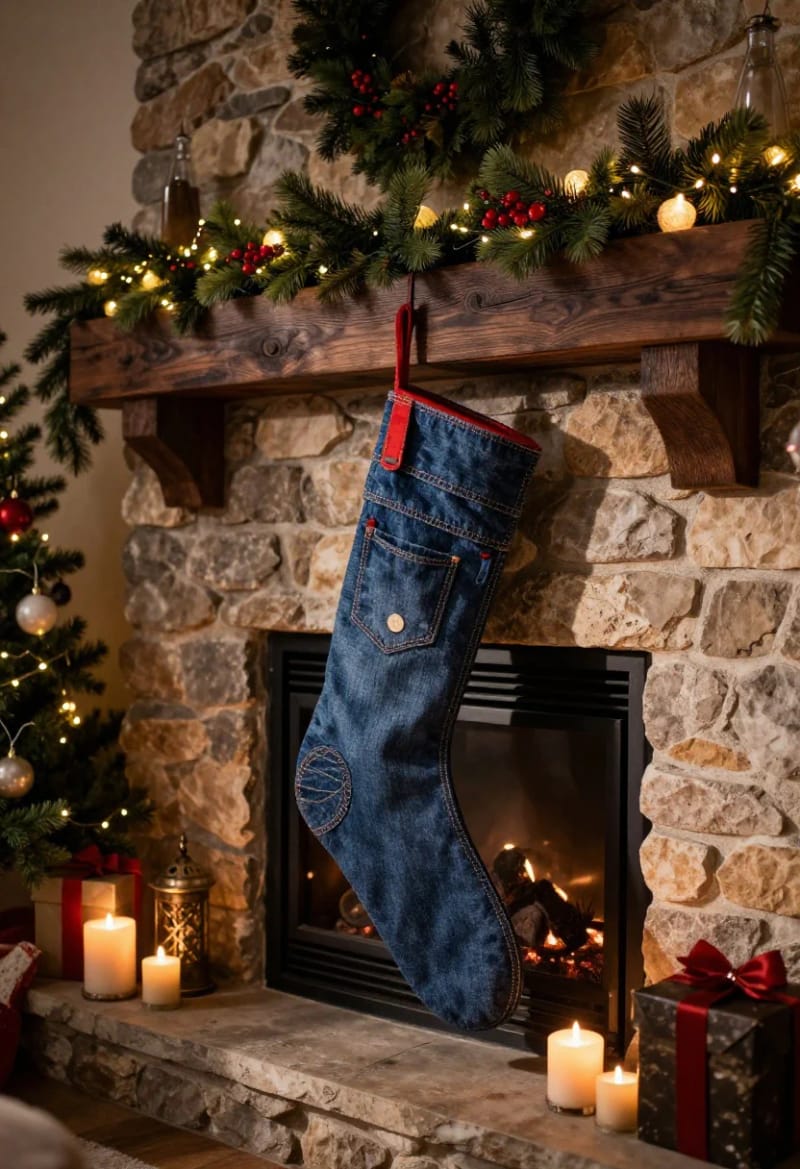
- The flat-felled outseam, which becomes a raised ridge running up the front.
- A belt loop, folded over the top edge as a sturdy, authentic hanging loop.
- The coin pocket, that tiny pocket tucked inside the right front pocket, sized for a folded bill or a mini candy cane.
- A stretch of selvedge from raw-denim jeans, the red-lined self-finished edge, run down the back seam so it shows.
This works best with structured, darker jeans where the seams and topstitching still stand up. A soft, worn-thin pair loses all the ridges that make the design legible.
13. Mini denim stocking garland from scraps

Cut a dozen palm-sized stockings from the leftover scraps and string them into a garland, or hand out each one as a gift-card holder. Nothing here is big enough to need a pattern; trace a cookie cutter or your own hand. Sew or fuse fronts to backs, leave the tops open, and either thread them onto baker's twine through a belt-loop tab or clip them to a wire with tiny clothespins. A single adult pant leg yields six or eight, which makes them the thing to do with the parts too small for a full stocking. For the gift-card version, size each one just wider than a card and add a stamped or embroidered initial so people can find their own.
Do this
- Use gold or cream topstitching thread. It is the single detail that says real jeans rather than craft-store fabric.
- Fit a denim needle and drop to a longer stitch, around 3.0 to 3.5 mm.
- Add a walking foot if you own one, so the top denim layer stops creeping ahead of the bottom.
Avoid
- Matching blue thread, which vanishes into the twill and wastes the effort.
- Backstitching on the thickest seam. Tie off by hand instead.
- Lining a stocking nobody looks inside: skip it.
| Design | Machine needed | Rough time for one | What it shows off |
|---|---|---|---|
| No-sew fusible | No, iron only | 30 to 45 min | Speed, zero stitching |
| Back-pocket | Helpful, not required | 45 to 60 min | A working front pocket |
| Patchwork | Yes | 2 to 3 hrs | The range of denim washes |
| Rag-quilt | Yes | 5 to 2 hrs | Frayed, soft border |
| Cowboy boot | Yes | 1 to 1.5 hrs | Western silhouette |
| Mini garland | Optional | 15 min each | Uses the smallest scraps |
One pair of jeans, one mantel-size stocking
Adult jeans, roughly a 15 to 18 inch finished stocking
One pair of adult jeans gives you two large stocking shapes with the back pockets, hems, and side seams intact, plus enough scrap for two or three minis. Buy nothing but thread and you are at almost no cost; add a lining and topstitching thread and you are still under fifteen dollars for a stocking that would run twenty-five or more finished at a craft fair.
Shopping list
| Qty | Item | Spec | Price |
|---|---|---|---|
| 1 | Old jeans | Adult pair, any wash | $0 to $4 |
| 1 | Topstitching thread | Gold or cream, heavy | $3 to $6 |
| 1 | Lining fabric | Fat quarter flannel or cotton, optional | $2 to $5 |
| 1 | Fusible web or hem tape | Paper-backed, for the no-sew build | $4 to $8 |
| 1 | Denim machine needles | 100/16 or 110/18, 5-pack | $4 to $7 |
| Total | $13 to $30 | ||
Prices are approximate US ranges as of July 2026; verify before purchase.
Conclusion
If you are making a set, sew the fiddly ones first while your patience is fresh. The boro stitching and the seam-and-selvedge stocking reward a steady hand, and the no-sew and mini-garland versions are the ones to save for the night you are tired and just want to finish something.
Prewashing is the one step worth arguing about. For the rag-quilt design you want the fraying, so a hot wash after sewing is the whole point; for everything else, wash and dry the jeans before you cut, because old denim shrinks unevenly and a stocking that warps after its first season by the fireplace is a season wasted.
And keep the scraps. The offcuts from any one of these feed the mini garland or patch next year's boro stocking, so the second pair of jeans you cut into is already half-supplied by the first.