
The first garland I ever made came off a single overgrown white pine at the edge of my parents' lot, cut with kitchen scissors because I couldn't find the pruners. It looked rough. It also smelled like the whole season in one strand, and it cost nothing, and I have been making garland from yard clippings every December since.
That is the real pitch here: most of what sells for forty dollars a length at the garden center is sitting in your hedge, your woodlot, or your neighbor's leaf pile right now. Below are thirteen distinct foraged garlands, sorted by what you actually have access to, from a dense conifer rope to a pale lichen-and-moss strand that almost nobody thinks to gather.
One courtesy before you start snipping: take from your own yard, or ask, and cut a little from many plants rather than stripping one. A few of these use berries that are toxic to handle around pets and kids, and I will flag exactly which ones when we get there.

Start with the evergreen backbone
Mixed conifer garland: pine, fir, and a little spruce
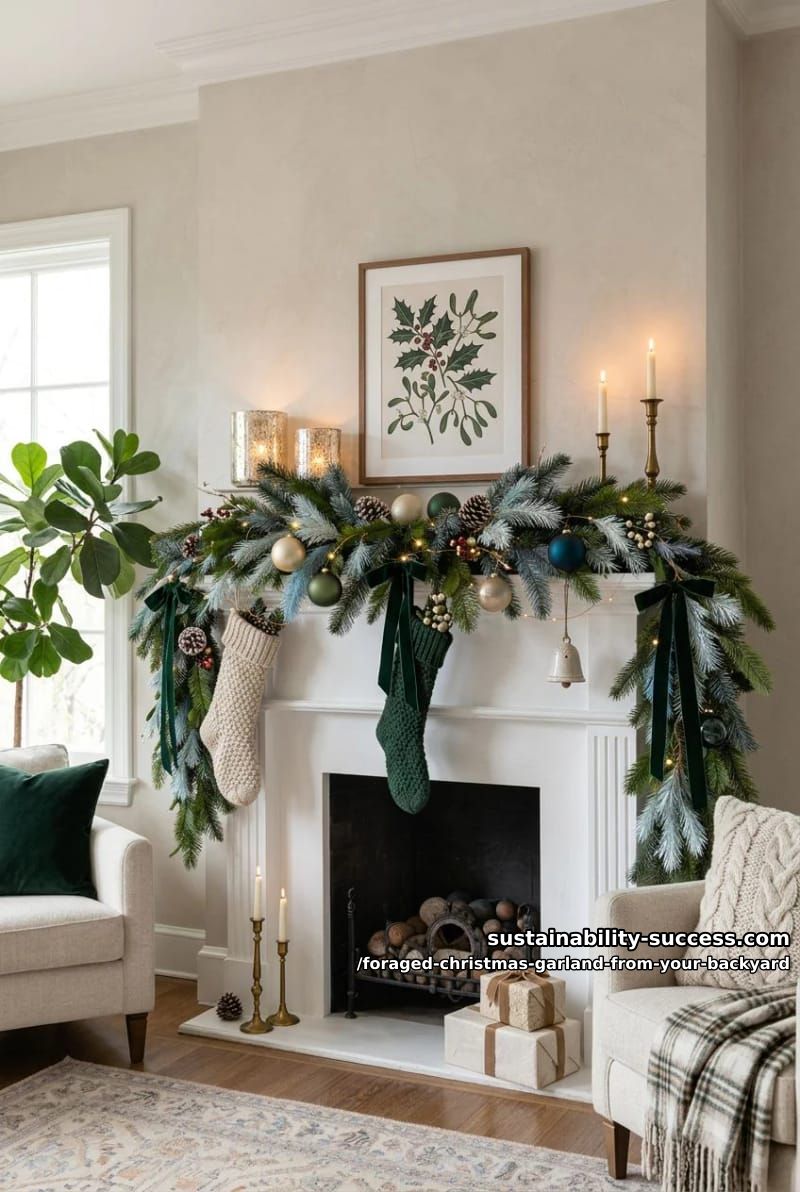
This is the one to learn first, because once you can build a mixed conifer strand every other garland here is a variation on the same move. Gather three needle shapes if you can: long, soft white pine for fullness; flat fir for depth of color; a few stiff spruce tips for contrast. The technique is just small bundles lashed onto a thin spine, repeated until you run out of patience.

The part most tutorials get wrong is the base. They tell you to start with a length of rope, which adds weight, fights you on corners, and shows pale through every gap. Skip it. A doubled run of jute mason's line, or honestly just bare 22 gauge floral wire folded back on itself, vanishes into the greenery and bends where you want it.
Do this
- Bundle three to five stems into a small cluster, wrap once with floral wire, then bind each cluster to the next facing the same direction so the strand reads like it grew that way.
- Soak the finished garland in a cool bath overnight and mist it every few days. Properly hydrated, pine, fir, and cedar hold up indoors for two to three weeks, and longer somewhere cold.
Avoid
- A bulky rope core.
- Hanging spruce indoors next to a heat vent. Of the common conifers it drops its needles first, so save spruce for an outdoor swag where the cold keeps it honest.
A quick build, start to finish:
- Cut twice as much greenery as you think you need; bundling eats it fast.
- Lay out your wire spine the full length of the mantel or rail plus a foot of slack for the drape.
- Wire clusters on, overlapping each new one to hide the last one’s cut ends.
- If you want it lit, thread one unlit warm-white fairy strand through the interior at the very end, not the start, so the wire hides underneath.
Cedar garland for the softest drape
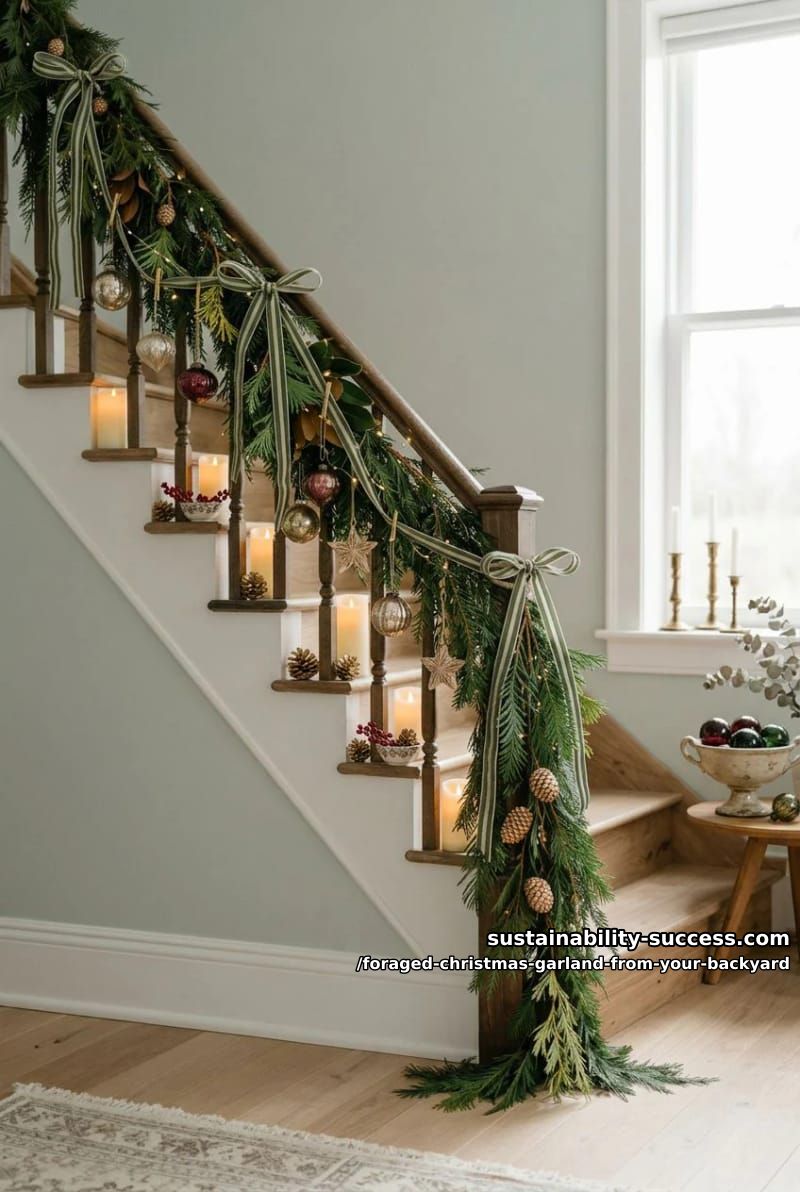
Cedar drapes like fabric, which pine never quite does. Its flat fan-shaped sprays fall into long soft swags with their own weight, so you can build a looser, airier garland and let the gaps show. The fragrance is sweeter and less resinous than pine, and it holds well in a warm room.
Two-tone magnolia leaf garland
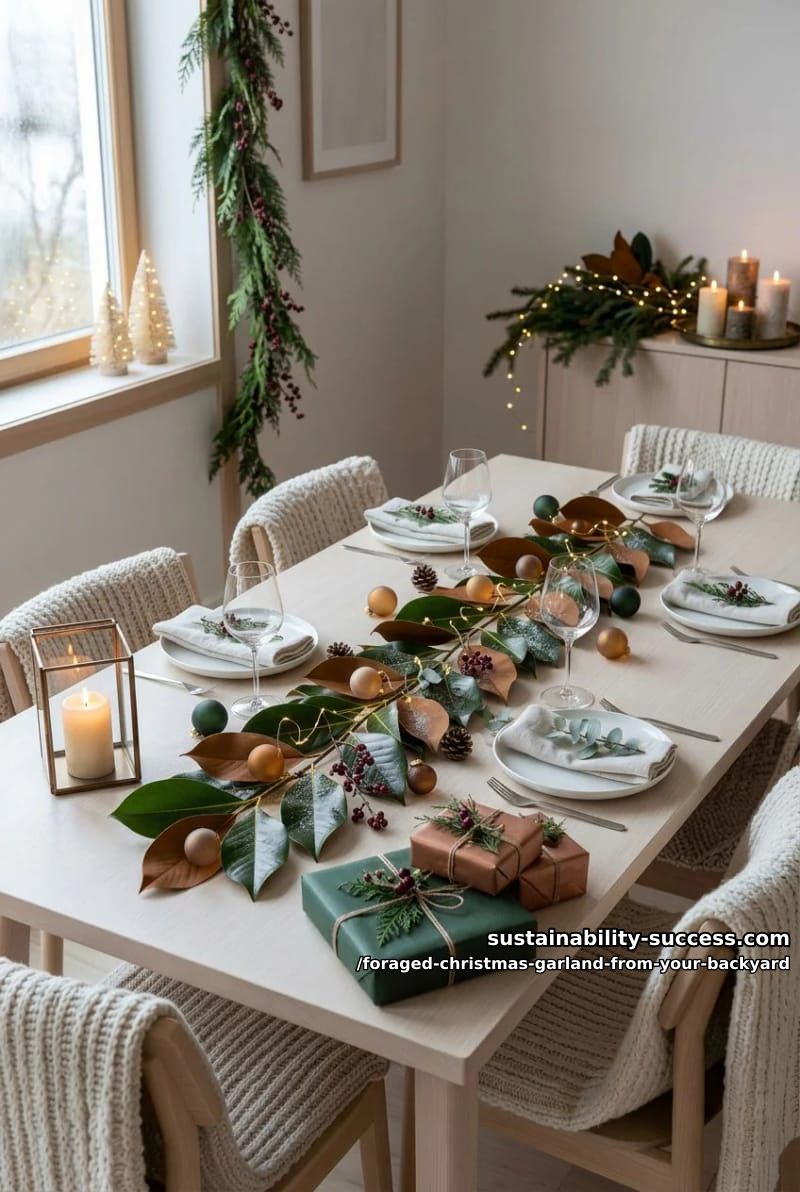
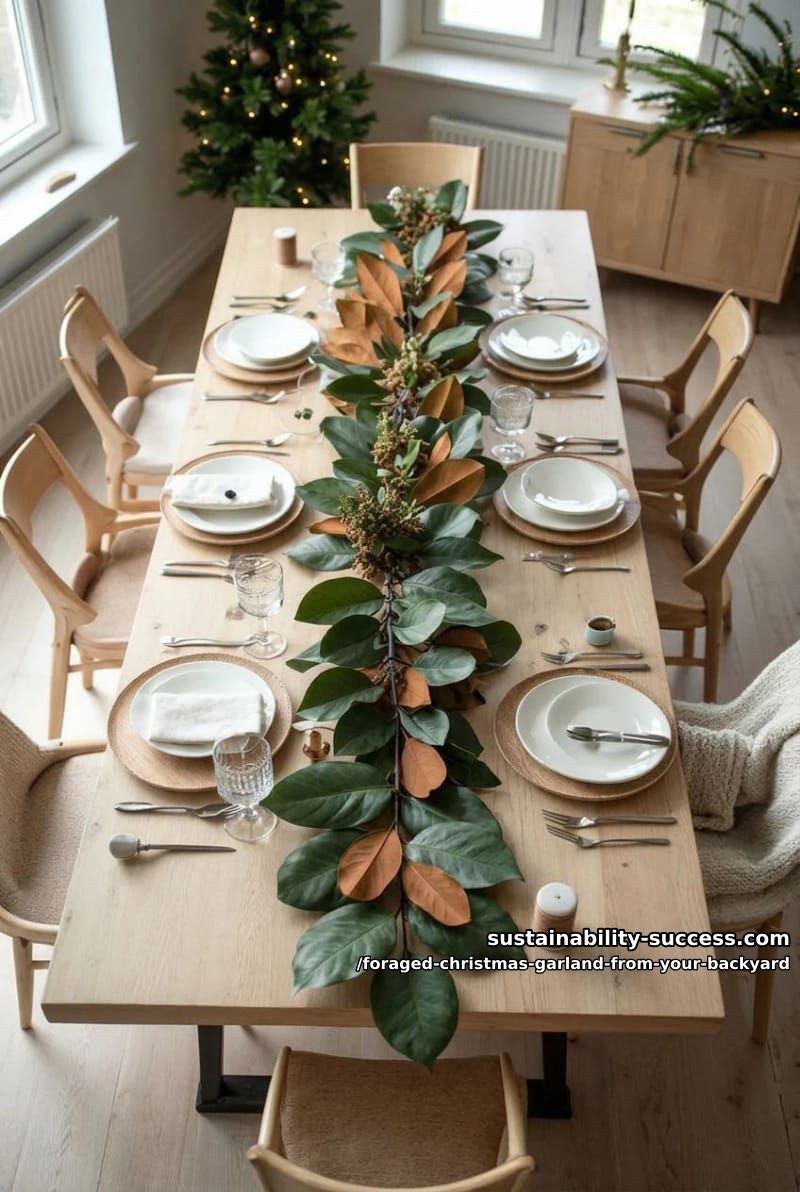
Southern magnolia is the one broadleaf that earns a strand all to itself, and the trick is to fight your instinct to keep every leaf green-side up. Flip every third or fourth leaf to show the suede cinnamon underside; that two-tone rhythm is the whole effect, and it photographs better than a wall of glossy green. Leaves overlap like scales along a wire spine, and they last for weeks because they are practically built out of wax.
No evergreens? Cones, pods, and bark
Pinecone garland on bare jute
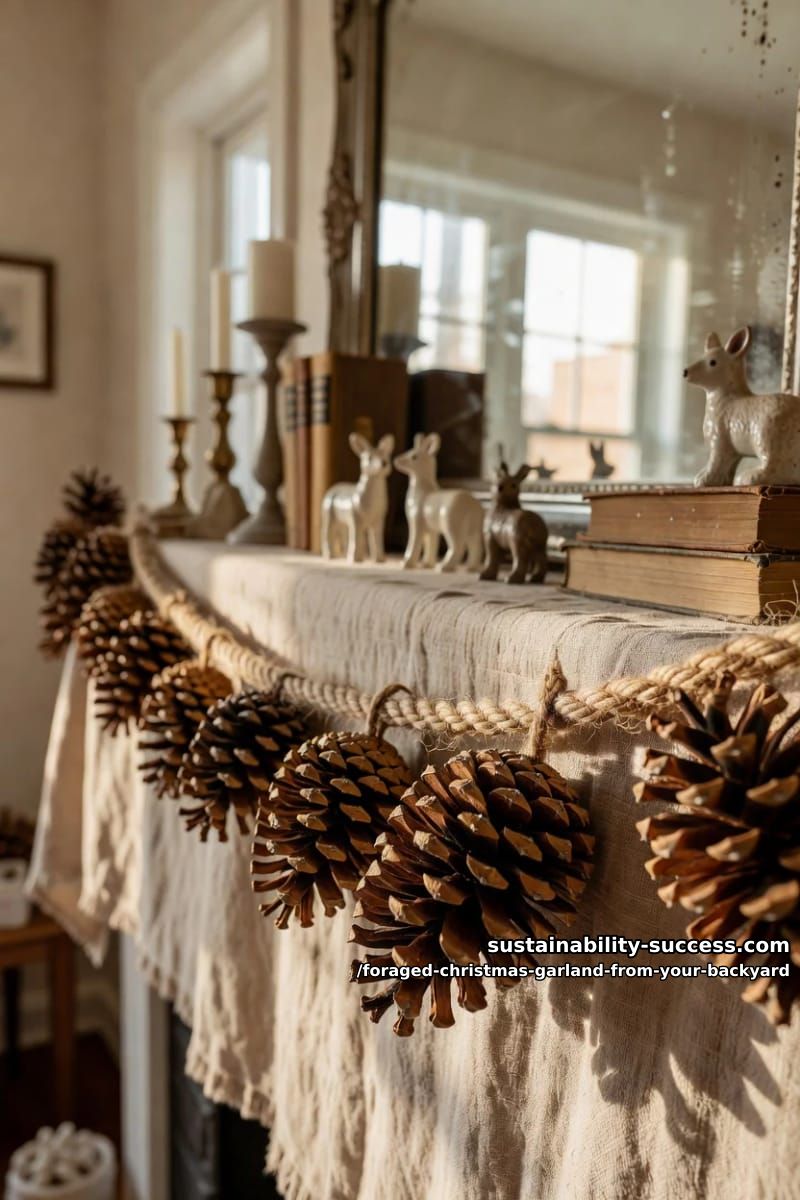
If your yard is short on greenery but long on cones, this is your garland, and it lasts for years. Wrap a length of floral wire around the base of each cone where the scales are tightest, then twist those wire tails onto a jute rope at three- to four-inch intervals. I once tried to do this without wire, hot-gluing cones straight to twine, and spent the rest of the evening peeling glue off my fingers; use the wire.
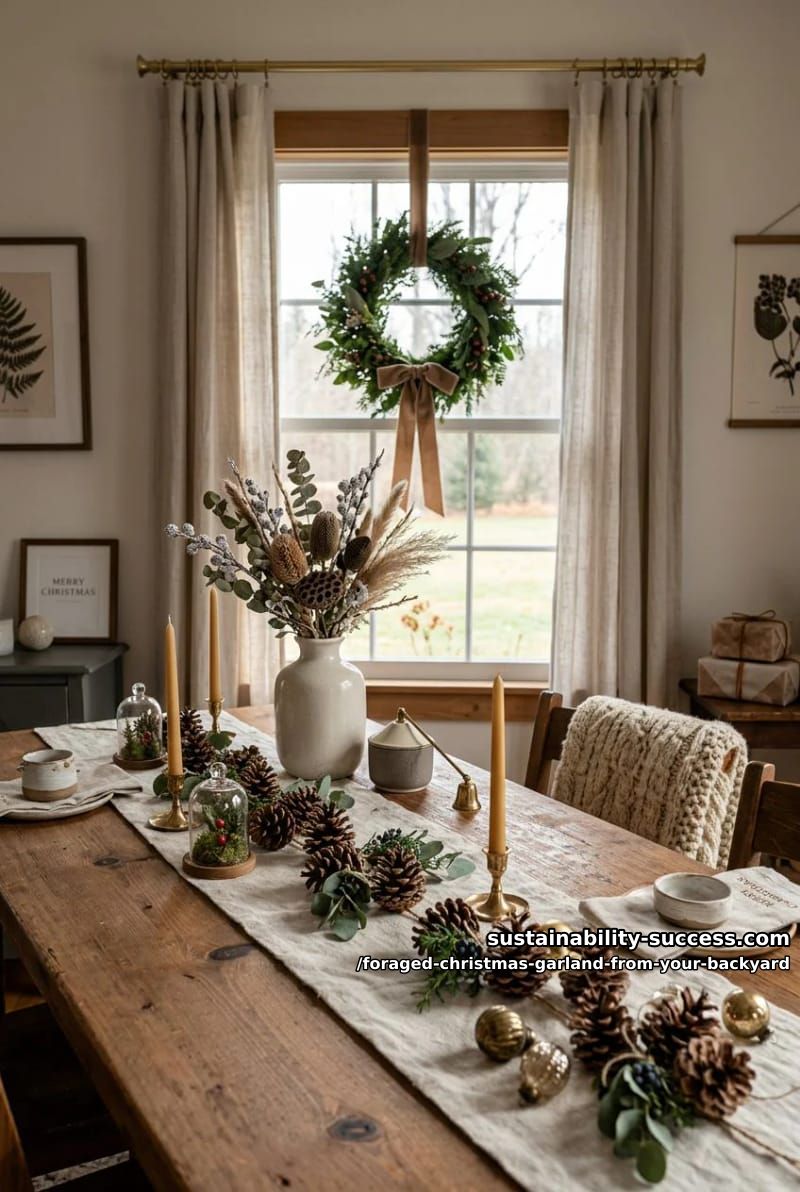
Seedpod and dried botanical garland
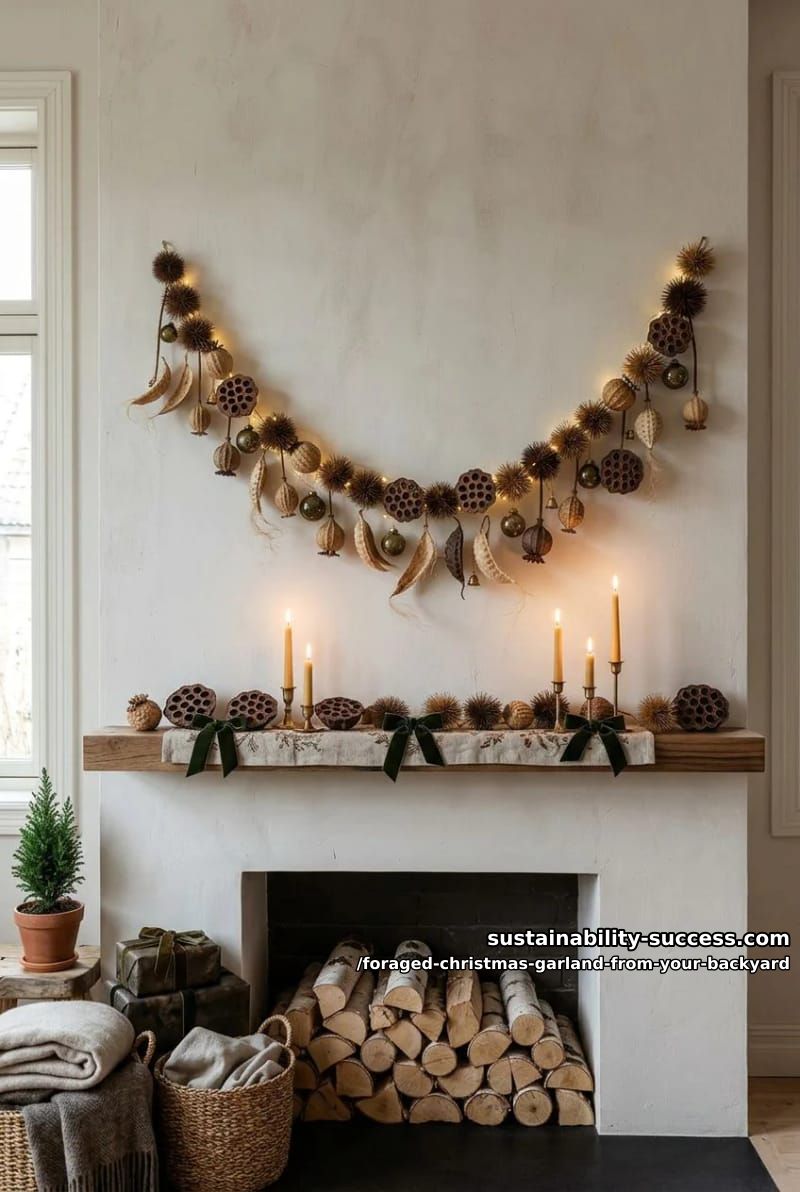
Those spiky sweetgum balls everyone curses in the fall become a genuinely interesting garland when you stop fighting them; thread them on twine with lotus pods, dried poppy heads, and a split milkweed pod or two, and you get a strand that is all texture and no color. It reads modern rather than rustic. Keep the palette to browns and let the shapes do the work.
Birch twig and bark garland

Northern yards have a pale, graphic option in birch. Bundle short white birch twigs with curls of peeling bark and a few small alder cones, and you get a chalky white-and-grey strand that looks best backlit in a window. It is sparse and architectural, the opposite of a full conifer rope.
Where the color comes from: fruit and berries
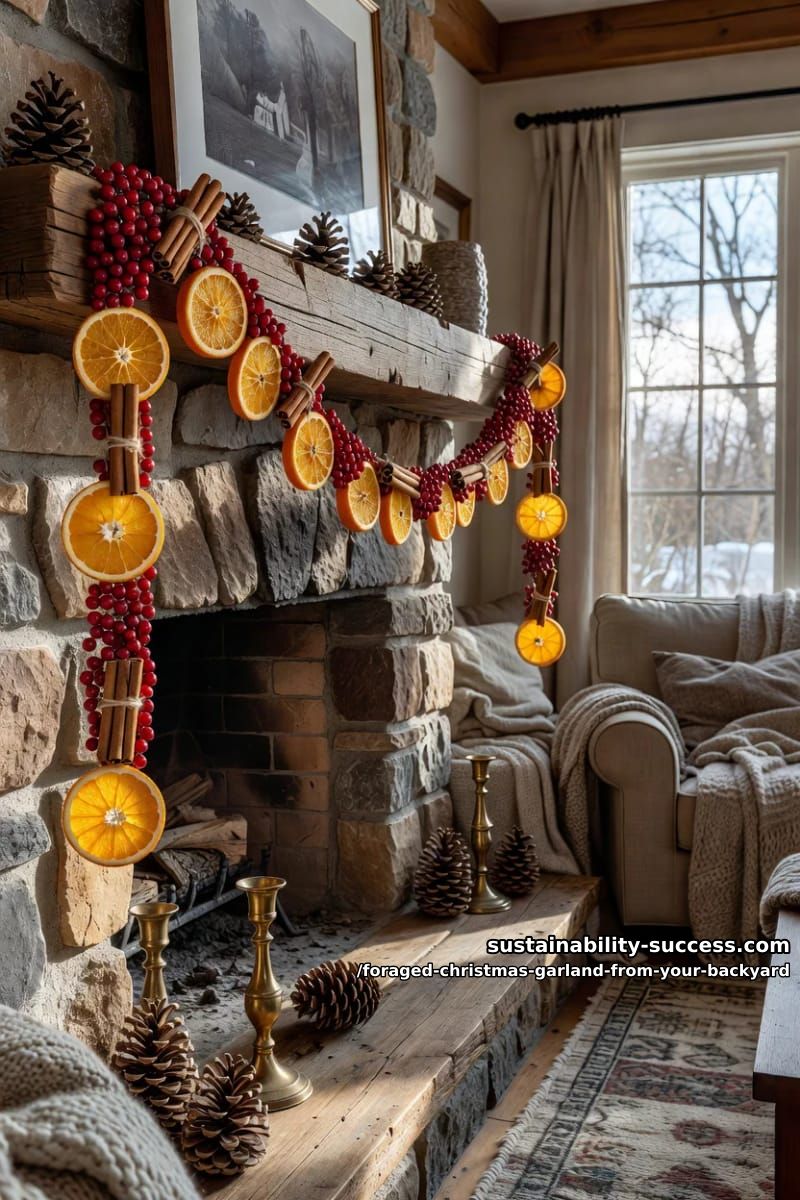
Dried orange and cranberry garland

This is the cheapest color you can buy, and it is more backyard-adjacent than it sounds once you start drying citrus on your own oven racks. Slice oranges across the equator about an eighth to a quarter inch thick, blot them dry, and bake low and slow: most sources land on 200°F for two to four hours, flipping every half hour so the slices don't burn, and drying at the lower end of 200 to 225°F keeps them from browning, with three to five hours being typical depending on your oven. They are done when the centers look translucent and no longer feel tacky.
String the cooled slices on waxed twine or fishing line, alternating with fresh cranberries and the occasional cinnamon stick, spacing them unevenly so it looks gathered rather than manufactured. The payoff beyond looks: stored airtight, dried orange slices keep for a couple of years and can be reused season after season, so the afternoon of slicing amortizes nicely. They glow like worn stained glass when the light comes through a window behind them.
Wild rosehip and winterberry garland

Red berries are the single fastest way to make a foraged garland look intentional, and a rosehip strand wired with winterberry sprigs gives you a whole range of reds, from burnt orange to true scarlet, on bare twigs. It is gorgeous on a dark mantel. It is also where you need to pay attention, because several of the prettiest red berries are genuinely dangerous.
Winterberry is a holly, and like English holly its berries are toxic to people, dogs, and cats; the holly toxin theobromine can cause vomiting, stomach pain, and a racing pulse. Yew arils and mistletoe are worse, and nearly every part of a yew plant is dangerously toxic to pets and people, so it should never go into holiday decor; mistletoe is the most dangerous of the classic Christmas plants, with even small amounts capable of making a pet sick. English ivy berries and bittersweet belong on the no list too. If you use toxic berries, display them high and out of reach, never on a table a toddler or a chewing dog can reach, and skip them entirely in a pet household. Rosehips, hawthorn haws, and your dried-orange-and-cranberry strands are the safer color sources. The Iowa Poison Control Center keeps a clear list if you want to double-check what you’ve gathered.
Dried apple and bay leaf garland
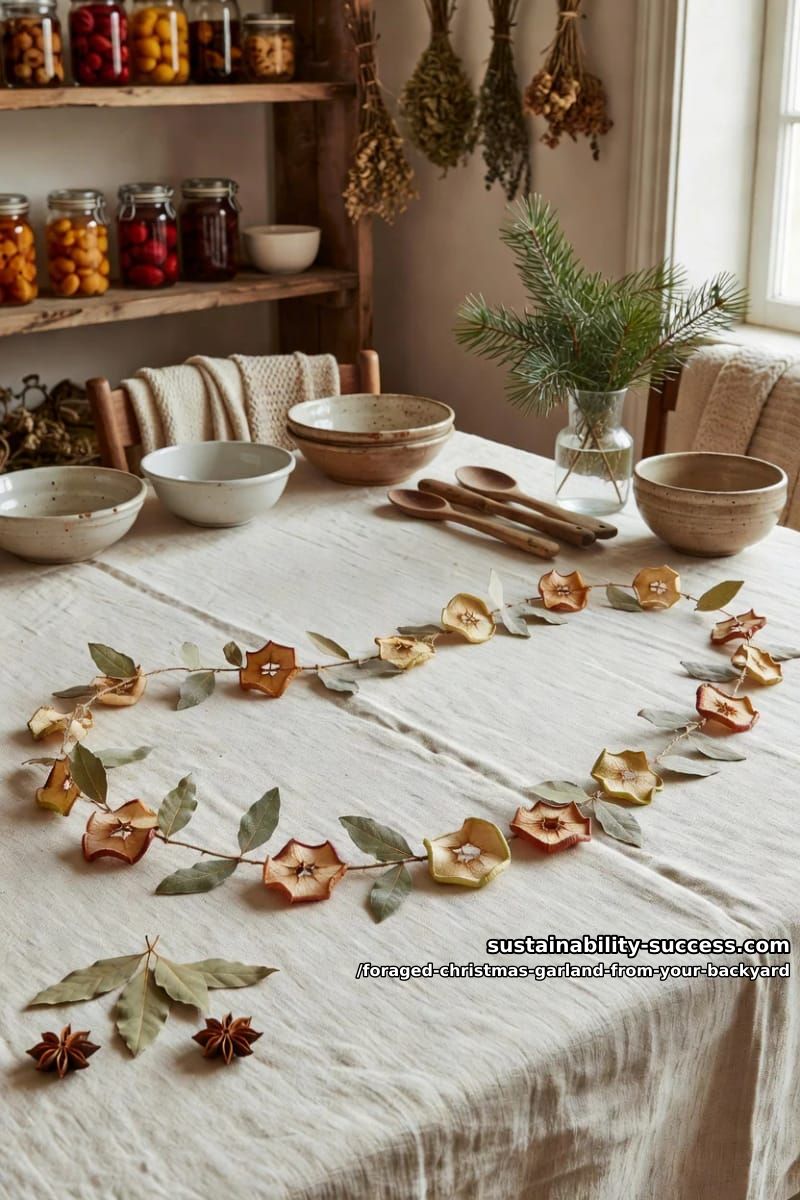
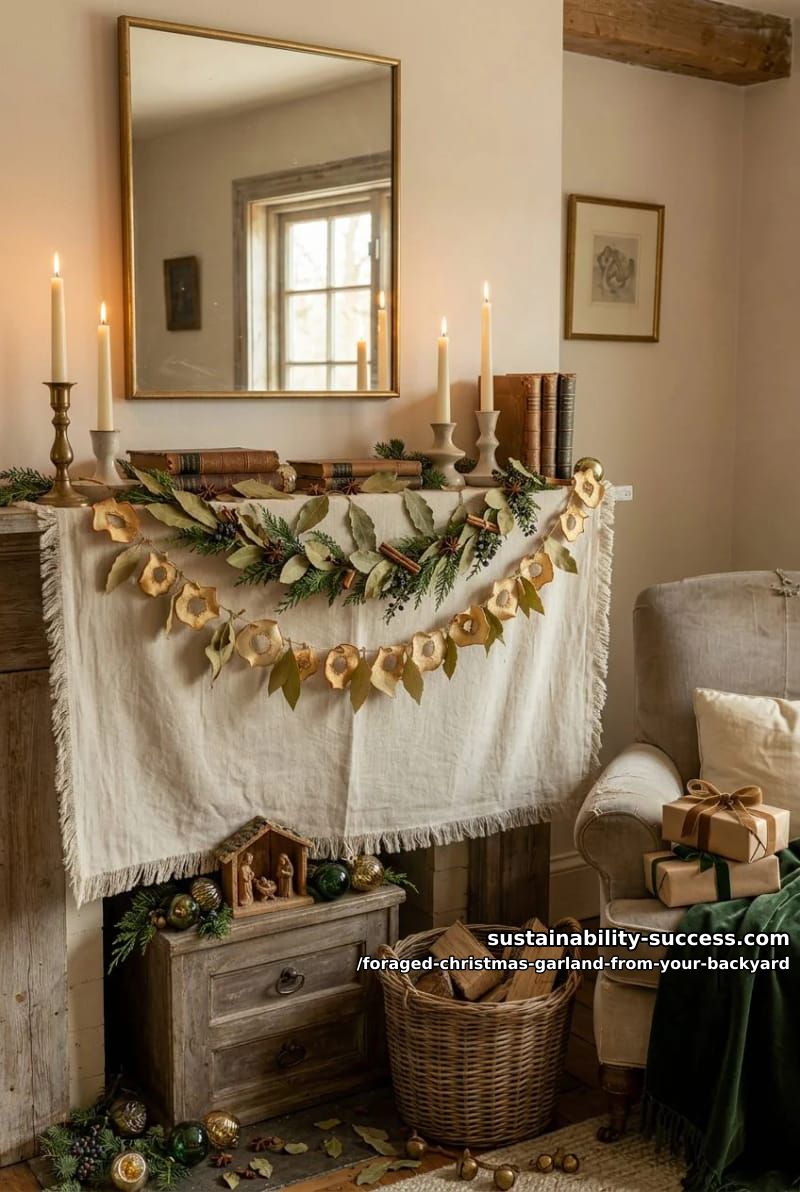
Apple rings dry the same way orange slices do and give you a quieter, more parchment-toned strand. Thread them with whole bay leaves for a leathery grey-green contrast and a faint kitchen-herb scent. This one earns its keep in a spot where the louder citrus garland would be too much.
Foraged textures nobody expects
Rosemary garland for the table
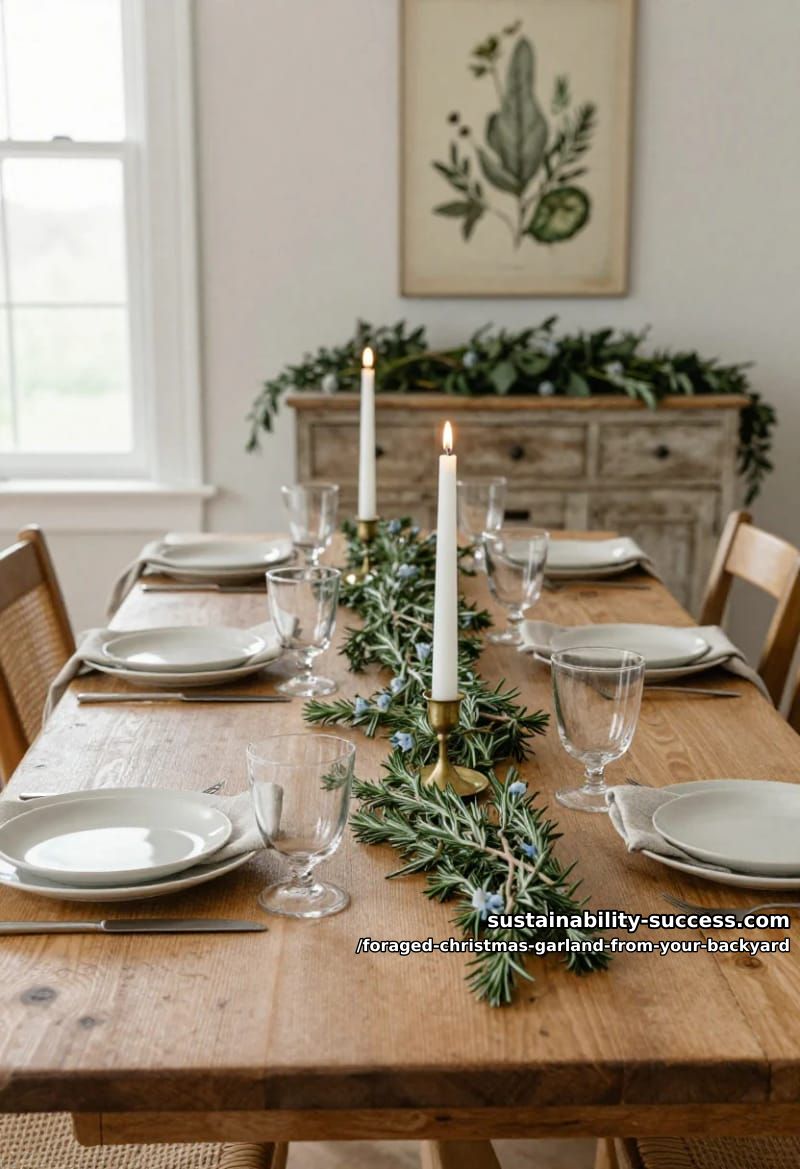
If you have a rosemary shrub, you have a tabletop garland, and this is the move for anyone short on space or working a small dining table. Lay sprigs end to end in a loose continuous line down the center, tuck low candles in at intervals, and let the fine grey-green needles stay matte and informal. Rosemary is one of the non-traditional greens that holds up well in arrangements, and it perfumes the whole table.
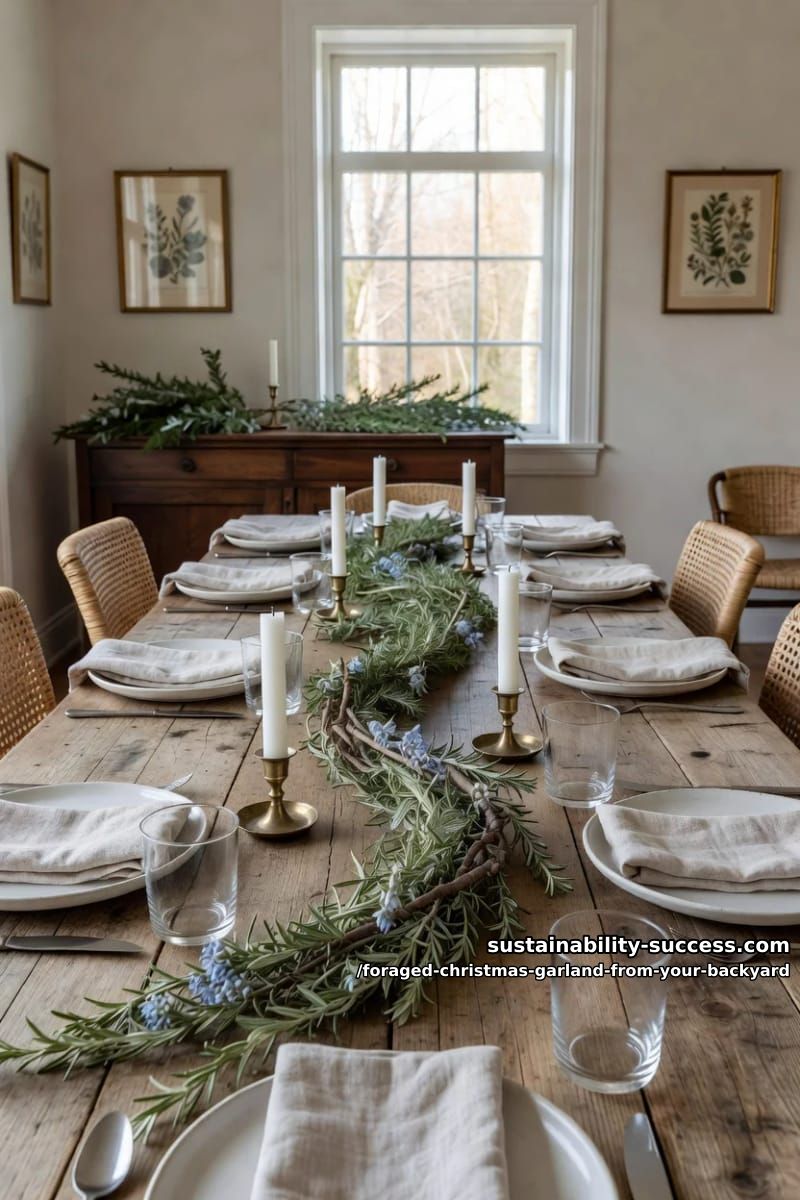
Eucalyptus and olive branch garland


Eucalyptus is overexposed at this point, and it still earns the spot. Paired with olive branches, whose narrow leaves flash a silvery underside, it makes a cool dusty-green strand that reads more modern than any conifer. Both are non-traditional greens that last, so this is a good choice if you are decorating early and need it to survive into the new year.
Hops vine and dried hydrangea garland
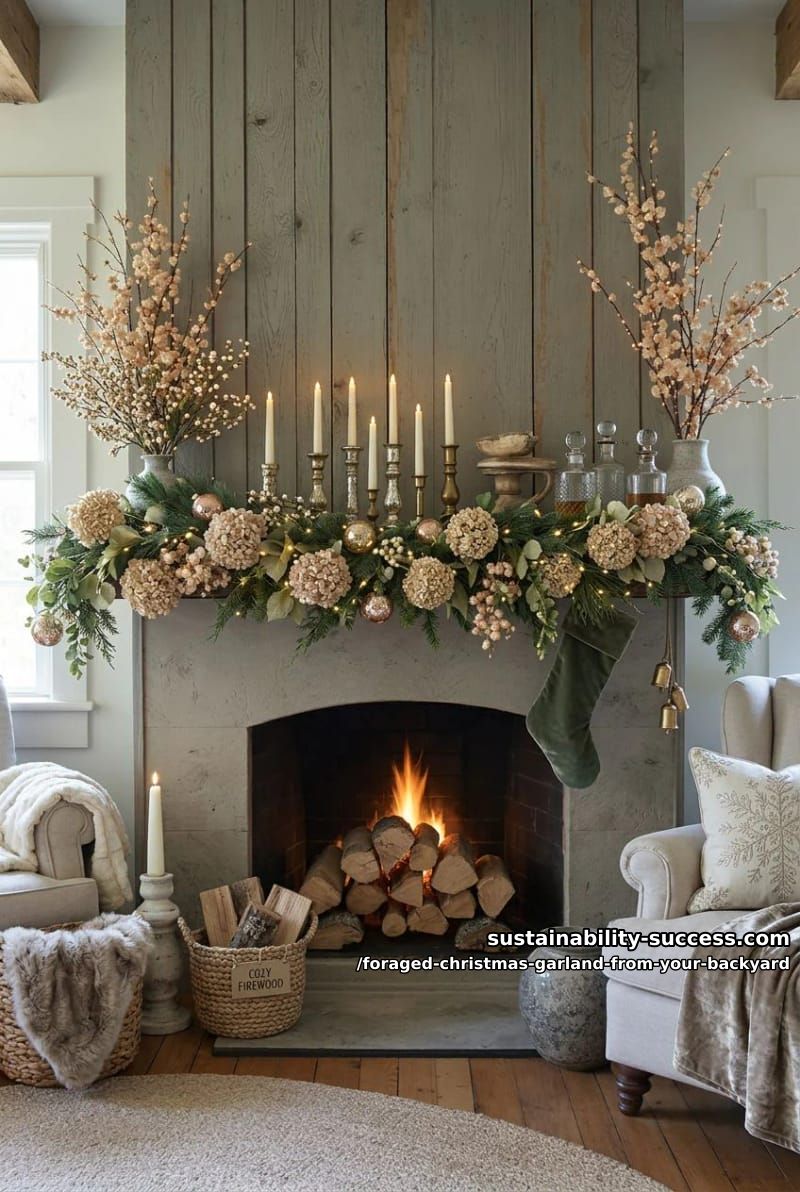
An old hops bine on a fence makes an unexpectedly full garland, the papery cones overlapping like soft scales down the vine. Tuck in dried hydrangea heads for faded antique color. One warning from experience: cut your hydrangea heads when they have already gone papery on the plant, not when they are still soft, or they shatter into confetti the first time you brush past them. I learned that the hard way the year I tried to dry fresh-cut heads in a vase.
Lichen, moss, and bare-branch garland
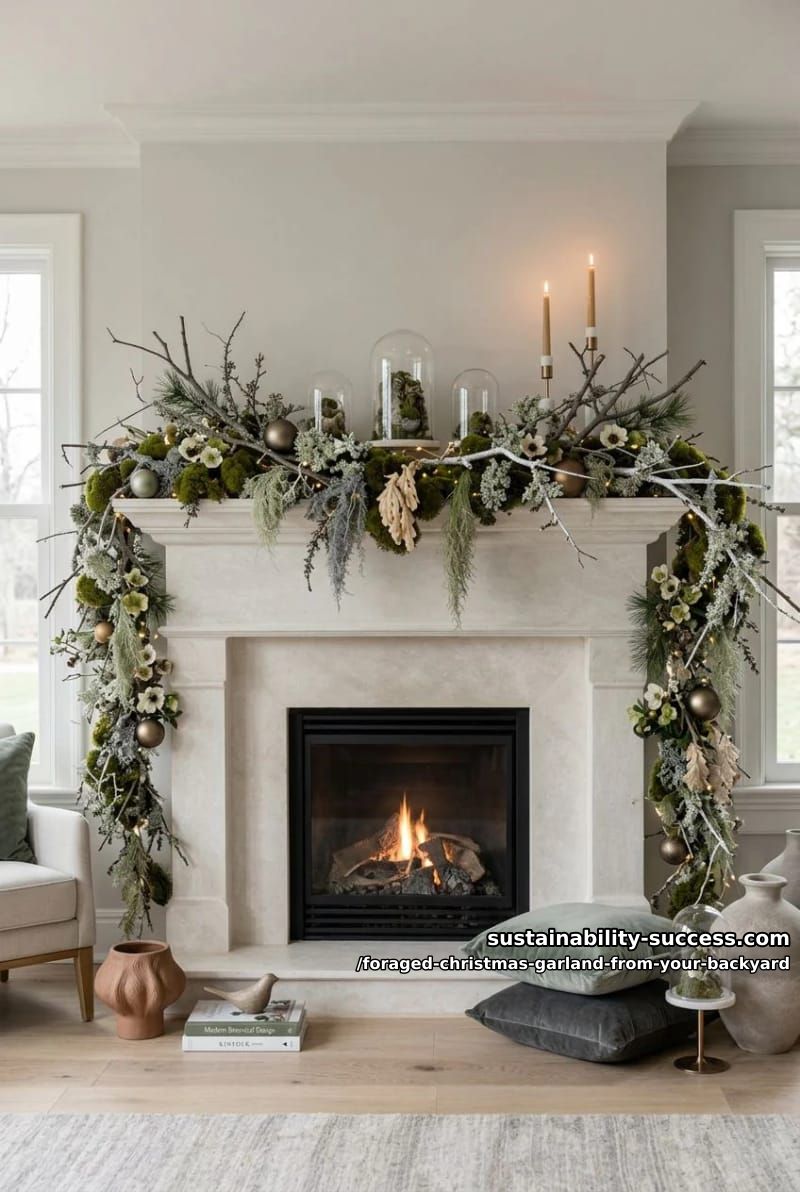
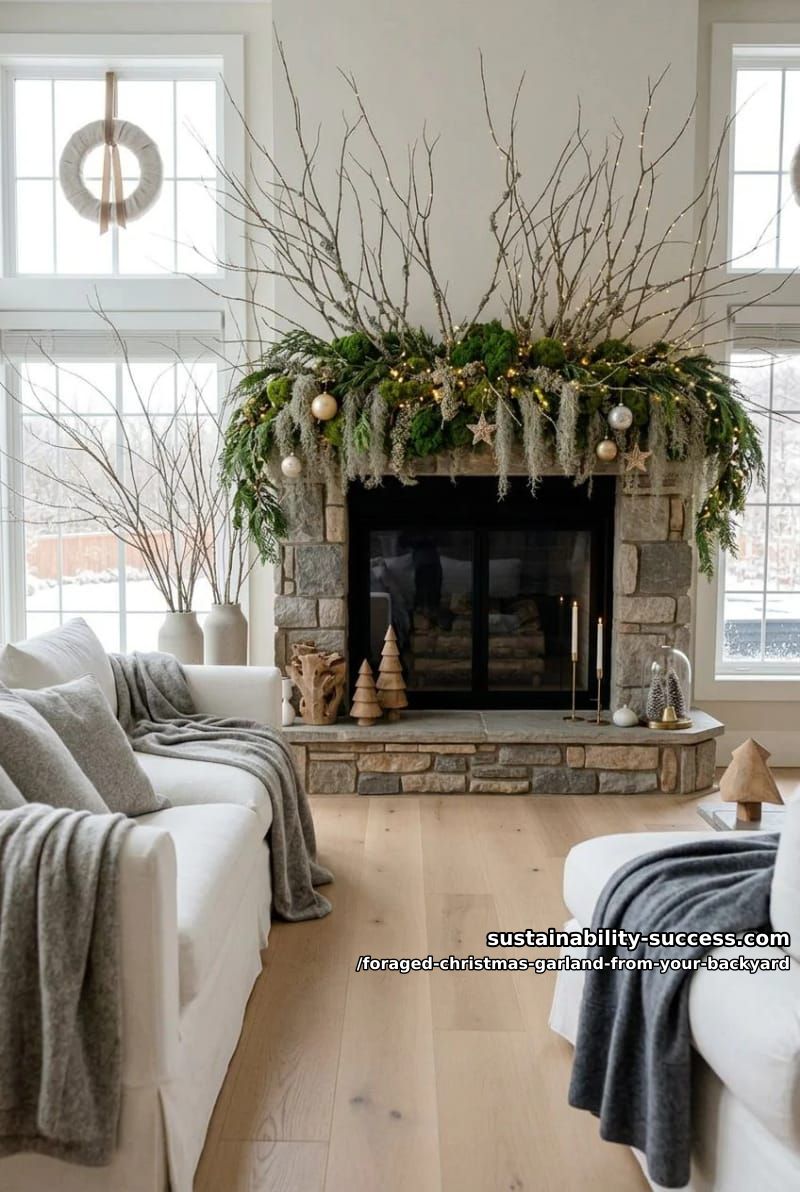
Here is the one almost nobody forages, and it is the most distinctive strand on this list. Gather lichen-crusted branches that have already fallen, tufts of wispy usnea (the grey-green "old man's beard" hanging from older trees), and cushions of reindeer moss, then wire them along a bare twig spine. The result is all muted sage, silver, and bone, soft and spongy and crusty all at once. Take only what has dropped or what grows thick, since lichen is slow to come back.
Conclusion
The honest through-line across all thirteen is that a garland is just small things bound to a thin spine in one direction, and once that clicks, your yard stops looking like a yard and starts looking like a supply closet. The conifer rope is the one to master first; the dried orange strand is the cheapest color; the lichen-and-moss garland is the one your guests won't be able to place.
If you are doing more than one, work in this order: build any fresh greenery last so it spends the fewest days drying out, dry your oranges and apples a day ahead while you forage, and wire your cones and pods whenever, since they keep indefinitely. And keep the toxic-berry rule in the back of your mind the whole time, because the prettiest red things in the December hedge are often the ones you least want a curious dog pulling off a low branch.