
Here are twelve ways to put magnolia leaves on a rustic door for the holidays, sorted by the three decisions that actually change how the wreath reads: fresh or faux, what you layer into it, and what shape fits the door you have. A few of these are the ones you would expect (red berries, a velvet bow). A few are not, like turning the bronze undersides of the leaves outward on purpose, or skipping the round wreath entirely for a vertical swag when your door is a narrow run of planks.
One thing the word "rustic" quietly changes: those doors are often barn-style, weathered, or unusually wide, and a lot of them sit fully exposed instead of tucked under deep porch cover. That pushes you toward a wreath that either dries gracefully or genuinely holds up as faux, and it turns size into a real decision instead of an afterthought. Nearly everything below works on painted, stained, or bare wood; where a finish fights the leaves, I have said so.
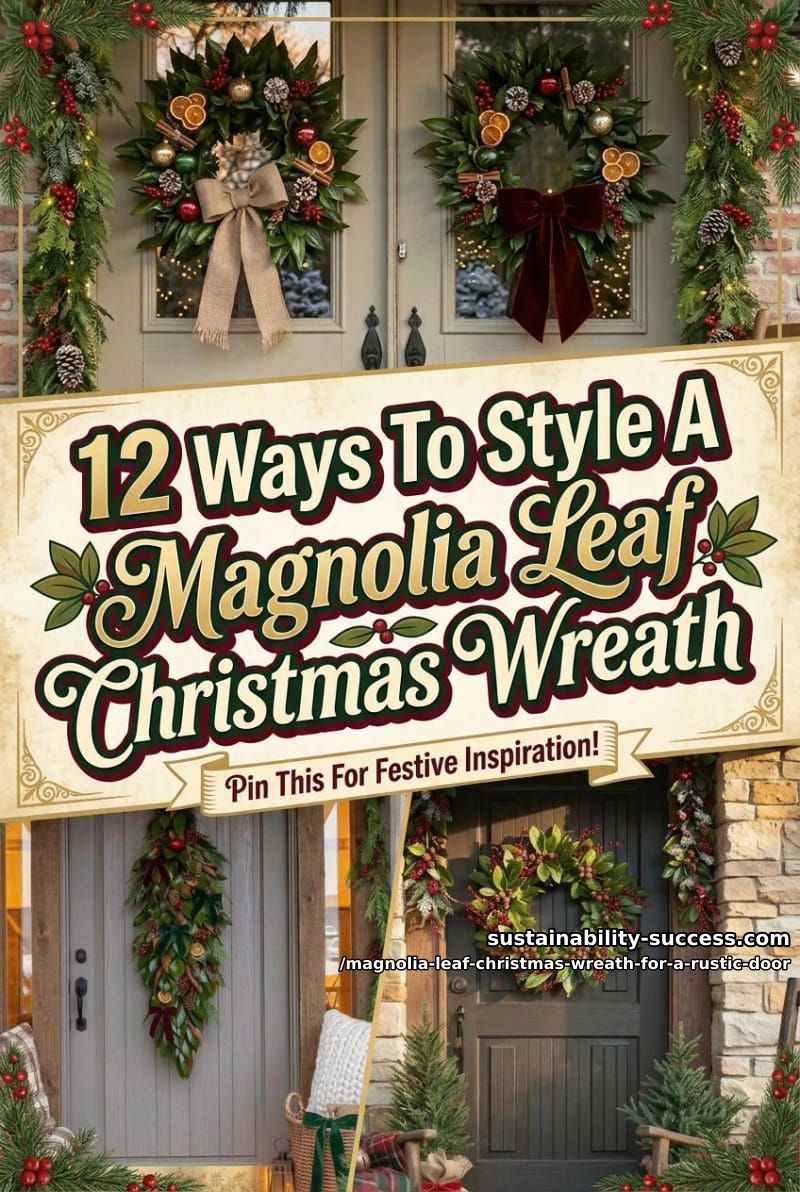
Start with the base: fresh, faux, or grapevine
Fresh-cut Southern magnolia wreath
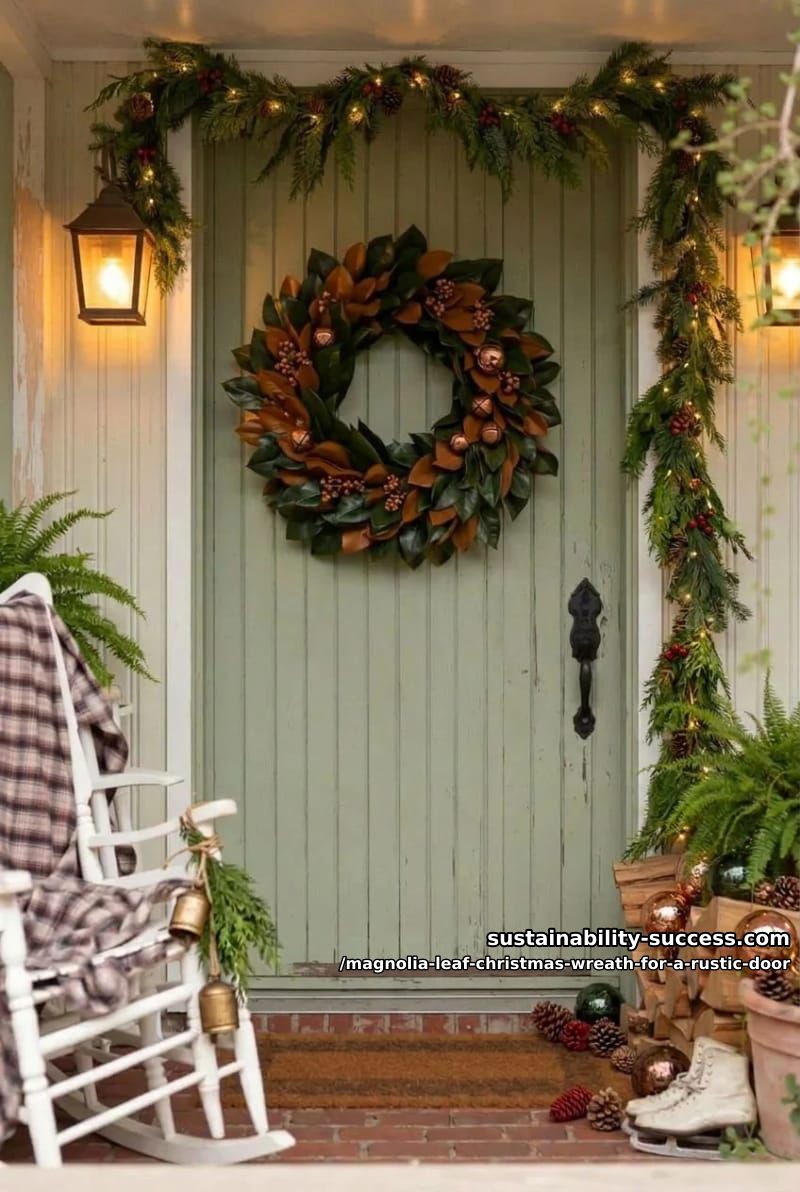
If you can get your hands on a Southern magnolia branch or two, a fresh-cut wreath outperforms anything on a shelf, and it improves as it dries rather than wilting like most greenery. The leaves are thick and leathery, so they hold shape for weeks. A florist version is usually built on a fourteen-inch frame from roughly three pounds of cut stems and finishes around twenty-four inches across, which the Mississippi State Extension wreath guide walks through if you want to make your own. Cut magnolia runs about forty dollars wholesale, so a handmade one is the cheap path only if you have the tree.
Granted, this is regional. The plant is native from Maryland down to Florida and west to Texas, and outside that belt fresh stems mean a shipped box from a Carolina or Florida farm, often with a short shelf life. Keep it off direct rain and full sun even though it lives outdoors; the leaves cup and bleach faster in a hot exposed spot.
Here is the part people fight that they should not: a fresh magnolia wreath browns. The glossy leaves dull and curl and the rust tones come forward over the season. On a weathered plank door that aging actually suits the wood better than the bright just-cut version did.
Real-touch faux magnolia for an exposed door
For a door with zero porch cover, buy real-touch faux and stop negotiating with the weather every December. The good ones use coated polyester or EVA leaves with a matte finish and a printed bronze reverse, wired onto a grapevine or bamboo-fiber base, and they are rated for covered outdoor use in standard twenty-four, thirty, and thirty-six inch sizes. Darby Creek Trading handcrafts theirs in Ohio; Winward, Afloral, and Nearly Natural all sell credible versions.
The honest warning is about the bottom of the price range. Anything under about twenty-five dollars usually reads as plastic spinach from ten feet away: uniform flat green, glossy in the wrong way, with seams showing. The leaves on a thirty-five to fifty dollar real-touch wreath have a matte surface, slight color variation, a felted brown back, and a bendable wired stem you can fluff, and that gap is the whole difference on an exposed door where the light is unforgiving.
Two-tone magnolia with the bronze leaf-backs turned out
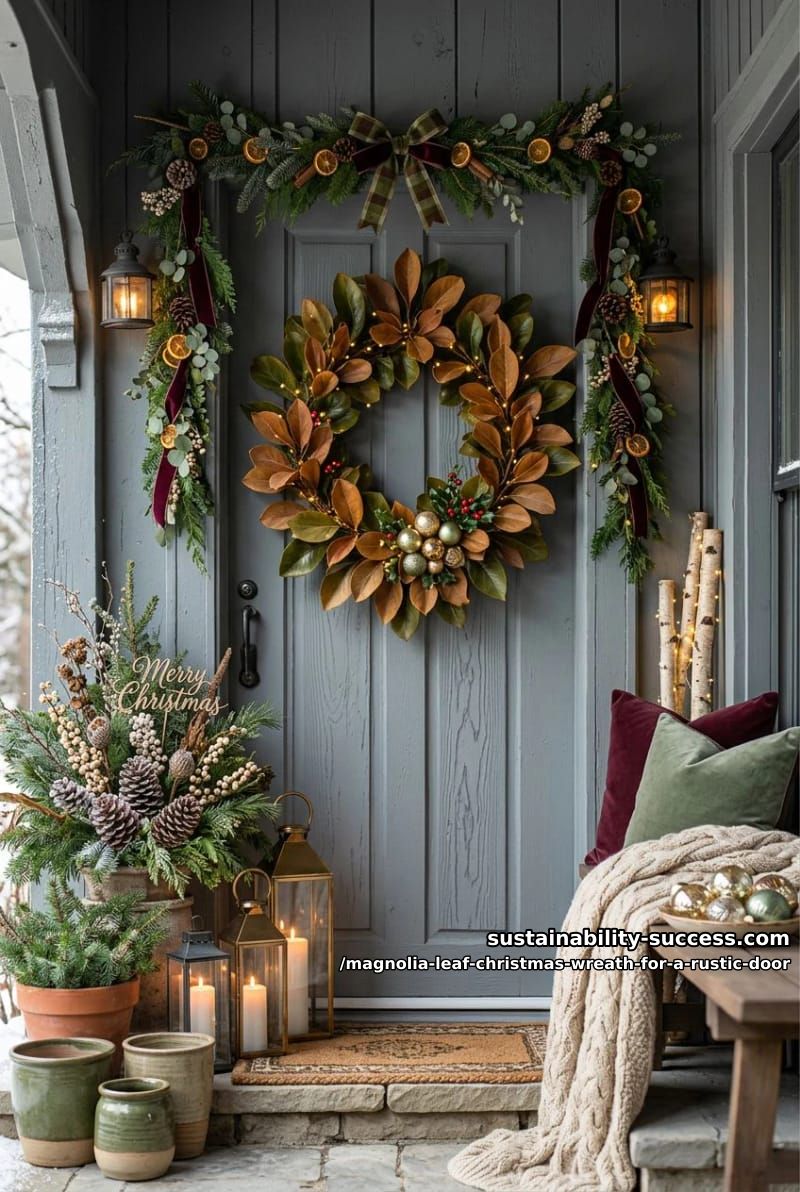
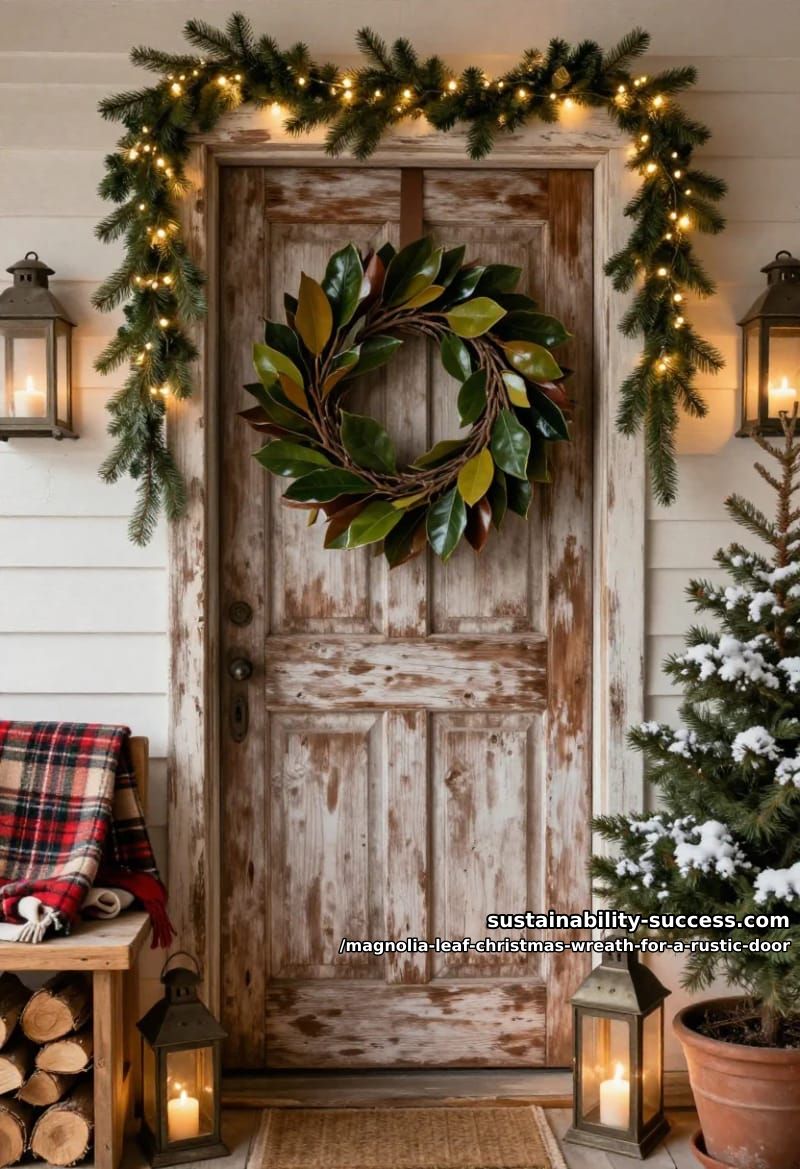
Flip about a third of the leaves so their suede undersides face out, and a flat green wreath gains depth you cannot fake any other way. The backs of Southern magnolia leaves are a fine rust-brown felt, strongest on cultivars like Bracken’s Brown Beauty and D.D. Blanchard, which the University of Georgia Extension notes for that rusty-bronze coloring. That brown is the color that ties a wreath to a weathered wood door instead of floating on top of it.
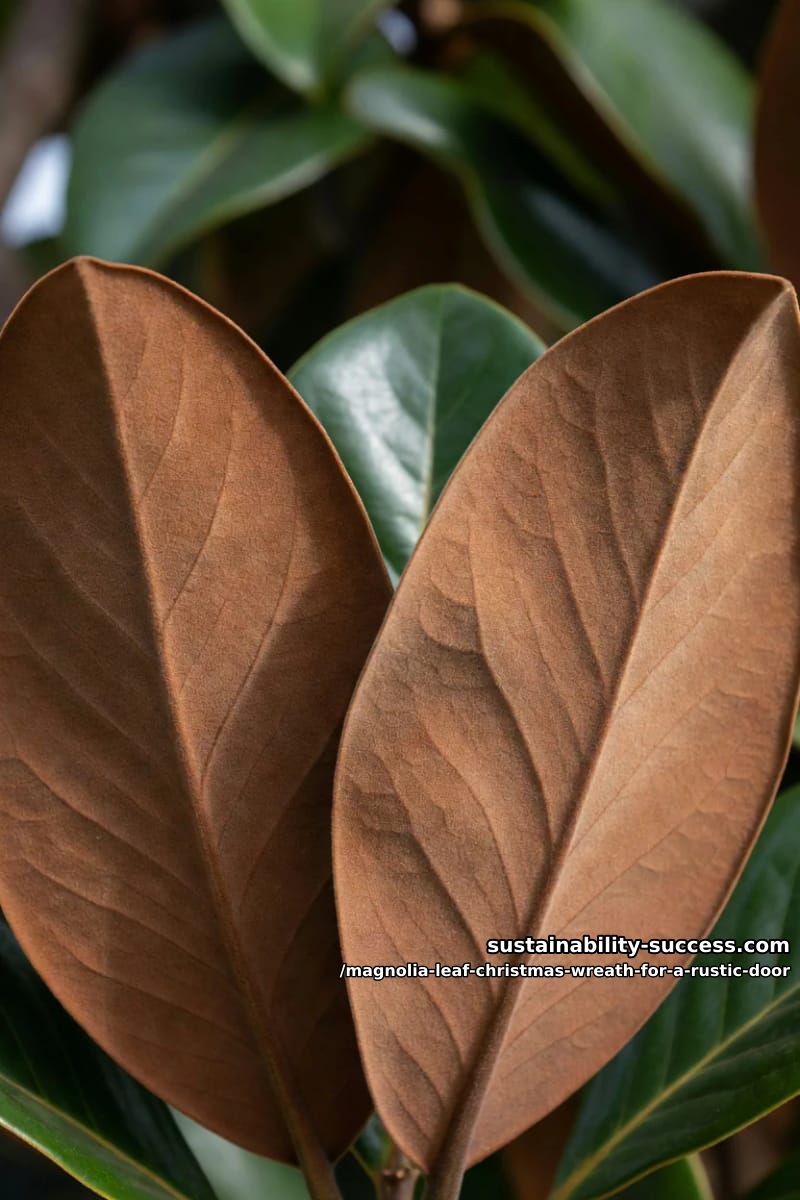
Doing it well takes a few minutes:
- Work in clusters, not a checkerboard. Three or four flipped leaves together, then a gap, looks intentional; alternating every single leaf looks like a mistake.
- Keep the brown to the outer two-thirds of the ring and leave more green near the inner edge, so the wreath still reads green at a glance.
- If you would rather buy it, Park Hill Collection makes a “bronzed” magnolia wreath that bakes the two-tone effect in.
Layer in the Christmas: greenery, berries, and snow
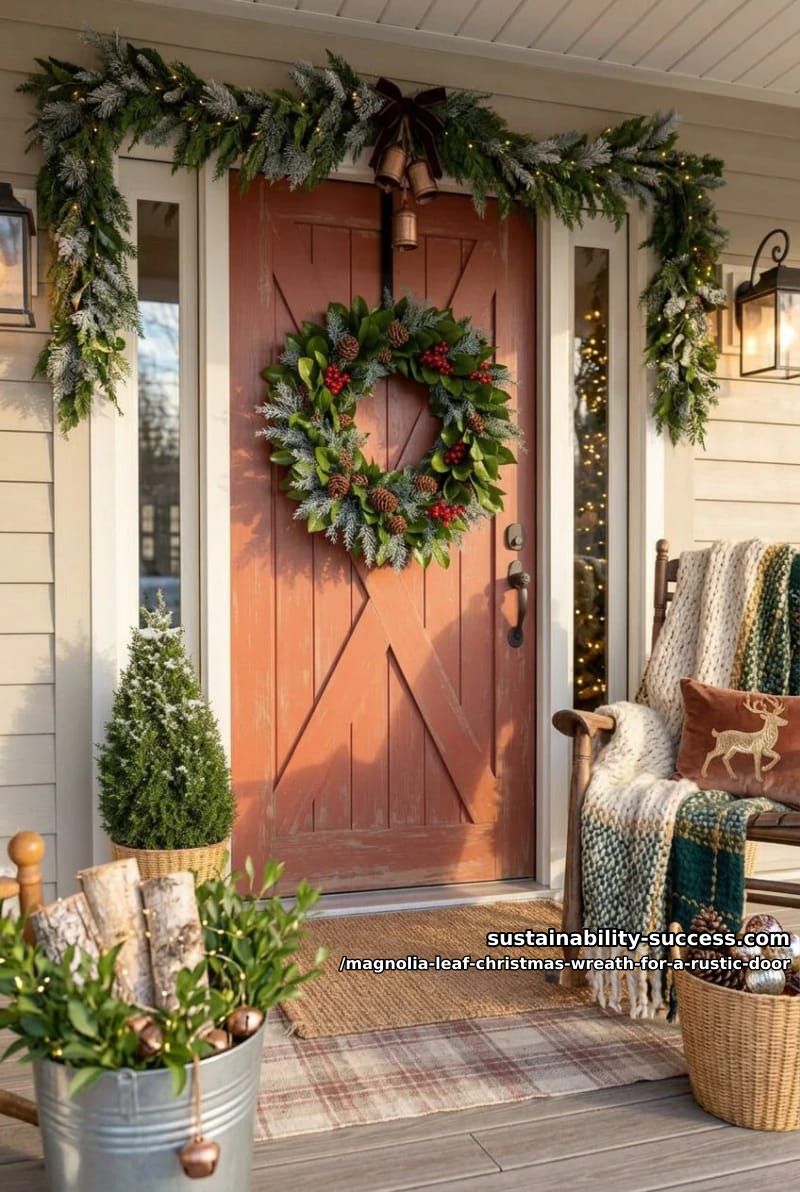
Magnolia and mixed evergreen
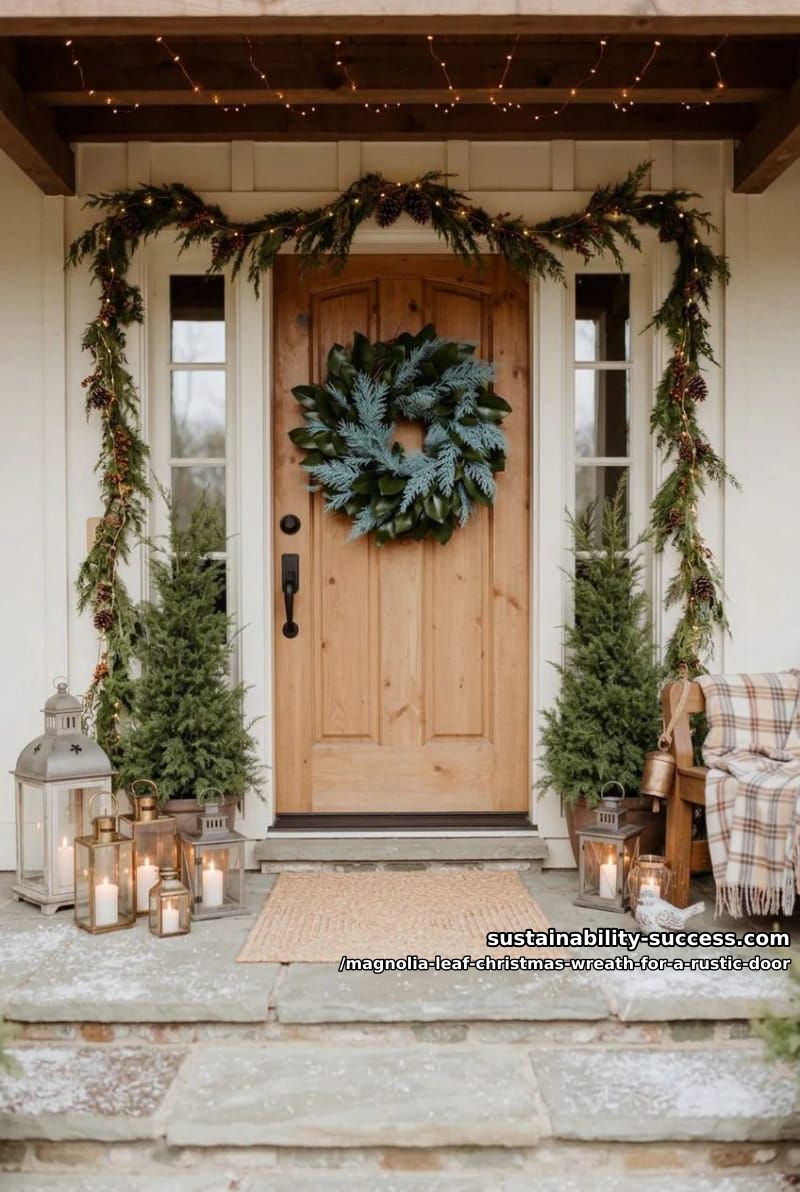
Tucking conifer between the magnolia leaves is the single fastest way to make a year-round wreath say December. The broad flat leaves give you mass; the needles give you the texture and the pine smell that magnolia alone does not have. Good partners, roughly in order of how well they hold up outdoors: cedar for the blue-green wisps, noble or Fraser fir for the classic needle, and a little white pine for soft length. Darby Creek even sells a magnolia-and-faux-cedar version if you want the mix pre-built.
The thing to avoid is burying the magnolia. Its leaf is the reason you chose this wreath, so keep the evergreen to the gaps and the outer fringe rather than packing it in until the wreath looks like every other green ring on the street.
Magnolia and eucalyptus for a softer green
Swap the conifer for seeded eucalyptus when you want the wreath quieter and a little silver. The dusty pale green of eucalyptus against the dark gloss of magnolia is a cooler, less traditional pairing than red-and-green, and it suits a whitewashed or grey door where bright Christmas color would clash.
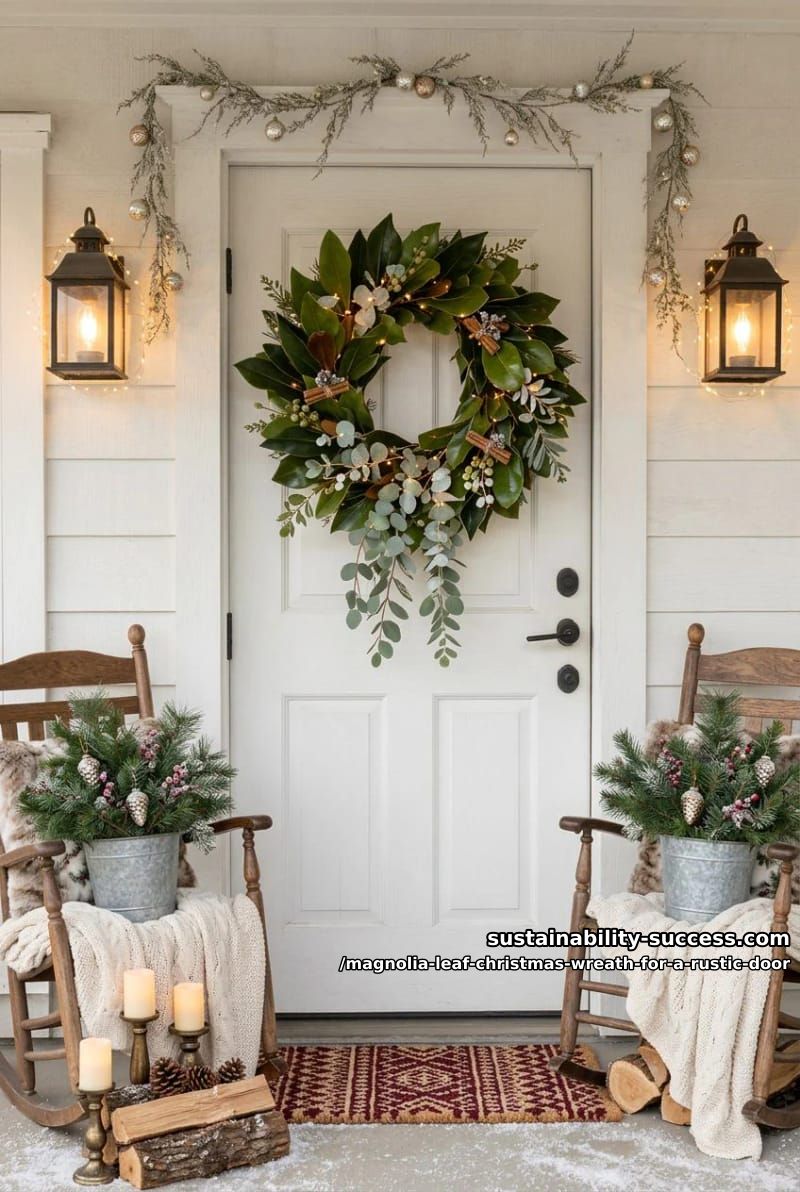
Fresh eucalyptus dries fast and goes brittle, so for an exposed door this is a pairing I would only do in faux. If you want a hint of holiday without committing to red, the antique-gold eucalyptus that several makers carry threads warm metal through the silver and green.
Magnolia with red berries and pinecones
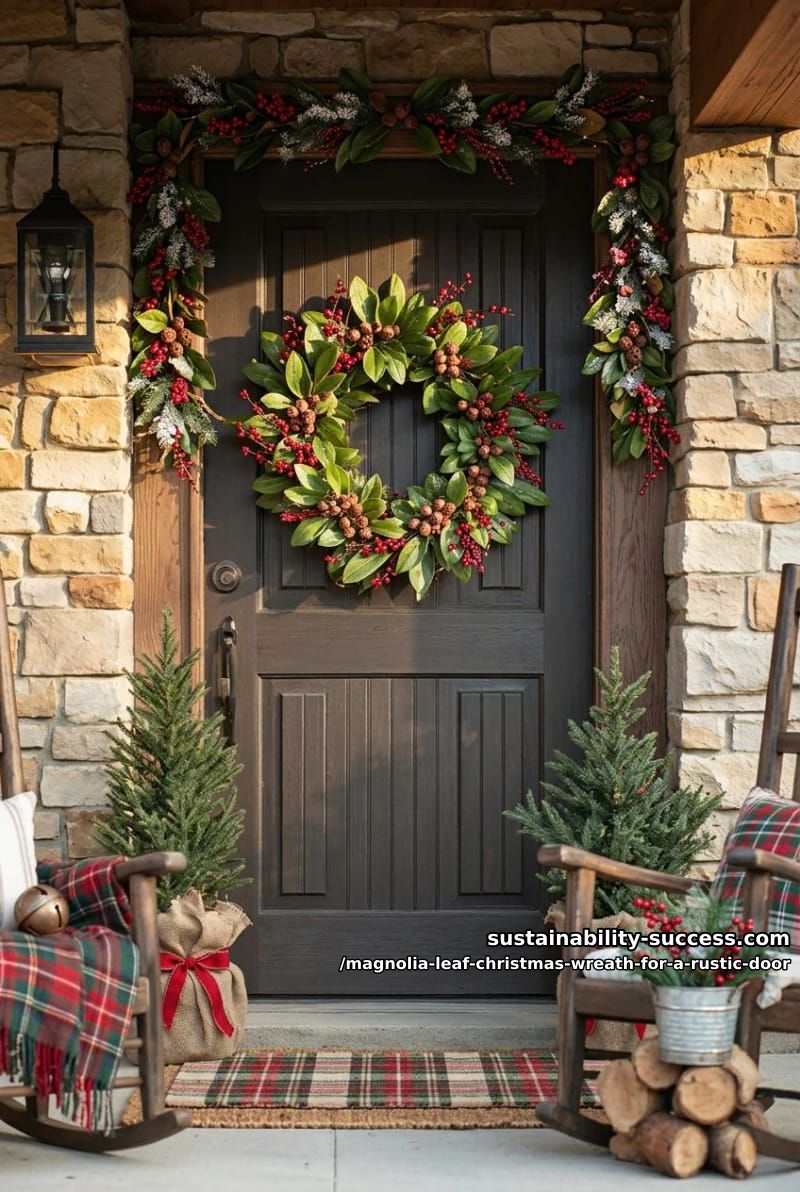
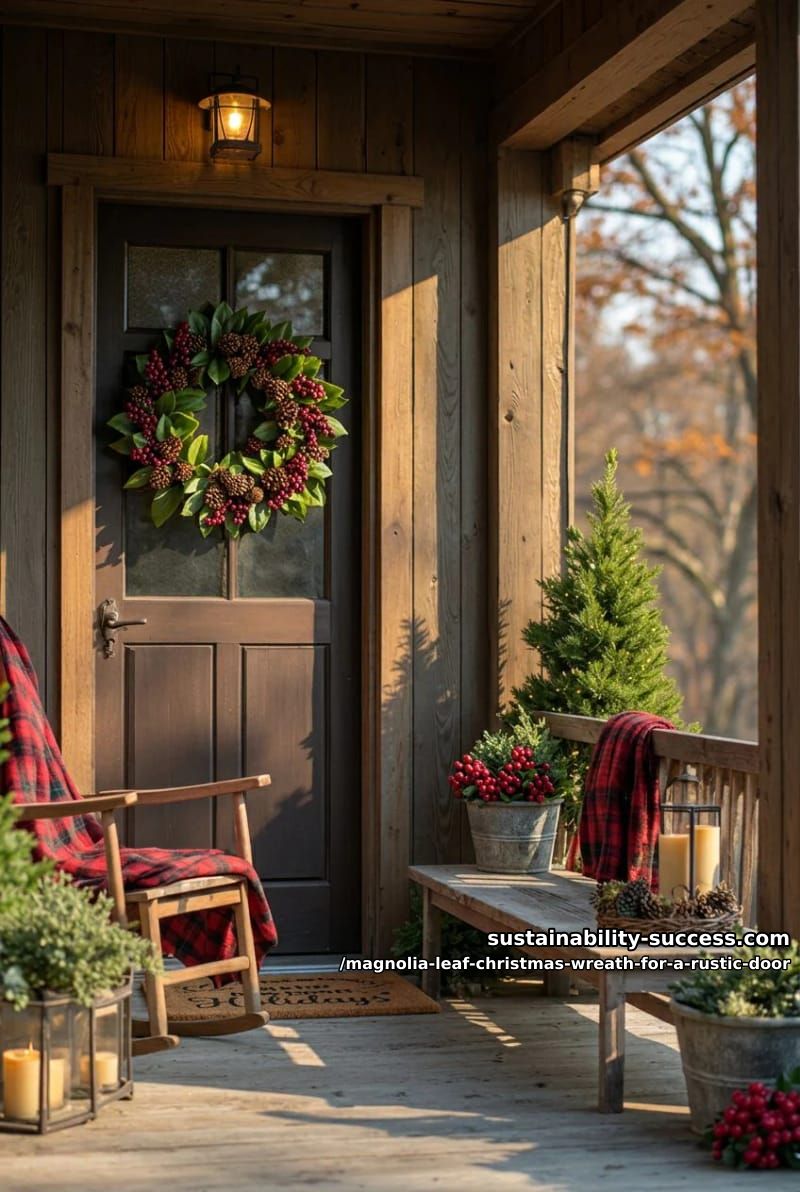
This is the expected one, and it earns its place: red berries and pinecones on glossy magnolia is the wreath most people picture, and it reads as Christmas from the road. Use faux red berries on an exposed door (real winterberry shrivels in a week), and wire your pinecones in rather than gluing, since glue lets go in the cold. Three small berry clusters spaced unevenly around the ring looks more deliberate than a tidy ring of dots.
Frosted magnolia with white blooms
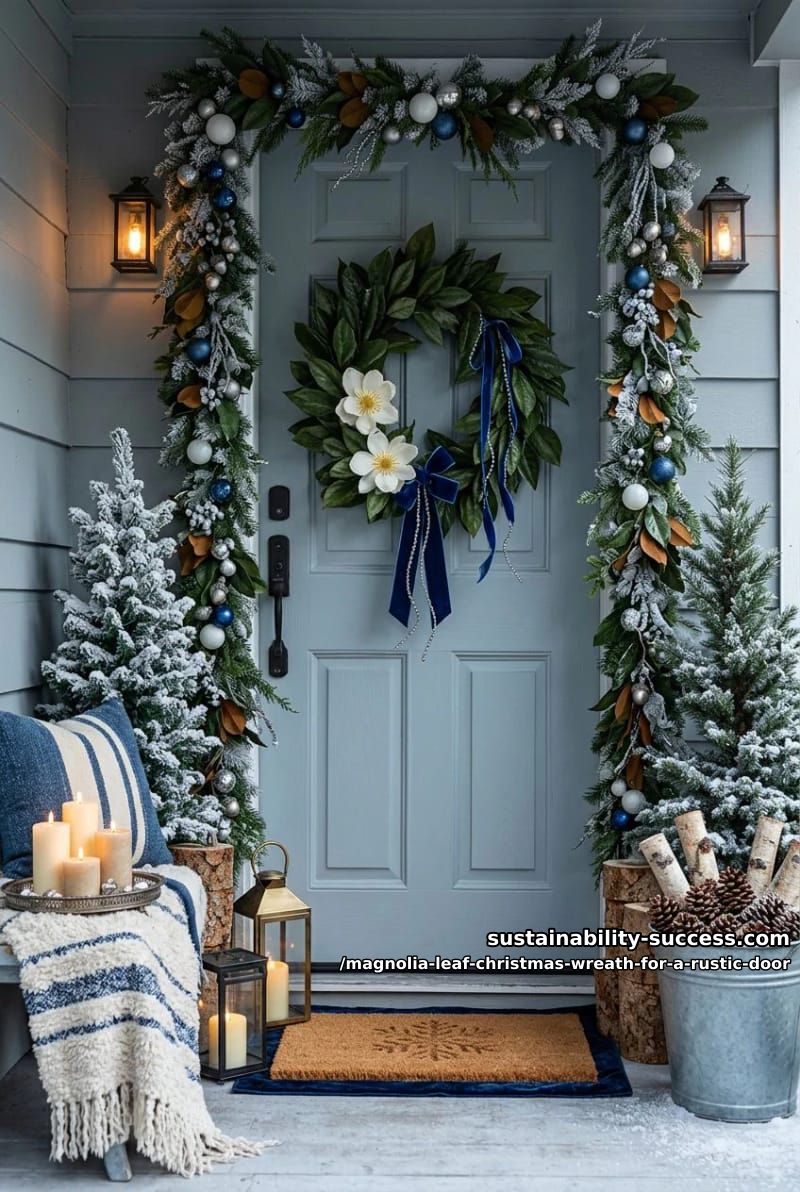
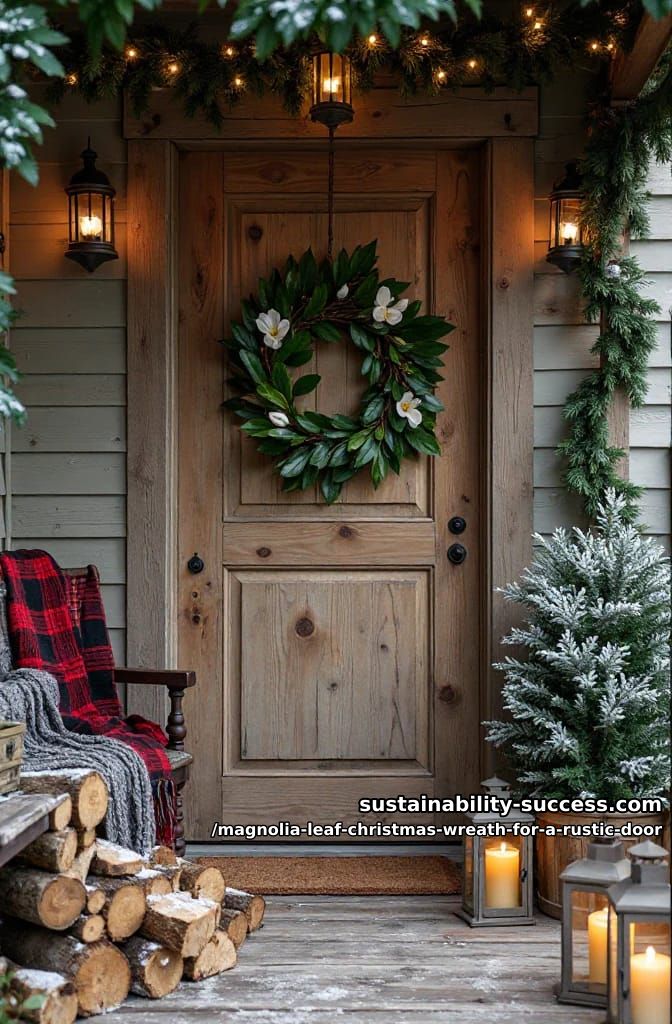
Add a couple of white magnolia blooms and a whisper of frost when you want winter rather than Christmas, the kind of wreath that stays up through February. Real magnolia flowers in summer, so any white bloom in December is faux by definition, and the better ones have a slightly creamy cast instead of dead paper-white. A midnight or slate velvet ribbon pushes the whole thing toward cold-weather rather than spring.
Go light on the snow. A fine dusting along the leaf edges catches morning light; a heavy coat of spray-flock just looks sprayed, and it never sits convincingly on a leaf that glossy. If you can see the aerosol texture, you have used too much.
Finish: color, ribbon, and a little light
Gilded gold-edged magnolia leaves
Paint gold onto the leaf edges only, never the whole wreath. A thin metallic outline along each leaf margin catches light and dresses the wreath up for a holiday party; a wreath sprayed gold all over loses the leaf texture and reads cheap, the opposite of what you wanted. Lauren McBride and a few other makers do a gilded magnolia that keeps the centers green and golds just the tips, which is the proportion to copy.
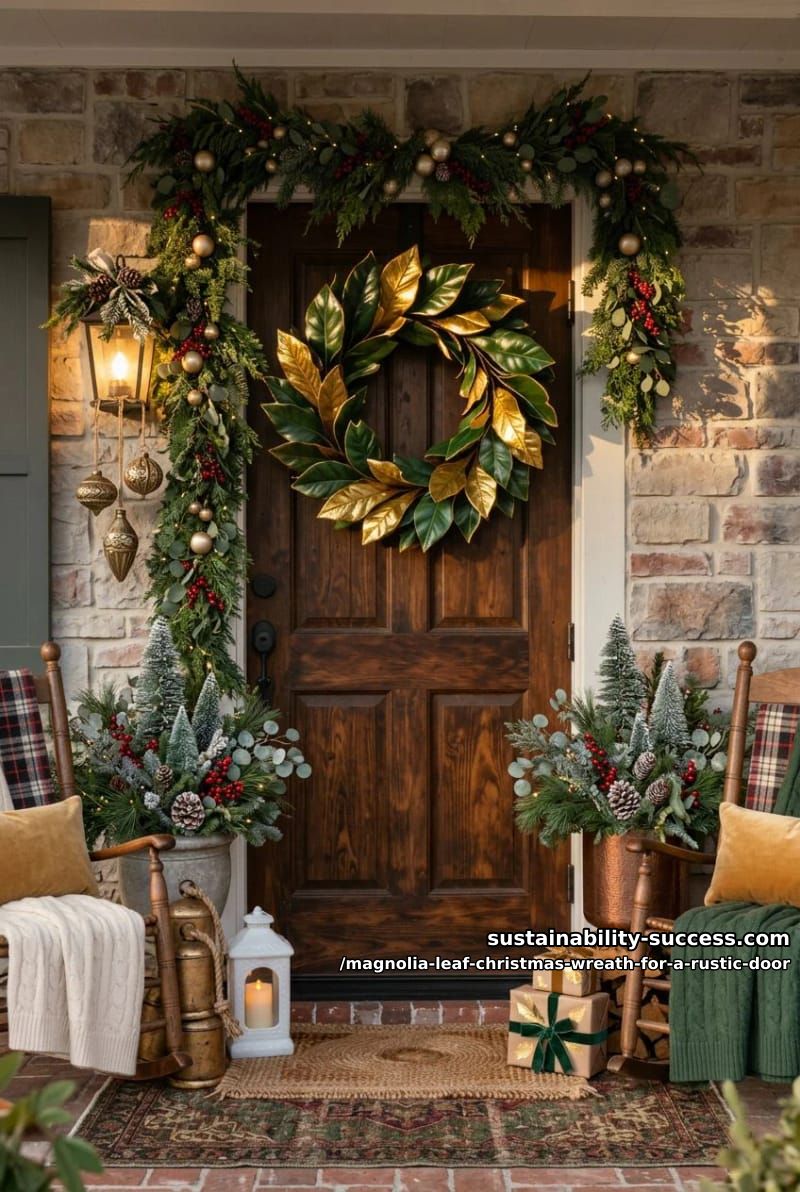
If you are doing it yourself, a gold leafing pen gives you more control than spray for edge work, and matte or antique gold sits better on weathered wood than a bright mirror finish.
Burlap or velvet bow on a magnolia wreath
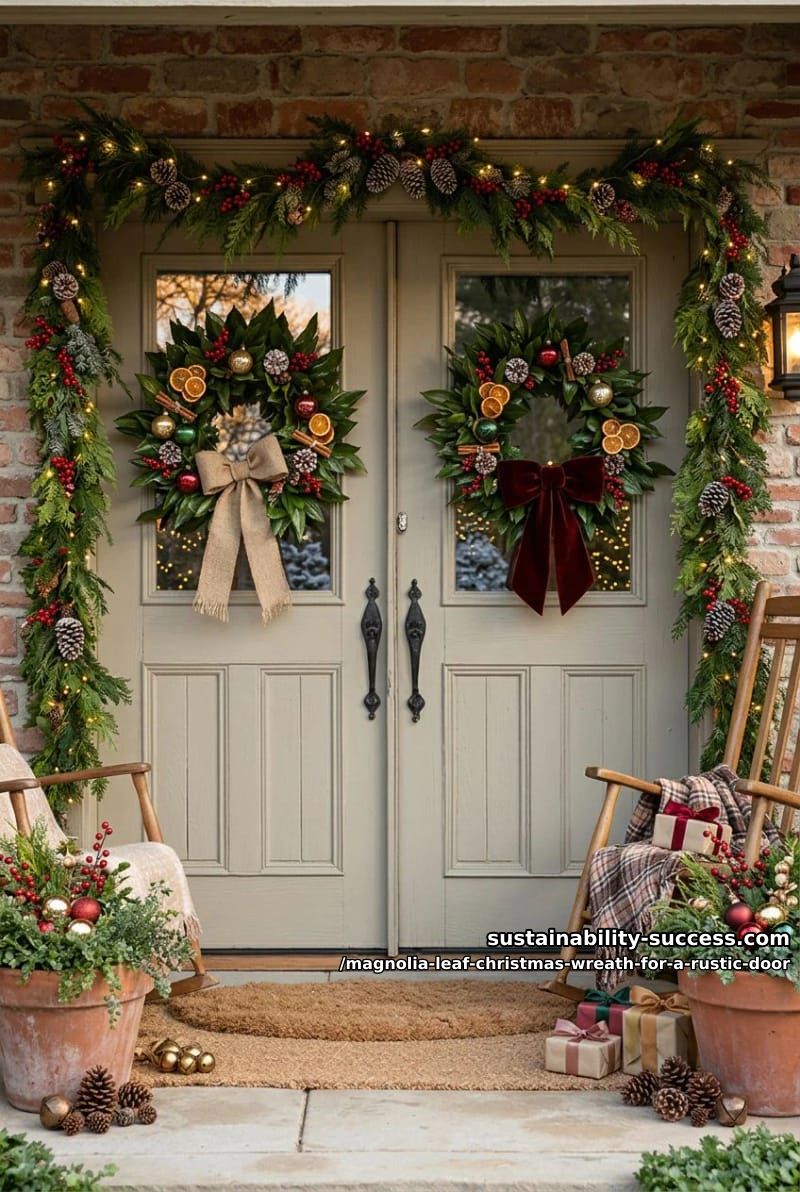
The bow is a genuine fork, not decoration you tack on at the end. Burlap reads casual and rustic and disappears into a weathered door; velvet reads formal and richer and pulls a plain green wreath toward the front of the holiday. Burgundy or forest velvet does more for magnolia than red, which can go loud against all that green.
My actual opinion, which some people will argue with: a leaf-heavy magnolia wreath often looks better with no bow at all. The leaves are the statement. If you do add one, oversize it so it does not look like a sticker stuck to the bottom, and let one tail run longer than the other instead of a symmetric pair.
Battery-lit magnolia wreath
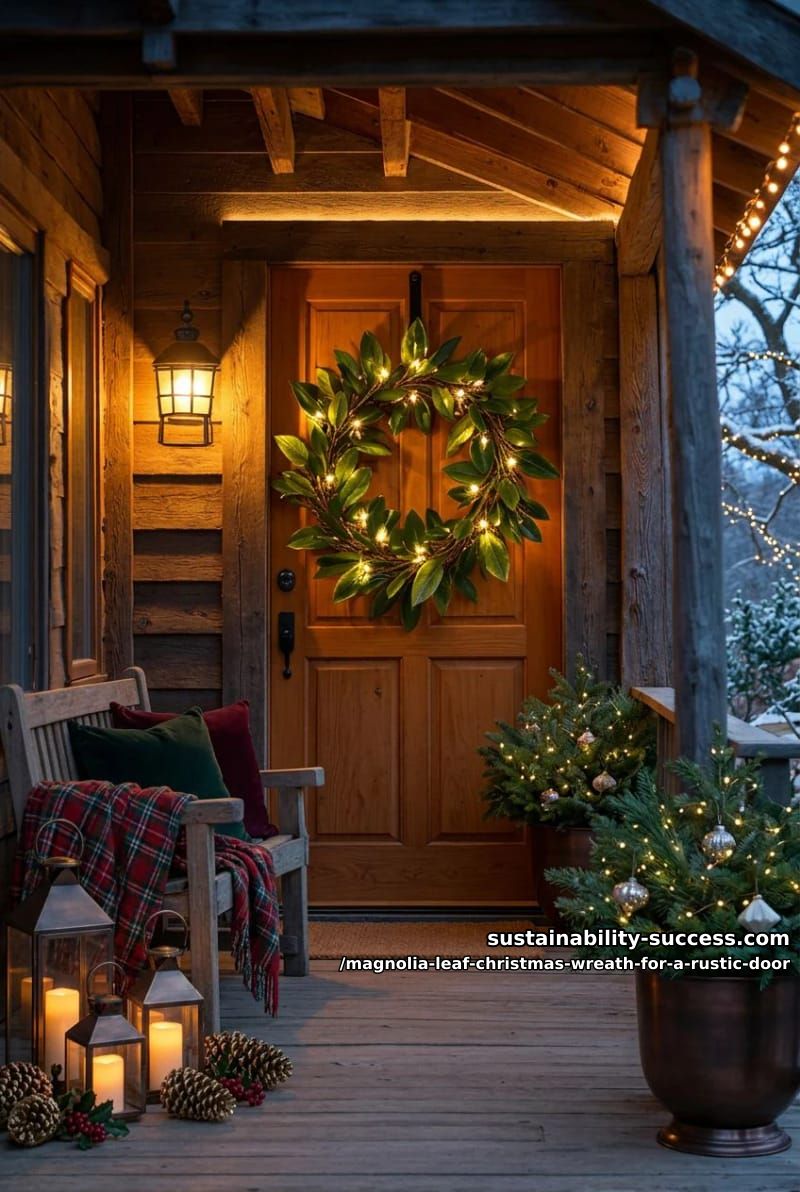
Thread warm-white micro fairy lights through the leaves and a magnolia wreath earns its keep after dark, which matters on a rural door nobody sees in daylight. Stay with warm white over cool, and fifty to one hundred lights is plenty: the glossy leaves bounce the points around, so a magnolia wreath looks fuller-lit than a matte one at the same count. A battery box with a six-hour timer zip-tied behind the lower leaves keeps you off the extension-cord-across-the-porch problem.
Shape it to the door
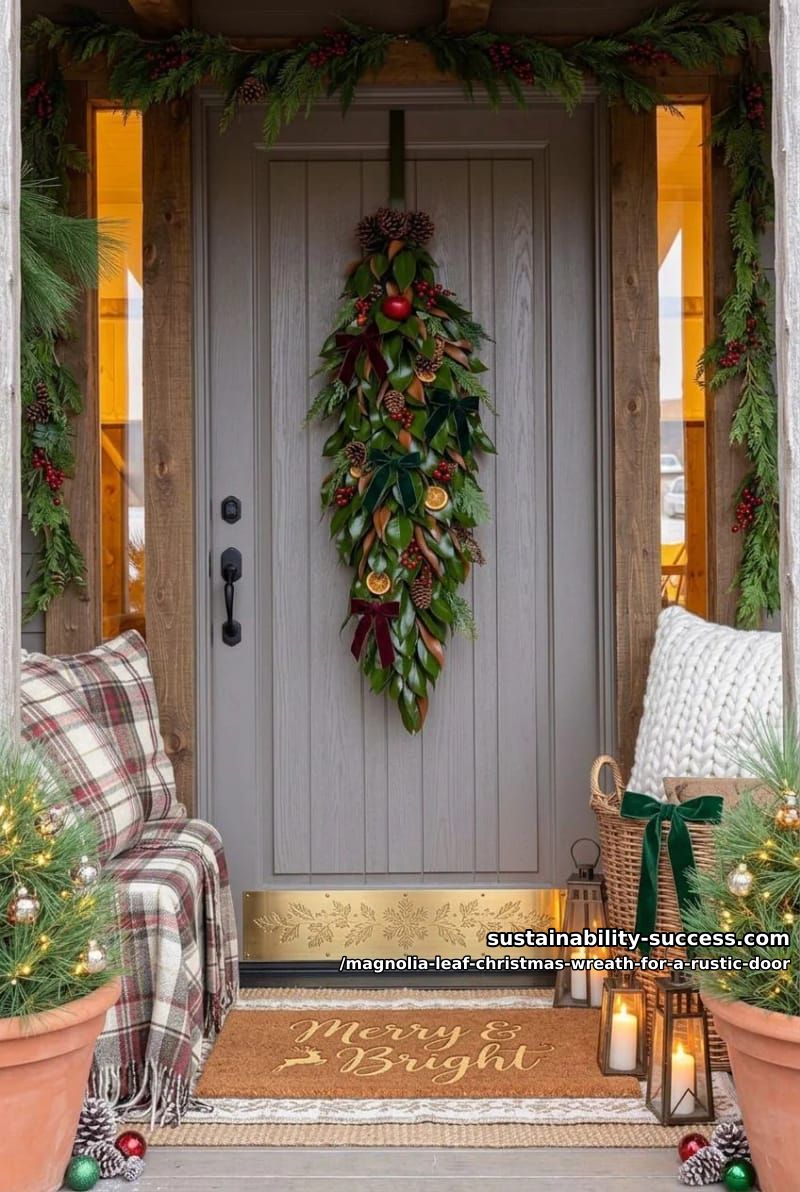
Teardrop magnolia swag for a narrow plank door
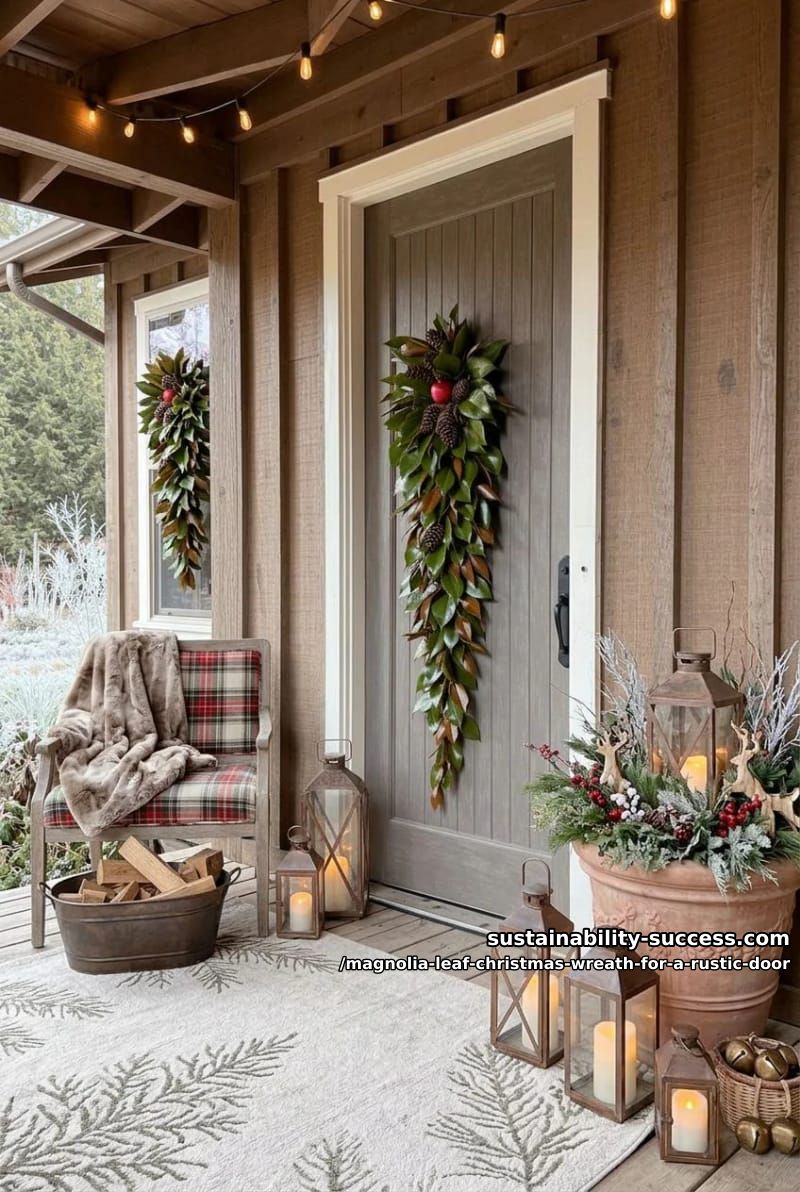
When the door is a narrow run of planks, hang a vertical teardrop swag instead of forcing a round wreath onto it. A round wreath on a slim door crowds the edges and looks oversized; a tapered swag, wide at the top and trailing to a point, follows the door's lines and reads taller. Darby Creek's holiday magnolia swag with a faux red apple and a pinecone at the crown is the ready-made version, but a swag is also the easiest magnolia shape to build yourself, since you are wiring stems down a length rather than balancing a full ring.
Oversized 30-inch magnolia for a barn or double door
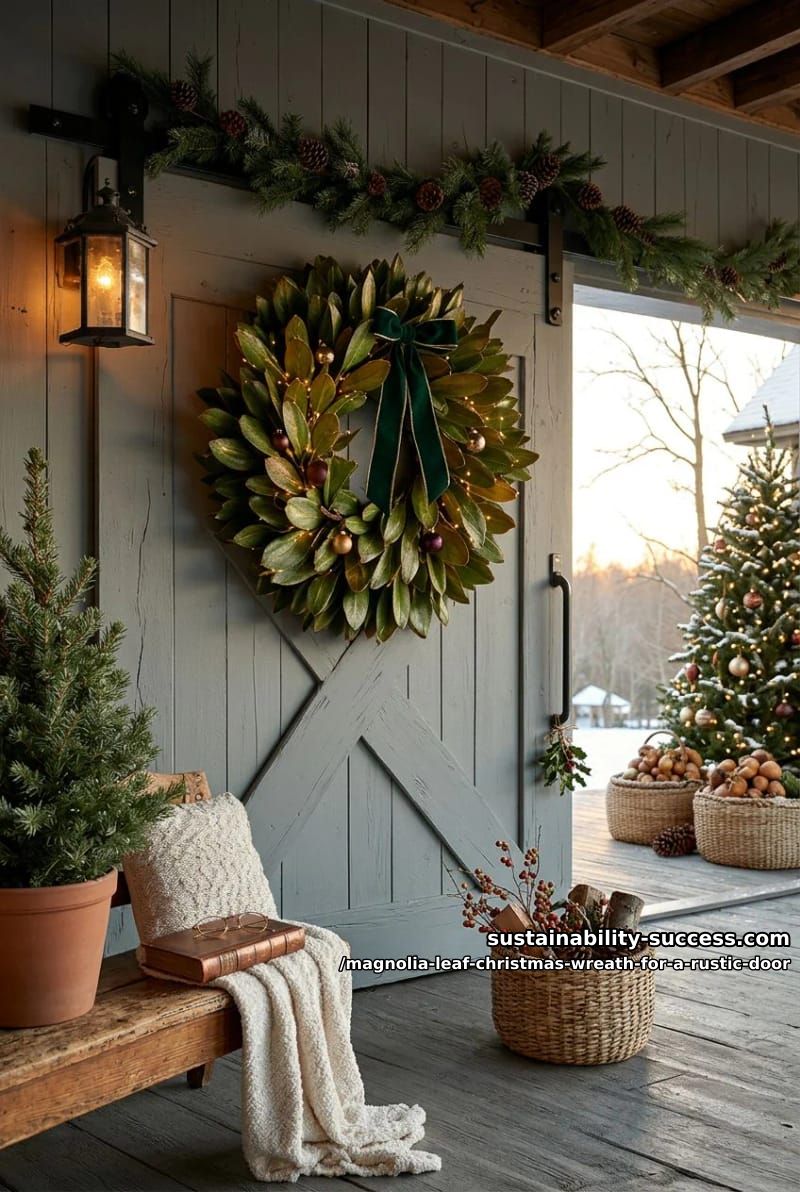
A tall barn door or a double entry needs a thirty or thirty-six inch wreath; a twenty-four inch one on a wide door looks like a coaster nailed to a wall. Scale is the mistake people make most often with rustic doors, because the wreath that looked huge in the store shrinks against eight feet of planks. Size the wreath to roughly two-thirds of the door's width and step back to the curb to judge it, not the porch.
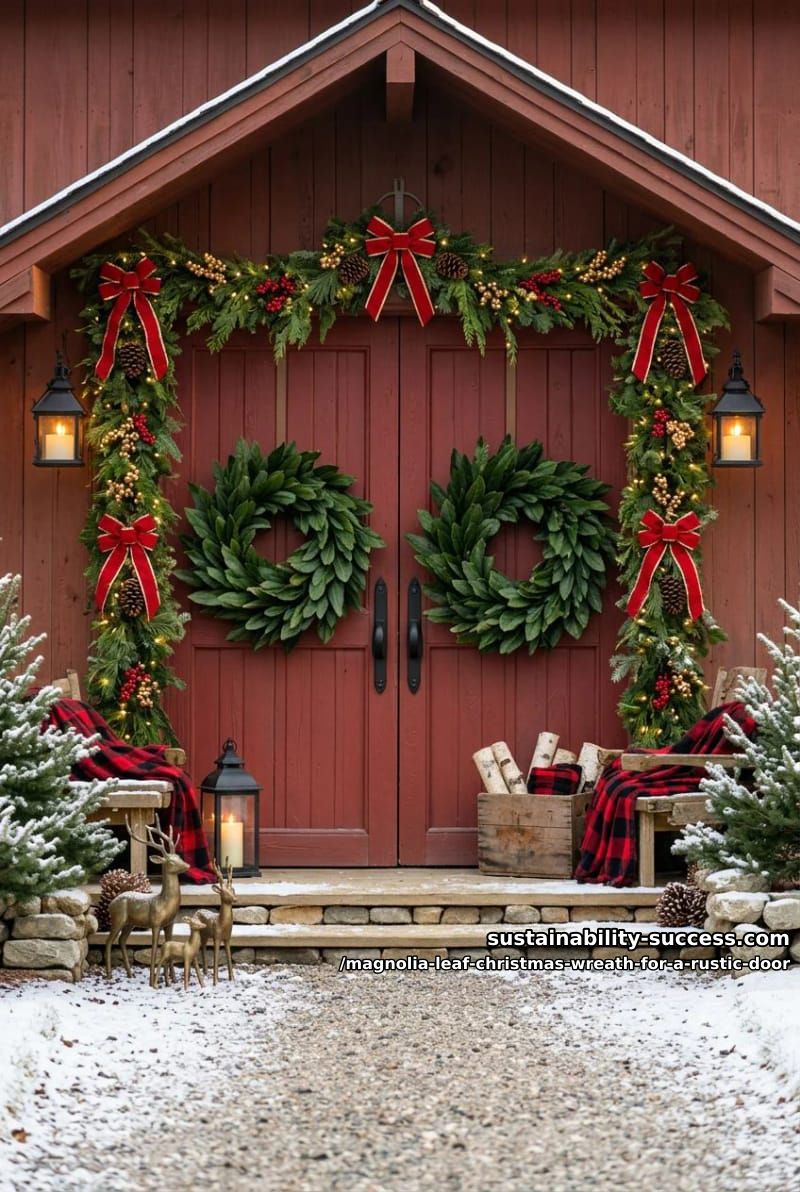
On double doors, hang a matching pair and set them slightly high so they clear the handles and the peephole, which a big wreath will otherwise cover. If a real magnolia tree is feeding the project, the oversized version is where fresh wins hardest, since thirty-six inches of faux at that quality gets expensive fast.
Conclusion
Work in that order and the wreath comes together without backtracking: pick the base first (fresh if you have the tree, real-touch faux if the door is exposed, grapevine if you are building it up yourself), then layer the evergreen or eucalyptus, then leave color, ribbon, and lights for last, after you can see what the wreath still needs. Shape, though, you decide before you buy anything, since a swag for a narrow plank door and a thirty-six inch ring for a barn entry are different purchases, not finishing touches. And whichever you land on, flip a few leaves so the bronze backs show; it is the one small move that makes a store-bought magnolia wreath look like it belongs on weathered wood instead of sitting on it.