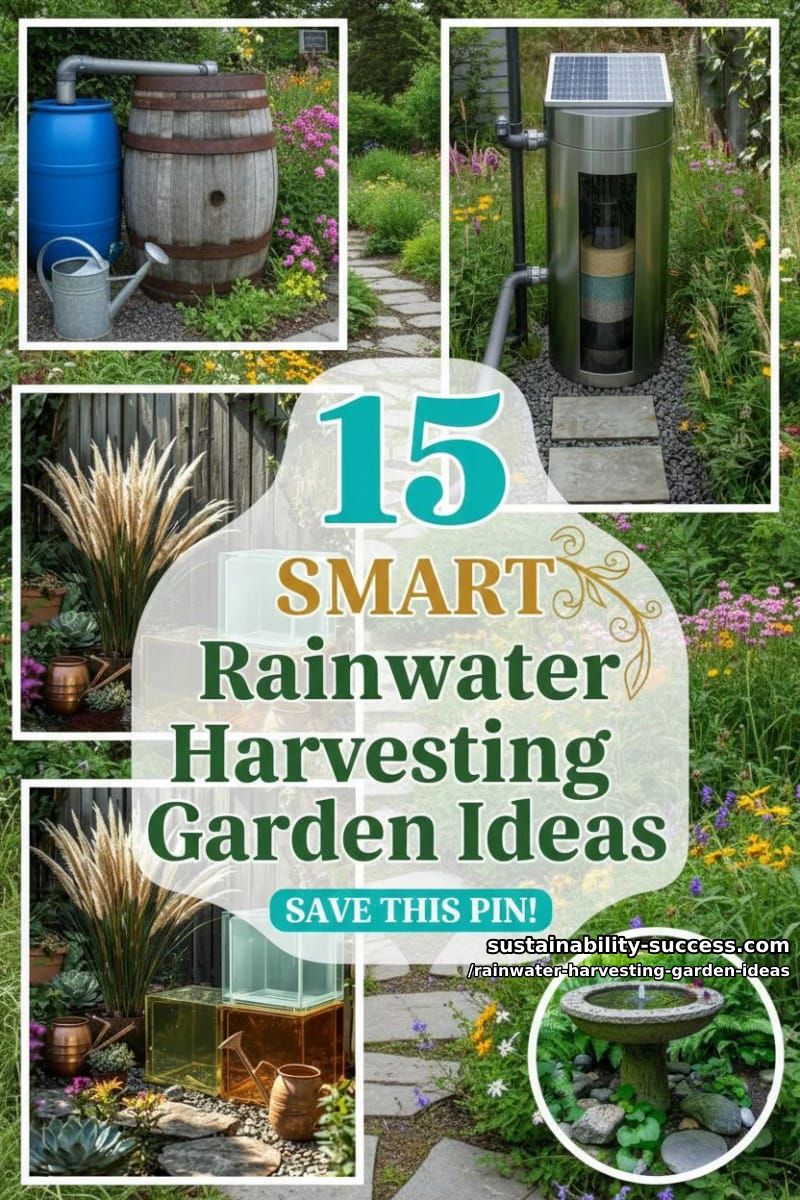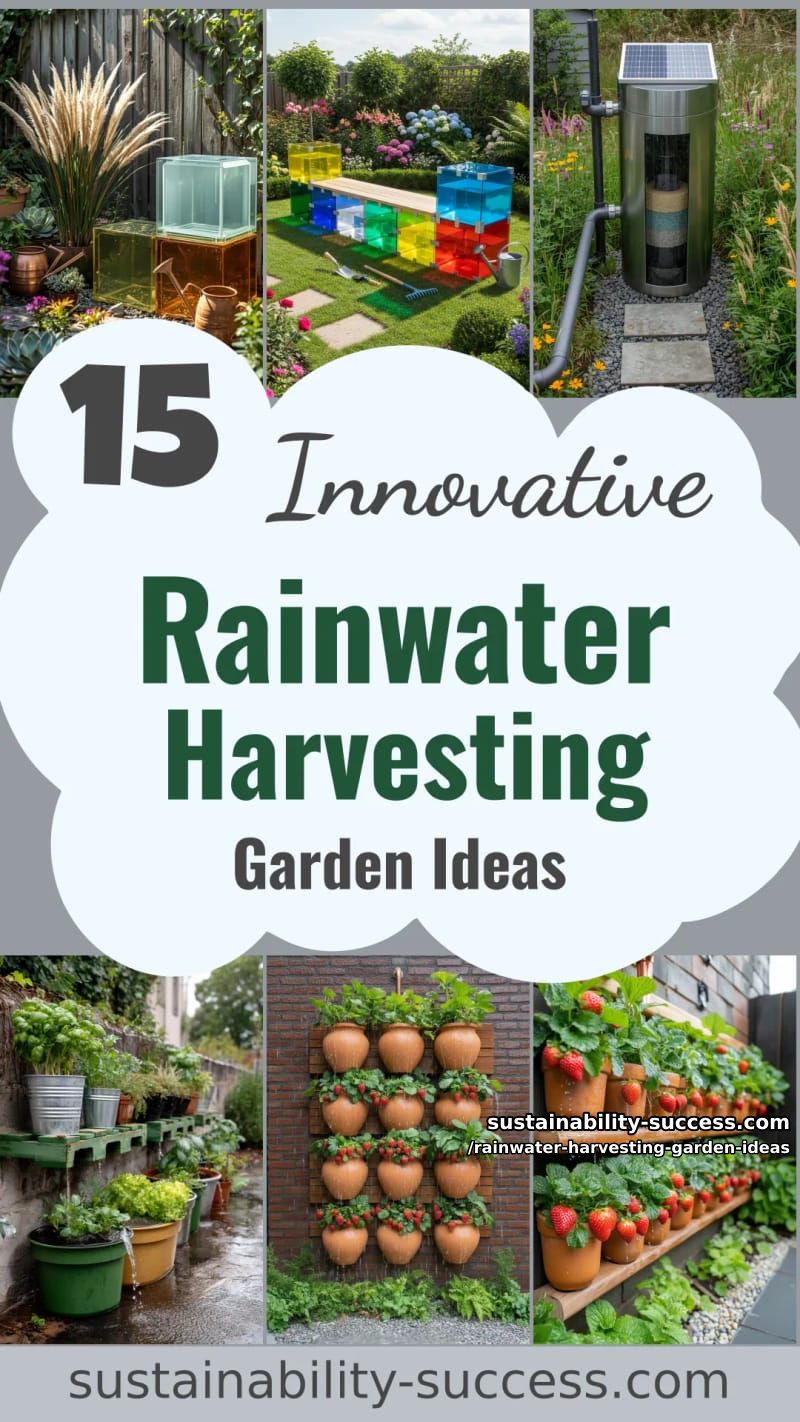
Tired of seeing precious rainwater wash down the street while your water bill climbs? You’re not alone.
Many garden lovers are finding clever ways to catch every drop and put it to good use. Think of rainwater as free gold for your plants.
Why let this natural resource go to waste? With a few smart tricks, you can create a garden that thrives on rainwater and turns heads.
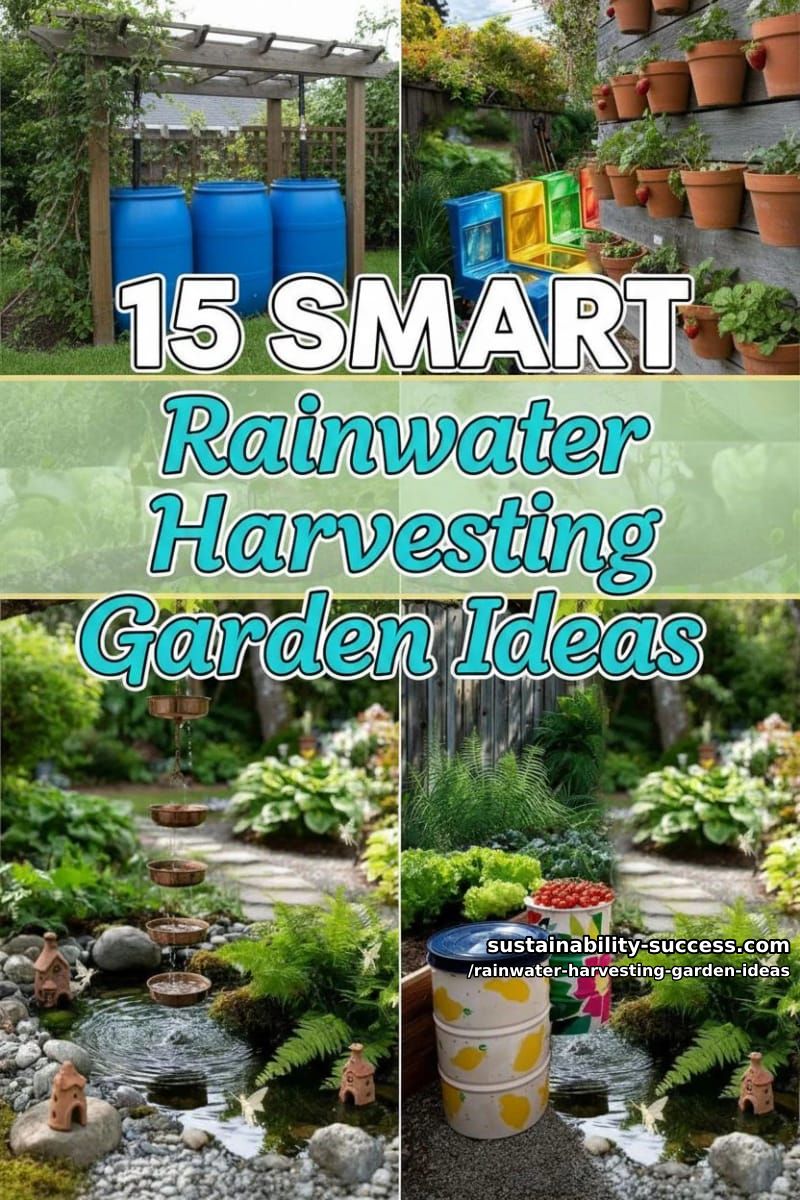
Whether your space is big or small, these rainwater harvesting garden ideas can help you save water, money, and effort, all while growing something beautiful.
1. Vertical rain barrel wall with climbing vines and edible herbs integrated
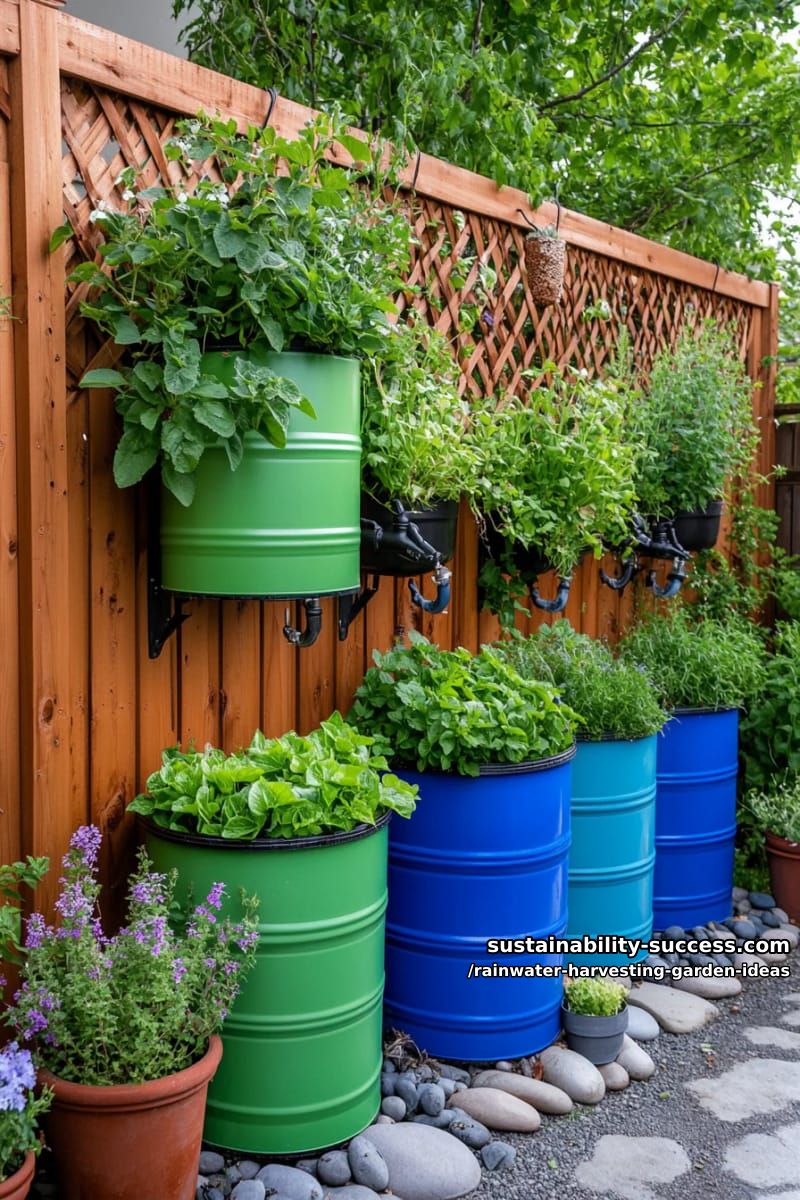
Imagine a vertical rain barrel wall, painted in bold colors, standing as both a water source and a living canvas. Attach sturdy trellises or wire grids for climbing beans, nasturtiums, or passionflower.
Basil, mint, and thyme can fill pockets or planters, thriving off the gentle moisture nearby.
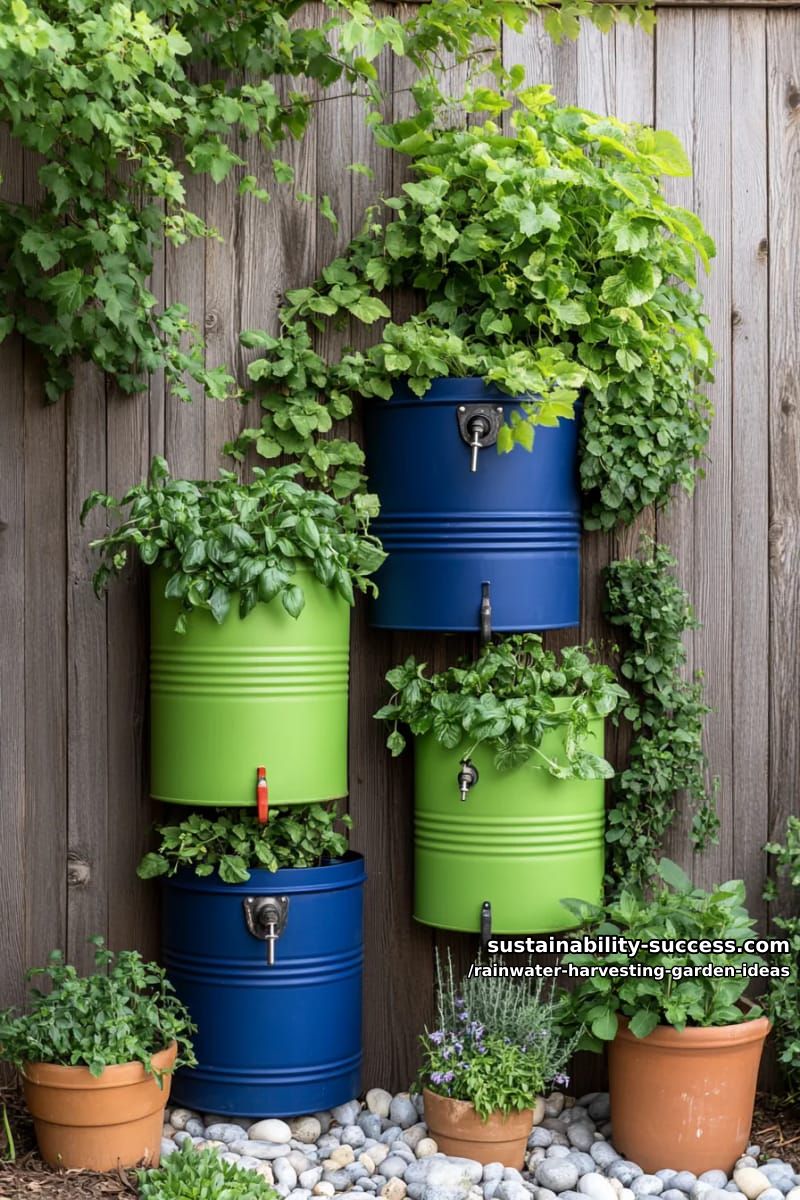
Why settle for plain storage? This setup saves space, adds privacy, and supports pollinators. Kids can help harvest herbs right from the wall.
On the flip side, upkeep matters, watch for leaks, clean the barrels, and trim vines to stop roots from crowding your water supply.
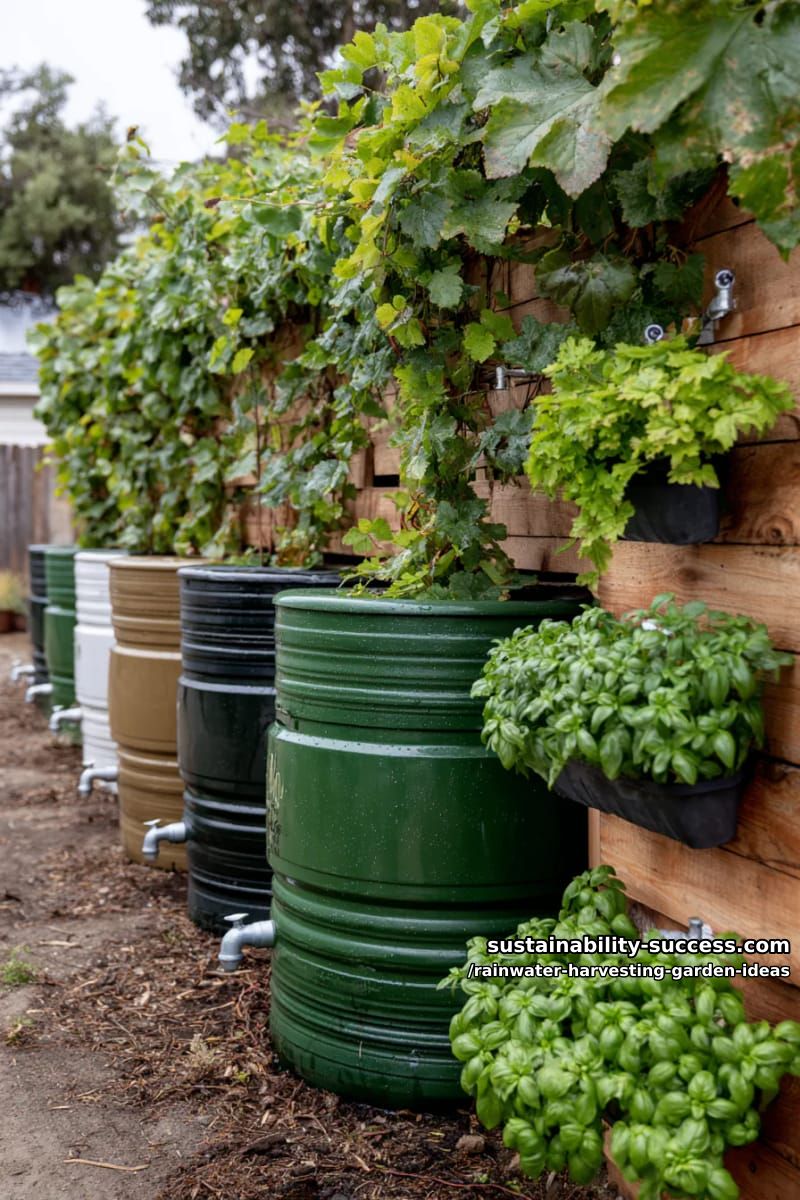
2. Recycled wine barrel rainwater collector surrounded by pollinator flower beds
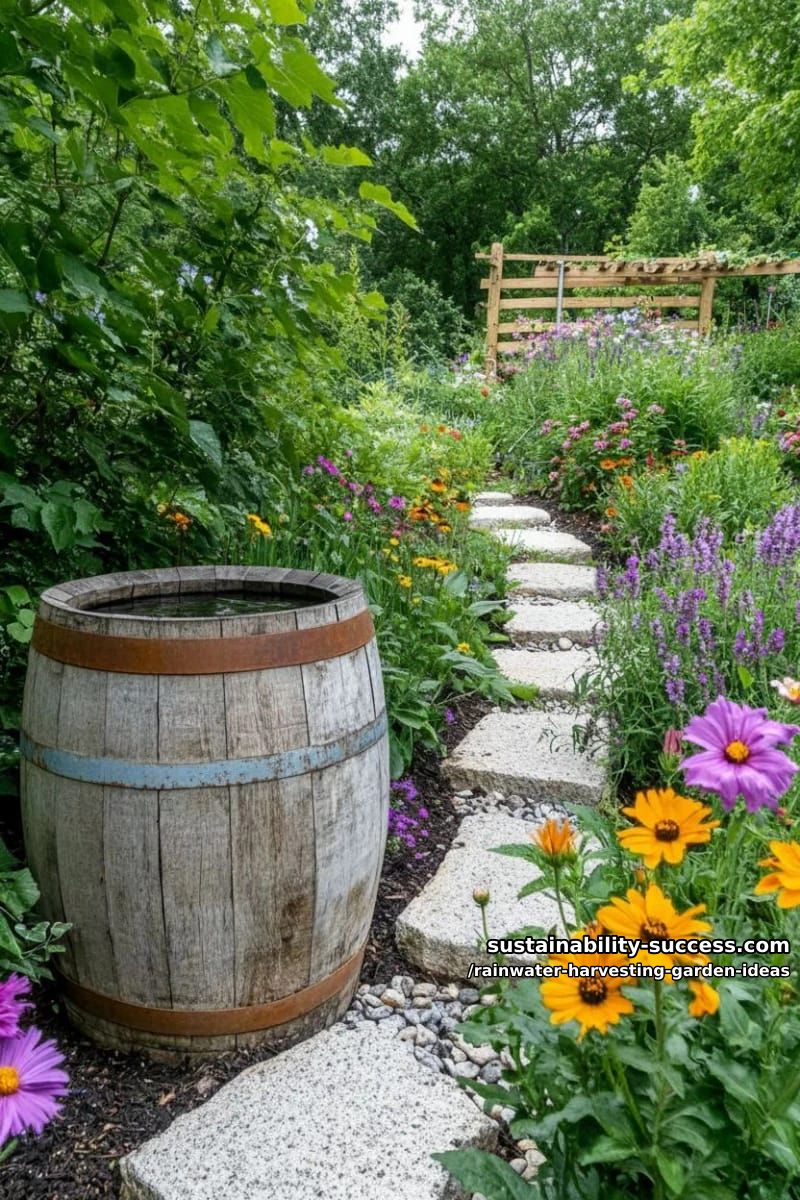
Imagine a recycled wine barrel catching rain from your roof, sitting pretty amid a riot of bee-friendly blooms. This setup makes water conservation feel like art.
The barrel adds rustic charm, while pollinator flowers attract butterflies and bees. It’s a simple way to help wildlife and save a few bucks on your water bill.
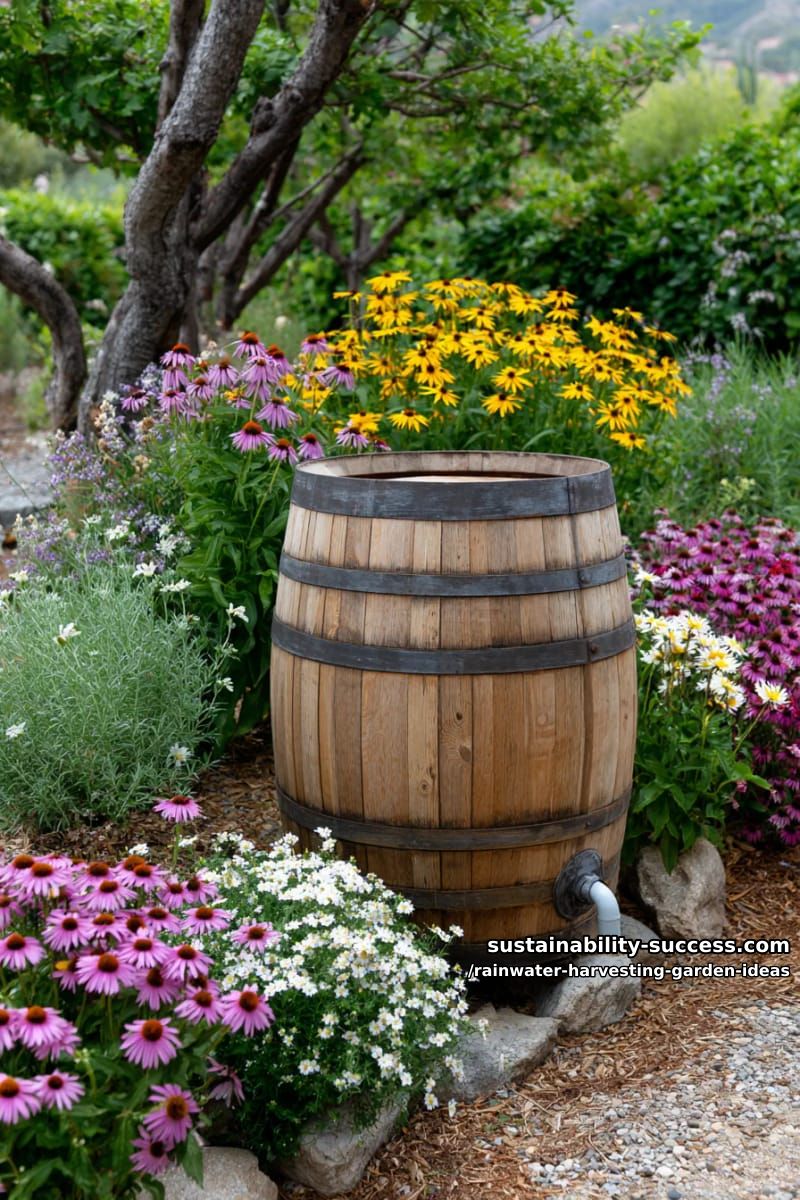
Some folks hesitate, worrying about maintenance or mosquitoes. Here’s a tip, secure a tight-fitting lid and clear debris regularly. Planting flowers like lavender or echinacea not only looks good but also supports local insects.
A garden should work for you and nature, not just look nice in photos.
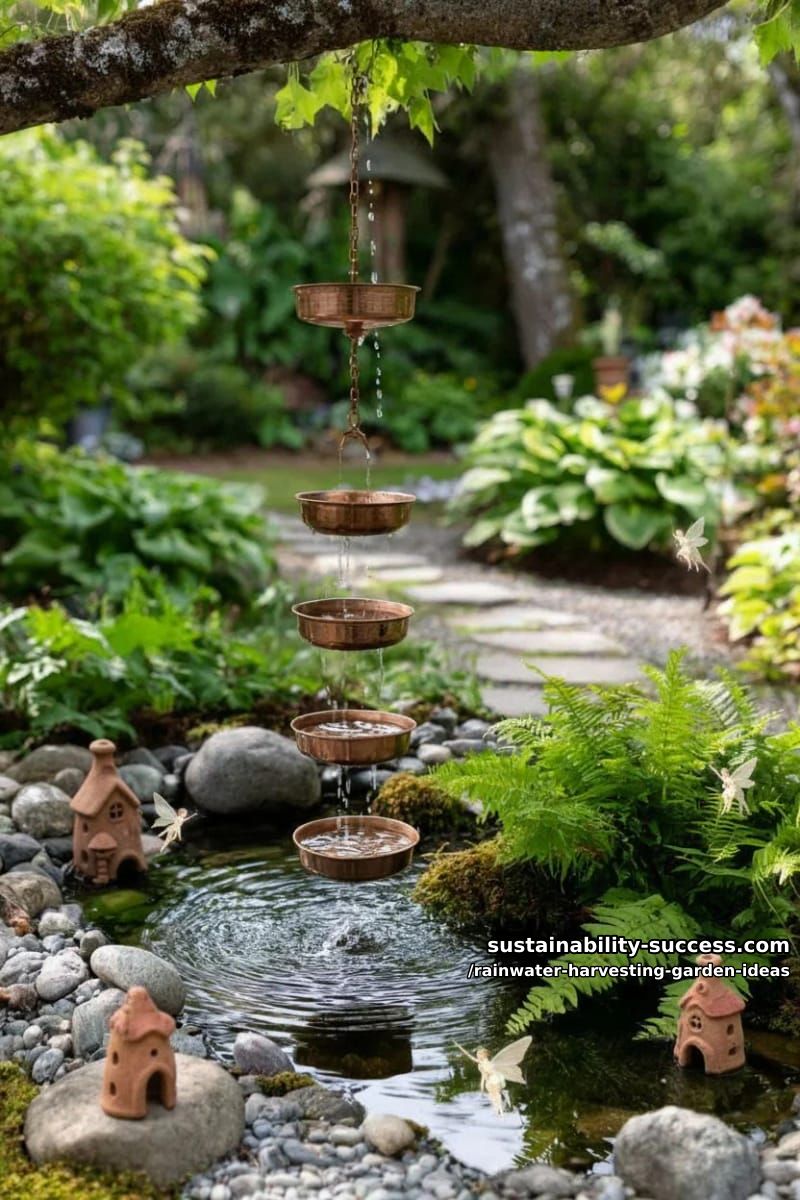
3. Multi-tiered rain chain garden spilling into a lush fairy garden pond
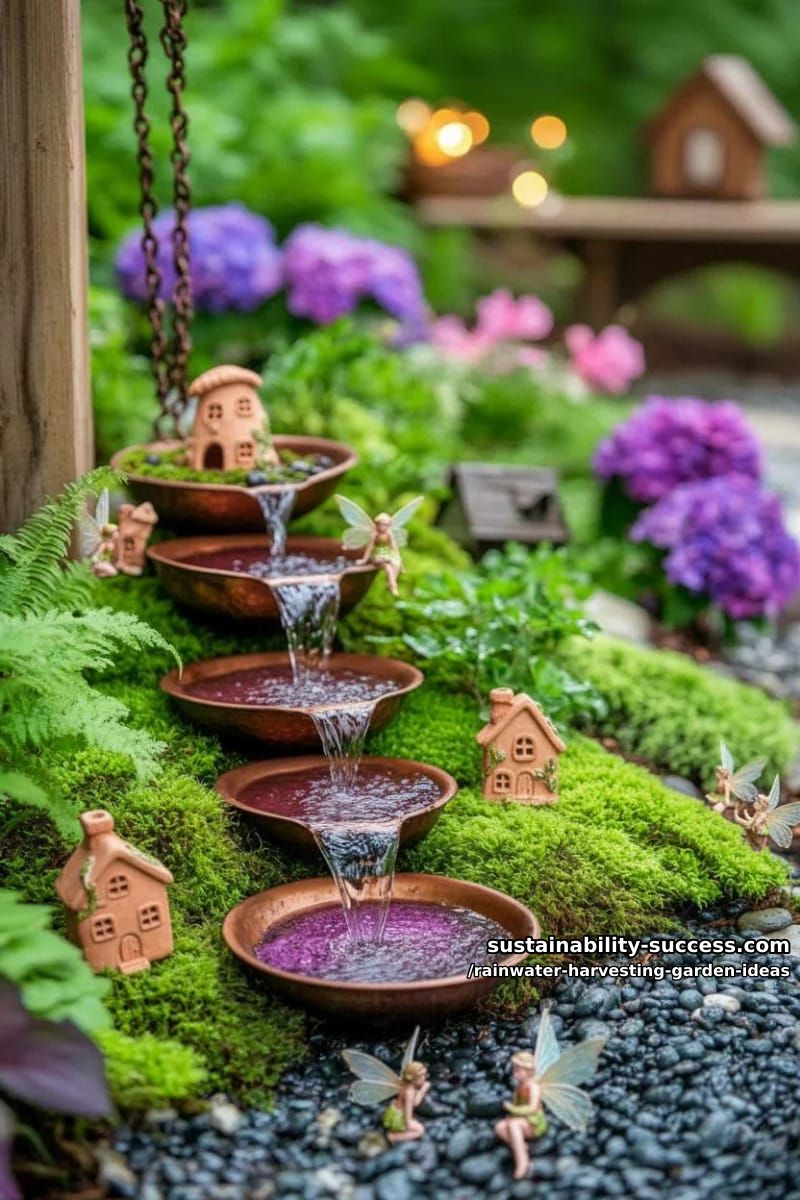
Imagine rainwater dancing down a chain, hopping from tier to tier with a gentle clink, finally spilling into a small pond filled with moss and tiny flowers.
This setup doesn't just save water; it creates a whimsical scene. The sound alone can soothe even the busiest mind.
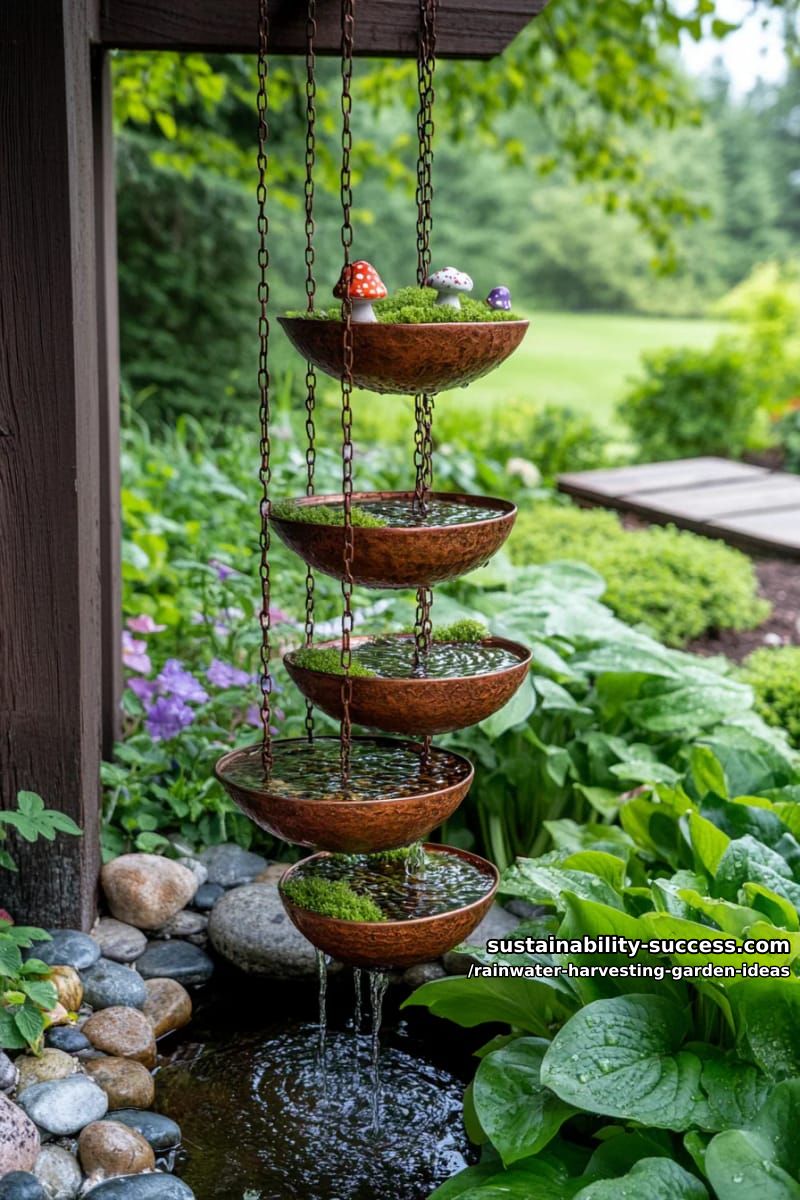
A rain chain doesn’t demand much space or cash. Place different-sized bowls or pots beneath each tier, leading to a pond edged with ferns and miniature statues.
While it’s magical to watch, remember maintenance, algae can sneak in if you don’t clear leaves and debris regularly.
4. Solar-powered rainwater filtration hub with wildflower meadow border

Imagine a rainwater filtration hub powered by solar panels, no cords or extra energy bills. This system collects roof runoff, filters it on-site, and stores clean water for your plants.
Place it at the garden’s edge for easy access. Why waste rain when you can use it for your flowers?

Surround the hub with a wildflower meadow border. Wildflowers attract bees and butterflies, bringing color and pollinators. The meadow also acts as a natural buffer, capturing extra runoff and reducing erosion.
While the filtration setup requires upfront investment, the payoff is a lower water bill and a healthier, buzzing garden.
5. Painted rain barrels as garden art beside vibrant veggie patches
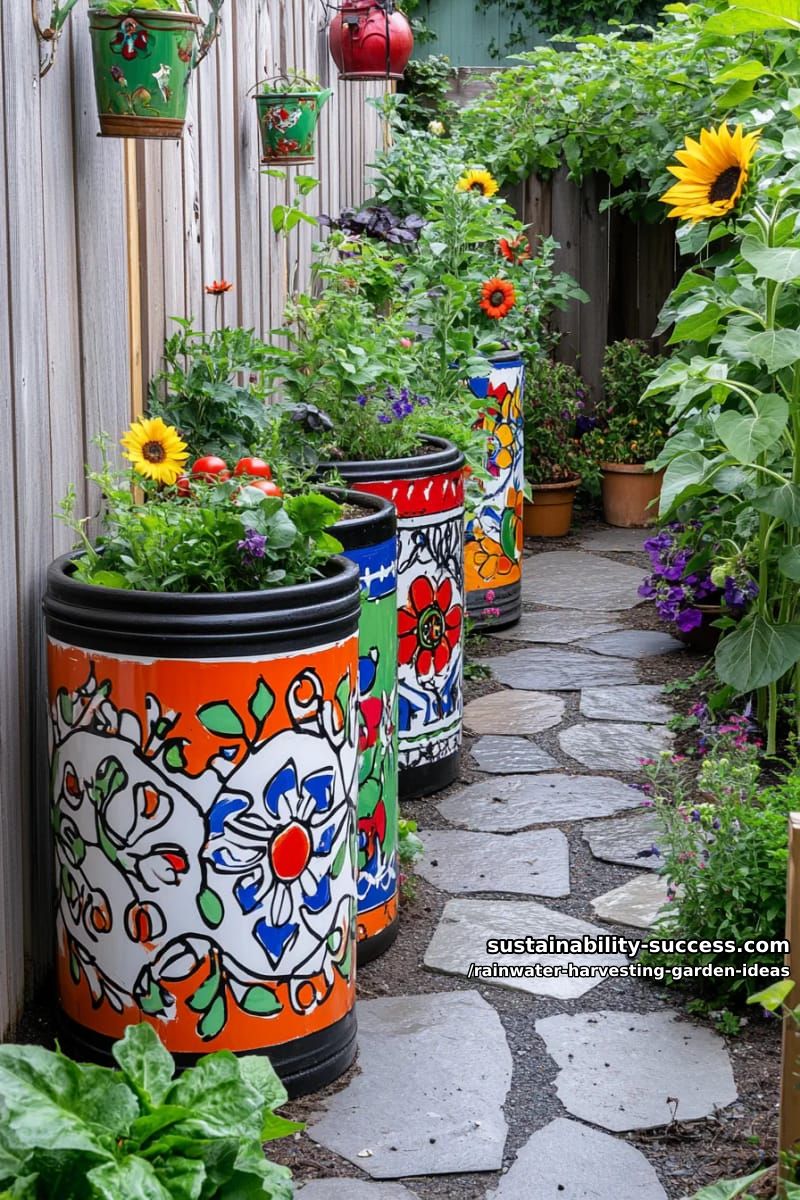
Painted rain barrels add color and personality to any garden, doing double duty as both art and a water-saving tool.
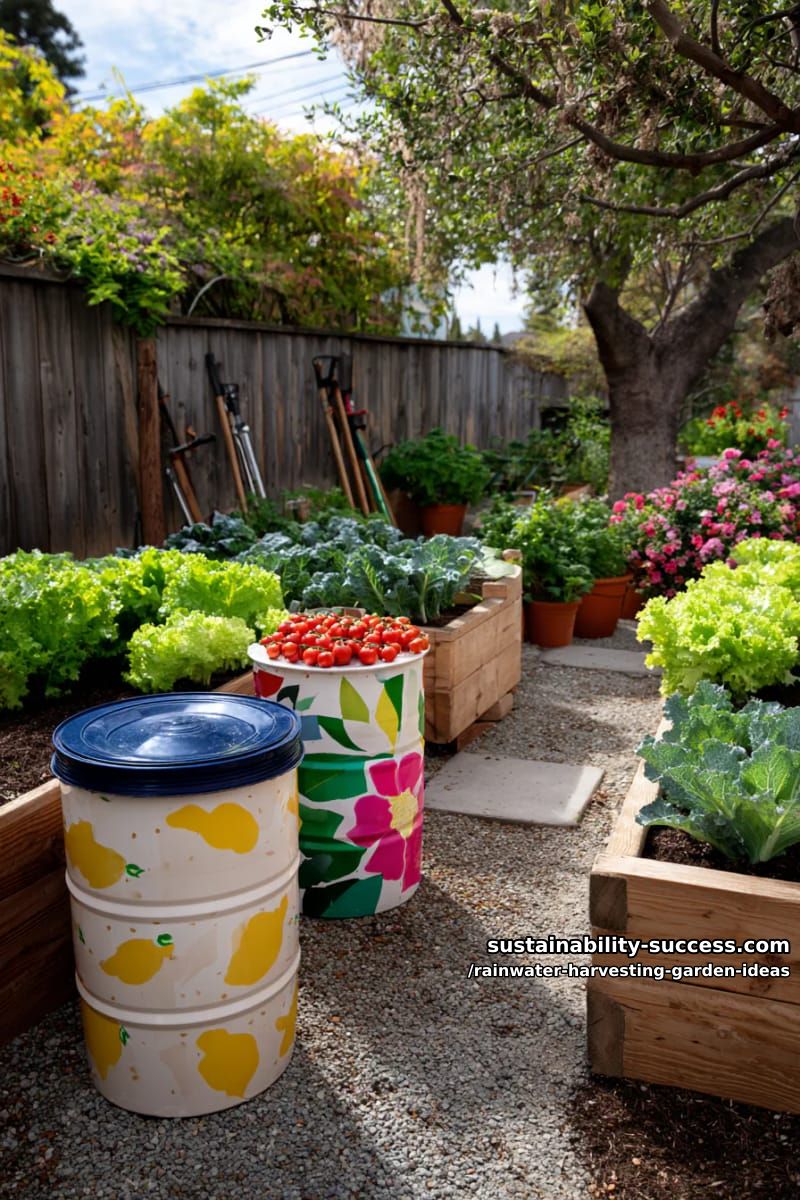
Imagine a bright barrel, splashed with sunflowers or abstract shapes, standing next to your tomatoes. It sparks conversation and makes water conservation fun, not a chore.
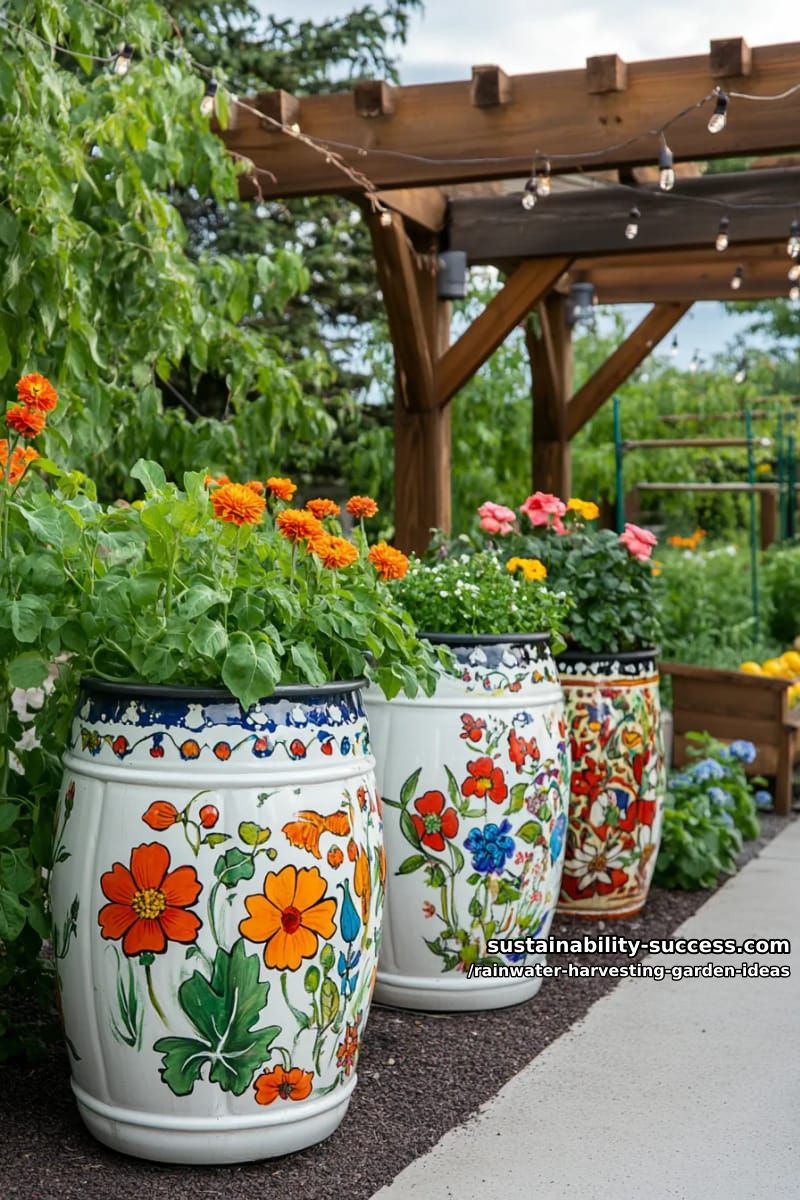
Some may worry about paint peeling or fading. That’s a fair point, using weather-resistant, non-toxic paint keeps your barrel looking sharp longer and safe for your plants.
Grab a brush, involve the kids or neighbors, and let your creativity flow. Rainwater gets stored, but smiles spill over.
6. Cascading blue barrel system hidden behind privacy trellis with hanging planters
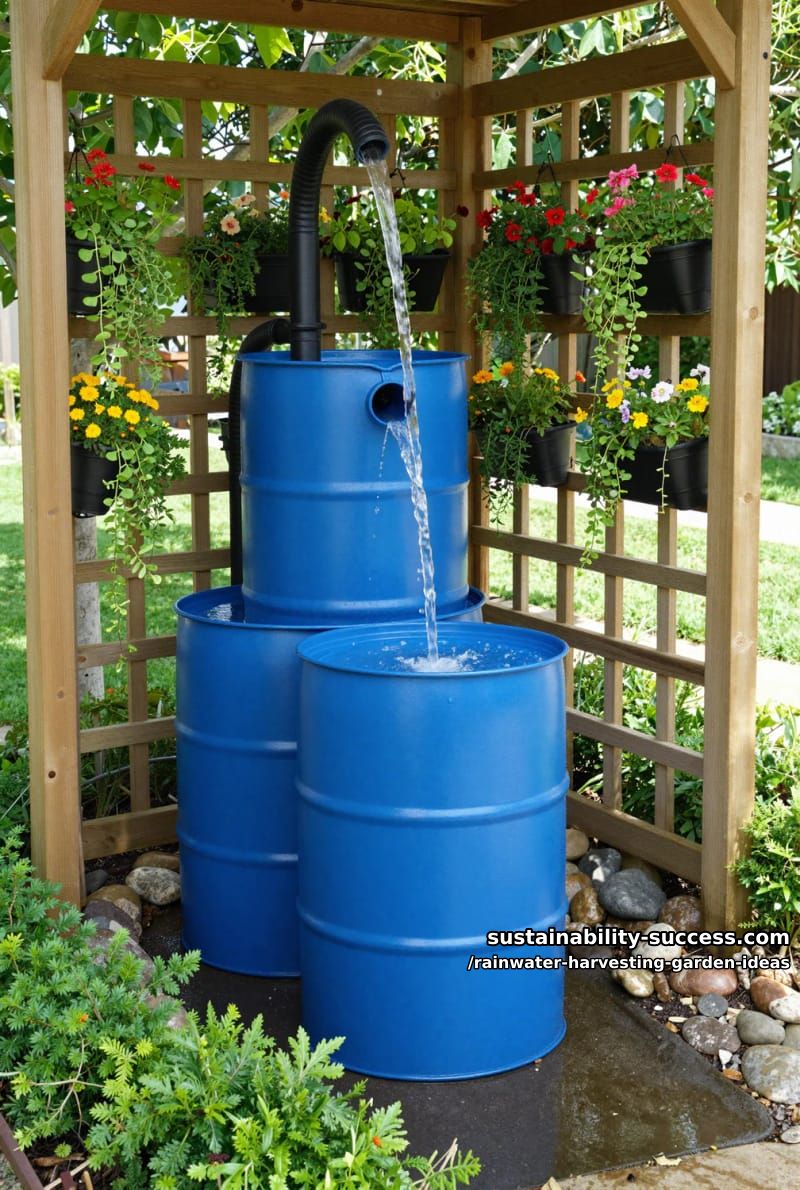
Consider a cascading blue barrel system tucked behind a privacy trellis. This setup cleverly hides utilitarian barrels while turning them into a conversation piece.
Attach hanging planters to the trellis for added greenery and color. Each barrel can connect with hoses, letting water trickle efficiently from top to bottom.
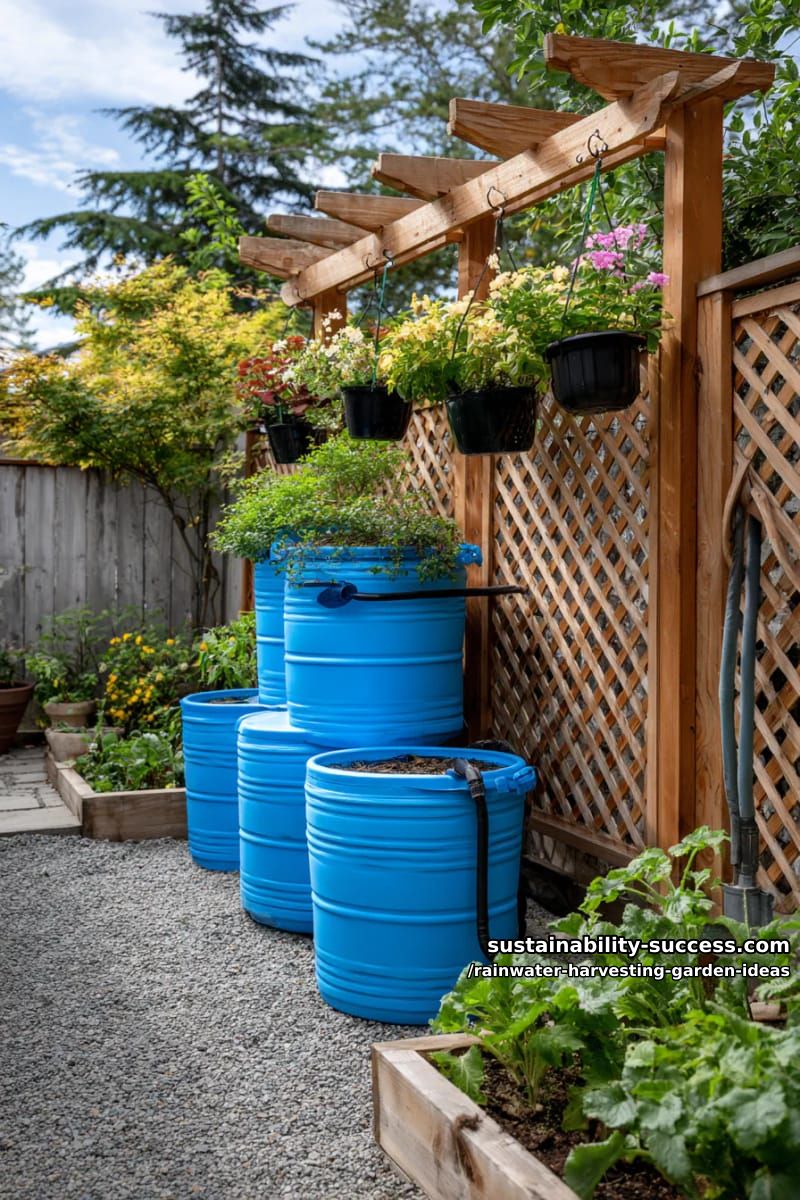
The privacy trellis does double duty. It screens the barrels from view and acts as a vertical garden. Mix edible herbs, flowering vines, or succulents in the planters.
Maintenance is simple, just check for leaks and keep planters trimmed. Some may find barrel systems bulky, but this design makes them almost invisible.
7. Living green roof shed collecting water for an aromatic herb spiral
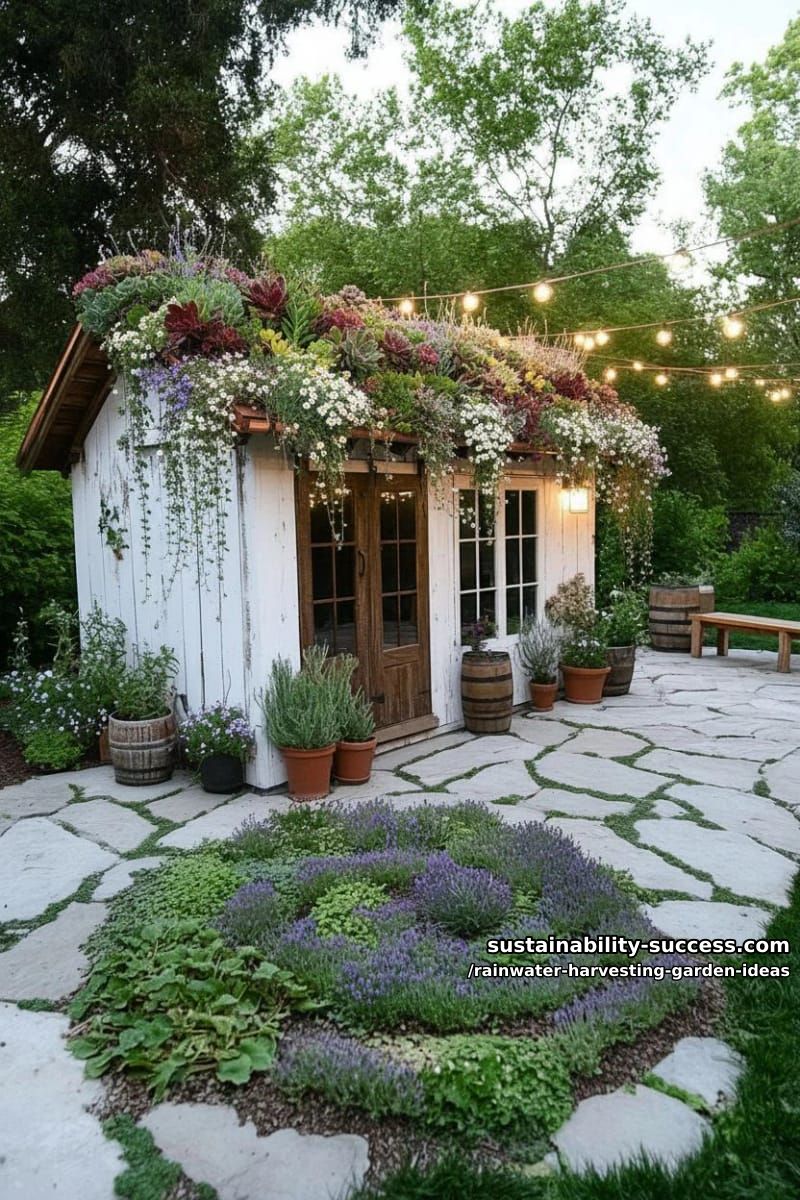
Green roof sheds pull double duty. Their lush tops absorb rain, but with clever guttering, they also channel water straight to a herb spiral below.
Imagine fresh basil and rosemary thriving, watered by yesterday’s storm. Less runoff, more flavor. It’s like nature’s version of a kitchen tap.
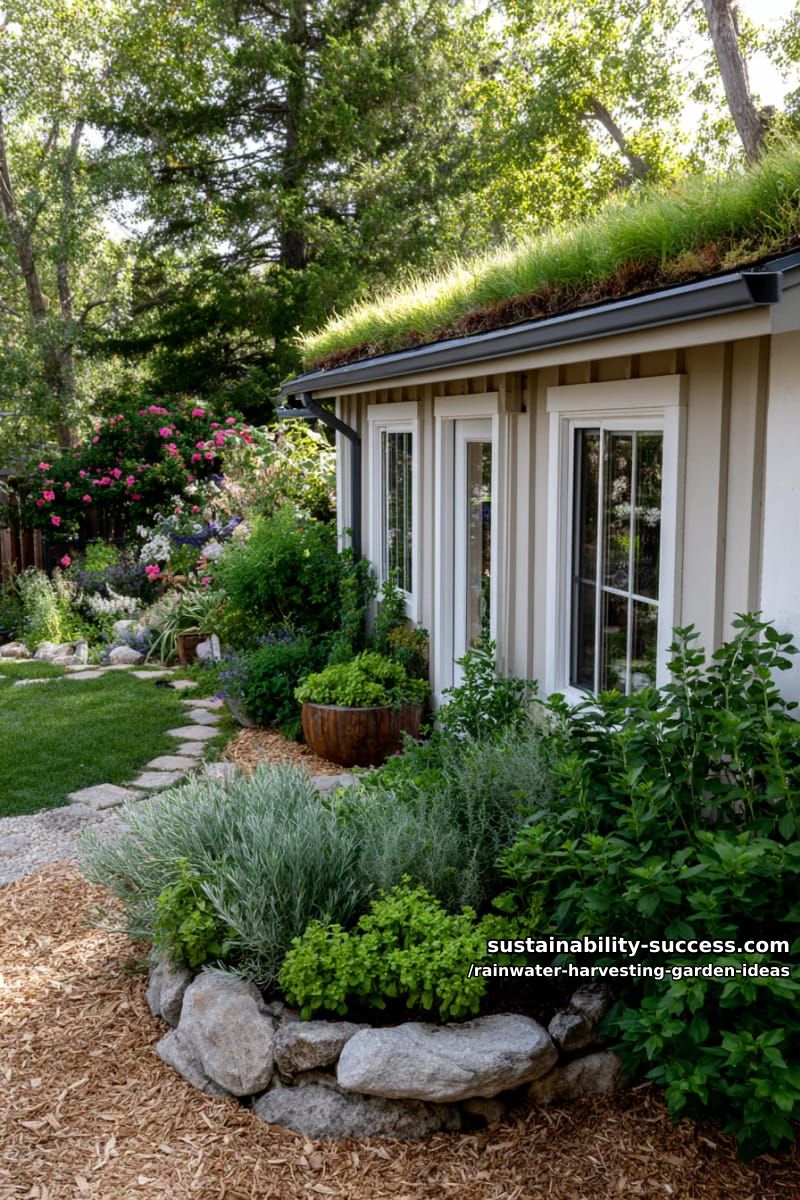
But keep it real. Green roofs need sturdy support and occasional weeding. Some herbs dislike soggy feet, so add gravel for drainage in your spiral.
Still, the payoff? Scented leaves, happy bees, and a shed that practically begs you to cook with what you grow. Who knew sustainability could taste this good?
8. Modern galvanized steel tank with geometric gravel mulch and succulents
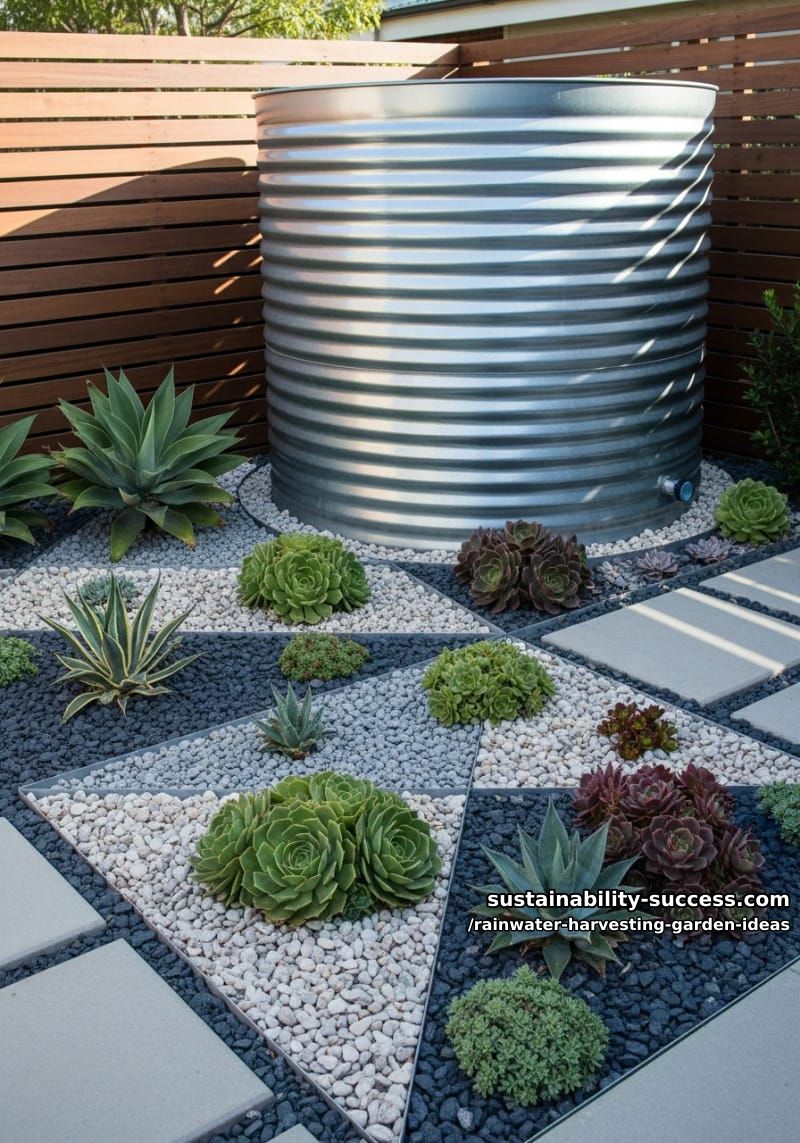
Imagine a sleek galvanized steel tank catching rainwater, surrounded by crisp gravel patterns and sculptural succulents. This setup blends function with modern style.
It saves water, cuts your bill, and turns a plain garden into a conversation starter. Who knew conservation could look this sharp?
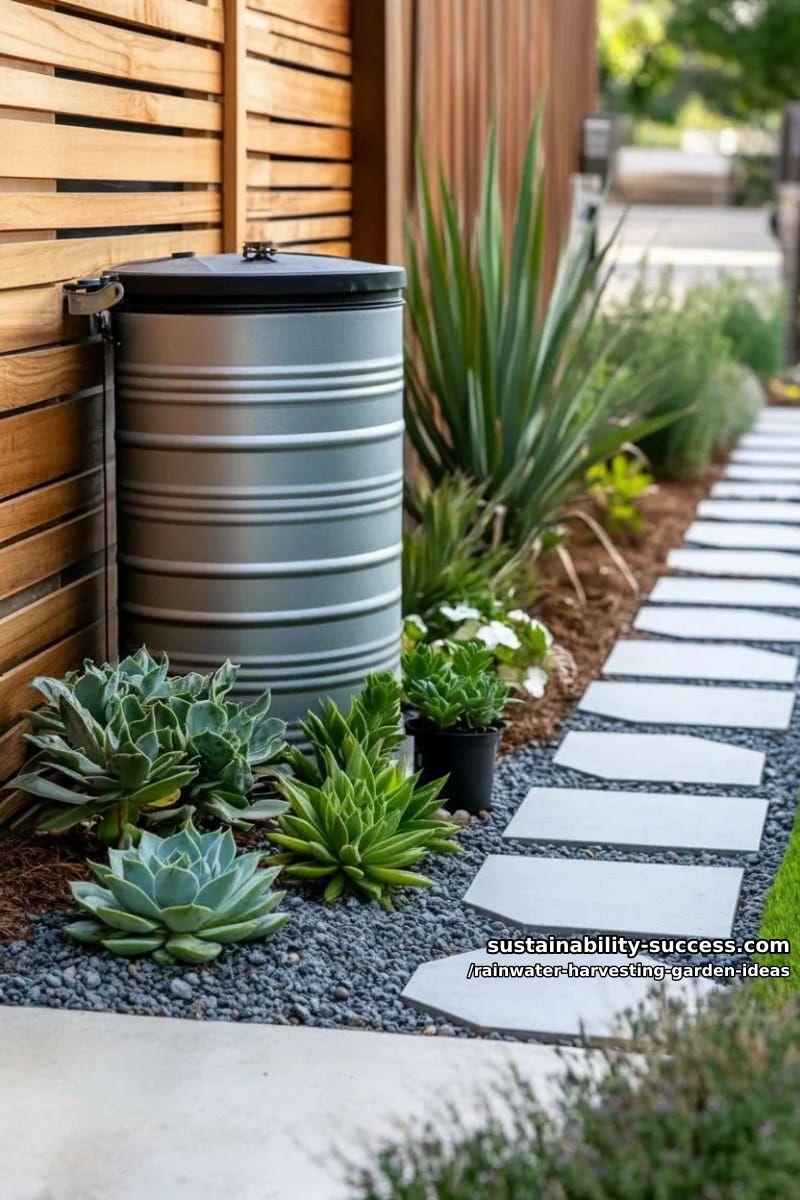
However, galvanized tanks can heat up in summer, which may stress some plants. Stick to drought-tolerant succulents and use light-colored gravel to reflect sunlight. Regularly check for rust or leaks, maintenance is key.
With a bit of care, this setup delivers both beauty and practical savings.
9. Raised water troughs feeding drip lines for raised vegetable beds
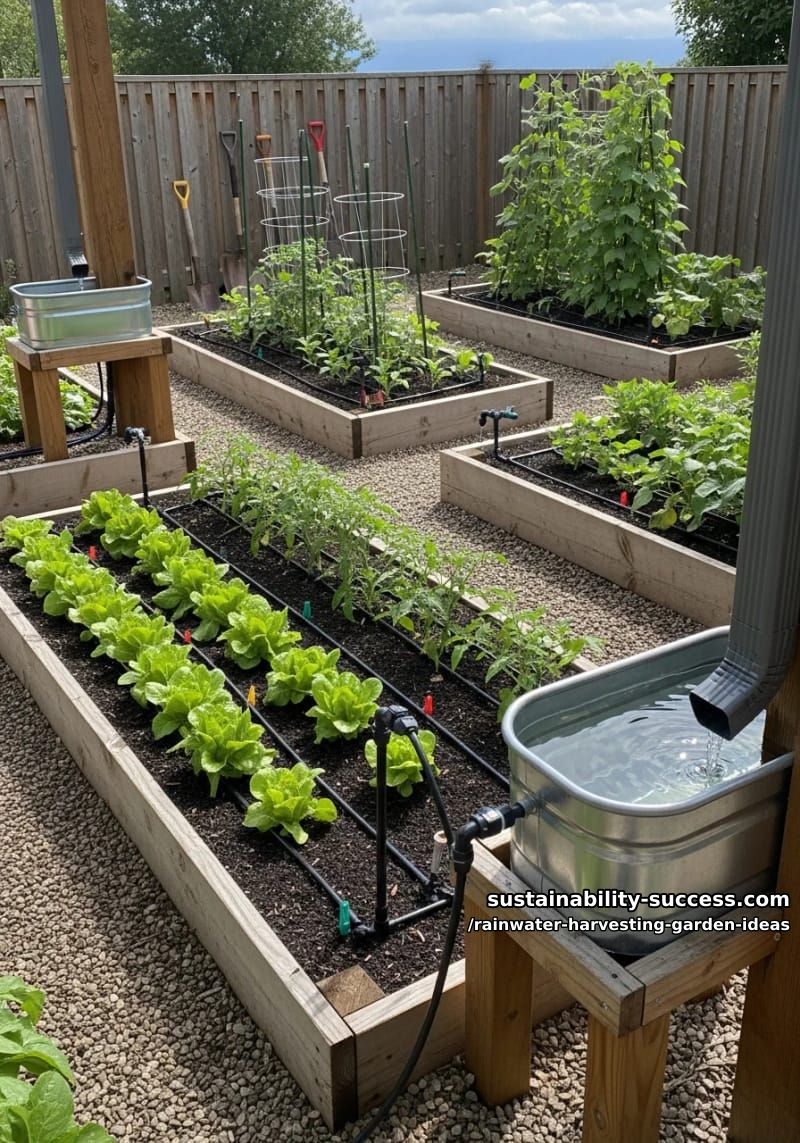
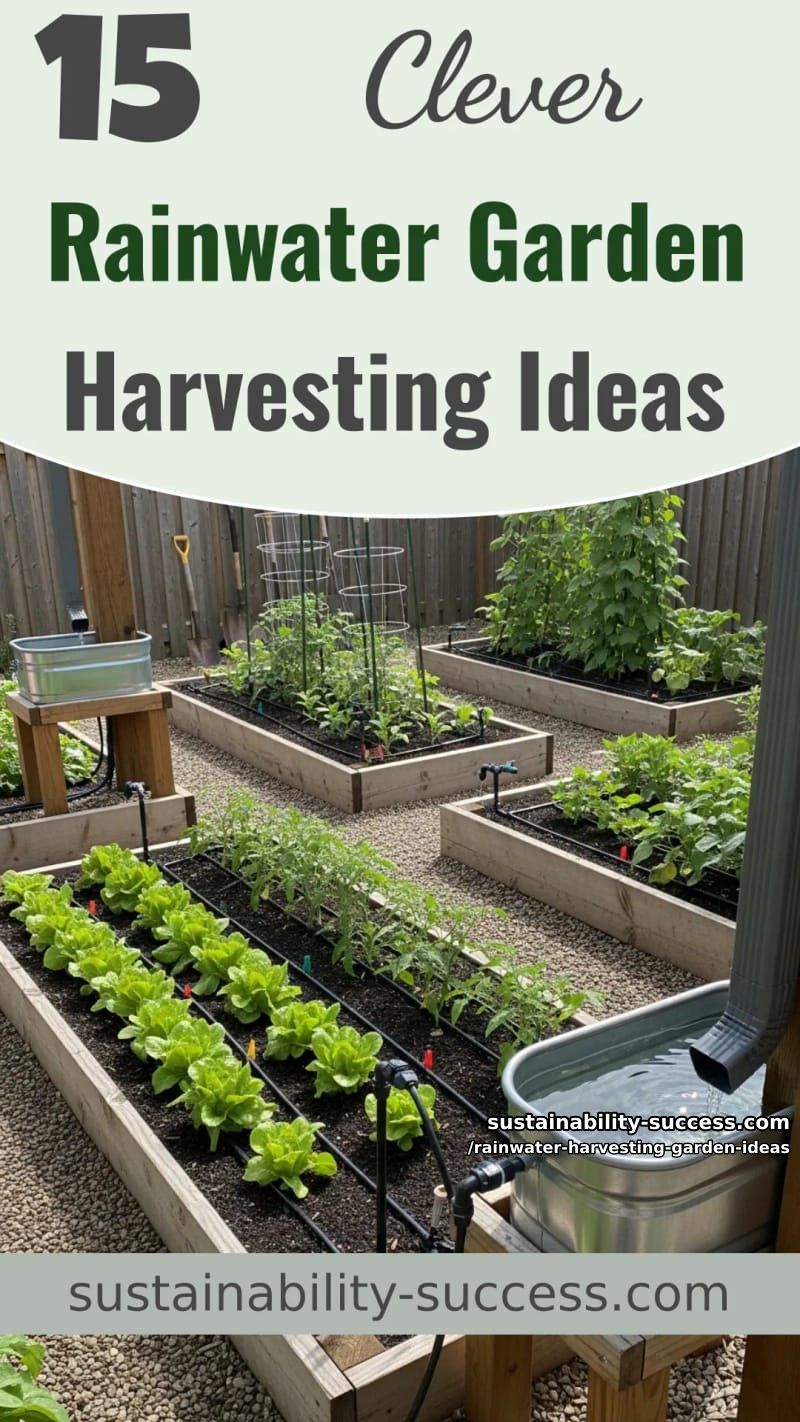
Raised water troughs can act as simple reservoirs for rainwater, collecting precious drops during storms. By linking these troughs to drip lines, you deliver water directly to the roots of your vegetables.
This method slashes waste, keeps foliage dry, and helps prevent leaf diseases. It’s low-tech, yet highly effective.
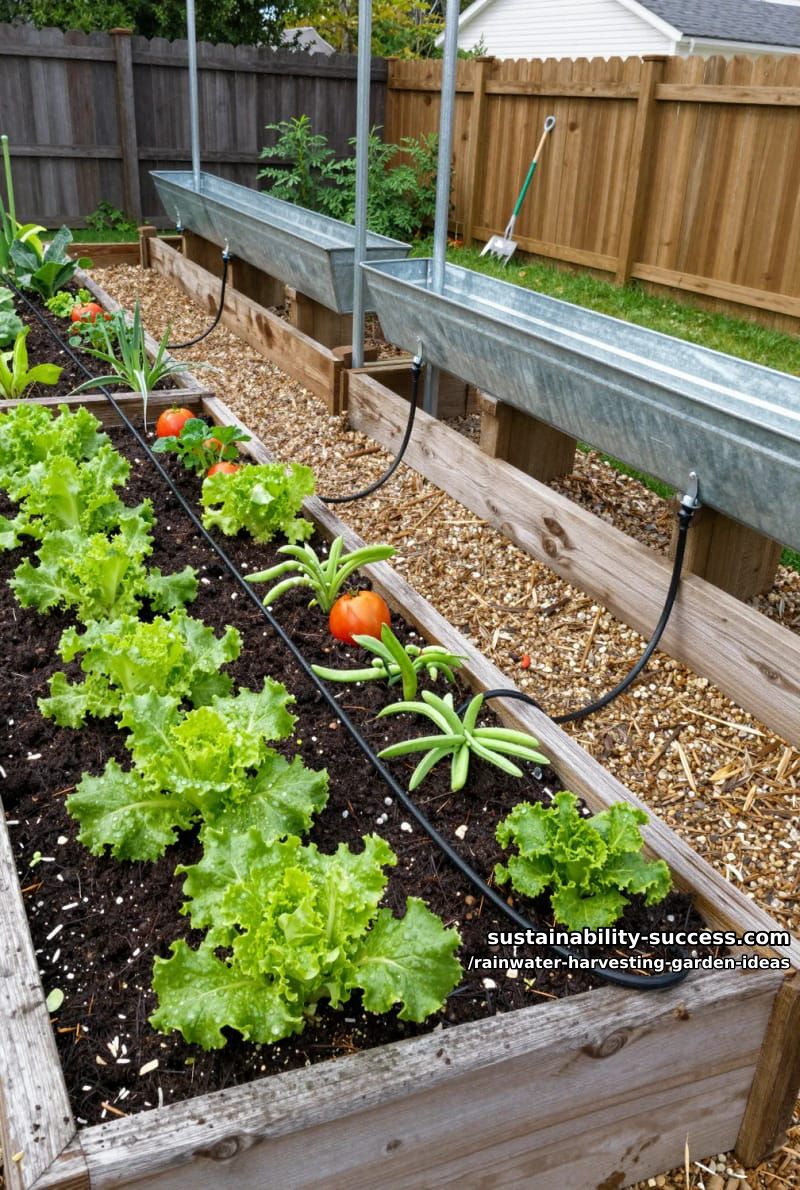
Maintenance is straightforward, just check for clogs and keep troughs free of debris. Some folks worry about stagnant water, but a lid or screen fixes that.
Want to avoid the headache of hand-watering? Let gravity do the work and watch your veggies thrive, even during dry spells.
10. Birdbath fountain powered by rainwater storage and surrounded by ferns

Imagine a birdbath fountain bubbling gently, fed by rainwater collected from your roof and stored in a discreet barrel. Birds flock to drink and bathe, while the soft splash cools the air.
Ferns flourish around the base, thriving in the moist shade and adding a lush, wild touch.

Setting this up isn’t rocket science. Connect a simple solar or hand pump from your rain barrel to the fountain. Choose native ferns, they need little fuss and provide cover for birds.
The only downside? You’ll need to clear debris from the collection barrel to keep the water clean for both plants and wildlife.

11. Modular rainwater cubes forming a colorful garden seating bench
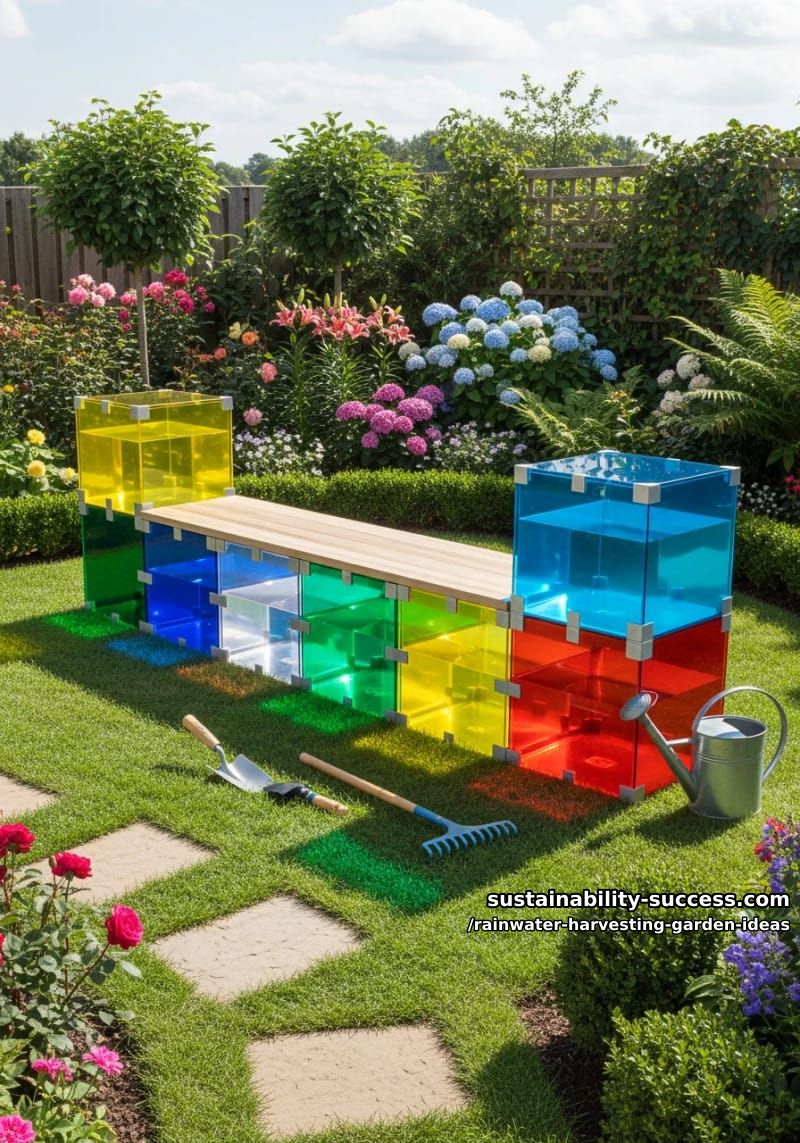
Modular rainwater cubes aren't just smart, they double as bright seating for your outdoor space. Imagine guests asking if those striking benches are really water tanks. Spoiler: they are.
You get storage for collected rain, plus a talking point for every barbecue. Why settle for dull barrels hidden behind shrubs?
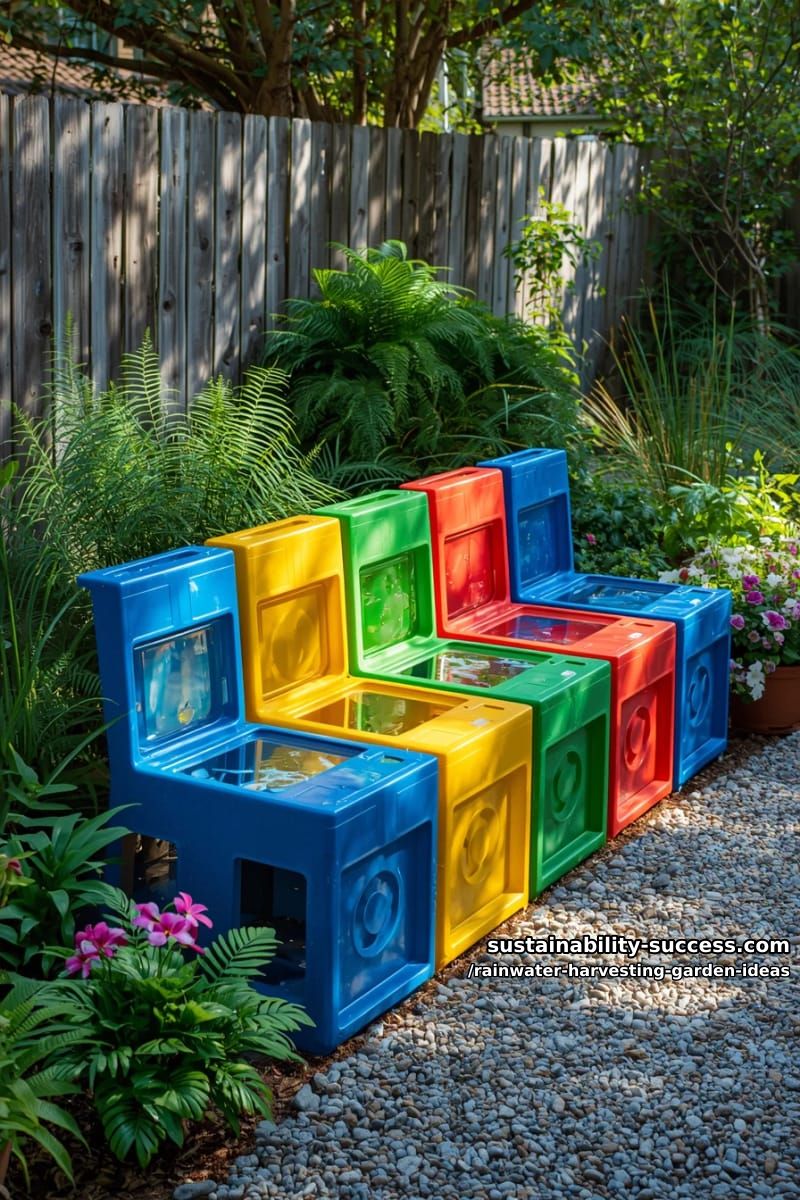
Installation is a breeze. Stack and arrange cubes in patterns, mixing colors for visual appeal. Need more storage? Add extra modules. Short on space? Use fewer cubes as compact stools.
The downside: plastic cubes may fade in direct sun, so consider some light shade or UV-resistant finishes.
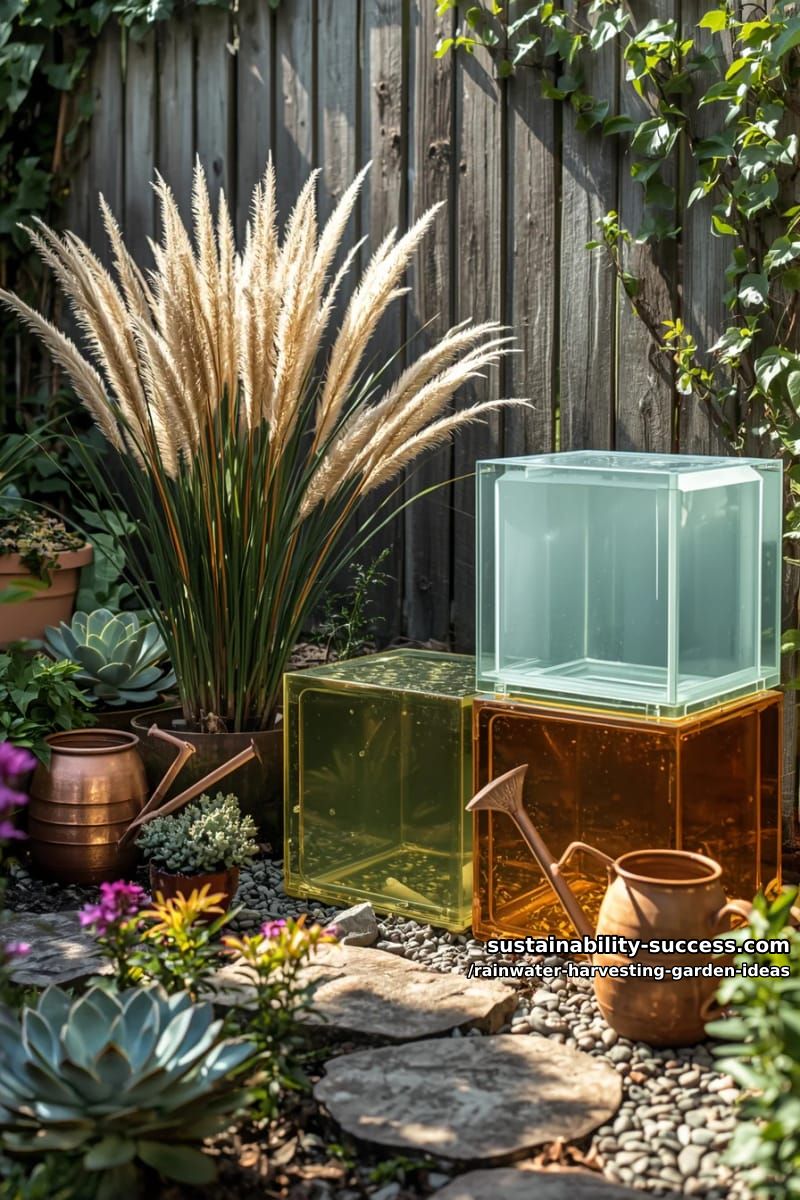
12. Watering can station filled directly from a rustic rain collection barrel
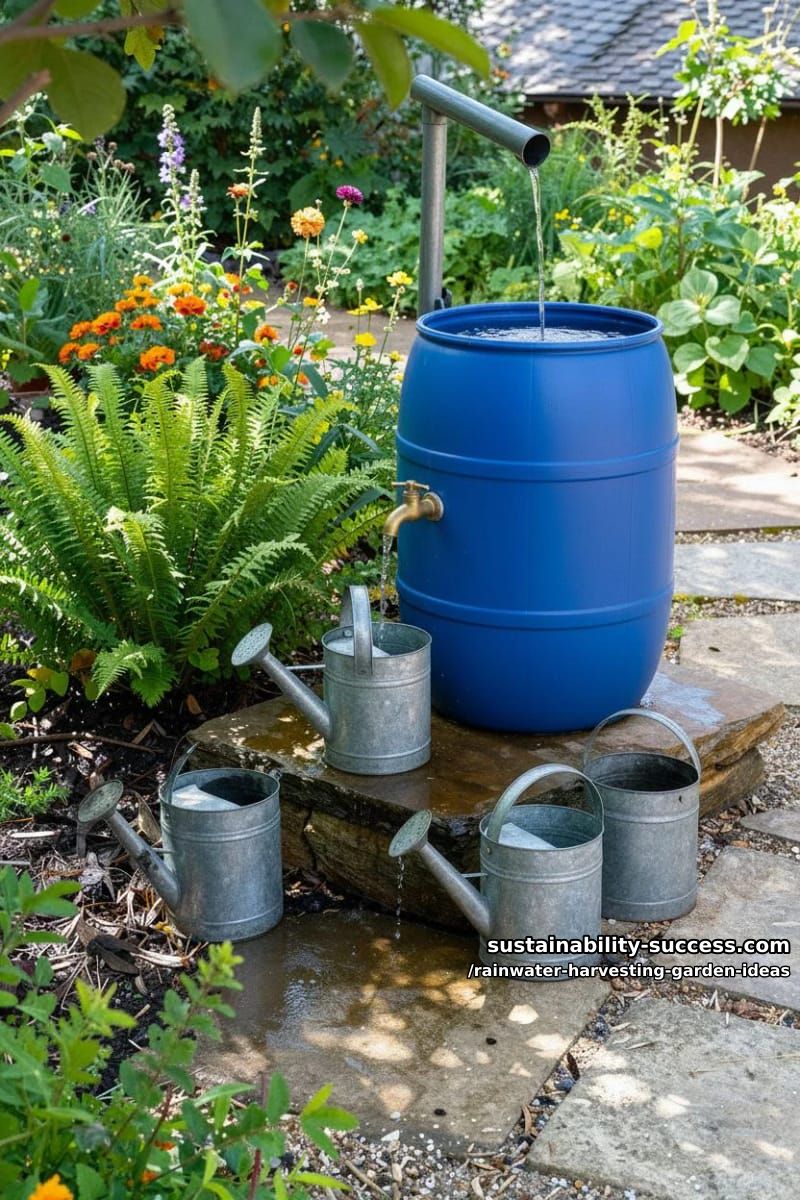
Imagine skipping the hose and filling your watering can straight from a wooden rain barrel. It’s simple, eco-friendly, and adds rural charm to any garden.
Just fit a spigot near the base, and you’ve got a reliable water source that saves on bills and reduces your environmental footprint.
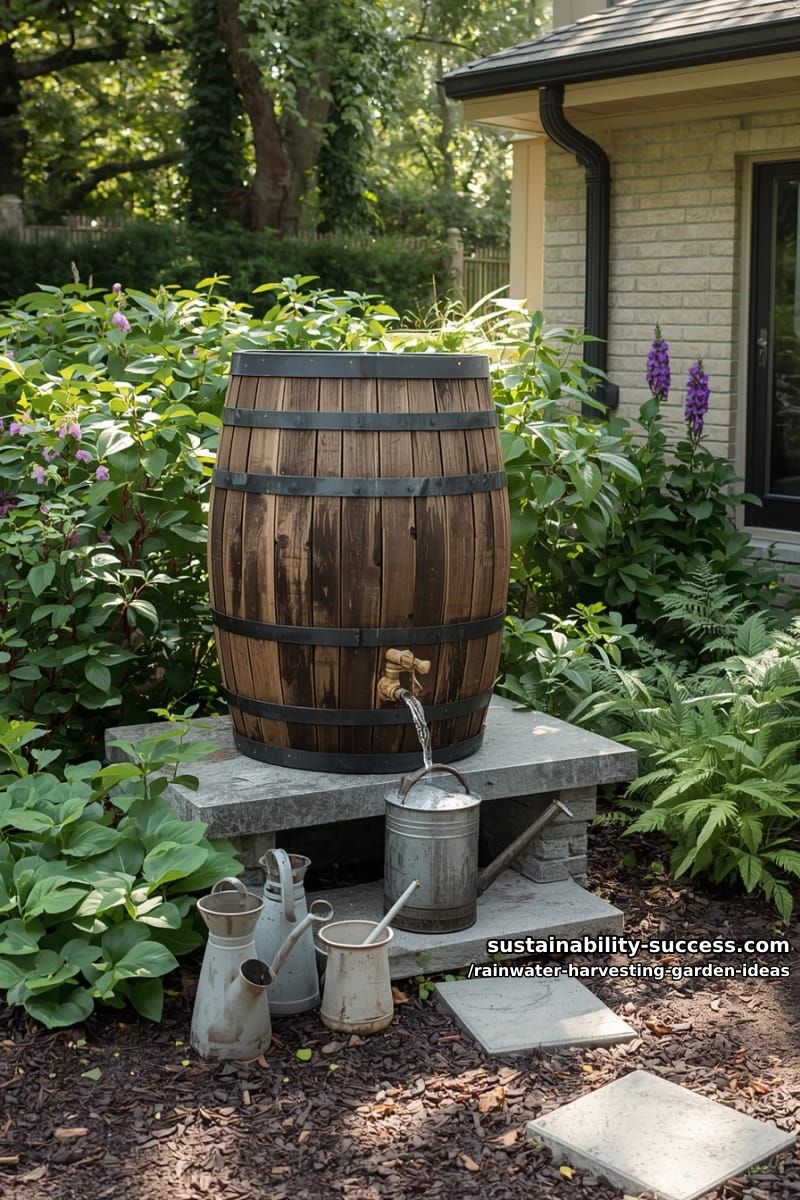
There’s a catch, rain barrels sometimes attract mosquitoes or algae if left uncovered. Avoid this by using a screened lid and cleaning the barrel every few months.
Still, the convenience of refilling your can with collected rainwater outweighs minor maintenance, making this setup a practical and attractive garden upgrade.
13. Swale-lined stone pathway directing overflow into a pollinator rain garden
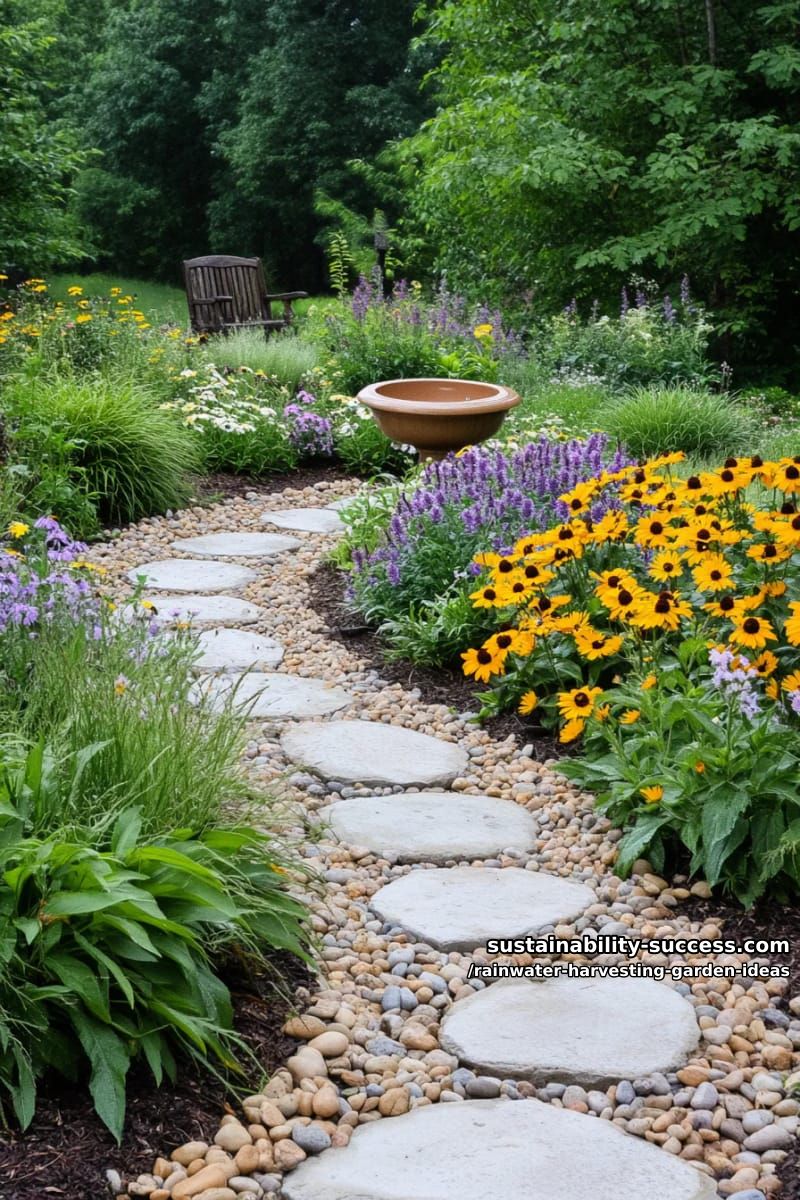
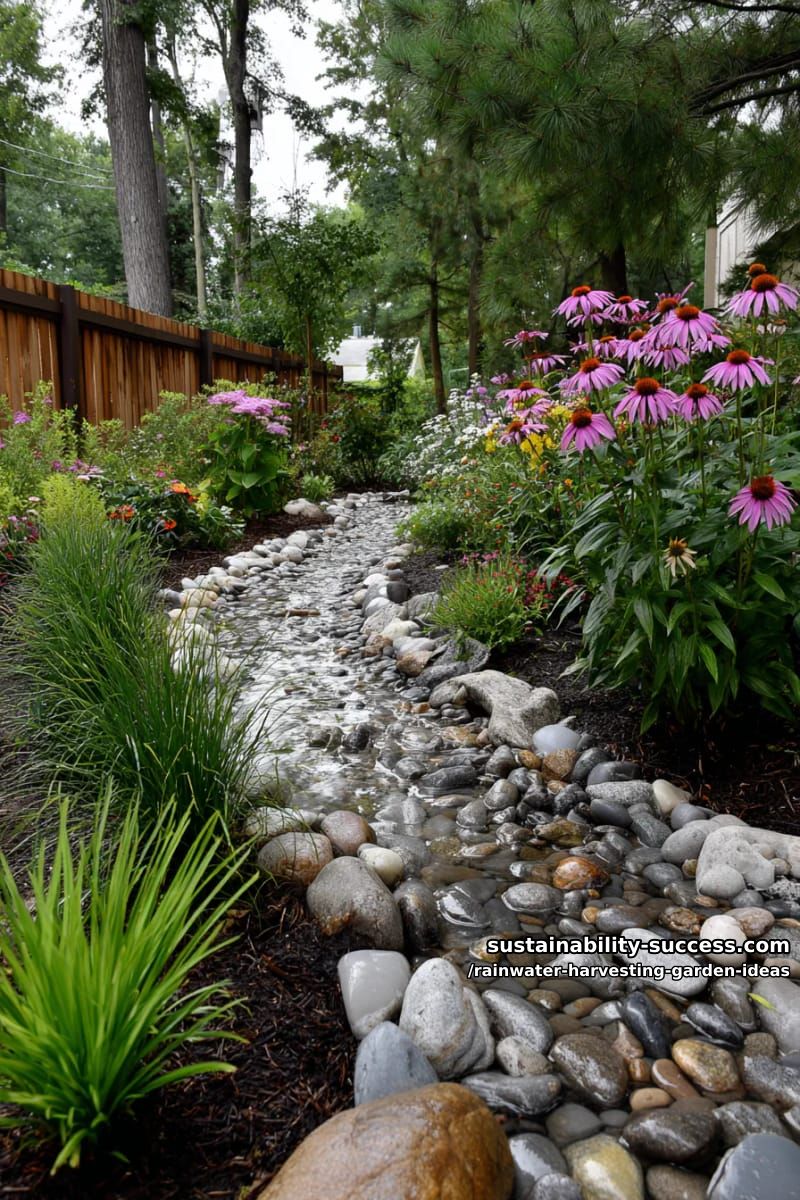
Think of a stone pathway winding through your yard, lined with gentle swales on each side. When heavy rain comes, these shallow channels quietly guide extra water away from your home.
Instead of vanishing down a drain, the runoff soaks into a pollinator rain garden, feeding milkweed, coneflower, and bee balm.
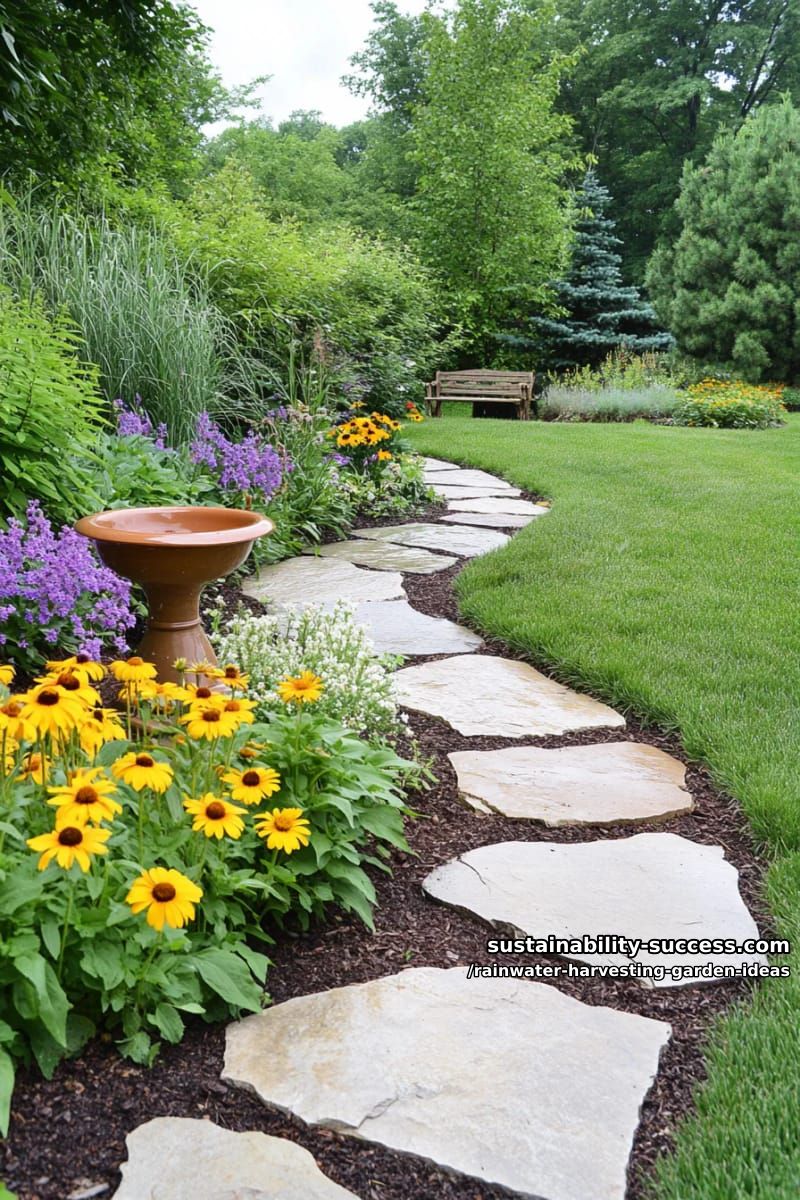
This setup benefits both you and local wildlife. You reduce soggy patches and flooding, while bees and butterflies gain a buffet of nectar-rich blooms.
Maintenance is simple: clear debris from swales and trim back plants after flowering. Want a shortcut? Use native stones and plants, less fuss, more impact.
14. Rainwater-fed wall garden with cascading jars of strawberries and mint
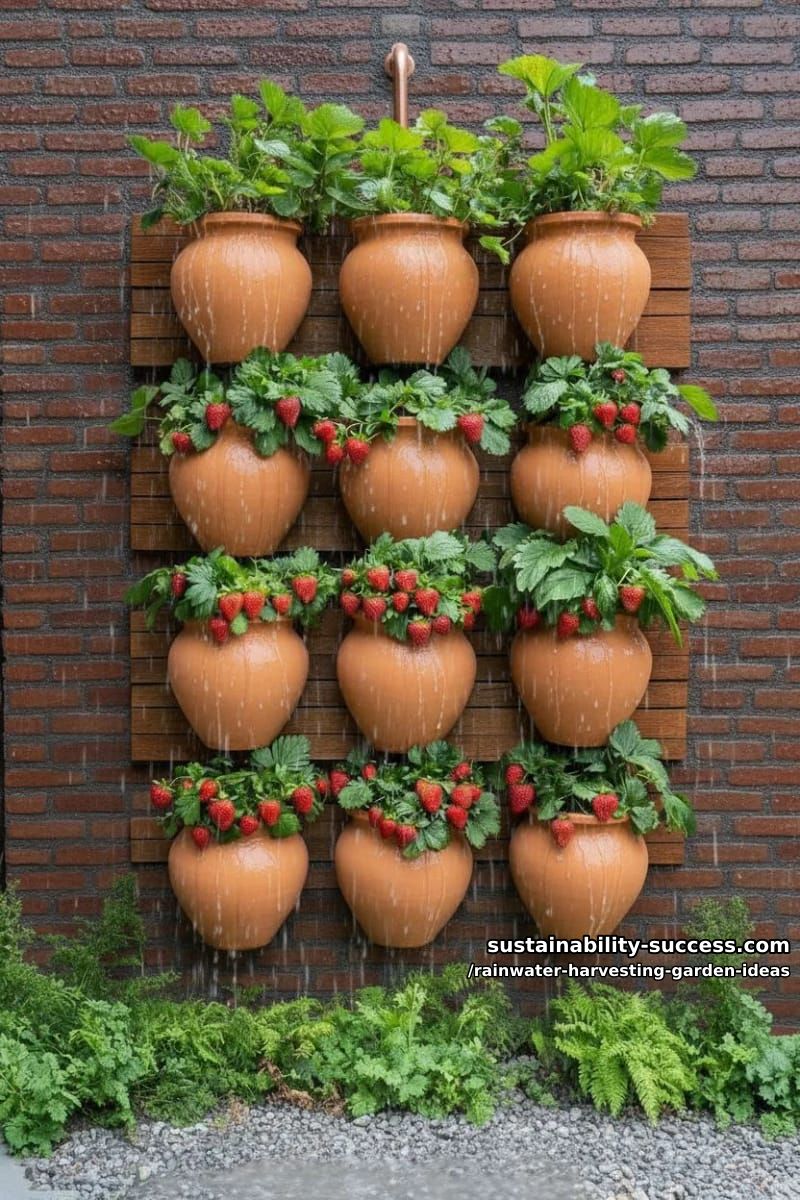
Imagine a vertical wall garden where each jar brims with juicy strawberries and fragrant mint, all nourished by rainwater. This setup saves space and water, making it ideal for small patios or balconies.
The rainwater trickles from jar to jar, giving every plant a fresh, chemical-free drink.
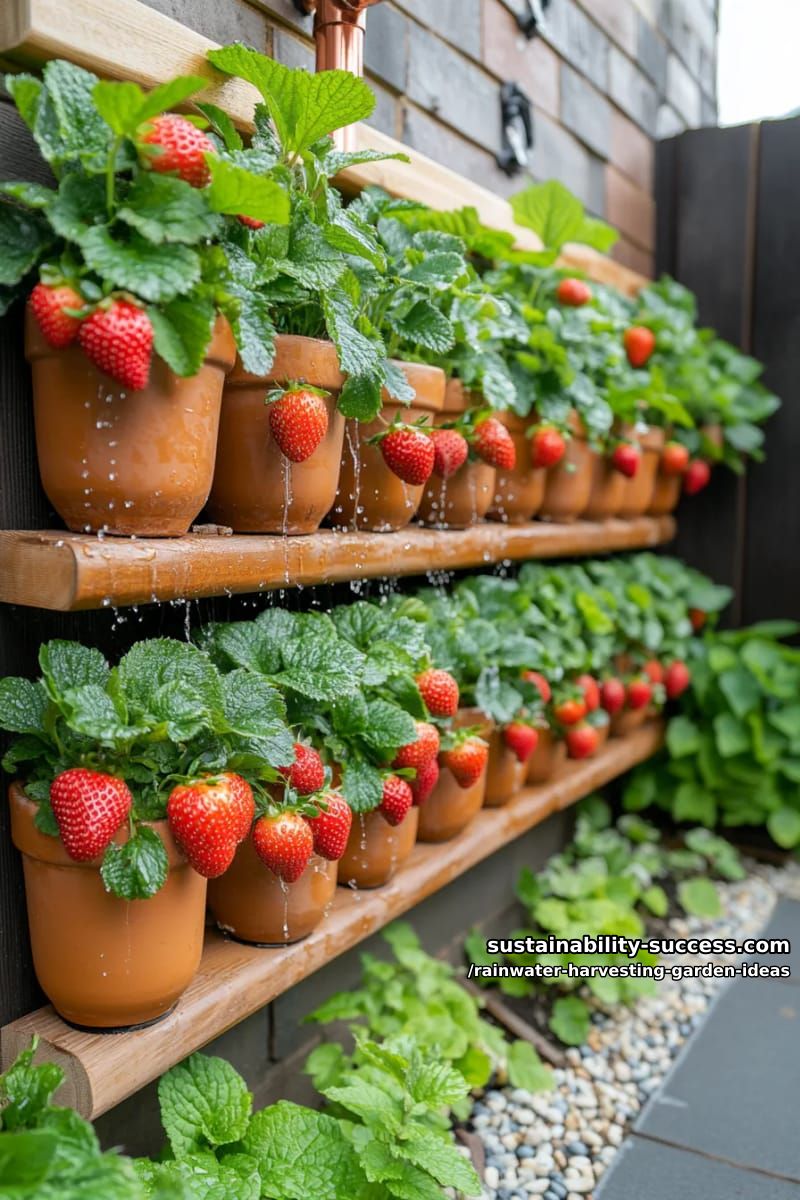
Setting up is easier than you might think. Mount recycled glass jars on a sturdy pallet, connect them with small tubes, and position the top jar beneath your gutter.
Not only do you get homegrown fruit and herbs, but you also cut water bills and plastic waste. It’s functional, green, and pretty charming.
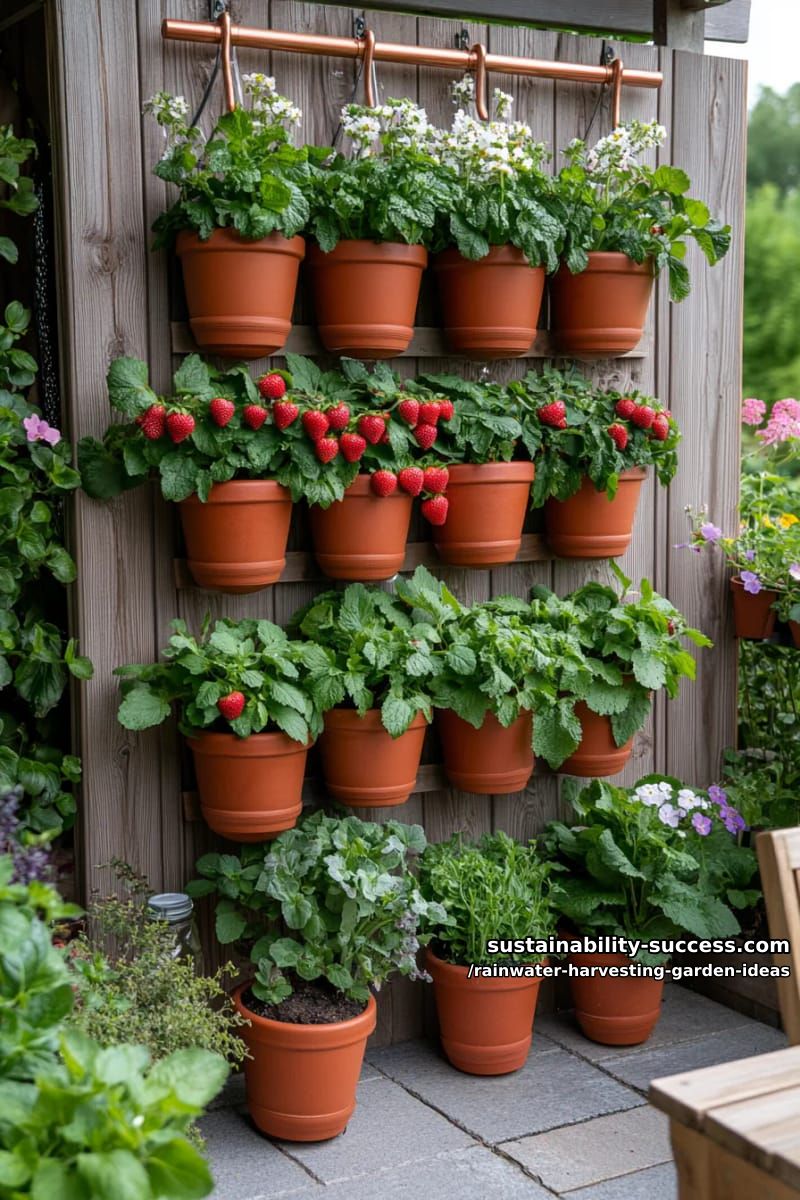
15. Upcycled green pallet system channeling rooftop water to edible container gardens
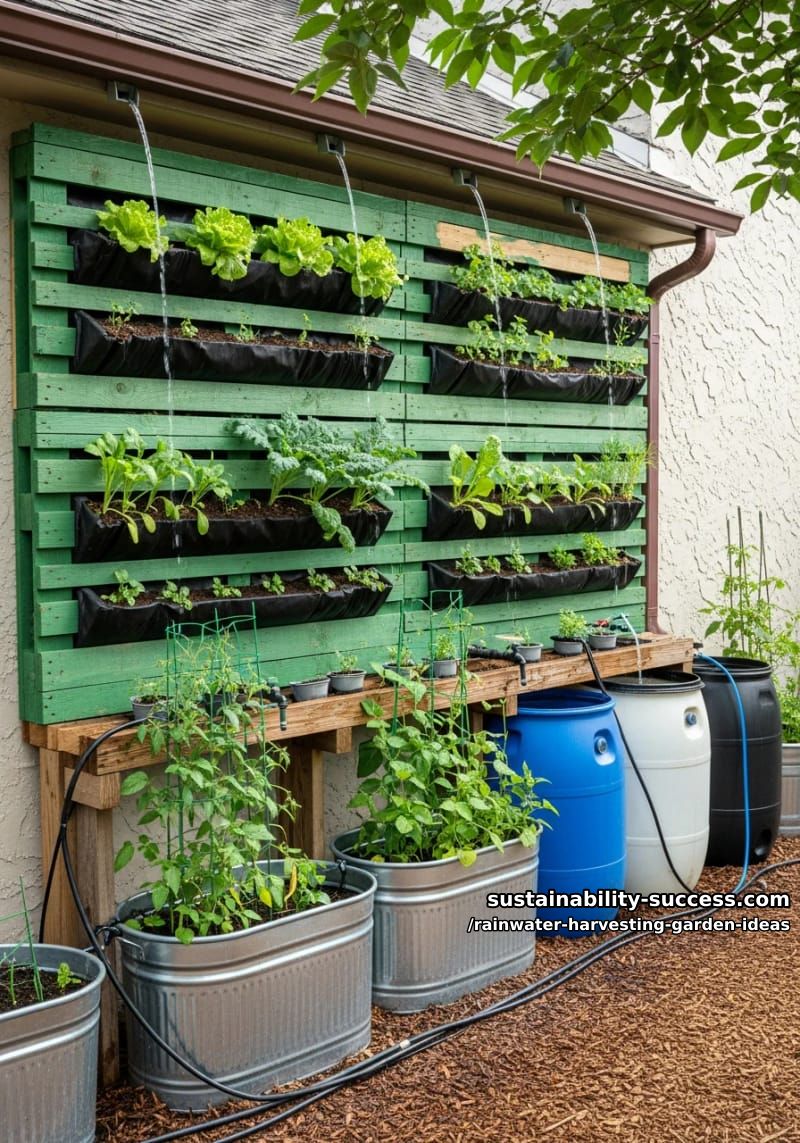
Imagine old shipping pallets getting a second life as garden heroes.
By stacking these pallets vertically and adding simple guttering, you guide rain from your roof straight to containers filled with herbs and greens. It’s cheap, clever, and reduces your water bill.
Plus, you’re recycling materials that would otherwise end up as waste.
It’s not all sunshine, though. Pallets can rot if untreated, and some may contain chemicals, so choose wisely. Line them with food-safe barriers to keep your veggies safe.
Still, with a few weekend hours and some creativity, you’ll have a productive, eco-friendly garden that’s as practical as it is quirky.
Conclusion
Rainwater Harvesting Garden Ideas don’t just save water, they spark creativity and help your garden flourish.
Imagine sipping mint tea grown from rain-fed herbs or watching butterflies dance around pollinator beds watered by yesterday’s downpour. Nature does the heavy lifting, and you reap the rewards.
Ready to transform your space? Start simple: install a painted barrel or try a rain chain. With every drop you save, you cut costs and support local wildlife.
Why let rainwater go to waste when your garden can thrive on it? Give it a try, your plants will thank you.
Related Posts
- Sustainable Garden Decor Ideas
- Eco-Friendly Herb Garden Ideas
- Spring Small Space Sustainable Garden Decor
- Upcycled Garden Ideas
- Eco-Friendly Garden Art