

Spring brings fresh air, longer days, and a golden chance to refresh your home.
Why not add charm and save the planet at the same time? Sustainable cottage decor for spring offers warmth, character, and a lighter footprint, all in one go.
Ever thought an old glass jar or worn quilt could make your space sing? Simple swaps and creative reuse can turn any cottage into an earth-friendly haven.

If you love cozy corners and a guilt-free conscience, these ideas are right up your alley.
1. Vintage glass bottles with foraged spring branches on a rustic wooden windowsill

Placing vintage glass bottles filled with foraged spring branches on a rustic wooden windowsill adds instant character. Each bottle tells its own story, while the branches introduce a daily dose of nature.
Why buy plastic decor when the woods and your local thrift shop offer better options for less?

However, sourcing vintage bottles can require patience. Some may show chips or stains, but these imperfections often add personality.
Gather branches from your morning walk, wipe the dust off an old bottle, and suddenly your home feels thoughtful and lived-in, all while keeping waste to a minimum.

2. Upcycled linen napkins transformed into cozy floral throw pillow covers

Old linen napkins sitting unused in your drawers could become this season’s favorite throw pillow covers. Choosing floral prints instantly adds spring vibes and warmth.
If you can sew a straight line, you’re halfway there, just stitch three sides, stuff with a pillow insert, and close. It’s refreshingly simple.

Repurposing napkins saves money and reduces textile waste. However, napkin fabrics can fray, so reinforce your seams or use fabric glue for extra security.
Worried about mismatched patterns? Mix and match for a quirky, lived-in look. Sustainability doesn’t mean sacrificing charm or comfort, sometimes, it’s as easy as rethinking what you already own.

3. Wooden crates stacked for open shelving displaying potted herbs and wildflowers

Wooden crates offer an affordable, eco-friendly option for open shelving. Stack them in your kitchen or on a porch, and you’ve got instant storage with rustic flair.
Add potted herbs like basil or thyme, mix in wildflowers, and you’ll create a living display that’s useful and beautiful.

Don’t expect perfection, crates may show scuffs or uneven edges. That’s part of the charm. Repurposing old materials supports sustainability, and the open shelves keep everything accessible.
Plus, you’ll never forget to water your plants when they’re right in sight, drawing fresh energy into your space.
4. Repurposed wicker baskets brimming with local greenery and dainty spring blooms

Old wicker baskets aren’t just for storage, fill them with native plants and seasonal flowers for instant charm. This approach adds texture and color, while cutting down on waste.
Why buy new decor when you can refresh what you already own and support local growers at the same time?

However, not every basket survives moisture or direct sunlight. Line them with burlap or plastic to help them last longer.
Rotate your baskets every few weeks to keep things lively and prevent any one spot from wearing out. It’s a simple, cheerful update that’s friendly for the earth and your wallet.
5. Handmade clay vases in organic shapes filled with garden-cut tulips

Handmade clay vases bring personality to any space. Their organic shapes catch the light in unexpected ways, making each one a quiet conversation starter.
Fill these vessels with tulips fresh from your garden, and you introduce both natural beauty and a gentle environmental footprint. Why settle for mass-produced when imperfection tells a better story?
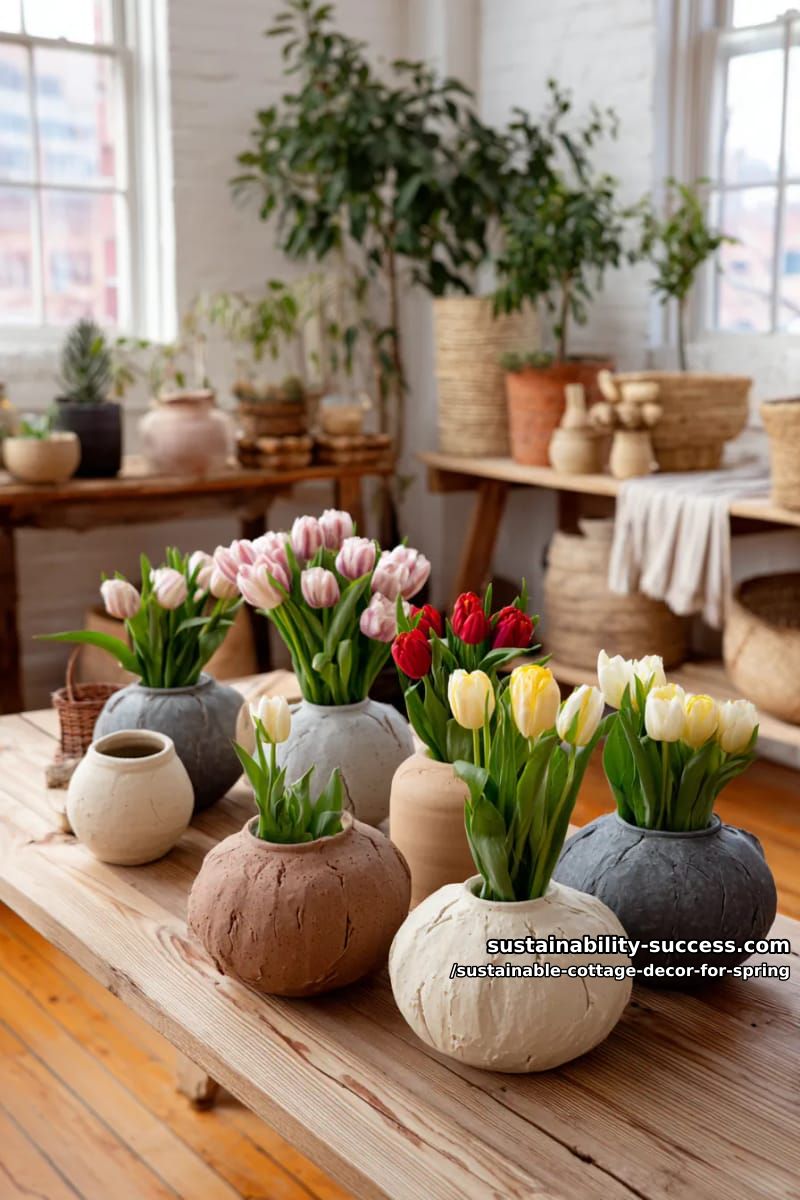
Some might say clay vases chip easily. True, but that only adds character, a little scar, a new memory. Plus, reusing garden tulips means skipping imported blooms wrapped in plastic.
You get an arrangement that’s good for your conscience and your living room, without breaking the bank or the planet.

6. Wildflower-pressed artwork framed with reclaimed wood for a cottage gallery wall

Wildflower-pressed artwork framed with reclaimed wood adds charm to any cottage wall. Each piece tells a story, blending nature's colors with eco-friendly materials.
Why buy mass-produced prints when you can hang a slice of spring that’s both beautiful and gentle on the environment? Guests will ask where you found such treasures.

Making these is simple. Gather blooms from your garden, press them between heavy books, and mount them on recycled paper. Slip them into old frames you repaint or sand for a rustic touch.
The only real challenge? Patience, flowers take weeks to press, but the wait is part of the magic.
7. Macramé plant hangers made from natural jute showing off trailing ivy

Macramé plant hangers crafted from natural jute are making waves in sustainable cottage decor.
These hangers do more than cradle your favorite trailing ivy; they invite a touch of old-school charm with zero plastic. Jute breaks down naturally, so you won’t be adding to landfill woes.

Have you ever noticed how a single cluster of greenery can transform a dull corner into a cozy retreat? Trailing ivy in jute macramé swings above a reading nook, catching sunlight and purifying air.
The only hitch: jute can fray over time, but that’s a small trade-off for eco-friendly style.

8. Table centerpiece with stoneware pitchers and freshly picked daffodils

Stoneware pitchers filled with daffodils bring instant warmth to any spring table. Their sturdy design and earthy colors echo the countryside.
Why buy plastic vases when secondhand stoneware offers both charm and eco-friendliness? A bunch of daffodils picked from your garden keeps it affordable and waste-free.

Some might say stoneware looks too rustic, but that’s the magic, imperfection adds character. Arrange a few wild stems at different heights for a relaxed, lived-in look.
Guests will notice the thoughtful details and natural vibe. Isn’t that exactly what a welcoming spring table needs?

9. Reused glass jars as candle holders clustered on a vintage tray

Old glass jars can easily become charming candle holders. Cluster them on a vintage tray for an eye-catching centerpiece. This setup adds character and cuts down on waste.
Have a mismatched set of jars? Even better. Their different shapes catch the candlelight in interesting ways, creating a cozy atmosphere.

Wax drips, uneven rims, and slight scratches only add to the appeal. Forget perfection. Real homes tell stories through their quirks. Try adding wildflowers or stones for extra detail.
The result: a practical, eco-friendly update that doesn’t break the bank or the environment.
10. Cozy reading nook layered with cotton quilts and sustainable wool throws

A cozy reading nook, filled with cotton quilts and sustainable wool throws, invites you to slow down and savor spring afternoons.
Choose organic cotton and responsibly sourced wool for layers that feel good and do good. These natural fibers breathe, so comfort never comes at the cost of stuffiness.

Think texture over trend. A chunky wool throw adds warmth, while a cotton quilt brings softness and color without harsh chemicals.
Swap synthetic blends for eco-certified options, your skin and the planet will thank you. Ever tried curling up with a book in a nook that whispers, “You’re welcome here”? Try it.

11. Botanical wall hangings crafted from dried meadow grasses and floral stems

Botanical wall hangings made from dried meadow grasses and floral stems bring nature right into your space. These pieces require no watering, last for seasons, and add subtle texture.
Try arranging wildflowers with feathery wheat for gentle color shifts. Anyone can gather materials on a weekend walk and frame them within minutes.

Choosing dried arrangements means less waste compared to fresh bouquets. However, avoid placing them in direct sunlight, as colors can fade. Swap out stems as the seasons change.
Curious what’s blooming nearby? Forage responsibly, and you’ll create art that connects your home to the outdoors.
12. Salvaged wood bench topped with upcycled neutral cushions and leafy cuttings


A salvaged wood bench brings character and a sense of history to your cottage space. Pair it with upcycled neutral cushions for comfort and subtle style.
Toss in leafy cuttings from your backyard for a simple touch of nature. Why buy new when you can give old items a second act?

Repurposing found materials does more than save money. It cuts down on waste and supports a greener lifestyle. Neutral tones keep the look calm, while fresh greenery adds life.
If the bench isn’t perfectly smooth, embrace the imperfections, they tell a story. Sometimes, quirks add more charm than perfection ever could.
13. Eggshell planters arranged on a sunlit cottage kitchen windowsill


Eggshell planters add charm and a splash of green to any cottage kitchen. Crack your breakfast eggs carefully, fill the empty shells with soil, and press in tiny herb seeds.
Line them up along the windowsill, and watch as sunlight coaxes fresh shoots from these humble little pots.

This method gives eggshells a second life, replacing plastic seed trays and reducing waste. Plus, eggshells naturally enrich the soil with calcium when eventually planted outside.
It’s a practical, low-cost way to introduce both sustainability and personality to your spring kitchen décor.
14. Thrifted ceramic pots grouped with moss, ferns, and spring succulents

Old ceramic pots from thrift stores offer both charm and resource savings. Grouping these vessels on a table or windowsill with moss, ferns, and spring succulents creates an easy, low-impact focal point.
Why buy new when a chipped pot and a bit of green can steal the show?

Arranging thrifted containers in odd numbers adds balance and visual interest. Mix tall ferns with trailing moss for contrast. Succulents thrive with little water, so maintenance stays simple.
This approach saves money, gives forgotten pots a new story, and keeps waste from the landfill. Who knew sustainability could look this good?
15. Reclaimed door wreath with seasonal greenery, twine, and natural wood beads

Crafting a wreath from an old door brings both charm and eco-friendliness to your entryway. Wrap fresh spring greenery around the frame, using simple twine for a rustic touch.
Add natural wood beads for a playful accent. This project saves money and keeps useful materials out of landfills.
But be warned, real greenery needs occasional spritzing to stay fresh and vibrant. If you’re worried about upkeep, choose hardy clippings like eucalyptus.

No need for fancy skills or tools, just creativity and a willingness to try. Why not let your front door set an example for sustainable living this spring?
Conclusion
Sustainable cottage decor for spring invites you to blend old and new, making your home both beautiful and eco-friendly. Imagine sipping tea surrounded by wildflowers in upcycled jars or curling up with a repurposed pillow, simple changes, big impact.
Ready to turn your space into a spring haven? Start with just one idea, a thrifted vase or handmade wall hanging, and watch your home transform, one thoughtful detail at a time. Small steps matter.
Spring’s fresh energy is yours for the taking.
Related Posts
- Upcycled Spring Home Decor
- Natural Materials Spring Crafts
- Sustainable Living Room Decor Ideas
- Upcycled Home Decor Ideas
- Organic Modern Living Room


