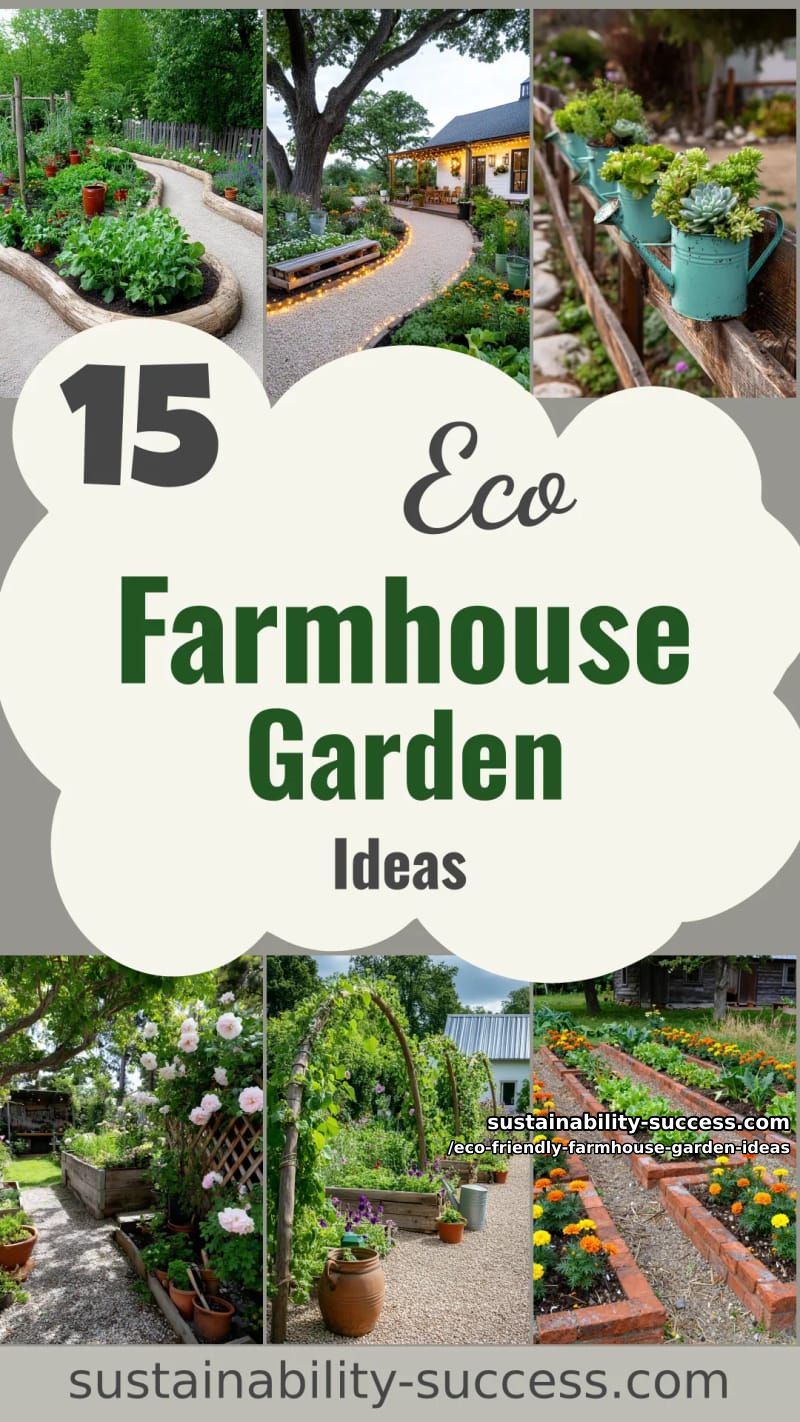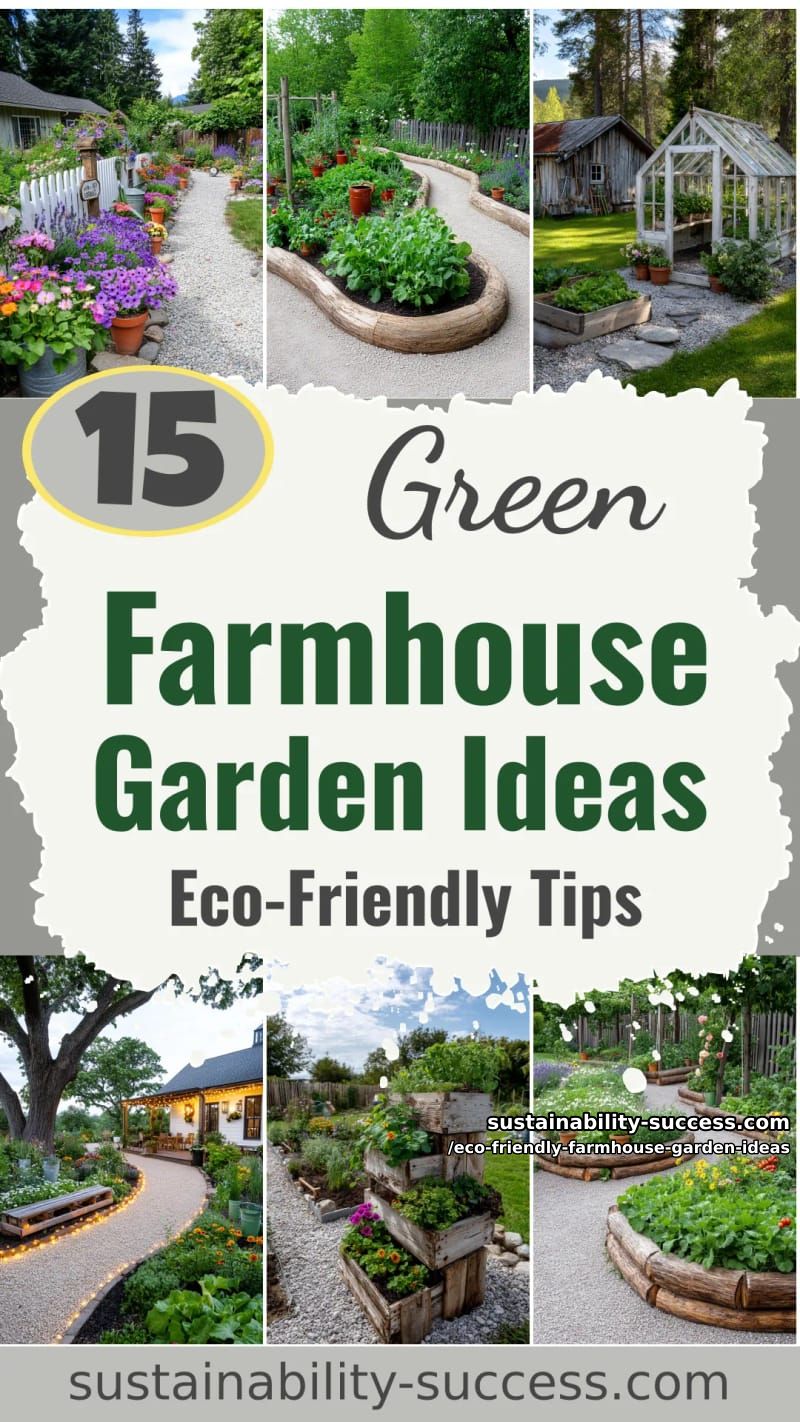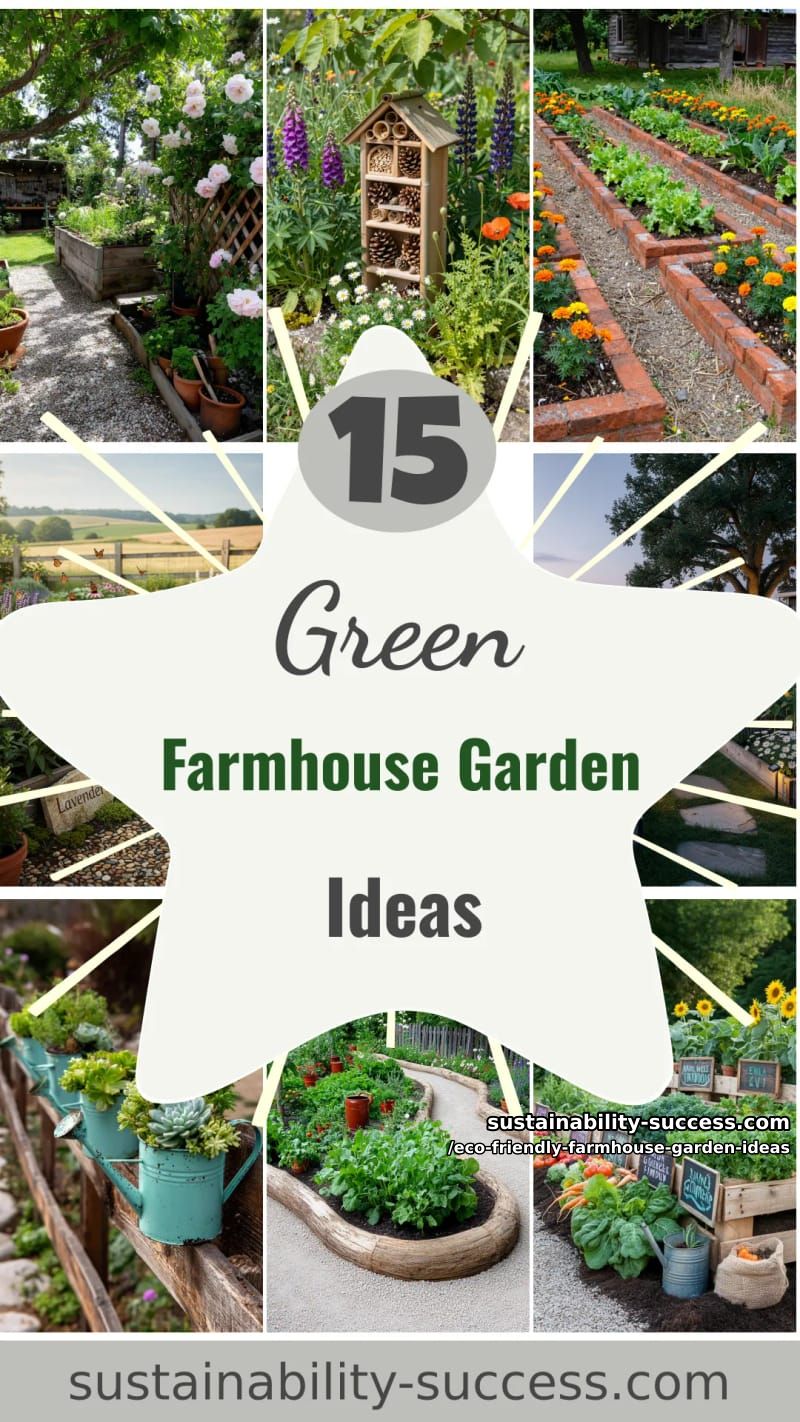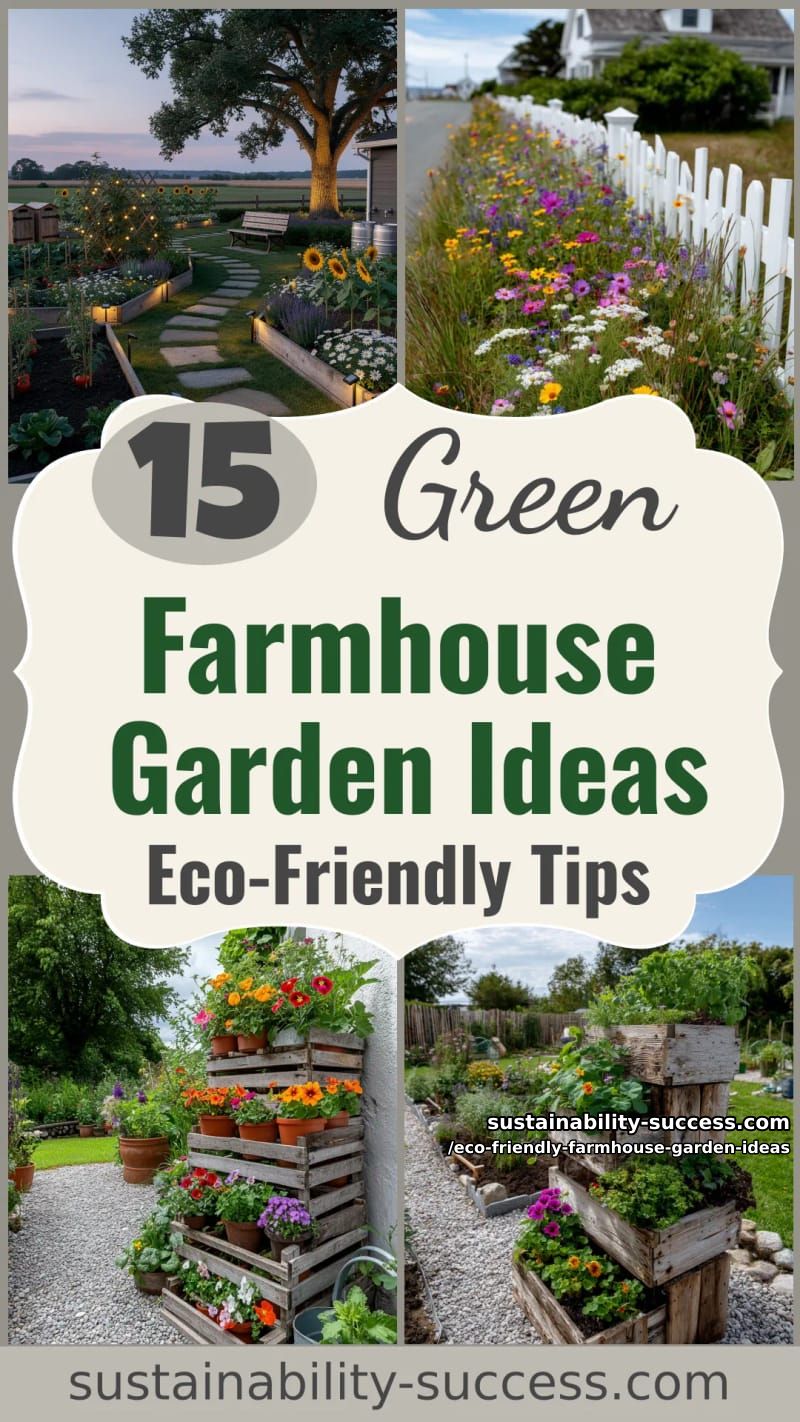
Thinking of giving your garden a green makeover with a farmhouse twist? You’re not alone. More folks are rolling up their sleeves, looking for ways to blend rustic charm with eco-friendly habits right in their own backyards.
Why settle for plain rows of veggies when you can create a space that helps pollinators, saves water, and looks downright stunning? From upcycled benches to rainwater barrels, there are simple changes that pack a punch for both beauty and the planet.
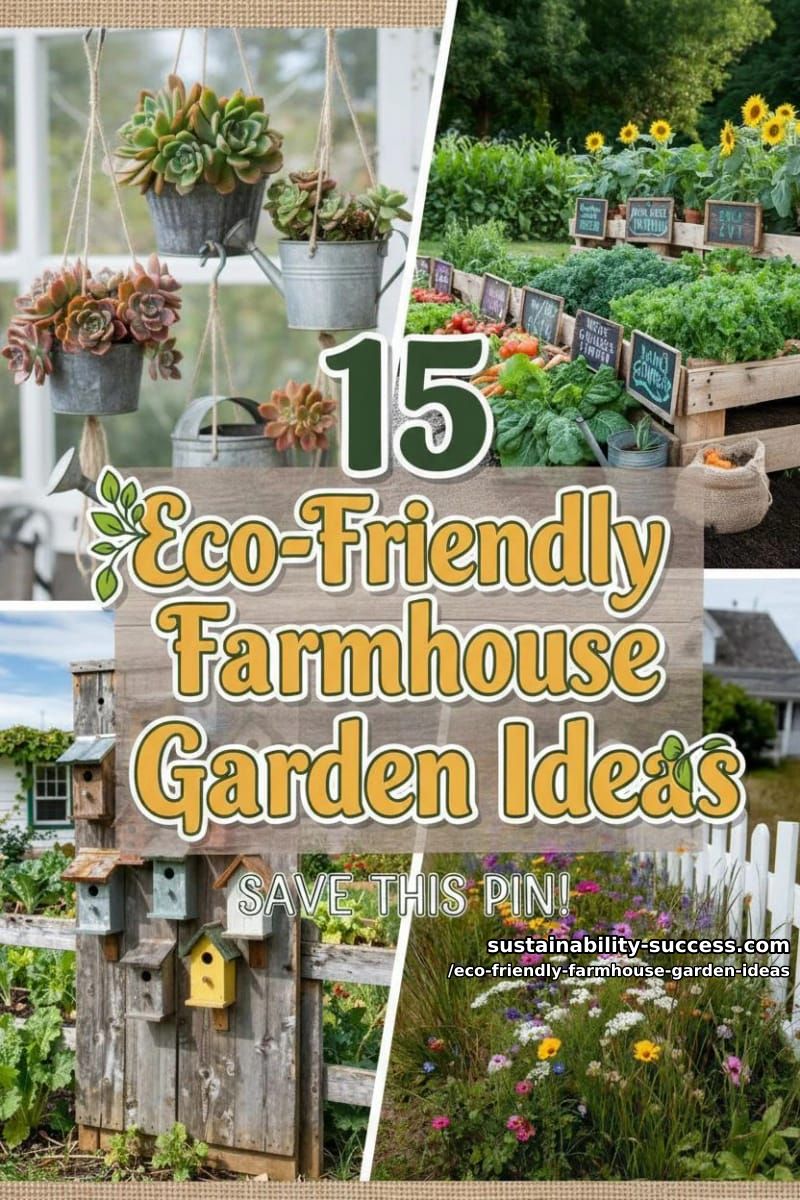
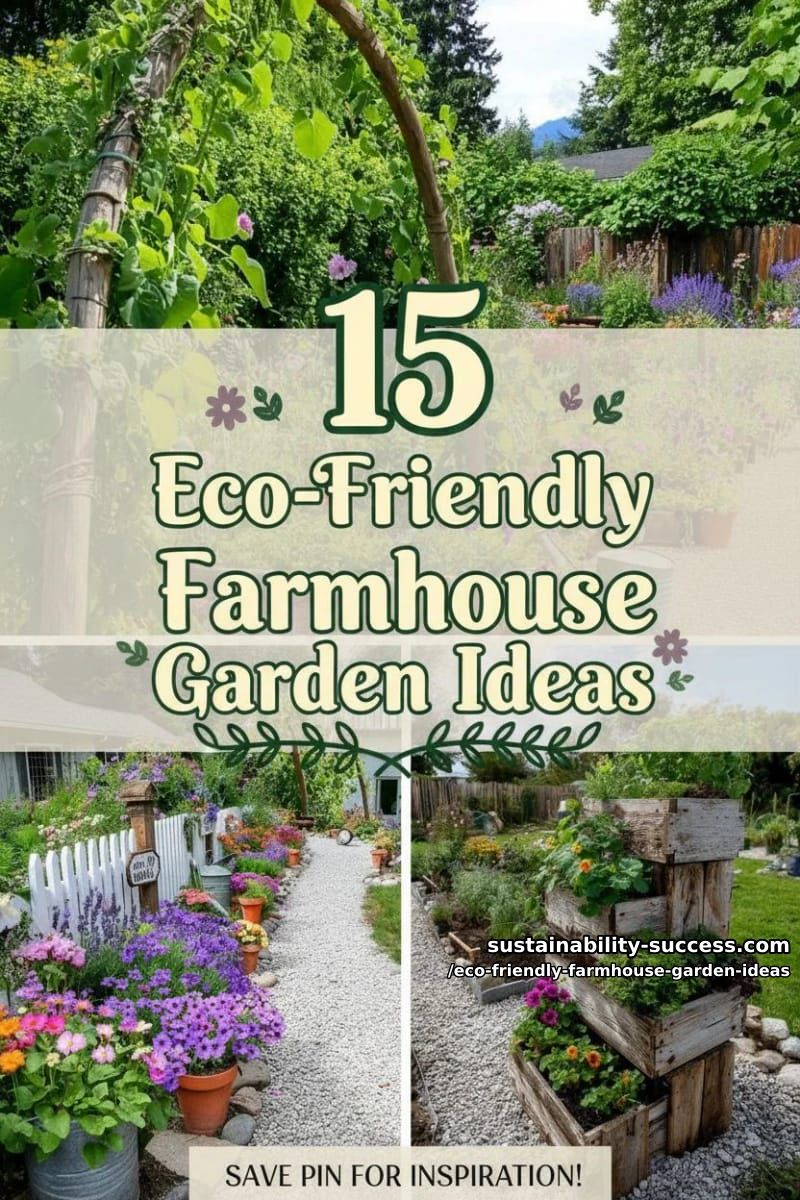
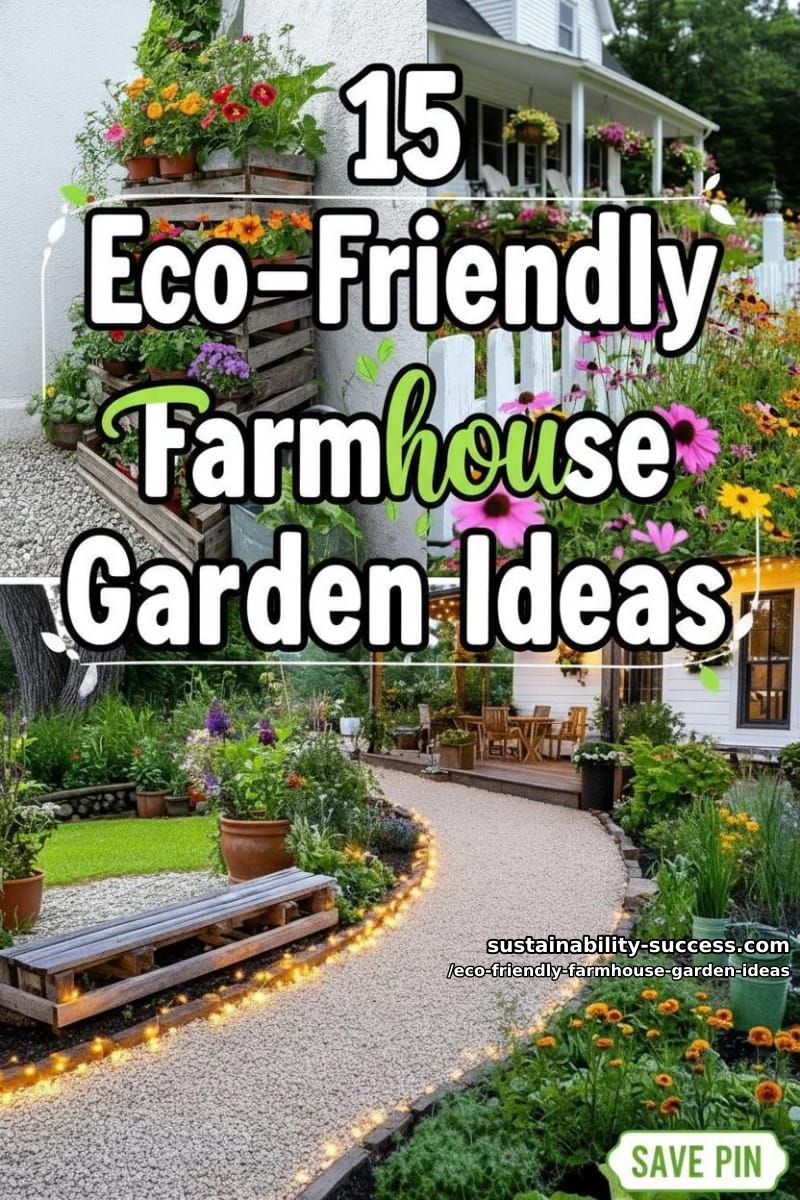
1. Repurposed wooden crate herb towers overflowing with edible flowers and greens
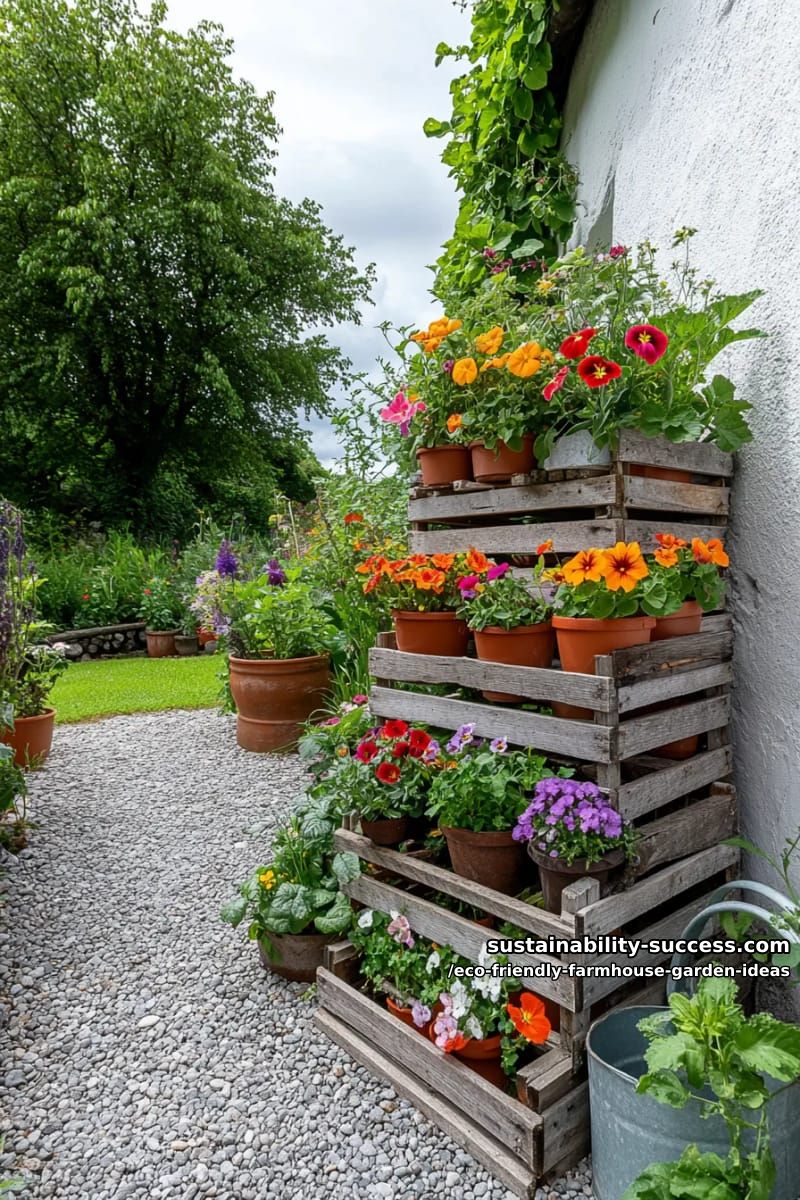
Old wooden crates, often forgotten in garages, can become charming herb towers. Stack them, add soil, and let edible flowers or leafy greens spill over the edges. This method saves money and waste.
You get fresh basil or nasturtiums in arm’s reach. Why buy plastic pots?
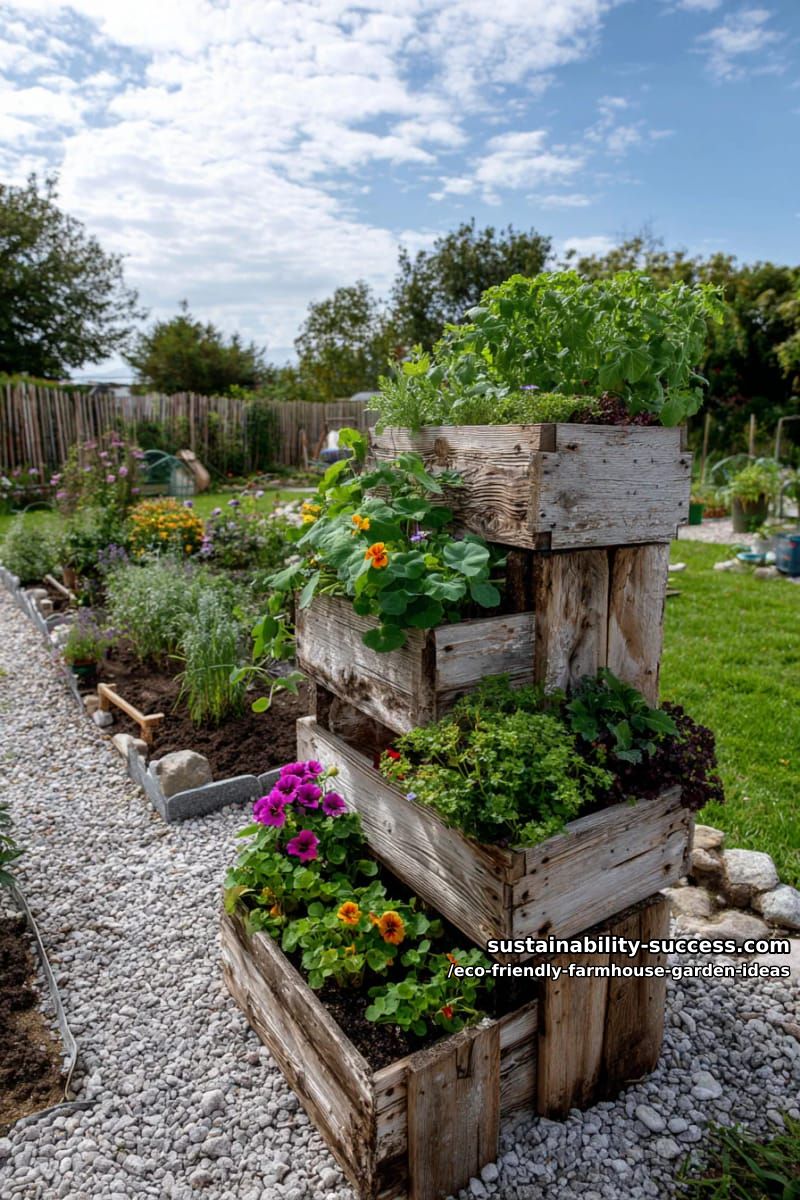
Maintenance is simple. Water from the top crate trickles down, feeding every layer. Just check drainage and rotate sun-loving plants.
Crates may break down over years, but that’s part of their charm, nature recycling itself. Who knew yesterday’s apple box could become tomorrow’s salad bar?
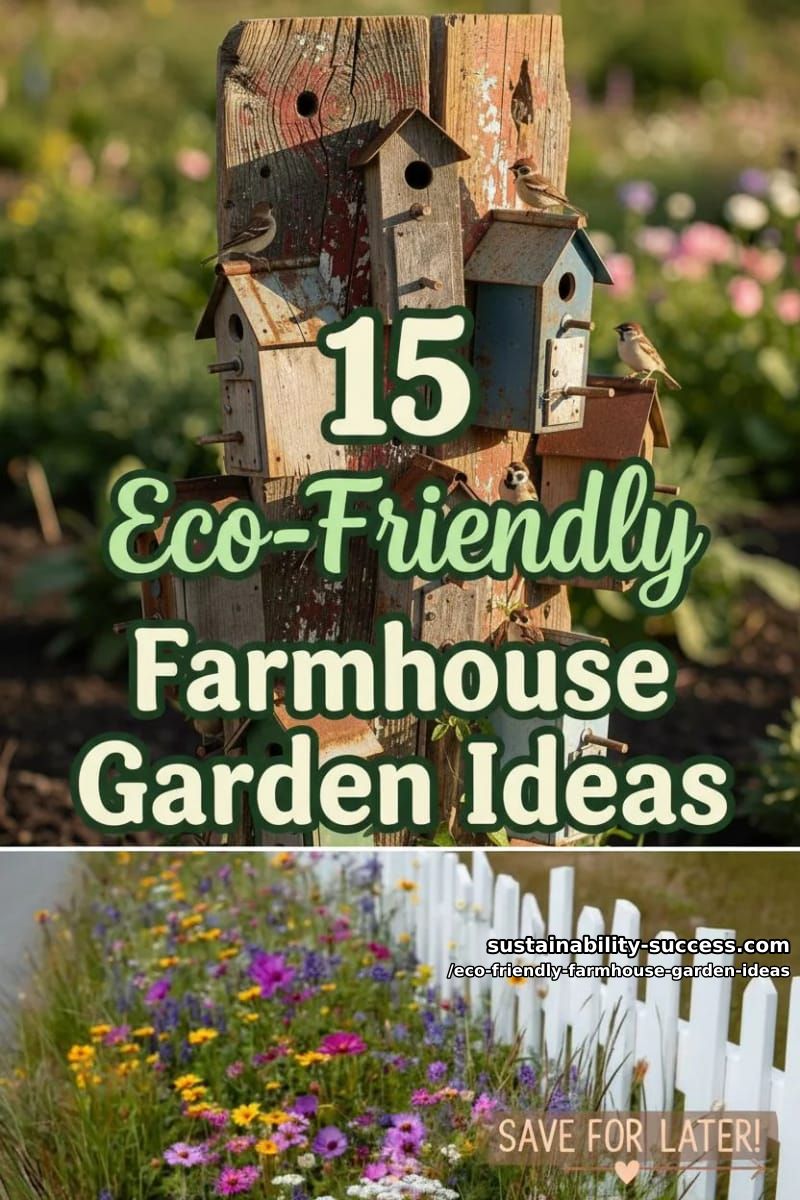
2. Wildflower meadow borders buzzing with native pollinators beside a classic white picket fence
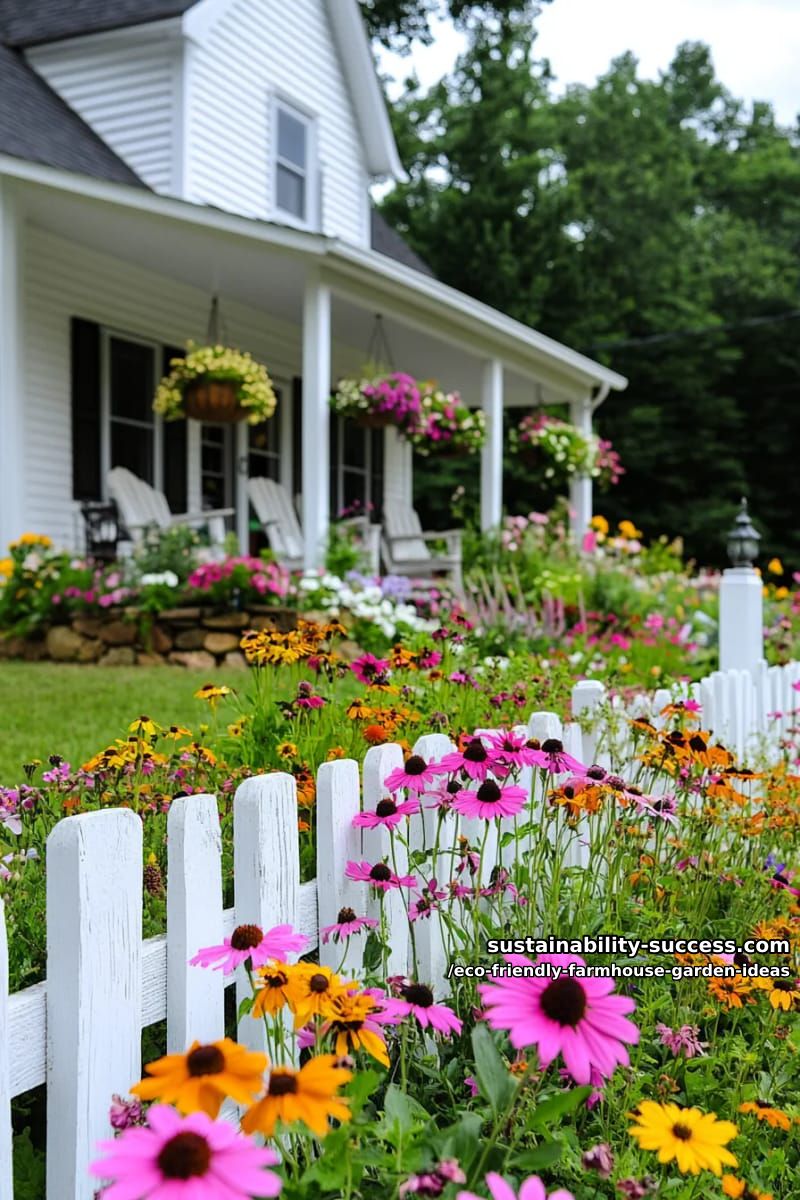
Imagine a wildflower meadow border spilling color and life along a classic white picket fence. These native blooms attract bees and butterflies, offering a haven for pollinators while reducing the need for chemicals.
Swap thirsty lawns for these borders and you’ll spend less time mowing and more time admiring nature’s handiwork.
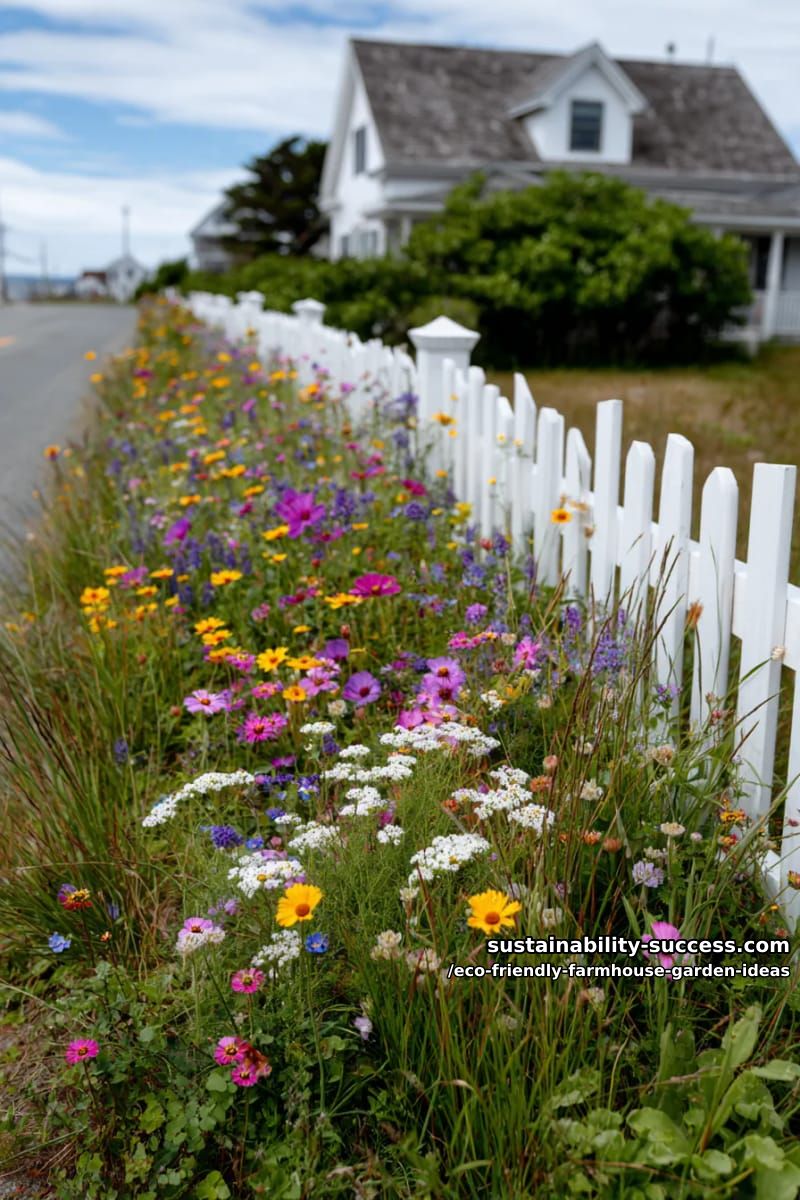
However, wildflower meadows can look unruly if not maintained. Some neighbors may even call them weeds. The trick? Mow paths or define edges for a tidy contrast.
This simple step keeps the look intentional, blending traditional charm with wildlife-friendly gardening. Why settle for plain when your fence can buzz with purpose?
3. Upcycled birdhouse village mounted on reclaimed barnwood for organic pest control
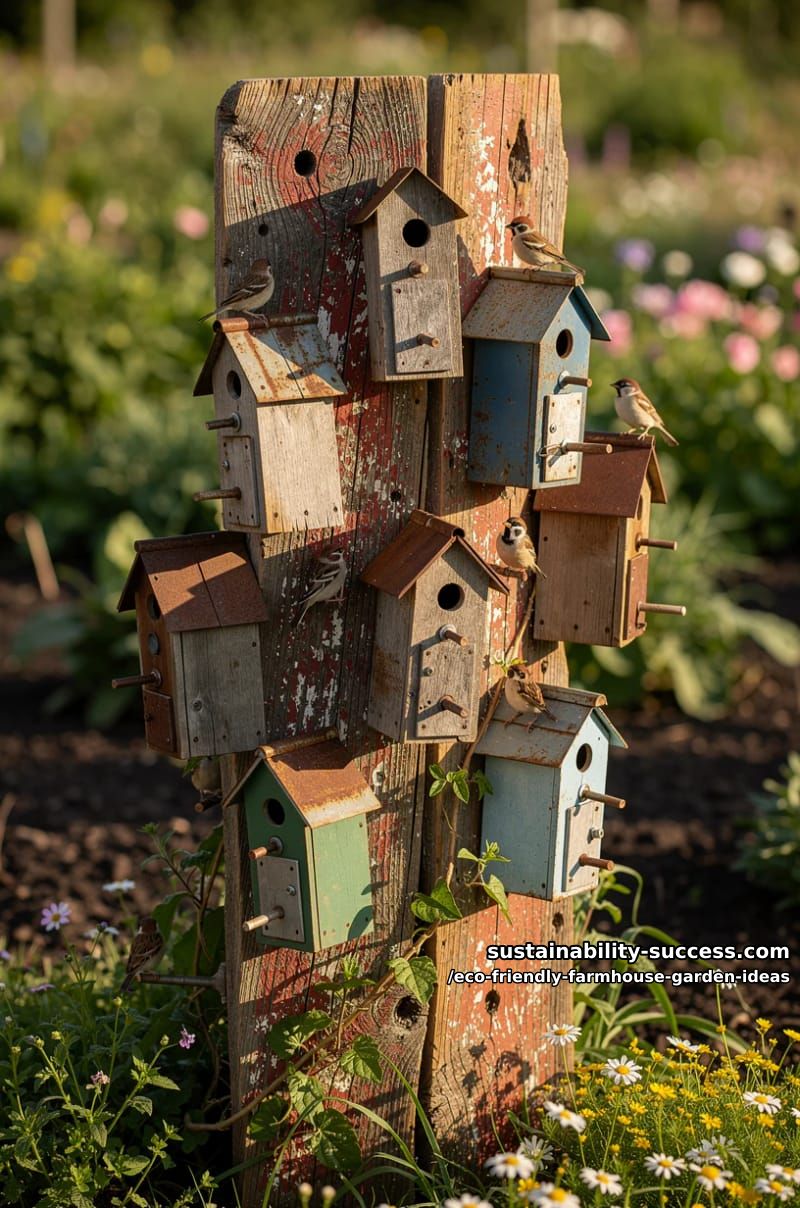
Old barnwood can become a backdrop for a quirky birdhouse village. Each birdhouse invites wrens, bluebirds, or chickadees, nature’s pest managers. Forget chemical sprays.
Birds will happily snack on caterpillars and beetles, keeping your vegetables safer. Plus, this project reuses materials that might otherwise go to waste.
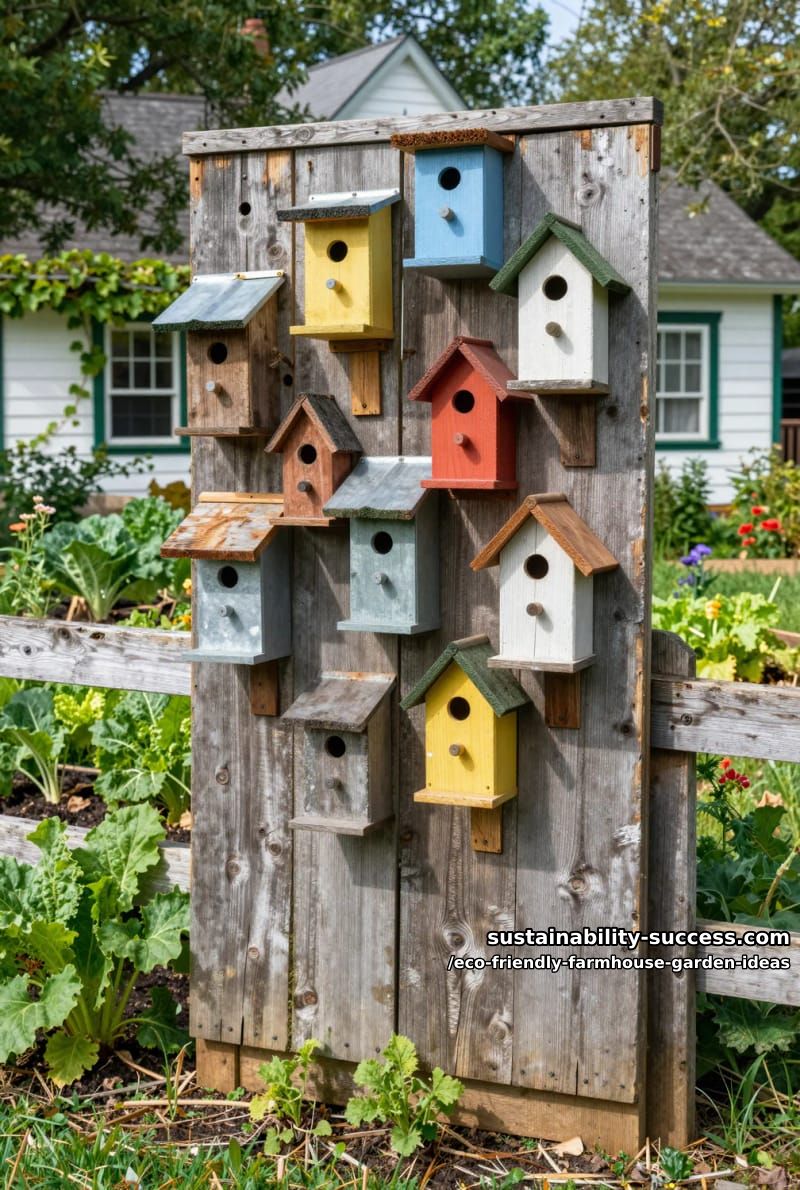
While building your village, remember that not all birds help with pests. Sparrows, for example, may outcompete helpful species. Choose birdhouse sizes and entrance holes that attract the right birds.
Place the village away from busy areas to avoid stressing your feathered helpers. This project combines charm, function, and sustainability.
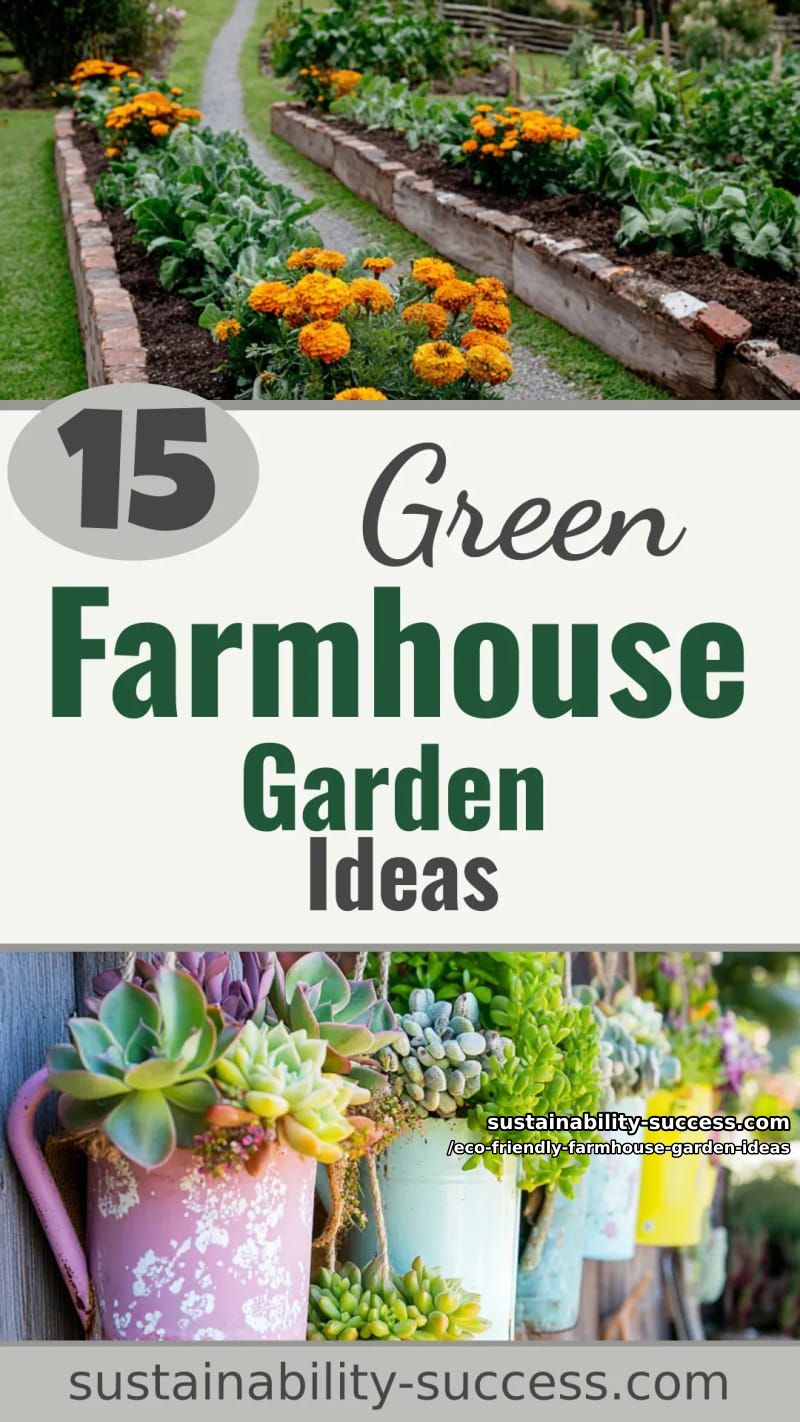
4. Symmetrical raised beds edged with reclaimed brick and vibrant marigold plantings
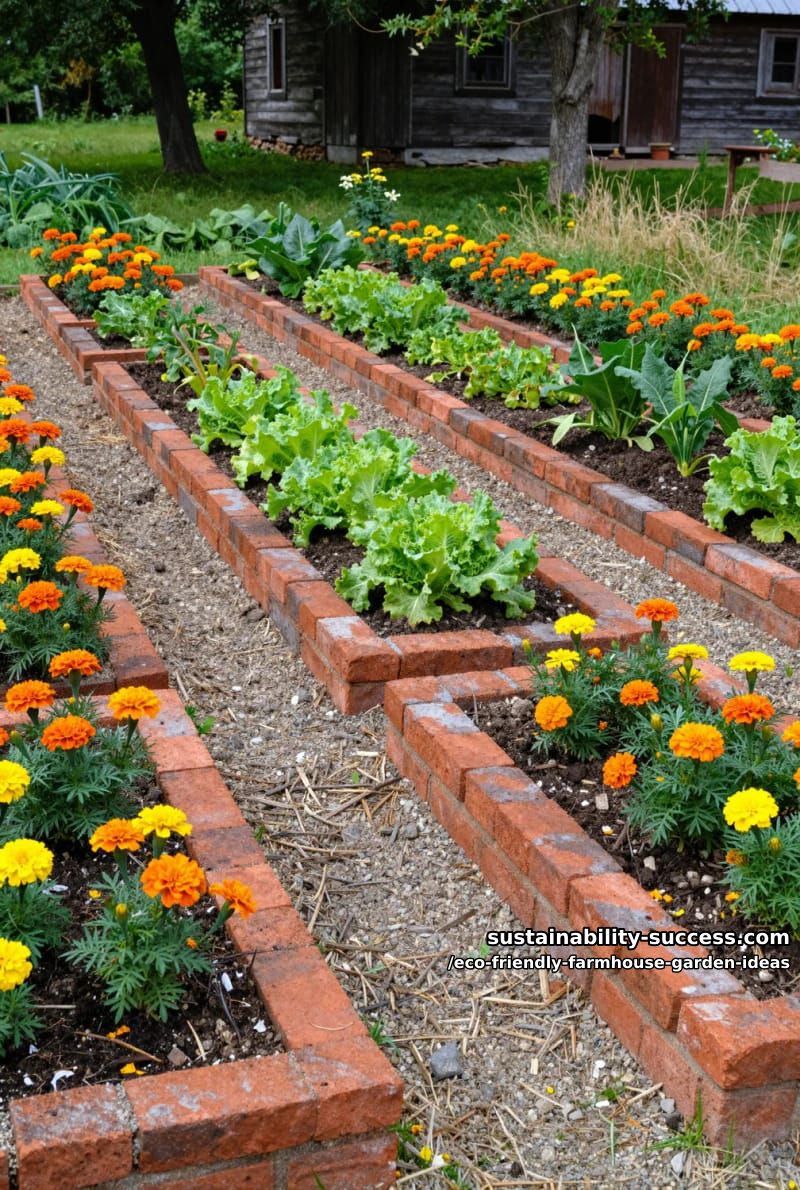
Symmetrical raised beds edged with reclaimed brick make your garden look neat and organized while also cutting waste.
Why buy new materials when old bricks add charm and history? These beds help you manage soil quality and water use. Even a small backyard can feel balanced and intentional.
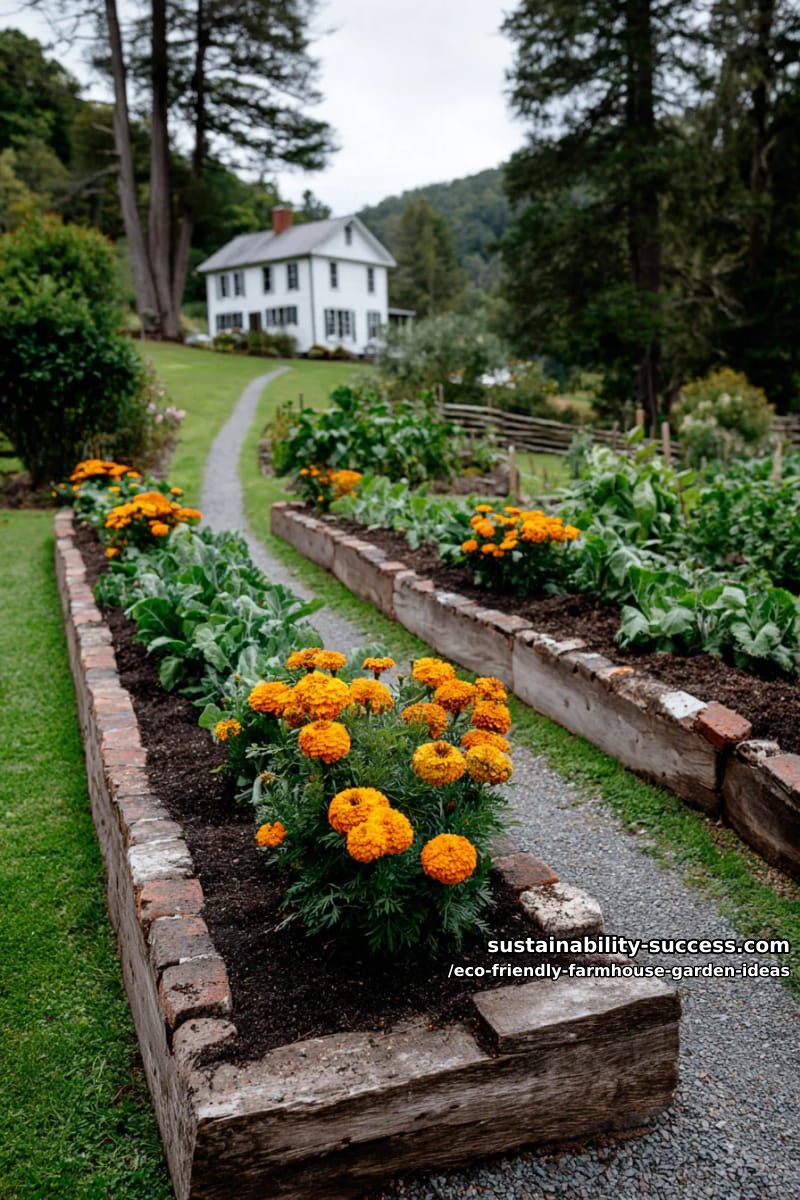
Adding vibrant marigolds along the edges offers more than bright color. Marigolds repel pests like aphids, keeping your veggies safe without chemicals. They’re easy to grow, thrive in many climates, and attract pollinators.
Who knew something so simple could pull double duty, beautifying and protecting your crops?
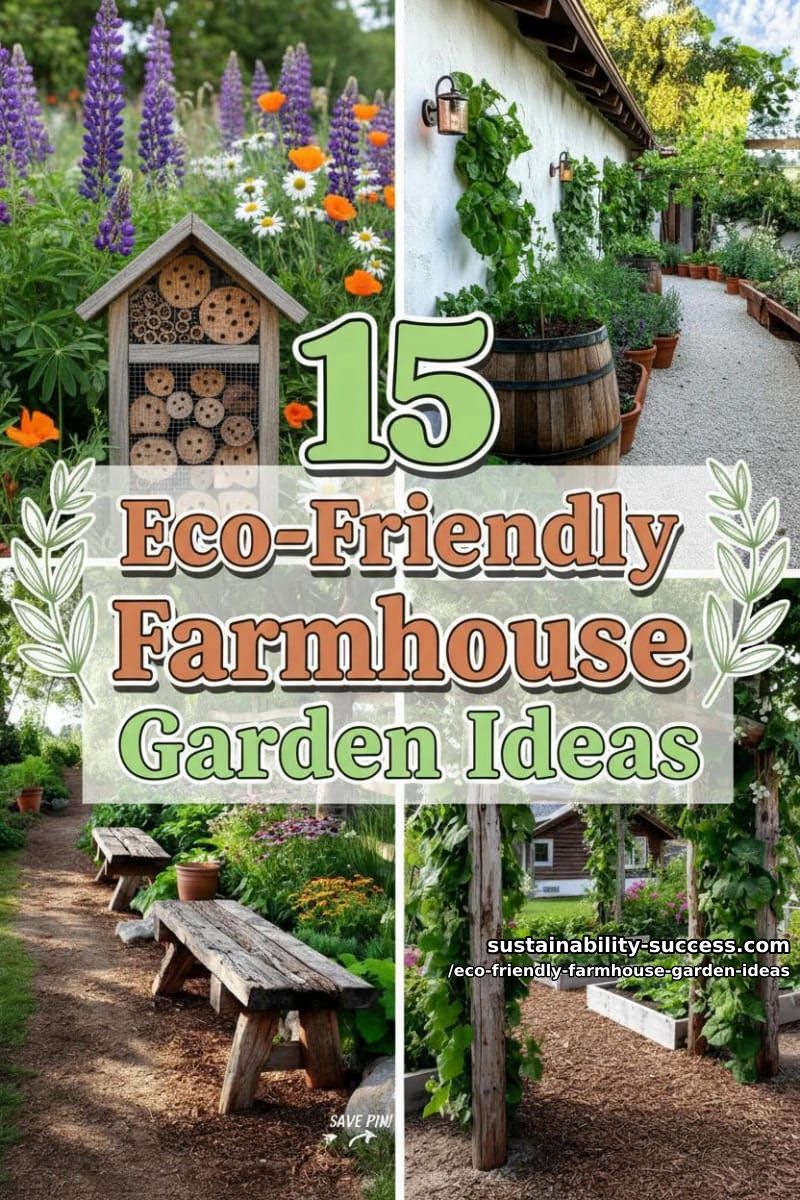
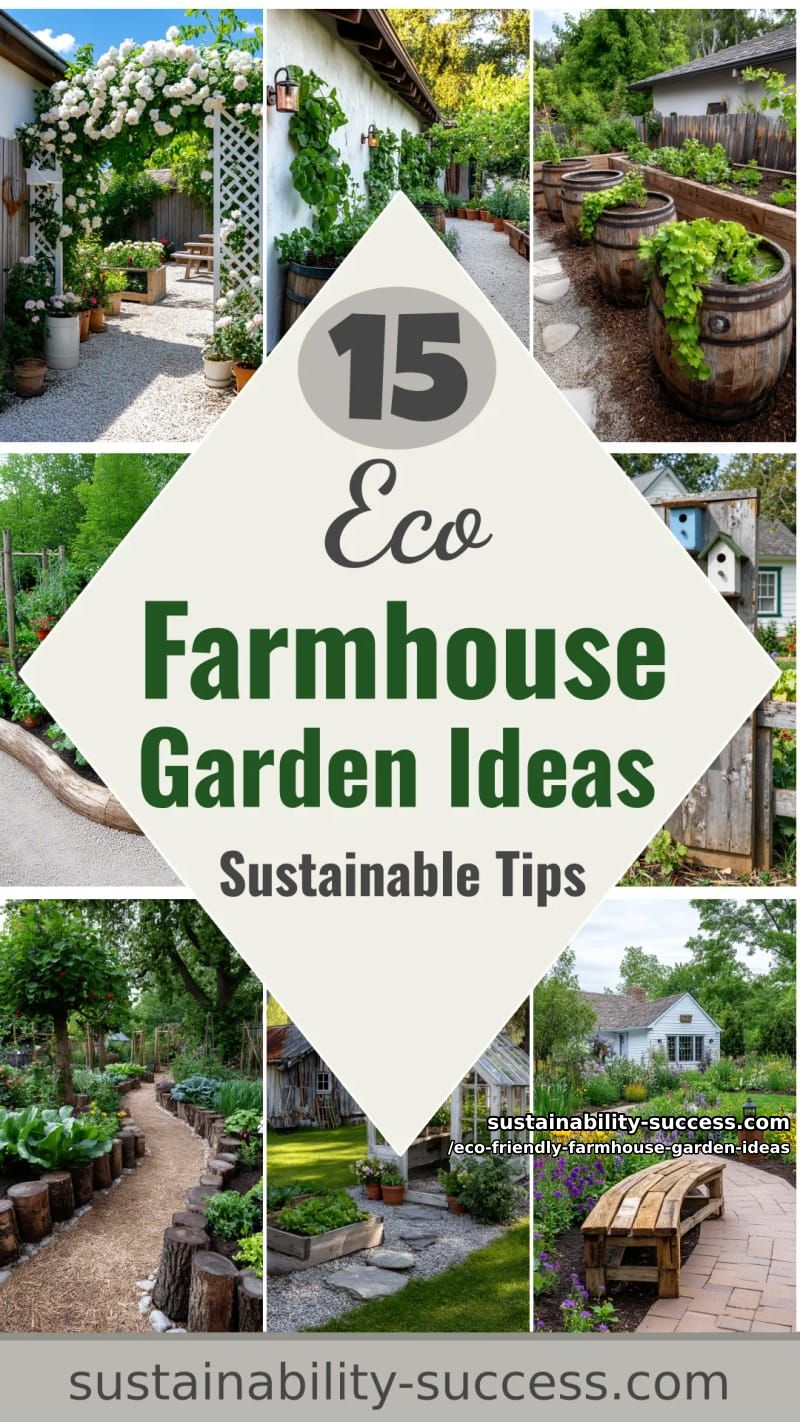
5. Rainwater-collecting barrels with cascading vines and sustainable watering solutions
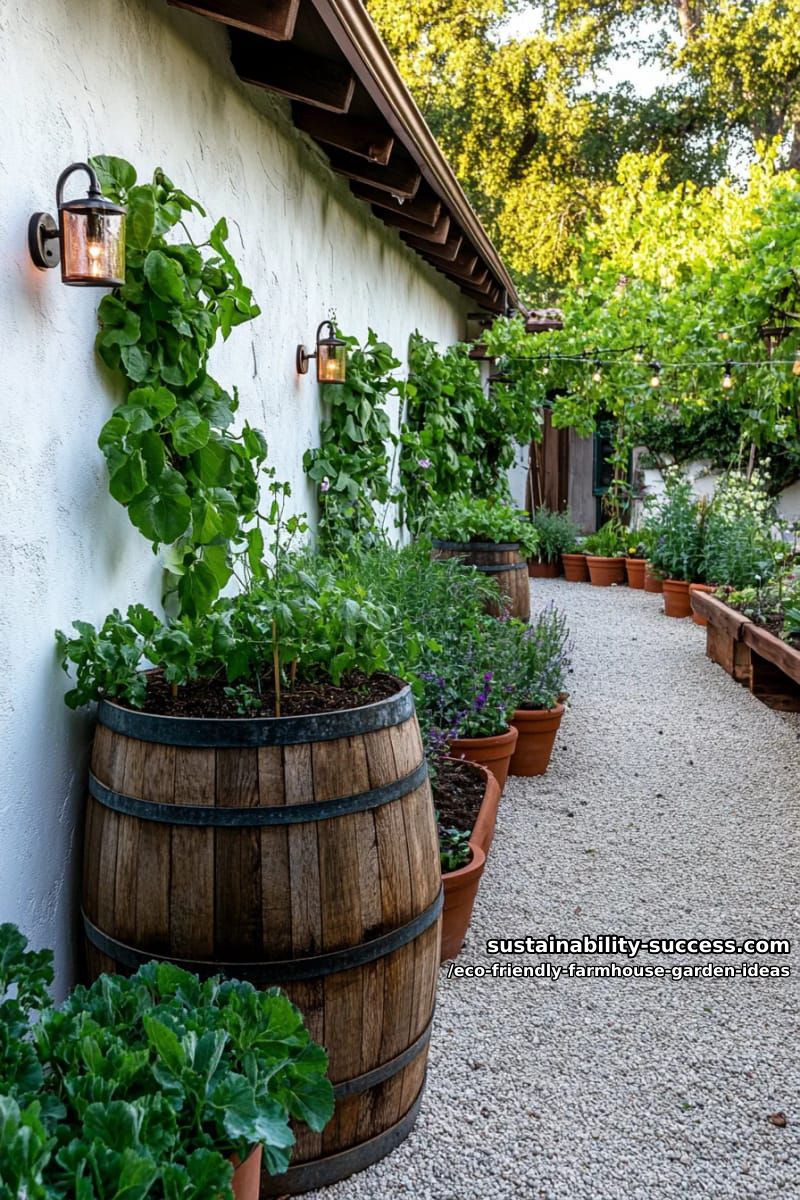
Rainwater barrels aren’t just practical, they double as living art when you add cascading vines like sweet potato or nasturtium. These plants soften the look, attract pollinators, and help shade the barrel, reducing algae.
You get a conversation starter and free water for your tomatoes. Why waste a single drop?
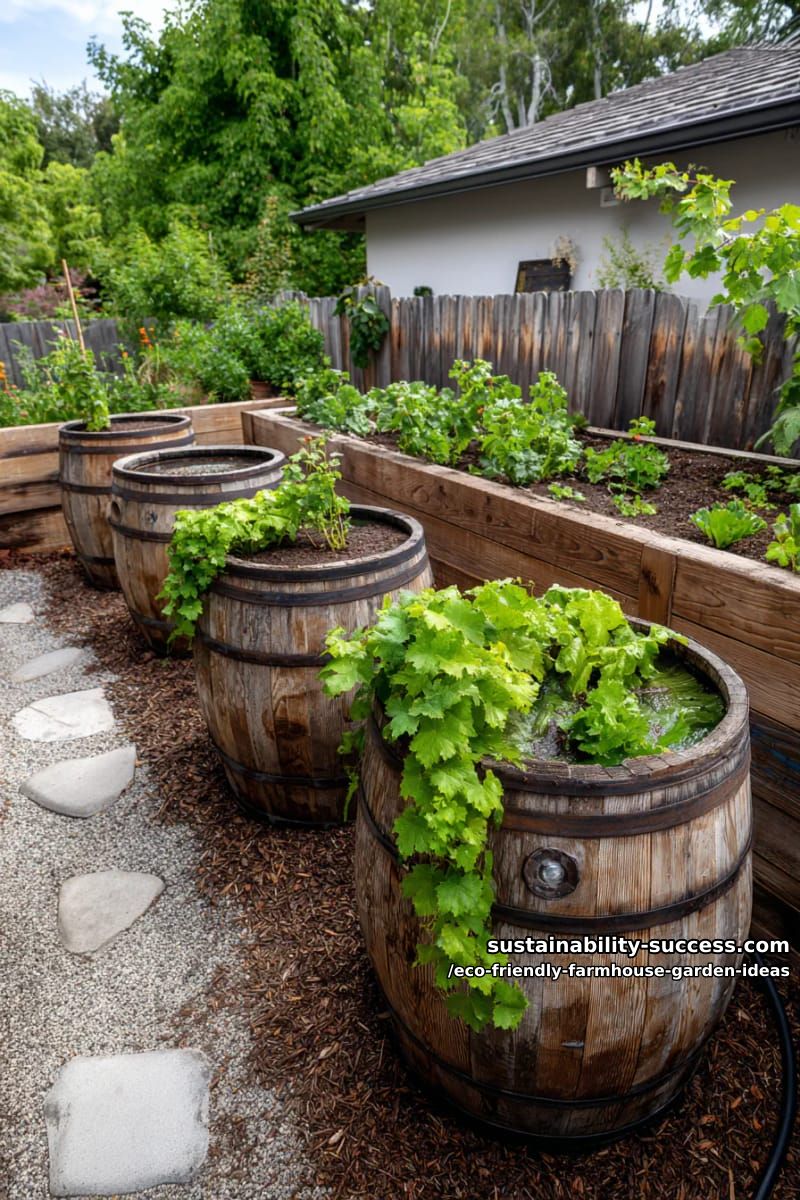
Sustainable watering doesn’t need gadgets. Try drip hoses from recycled materials or mulch-heavy beds to keep moisture where plants need it. Think of this as gardening with a conscience.
Who says eco-friendly can’t be easy and pretty? Your garden, your rules, just with less guilt and a bit more green.
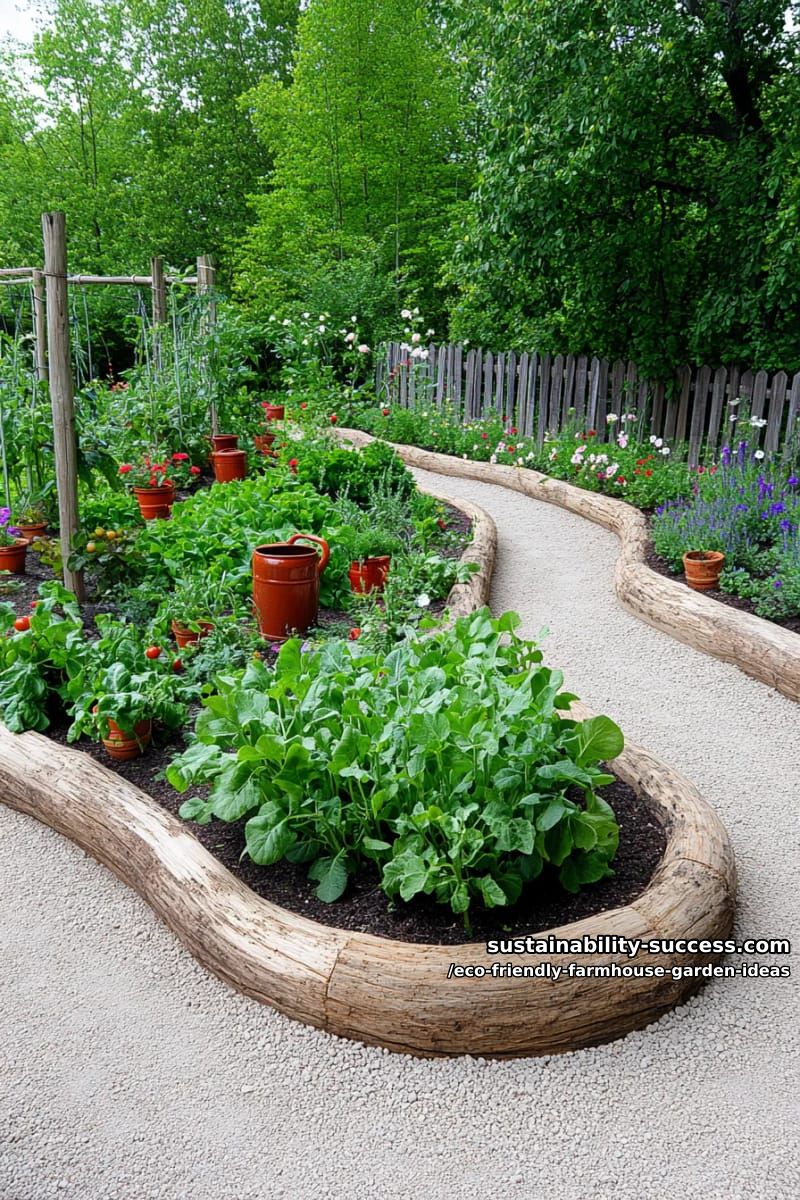
6. Rustic log-edged vegetable beds winding through a cottage-style garden path
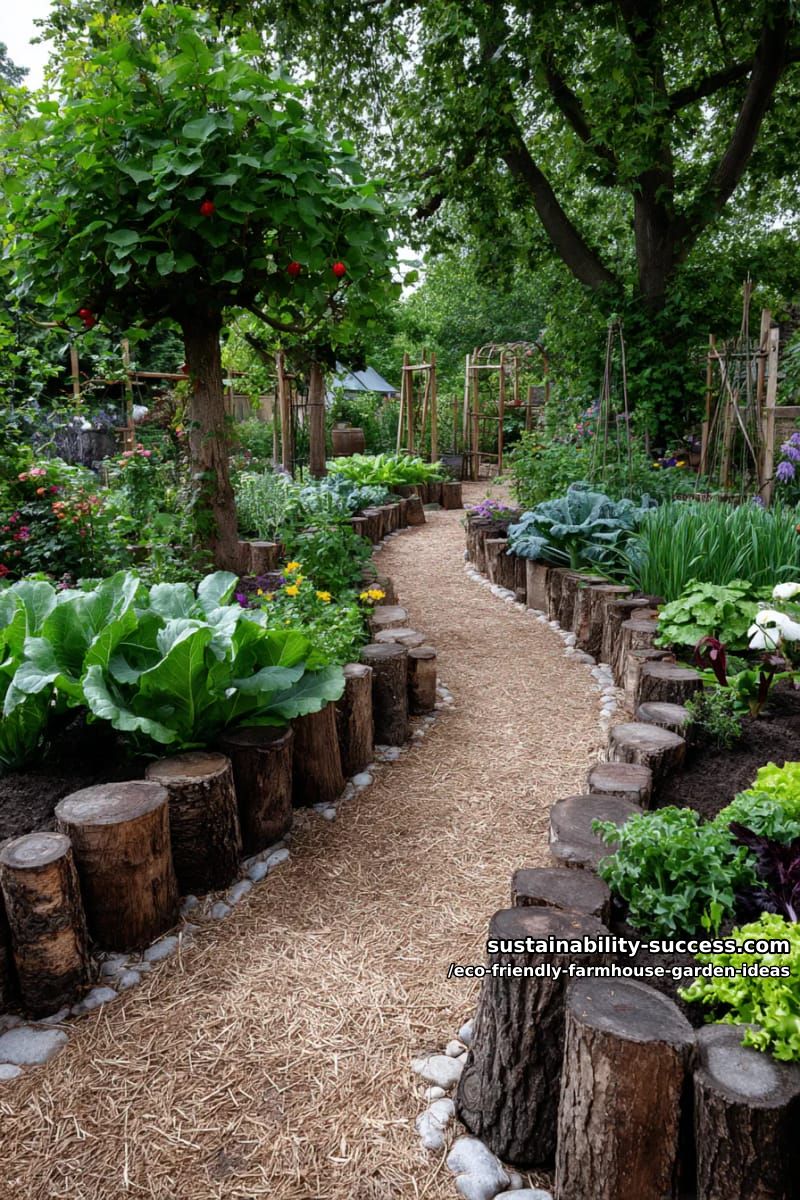
Old fence posts and salvaged logs can outline vegetable beds with real character. These natural borders blend right into a cottage garden, guiding your eye along winding paths.
Does it get more inviting? Plus, they keep soil in check and break down into nutrients over time, practical and charming.
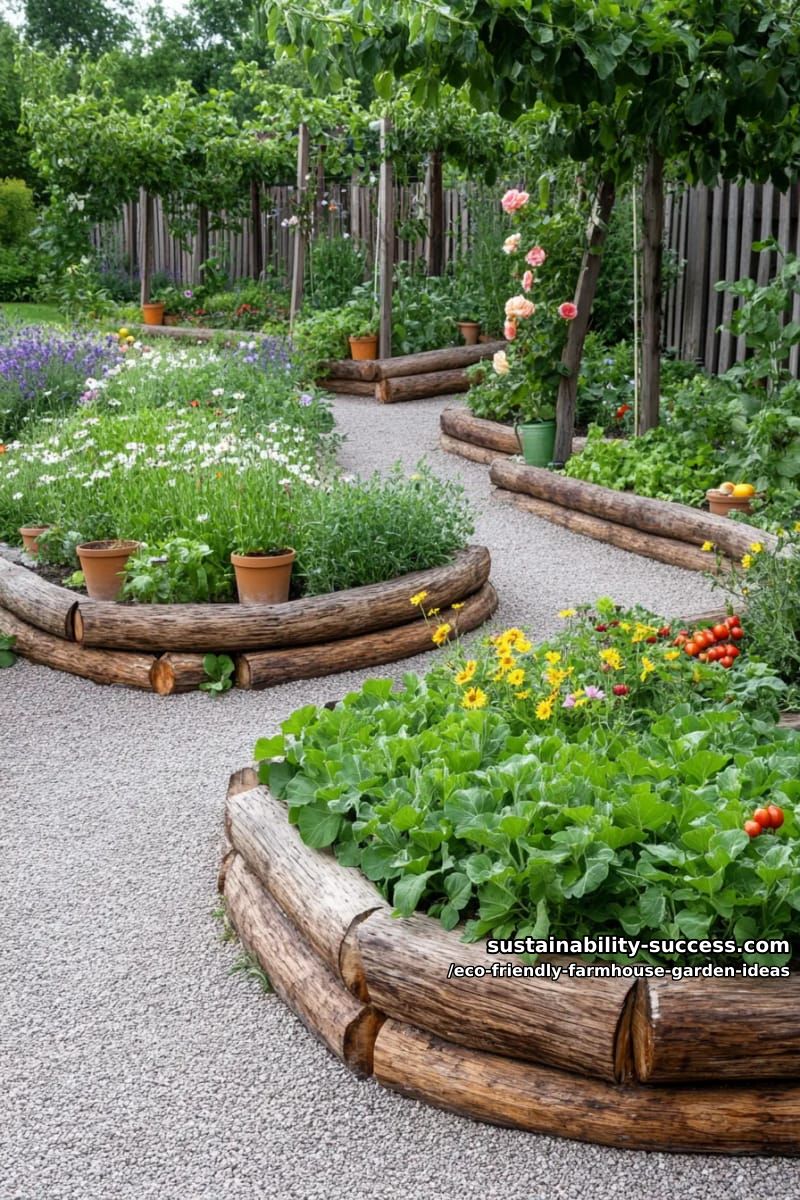
But, let’s be honest, logs won’t last forever. They’ll need replacing every few years as they decay. If you’re okay with occasional maintenance, you’ll gain a garden that feels homey, eco-friendly, and refreshingly unpolished.
Isn’t that the charm of true cottage style?
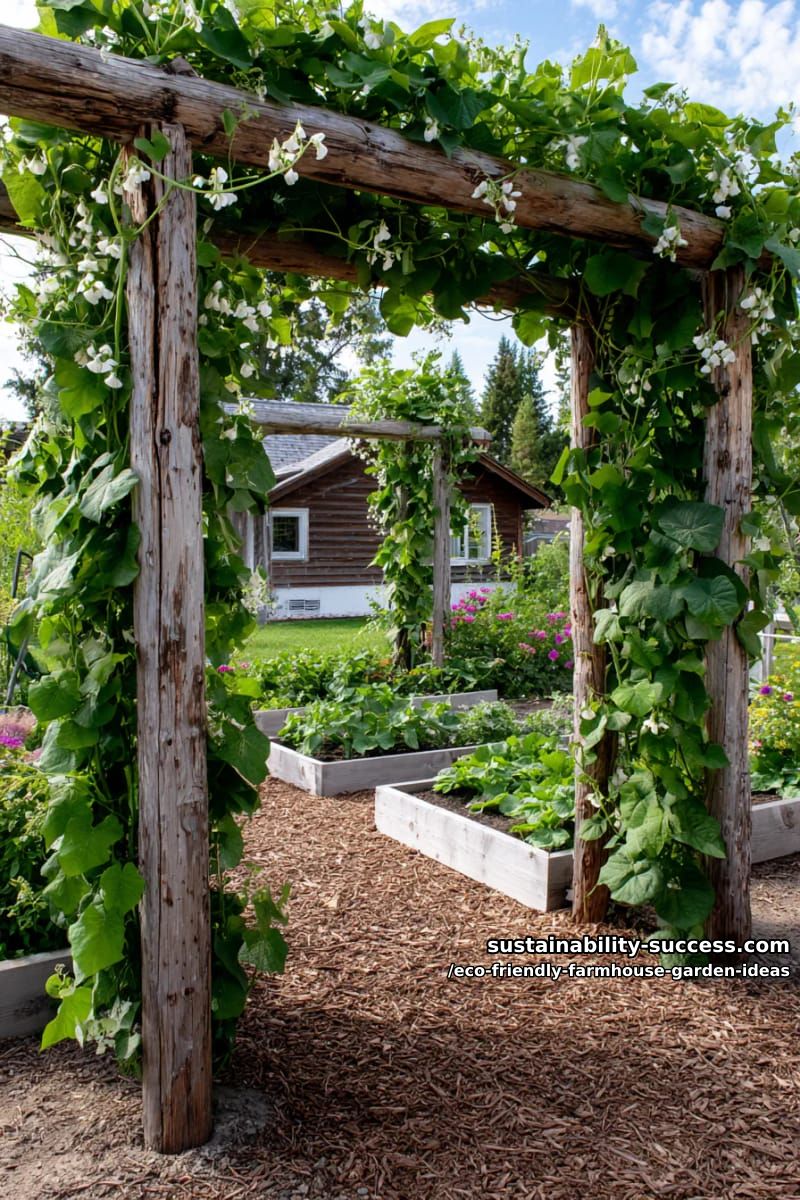
7. Trellis archways covered in climbing beans and sweet peas made from salvaged wood
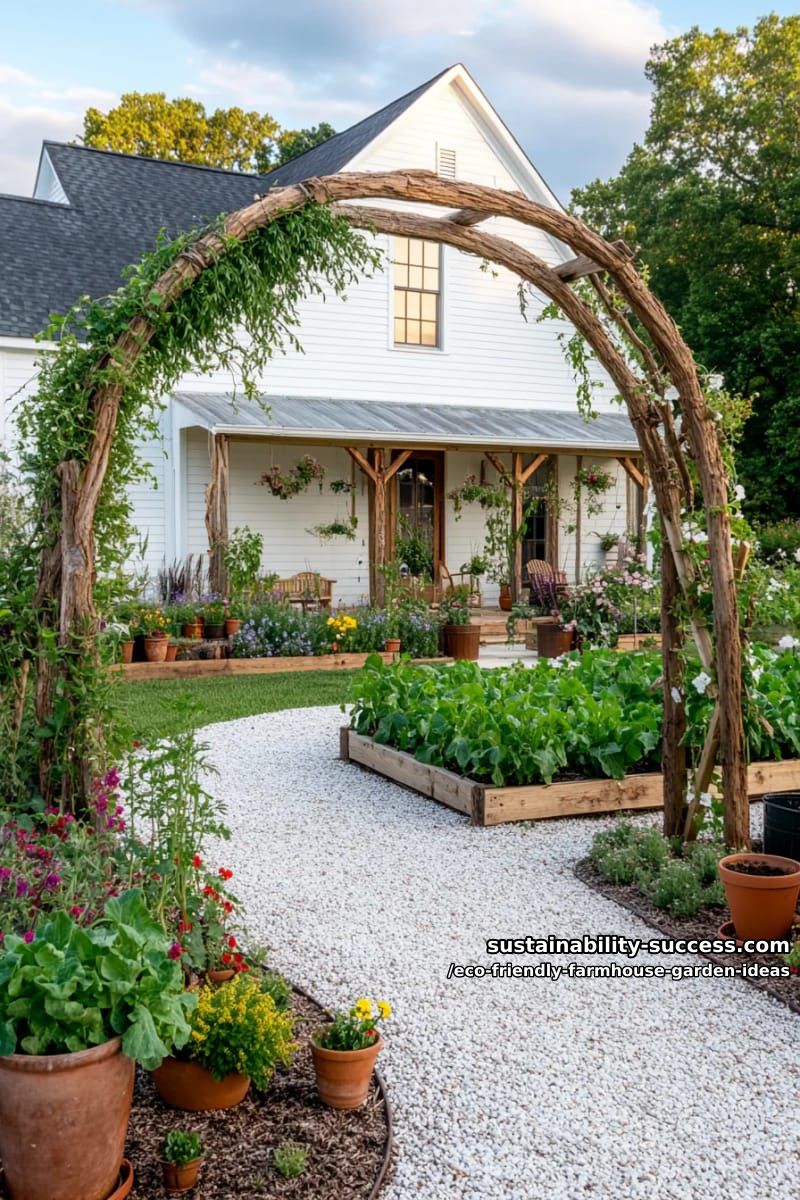
Old fence posts or leftover lumber can become the backbone for trellis archways. Topped with lush climbing beans and sweet peas, these structures give your garden a burst of color and food.
Salvaging wood keeps costs low and waste out of landfills, a classic win-win for both gardeners and the planet.
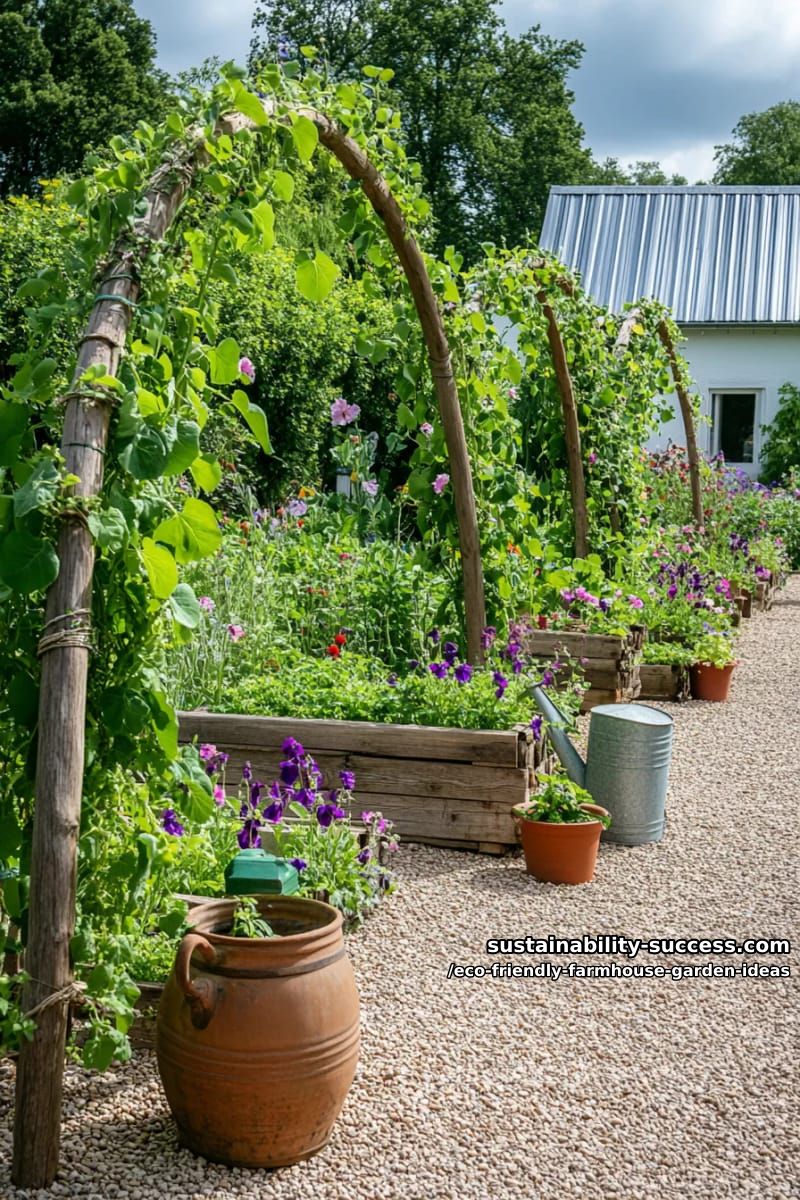
You don’t need fancy carpentry skills. Secure the wood with screws, add some wire for extra support, and let nature do the rest. Expect bees and butterflies to swing by, boosting pollination.
Just remember, salvaged wood may not last forever, but replacing parts is easy and guilt-free.
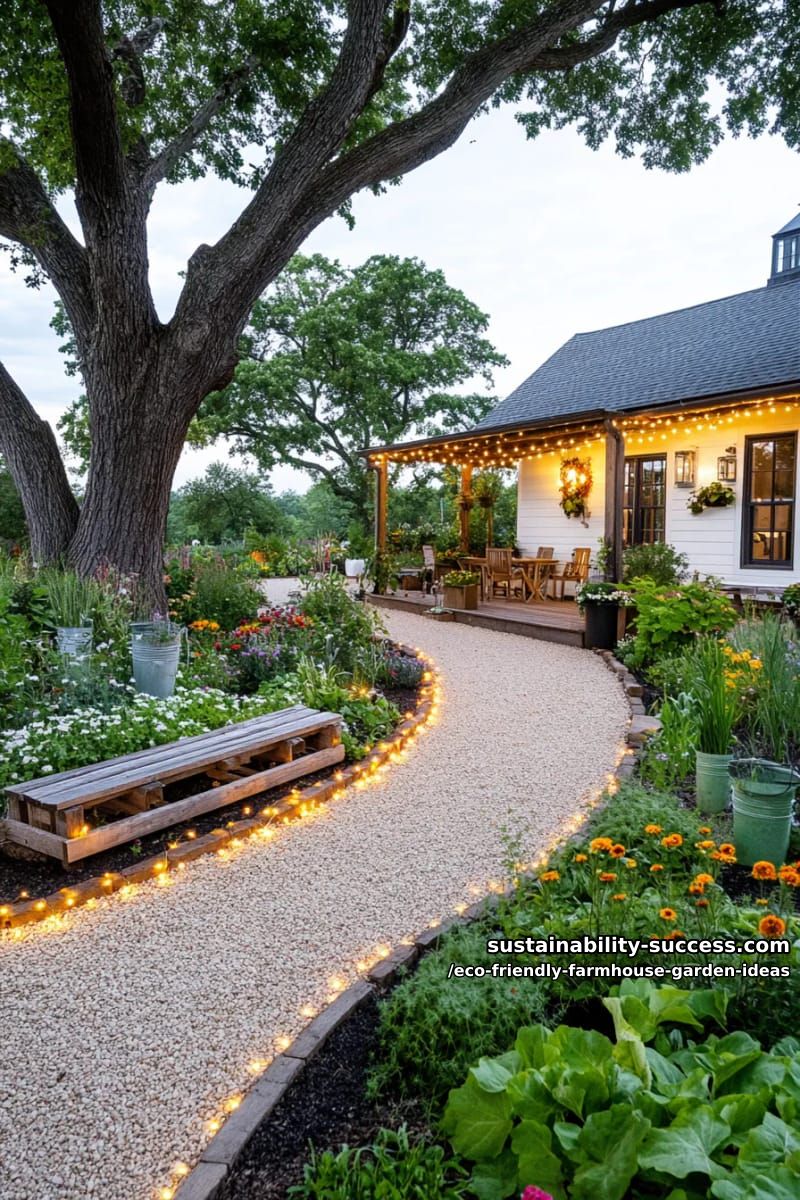
8. Solar-powered fairy lights woven through pathways for magical nighttime garden strolls
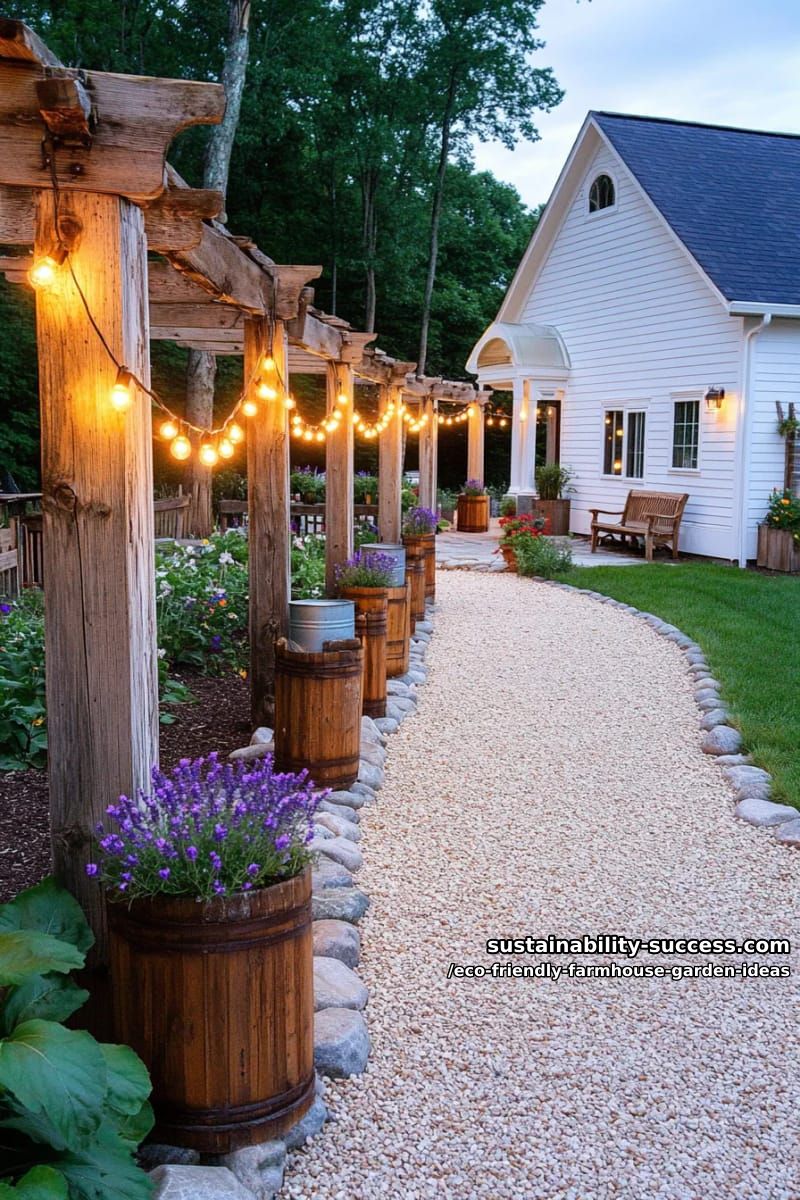
Solar-powered fairy lights bring charm to any farmhouse garden. Imagine evening walks under twinkling lights, powered by the sun, no extra electricity bills, no guilt.
It’s simple: set up the lights during the day, let them soak up energy, and enjoy an enchanting glow after sunset. Even cloudy days often provide enough power.
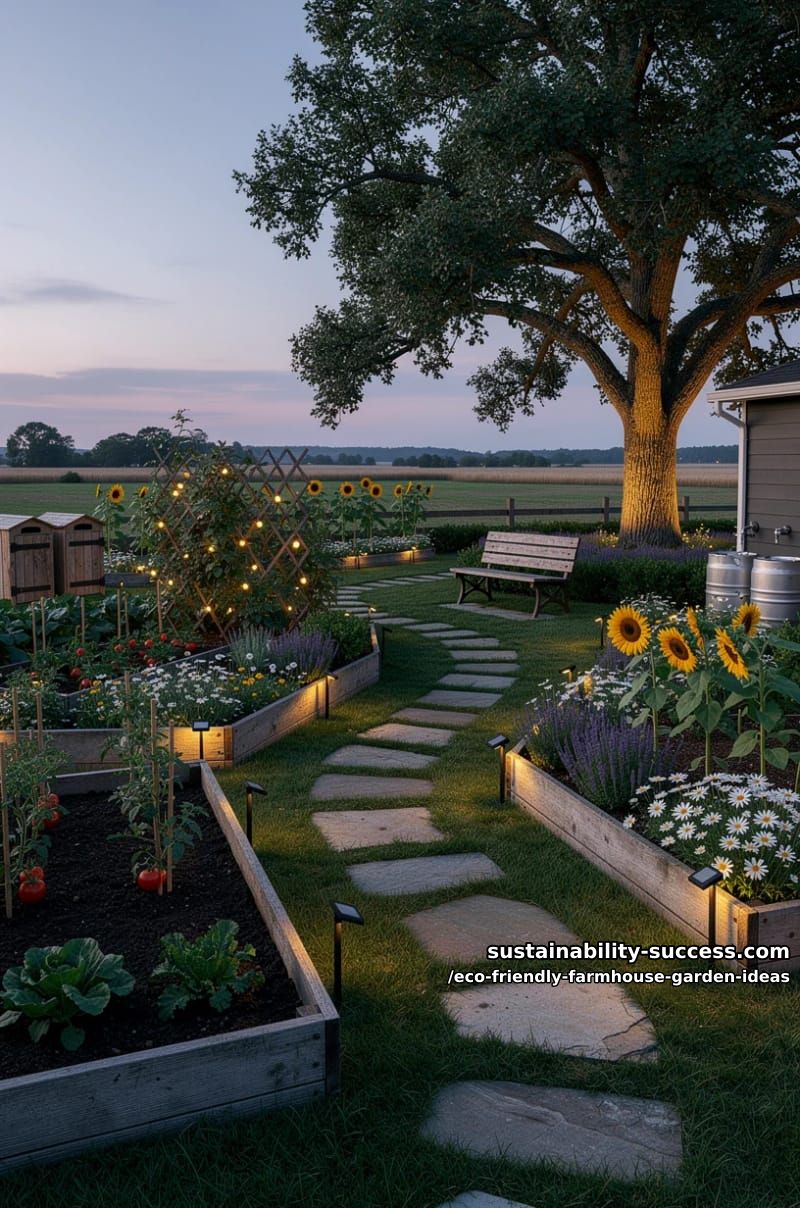
On the flip side, solar lights can fade if panels aren’t placed in direct sunlight. Placement matters. Check for shade from trees or buildings.
Want extra sparkle? Try stringing lights around benches or gates. These small steps create a dreamy, eco-friendly retreat without much fuss or waste.
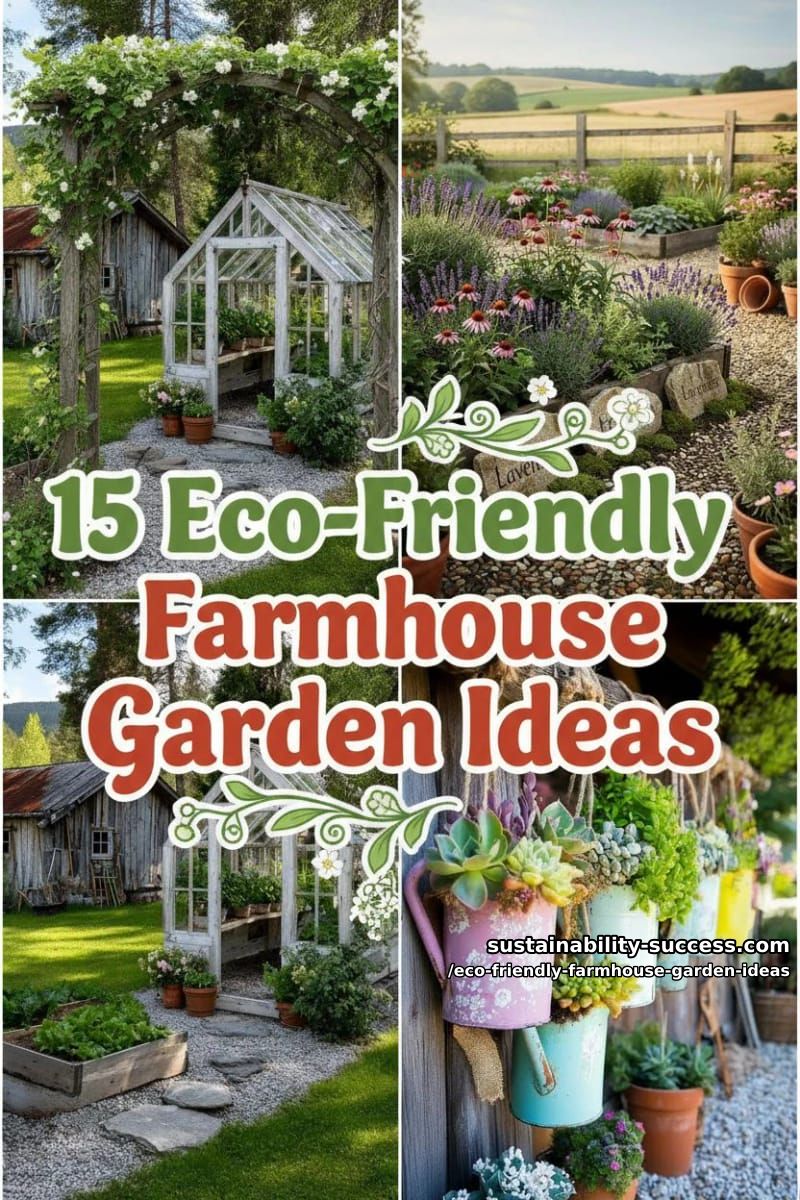
9. Eco-friendly greenhouse built with repurposed windows beside a vintage farmhouse shed
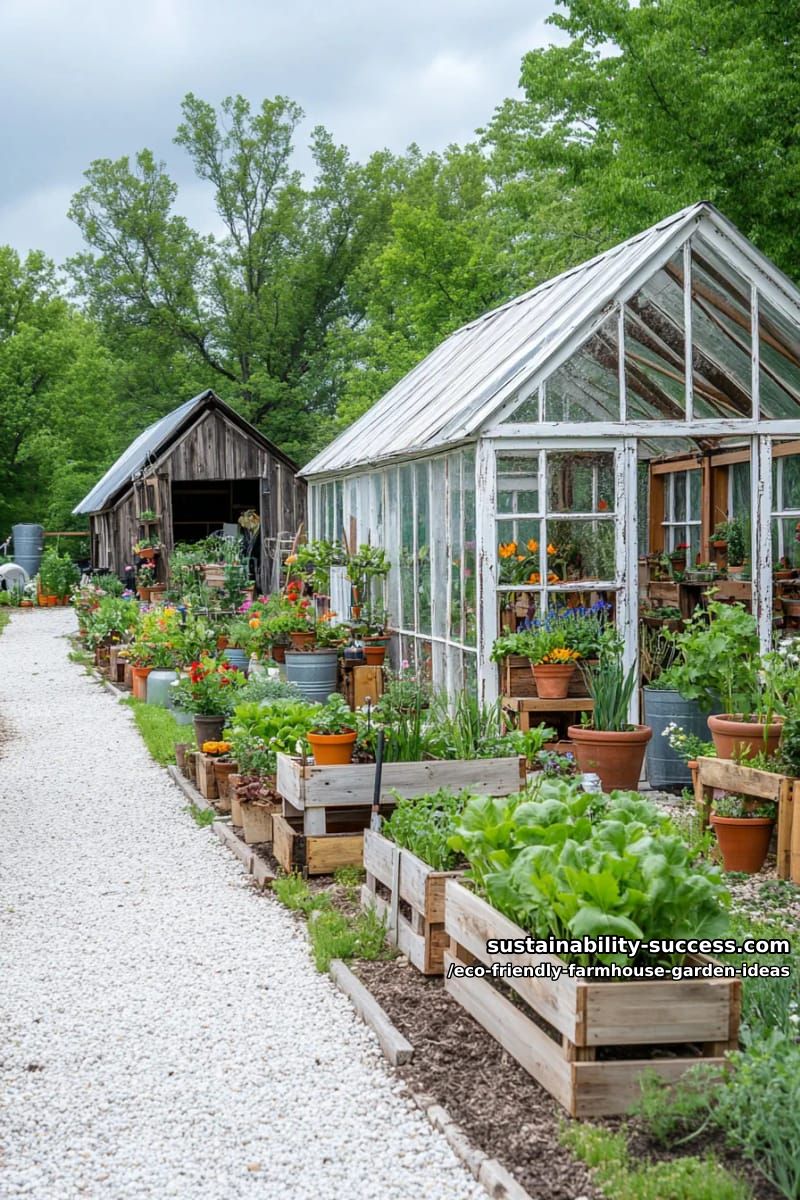
Old windows don’t belong in the landfill, they belong in your backyard. Building a greenhouse from repurposed windows not only saves money but also reduces waste.
It keeps your plants cozy and adds quirky charm beside a vintage farmhouse shed. Who knew sustainability could look this inviting?
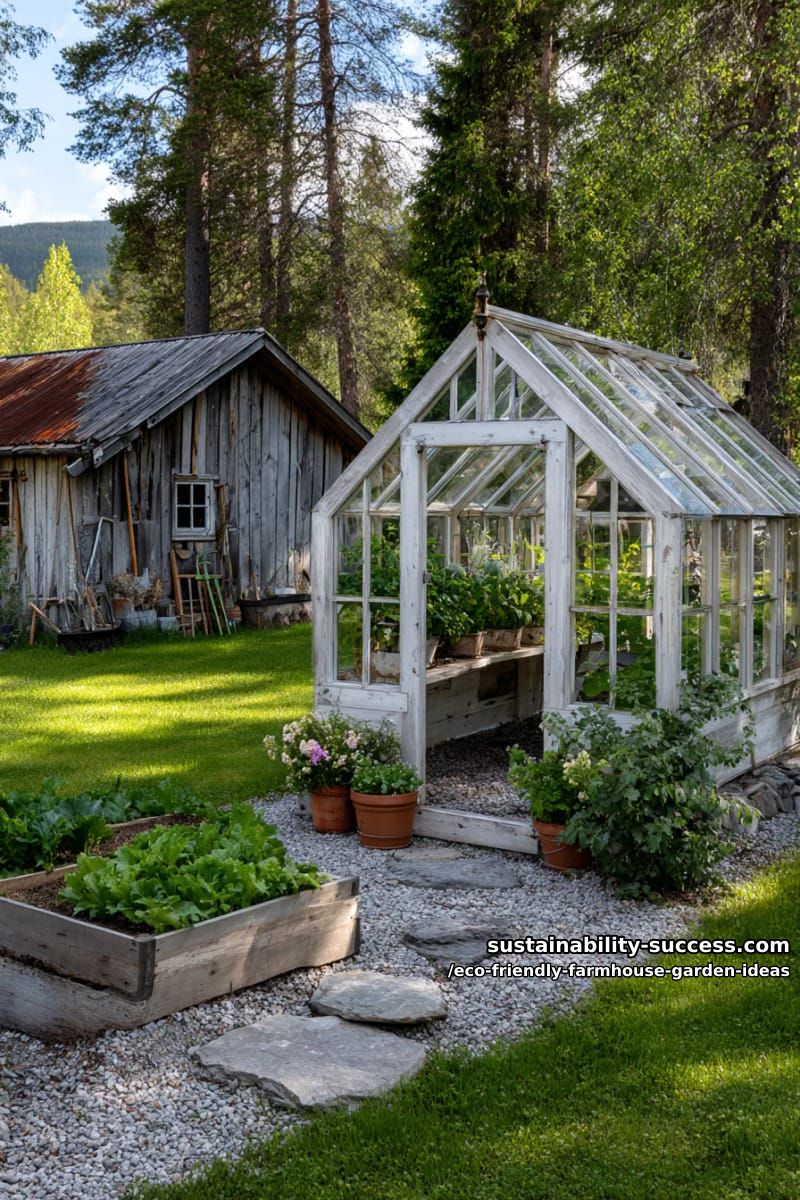
Rainwater collection barrels and solar-powered fans make the setup even greener. Some old windows might not be airtight, which can lead to heat loss in chilly months, but layering with weather-stripping helps.
This approach combines practical gardening with a bit of old-school character, all while giving forgotten materials a second life.
10. Garden benches crafted from weathered pallets surrounded by sustainable perennial borders
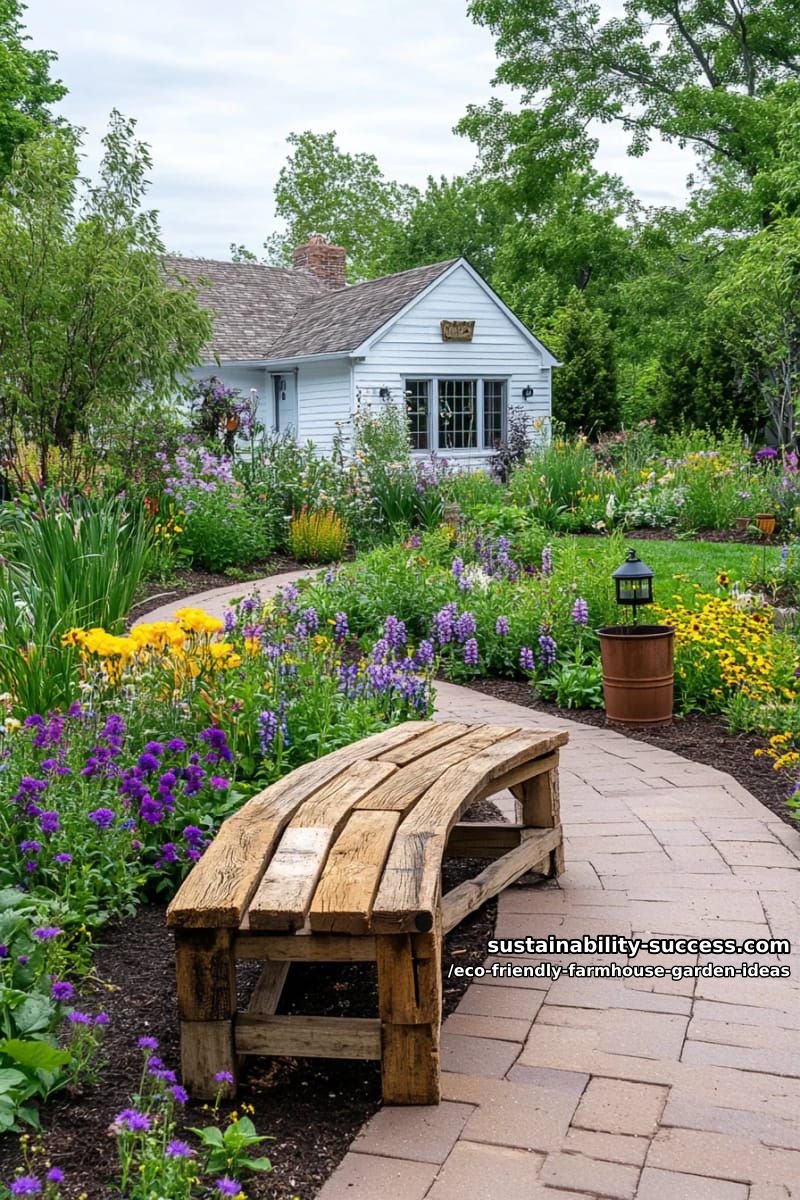
Placing garden benches made from weathered pallets gives your outdoor space a rustic charm and a clear eco-friendly message.
Why buy new when old pallets can become inviting seating? Pair these benches with perennial borders, think lavender, salvia, or echinacea, for color that returns each year without extra planting.
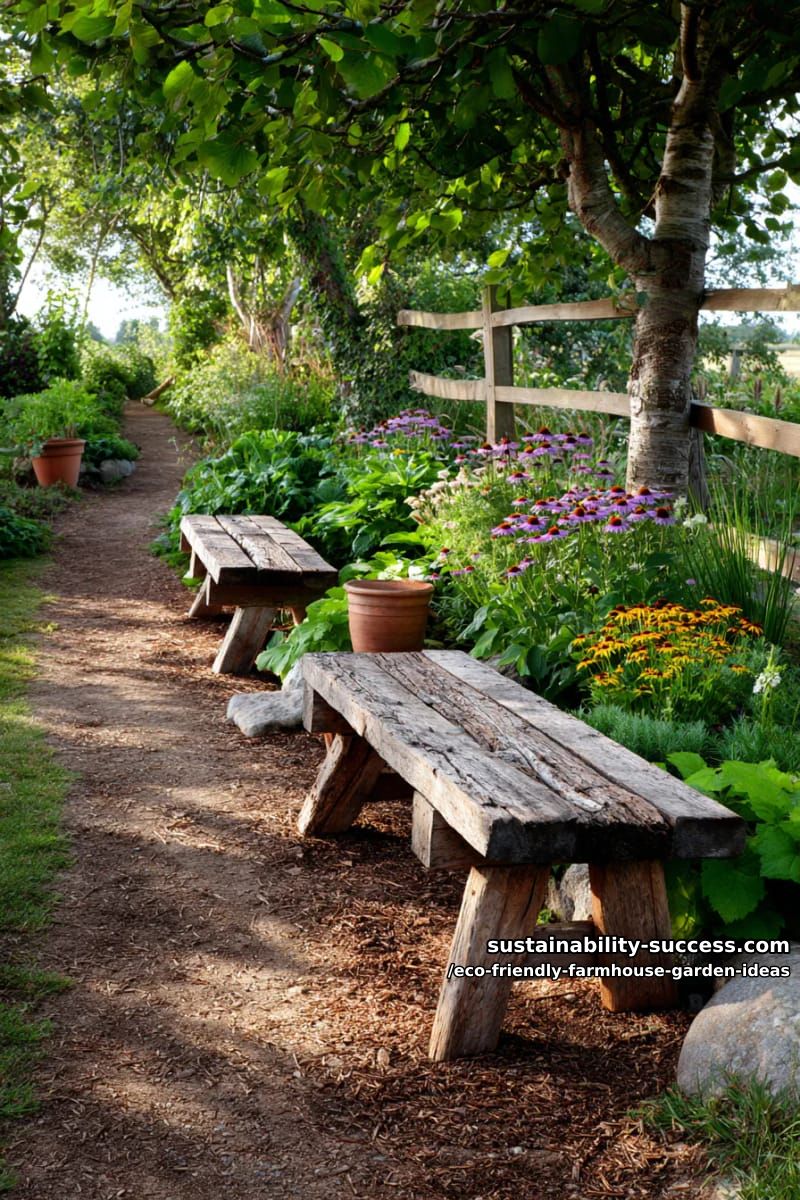
Choosing perennials slashes maintenance and waste. Sure, pallets need occasional sanding or resealing, but you’ll avoid plastic or chemically treated wood.
Surrounding your bench with pollinator-friendly blooms welcomes bees and butterflies, boosting your garden’s health. Who knew sitting down could make such a difference?
11. Butterfly-friendly lavender and echinacea beds beside weathered stone garden signs
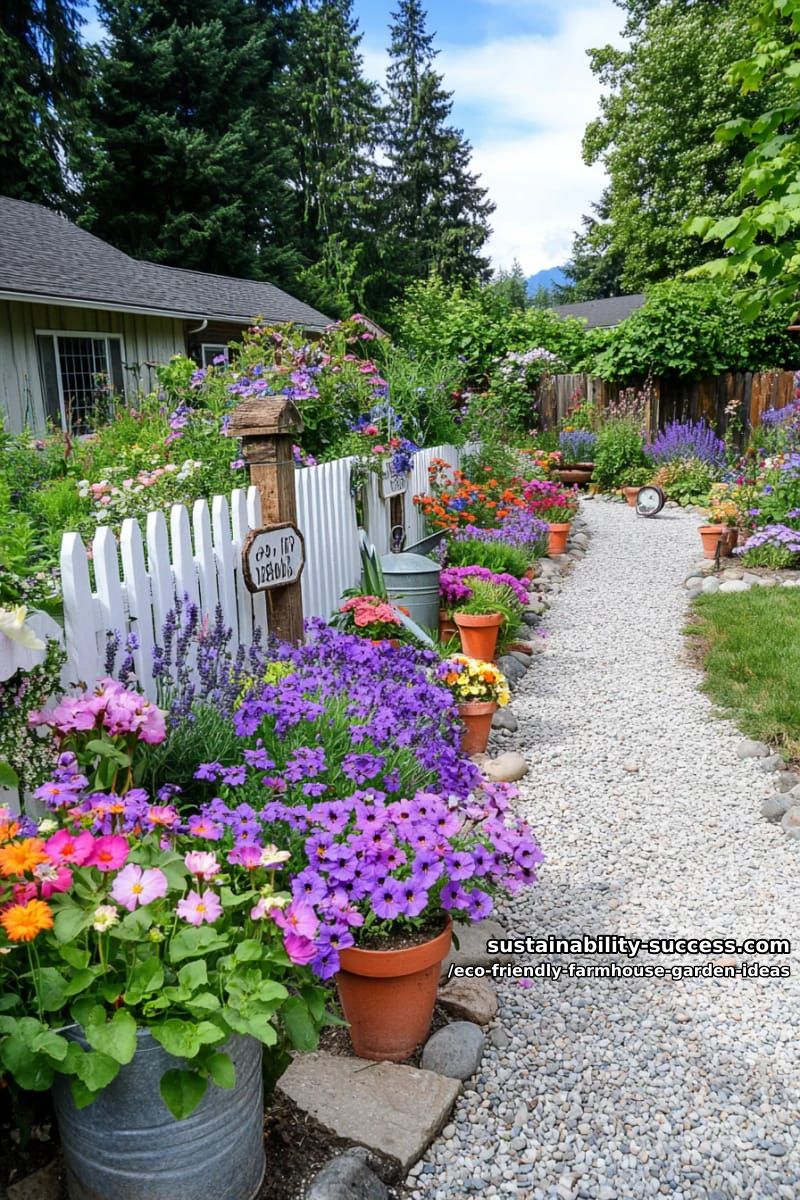
Butterflies flock to gardens bursting with lavender and echinacea. These plants offer nectar and shelter, supporting pollinators while adding color. Imagine weathered stone signs nestled beside soft purple blooms, practical and charming.
Why settle for plain markers when you can use repurposed stone with character that ages beautifully through seasons?
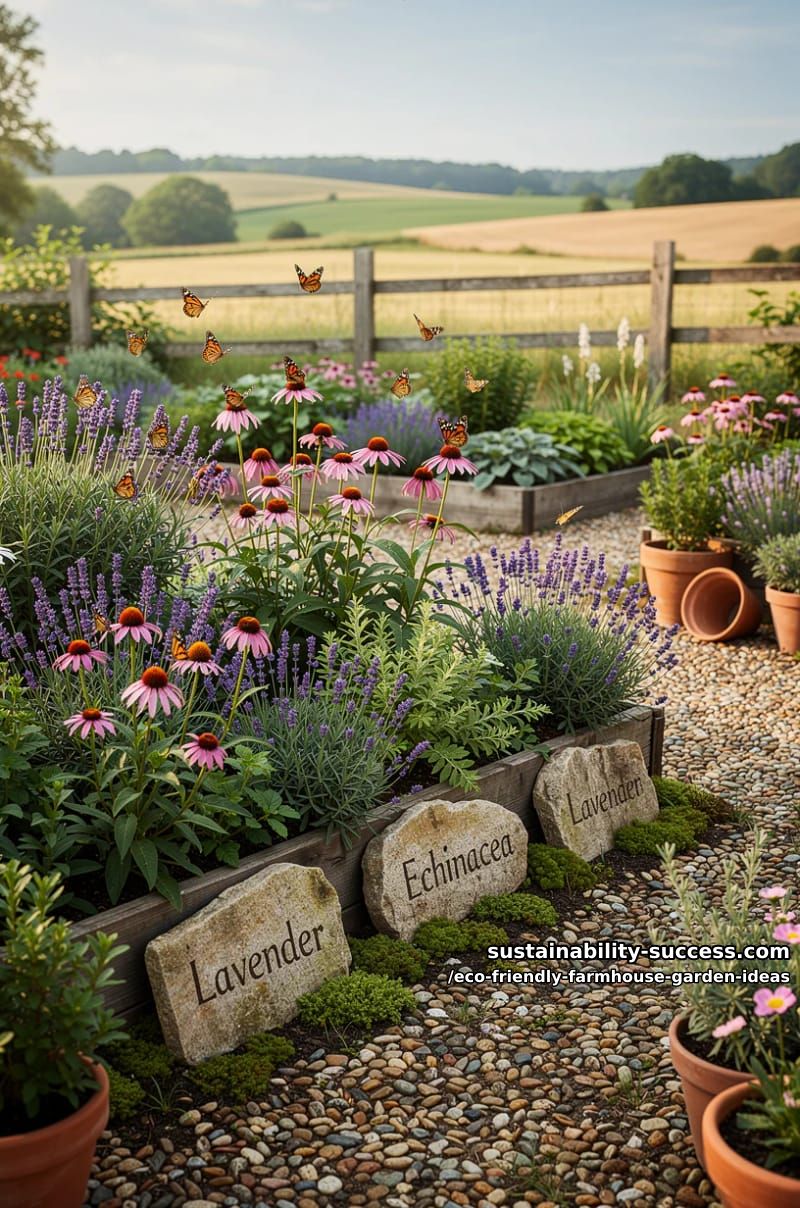
Choosing native plants like echinacea reduces water use and cuts down on maintenance. Lavender thrives in poor soil, shrugging off drought. Together, they form a low-effort, eco-conscious bed.
Stone signs never need replacing and blend seamlessly into the landscape. Sometimes, simple choices create the most lasting impact.
12. Composting corner hidden by a lattice screen with fragrant climbing roses
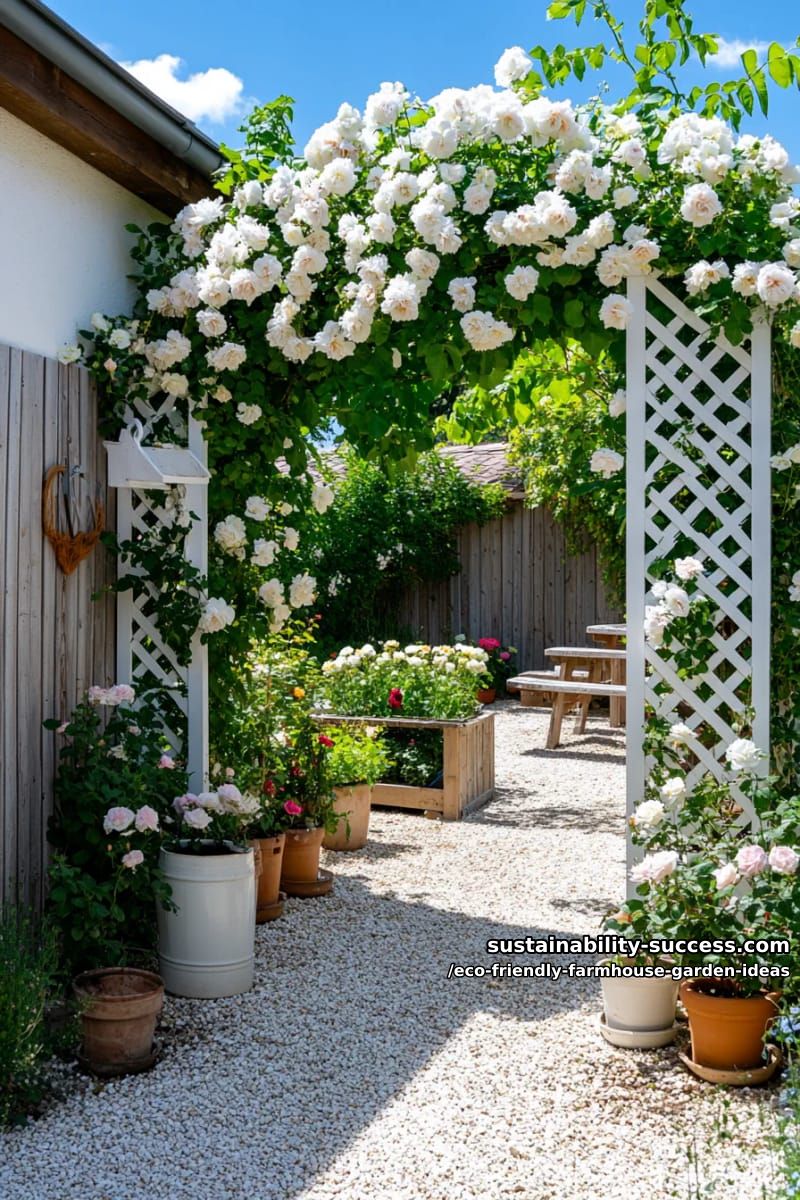
Imagine a composting corner tucked behind a simple lattice, disguised by the blooms of climbing roses. Composting at home reduces waste and enriches soil, but it doesn’t have to be an eyesore.
This setup blends practicality with charm, turning kitchen scraps into gold while keeping your garden beautiful.
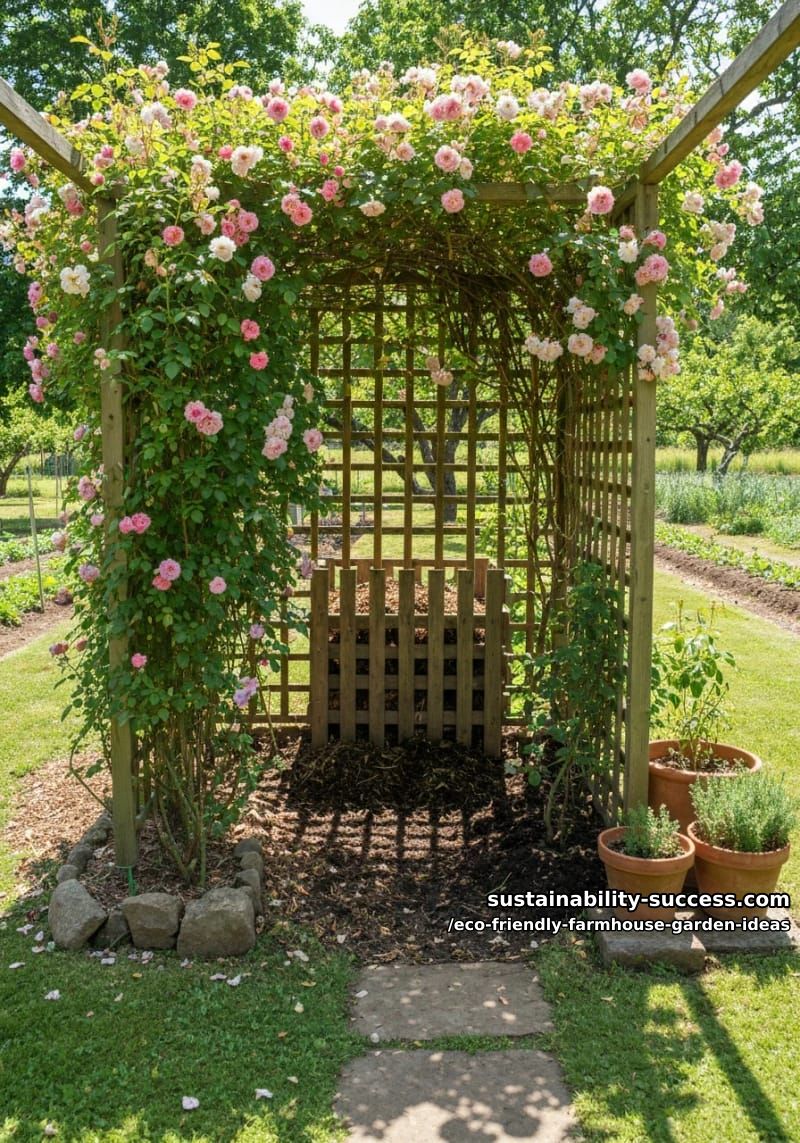
Don’t just toss your trimmings in a plastic bin. Add banana peels, coffee grounds, and eggshells to your heap. Let the roses’ scent mask any earthy odors.
You’ll produce nutrient-rich compost for your veggies, and give your garden a sweet-smelling, attractive feature, even the nosy neighbors will approve.
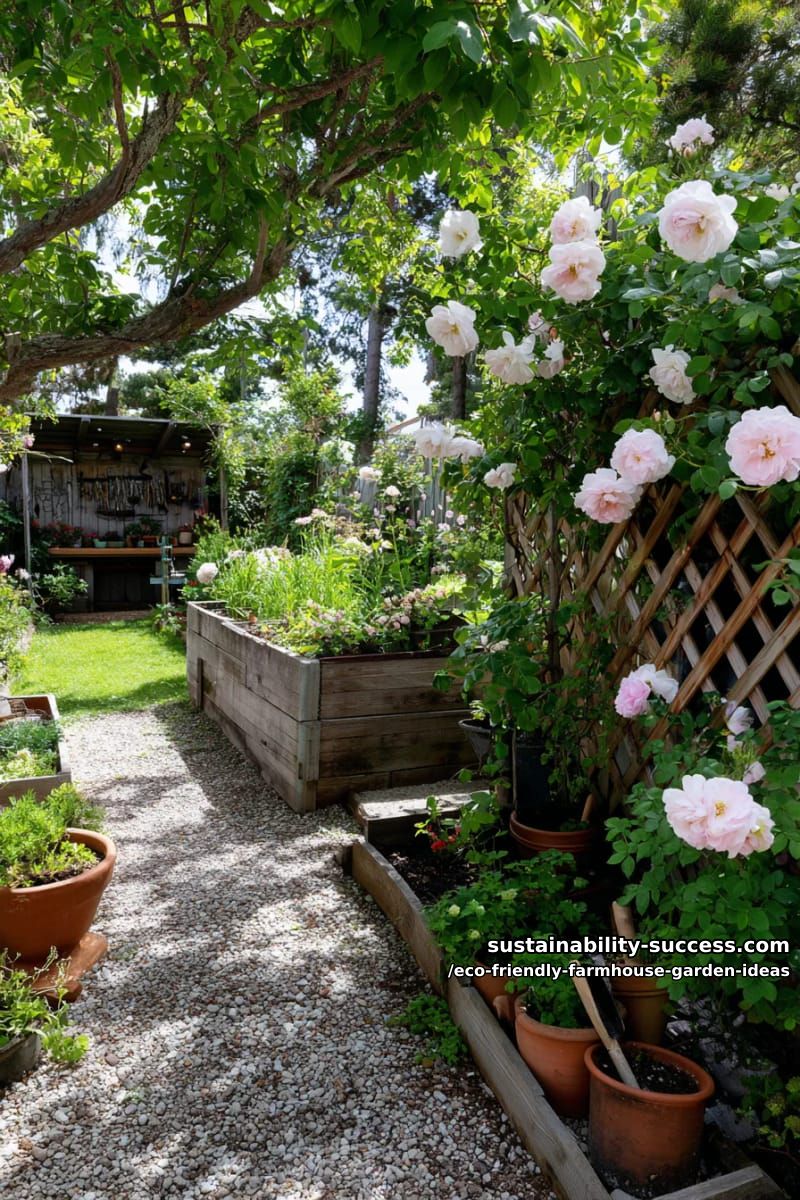
13. Charming insect hotel tucked into a lush patch of wild cottage blooms
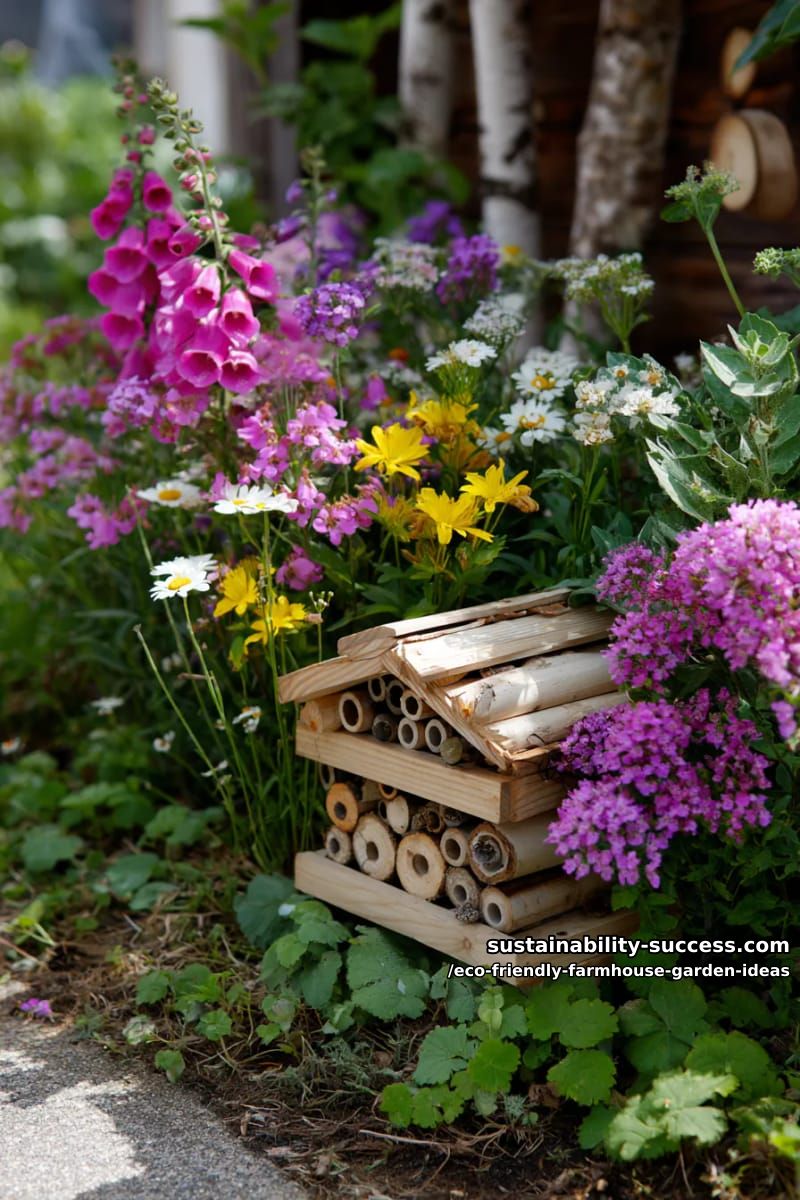
Why not welcome helpful insects with a quirky insect hotel? Tuck it among wild, cottage-style flowers like foxgloves and cosmos. Beneficial bugs, such as ladybirds and solitary bees, will take up residence.
Your garden gets natural pest control and pollination. Plus, it’s a conversation starter with curious visitors.
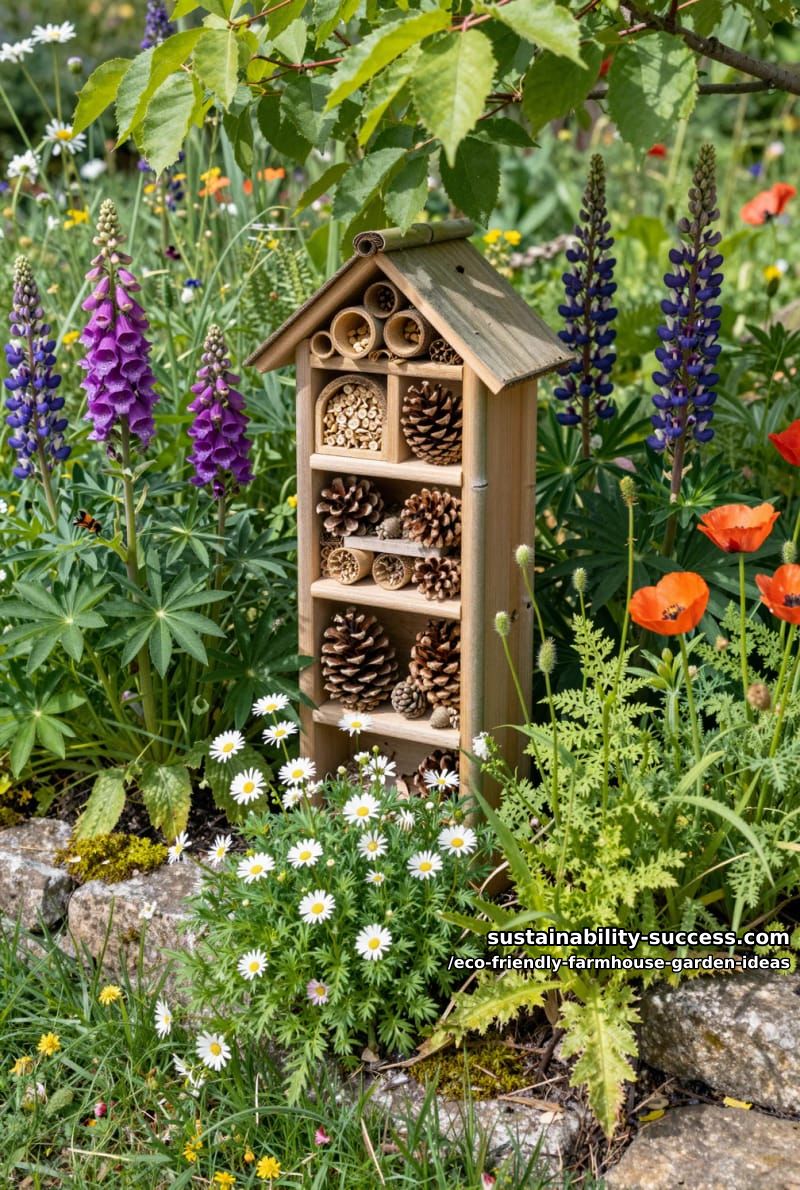
Of course, some might worry about attracting unwanted guests. However, most insect hotels only appeal to helpful species. Regularly check and clean it to avoid issues.
Give nature a helping hand, and your garden will buzz with life, without the need for chemical sprays.
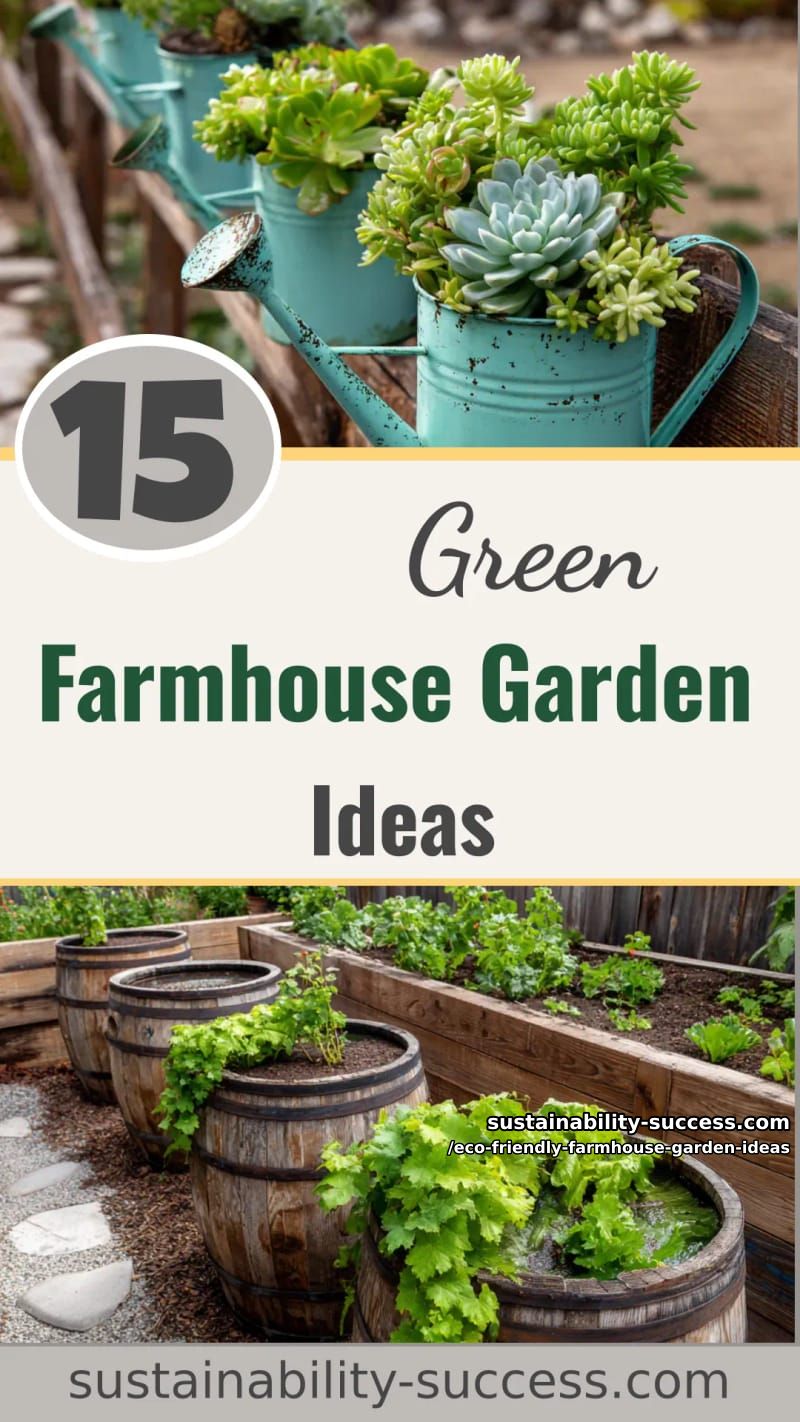
14. Recycled tin watering cans transformed into whimsical vertical succulent gardens
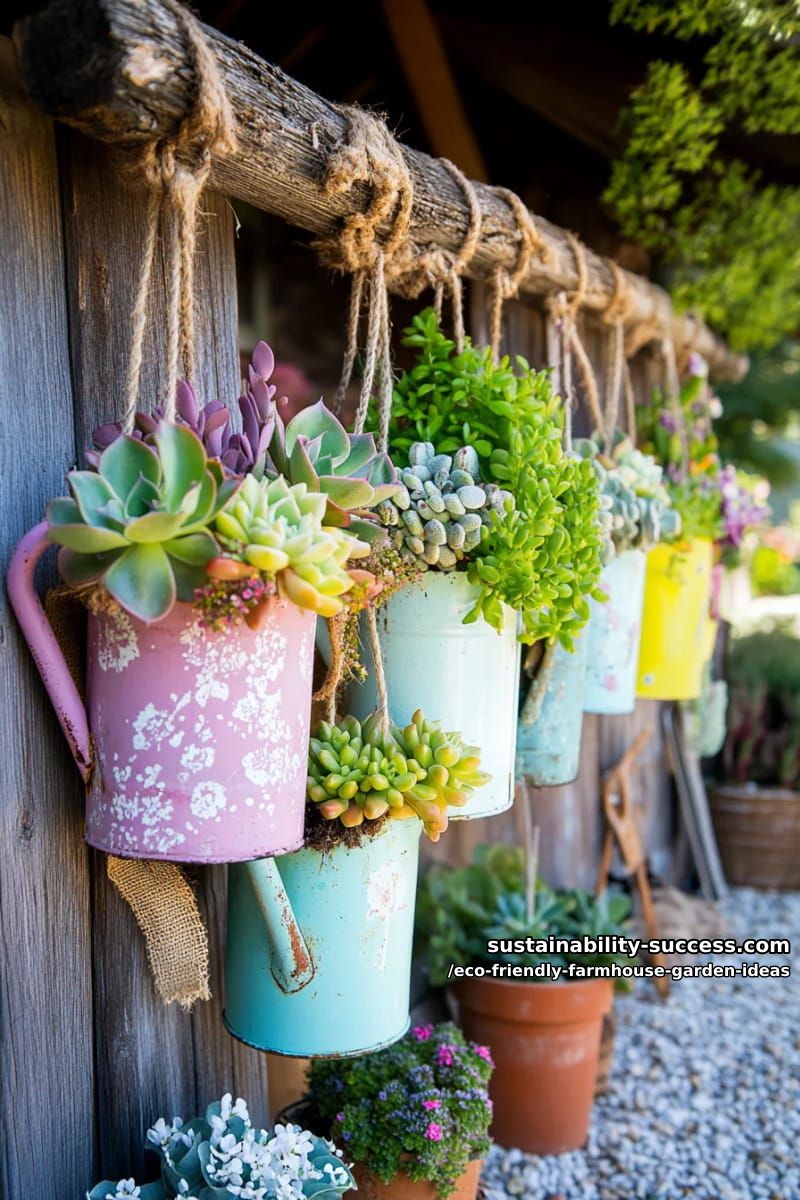
Old tin watering cans often end up rusting in sheds, but why not give them a new lease on life? Hang them on a sturdy fence or wall, fill with gritty soil, and plant succulents.
The quirky shapes and weathered metal add instant character while reducing waste.
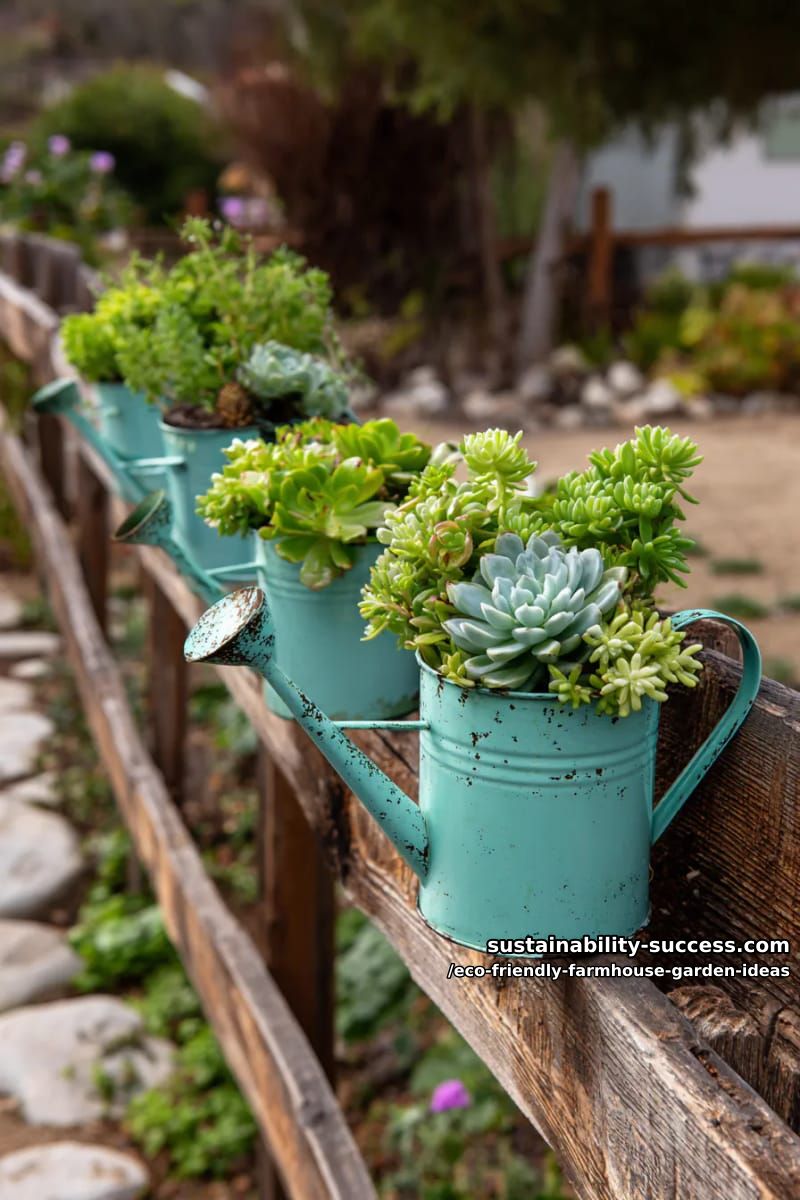
Want to make it more practical? Drill a few holes in the bottom for drainage. Mix different succulent types for a riot of colors and textures.
It’s a simple, cost-effective way to create living art, no green thumb required. Who knew yesterday’s watering can could become tomorrow’s showstopper?
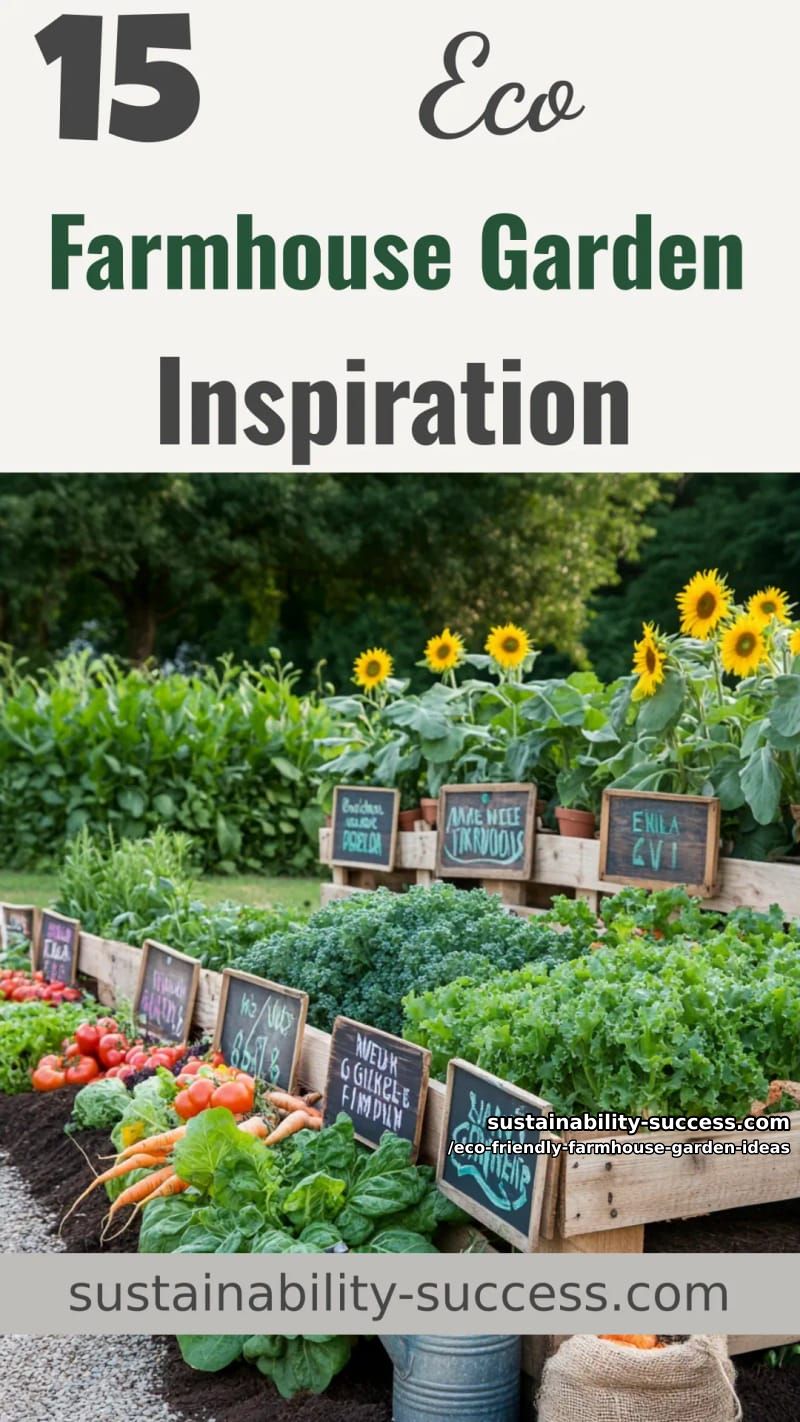
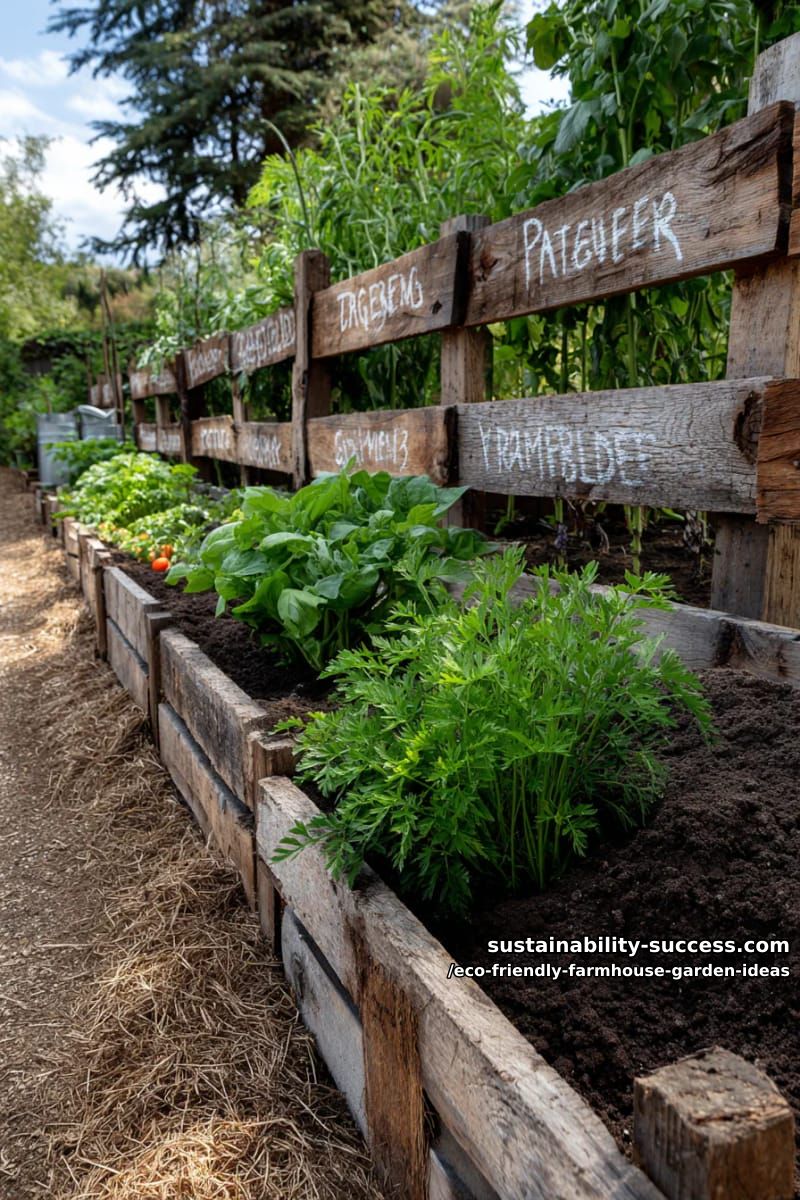
15. Creative pallet fence displaying painted signs labeling heirloom vegetable rows
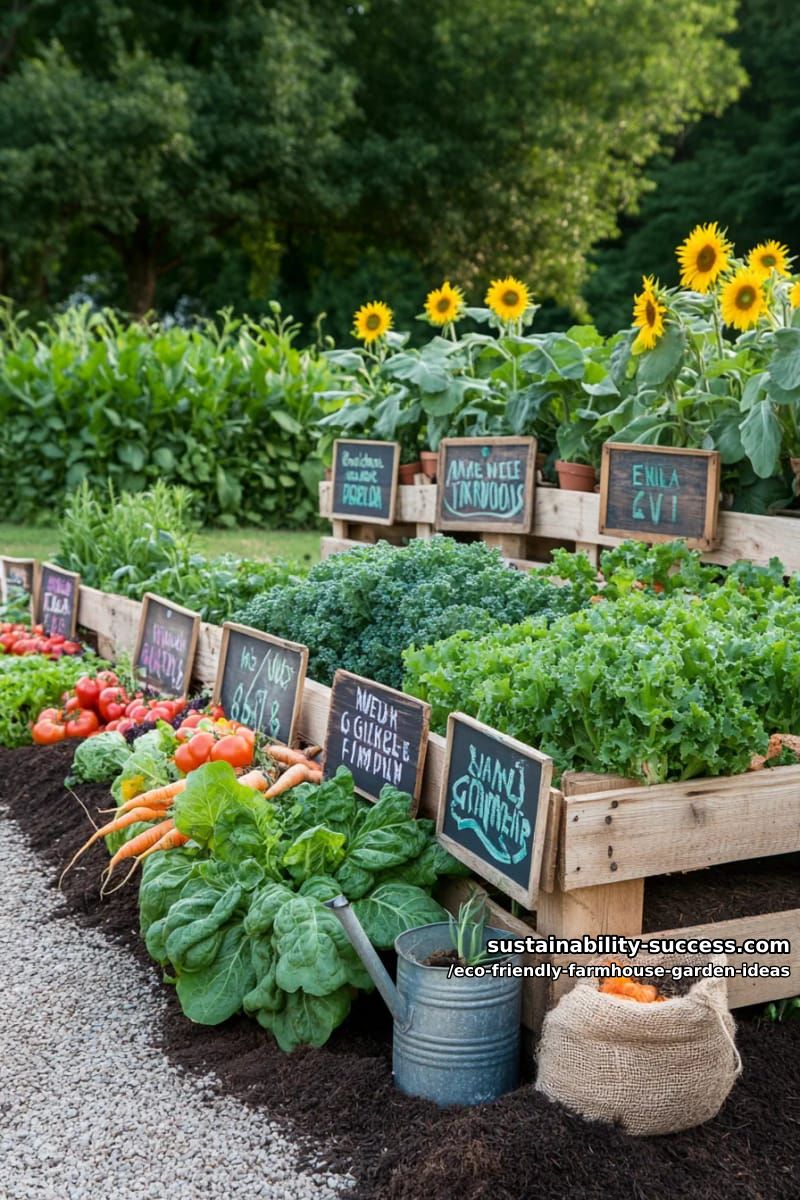
Old pallets can become a surprisingly charming fence for your garden. Paint them in soft, earthy tones and hang homemade signs to label each heirloom vegetable row.
Kids love helping decorate the signs, and visitors get an instant splash of color and information. It’s functional, fun, and wallet-friendly.
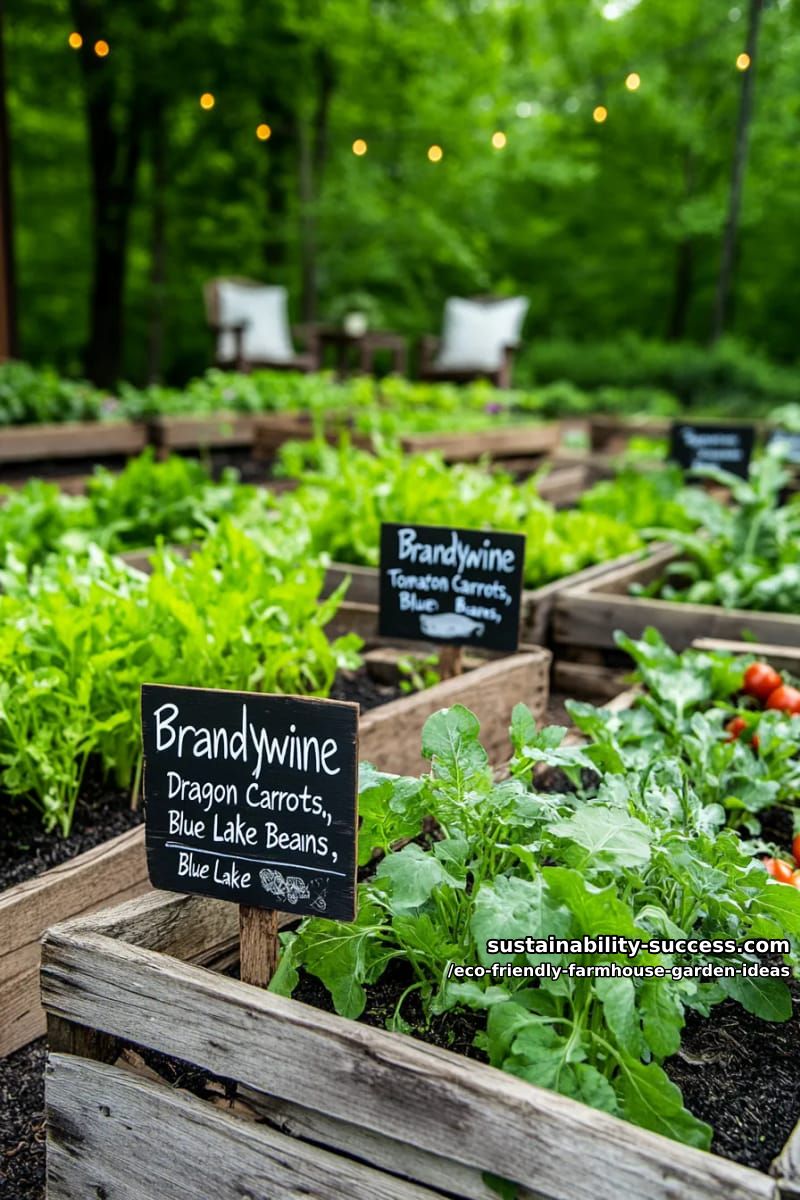
But don’t forget, pallets may need a quick sanding to avoid splinters. Use weather-resistant paint to keep your signs readable through storms and sunshine.
This simple project turns scrap into a focal point, sparking conversations and making your garden truly memorable, without breaking the bank or the planet.
Conclusion
Eco-Friendly Farmhouse Garden Ideas bring beauty and sustainability to your backyard. You don’t need a fortune or a fancy degree. Simple touches, like a crate herb tower or solar lights, can make your garden both practical and delightful.
Why not try one idea this weekend? Maybe convert that old pallet into a bench, or let wildflowers claim a patch near your fence. Small changes stack up.
Before you know it, you’ll have a green oasis that’s kind to the earth and full of charm.