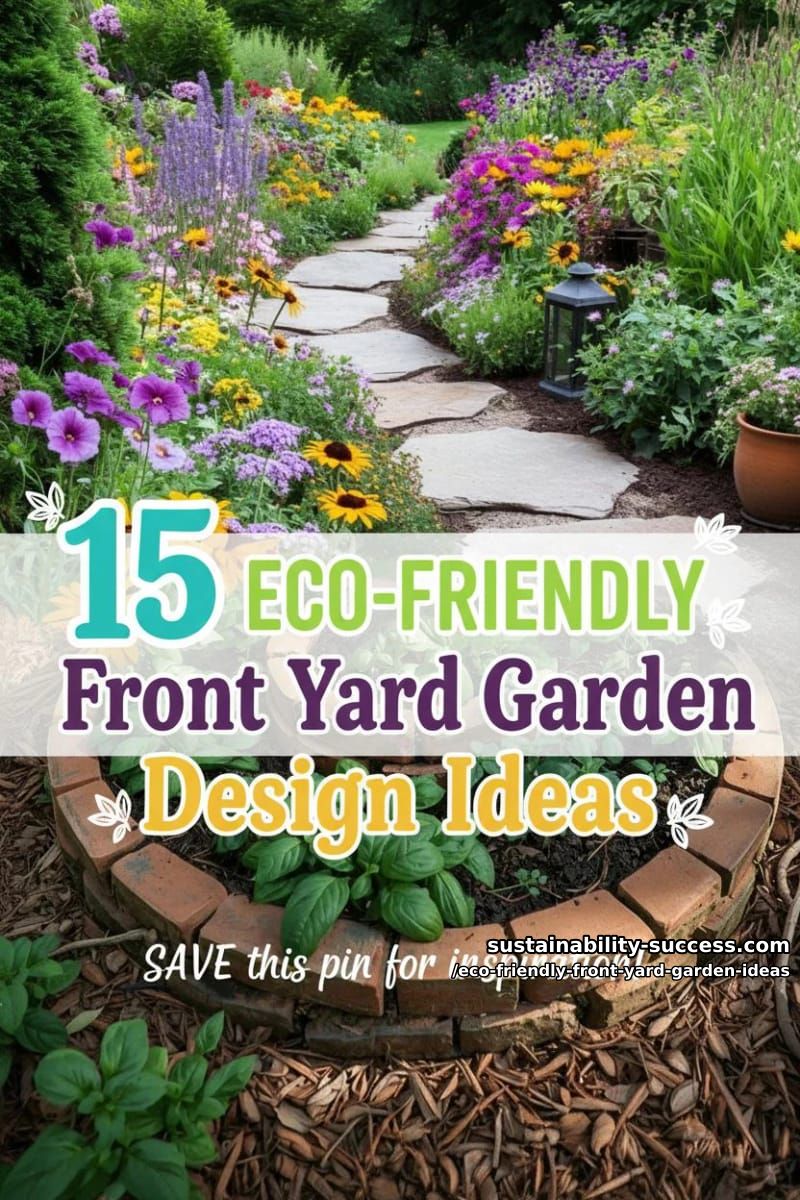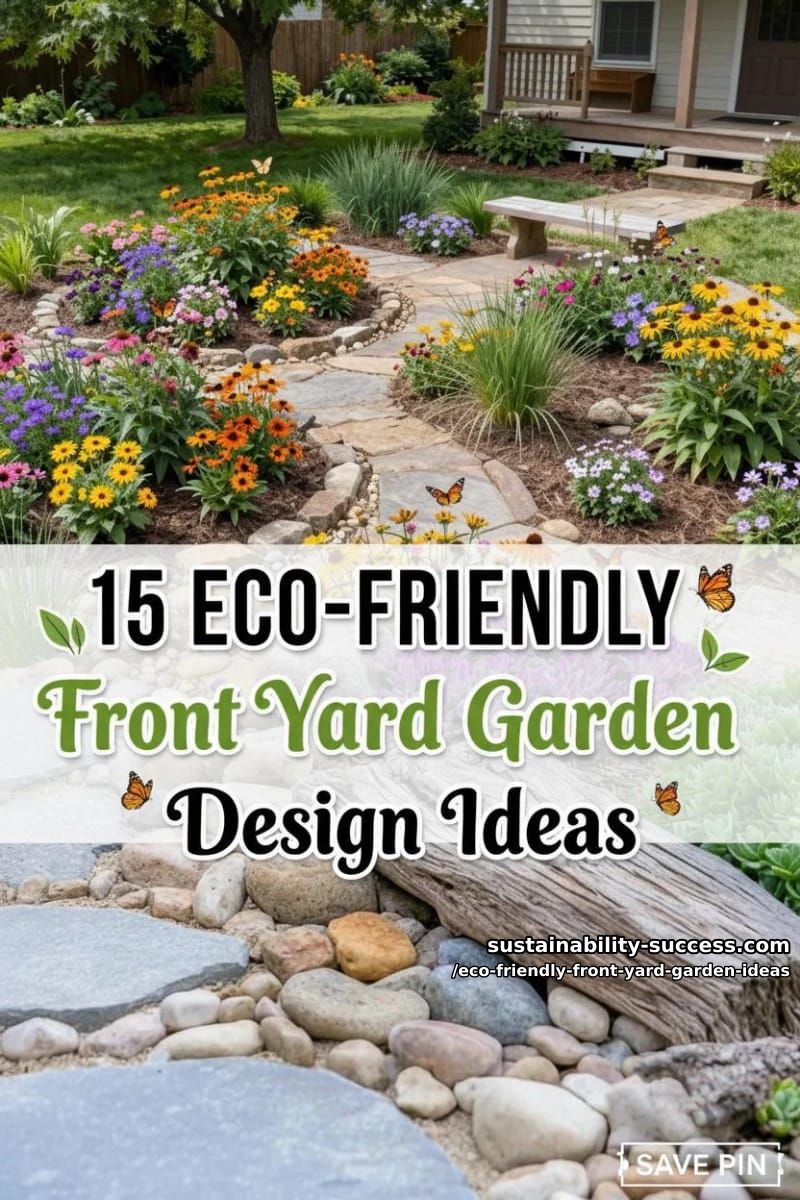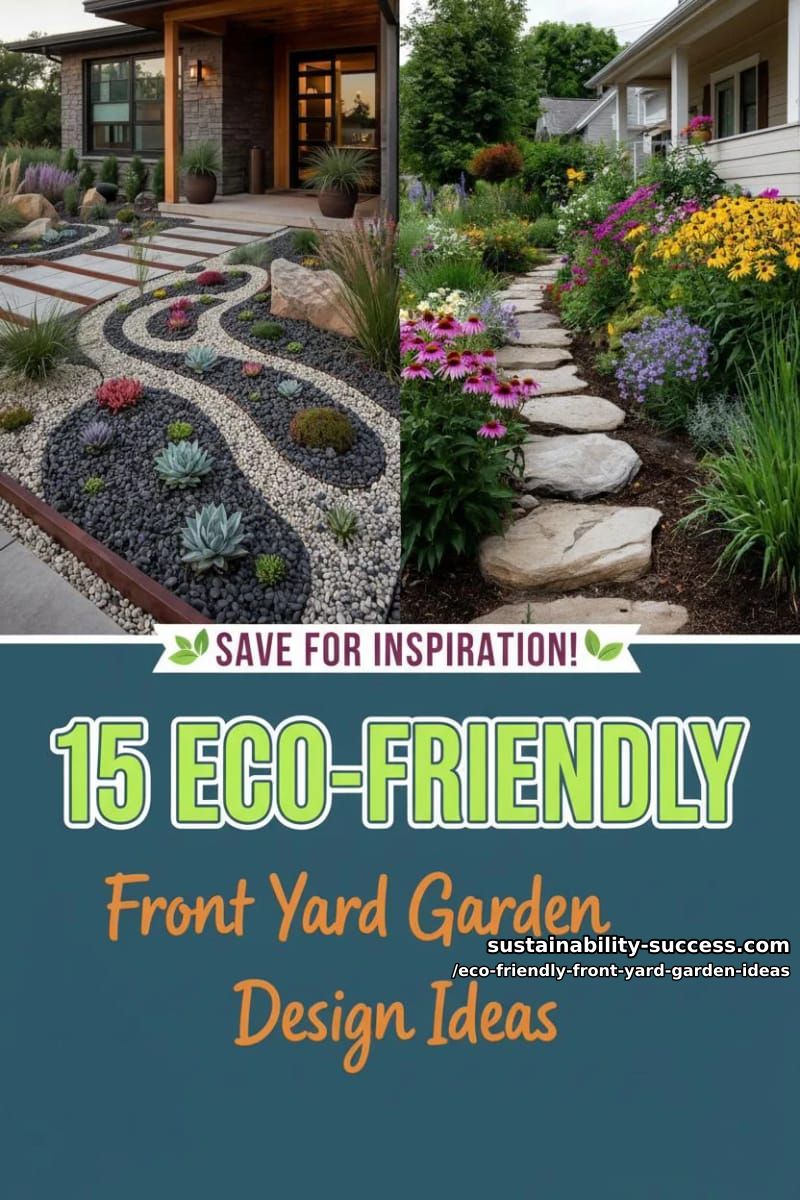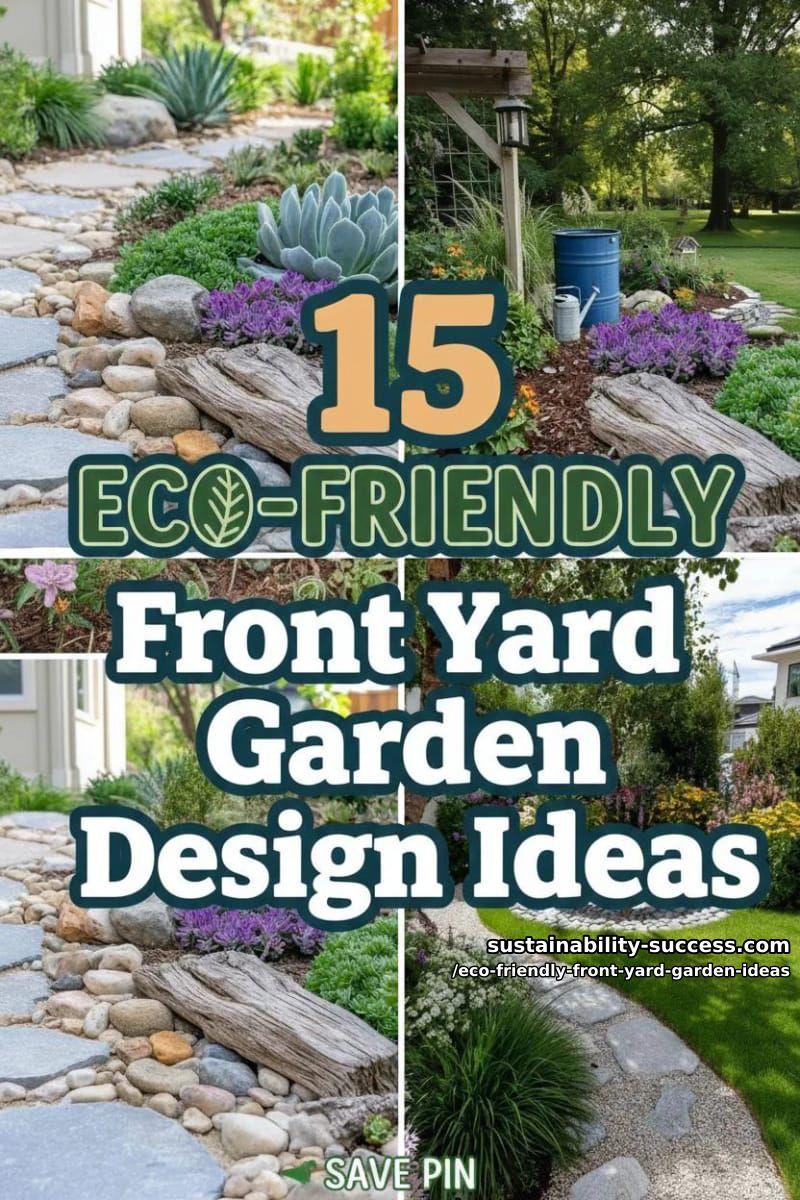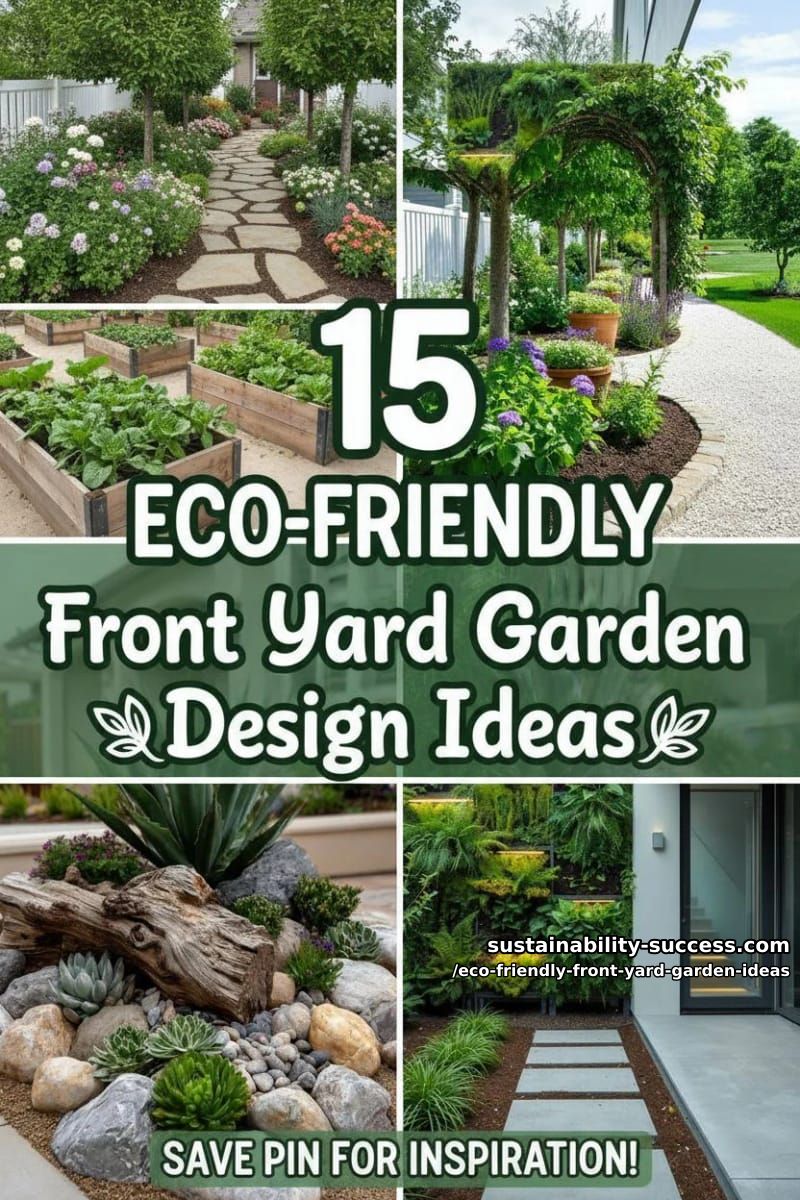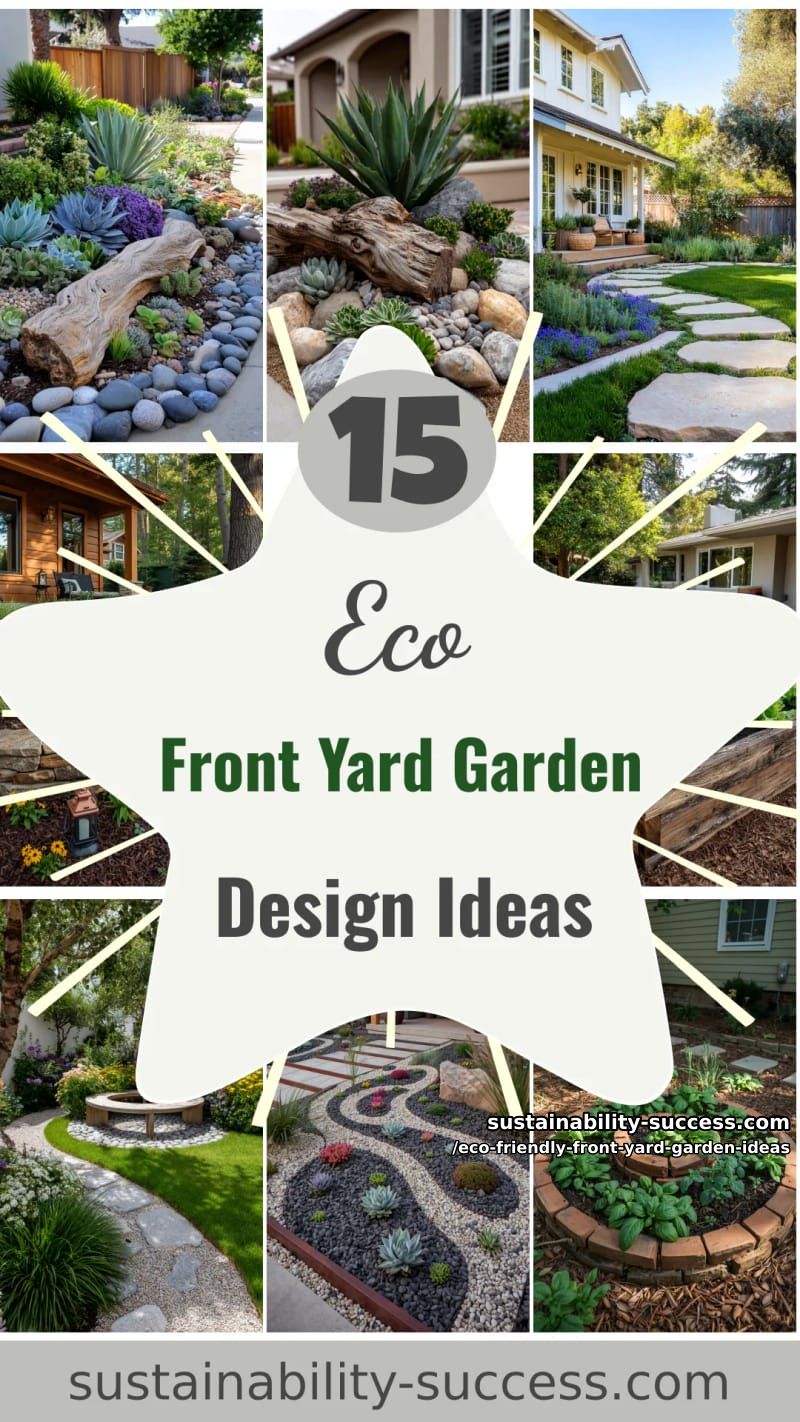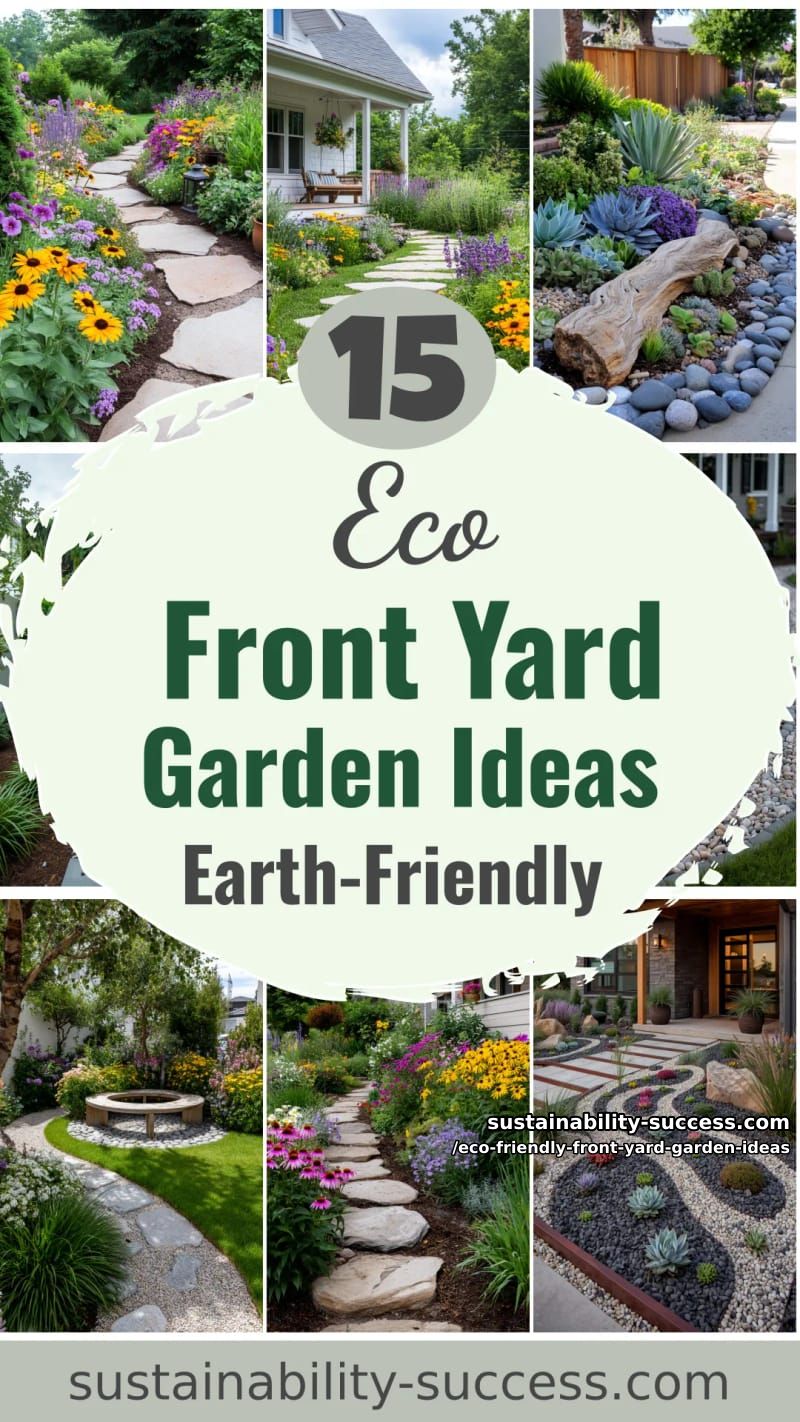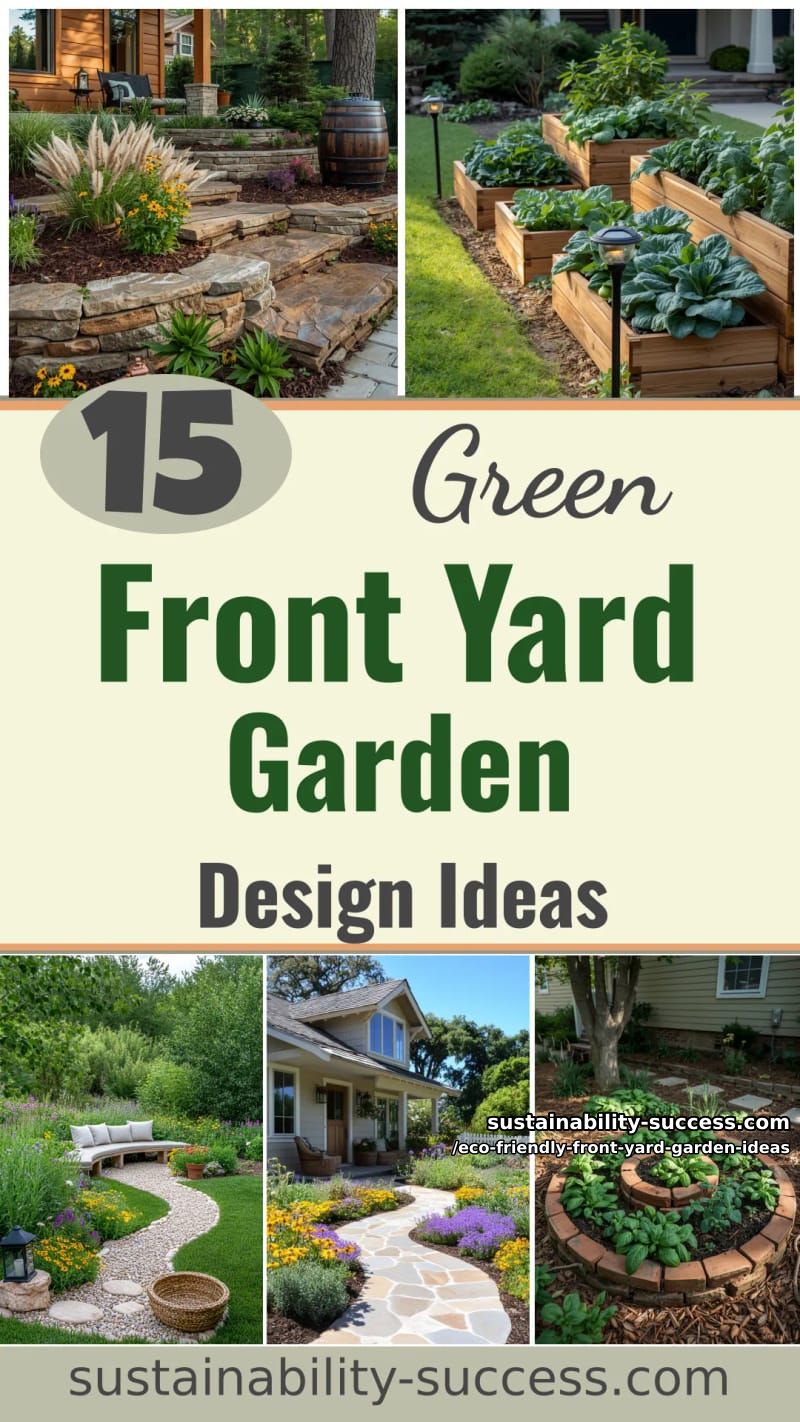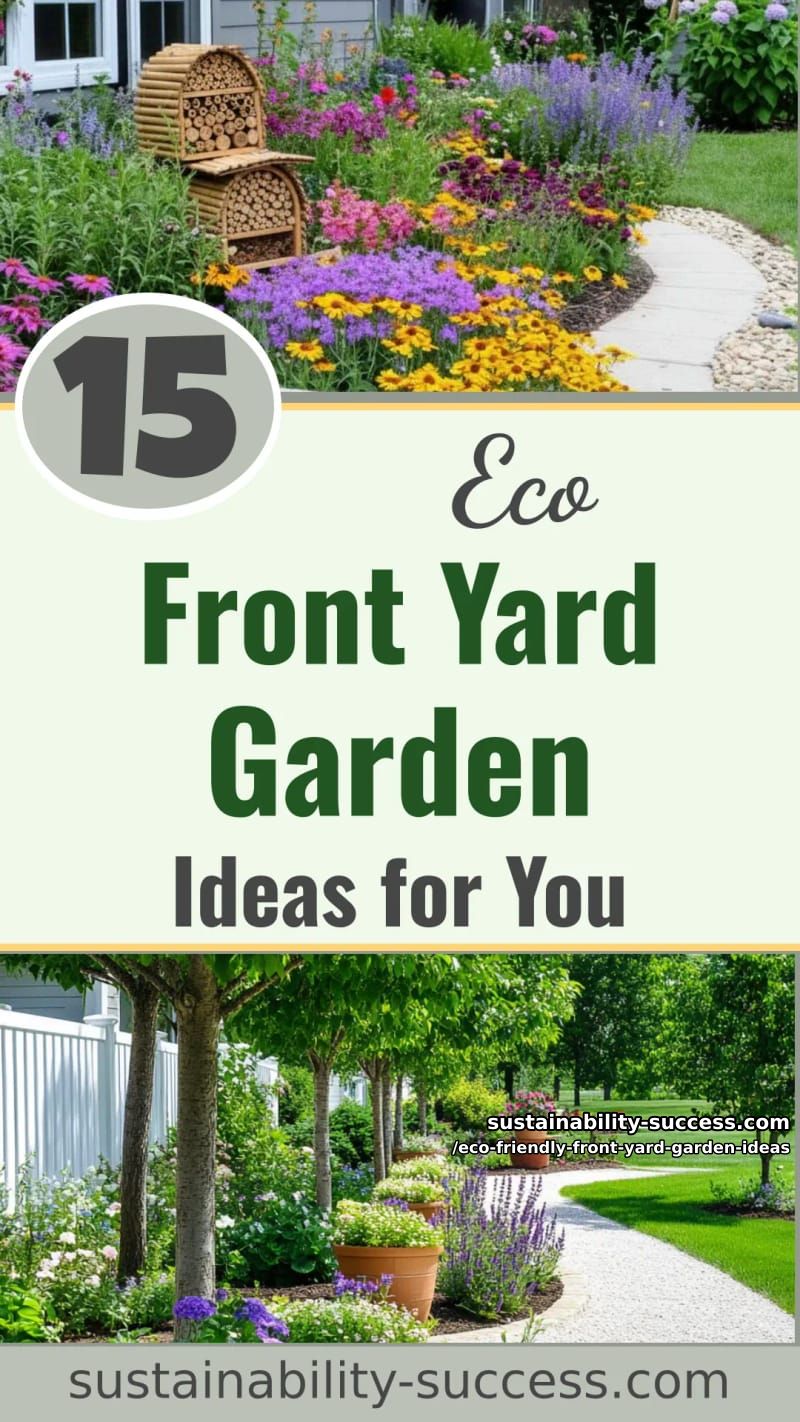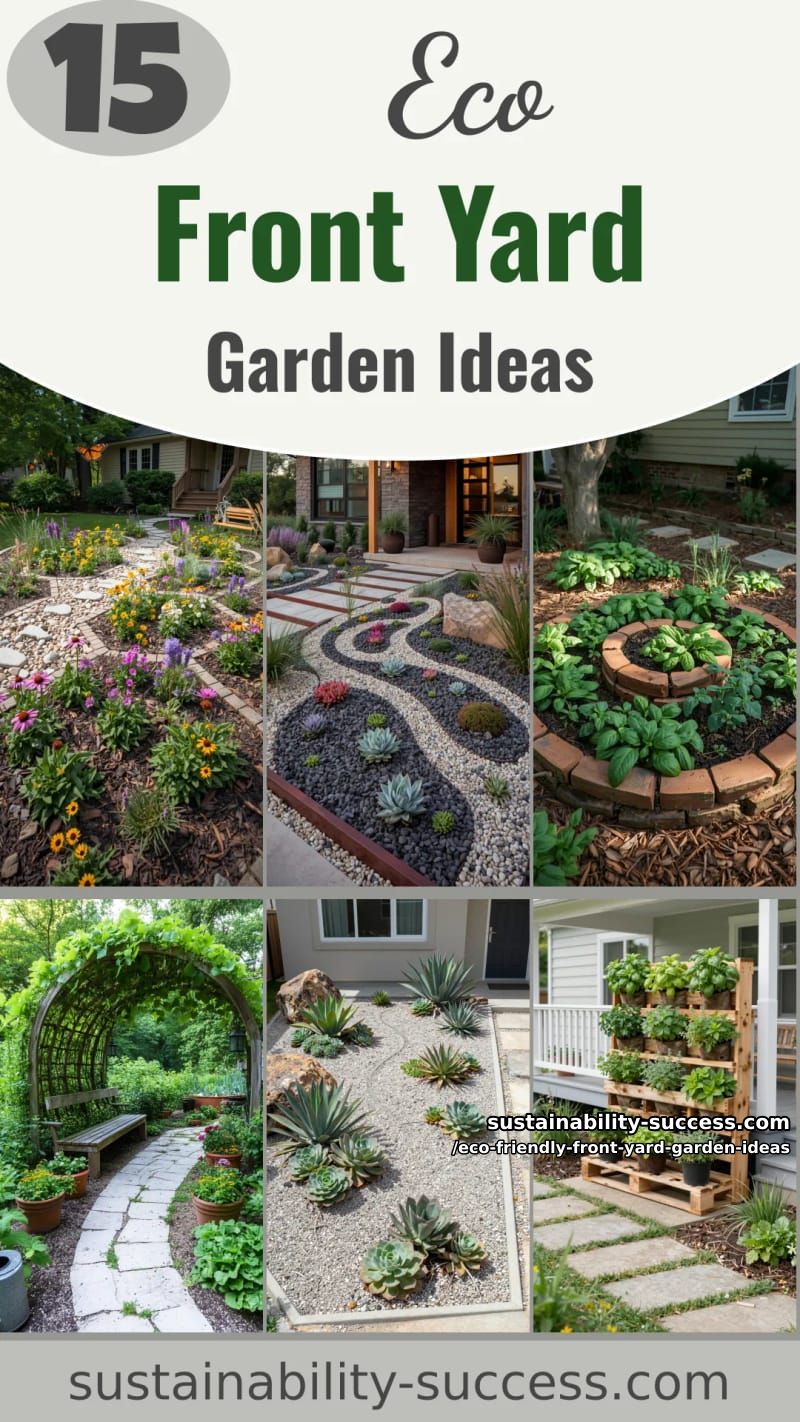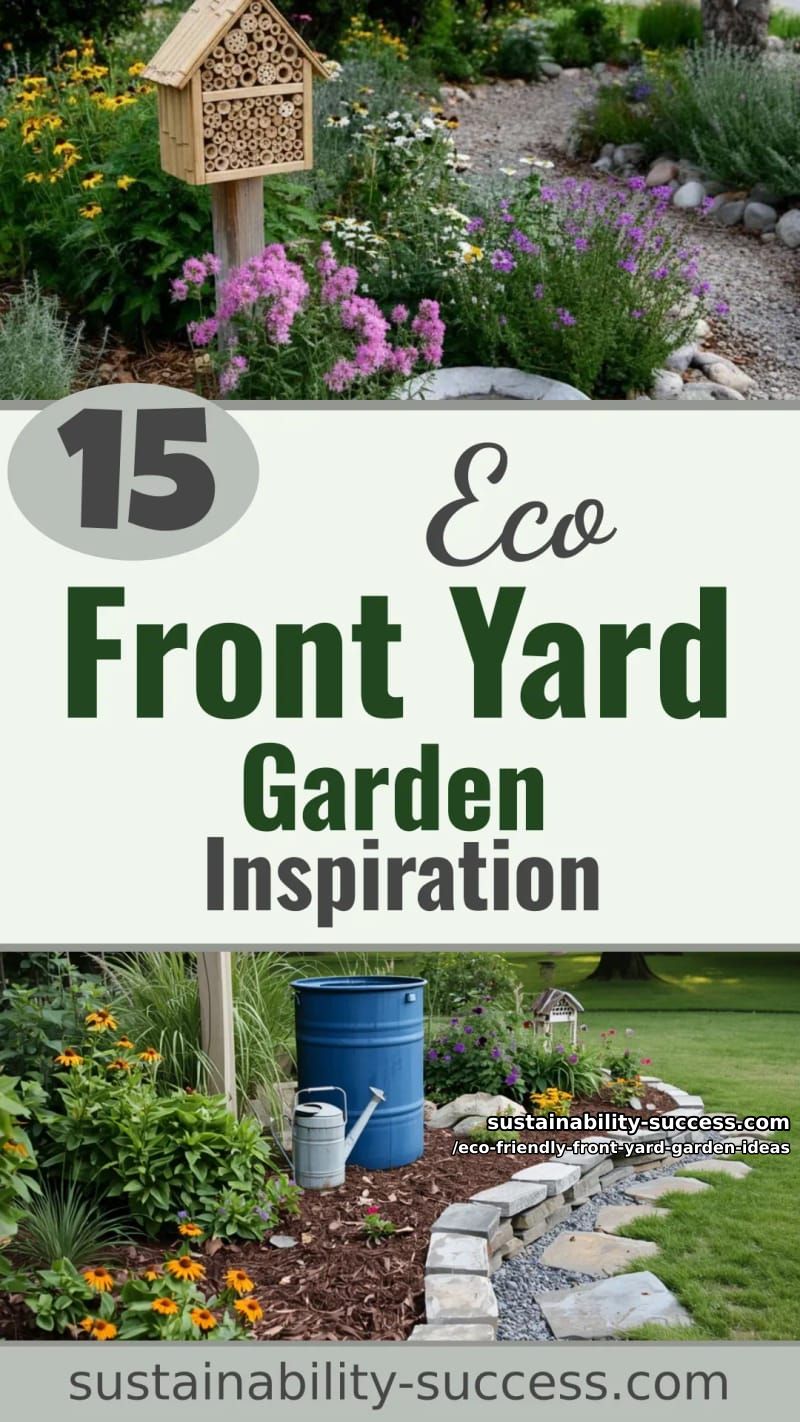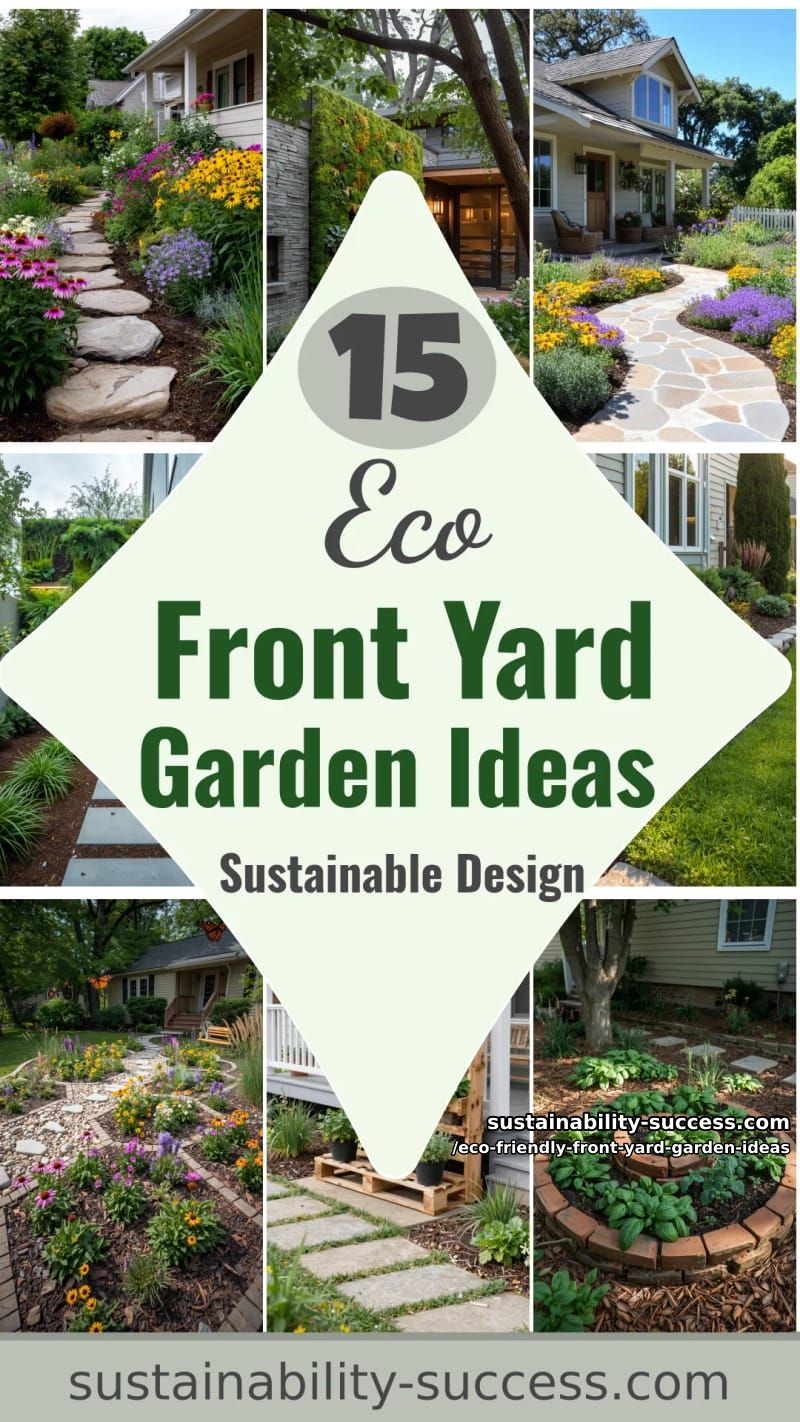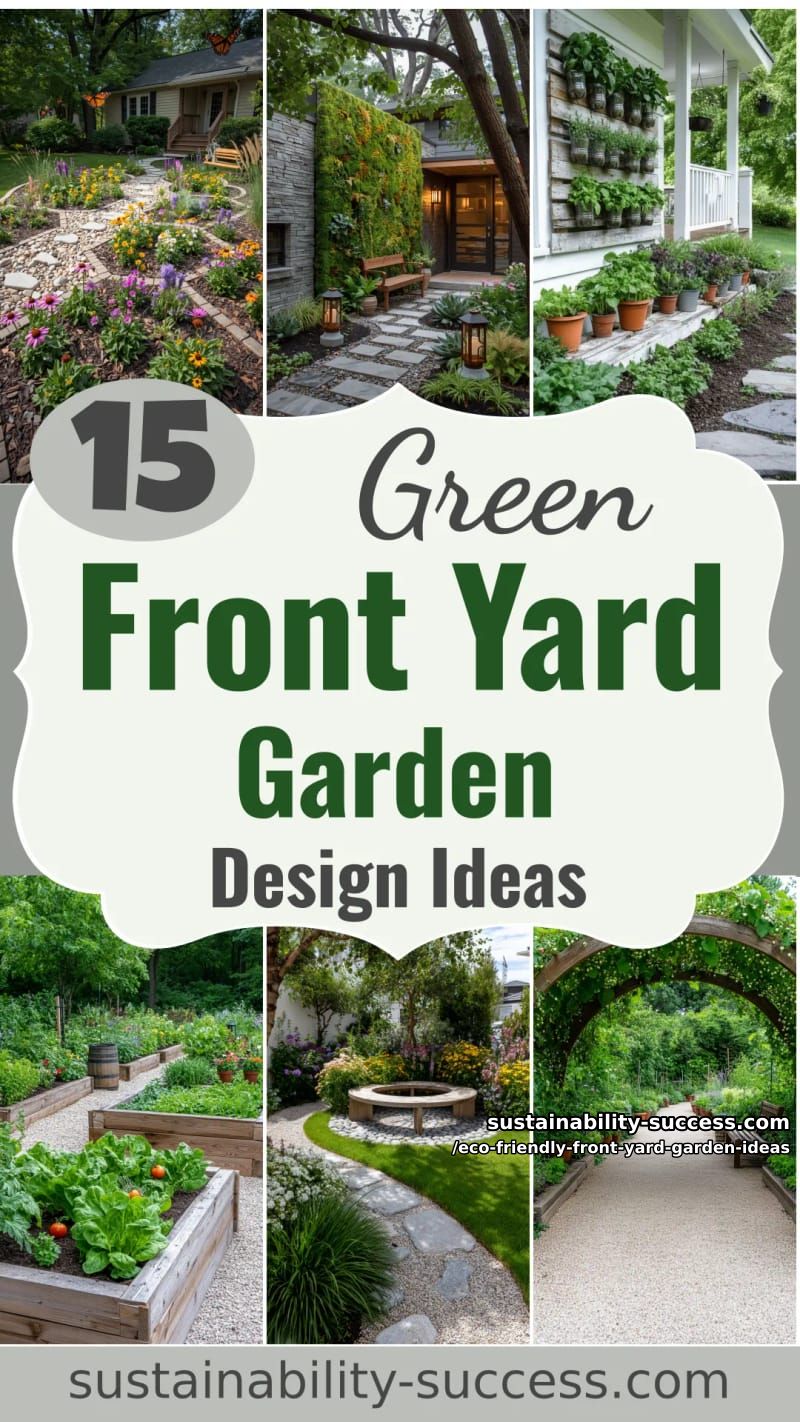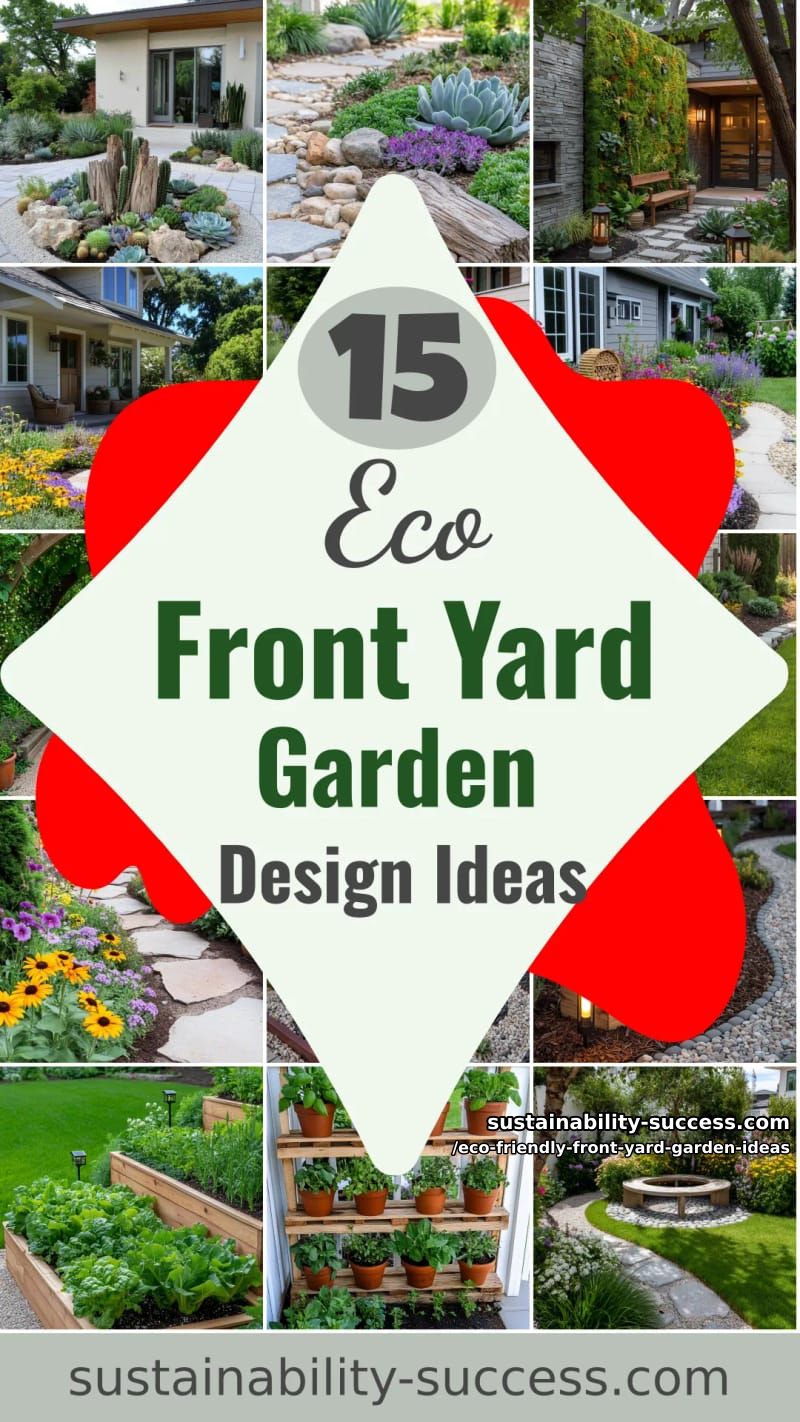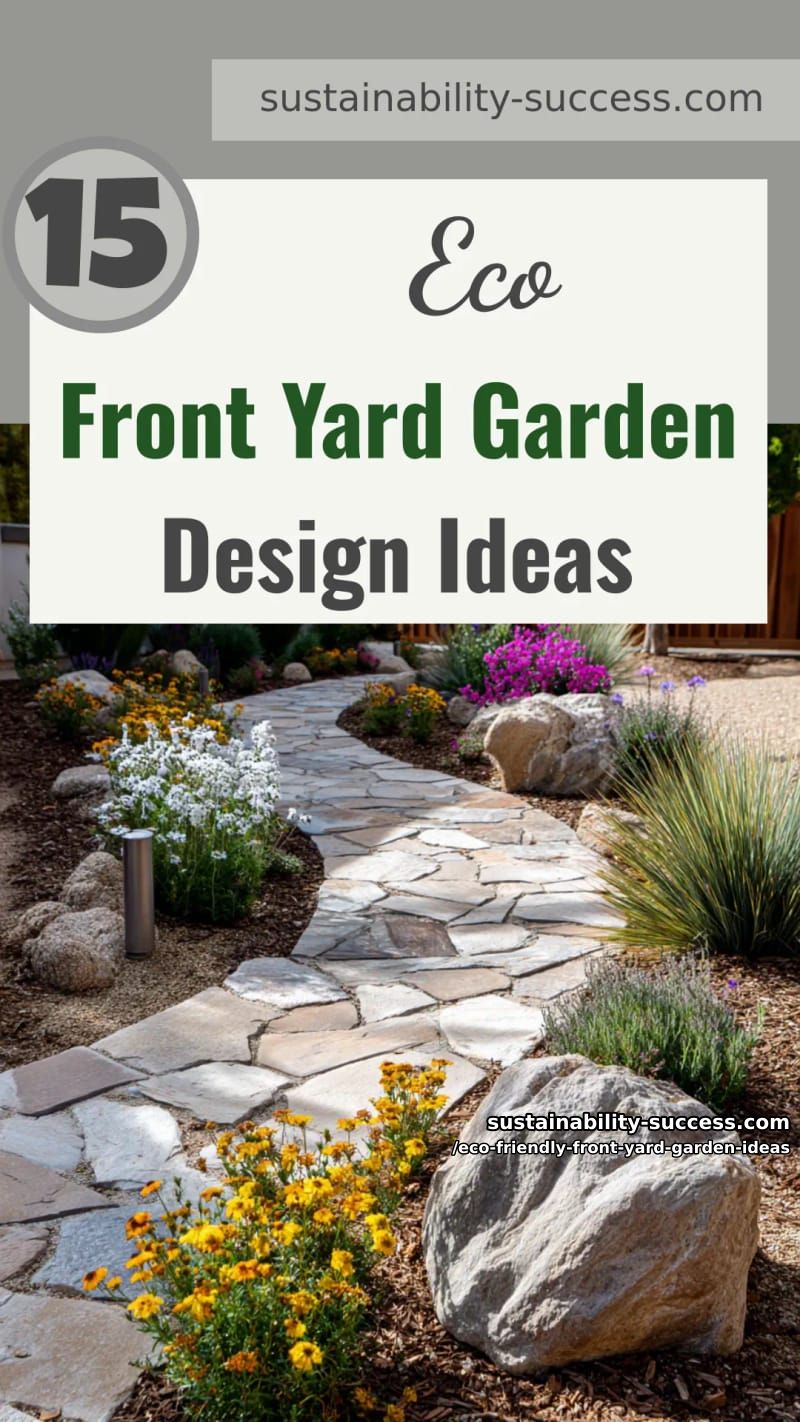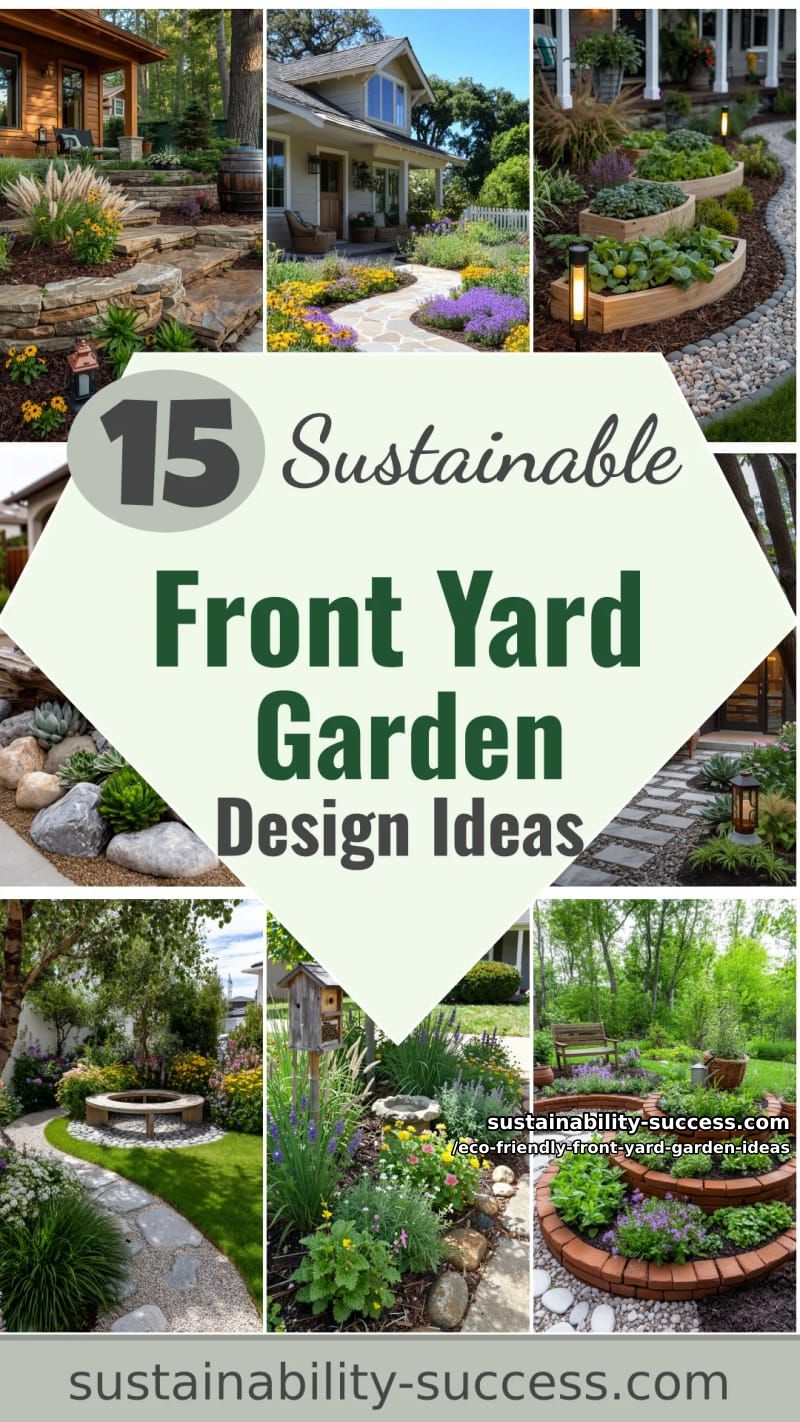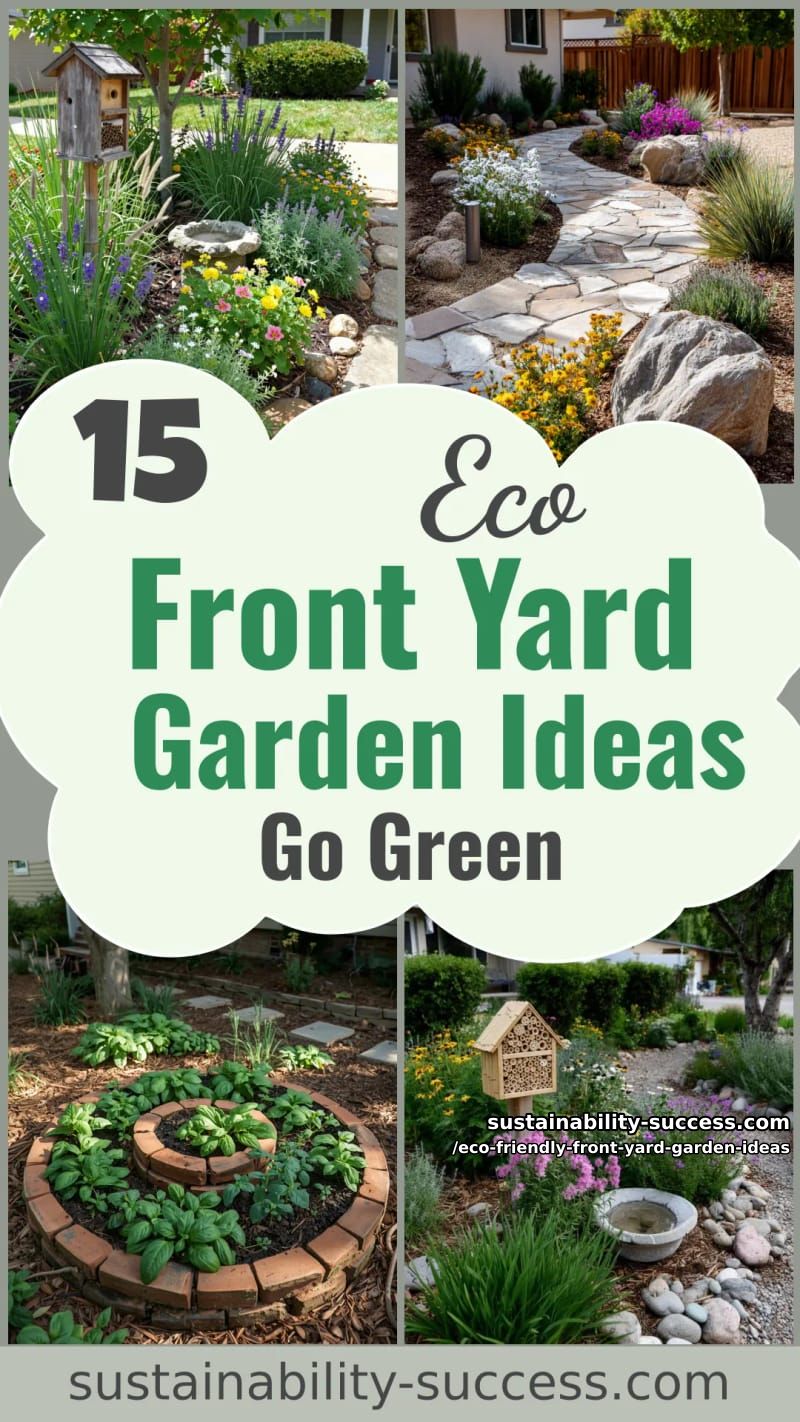
Thinking your front yard could do more for the planet, and your curb appeal? Eco-friendly front yard garden ideas can bring both beauty and purpose right to your doorstep.
You don’t need a green thumb; you just need the right inspiration and a bit of elbow grease.
Imagine bees buzzing over native flowers, herbs at arm’s reach, and rainwater working for you instead of running off.
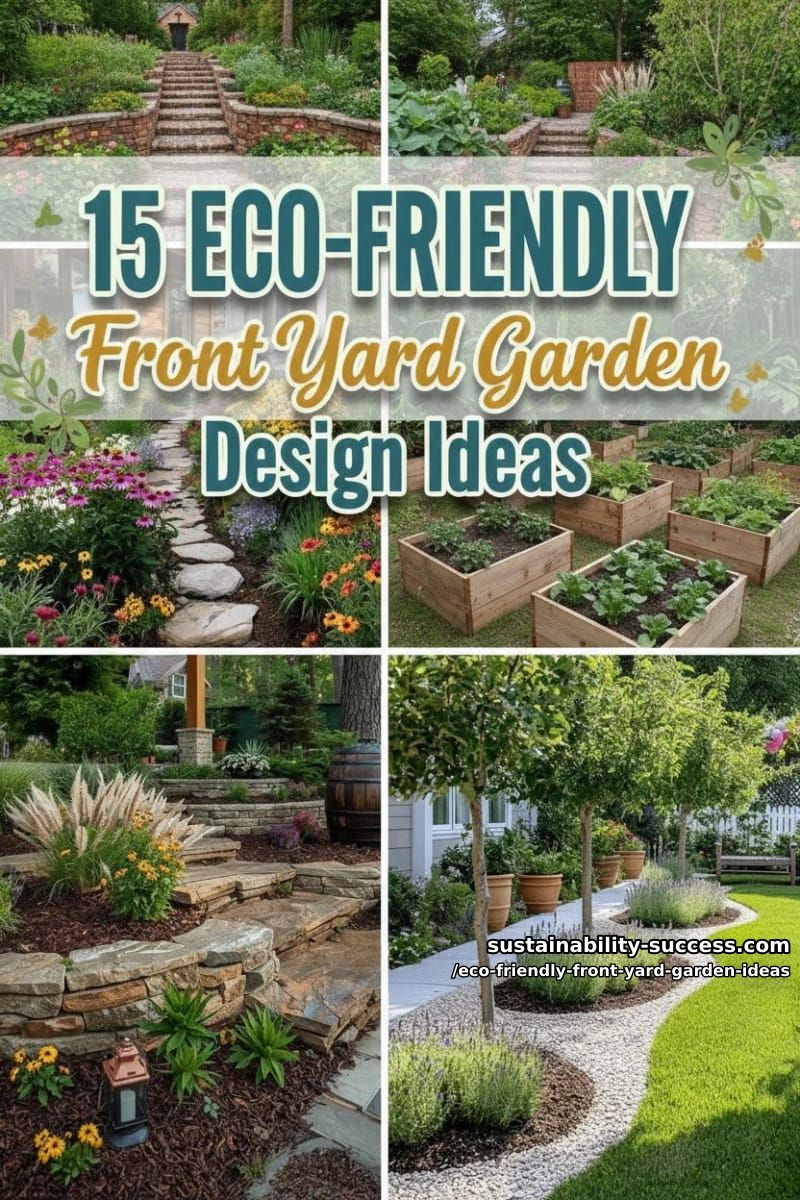
Curious how you can mix low-water plants, upcycled materials, and clever layouts? Let’s dig into fifteen ways to turn your front yard into a living example of sustainability.
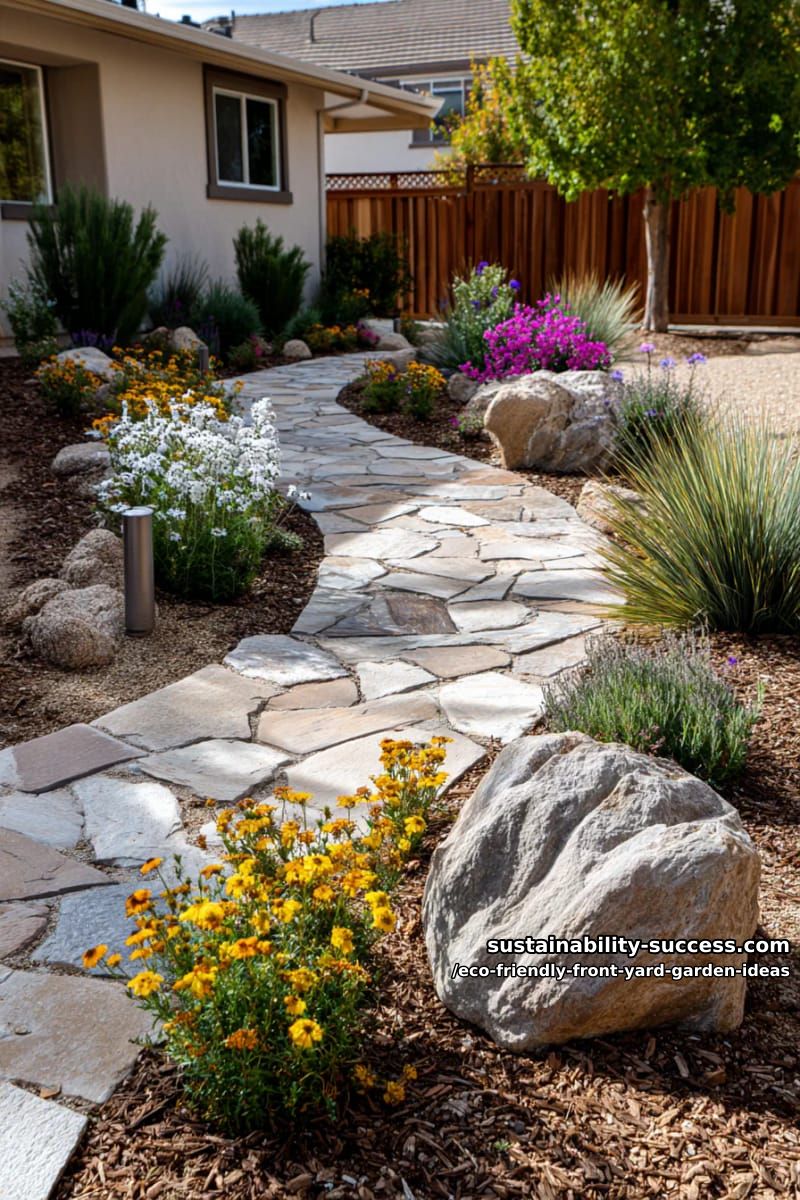
1. Stone paver walkway surrounded by native wildflowers and drought-tolerant grasses
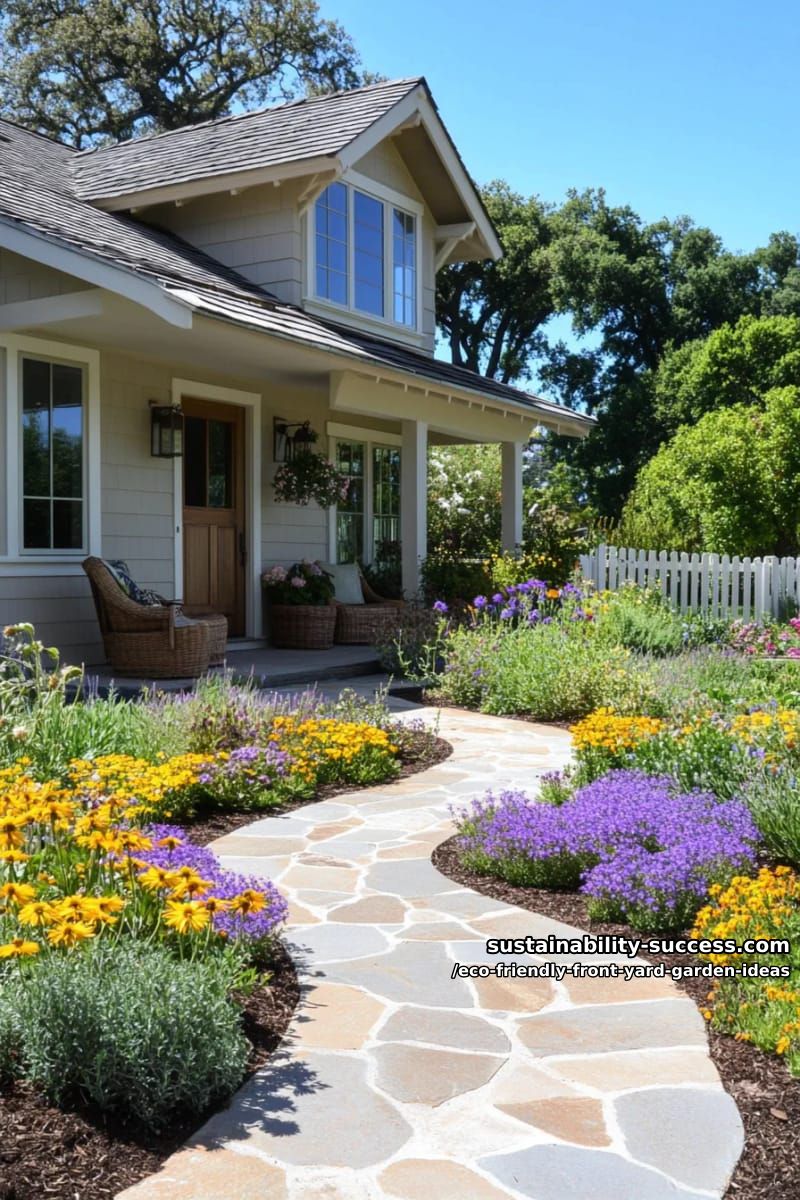
Stone paver walkways bring structure and elegance while giving your shoes a clean path. Surrounding these with native wildflowers and drought-tolerant grasses means less watering, fewer chemicals, and a boost for local pollinators.
Isn’t it smarter to let your front yard work with nature instead of fighting against it?
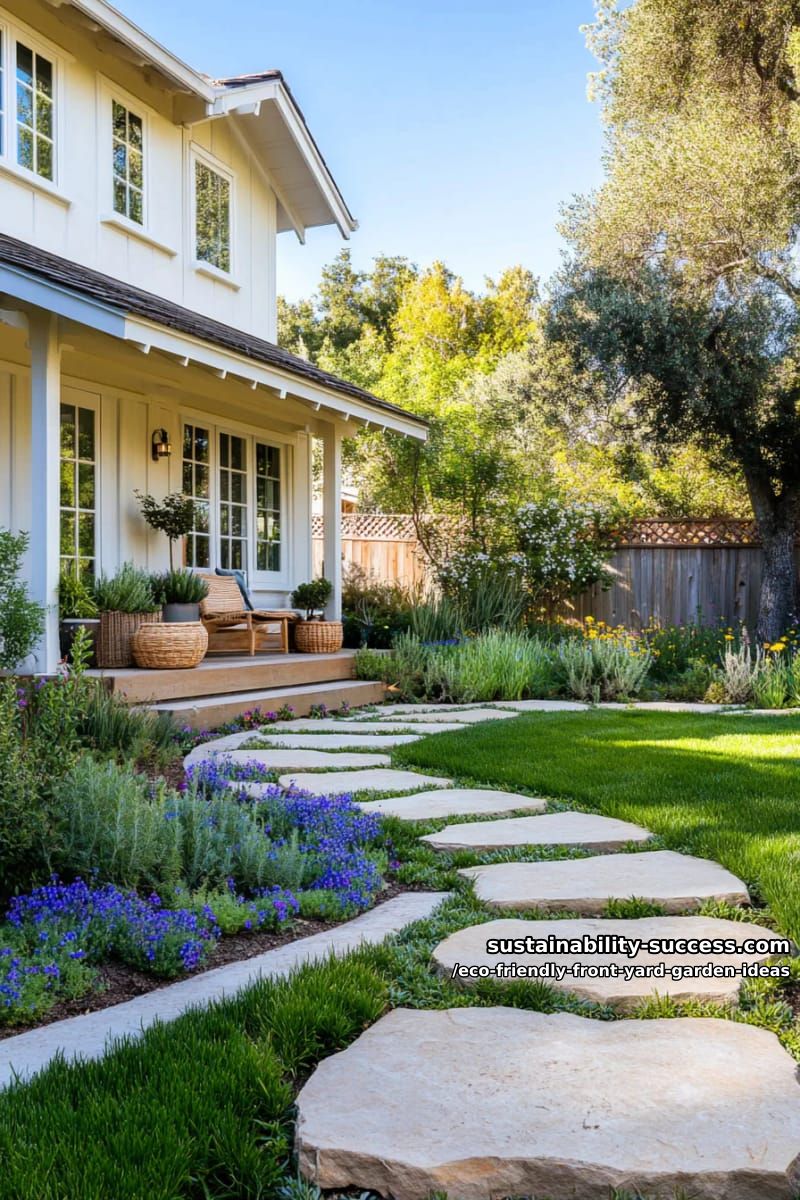
This setup might take a little patience, as wildflowers and grasses need time to establish. But the payoff? A vibrant, low-maintenance yard. Imagine birds, bees, and butterflies making regular stops.
Skip the endless mowing. You’ll save water, effort, and maybe even spark envy from your neighbors.
2. Raised vegetable beds bordered with reclaimed wood for sustainable backyard gardening
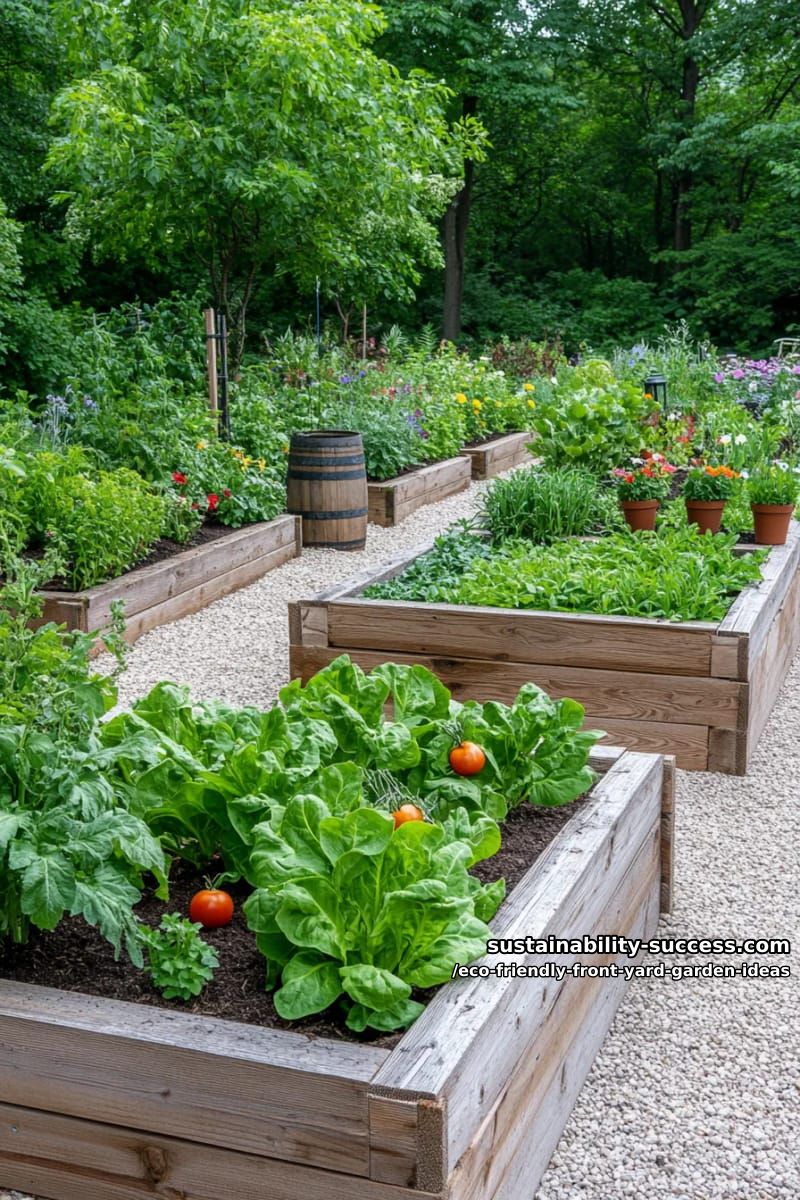
Raised vegetable beds built with reclaimed wood offer a double win for eco-conscious gardeners. Old pallets or fence boards gain new life, reducing waste and minimizing the need for freshly cut timber.
Imagine harvesting tomatoes from a bed that’s as green as the produce itself, satisfying, right?
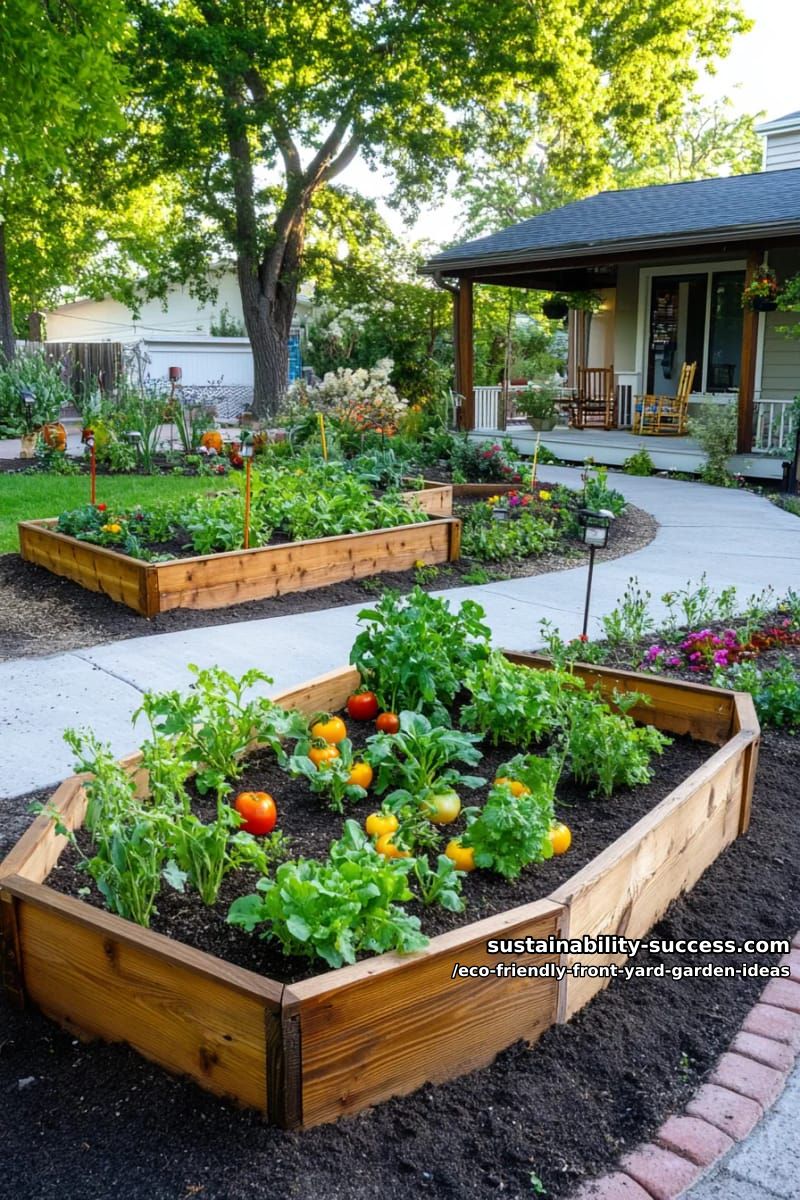
These beds make gardening simpler. Soil warms up faster, weeds stay at bay, and bending over becomes less of a chore. However, inspect reclaimed wood for old nails or chemical treatments.
Not all scrap wood is safe for veggies, so choose carefully. Sustainability only works when health isn’t left behind.
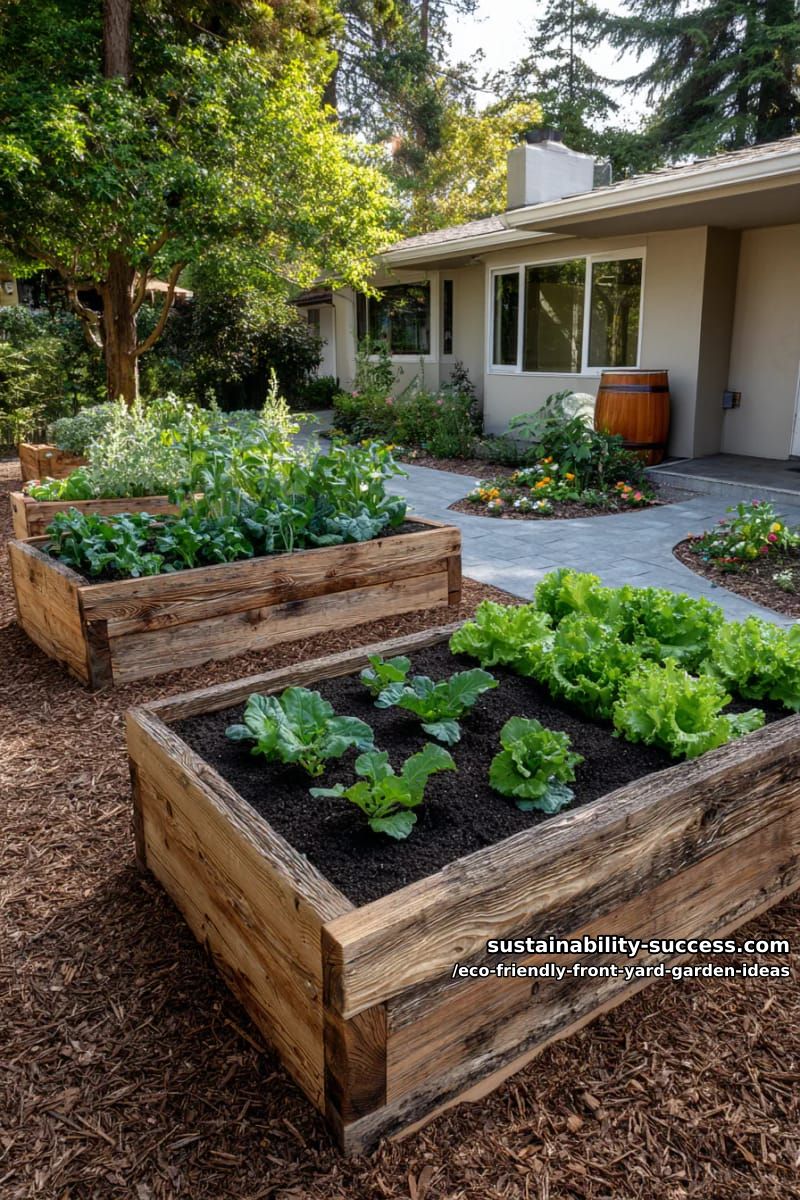
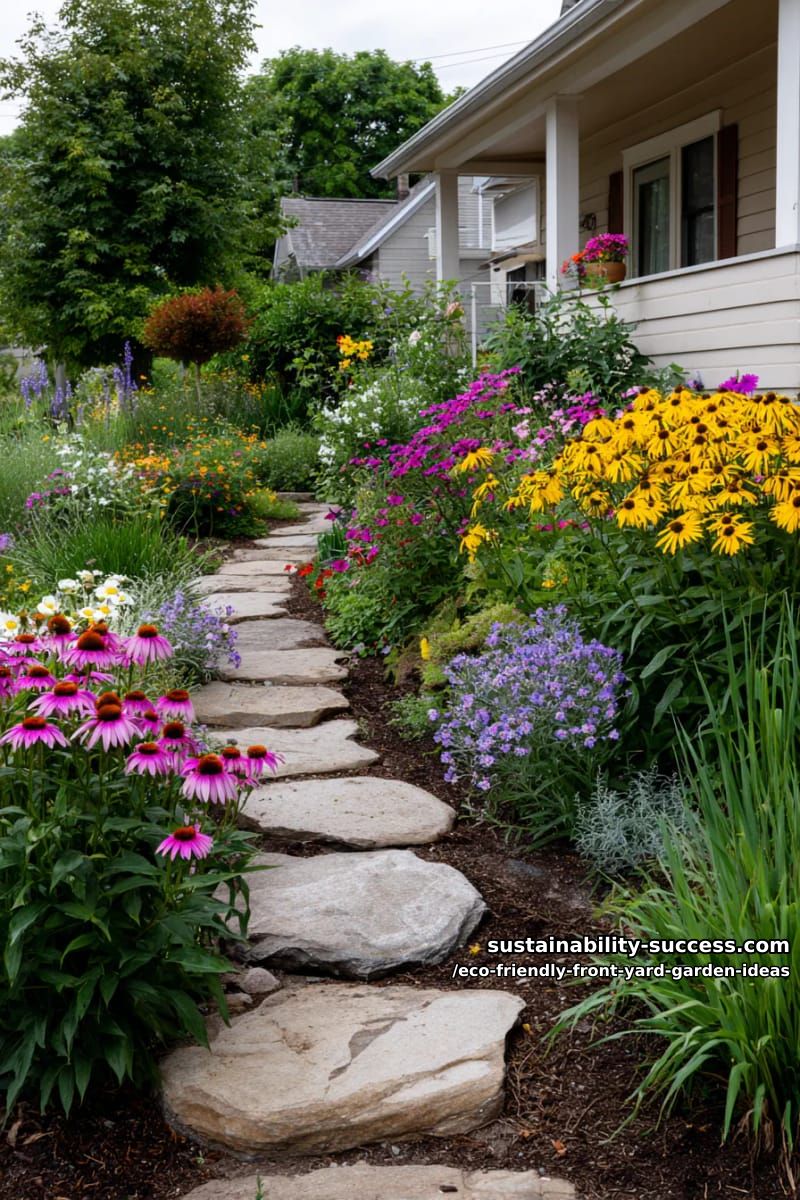
3. Stepping stone path curving through a lush pollinator-friendly perennial border
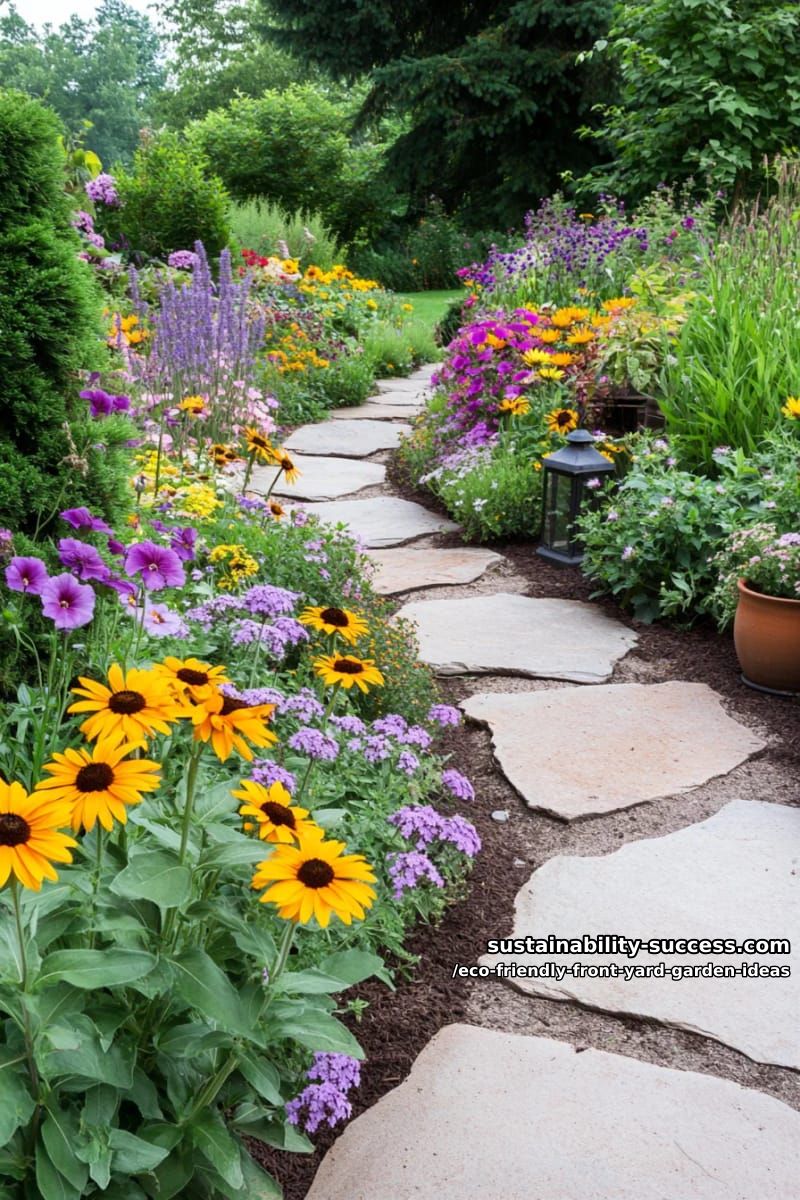
A curving stepping stone path weaves charm and practicality through any front yard. It guides visitors, keeps shoes mud-free, and protects your thriving plants.
Surround the stones with drought-tolerant perennials, coneflowers, bee balm, or salvia, so bees and butterflies find a banquet while you enjoy low maintenance beauty.
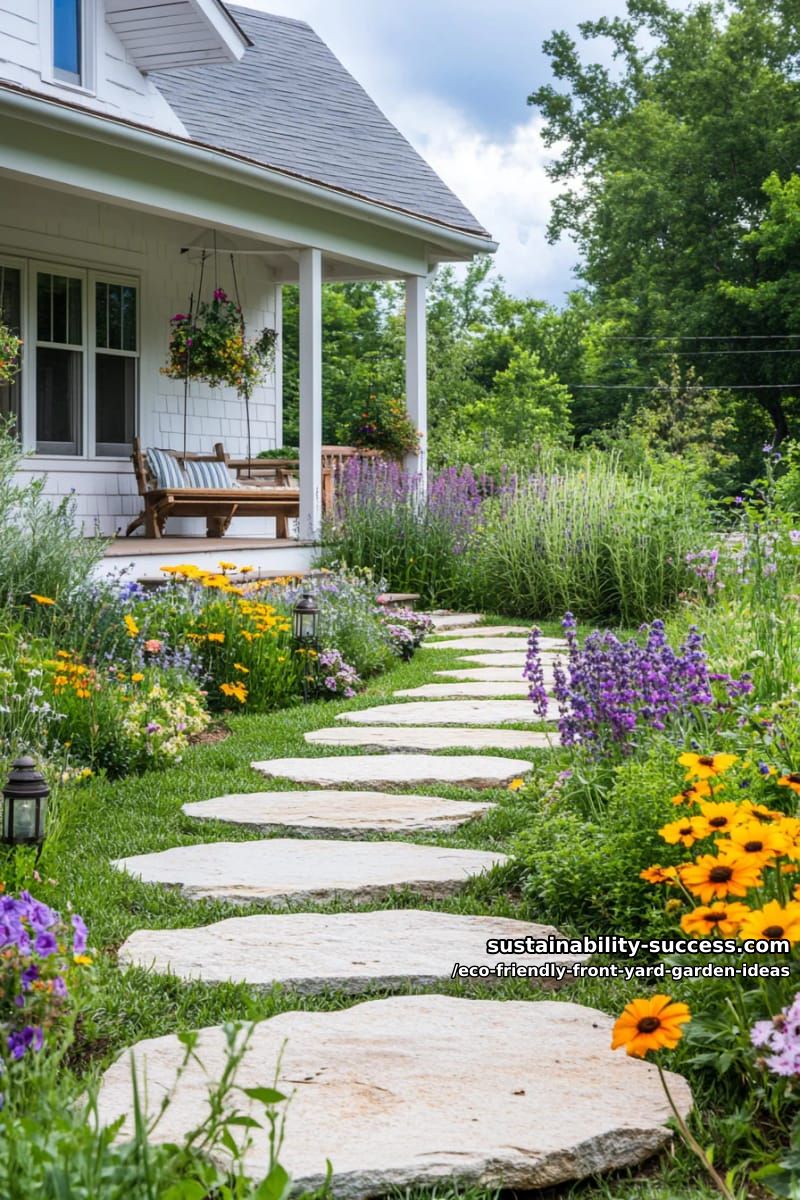
Choosing native perennials means less watering and fewer chemicals. The irregular path shape feels welcoming, not stiff, and encourages exploration.
Sure, some might say a straight sidewalk is easier, but a winding path creates visual interest and makes every trip to your door a small pleasure. Why settle for ordinary?
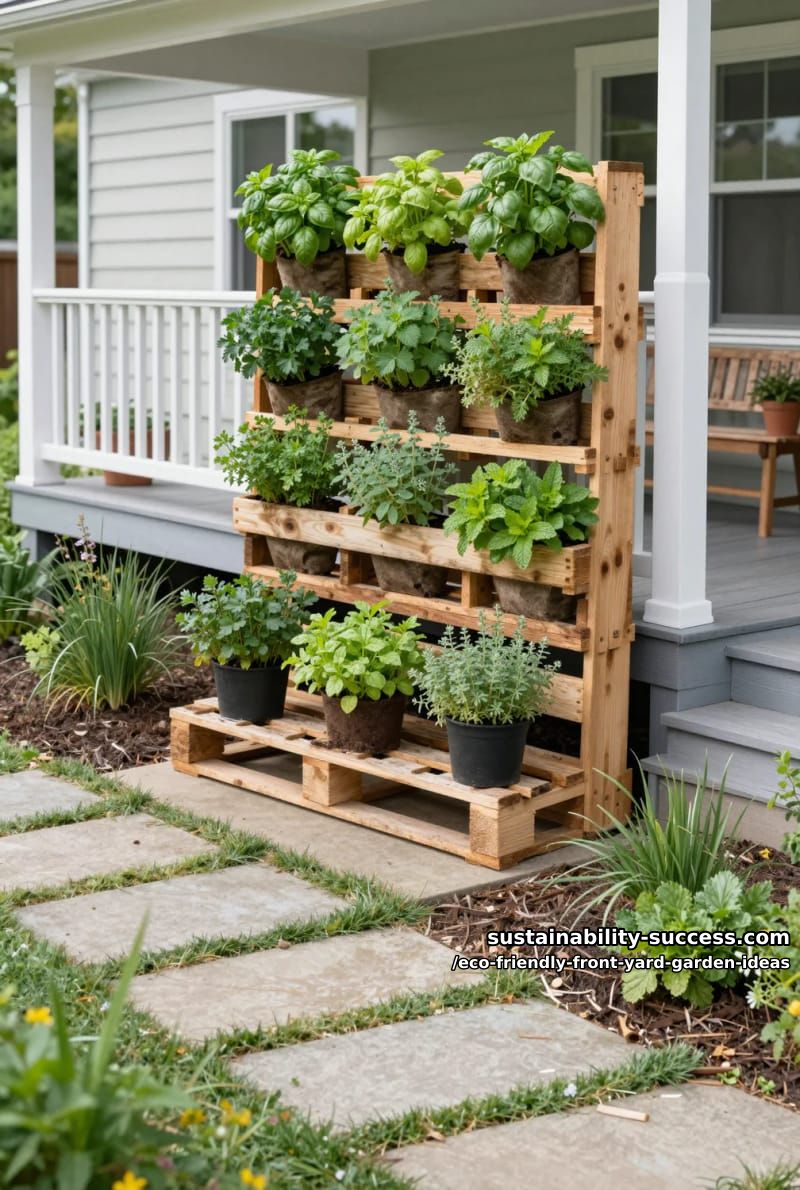
4. Vertical herb garden wall using recycled pallets near the front porch
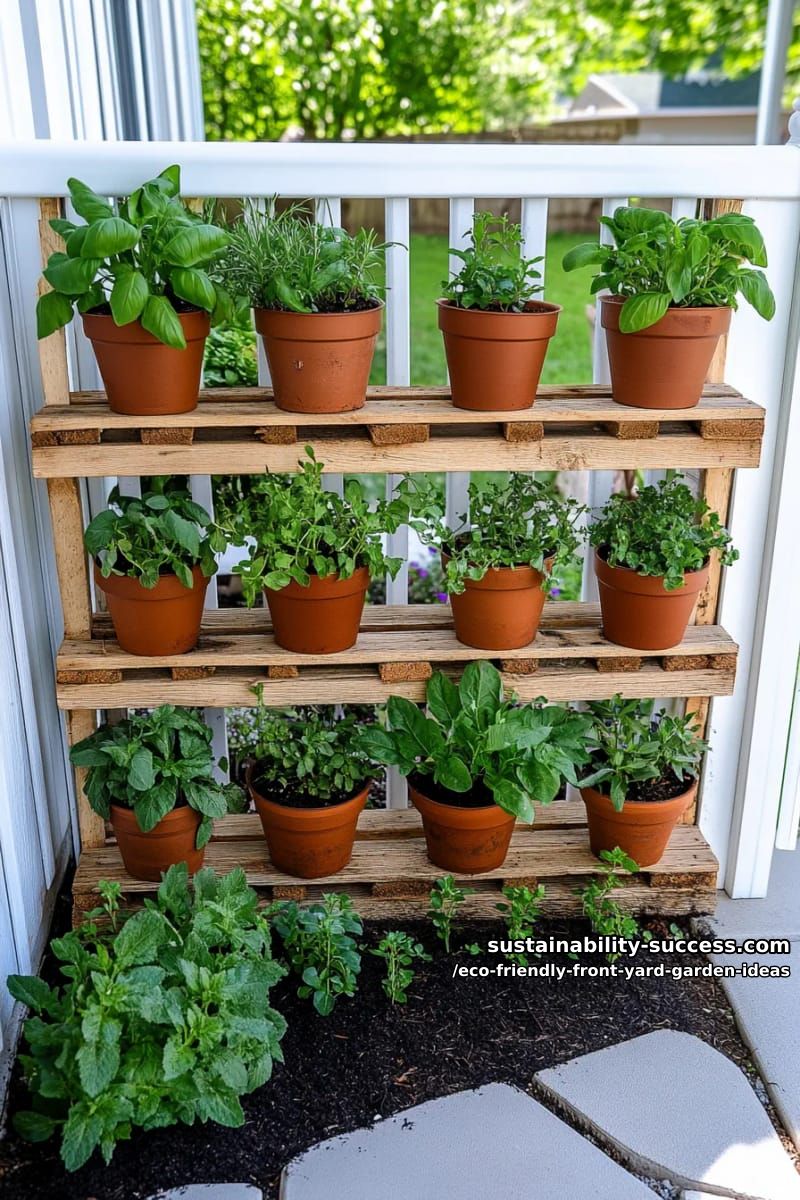
Imagine greeting guests with a living wall of herbs, crafted from recycled pallets. This green addition not only saves ground space but also gives your porch a fresh scent.
Simply secure pallets upright, add pots, and start with hardy herbs like rosemary or mint. Maintenance stays easy, and the impact? Instant curb appeal.
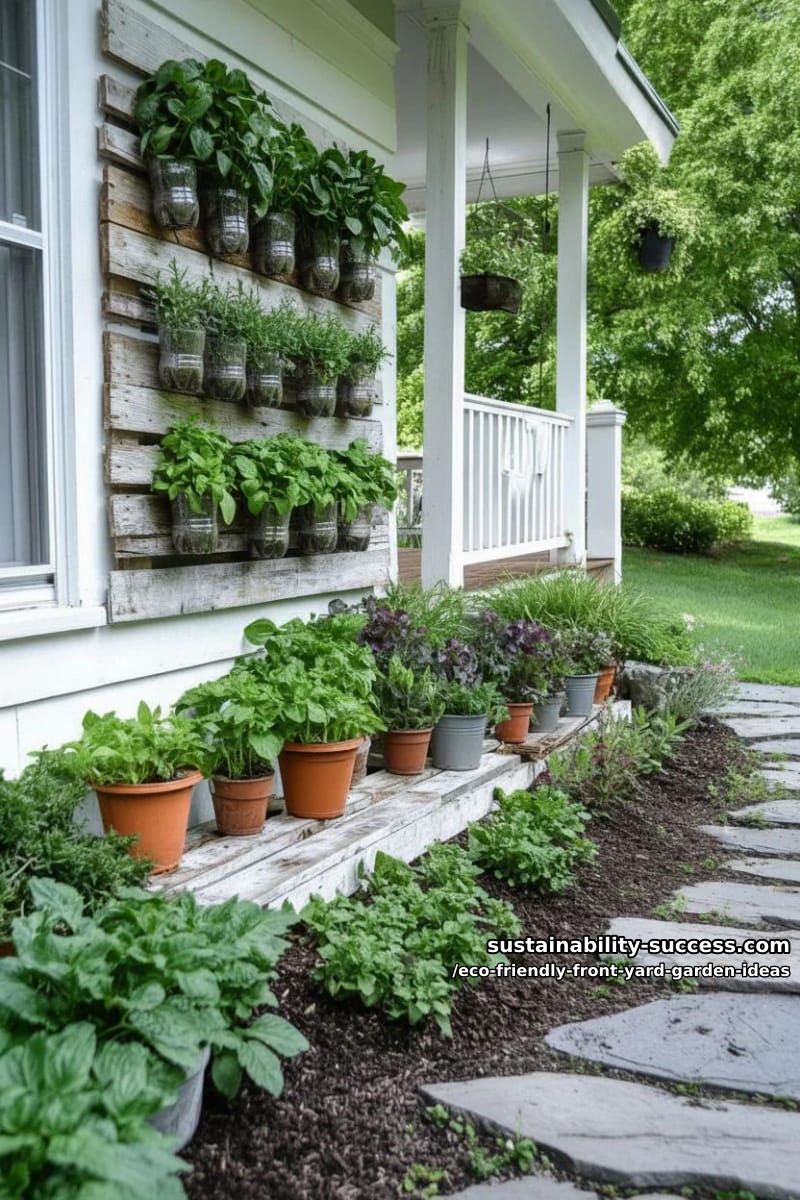
However, be mindful of sun exposure and water drainage. Not every herb thrives in partial shade, so plan your planting to avoid disappointment.
A vertical garden made from pallets isn’t just resourceful, it’s a conversation starter. Who knew fresh basil and sustainability could go hand in hand?
5. Gravel and succulent mosaic garden for a low-water modern landscape yard
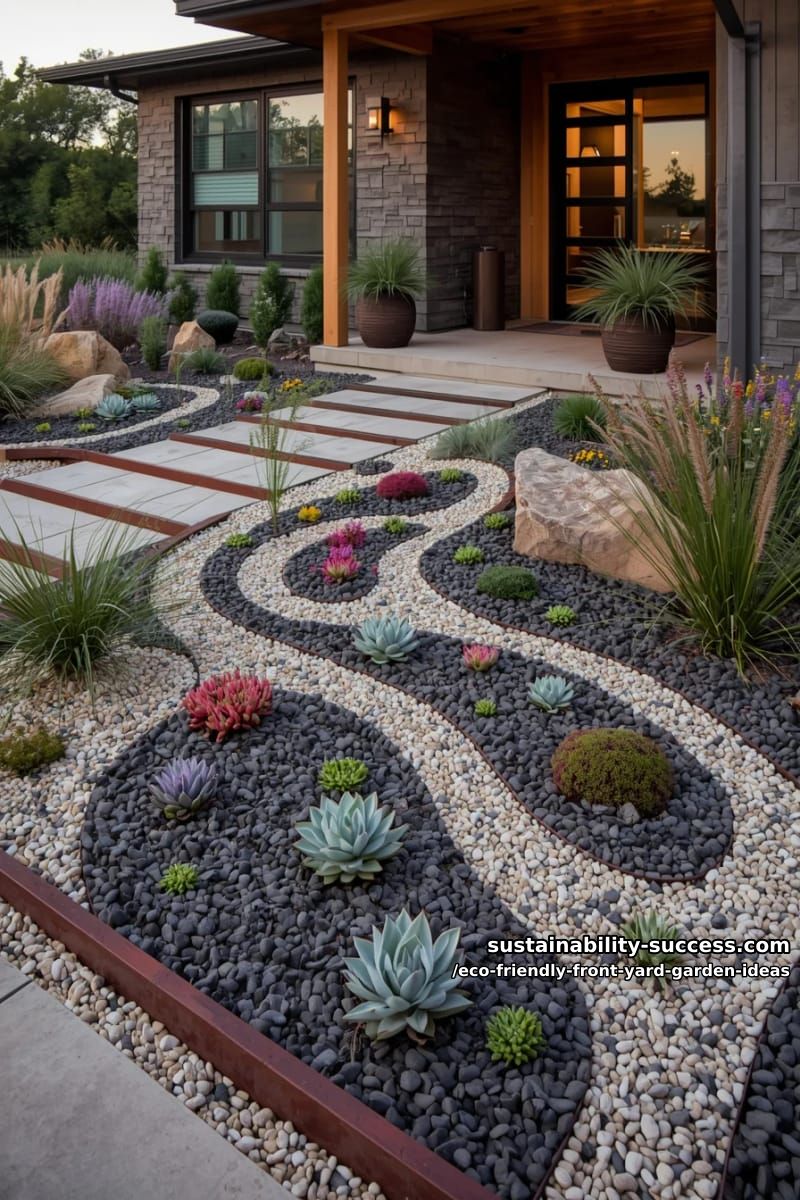
Craving a front yard that turns heads without draining the hose? Gravel and succulent mosaic gardens offer exactly that. Gravel paths keep weeds in check and reflect sunlight, reducing soil evaporation.
Succulents, with their bold shapes and minimal thirst, fill the gaps, creating a living pattern that’s both modern and eco-friendly.
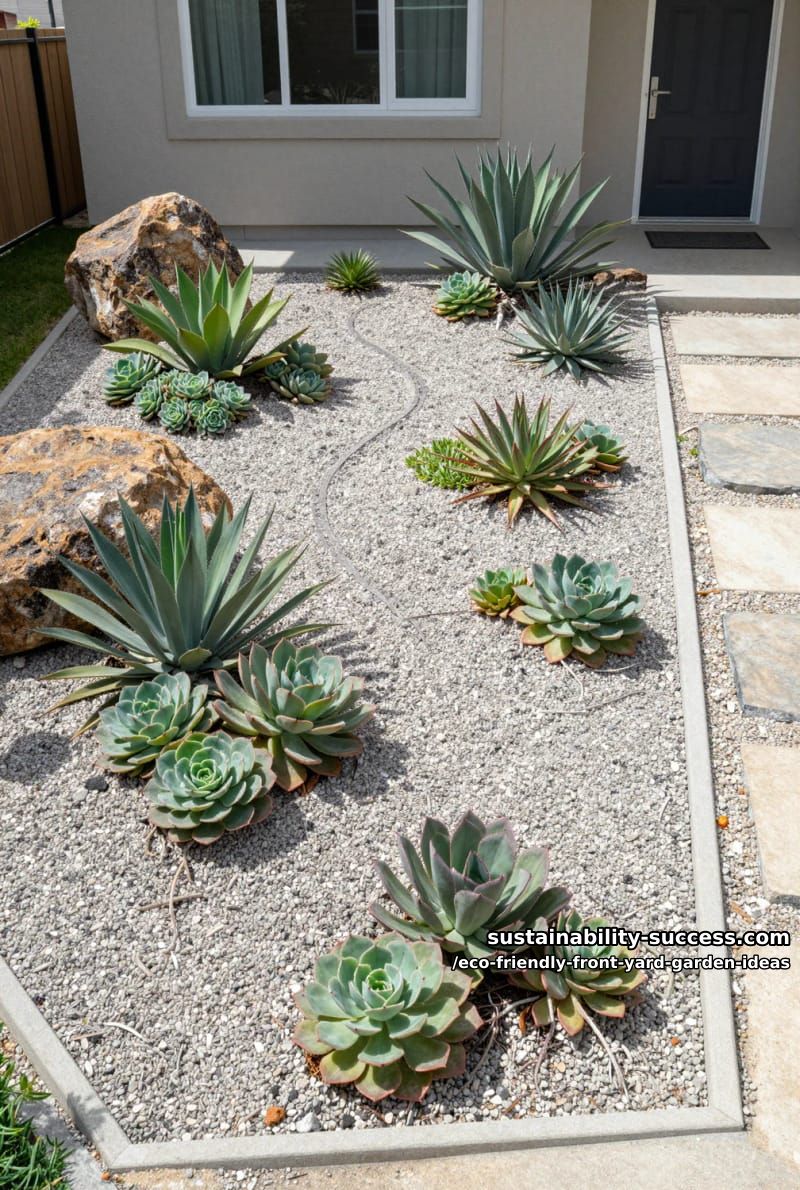
Why settle for a thirsty lawn when you can have a tapestry of color and texture? Arrange succulents like echeveria or sedum in geometric groups. Use contrasting gravel shades to outline shapes.
Maintenance stays low, no mowing, barely any watering. Just watch for weeds and enjoy the compliments from passersby.
6. Butterfly-attracting flower beds using native plant species in geometric layouts
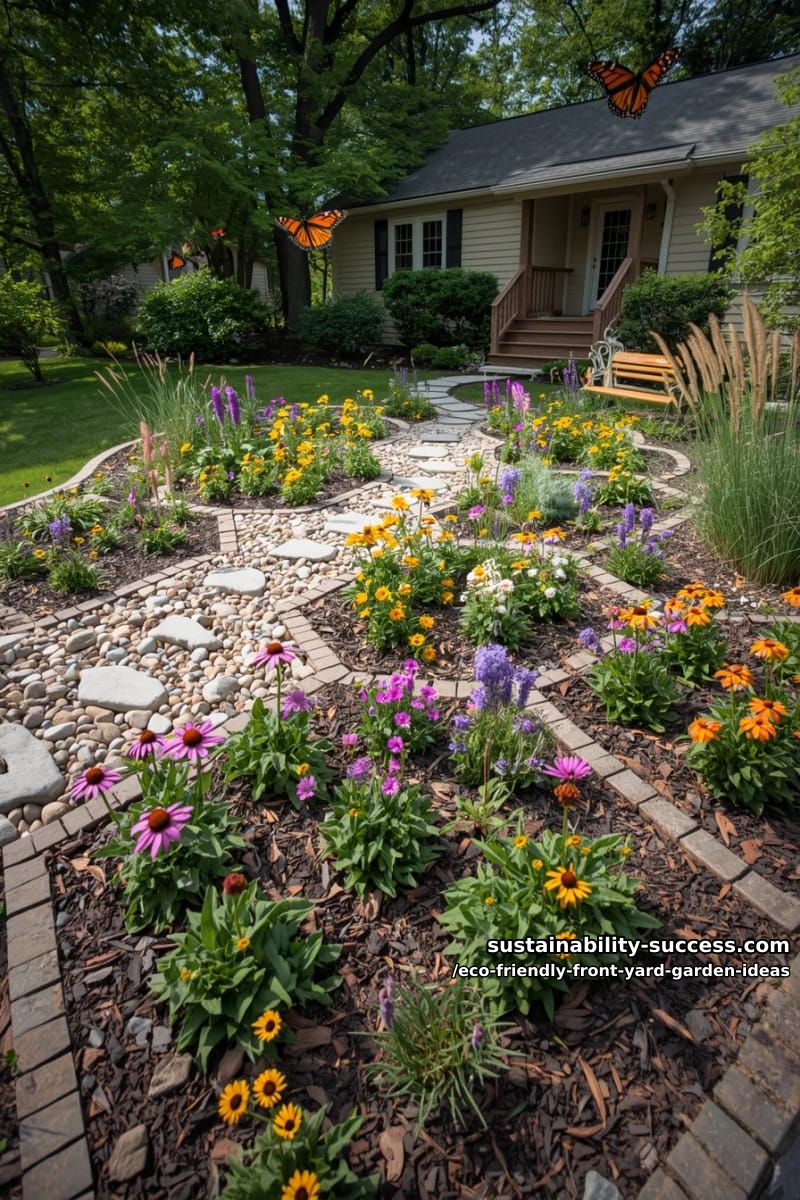
Planting butterfly-friendly beds with native species is both beautiful and practical. Geometric arrangements, like squares or spirals, add order and curb appeal without fussy upkeep.
Local flowers, such as milkweed or coneflowers, attract pollinators and need less water than exotics. Why not let nature do some of the heavy lifting?
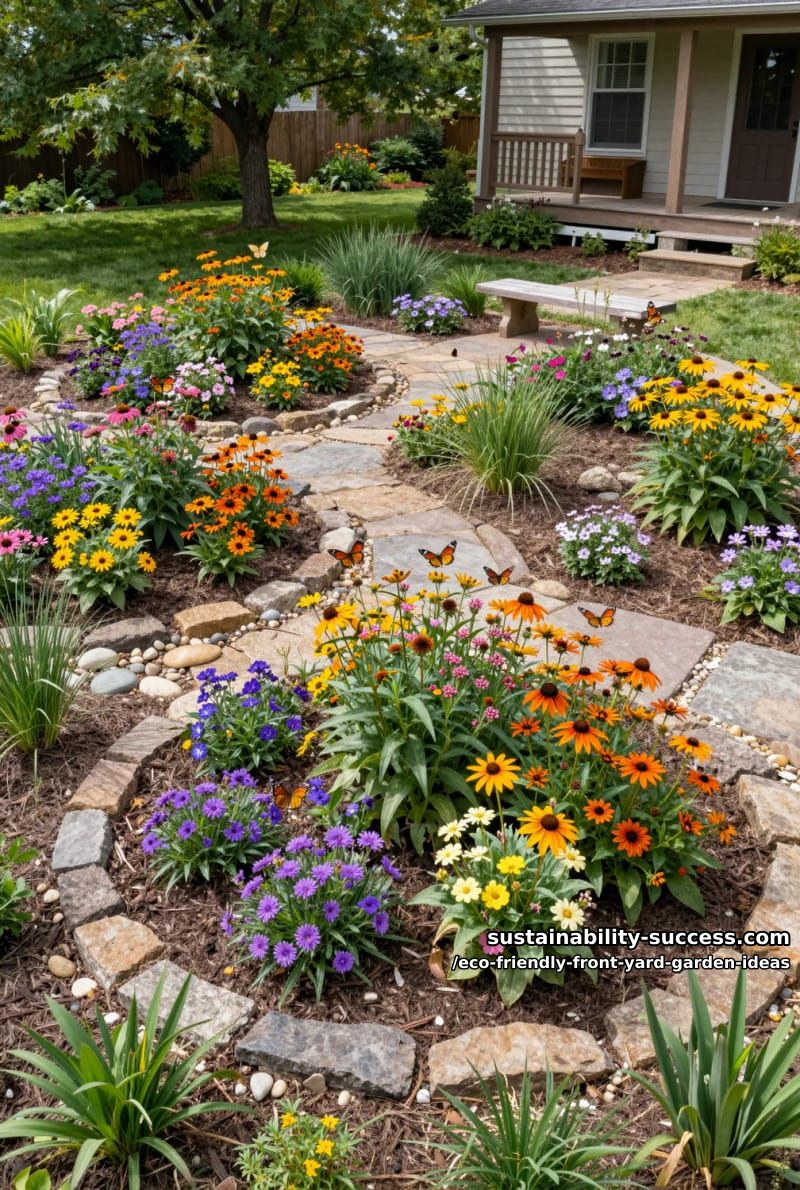
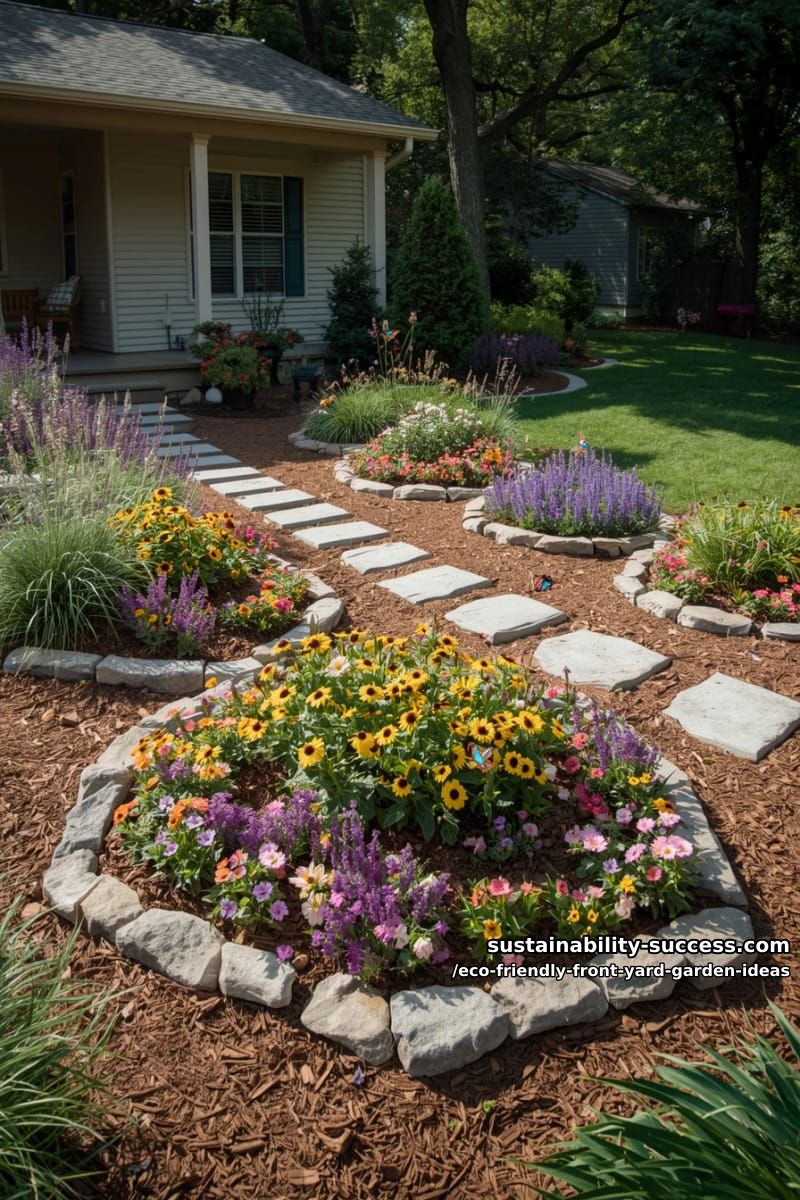
However, geometric layouts need a bit of planning. Straight lines or crisp shapes can become messy if plants grow unpredictably. Start with clear borders, think stones or recycled bricks, to keep edges tidy.
Native plants are tough, but occasional weeding and pruning help maintain their shape and health.
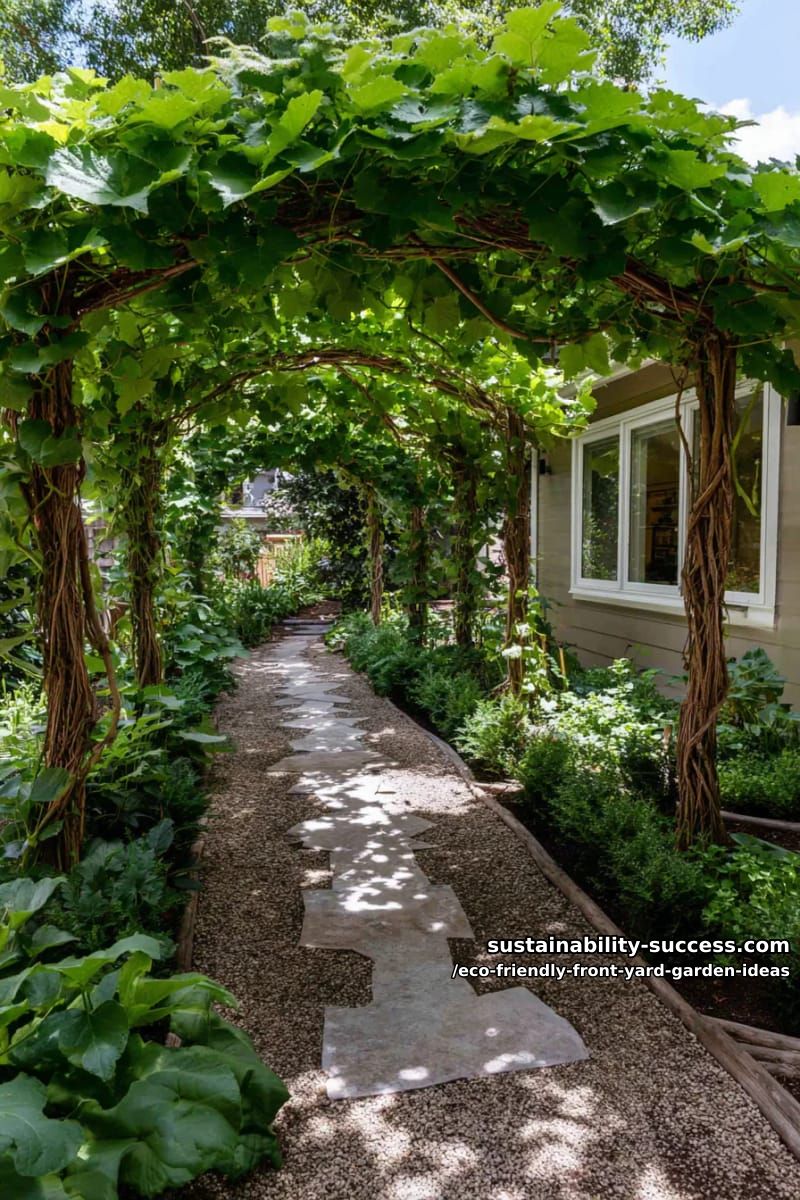
7. Leafy arched trellis walkway with climbing edible plants for garden yard shade
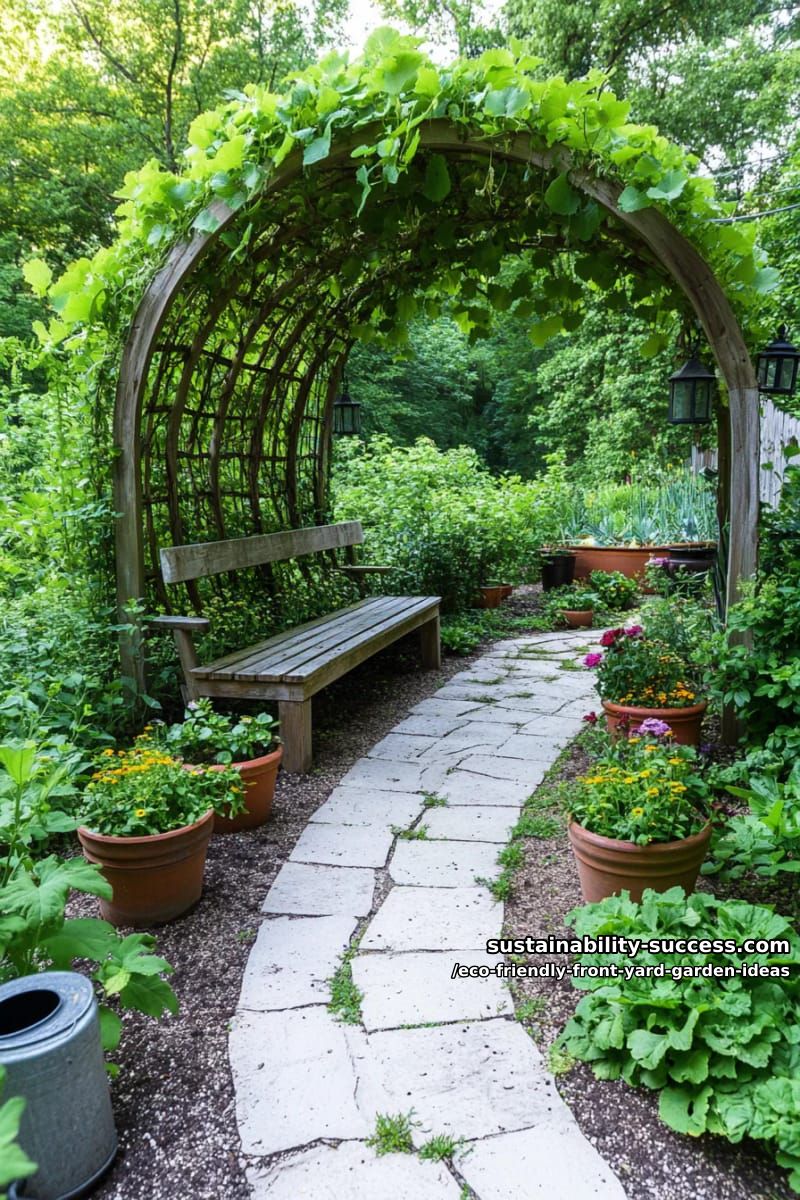
Imagine stepping beneath a leafy trellis, sunlight flickering through edible vines like beans, cucumbers, or grape tomatoes overhead.
This living archway isn’t just eye candy; it cools your path and yields snacks within arm’s reach. You’re growing shade and supper in the same plot, talk about efficiency.
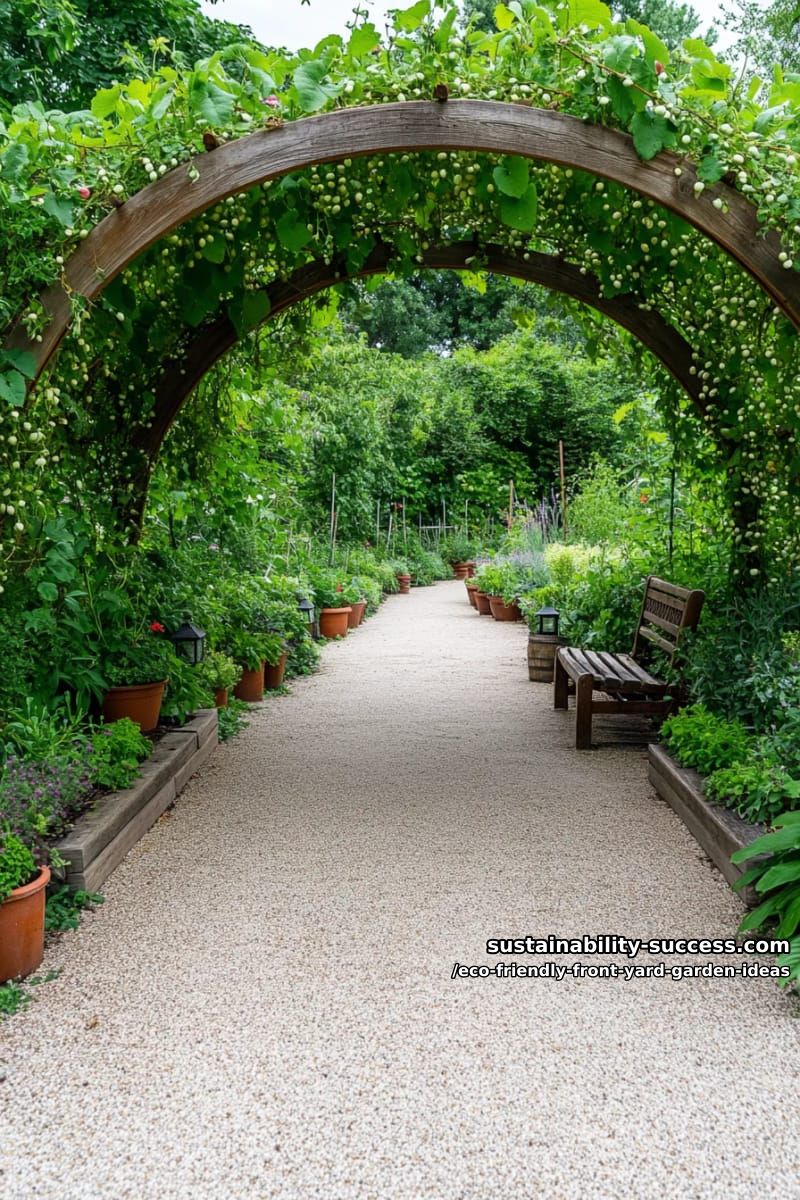
However, climbing plants need support and routine trimming, or they’ll sprawl wildly. Be sure to pick varieties suited to your climate and trellis strength.
Regular watering and occasional guiding of tendrils keep things tidy. In return, you get a shady retreat and a conversation starter for any neighbor walking by.
8. Layered stone and mulch beds with rainwater harvesting barrel accents
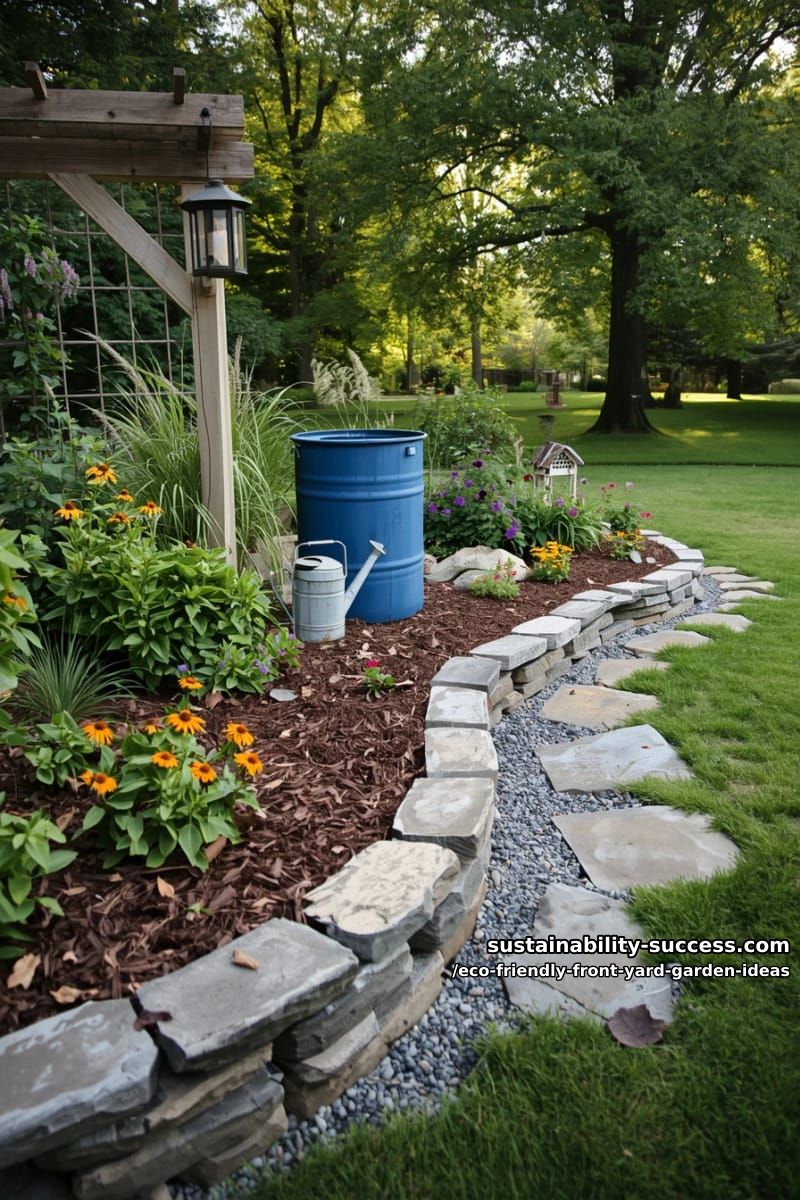
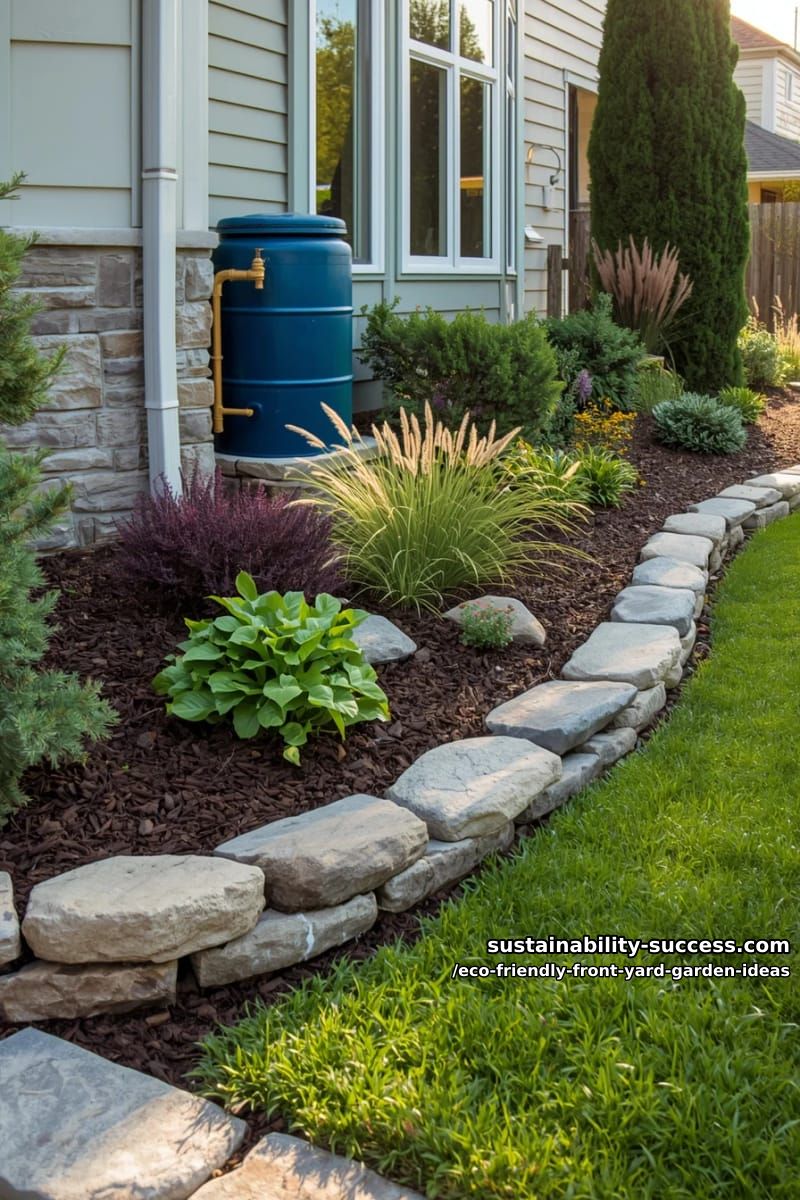
Layered stone and mulch beds add texture and cut down on weeds. Stones create natural borders while mulch keeps moisture in. This combo looks sharp and saves water.
Ever thought about how much less mowing you’d do? Fewer grass patches mean less work and more time for weekend relaxation.
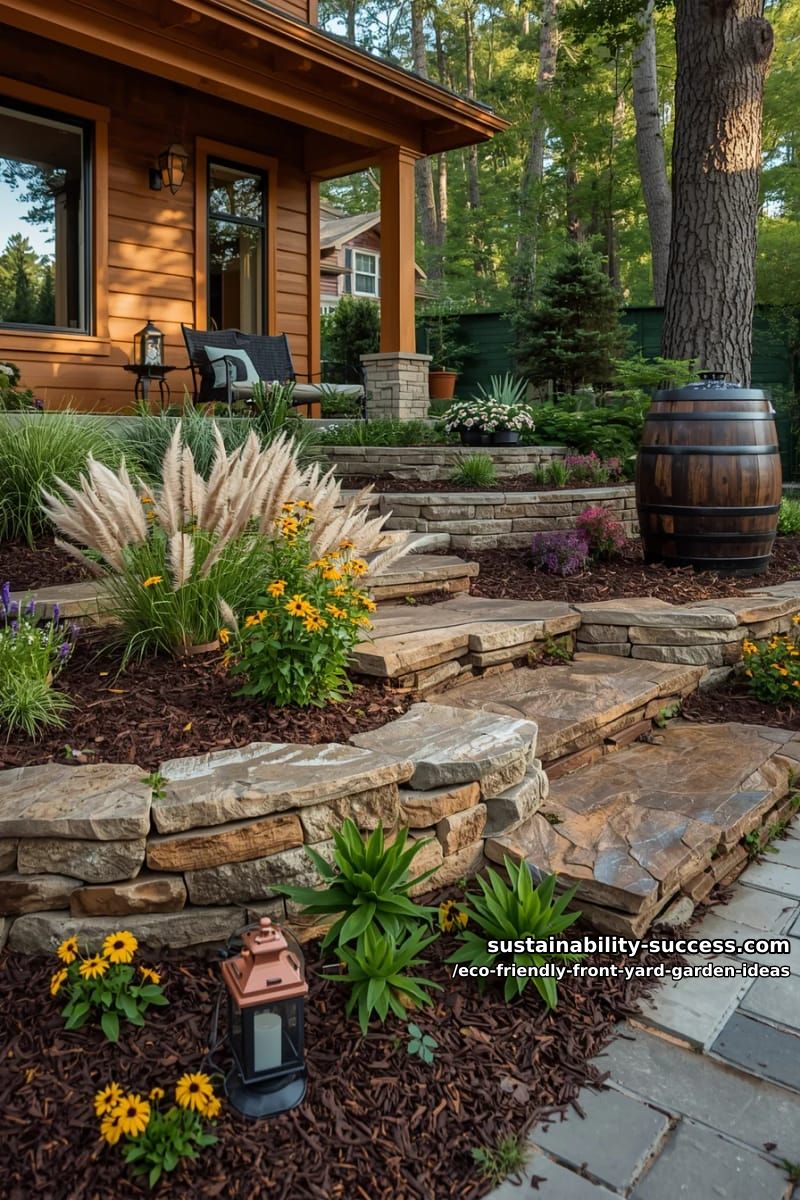
Rainwater harvesting barrels aren’t just for show. Place one near your beds and let nature fill it up. Use that water for your plants during dry spells.
It’s a win for your wallet and the environment. Just check local rules, some cities have limits on rainwater collection.
9. Mini orchard of fruit trees paired with aromatic herb underplantings
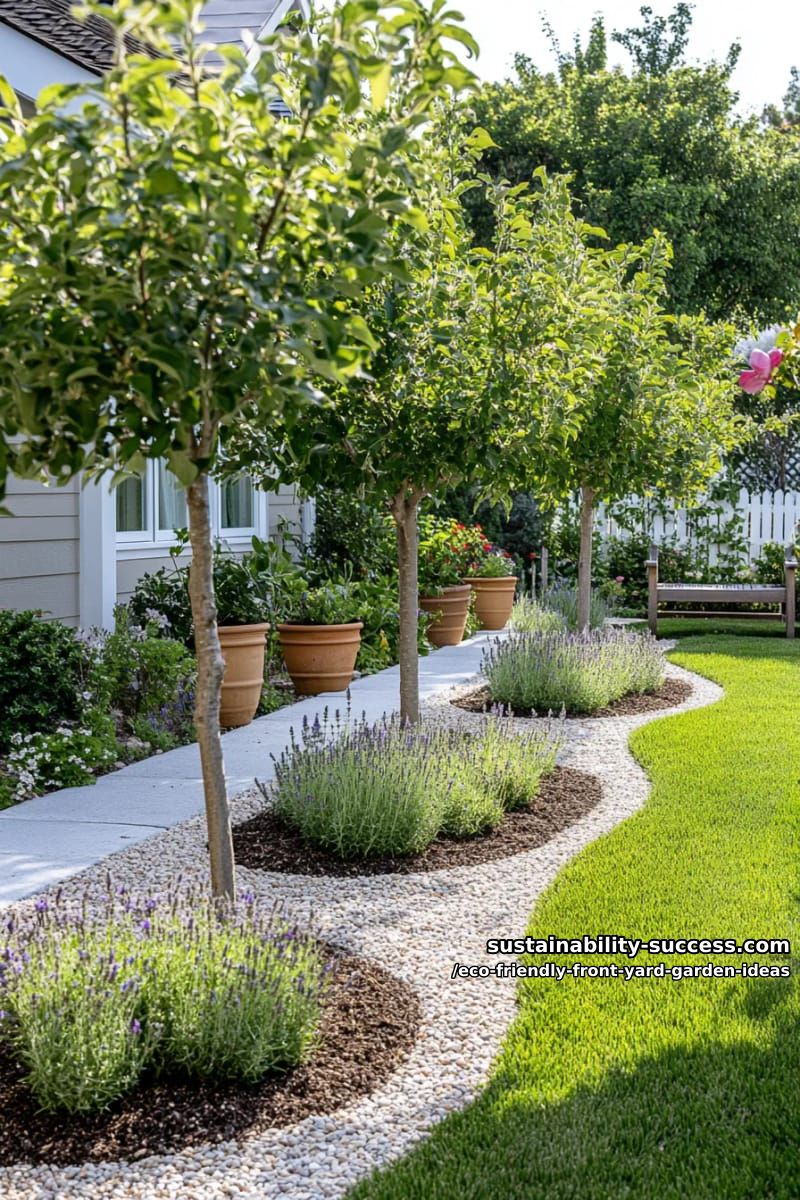
Planting a mini orchard in your front yard offers fresh fruit within arm’s reach, while aromatic herbs below boost soil health and attract pollinators. Imagine stepping outside for apples and rosemary, convenient and eco-friendly.
This setup saves trips to the store and turns lawns into edible, living landscapes.
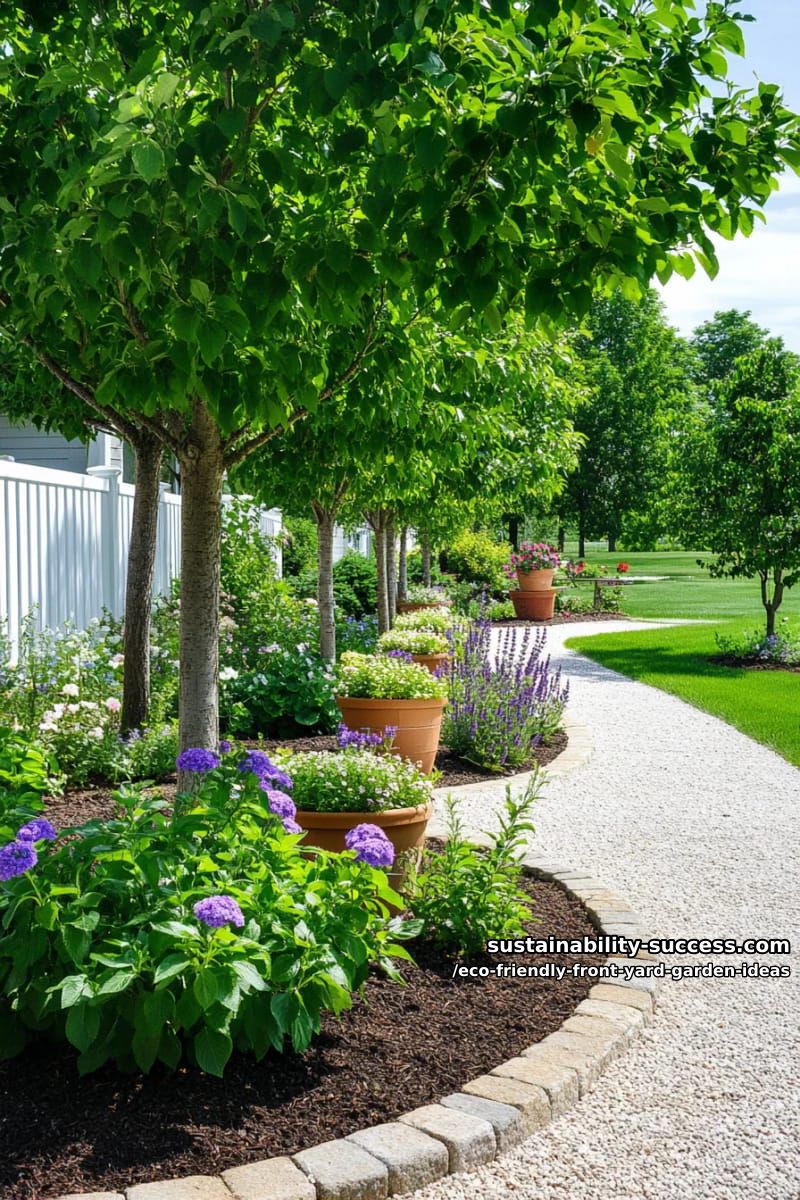
However, fruit trees need space, sunlight, and regular pruning. Herbs like thyme or oregano help suppress weeds and limit evaporation, but they may compete with young trees for nutrients.
Start small: choose trees suited for your climate and pair with hardy, drought-tolerant herbs. Your garden will give back, one bite and sniff at a time.
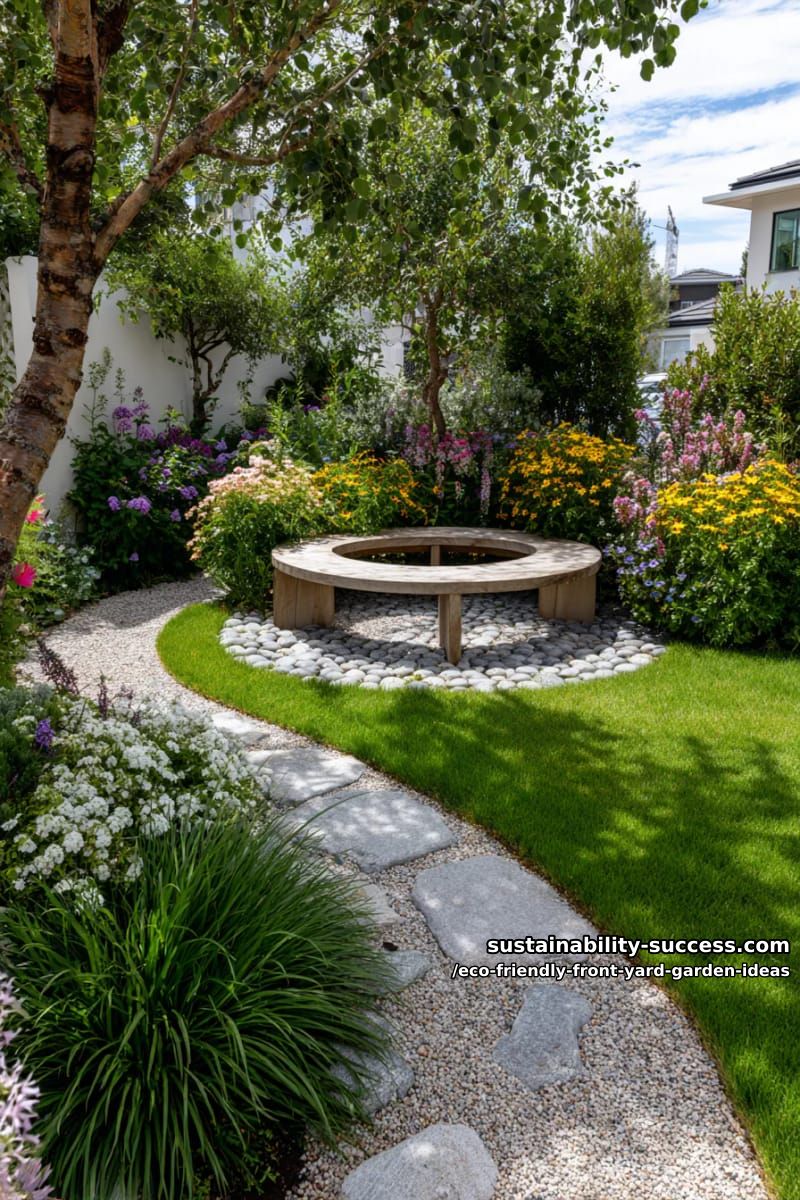
10. Curved pebble pathways leading to a cozy circular wildflower seating nook
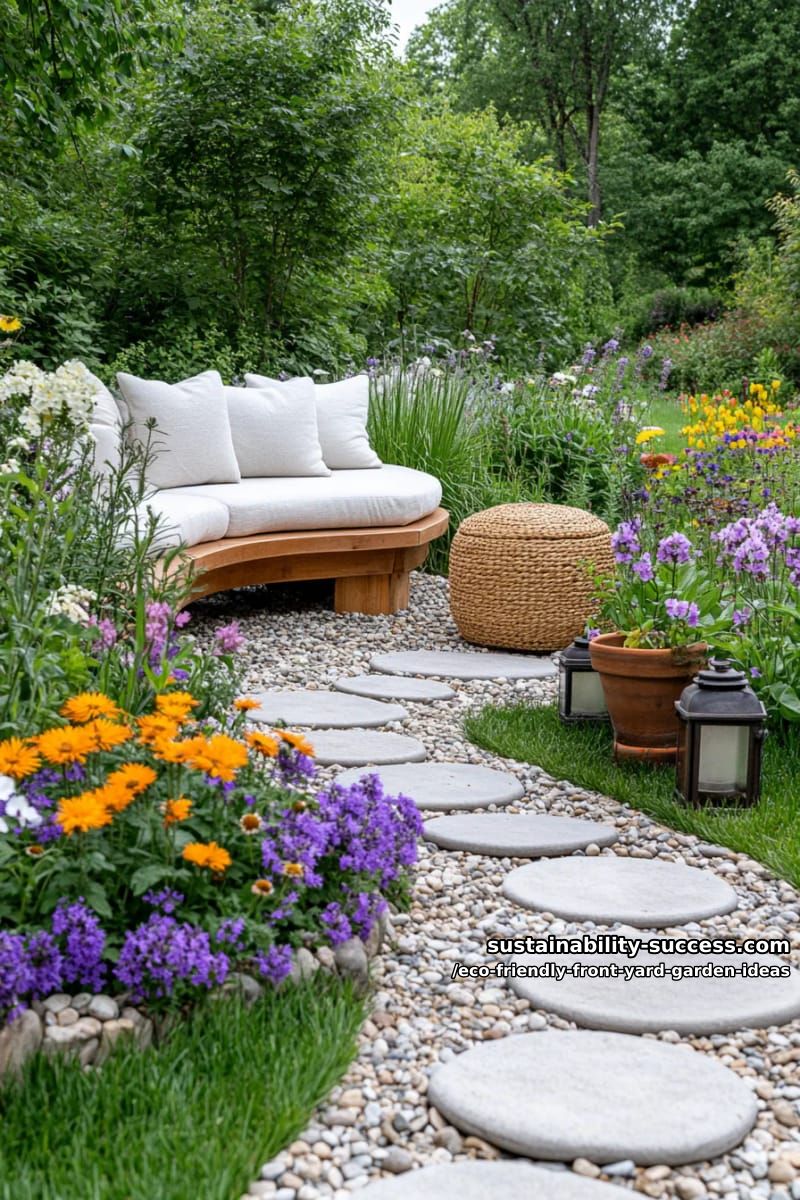
Curved pebble pathways bring a soft, natural look to front yards while reducing water runoff. They’re easy to install and require little upkeep.
Pebbles allow rain to soak into the ground, promoting healthy soil. Why settle for boring concrete when you can walk on stones that feel like a gentle foot massage?
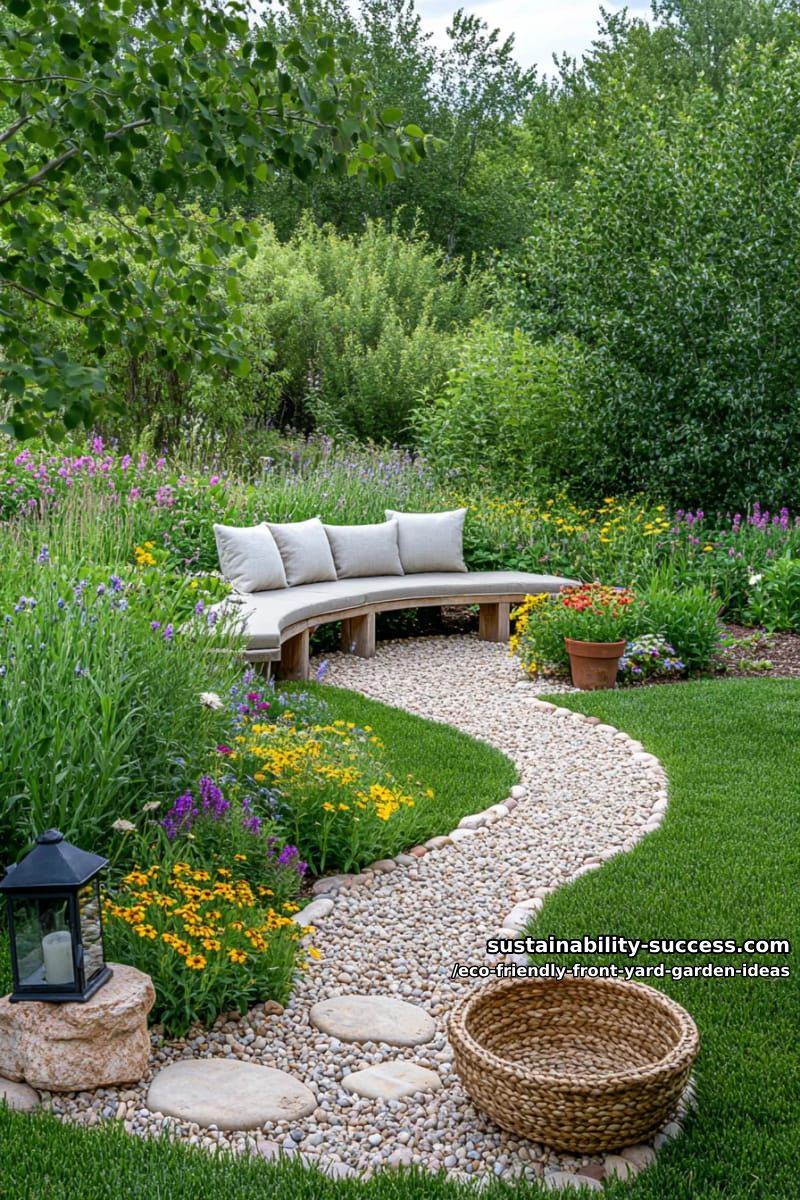
A circular wildflower seating nook at the end of the path creates a peaceful retreat. Imagine sipping your morning coffee surrounded by buzzing bees and swaying blooms.
Wildflowers support pollinators, but they can look unruly without occasional trimming. Still, this area offers a low-maintenance, eco-friendly escape steps from your front door.
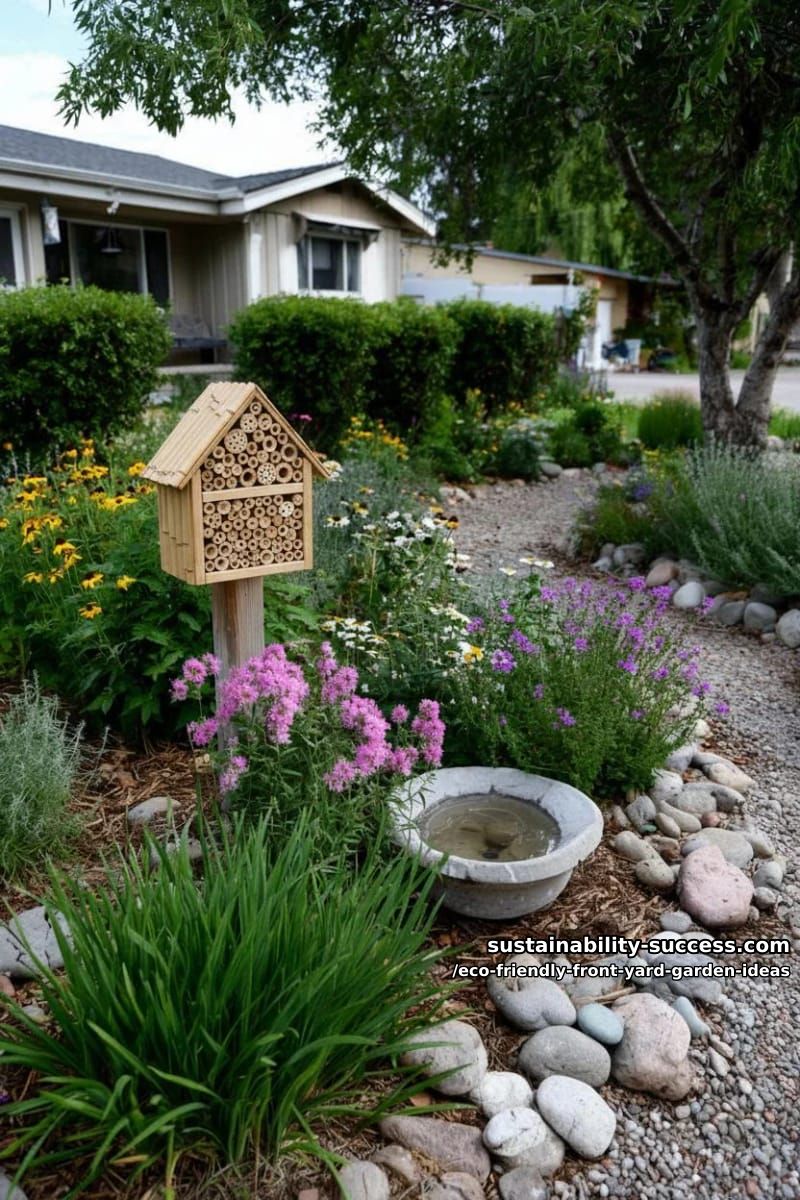
11. Bee hotels and bird baths tucked among dense eco-friendly flower clusters
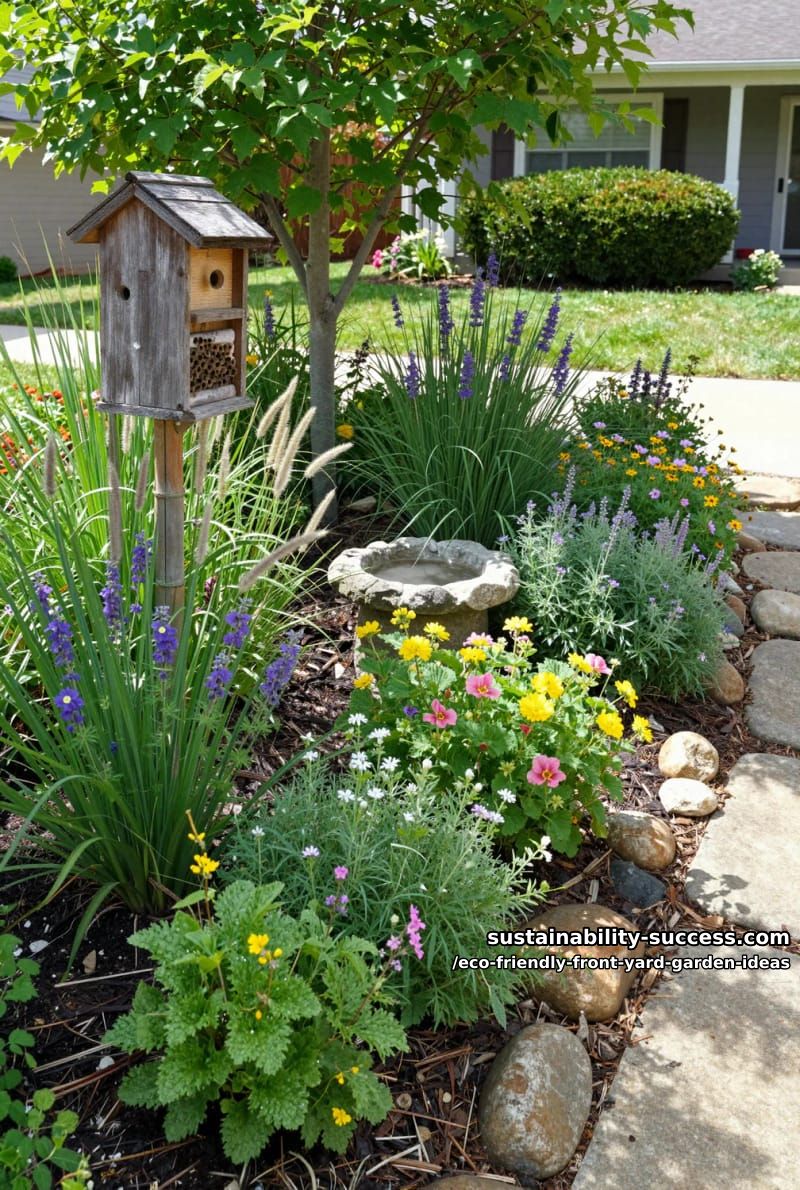
Why not add a bee hotel or bird bath among your flower beds? These items invite pollinators and birds, giving your garden life and movement. Choose untreated wood for bee hotels.
Place bird baths where you can watch feathered visitors. It’s a small step with a big environmental payoff.
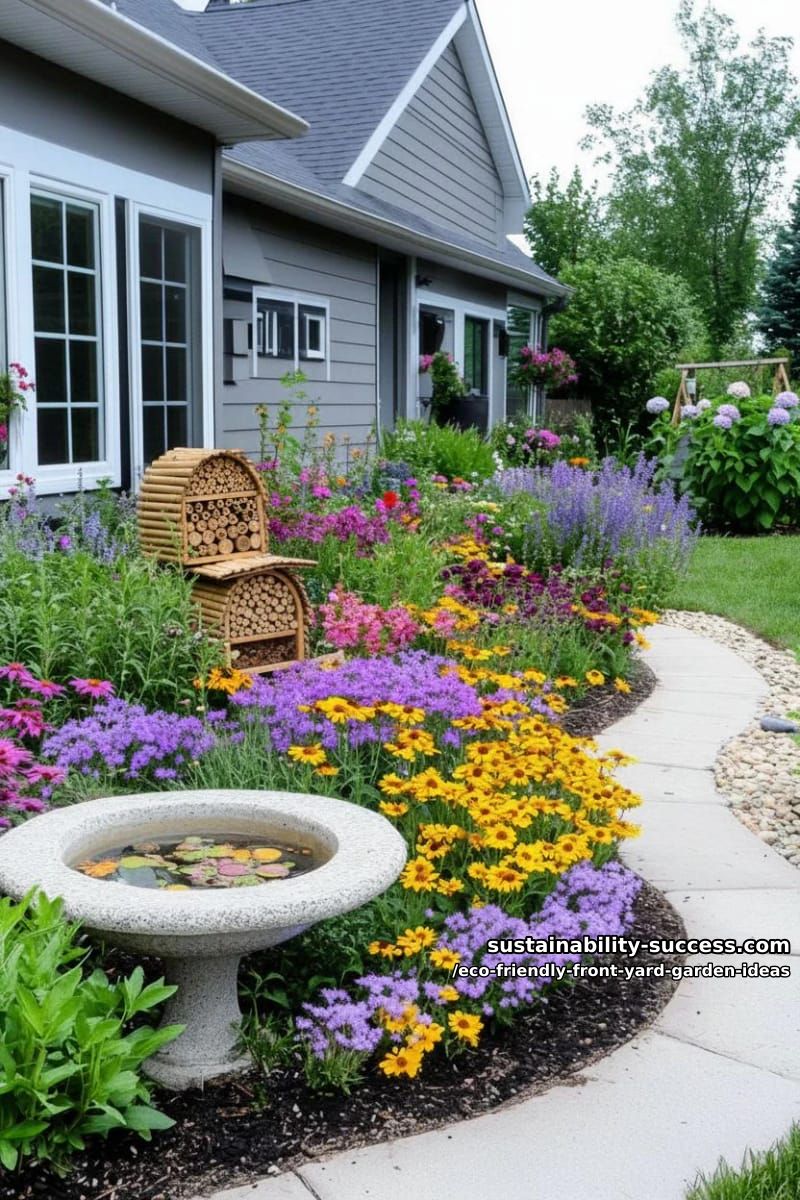
Dense clusters of native flowers create shelter and food for bees and birds. However, too much density can block sunlight and restrict airflow, which may attract pests. Mix in a few open spaces.
Water your bird bath regularly, and clean it often. Your eco-friendly garden will thrive with just a little attention.
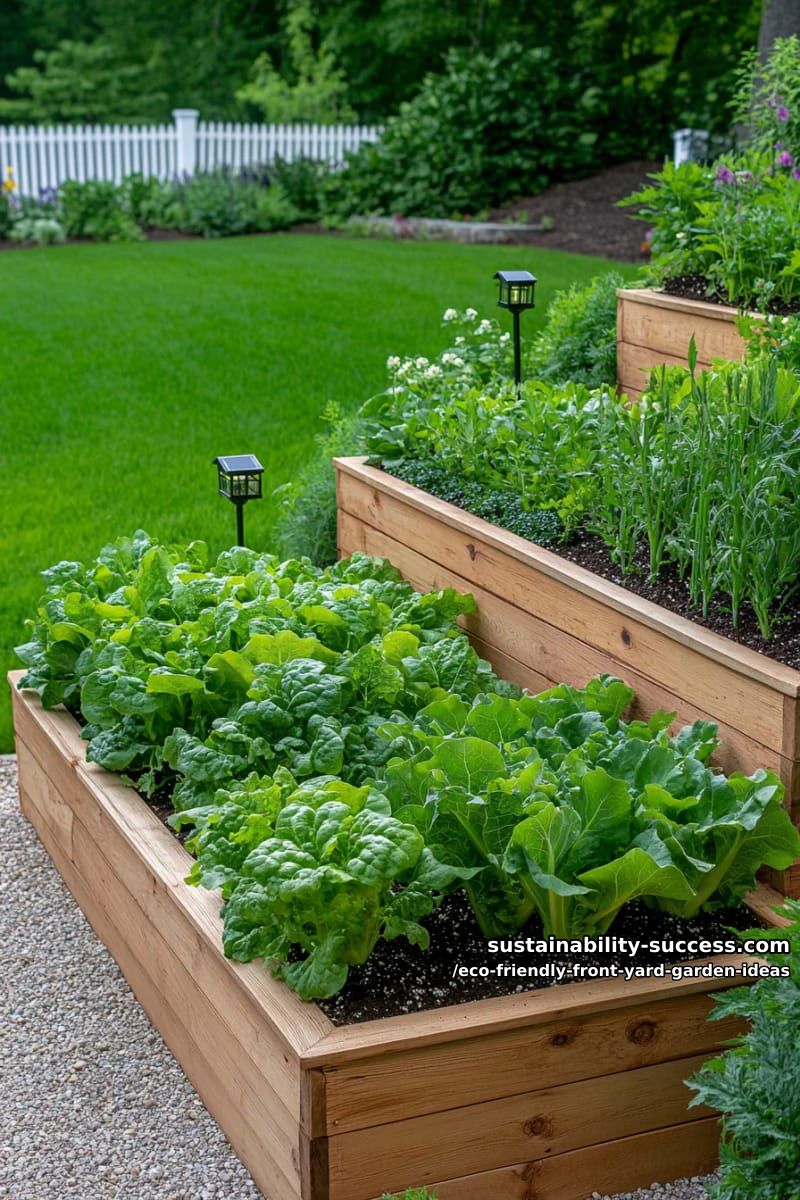
12. Multi-level planter boxes for vegetables flanked by solar garden lights
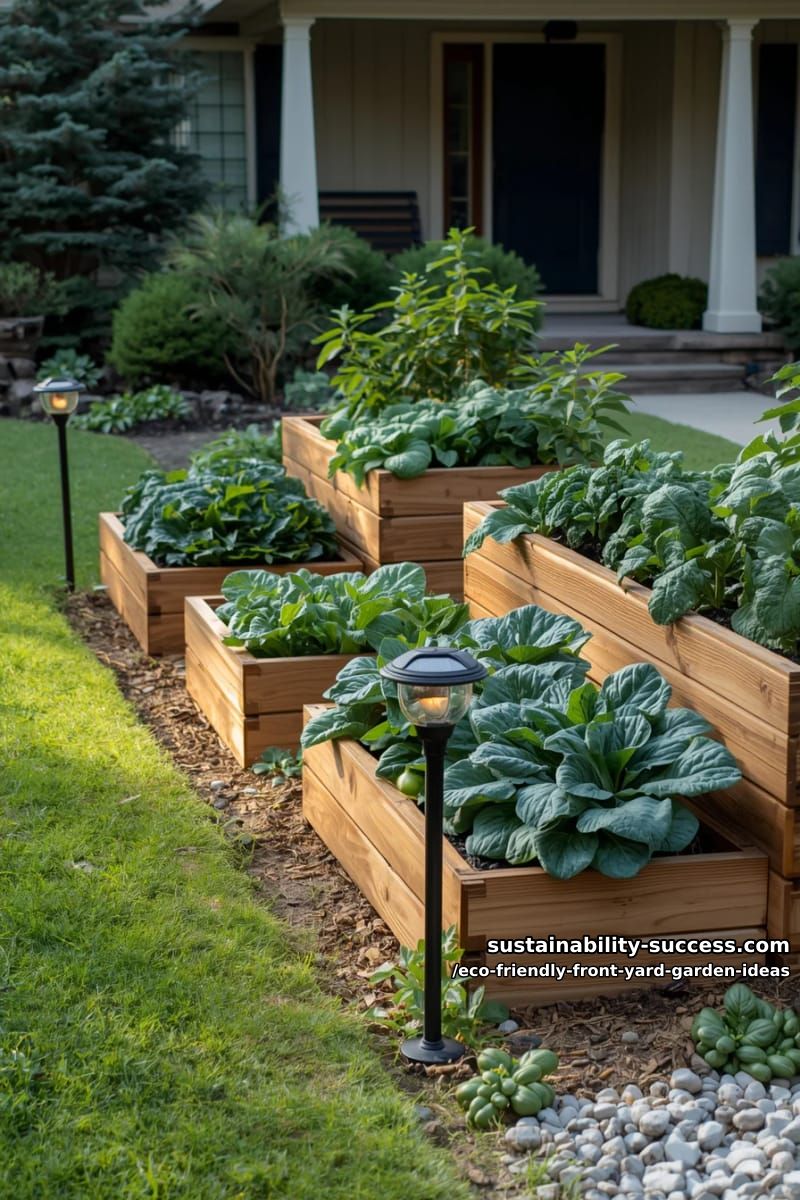
Stacking planter boxes can turn a plain yard into a thriving veggie patch, even if space is tight. These setups help separate crops and control soil quality.
Place hardy greens at the top, root veggies below. This gives your harvest a fighting chance against pests and foot traffic.
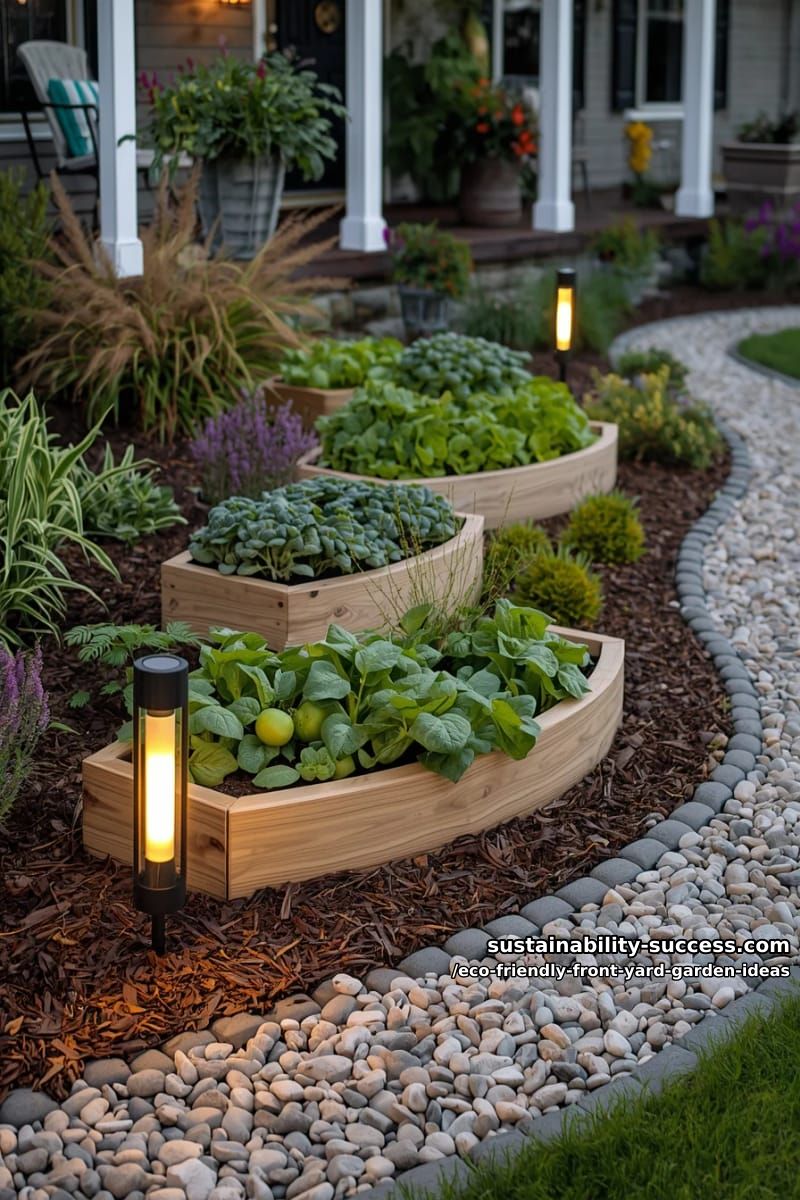
Adding solar garden lights not only highlights your handiwork but also saves energy. Imagine harvesting lettuce under a gentle glow, no tangled extension cords in sight.
Installation is a breeze, just stick them in the soil. If you want something low-fuss and practical, this combo covers both beauty and brains.
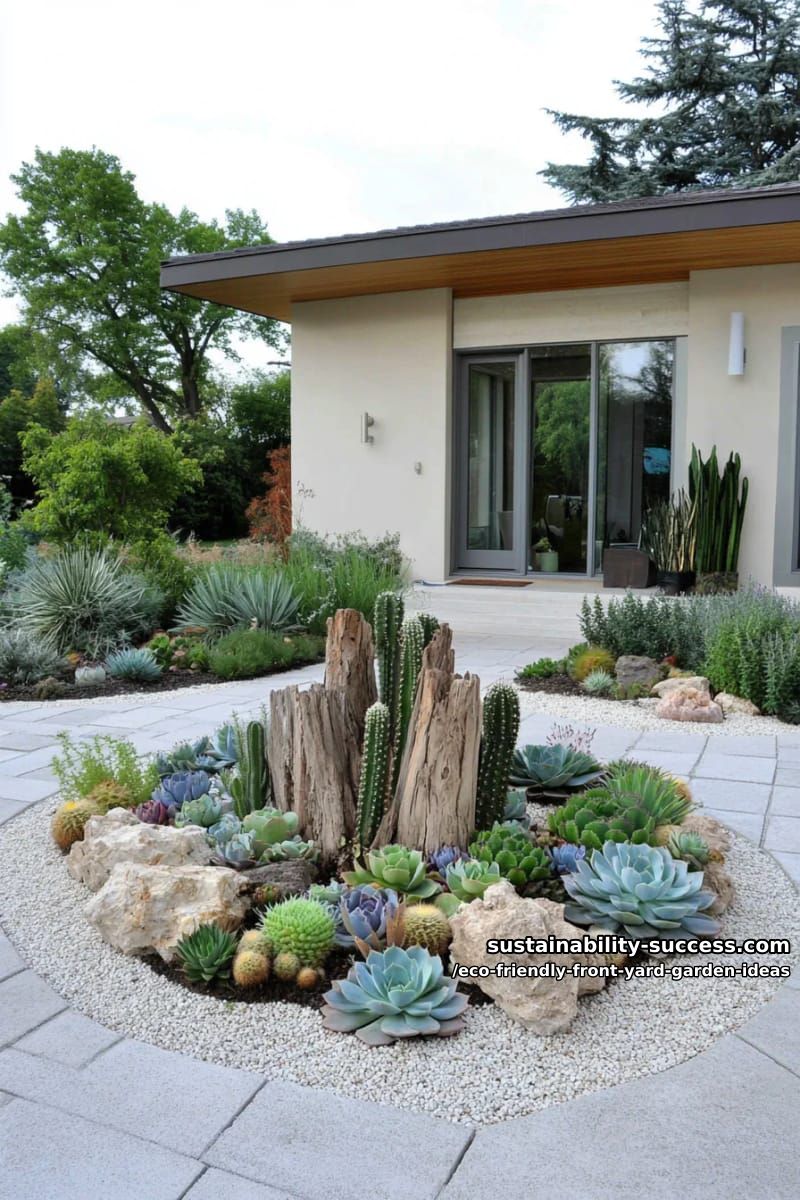
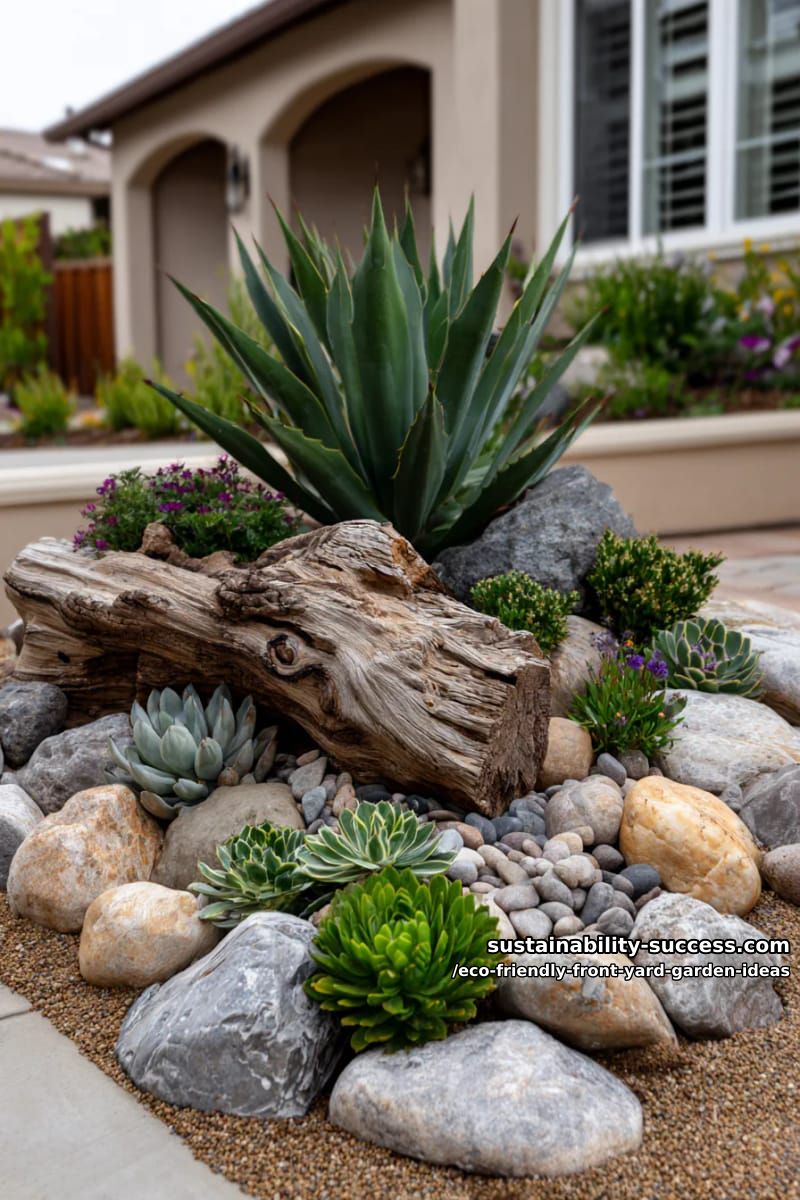
13. Front yard rock garden with mixed succulents, agave, and driftwood accents
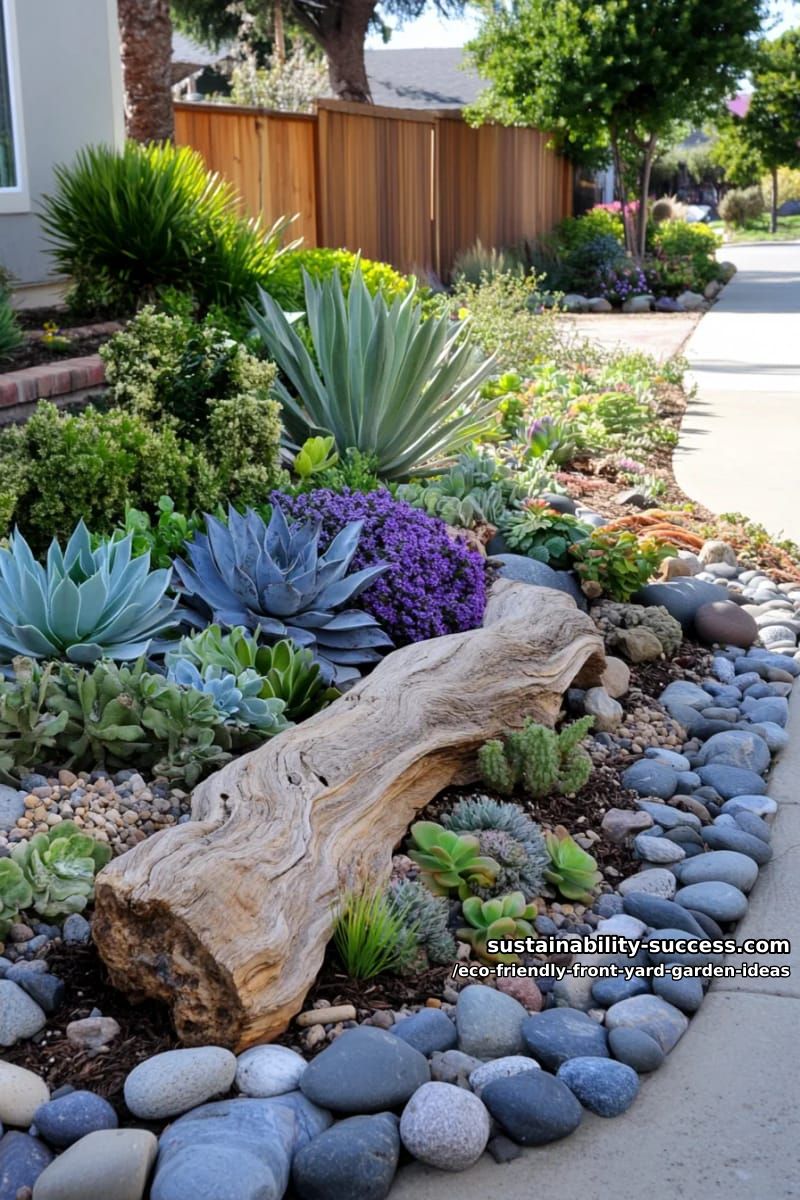
A front yard rock garden filled with succulents, agave, and driftwood creates a show-stopping, low-water landscape. These plants shrug off drought and need little maintenance.
Just imagine a blend of jade plants, blue agave, and rugged driftwood, no lawn mower required, and your water bill sighs in relief.
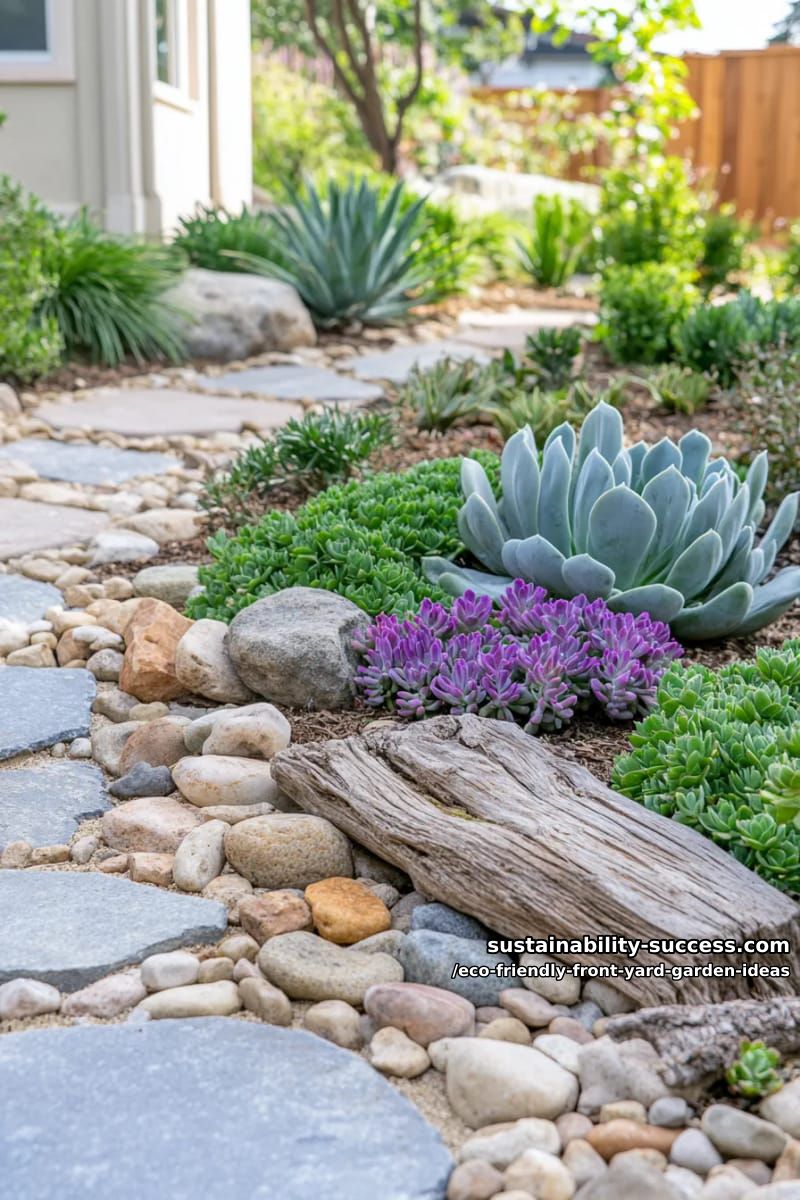
Don’t forget, though: succulents crave sunlight and well-draining soil. Overwatering can turn your garden into a mushy mess. Test the placement before planting.
Arrange rocks and driftwood for visual interest, and let each plant shine. Your curb will turn heads, and you’ll barely lift a finger to keep it thriving.
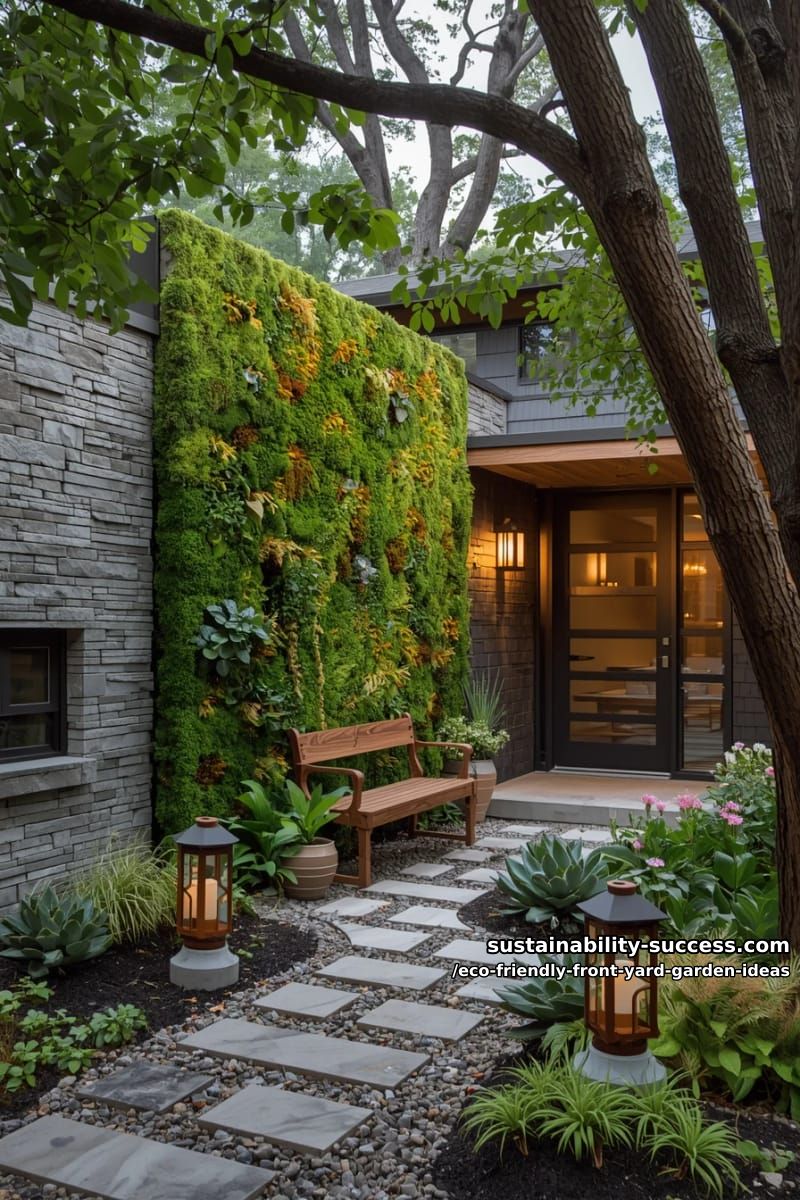
14. Living green wall beside the entrance featuring mosses and ferns
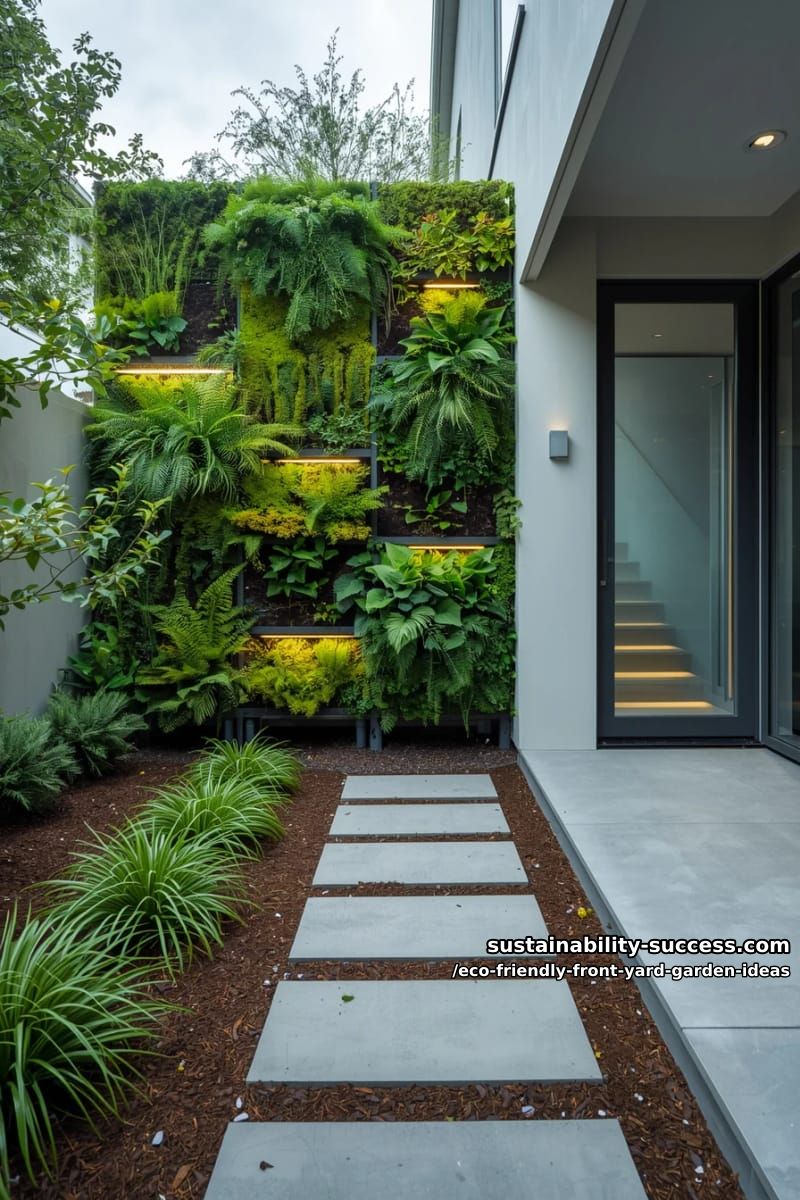
A living green wall beside your entrance adds instant character. Mosses and ferns thrive with minimal fuss, offering a lush, calming welcome. This vertical garden acts like nature’s air filter, absorbing pollutants.
Want low maintenance? Install a drip irrigation system. It’s an easy way to keep plants hydrated and happy.
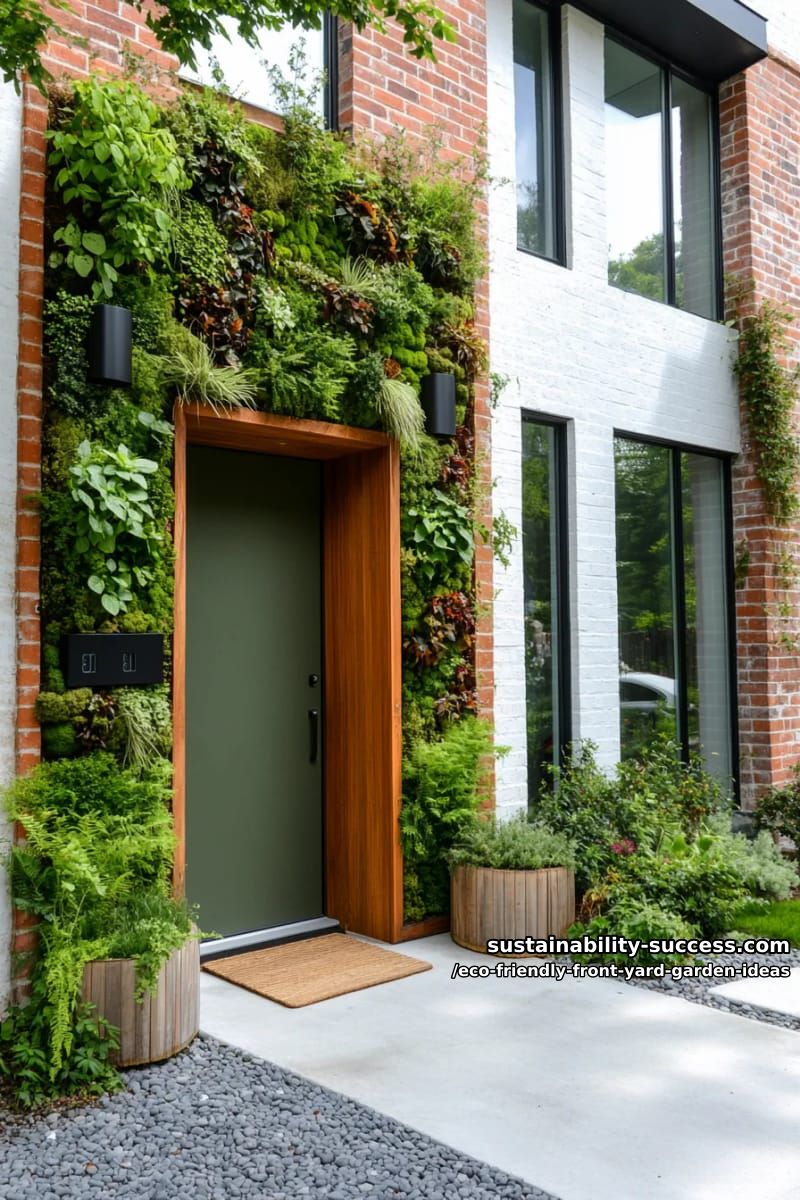
However, green walls aren't perfect for every climate. Mosses need consistent moisture, and ferns dislike direct sunlight. Think about shade and water access before planting.
Still, with a bit of planning, this feature impresses neighbors and brings a touch of forest magic right to your doorstep.
15. Spiral herb garden edged with repurposed bricks and native edible plants
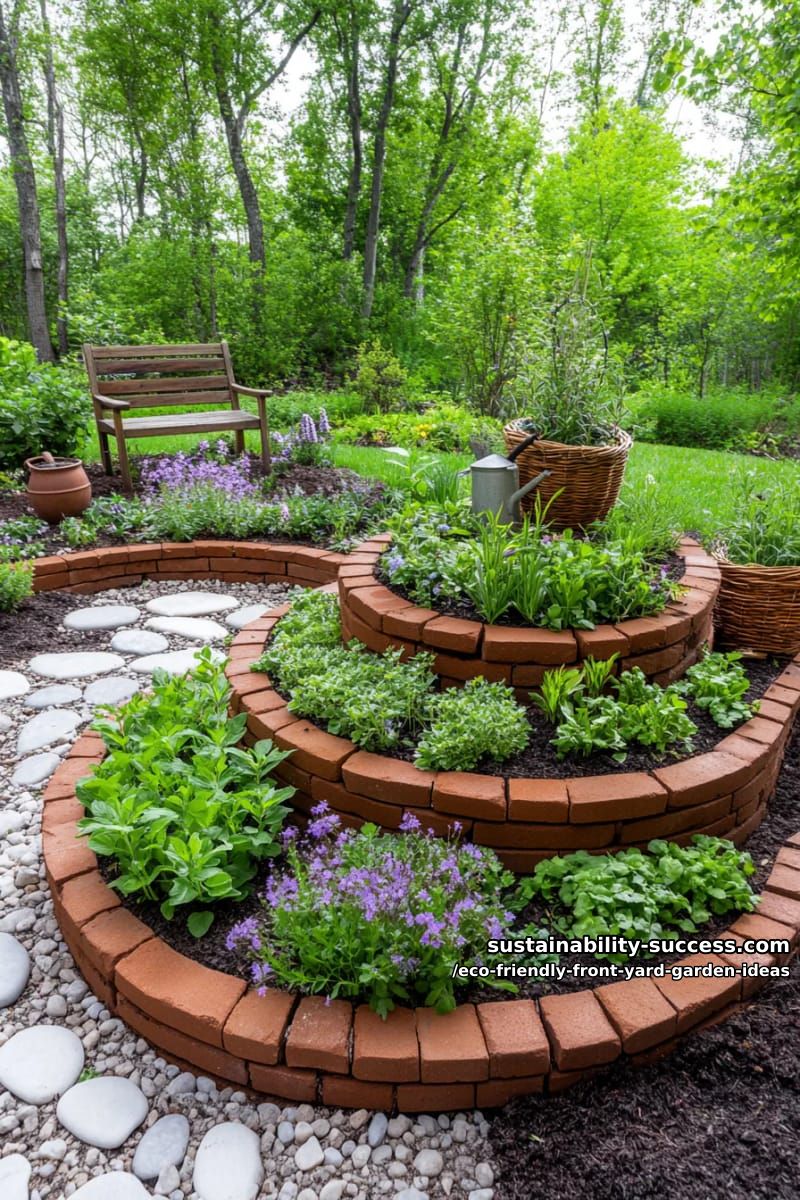
Spiral herb gardens make the most of small spaces while adding visual interest. By edging the spiral with old bricks, you cut waste and save cash.
Native edible plants, such as wild strawberries or creeping thyme, thrive with little effort and provide both beauty and flavor. Who says practical can’t be pretty?
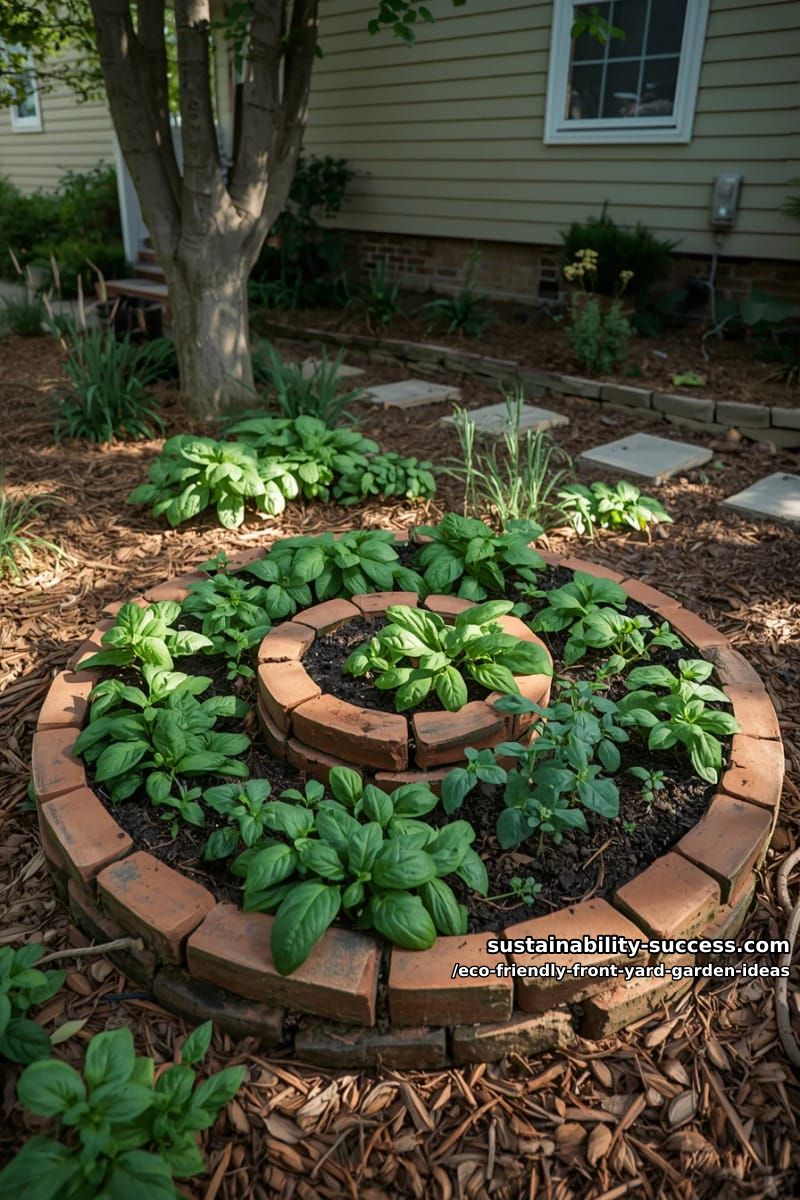
Watering needs drop dramatically when you choose native herbs. These tough plants have adapted to local weather, so you’ll spend less time with the hose.
Consider adding signage or painted rocks to identify your herbs for guests. This quirky touch invites conversation and sparks curiosity in any visitor.
Conclusion
Eco-friendly front yard garden ideas offer more than just good looks, they bring real change to your doorstep.
Why settle for a plain lawn when your yard can feed bees, conserve water, and grow herbs for your kitchen all at once?
Start small. Try a pollinator flower bed or a vertical herb wall. Each step, however tiny, helps the planet and brightens your space.
Ready to dig in? Your front yard could soon be the talk of the block, and the butterflies.
Related Posts
- Sustainable Garden Decor Ideas
- Eco-Friendly Garden Art
- Eco-Friendly Garden Furniture Ideas
- Eco-Friendly Herb Garden Ideas
- Budget-Friendly DIY Garden Fence