
Most of the cozy library photos you have saved were built from books that cost less than a coffee. Library Friends sales move hardcovers for a quarter to two dollars, thrift shops shelve them three for a dollar some weeks, and your own yellowed paperbacks already count as raw material. The look you can't quite picture yet comes from how you sort, stack, and occasionally cut into them, not from the leather-bound antiques staged in the photo. A few of the ideas below are pure arrangement and need no scissors. A few ask you to take a craft knife to a book, which I know is a small sin to some of you, so those are marked plainly.
1. Sort old books by color, then break the rule on one shelf
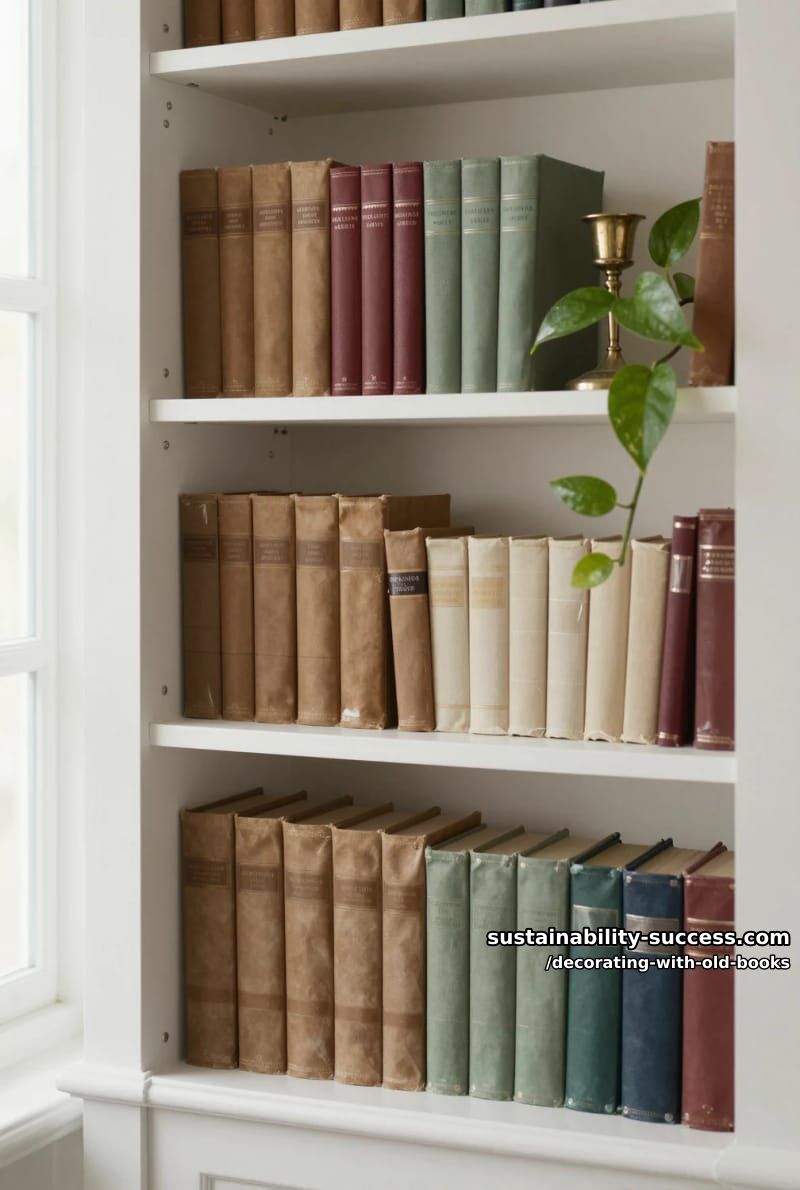
Group books by spine color in a few loose blocks, but leave one shelf deliberately mixed so the wall reads collected and not merchandised. Strip the glossy dust jackets first: the cloth or leather boards underneath are almost always a better color, usually a faded sepia, oxblood, or sage that photographs as old money instead of remainder bin.
I spent about a year telling people to color-sort everything, then did it to my own shelves and disliked it inside a month. A strict rainbow run across a whole wall looks like the front window of a phone store. The version that holds up is four to six gentle tonal clusters with breathing room between them, plus one shelf you don't sort at all.
2. Stack old books into a freestanding side table
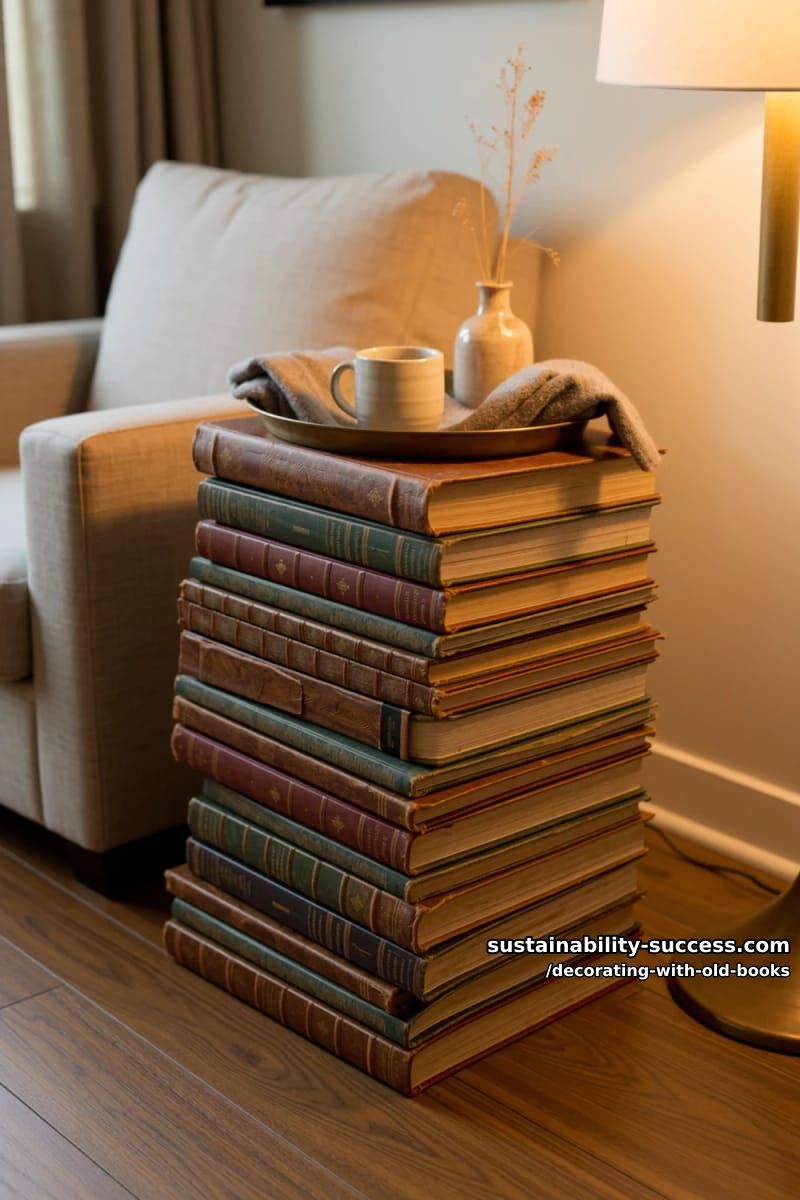
A waist-high column of hardcovers becomes a real side table if you run a threaded rod up the middle to keep it from sliding. A 1/4-inch rod and two cap nuts cost about $6 at any hardware store; drill a centered hole through 20 to 30 books (a 24-inch stack), thread them on, and tighten. The weight does the rest.
If you rent or don't own a drill, stack heaviest to lightest and skip the rod, but treat that version as sculpture, not furniture. Someone once emailed me annoyed that a stack like this left a water ring on his good book after he set a sweating glass on it, and he was right to be annoyed. Unsecured stacks and full mugs don't mix.
3. Turn paperbacks pages-out for a cream-toned book wall
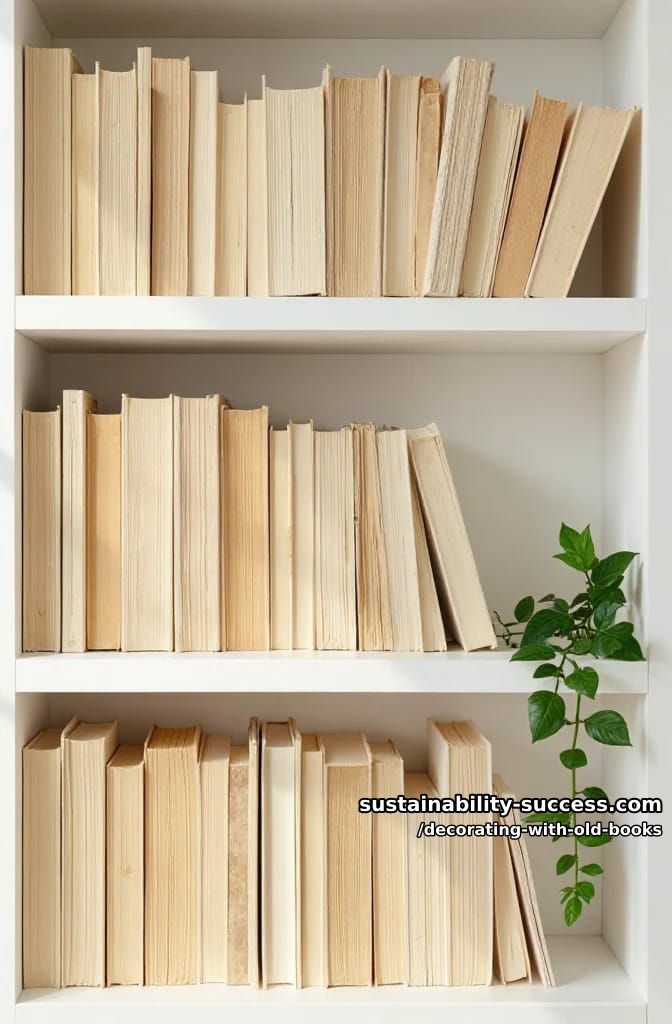
Facing books pages-out converts a shelf of mismatched paperbacks into a quiet block of cream, and it's the one move that genuinely rescues ugly spines. The aged paper edges read as a single soft texture, which is exactly what you want if your collection is all grocery-store thrillers with neon lettering.
It's a divisive look and I'll be honest about my side of it: a whole wall done this way looks try-hard, and you will never find a book again. One or two short stacks turned pages-out, salted into normal spine-out shelves, gets the calm tone without the affectation. Worth knowing that spine-out is itself a fairly recent habit. Titles only migrated onto book spines in the 18th century, when wealthy owners decided gold lettering looked impressive, so for centuries the "wrong" way was the normal way.
4. Build height with horizontal book stacks under lamps and plants
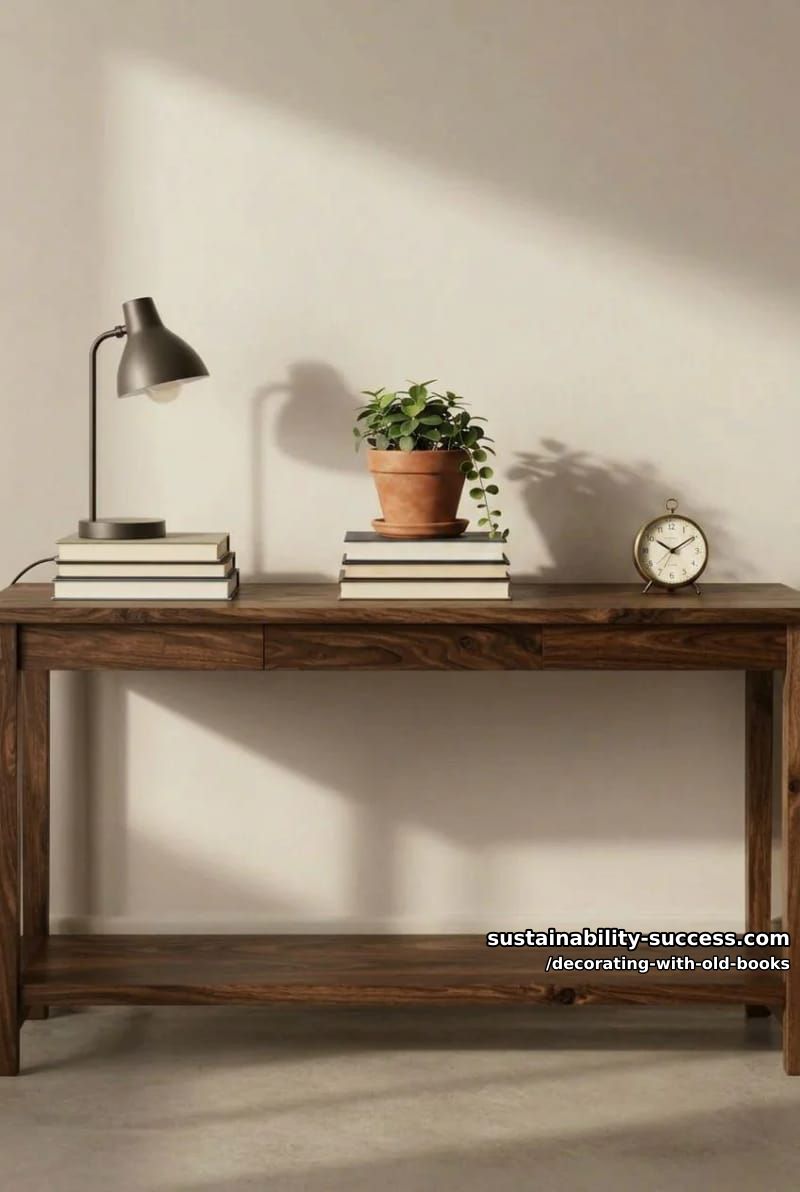
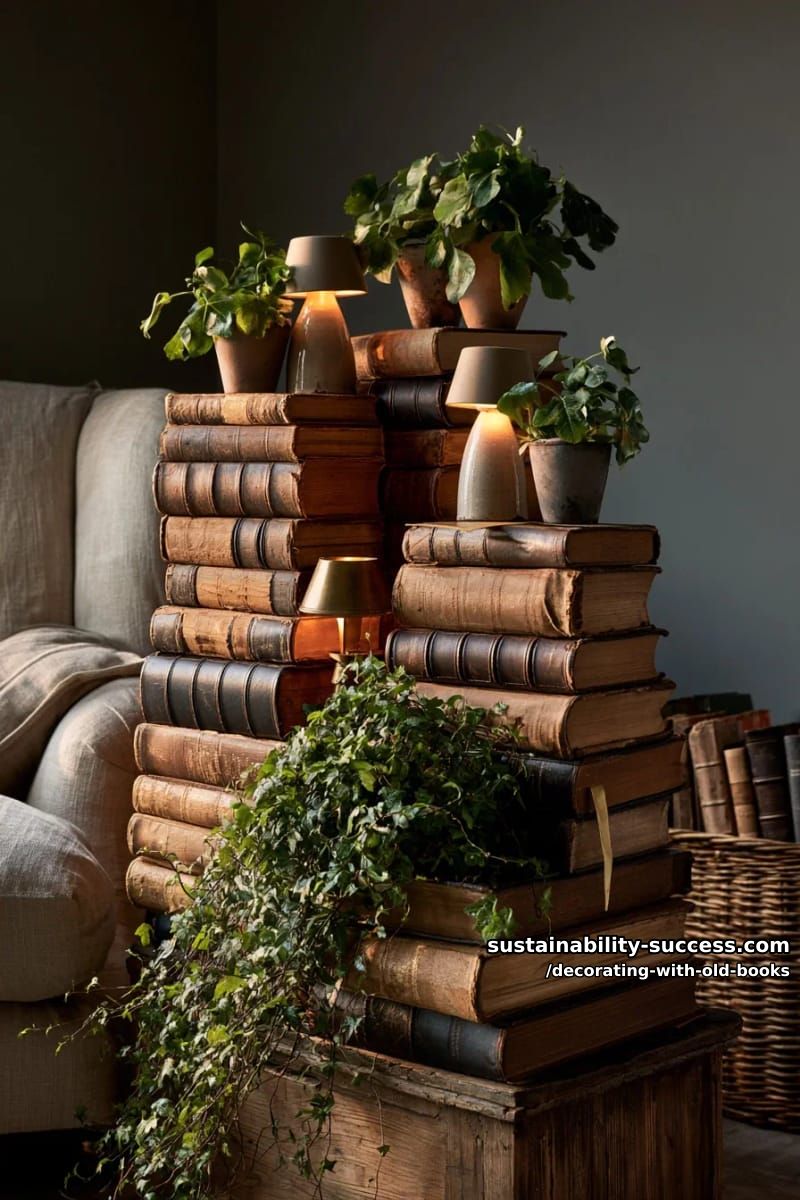
Short horizontal stacks of three to five books are the fastest way to give a flat surface the layered height that makes a corner read as a library instead of a shelf. Lift a lamp onto a couple of books, set a small object on a taller stack, and let the differing heights do the staging. Largest book on the bottom, odd numbers, and vary which way the spines face.
One narrow surface, nothing taller than five books, built in about ten minutes
Put a small lamp on a 3-book stack at the left end to lift the shade to eye level. At center, a 5-book horizontal stack with a thrifted brass clock on top. Right end gets a trailing plant in terracotta, no books, so the eye has somewhere to rest. The empty stretch of wood between the three is the part beginners fill in and shouldn’t.
5. Hollow out a thick hardcover for hidden storage
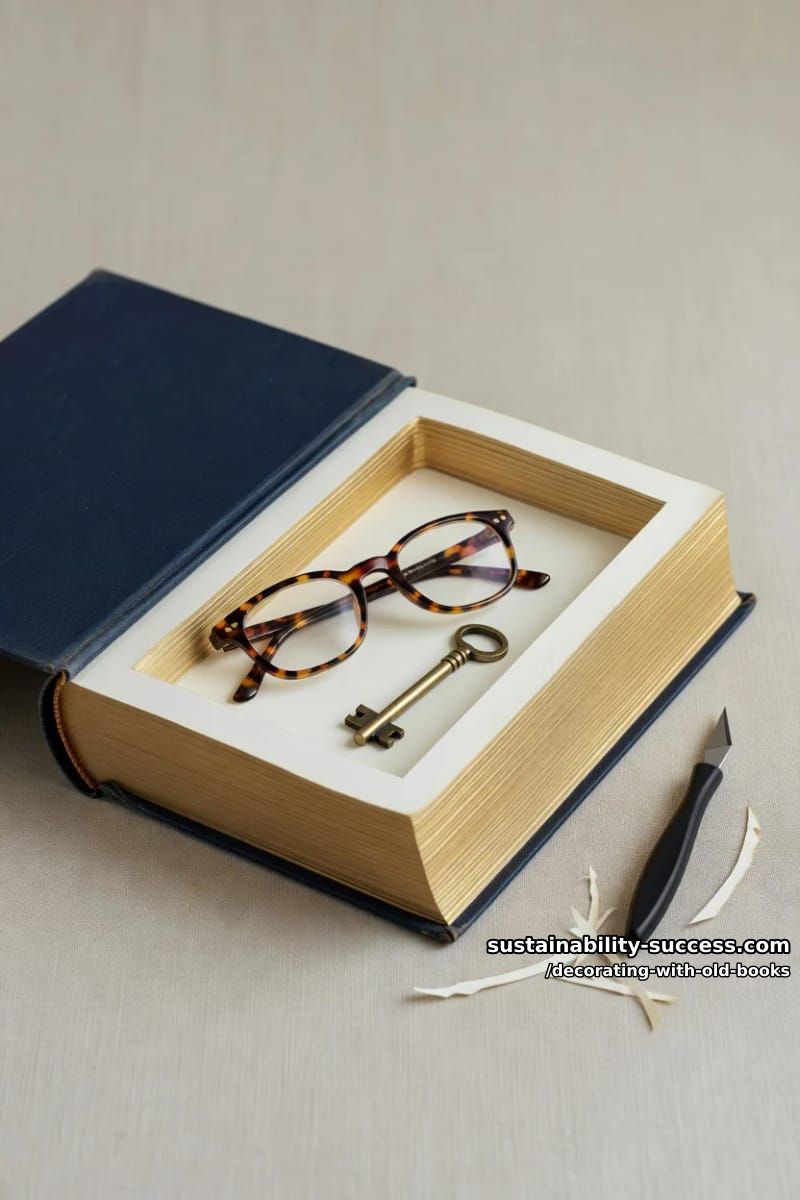
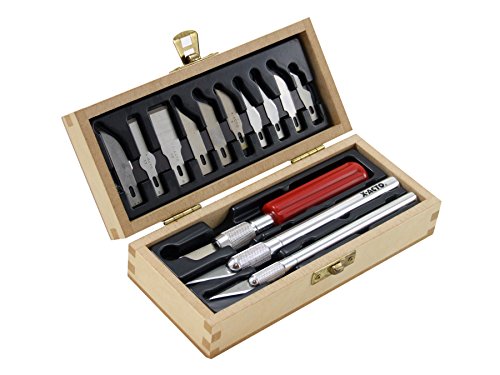
A fat discarded hardcover (an old dictionary or one of those Reader's Digest Condensed volumes nobody reads) hollows into a stash box that hides a passport or a remote in plain sight. Brush watered-down Mod Podge along the three outer page edges, clamp it under a weight overnight so the block fuses into a solid slab, then cut a window straight down with a craft knife, leaving a one-inch margin all around.
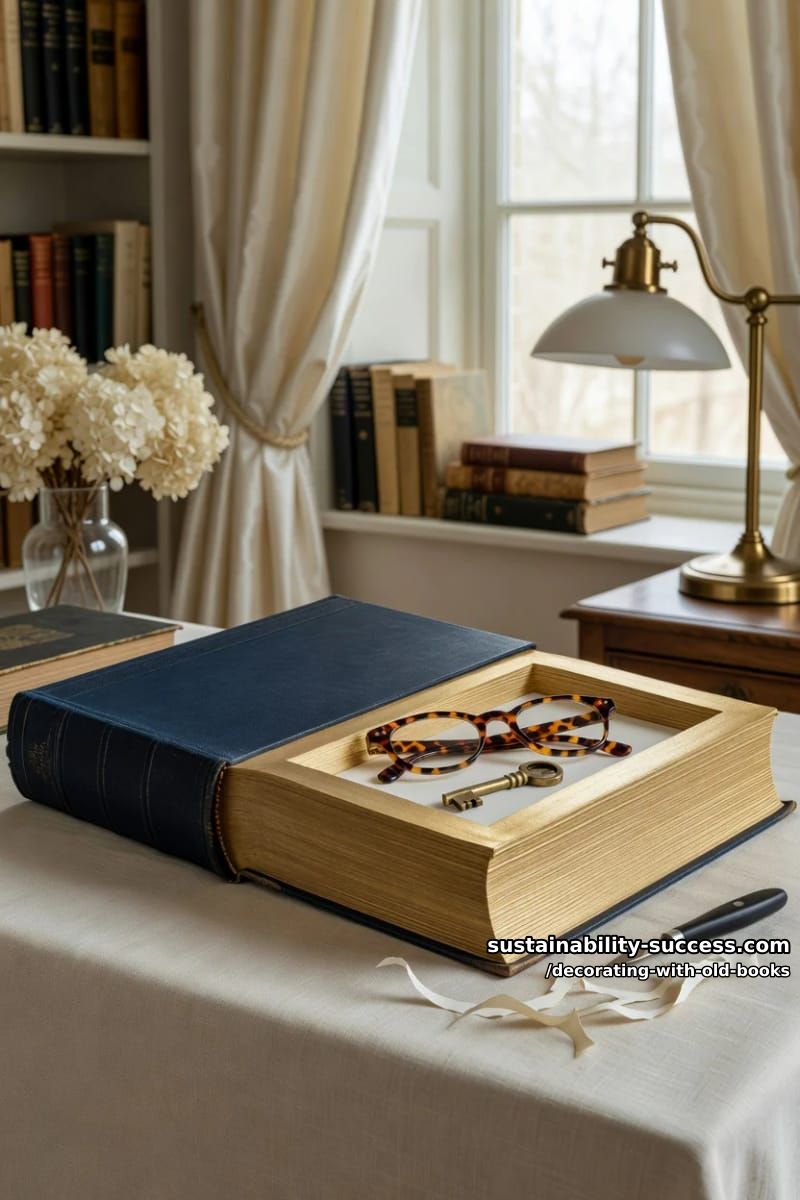
The first thirty pages fight you and the blade goes dull fast, which is when people start sawing and tear ragged edges. Swap to a fresh blade often, cut shallow passes instead of forcing depth, and always cut away from your other hand. A dull blade is the actual danger here, not a sharp one.
6. Plant succulents in a hollowed old book
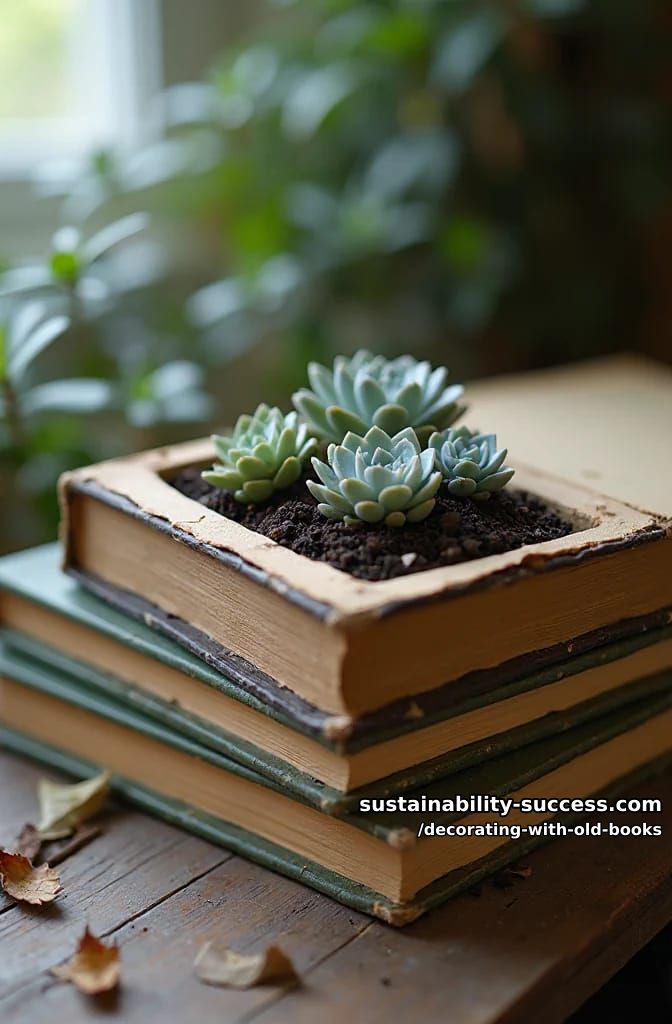
A hollowed hardcover lined with a scrap of plastic becomes a planter for succulents or air plants, with a half-inch of cactus mix and shallow-rooted plants like echeveria or haworthia. Water it with a spoon, not a pour, because the whole project lives or dies on keeping the page block dry. Air plants are the easy version: no soil, no liner, just set them in the cavity.
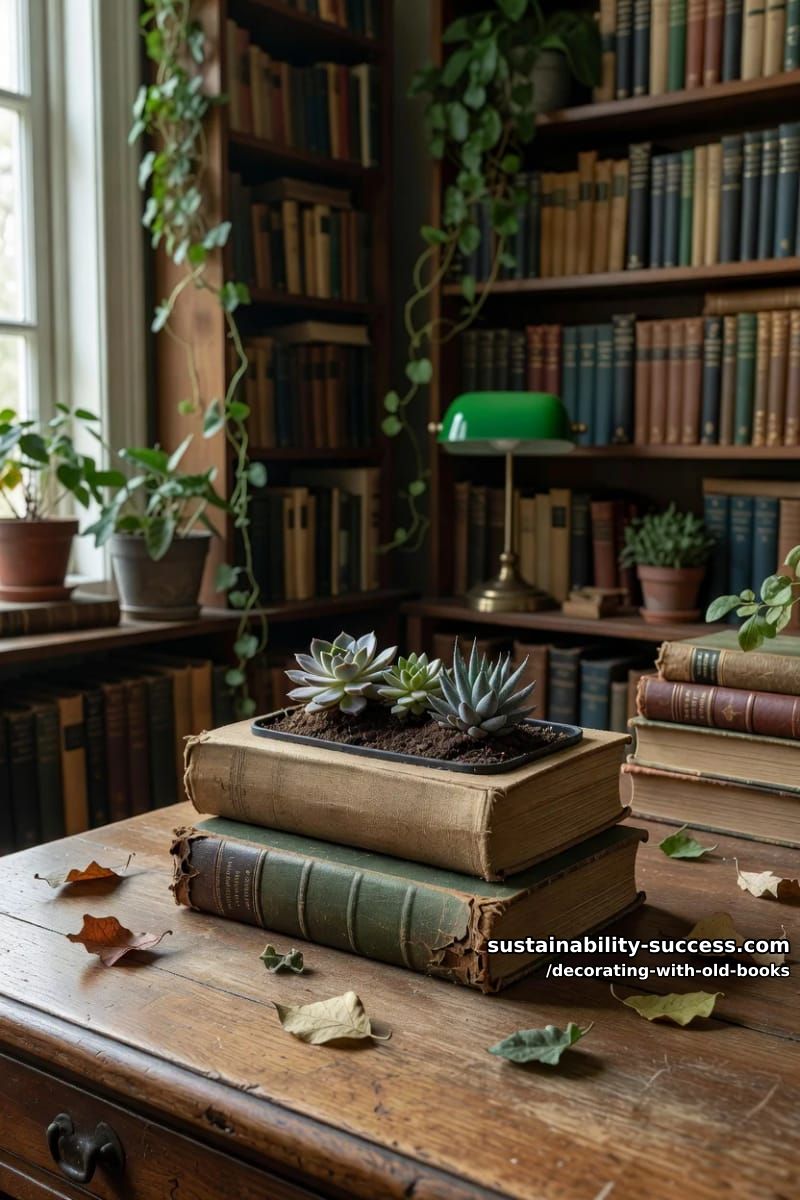
Paper and water are natural enemies and I won't pretend otherwise. I've drowned exactly one book doing this and wouldn't try it with anything I'd be sad to lose, so pick a volume you genuinely don't care about. If you know you won't be careful with the watering can, use a faux succulent and skip the liner entirely.
7. Fold a book into a paper wreath for the door
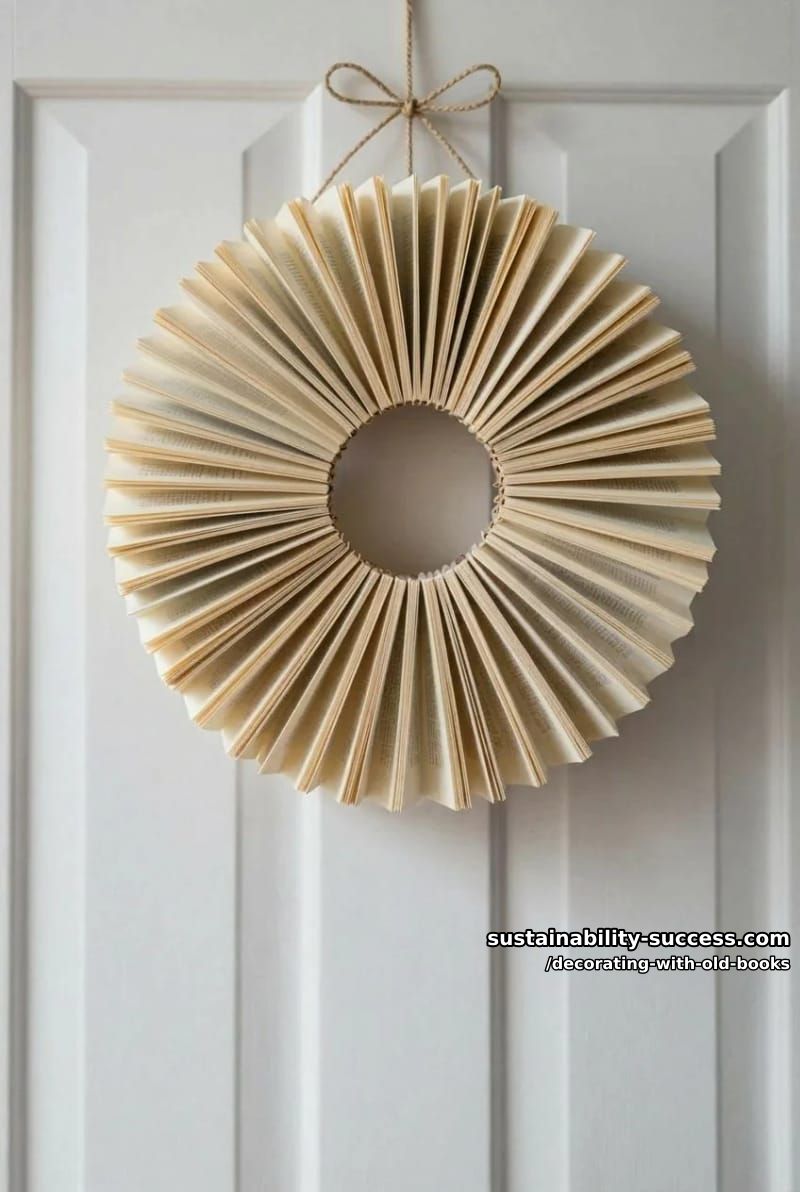
Folding every page of a paperback down to the spine produces a fan that curls into a full wreath, and it needs no glue until the very end. A 300 to 400 page paperback makes one wreath: fold the top corner of each page down to the spine, then the bottom corner up, work through the whole block, then fan the covers around until the two ends meet in a circle.
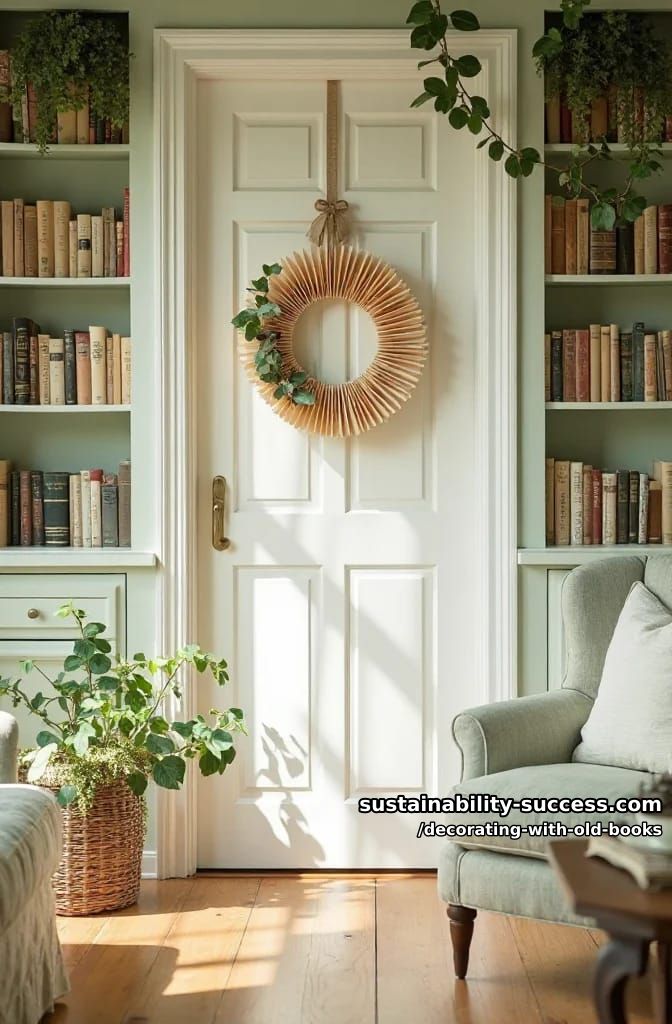
Each folded page becomes a narrow wedge thicker at the fore-edge than at the spine. Multiply that across 350 pages and the fore-edges splay outward while the spine stays tight, which is the geometry that forces a flat book into a circle. Seal the finished fan with a thin coat of matte sealer so the folds hold through a humid summer on the door.
Seal it once it holds its shape. Mod Podge matte all-in-one sealer and glue, 16 oz brushed lightly over the page edges stiffens the whole thing without the shine.
8. Age cheap paperbacks with coffee and sandpaper
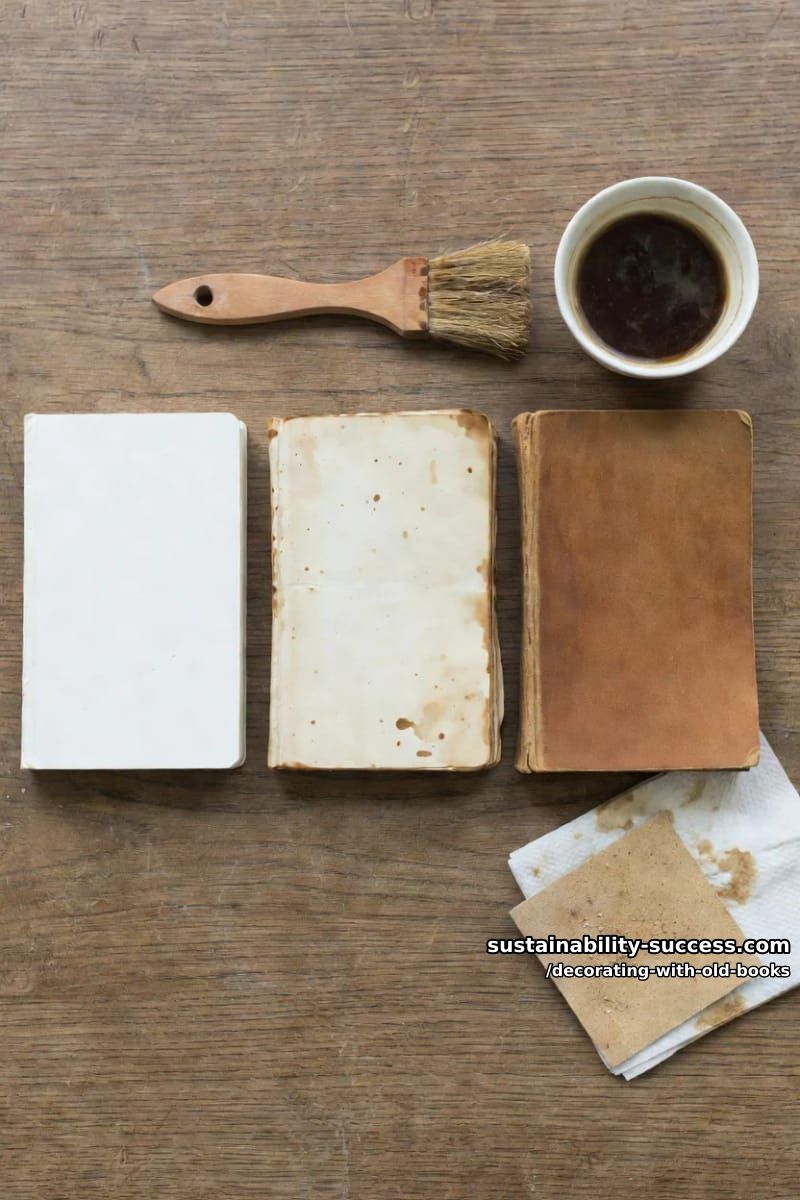
Strong coffee or black tea, brushed onto the page edges and dried, takes a bright white paperback down to the sepia tone that reads vintage, and a few passes of sandpaper on the spine corners fakes years of shelf wear. Brew it double strength, brush or briefly dip the fore-edges, then dry the book flat or in a 200F oven for ten minutes so it doesn't warp. A rub of brown furniture wax on the cover deepens it further.
I don't know why the cheap pulpy pages take the stain so much better than glossy coated stock, but they do, which conveniently makes your worst paperbacks the best candidates. And please don't buy pre-aged decorative books for this look. The cloth-bound sets at Anthropologie and the faux books at Pottery Barn run $20 to $40 a volume and fool nobody, while a $1 thrift paperback and the dregs of your coffee pot get you the genuine article. You are destroying a book to make it look old, which is faintly absurd and also kind of wonderful.
9. Pleat book pages into a lampshade for filtered light
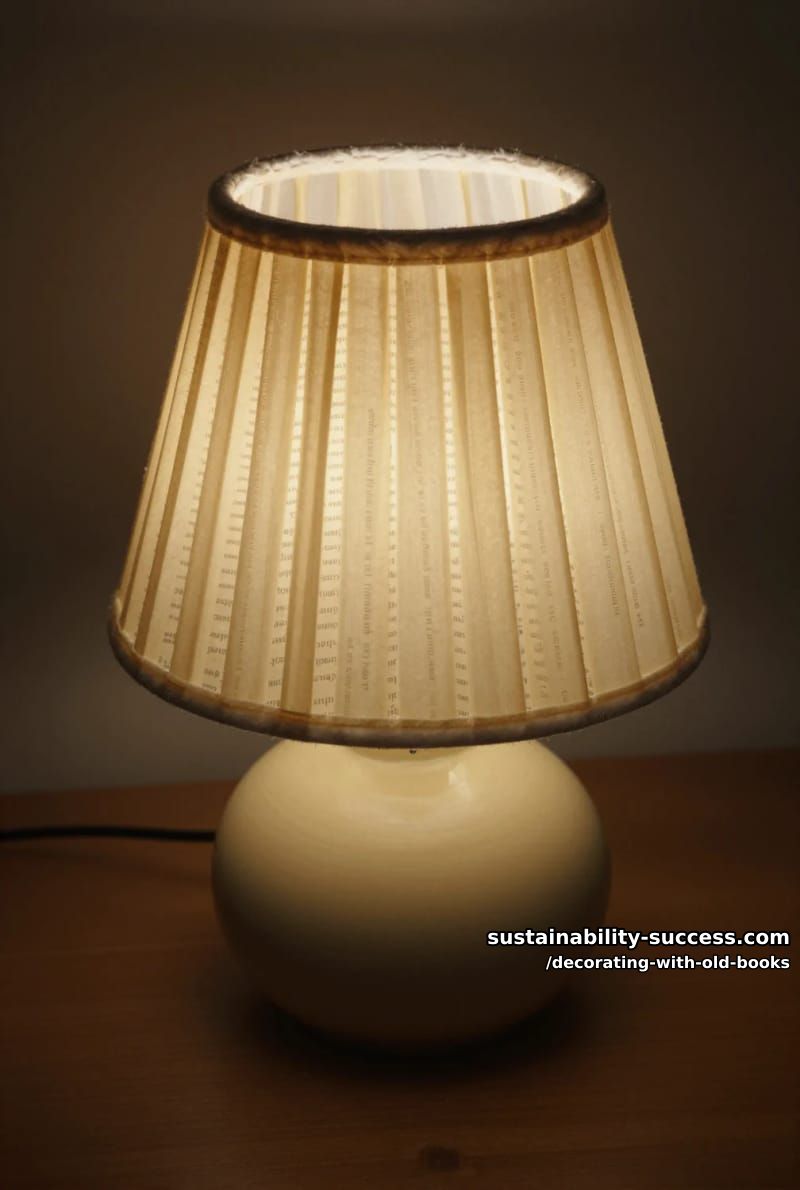
Accordion-pleating book pages around a wire shade frame makes a shade that throws warm, text-dappled light, and you must run an LED bulb behind it. Salvage a bare wire frame from a thrift-store lamp, glue overlapping pleated pages around it, and leave the top and bottom rings exposed for airflow. The LED is non-negotiable: paper sitting near a hot incandescent or halogen bulb is a fire waiting to happen.

For a no-frame version that takes five minutes, clip flat book pages onto an existing cream shade with small brass binder clips. It reads less polished up close, but from across a room nobody can tell, and you haven't committed to anything permanent.
Make sure that the lamp is using a cold LED light to prevent the risk of the paper potentially catching fire due to the heat of the light bulb.
10. Roll book pages into bud vases for a dried-flower centerpiece
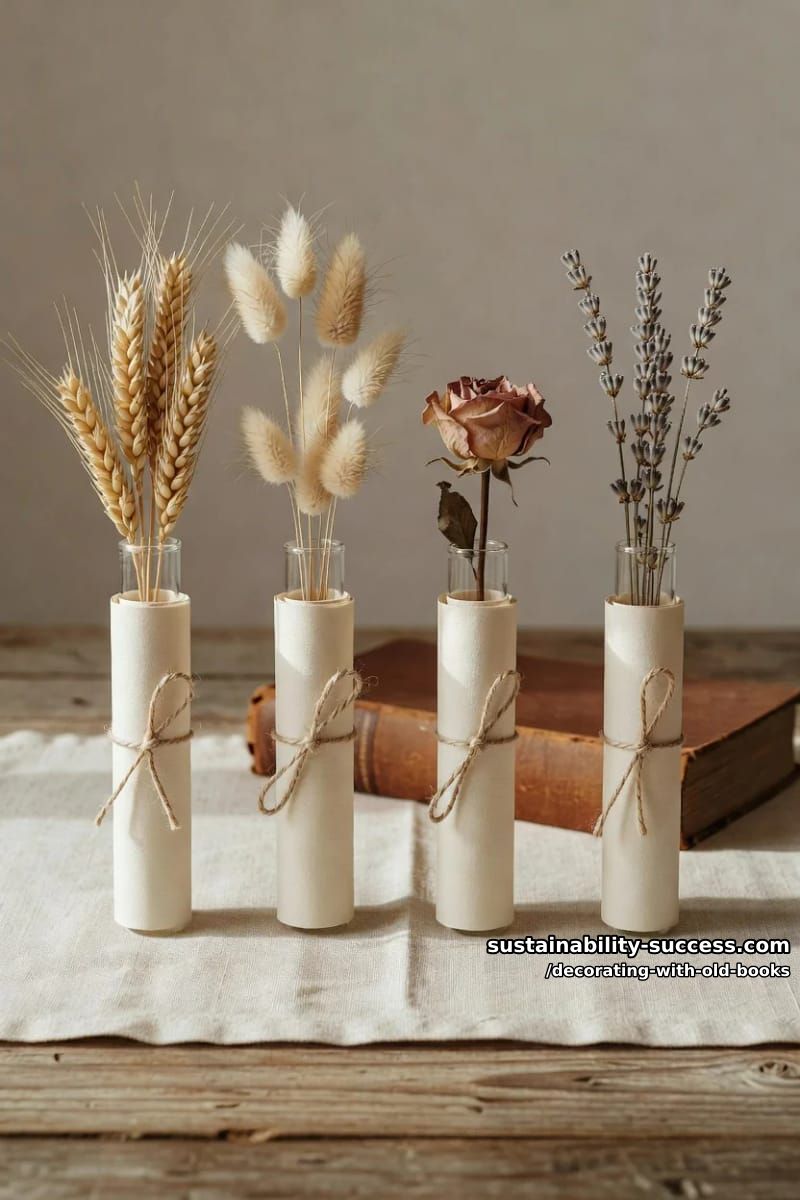
Tight-rolled book pages slipped over small glass test tubes make a row of paper bud vases, ideal for dried stems where no water can reach the paper. Cut pages to the height you want, roll each one around a test tube or a narrow spice jar, secure with twine, and fill the inner glass with dried wheat, bunny tails, or a single dried rose. A set of plastic test tubes runs about $7 and saves you hunting for matching jars.
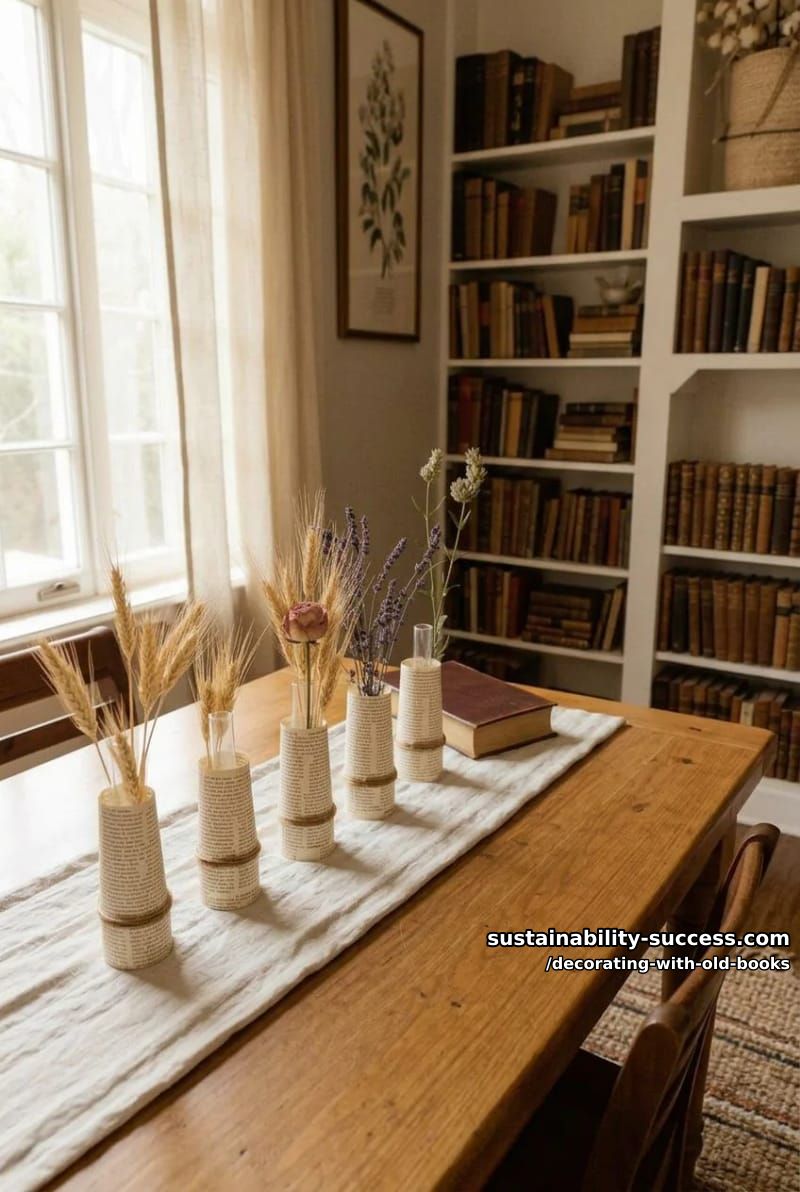
You can use fresh flowers if you treat the glass as the real vessel and the paper purely as a slip cover, swapping the sleeve the moment it goes damp. Skip this if you're the type who tops up a vase without thinking, because wet paper sleeves slump within a day and look exactly as sad as that sounds.
11. Make a wall clock from old book spines
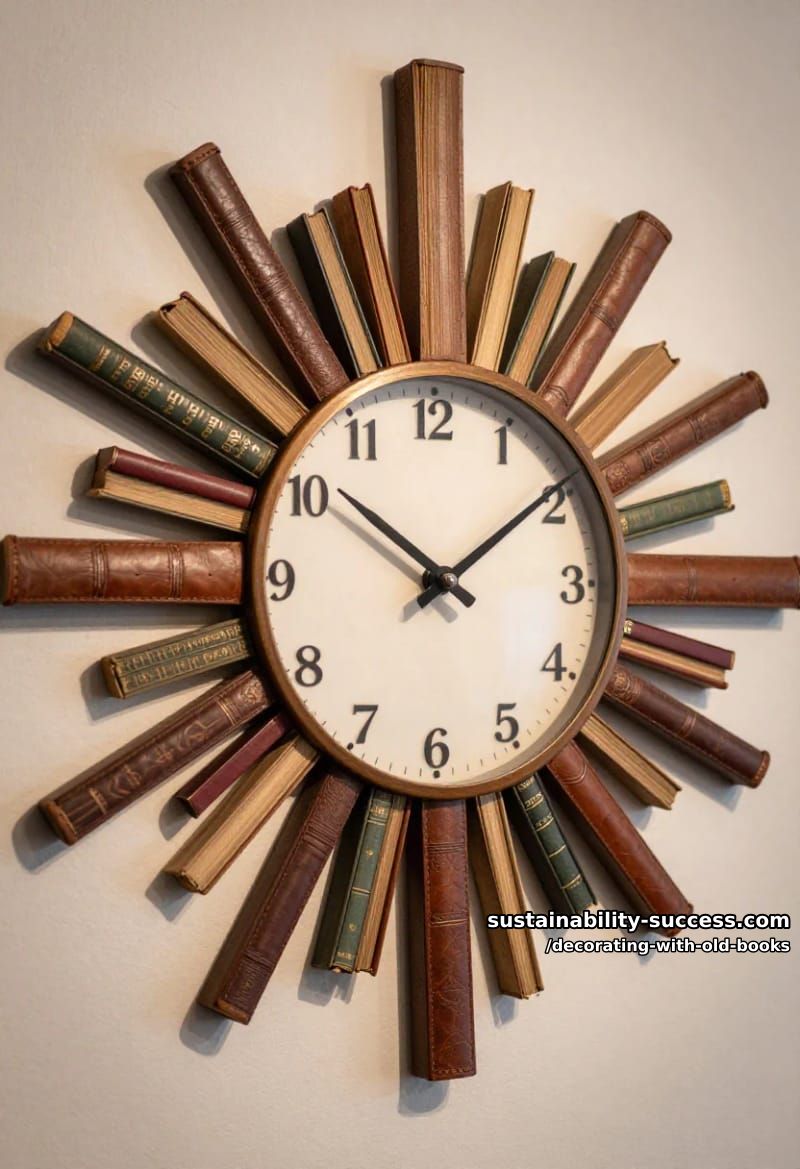
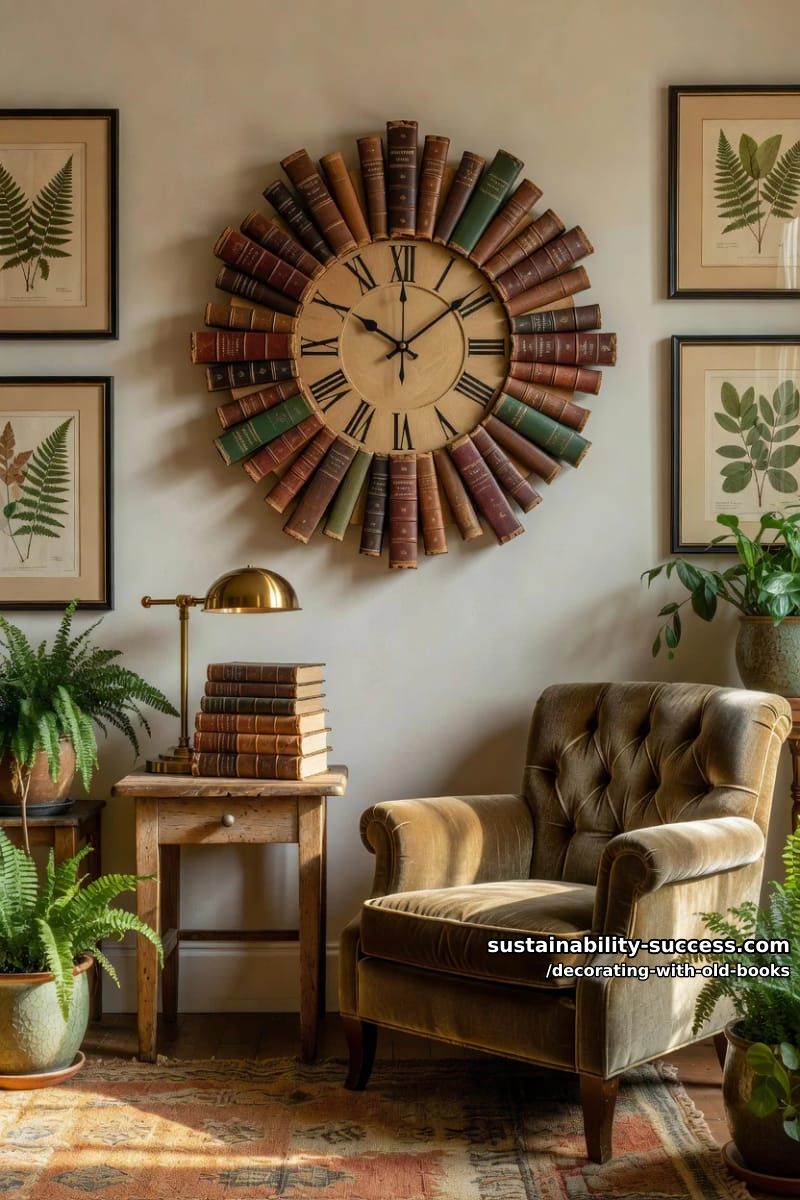
A radial sunburst of cut book spines glued around a center hub turns into a working wall clock once you fit a long-shaft movement through the middle. Cut the spines and a few covers to equal lengths, glue them radiating from a round MDF backer, drill a center hole, and install a high-torque quartz movement with hands long enough to reach past the spine ring. A movement kit runs about $10 to $18, far less than the $40-plus these sell for finished on Etsy.
Conclusion
Start with arrangement before you cut into anything. Color-sort one shelf and build two horizontal stacks this weekend, and if the corner still feels thin, then take a knife to the ugliest paperback you own. The crafts that aren't reversible (the wreath, the spine clock, the page vases) each eat a Saturday, so earn them on books you've already decided you don't want. And if some volume you actually love turns out too handsome to cut, that's the right outcome. Shelve it spine-out, and go find the next dollar-bin candidate.