
A vintage box grater screwed to the wall and stuffed with dried yarrow stops looking like a kitchen tool. To most people it reads as a wall pocket from some boutique, even though the thing underneath is a two-dollar estate-sale find nobody can identify out of context.
The ideas below run from that classic grater pocket to a garden rake turned utensil rack and a colander wired into a pendant light, and they close with a finish-matching call for anyone who has ever brought home a galvanized piece that fought the rest of the room.
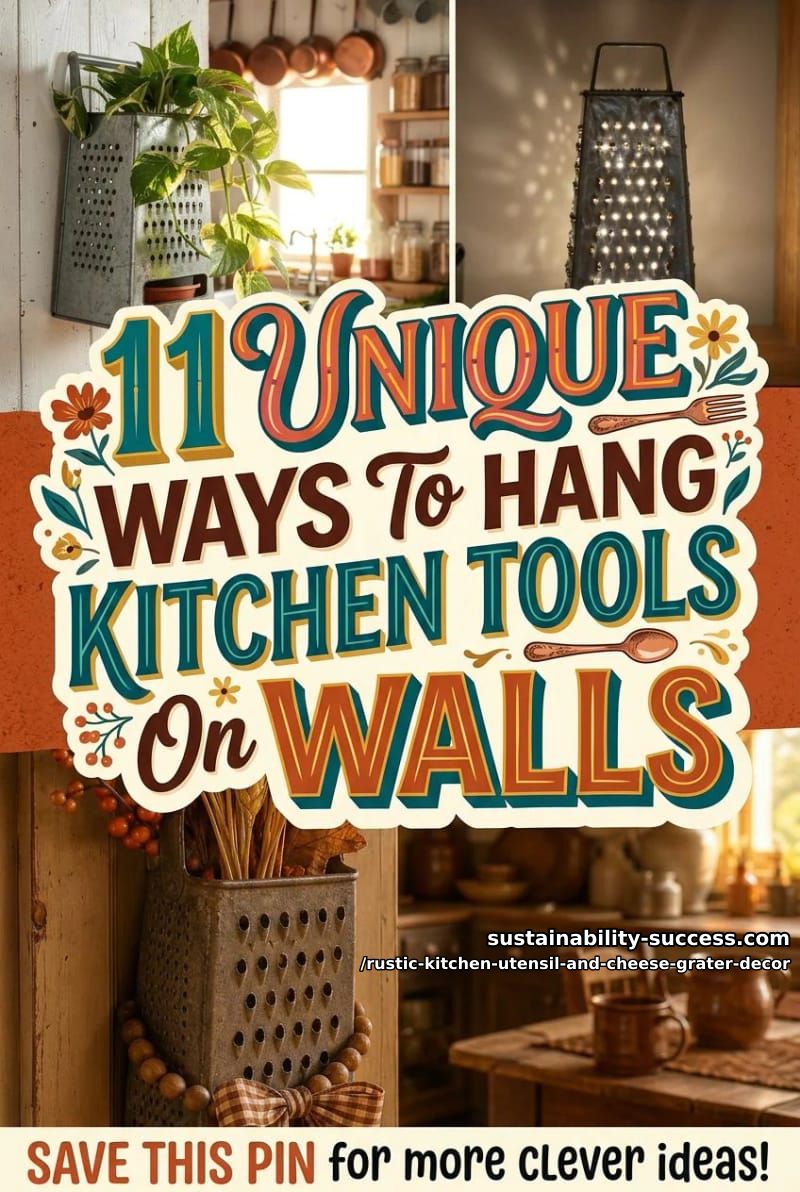
1. Box grater wall pocket for dried stems
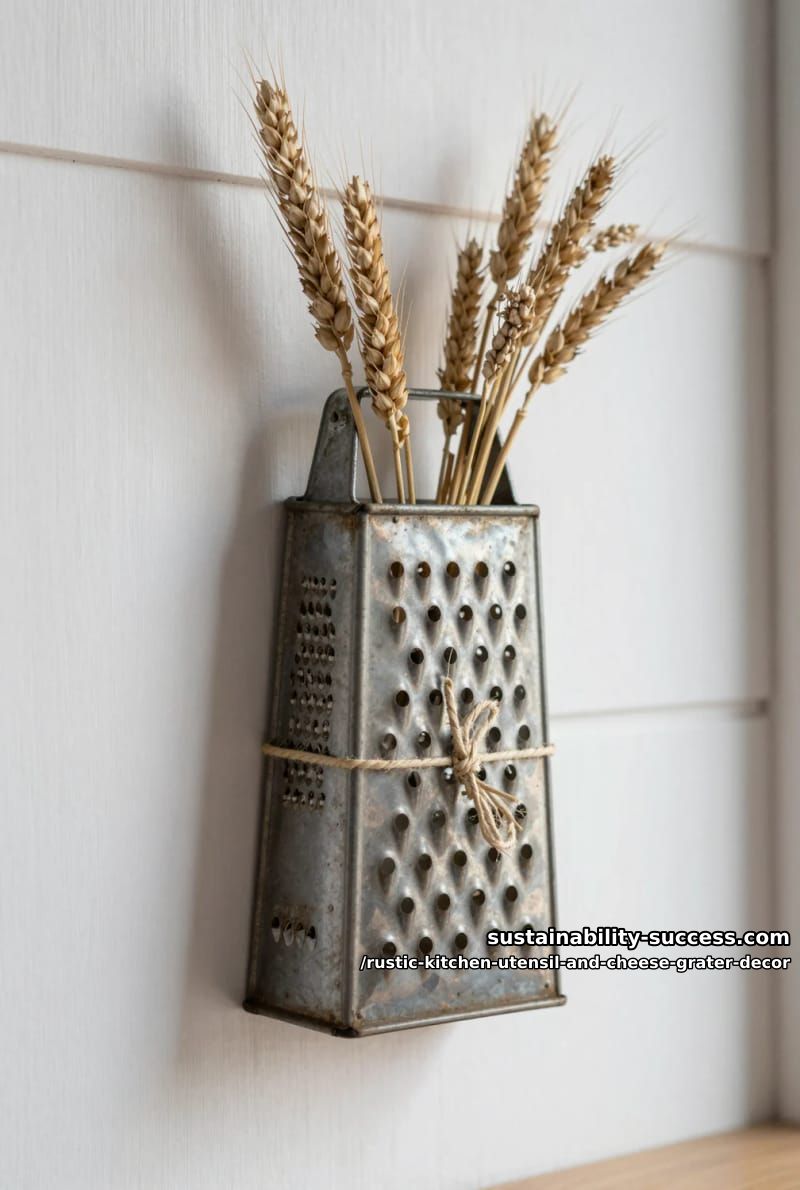
A four-sided box grater hung open-top-out becomes a wall vase, and the only hard requirement is depth: a standard 8 to 9 inch grater holds stems upright, while a short handheld one lets everything topple forward. Fill the bottom inch with floral marbles or a wedge of dry foam so the arrangement doesn't pivot, then load it heavier on one side than the other. Thrift stores and estate sales run $2 to $8 for these; a properly patinated one with a name like Bromco stamped on it climbs to $10 to $25 on Etsy, which is still nothing for a wall piece.
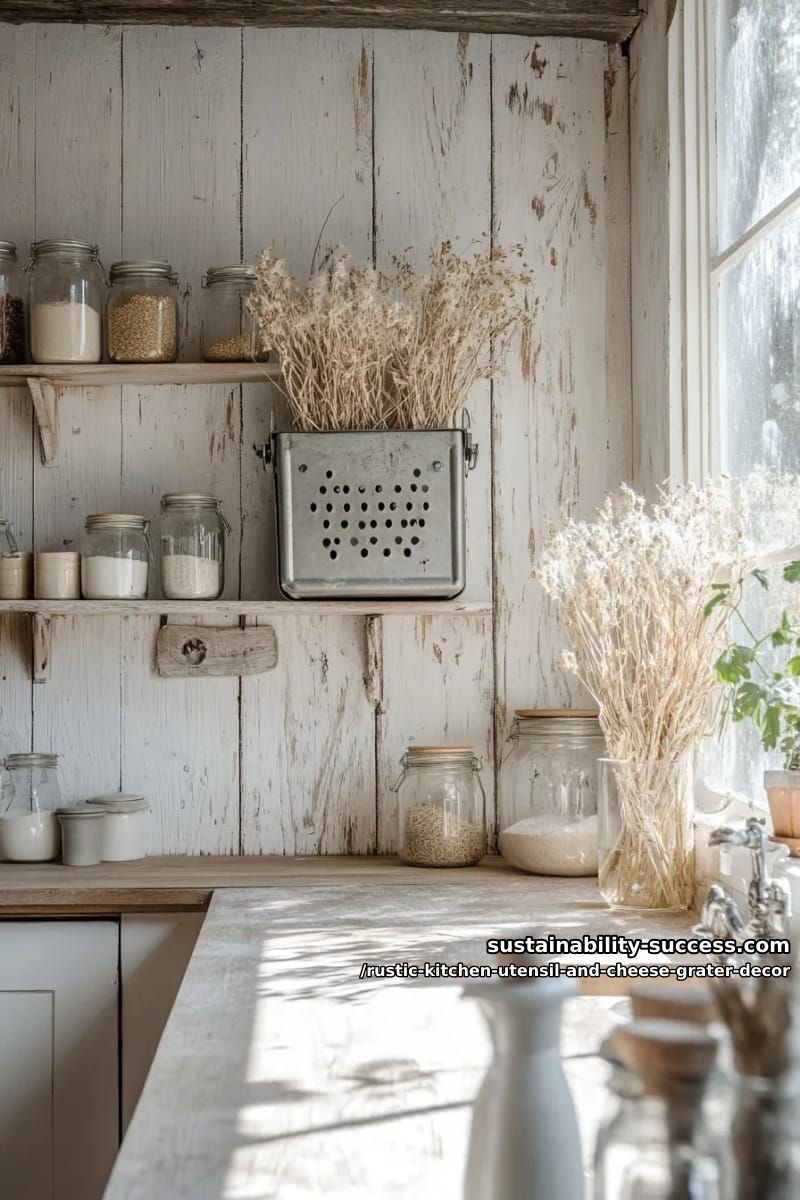
I learned the mounting part the slow way. Hot glue holds a grater to drywall for roughly one humid summer before it lets go and takes a chip of paint with it, so screw a small sawtooth picture hanger to the back instead. And please don't buy a brand-new stainless grater from the kitchen aisle for this. The shine reads as a gadget someone forgot to put away.
2. Old colander turned pendant light
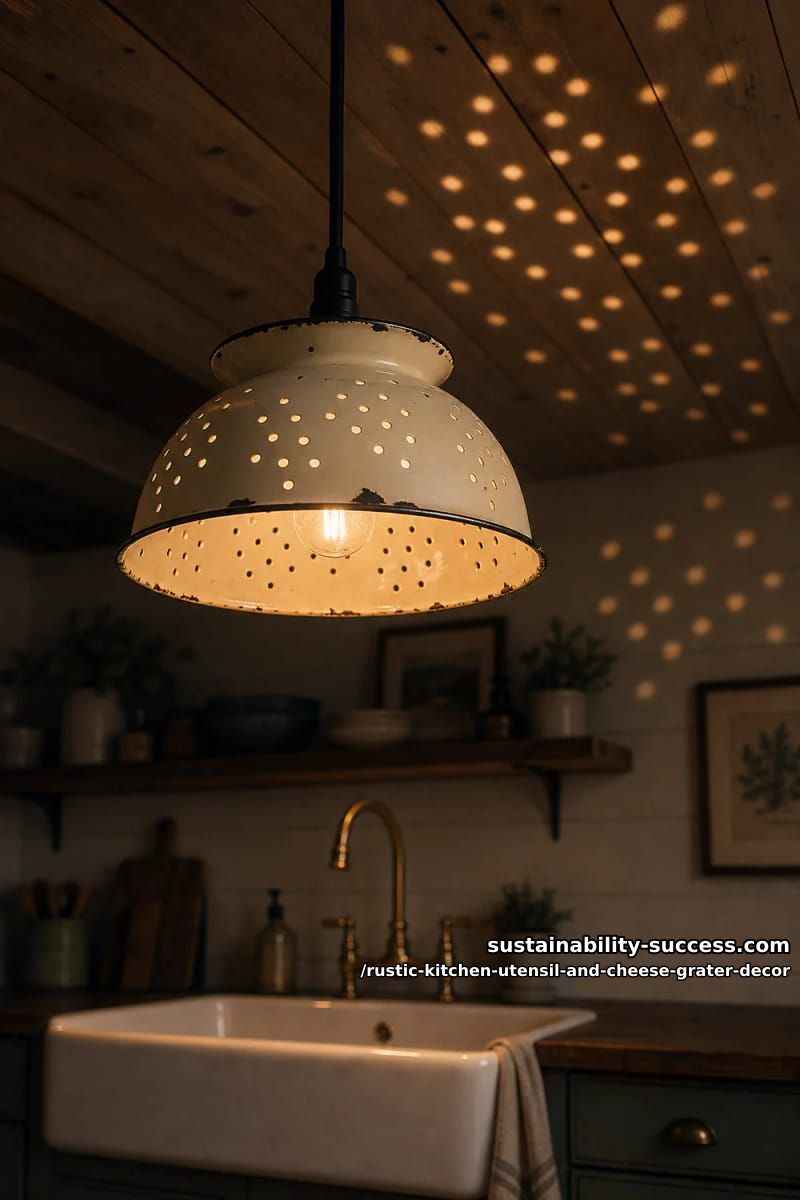
An enameled colander makes a pendant shade because the drainage holes are already a diffusion pattern, scattering round dots of light across the ceiling once a bulb sits inside it. This one crosses into electrical work, so don't improvise the wiring: a plug-in swag pendant cord kit runs about $15 to $25 and lets you hang it without an electrician, or hardwire it properly if you'd rather. Pick a colander 9 to 11 inches across to read at sink scale, and skip the new "vintage style" ones sold at the Magnolia-adjacent shops, where the holes are stamped too evenly to throw an interesting shadow. A dented old enamel one with a chip in the rim does better.
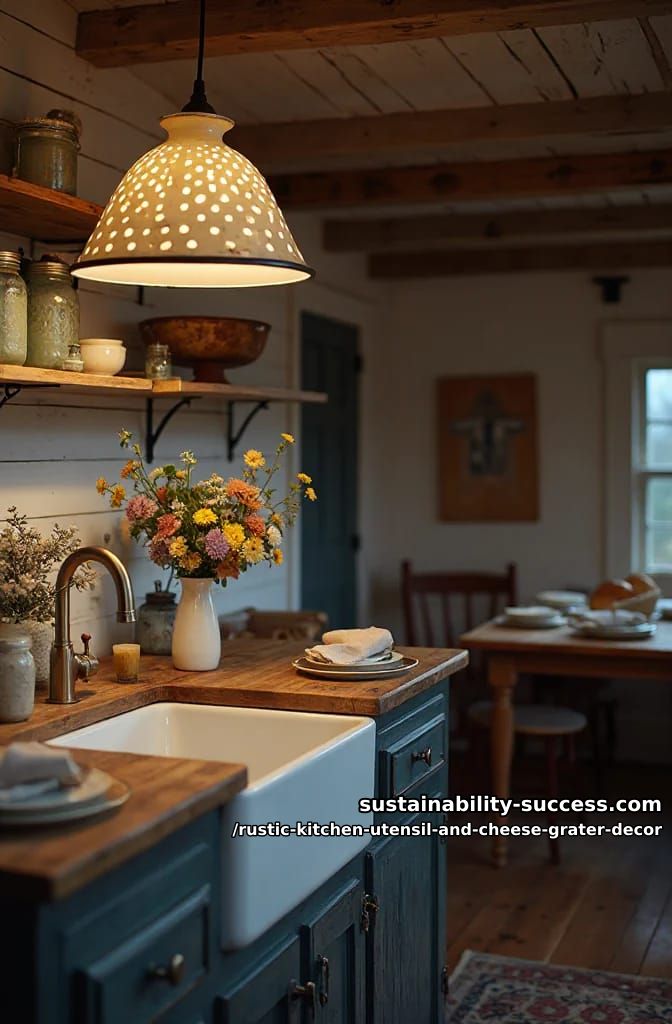
3. Cheese grater towel holder by the sink
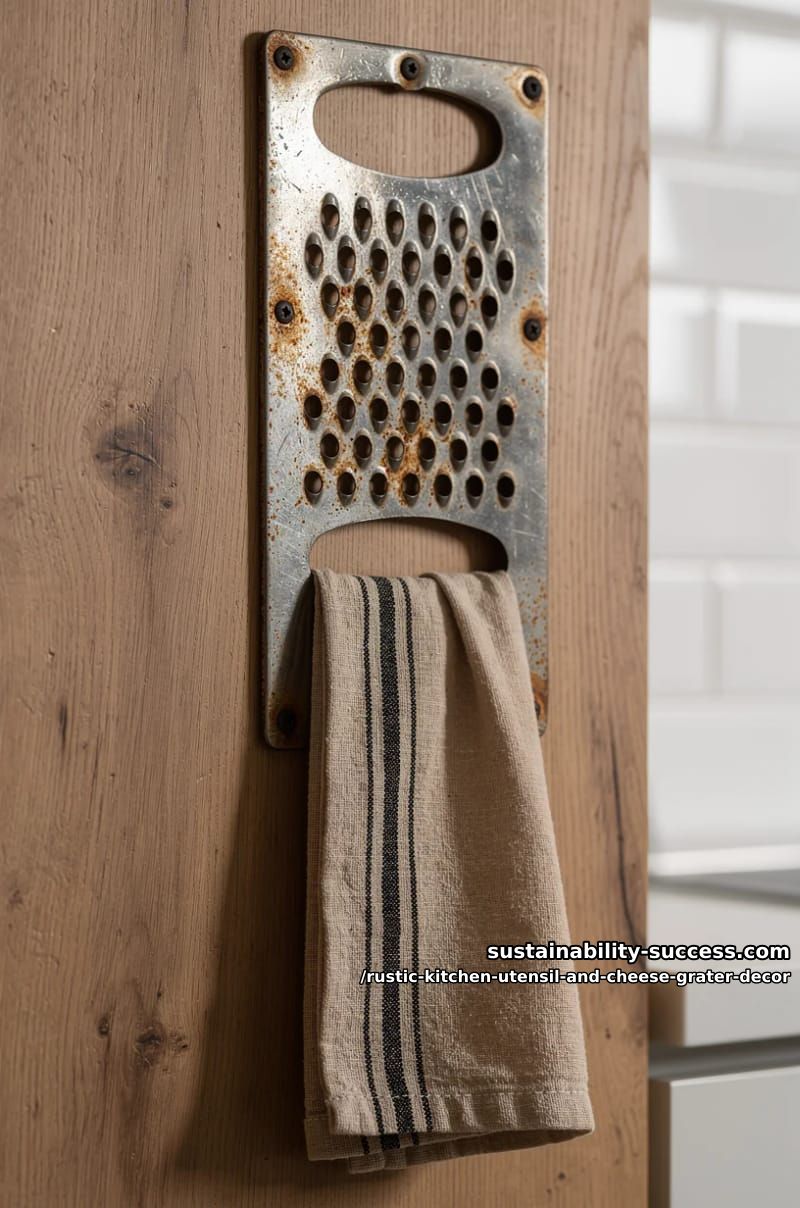
Mount a flat-backed grater handle-down and you can thread a dish towel up through the body, so the piece works as a towel hook the cloth can't slide off of. This only works with the old large-punched-hole style, the kind with holes you could lose a pea through. People ask me why their towel keeps dropping, and it's almost always that they used a fine modern rasp whose holes are too small to grip anything. A worn galvanized grater for a few dollars at a flea market is the right tool; a Microplane is not.
4. Garden rake head as a hanging utensil rack
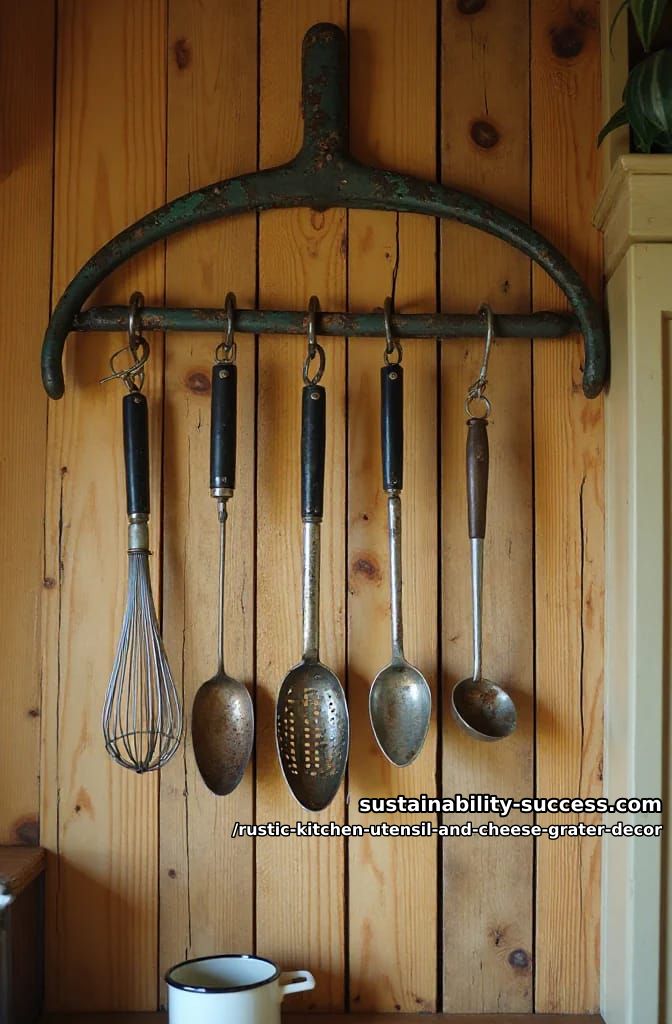
A detached metal bow-rake head, tines facing out, hangs your utensils by their holes on each tine, and it stays genuinely functional: you actually grab the whisk off it mid-cooking. I don't know who first decided the rake head was fair game for the kitchen, but the curve spaces the tools out perfectly well. Flea-market rake heads go for $5 to $15; pull the handle off and run two screws through the socket to mount it. The springy fan-shaped leaf rakes don't work for this, by the way. The tines bend the moment you load them.
One caution on old painted handles and heads. People ask whether the flaking paint is safe to keep around, and on anything older than 1978 you should assume it contains lead, so don't sand it. Wipe it down and seal it under a clear matte spray.
5. Wooden spoon and greenery wall sconce
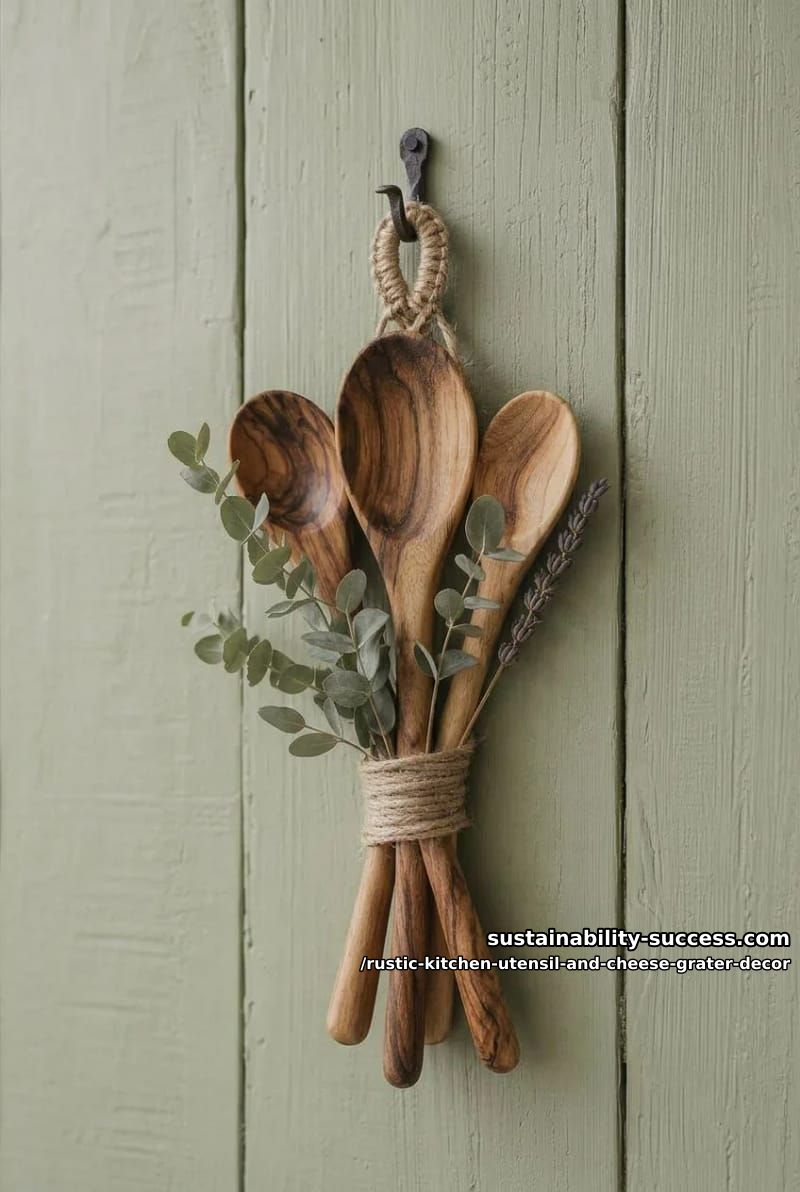
Bundle three or four wooden spoons with a few stems of faux eucalyptus, wrap the necks tight with twine, and hang the whole thing flat as a wall bouquet. If the spoons come out of your own drawer it costs you a length of string. Old olivewood and dark maple spoons photograph well; the pale new bamboo ones from the dollar aisle look like exactly what they are, so raid a thrift shop's kitchen bin first. Wrap the twine in tight overlapping turns instead of one big bow, both because it holds better and because a fat gingham bow on every piece is how a wall starts to look like a craft-fair booth.
Cream and red pip berries are the lazy person’s filler: no water, no wilting, and they tuck into a grater in about ten seconds.

6. Grater wall planter for trailing plants
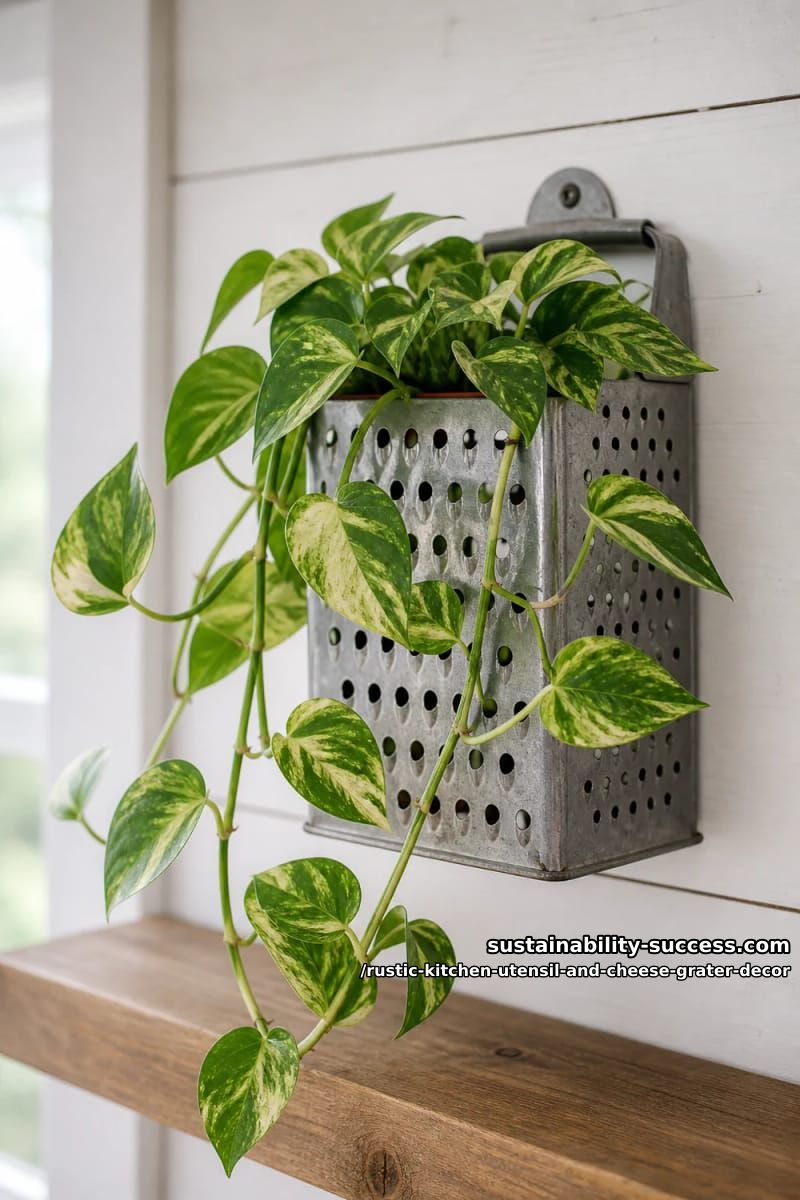
A box grater holds a small trailing plant only if you drop the plastic grow-pot straight inside it and never pack soil against the metal. Pothos and string-of-hearts both spill nicely through the open shape, and a $4 nursery pot slides into a standard grater with room to spare. If you tend to forget the watering can, a faux trailing stem gives you the same drape with zero risk, which I'd argue is the smarter pick for a piece hanging at face height over a counter.
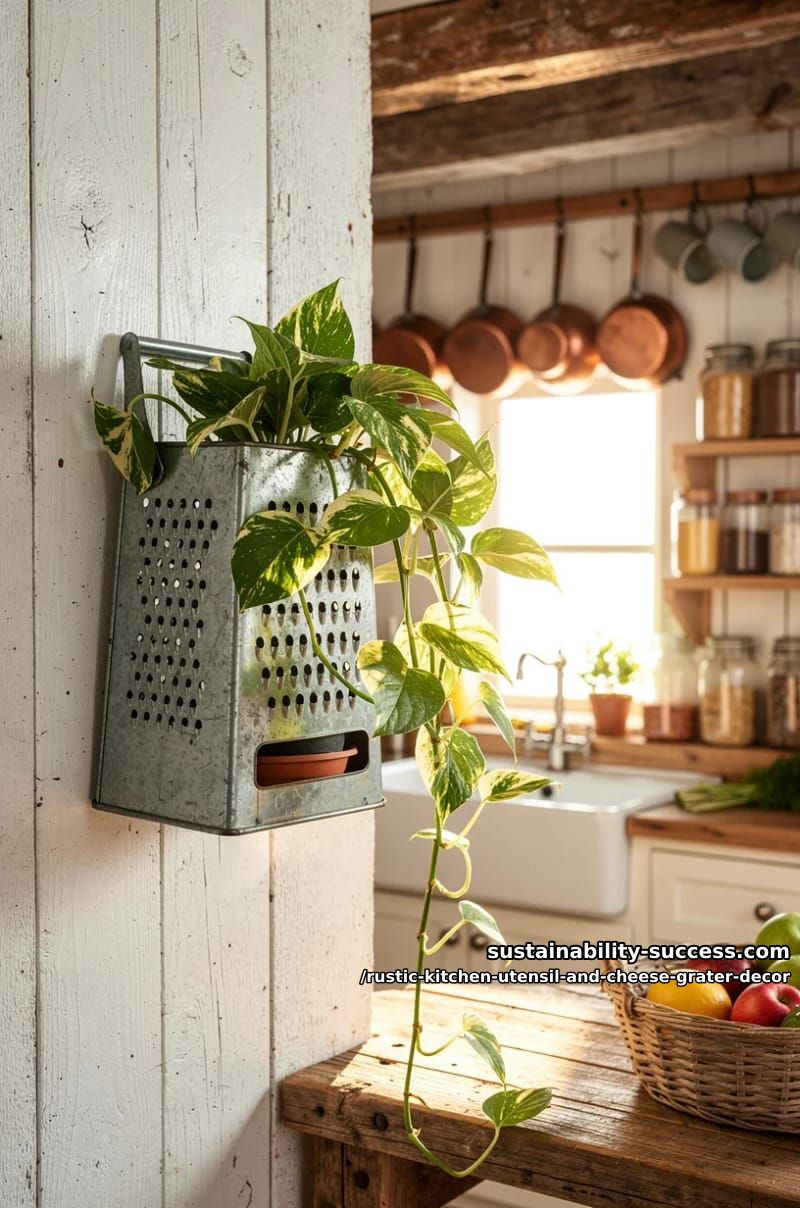
Wet soil against old tin or galvanized steel rusts within weeks, and the rust bleeds orange streaks down whatever wall it’s mounted on. Always use a removable plastic liner pot, set a small saucer underneath it inside the grater, and pull the pot out to water it at the sink instead of pouring water into the metal.
7. Framed chicken-wire vintage utensil display
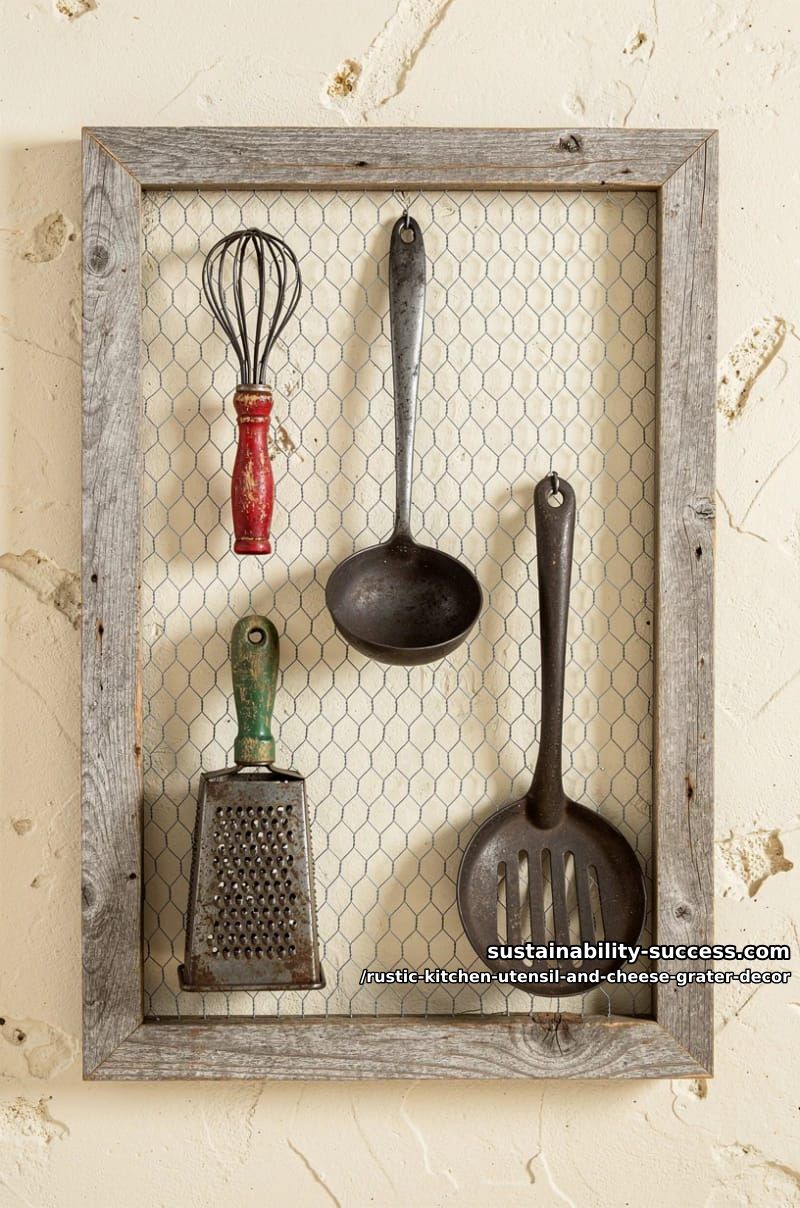
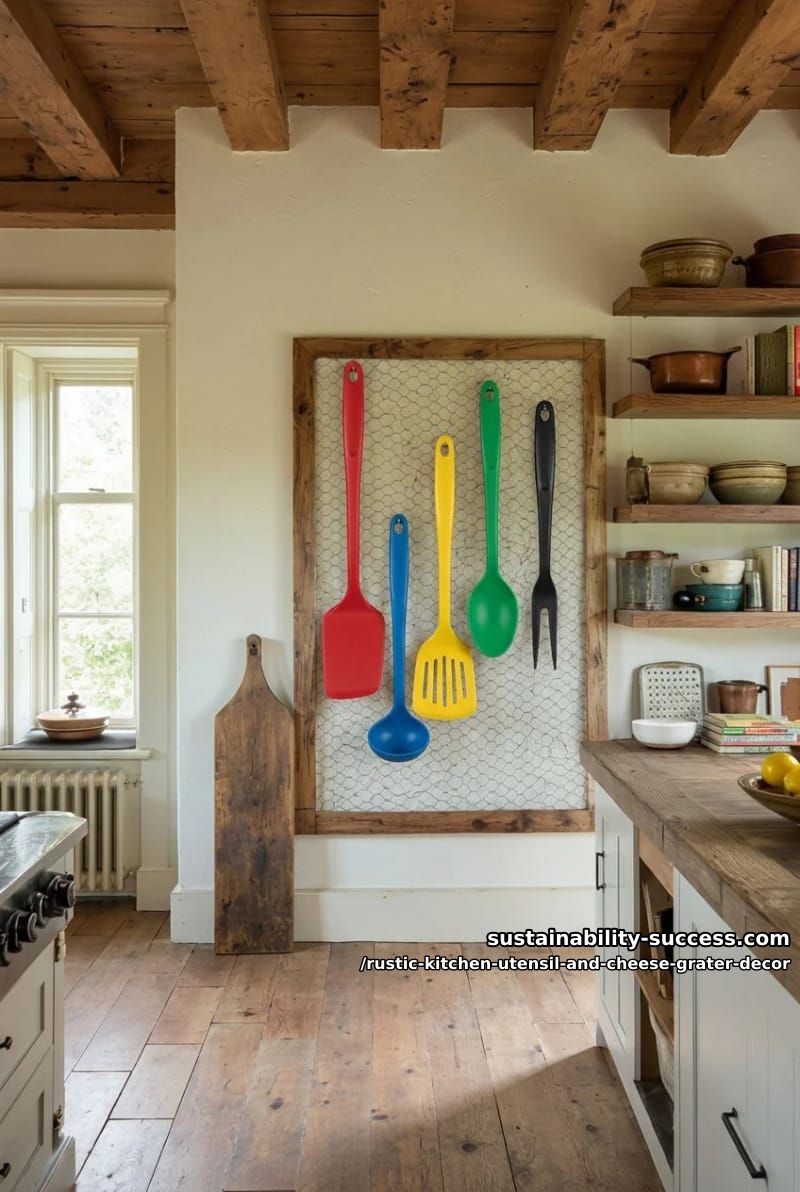
Stretch chicken wire across a thrifted frame, then wire your heaviest old tools to the mesh so you can reposition an eggbeater or a skimmer until the spacing balances. A wooden frame runs $3 to $10 secondhand, and a roll of poultry netting plus florist's wire finishes the whole thing for under $15. The grid is forgiving, which is the point: you can shuffle pieces around for an evening without committing a single nail hole to the wall behind it.
Do this
- Choose forged or cast tools with weight and a clear silhouette: an eggbeater, a balloon whisk, a slotted spoon.
- Vary the shapes so each tool reads against its neighbors.
- Wire pieces at two points so they sit flat and don’t spin.
Avoid
- Flimsy plastic-handled utensils; they read modern and cheapen the grid.
- Three identical spoons in a row, which kills the contrast you’re after.
- Anything chrome and shiny, which fights the matte tone of the older pieces.
8. Grater luminary with battery fairy lights

Drop a coil of battery fairy lights inside a tall cylindrical grater and the punched holes turn into a field of pinprick light on the wall behind it, no wiring required. The old cylinder graters, sometimes sold as a "wonder shredder," work better than a box shape because the holes wrap the full circumference. Use warm-white lights in the 2200K to 2700K range; cool white turns the whole thing clinical and blue, which is the opposite of what you want next to old tin. Tuck the battery pack behind the cylinder on the shelf and you'd never know it was there.
9. Wooden crate or toolbox utensil caddy
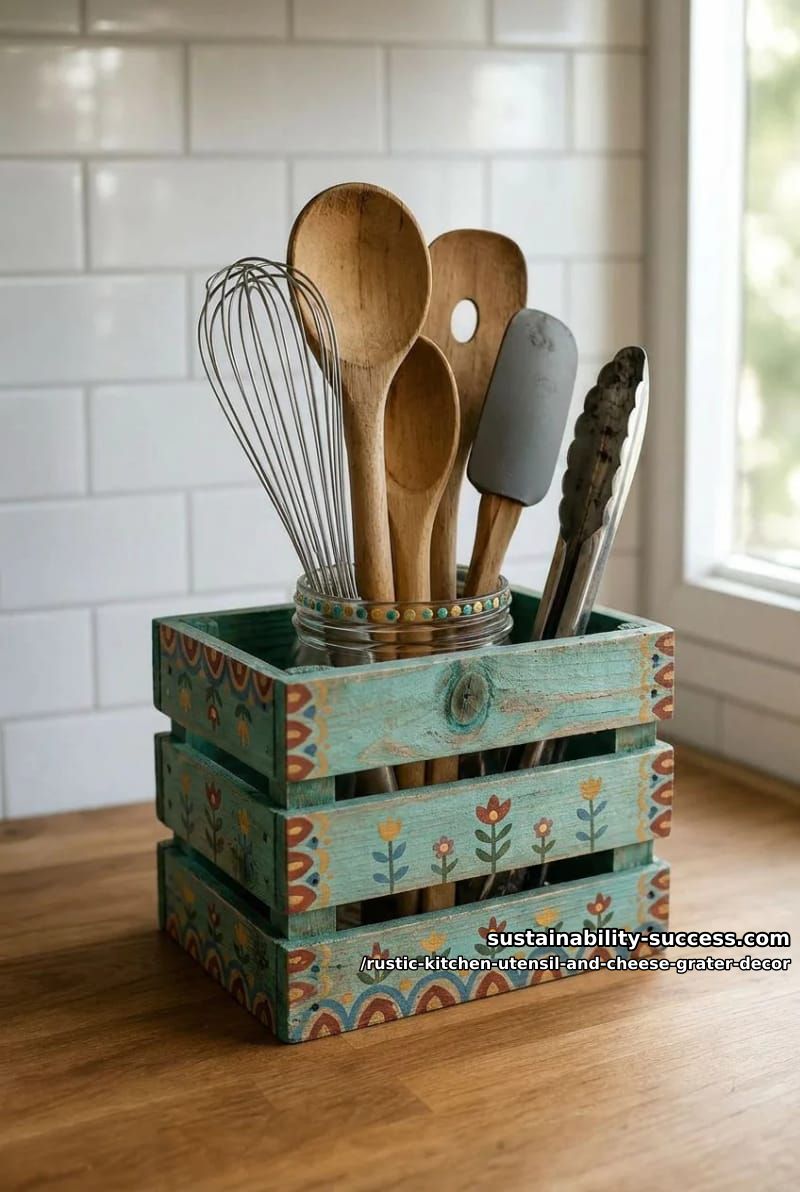
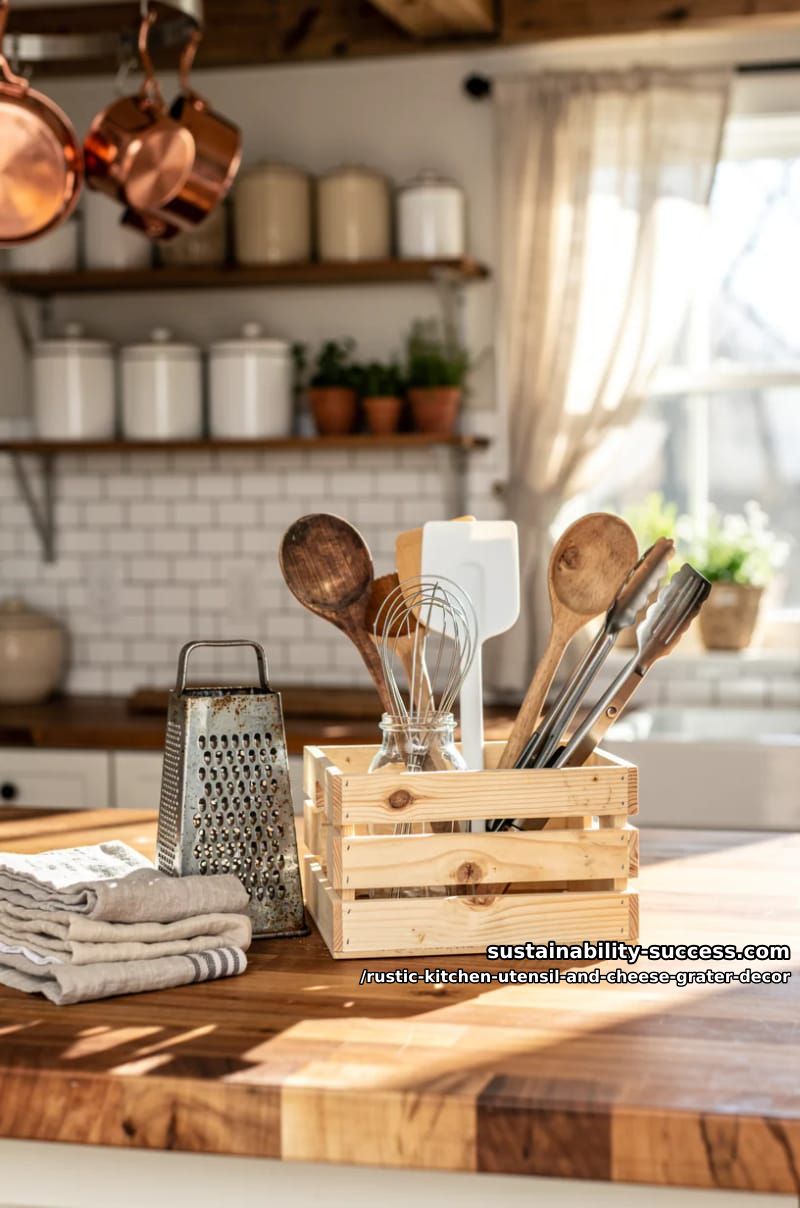
A small wooden crate keeps your actual cooking utensils upright on the counter, the one idea here you'll use every single day instead of only looking at. Drop a wide-mouth glass jar inside to corral the short tools, and let the spoons lean toward the front. A plain pine crate from Michaels runs about $8 to $12 if you can't thrift an old toolbox or seed flat. Leave it raw or give it the lightest wash of diluted paint; a dark glossy stain buries the saw marks and the worn grain that make it read old in the first place.
10. Seasonal grater sconce you re-dress
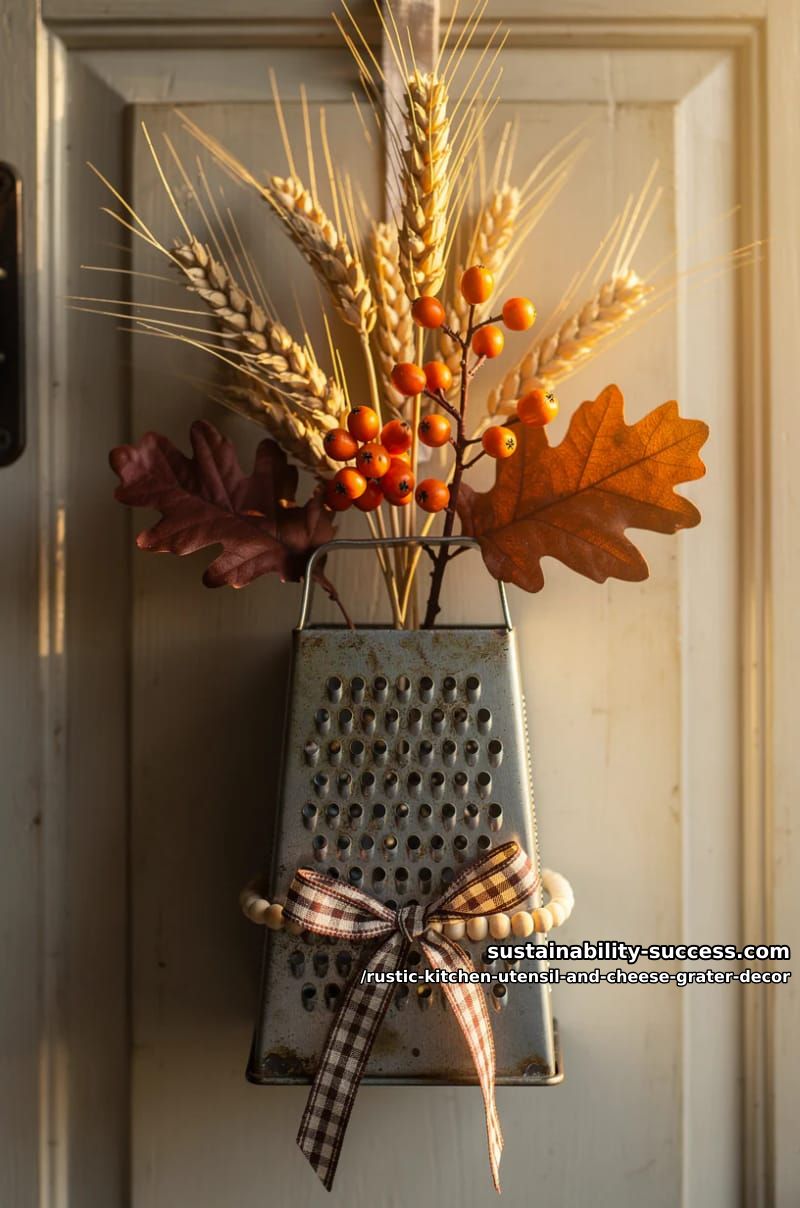
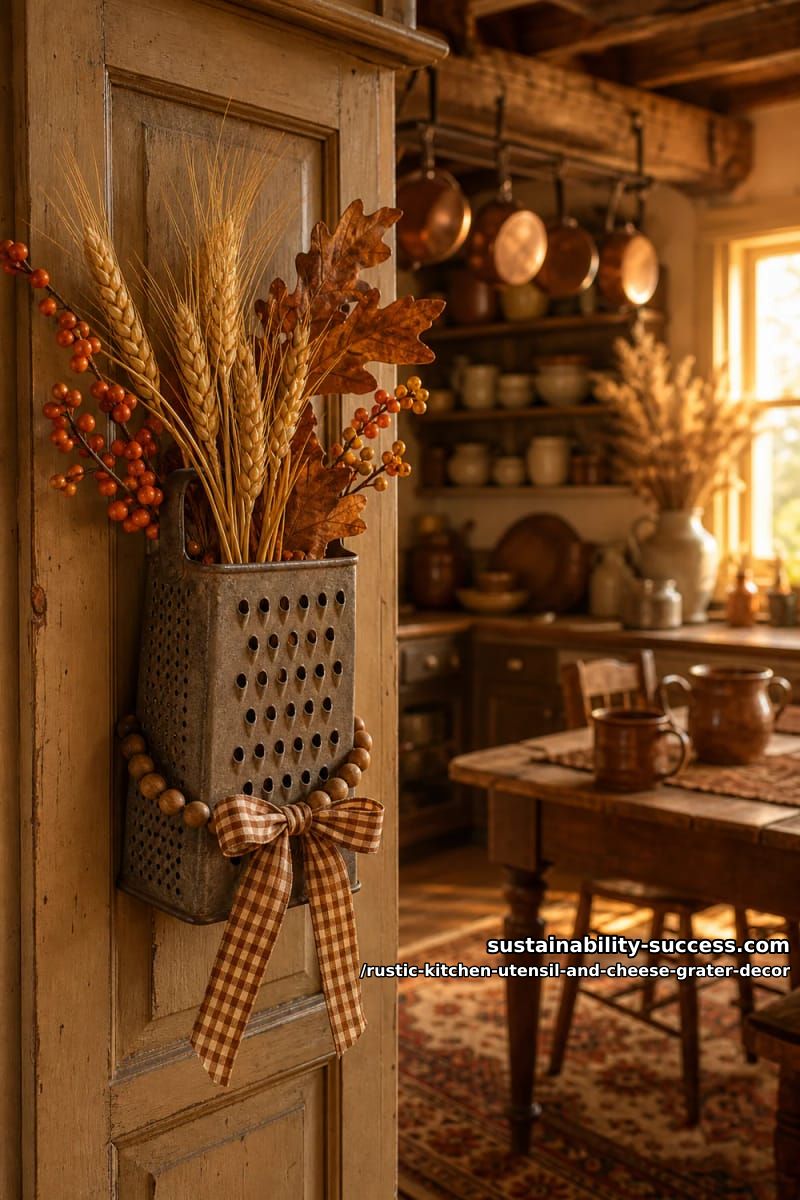
Keep one grater pocket permanently mounted and swap only its contents by season, so a single screw hole carries you through the whole year. Wheat and bittersweet in fall; a couple of small wooden-spoon ornaments at Christmas; bare cotton stems through the dead of winter. Each refill costs $5 to $12 in stems, which is the cheapest way to keep a kitchen feeling current without buying new decor four times a year. Store the off-season fillers in a labeled shoebox so you're not hunting for the wheat next October.
11. Galvanized, tin, or copper: match the finish to your kitchen
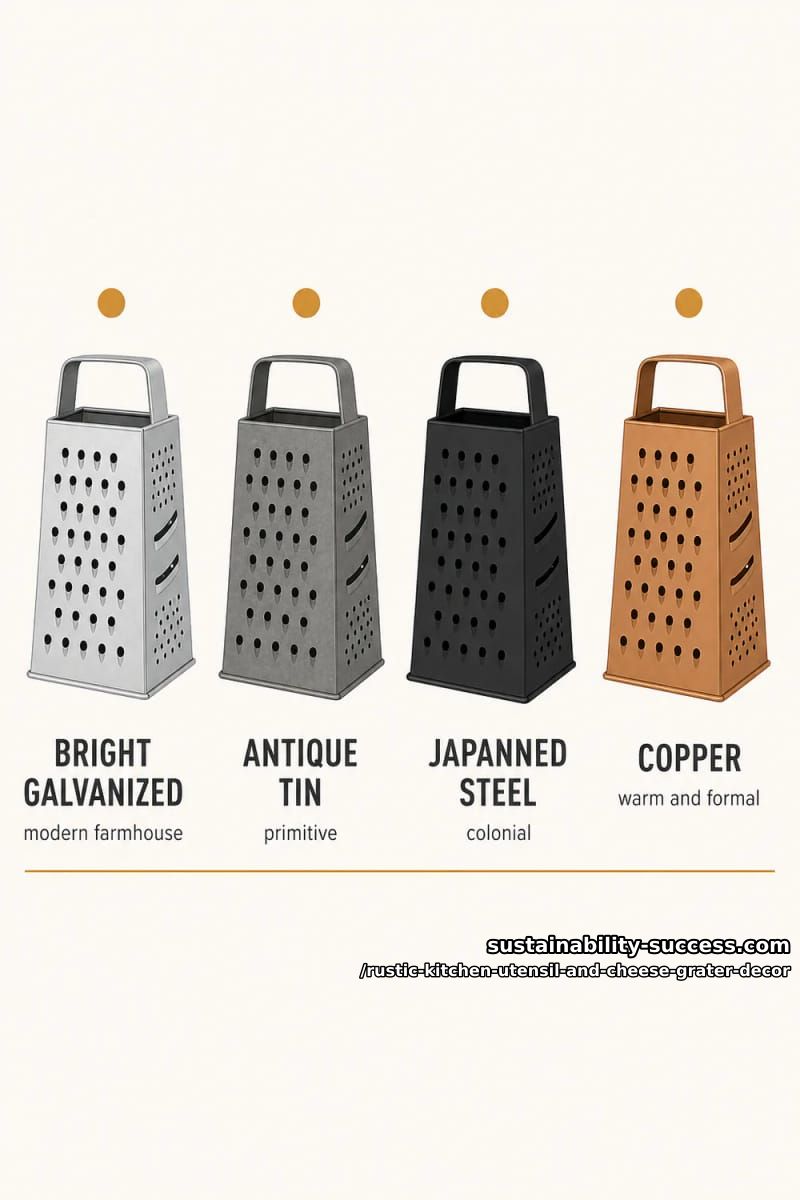
The finish decides which room the piece belongs in, so settle it before you fall for a shape. Bright galvanized zinc reads modern farmhouse, dull antique tin reads primitive, blackened japanned steel reads colonial, and copper reads warm and a little formal. Mixing all four on one wall produces the "I bought everything at the flea market in one afternoon" look, so pick a lane. One warning on copper: most of the copper graters sold online are thin stamped plate that dents if you breathe on it, while a real vintage copper one has actual weight to it. Hold it before you trust it.
| Finish | Reads as | Pairs with | Watch for |
|---|---|---|---|
| Bright galvanized | Modern farmhouse | White shiplap, black hardware | Too shiny next to genuine antiques |
| Antique tin | Primitive, country | Worn wood, dried botanicals | Rust transfer onto walls and towels |
| Japanned (blackened) steel | Colonial, early American | Deep reds, pewter, stoneware | Flaking paint on very old pieces |
| Copper | Warm, slightly formal | Cream, brass, marble | Thin modern plate that dents |
Conclusion
Start with one. A single grater pocket by the sink tells you within a week whether this look settles into your kitchen or fights it, and it costs less than lunch. If you like it, add the rake rack or the chicken-wire frame before you commit a whole wall, because fifteen graters in a row stops reading as a clever find and starts reading as a collection you now have to dust. The one thing I'd skip outright is the pre-assembled "farmhouse grater sconce" sold finished online for twenty dollars. You're paying for somebody else's hot-glue job, and on the close-up photos, you can usually see it.