
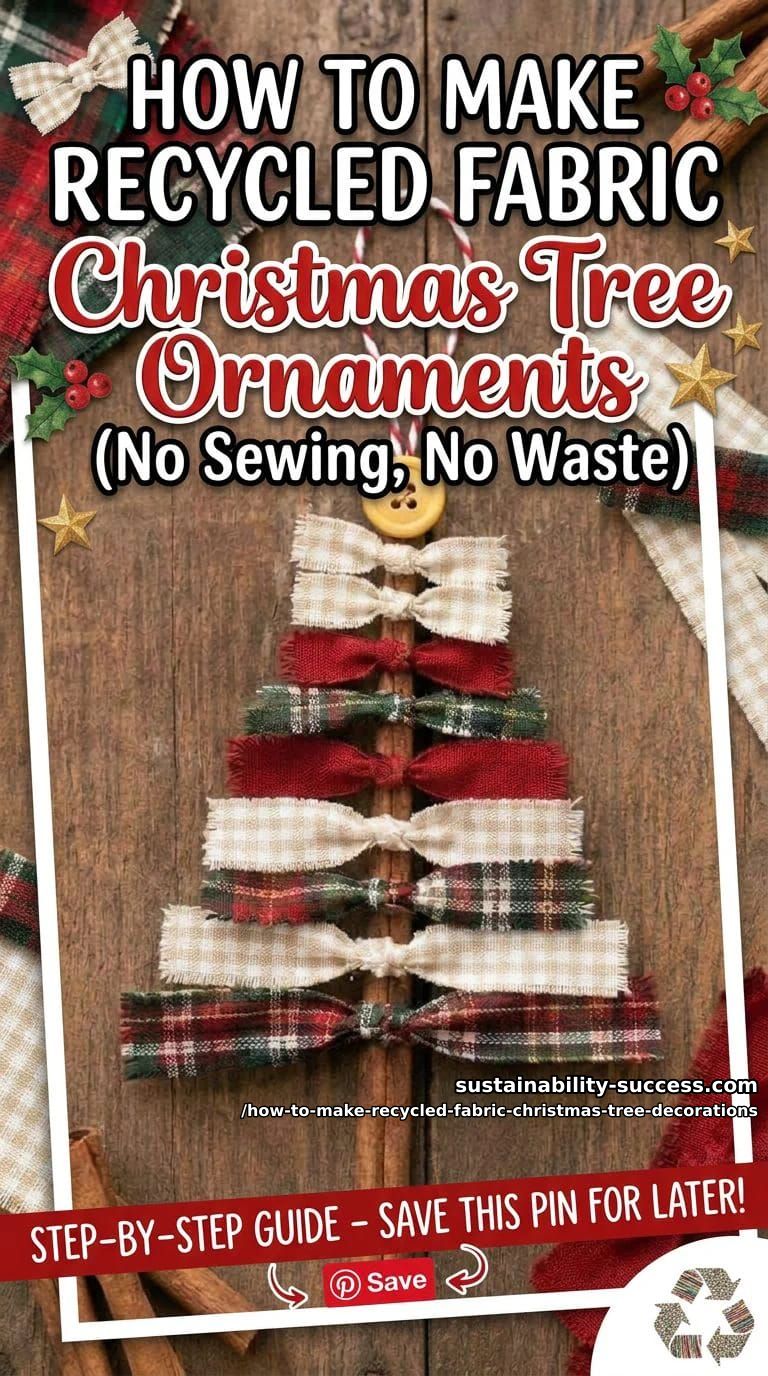
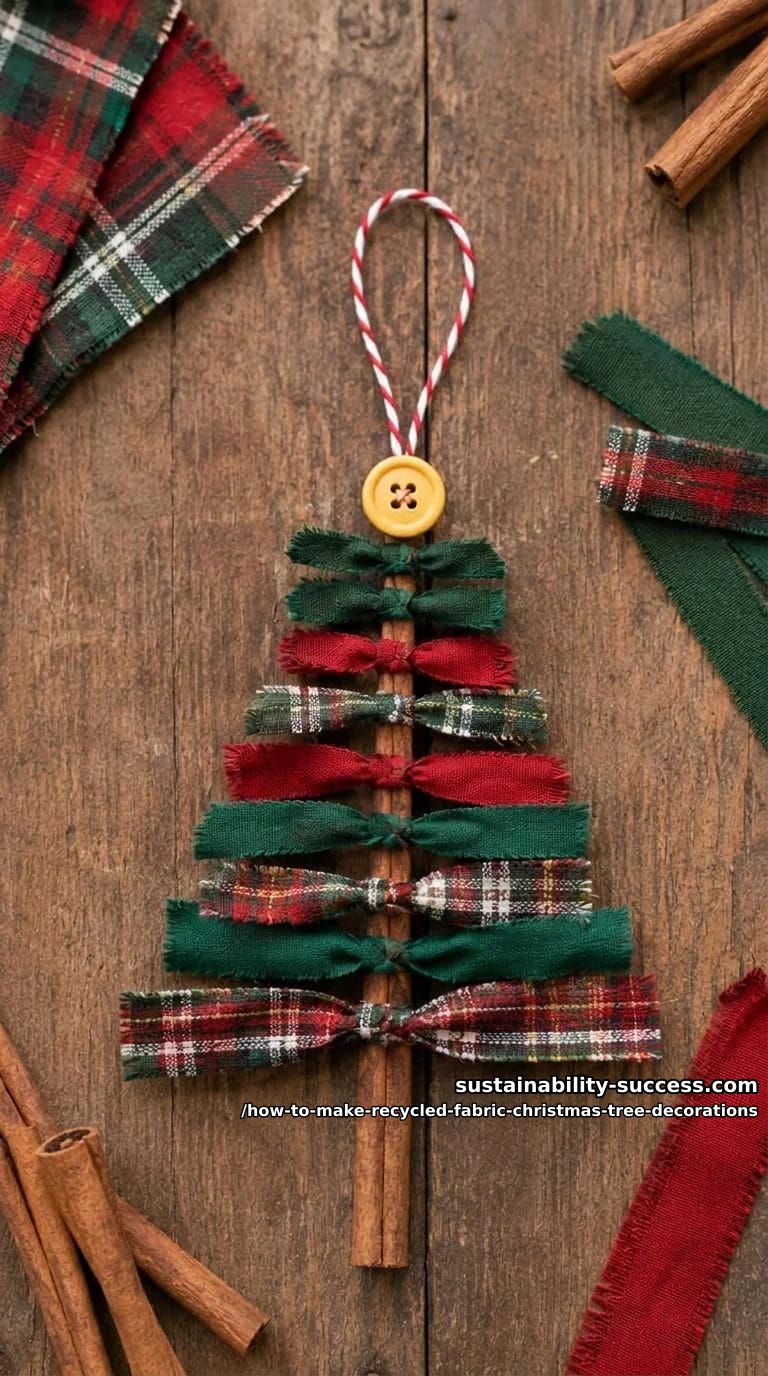
A worn-out flannel shirt has one more season left in it. Cut it into strips, knot those strips around a cinnamon stick, and the frayed cuffs and collar nobody wanted become a pocket-sized tree that smells like the spice drawer and costs next to nothing.
No sewing. Roughly thirteen knots, a button, a loop of twine, and about ten minutes an ornament once your hands learn the motion. It's also one of the oldest tricks for using up cloth scraps, so that's where I'll start.
Why scrap fabric beats a box of new baubles
The numbers are worse than your scrap bag lets on. The EPA put textile generation in 2018 at 17 million tons , 5.8 percent of all municipal solid waste that year. Landfills swallowed 11.3 million tons of it, 7.7 percent of everything buried. A flannel shirt with a frayed collar isn’t garbage. It’s a couple dozen ornaments waiting to happen, and the full breakdown lives on the EPA’s textiles data page.
Turning cloth strips into something new is an old habit, not a craft-blog invention. Northern English cottagers poked wool scraps through burlap for proddy mats. Appalachian families hooked rugs out of worn-out clothing. The wartime "make do and mend" campaigns turned every offcut into a patch or a binding. A knotted scrap tree belongs in that line, closer to a rag rug than to anything in the big-box ornament aisle. And unlike a blown-glass bauble, it survives being dropped by a four-year-old.
What you'll need
Most of this is already in the house. The split below separates what you use up from what stays in the drawer afterward, so if you already own scissors and a glue gun, the real cost drops to pocket change.
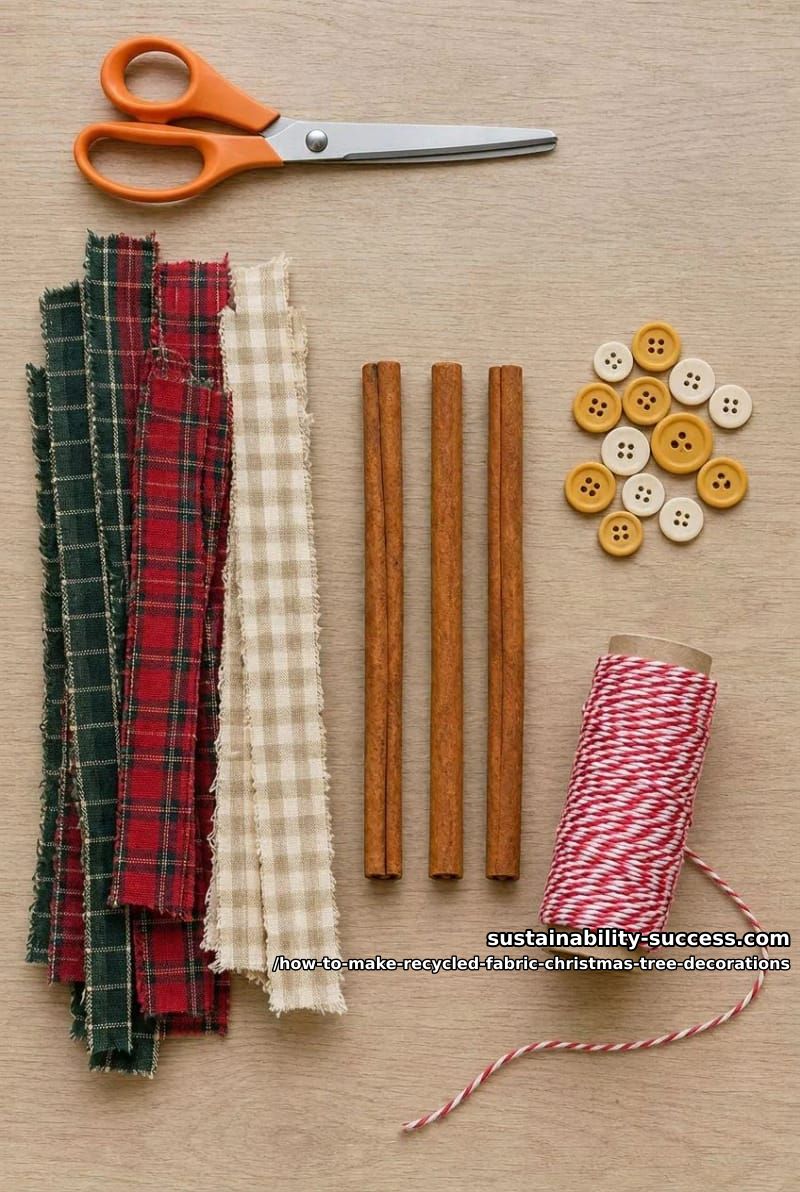
Materials (you use these up)
| Qty | Item | Spec | Price |
|---|---|---|---|
| scraps | Plaid or flannel fabric | Old shirts, remnants, thrifted napkins; cotton, frayable | Free |
| 1 | Homeford 6-inch decorative cinnamon sticks, 8-piece | 6 in long; cut in half for shorter trees | $8 to $12 |
| 1 | Buttons Galore assorted craft buttons, sunshine yellow | 5 oz, 3/8 in to 1-1/4 in, sew-through | $7 to $10 |
| 1 | jijAcraft red and white baker’s twine, 328 ft | 2mm cotton; for the hanging loop | $6 to $8 |
| Materials subtotal | $21 to $30 | ||
Tools (these stay in the drawer)
| Qty | Item | Spec | Price |
|---|---|---|---|
| 1 | Fiskars 8-inch all-purpose fabric scissors | Sharp enough to start the tear and trim the shape | $12 to $17 |
| 1 | Gorilla dual-temp mini hot glue gun kit (30 sticks) | Optional; low-heat setting for fabric | $13 to $18 |
| 1 | Fiskars 8-inch fashion pinking shears | Optional, for a tidier zig-zag edge | $18 to $26 |
| Tools subtotal (core: scissors + glue gun) | $25 to $35 | ||
Prices are rough ranges as of early 2026, so check before you buy. The optional pinking shears tack on about $18 to $26. Buying everything from scratch, the combined total runs about $46 to $65.
Pick fabric that frays on purpose
This is the part I have opinions about. The original version of this craft used wired ribbon, and I'd skip it without a second thought. Polyester ribbon points stubbornly up and down at the knot no matter how you fuss with it, and the cut ends melt rather than fray into the soft fringe , that fringe is the whole reason these trees read as handmade instead of store-bought. So: cotton. The more washing-worn it is, the better it tears. Soft flannel paired with primitive homespun is my favorite combination, mostly because homespun is woven the same on both faces. No wrong side to hide.
Do this
- Cotton flannel from an old shirt frays into a soft halo , the gold standard here
- Yarn-dyed homespun plaid, identical on both faces
- Lightweight quilting cotton, gingham, and tartan checks
- Thrifted plaid napkins and pajama bottoms work too. So does a tablecloth no one will miss.
Avoid
- Polyester satin ribbon. It twists, and the ends melt instead of fraying.
- Thick fleece is too bulky to knot small and taper cleanly
- Fray-resistant synthetics give you no soft edge and no texture
- Anything with a stiff fusible backing , it won’t knot flat
No scrap bag yet? A holiday flannel bundle hands you four plaids and a snowflake print at once, all in the red-green-cream range these trees want.

Step 1: Cut and tear your strips
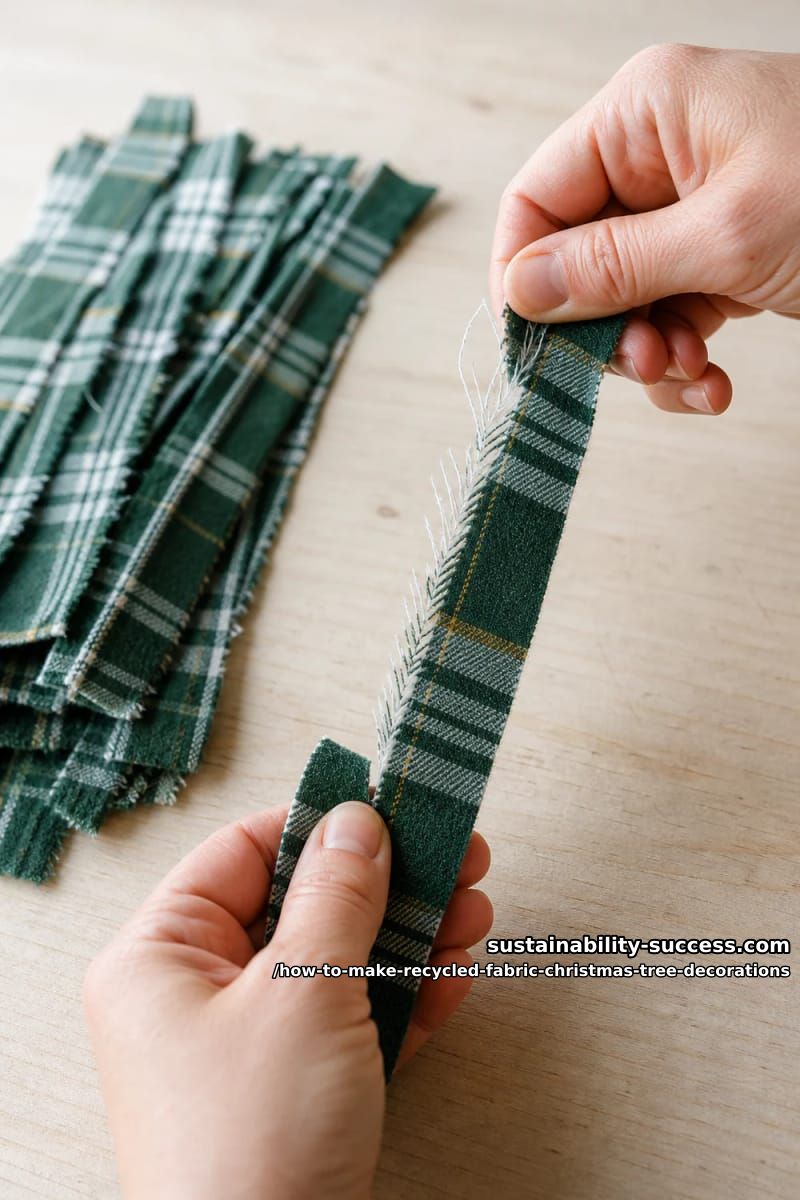
Tear, don't cut, wherever the weave lets you. A torn edge frays into the fringe these trees live on; a cut edge just looks cut. Plaids make it easy , the grid shows your hands where the grain runs.
- Notch and rip: snip a half-inch cut every three-quarters of an inch along the selvage, then tear straight down the grain.
- Size them: you’re after strips about 3/4 inch wide and 7 to 8 inches long, which leaves a 2 to 3 inch tail on each side of the stick.
- Count them out: budget about 13 well-bunched strips per cinnamon stick. Fewer if your sticks are short.
- Mix the pile: shuffle patterns and tones so no two neighboring branches match.
Step 2: Ready the cinnamon-stick spine
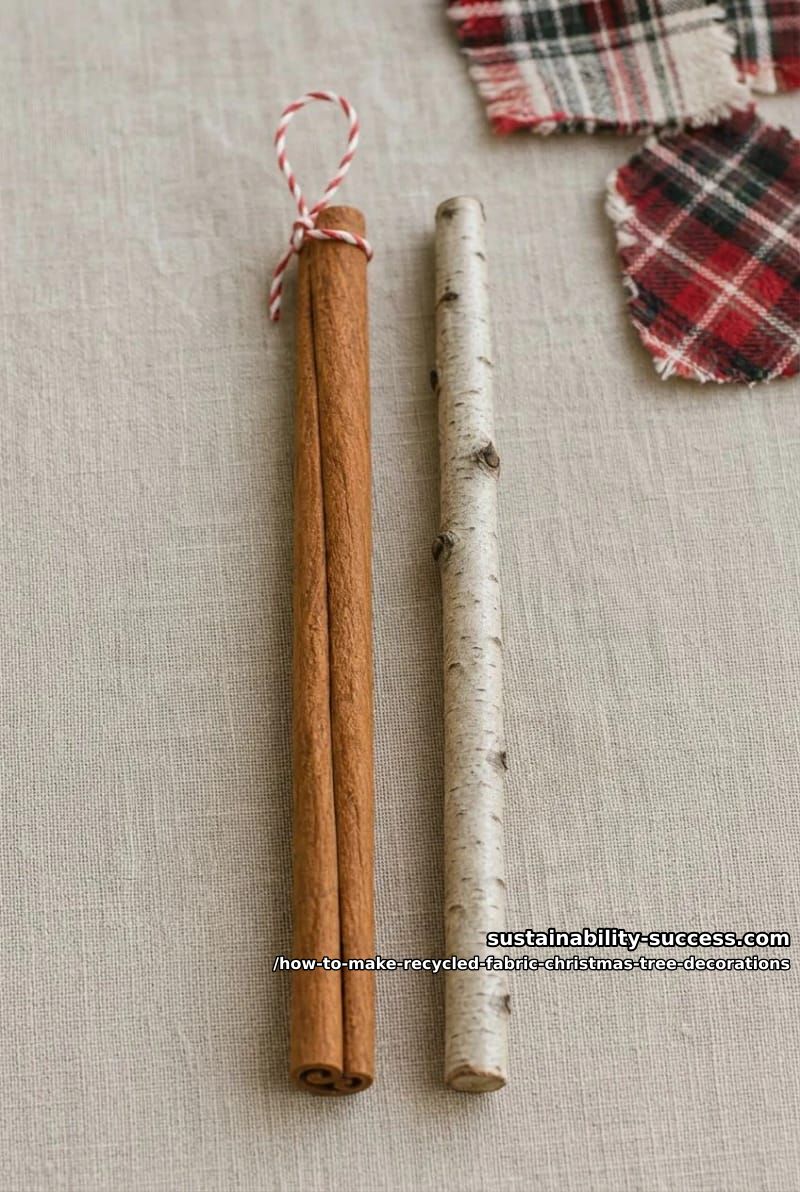
The cinnamon stick is trunk and spine in one, and it's the reason the finished thing smells like a holiday instead of a fabric store. A 6-inch stick gives you about a 4-inch tree with an inch and a half of bare trunk left at the bottom.
Length: sticks longer than 6 inches want a hacksaw , pruning shears shatter the cinnamon instead of making a clean cut.
Scent: if the cinnamon has gone faint, a light pass with fine-grit sandpaper reopens the bark and lets the oil out.
No cinnamon on hand: a pencil-straight twig keeps the project free, and floral wire works too. A thin cinnamon stick can snap under a tight knot, though, so test one first.
Step 3: Tie the strips into branches
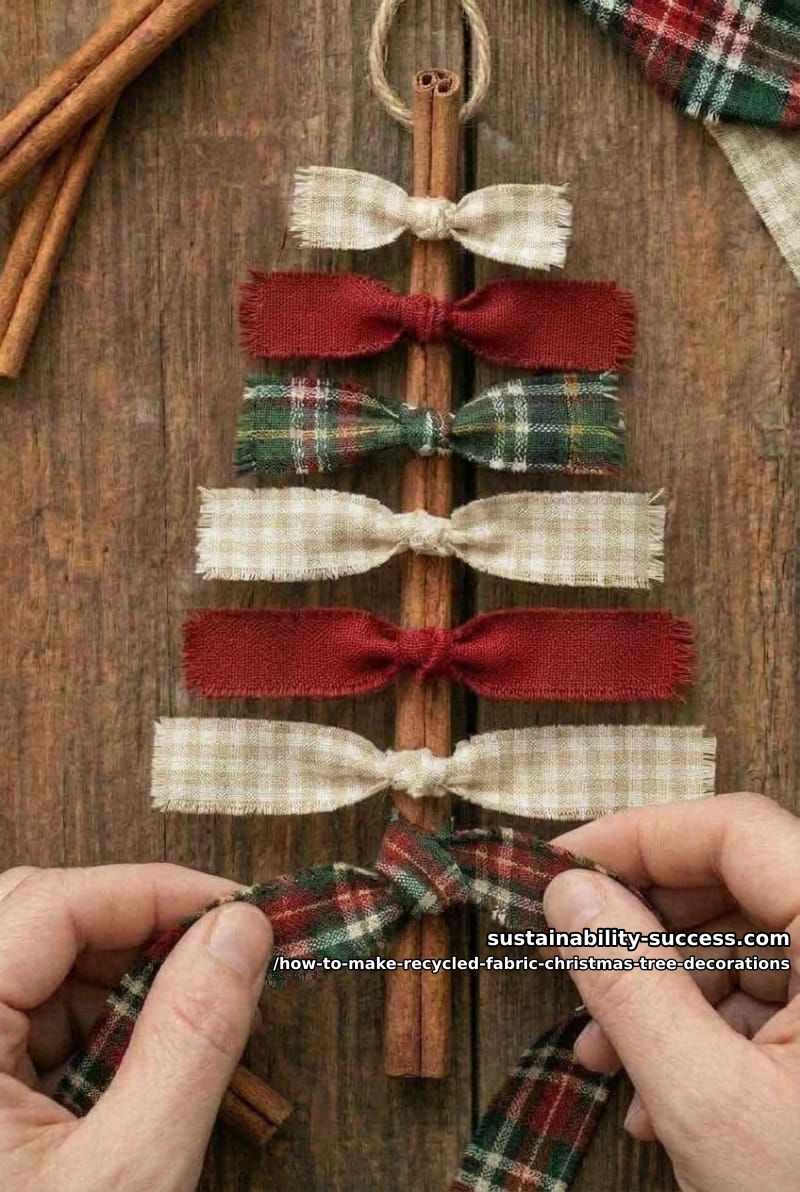
This is the whole project, honestly, repeated about thirteen times. The knot does all the work, so get the first one right before you settle into a rhythm.
- Center the strip behind the stick, an inch down from the top.
- Tie a square knot at the front of the stick: right over left, then left over right. A granny knot sits crooked, and the strip ends up pointing sideways.
- Pull tight, then push up so the new knot sits snug against the one above it, no gap of bare bark showing.
- Keep the right side facing you. Every knot goes on the same face of the stick, or the branches twist.
- Work down to the last inch of stick and stop. That bare end is your trunk.
Step 4: Trim it into a tree
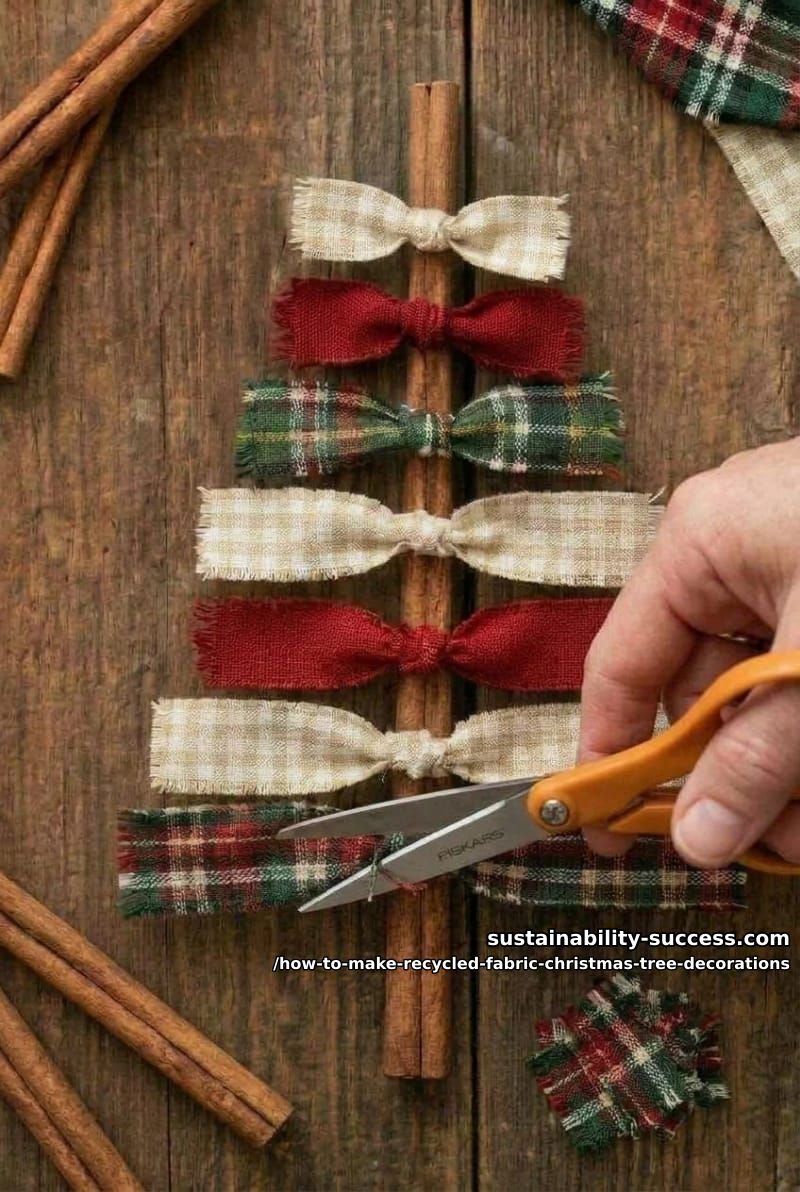
Right now it looks like a striped caterpillar. The tree's in there. You free it by cutting the ends into a triangle , shortest at the crown, widening as you go down.
- Trim the top strips shortest, about an inch across the whole branch.
- Widen each row going down, ending with a bottom branch around 3 inches wide, so the silhouette is a clean triangle.
- Tidy the strays but leave the fray. Want a crisper edge that sheds less? Run pinking shears along each end for a controlled zig-zag.
Step 5: Crown it with a button and hanger
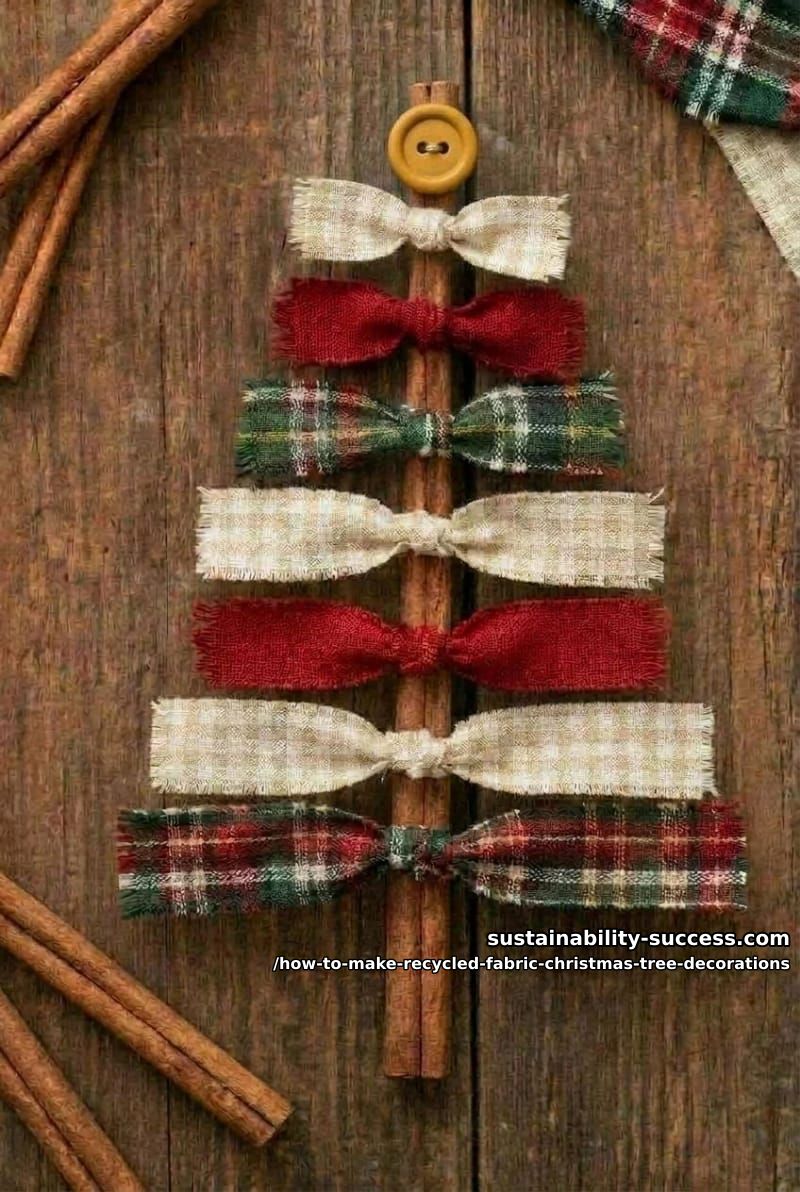
The button is the star on top. How you attach it decides whether this stays a fully no-glue project. Either route takes under a minute.
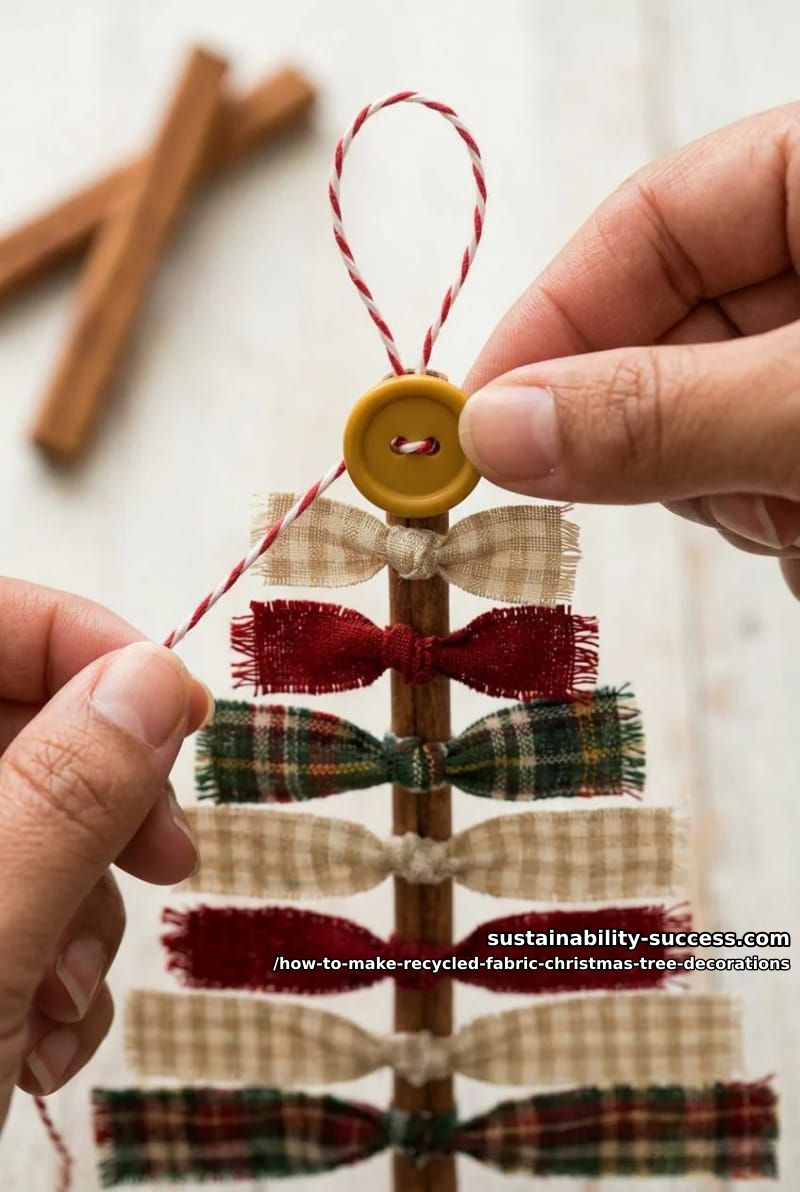
- No-glue (my preference): thread a length of twine up through two button holes, set the button over the bare top of the stick, then knot the twine ends tight around the stick and finish the tails in a loop for hanging.
- Glue gun: hot-glue a large button to the empty space at the top of the stick, then flip the ornament over and glue a loop of twine to the back to form the hanger. Use the low-heat setting so the glue doesn’t scorch thin cotton.
Mistakes that flatten a fabric tree
If yours doesn't look like the photo, it's almost always one of these five. All five are fixable before the glue sets.
- Strips cut too wide. The knots bunch into a tube and the triangle never appears. Re-tear at 3/4 inch.
- Gaps between knots. Bare cinnamon shows through the branches; slide each knot up tight against the last before you move on.
- Granny knots or mixed sides. The branches twist toward the back. Square knots, all on one face, right side out.
- Trimming straight instead of tapered. A rectangle of fabric is not a tree. Shortest at the top, widest at the bottom branch.
- Slippery fabric. Polyester works itself loose within a day. Stick to cotton, which grips itself when you cinch the knot.
Make a batch in one sitting
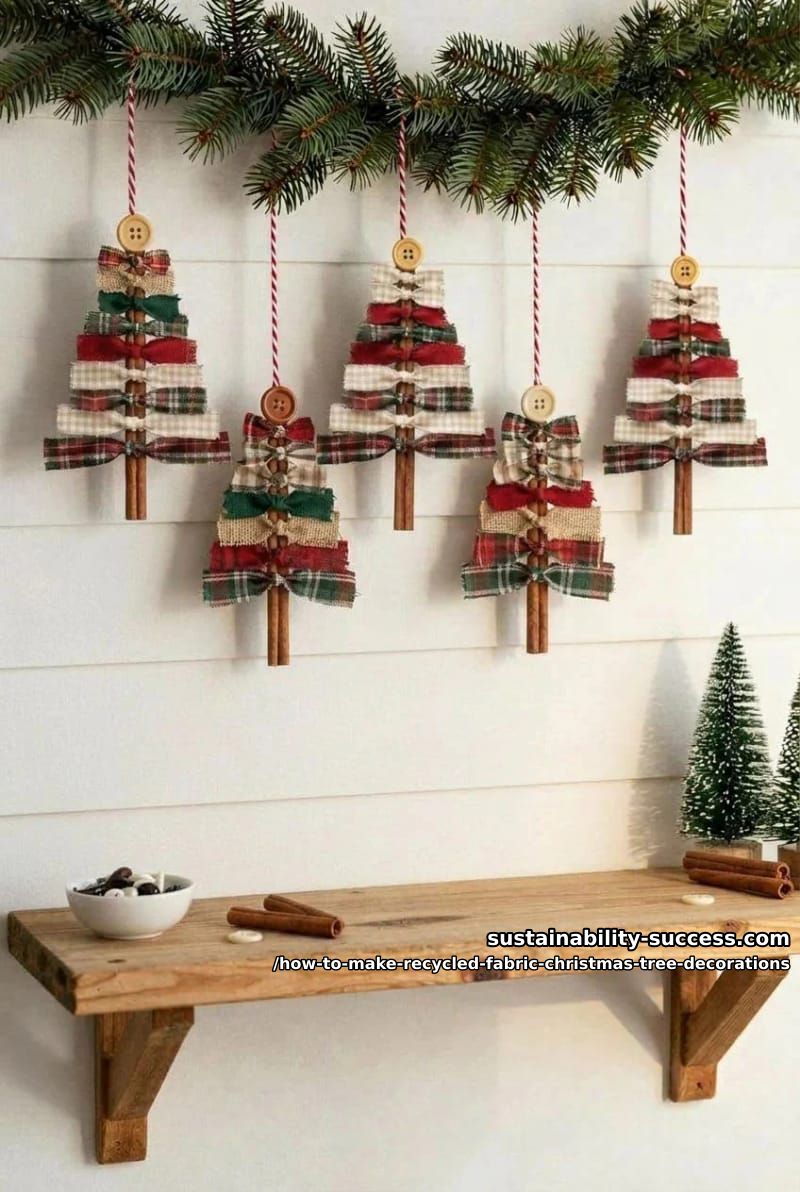
One ornament is a five-minute novelty. The point is the dozen , that's when a thrifted shirt earns its keep as a whole season of gift tags and tree fillers.
One flannel shirt, a tree’s worth of ornaments
1 thrifted men’s flannel shirt ($3 to $4) + 1 pack of cinnamon sticks
A men’s flannel shirt holds roughly 2 to 3 yards of usable cloth once you skip the seams and buttons. At about 13 short strips a tree, that one shirt gives you somewhere around a dozen ornaments. An 8-pack of 6-inch cinnamon sticks cut in half makes 16 trunks, with buttons and twine left over for the next batch. Thrift the shirt and the whole project lands under $1.50 per ornament, against $4 to $8 for a single mass-made felt tree that looks like it came off a checkout rack.
Run it as an assembly line and your hands have an easier time of it:
- Minutes 0 to 15: tear the whole shirt into strips and sort them into color piles.
- Minutes 15 to 25: cut and prep every stick, and tie a twine loop onto each.
- Minutes 25 to 70: tie about 13 strips onto each stick, one tree at a time.
- Final 15 minutes: trim everything into triangles and add the buttons.
Conclusion
A note for next December: cinnamon goes quiet in a storage box. A quick pass with sandpaper across the bark before you hang them brings the smell right back, no fragrance oil needed. Make a few more than you think you need. As gift tags they beat anything off a roll of wrapping paper, and a stack of them costs less than the shirt you cut up to make them. One crafter made a batch for every family member, with a note telling them to act surprised , which tells you plenty about how people react to these.