
The standard small-space advice is to buy a slim pencil tree and move on, and for a modern Scandinavian room that's the wrong answer. A pencil tree is still a shrunken version of the thing you didn't have room for, plastic needles and all, apologizing for the square footage instead of working with it. The nine alternatives below give back the floor (or the wall, or the ceiling) and read as a deliberate choice, from a flat-pack birch tree that stores in an envelope-thin box to a bare branch tree standing in a floor vase.
A note on what "Scandi" means here, because it isn't just a green tree with fewer baubles: a tight neutral palette, natural materials, warm light, and a lot of empty space doing deliberate work. A couple of these need a free wall or a ceiling joist; most fit on a side table. I've flagged where each one actually works.

Hang a flat branch tree on the wall and reclaim the floor
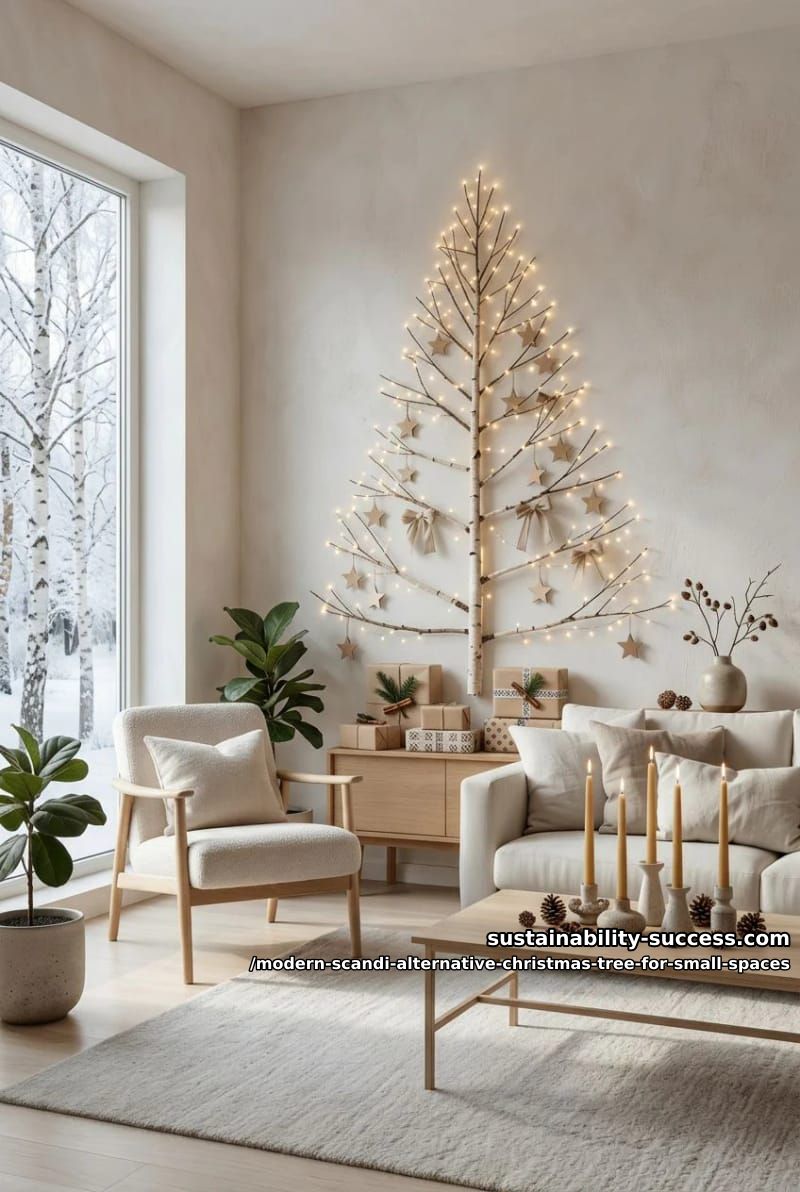
Going two-dimensional is the biggest single space win on this list: a wall tree takes zero floor. Arrange slim birch branches (or brass rods, or even a length of garland) in a tapering triangle straight on the wall, widest near the baseboard, narrowing to one sprig at the top, then weave in a warm-white string and hang flat, lightweight ornaments.
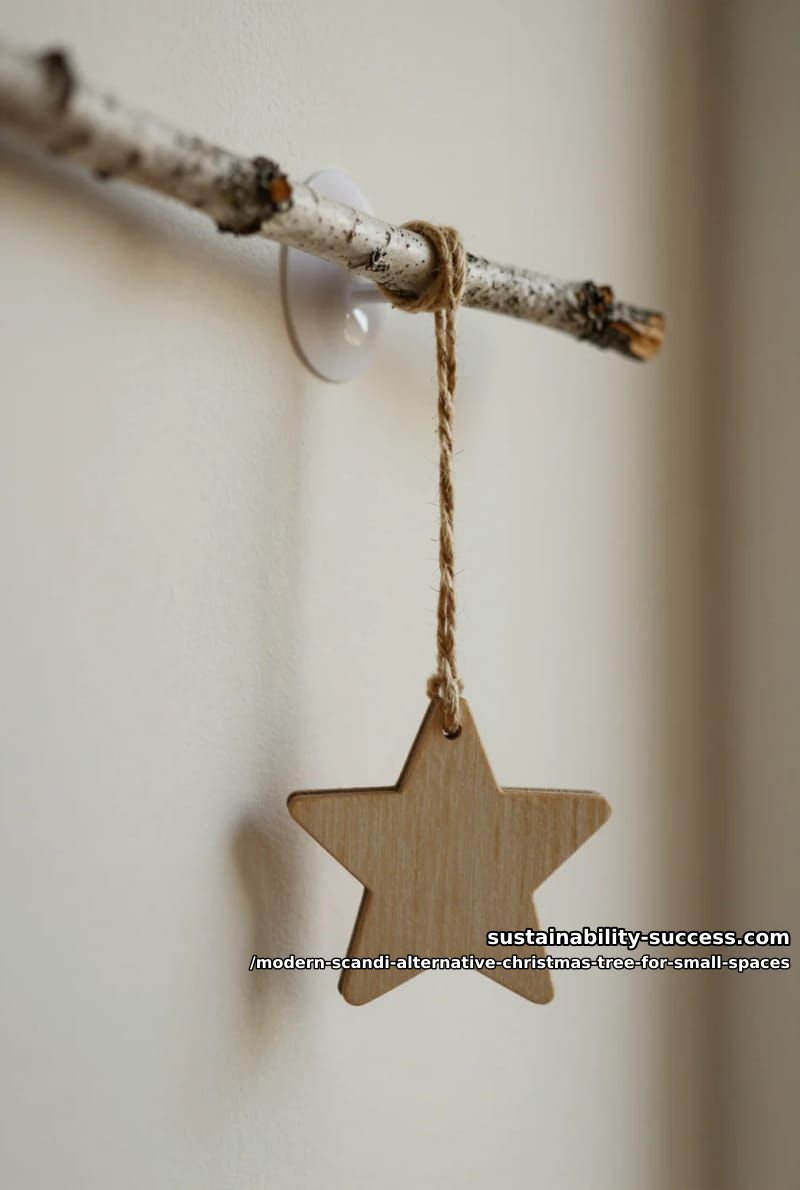
In a studio the floor is the scarcest surface you own, so this is the option that actually changes how the room functions. Renters: skip nails. Removable adhesive hooks or a few loops of washi tape hold branches and lights fine, though I'd test the tape on an inconspicuous patch first, because fresh or cheap paint can lift when you peel it.
Suspend the whole tree from the ceiling
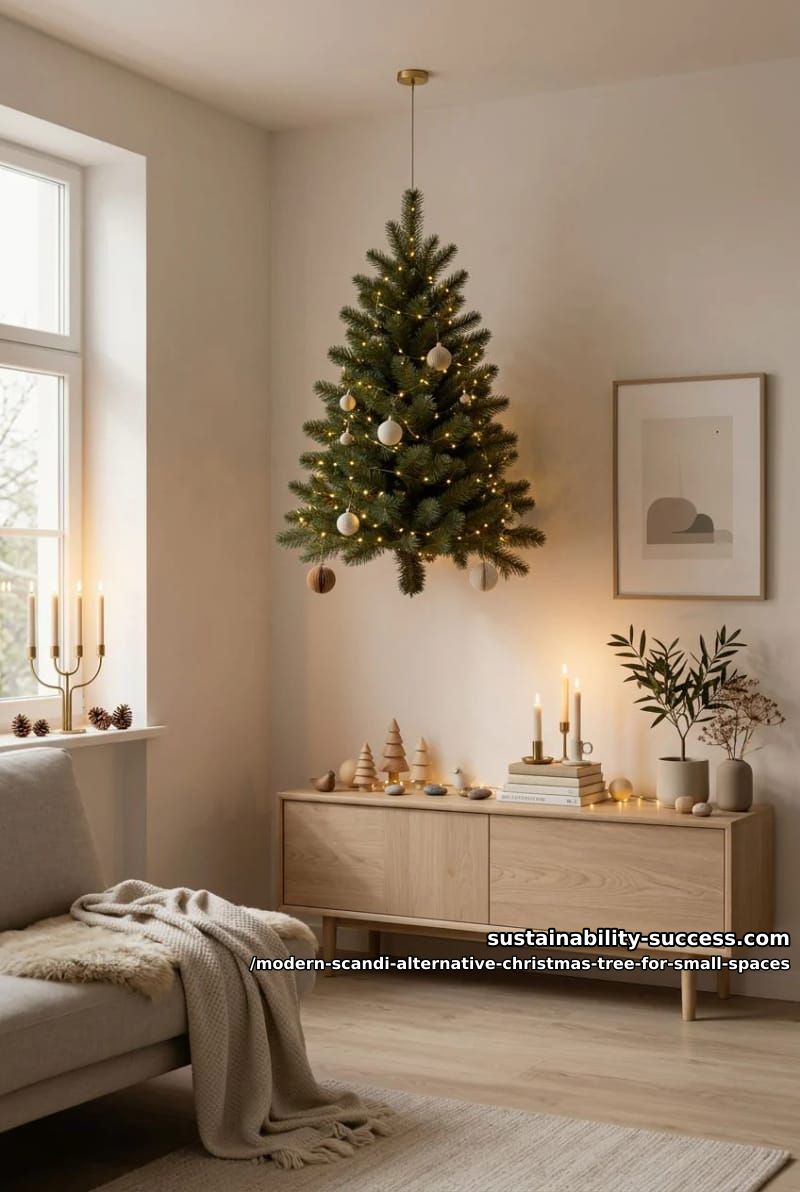
Hang it from the ceiling when you have neither floor nor free wall. A small fir or a cluster of branches suspended tip-down from a ceiling hook above a console clears the floor entirely and keeps everything out of reach of toddlers and pets. Anchor anything heavier than a few branches into a joist, not just drywall.
A flat-pack birch plywood tree is the most Scandi move you can make
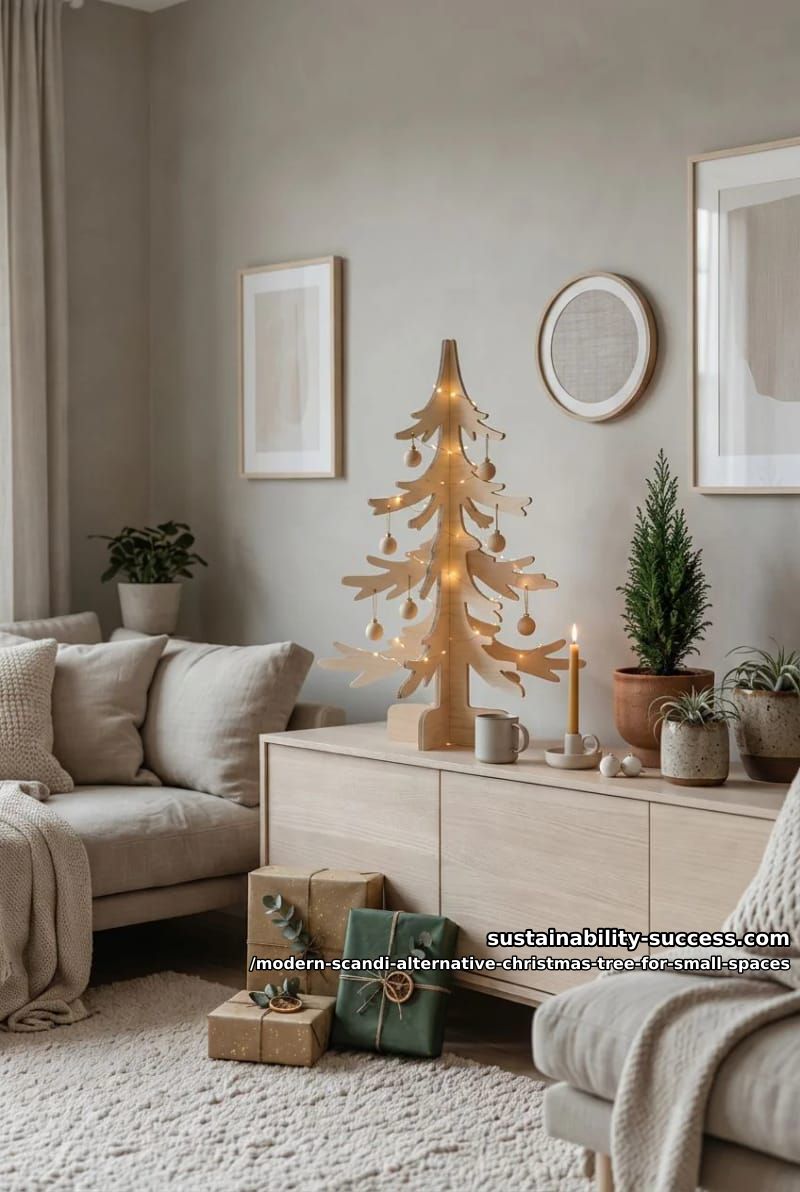
The most genuinely Scandinavian object here is the flat-pack birch plywood tree, the kind the Finnish brand Lovi has made since before "alternative tree" was a search term. It ships as a flat sheet of slotted parts and assembles into an open, stylized spruce with no glue and no tools , the patented joints just push together, and at the end of the season it comes apart and goes back in the same flat box. For an apartment with no attic and no spare closet, that last part matters more than it sounds, because there's no three-foot storage cone to find a home for in July.
Sizes run from a 25cm tabletop spruce to floor versions past 120cm, in natural blond wood or muted greys and greens. The small ones are cheap enough to treat as a centerpiece (roughly $25 to $35 through US stockists); the floor-height trees are more of an investment, often north of $130, and the tallest 180cm version is built from 6mm seven-ply plywood, so it isn't flimsy.
This beats the slim artificial tree for one reason: it isn’t pretending. A pencil tree apologizes for the space you don’t have; a plywood tree is just a nice object shaped like a tree, decorated with three or four wooden baubles or left bare. (Lovi also plants tree seedlings against drought and erosion, more than 115,000 to date, if that tips you.) You can see the current range at Lovi’s birch plywood Christmas trees.
Do this
- Natural wood, off-white, putty, and one muted green (sage or deep forest).
- Warm-white light only, around 2700K.
- A few oversized matte ornaments. Restraint over quantity.
Avoid
- Multicolour or cool blue-white lights.
- Red-and-gold-and-tinsel maximalism.
- Crowding the branches with glossy plastic baubles that catch the eye wrong.
Build the tree from bare branches in a floor vase
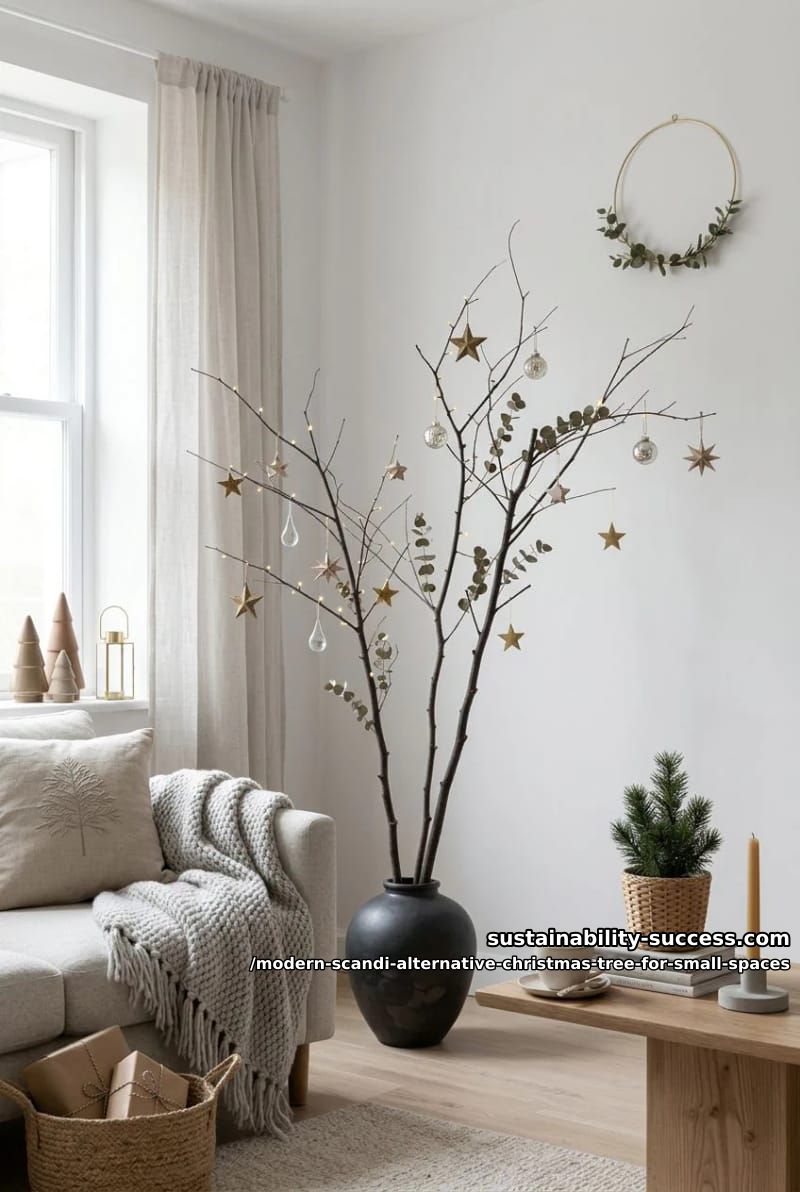
Bare branches in a heavy floor vase give you the height and silhouette of a tree with about a tenth of the bulk. Manzanita is the workhorse here , dark, sculptural, already tree-shaped , but corkscrew willow, birch, or even big magnolia branches do the job. Weight the vase with river stones or a bag of sand so a cat can't take the whole thing down.
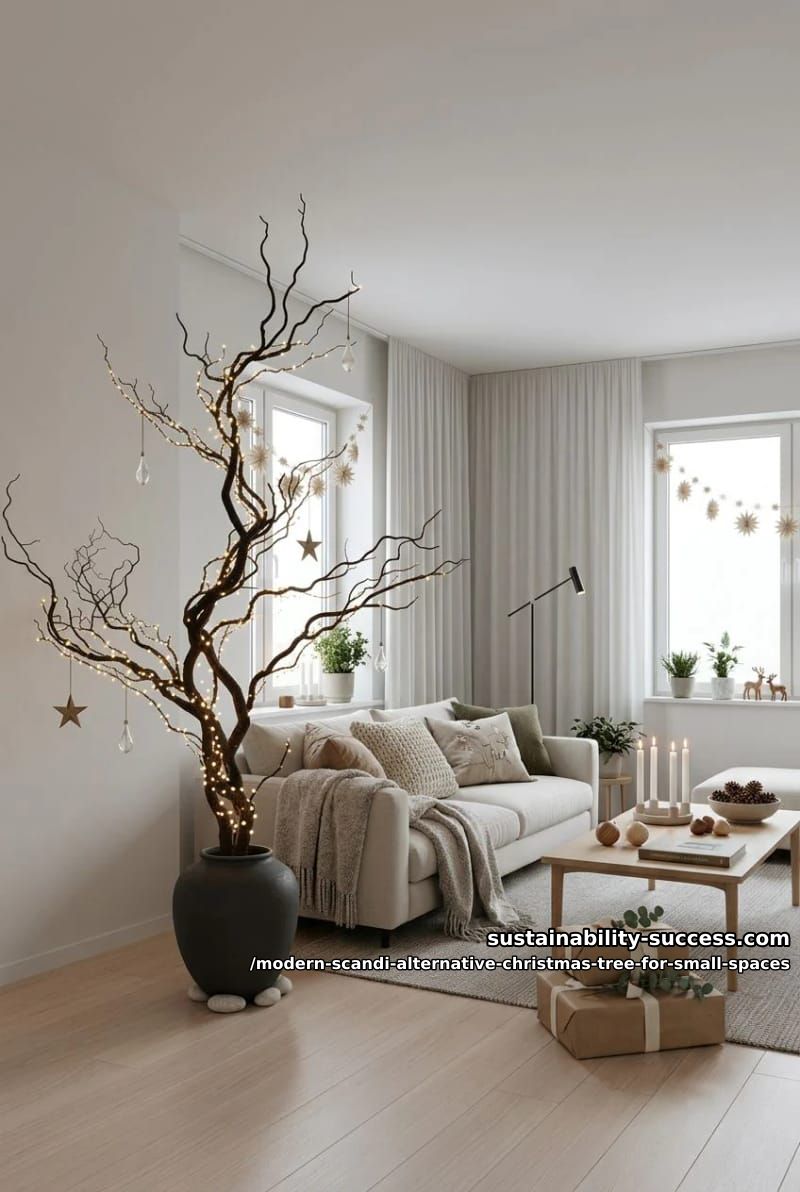
String the branches with the thinnest warm-white micro-lights you can find, on hair-fine copper wire, and hang ornaments sparingly: a few clear glass teardrops, a couple of flat brass stars, nothing that clusters. If you want the green, tuck in a few stems of eucalyptus or olive rather than faux pine, which keeps the palette honest. Foraged branches cost nothing; a faux manzanita set runs maybe $40 to $70 if you'd rather not hunt.
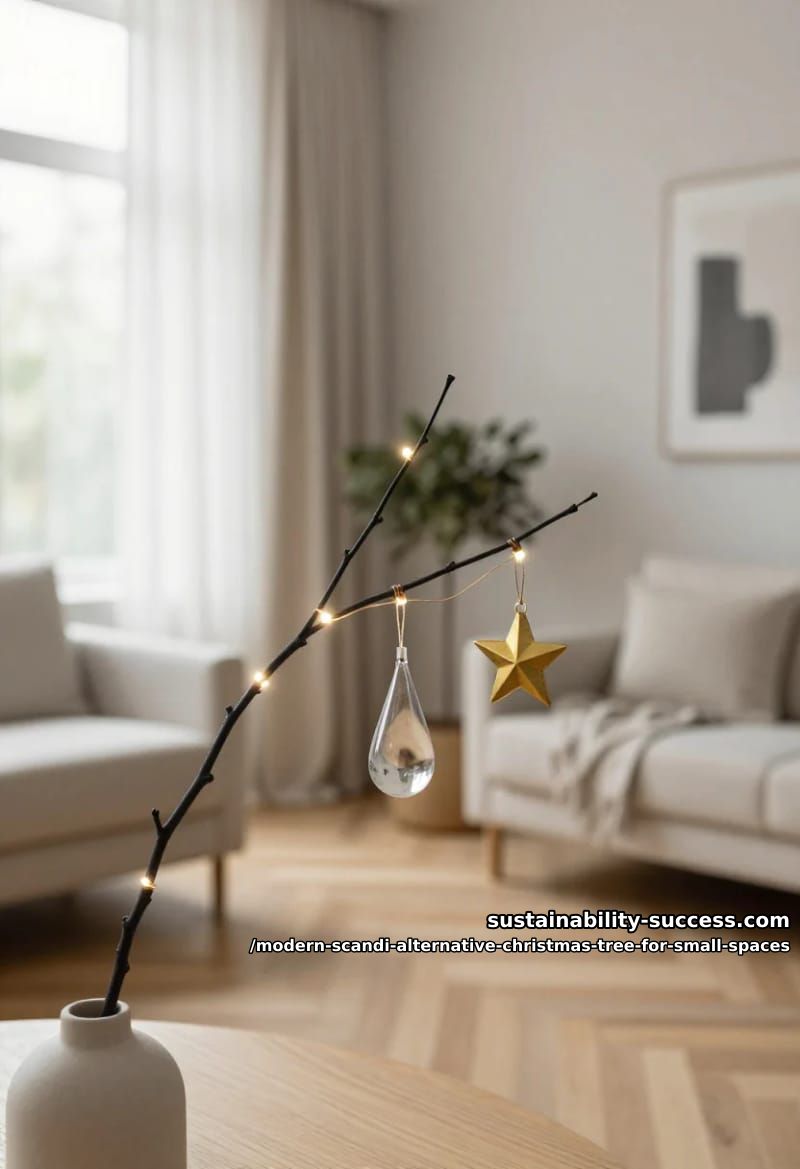
The mistake people make is treating the branches like a frame to cover, wrapping every inch in lights and picks until it reads as a craft project. Leave gaps. The dark branches need pale wall showing between them, which means pulling the vase a foot off the wall instead of jamming it into the corner.
Make it a tree of light and nothing else
Strip it back to light alone: a wire or branch frame wearing nothing but warm-white LEDs, no ornaments at all. The lights-only "naked" tree has been all over Scandinavian feeds for two seasons, and it works because the shape plus the glow is already enough in a small, dim room.
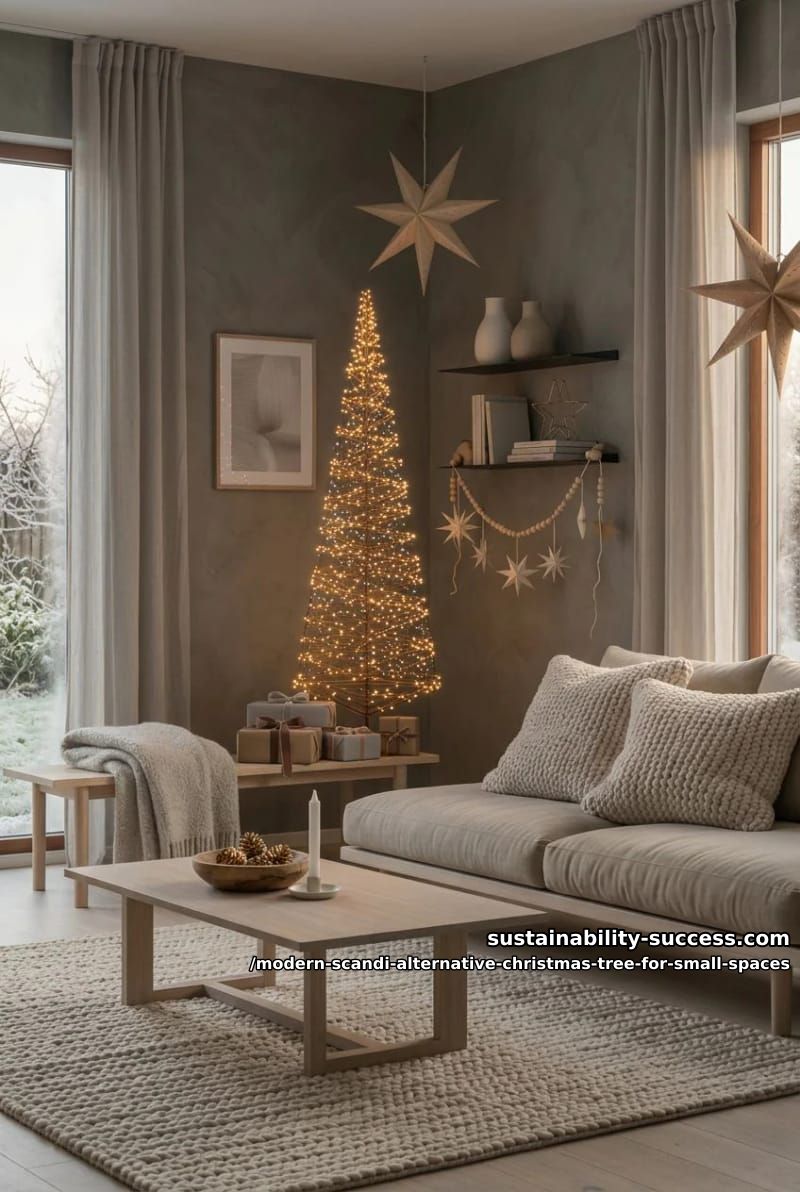
The one rule that matters is colour temperature. Warm white around 2700K reads cozy; cool white slides straight into office-corridor. Globe or snowball LEDs throw a softer, rounder light than the hard pinpoints of cheap strings, if you're choosing between them.
Drop a small tree into a basket and stop there
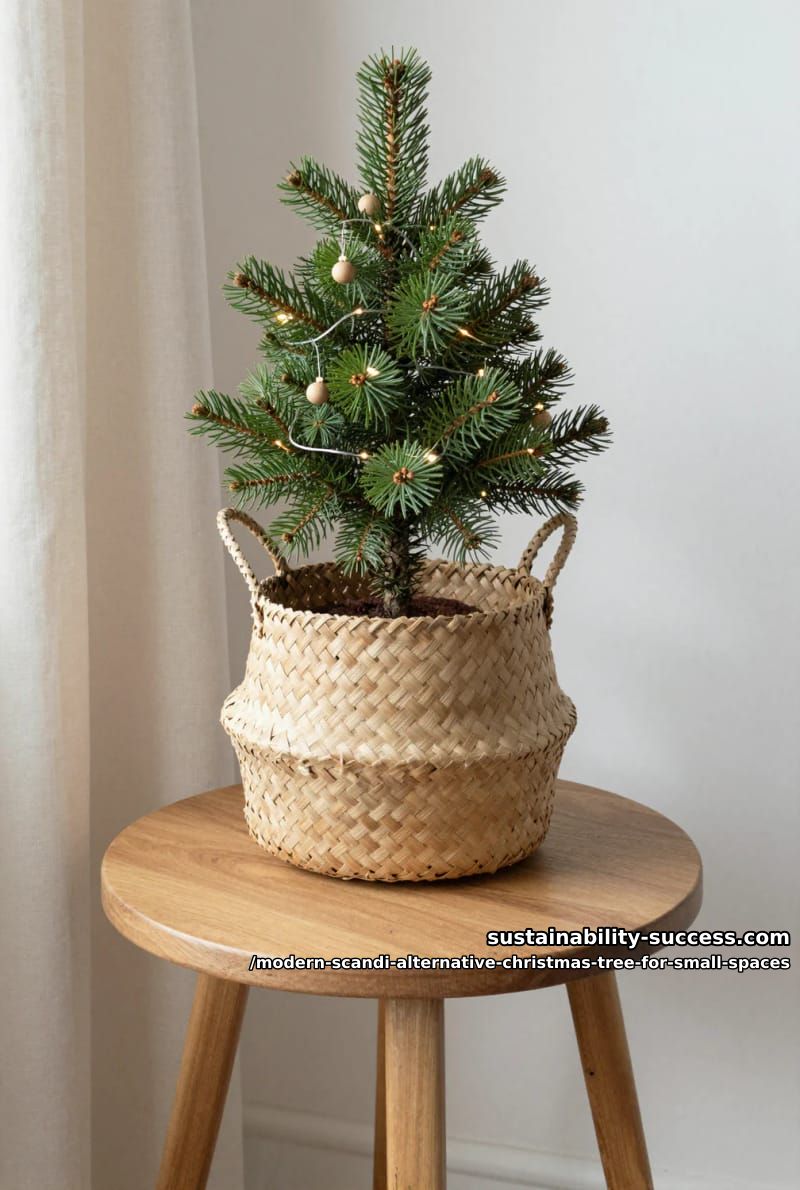
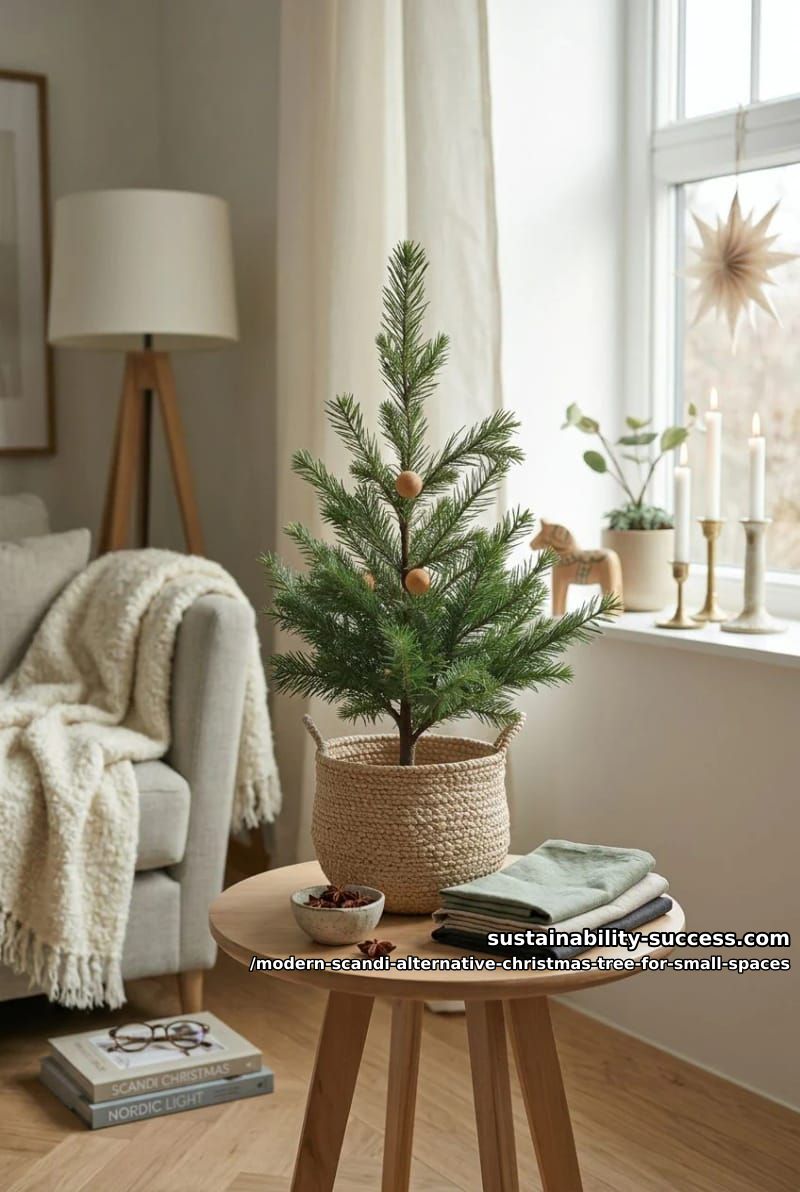
Drop a two- or three-foot tree into a woven seagrass basket and you're basically done. The basket hides the pot, adds texture, and shrinks the whole thing to the footprint of a side table; a small live Norfolk Island pine or a potted fir both work. Stick to one light strand and a few wooden beads so it stays quiet.
The fastest way to lose the look is scale creep: a “small” alternative that’s still four feet of visual bulk, or a branch tree so loaded with ornaments and picks it reads busy instead of spare. In a tight room, under-decorate on purpose. Three or four ornaments on a branch tree, one light strand, and a lot of empty space will out-photograph a fully loaded tree every time.
Lean a wooden ladder and call it the tree
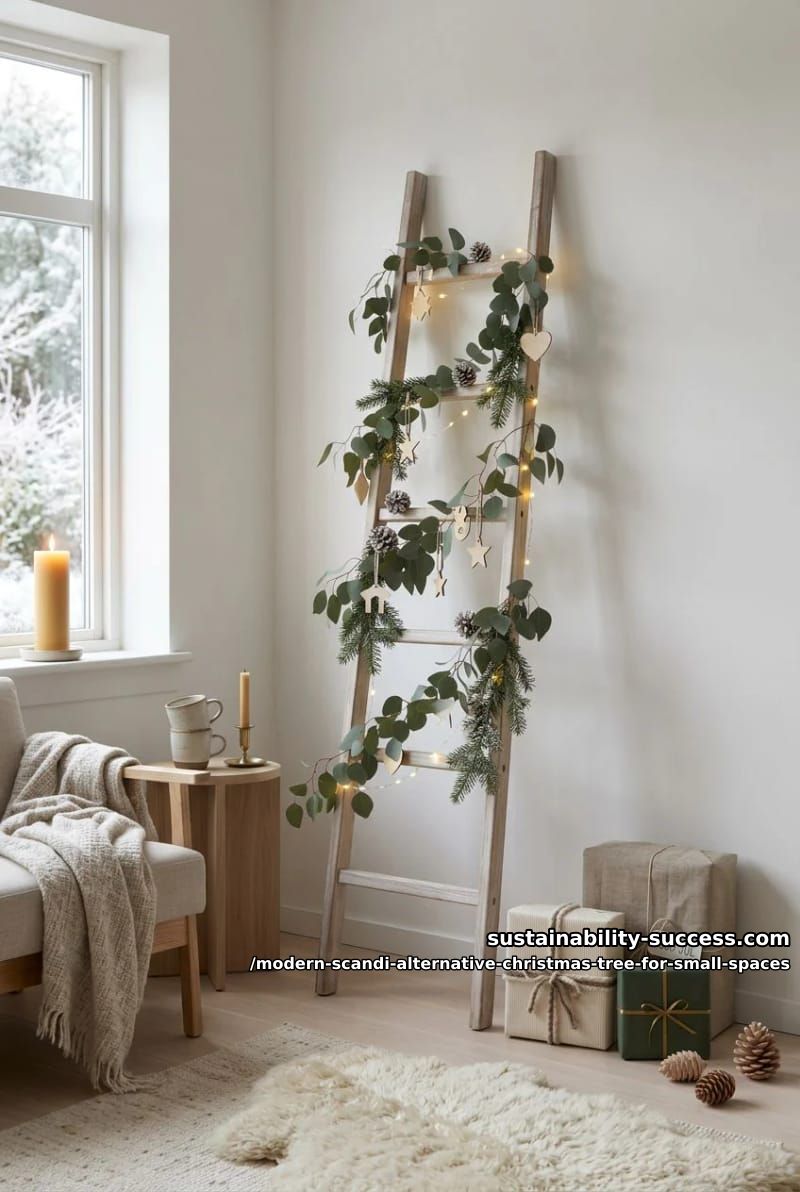
Lean a wooden ladder against the wall and dress it as a tree. Weave a muted eucalyptus garland diagonally across the rungs, hang flat ornaments off the steps, run a short warm-white strand along the green, and you have a tree that folds flat and goes back to holding blankets in January. Granted, it only reads as a tree if the garland actually tapers; a straight horizontal drape just looks like a decorated ladder.
Stack wooden dowels into a cone tree
Stack graduated wooden dowels into a cone and you get the most architectural version of the idea. Crate & Barrel and West Elm both sell turned-wood "stacked" trees in this vein, but it's an easy DIY: thread dowel rods of decreasing length onto a central rod, sand the ends, done.
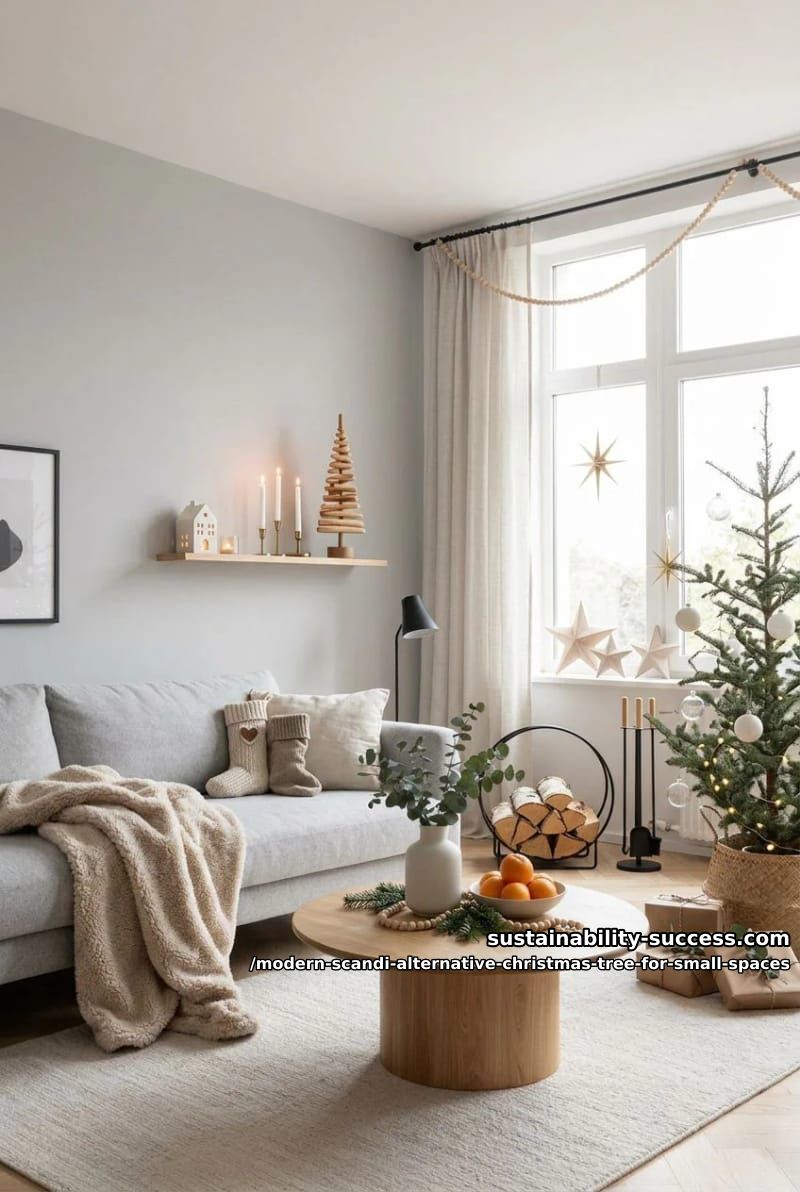
At thirty or forty centimetres it lives on a shelf or mantel, not the floor, which is the entire point in a small place. Natural blond wood keeps it Scandi; a single coat of white or sage is the only paint variation I'd bother with.
Group three sculptural cone trees on the mantel
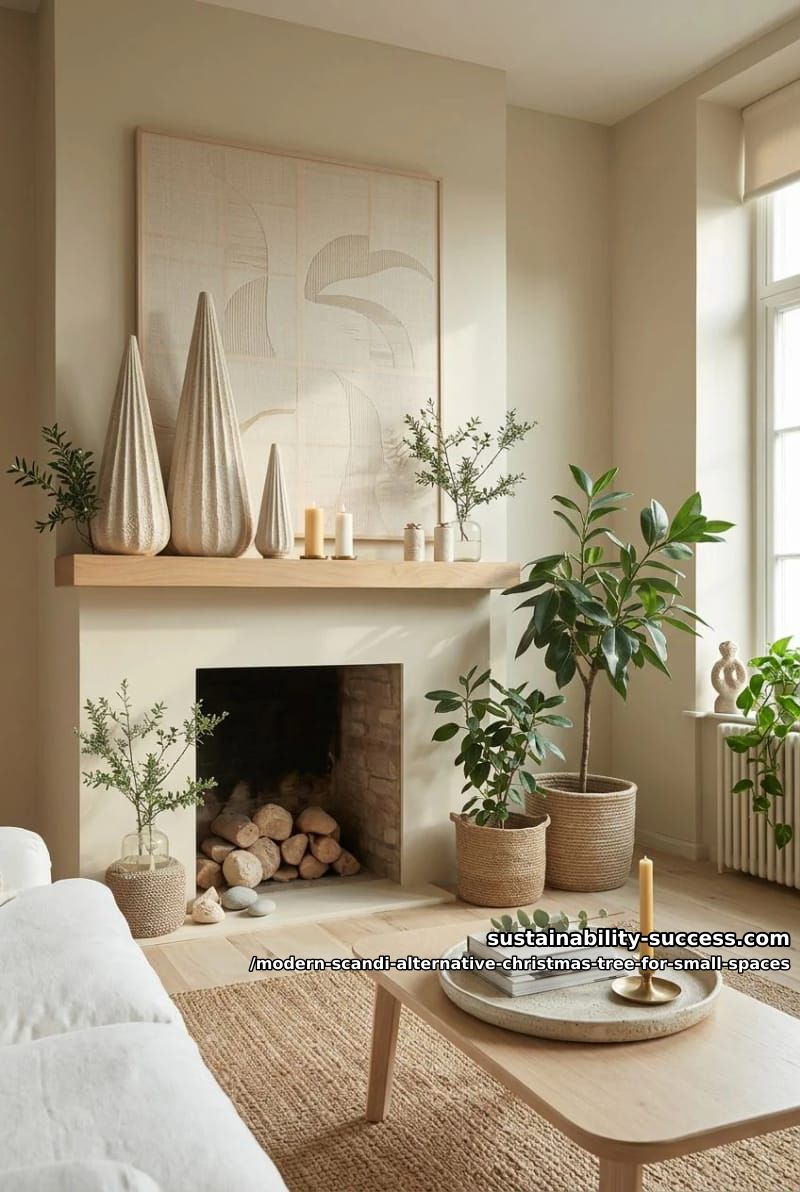
Skip the single tree entirely and group three sculptural cones of different heights on a mantel or shelf. Felt, paper, turned wood, ribbed ceramic, or 3D-printed PLA all show up in this format, and the trio reads as intentional in a way one lonely cone doesn't.
That said, the grouping falls apart the moment you mix felt with ceramic with plastic, so keep the three in one material and one palette. It's also the safest option if you've got a curious toddler or a cat that treats anything vertical as a challenge, and most versions pack dead flat for storage.
Conclusion
If you're starting from nothing, the flat-pack birch tree and the branch-in-a-vase give the most tree for the smallest footprint, and both store nearly flat. Add light before ornaments, and keep it warm-white.
I spent years recommending the slim artificial tree as the obvious small-space pick. After living with one, it always read as a compromise rather than a decision, which is exactly the trap the options above sidestep.
And if you truly have no floor to give, the wall and ceiling trees aren't consolation prizes; they're often the cleanest thing in the room. Pick by where your empty surface actually is: an open wall wants the flat branch tree, a clear ceiling wants the suspended one, a spare side table wants the basket or the trio of cones.