
Walk past any Christmas-tree lot in mid-December and you will find a heap of trimmed branches piled by the back fence, cut off so the trunks fit into stands and usually headed for the chipper. Those scraps, plus whatever you can clip from your own yard, are the same cedar, fir, and pine that garden centers later sell by the foot once it has been wired onto a garland. Below are seven decorations you can build from that free greenery, starting with the door wreath everyone overpays for and ending with a trick that needs nothing but one branch and a length of twine.

1. A fresh evergreen door wreath, built without a store-bought form
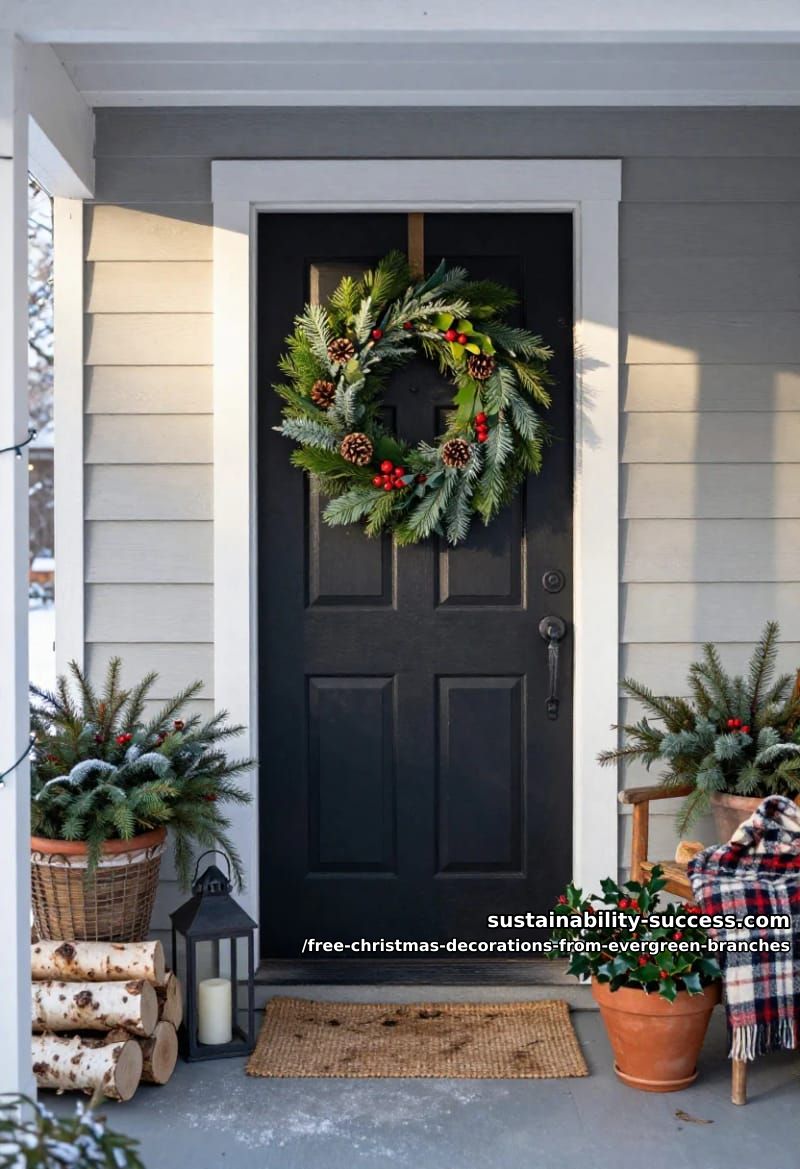

The wreath earns your best branches, because it hangs at eye level and is the piece people actually photograph. Everything else on this list is forgiving; the wreath is where thin, patchy greenery shows. So this is the project to do first, on the day your branches are freshest and most supple, before the cut ends have started to seal over.
Choose branches that won't be bald by week two
Species matters more than arrangement here. Firs, cedars, and pines dry slowly and hold their needles best at warm indoor temperatures, which is exactly what you want on a heated front door or an entryway. Spruce is the trap: blue spruce is the prettiest silver-blue you will find at the lot and the fastest to carpet your floor in needles, sometimes within a week indoors. If a branch is shedding when you pick it up and shake it, it will shed worse on your wall.
- Fir (Fraser, noble, balsam): holds needles for weeks indoors and carries the tree-lot scent. This is your backbone.
- Cedar and arborvitae drape in supple, fan-shaped sprays that soften a stiff outline.
- White pine: long, soft needles, good for filling gaps, though it drops some inner needles as it dries.
- Boxwood or Leyland cypress if you can get them. A cut Leyland can hold for close to two months in cool conditions, longer than anything else you will forage.
- Hemlock looks the part and sheds within days. Leave it.
Cut branches lose moisture through their needles with no roots to replace it, which is what makes them shed and go brittle. Re-cut each stem on an angle and stand the branches in a bucket of water overnight before you build anything. Once the wreath is up, mist it every couple of days, and keep it away from south-facing sun, heat vents, and the top of a working fireplace. An organic anti-desiccant spray (the kind landscapers use on broadleaf evergreens, made from pine oils) coats the needles and slows the loss further.
Bend your own loop instead of buying a form
Granted, a metal box-wire form gives you a flawless circle, but you do not need one and it is not free. Bend a length of heavy wire, a pruned grapevine, or a few willow whips into a ring roughly the size you want, then wire small bundles of greenery onto it one at a time, each bundle’s tip hiding the bound stems of the last, all working in the same direction around the ring. I wired everything onto store forms for years until a florist showed me the willow loop, and now I only reach for a form when I want a perfect circle, which is rarely. The one tool worth owning is wire, since twine slips and twist ties show: a spool of 22-gauge green paddle wire lasts several seasons and disappears into the needles.
2. A draped mantel garland from the trimmings
A garland is the same bundle-and-wire method as the wreath, just run along a rope instead of around a ring, and it swallows your shortest, scrappiest cuttings. Lay a length of jute rope or even an old extension of clothesline along the mantel as a spine, then wire on overlapping handfuls of cedar and white pine, letting the lengths vary so the lower edge dips and trails unevenly rather than sitting in a flat hedge.

Keep it off the heat
Assuming you light real fires, the mantel is the worst place in the house for cut greenery, so treat the garland as the part that gets replaced. Rising heat and the dry air above a firebox will crisp needles in days. Use battery LED candles or string lights rather than the hot incandescent kind, since cooler bulbs will not scorch the foliage, and pull the garland forward off the front edge so it sits away from the updraft.
3. Evergreen branches standing in glass jars
If you make one thing from this whole list, make this, because it is the most impact for the least effort by a wide margin. A few bare-tipped sprigs of fir or blue spruce stood upright in a mason jar of water, three jars of different heights lined along a sill, reads as deliberate winter styling and takes about four minutes.
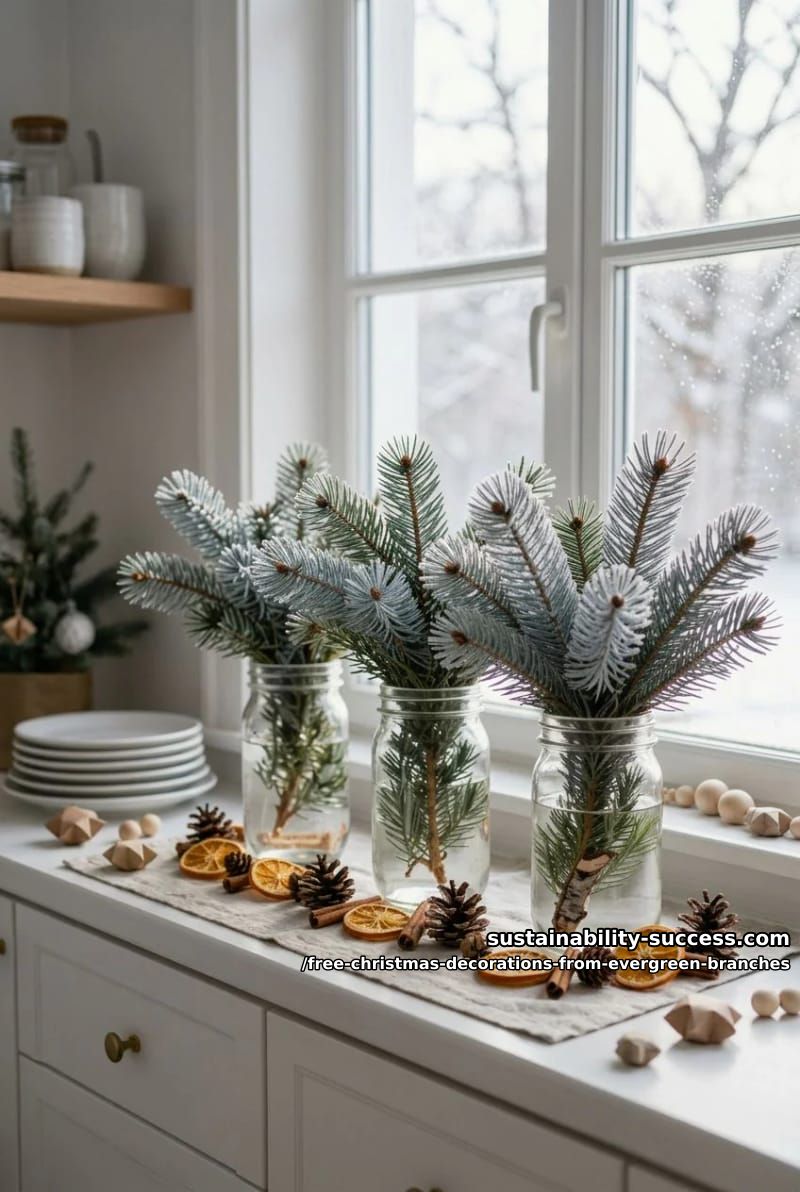
The water keeps the cuttings fresh far longer than they would last dry, so these stay green into January with the occasional top-up. Skip the wreath entirely if you are short on time; nobody walking into a kitchen with lit jars of spruce on the sill is counting whether you also made a wreath.
4. A foraged winter window box and porch pots
Outdoor planters are where free branches go furthest, because the cold keeps them fresh for months and you can stick cut stems straight into the soil that is already there. Pull last season's dead annuals, leave the dirt, and push evergreen boughs in around the rim until the container reads full. In a genuinely cold climate this arrangement can hold from late November well into February, long after any indoor greenery has given up.
Anchor in sand or soil, not floral foam
Skip the green floral foam bricks, and not only on principle. Floral foam is phenol-formaldehyde plastic, single-use, and it crumbles into microplastics that never break down; the "biodegradable" versions perform little better in independent testing. Wet sand, the existing potting soil, or a wad of chicken wire stuffed into the pot all hold stems just as firmly, cost nothing, and come out reusable. That said, if you are working on a flat windowsill box with shallow soil, pre-soaked sand packs tighter around thin stems than loose dirt does.
Build height with birch and dogwood
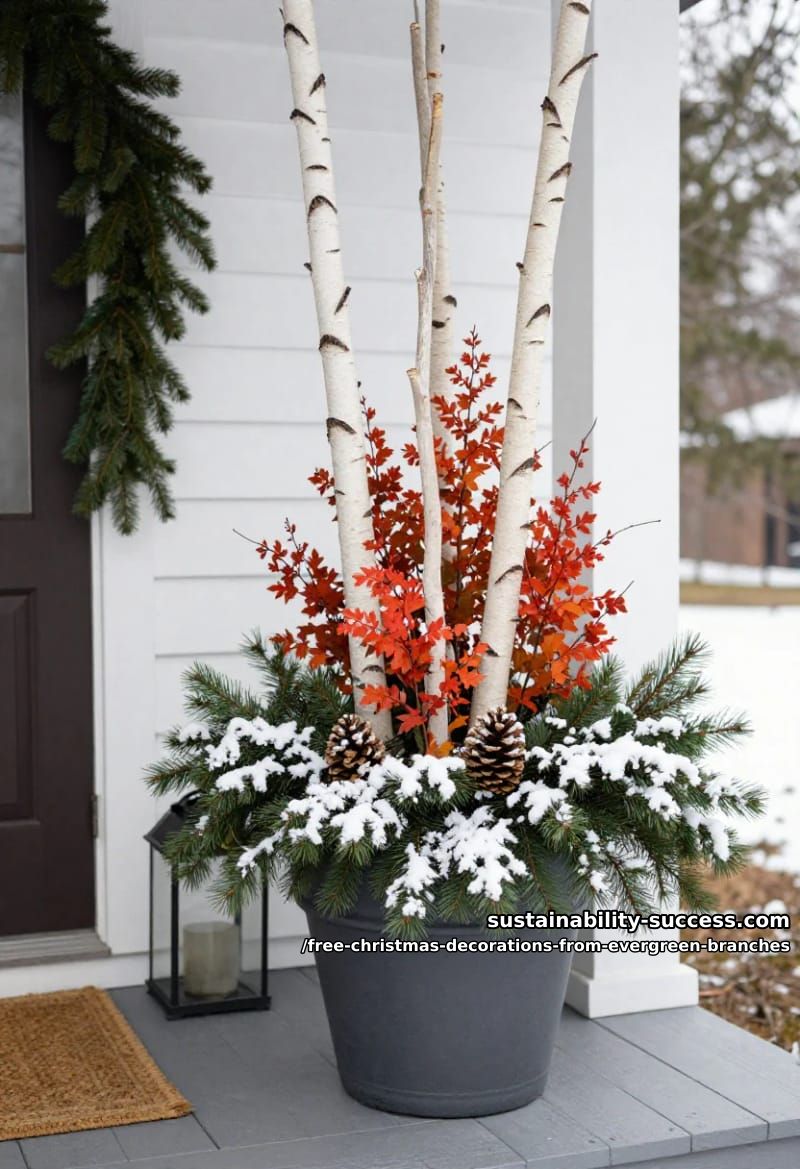
Evergreen alone in a pot looks like a green lump, so the move is vertical contrast. White-barked birch poles and bright red-twig dogwood stems pushed into the center give you height and color against the matte green skirt below. Both are common roadside and yard cuttings in much of the country, and the dogwood in particular keeps its red through the whole winter once cut.
Light it without cooking the needles
Battery-powered LED string lights are the only kind to bury in a fresh planter. They run cool, so they will not dry out the foliage they touch, and the battery box means no cord snaking back to an outlet on a wet porch. I keep a bucket of water on the back step all December and just pull more stems from it whenever a pot starts looking thin.
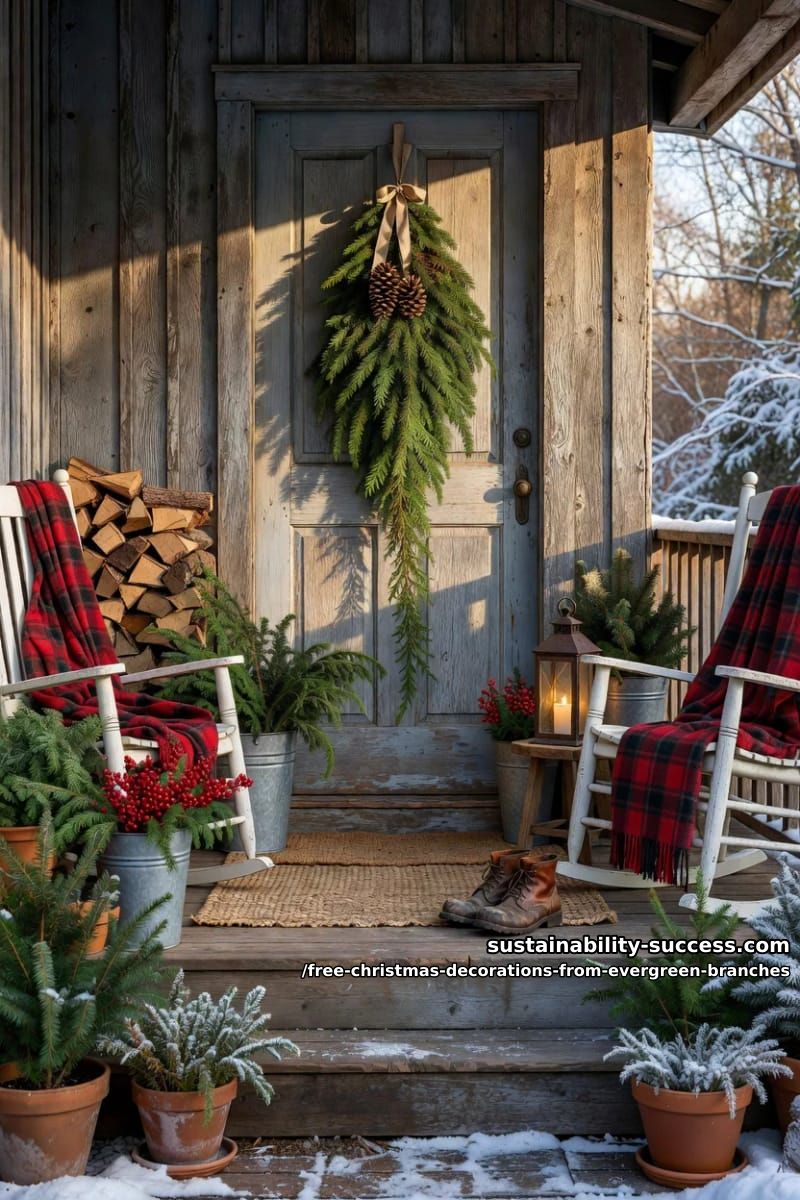
5. A teardrop door swag
A swag is the fastest door decoration there is, faster than a wreath and using a quarter of the greenery. Gather one downward-pointing bundle of fir and cedar, widest at the top and tapering to a point, bind the stems with wire, and tie on a loose ribbon to hide the binding. Fifteen minutes, one nail.

6. Single sprigs at each place setting
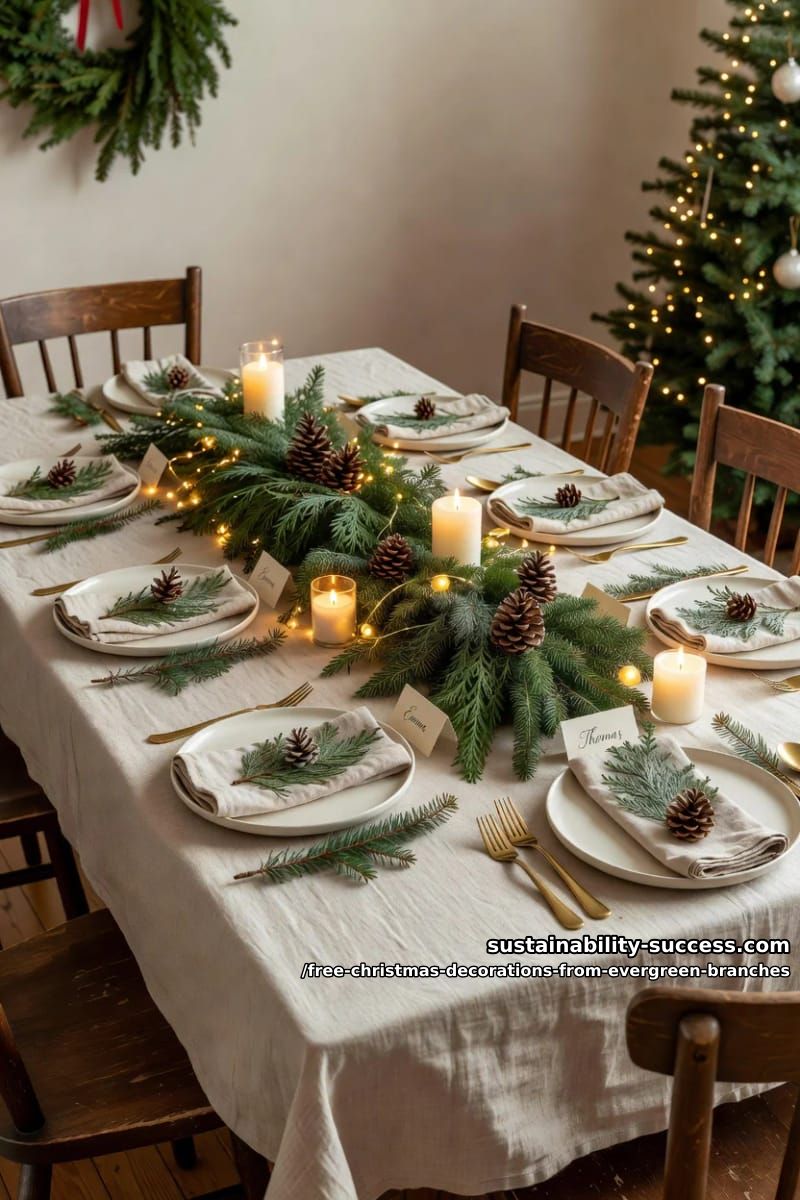
Lay one short sprig of greenery across each folded napkin and the holiday table is set, with no centerpiece to build or budget for. The detail that makes it look intentional rather than leftover is committing to a single species so the table reads clean: grey-green cedar, silver-blue spruce, or deep matte-green fir, but not all three jostling at once.
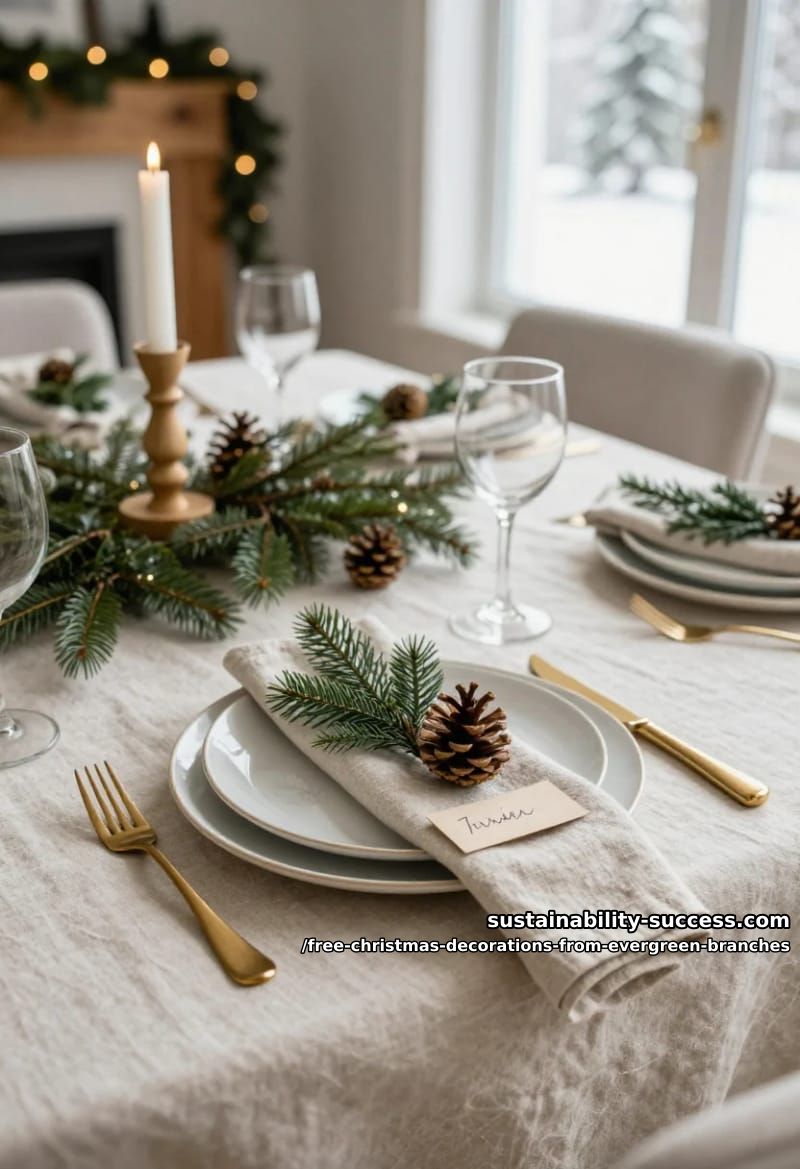
One pinecone or a length of twine tied around the napkin and the sprig is as far as this needs to go. Pull the sprigs the morning of, since a thin cutting out of water wilts faster than a full bough.
7. A single branch suspended over the table
Hang one long bough horizontally above the table and you get the drama of a chandelier with zero floor or surface space given up. Run two lengths of thin twine from a ceiling hook to each end of a flat cedar or fir branch so it floats level a few feet over the tabletop, then clip on a handful of small ornaments at uneven spacing.
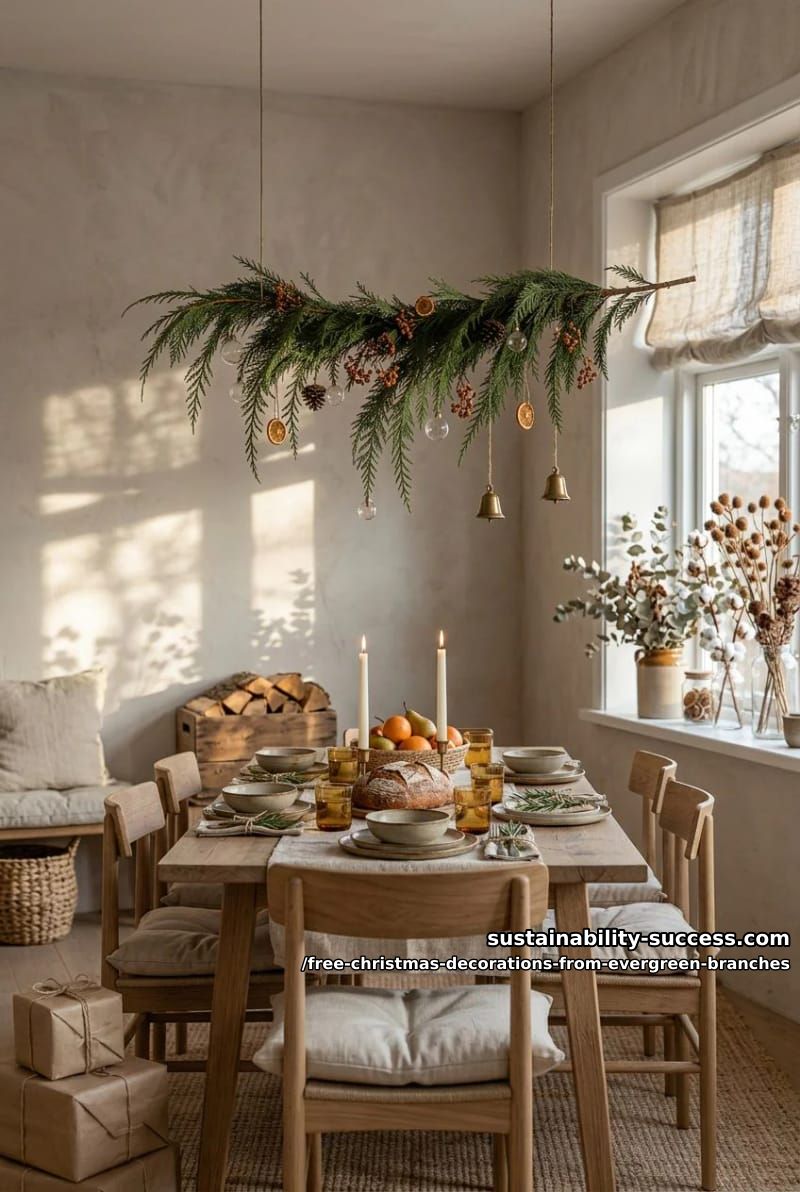
It works over a dining table, a kitchen island, or a hallway console, and because it hangs in moving air rather than pressed against a hot wall, it tends to stay fresh longer than the same branch laid flat on a mantel.
Conclusion
Cut everything in one afternoon and the rest of these go quickly: do the wreath while the branches are at their most supple, set the porch pots next since the cold buys them the most time, and save the jars and place-setting sprigs for the day before guests arrive so they are crisp. Keep whatever you do not use standing in that bucket of water on the porch, and you will have refills on hand for the two pieces that fade first, the mantel garland and the table sprigs. If you only get to one thing, it should be the jars on the sill, which is the least work for the most return and the one I have never regretted skipping the wreath for.