
A cut cedar bough holds its needles for two to three weeks on a warm dining table, longer than most cut flowers manage, and that single fact is why a centerpiece pulled from the yard outlasts the supermarket bouquet you would otherwise buy. The nine arrangements below all start from foraged winter greenery, the kind you can clip from a hedge, a fallen branch, or a $15 grocery bunch of eucalyptus, and they range from a loose runner laid straight on the wood to a single sculptural branch in a heavy pot.
One thing has to happen before any of them work: the greens need a long cold drink. Recut every stem on a slant and soak the cut ends in a bucket of cool water overnight before you build, which is the difference between an arrangement that lasts and one that crisps by the third day. And if you are foraging beyond your own fence, take no more than a third of any plant, skip roadside cuttings (car exhaust coats foliage well past the shoulder), and ask before you clip on land that is not yours.
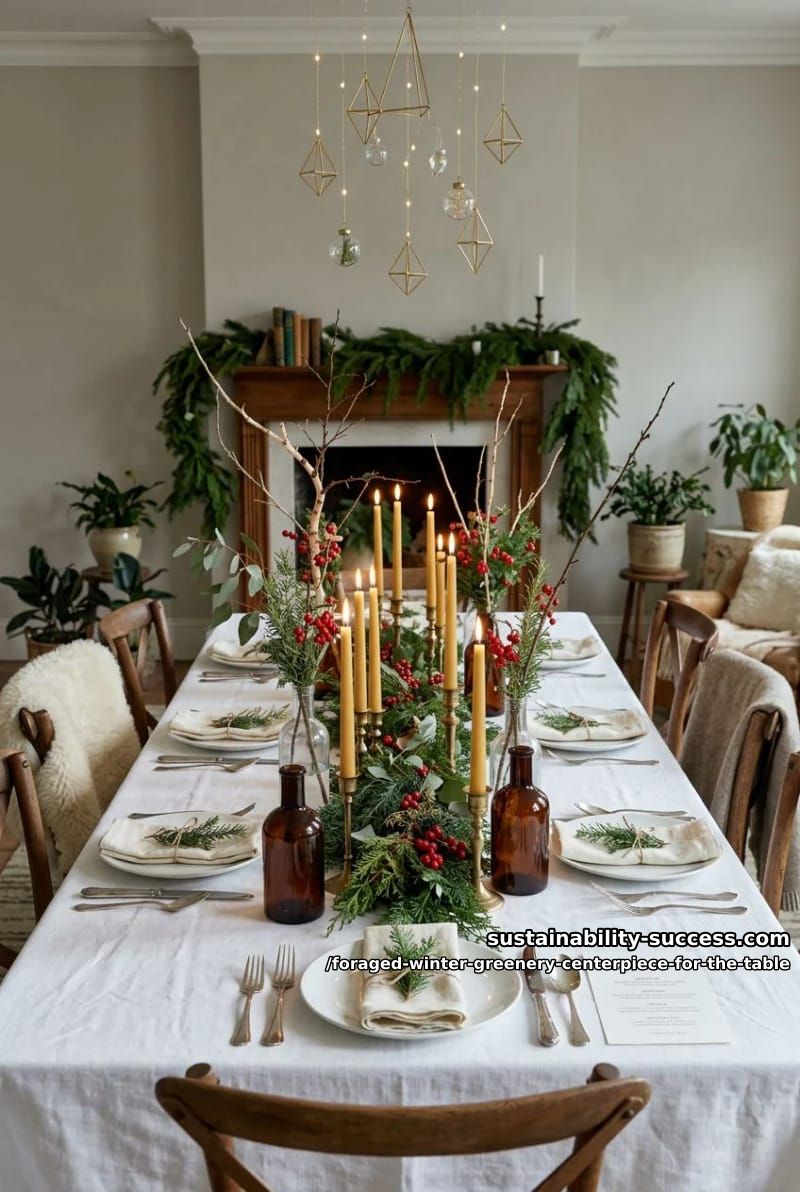
1. A low runner of loose foraged greens down the center
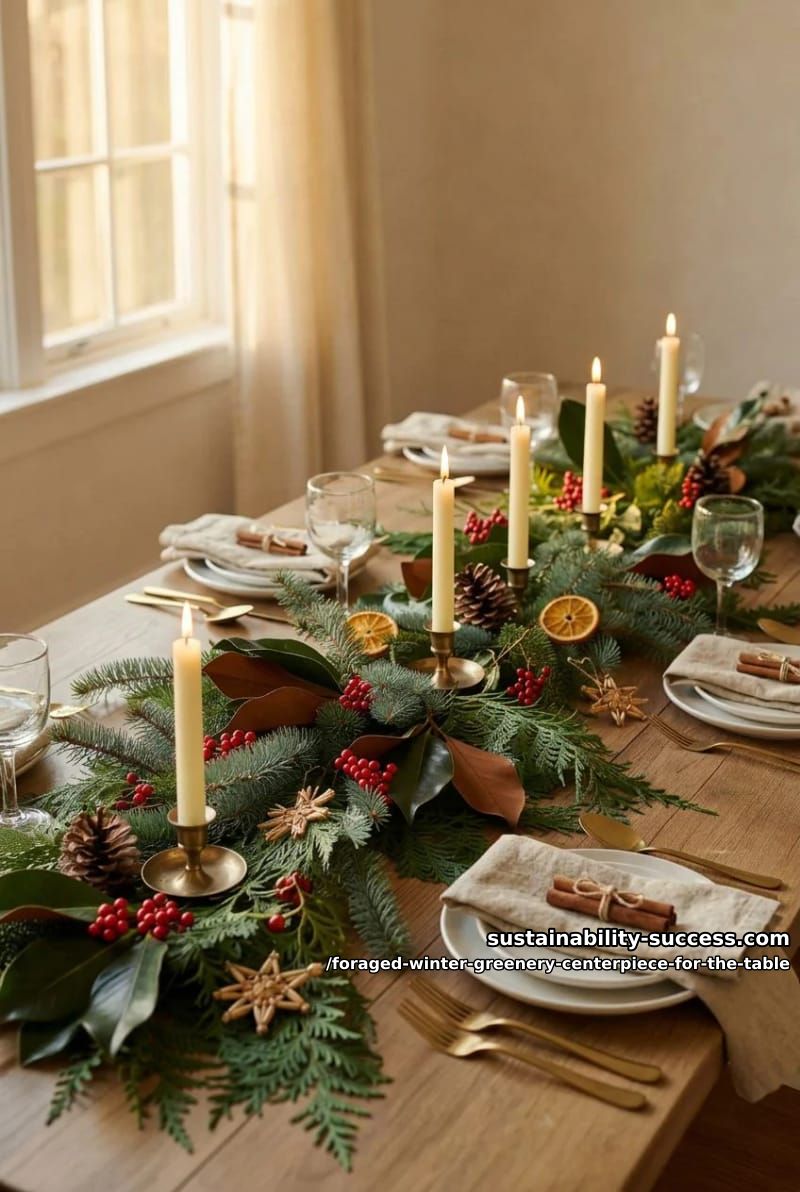
Skip the vessel entirely and lay the greenery straight on the table. Assuming your table is bare wood or a washable cloth, this is the fastest foraged centerpiece there is, and it scales to any length because you are just laying more branches.
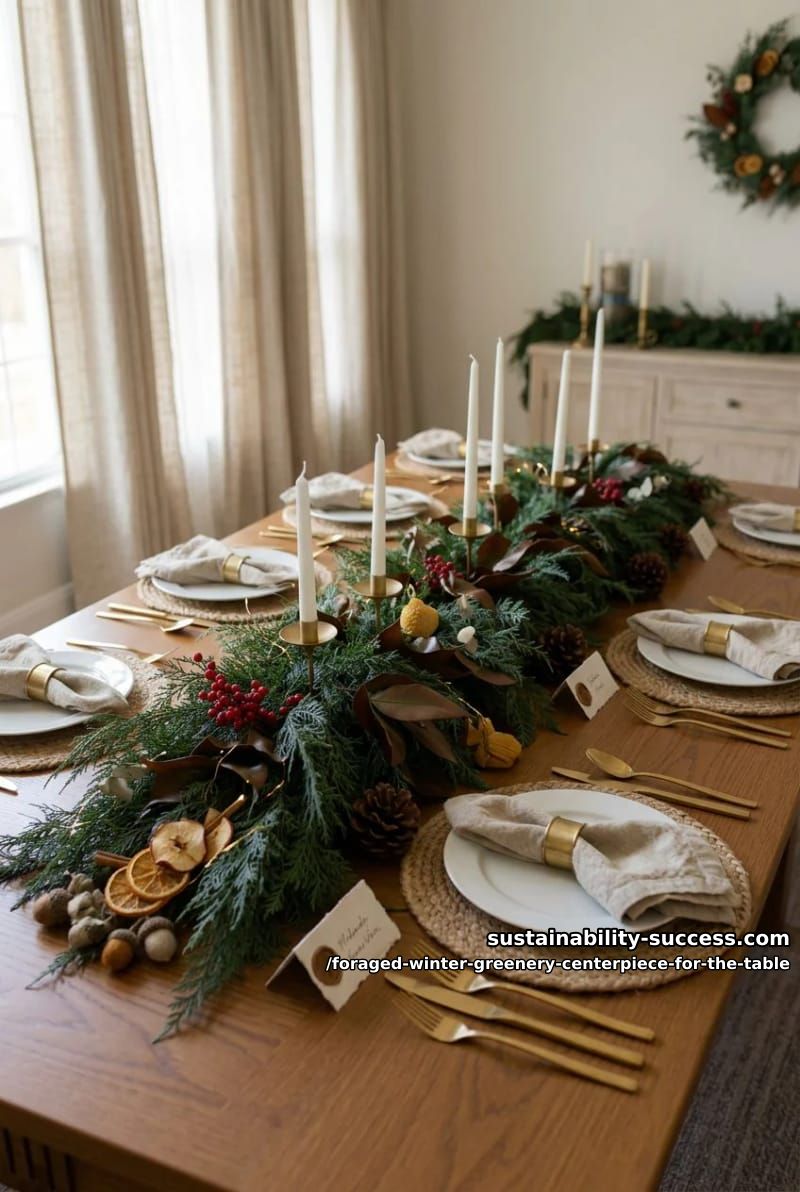
Start with a cedar spine
Run a continuous line of the longest, flattest greens (cedar and fir drape best) down the middle as your base, overlapping each piece a few inches so there are no bald gaps. Then break the straight edge: short spruce tips poked out at angles, a magnolia leaf turned to flash its bronze underside, a few stems of berry pushed in low. The line should look gathered, not combed.
Where the candles go
Set the candle holders in last, nesting them into clearings you pull open in the greenery rather than balancing them on top. Low brass or glass holders disappear; tall ones fight the horizontal line.
Evergreen that has sat indoors for a week is far more flammable than a fresh-cut sprig, and an open taper flame sitting down in the foliage is the exact wrong combination. Keep at least a few inches of clearance between any flame and the greens, snuff candles before you leave the room, and pull out any sprigs that have gone brown and brittle. A glass hurricane around the flame solves it if you want to stop thinking about it.
2. One sculptural branch in a weighted vessel
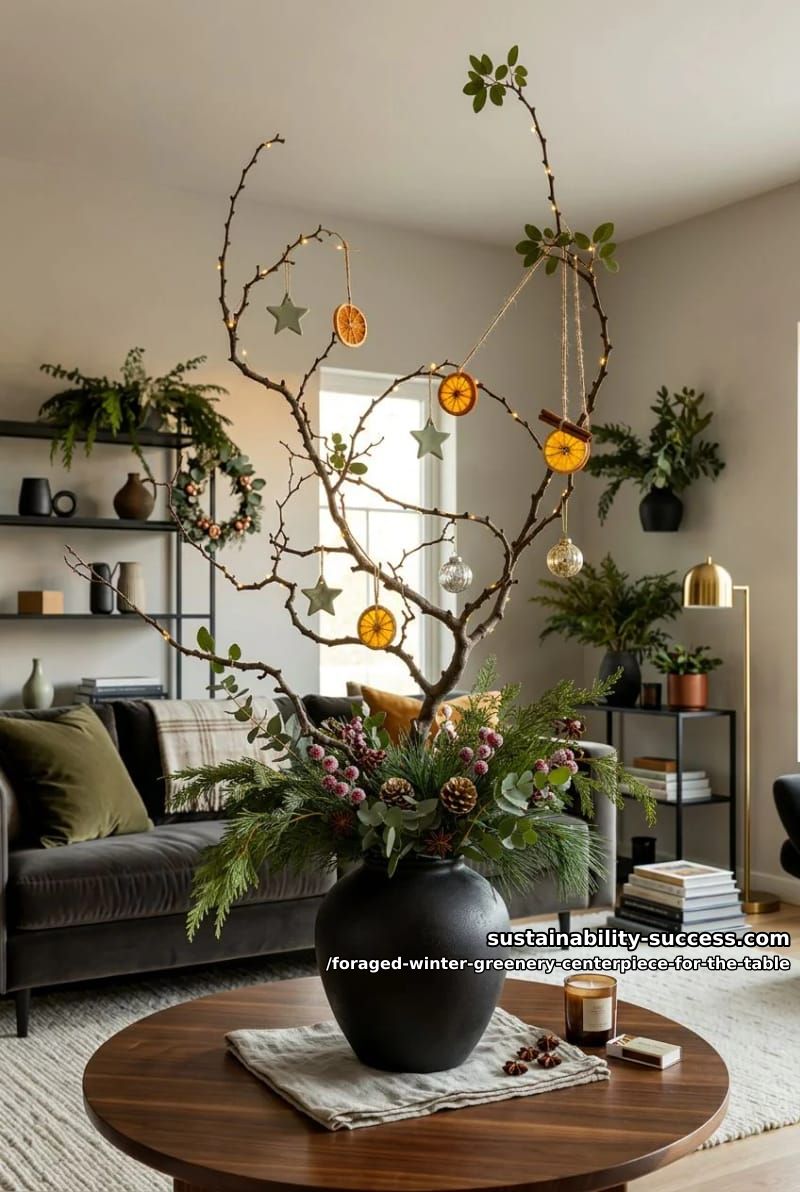
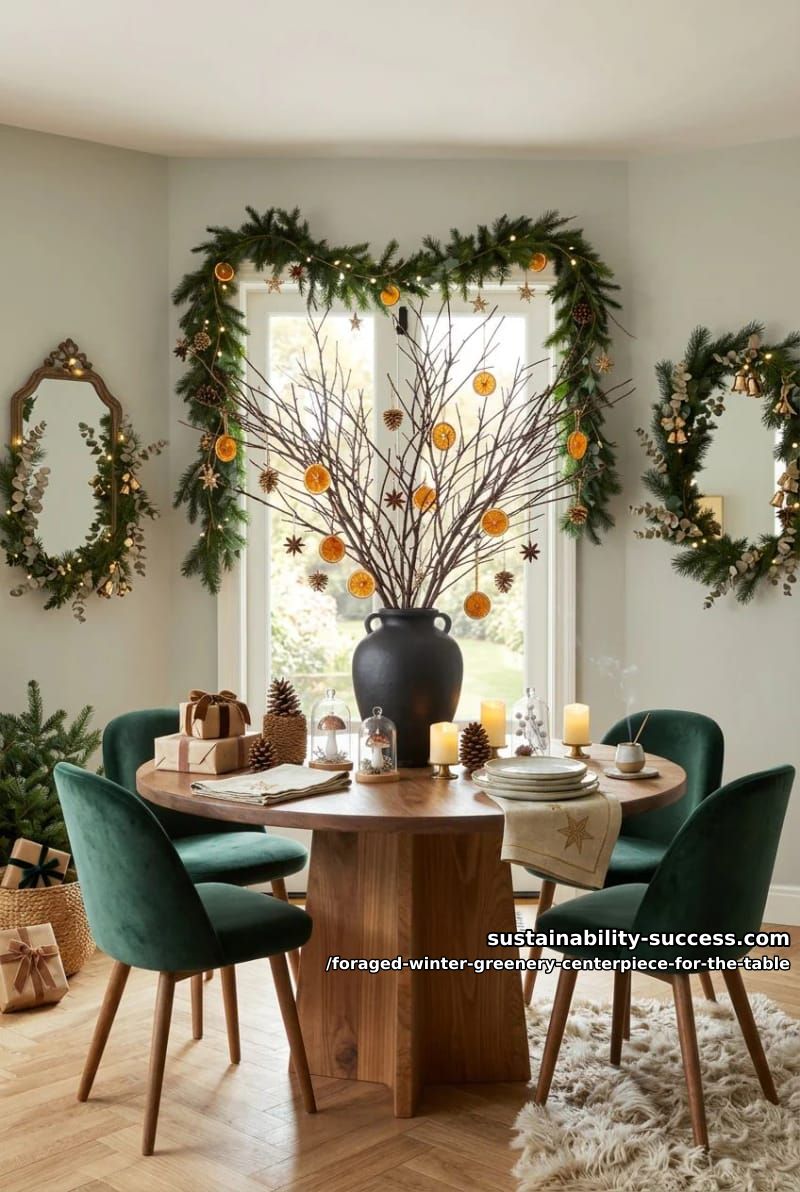
A single forked branch in a heavy pot reads more deliberate than a full bouquet, and it costs nothing. Look for a bare deciduous branch with good movement (manzanita, contorted hazel, or just a windfall oak limb) and let its silhouette do the work, with only a few sprigs of green at the base for weight.
Securing a woody stem
A heavy branch will tip a vase, so weight the base. Granted, a pin frog (the spiky metal kenzan florists use) is the cleanest fix, gripping woody stems that chicken wire lets slide, but a fistful of clean pebbles or even sand around the stem does the same job for free. Keep the branch tall enough that it clears sightlines across the table; one that ends at eye level just blocks the person across from you.
3. Eucalyptus and taper candles for a quieter table
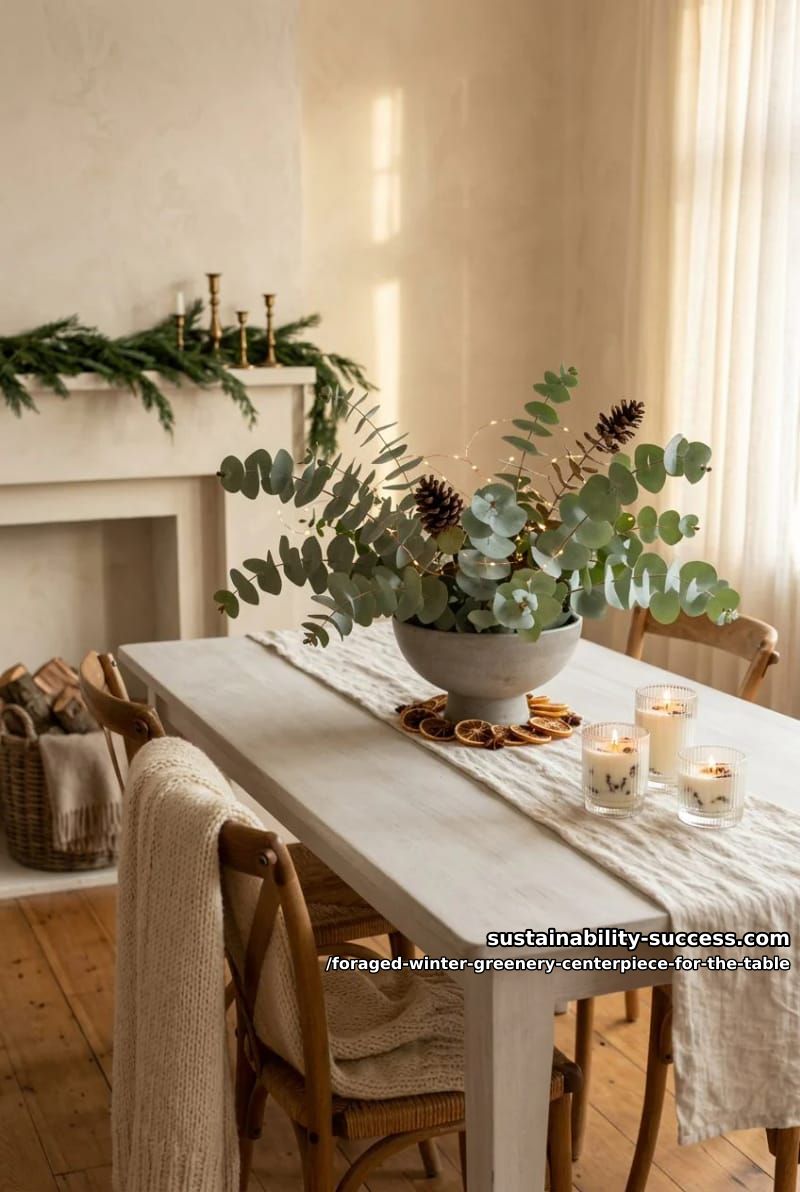
For a table that reads calm rather than festive, go monochrome: silver dollar and seeded eucalyptus in a low bowl, with a pair of bone-white tapers and nothing red anywhere. Eucalyptus is everywhere right now, and a centerpiece of nothing but it can look a little ordered-from-a-website to me, so I usually work in one foraged element (a few cedar tips, a stem of rosemary) to scuff up the perfection. It also dries beautifully, fading to a soft grey-green you can leave out for weeks after the fresh look goes.
4. A mounded compote bowl built on chicken wire
A footed compote bowl mounded with mixed greens is the closest thing to a florist arrangement you can build from the yard, and the secret is the mechanic underneath. Crumple a piece of half-inch chicken wire into a loose ball, drop it into the bowl, and tape it down across the rim with a cross of waterproof floral tape; the grid holds every stem at the angle you set it.
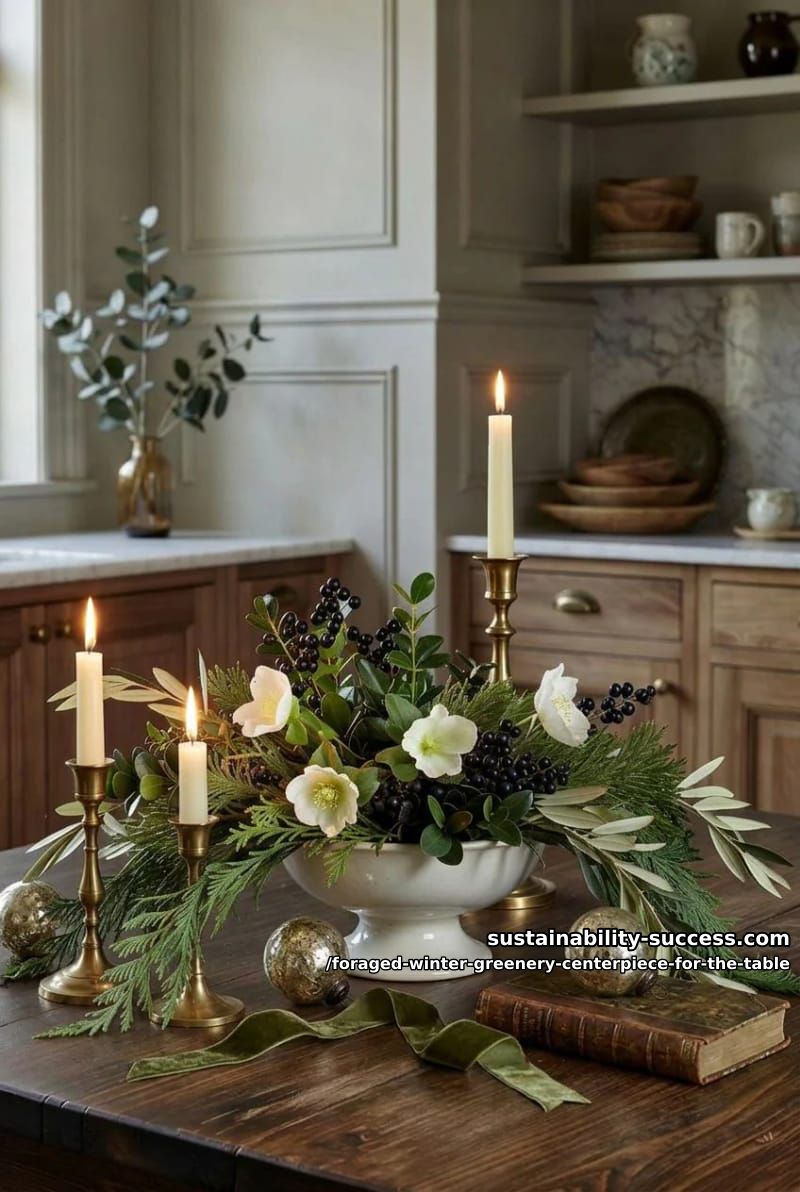
Build heavy to light: the sturdiest greens first, fanned out over the rim to hide the wire, then finer textures and a few berry stems threaded through the gaps. Keep the whole mound under about ten inches so people can see over it.
Do this
- Roll chicken wire into a ball and tape it across the bowl’s lip; rinse and reuse it for years.
- Top up the water daily. A mounded bowl drinks fast and the wire-held stems are the first to wilt when it runs low.
- Set the widest, heaviest stems first so they cover the mechanics before you fuss with detail.
Avoid
- Floral foam. I used green Oasis foam for years and the stems never drank properly through it; it is also single-use plastic that sheds microplastics, which is why the RHS banned it from the Chelsea Flower Show.
- Cramming the bowl so full it becomes a hedge with no shape.
5. Dried citrus, cones, and seed heads that last all season
When you want one arrangement to carry the whole of December without a water source, build it dry. A shallow wooden dough bowl filled with dried orange slices, pinecones in a few sizes, lotus pods, and cinnamon bundles needs no conditioning and no upkeep, and it smells faintly of citrus and spice the entire time.
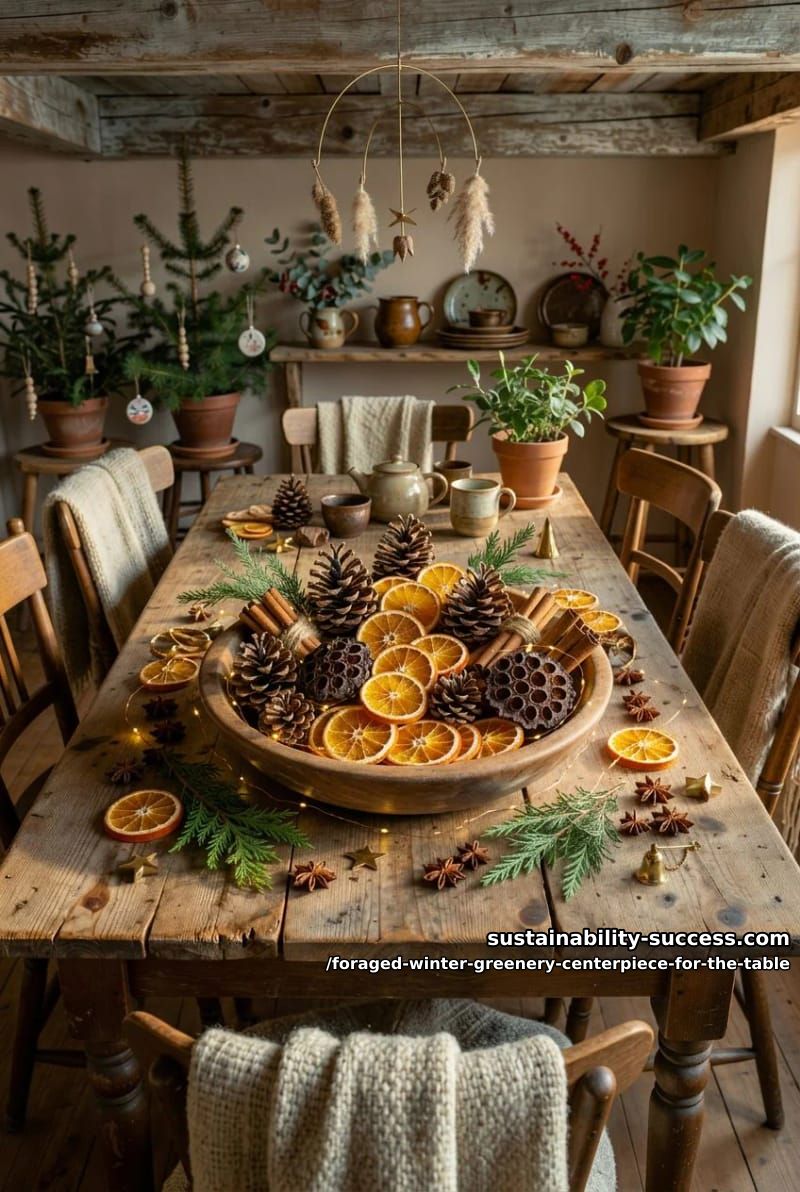
Dry the orange slices yourself: cut them about a quarter-inch thick, blot them, and leave them in a low oven (around 200°F) for a couple of hours until they stop feeling tacky, turning once. Preserved or faux cedar tucked in keeps the green from being the one thing that fades.
6. A scatter of bud vases instead of one big arrangement
If your table is round, narrow, or you rent and own nothing fancy, skip the single centerpiece and line up a loose run of bud vases instead. Thrifted glass bottles, old apothecary jars, even a row of juice glasses, each holding one or two foraged stems, give you a flexible "centerpiece" you can space to fit any table and move aside when the food lands. It is the cheapest idea here and the hardest to get wrong.
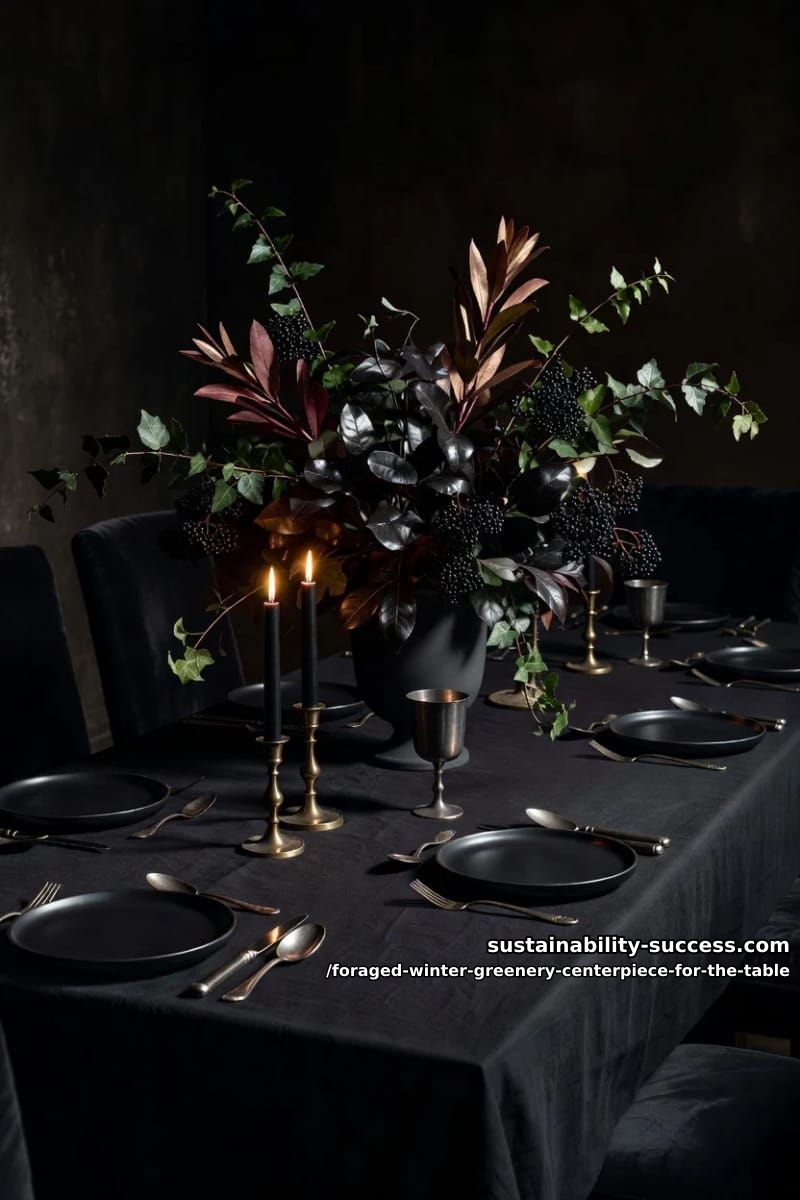
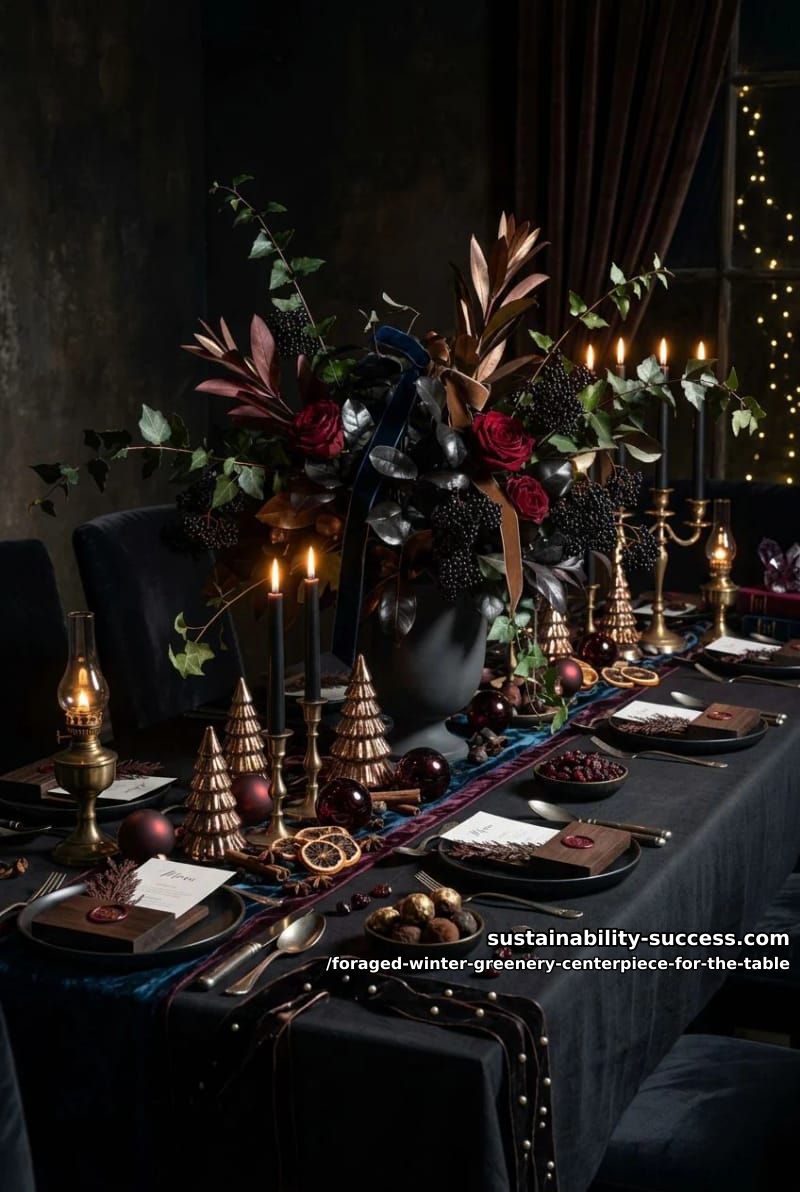
7. A dark, moody foliage palette instead of red and green
Trade the classic red-and-green for something darker and the whole table grows up. Think near-black elderberry, burgundy smokebush, bronze leucadendron, and deep ivy in a charcoal vessel, lit by black or oxblood tapers rather than white. Sage-toned greens, by the way, read spring to me, not winter; the cold-season version of this leans into bottle green and bronze, not soft grey-greens.
8. A woodland base of moss, bark, and fern
For a forest-floor look, build down instead of up. Lay sheet moss as a continuous bed down the table center, then arrange pieces of lichen-covered bark, a few fern fronds, bun-moss stones, and scattered acorns into it, with pillar candles set straight in the moss.
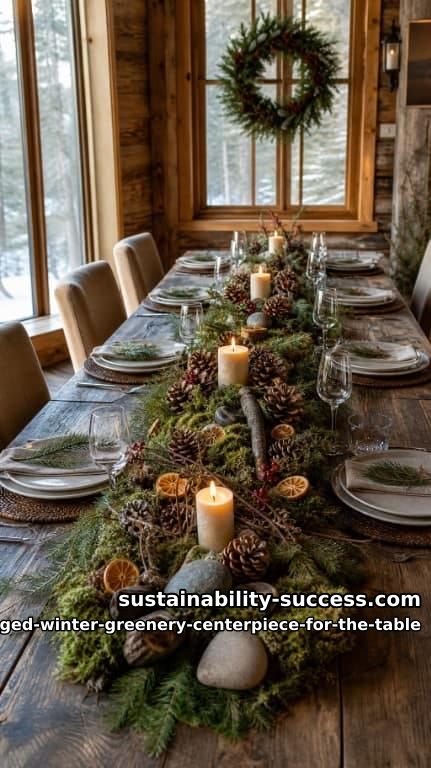
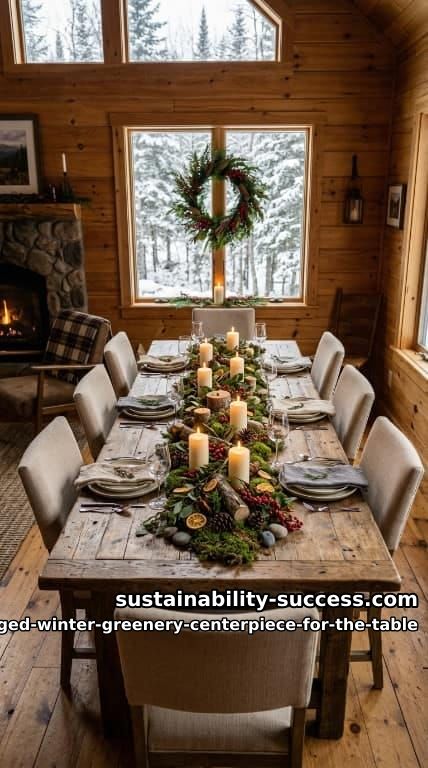
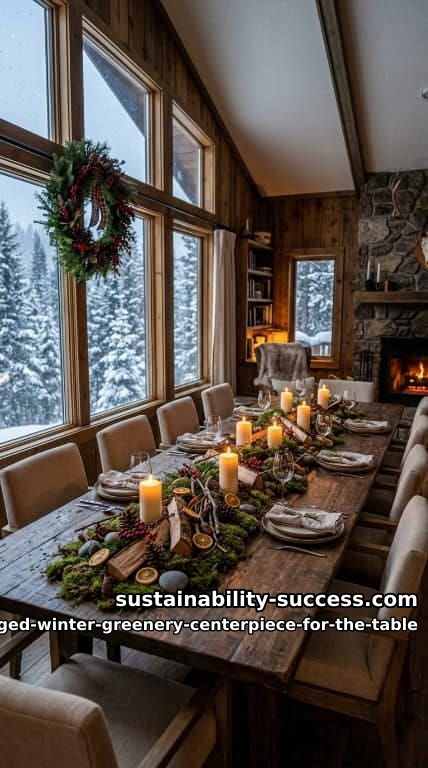
One caveat: moss dries and curls on a warm indoor table within a day or two, so mist it each morning, or sit it on a hidden tray of damp paper towel. And leave the princess pine (Lycopodium) in the woods where you find it; it is slow to regrow and easy to wipe out locally by harvesting.
9. A small wreath laid flat around a hurricane
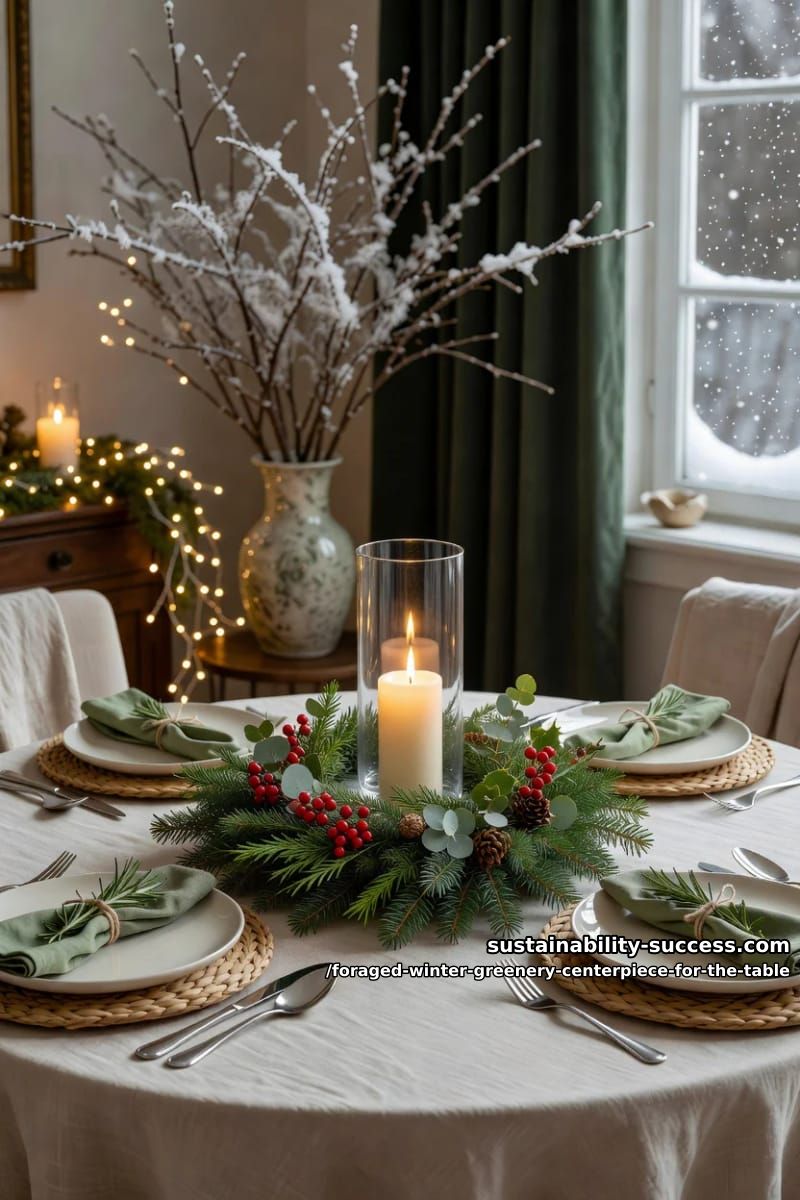
Lay a small evergreen wreath flat at the table's center, drop a tall glass hurricane with a single pillar candle in the hole, and you have a centerpiece in about a minute. It works best on a round table, where the circle echoes the shape, and it is the easiest way to reuse a wreath you already made or bought once the door no longer needs it.
Conclusion
If you do nothing else, get the order right: condition the greens overnight first, build low enough to see across, and set the candles in last. That sequence saves more centerpieces than any clever vessel does.
What I will not promise is permanence. Fresh foraged greenery gives you roughly two weeks indoors before it tires, less in a hot room, and the woodland moss base wants daily misting to look alive past day two. A spritz of plain water every morning, away from the heat vent, buys you the rest.
So match the idea to how long you need it. The compote bowl and the loose runner are showpieces for a dinner this weekend; the dried citrus bowl and the bud-vase scatter are the ones to reach for when you want something on the table from the first frost through the new year without thinking about it again. Clemson’s extension office has a good rundown on keeping cut greenery fresh if you want to push that window further.