
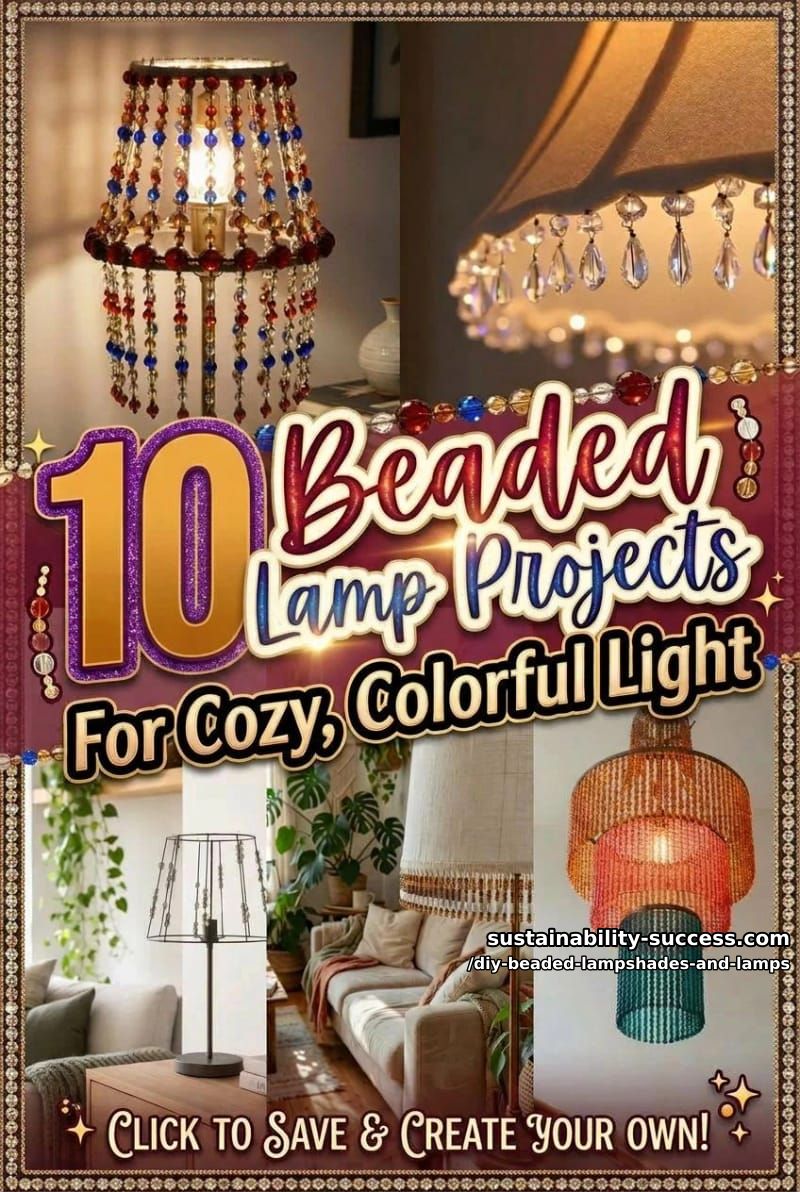
A beaded lampshade lives or dies on two decisions almost no tutorial puts first: what the beads are made of, and what bulb sits behind them. Get both right and a $15 thrift-store lamp throws the kind of refracted, jeweled light people assume came from an antique dealer. Get them wrong and you get a dim, muddy shade that reads craft fair from across the room.
Below are ten ways to build the look, from a fully strung glass empire shade down to a fringe you can clip onto a shade you already own in under half an hour, plus the one bulb call that keeps acrylic beads from warping.
1. Strip an old shade to its wire ribs and restring it in glass
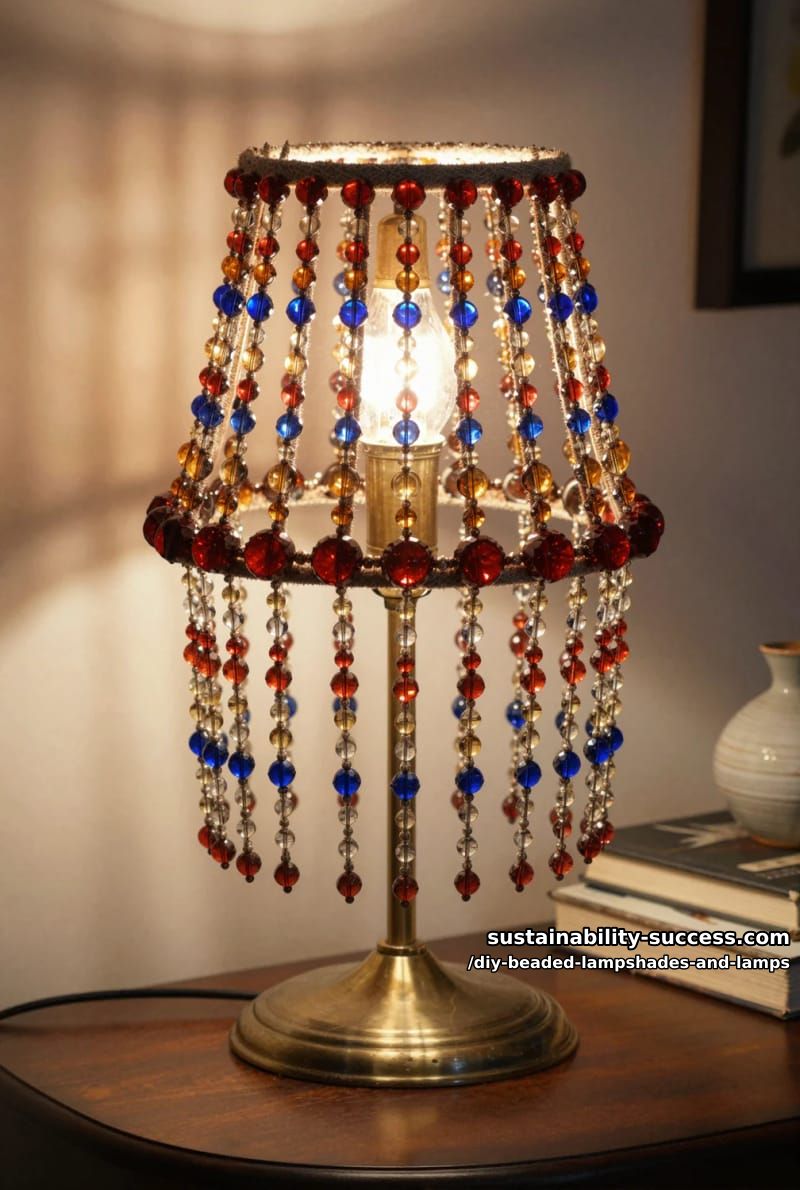
The highest-impact version starts by destroying a shade you already have. Cut the fabric off a cut-corner, empire, or bell frame down to the bare wire, then string glass beads onto 24-gauge beading wire and wrap one strand down each vertical rib. For a lamp around 24 inches tall, strands of roughly 8 to 9 inches sit right; weight the bigger beads near the wider bottom ring so the strings hang straight instead of bowing inward. A half-pound assorted glass mix runs about $25 to $35 and covers a small-to-medium shade with leftovers.
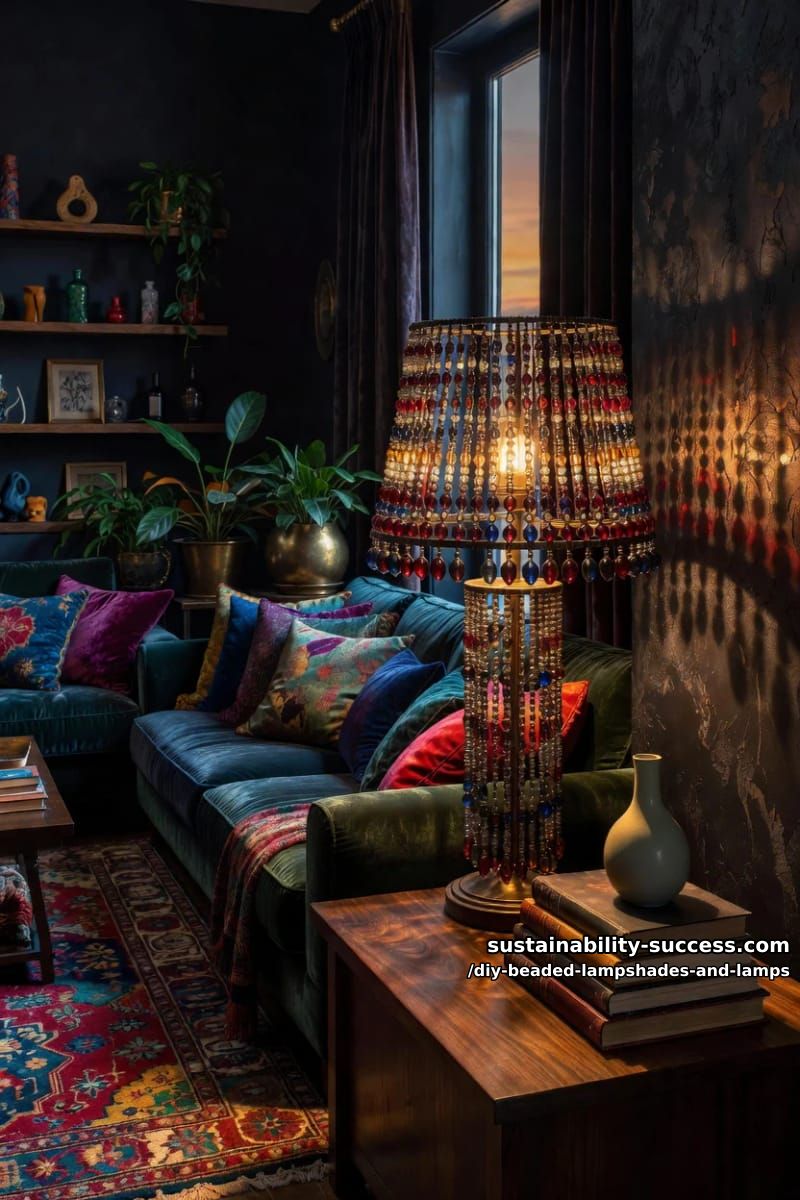
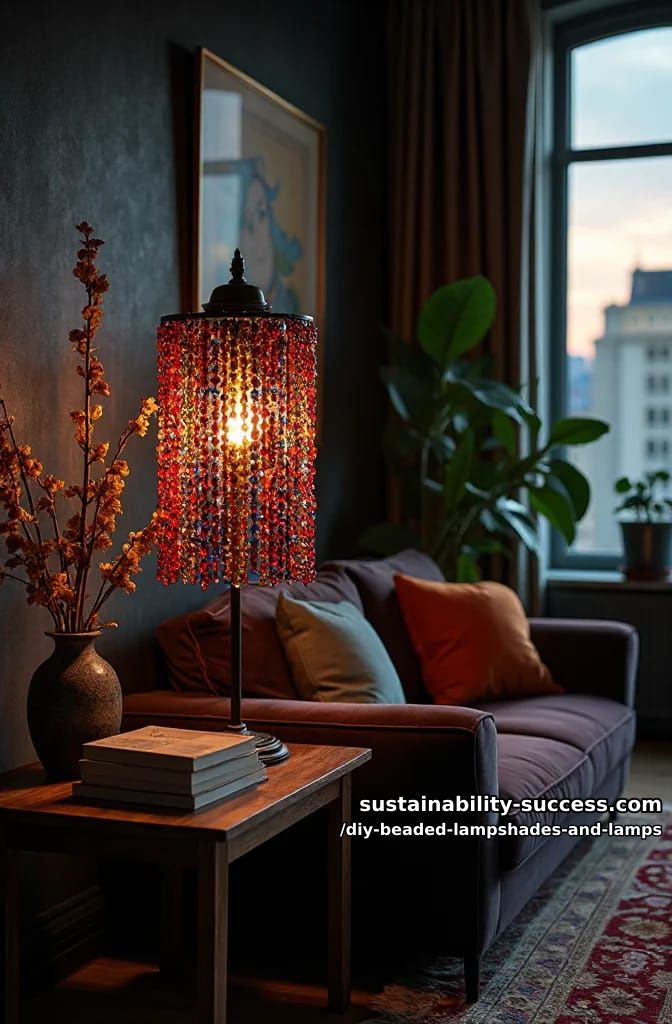
Glass earns its place here because it refracts. Opaque beads, painted wood, and most cheap dyed acrylic go flat or brown when lit from behind, which is the opposite of the point. I can't tell you exactly why some matte beads die completely under a bulb while others keep a faint glow, so hold a handful against a bare bulb before you commit a whole shade to them. And skip the pre-strung "beaded lampshade kits" that show up on Amazon around $20 to $40: the strands are short, the spacing is off, and you'll spend longer fixing them than building from a thrifted frame.
Do this
- Clear faceted glass and AB-coated crystals, which throw colored light onto the wall
- Transparent colored glass (ruby, cobalt, amber) for saturated backlit color
- Czech fire-polished beads if you want consistent shape and real sparkle
Avoid
- Opaque matte beads: they read as dark dots and kill the glow
- Painted wood on a backlit shade: blocks light and goes muddy brown
- Cheap dyed acrylic alone: looks plasticky, and the dye can yellow near heat
The product copy literally lists “lamp shades” as a use, which almost never happens with a bead pack.
Half-Pound Assorted Glass Bead Mix, 4mm to 18mm2. Turn a dead jewelry box into a one-of-a-kind beaded shade
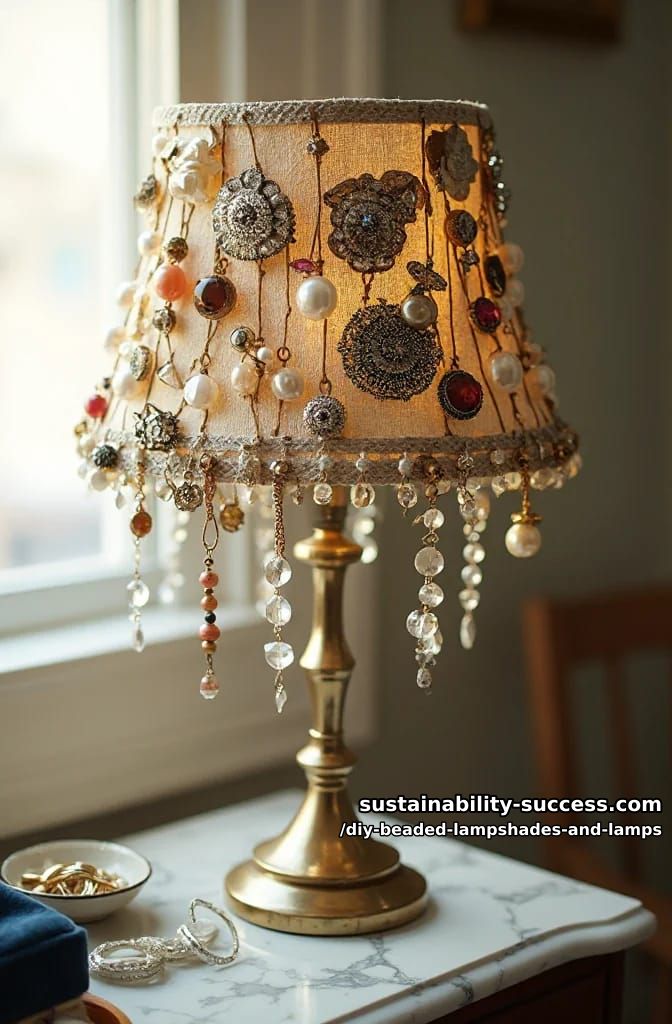
Raid a jewelry box before you buy a single bead. Broken necklaces, orphan earrings, a brooch that lost its pin, and the tangle of costume pieces at the bottom of the drawer make a shade that looks collected over years rather than ordered in one click. The mismatch is the whole appeal, so resist the urge to "balance" it too carefully.
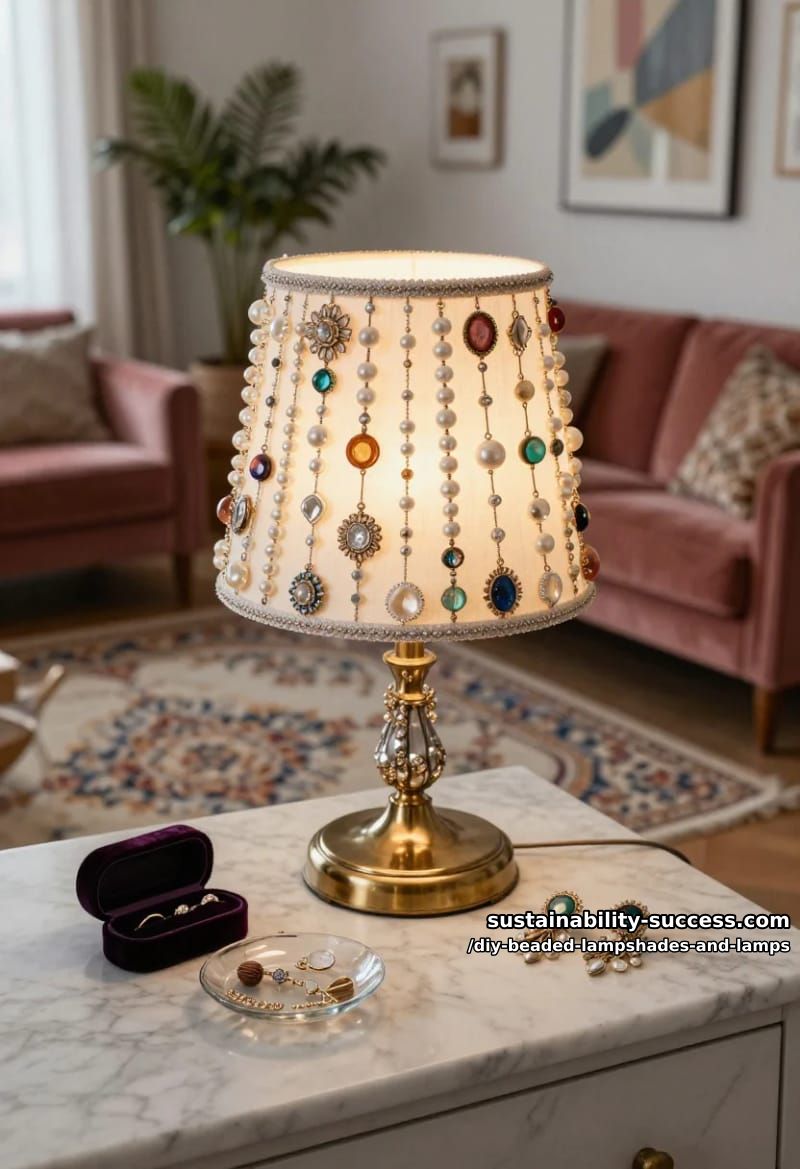
This is also the most sentimental project on the list. My grandmother's clip-on earrings, none of which had a match left, ended up wired around a small bedside shade, and they look better catching light than they ever did in a box. Wire heavier brooches flat against the frame near the top ring where the structure is strongest, and let the dangly earrings hang free at the bottom edge.
3. Hang bead strands from a bare ring for a curtain-style pendant
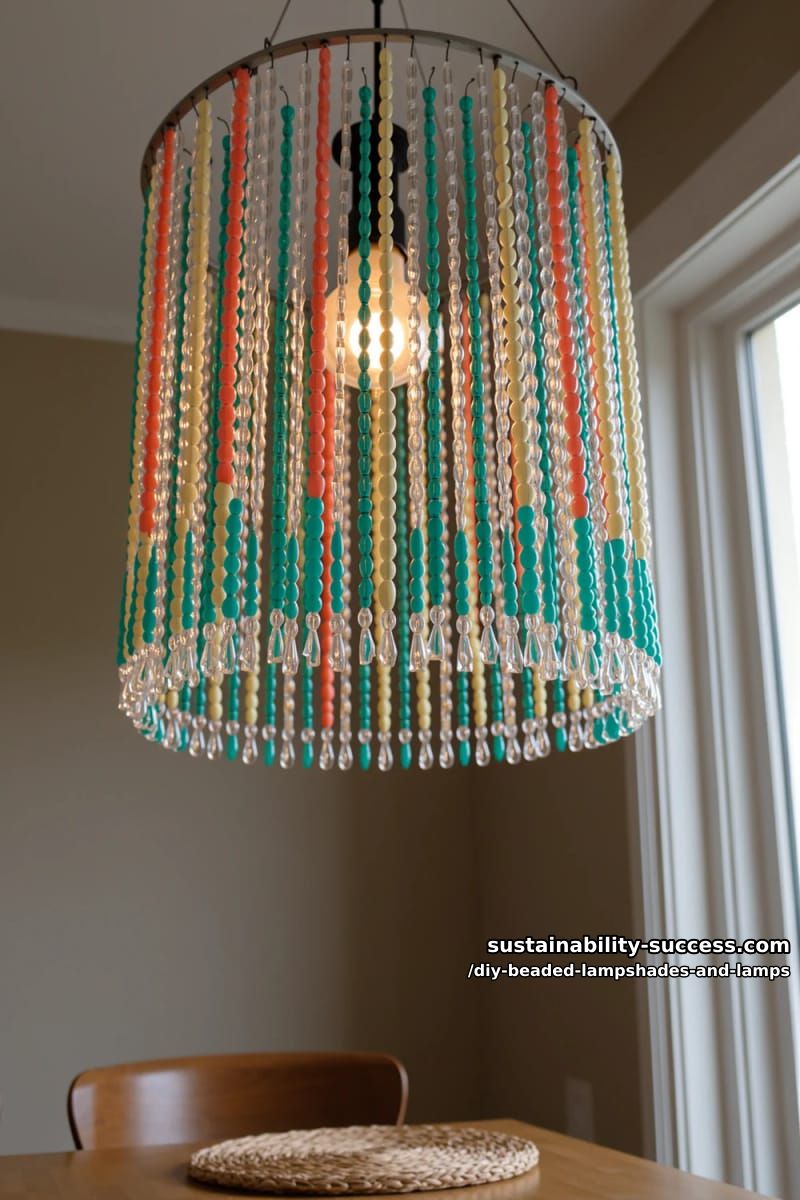
For a hanging fixture, hang strands straight down from one metal ring instead of caging a solid shade. A plain lampshade ring (around $8 to $15, or salvaged from a dead shade) becomes the top; tie or wire individual bead strands around it so they fall like a beaded curtain. Cut each strand a few inches longer than the finished drop so you have wire or monofilament to knot off.
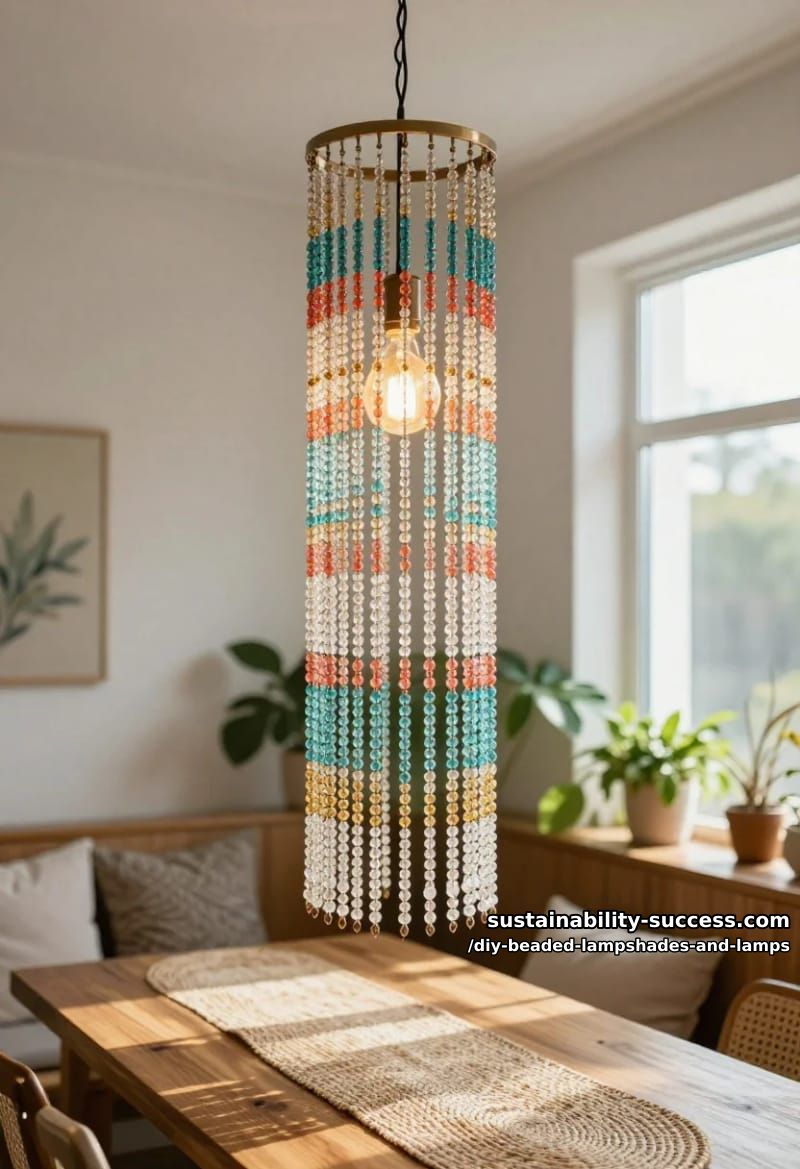
Use clear monofilament (fishing line works) when you want the beads to look like they're floating, and wire when you want the strands to hold a deliberate curve. Vary the lengths by an inch or two so the bottom edge looks hand-done. Keep every strand clear of the bulb itself by at least a couple of inches, both for the light and for the heat, which matters more than people think (see the last entry).
4. Skip the jewel tones: a wood-bead pendant for a calmer glow
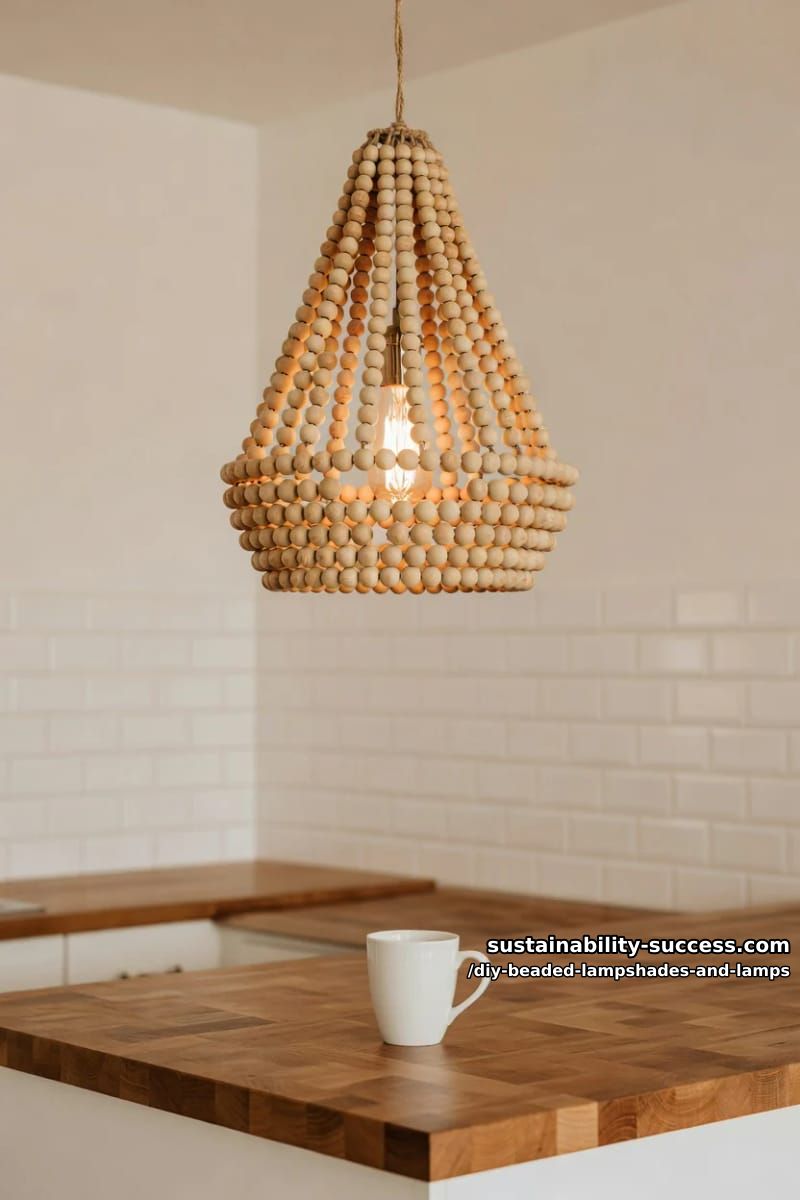
The rainbow-glass look is not the only way to do this, and for a lot of rooms the wood-bead version ages better. Strung natural wood beads read warm and quiet instead of carnival, and because wood blocks light, you lean on the silhouette and the gaps rather than refraction, which is why a visible Edison bulb works so well here. Pottery Barn and Anthropologie both sell wood-bead chandeliers in the $250 to $500 range; a $13 garland and a thrifted frame get you ninety percent of that, and the missing ten percent is mostly the price tag.
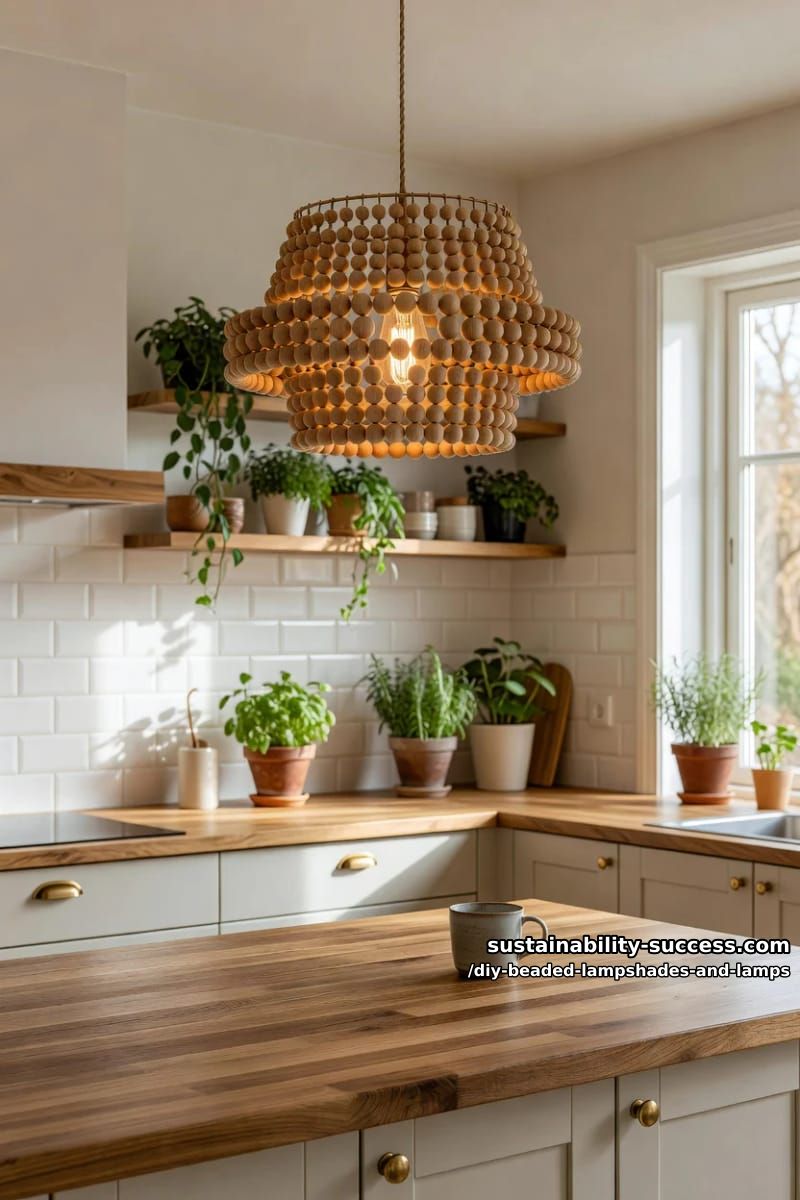
Buy the beads pre-strung as a farmhouse garland rather than loose, because the holes are already aligned and the jute is cut to length. Tie a strand to the top of the frame, slide on your beads, knot it off at the bottom rib, and hot-glue a length of jute or rope over the frame at the end to hide the wire.
5. Glue flat beads and buttons into a mosaic lampshade
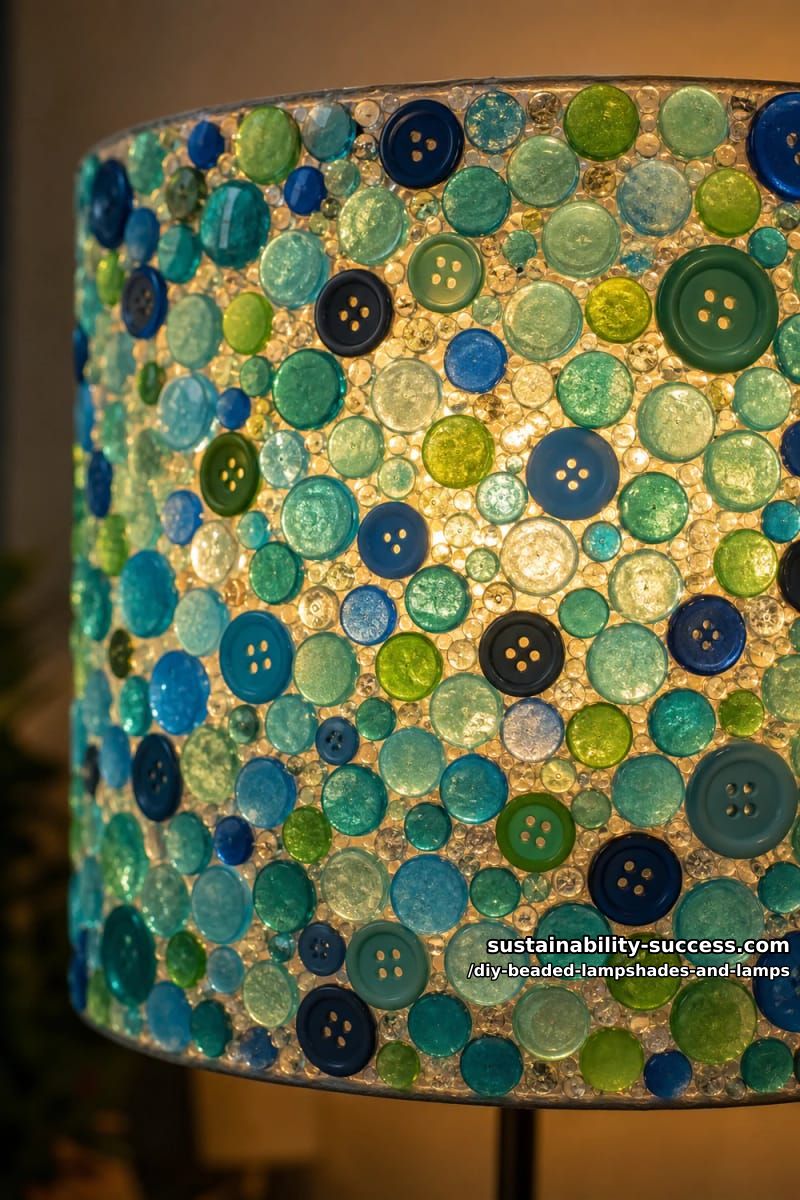
Glue translucent flat beads and clear buttons directly onto a plain drum shade and you get a stained-glass effect when the bulb is on. The non-negotiable is that the pieces let light through. Mix in opaque buttons and they read as black dots once lit, which can look deliberate if you plan it and accidental if you don't.
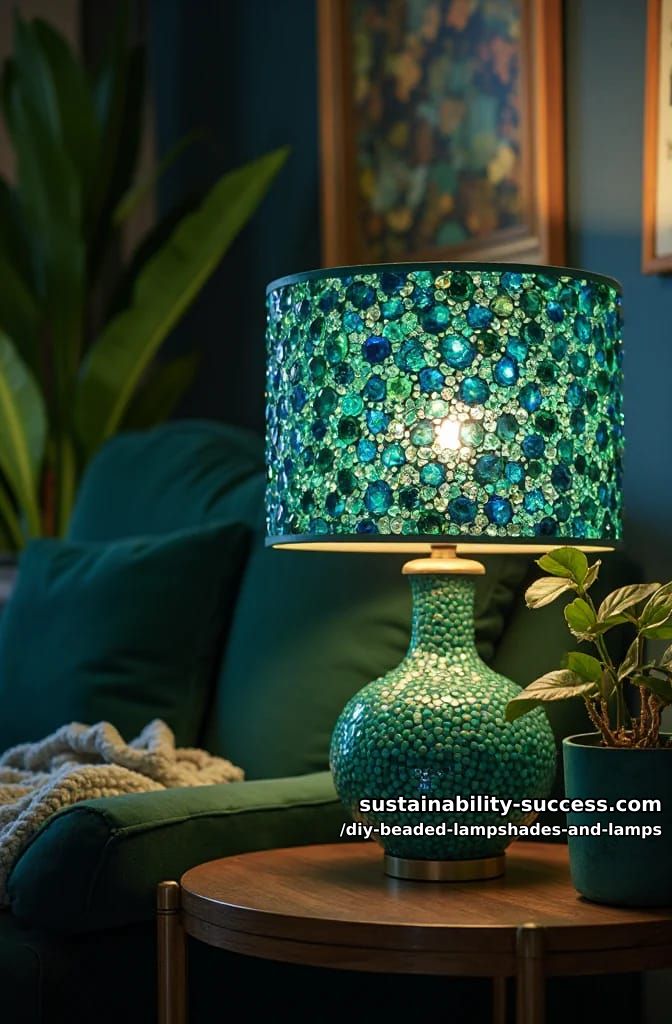
Use E6000 (about $5 a tube) rather than hot glue. Hot glue strings everywhere, yellows over time, and shows as cloudy lumps the moment the bulb backlights it. Work in small sections so the adhesive doesn't skin over before you place the beads.
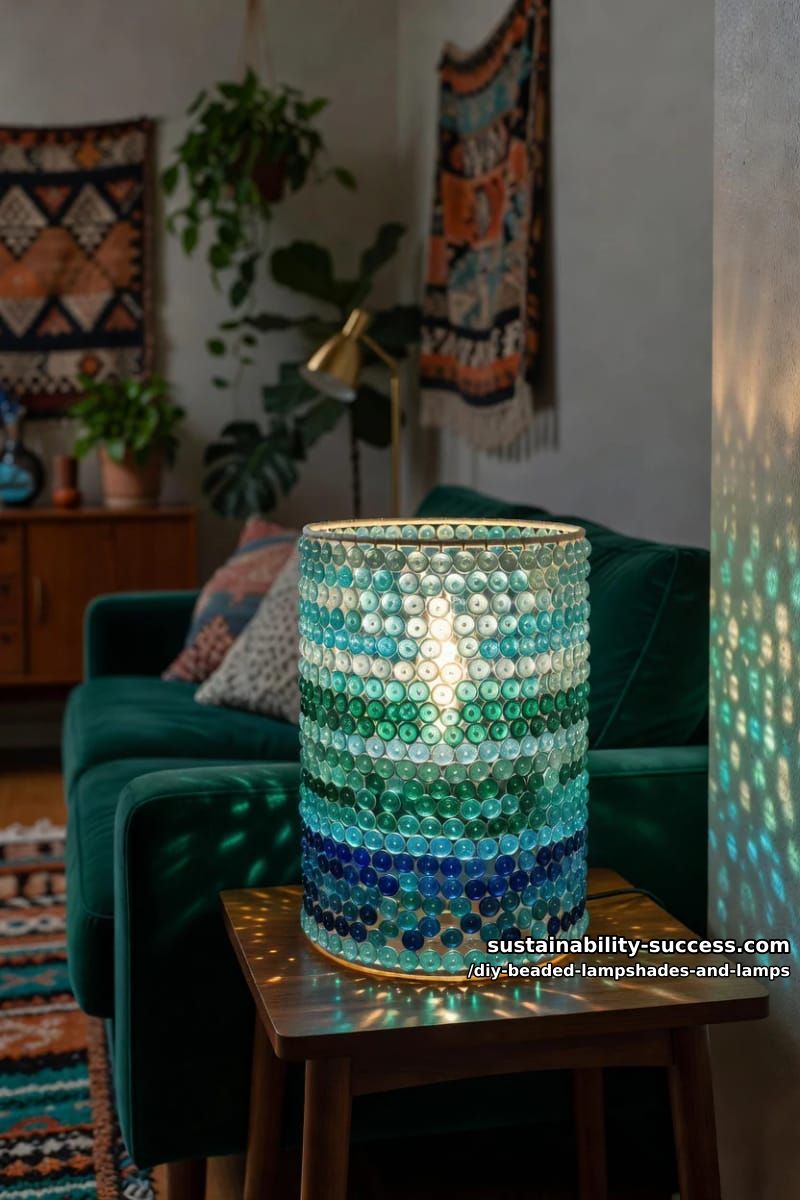
One opinion that will annoy some people: a button shade tips into kitsch fast unless you hold to one color family. All-white shell buttons on a cream shade look intentional. A free-for-all of every button in the jar looks like a kindergarten project, even when the craftsmanship is good.
6. Add crystal teardrops for the chandelier-glint version
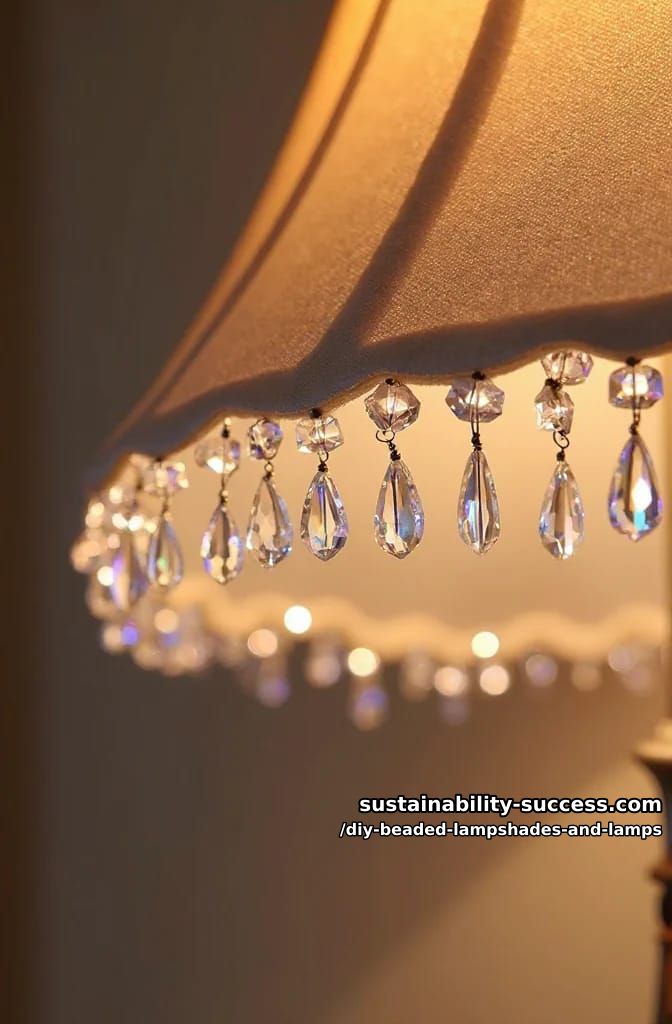
For sparkle and that chandelier glint, hang faceted crystal or AB-coated teardrops along the bottom edge of any beaded shade. The AB (aurora borealis) coating is what splits the light into rainbow flecks on the wall; plain clear drops just twinkle. They're the finishing layer, not the whole shade, so a pack of 30 is usually enough for a small fixture.
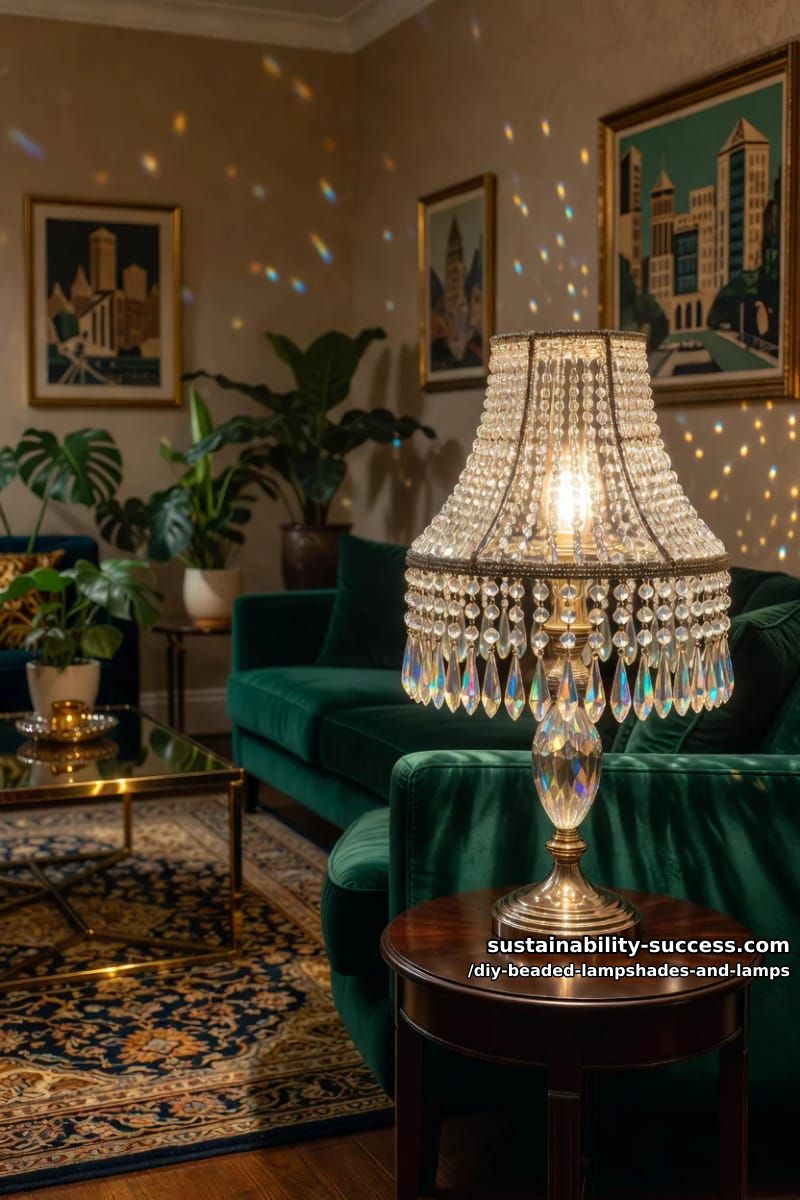
Here's where I changed my mind. I spent years telling people to use real glass for everything, then built a tiered pendant heavy enough to pull its own hoop out of round, and I came around on acrylic for anything that hangs. Acrylic teardrops give you nearly the same flash at a fraction of the weight, so a light DIY frame keeps its shape. Save the heavy leaded-glass crystals for a fixture with a sturdy metal armature that can carry them.
7. Build a cascading multi-tier beaded chandelier
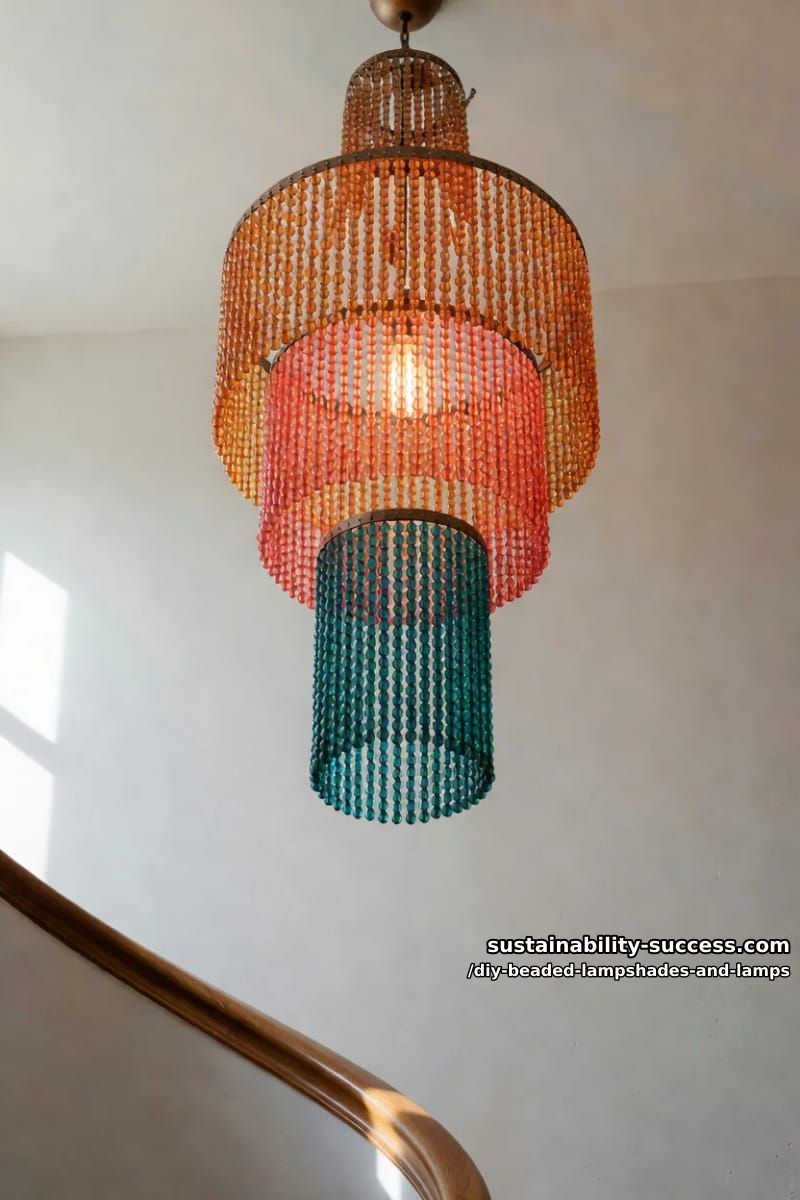
For a real cascade, stack two or three hoops of decreasing diameter and hang strands of decreasing length from each. Layered strand lengths around 7, 11, and 15 inches give you the waterfall effect without measuring every single one. Embroidery hoops make cheap, ready-made tiers; a set of three nested sizes costs a few dollars and saves you bending wire into circles.
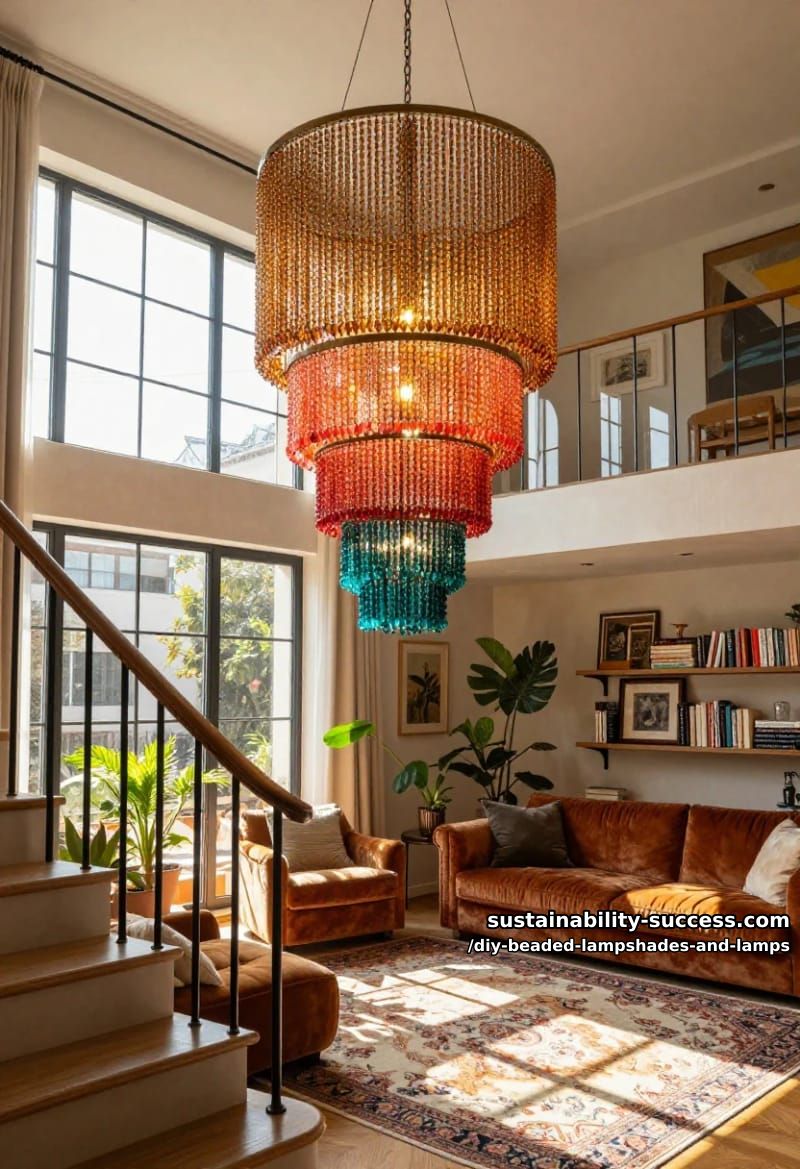
A fully beaded multi-tier chandelier gets heavy, often several pounds once every strand is loaded. Do not hang it from a stick-on hook or a drywall anchor. Mount it to a ceiling electrical box rated for fixtures, or to a joist with a proper hook, and add the beads in stages so you can feel the weight building rather than discovering it all at once when a strand lets go.
8. Leave the frame see-through for a sparser, modern shade
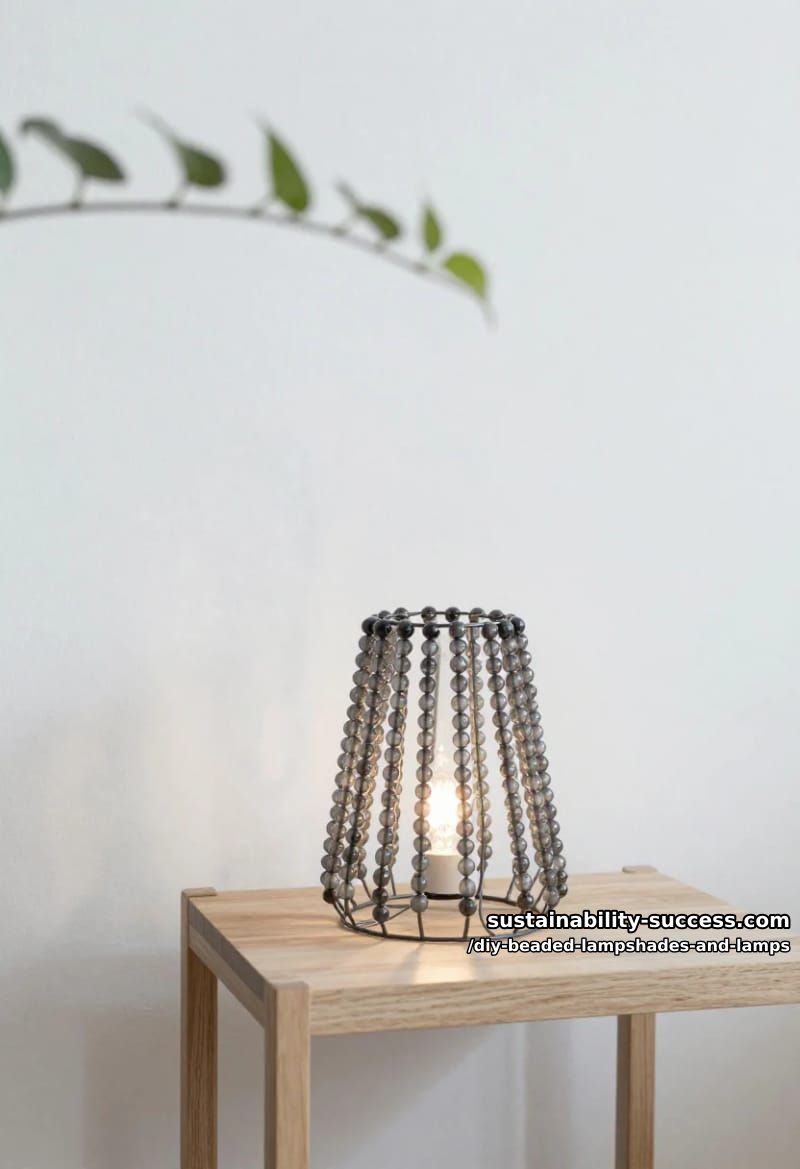
Counter to every dense, fully covered shade above, you can string just a few strands and leave most of the frame bare. Dense beadwork can read fussy and Victorian-grandmother; a sparse version, with maybe six to eight evenly spaced strands on an exposed metal frame, reads modern and lets the architecture of the frame show. It also uses a fraction of the beads, so it's the cheapest entry point if you want the material but not the maximalism.
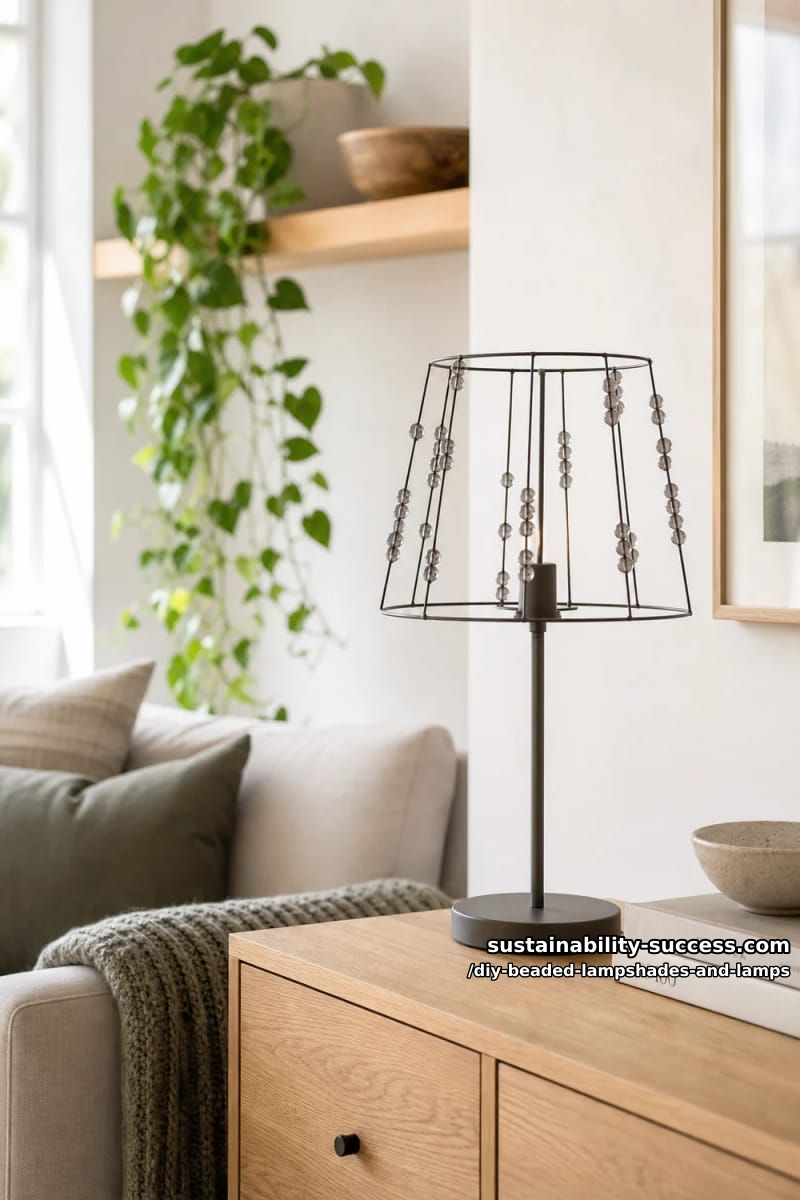
Count the ribs on your frame first and divide your strands evenly between them so the spacing looks designed instead of unfinished. A shade with twelve ribs and six strands wants one strand every other rib. Granted, this only works if your frame is attractive on its own, so it's worth picking a frame with clean lines before you strip it.
9. Wrap a jar or bottle into a beaded fairy lamp
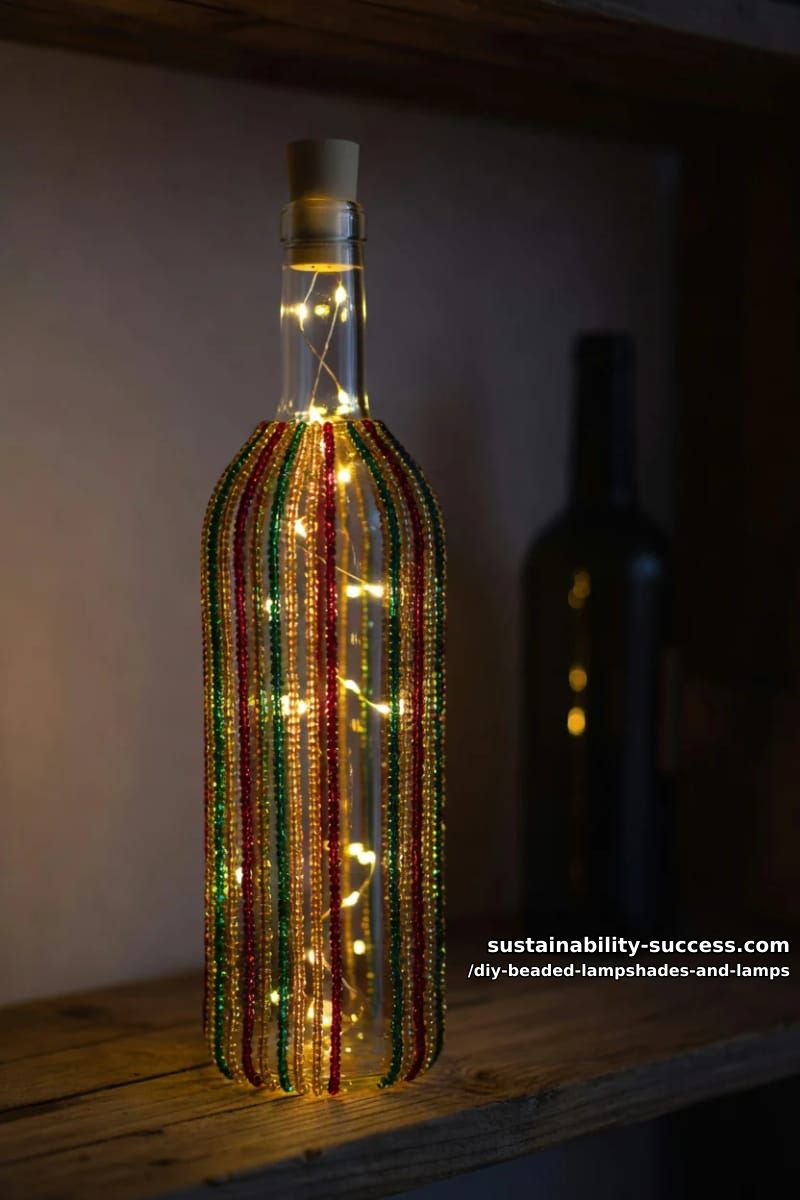
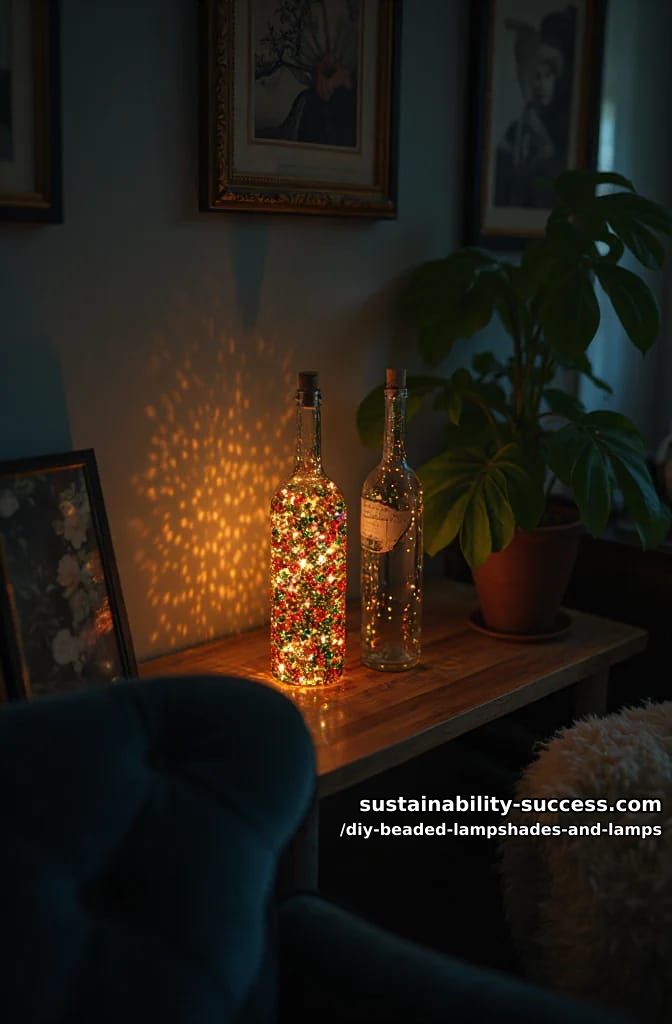
The smallest project here needs no wiring at all: wrap a jar or wine bottle in glued bead strands and drop in a battery-powered cork LED light string. Warm-white cork stoppers with built-in fairy lights run about $6 to $10 for a multipack, and because the LEDs stay cool, you can use any beads you like, including the cheap acrylic that would warp near a hot bulb.
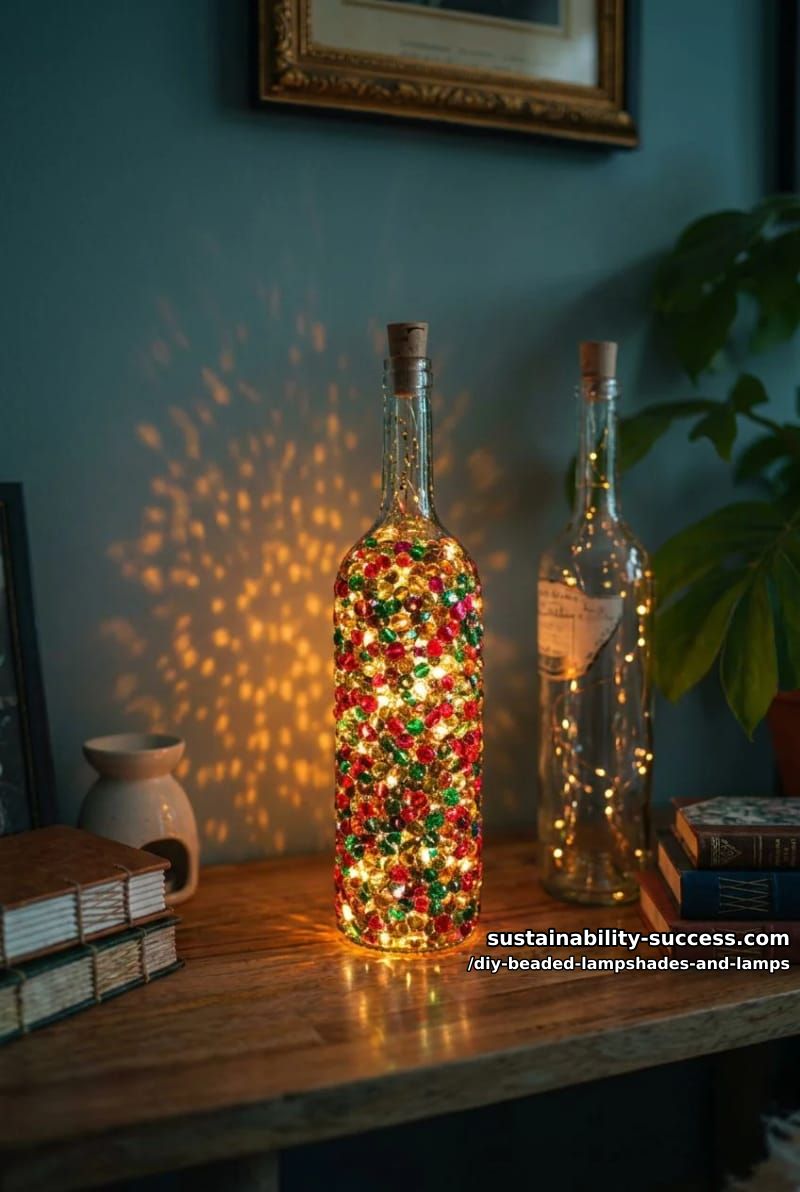
Pick a bottle with interesting glass color if you can, since the tint reads through once it's lit. Skip the jars sold with a built-in bulb base; a plain bottle and a cork light look cleaner and cost less, and you avoid the heat question entirely.
10. Add a beaded fringe to a shade you already own
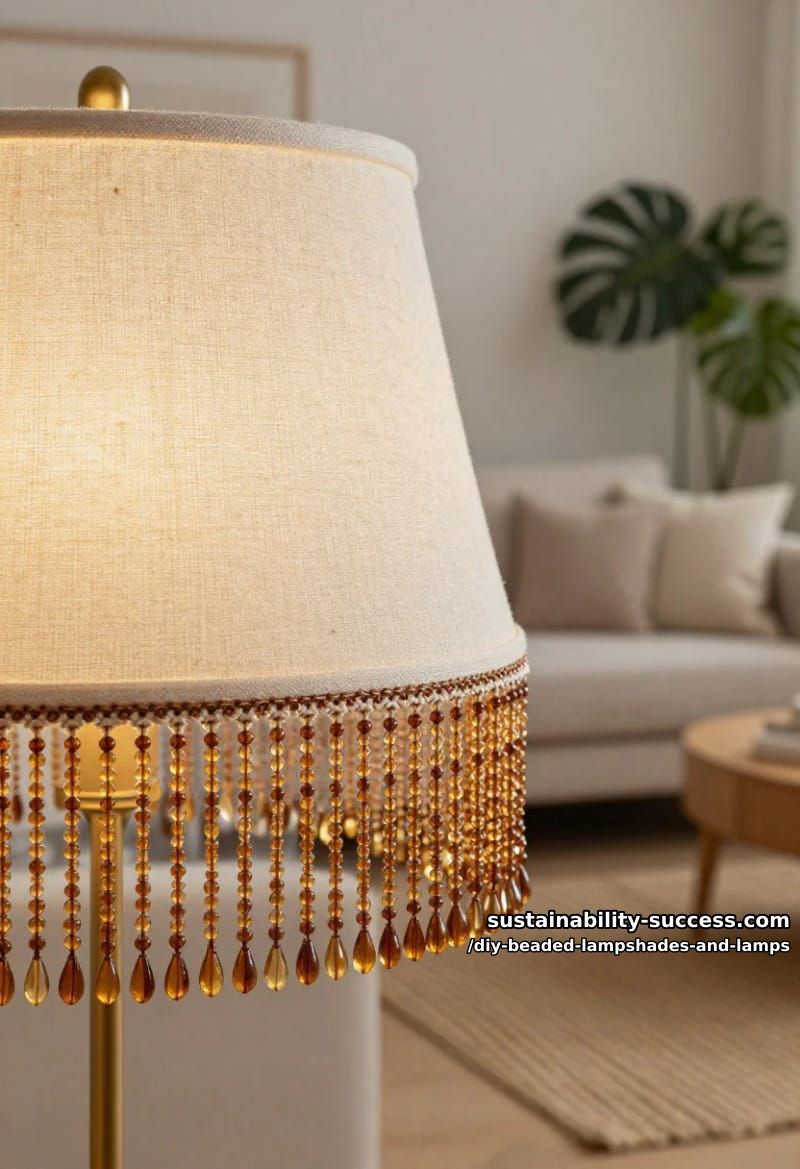
If you've never beaded anything, start here: glue or stitch a length of beaded fringe trim along the bottom edge of a plain fabric shade you already own. It takes about twenty minutes, costs almost nothing, and transforms a basic drum shade without any frame-stripping. Beaded fringe by the yard runs roughly $5 to $10; with JoAnn gone as of last year, your realistic options are Hobby Lobby, a local sewing or trimmings shop, or Etsy.
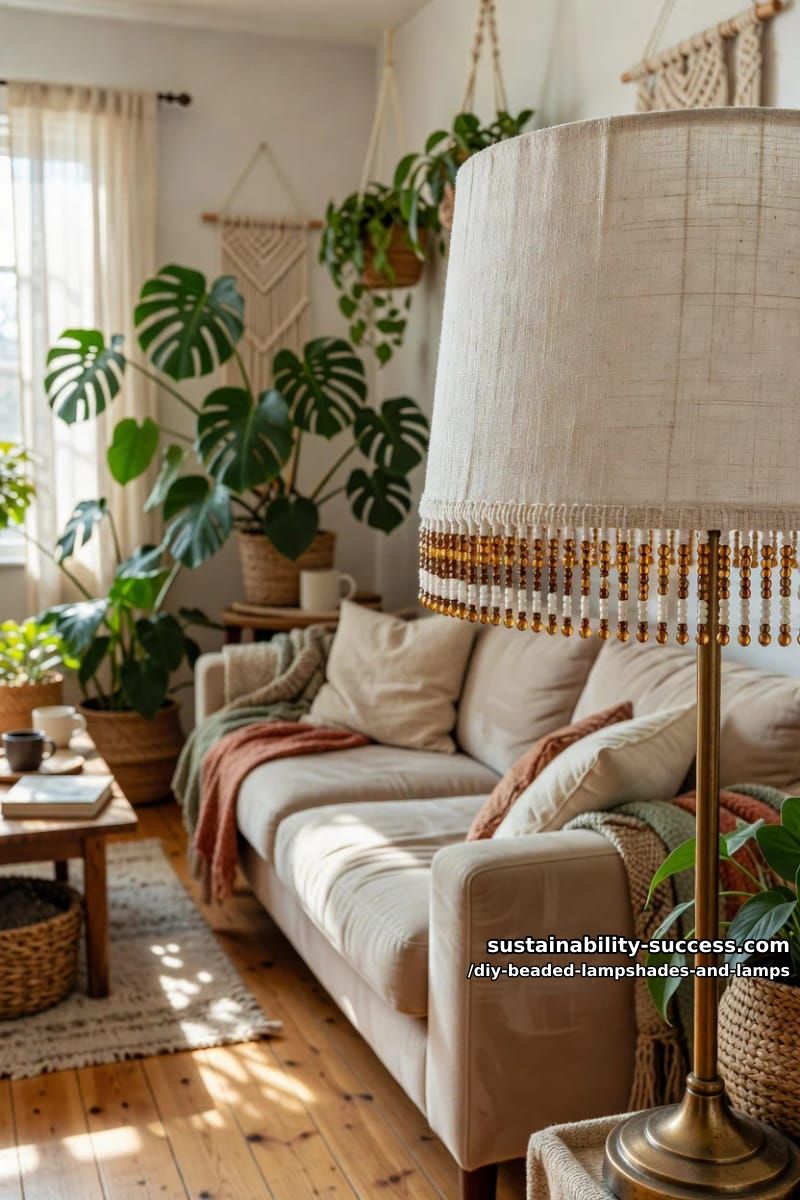
The one thing that will sink it is plastic pony-bead fringe, the kind that comes in a primary-color rainbow. It looks exactly as cheap lit as unlit. Spend the extra couple of dollars on glass or proper acrylic drop fringe in a single metallic or jewel tone, and run a thin line of fabric glue under the header braid before you stitch so the strands don't sag away from the shade over time.
Match the bulb to your beads before you switch it on
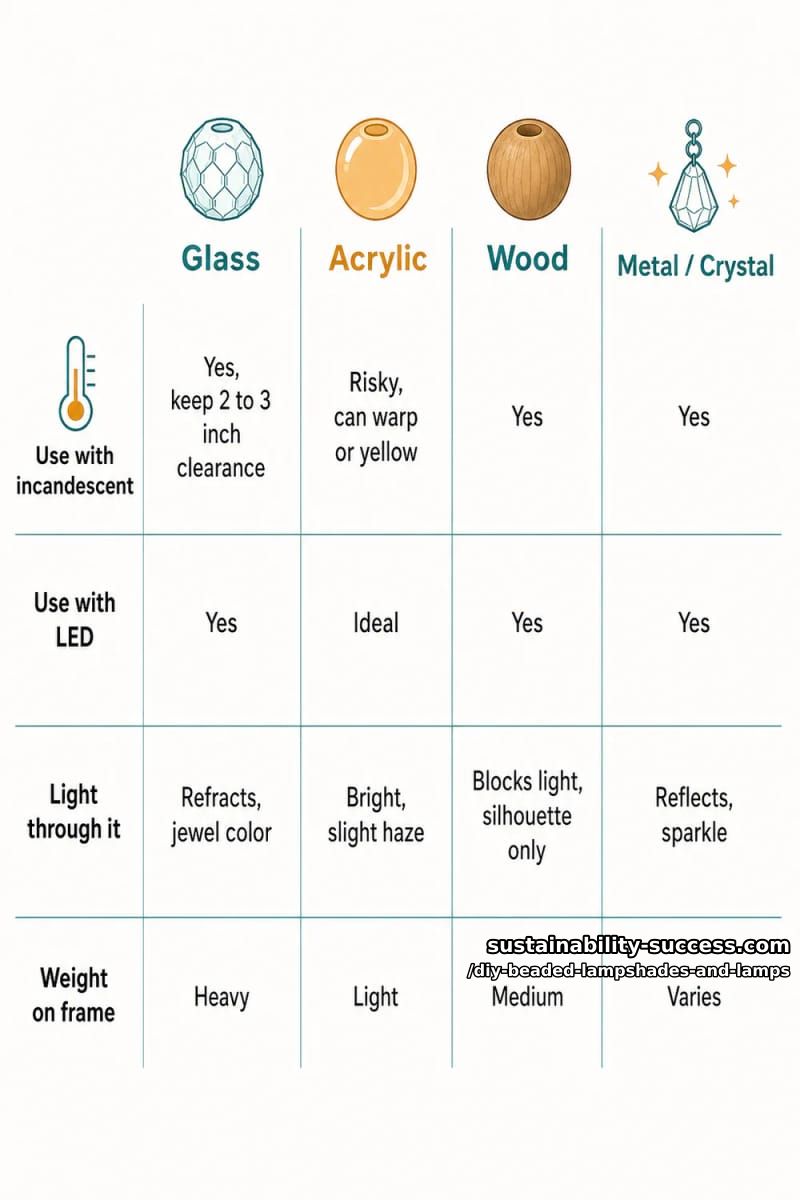
The bulb decides whether your work glows or just sits there, and it's the step most tutorials skip. I get emails asking why a finished beaded shade looks dim and muddy, and nine times out of ten it's the bulb, not the beads. Match the two before you flip the switch.
| Bead material | With incandescent | With LED | Light through it | Weight |
|---|---|---|---|---|
| Glass | Yes, keep 2 to 3 in clearance | Yes | Refracts, jewel color | Heavy |
| Acrylic | Risky, can warp or yellow | Ideal | Bright, slight haze | Light |
| Wood | Yes | Yes | Blocks light, silhouette | Medium |
| Metal / crystal | Yes | Yes | Reflects, sparkle | Varies |
A standard 60-watt incandescent bulb runs hot at the surface, well over 200°F, which is enough to soften, warp, or yellow cheap acrylic beads sitting an inch or two away. A modern LED of the same brightness stays cool enough to hold. In 2007, Consumer Reports documented dorm lamps whose plastic shades melted and dripped under correct-wattage bulbs; glass-shaded versions of the same lamp passed. Use LEDs with any plastic beads, never cover the open top of a shade (that’s the vent for rising heat), and stay under the lamp’s printed maximum wattage.
Conclusion
If you've never done any of this, don't start with the strung-glass empire shade in entry one. It photographs the most impressively and it's also the one most likely to make you quit two ribs in, when you realize how many beads a full shade actually eats.
Start with the fringe or the bottle light, get a feel for how beads behave when light passes through them, and graduate to a full frame once you trust your color choices. Whatever you build, put an LED behind it before you commit to anything plastic, and give the beads a couple of inches of breathing room around the bulb.
The single most common reason a finished piece disappoints isn't the beadwork at all; it's someone screwing a hot 75-watt incandescent into a shade full of cheap acrylic and wondering why it looks tired by the second week.