
A salvaged multi-pane window almost always becomes the same thing: a grid of black-and-white photos in the hallway. That's a fine use and a slightly boring one, and it ignores most of what a good sash can do, from faking a window in a dark powder room to leaning against a fence for climbing roses.
One thing before the ideas, because it shapes half of them: if the frame came out of a house built before 1978, assume the paint has lead in it and test before you sand or scrape, since old window sashes are among the worst offenders for lead dust.

1. Swap the glass for mirror to fake a window in a dark room
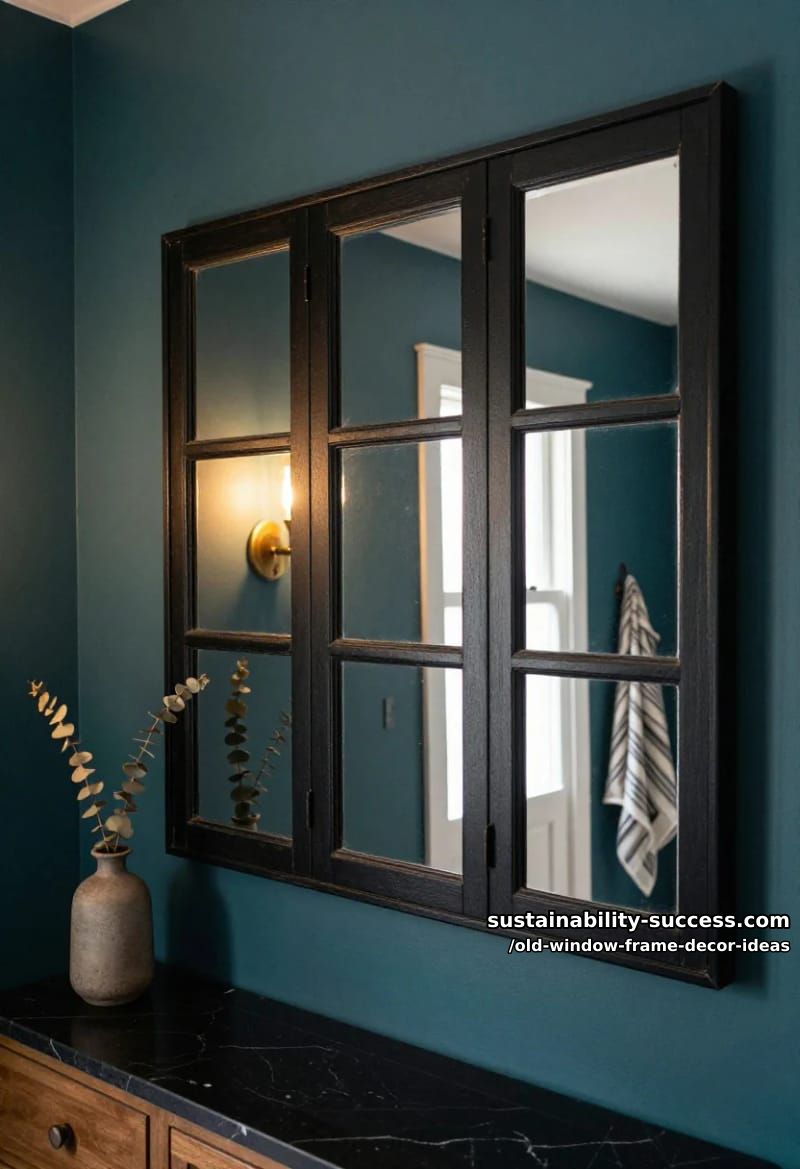
A windowless powder room or a basement landing is where a mirrored sash actually does something a photo grid can't: it borrows light and tricks the eye into reading depth where there is a blank wall. Hang it where it faces a real light source, a sconce or a doorway, so the panes throw that light back into the room.
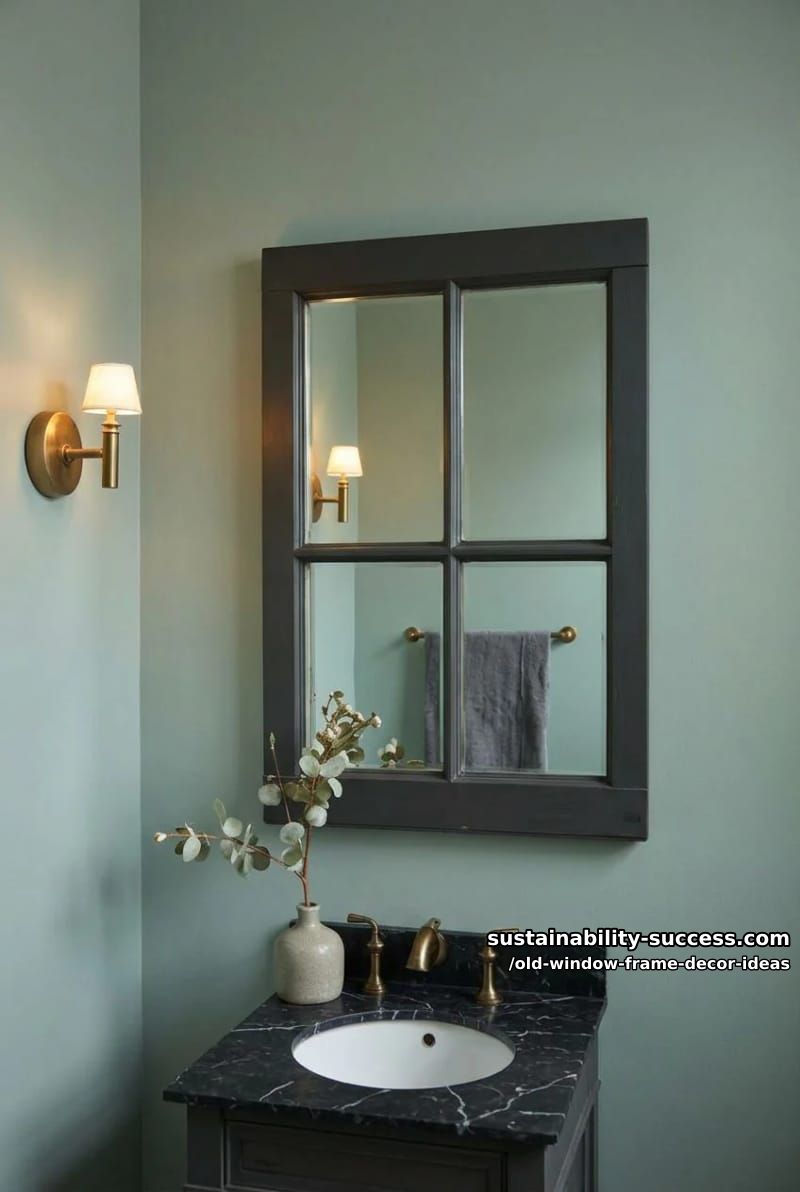
People email me asking whether the mirror has to be cut to fit each individual pane. It does not, and you probably shouldn't bother. A single sheet of acrylic mirror mounted behind the whole sash reads as separate panes once the muntin bars cross in front of it, and acrylic sheet (a 12-by-24-inch piece runs about $15 to $25 at most hardware stores) is lighter than glass and cuts with a utility knife and a metal straightedge. Lighter matters more than you'd think when the thing is hanging over a sink.
2. A salvaged sash makes a deeper shelf than a flat board
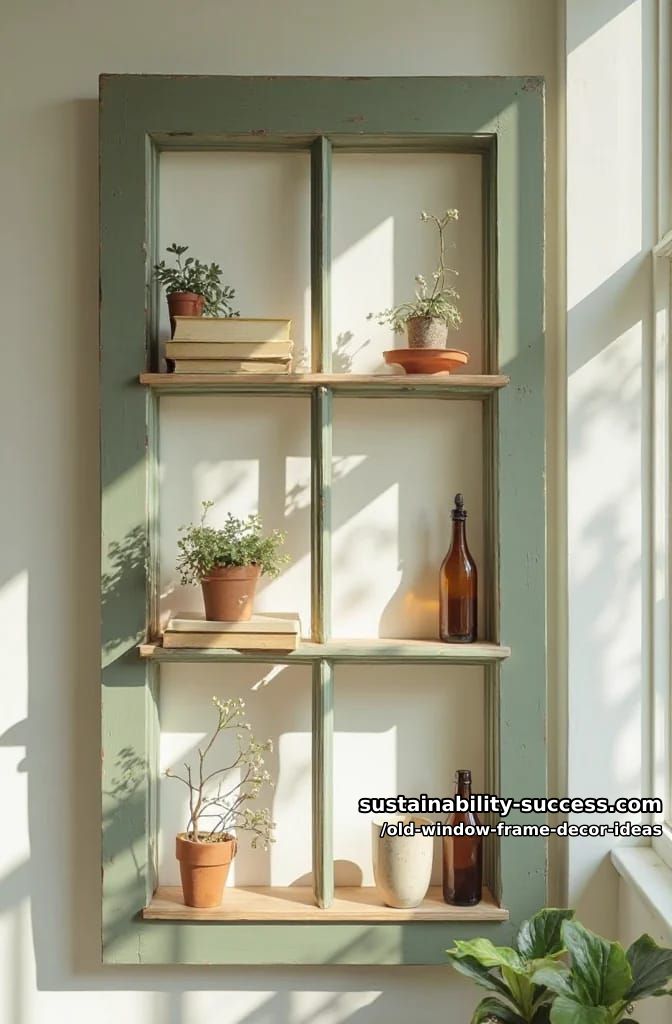
Pull the glass, run shelf boards across the muntin openings, and a flat sash becomes a cubby shelf with built-in grid divisions a plain plank can never give you. The catch is depth. A typical sash is only about 1 to 1.5 inches thick, which is fine for a single trailing plant and useless for anything you actually want to set down.
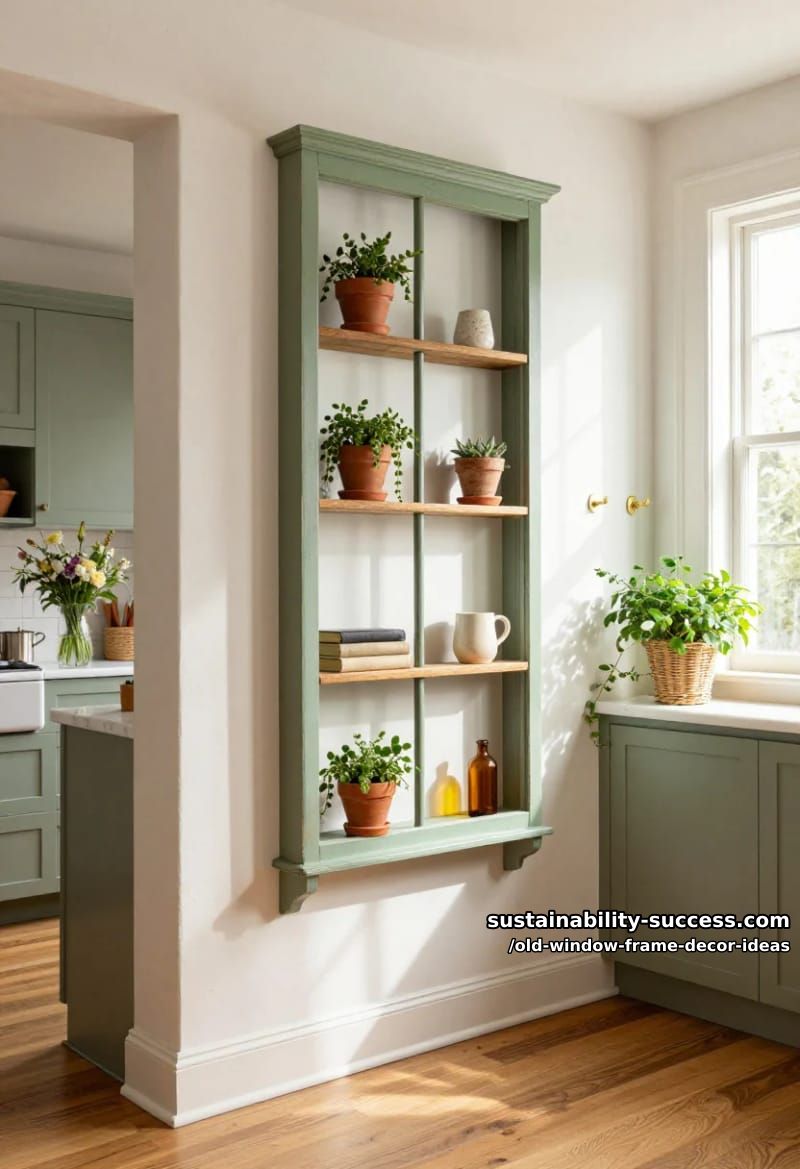
Screw a length of 1×4 or 1×6 pine to the back of the frame as a cleat, then rest your shelf boards on that instead of trying to wedge them into the 1-inch frame. This pushes the usable depth out to a real 3.5 to 5.5 inches, enough for books and pots, and it lets you hide the screw heads behind the muntin bars. Paint the new pine to match before assembly, since touching up between fully loaded shelves is miserable work.
3. Mount photos behind the panes, but lose the glass first
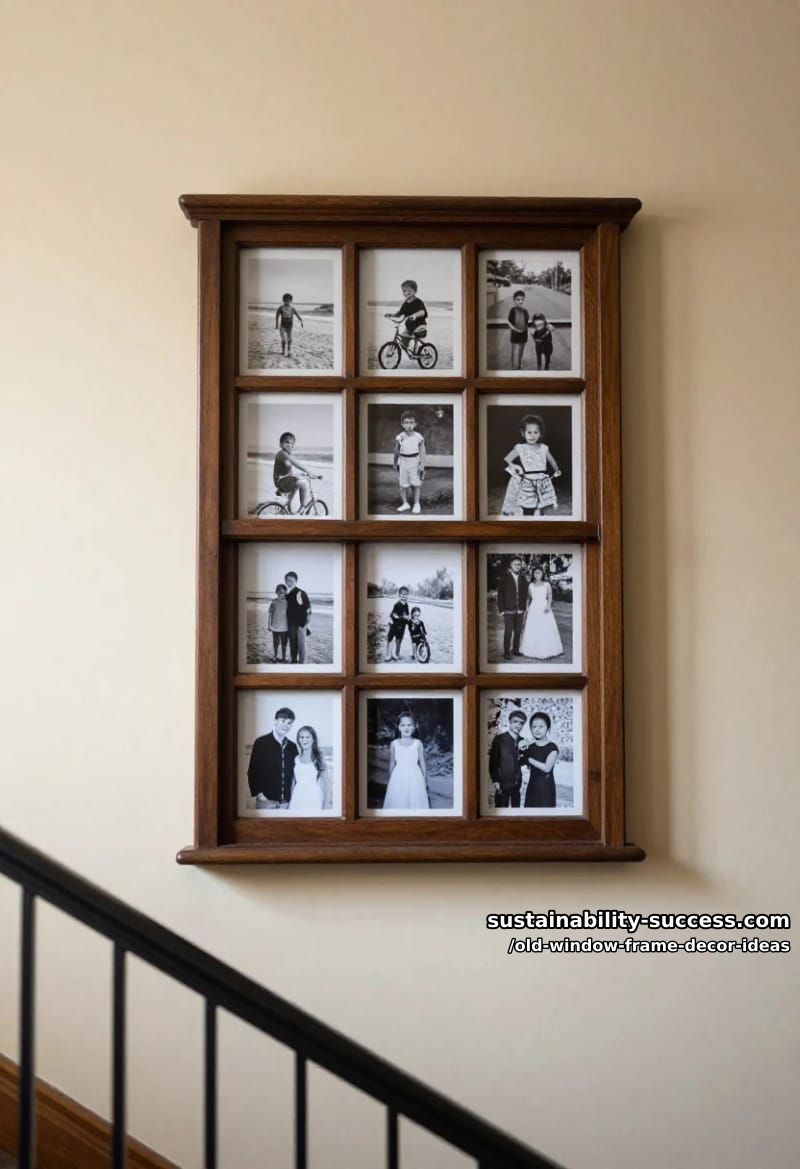
This is the use everyone reaches for, and most people do it badly: a printed-on-canvas collage from the mall photo studio shoved behind the original wavy glass, reflections and all. Take the glass out. Old glass throws so much glare that you'll only ever see your photos from one angle, and a stair hall is exactly where the light hits wrong every afternoon.
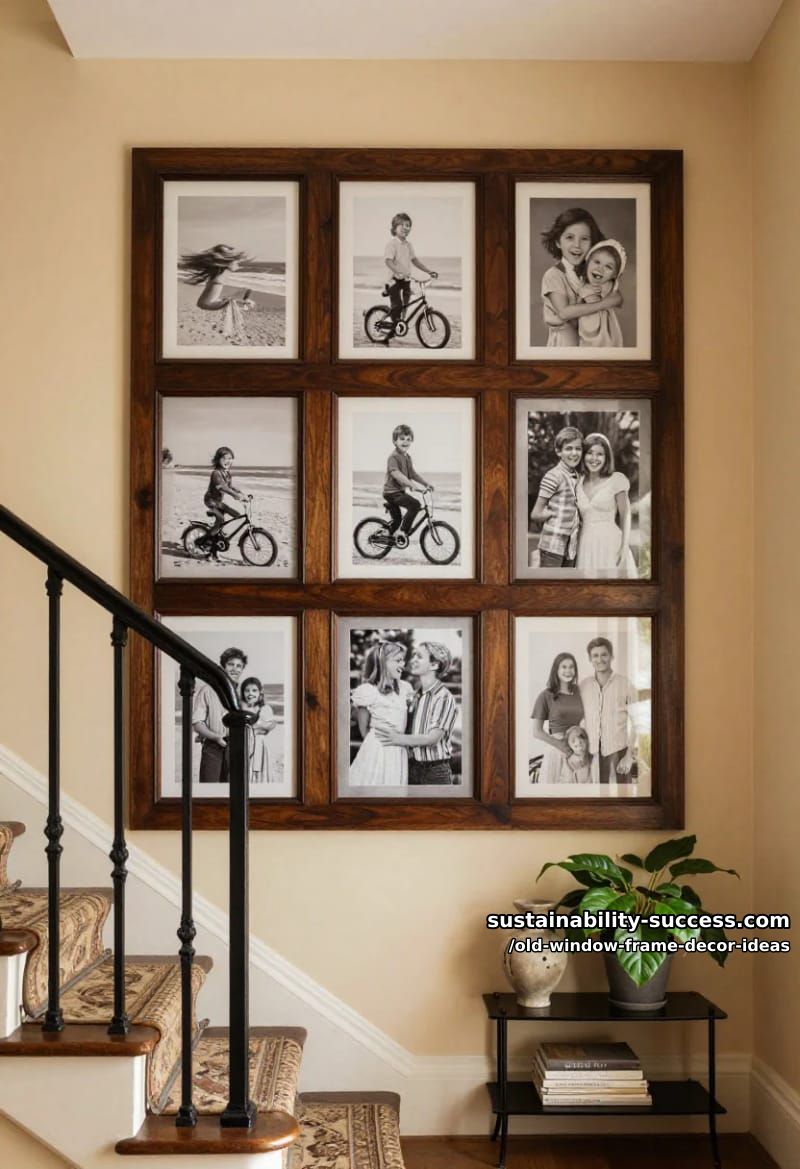
Print each photo a half-inch larger than its opening and mount it to the back of the frame with archival photo corners or acid-free tape, so the muntin bars crop the edges like mats. Pottery Barn sells a faux windowpane photo display for around $150 that does the same job in MDF; a real salvaged sash from a Habitat ReStore is often under $40, and you can usually talk them down on a Saturday.
4. Wire bud vases to the muntins for a living window
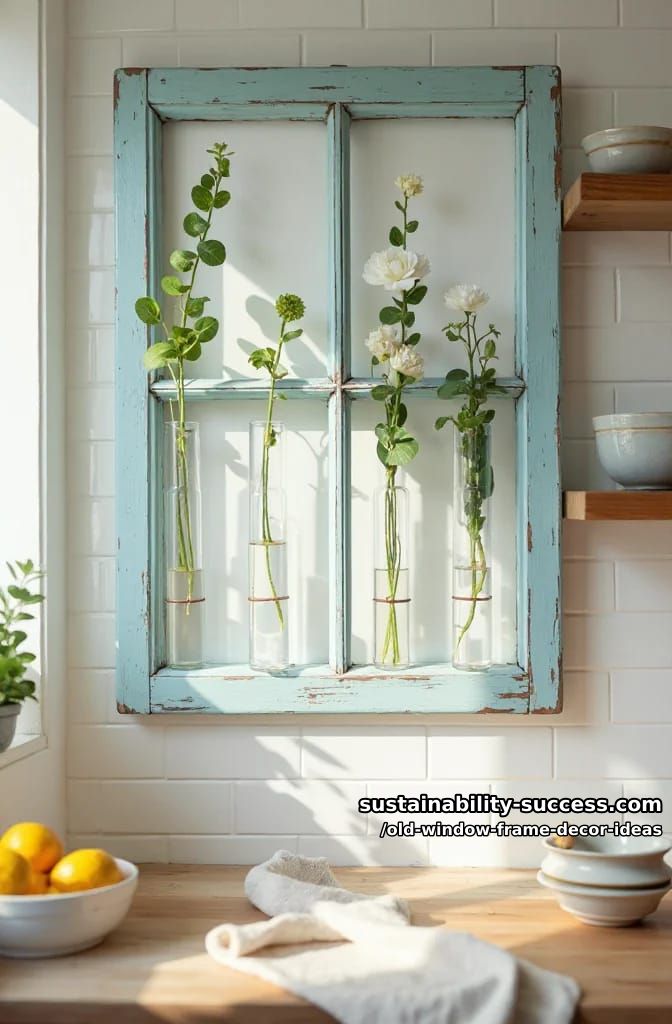
Wire a row of glass test tubes to the muntin bars and the empty sash becomes a propagation wall, with individual cuttings rooting in water where you can watch them. Use 22-gauge copper floral wire wrapped twice around each tube and twisted tight behind the bar; it holds a full tube without slipping, and the copper blends into most wood finishes without announcing itself.
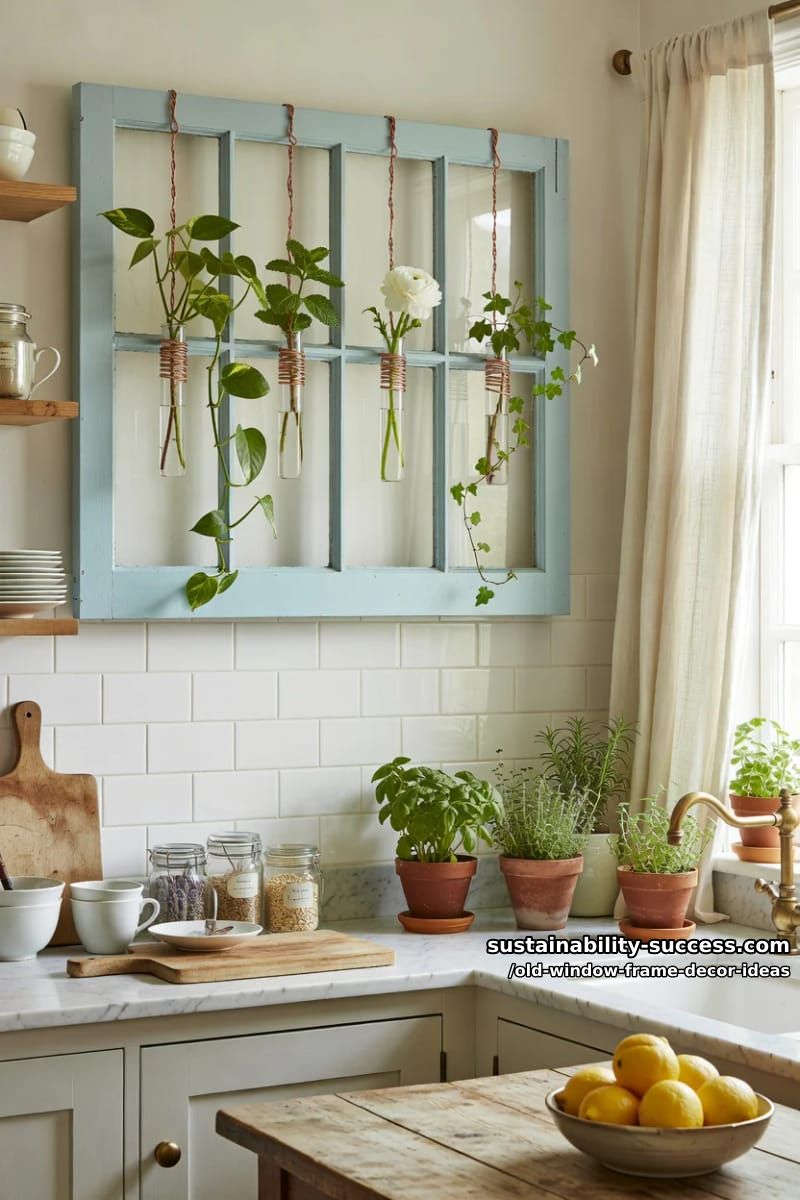
Test tubes cost almost nothing (a pack of a dozen with a cleaning brush runs about $10), and the kitchen is the right room for this because you're already trimming herbs and pothos there. Refresh the water every week or it goes green and cloudy and the whole effect goes with it.
5. Chalkboard the panes for a mudroom that actually gets used
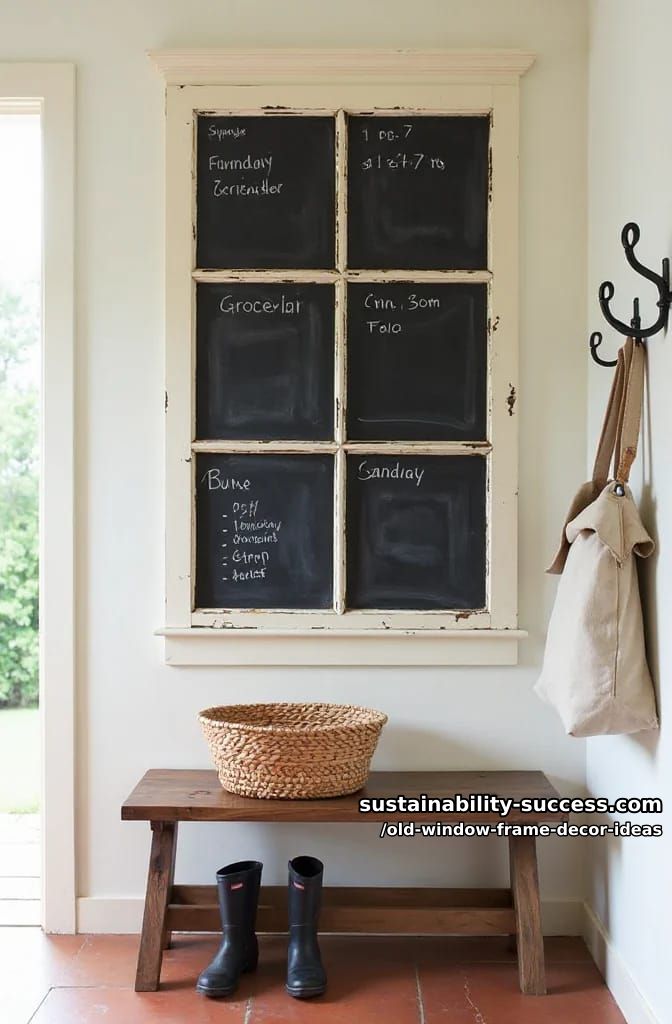
Paint the panes with chalkboard paint and the sash turns into a wall calendar your household will actually look at, because it lives by the door rather than inside a phone. The muntin grid does something useful here: each pane becomes its own box, so one holds the week, one holds the grocery list, one holds the dog's medication schedule.
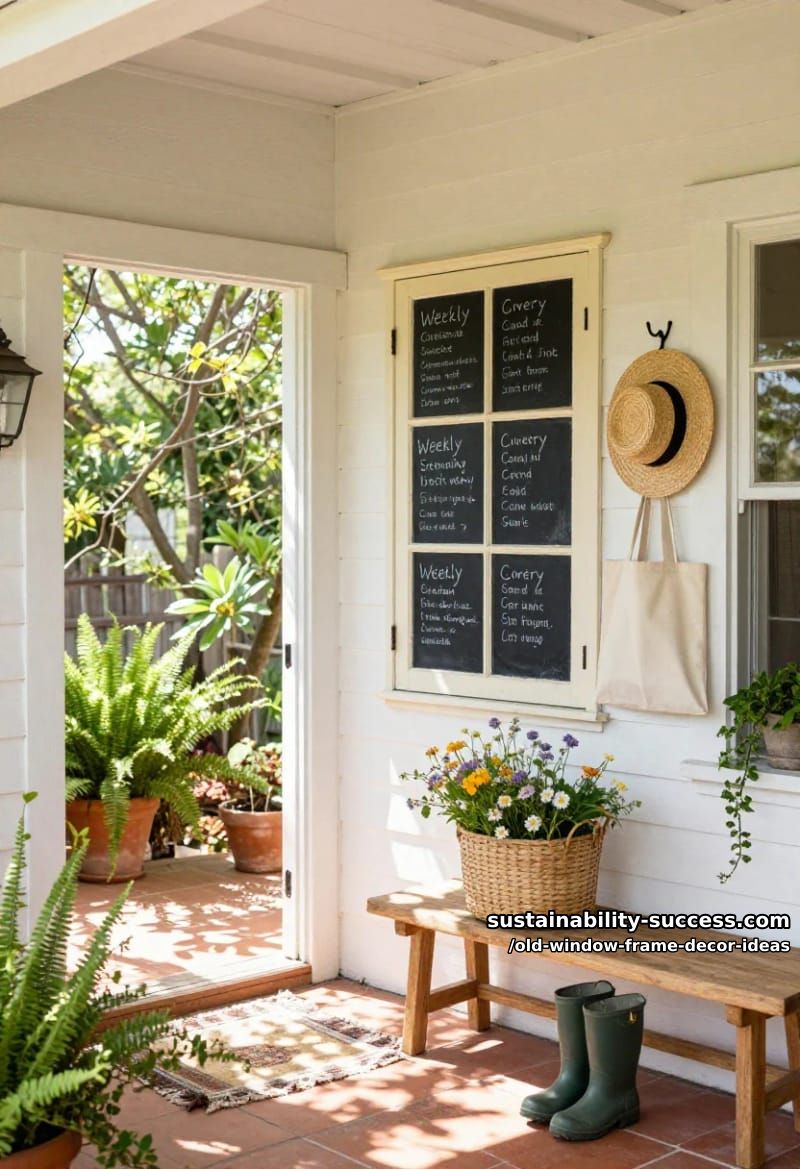
A single quart covers roughly 100 to 125 square feet, meaning one can will outlast the project and probably your next three.

One thing the cans don't shout about: after the paint cures for three days, rub the flat side of a piece of chalk across the entire surface and wipe it off before you ever write on it. Skip that conditioning step and your first message ghosts into the finish permanently.
6. Hang a wide sash above the bed as a headboard
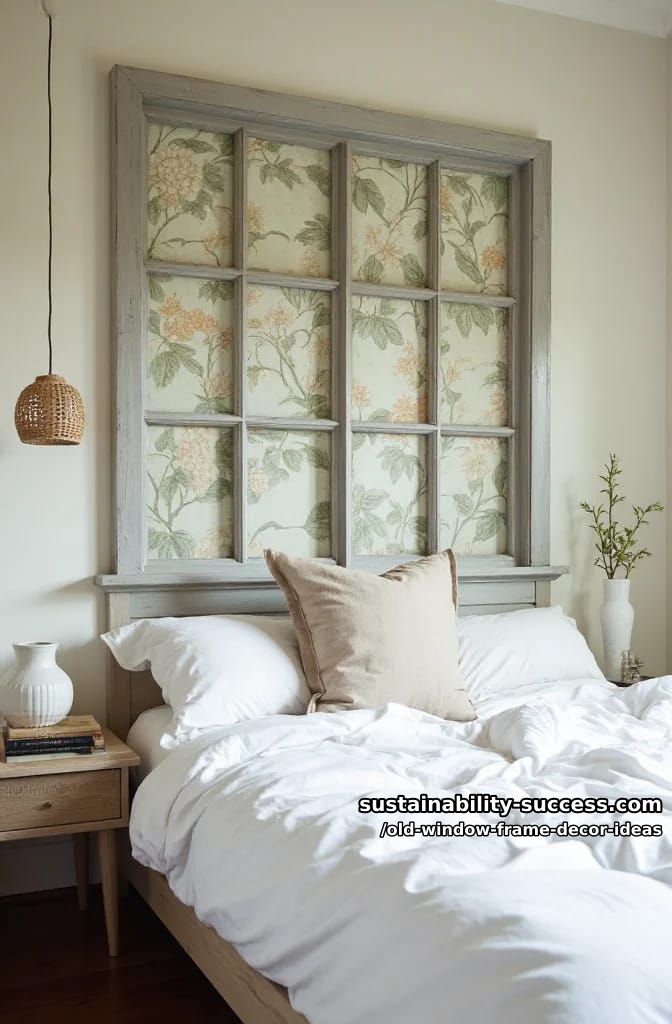
Hang a wide sash flat on the wall just above the mattress and it reads as a headboard without the bulk of an actual one, the muntin grid standing in for paneling. A single sash usually spans only 24 to 36 inches, though, so over anything bigger than a twin you'll want two sashes set side by side, or one long transom-style window if you can find one.
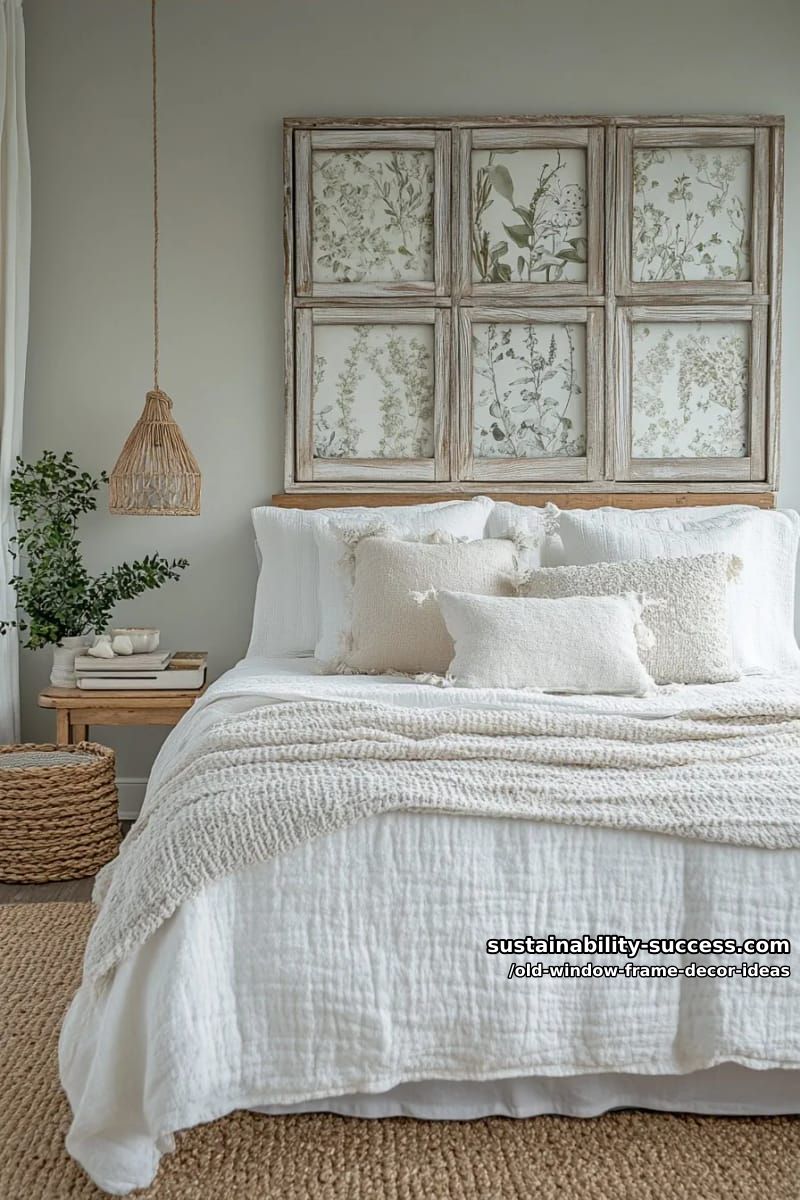
Mount it into wall studs with a French cleat, not to the bed frame, so it doesn't rattle loose every time someone leans back. Backing the panes with a remnant of botanical wallpaper or a yard of linen turns the empty grid into something with color behind it, which keeps a bare sash from looking like you ran out of budget. (You did, probably. That's the point of using a window.)
7. Keep the chippy paint. Don't repaint that distressed sash
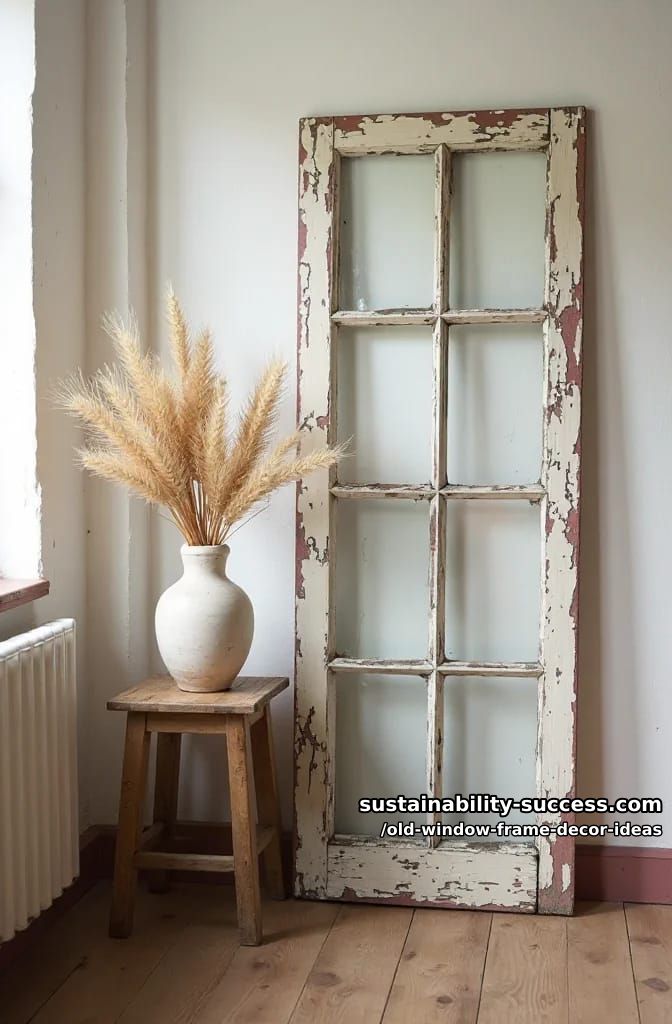
The layered, flaking paint is the entire reason a salvaged sash looks different from a new one, so leave it alone. I repainted my first one a tasteful greige in 2018 and have regretted it ever since; it went from fifty years of someone's house to craft-fair booth in a single coat.
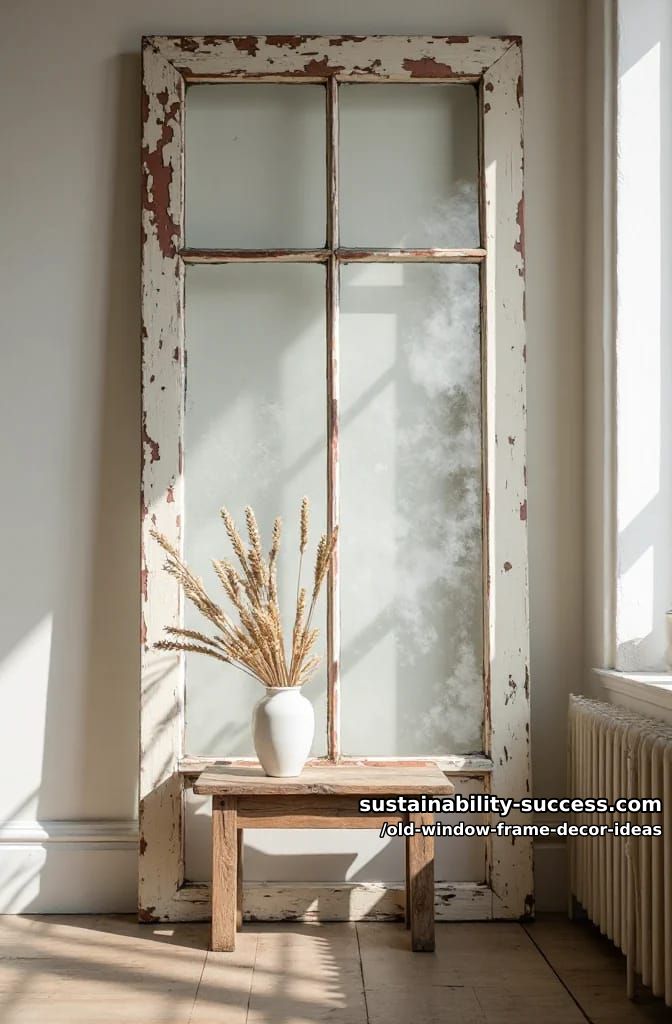
If the sash predates 1978, the paint you love is also the paint most likely to contain lead, and sashes shed more lead dust than almost any surface in an old house because the rails ground against the jamb for decades. The EPA puts lead-based paint in roughly 87% of homes built before 1940 and about 24% of those built between 1960 and 1977. Don’t sand or heat-strip a positive frame; lock the surface down with a bonding primer and keep it away from small children. A box of 3M LeadCheck instant lead test swabs, 8-pack runs about $25 to $30 and reads in roughly 30 seconds.
Do this
- Stabilize loose flakes with a wash coat of clear matte sealer so the patina stays put and stops shedding onto the floor.
- Leave the original layered colors visible at the worn edges; those exposed undercoats are what read as genuine age.
- If it needs cleaning, wipe it with a barely damp cloth and no scrubbing, especially on a frame that tested positive.
Avoid
- A fresh single-color repaint, which flattens all the depth and announces “project.”
- Heavy distressing with sandpaper to fake age; it never matches real wear and exposes raw wood at the wrong angles.
- Glossy or satin finishes, which catch light like plastic and destroy the matte chalkiness that makes old paint look old.
8. Lean the window frame against a fence as a rose trellis
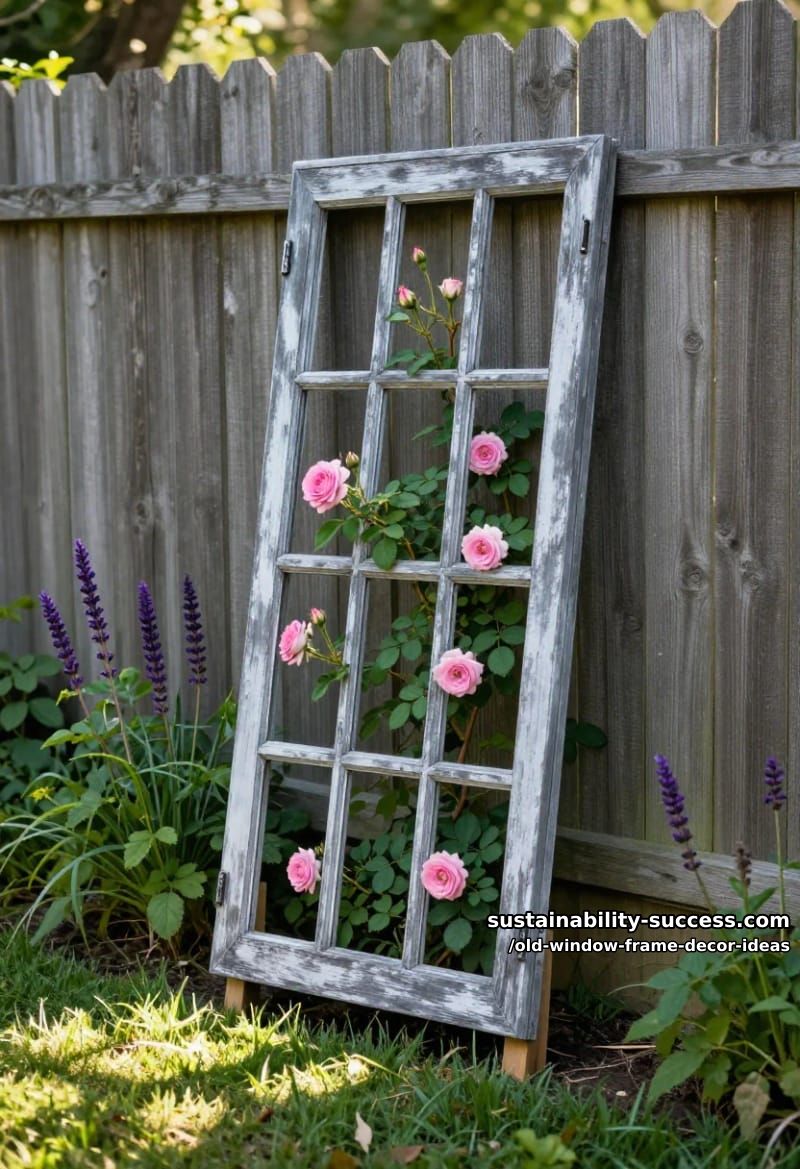
Take the glass out, stand the sash against a fence, and the muntin grid becomes a ready-made trellis for a climbing rose or clematis. This is where a damaged frame you'd never hang indoors earns a second life, because outdoors nobody minds a missing corner or a split rail.
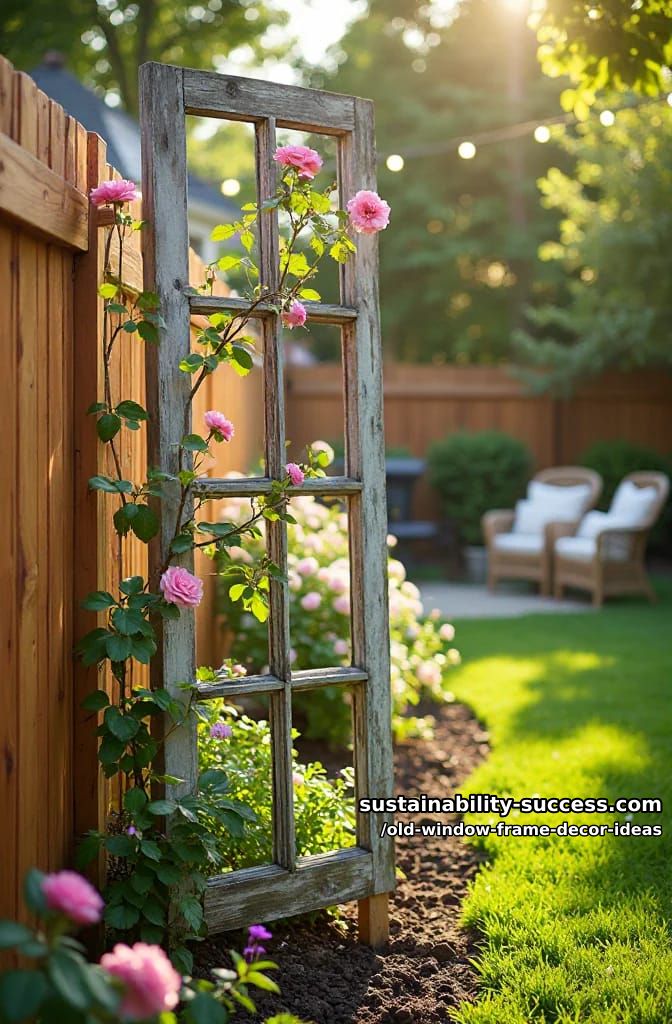
Anchor it. Drive two lengths of rebar or sturdy wood stakes 12 to 18 inches into the soil and screw the sash to them, or a spring storm will flatten your rose and the frame together. And be honest about lifespan: bare wood against wet ground gives you maybe two or three seasons before the bottom rail goes soft. Seal the end grain with exterior polyurethane if you want longer, or treat it as a cheap annual swap and pick up another sash from the ReStore next time one turns up.
9. Thread fairy lights through the grid, not around it
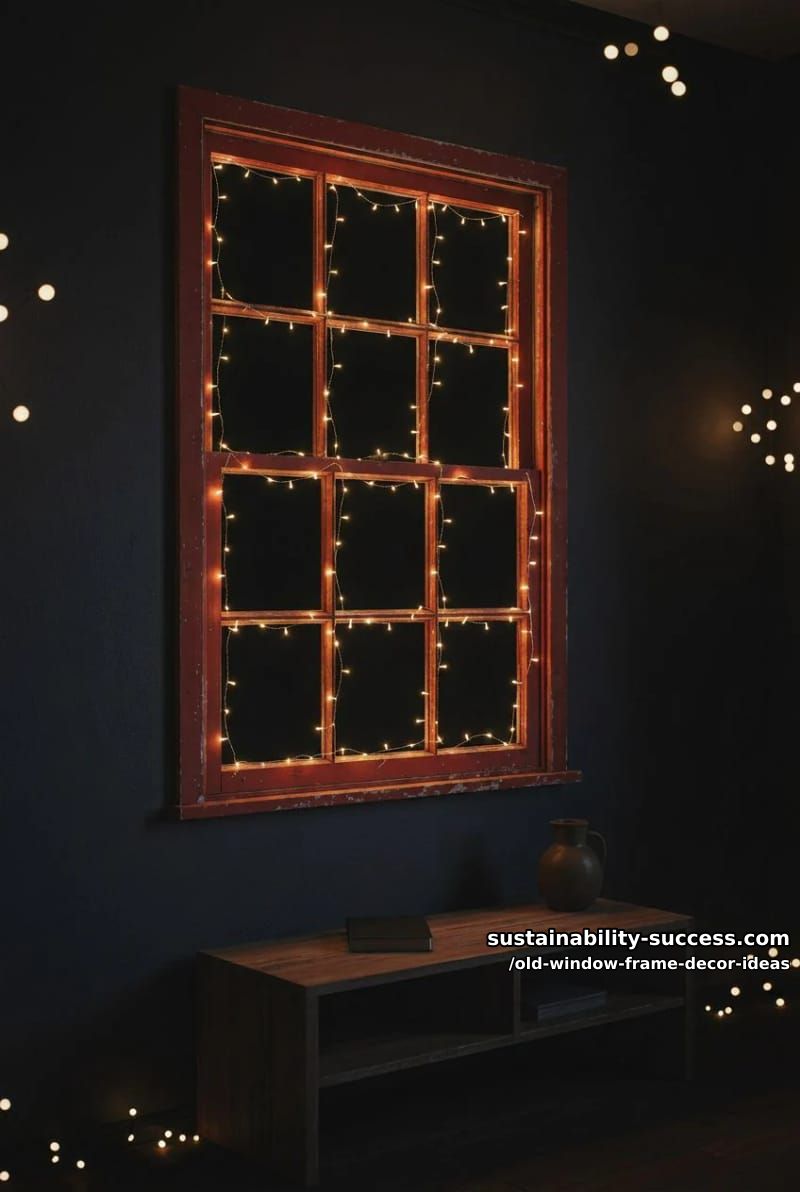
Weave the strand through the panes rather than draping it around the outside edge, and the light follows the grid instead of fighting it. Battery-operated copper-wire lights are the ones to use here, because there is no fat green cord to conceal and the small pack tucks behind the top rail. Warm white (around 2700K) reads like candlelight; the cool white packs read like a parking garage.
Bare copper wire with no clunky cord to hide, and a battery pack small enough to gaffer-tape behind the top rail out of sight.

Skip the plug-in net lights the big-box stores push every December. They sag, the cord always ends up on the wrong side, and a 10-foot single strand (typically $8 to $15) covers a single sash more cleanly than a net ever will.
10. Press ferns between the panes for a herbarium window
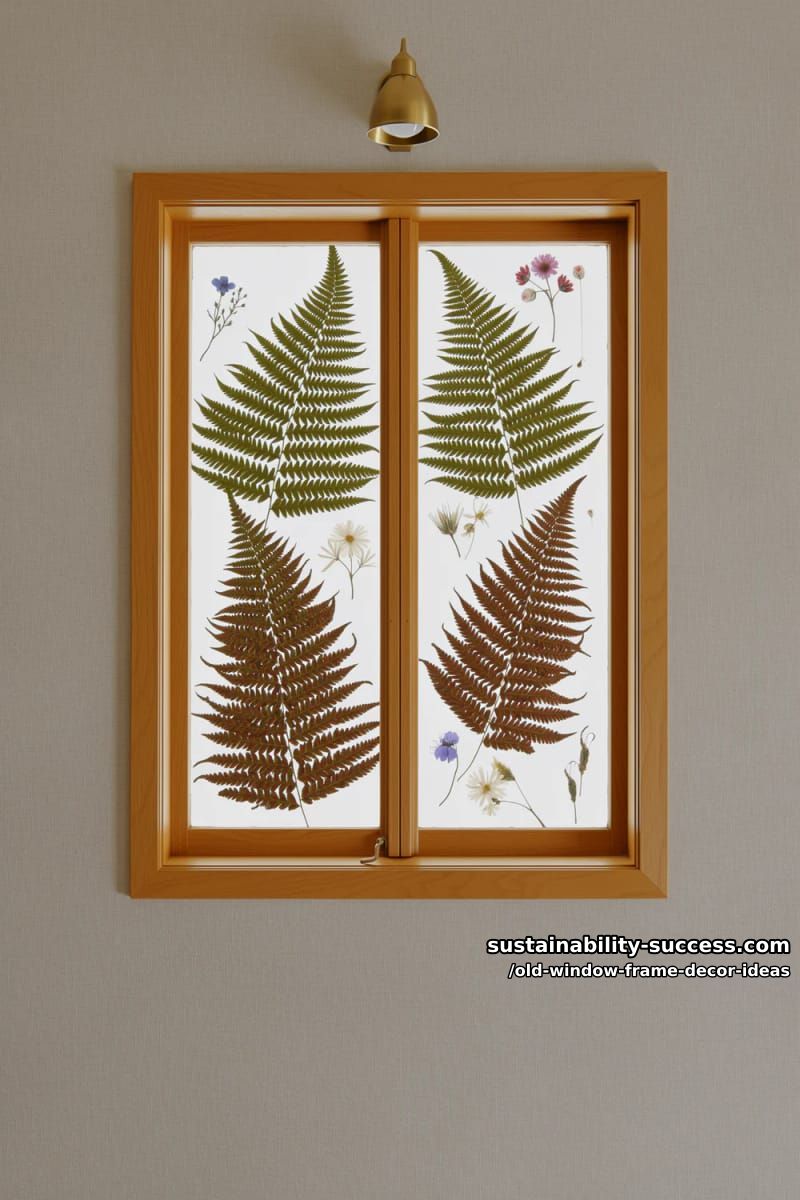
Sandwich pressed botanicals between two panes of glass and the window becomes a herbarium frame, the kind of piece that looks like it came from an expensive shop and cost you almost nothing. Ferns hold their color far better than flowers between glass. I don't fully know why, but a maidenhair fern pressed in a heavy book looks alive twelve months later while a pressed peony browns by month two.
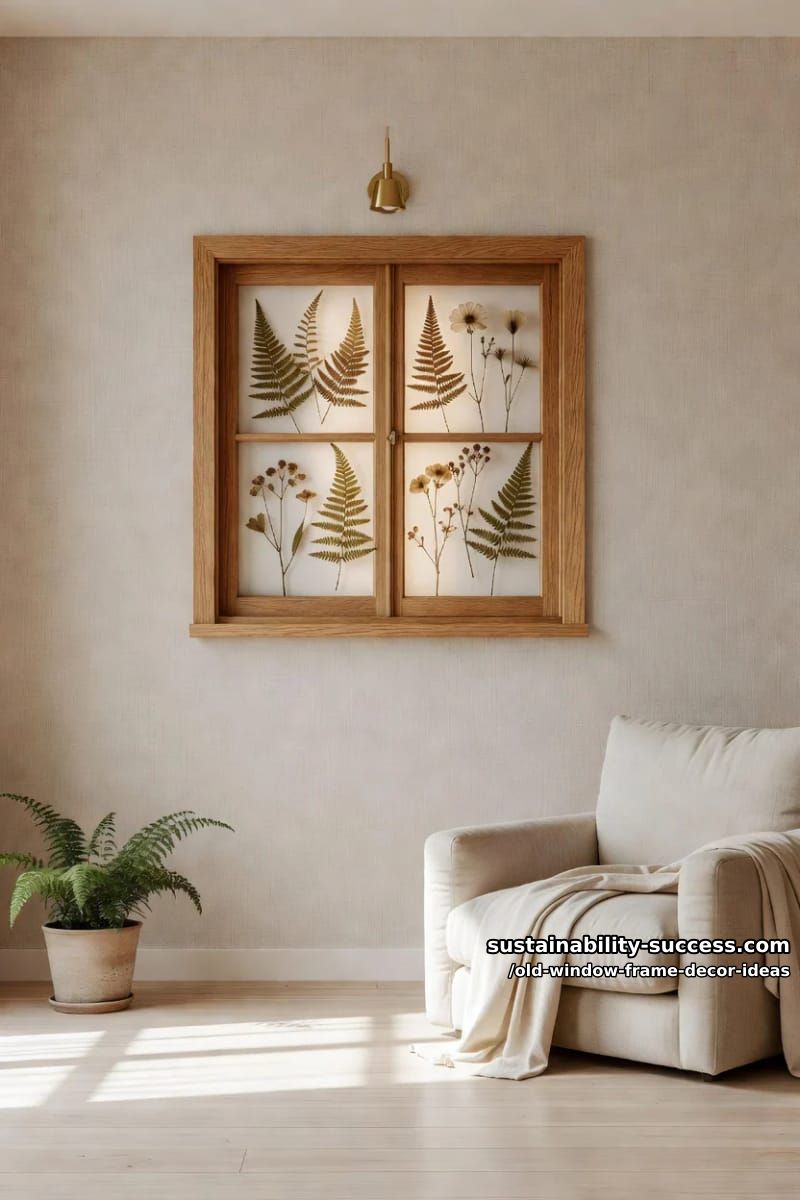
Press your material flat for two to three weeks first, then lay it on one pane and set the second pane over it. If your sash is single-glazed, a sheet of picture-frame glass cut at any hardware store gives you the second layer for a few dollars a pane. The glass shop will cut to size if you bring the sash.
11. Turn the sash into an entry rack with hooks on the bottom rail
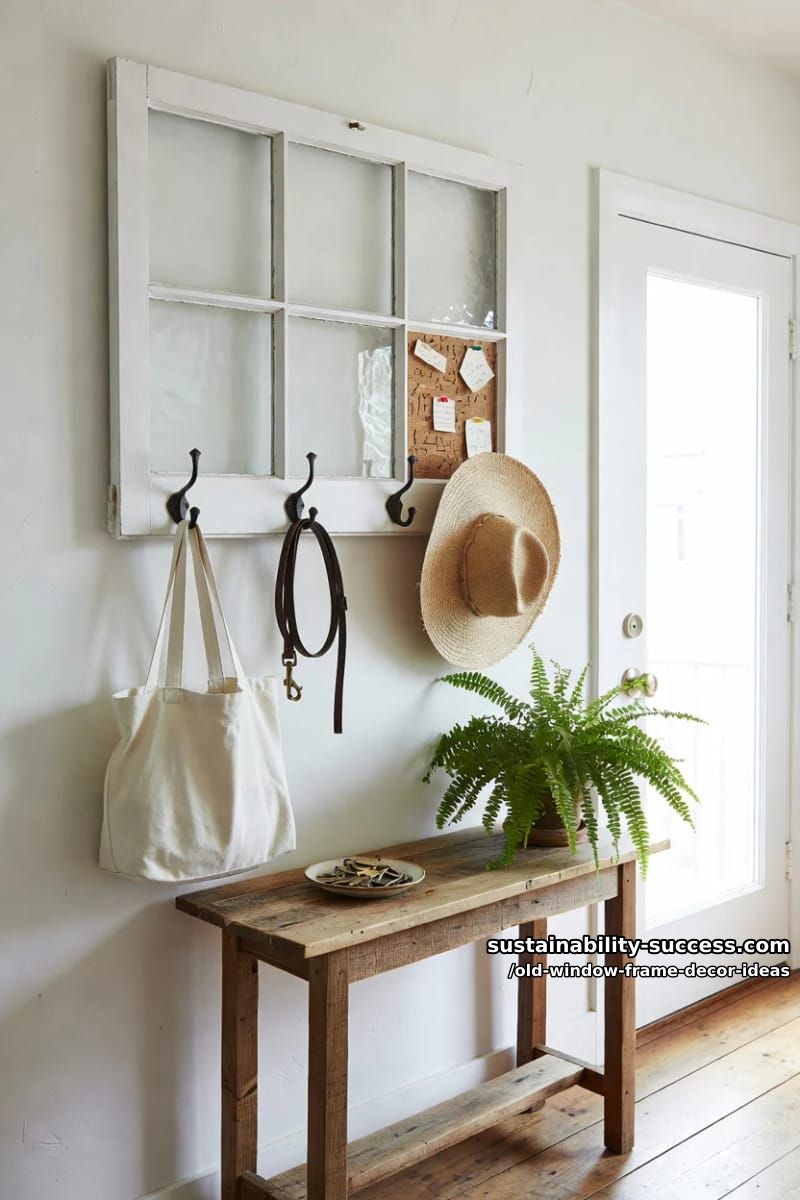
Hang the sash horizontally, add a row of hooks along the bottom rail, and you have an entry catch-all with the visual weight a plain hook board never achieves. The bottom rail is the part to use because it is the thickest, most solid piece of the frame, often a full inch and a half of old-growth wood with mortise-and-tenon corners that have held for a century.
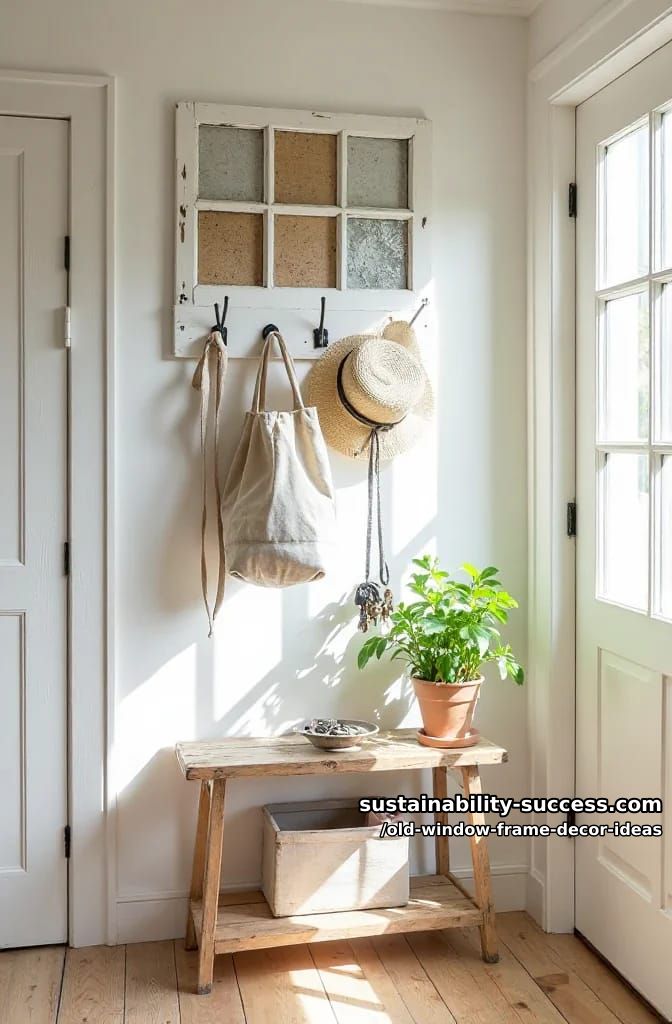
Drive your hooks into that rail with #8 wood screws, not into the thin muntin bars, which will split the first time someone hangs a wet coat. Back one pane with a strip of cork and you have a spot for mail and the week's permission slips, too.
12. Hinge three sashes into a folding room divider
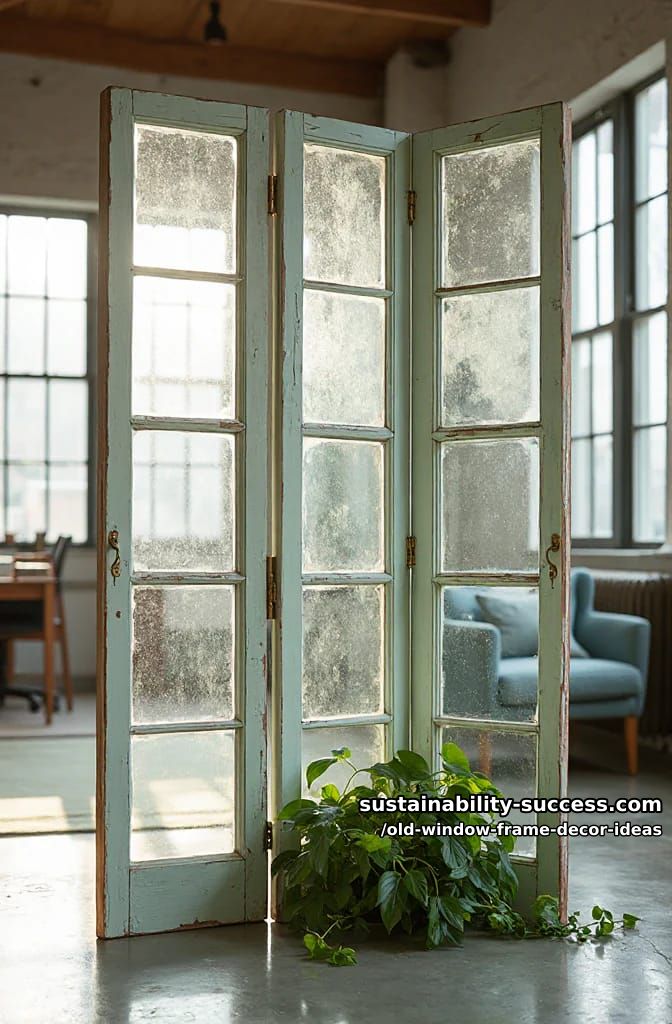
Hinge three sashes edge to edge and you get a folding screen that divides a studio or a long loft without blocking the light, which a solid bookshelf cannot claim. This is where collecting three roughly matching sashes over a few months pays off; they don't need to be identical, and slight variations in finish read as deliberate once they're joined.
Three 30-by-60-inch sashes into a standing screen
Freestanding divider, roughly 7.5 feet wide when open at an angle
Two pairs of 3-inch non-mortise hinges join the three panels; non-mortise means no chiseling, just screws into the surface face. Alternate the hinge direction between the two seams so the screen folds into a Z shape and stands without a foot plate. Leave the glass in for privacy and light transmission, or pull it and back the panes with stretched linen if you want to soften a workspace behind it. Total hardware cost is well under $30 if the sashes came from a ReStore, where pricing for a standard six-pane wood sash typically runs $10 to $35 depending on size and condition.
Conclusion
If there's a sensible order to any of this, it's to sort by what you want the frame to do before you fall for a particular sash. Display something (shelf, photo grid, botanicals, headboard), transform a wall (mirror, chalkboard), grow something (trellis, bud vases), or divide a room with the folding screen. Hold onto any sash that still has its original wavy glass for the mirror and herbarium uses, since irregular old glass is harder to find than the frame itself, and send the rotted, cornerless ones outside to the garden, where a missing corner stops being a flaw. And if a frame tested positive for lead, that doesn't kill it; it just belongs against the fence with the roses instead of above the kid's bed.