
Why toss out old jars, crates, or tin cans when they can help you grow fresh herbs right at home? Eco friendly herb garden ideas don’t just save resources, they add charm and flavor to your space without breaking the bank.
Ever thought your unused shoe organizer could become a mini herb farm? With a little creativity, everyday objects become perfect homes for basil, mint, or thyme.
Let’s turn clutter into green goodness and make every inch of your space work for you.

1. Upcycle wooden pallets into tiered vertical herb gardens for small outdoor spaces

Old wooden pallets can find new life as tiered vertical herb gardens, perfect for squeezing greenery into tight spots.
Why buy expensive planters? Stand a pallet upright, add landscape fabric and soil, then tuck herbs into each slot. Fresh basil or mint at arm’s reach, easy and affordable.

This method saves space and keeps plants off the ground, reducing pests and weeds. Just remember, untreated pallets are safest for edibles. Give them a good scrub, and check for any loose nails.
With a little effort, you’ll turn what was once junk into a conversation starter and salad booster.

2. Repurpose tin cans as mini wall-mounted herb planters in the kitchen

Old tin cans don’t belong in the trash, they’re prime candidates for quirky, sustainable herb planters.
Give each can a quick clean, poke a few holes for drainage, and mount them on a kitchen wall. Suddenly, that basil is both décor and dinner ingredient.
Who knew recycling could look this fresh?

Some might worry about rust or leaching, but a quick coat of non-toxic paint or a food-safe liner solves that. Herbs flourish in small spaces, so even cramped apartments get a green boost.
Bonus: harvesting mint for your tea is as easy as reaching out and snipping.

3. Herb spiral made from reclaimed bricks for a sustainable garden centerpiece

Imagine building a herb spiral using old bricks found in your backyard or sourced from demolition sites. This quirky structure doesn’t just catch the eye, it creates microclimates for different herbs.
Rosemary enjoys the sunny top, while parsley thrives in the cooler, moist bottom. Efficiency meets creativity in your garden.

Reclaimed bricks keep waste out of landfills and save you money. If you’re worried about stability, stack the bricks tightly and fill gaps with soil.
Growing herbs this way means less water runoff and space used. It’s practical, green, and gives your garden a talking point.

4. Transform old glass bottles into hanging windowsill herb gardens

Old glass bottles piling up? Turn them into hanging planters for your windowsill. Cut the bottoms off, pop in a few pebbles, soil, and your favorite herbs. Suspend with sturdy twine or wire.
This setup brings fresh flavor within reach and keeps glass from landfill. Simple, effective, and surprisingly stylish.

However, glass bottles can dry out quickly, so check moisture often. A little trial and error helps find the right herbs, think basil, mint, or chives.
Who knew recycling could taste this good? Friends will ask where you bought those fancy planters. You can grin and say, “Saved from the recycling bin!”.
5. Create a rain gutter garden along fences for easy-to-reach fresh herbs

Repurposing rain gutters as herb planters along your fence makes use of vertical space and keeps herbs within arm’s reach. This setup uses less soil and water than traditional beds.
Want basil for tonight’s pasta? Just step outside and snip what you need, no muddy shoes required.
However, gutters have limited depth, so stick to shallow-rooted herbs like thyme, basil, or chives. Drill drainage holes to prevent soggy roots. For an eco-friendly boost, use recycled gutters and organic potting soil.

This simple project brings fresh flavor steps from your kitchen while reusing materials that might otherwise go to waste.
6. Use vertical shoe organizers to grow a variety of herbs on balconies

Try hanging a vertical shoe organizer on your balcony railing for a simple herb garden. Each pocket fits a small plant. Basil, thyme, and mint work well.
Water drains easily, so roots won’t rot. This method saves space, reuses old materials, and keeps fresh flavors within arm’s reach.

Worried about sun exposure or wind? Move the organizer to a shadier spot or secure it better. Some herbs may outgrow their pockets, so stick to compact varieties.
Still, this approach lets even apartment dwellers enjoy homegrown greens without fuss or expensive gear.

7. Build a ladder-style herb shelf using salvaged wood for indoor greenery

Old wooden planks from a discarded pallet can quickly become a ladder-style herb shelf. This simple project uses less new material, cuts waste, and gives forgotten wood a second life.
Herbs like basil or thyme thrive on a bright windowsill, and your living space gets a splash of color.
A ladder shelf lets you stack pots vertically, saving space and boosting sunlight exposure for each plant. The look is rustic, casual, and easily customizable.

Just remember: untreated wood may need a coat of food-safe oil to prevent mold. Who knew eco-friendly could look this stylish?
8. Plant herbs in stacked terra cotta pots to maximize vertical space

Stacked terra cotta pots offer a clever way to grow more herbs without hogging valuable ground space.
Simply arrange small pots on top of larger ones, fill with soil, and plant basil, thyme, or chives. This setup looks charming and makes watering easier, since excess drains down.

However, be mindful of sun exposure. The top layer may dry out faster, so check soil moisture often. Rotate the stack now and then for even growth.
This method suits balconies and patios, turning a tight spot into a tiny, fragrant oasis, with very little fuss.

9. Construct raised beds from repurposed shipping crates for an outdoor herb oasis

Shipping crates aren’t just for warehouses. Turn these sturdy boxes into raised herb beds and put less waste in landfills. Drill drainage holes, line with burlap, and fill with soil.
You’ll get an attractive, functional planter that costs less than new lumber and makes your garden stand out.

Remember, not all crates are created equal. Some may be treated with chemicals. Always check for safe wood stamps before using them for edible plants.
This small step protects your herbs and your health, and lets you enjoy your homegrown basil, chives, or mint with peace of mind.

10. Group herbs in vintage teacups for charming and eco-conscious indoor gardens

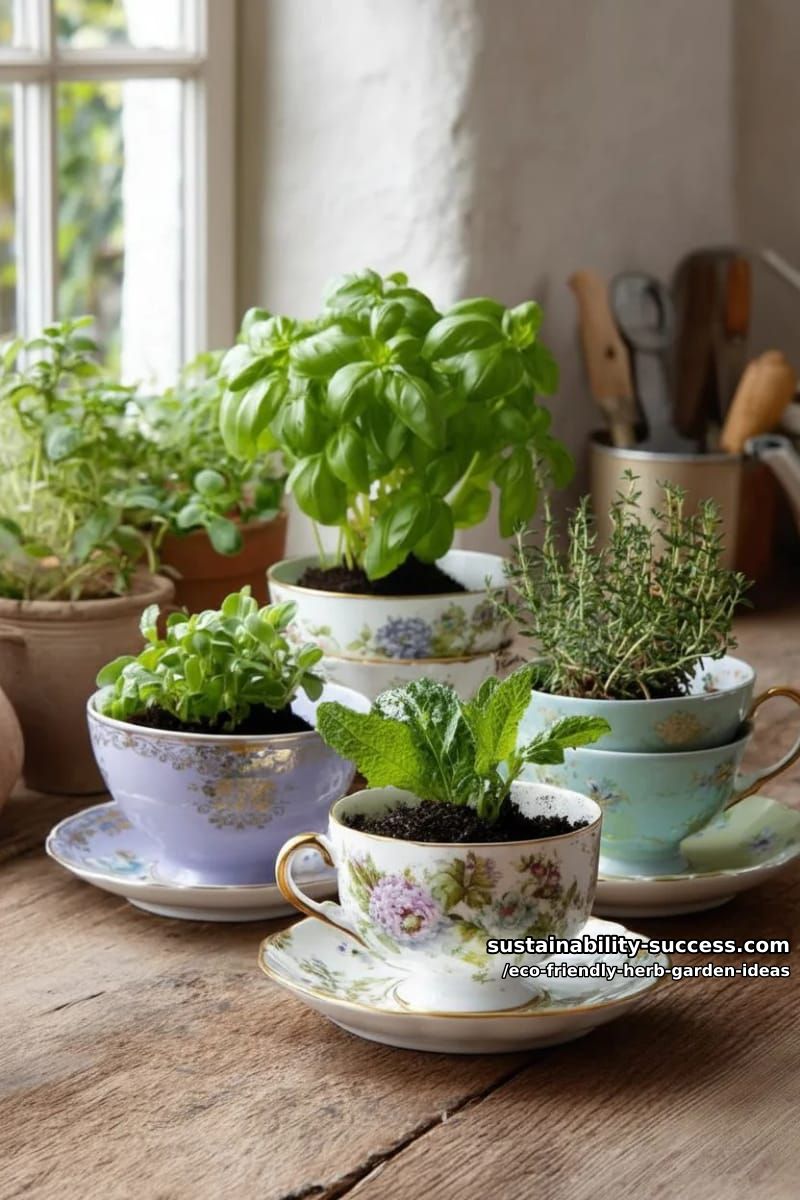
Old teacups make quirky, eco-friendly herb pots. Instead of tossing chipped cups, fill them with soil and plant basil, mint, or chives.
This small-scale approach saves resources and adds personality to your kitchen windowsill. Have mismatched sets? Even better, each cup tells its own story.

Drainage can be tricky, though. If your teacups lack holes, layer pebbles at the bottom to help with excess water. Water sparingly, since herbs dislike soggy roots.
This method keeps old ceramics out of landfills and turns clutter into conversation pieces. Why buy new plastic planters when your cupboards already hold hidden gems?
11. Arrange recycled mason jars on shelves for a rustic, space-saving herb wall

Line up recycled mason jars on open shelves and you instantly get a rustic herb wall that saves counter space.
Old jars not only give plants a home, but also help cut down on waste. Who knew your salsa container could hold basil instead of last week’s leftovers?

Choosing this method means you can easily rearrange jars for sunlight or swap out herbs as your taste changes. However, glass jars need drainage pebbles to prevent soggy roots.
Add a chalkboard label for each herb, a simple, practical touch that keeps your green thumb organized.

12. Install a living wall of herbs using upcycled wooden frames and pockets

Imagine your kitchen wall springing to life with basil, mint, and thyme, thanks to old wooden frames and cloth pockets. This setup saves space, adds charm, and turns scraps into something useful.
Why buy plastic planters when you can reuse what’s already around?

Repurposed materials reduce waste and keep costs low. You’ll water less, too, since vertical gardens are easy to hydrate with a simple drip system. Just remember: sunlight and ventilation matter.
If your wall faces north, those herbs might look more like limp lettuce than culinary heroes. Choose your spot wisely!

13. Design a sunny window herb garden using thrifted baskets as planters

Grab a few old baskets from a thrift shop, line them with leftover fabric or a bit of plastic, and fill them with potting soil.
Place them on a sunny windowsill, and you’ve got an affordable, eco-conscious herb garden. Basil, chives, and mint thrive in this setup.

Sure, baskets can dry out quickly. Water more often, but avoid overdoing it. If you’re worried about leaks, set a saucer beneath each basket.
Mixing herbs in different baskets adds character and keeps pests guessing. You’ll save money and reduce waste, all while enjoying fresh flavors.
14. Build a mobile herb garden in a reclaimed wooden cart for easy sun chasing

Why let your herbs languish in the shade? Use a reclaimed wooden cart as your garden base. Wheels let you move basil, mint, or thyme to catch every ray.
Herbs thrive with this extra light, and your cart brings rustic charm to patios or balconies.

Rain coming? No sweat, just roll your mini-garden under cover. One tip: drill drainage holes in the cart to prevent soggy roots. Old carts can be found at flea markets, often for a song.
This small investment helps you grow fresh, flavorful herbs while reducing waste.
15. Grow culinary herbs in an old metal watering can for a whimsical touch

Old metal watering cans make surprisingly charming planters for culinary herbs. Their rustic look adds character to patios or windowsills, and you’re giving new life to something that might otherwise gather dust.
Just poke a few drainage holes, fill with soil, and plant basil, thyme, or chives.

Repurposing containers is both practical and eco-minded. Why buy new pots when you have vintage items lying around? But remember, metal can heat up quickly in the sun.
Place your watering can planter where it gets morning light, and water more often on hot days to keep your herbs happy.
16. Surround outdoor seating with repurposed barrel herb planters for lush privacy

Imagine swapping boring fences for vibrant, living screens. Repurposed barrels brim with herbs like basil, mint, and chives, creating a lush green wall around your outdoor seating.
Neighbors can’t peek in, and you’ll have fresh flavors right at your fingertips. Who says privacy can’t smell amazing?

Old barrels save money and reduce waste. Drill drainage holes, fill with compost, and plant your favorites.
Herbs thrive in these deep containers, and you can move them around if you want a new look.
Just remember, barrels dry out faster, so water often and enjoy the greenery and fresh scents all season.
17. Create a stepping stone herb path using cracked concrete tiles and aromatic herbs

Why toss cracked concrete tiles when you can repurpose them into a stepping stone herb path? Lay the broken pieces in your yard, spacing them just enough for thyme or creeping oregano to peek through.
Each step releases fragrance, turning a simple walk into a sensory treat.

This method saves money and cuts down on construction waste. It also welcomes pollinators, since many aromatic herbs attract bees and butterflies. Maintenance is straightforward, trim herbs as needed, and the path remains tidy.
However, cracked tiles can be uneven, so place them securely to avoid trips.
18. Plant herbs in reclaimed drawers stacked creatively for a quirky focal point

Old drawers from a kitchen remodel or flea market find can be given a second life as planters.
Stack them at angles for visual interest, fill with soil, and tuck in herbs like basil or thyme. This approach turns potential waste into something both practical and eye-catching.

Consider using untreated wood drawers to avoid chemicals leaching into your herbs. Drill drainage holes in the bottoms and line with burlap.
Herbs thrive with good drainage, and your stacked drawer garden easily moves if you want to chase the sun or switch up your garden's look.
19. Combine herbs and succulents in upcycled crates for a modern, sustainable look

Mixing herbs and succulents in old wooden crates creates a fresh look with a green twist. Instead of tossing crates in the trash, turn them into planters.
Succulents need little water, so they pair well with hardy herbs like thyme and oregano. Less maintenance, more visual appeal, what’s not to like?

Set the crates on your balcony or kitchen windowsill. Line the bottom with burlap to keep soil in place. Group tall herbs with trailing succulents for contrast.
You get a small-space garden that’s both practical and stylish. Plus, you’ll impress guests with your clever reuse of everyday items.
Revive Your Home with These Eco-Friendly Herb Garden Design Ideas
Bringing eco friendly herb garden ideas to life doesn’t mean starting from scratch or breaking the bank. With a little imagination, even old drawers or tin cans can turn into green havens.
Why let useful items gather dust when they can grow dinner?
Try one or two ideas this weekend. Watch how a kitchen windowsill or a backyard corner transforms. Your wallet will thank you, and so will the planet.
Ready to dig in? Nature’s solutions are just waiting for a new home, maybe yours.
Related Posts
- Sustainable Garden Decor Ideas
- Eco-Friendly Garden Art
- Eco-Friendly Garden Furniture Ideas
- Upcycled Garden Ideas
- Art Projects Using Recycled Materials


