
Seven wall-mounted Christmas tree alternatives, ranging from a handful of foraged branches to a single strand of warm-white lights, all of them spare enough to actually read minimalist instead of crafty. Each section names the one decision that makes or breaks the look (silhouette proportion, light color, flat versus dimensional) and where the popular Pinterest version of it goes wrong. The branch tree is up first because it is the one most people botch, so that is where the proportion math lives.

Foraged branches make the most convincing wall tree
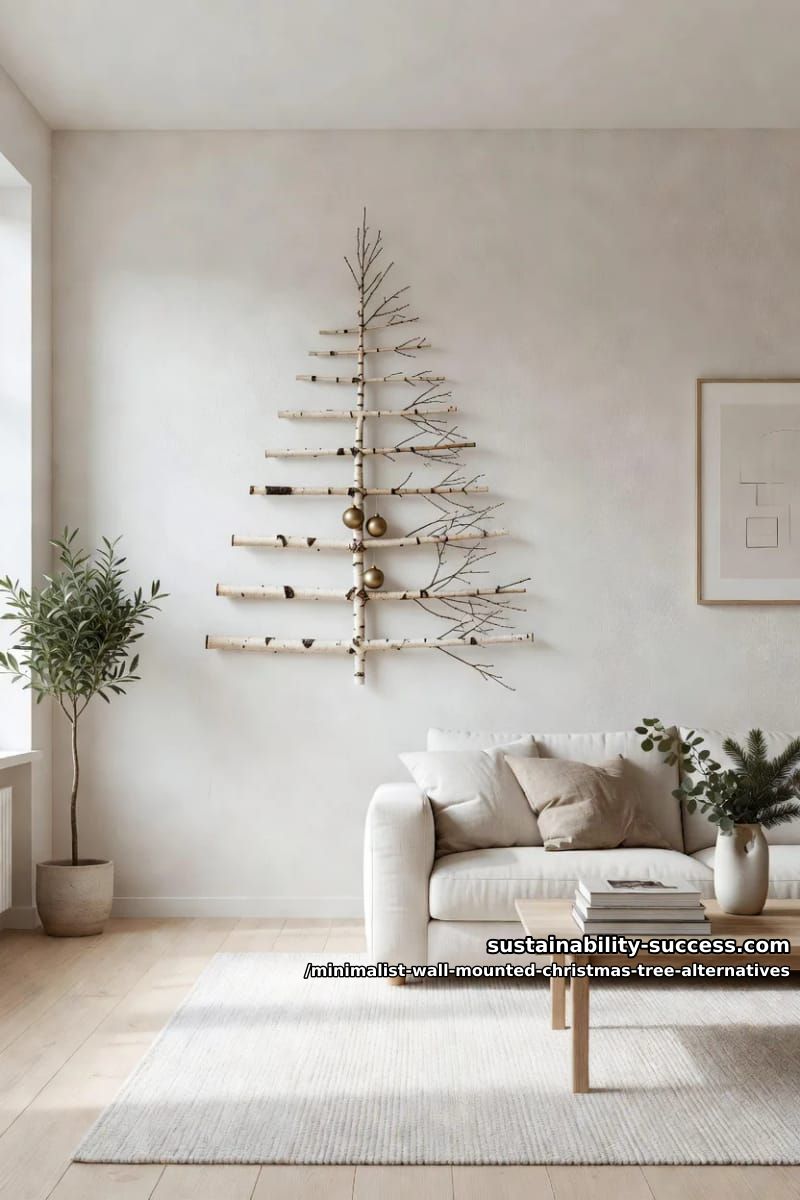
Branches you collect yourself beat anything sold as a "twig tree kit," and they cost nothing. The trick that separates a real tree silhouette from a pile of sticks is taper: the bottom branch should be roughly four to five times longer than the top one, with every branch in between stepping down a consistent amount. Eyeball it and you will end up with a lopsided wedge. I learned this the annoying way, after hanging a version where two middle branches were nearly the same length and the whole thing looked like a ladder.
Getting the proportions right
Lay the branches on the floor first and build the triangle flat before a single nail goes in the wall. Most people use five to nine branches; fewer than five reads sparse in a bad way, more than nine starts to fill in like an actual tree and you lose the point. Birch, manzanita, and bare dogwood hold a straight line and have interesting bark, so they read intentional. Whatever you pulled off the ground in the backyard usually does not, because yard sticks curve and fork.
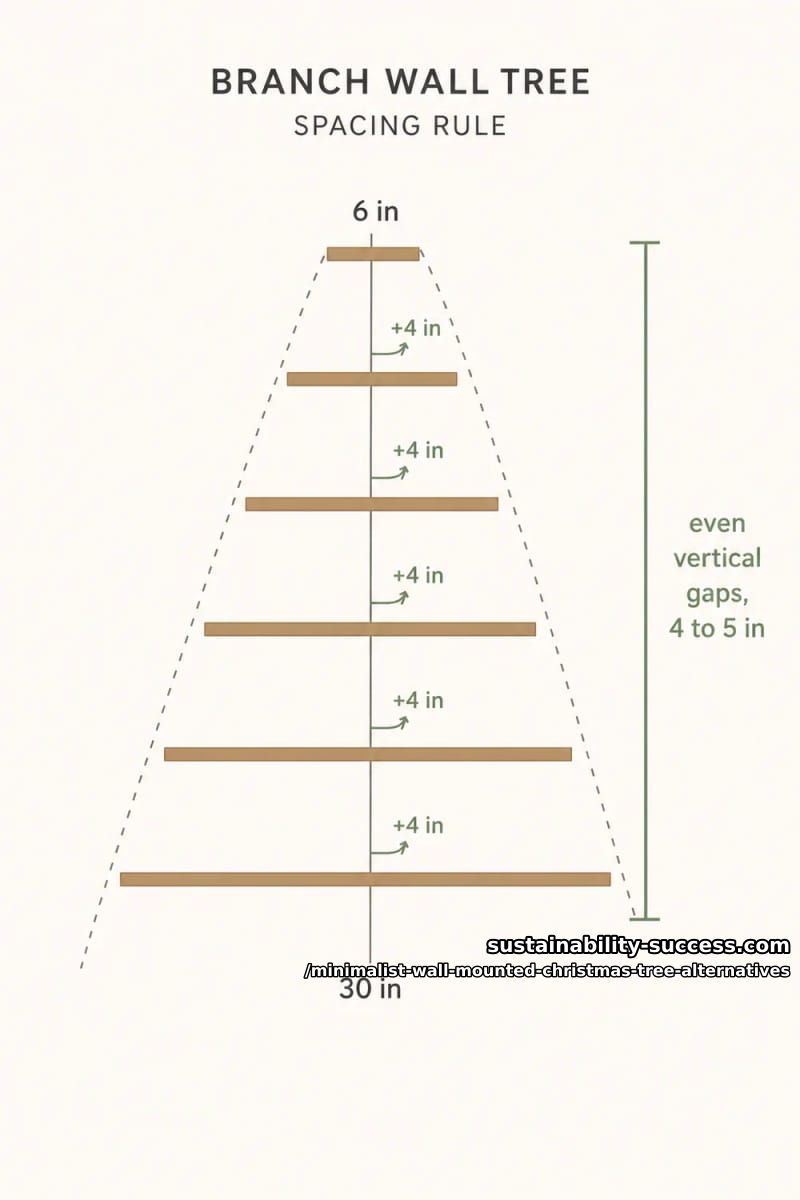
Mounting so the branches sit flat
Two approaches work, and they fail differently. Pinning each branch individually with small brads or a brad gun gives you full control over the gaps, but every branch is a hole in the wall. Hanging all the branches from a single horizontal dowel or a length of leather cord, then mounting just that one rod, means one anchor point and a tree you can lift off in March. The catch with the floating-rod version is that thin branches twist on their cord and end up at slight angles, so use a dab of hot glue at each tie to lock the rotation. For anything heavier than dry birch, skip adhesive strips and use a real picture hook into a stud or a drywall anchor; the small Command strips hold about a pound per pair, which is fine for lights and nothing else.
A graduated dowel tree reads modern, not crafty
This is the version that looks bought rather than made, and it is genuinely the easiest on the list. You take wooden dowels from the hardware store, cut them to descending lengths, and string them on two parallel cords so they stack like rungs into a triangle. No base, no drilling into a trunk, the whole thing hangs flat from one nail.
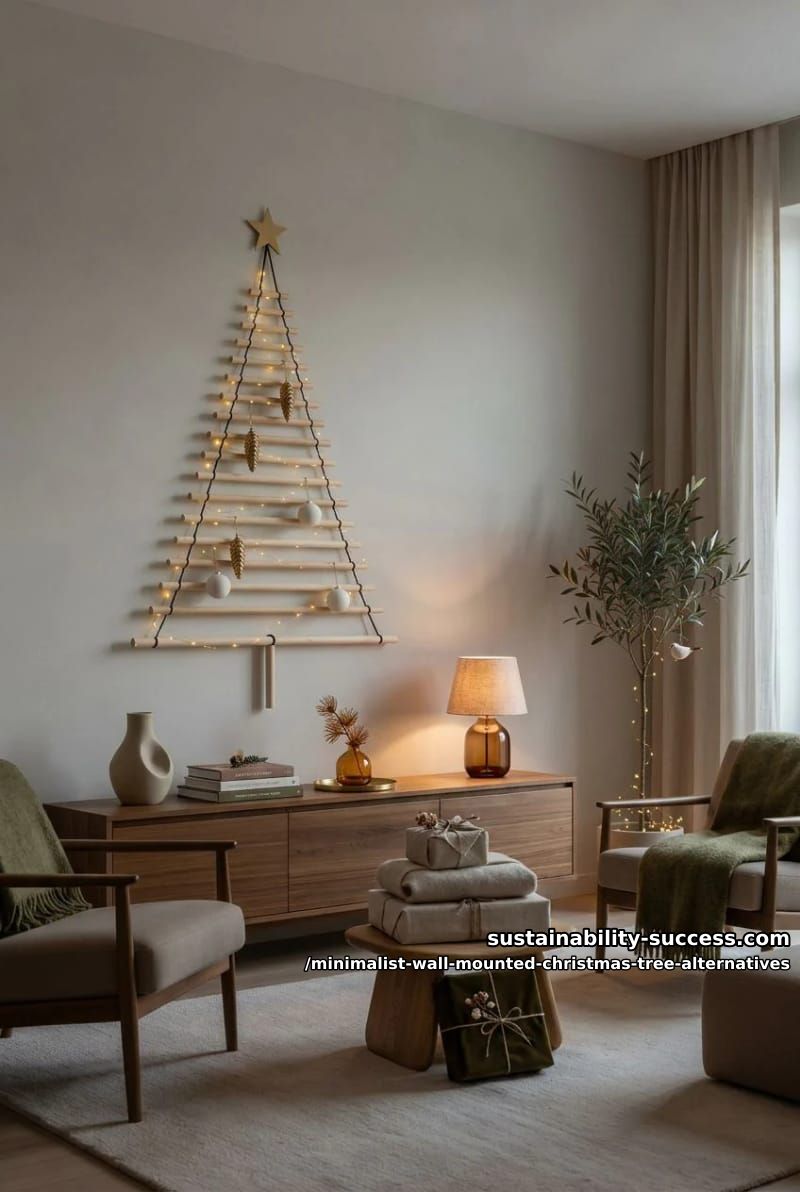
Keep the dowels skinny, around half an inch in diameter, because fat dowels turn it into a rustic ladder instead of a graphic. A common kit uses ten or so cuts from a top piece near four inches to a bottom near twenty-six to thirty, but spacing matters more than the exact numbers: equal gaps top to bottom are what make it read deliberate. Thrift stores and the cull bin at the lumber yard often have dowels for a couple of dollars, which is the whole materials cost. Leave them raw, or stain in one flat tone. Whatever you do, do not paint them ten different colors, which is a real tutorial out there and which turns a minimalist piece into a kindergarten art project.
Washi tape draws a flat tree on a bare wall
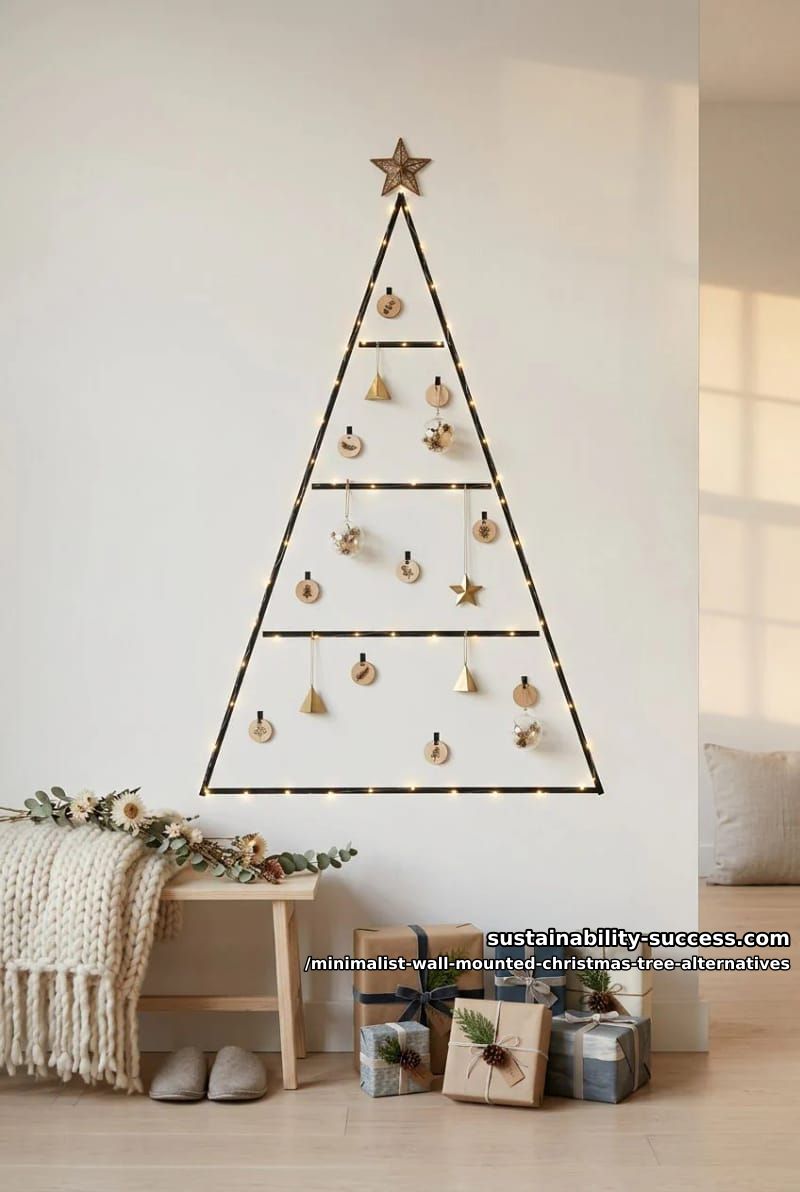
For renters and anyone who wants zero objects on the wall, you tape or paint the tree directly onto it as a flat graphic. This is the most genuinely minimalist option here because there is no dimension at all, just a line drawing of a tree, usually a simple open triangle or a chevron-stacked outline. It also photographs better than it has any right to.
Tape or paint, and why it matters for renters
Washi tape is the safe choice: it peels off clean months later and leaves no mark, and a roll runs about three to five dollars. Painters tape works too but yellows and can pull paint if you leave it up past the holidays, so take it down by early January. Actual wall paint gives the crispest result and the deepest color, but it is permanent, it needs a primer coat to cover later, and if you rent you are looking at a security deposit conversation. Granted, if you own the wall and plan to repaint anyway, paint wins on looks.
The trick to crisp lines
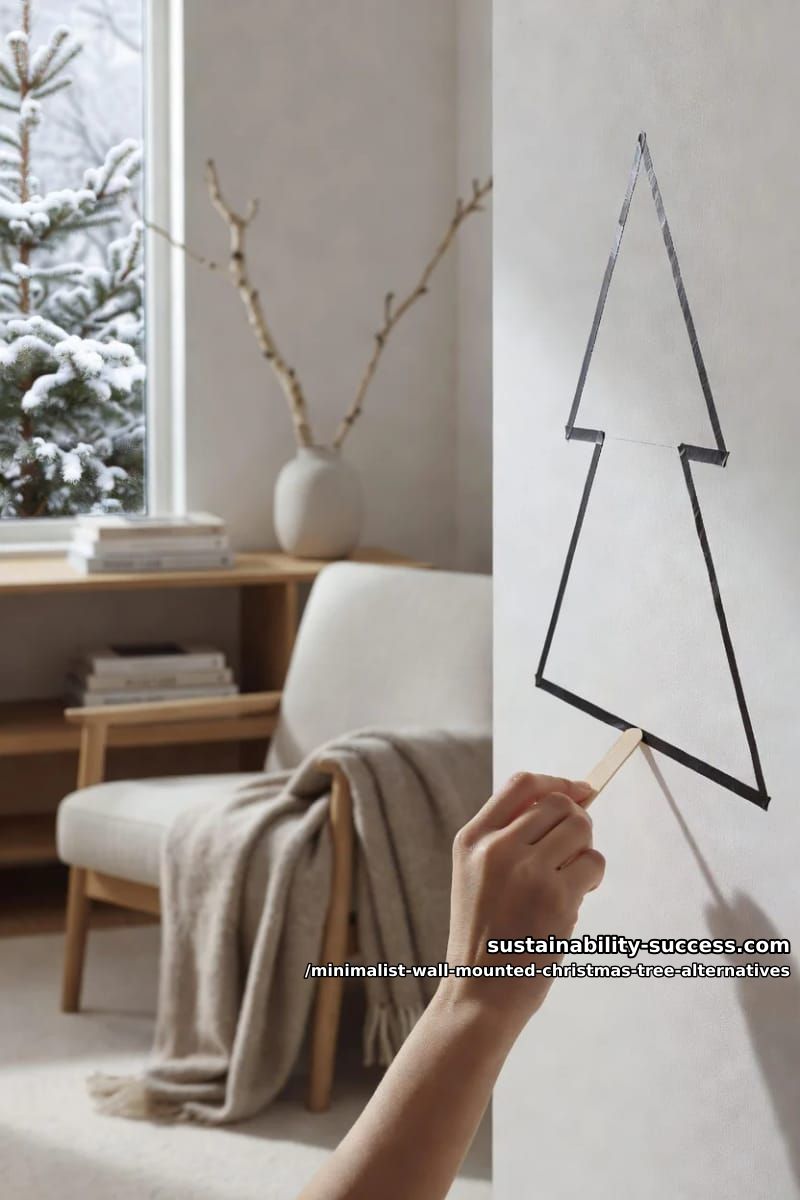
Mark the tree with a pencil and a level first, faint ticks for where each line lands, then lay the tape to the marks. The single thing that makes a taped tree look amateur is wavy verticals, and you cannot freehand a straight five-foot line. Burnish every tape edge down hard with a fingernail or a credit card so nothing lifts, especially at the corners where the segments meet.
String lights alone can be the whole tree
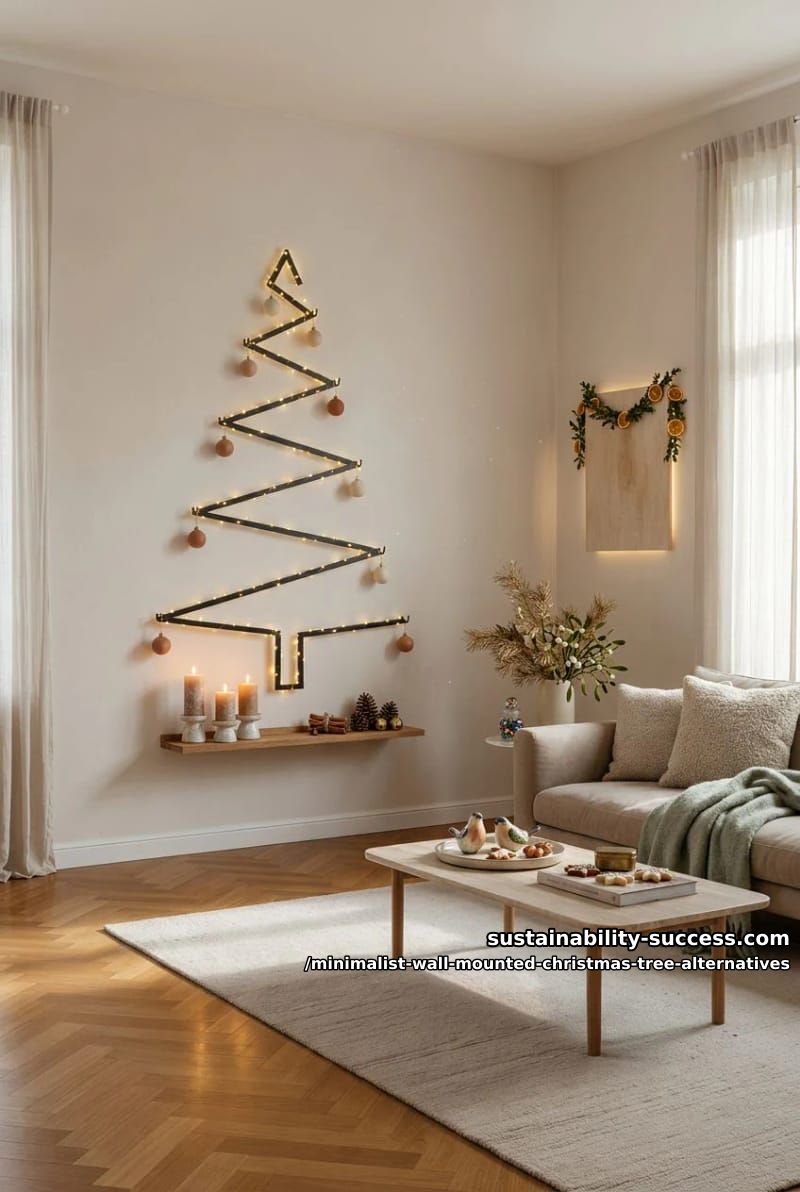
A single strand pinned into a triangle is the cheapest entry on this list and, done right, the most striking at night. The whole tree is light and negative space, which is about as minimal as a Christmas tree gets. Most people reach for a 100 to 200 LED strand and pin it in a nested zigzag, working down in rows that get wider toward the floor.
Warm white, never multicolor
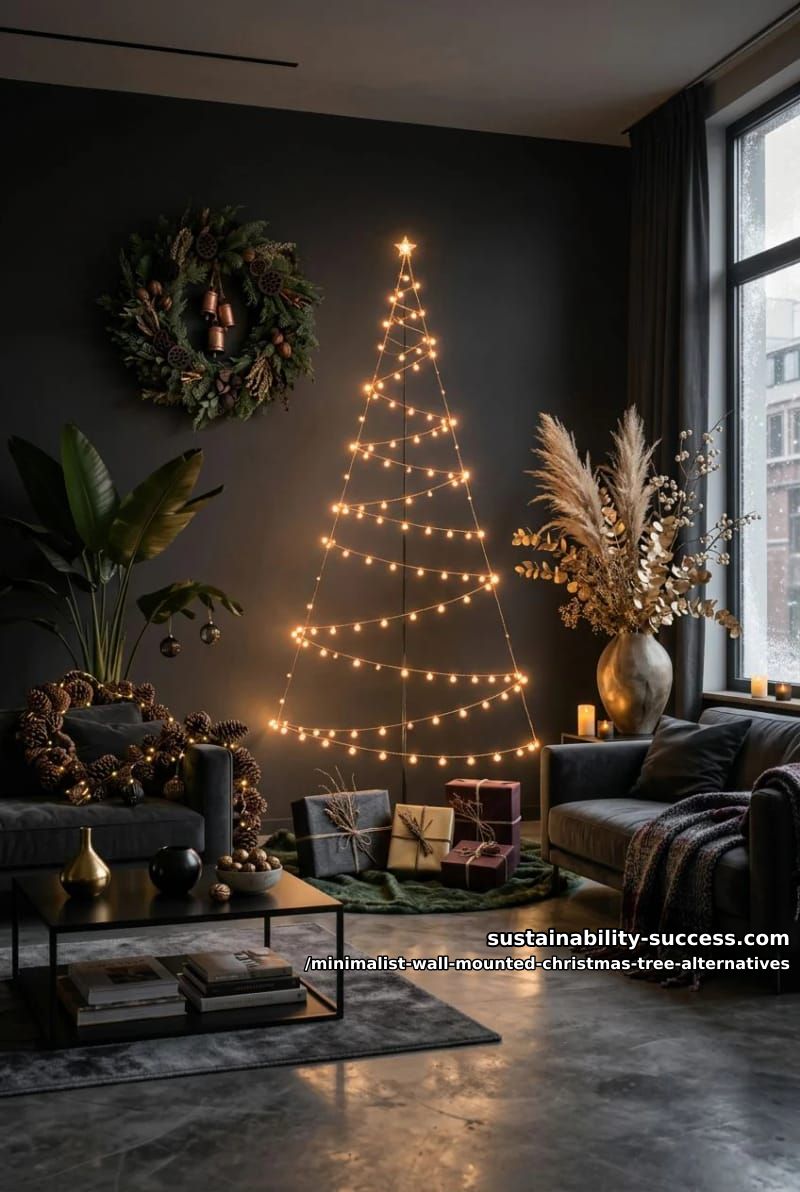
Warm white, in the 2700K range, is the difference between elegant and dorm room. Cool white reads clinical and multicolor reads like a frat house, and yes, I will die on this hill. If the strand you own is too cool, that is a reason to buy a different strand, not a thing to work around. Pin the lights with small clear adhesive hooks or even straight pins into drywall (the holes are invisible), spacing your rows evenly so the triangle is symmetric; uneven rows are the giveaway that it was rushed. Battery packs let you hide the cord entirely, which matters when the cord is the only non-light element on the wall.
Brass or copper tubing for a tree with a hard edge
If wood feels too soft and warm for your space, thin metal tubing makes a tree with actual architecture. You cut lengths of copper or brass tube and either stack them horizontally like the dowel version or lash them into an open geometric outline. The metal catches light in a way wood cannot, and it suits a concrete-and-steel apartment far better than birch does.
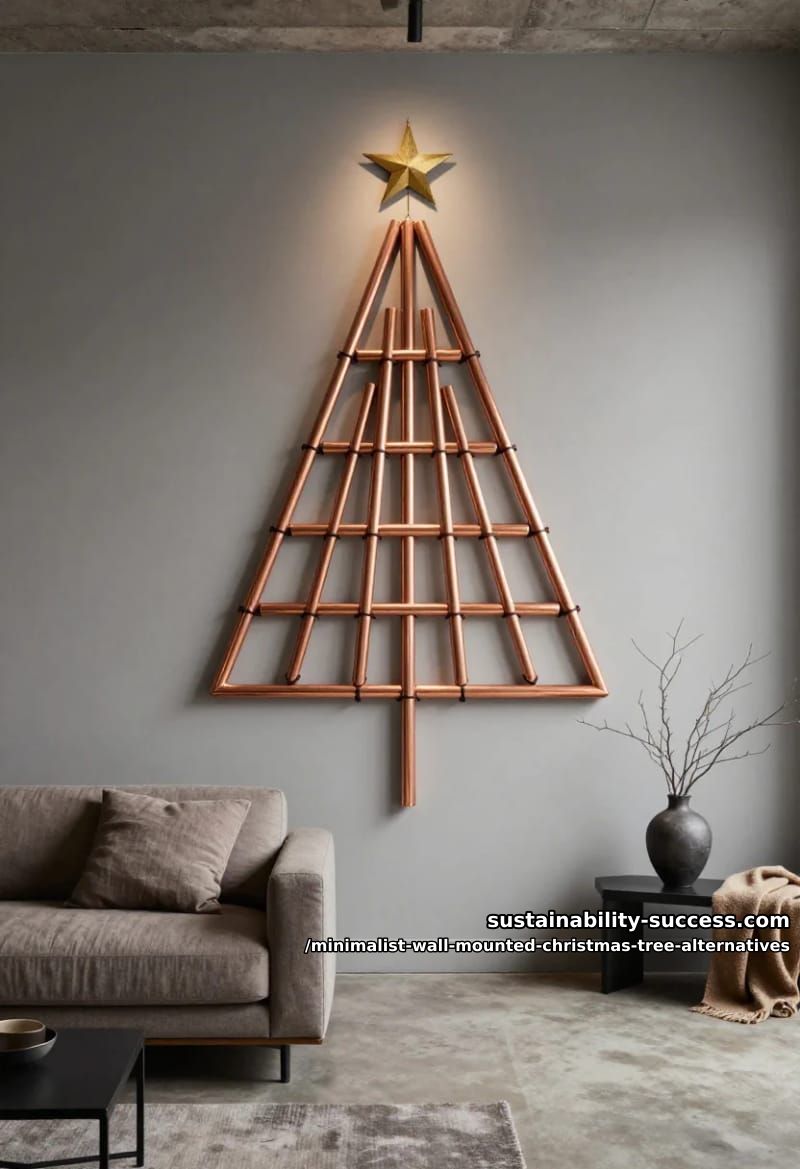
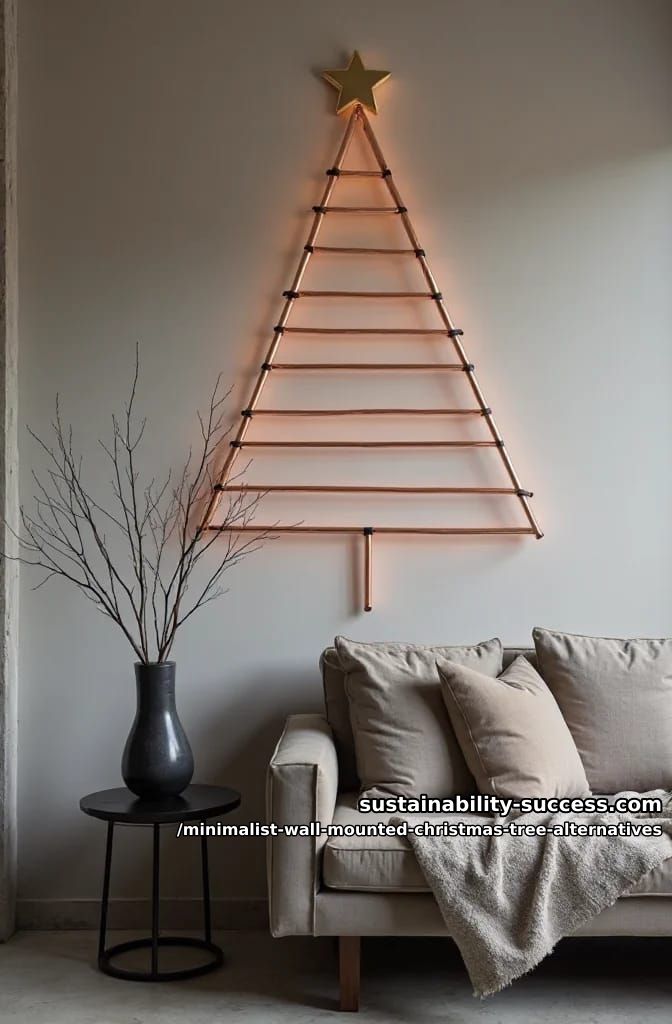
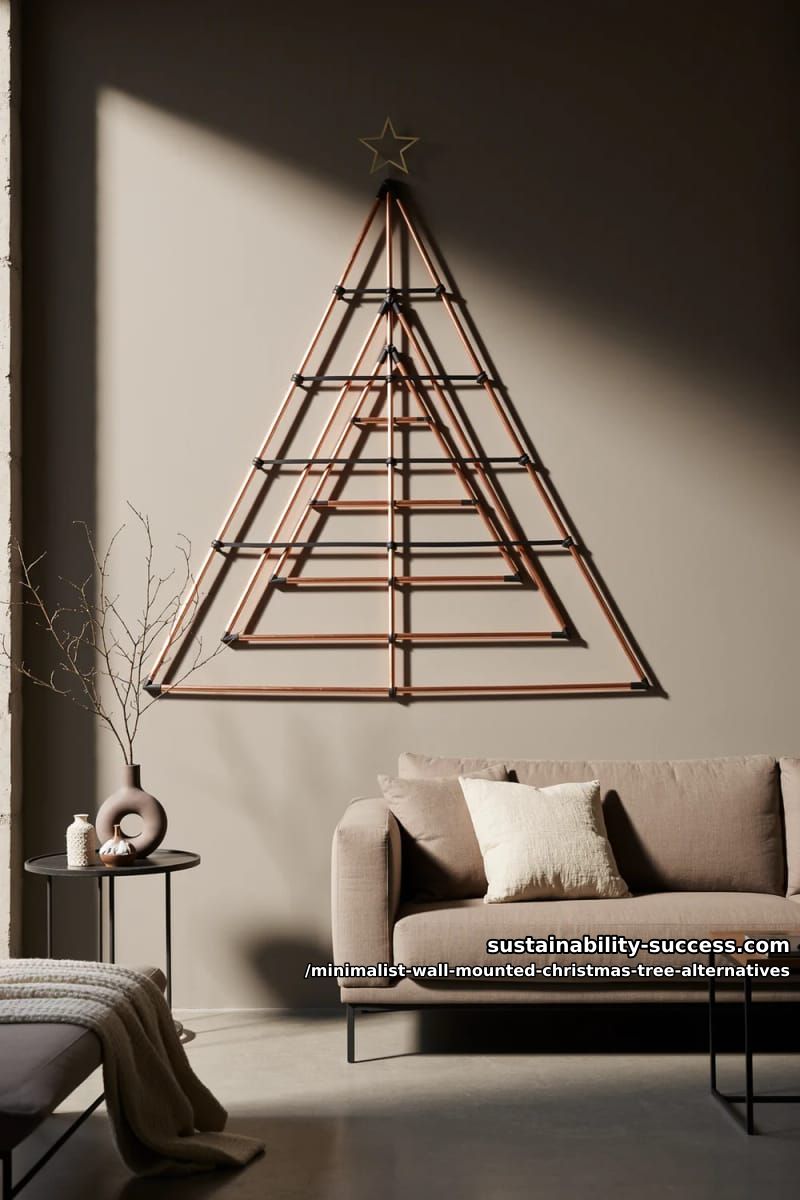

Half-inch copper pipe from the plumbing aisle cuts cleanly with a ten-dollar pipe cutter, and pre-cut brass tube from a hobby shop skips that step. Raw copper will slowly go brown and then green; if you want it to stay bright orange you need a clear lacquer, otherwise embrace the patina, which actually looks good against a pale wall. Lash the joints with waxed cord or thin leather rather than soldering, because solder is a commitment and lashing lets you take it apart to store flat.
A matte metal wall tree is the buy-it-once option
Not everyone wants a project, and the powder-coated steel wall trees solve that. These are flat metal tree silhouettes, usually with small hooks along the frame for ornaments, in matte black, white, or brass, and they fold flat into a drawer for eleven months a year. Scandinavian makers on Etsy do the cleanest ones; Grandin Road's pre-lit olive leaf wall tree is the softer, pre-strung route if you want 100 warm-white LEDs and a lit star without thinking about it.
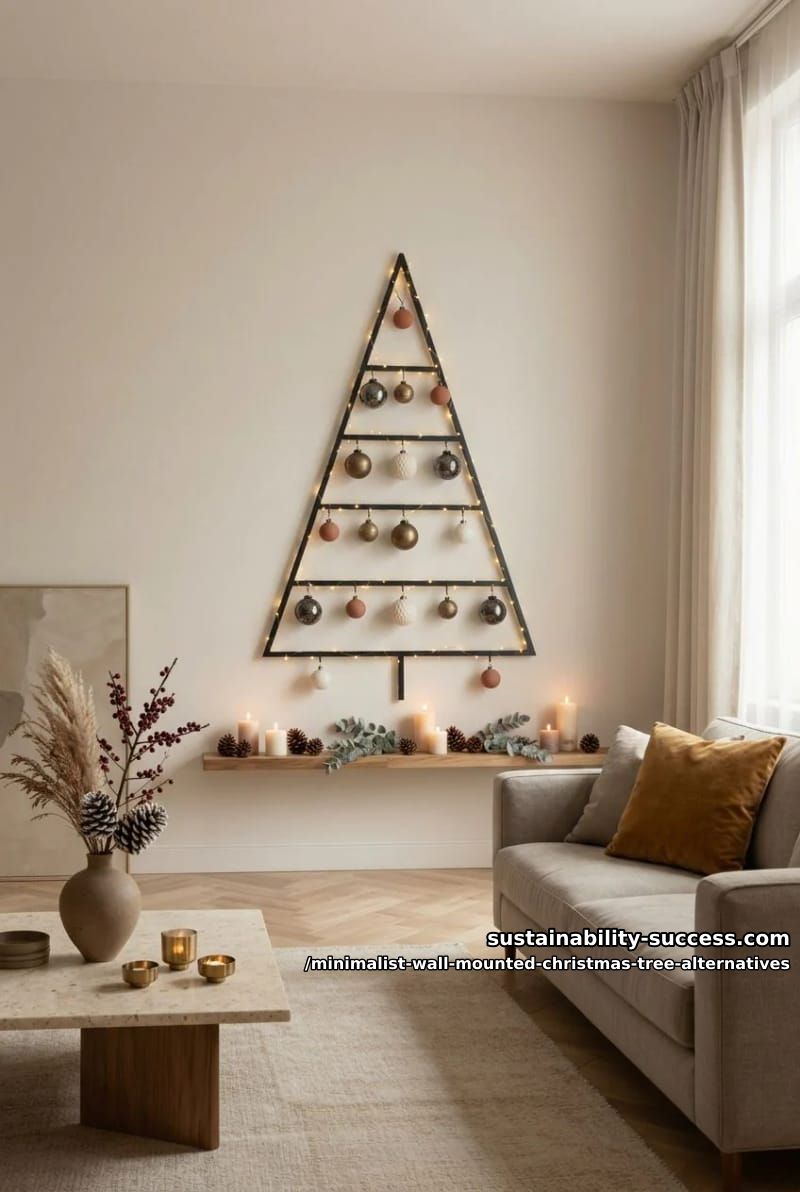
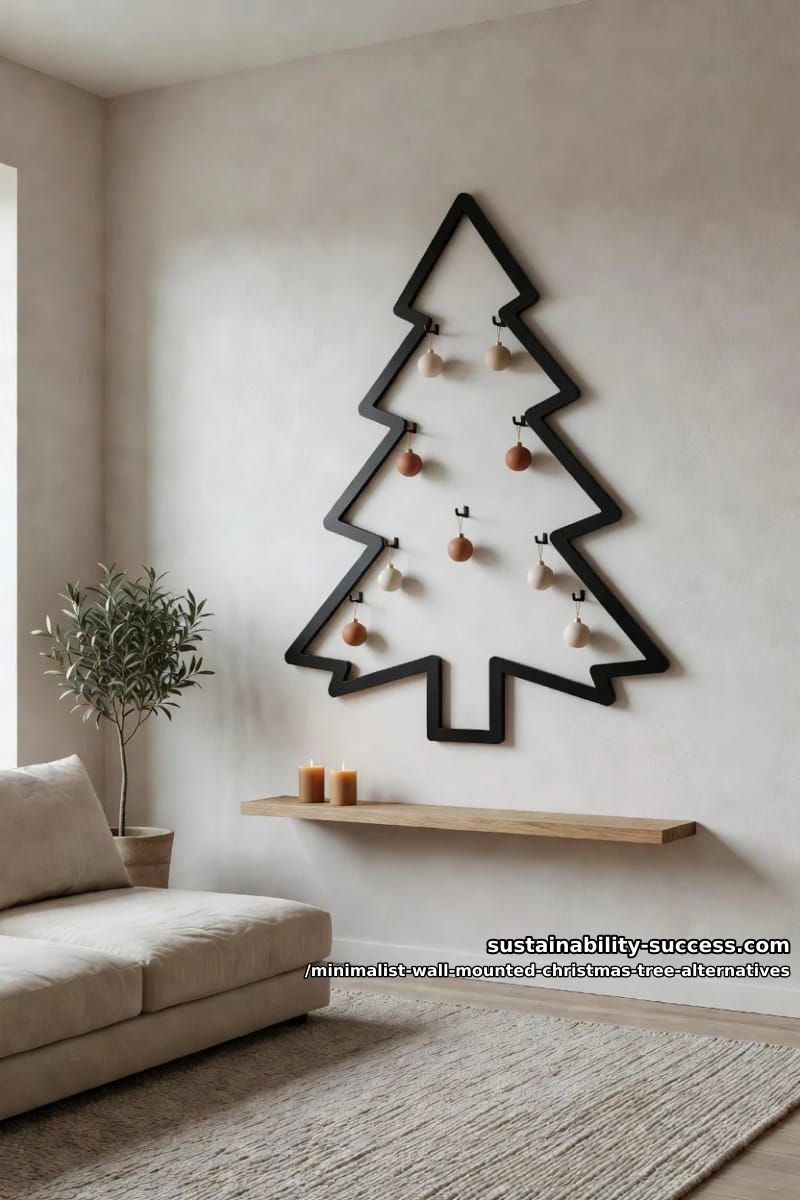
The honest knock on these is that the cheap ones are stamped from thin sheet metal and bow away from the wall at the corners, so they look flimsy in person even when the listing photo is clean. Spend a little more for heavier-gauge steel with multiple mounting brackets, the kind that specifies seven or so wall points rather than a single hole at the top. I used to tell people to skip metal trees as too cold for Christmas, then saw one in matte brass holding a few ceramic ornaments and quietly changed my mind.
An ornament ledge turns the wall into a tree without one
The most abstract option drops the tree shape entirely and just arranges ornaments in a triangle, either hung from tiny wall hooks or stood on a couple of narrow picture ledges. From across the room your eye assembles the triangle on its own. It works because the ornaments are the only festive element, so they have to be good, which means a tight palette of two or three finishes rather than the everything-drawer.
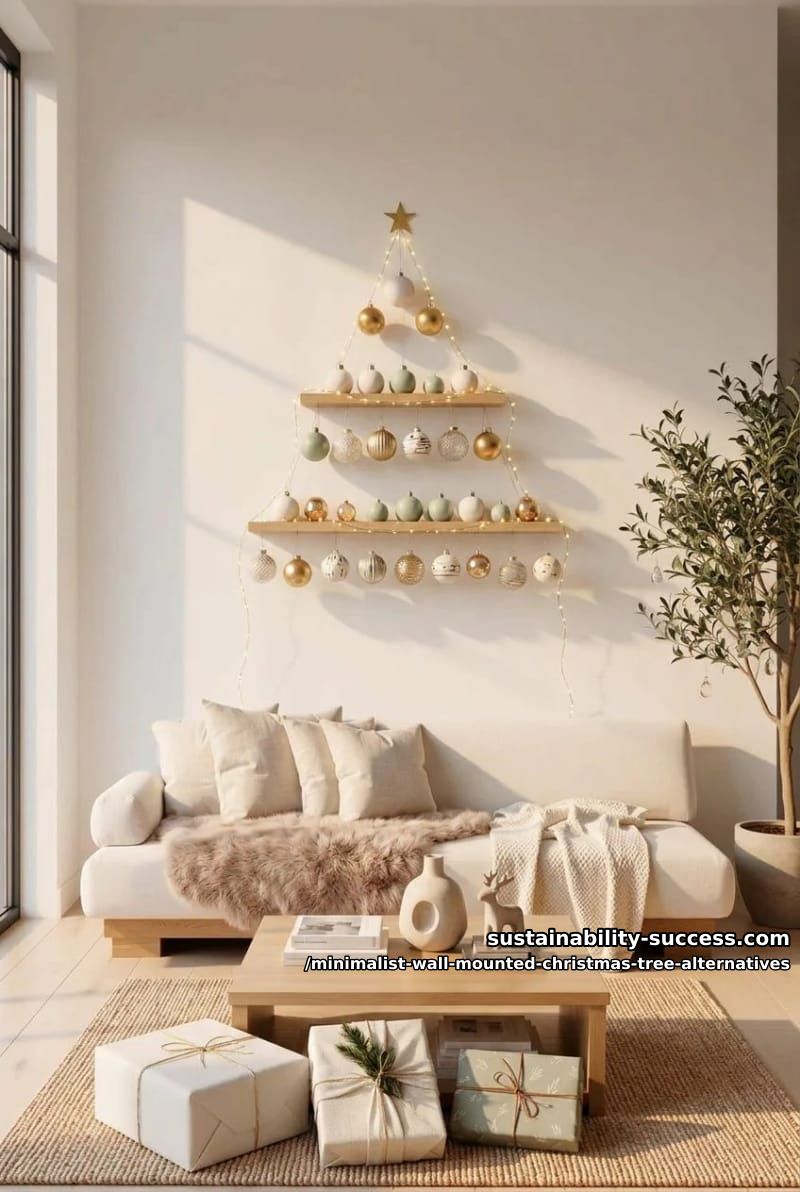
Keep the bottom row widest and let the count thin as you go up, the same taper that governs every other idea here. Floating ledges from any flat-pack store run cheap and double as a shelf the rest of the year. This is also the friendliest version for a house with a cat or a crawling baby, since nothing is at floor level to knock over.
Conclusion
Pick your lane before you buy anything: flat graphic (washi, paint, the metal silhouette) or dimensional (branches, dowels, copper). Mixing the two on one wall is where these go muddy, and it is the single most common mistake.
If you want the fastest convincing result, the string-light triangle goes up in twenty minutes and costs the least. If you want the one people will ask about, it is the foraged branch version, as long as you respect the taper and do not crowd it past nine branches.
Whichever you build, the failure mode is the same: every one of these collapses the moment a second garland, a frosted spray, or a competing string of cool-white lights joins it. When the wall starts looking busy, pull something off and look again before you commit anything permanent.