
The difference between a collection that looks curated and one that looks like a moving box you never unpacked is almost never the records themselves. It is whether you treated them as art or as inventory. Below are eleven ways to get cartridges, jewel cases, and LPs onto the wall without warping a record, fading a sleeve, or drilling forty holes you will resent on move-out day. A couple of these I tried and would not do again, and I will say which.

1. Float album covers on picture ledges, not behind frames
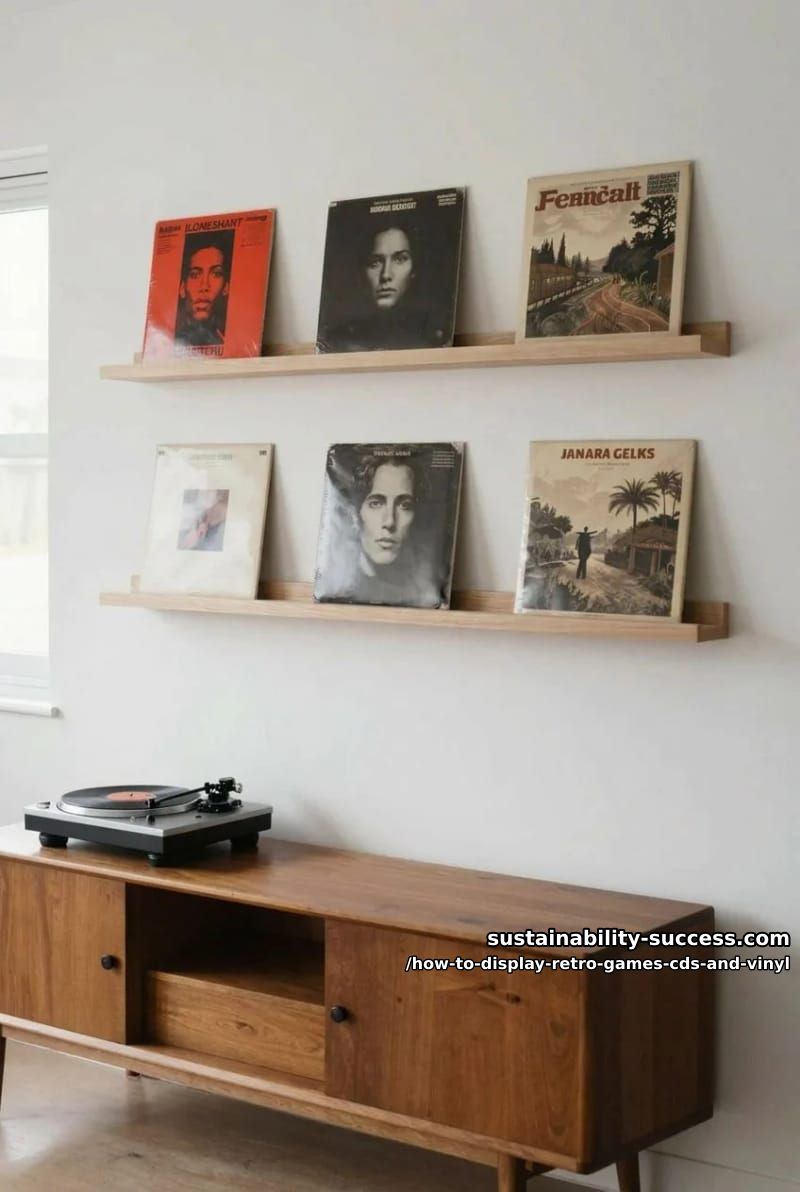
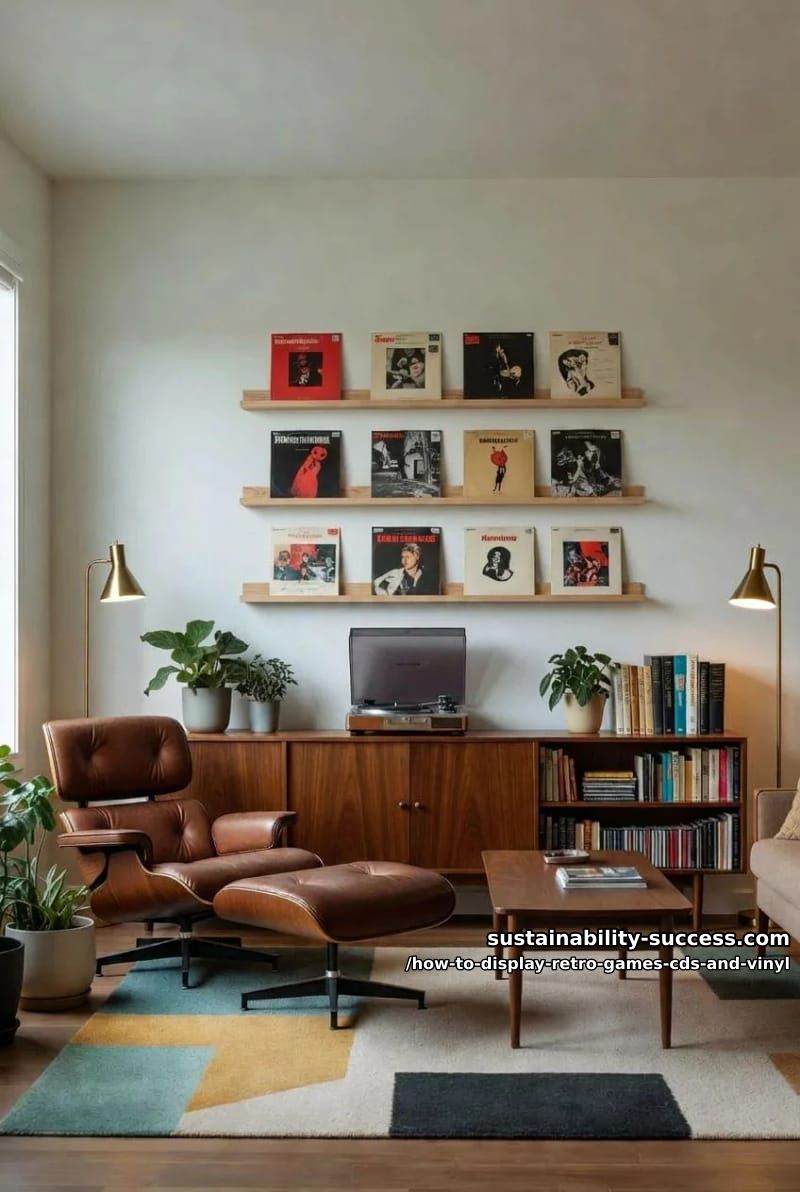
A sealed glass frame is the wrong tool, because the whole reason vinyl beats a poster is that you can swap the cover whenever the mood changes. A picture ledge lets you do that in two seconds. Mount the row so the center of the sleeves lands at about 57 to 60 inches off the floor (gallery eye level), and an IKEA Mosslanda ledge runs around $15 if you want to test the idea before committing. People email me insisting frames protect the sleeve. They protect it from you, mostly.
| Method | Records held | Swap speed | Wall damage | Rough cost |
|---|---|---|---|---|
| Wood picture ledge | 2 to 3 per ledge | Instant | Screws and anchors | $15 to $45 a set |
| Invisible acrylic clip | 1 per clip | Fast | Screws or adhesive | $15 to $25 a multipack |
| Hinged flip-frame | 1, protected | Slow (open the hinge) | Screws | $20 to $40 each |
| Sealed glass frame | 1, glued shut | None | Screws | $25 to $60 each |
Solid pine, holds about three sleeves per ledge, and the hardware kit actually includes a tiny level so your row doesn’t drift downhill by the eighth shelf.

2. Decide the wall's mood before you hang a single record
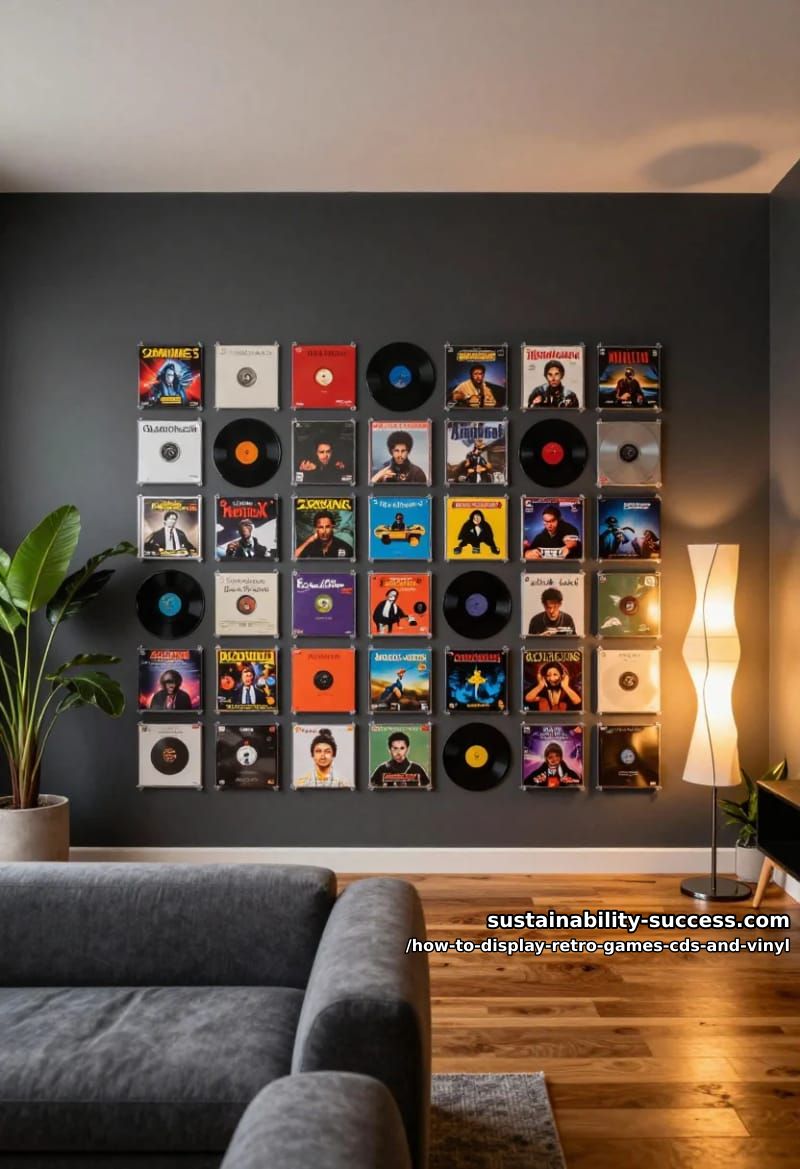
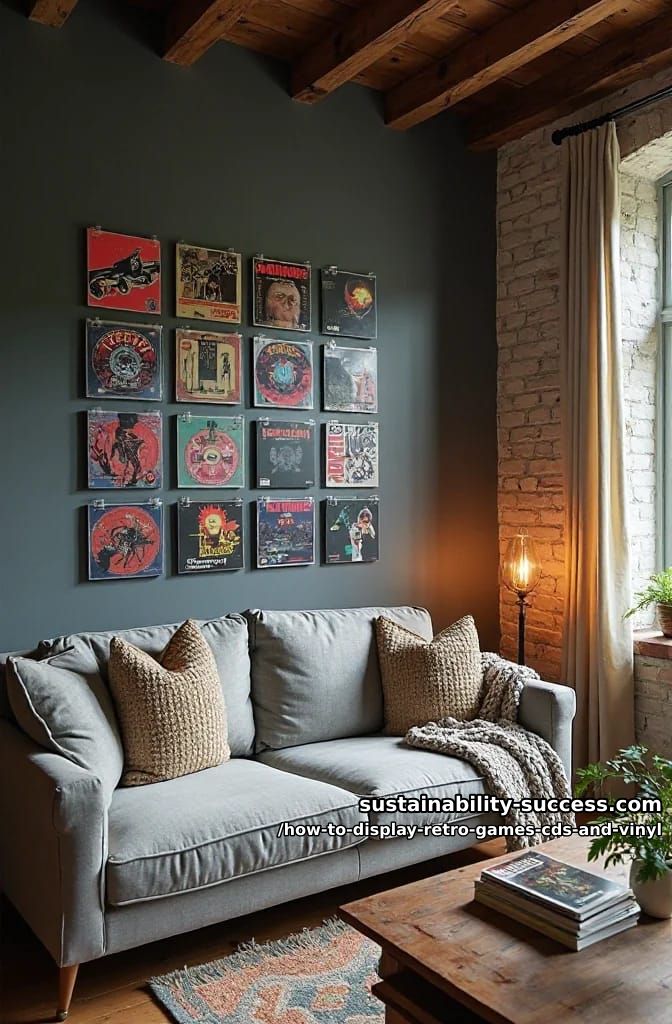
Pick the backdrop first, because the same fifty covers read completely differently on white drywall, on charcoal, or under colored light. A matte dark wall (Benjamin Moore Wrought Iron is the one I keep coming back to) makes bright cover art look lit from within; skip a gloss finish, which throws glare across everything from a single lamp. Here are three setups worth copying instead of inventing your own.
The charcoal wall
Records on near-invisible clips against matte dark paint, one warm lamp raking across. Cover art does all the color.
Best for graphic, high-contrast sleeves and small collections you want to feel deliberate.
The arcade glow corner
A color LED strip run behind a console shelf, dim room, jewel-case grid catching the light. Reads like a game-room at night.
Best for consoles and CDs in a dedicated den or basement.
Wood and daylight
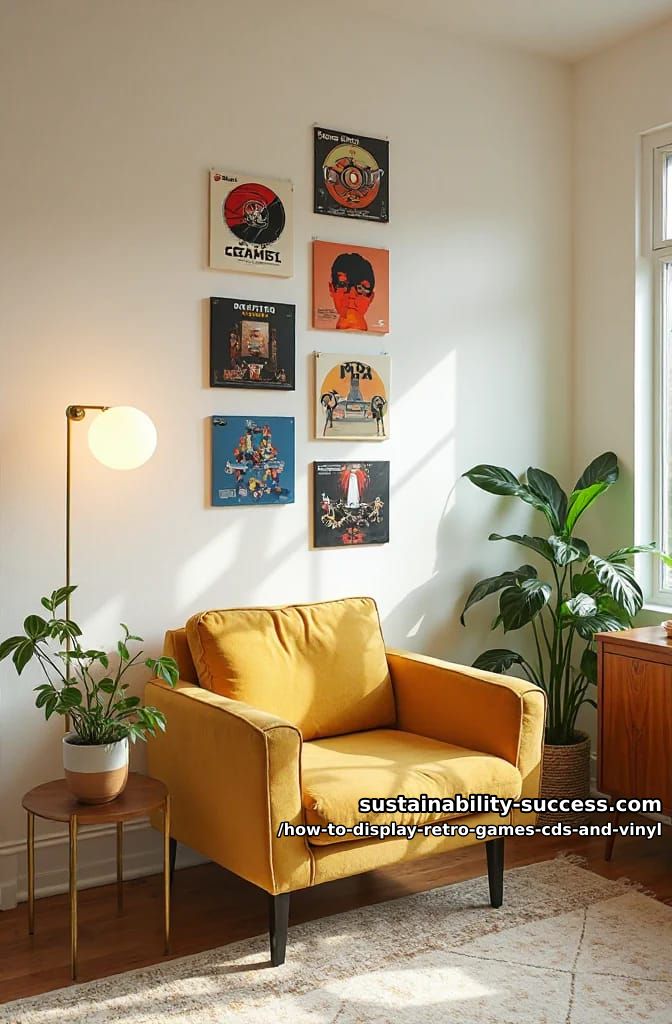
Oak ledges, a credenza, plants, natural light. The display reads as furniture, not a museum case.
Best for renters and anyone who wants the room to still look like a living room.
3. Build a cartridge shelf that shows the spine labels, not the dust
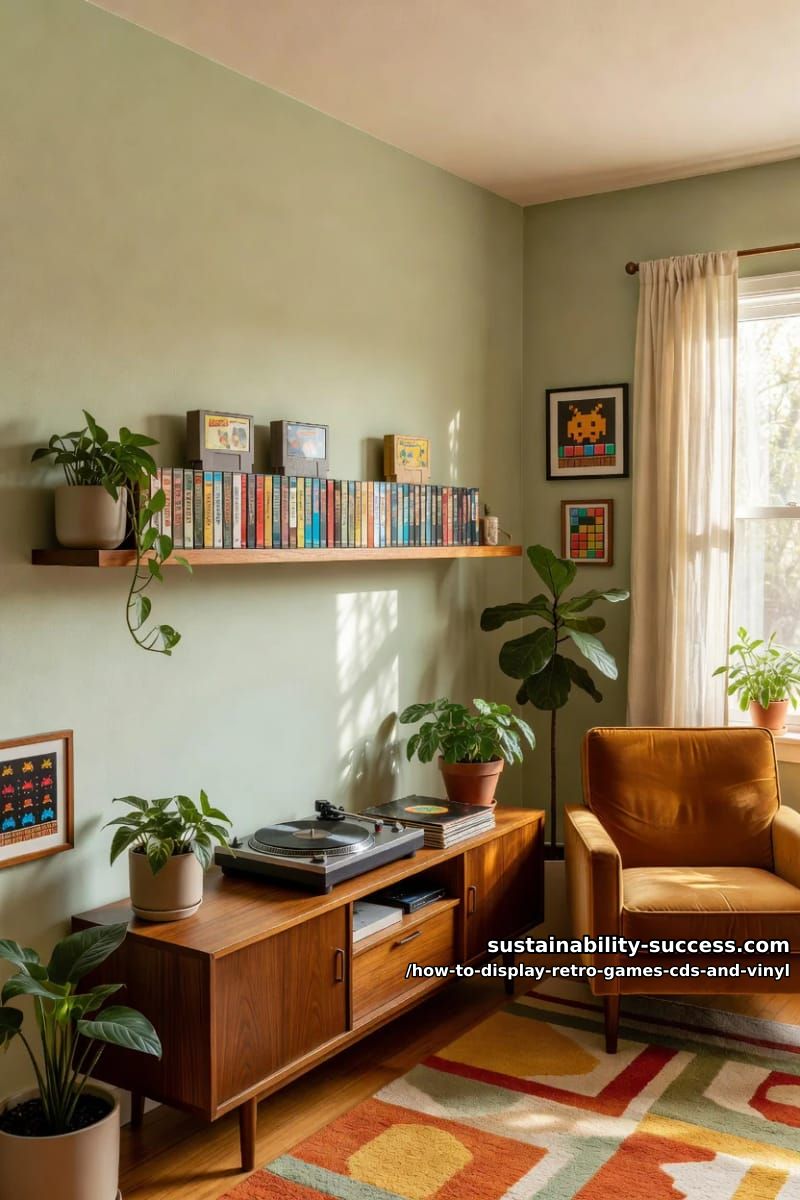
Stand cartridges upright with the printed top label facing out, and a shelf of NES or Genesis carts suddenly reads like a row of book spines instead of a junk drawer. A ledge around 2.5 inches deep with a small front lip holds them at a slight backward lean so they don't topple. One thing nobody mentions on the haul videos: those paper labels yellow and fade in UV, so keep the cartridge shelf off any wall that catches afternoon sun, or you will be hunting reproduction labels in two summers.
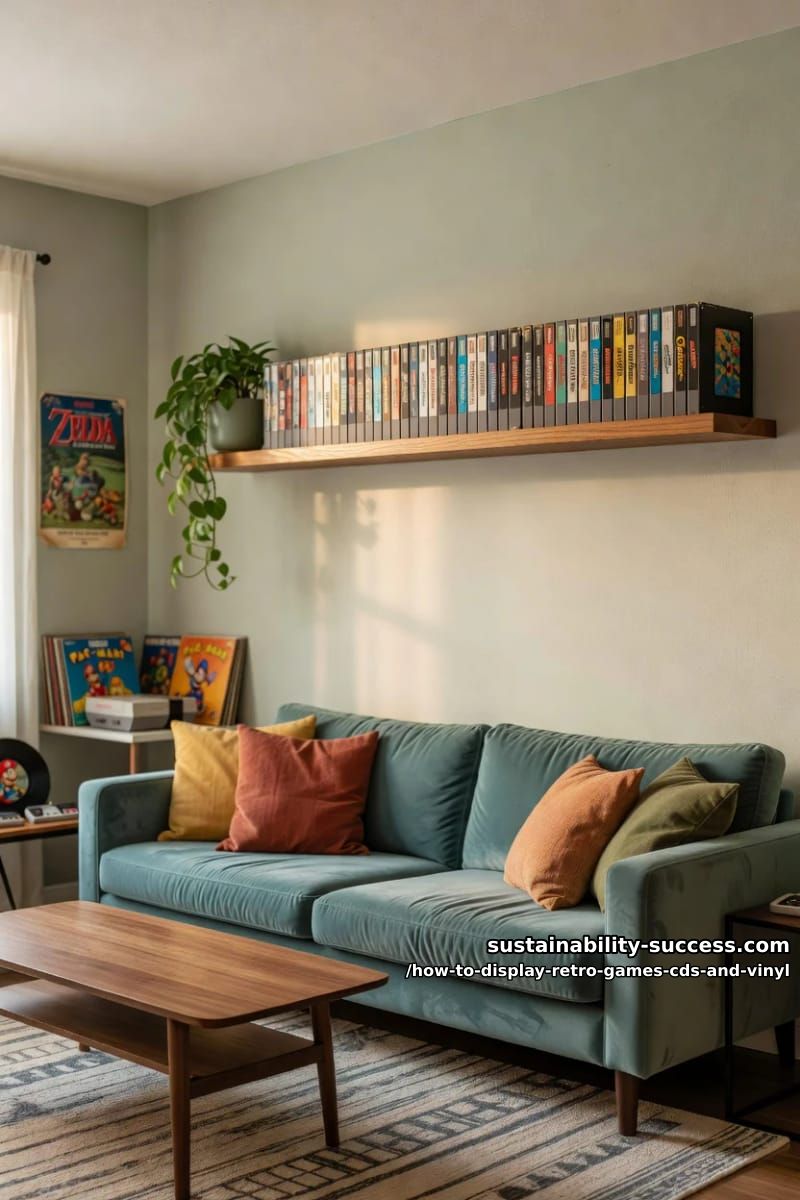
If your carts still have boxes, that is a separate decision. Boxed games want a deeper shelf and tend to look better grouped by console than mixed, and a single standout box propped face-out among spine-out neighbors gives the eye somewhere to land.
4. Lay out CD jewel cases in a grid, never a leaning stack
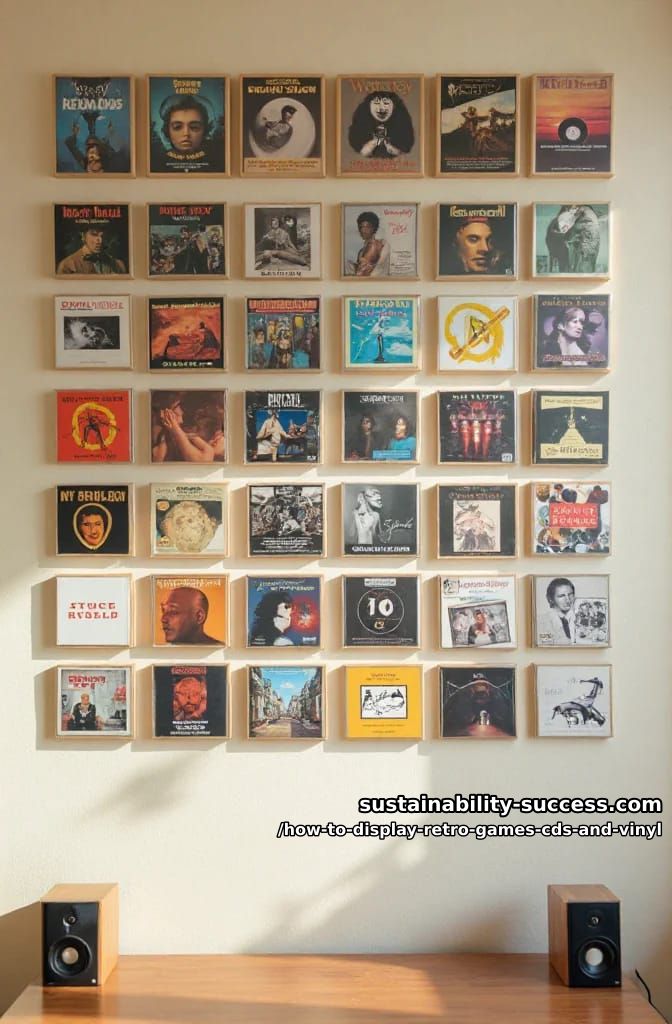
A tight grid of face-out jewel cases reads as a decision; a leaning row reads as something you'll deal with later. Plan the spacing before you stick anything: a 6-by-4 block with 1 to 1.5 inch gaps fills roughly a 30-by-24 inch patch of wall, and marking it with painter's tape first saves you re-doing the whole thing crooked.
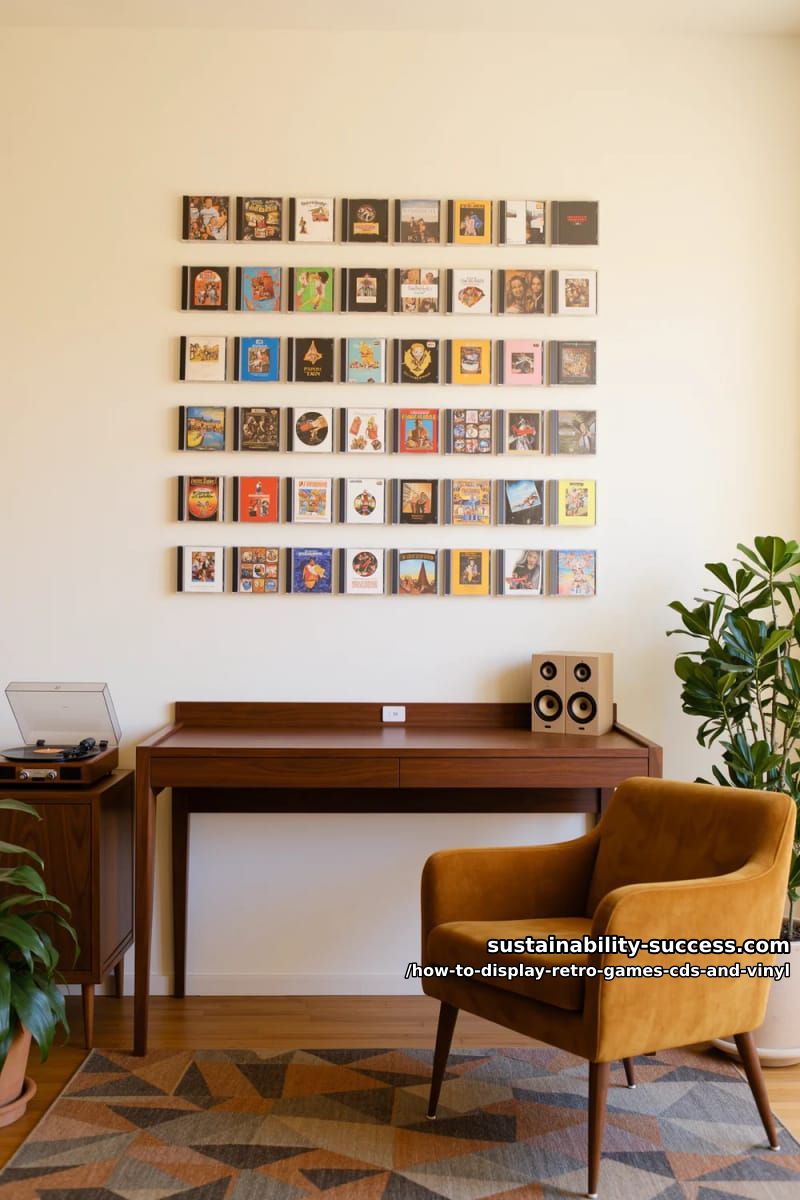
Do this
- Hang in a true grid with equal gaps, using removable matte Command strips rated above the case weight.
- Keep the grid on a wall that never gets direct sun, since the paper inserts fade faster than you’d think.
- Mix in a few alternate inserts you printed, if a back catalog case looks dull face-out.
Avoid
- Leaning rows on a narrow ledge: they slide, and the cases scuff each other every time the door slams.
- Hot glue or mounting putty: it yellows the plastic and pulls paint off the wall on removal.
- A sun-facing wall: inserts visibly fade in a single season.
5. Backlight one floating shelf and leave the rest in shadow
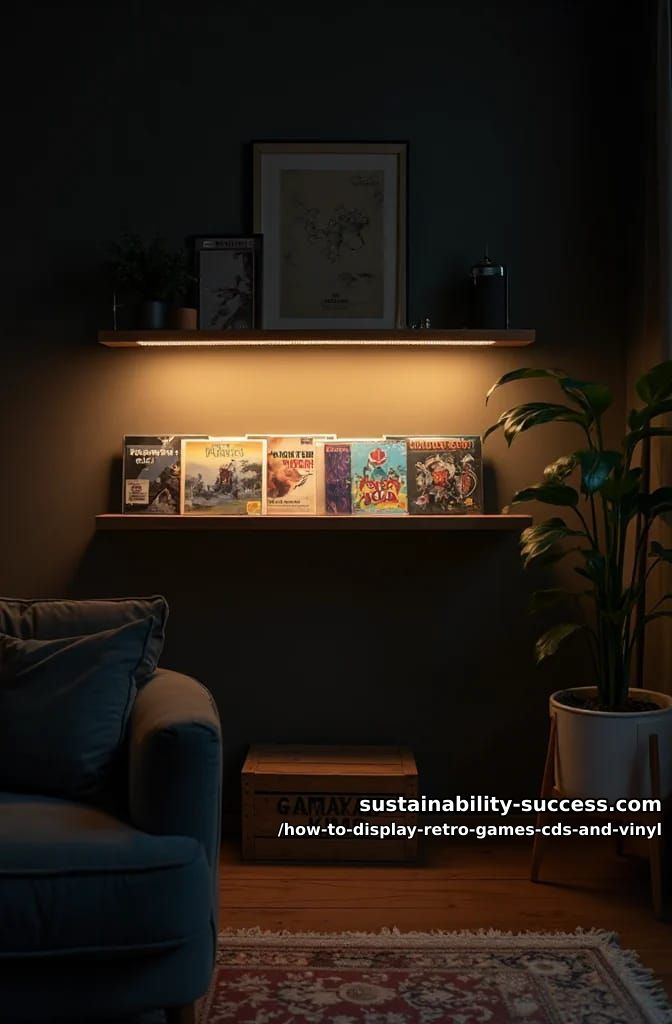
Lighting every shelf flattens the whole display; lighting one makes that shelf the thing people walk toward. Tuck a warm 2700K to 3000K strip behind the front lip so you see glow, not diodes, and budget around $15 to $25 for a strip that reaches several shelves. If you want the arcade-glow look from setup two instead, the same strip in color mode behind a console shelf does it, though I'd keep color light away from records you actually want to read.
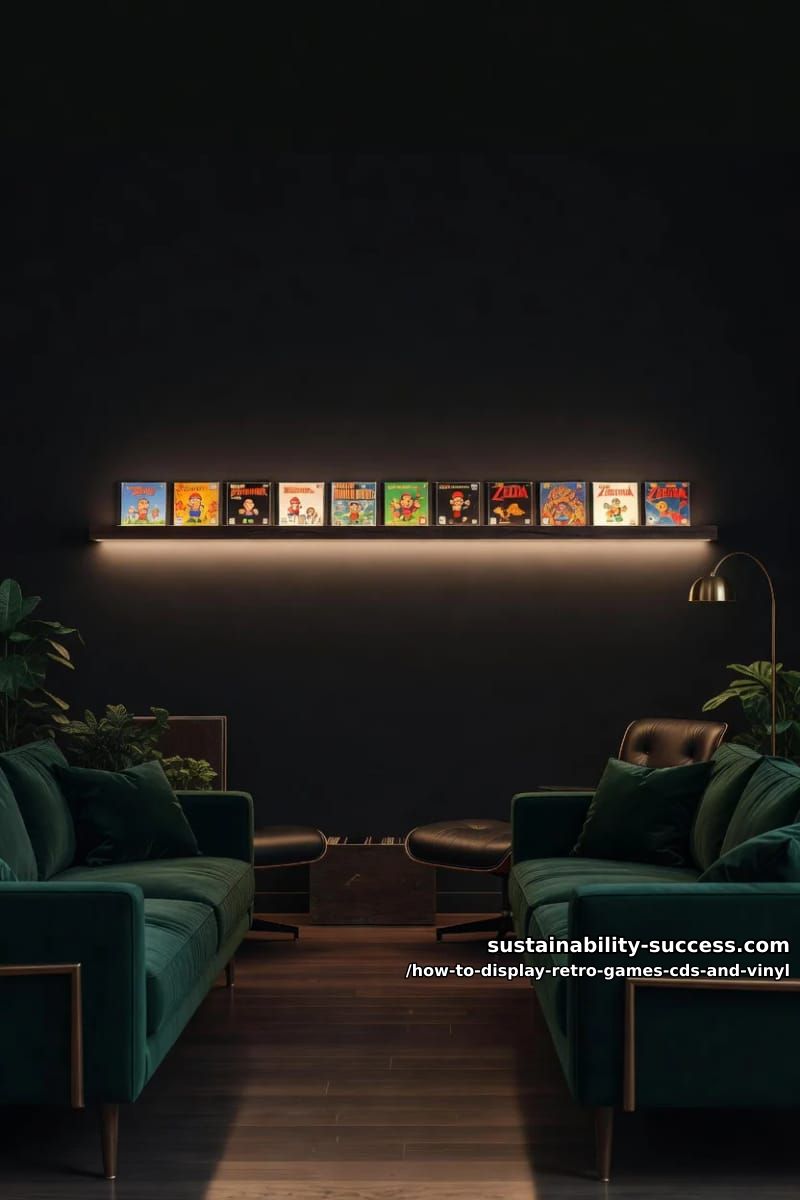
The unglamorous part is the wire. Run the strip’s lead down the back corner of the shelf into a paintable cord raceway (a few dollars at any hardware store), then to the nearest outlet. Pick a strip with an inline dimmer or a plug-in timer so you’re not unplugging it at the wall every night. Battery puck lights are the lazy alternative and look it.
Cut-to-length, app-controlled, and it does both warm white for the album shelf and color for the game corner, so you only buy one thing.

6. Crate the 200 you own, display the 30 you reach for
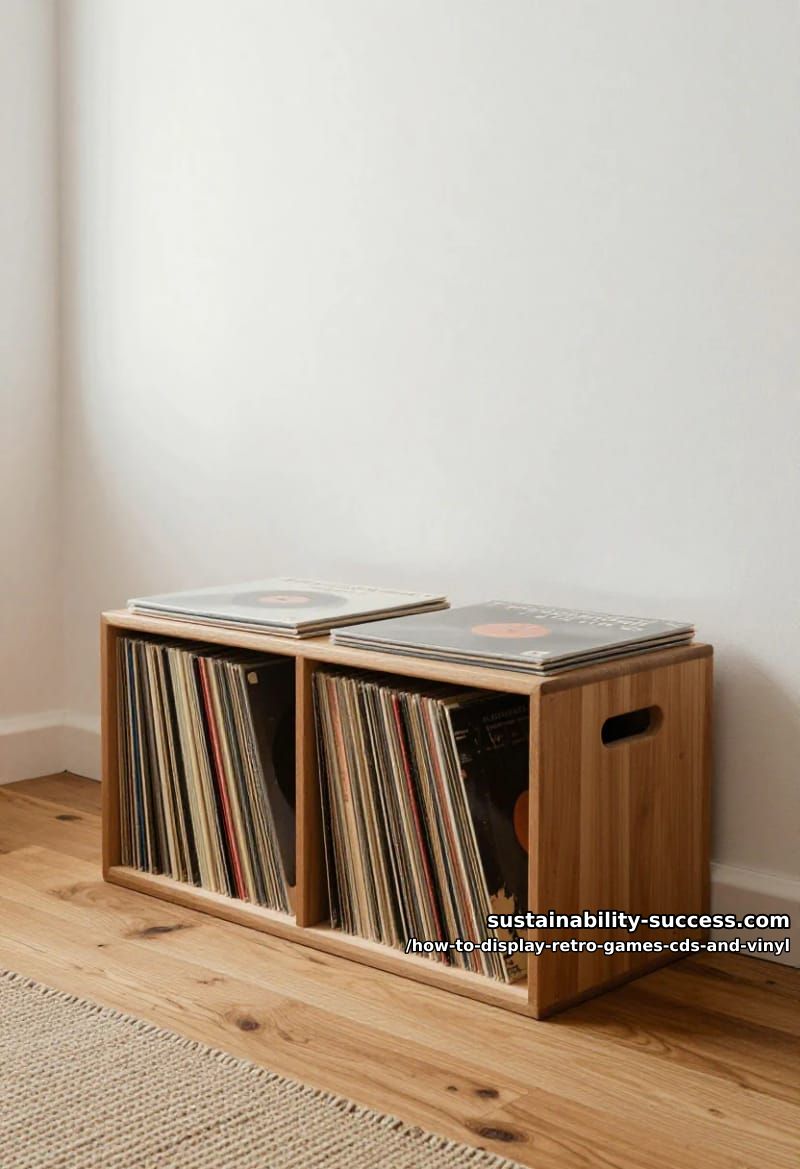
A wall of two hundred sleeves is visual noise; nobody's eye knows where to rest. Display the thirty you actually play, rotate them every few weeks, and crate the rest within arm's reach. A solid wood crate holds about 75 LPs and runs $30 to $50, which is cheaper and kinder to your floor than another wall system. Store everything vertical and not packed so tight you have to yank, because lateral pressure is what warps sleeves over years.
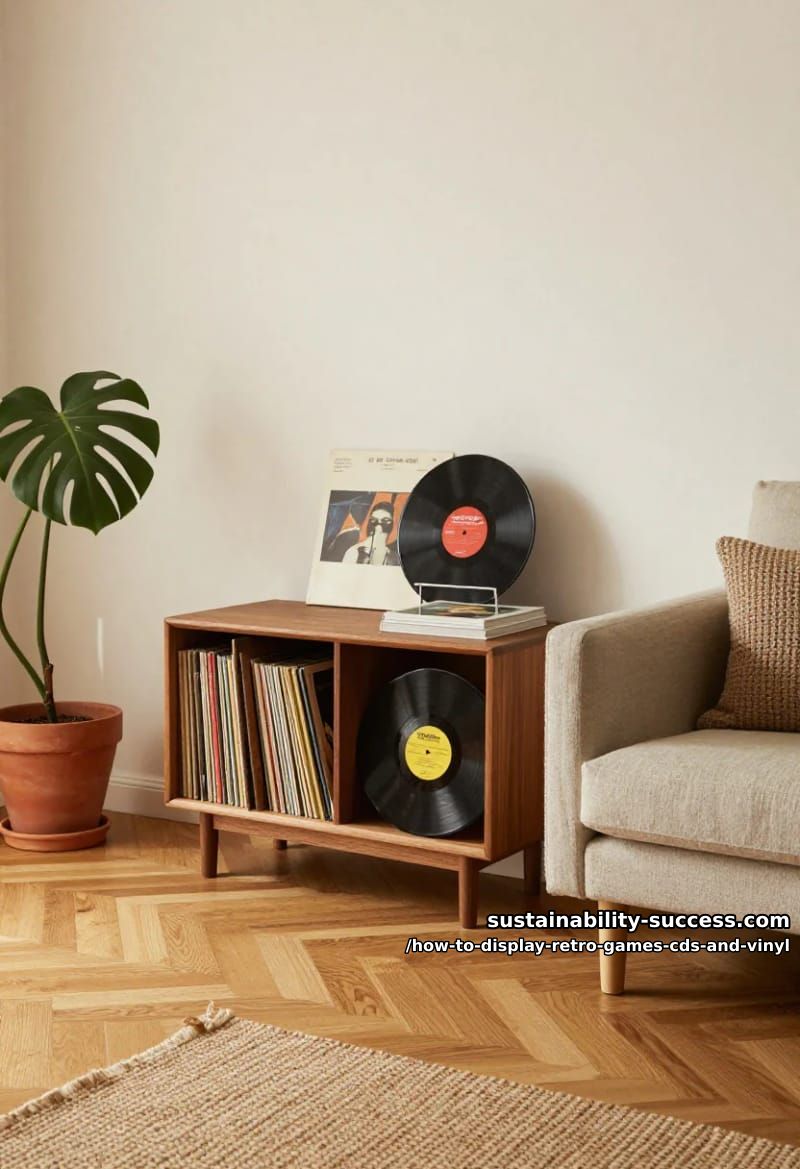
Direct sun fades sleeves and, worse, heat warps the vinyl itself. A record left leaning in a sunny window can cup in an afternoon. Keep both the crate and any displayed records out of direct sunlight and away from radiators and heat vents. Lean a stored stack at an angle and it slowly warps under its own weight; keep stored records upright and snug.
Holds 75, assembles in about three steps, and looks intentional sitting on the floor instead of like the milk crate it’s quietly replacing.

7. Put retro consoles at eye level and kill the cords
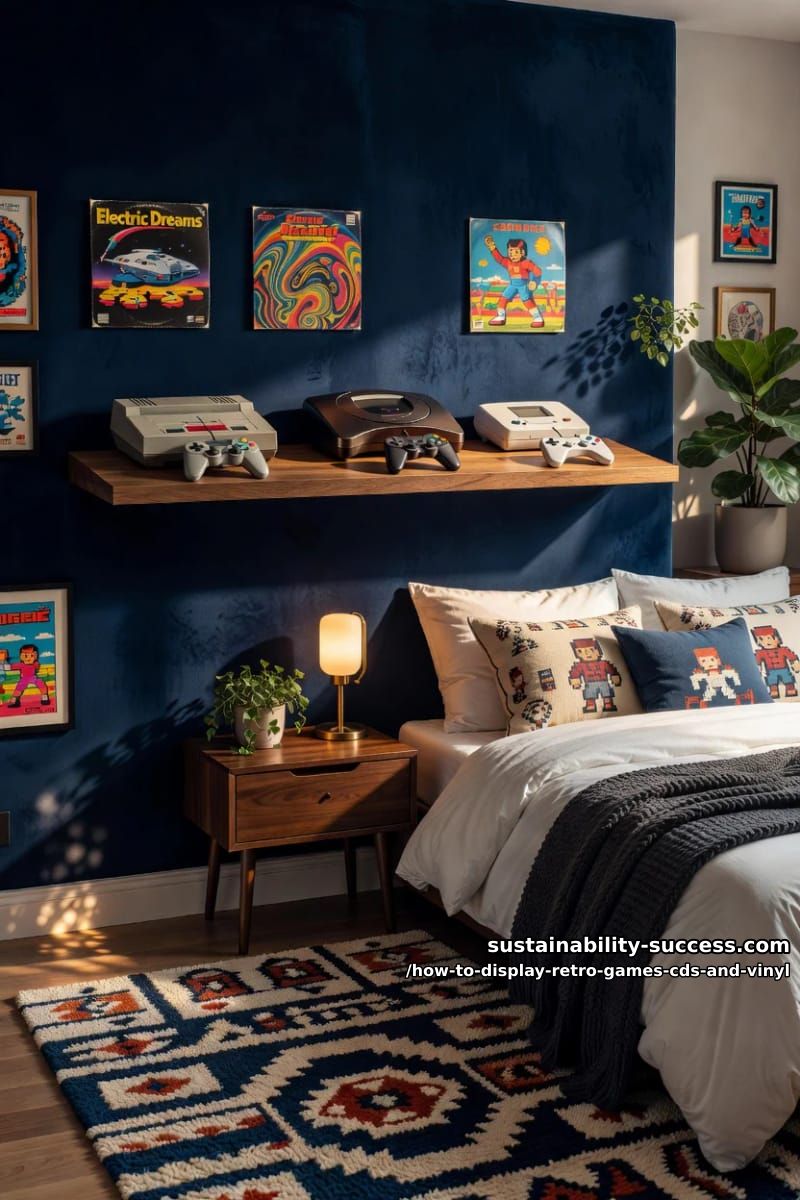
A console on the floor under the TV is storage; the same console on a shelf at eye level with the cords hidden becomes an object you actually look at. Lay one controller in front of each unit so the scale reads, and route every cable behind the shelf or into a raceway so nothing dangles. If a console is purely for display and never gets plugged in, even better, you can coil and zip-tie the cords out of sight entirely.

One opinion that will annoy purists: a yellowed Super Nintendo looks better on the wall, not worse. The patina says it was played. Retrobrite it if you want, but you're scrubbing off the part that made it interesting.
8. Make a board-game wall you can still pull a box from
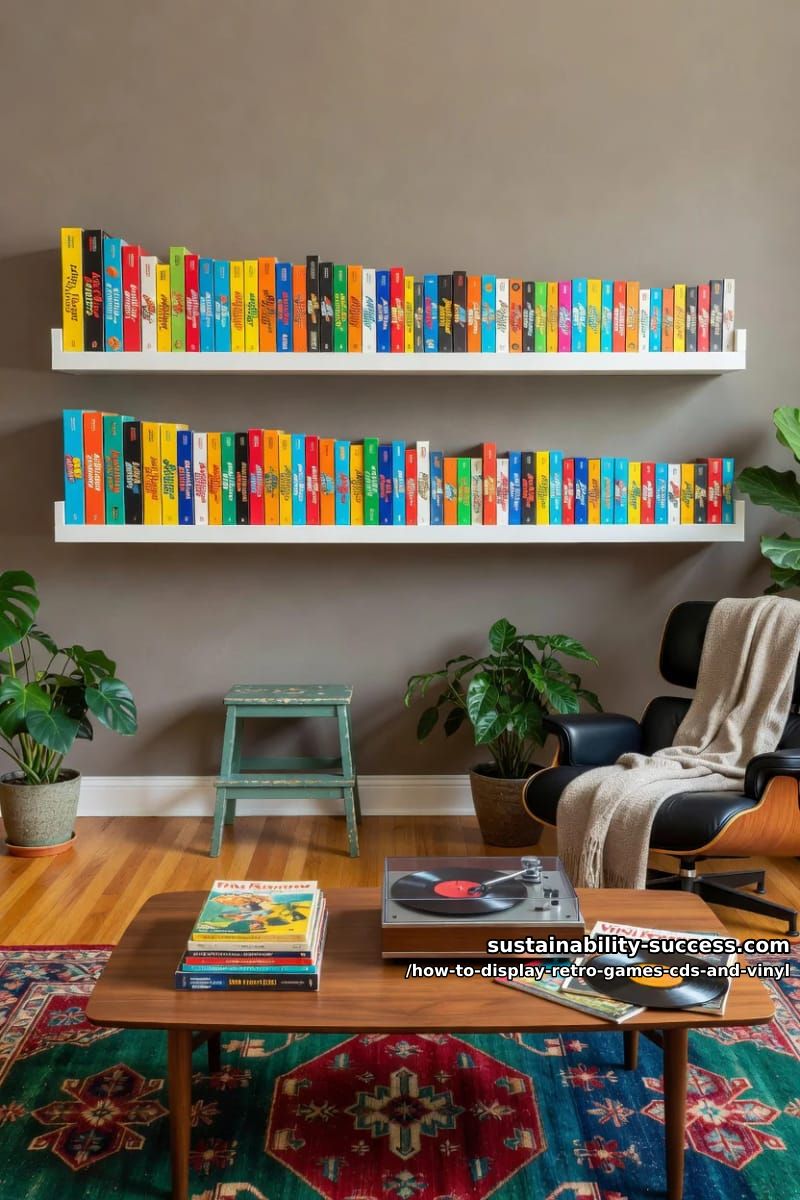
Stand board games vertical and spine-out the way you'd shelve books, on a shelf at least 11 to 12 inches deep so the boxes don't overhang. Sorting by box height instead of theme keeps the row from looking like a skyline, and a thin front lip stops a heavy box from sliding off when you tug its neighbor. Put the heaviest boxes (looking at you, anything with a hundred miniatures) on the lowest shelf, because that's where a collapse does the least damage.
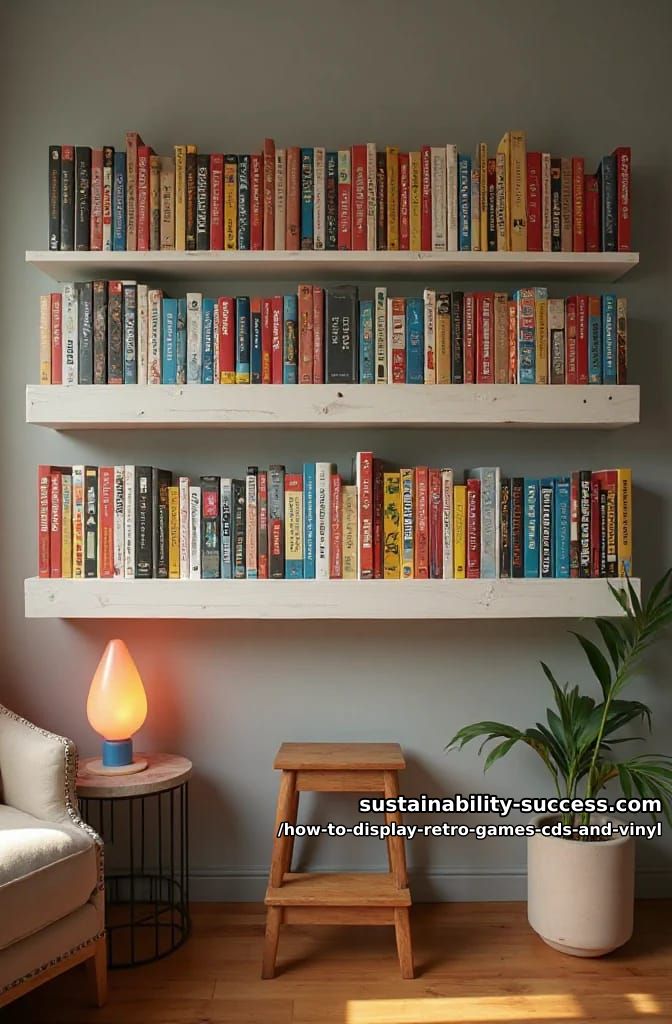
Games you display but never open can go higher. Games you play weekly want to be between waist and shoulder height, or you'll stop pulling them down, which defeats the point of owning them.
9. Skip the CD chandelier unless you're ready to sacrifice the discs
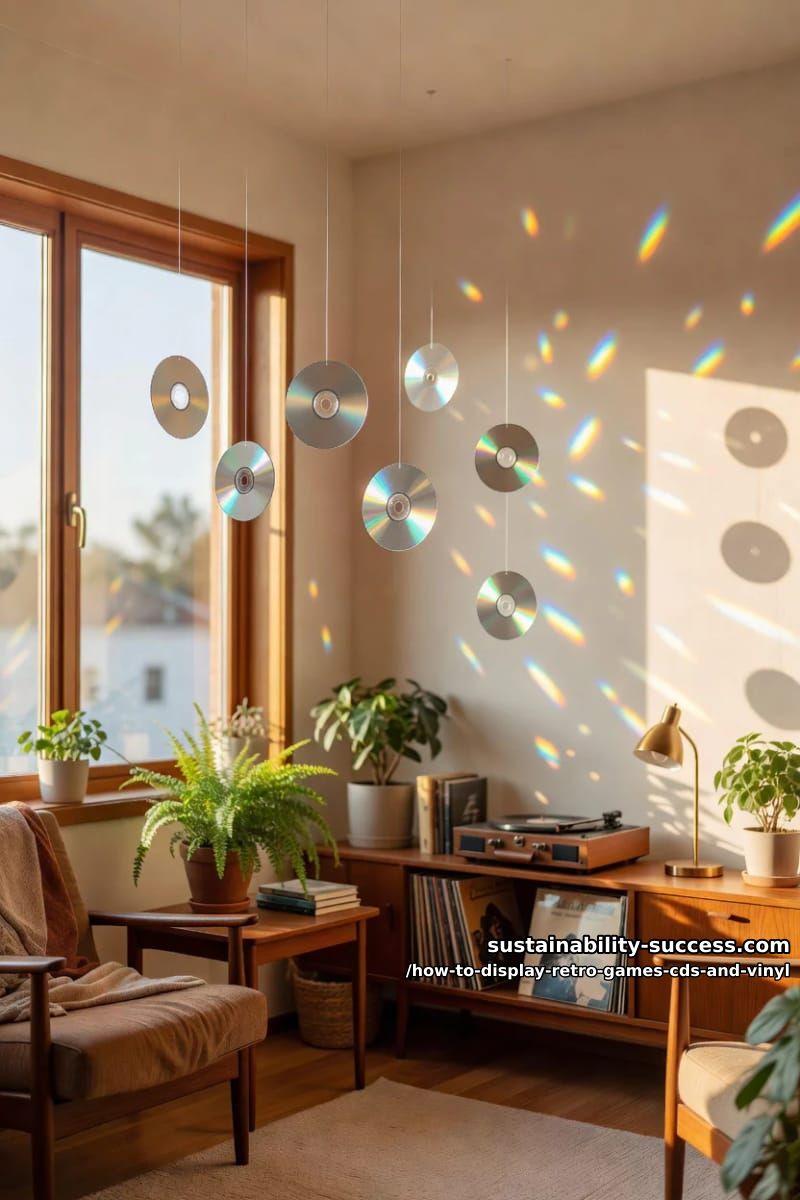
A CD chandelier looks great in the thumbnail and means those discs never play again. I made one in 2014 out of burned discs I didn't care about; it caught light nicely and collected dust faster than anything else I owned, and it was in the trash within a month. If you want the reflective, prism effect, hang blank CD-Rs (a spindle of 100 is around $15) or scratched discs you've already replaced, and keep your actual collection in the grid from setup four.
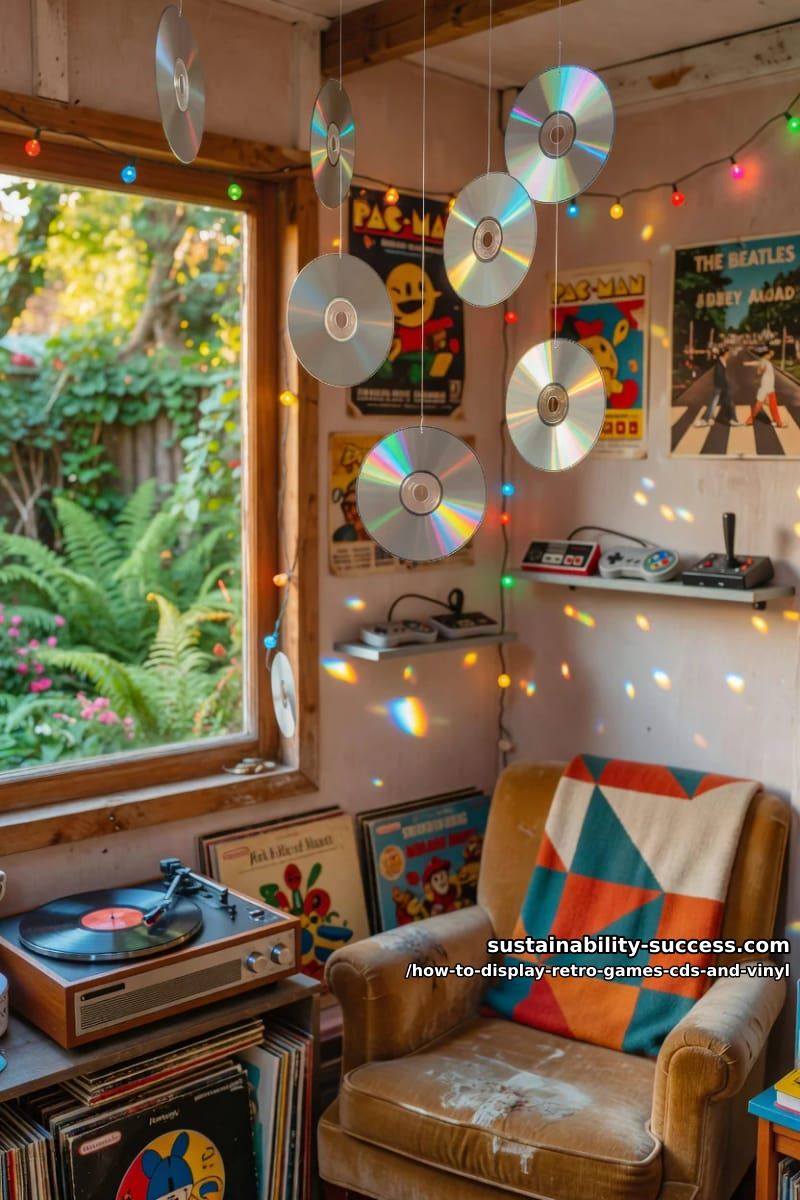
The version sold as a kit, with branded hanging hardware, is the one to avoid. You're paying for fishing line and a hook. Tie it yourself.
10. Keep a "now playing" stand by the turntable, not on the wall
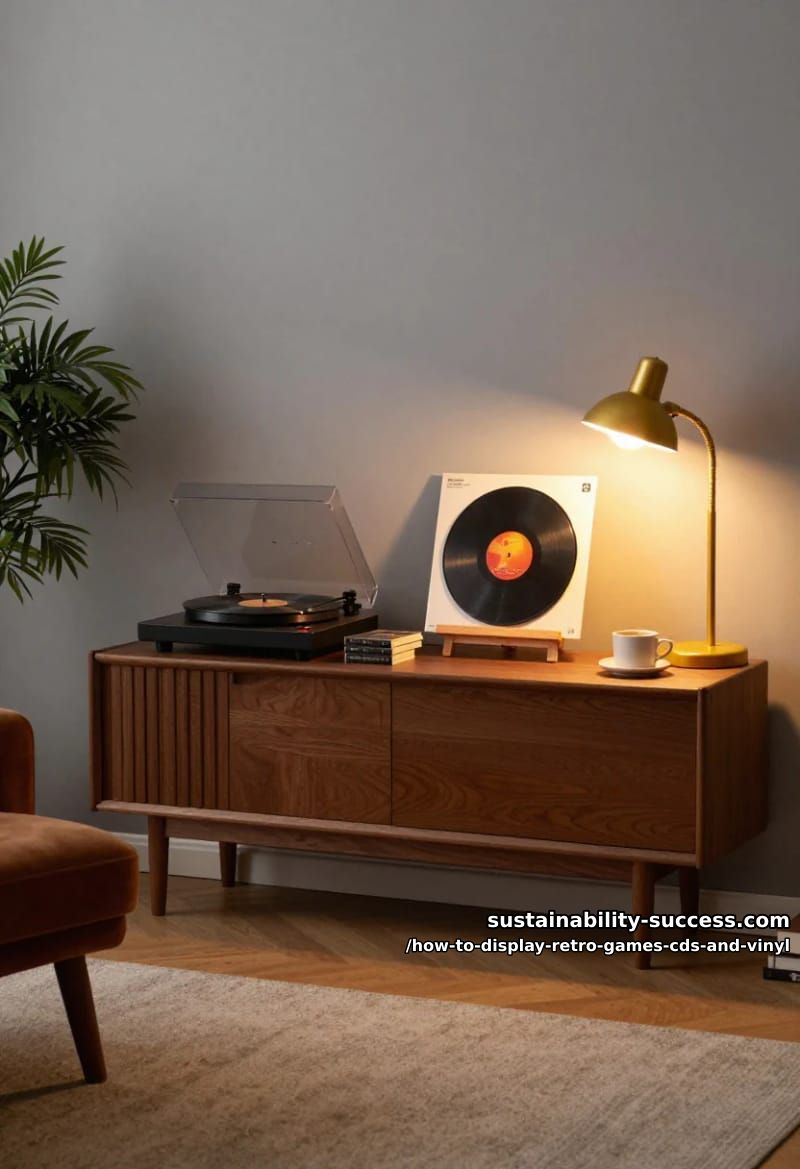
Leave one small easel or stand right by the deck for whatever's currently spinning. It changes every day, which makes it the most-looked-at object in the room without a single hole in the wall. A clear acrylic easel runs $10 to $20, or you can prop the sleeve against the wall behind the player and call it done.
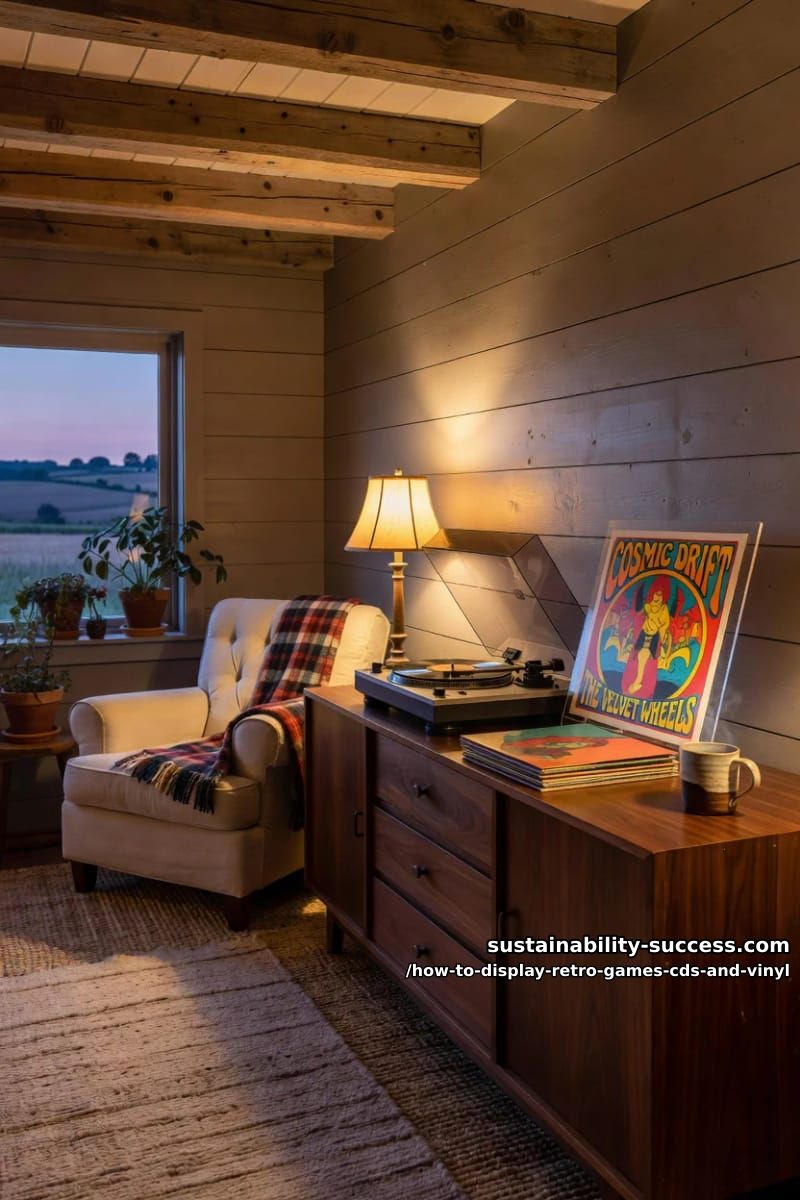
This is the entry point I'd actually recommend to someone unsure about any of this. One record, one stand, zero commitment. If you find you're swapping it daily, then build the wall.
11. If you rent, claim a corner with no-drill mounts
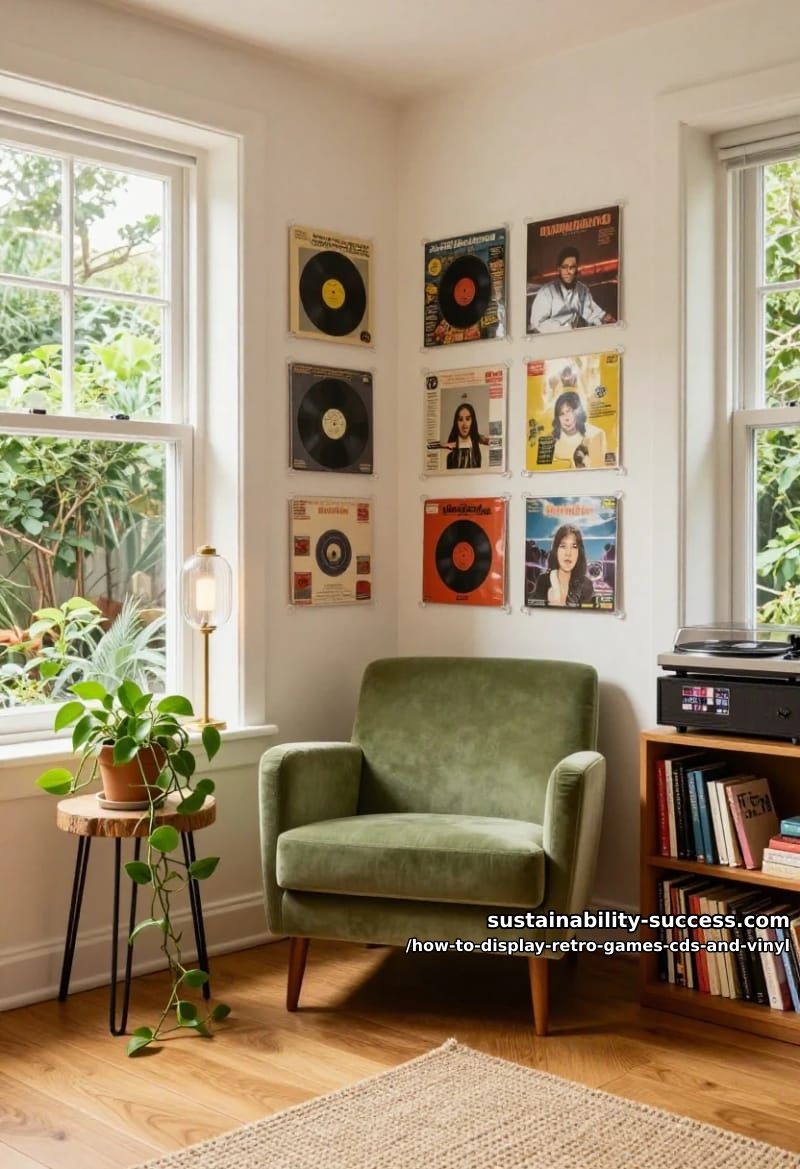
Renters should not be drilling forty holes for a wall they'll repaint in a year. Self-adhesive acrylic clips hold a single LP each, peel off clean, and run $15 to $25 for a pack of 18, which is enough for a tight corner column. Two caveats I learned the annoying way: they want a smooth, dust-free wall (give the adhesive the full cure time, usually around 8 hours, before loading a record), and one LP per clip is the limit. I don't have a good fix for textured or heavily-orange-peel plaster, so if that's your wall, lean records on a freestanding shelf instead.
Eighteen clear clips, no tools, no holes, and the adhesive releases without taking your security deposit with it.

Conclusion
If you only do one thing, do the picture ledges at eye level and live with them for a few weeks before going further. Sequence matters more than people expect: get the swappable covers up first, see which records you keep changing out, and only then decide whether that wall wants charcoal paint or a backlit shelf.
The crate and the no-drill clips are the cheap insurance that keeps you from damaging anything while you figure out your taste. And the one rule I'd actually hold you to is the boring one from setup six, keep everything out of direct sun, because a faded sleeve or a warped record is the single thing on this list you can't undo.