
White shiplap, rope pendants, a starfish in a jar. That's the default coastal kitchen, and at this point it reads like a furniture-rental package. Reclaimed wood is the way out. Real salvaged material brings actual age into a room, which is what "coastal" meant before HGTV got hold of it , kitchens built near water, from wood that had already lived a life on a boat, a dock, a barn that flanked a tidal river. Eleven directions below, with the specific woods, suppliers, and finishes that separate the work from the look.
1. A sinker cypress slab for the island top
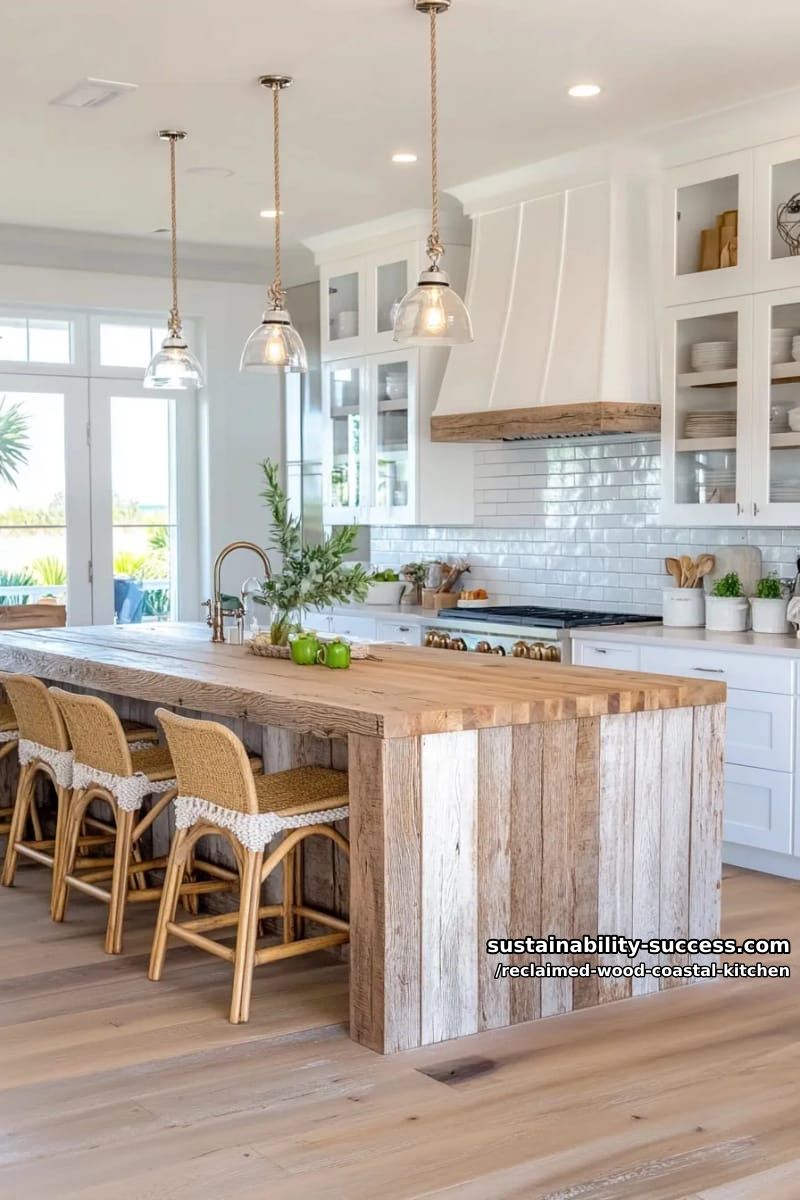
Of every reclaimed material on this list, sinker cypress has the best origin story, and I think that matters. These are old-growth bald cypress logs that went under during 19th-century river drives in Louisiana, Florida, and the Carolinas. They sat in anaerobic mud for more than a hundred years before divers and small operators began recovering them in the 1990s. No standing tree gets cut. The wood is denser than fresh cypress, often shot through with green and bronze mineralization from the river, and it drinks a tung oil finish like nothing else.
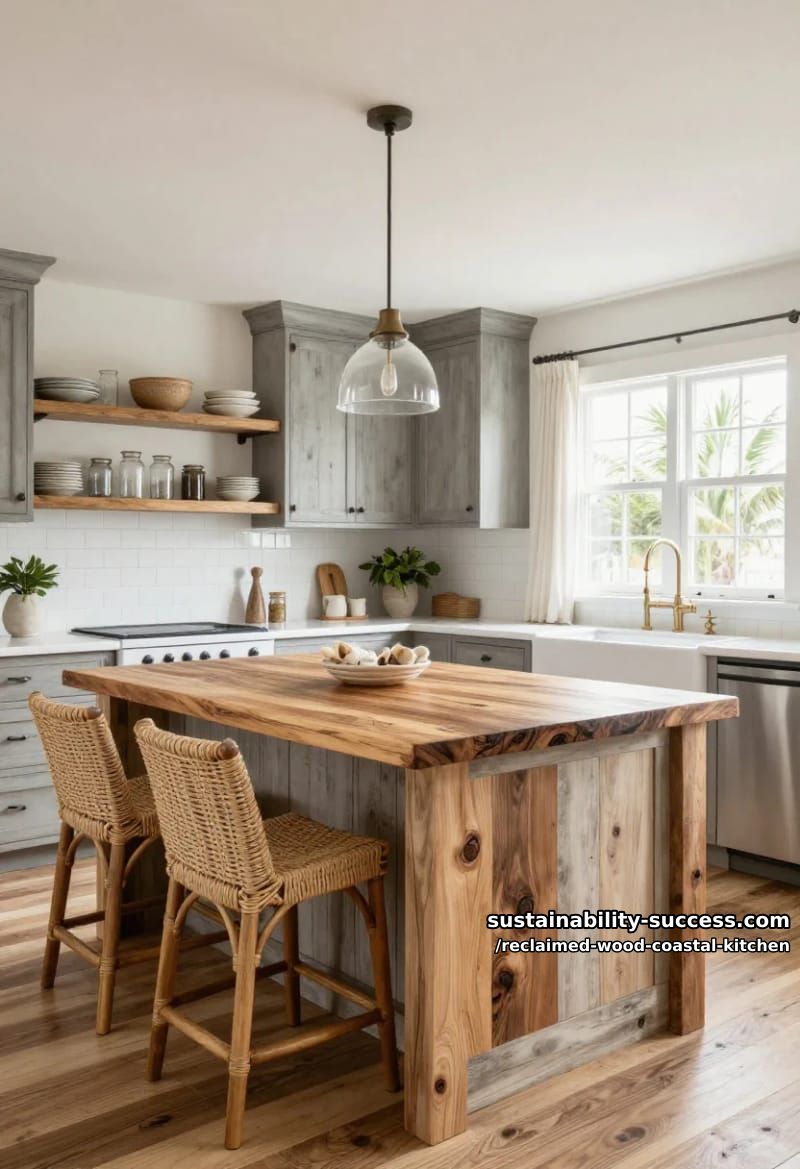
It is not cheap. Online prices average around $8 per board foot; finished slabs from a yard like Krantz Recovered Woods in Texas or Hamilton Lee Supply in Washington run $10 to $14. A 7-foot by 30-inch island top at 2 inches thick puts the slab itself in the $400 to $700 range before shipping. Compare it against mid-grade quartzite instead of laminate and the math gets friendly fast.
Origin: long-submerged old-growth logs salvaged from swamps and rivers, mostly cut in the 1800s and lost during river transport to mills.
Recovery: small operators locate the logs with sonar and float them up with airbags. Bald cypress (Taxodium distichum) once dominated the southeastern U.S.; old-growth specimens hit five to six feet across, which is why recovered logs can yield 18-inch-wide single-board slabs.
Look: tighter ring spacing than new-growth cypress, plus mineral discoloration , greens, blacks, rust browns , from the iron and tannin chemistry of the riverbed.
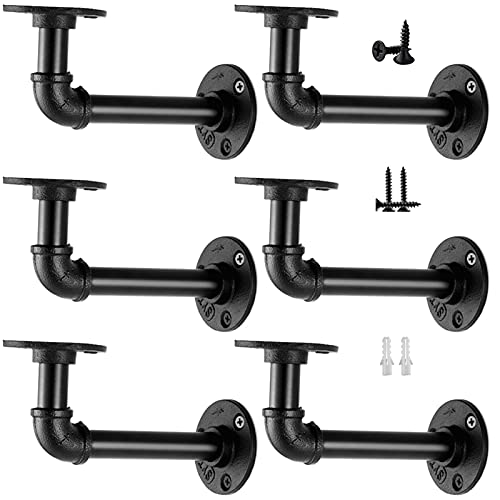
2. Open shelving from reclaimed barn pine on iron pipe brackets
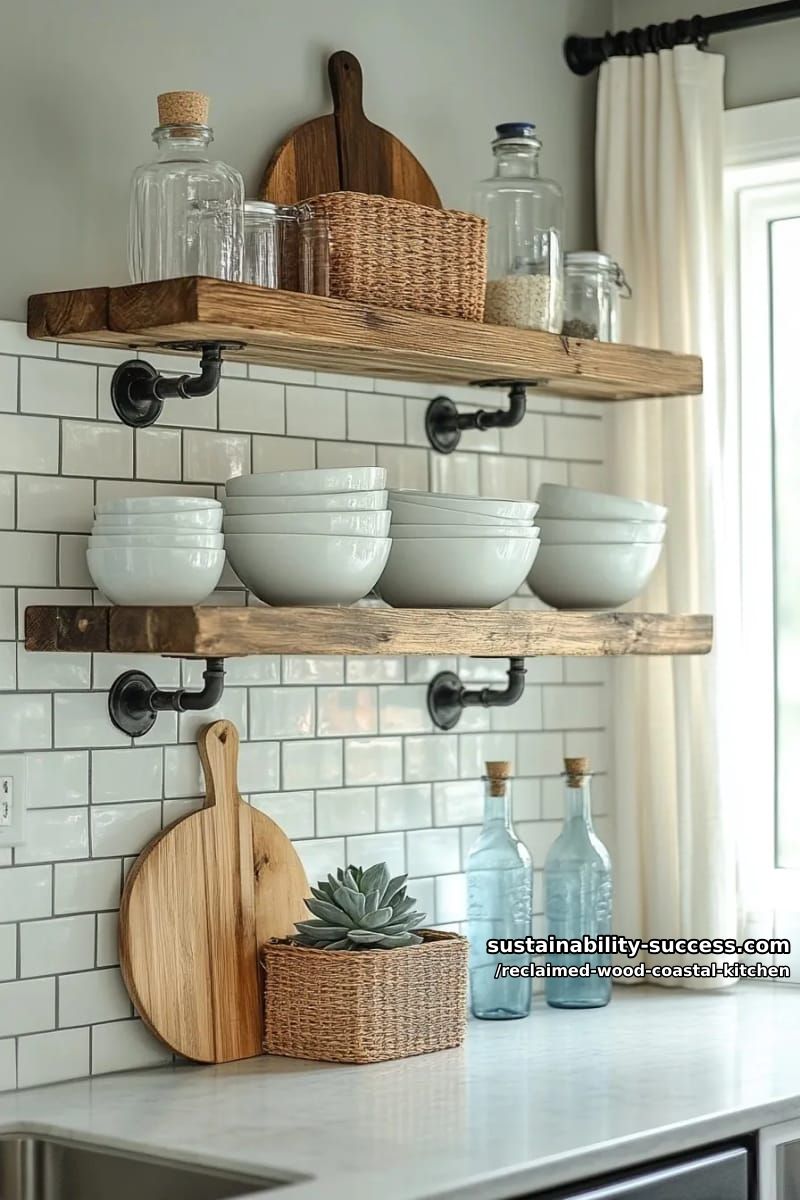
If you do nothing else on this list, do this. Two shelves of real barn pine, an inch and a half thick at minimum, sitting on black iron pipe brackets. That's it. The fake reclaimed stuff at big-box stores never manages this kind of visible heft. Thickness is what makes it work. Under 1.25 inches and you've got a plank screwed to a wall. Over 1.75 inches and the shelf finally looks like it belongs in a room with any actual age.
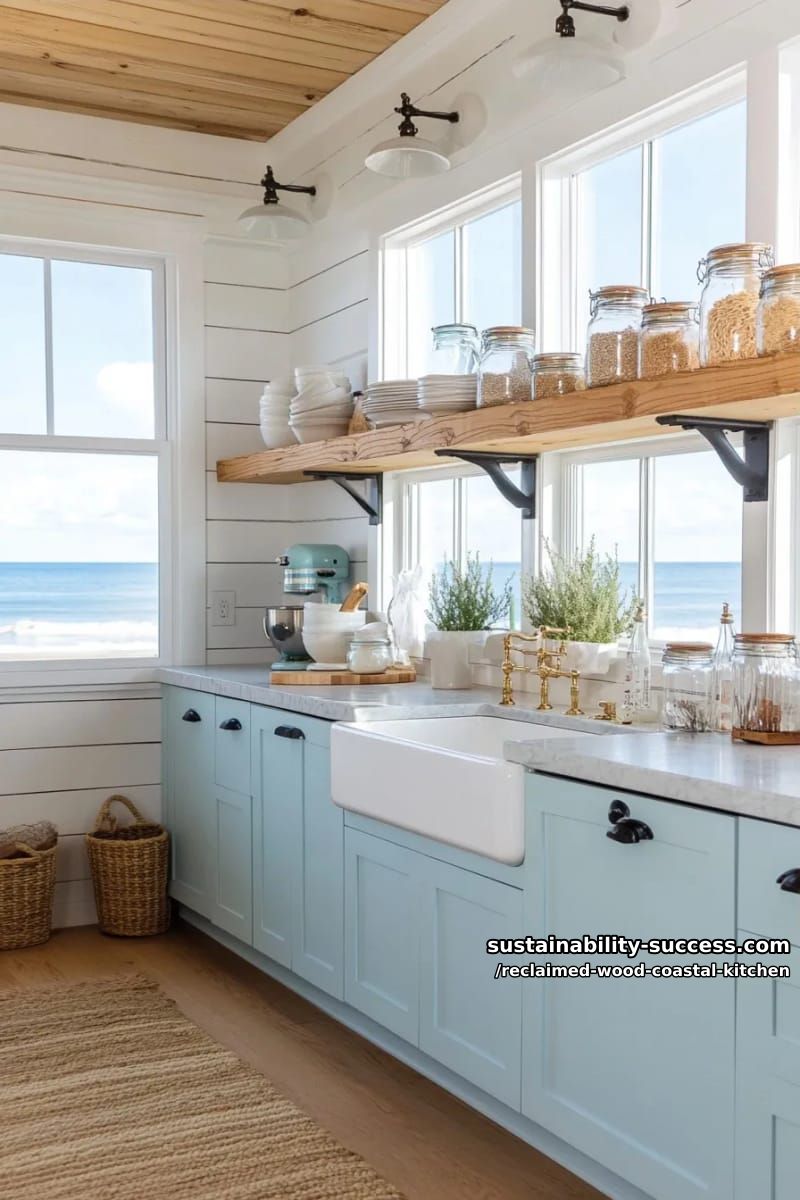
Source from a local architectural salvage yard if you have one. Otherwise Pioneer Millworks or Sustainable Lumber Co.; expect $15 to $30 per board foot finished. Avoid anything labeled "rustic" pine planking at the big box. It's new wood with a stain rolled across it, and you'll see the difference in person within thirty seconds.
3/4-inch pipe at 12-inch depth handles a 2-inch plank loaded with stoneware. Six brackets cover two 4-foot shelves with one bracket to spare.
3. A backsplash of salvaged Indonesian boat teak
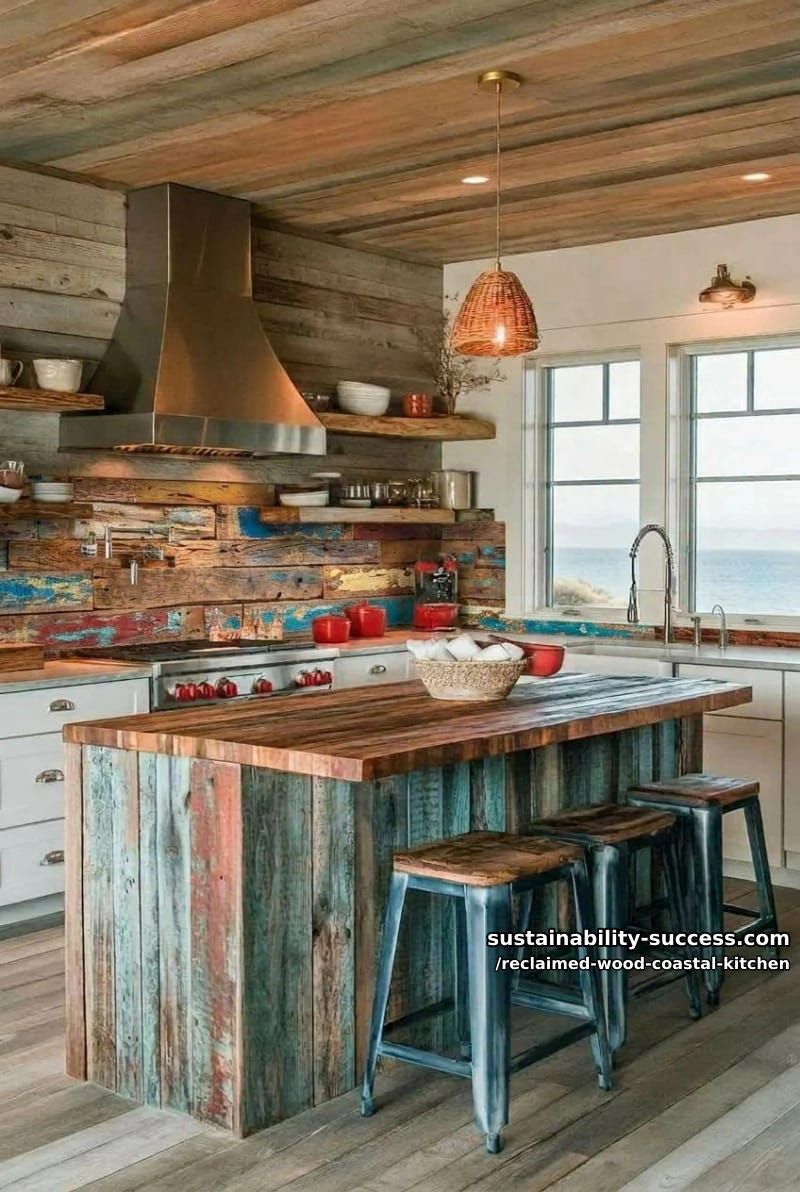
Every year, retired Indonesian fishing skiffs and phinisi schooners get pulled apart along the Java coast; the teak goes to a handful of mills in Bali and Yogyakarta. Chic Teak's Marina Del Rey collection comes from exactly that pipeline , old skiffs once painted in the bright vivid colors fishermen used off the Island of Java. The same supply chain feeds Indoteak Design and the Realstone Systems boxes you'll see at Home Depot. The flecks of red and blue on the surface? Not stain. That's what's left of the boat.
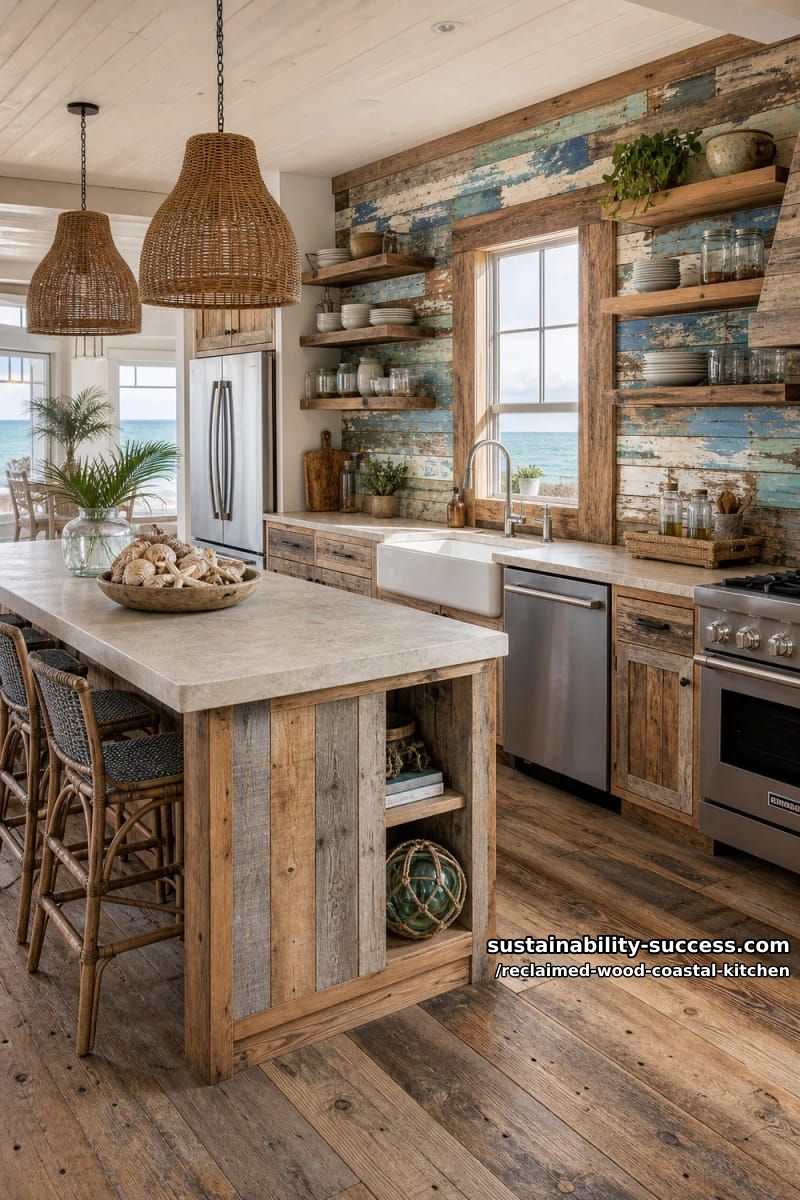
The backsplash is the one place you can lean all the way into patina, because nothing rubs against it. Specify panels between half an inch and three-quarters thick so they sit close to the wall, and seal with a thin coat of tung oil to handle splatter behind the cooktop. Skip the strip directly behind the burners. Install stainless or honed marble in that 30-inch zone and transition to teak on either side.
Do this
- Buy from a supplier who’ll name the boat type (phinisi, jukung, fishing skiff) and the region. If they can’t, that itself is information.
- Visible plug holes and bolt impressions, please , not “boat-wood-look” engineered planks.
- Fire-rated backer near a gas range, no exceptions.
Avoid
- Wayfair listings that say “inspired by reclaimed boat wood.” That’s a description of new teak finished to look weathered.
- Direct burner zones , grease soaks in and the teak loses readability inside a year.
- Polyurethane. It fills the cracks and kills the texture you paid for.
4. A reclaimed shiplap ceiling, painted only if you have to
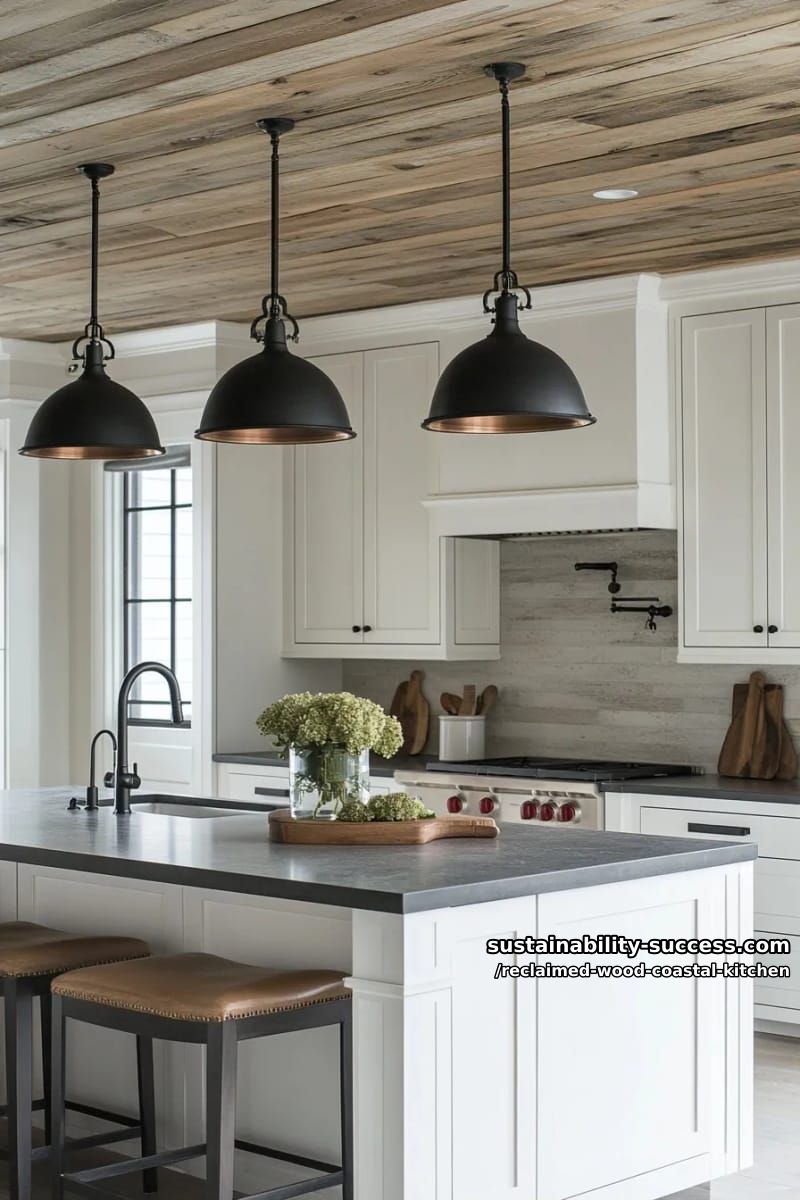
The coastal cliché is white-painted shiplap overhead. Fine , Sherwin-Williams Alabaster (SW 7008) is what most designers reach for if you must paint. But if you've sourced real reclaimed boards, leave them natural. The ceiling sits in shadow most of the day, so the wood stays quiet on its own.
Most shiplap sold as "reclaimed" at Lowe's and Home Depot is new pine with grooves milled in. Real reclaimed shiplap comes off the walls of demolished barns, mills, and pre-war houses, and it costs $7 to $15 per square foot installed. Ask the supplier for the building of origin and rough decade. A reputable yard knows. If they shrug, walk.
5. Cerused reclaimed white oak cabinetry
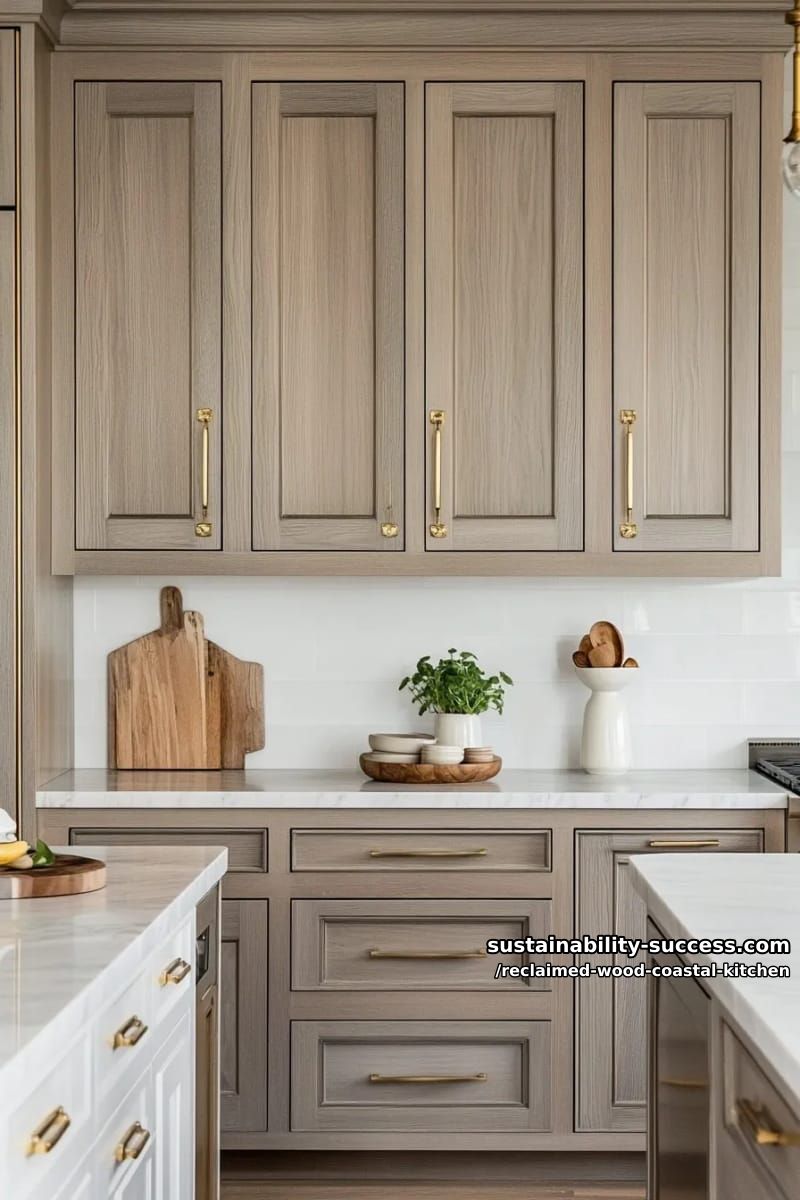
Cerusing is a 16th-century finish. White pigment gets rubbed into the open pores of a hardwood, then wiped off, leaving the grain reading chalk-white against a darker base. The pigment that gave the technique its name was ceruse , a white lead compound used in 16th century Europe before someone figured out it worked on wood. Cerused wood mutes the original color and brings the grain forward. On reclaimed quartersawn white oak pulled from old industrial buildings, the result reads coastal without going anywhere near a starfish.
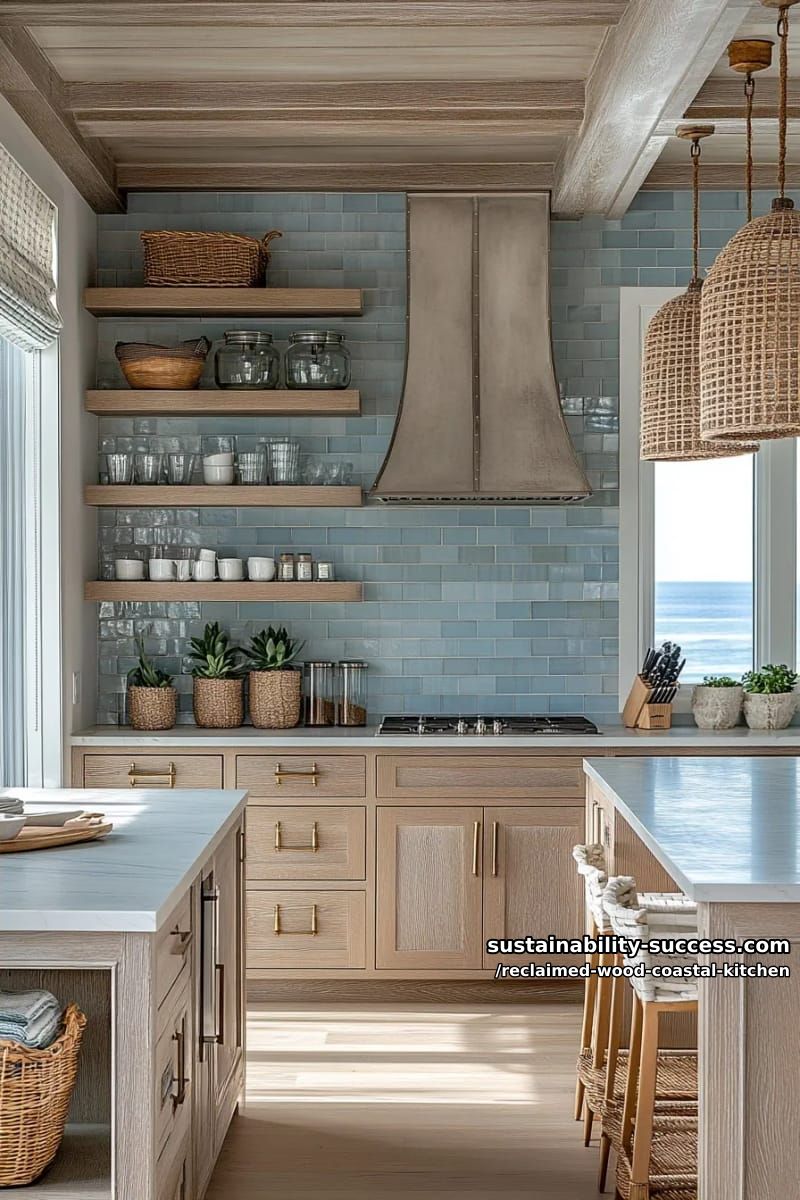
Red oak is the species with the more open pores, making it the most receptive to cerusing wax. White oak's pores are partially sealed with tyloses , the same cellular plugs that make it watertight for barrel-making , producing a subtler, less dramatic cerusing effect. Both species work, and white oak's cooler, neutral tone suits coastal aesthetics, but the claim about which oak has more open pores is reversed. Pine and maple don't have the grain structure for it. Amy Howard liming wax is about $15 a tin at Ace Hardware, and one tin does roughly a small island's worth of doors.
Pale grain on a slightly grayer base mimics weathered driftwood, minus the actual driftwood , which holds salt, splits, and is a disaster as cabinet stock. The contrast between pore and field also reads at distance. The cabinets stay legible across a 20-foot great room where flat-painted cabinets would disappear.
6. An antique factory workbench as the kitchen island
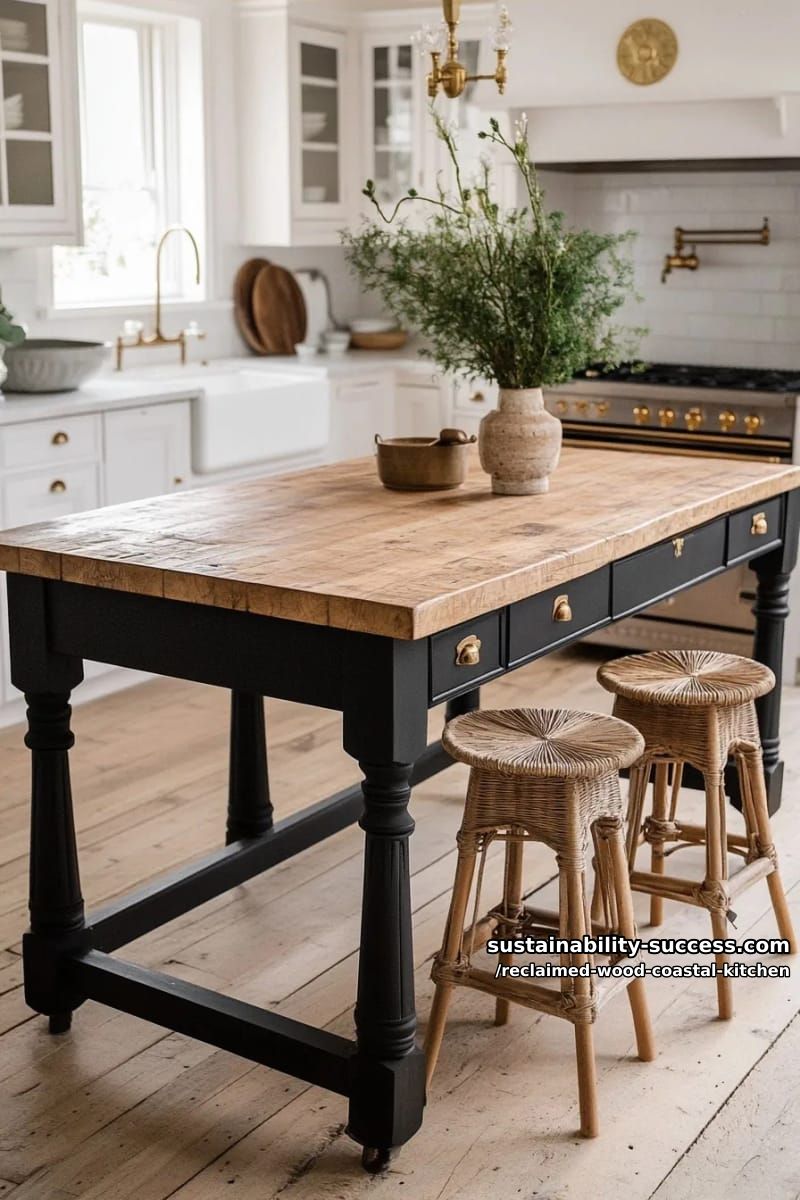
The factory workbench is the most overlooked move on this list. Old factories, shoe shops, machinist studios , when they shut down, the benches get auctioned. Tops run 2 to 3 inches of laminated maple or beech, the bases are heavy steel, and the whole thing costs a fraction of a custom island built to mimic the look. eBay and architectural salvage sites turn them up between $400 and $1,500 depending on length, vise mounts, and provenance. Provenance is doing a lot of the work in that price spread, and it's worth paying for. A bench with a city and a date on it photographs differently than one without.
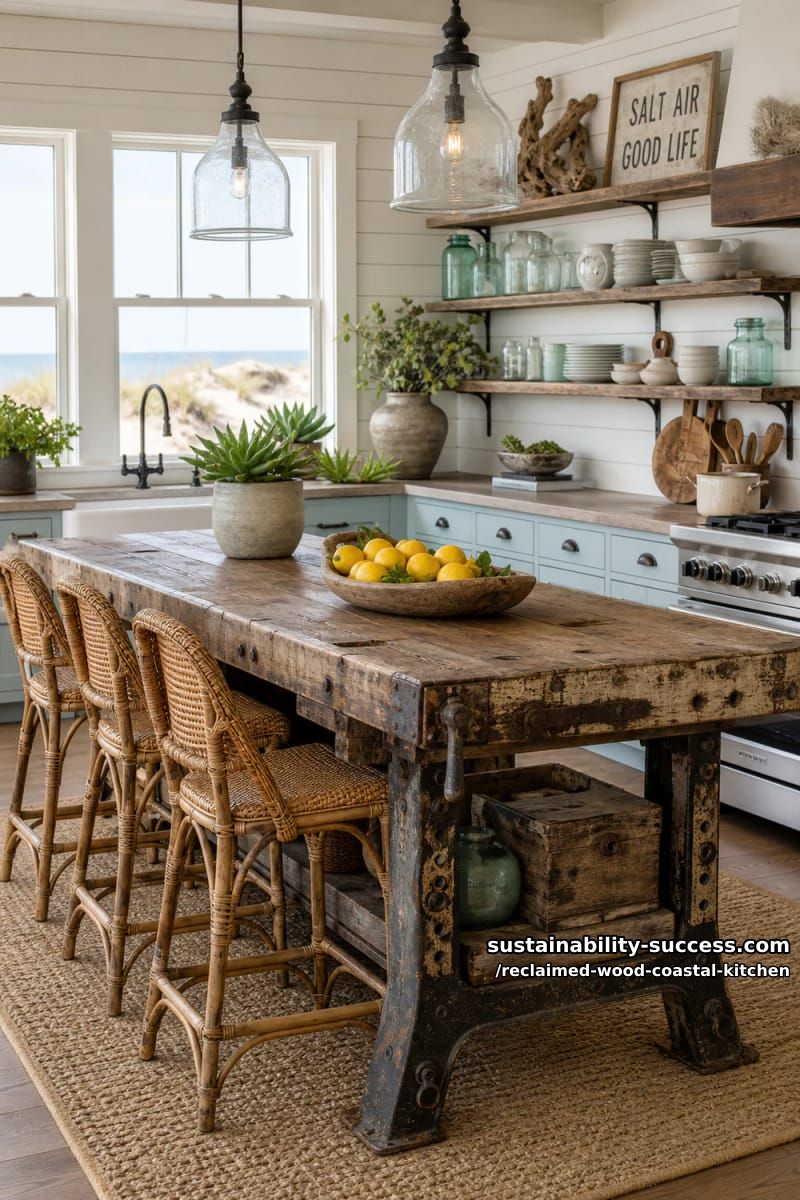
Treat them seriously, though. A workbench that lived through a century of industrial labor has absorbed plenty of unidentified material, and the lead paint era ran into the 1970s. Strip the top to bare wood. Fill old bolt holes with brass plugs and leave them visible , don't try to pretend it never had a previous life. Finish with pure tung oil, which is genuinely food-safe once cured.
Test the original finish with a $15 lead swab kit before sanding. If it comes back positive, sand under HEPA containment or hire a remediation pro , this isn’t optional. Then strip to bare wood, neutralize with a vinegar wipe, let it dry for 48 hours, and apply three thin coats of pure tung oil with 24 hours between coats. The oil takes 30 days to fully cure for food contact.
7. Wide-plank reclaimed pine flooring, finished in tung oil
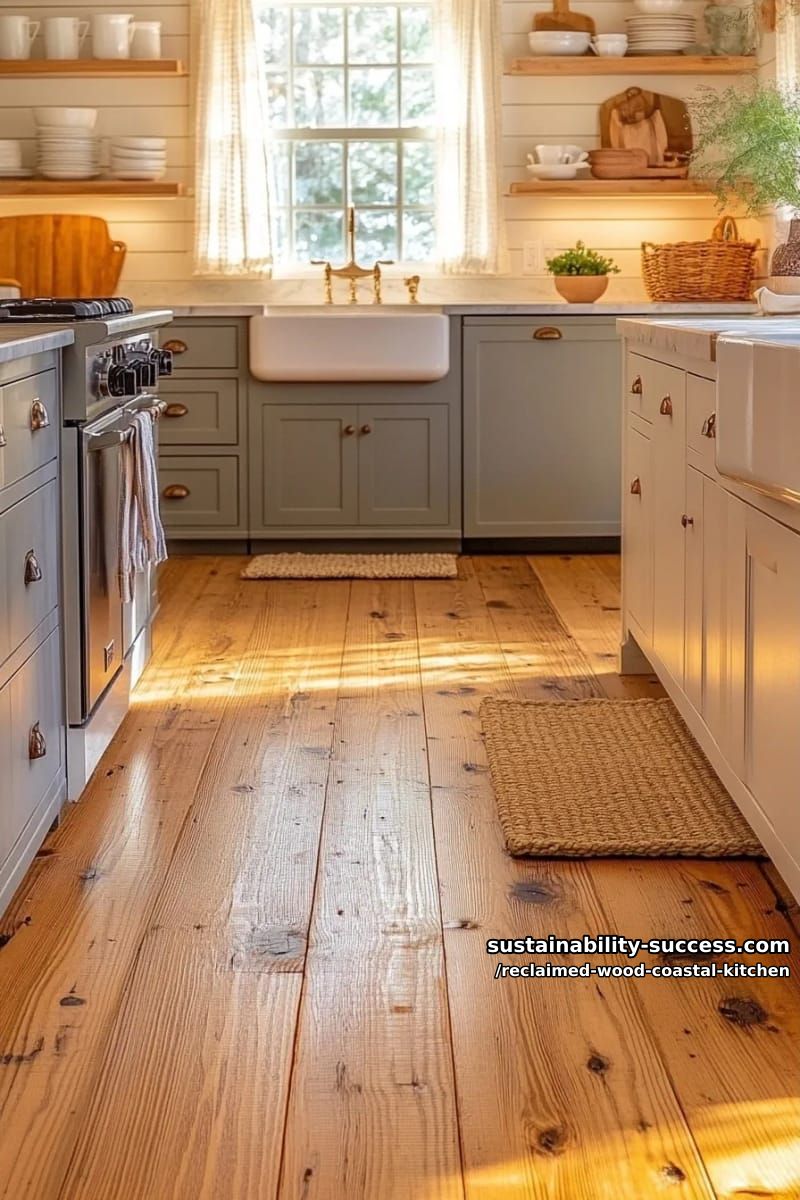
Heart pine pulled from 19th-century mills and factories is the flooring that anchors this whole aesthetic. The wood is denser than anything you can cut today , those trees grew 200 to 400 years before harvest , and the color sits between honey and faded amber depending on age. Pioneer Millworks runs reclaimed flooring out of mills in Oregon and New York; their Settlers' Plank Mixed Hardwoods blends native northeastern species like ash, elm, hickory, and oak. Their reclaimed lines run roughly $12 to $20 per square foot.
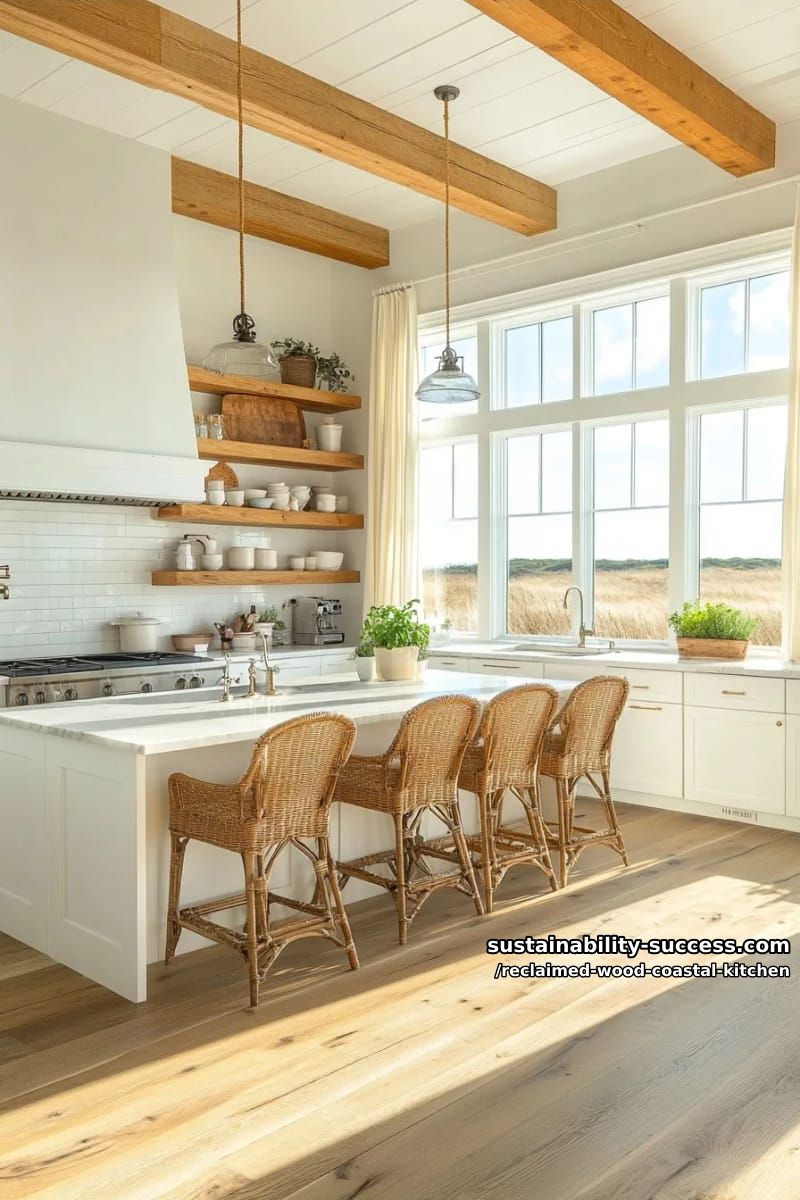
Skip the whitewash. I know it's tempting in a coastal kitchen, and I know Pinterest has good examples. From what I've seen the result reads thin after about two years, and undoing it is a project. A penetrating oil keeps the warmth, develops a patina instead of wearing through, and you can spot-repair it without sanding the whole floor.
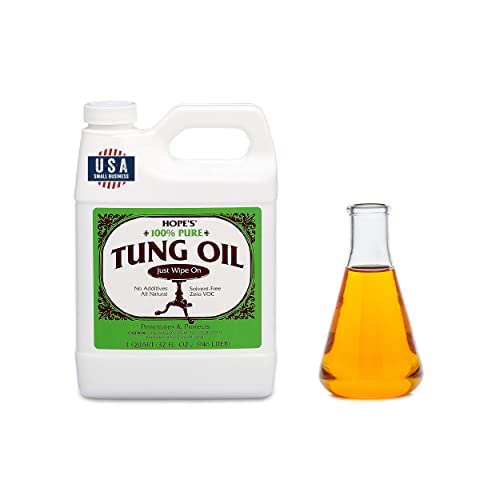
Pure tung oil — not “tung oil finish,” which is usually a varnish blend. A 32-ounce bottle covers about 100 square feet at three coats. Food-safe once cured.
8. A reclaimed timber range hood cover
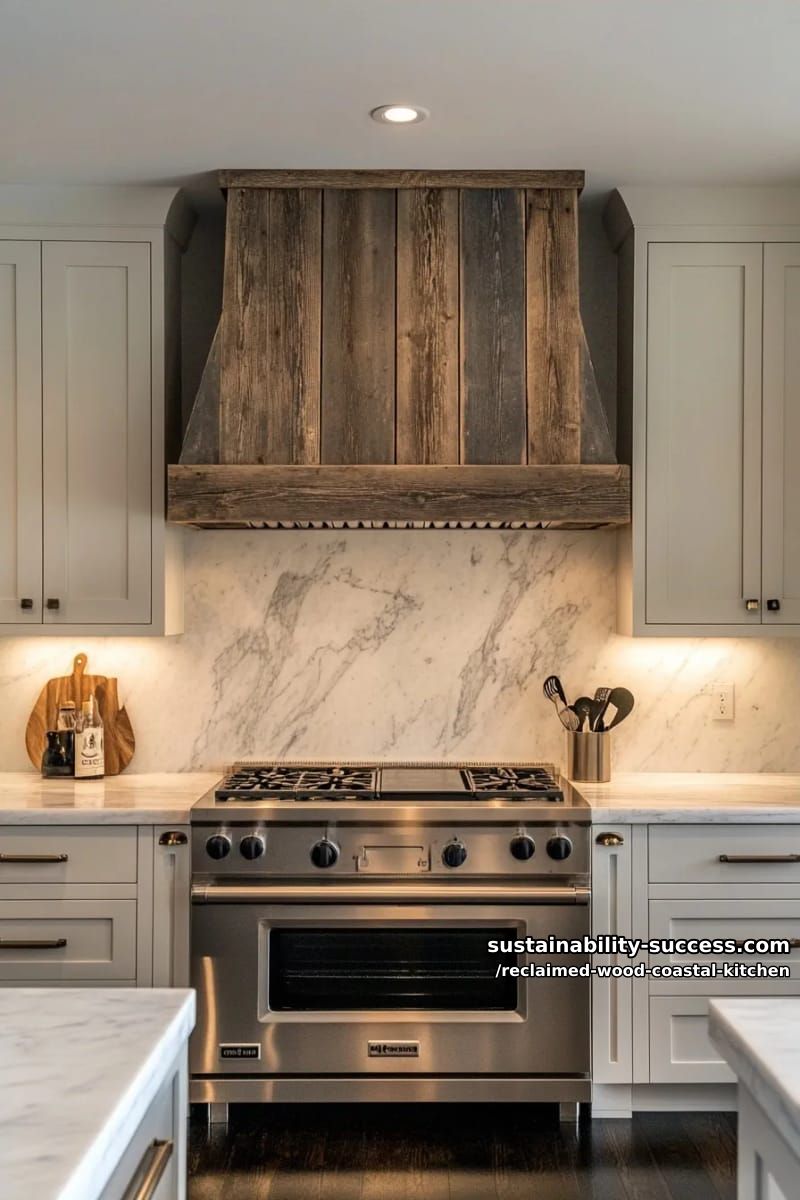
Custom hood covers fail for one reason: grease. Cooking vapor coats raw wood directly above a range and within six months you've got a sticky surface. The fix is to wrap a properly vented stainless liner, keep the wood at least 30 inches above the cooking surface, and finish with a polymerized tung oil that resists oil absorption.
Mixed-width planks read more interesting than uniform ones. Tell your cabinet maker to run vertical boards in widths between 3 and 6 inches, randomly distributed, with a 1/8-inch reveal between each. The look references shiplap without literally being shiplap, which by 2026 every kitchen Instagram has overdosed on.
9. A salvaged ship's ladder to a loft pantry
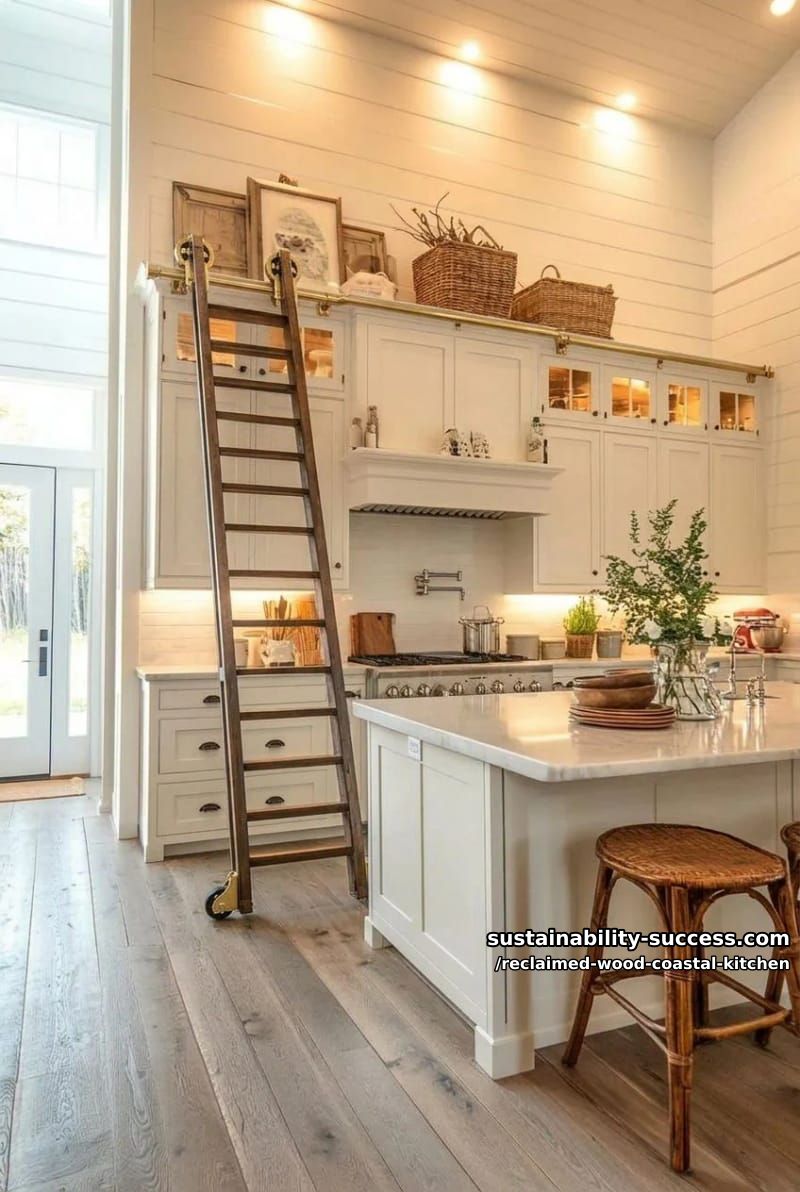
This one needs ceiling height. If your kitchen is 8 feet, skip it. Ten feet and up, a rolling ladder on a salvaged or new iron track gets you to a loft pantry, a high cabinet run, or one of those glass-front uppers nobody can actually reach. Build the ladder from reclaimed white oak or beech (not pine , too soft for stepping), and pair it with a real sliding hardware kit rather than a barn-door-track approximation.
Two paths from here. Buy just the hardware and have a millworker build the ladder from boards you sourced: budget $300 to $500 for hardware and another $400 to $800 for a custom oak ladder. Or buy a complete kit. The Rockler kit below sits in the middle: track and rolling hardware plus the ladder, all in for what a custom build would cost in materials alone.
10. Exposed reclaimed ceiling beams (not the faux box kind)
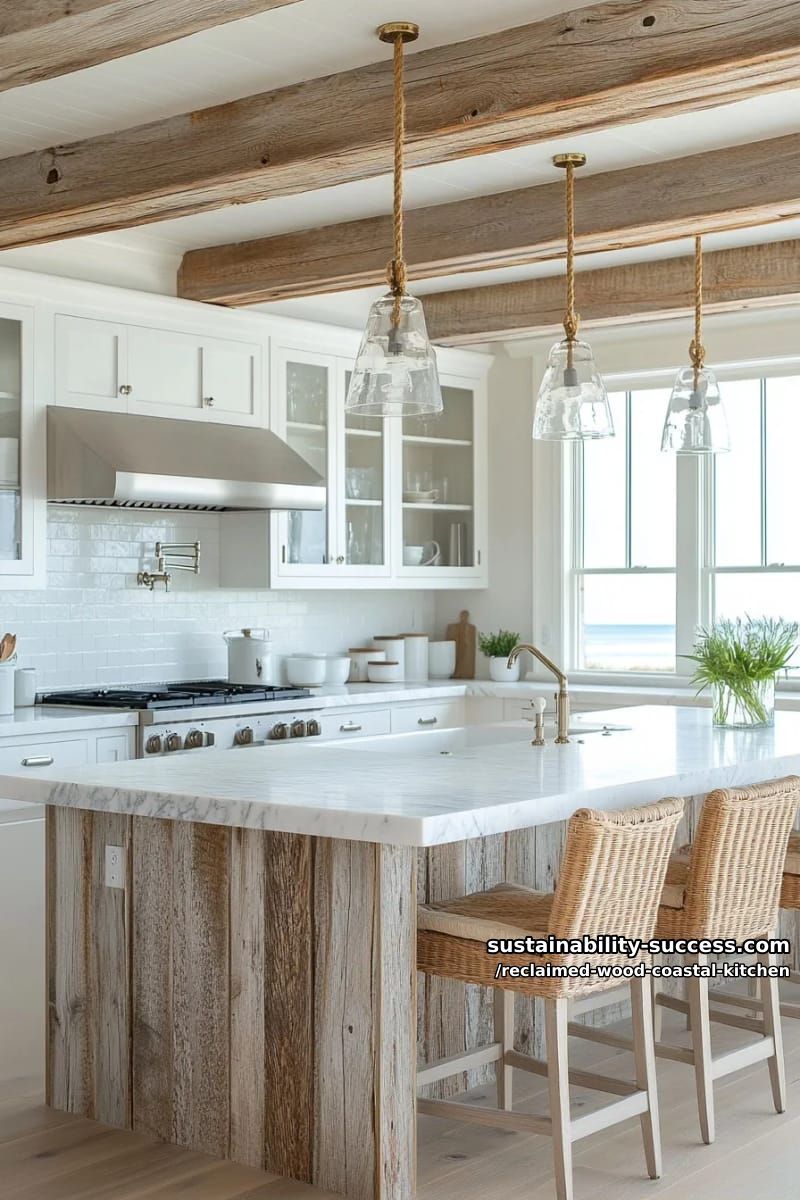
The faux box beam exists for a reason , real beams are heavy, need structural review, and cost more , but in a coastal kitchen the faux version always looks like theater dressing. If you can swing the real thing, choose hand-hewn over sawn. Broadaxe marks catch light differently across the day. They give the ceiling something to do at noon, when everything else flattens out.
Douglas fir reclaimed from West Coast warehouses and mills is the right species for most kitchens. It's structurally sound, takes oil cleanly, and runs darker than reclaimed oak, which keeps the ceiling visually grounded above a light-cabinet room. Pine beams from barns work for a more rustic read; if your kitchen is white and serene, the pine will fight it.
| Species | Typical source | Color | Approx. cost per linear ft |
|---|---|---|---|
| Reclaimed Douglas fir | West Coast warehouses, mills, 1900 to 1940 | Deep amber to chocolate brown | $30 to $60 |
| Reclaimed oak | East Coast barns, mills, 1800 to 1920 | Mid brown with gray weathering | $35 to $80 |
| Reclaimed pine (hewn) | Barn beams, 1850 to 1900 | Honey to faded amber | $20 to $45 |
| Reclaimed chestnut | Pre-blight Appalachian barns | Warm tan to deep brown | $60 to $120 |
11. Reclaimed dock and pier wood as island base paneling
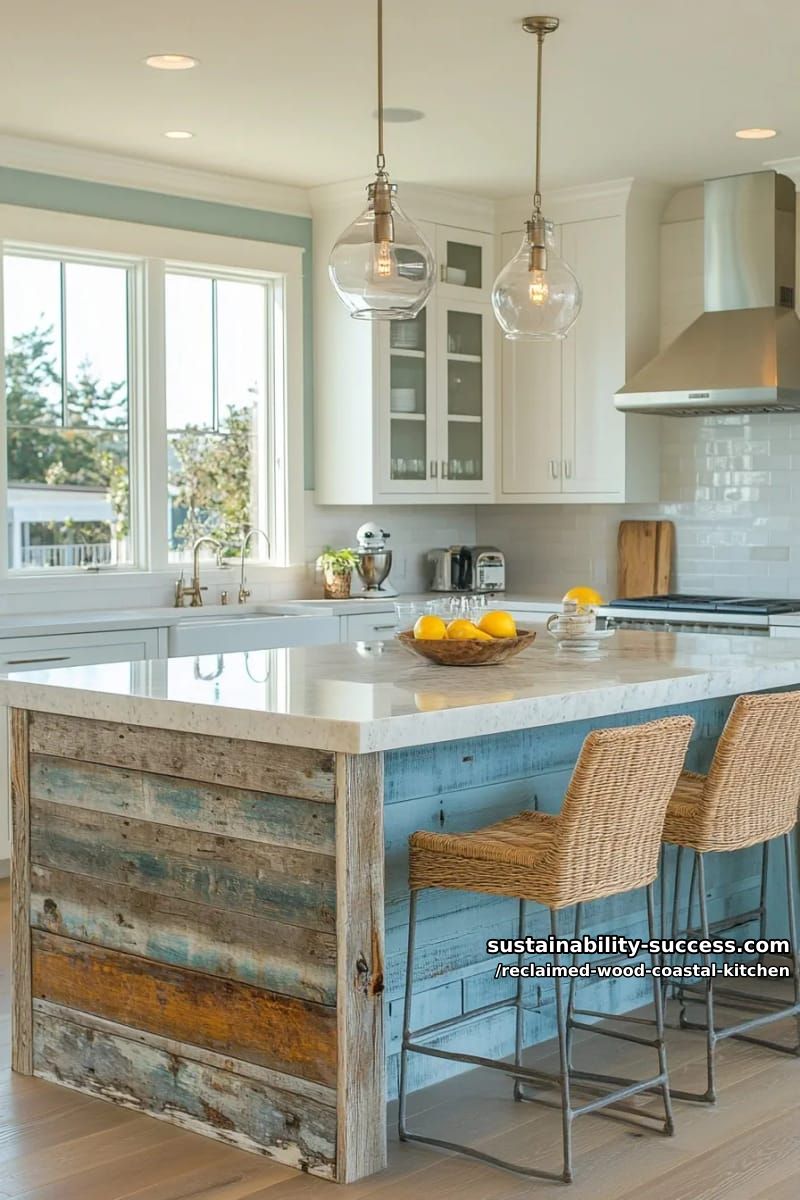
Most coastal kitchens stop at the countertop and call it done. The base of the island , the side facing the dining table , almost always gets painted MDF panels and a row of bin pulls, which is a waste of a surface that's already begging for something rougher. Below eye level you can lean hard into texture without it dominating the room. Reclaimed dock, pier, and boardwalk wood, with the salt-eroded grooves and bolt holes left in, gives you a layer of patina that nothing else can fake convincingly. This is the only reclaimed surface in a coastal kitchen that has an honest claim to having actually lived near the ocean, which feels worth pointing out.
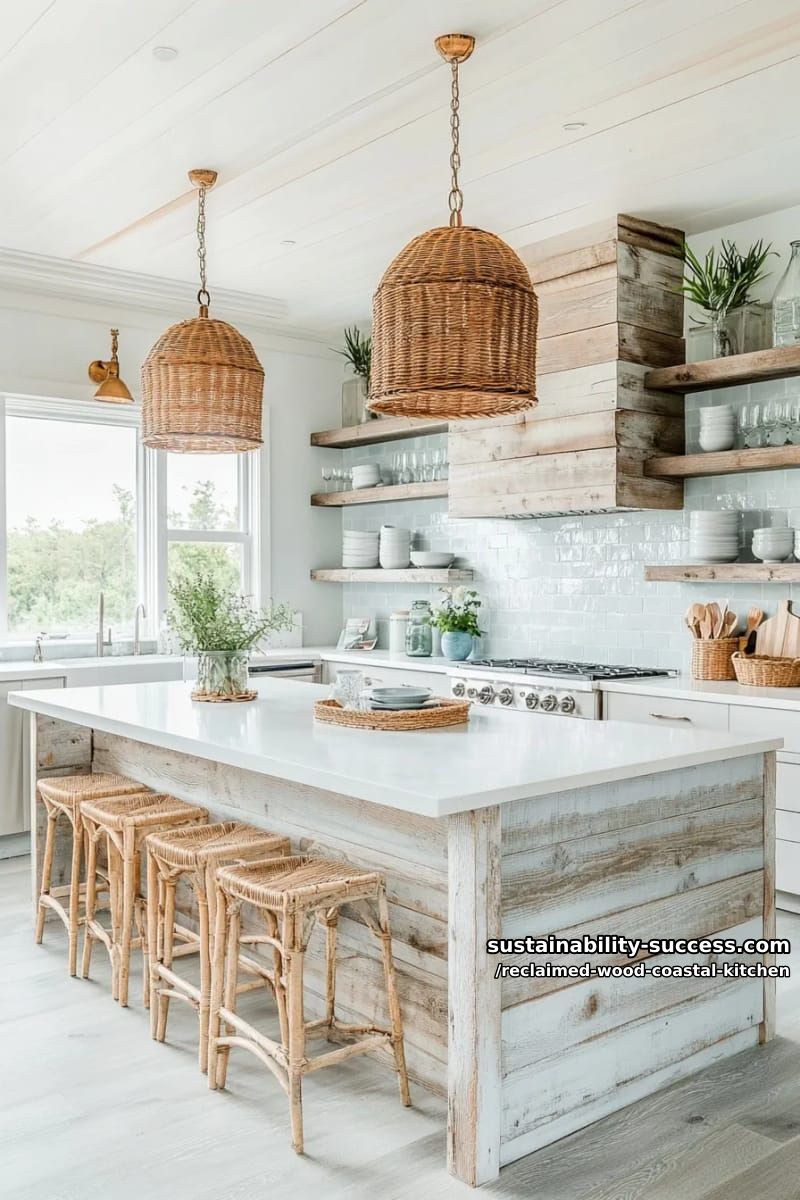
Sourcing requires patience. Coastal salvage operations along the Eastern Seaboard, the Gulf, and parts of California pull dock material when piers get rebuilt; the wood is typically greenheart, ipe, or southern yellow pine treated with creosote (avoid the creosote pieces for interior use). Budget $20 to $45 per square foot for sourced and milled boards.
Dock decking
Horizontal boards off the walking surface. Heavy surface erosion, visible nail and screw holes, gray weathering on the top face with warmer brown underneath.
Pier pilings
Vertical posts pulled from the seabed. Usually ipe or greenheart, with deep checking, marine boring patterns, and barnacle ghosts on the underwater portion.
Boardwalk planks
Wider and longer than typical decking. Usually southern yellow pine or pressure-treated fir , watch for creosote and ACQ treatment, and never use treated boards indoors.
Boat structural timbers
Keels, ribs, gunwales from decommissioned wooden boats. Often oak or teak; expect visible curves and metal fasteners still embedded.
Conclusion
Order one extra square foot of every reclaimed material for every twenty you specify. You'll need it. The boards don't come square, the lengths don't add up clean, and the supplier doesn't keep matching stock past your initial order , this is the part nobody mentions until the floor is half-laid. Past that: if only one of these eleven fits the budget, do the open shelving. Two-inch boards on iron pipe brackets above an existing counter will change a kitchen more than a $5,000 hood cover or a $400-per-square-foot teak floor. If the budget is real, the sinker cypress slab is the one I'd defend at any price; the rest of the room can be ordinary and the slab still carries it. And don't try to do all eleven. Three is plenty.