
The coastal kitchen ran out of steam around the time pickled-oak cabinets started showing up in spec houses. What's still alive in the category is the glass itself. Countertops poured from crushed beer bottles. Backsplash tile pressed from old windshields. Jars from a 200-year-old Italian glassworks.
The cues we read as beach house , saltwater blues, sea-foam greens, light that moves , happen to be the native palette of recycled glass, so the look and the sustainability argument turn up holding hands. That part doesn't happen often.
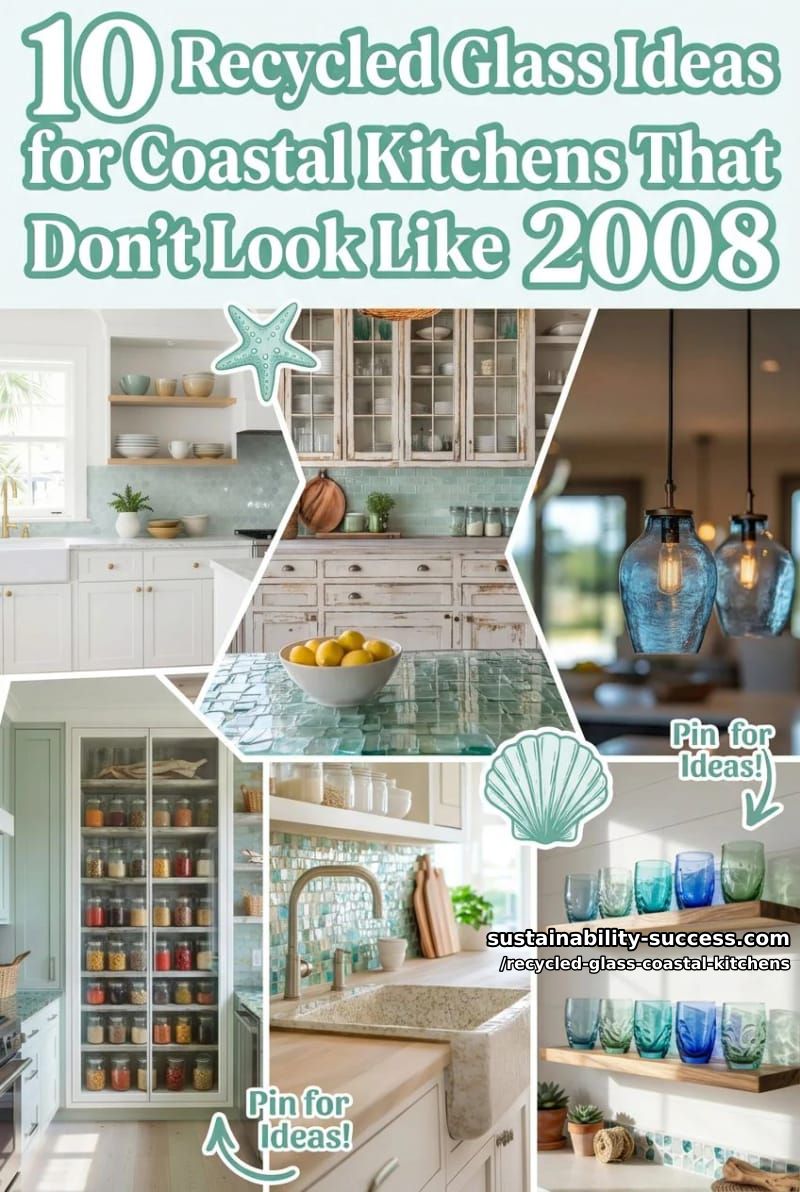
1. A Bretagne Blue countertop with oyster shells in the mix
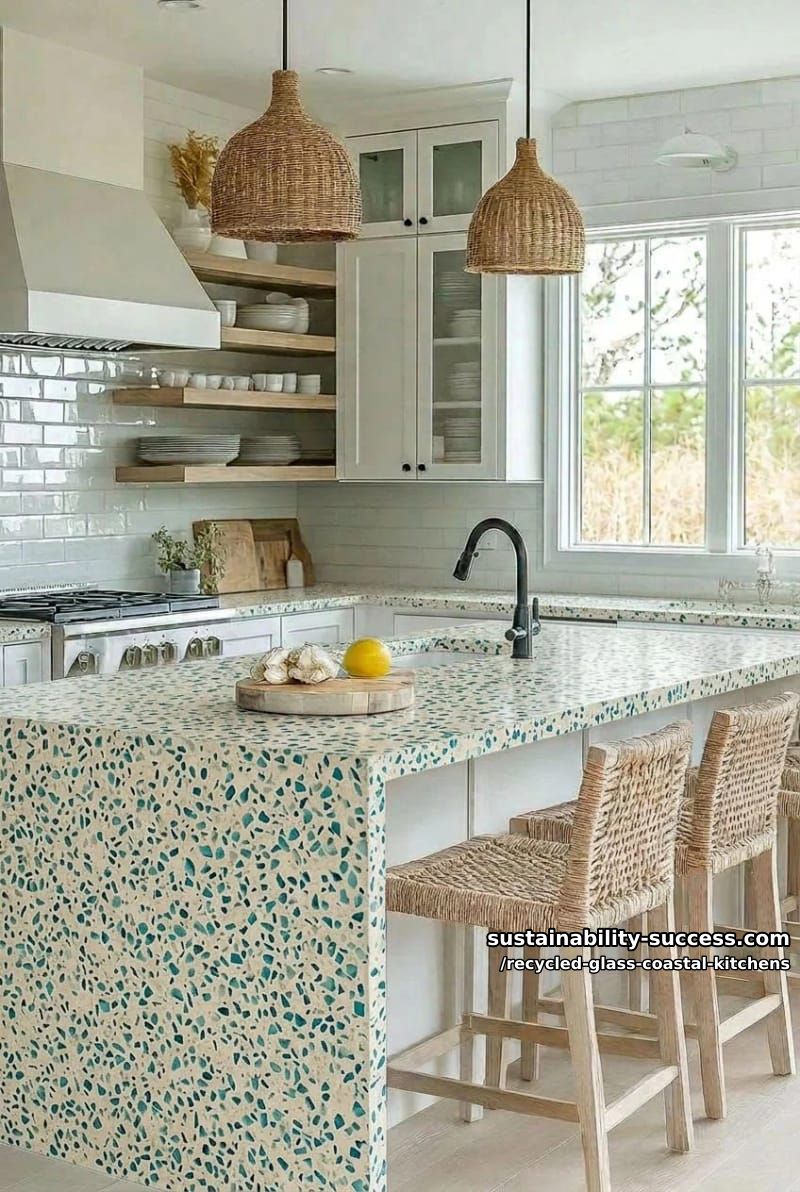
Spend the recycled-glass money in one place, and this is the place. Vetrazzo blends architectural glass and oyster shells in a cement binder to make Bretagne Blue: off-white background, glass in several hues of blue and blue/green, white and tan flecks from the shells. The shells are what keep the slab from reading aquarium-blue. They muddy the palette in exactly the right way, and the muddying is the whole reason it works.
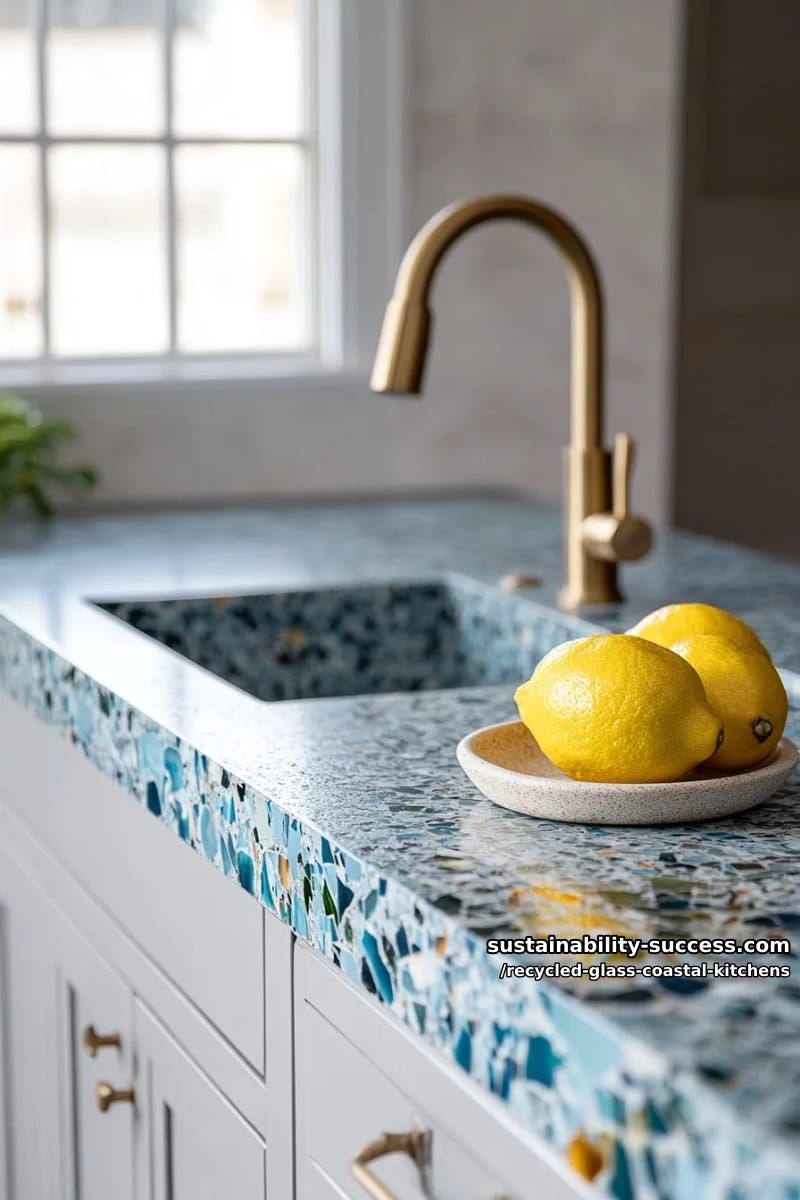
Pricing is the part nobody warns you about. Vetrazzo runs between $85 to $165 per square foot for material alone, and a typical 35-square-foot kitchen lands close to a Caesarstone budget once installation is in. The handcrafted thing isn't marketing copy. Vetrazzo produces only 16 recycled glass countertop slabs per month, with eight skilled artisans handcrafting each slab. Plan for the lead time before you tear out the old counter.
Pure crushed-glass slabs in coastal blues read cartoonish on a large run. Add a non-glass aggregate , shell, mother-of-pearl, a tan stone fine , and the eye gets somewhere to rest. Bretagne Blue does this inside the slab. If you’re sourcing from a smaller fabricator, ask whether they’ll mix in oyster or pearl chips before pouring.
2. Reclaimed window sashes used as upper cabinet fronts
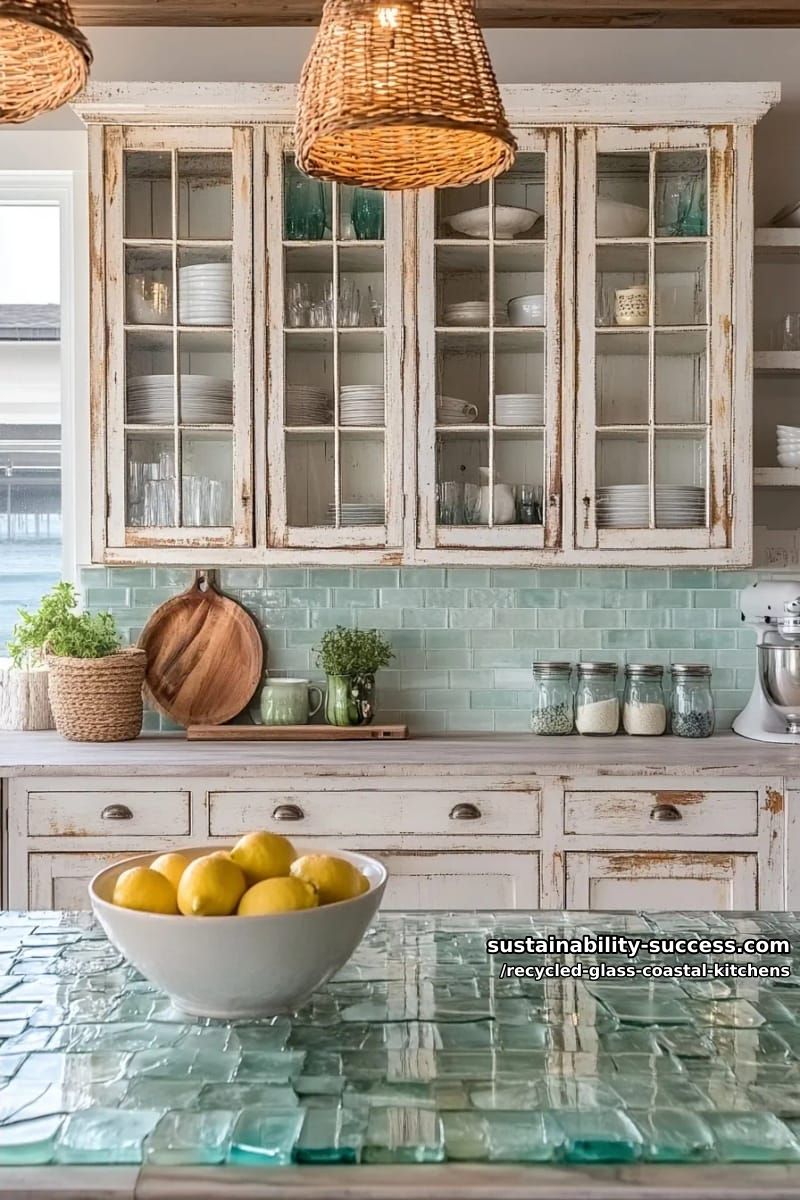
Old wood-sash windows have the proportions and divided lights that custom cabinetry can't fake. They turn up at architectural salvage yards constantly, in the $40 to $90 range per sash. The catch is hardware. You'll need to mortise new hinges into the rails, swap the rope-and-weight mechanism for a pivot or magnet, and add a low-profile turn-knob. Figure $80 to $200 per door for a finish carpenter who knows what they're doing.
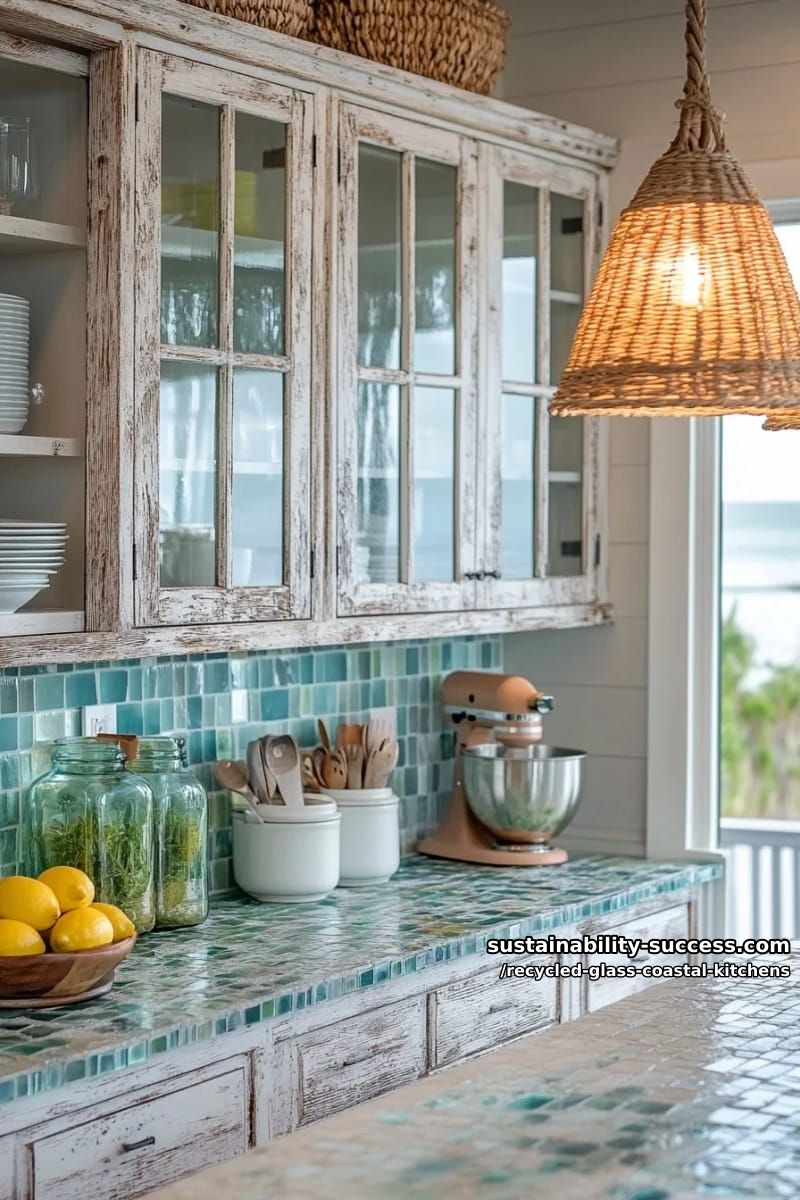
The glass is the real payoff. Old wavy glass , mid-century or earlier, before float glass became standard , refracts light in a way no current product reproduces. It's a reused material with a built-in optical signature. Pair the sashes with cabinet bodies in a flat clay paint instead of high-gloss white, so the sash reads as the focal element.
3. A pale-aqua penny round backsplash in 100% recycled glass
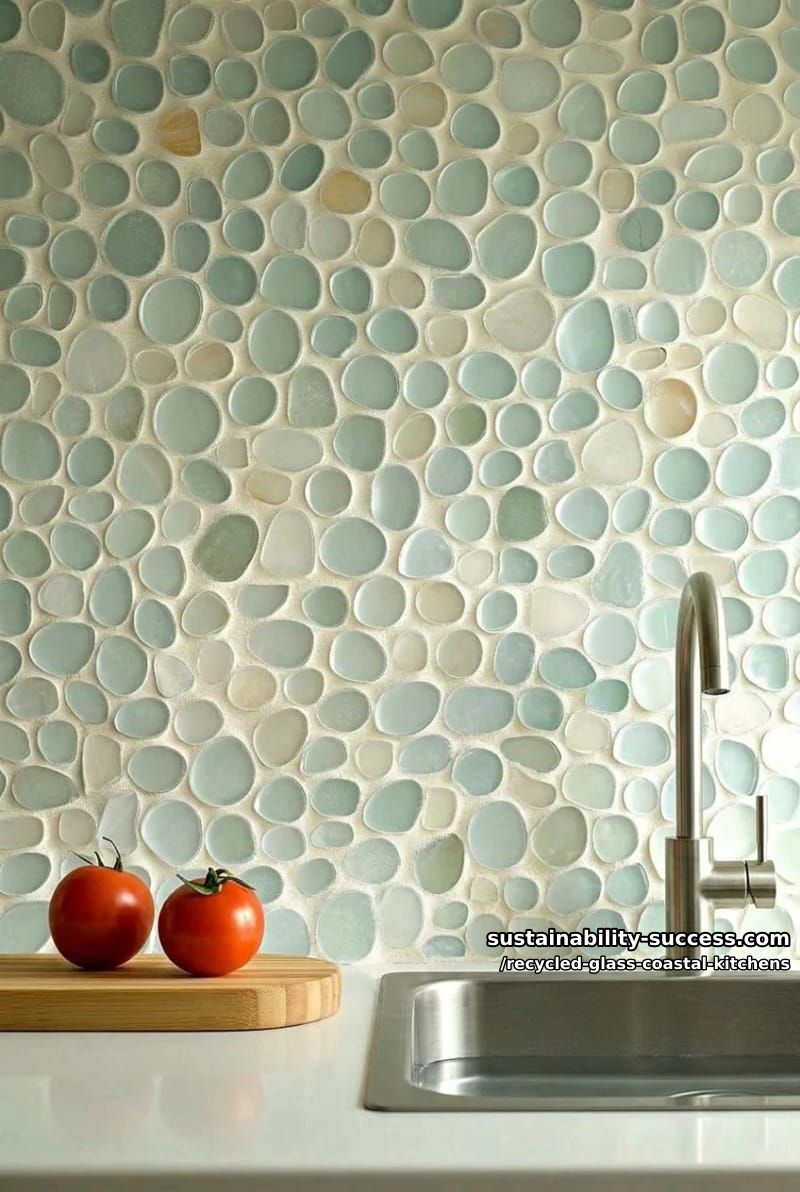
The look you want is opaque-with-depth, not the wet candy-glass of older recycled mosaics. Susan Jablon Mosaics carries over 100 styles in both 1 inch square and 1×2 inch rectangular tiles that are SCS certified 100% recycled, and Oceanside Glasstile has been doing this since 1992, founded as pioneers of handcrafted glass tile using recycled bottle glass. Penny rounds , 1-inch circles on mesh , hide grout lines better than square 1×1 mosaics, which read busier from across the room.
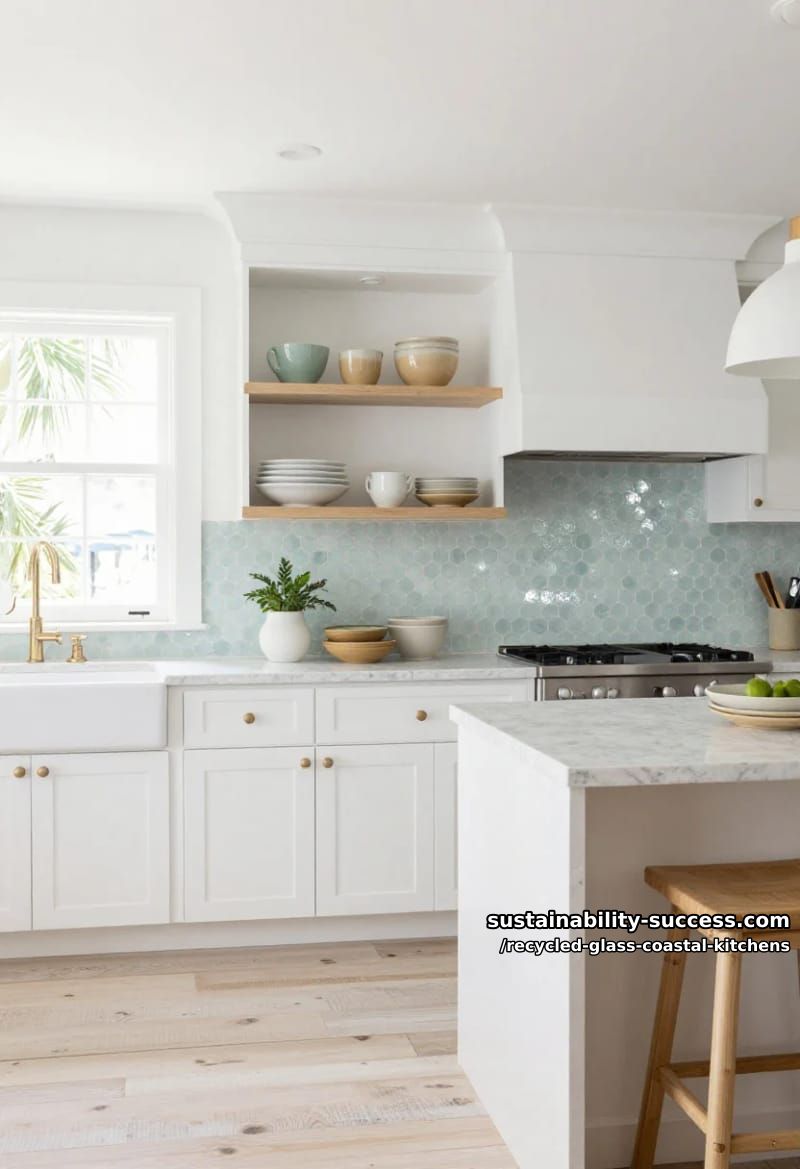
Skip the budget end of this category. The cheap recycled glass mosaics have inconsistent thickness sheet-to-sheet, which slows installation and gives you a wavy reflection plane. Pay $18 to $35 per square foot, not $6.
Do this
- Specify an unsanded grout in warm white or pale putty so the glass reads as the texture, not the grid
- Run the field from counter all the way up to the underside of the upper cabinets. Stopping behind the range looks unfinished from across the room.
- 15% overage. Batches vary more than the spec sheets admit.
Avoid
- Iridescent finish over full coverage. Tips into mermaid territory fast.
- High-contrast grout , the grid pattern takes over and the glass loses
- Dark grout against pale aqua reads as a swimming pool, not a kitchen
4. A glass-front pantry built around Bormioli Fido jars

This is the move that hides almost everyone's pantry problem. Swap upper cabinet doors for one shelf of Fido jars , all the same brand, varied sizes , and the visual chaos of cereal boxes and bag clips just stops being part of your kitchen. The Fido is the right jar because Bormioli Rocco's Fido jars are crafted from Italian glass with a rubber gasket to keep food fresh and a metal clamp for easy use, available in a variety of sizes.
The trick that makes a wall of them work is that they share the same neck and bail proportions across sizes. Twelve jars at different volumes still read as one coherent grid, mixed contents and all.
Bormioli is also a working sustainability story, which is rare for an Italian glassmaker that goes back this far. Made in Italy since 1825, Bormioli Rocco's continuous investment in sustainability includes producing zero unusable refuse, reducing emissions and water consumption, and incorporating at least 30% recycled glass into their new products. The jars themselves are 100% recyclable and refillable indefinitely.
The 50 oz size does the most work. Tall enough for spaghetti, short enough to stack on a 12-inch shelf, and the clearest read of contents from across the room.

5. Hand-blown seeded pendants from a named US glass studio
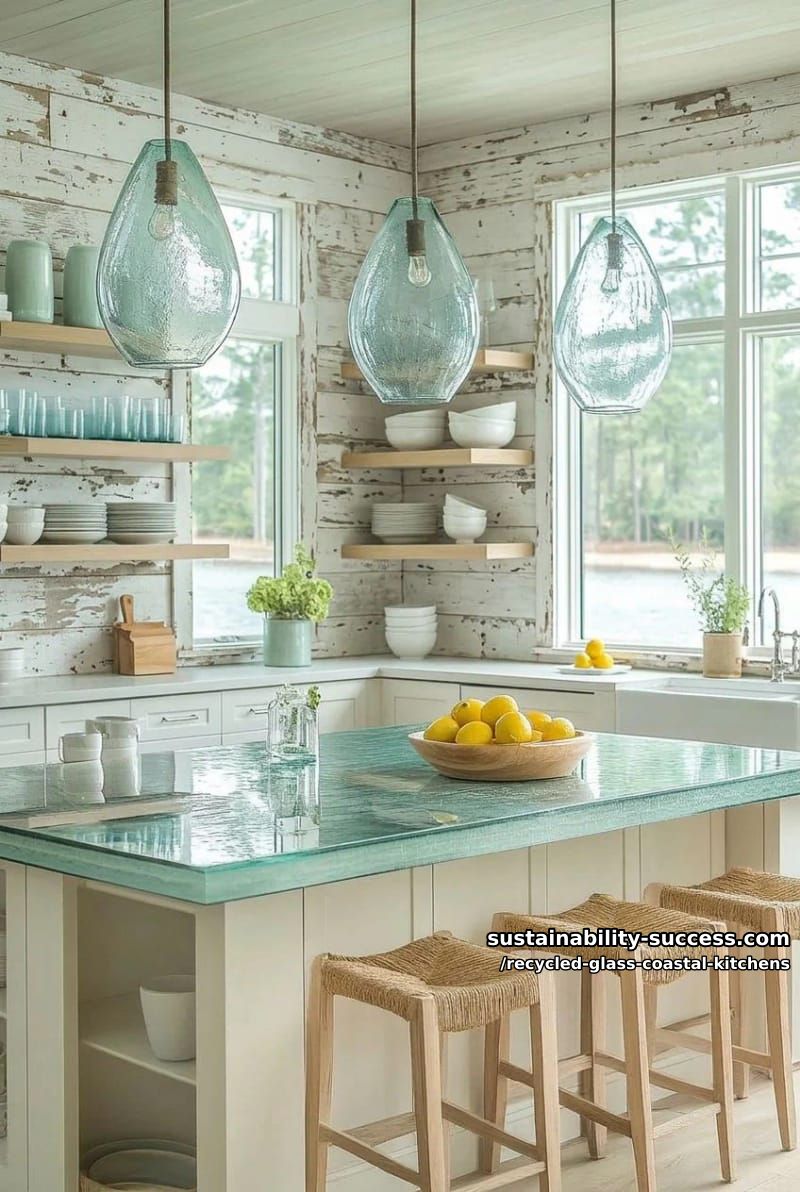
Generic seeded-glass pendants from big-box lighting are factory products with mold-cast bubbles for consistency. The recycled, hand-blown version is the opposite proposition: every bubble is a real air pocket trapped by a person at a furnace. Bicycle Glass Co. in Minneapolis is one of a small number of US studios doing this at production scale , their seeded glass pendant shade is a bubbled design handcrafted from 100% recycled glass, available in shades including Steel Blue, Eco Clear, Golden Amber, and Slate Gray. The Lunar finish, with the heavier bubble pattern, is the one that reads coastal without being literal.
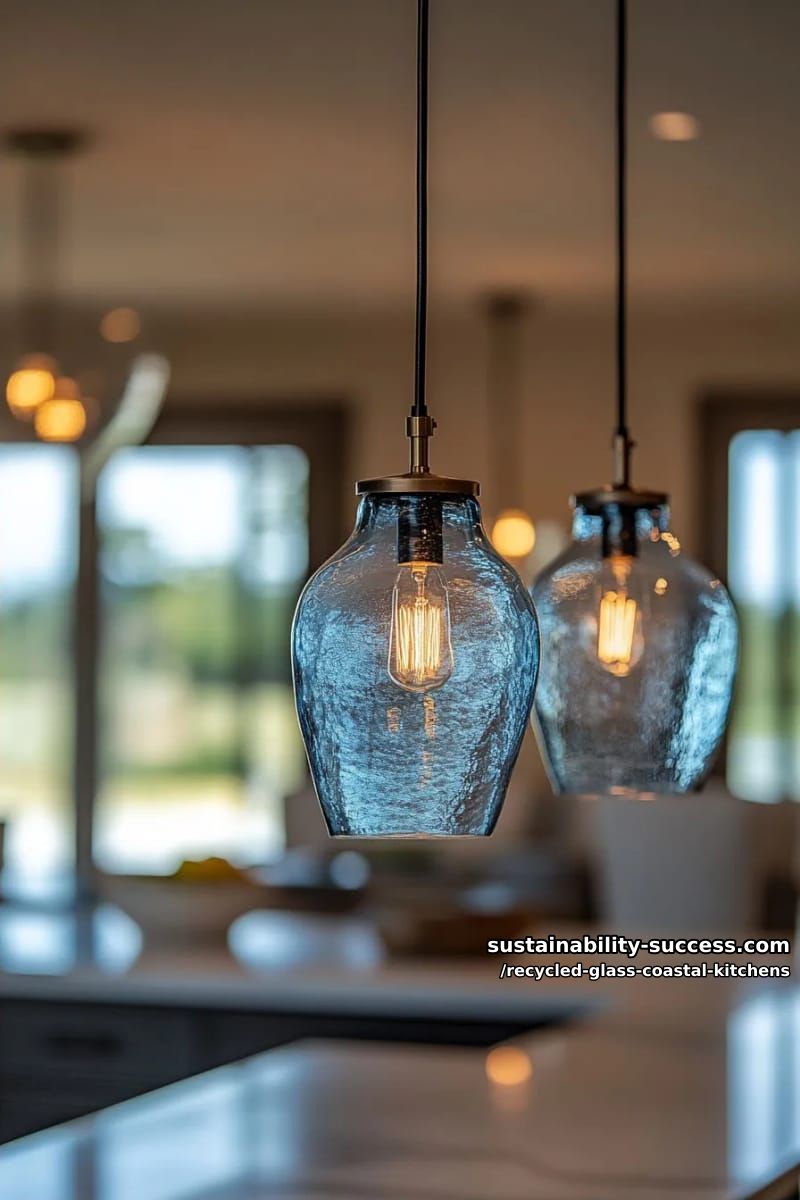
One caveat on count. Three pendants over an island works only if the island is at least 7 feet long. Two pendants for a 5- to 6-foot island. A single pendant looks lonely unless it's oversized , 16 inches diameter or more , and centered exactly. Budget $200 to $600 per pendant for genuine hand-blown US-made. Below that, you're getting overseas mold-blown with cosmetic seeding added on.
Bicycle Glass Co. 147 Single Pendant in Lunar Steel Blue, 100% post-consumer recycled glass
6. IceStone in oyster gray on an island that does the heavy lifting

Where Vetrazzo is the showy slab, IceStone reads quiet. IceStone Recycled Glass Countertops are created from core ingredients that include 100 percent recycled glass, portland cement, and non-toxic pigments. No petrochemicals or plastic resins are used in the making of IceStone, no part of its processing procedure involves quarrying materials, and it's not an engineered stone product. That last detail matters. Most "recycled" quartz brands still rely on virgin quartz aggregate. IceStone is closer to a true reuse story.
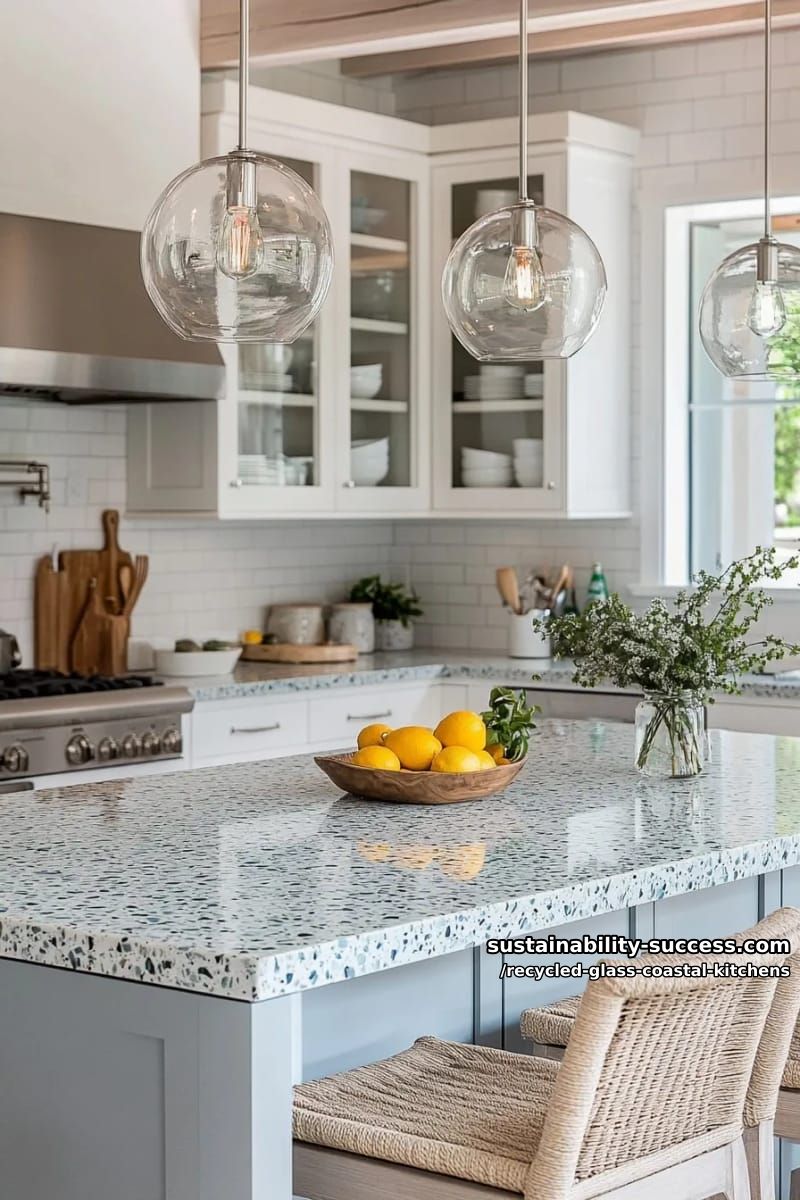
The trade-off is maintenance. Because the binder is concrete, the surface needs sealing once or twice a year, and acidic spills , lemon, wine, vinegar , will etch if you leave them sitting for hours. If you cook with a lot of citrus, this is the wrong product. If your kitchen runs to dough, vegetables, and the occasional acid spill, it's fine. The factory keeps doing the climate work in the background: IceStone has diverted over 16 million pounds of glass from landfills, the factory is daylit with sky lights to reduce energy consumption, and a state-of-the-art water recycling system filters 98% of manufacturing water.
| Slab option | Recycled content | Installed cost / sq ft | Maintenance |
|---|---|---|---|
| Vetrazzo | ~85% recycled glass, cement binder | $120 to $200 | Seal annually; heat-tolerant |
| IceStone | 100% recycled glass, portland cement | $150 to $250 | Seal 1 to 2x year; etches with acid |
| Curava | ~60% recycled glass, 30% quartz, 10% resin | $60 to $100 | No sealing; less heat-tolerant |
Sources: Marble.com, HomeAdvisor, HomeGuide 2025 pricing surveys.
7. A cast bottle-glass backsplash that reads as art, not tile
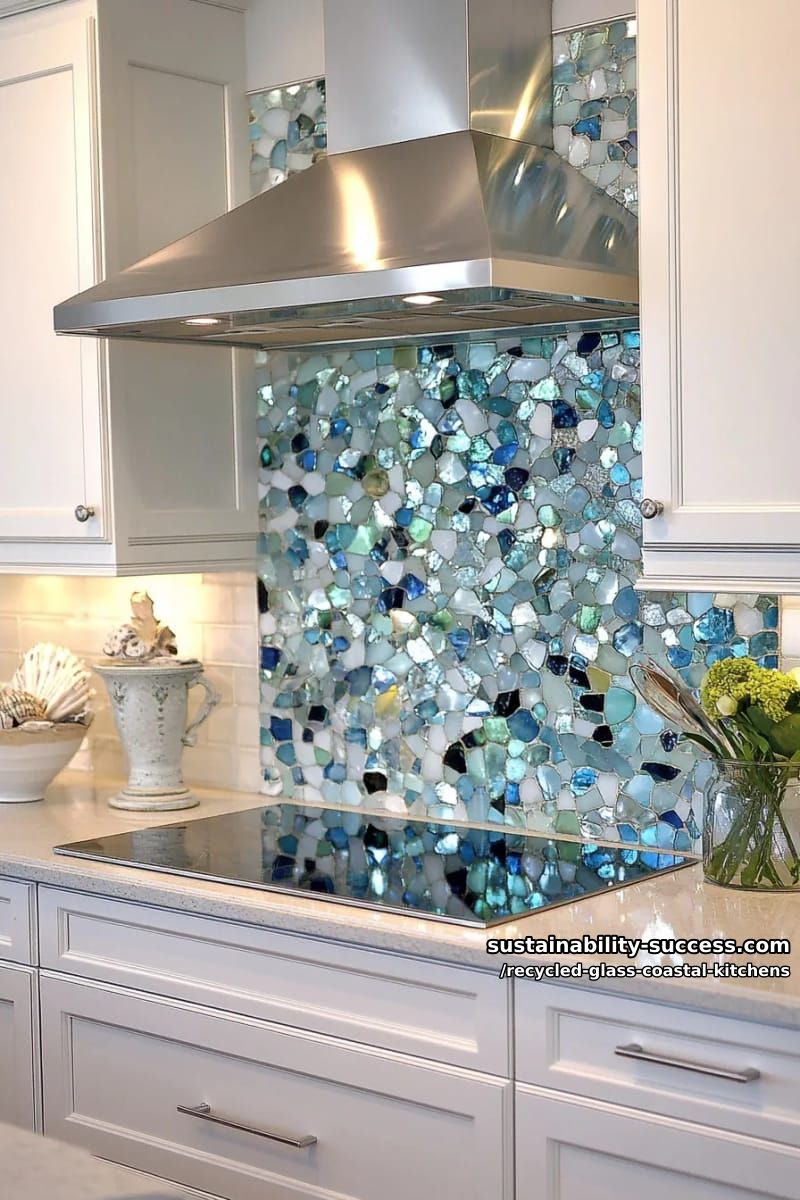
The category nobody markets well: large-format cast tile pressed from melted bottle stock. Each tile runs thick, 8mm to 12mm, with visible swirl marks where the glass cooled around the mold. From across the room the field reads closer to handmade ceramic than to glass mosaic. Up close, you can see the seedy interior, and on certain pieces you can still pick out fragments of bottle embossing. That's not a flaw, that's the feature.
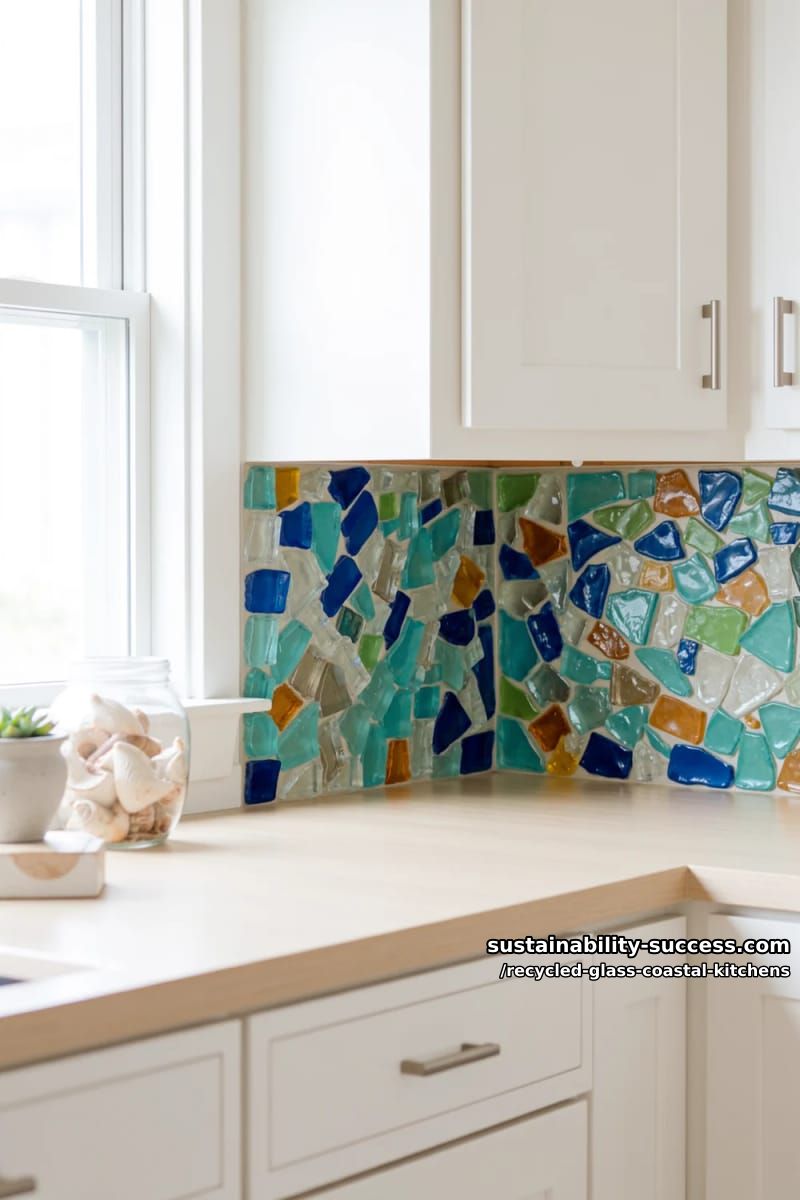
The hard part is installation. Cast tile this thick needs a notched trowel one size larger than standard mosaic specs, and the substrate has to be dead flat or every lip shows. A tile setter who has only done ceramic will under-quote and then run into trouble on day one.
8. A poured terrazzo floor with cullet aggregate
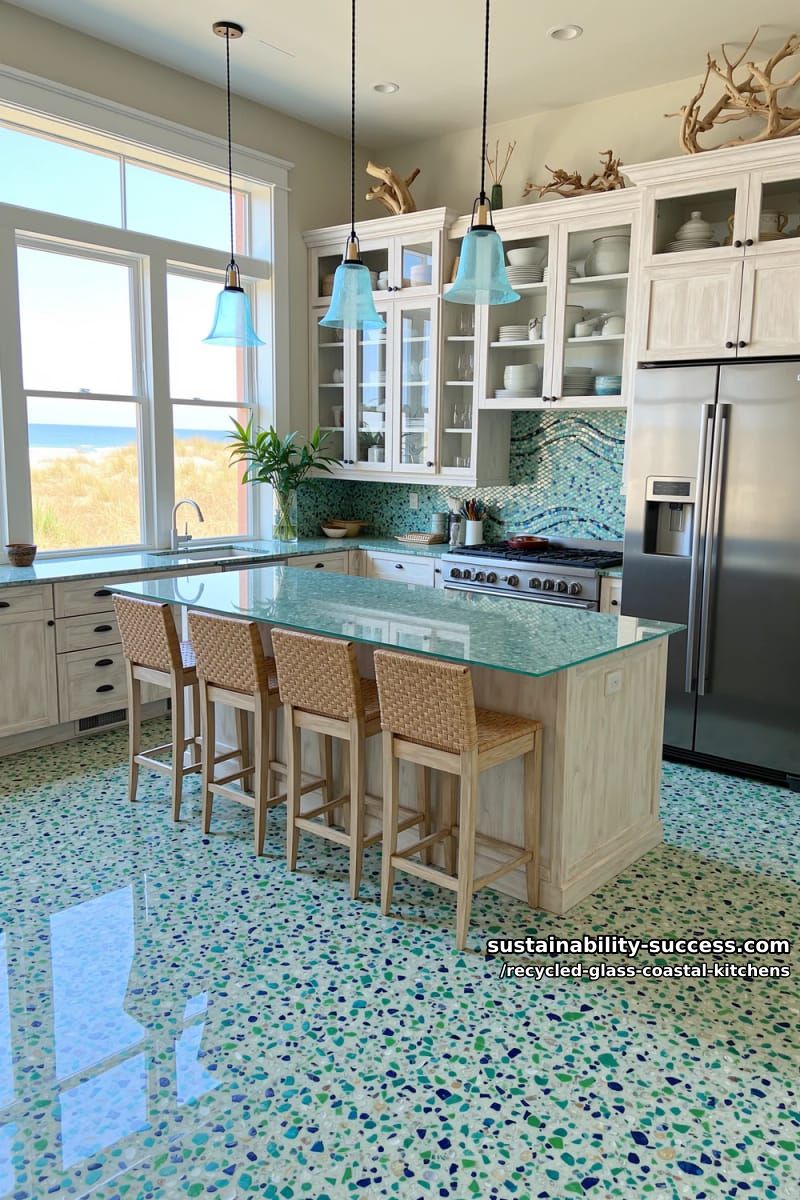
Terrazzo is having a moment. The version worth doing for a coastal kitchen uses recycled glass cullet , crushed waste glass , as the aggregate instead of the more common stone chip. Before you can understand what Vetrazzo is, you have to understand terrazzo: a terrazzo countertop or floor is made from a mixture of cement and/or resin and recycled pebbles, stones, and glass chips. A poured-in-place glass-aggregate floor runs $30 to $50 per square foot installed and goes down over a concrete slab, which makes it a ground-floor move, not a second-story one.
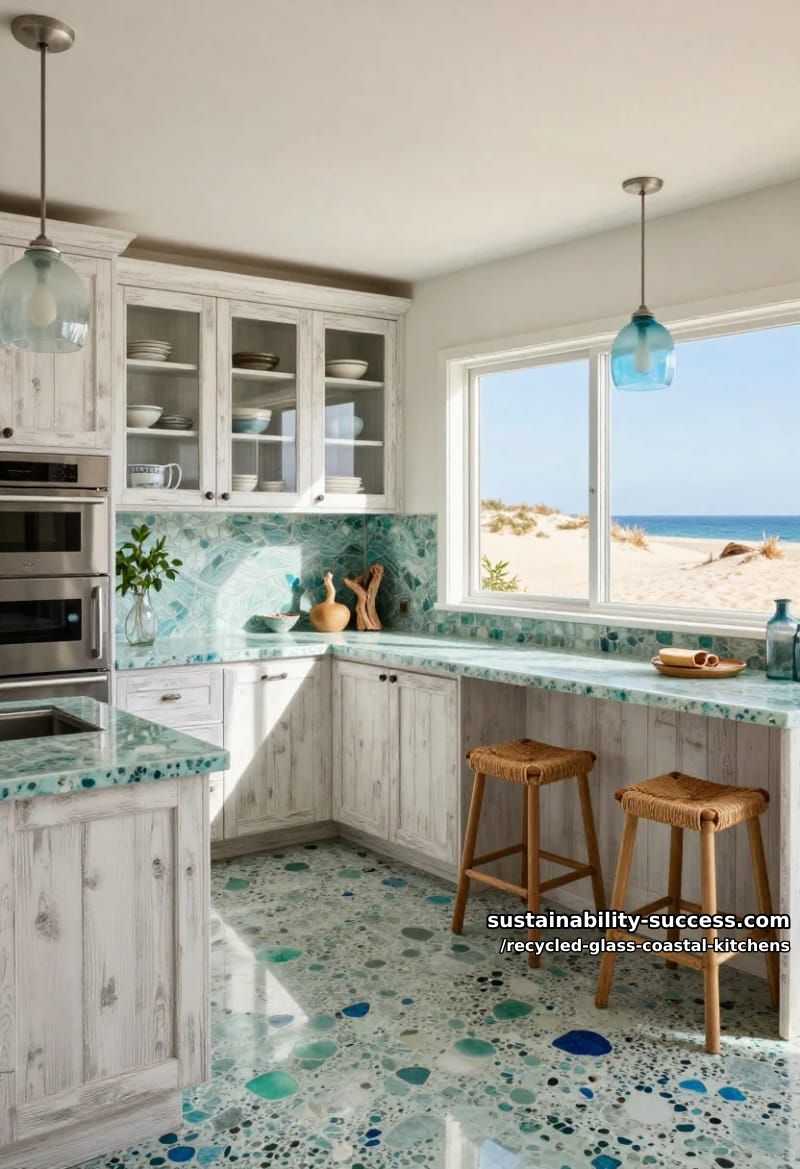
Over wood subfloor, the closest equivalent is a 24-inch terrazzo-look porcelain tile with printed glass aggregate. Different material story , it's printed porcelain , but at $8 to $15 per square foot the visual idea survives on a budget that won't carry a slab pour. Make peace with the substitution, or save up for the real thing.
9. Mexican Catalina tumblers stacked on open ash shelving

Open shelving is divisive. My position: it works in a coastal kitchen if and only if the dishware itself has visual character, because plain white plates on open shelves just look like a restaurant break room. Mexican recycled-glass tumblers solve this. The Amici Home Catalina line is mouth-blown in Mexico using recycled glass, featuring dimples for an easy, secure grip, in a set of four DOF glasses measuring 3.5 inches square by 4.25 inches tall. Aqua sets up a quiet color story with whatever blue you've used elsewhere (backsplash, countertop). The cobalt version reads louder and pairs better with clear glass everything-else.

This is also a craft-tradition story worth caring about. The vidrio reciclado workshops in central Mexico have been melting beer and soda bottles into drinking glasses since the 1960s. Buying from a producer that names the artisan workshops , Amici sources from a cooperative outside Guadalajara , keeps that tradition working. Three sets of four glasses runs about $60 to $90.
Aqua is the harder color to pull off than cobalt. It’s also the one that earns its place in a coastal kitchen without going theme-park.
Amici Home Catalina double old-fashioned tumblers in aqua, set of 4, mouth-blown Mexican recycled glass10. A cast recycled-glass vessel sink at the prep station

Not a main sink. Don't use cast glass as your primary sink , the chip risk over a decade of dropped pans is real, and replacing the sink because you fumbled a Dutch oven is not the story you want. As a second sink, in a prep station or beverage zone, it's the strongest single object you can put in a coastal kitchen. Cast recycled-glass vessel basins from US studios like Native Trails and JSG Oceana run $400 to $1,200, usually 16 to 19 inches in diameter, 6 inches deep, with a single drain hole.
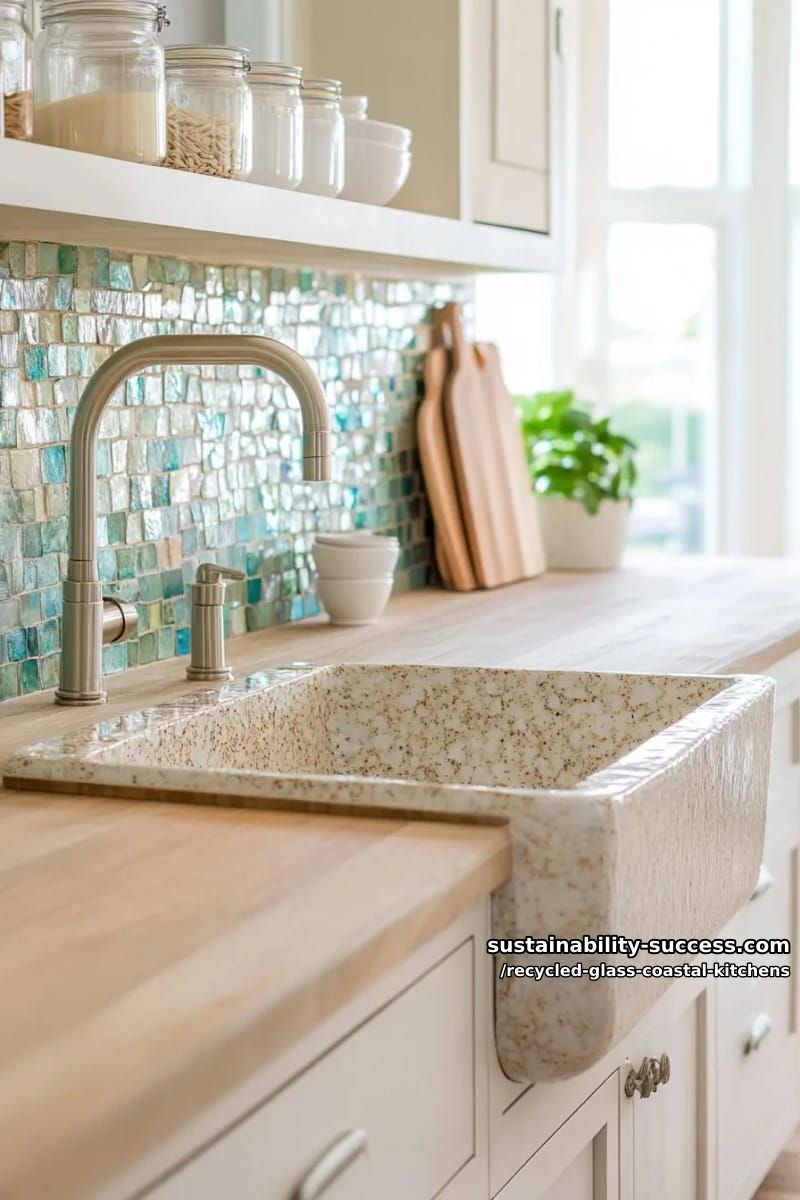
Why it works visually: the sink reads as a piece of art, not plumbing. Light passes through the rim and pools at the bottom of the basin, and that pool changes through the day. Why it works ethically: the major US makers use 100% recycled bottle glass and locally sourced cullet, with embodied-carbon numbers a fraction of a comparable cast porcelain sink. One spec note. Mount the faucet on the wall, or use a 4-inch deck-mount riser. Standard 8-inch faucet centersets sit too low and splash everywhere.
Conclusion
If you're picking just two from the ten, pick the countertop , item 1 or item 6 , and the Fido jar wall. The slab is the first surface the eye lands on, so it has to carry the story. The jars are the cheapest move on the list, and they're what gives the kitchen the lived-in coastal-pantry feeling no backsplash on its own can deliver. One thing I should probably have said earlier in the piece: every decision here is reversible except the slab. Jars come and go. Pendants swap out in an afternoon. The countertop is what you live with for the next fifteen years, so spend the time on that one.