
Easter brings a burst of color and cheer, but it can also leave a hefty mark on our planet.
Why settle for more plastic and waste when your home can shine with style and responsibility? Sustainable Easter home decor lets you celebrate with a lighter touch.
Imagine swapping disposable decorations for creative, earth-friendly ideas that tell a story. Repurpose, reuse, and rethink what you already have.
These simple swaps offer charm, save money, and keep spring traditions alive, without leaving your conscience heavy as a stone.
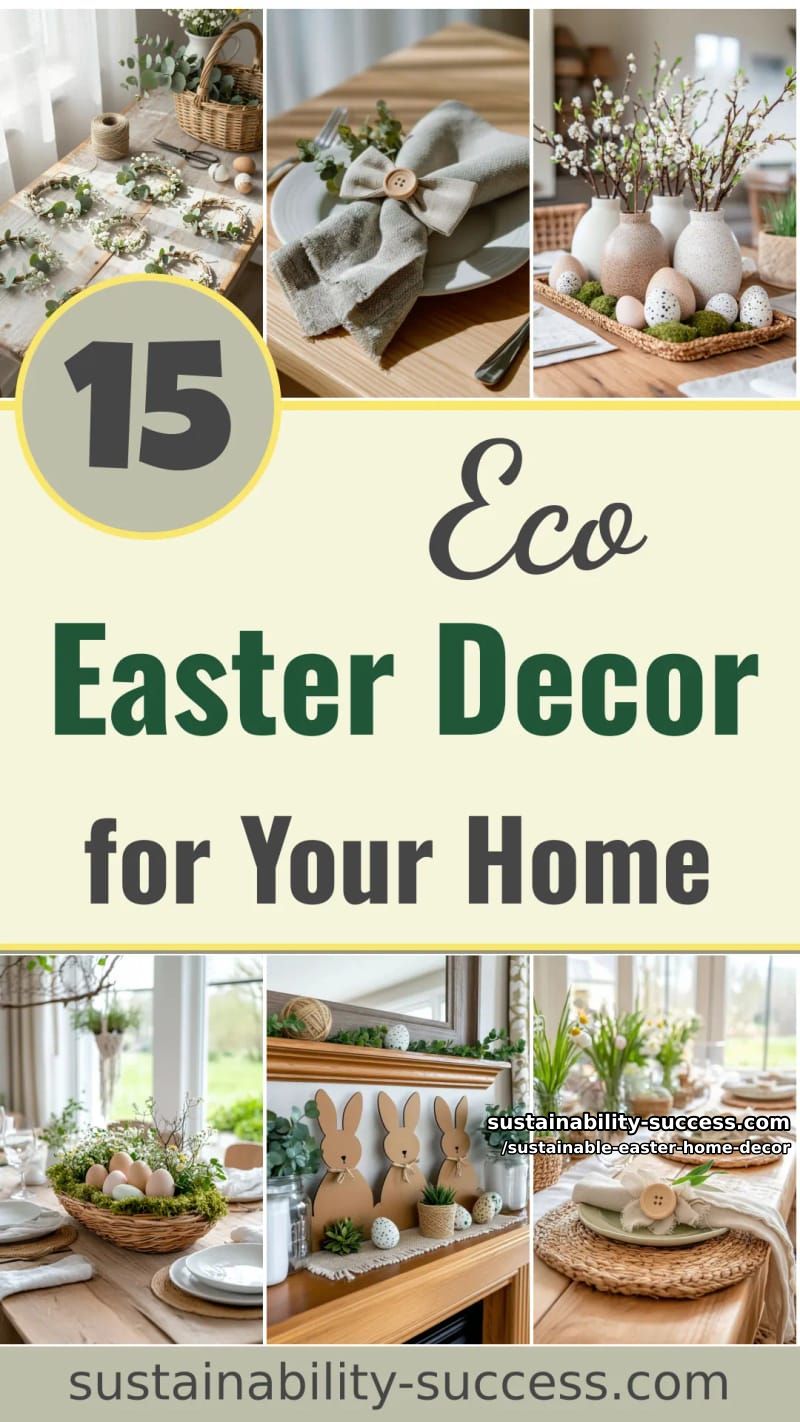
1. Moss-lined basket centerpiece with pastel eggs and foraged twigs
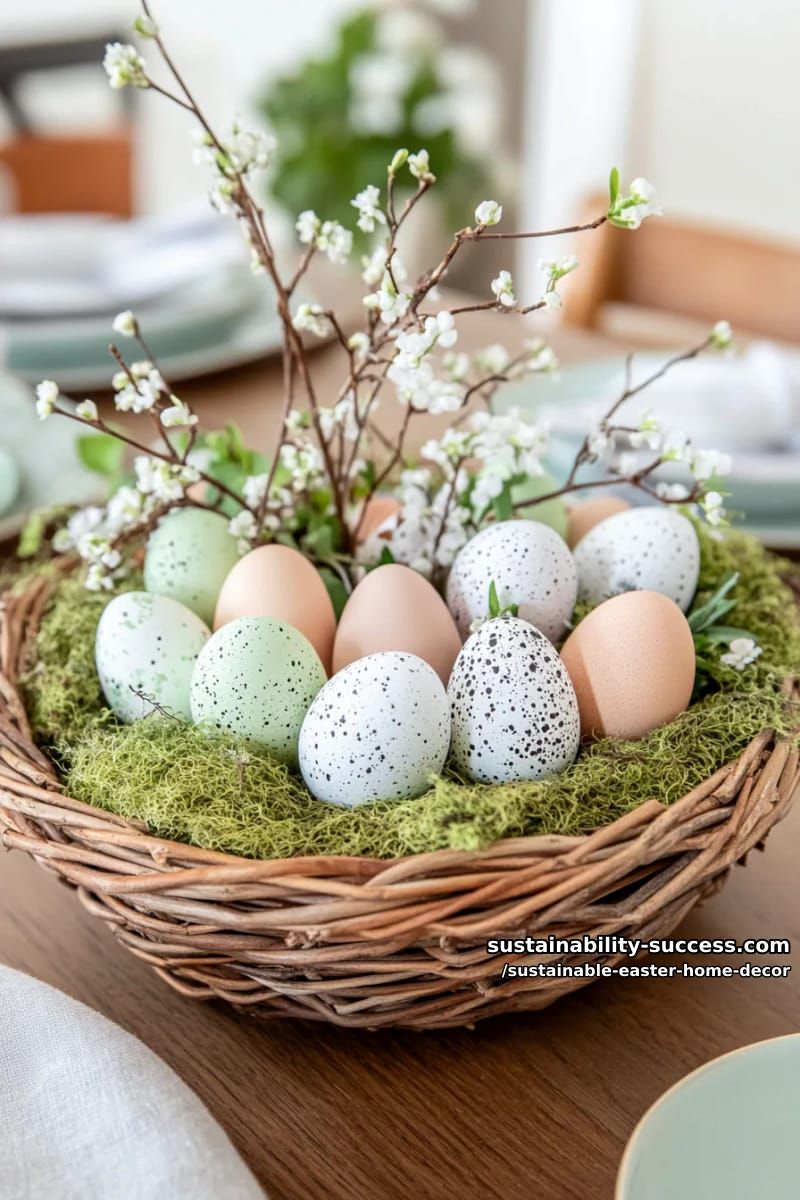
Moss brings a touch of the forest floor right to your table. A basket lined with soft, green moss, pastel eggs, and twigs you found on your morning walk isn’t just beautiful, it’s eco-friendly.
Who needs plastic grass or store-bought fillers when nature provides all you need?

This centerpiece is easy to assemble and gentle on the environment. Snap off a few twigs, gather moss from shaded patches, and reuse eggshells painted in spring colors.
Friends will ask where you bought it, imagine their surprise when you say, “I made it from things in my yard!”.
2. Upcycled paper bunny garland using kraft and floral scrap paper

Crafting a bunny garland from kraft paper and floral scraps turns trash into charming treasure. Gather leftover shopping bags, old gift wrap, and cut them into simple bunny shapes.
String them together with twine. This DIY project reduces waste and costs next to nothing, good for the planet and your wallet.

Don’t worry if your bunnies aren’t perfect. Odd shapes add whimsy. Get kids involved; let them choose their favorite patterns or draw bunny faces.
Why buy plastic decorations that end up in the bin? This garland proves creativity trumps store-bought every time. Give your home character with each hop along the string.
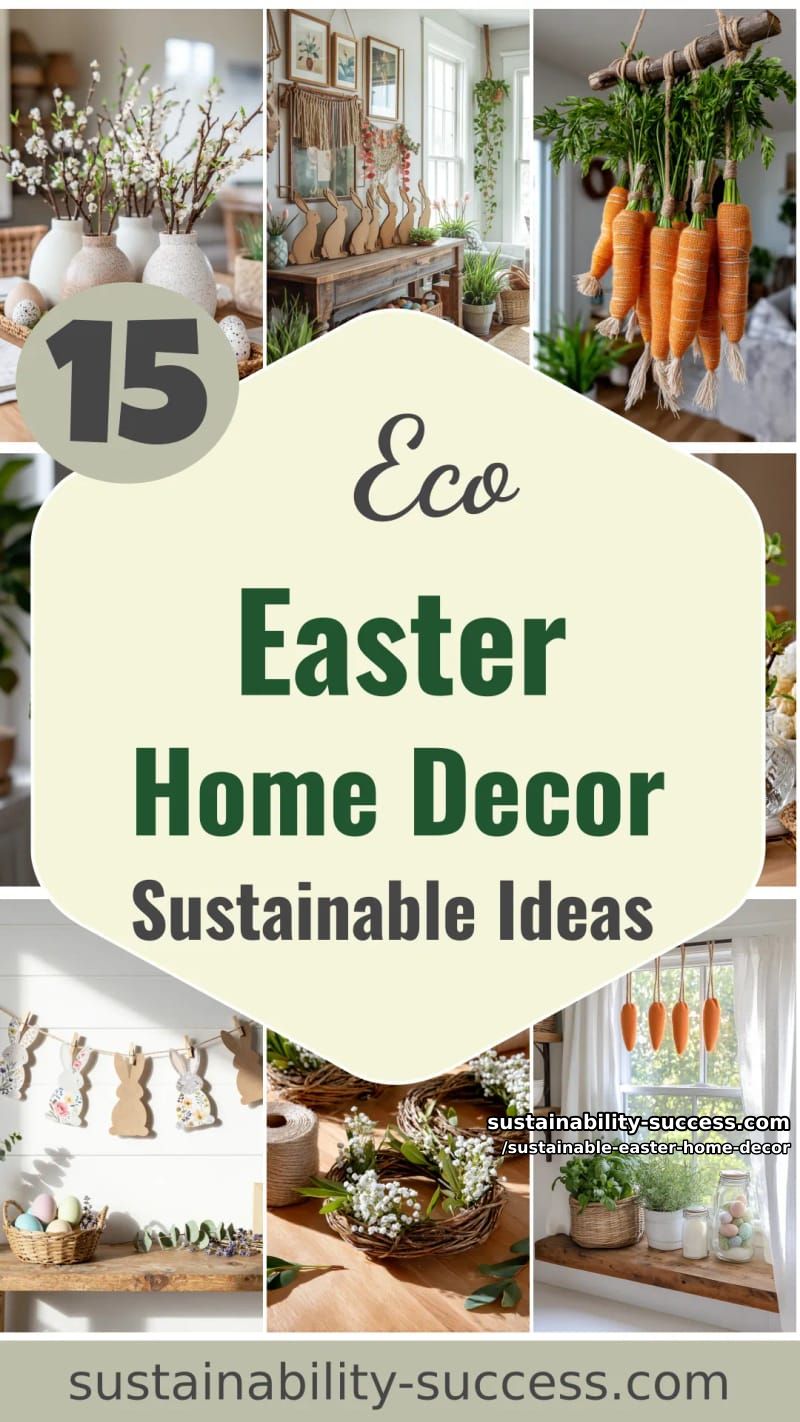
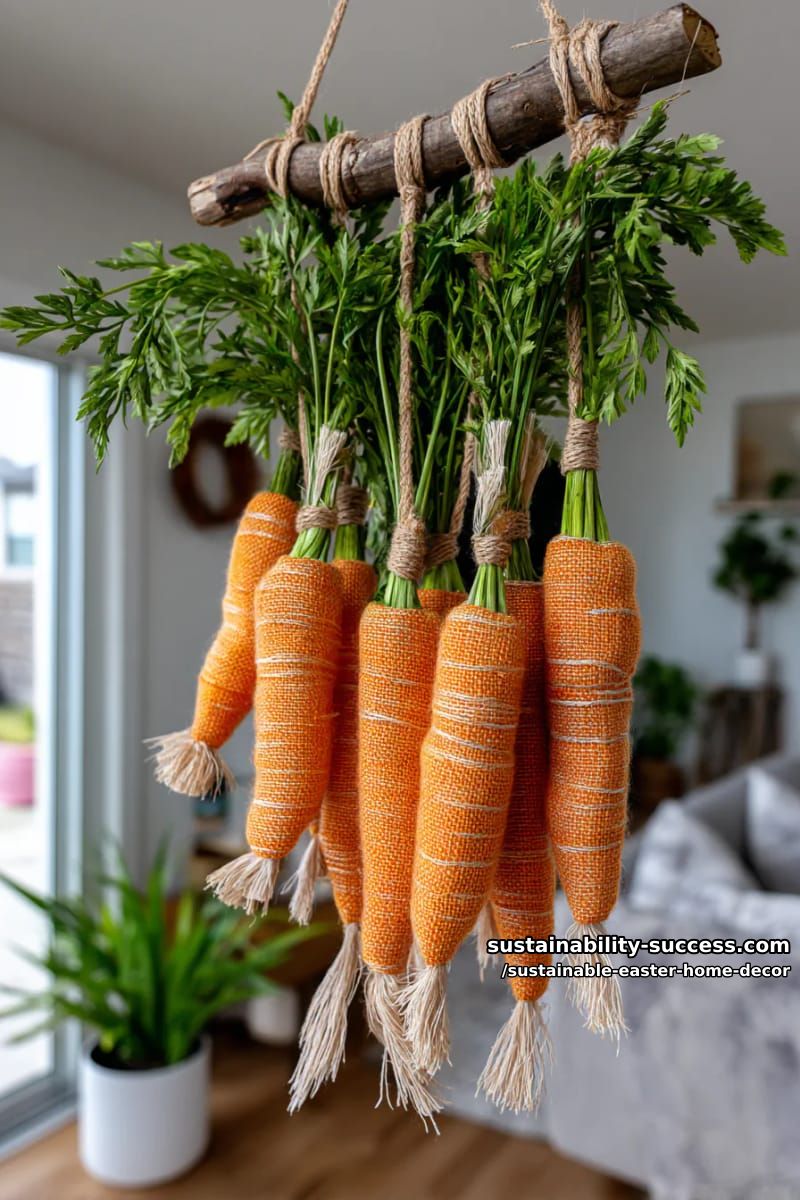
3. Woven carrot wall hanging from orange fabric leftovers and green yarn

Old orange t-shirts or napkins can get a fresh purpose as woven carrot wall decor. Simply cut strips, braid them together, and knot at the top.
Add a tuft of green yarn for leaves. This quick project brings a crafty touch while reducing landfill waste, a win-win for your home and the planet.

Have you ever thought your fabric scraps could spark a conversation at Easter brunch? These carrots look charming, but remember, some fabrics fray fast. Stick with cotton or felt for easier handling.
Hang a few on doors or walls. Small changes like this add up, both for style and sustainability.
4. Dried wildflower bouquet in a vintage glass bottle for the mantel

A dried wildflower bouquet in a vintage glass bottle brings charm without waste. Unlike fresh flowers, these bouquets last for months, cutting down on both cost and waste.
Try mixing colors and textures, think daisies with sprigs of lavender. The result? A simple, eye-catching centerpiece that doesn’t require constant upkeep.

Repurposing an old glass bottle adds a hint of nostalgia. Why buy new when Grandma’s soda bottle works just as well? It’s a win for your wallet and the environment.
Some might say dried flowers look less lively, but their understated beauty fits any relaxed, eco-conscious home.
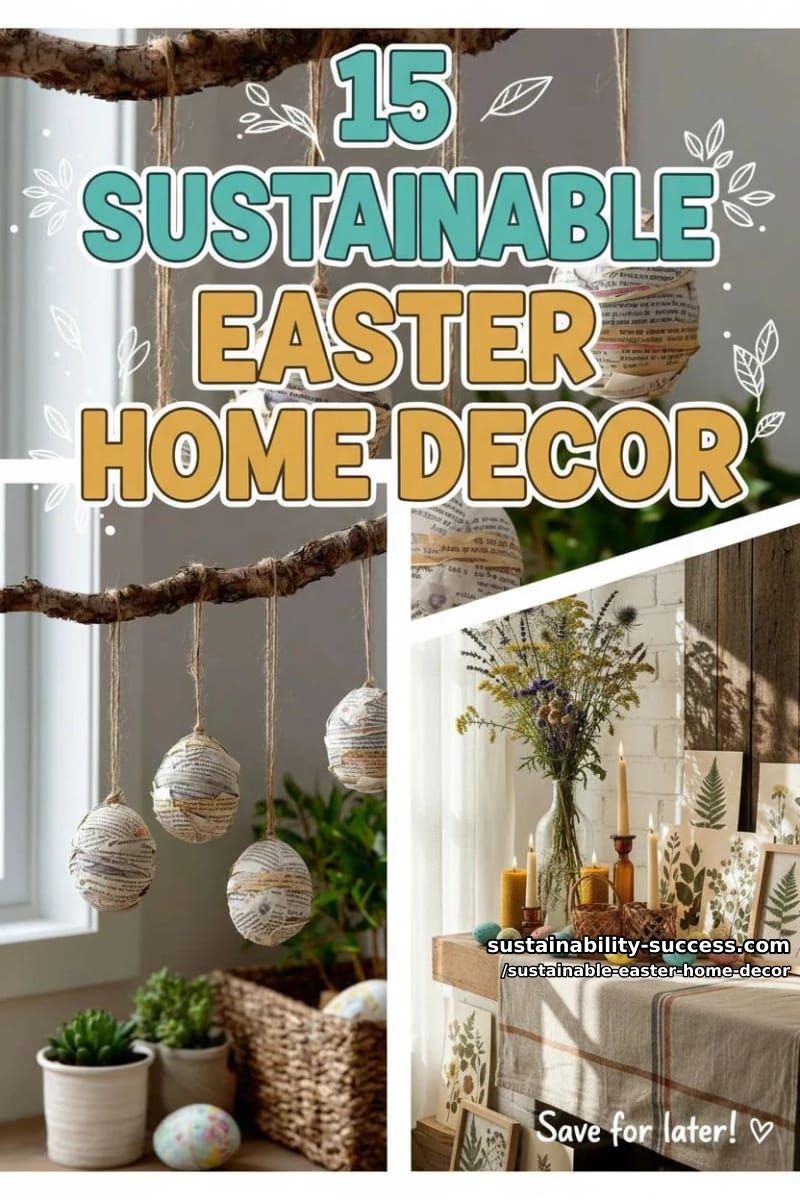
5. Hanging egg ornaments crafted from rolled book pages

Old books gathering dust? Repurpose their pages into hanging egg ornaments. Roll, glue, and shape paper strips around a simple egg template. Attach string, and you’ve got lightweight, textured decorations.
It’s eco-friendly, budget-conscious, and gives forgotten books new purpose, plus, no two ornaments turn out exactly the same.
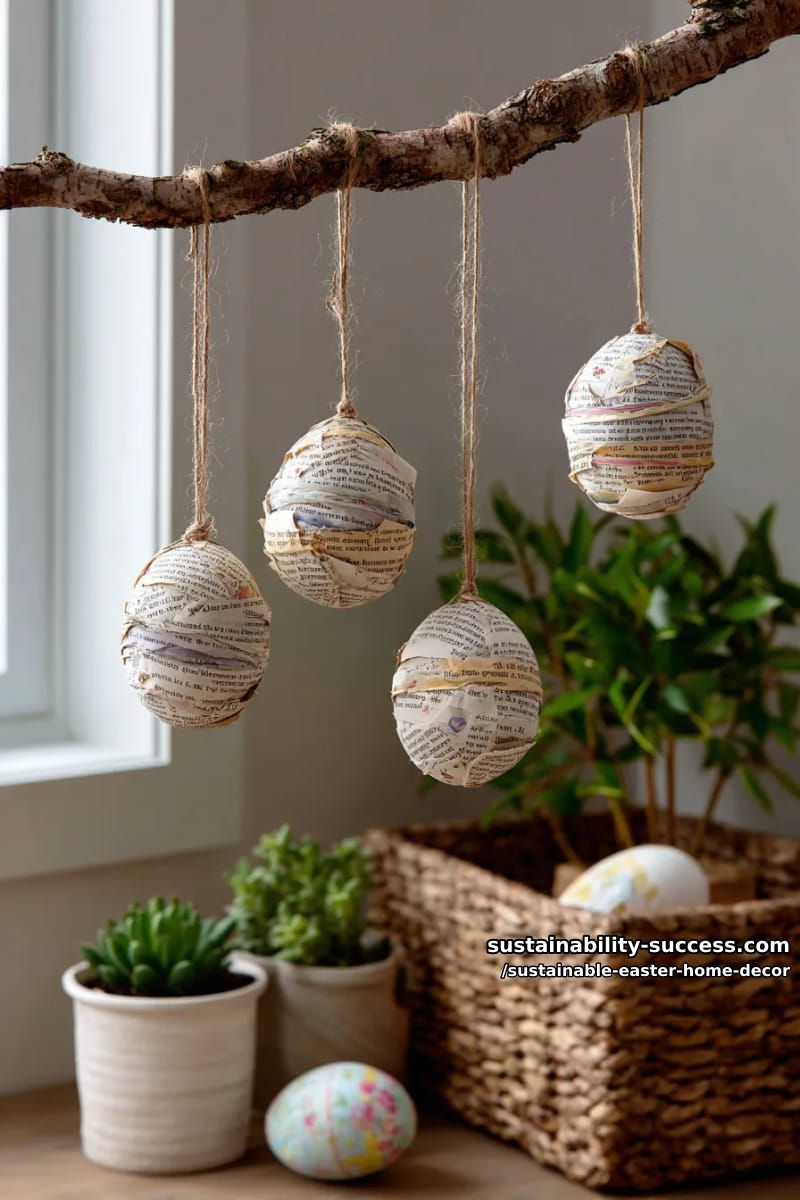
Paper ornaments like these bring a story to your Easter display, quite literally. However, don’t expect them to last forever; paper is fragile if handled roughly or exposed to moisture.
Still, with gentle care, these charming eggs provide a thoughtful, sustainable update to seasonal decor.
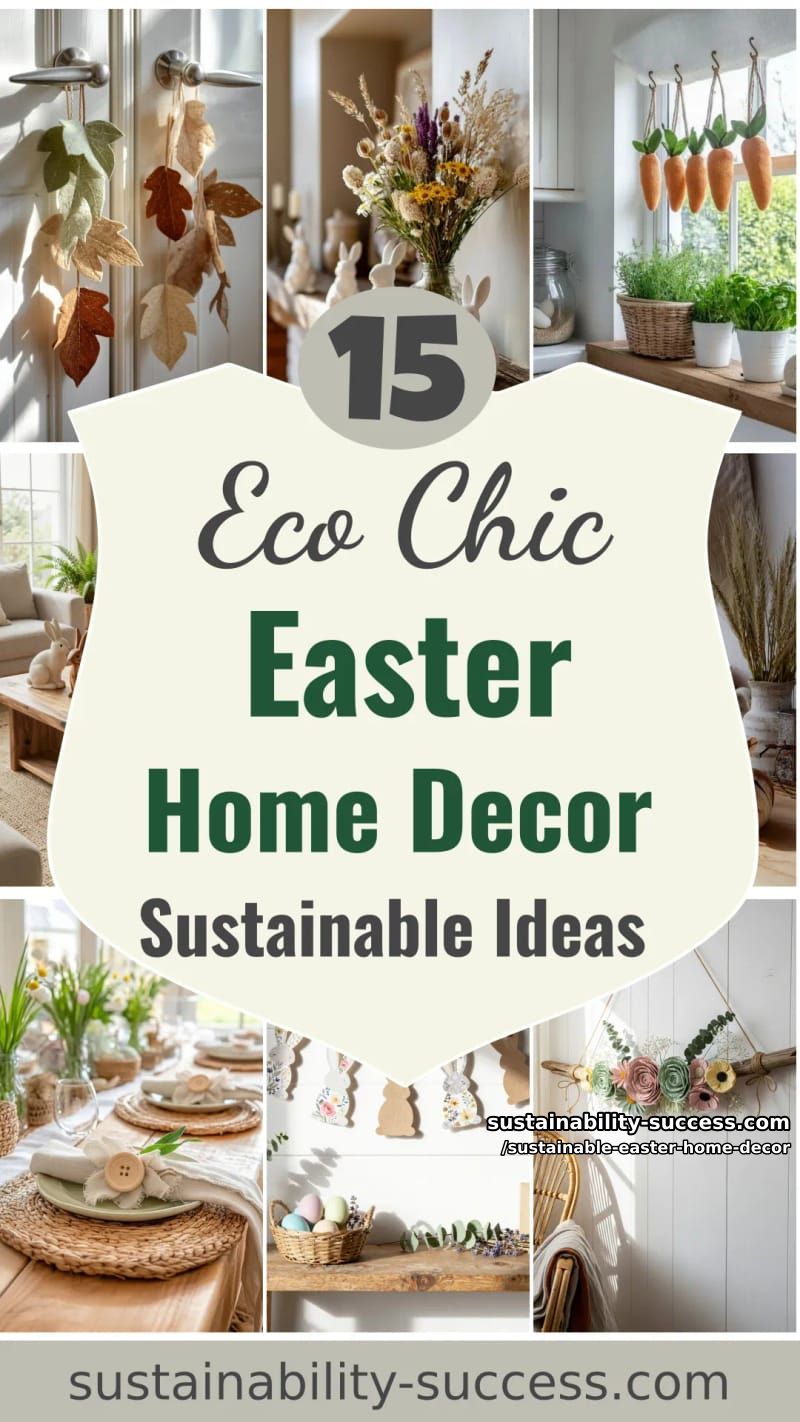
6. Leaf-shaped felt decorations in soft earth tones for door handles

Swapping in leaf-shaped felt decorations for your door handles brings a gentle, earthy vibe to your home. These soft, reusable accents don’t just look good, they skip single-use plastics and can last for years.
Why not pick olive, clay, or sand colors to mimic nature and soothe the senses?

Hanging them is a breeze, just loop them over handles or knobs. If you want to switch things up, try mixing sizes or adding a few fabric scraps for extra texture.
However, felt can attract dust, so give them a quick shake or gentle hand wash now and then to keep them looking fresh.
7. Recycled egg carton flowers on a rustic branch for wall art

Egg cartons often end up in the trash, but with a pair of scissors and some paint, you can turn them into vibrant flowers.
Attach these blooms to a rough tree branch and suddenly you’ve got wall art that looks charmingly handmade. Guests will ask, “Did you make that?”, and you can proudly say yes.
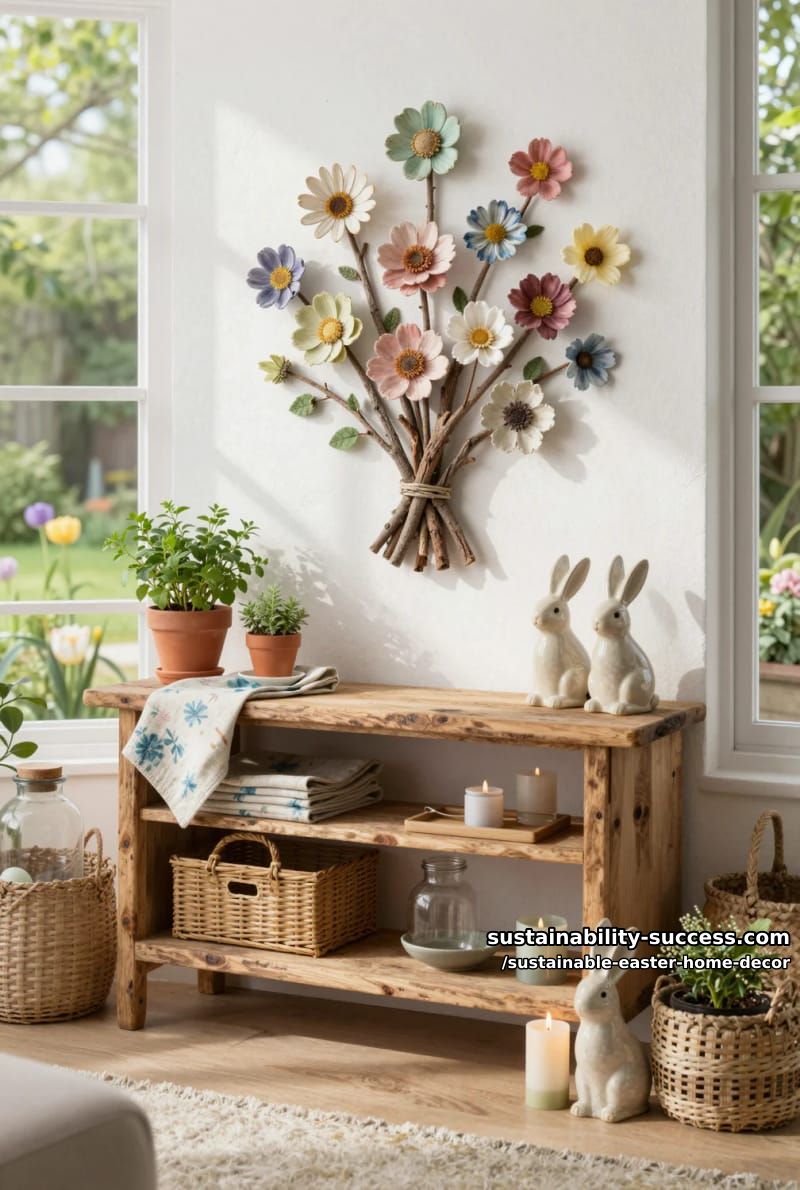
This eco-friendly idea sidesteps plastic waste and saves money. Start by cutting flower shapes from cartons, painting them in spring colors, and hot-gluing them to a branch found in your yard.
It’s simple, cheap, and a clever way to bring Easter cheer without filling landfills.

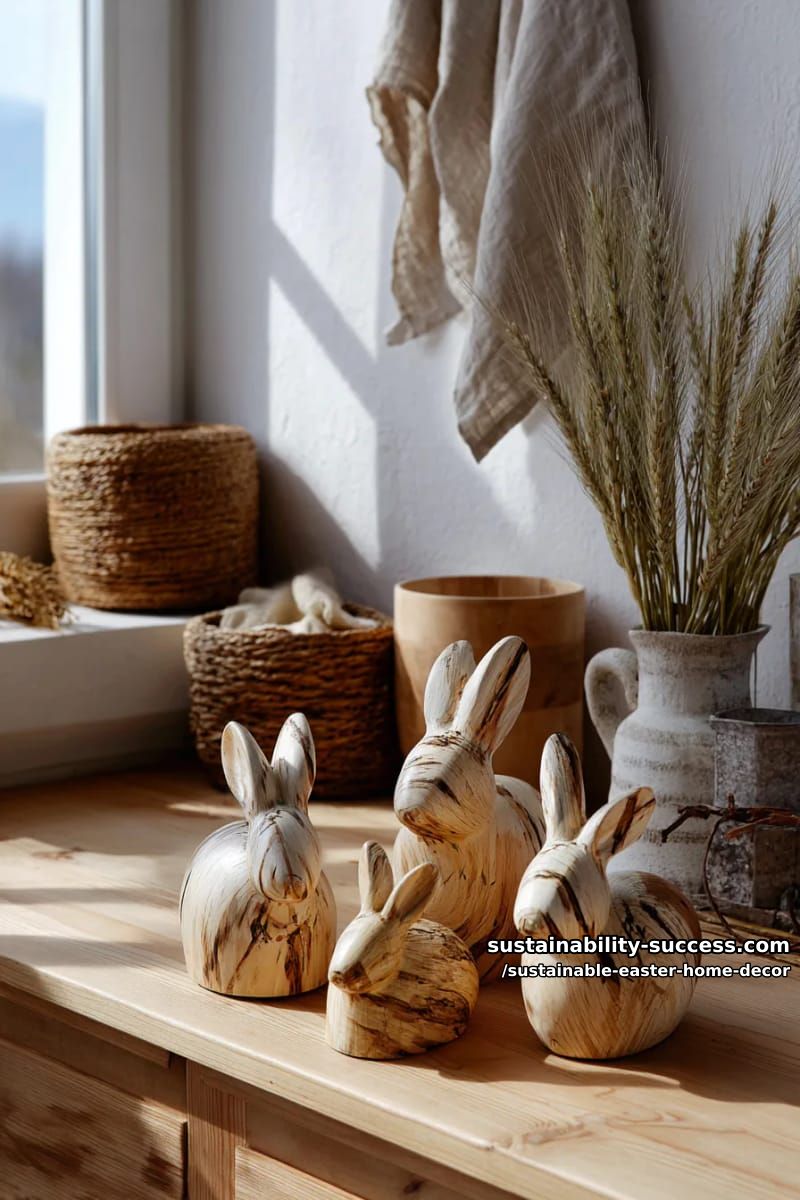
8. Neutral-toned bunny figurines made from reclaimed wood

Neutral-toned bunny figurines carved from reclaimed wood add a calm, earthy touch to Easter decor. These pieces sidestep bright, synthetic dyes, letting natural grain and texture shine.
Why settle for plastic when you can support artisans and reduce waste? Place them on shelves or tables for quiet sophistication.

However, sourcing genuinely reclaimed wood can be tricky. Some sellers stretch the truth, so check for authenticity.
Still, when chosen wisely, these figurines offer a simple way to celebrate while being kind to the planet, proof that seasonal style doesn’t have to harm the earth.
9. DIY mini wreaths with baby’s breath, eucalyptus, and twine

Why buy plastic decorations when you can create your own mini wreaths using baby’s breath, eucalyptus, and twine? Gather some greenery from your local florist or even your backyard.
Wrapping these sprigs with twine not only looks fresh but also adds a gentle, natural scent to your space.

Making these wreaths takes less than half an hour and requires minimal skill. Plus, they’re compostable, no guilt when the season ends.
If you’re worried about the wreaths drying too soon, lightly mist them every few days. Isn’t it time disposable décor took a back seat?
10. Reusable fabric napkin rings with natural wood buttons and linen scraps
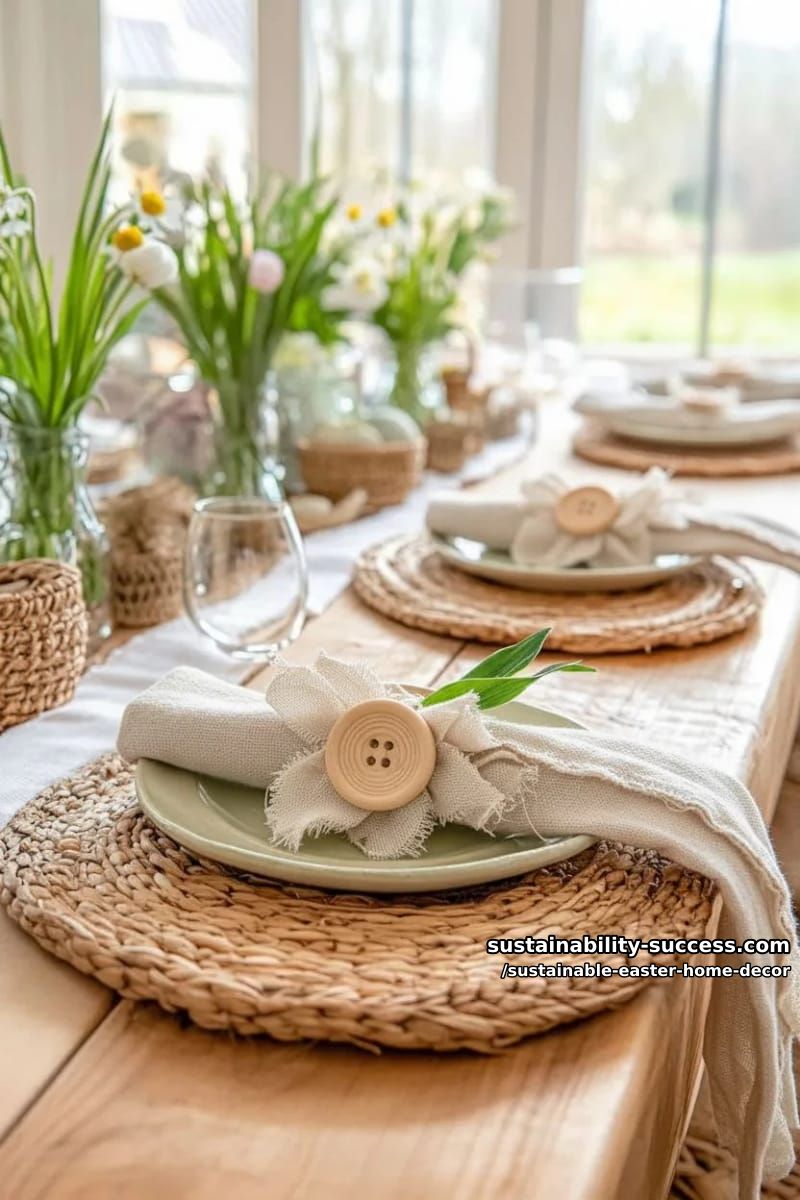
Reusable fabric napkin rings, made from linen scraps and natural wood buttons, offer a smart way to cut waste this Easter.
They add rustic charm to your table and can be customized for any color scheme. Why buy disposable decor when you can make beautiful, eco-friendly accents from leftover materials?

If you’re short on time, you can even get kids involved, let them help choose fabric or sew on buttons. One note, though: fabric rings need an occasional wash to stay fresh.
Still, they’re sturdy, washable, and ready for next year, saving money and resources in the long run.
11. Botanical display with thrifted vases holding budding branches

Why buy new when thrift shops offer a treasure trove of vases? Fill them with budding branches, think forsythia or cherry. This simple trick brings spring indoors without any waste.
Plus, each vase has a story. Imagine guests asking, “Where did you find that gem?” Instant conversation starter.

However, be mindful: not every thrifted vase is watertight. Test with a quick rinse before arranging your branches. If it leaks, line it with a glass or jar.
This low-cost, eco-friendly centerpiece keeps your Easter table fresh and guilt-free.
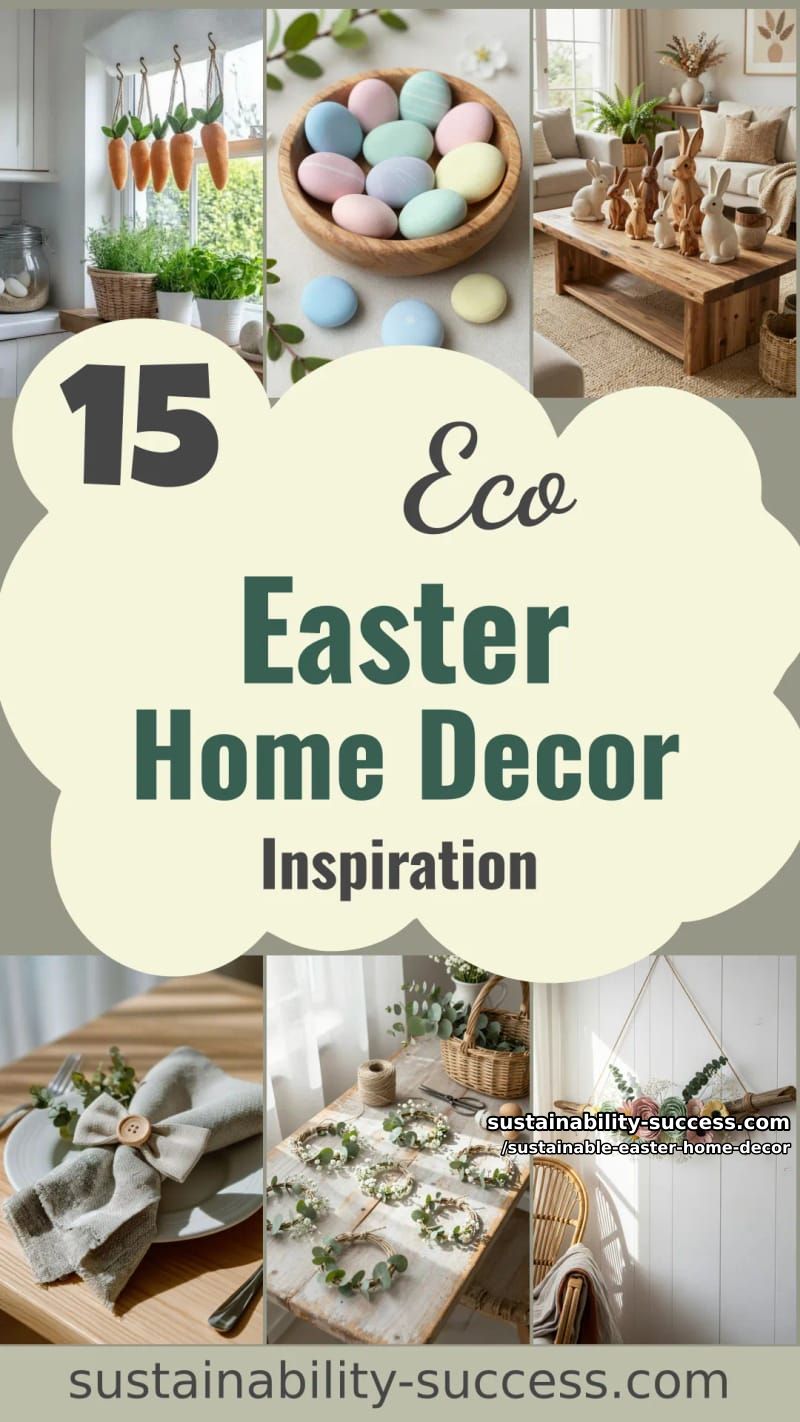
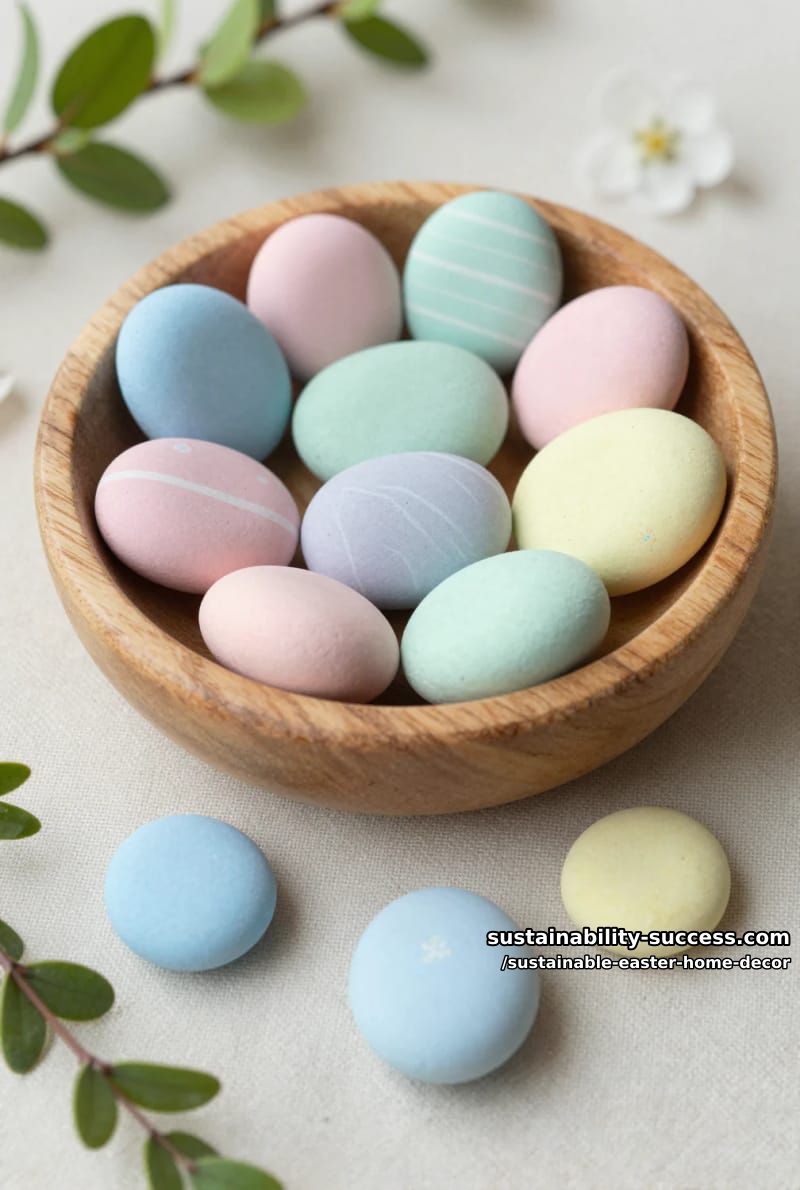
12. Painted stone eggs arranged in a wooden bowl centerpiece

Painted stone eggs make a clever, reusable substitute for traditional Easter eggs. Arrange them in a simple wooden bowl and you get a natural, eye-catching centerpiece.
No need for plastic or waste, each “egg” lasts for years and never spoils, saving time and resources every spring.

Kids can join in by painting their own designs, turning this into a fun family tradition. While stone eggs lack the surprise of chocolate, they spark just as much conversation.
If you’re looking for something eco-friendly and low-maintenance, this idea truly fits the bill.
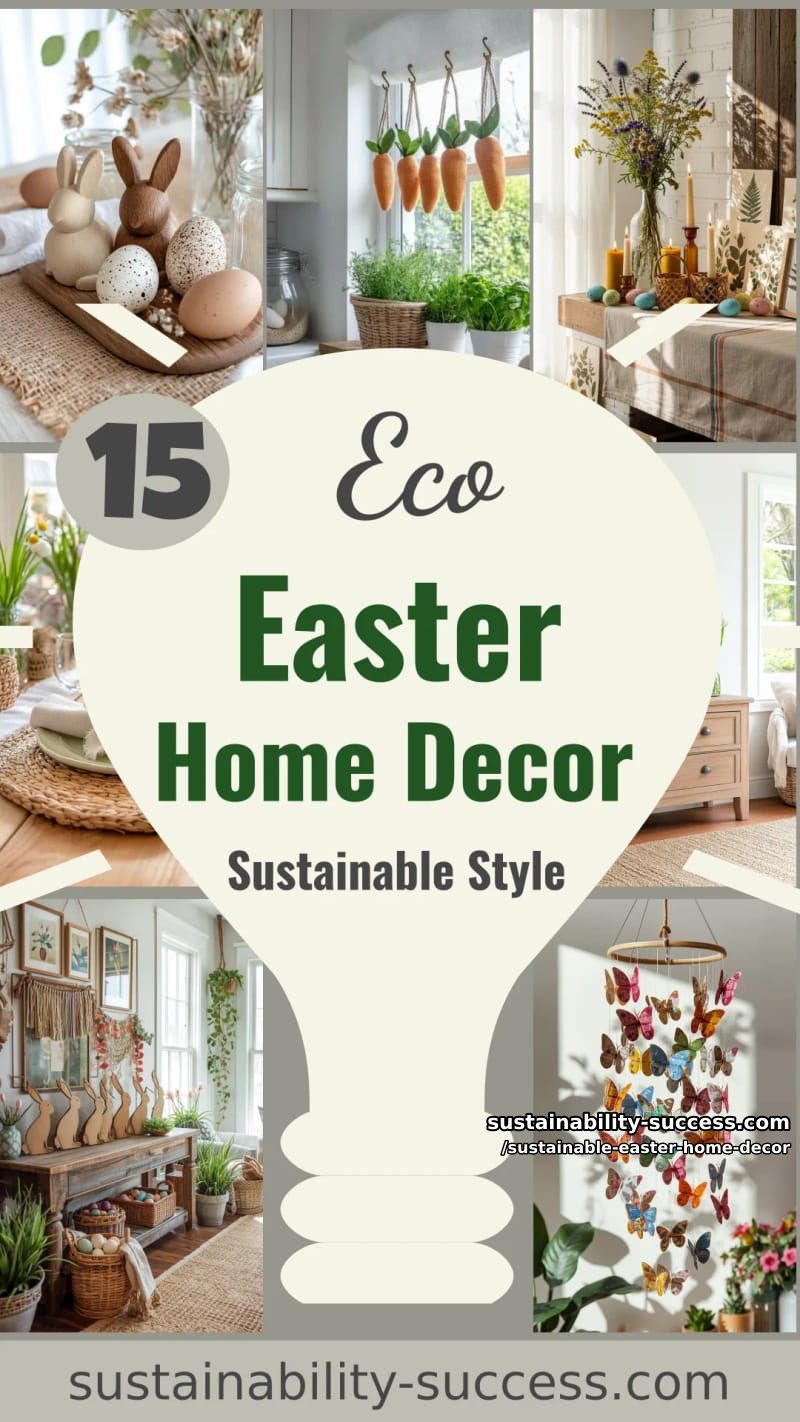
13. Whimsical spring butterfly mobile using upcycled colorful magazines

Repurposing old magazines into a whimsical spring butterfly mobile brings color and creativity into your home without buying new supplies.
Simply cut butterfly shapes, string them together, and hang above a table or in a window. Why waste paper when yesterday’s gossip can flutter with today’s sunlight?

This project is easy for all skill levels and invites kids to help. However, glossy magazine paper can be flimsy, so consider doubling up layers or adding a touch of cardboard for sturdiness.
The finished product adds a playful, eco-friendly touch to your Easter décor, no landfill guilt required.

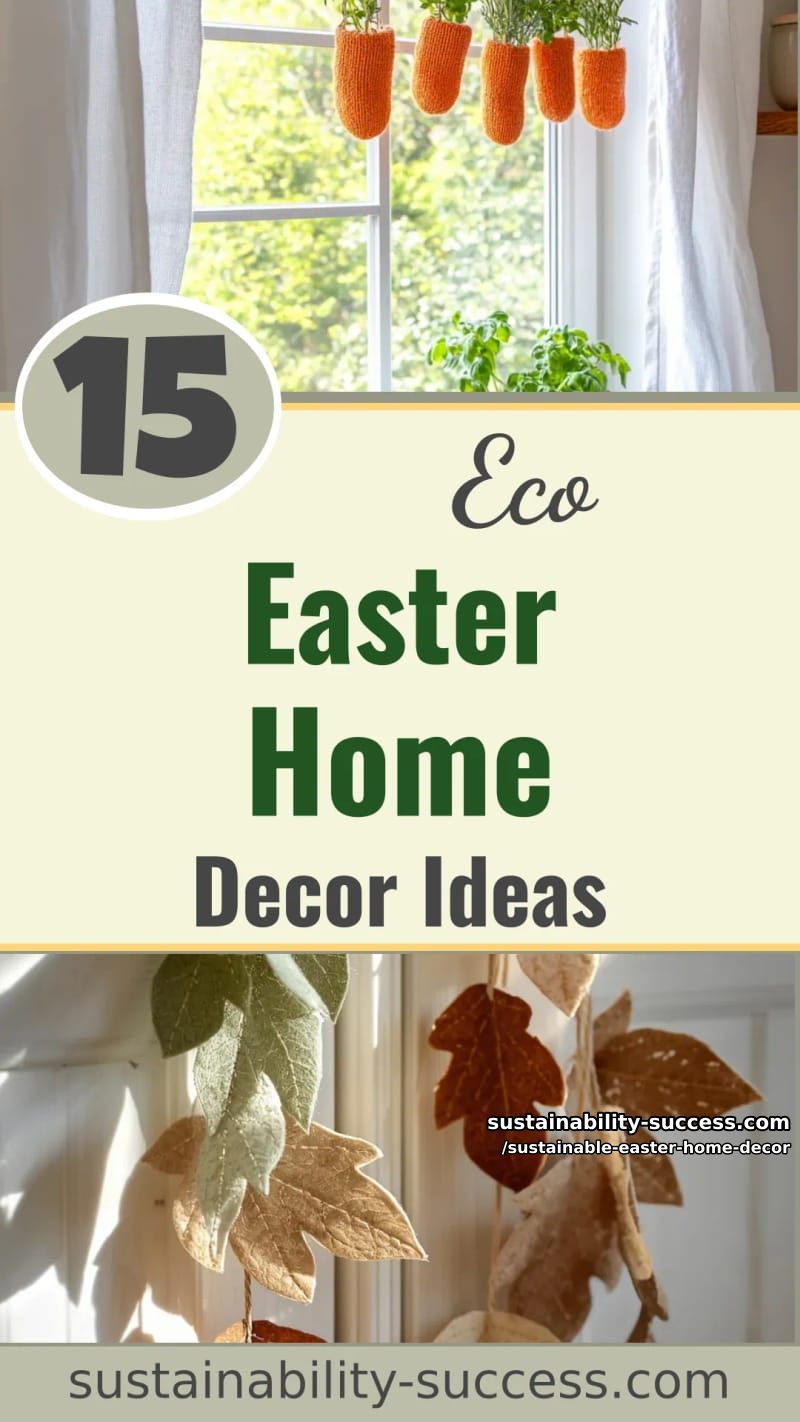
14. Hanging carrot garland sewn from old orange socks and felt

Repurposing old orange socks and bits of felt into a carrot garland is easier than you think. Grab some thread, stitch up a few sock segments, and stuff them with spare fabric.
Add green felt tops, string them together, and you’ve got a festive, eco-friendly decoration in under an hour.
This project shrinks textile waste while creating something genuinely cute.

Why buy plastic trinkets when you can create quirky carrots from what’s already in your drawer? If you’re worried about your sewing skills, relax, wonky carrots just add character.
Kids can join in, too; it’s a creative, mess-friendly activity.

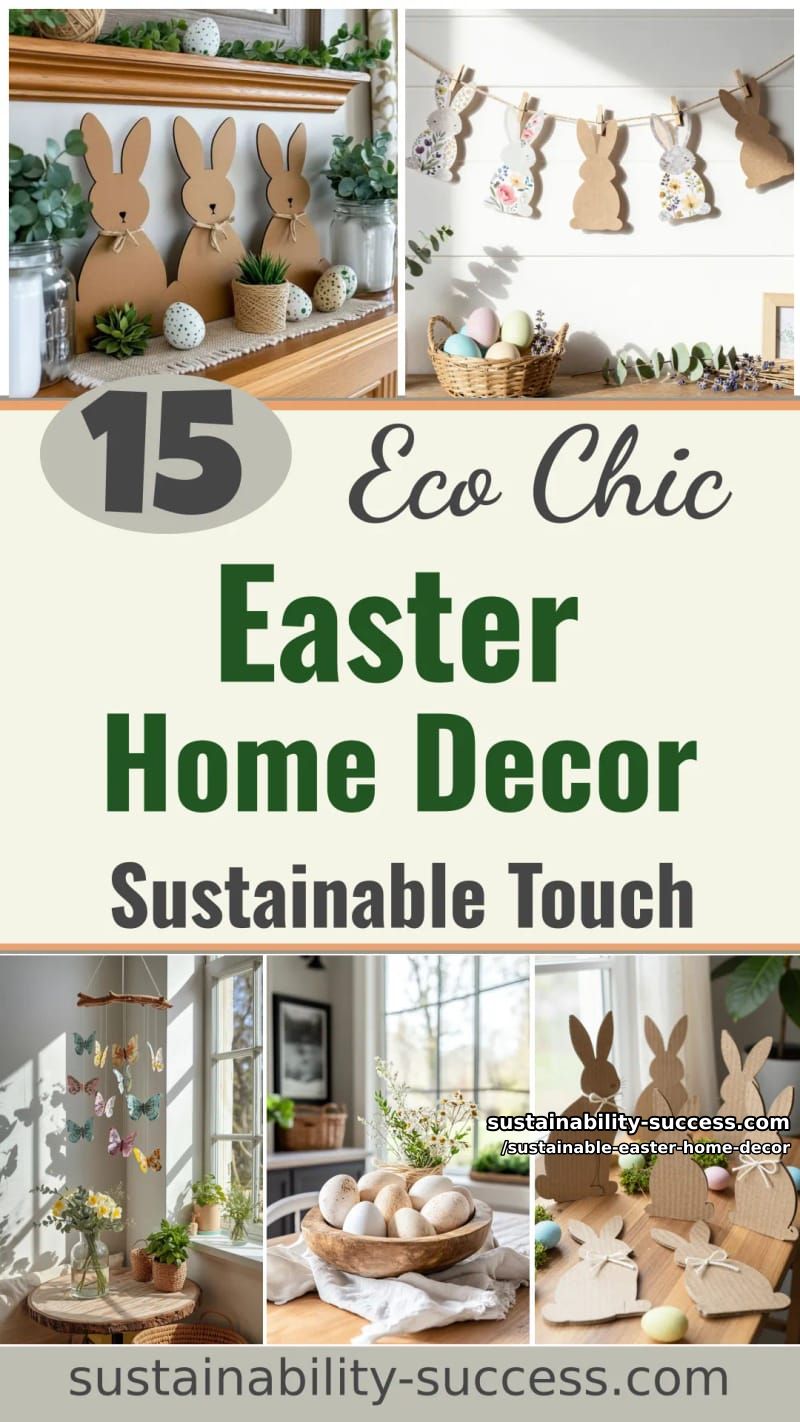
15. Eco-friendly bunny silhouette cutouts from corrugated cardboard
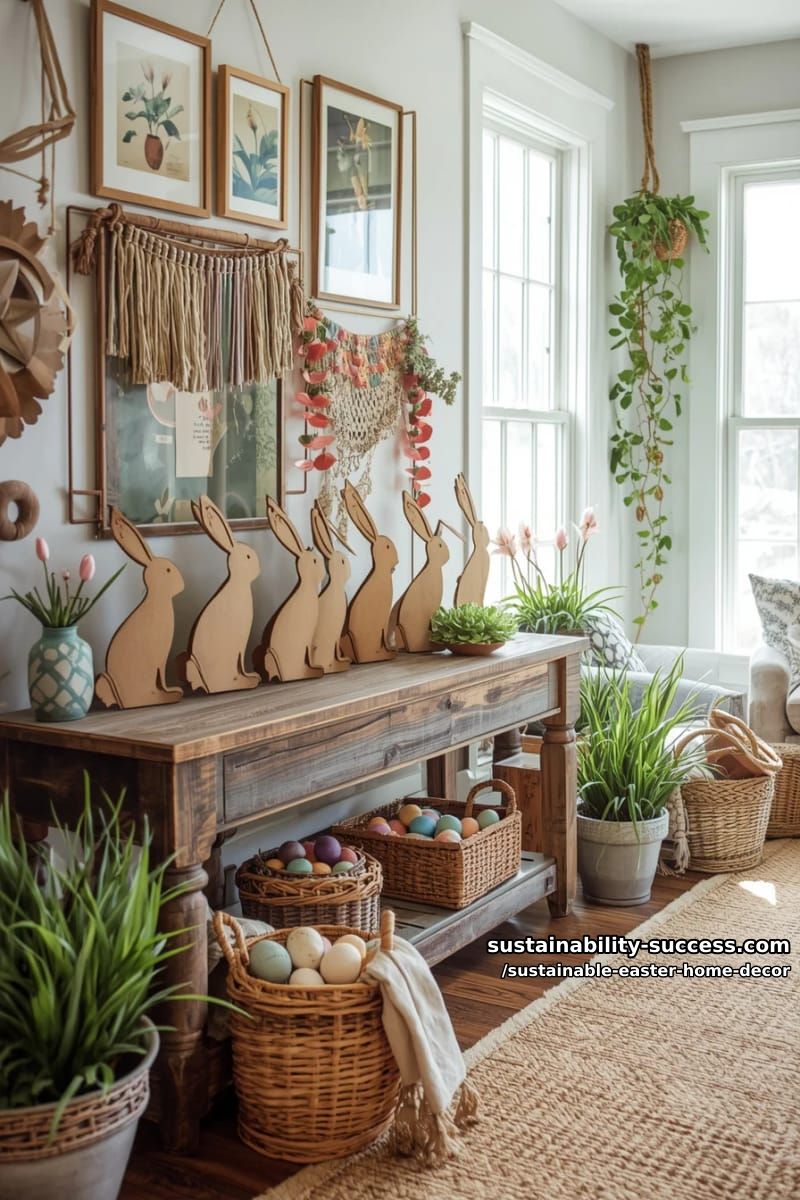
Cutting bunny shapes from corrugated cardboard is both fun and eco-friendly.
Why buy plastic decorations when you can repurpose delivery boxes? Cardboard is sturdy enough to stand on a mantel, yet light enough for window displays.

Grab some paint, let the kids help, and watch your recycling bin become festive.
These cutouts avoid landfill waste and save money. However, moisture can be a foe, keep them indoors or seal them with natural wax.
For extra flair, add fabric scraps for tails or noses instead of synthetic glitter. This simple project shows sustainability and style can hop hand in hand.

Conclusion
Sustainable Easter home decor doesn’t mean sacrificing style or fun. With simple materials like fabric scraps, old books, and thrifted finds, you can craft festive pieces that spark conversation.
Who knew an old sock could turn into a charming carrot garland?
Ready to refresh your space the green way? Try swapping plastic eggs for painted stones, or make napkin rings from fabric leftovers. These small choices add up, saving money and reducing waste.
Let your creativity run wild, your home (and the planet) will thank you.
Related Posts
- Eco-Friendly Easter Centerpieces To DIY
- Eco-Friendly Easter Decoration Ideas
- Sustainable Spring Decorations
- Eco-Friendly Spring Home Decor
- Upcycled Spring Home Decor