

Ever looked at your narrow side yard and wondered if it could be more than a forgotten strip of grass? You’re not alone.
Many homeowners ignore this space, but it holds huge potential for bold, eco-friendly garden projects that won’t break the bank.
Why waste water and resources on high-maintenance lawns? With a few clever tricks, think upcycled materials and drought-resistant plants, you can turn your side yard into a sustainable oasis.
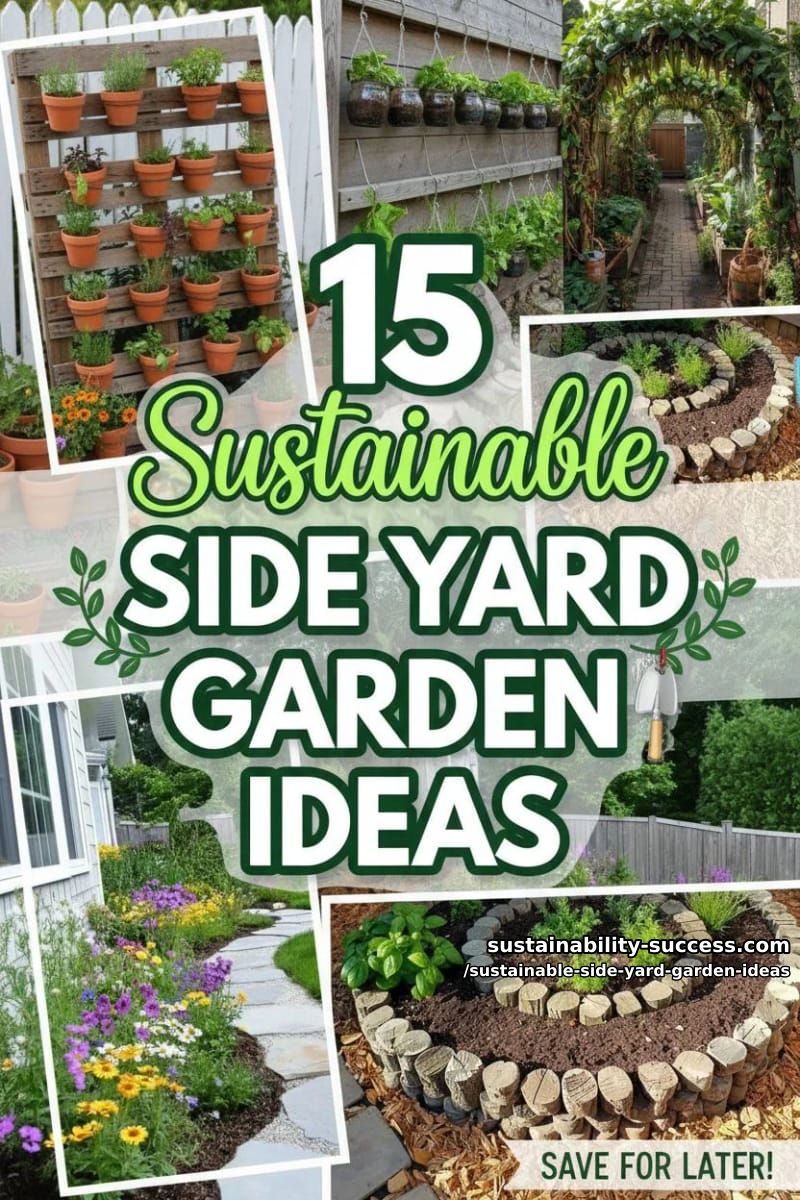
Let’s explore practical ideas that add beauty, boost biodiversity, and save you money.
1. Repurpose wooden pallets into vertical herb walls along your side yard fence

Why waste valuable space? Wooden pallets can be used to craft vertical herb walls that hug your side yard fence.
Simply secure the pallet upright, add landscape fabric, fill with soil, and pop in your favorite herbs. This clever trick turns an ordinary fence into a living pantry.
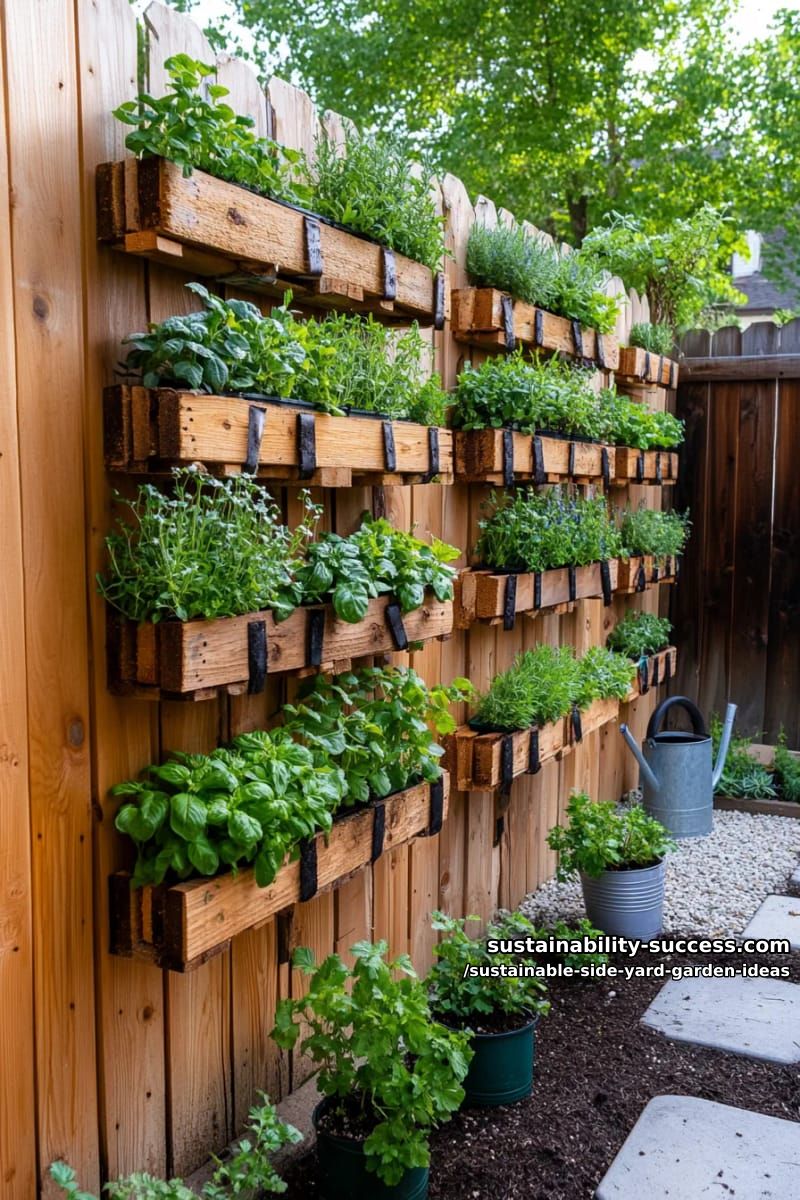
Not every herb thrives in confined spaces, so choose hardy varieties like thyme, oregano, or mint.
While pallets are inexpensive, some might be treated with chemicals, so pick food-safe ones or give them a good scrub. This solution adds character and fragrance while keeping your harvest within arm’s reach.
2. Curved stepping stone path weaving through low-maintenance native wildflowers

Imagine a curved stepping stone path slipping through bursts of native wildflowers. It's easy on the knees and a treat for the eyes.
These plants are built for your local weather, so they sip water, shrug off pests, and skip the need for fertilizers. Anyone with a patch of soil can do this.

Forget endless weeding or mowing. Native wildflowers fill space, crowding out most weeds, and need far less trimming. The result? A charming, eco-friendly border that buzzes with pollinators.
Why not swap that boring strip of grass for something that actually gives back to your yard, and the planet?
3. Narrow raised vegetable beds using reclaimed bricks for natural edging

Consider using old bricks to edge slim raised beds in your side yard. The bricks add charm and keep soil in place. They’re easy to arrange, even in a tight space.
Have a few bricks left from another project? Repurpose them for this, no fancy skills required, just patience and a bit of muscle.

While reclaimed bricks cut down on waste and cost, check each one for cracks or chemicals before use.
The brick’s natural look blends with greenery and helps prevent weeds from sneaking into your veggies. It’s a smart choice, but remember: uneven bricks may need extra care to create a level border.

4. Rainwater harvesting barrels hidden behind lush edible shrub borders

Tucking rainwater barrels behind edible shrubs does double duty. The barrels gather precious water for dry spells, while berry bushes or currant hedges keep them out of sight.
Why settle for plain fencing when you can munch fresh gooseberries and quietly conserve water at the same time?

Start with rainwater barrels placed close to gutter downspouts. Plant thick rows of rosemary or serviceberry in front. They’ll mask the barrels and offer fresh herbs or fruit.
It’s practical, attractive, and saves money. Even better, your neighbors might copy your setup, imitation is the sincerest form of flattery, after all.
5. Living green tunnels using recycled metal arches covered in climbing beans
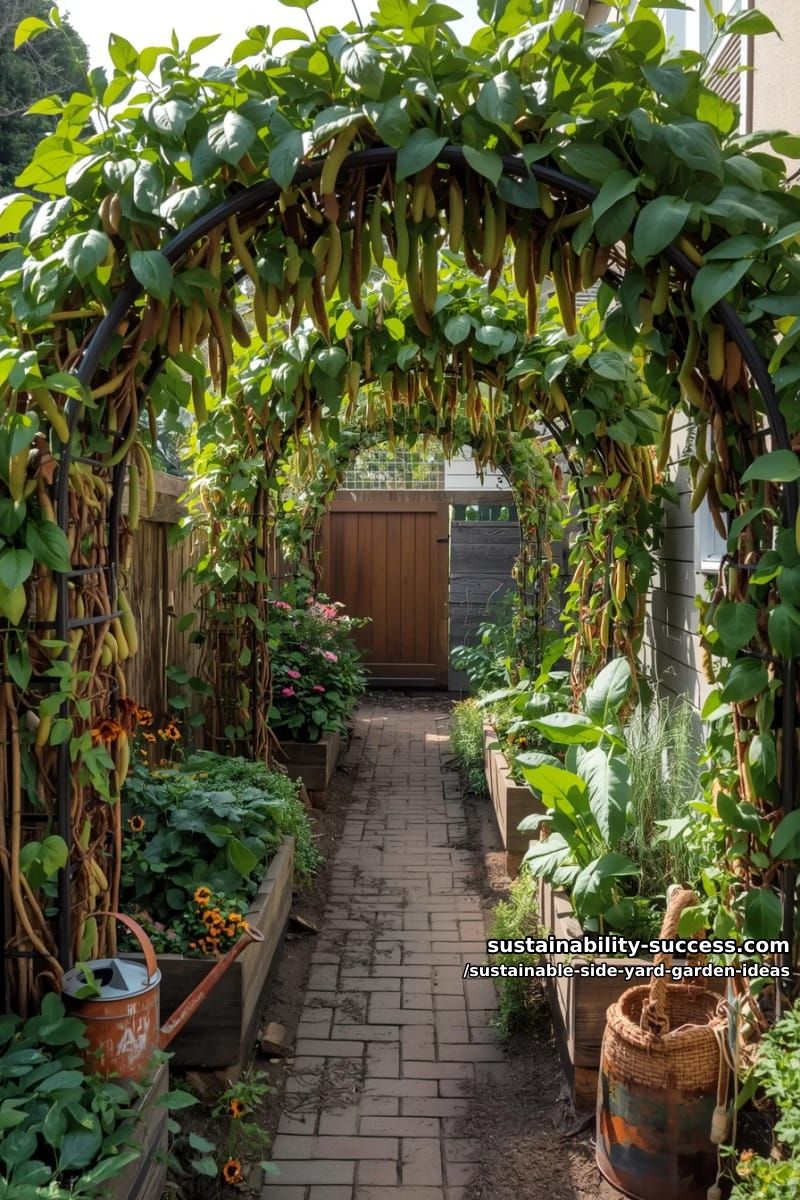
Picture using discarded metal arches to create living tunnels in your side yard. Wrap them with climbing beans, and soon you’ve got a shady, edible walkway.
Beans fix nitrogen in the soil, making it healthier for future crops. Plus, harvesting dinner is as easy as reaching overhead.

These green tunnels are more than functional; they’re visually striking conversation starters. However, recycled metal may rust over time, so a coat of non-toxic paint helps.
Kids will love running through the leafy shade, and you’ll enjoy fresher air and fresher beans, no plastic trellis required.

6. Pocket gardens with drought-tolerant succulents between pavers and gravel

Tucking drought-tolerant succulents between pavers and gravel adds charm and cuts water bills. These plants thrive on neglect, shrugging off summer heat while keeping weeds at bay.
Why pour money into thirsty lawns when a few hardy sedums or echeverias offer color and texture with almost zero fuss?

Pocket gardens aren’t just good-looking; they’re practical. Gravel helps channel rain to roots, reducing runoff. Succulents multiply easily, swap cuttings with neighbors and keep your side yard fresh.
If you live where rain is rare, this approach keeps your conscience and your yard green without constant watering.
7. Upcycled rain gutter planters mounted on sunny side walls for strawberries

Why toss old rain gutters when they can serve as quirky planters? Mount them on a sunny side wall and fill with soil. Strawberries thrive in these narrow spaces.
Water drains well, reducing rot. You save space and money, while keeping tasty berries right at arm’s reach.

Before you grab a drill, make sure the gutters are food-safe and free from rust. Drill drainage holes every 6 inches. Hang at a slight angle for proper water flow.
This solution isn’t perfect, shallow gutters dry out quickly. Check moisture often, and mulch the surface to hold in water.
8. Spiral herb mound bordered with logs for compact, aromatic planting

A spiral herb mound bordered with logs makes a smart use of limited space. Spirals allow you to plant a variety of herbs, each benefiting from different sunlight and moisture levels.
Logs create a natural border, holding soil in place and encouraging beneficial insects like beetles to stick around.

Building a spiral isn’t rocket science. Stack logs in a loose coil, fill with compost, and plant herbs from rosemary at the top to mint at the base.
This method saves water, boosts soil health, and reduces weeding. It’s simple, productive, and a conversation starter, though your neighbor might accuse you of witchcraft.
9. Hanging recycled glass jars filled with trailing herbs and microgreens

Old glass jars often gather dust in cupboards, but why not repurpose them? Suspend jars with sturdy twine along your side yard fence. Fill each with soil, then plant trailing herbs or microgreens.
It’s a low-cost, eco-friendly solution that adds instant green appeal to narrow outdoor spaces.

Maintenance is straightforward, snip herbs as needed for meals, and swap microgreens every few weeks. However, keep in mind that jars may heat up quickly in direct sunlight.
Place them where they get morning light but afternoon shade. This simple trick helps prevent wilting and keeps your mini garden thriving.
10. Espaliered fruit trees against fences for efficient space-saving harvests

Espaliered fruit trees turn a boring fence into a productive masterpiece. By training branches flat against the fence, you save precious square footage. Apples, pears, and figs thrive with this method.
Imagine plucking ripe fruit while barely stepping off your path, no need for sprawling orchards or bulky trellises.

Of course, patience is key. Regular pruning and guidance are required, especially in the early years. But once established, these living walls yield healthy crops and even provide privacy.
Why let your fence just stand there when it could feed you instead? Give your boundary a job, and your family a reason to smile.

11. Flowing gravel riverbed planted with pollinator-friendly perennials

A flowing gravel riverbed can turn a dull side yard into a pollinator oasis. Gravel lets rain soak in, reducing runoff and supporting healthy roots.
Plant clusters of echinacea, salvia, and yarrow between stones, bees and butterflies will thank you. It’s simple, low-maintenance, and visually striking.

However, keep in mind that gravel can get hot in direct sun, which may stress some flowers. Choose drought-tolerant, heat-loving perennials to avoid crispy plants.
Add a few logs or flat rocks for extra insect habitat. You’ll soon spot more buzzing and fluttering visitors than ever before.

12. Corten steel raised planters packed with leafy greens and edible flowers

Corten steel raised planters offer a practical blend of style and function. Their rusty patina adds character while resisting corrosion, making them a favorite for sustainable side yards.
Fill them with kale, spinach, and nasturtiums for a mix of color and nutrition. These containers keep weeds at bay and soil warmer.

You may love the low maintenance. Plus, edible flowers like calendula and violets attract pollinators, boosting your whole garden’s health.
One drawback, Corten steel can heat up fast in direct sun, so check soil moisture often. Add a drip irrigation line for reliability and let your side yard become a real food source.
13. DIY compost bin camouflaged with lush native grasses and ferns

Imagine a compost bin that blends quietly into your landscape instead of sticking out like a sore thumb. Use native grasses and ferns to hide it.
These plants not only provide cover but also attract helpful bugs and birds. Plus, they’re low-maintenance and thrive in local conditions.

Ready to try this at home? Place your bin near existing greenery or plant a mix of shade-loving ferns and drought-resistant grasses around it. Water sparingly and watch nature do the rest.
One drawback: you’ll need to trim back growth occasionally to keep the bin accessible. Worth it for the beauty and function.
14. Symmetrical stone paths flanked by wild berry bushes and perennial kale
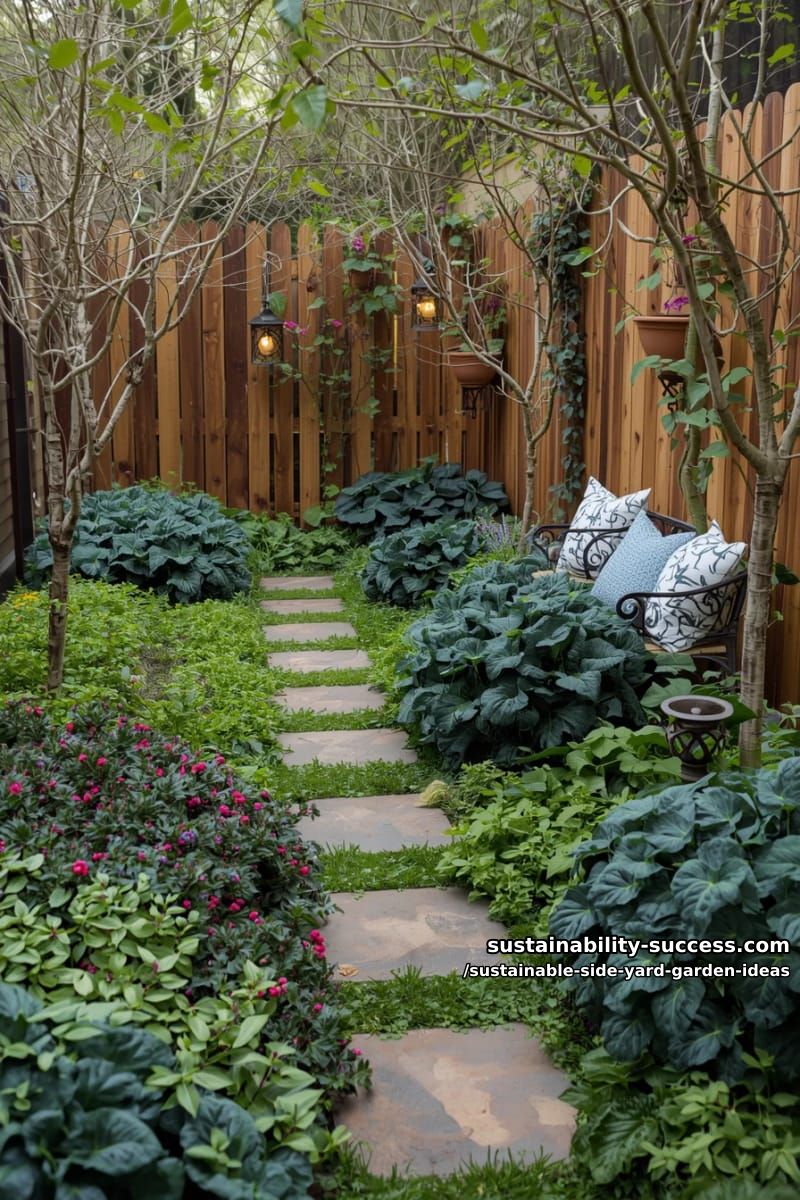
Imagine a stone path, perfectly lined, leading you through your side yard. On either side, wild berry bushes burst with color while perennial kale offers leafy greens all year.
This combination isn't just for show, it feeds pollinators, provides fresh produce, and keeps maintenance surprisingly simple.

Sure, the symmetry pleases the eye, but the real beauty lies in function. Wild berries attract birds and beneficial insects, reducing pests. Perennial kale means fewer replanting headaches and steady harvests.
Consider spacing plants for airflow and topping paths with gravel to keep mud at bay after rain.
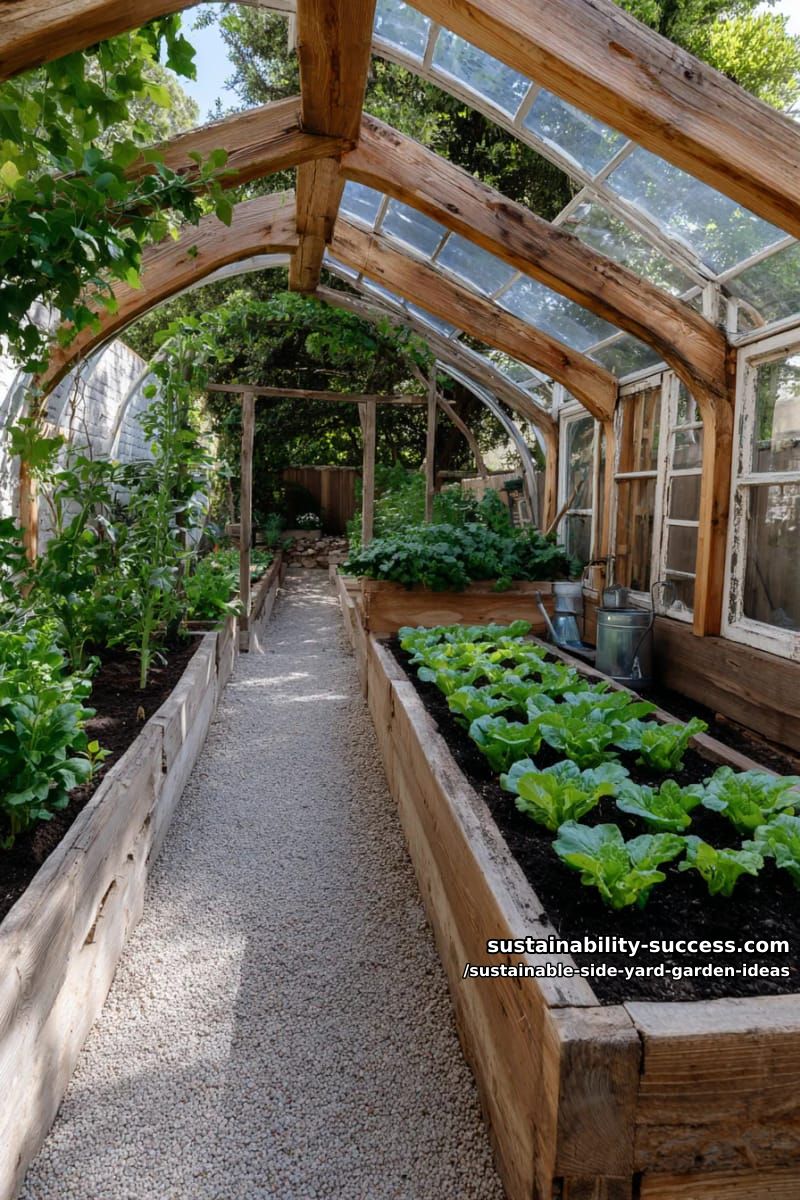
15. Mini greenhouse tunnel using old windows for year-round veggie starts
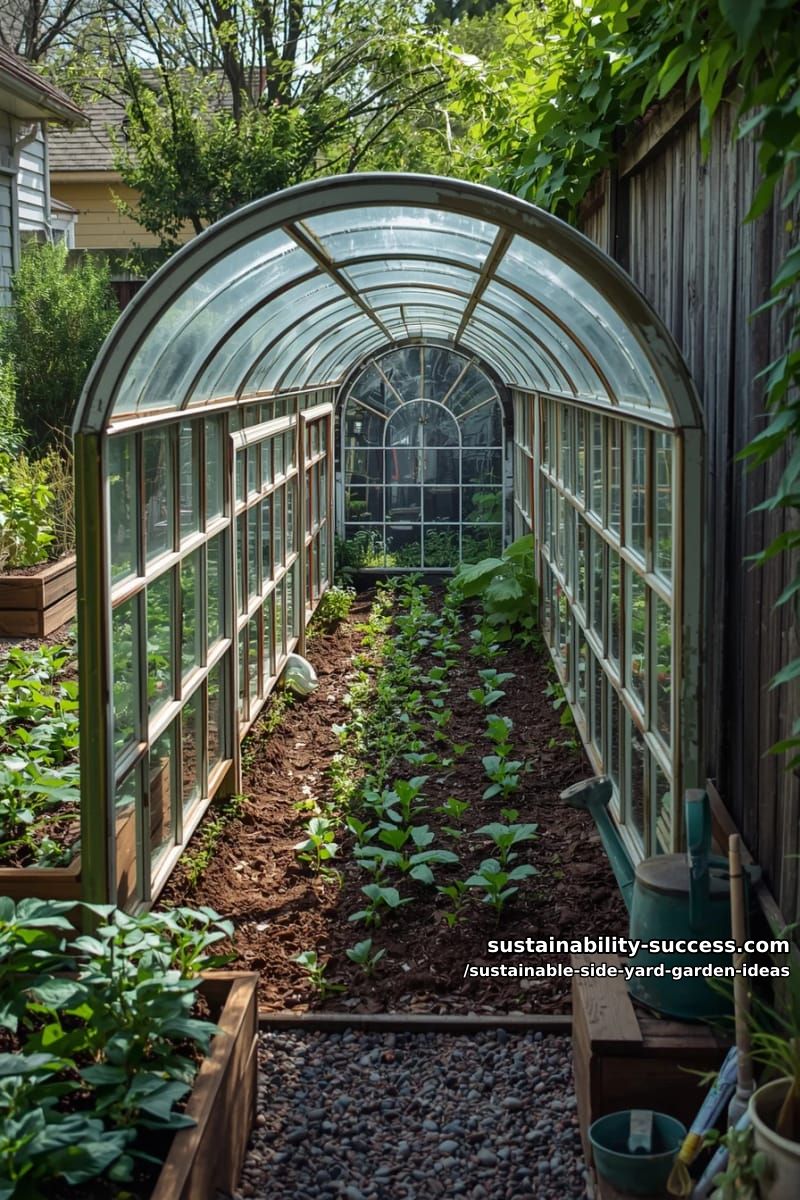
Got a stash of old windows? Turn them into a mini greenhouse tunnel for your side yard. This simple project extends your growing season and keeps seedlings cozy.
Just hinge the windows together, prop them up over raised soil, and watch those early greens thrive even when frost says “no.”.
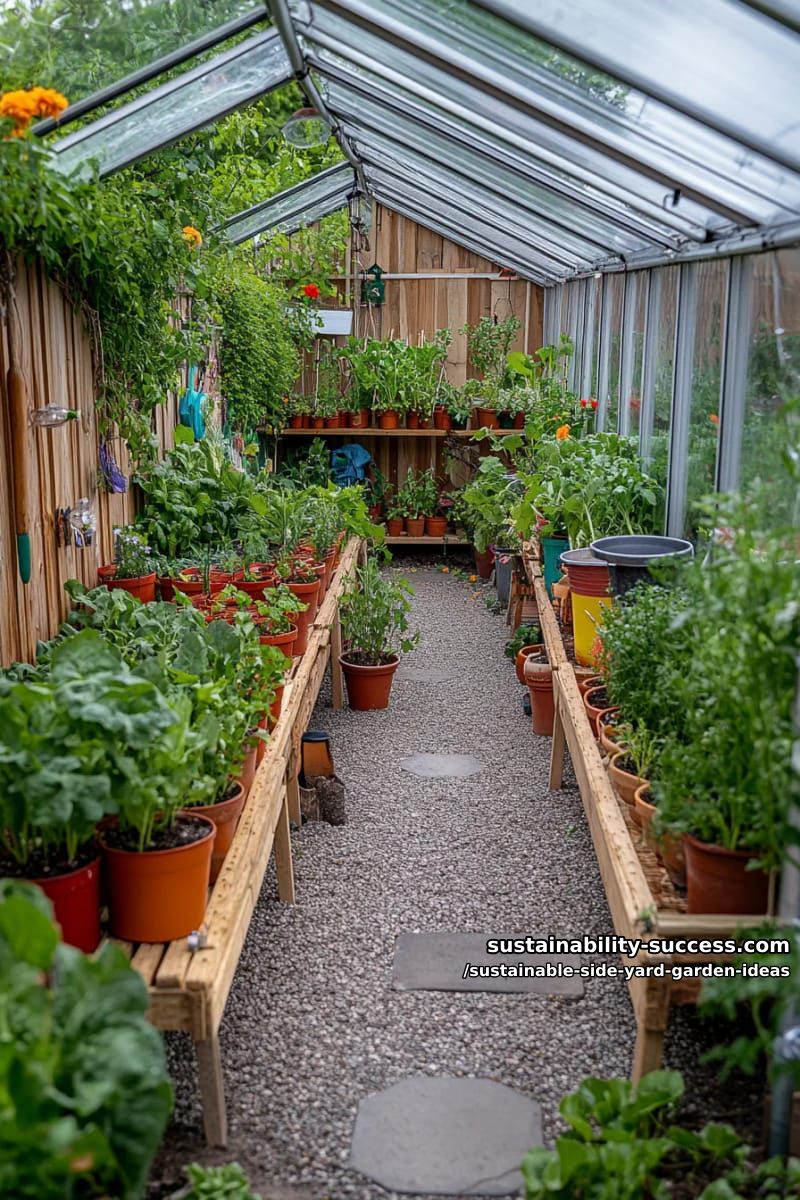
Reusing windows keeps waste out of landfills and saves cash. However, check for any lead paint before handling. Tight on space? No problem, the tunnel fits neatly beside your house.
Watering and venting are easy: just open a panel. Who knew sustainability could look so charming?
Conclusion
Sustainable Side Yard Garden Ideas aren’t just for show, they make every inch count. Imagine fresh strawberries from a rain gutter planter or crisp kale along your daily path.
Each idea brings beauty and function without wasting resources or space.
Ready to roll up your sleeves? Pick one concept to try this weekend. Even small changes, like a spiral herb mound or rainwater barrel, add up over time.
Why settle for boring when your side yard could be a green powerhouse? Give it a go, your garden will thank you.
Related Posts
- Sustainable Garden Decor Ideas
- Eco-Friendly Garden Art
- Eco-Friendly Herb Garden Ideas
- Spring Small Space Sustainable Garden Decor
- Upcycled Garden Ideas


