

City life often means trading green spaces for concrete views, but your terrace can change that equation.
Want to grow fresh food, attract pollinators, or simply relax among greenery? Sustainable terrace garden ideas make it possible without breaking the bank.
Imagine transforming leftover cans into planters or building a vertical garden from old pallets. These ideas don’t just save money, they shrink your footprint and add beauty.

Ready to see how small changes can create a big difference for your space and the planet? Let’s begin.
1. Pallet wall vertical garden with cascading herbs and succulents
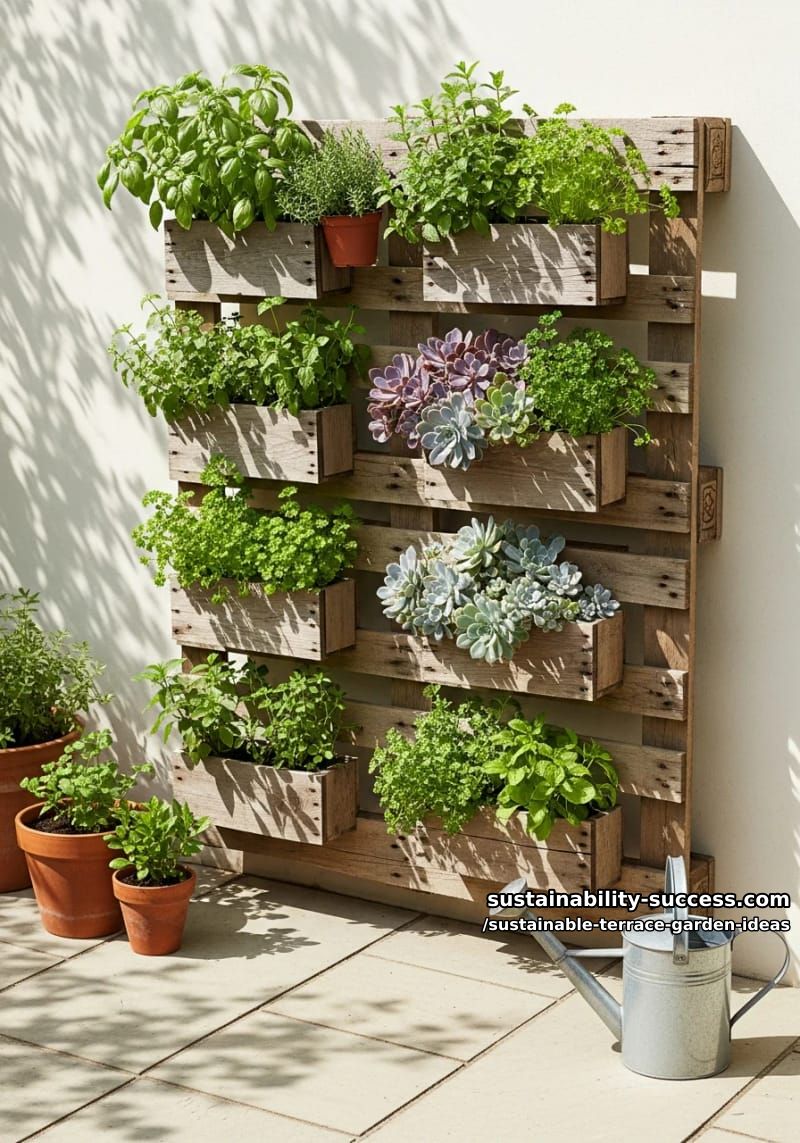
Repurposing wooden pallets for a wall vertical garden is a clever way to save space and materials. Picture basil, thyme, and mint spilling over the edges, while hardy succulents fill in the gaps.
This setup brings life to dull walls and makes everyday cooking more flavorful.

Maintenance is straightforward, just water regularly and check for pests. A drip irrigation line can make the job even simpler.
On the downside, pallets sometimes contain chemicals or rough wood, so sand and seal before planting. Still, this method offers an affordable, eco-friendly way to green up even the tiniest terrace.
2. Upcycled tin can planters for colorful edible flowers

Old tin cans can become quirky planters for edible flowers like nasturtiums and pansies. Paint them in bright colors to add cheer to your terrace.
Poke a few drainage holes, fill with soil, and you’re ready. Tin cans are cheap and help reduce waste, win-win, right?
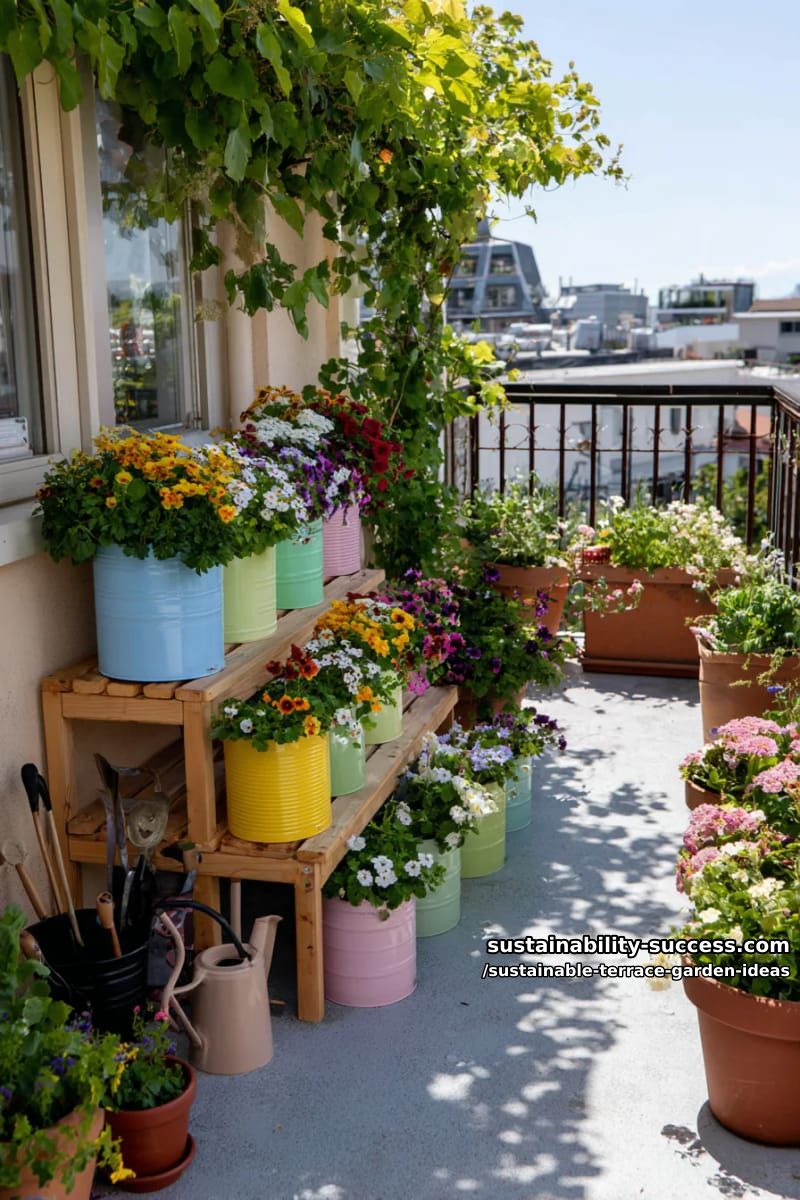
However, tin can planters can overheat in direct sun, so place them in partial shade or wrap them with burlap. Choose non-toxic paints and avoid cans with sharp edges.
With a little creativity, you’ll grow snacks and brighten your space, all while helping the planet. Who knew recycling could taste this good?
3. Spiral-shaped stone bed for multi-level vegetable planting

Spiral-shaped stone beds bring a touch of art and function to small spaces. By stacking stones in a spiral, you get several planting levels within just a few square feet.
This clever design lets you grow sun-loving veggies at the top and shade-loving greens below. Water trickles down, saving both effort and resources.

Maintenance is straightforward, just keep an eye on soil moisture. However, building one takes a bit of muscle and patience.
If you love a garden that stands out and makes every inch count, this idea will fit you like a glove. Isn’t it time your vegetables got a room with a view?
4. Hanging terracotta pots to create a leafy privacy screen
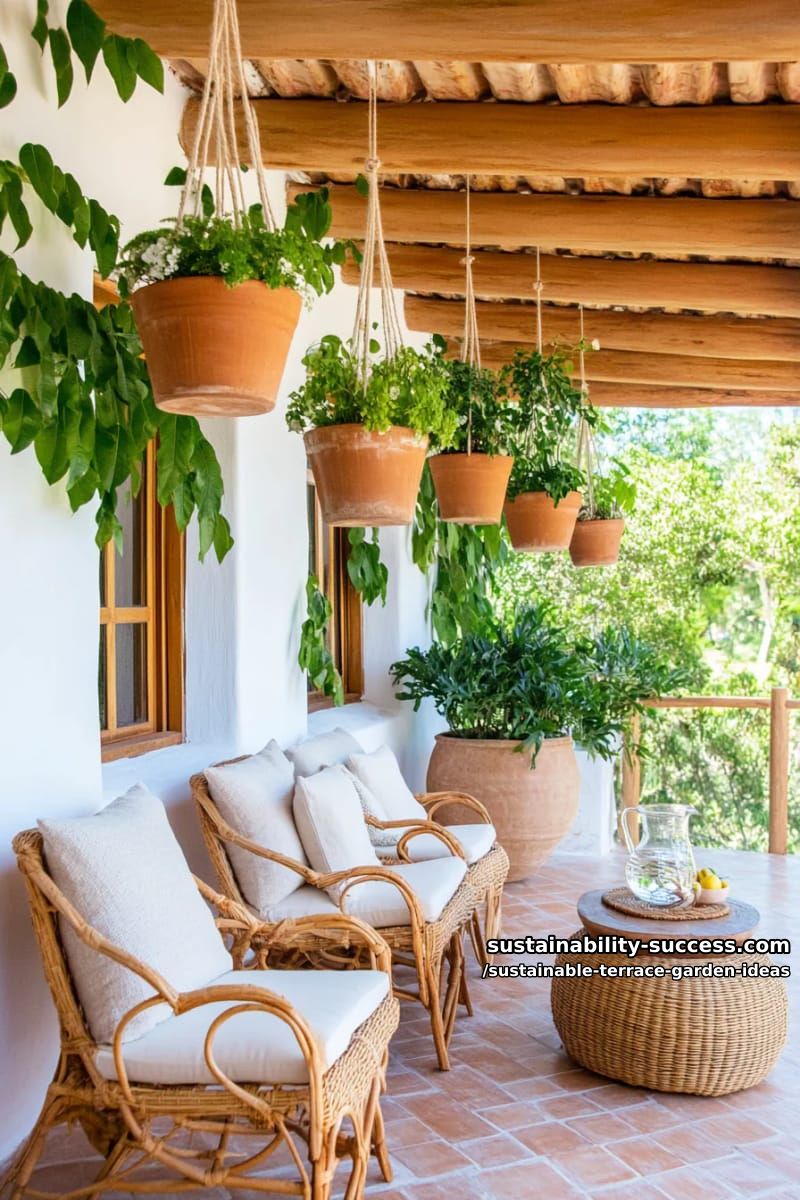
Who says privacy has to be boring? Stringing up terracotta pots filled with trailing vines or bushy herbs can turn a bare railing into a living green curtain.
This simple fix is practical and pretty, offering shade, privacy, and a cool spot for pollinators. Maintenance is straightforward, just water and prune.

Still, terracotta dries out quickly in direct sun, so you’ll want to check on your plants more often. Try mixing fast-growers like pothos with drought-tough favorites such as rosemary.
Why settle for a plain fence when you can have a vibrant, ever-changing wall of foliage?
5. Bamboo trellis with climbing beans and morning glories

Try using a bamboo trellis as both a practical and decorative feature. Bamboo grows quickly, is sturdy, and composts well after use.
Climbing beans thrive on these supports, offering fresh produce while morning glories add a burst of color. It’s a double win for small terraces.

However, bamboo trellises may need extra anchoring in windy areas. Beans and morning glories grow fast, be ready to guide new shoots often. This combo not only maximizes vertical space, but also attracts pollinators.
Who knew your terrace could become a tiny, edible oasis so easily?

6. Small rainwater collection barrels with aquatic plants

Small rainwater collection barrels bring more than just water savings. Adding aquatic plants like water lettuce or dwarf lilies helps filter the water and creates a mini-ecosystem.
Imagine frogs or dragonflies visiting your terrace, nature’s pest control. These barrels keep runoff in check and reduce dependence on treated tap water.

Some might worry about mosquitoes, but a few floating plants and occasional fish solve that problem. Maintenance stays minimal. Use the collected water for your terrace plants during dry spells.
This simple system turns a tight space into a productive, green feature that’s both functional and easy on the eyes.
7. Recycled wooden crates stacked as tiered salad gardens

Stacking recycled wooden crates is a practical way to grow salad greens, especially if space is tight. Each crate level offers room for different lettuces, herbs, or even spinach.
Old crates usually breathe well, keeping roots healthy. Got an eyesore crate? Paint it bright or stencil on fun labels.
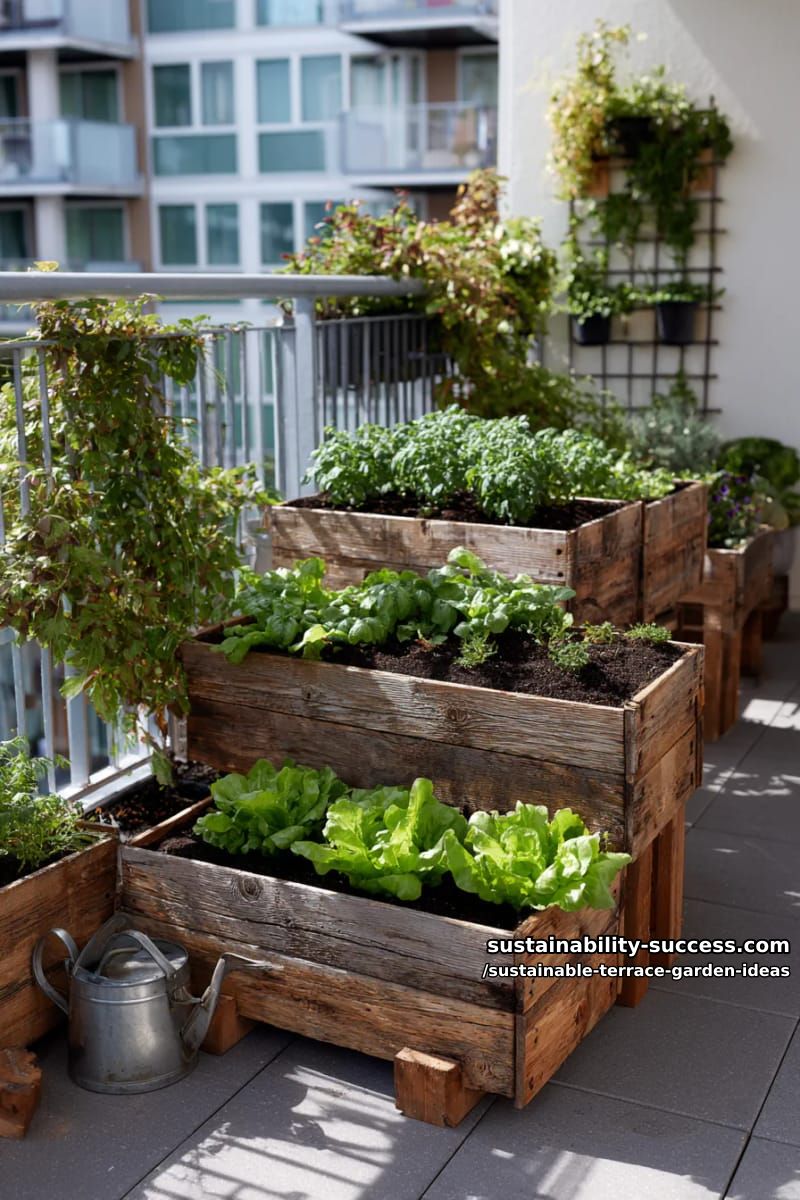
These tiered gardens aren’t perfect. Crates may rot over time, so line them with burlap or old plastic bags for longer use. Water can run off quickly, so check soil moisture often.
Still, you’ll get fresh salad close at hand and a tidy, vertical display that uses what you already have.
8. Living green wall using recycled bottles on balcony railing

Why toss plastic bottles when they can help you grow dinner? Fasten empty bottles horizontally to your balcony railing, fill them with soil, and plant herbs or small greens.
This setup saves space, repurposes waste, and brings fresh air to cramped balconies. Plus, watering is a breeze, gravity does most of the work.

Of course, plastic degrades in sunlight, so you’ll need to swap bottles every year or two. Still, this method gives your trash a second life and turns dull railings into thriving, edible art.
Who knew sustainability could look this good and taste even better?
9. Shaded pergola with solar-powered fairy lights and vines

A shaded pergola covered in climbing vines offers relief from harsh sun and adds instant charm. Add solar-powered fairy lights, no need to worry about extra wiring or electricity bills.
These lights charge by day and glow by night, making the space inviting while keeping your carbon footprint low.

Some vines, like jasmine or wisteria, not only look lush but also release pleasant scents. However, be mindful, fast-growing vines can overrun a pergola if left unchecked.
Trim regularly and pick varieties suited to your climate. Why settle for plain shade when you can have a fragrant, glowing oasis?
10. Circular raised beds with companion planting for pollinators

Circular raised beds help you use your space wisely. Why stick to boring rectangles? Mixing flowers and veggies in these beds draws bees and butterflies. For instance, plant marigolds with tomatoes.
They’re great neighbors, marigolds repel pests while attracting pollinators. It’s beauty and function, no green thumb required.

But remember, not every plant gets along. Mint spreads wildly and can choke out gentler herbs. Stick with combinations like basil and peppers, or zinnias and beans.
Watering is easier in circles, too, less waste, more results. The pollinators will thank you, and so will your harvest basket.
11. Pallet bench with built-in herb and microgreen planters

A pallet bench with built-in herb and microgreen planters offers both function and style. Imagine sipping tea on a sunny morning, fresh mint within arm’s reach.
Wooden pallets are cheap, even free, and reusing them means you’re keeping materials out of landfills. It’s smart and sustainable.
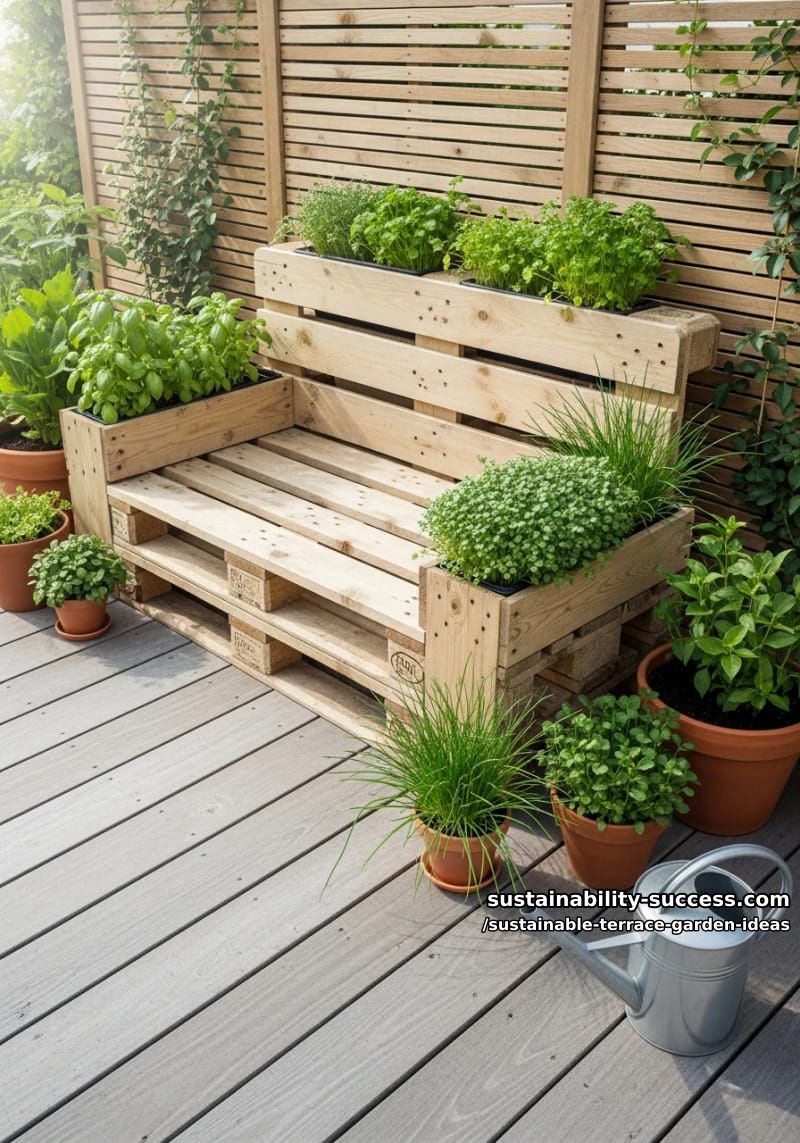
But let’s be honest, pallets aren’t perfect. They can splinter, so sand them well. Not all pallets are safe; avoid those treated with chemicals.
Line planters with landscape fabric to keep soil in place and promote drainage. With a little care, you’ll have a cozy, productive terrace spot that truly grows on you.
12. Modular planter system for easy crop rotation on terraces

Think your terrace is too small for serious gardening? A modular planter system proves otherwise. These stackable, movable containers allow you to switch crops quickly and optimize space.
Rotate leafy greens with root vegetables in a snap, reducing soil fatigue and pests. Efficiency and flexibility, right at your doorstep.

However, some modular systems use plastics that may not last under strong sun. Choose food-safe, UV-resistant materials for longevity. To make the most of this setup, plan your planting calendar ahead.
Why not invite your neighbors to swap seedlings and share tips? Gardening becomes a community event.
13. Repurposed ladder shelf for low-water succulent arrangements

Old wooden ladders often gather dust, but they can serve a new purpose as plant shelves. Place one against a sunny wall and fill the rungs with shallow pots of succulents.
These hardy plants need little water, making maintenance easy and conserving resources. It’s thrifty, creative, and ideal for small spaces.

However, keep an eye on drainage. Wooden ladders can rot if water pools, so use containers with holes and avoid overwatering. This setup doesn’t suit every plant, but it’s perfect for drought-tolerant varieties.
With a little care, your ladder shelf becomes both a conversation piece and a water-wise garden solution.
14. Edible flower border paired with aromatic herbs and veggies

Imagine a terrace bordered by marigolds, nasturtiums, and violets. These edible flowers do more than brighten the space; they attract pollinators and repel some pests. Blend them with basil, thyme, and compact tomatoes.
This patchwork creates a lively, fragrant edge that’s both beautiful and practical.

Mixing flowers, herbs, and vegetables encourages healthier growth. Companion planting helps soil health and can boost yields. It’s easy to harvest a handful of petals for salads or snip fresh herbs for dinner.
The downside? Some flowers need regular deadheading, but the benefits far outweigh that extra step.
15. Composting corner with worm bin and edible ground cover plants

Why throw out veggie scraps when worms can turn them into gold for your plants? A worm bin fits snugly in a shady terrace corner and needs little more than kitchen waste, shredded paper, and a bit of patience.
Kids love watching the process, nature’s recycling at its finest.
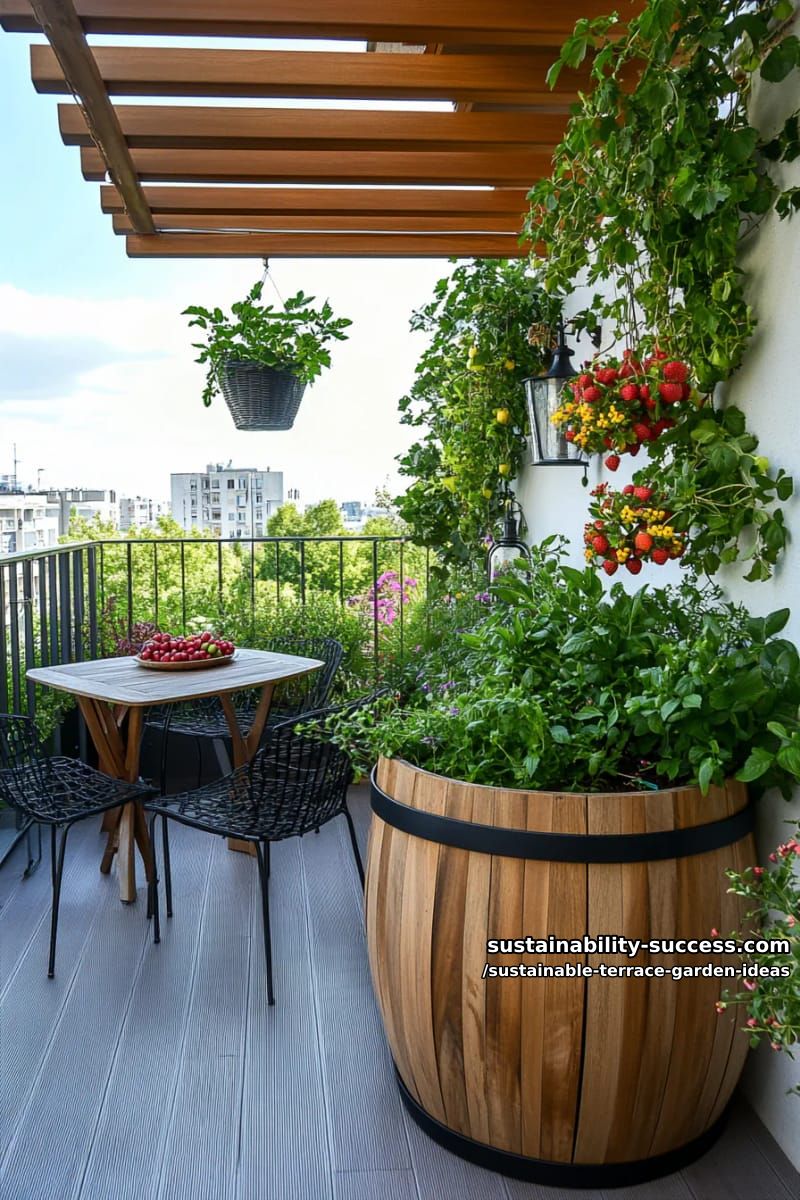
Planting edible ground covers like creeping thyme or oregano around your composting area keeps weeds at bay and offers fresh herbs right at your fingertips. It’s low-maintenance and looks lovely.
Just watch out, those herbs may attract more compliments than your roses ever did.
Conclusion
Bringing these sustainable terrace garden ideas to life doesn’t require a green thumb or a fat wallet, just a little creativity and a bit of patience.
Try starting small with upcycled containers or a vertical herb wall, then expand as your confidence grows.
Why not turn kitchen scraps into compost or experiment with a bamboo trellis for climbing plants? Every step makes your terrace greener and your meals fresher.
Ready to turn your outdoor spot into a productive, eco-friendly haven? The best time is now.
Related Posts
- Sustainable Garden Decor Ideas
- Eco-Friendly Garden Art
- Eco-Friendly Herb Garden Ideas
- Spring Small Space Sustainable Garden Decor
- Upcycled Garden Ideas


