

City living doesn’t mean giving up green spaces. In fact, with a pinch of creativity, even the smallest balcony or rooftop can become a thriving garden.
Want to grow fresh herbs or tomatoes right outside your window? It’s easier than you think.
Sustainable urban garden ideas are changing how we look at city spaces. From upcycled containers to rainwater barrels, these approaches use what’s on hand.
Ready to turn your concrete corner into something green, and maybe even edible? Let’s get planting.
1. Repurposed pallet vertical gardens for compact urban balconies

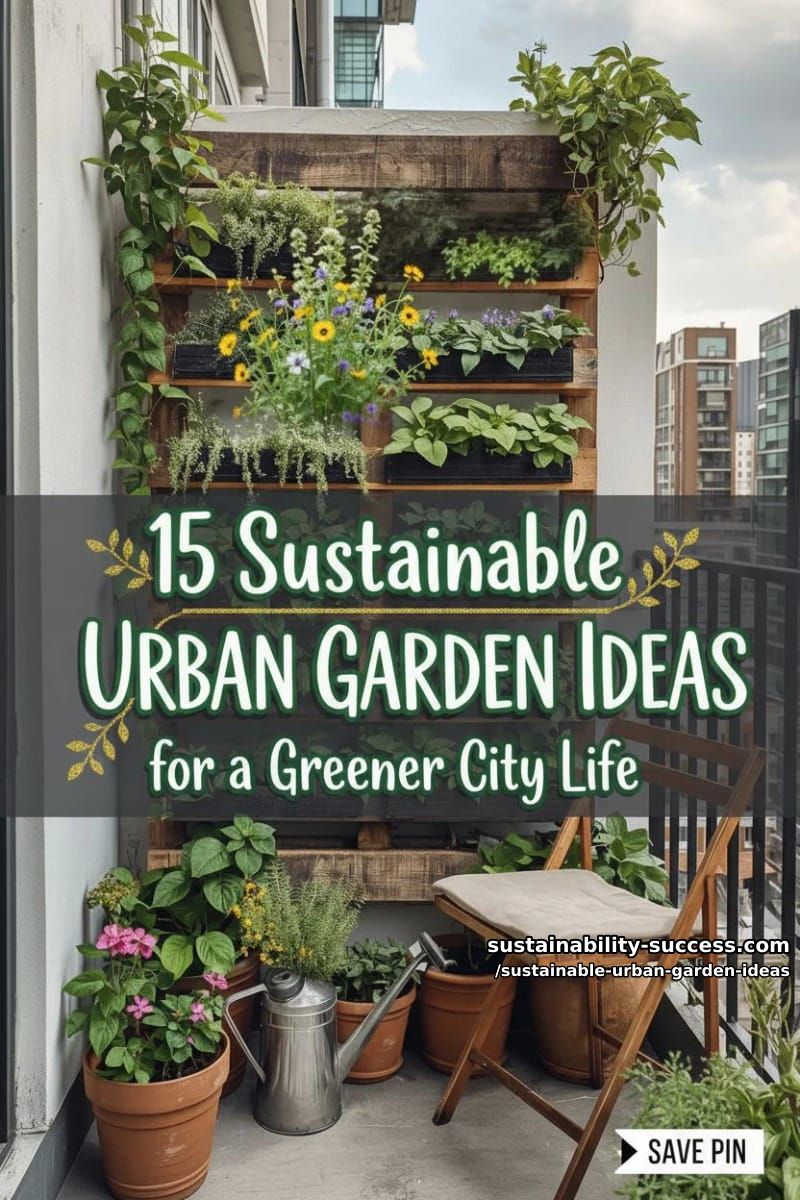
Tired of staring at bare balcony walls? Repurposed pallets offer a practical, affordable fix. Lean a pallet upright, fill its gaps with soil and herbs, and voilà, your own vertical garden.
This simple approach saves precious floor space and brings a splash of green to even the tiniest apartments.

Of course, wood pallets sometimes come treated with chemicals. Always pick pallets stamped “HT” for heat treatment, not chemicals. Quick tip: line the back with landscape fabric to keep soil in place.
With this setup, fresh basil, mint, and lettuce are just an arm’s reach away, right out your window.
2. Rooftop food forests with pollinator-friendly wildflower borders

Imagine a rooftop food forest, bursting with fruit trees, berry bushes, and edible herbs, all framed by a lively border of wildflowers.
These blooms attract bees, butterflies, and other pollinators, helping your crops thrive. Even a small roof can support this living pantry with careful plant selection and lightweight soil blends.

However, rooftop gardens do demand upfront planning. You’ll need to check weight limits, arrange reliable irrigation, and pick plants suited for wind and sun.
But the payoff? Fresh produce steps away and a pollinator haven above the city’s buzz. Why settle for plain shingles when your roof could feed both people and bees?

3. Upcycled rain gutter planters for edible wall gardening

Old rain gutters often end up in landfills, but they can become efficient planters for small spaces. Mounting these gutters vertically on a sunny wall turns wasted space into a productive herb or lettuce garden.
It’s cheap, simple, and perfect for renters who want fresh greens without digging up the yard.

However, remember drainage is key. Drill holes to keep roots healthy and prevent waterlogging. Some crops, like deep-rooted carrots, won’t thrive here, but strawberries, spinach, and chives flourish in shallow soil.
With a little creativity and basic tools, you can grow food almost anywhere, even on a balcony.

4. Spiral keyhole garden beds using reclaimed bricks and stone
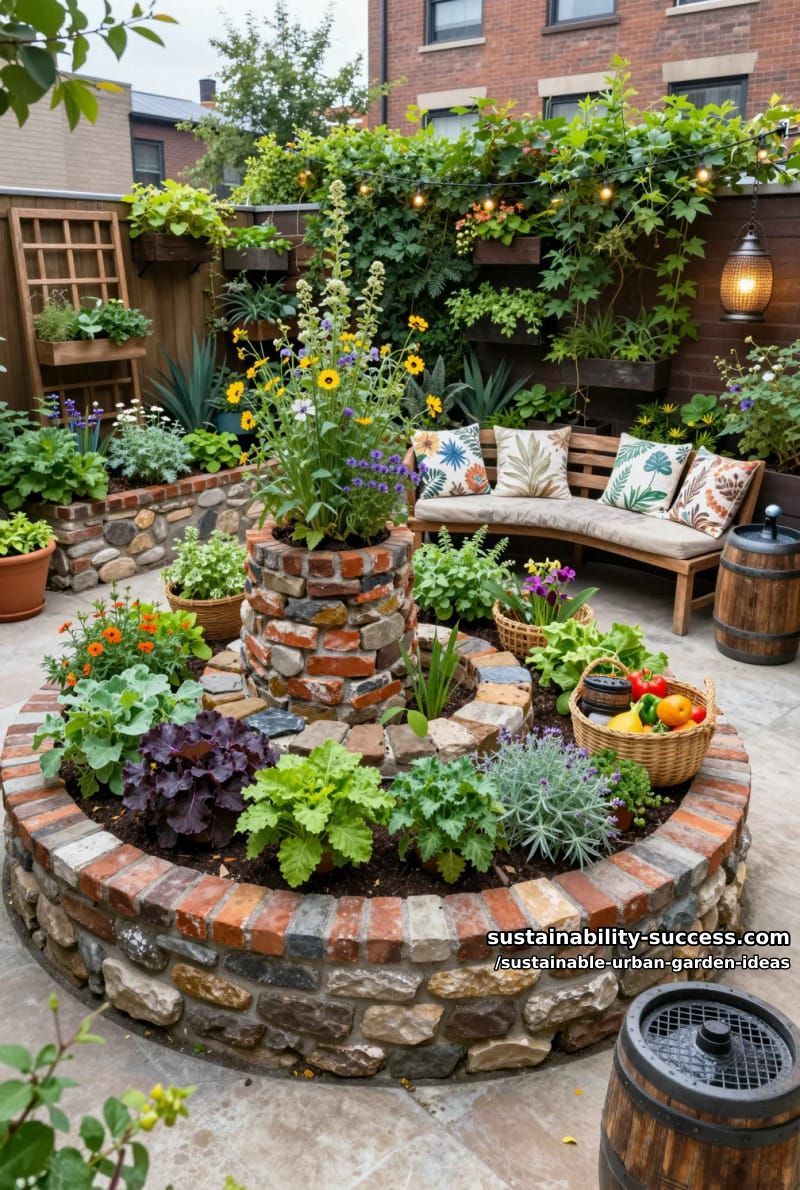
Spiral keyhole garden beds, built from old bricks and stone, make clever use of space. Their winding structure allows for easy access to every plant, saving your back and your time.
Reusing materials keeps waste out of landfills and gives your garden an attractive, rustic look.

Some gardeners swear by the composting basket at the center. Toss in kitchen scraps, and nutrients flow directly to your veggies.
Sure, arranging the spiral can be a puzzle, but the payoff is a visually striking, productive bed that thrives in both small yards and larger plots.
5. Window box herb gardens made from salvaged wood scraps

Old wood scraps in your shed can gain new life as window box herb gardens. A few nails, some sandpaper, and you’ve got a rustic container, no expensive supplies required.
Fresh basil or parsley at arm’s reach, plus you help reduce landfill waste. Why not turn trash into flavor right outside your window?

However, salvaged wood needs a quick safety check. Avoid painted or pressure-treated boards that might leach unwanted chemicals. Line your boxes with food-safe plastic, poke some drainage holes, and you’re set.
This approach is budget-friendly, looks charming, and even beginners can handle it without breaking a sweat.

6. Multi-level container vegetable gardens on recycled shelving units

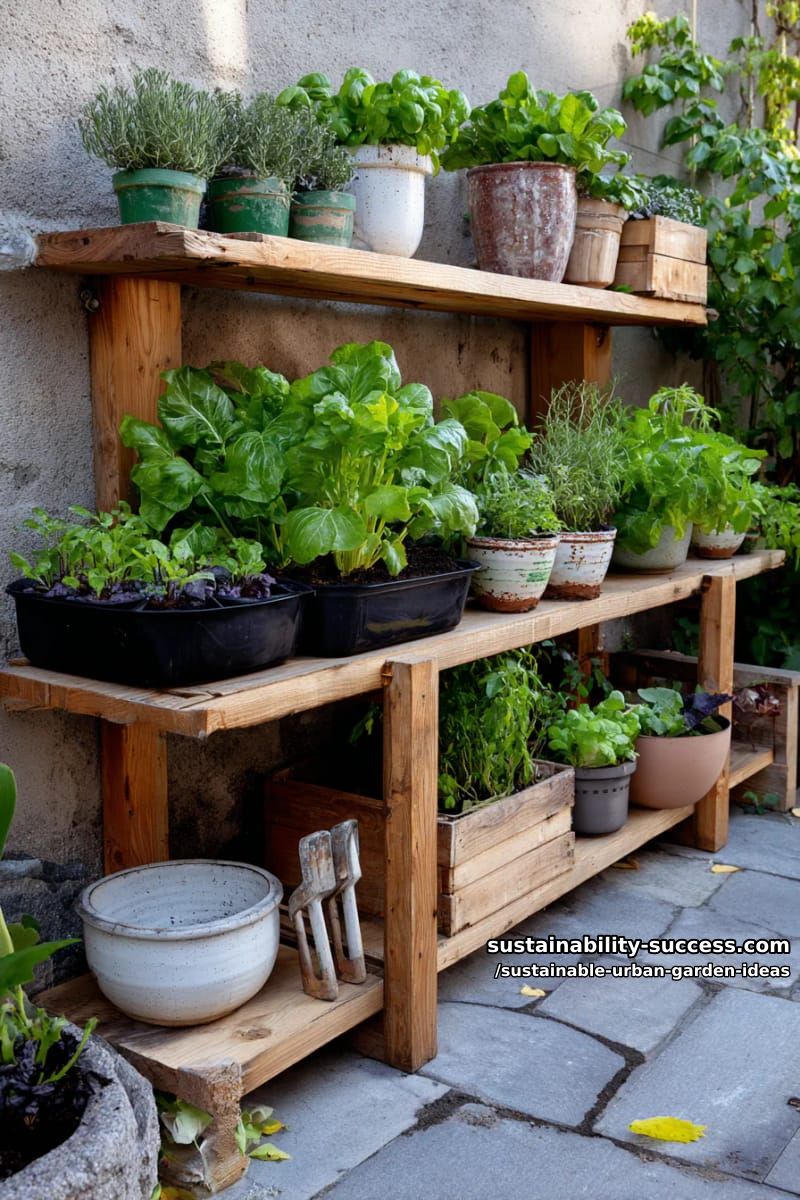
Old bookshelves or wooden pallets can serve as the backbone for stacked container gardens. These multi-level setups save precious space and make tending your veggies less back-breaking.
Imagine cherry tomatoes trailing from the top shelf while lettuce and herbs thrive below. Even a tiny balcony can become a productive patch.

However, drainage can be tricky on recycled shelves. Drill holes in containers and use trays to catch excess water. Rotate crops to prevent soil fatigue.
With a splash of creativity and some reclaimed materials, anyone can grow fresh food in the city, no backyard required.
7. Rainwater-harvesting barrel irrigation for lush patio micro-gardens

Imagine turning your patio into a green haven using nothing but a simple rain barrel. Collecting rainwater cuts utility costs and gives your plants chemical-free hydration.
Place a barrel under a downspout, attach a spigot, and let gravity do the watering. Even a small barrel can support herbs, lettuce, or tomatoes.

Still, rain barrels have limits. During dry spells, stored water may run out quickly. Elevate your barrel for better flow and always use a mesh screen to stop mosquitoes.
With some planning, this easy fix keeps your micro-garden thriving and your conscience clear, no fancy irrigation system required.

8. Community rooftop gardens with solar-powered compost stations

Imagine a rooftop transformed into a thriving patchwork of vegetables, flowers, and herbs, shared by neighbors. Community rooftop gardens harness unused space, foster friendships, and reduce food miles.
Solar-powered compost stations take it up a notch, turning kitchen scraps into fertilizer without adding to the power bill or carbon footprint.

But it’s not all sunshine and tomatoes. Rooftop gardens need buy-in from building owners and careful planning to avoid leaks or structural issues.
Still, with solar composters handling waste and neighbors pitching in, these green oases prove that city living and eco-friendly habits can go hand in hand.
9. Living green privacy screens using upcycled mesh and climbing beans
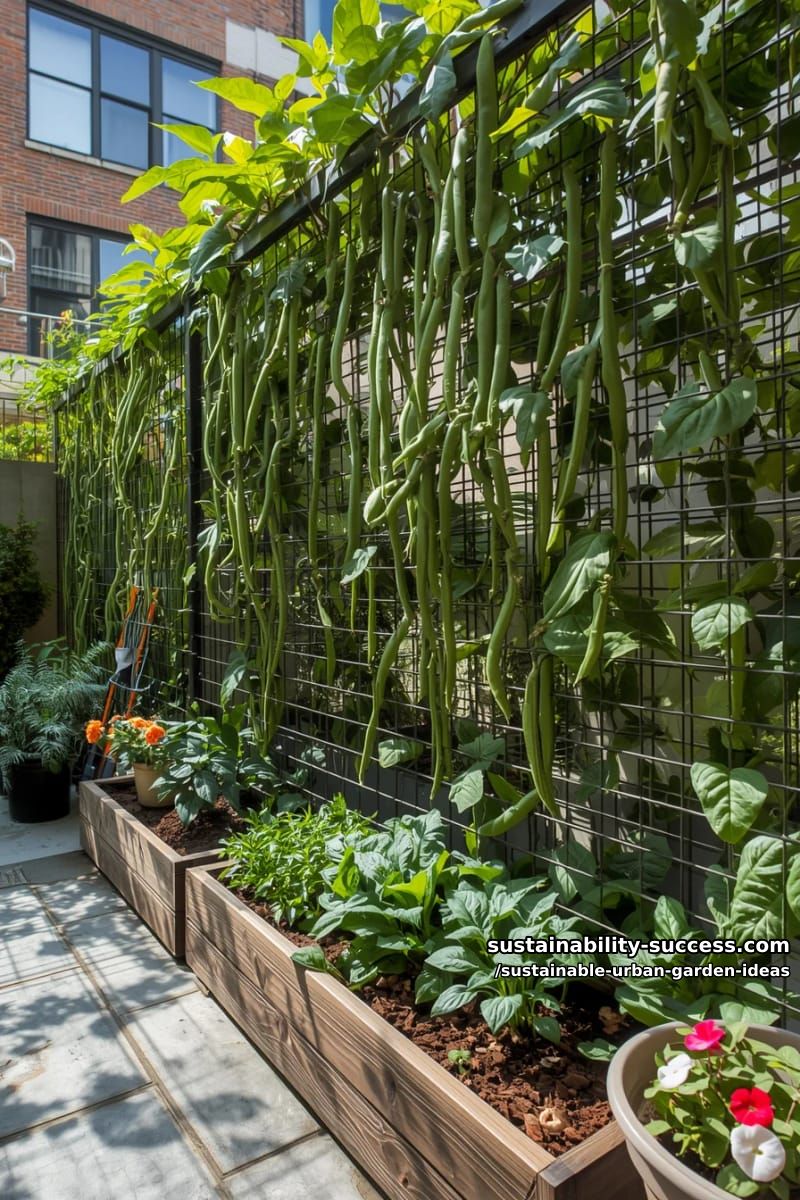
Old wire mesh from past projects can serve a new purpose as the backbone for living privacy screens. Fast-growing climbing beans quickly cover the mesh, offering shade, beauty, and even snacks.
This approach skips expensive fencing and adds a green touch to patios or balconies with limited space.

Why buy trellises when you can make one from discarded materials? Plant runner beans or pole beans at the base. In just weeks, your mesh disappears behind lush leaves and bright blossoms.
This method reduces waste, boosts food security, and can spark conversation with curious neighbors.

10. Painted tin can succulent wall mosaics for narrow city spaces

Repurposed tin cans, splashed with bold paint, can become a quirky succulent mosaic for apartment alleys or balconies. Attach them to wooden slats or a wire grid, creating vibrant art and functional greenery.
Even a drab fence can start looking like a modern gallery, no green thumb required.

Of course, tin cans do rust over time, and drainage can be tricky. Drill a few small holes, add gravel, and water sparingly.
These makeshift planters shine where space is tight, bringing both color and life to walls that might otherwise look like concrete deserts.

11. Elevated garden walkways with built-in recycled planter rails

Imagine strolling above your backyard, feet cushioned by wooden planks, with bursts of green at your fingertips. Elevated garden walkways with built-in recycled planter rails turn wasted space into a living tapestry.
Old pallets or scrap metal can become rails, holding herbs, strawberries, or cascading flowers right where you walk.
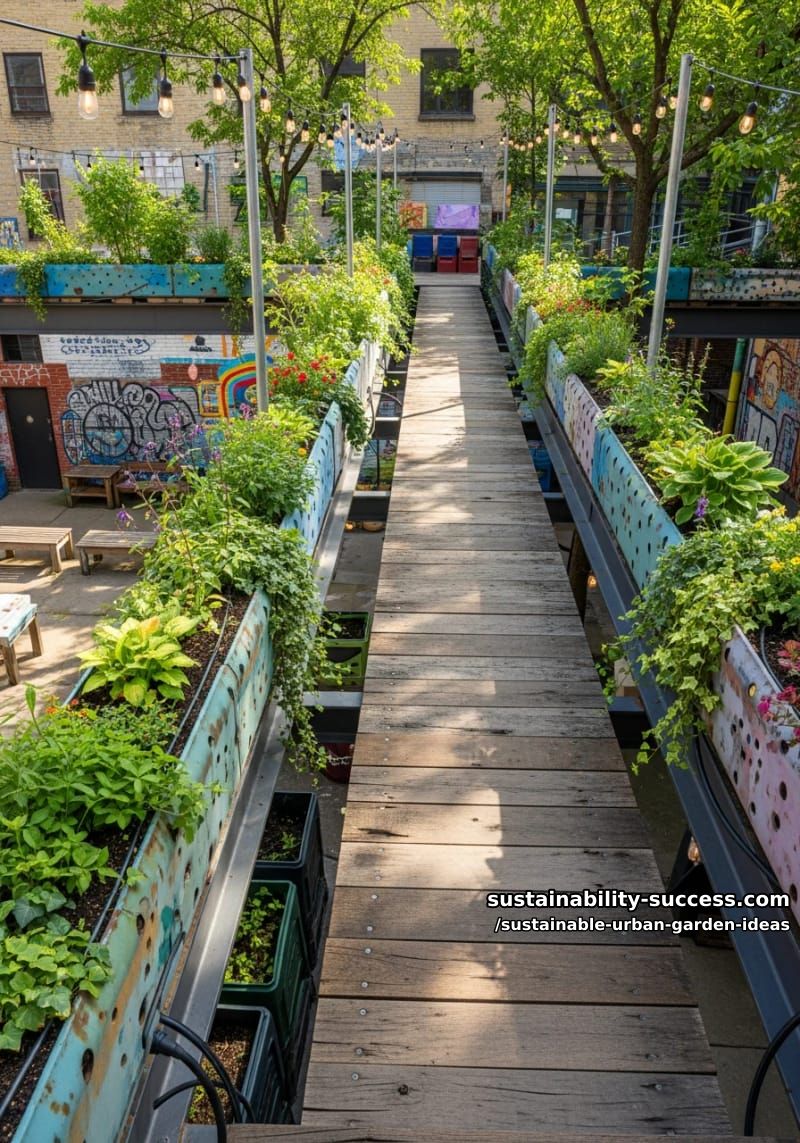
Maintenance can be tricky; plants need regular watering and the walkway must stay stable. However, this setup saves ground space and brings plants to eye level, handy if you hate bending over.
Think of harvesting fresh mint as you stroll. It’s functional, eco-friendly, and gives your yard a modern twist.
12. Vertical moss walls for passive cooling and clean urban air

City heat can be relentless, but vertical moss walls offer a cool solution, literally. These living walls act like natural sponges, soaking up sunlight and lowering nearby temperatures.
Imagine coming home to a building that feels fresher, just because you planted moss instead of ignoring that blank wall.

Air quality often suffers in dense neighborhoods. Moss walls help by trapping dust and absorbing air pollutants. They might not replace trees, but they make a difference where ground space is limited.
Maintenance is simple: occasional misting and trimming. Who says urban living can’t be both sustainable and stylish?
13. Spiral garden paths lined with broken tile for waterwise planting

Spiral garden paths made from broken tile not only add visual flair, but they help the soil retain moisture.
Cracked pottery or leftover tiles create a mosaic look, guiding rainwater to the roots of drought-tolerant plants. Why waste materials when you can turn them into something beautiful and practical?

However, broken tile can be sharp and tricky to arrange safely. Wear gloves and space tiles to avoid trip hazards. Mix succulents or native plants between the spirals for low-maintenance color.
A spiral layout slows foot traffic, encouraging you to pause, admire, and appreciate every inch.
14. Greenhouse sheds crafted from old windows and doors

Repurposing old windows and doors for greenhouse sheds gives discarded materials a second life while reducing waste. The glass allows sunlight to flood in, creating a cozy haven for seedlings.
Building with salvaged items saves money and adds character. But remember, sourcing sturdy, well-fitting windows can require patience and flexibility.
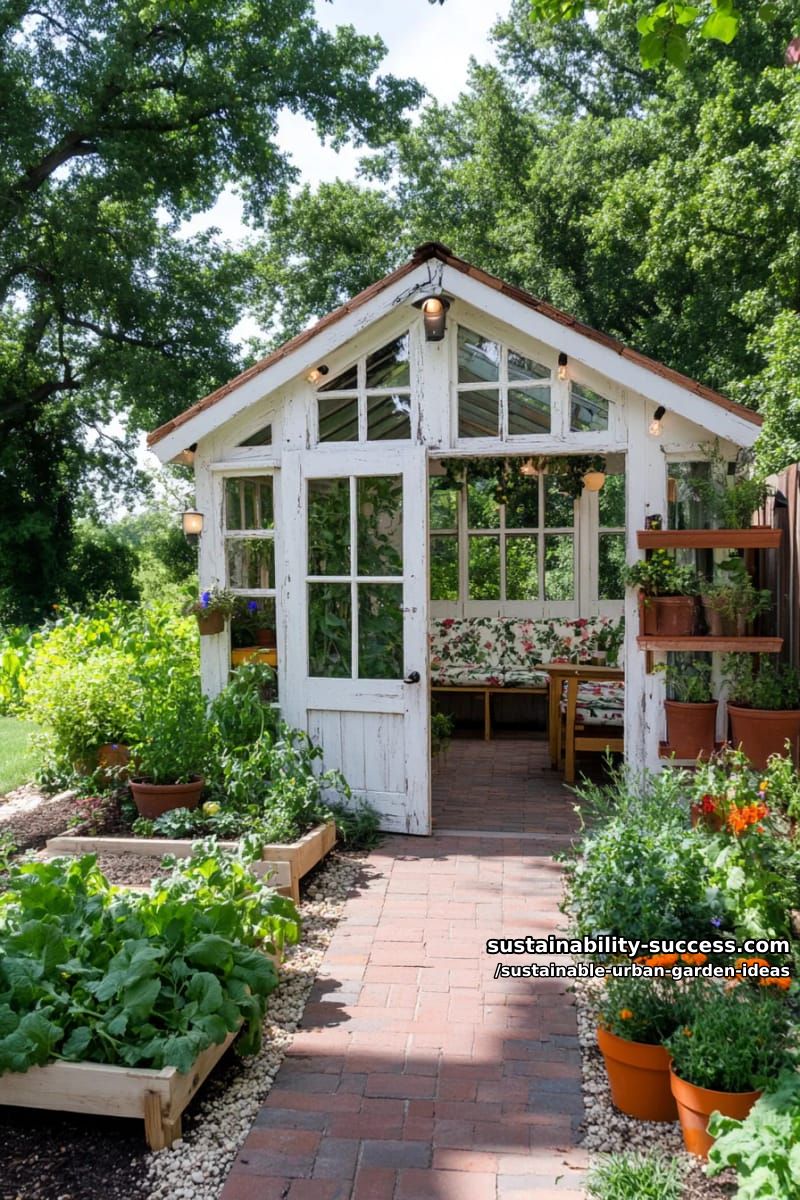
Ever thought about the quirks of mismatched panes? They let in light from every angle, but may need extra sealing during chilly months. To keep heat inside, add weatherstripping and use caulk liberally.
With a bit of elbow grease and imagination, your garden gains a practical, conversation-starting feature.
15. Edible rooftop labyrinths with native drought-tolerant plants
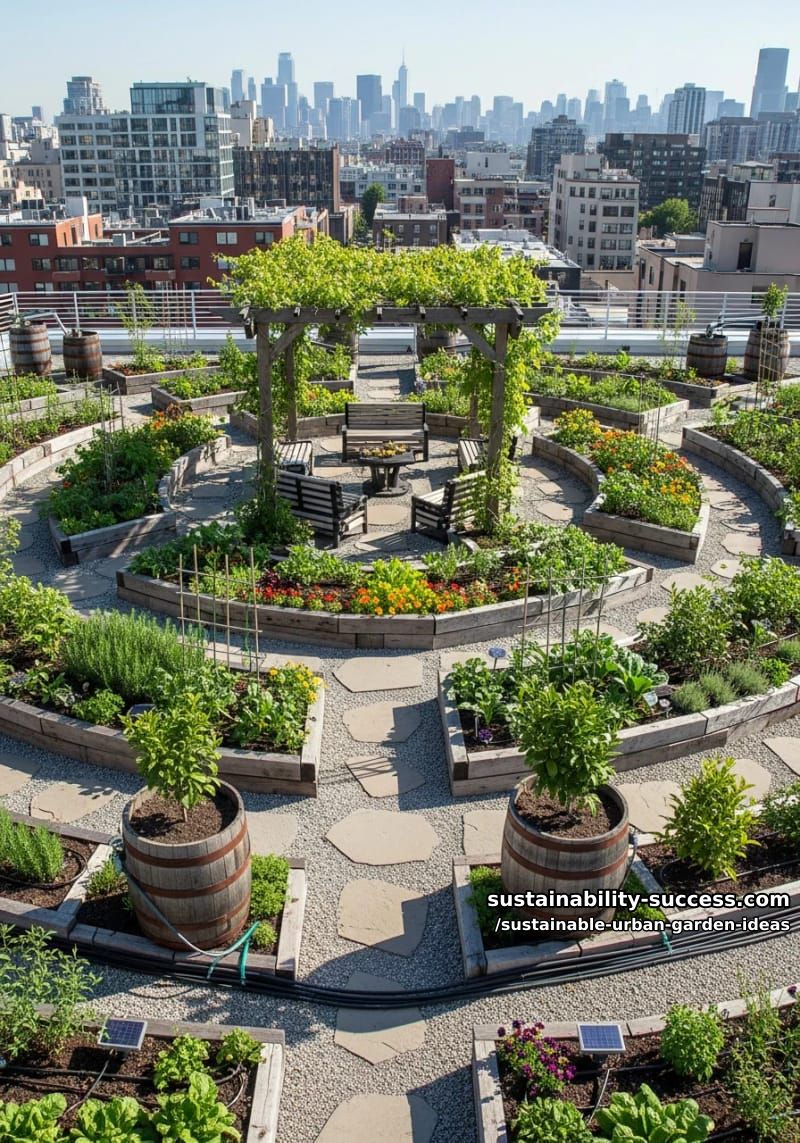
Edible rooftop labyrinths offer more than visual interest, they support pollinators and help cities breathe. Using native, drought-tolerant plants like sage, thyme, or gooseberries reduces water use and maintenance.
Imagine snacking on fresh berries while tracing winding paths above the city. This is practicality meeting whimsy on your own terms.

However, rooftop projects can face weight limits and require upfront investment. A simple soil test and consultation with a building manager save headaches later.
Start small: plant in lightweight containers, group hardy herbs near entry points, and watch your rooftop become a green refuge, even during dry spells.

Conclusion
Bringing sustainable urban garden ideas to life is simpler than most think. Start small, maybe a pallet vertical garden or a few rain gutter planters. See what grows.
Every effort helps your city breathe easier and look brighter. Why not give it a go?
Think of your balcony, rooftop, or windowsill as a blank canvas. With reused materials and a dash of creativity, you can grow food, flowers, and even friendships.
Ready to dig in? The greenest city starts right outside your door.
Related Posts
- Sustainable Garden Decor Ideas
- Eco-Friendly Garden Art
- Small Garden Decor Ideas
- Eco-Friendly Herb Garden Ideas
- Spring Small Space Sustainable Garden Decor


