
The pencil holder is where good cans go to die, so none of the twelve projects below leave the cylinder looking like a cylinder. Three tricks do most of the hiding: light pushed through punched metal, sound tuned by the size of the can, and a cut or a length of wire that turns a soup tin into something that hangs. Steel food cans are free, they take paint and a hammer without complaint, and there's a five-century craft tradition behind the prettiest thing you can do to them , which is the part most recycling-bin tutorials skip.

1. Freeze-and-punch tin can luminary

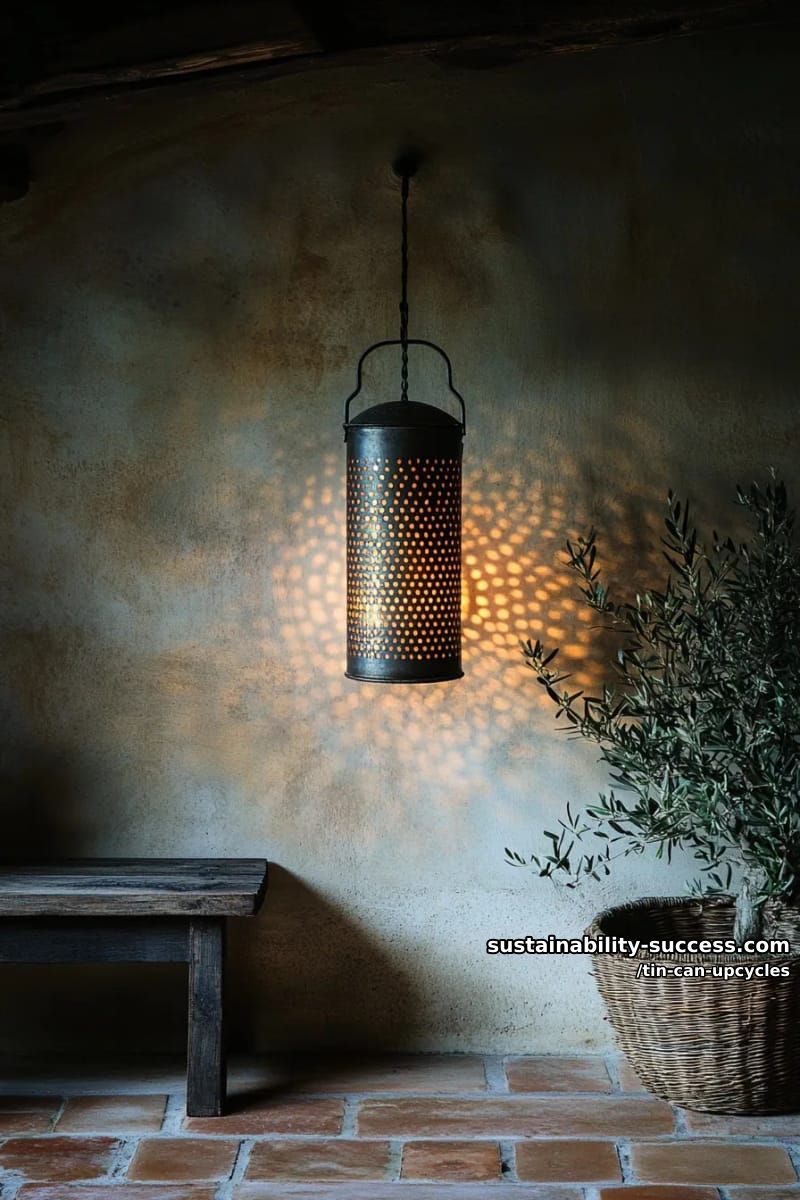
Fill the can with water and freeze it solid before you punch a single hole. The ice plug is the only thing standing between you and a dented mess. The plug of ice firms the cans for punching; without it, pounding away with a hammer and awl just leaves a mangled wreck. I used to punch dry cans and call the dents “rustic.” They were just dents. If the water expands and buckles the bottom, freeze it an inch at a time, or hammer the base flat at the end. Tape a printed template around the frozen can , photo paper survives the condensation and the hammering far better than copy paper , and work top to bottom with a nail or awl so the chipping ice stays under your marks.

Once the holes are in, melt the ice under hot water and dry the can before any paint goes on. For the label and its glue, soak the cans in warm soapy water for 15 to 20 minutes and wipe the inside with a baking-soda sponge to kill any food smell; stubborn adhesive lifts with a little Goo Gone or cooking oil. Drop in a battery tea light instead of a flame and you can hand the whole thing to a kid.
Thin steel has nothing behind it to push against, so a hammer blow folds the wall instead of piercing it. A frozen core turns the can into a solid cylinder for a few minutes, and the nail drives through the metal and stops in the ice instead of caving the side.
Two details save the project. Keep the metal at room temperature when you start, because cold steel turns brittle and cracks at the hole. And punch from the top down so the meltwater drains away from the rows you haven’t reached yet.
Punched holes leave the inside of the can sharp like a cheese grater, so be careful reaching in to place a candle.Run a file around every hole and the top rim before the can goes anywhere near hands or a hanging cord. A small set like the Eastwood 4-piece metal file set for deburring rough edges handles this in under a minute per can.
2. Coffee-can fairy house cluster

Group cans of three different heights into an odd-numbered cluster. A row of matching cans reads as a row of cans; a staggered five reads as a tiny village. Vary the heights by at least an inch and a half so the roofline steps up and down. Cone roofs come from a quarter-circle of cardstock, rolled and glued, or from cedar shingle offcuts if you want something that survives outdoors. Cut arched doors and round windows with tin snips, fold the edges inward so nothing snags, and frame the openings with twigs or jute to hide the raw metal.
You want this weathered, not new. Paint in chalky muted tones , sage, oatmeal, a dusty rose , and once it's dry, rub the edges back to bare steel with sandpaper. Thread a string of warm fairy lights between the rooftops and the doors glow after dark. Set the cluster among ferns or hostas where it gets partial shade; full sun fades craft paint in a season.

3. Graduated tin can wind chime
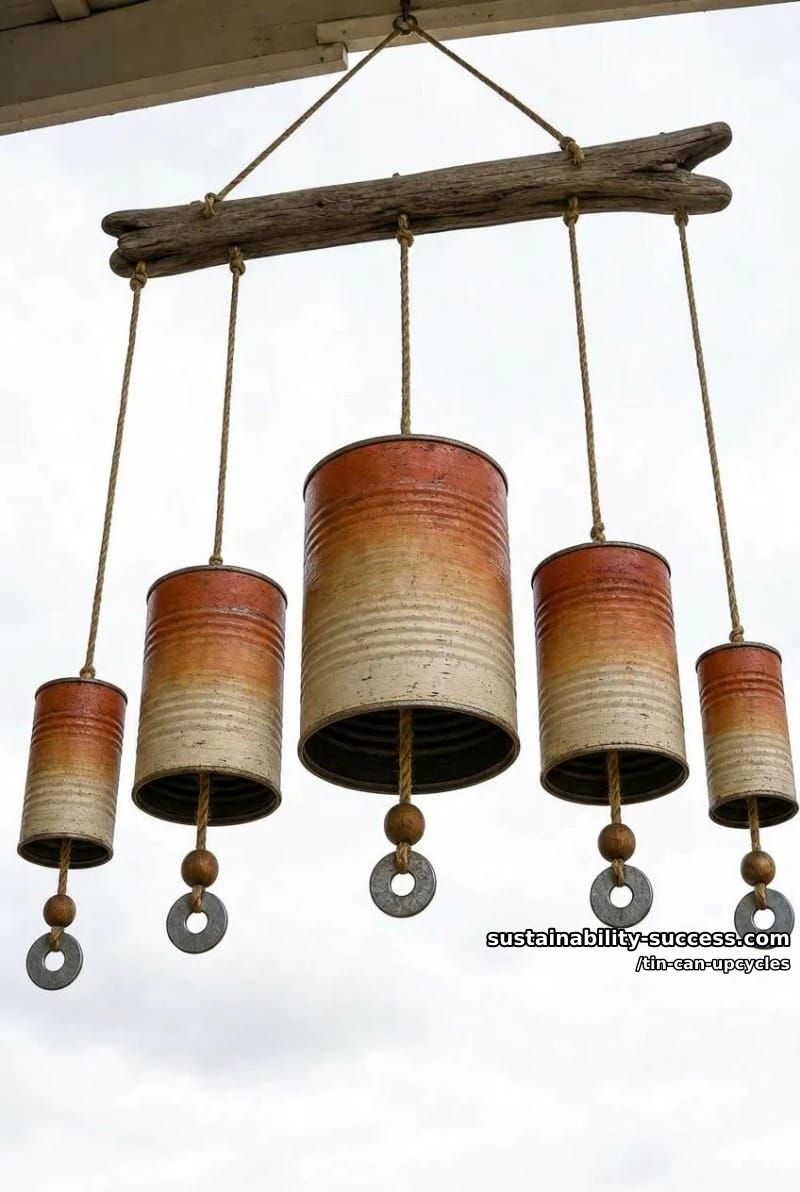
If you want actual tones instead of one flat clank, use three to five cans in clearly descending sizes. Smaller, lighter cans vibrate faster and make a higher pitch, while larger, heavier cans vibrate slower and ring lower, so a 30-ounce coffee can next to a soup can next to a little tomato-paste can gives you three distinct notes. Don’t bother with aluminum soda cans , their thin walls produce a flat, crinkly noise, while thicker steel food cans vibrate with real resonance. And hang the cans within an inch or two of each other, or they’ll never touch in a light breeze.

This is the project that beats a $40 powder-coated chime from a garden center , but only if you weatherproof it. Two coats of outdoor-rated clear polyurethane over your paint is non-negotiable for anything hanging outside, and cotton string rots fast in sun and rain; switch to hemp cord or fishing line.
| Can | Rough size | Tone | Use it for |
|---|---|---|---|
| Coffee can | 30 oz | Low, deep | Center anchor of the chime |
| Large vegetable | 28 oz | Low-mid | Second tier |
| Soup or veg | 14 to 15 oz | Mid | The workhorse middle note |
| Tomato paste | 6 oz | High, bright | Top accent note |
| Tuna / cat food | 5 oz, wide | Dull thud | Skip it, no resonance |
4. Hanging punched-tin lantern with a wire bail
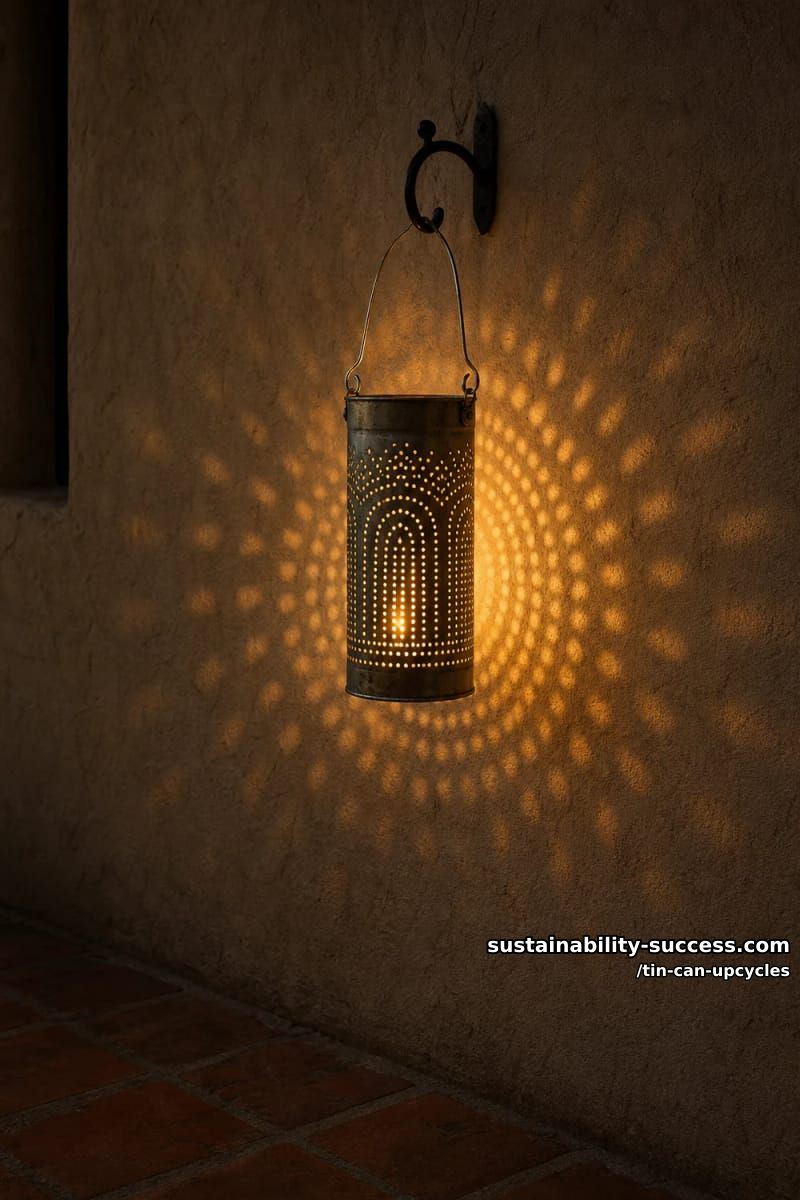
Bend a wire bail and the luminary becomes a lantern you can carry or hang , the same thing Mexican tinsmiths have done for centuries. Mexican tinwork, or hojalata, dates to the 16th-century colonial period, and many credit San Miguel de Allende in Guanajuato as the birthplace of the form; Oaxaca and Tonala, Jalisco are the other tin centers. The craft is simple to describe and hard to master. Artisans hand-punch rhythmic patterns into the tin and sometimes inset glass, combining ornament with function, and a punched can lantern is about the cheapest way into that lineage.

For the handle, cut about 12 inches of 18- to 21-gauge wire, bend it into a U, punch two holes on opposite sides of the rim, thread the ends through, and crimp them closed inside. Leave the steel raw for the patinated, oxidized look closer to the San Miguel style, or lacquer it bright if you’d rather. One rule holds the whole thing together: dense rows of small holes read as pattern, while sparse big holes read as a colander. Keep the punches close and aligned in arched columns.
5. Riveted tin can wall pocket

Flatten one side of a large can, drill two holes, and a pop rivet turns it into a wall pocket , mail by the door, cut herbs on a fence. Rivets beat screws here. They clamp tight against thin metal with no nut to reach behind, and they sit flush so nothing catches. Mount it nose-up so what you drop in doesn't slide back out. Three at staggered heights beat one big one.

The hand riveter is the only tool this really needs. Buy a kit with assorted sizes and it'll handle gutters as readily as a wall of can pockets , figure $20 to $30 for the gun, rivets, and bits together.
Four nosepieces and 200 rivets, so you won’t run dry mid-project — and the same gun fixes your gutters once the craft mood passes.

6. Painted hanging tin can herb planter
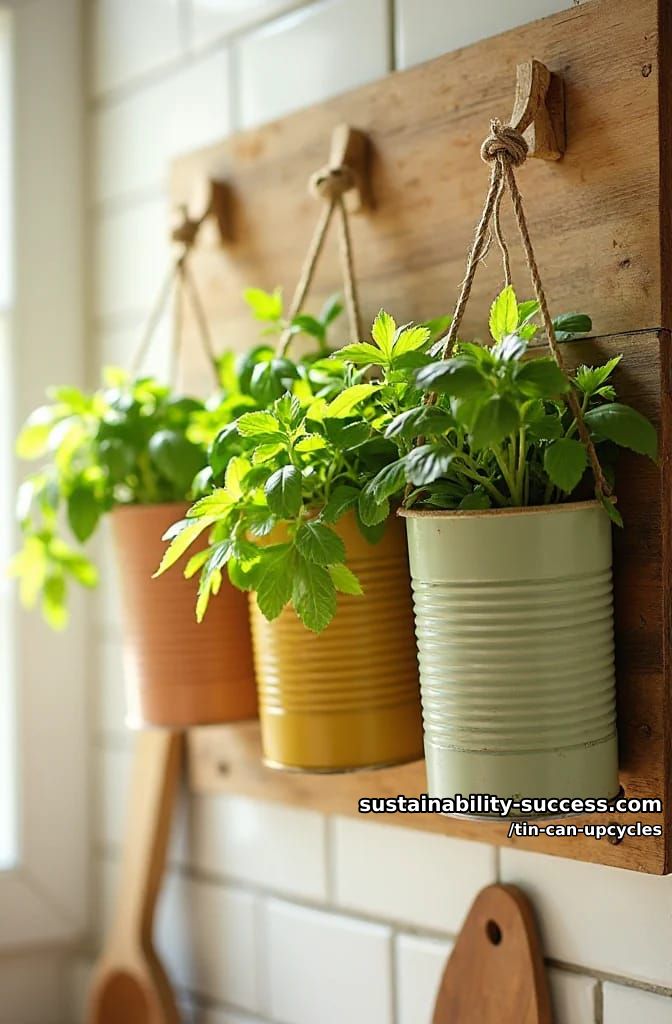
Punch three or four drainage holes in the base first. A can with no drainage drowns a basil plant inside a week. Then prime the bare steel before any color touches it , a primed can still looks good next summer, while an unprimed one sheds paint flakes into the soil by midsummer. A self-etching primer etches and primes bare metal in one coat and is formulated to stop rust; skip it and your topcoat peels off the slick steel. Hold the can 12 to 16 inches away and lay down two or three thin coats rather than one thick one.

Hang a trio from jute cord run through two rim holes, or line them along a reclaimed board with hose clamps. Mint and parsley don't mind the shallow root depth of a soup can. Rosemary will outgrow it by midsummer and start eyeing a bigger pot.

7. Half-can tin wall sconce
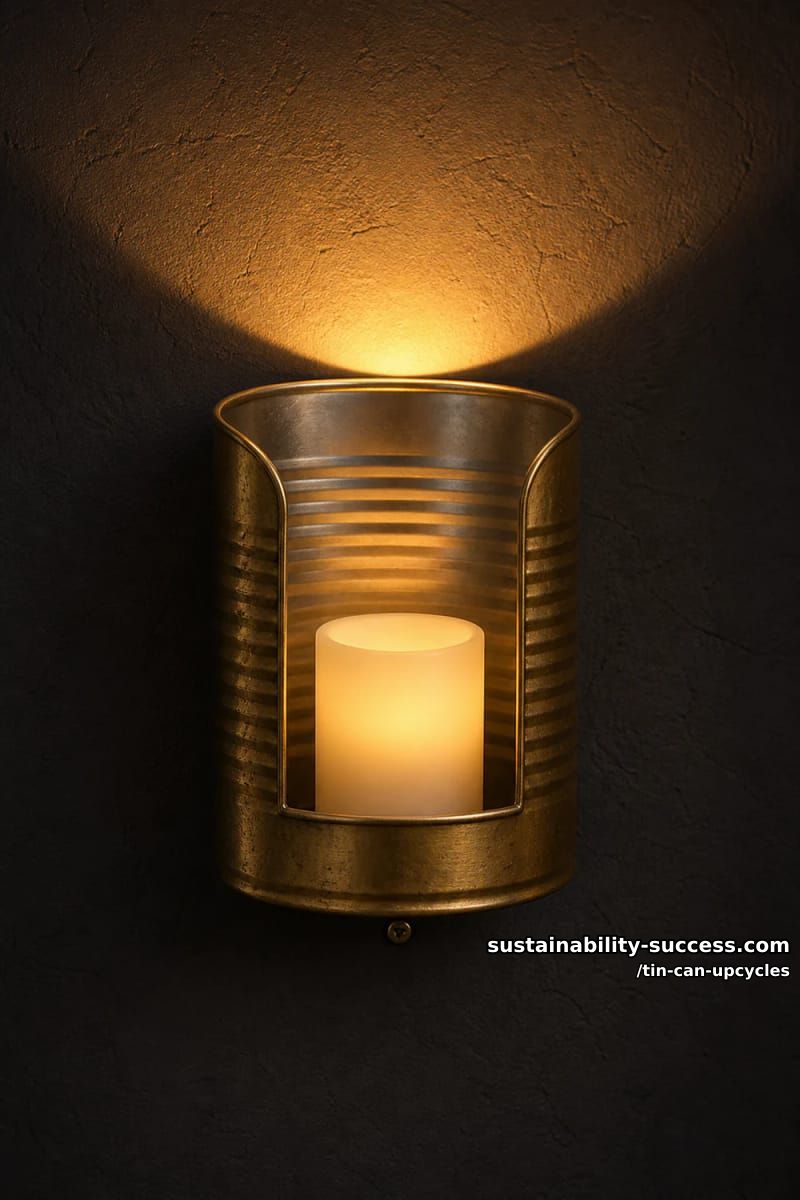
Cut a can in half lengthwise, mount the half-cylinder open-side-out, and the curved inner wall becomes a reflector that throws a half-moon of light up the wall. Raw steel bounces more light than paint, so leave the inside bare and metallic and put the color on the outside. Fold the long cut edges inward into a smooth hem with pliers. A sliced can edge is the sharpest thing in this entire list.
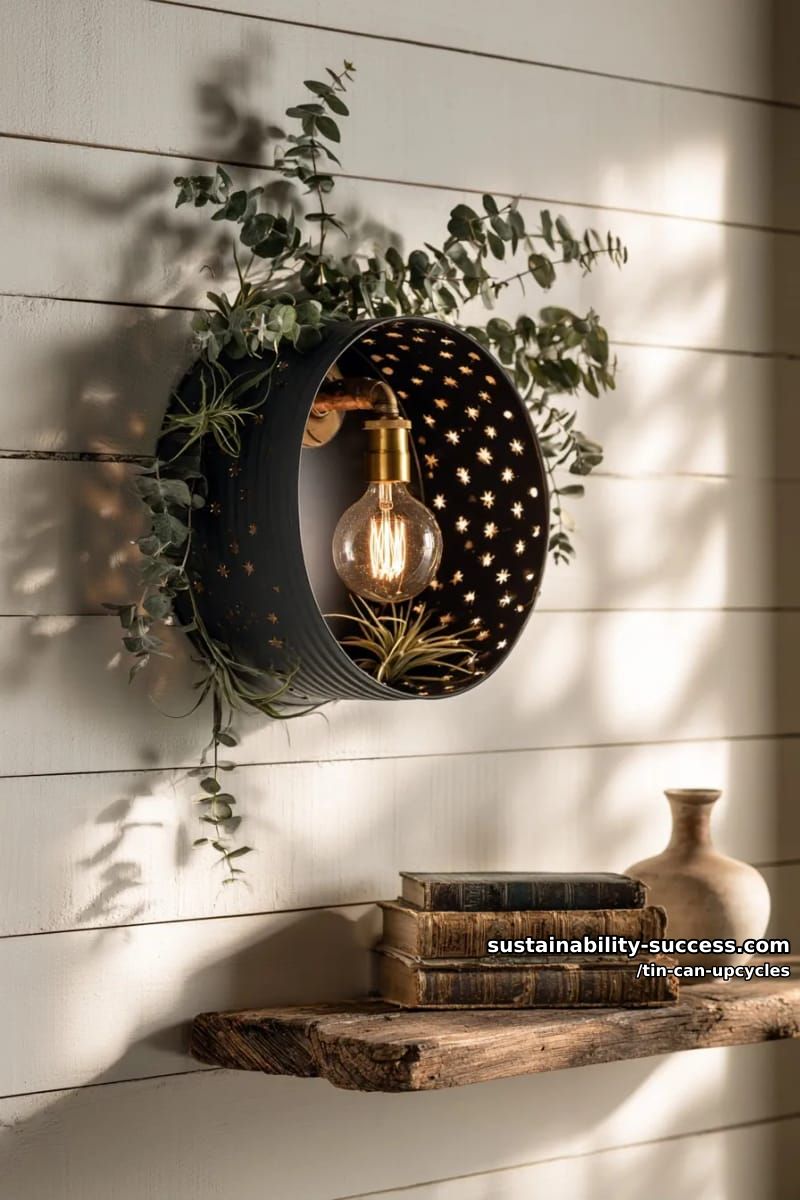
It only works with a flat-backed mount. Pick a can with a strong seam and screw through it near the base, or epoxy a keyhole hanger to the back. Group three down a hallway at the same height, drop an LED pillar in each, and it reads as installed lighting , no wiring, no electrician.
8. Soup-can bird feeder on a dowel perch
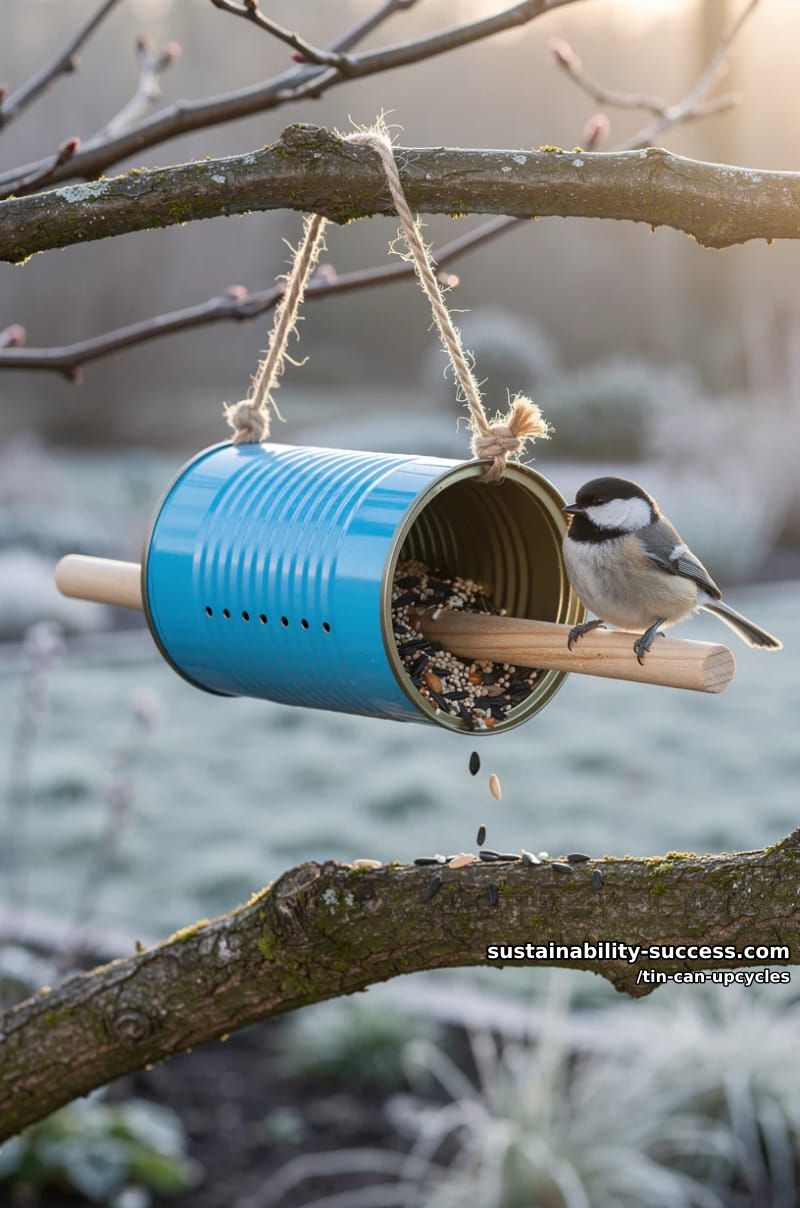
Lay the can on its side, push a dowel through the lower third for a perch, and you've got a feeder a chickadee can actually use. Drill two or three small holes at the lowest point of the wall so rain drains instead of pooling and rotting the seed. Hang it level with twine knotted at both ends, or wire it to a branch through holes near the rim. Let the dowel stick out an inch or two on each side so a bird has somewhere to land before it reaches in.

Outdoors, durability comes down to two things: the can you start with, and whether you seal it.
Do this
- Start with thick steel food cans , the ones with smooth rolled rims
- Two coats of outdoor clear coat over the paint
- Punch the drainage at the lowest point of the can
- File or fold every cut edge before it goes up
Avoid
- Thin aluminum soda cans , they flex and tear into sharp edges
- Bare unsealed steel, which streaks rust within a season
- Any can with jagged triangular lid remnants still on it
- Skipping drainage. The seed molds and the birds stop coming
9. Solar-charged tin can garden luminary
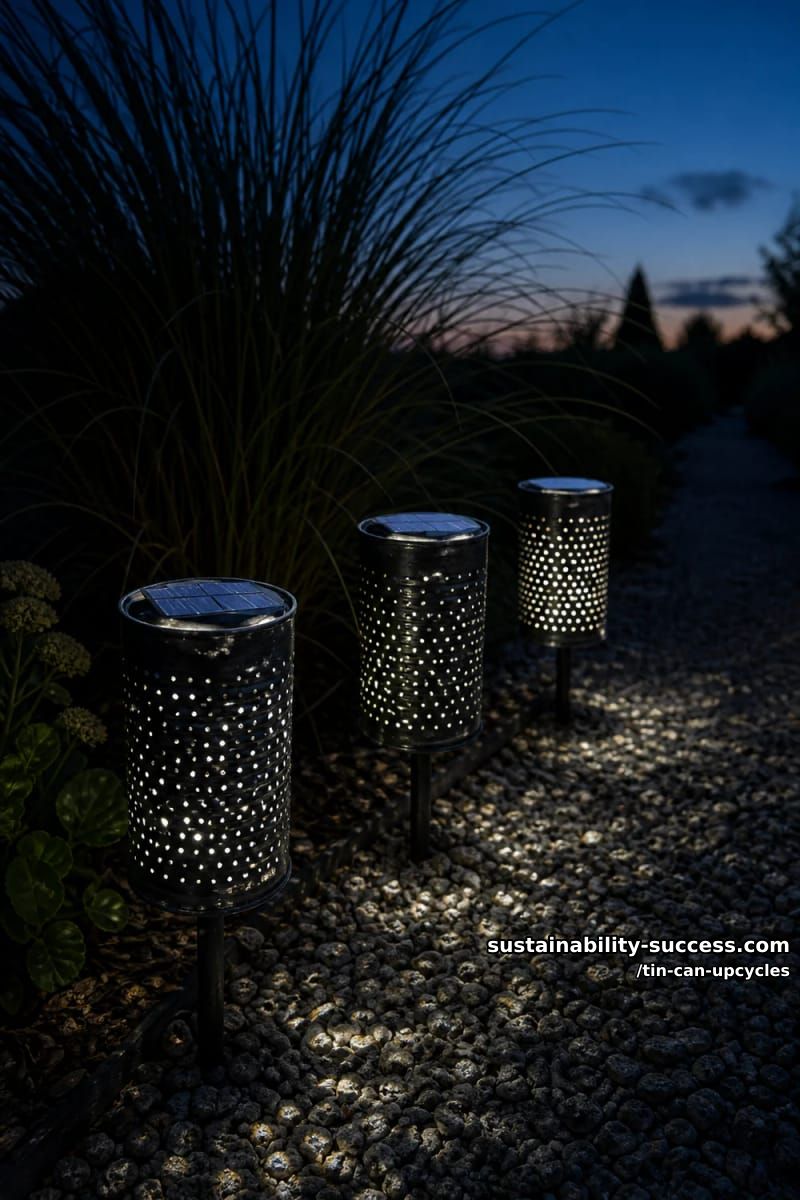
Drop a cheap solar disc light into the open top of a punched can and you’ve got a path luminary that charges itself , no battery swap, no match. The supermarket solar stake lights that sell for a dollar or two come apart easily: pull the light head off the stake and rest it in the can mouth. These run on a rechargeable AAA, switch on at dusk and off at dawn through a built-in sensor, and a 6-to-8-hour charge in the sun lights them for around 12 hours.
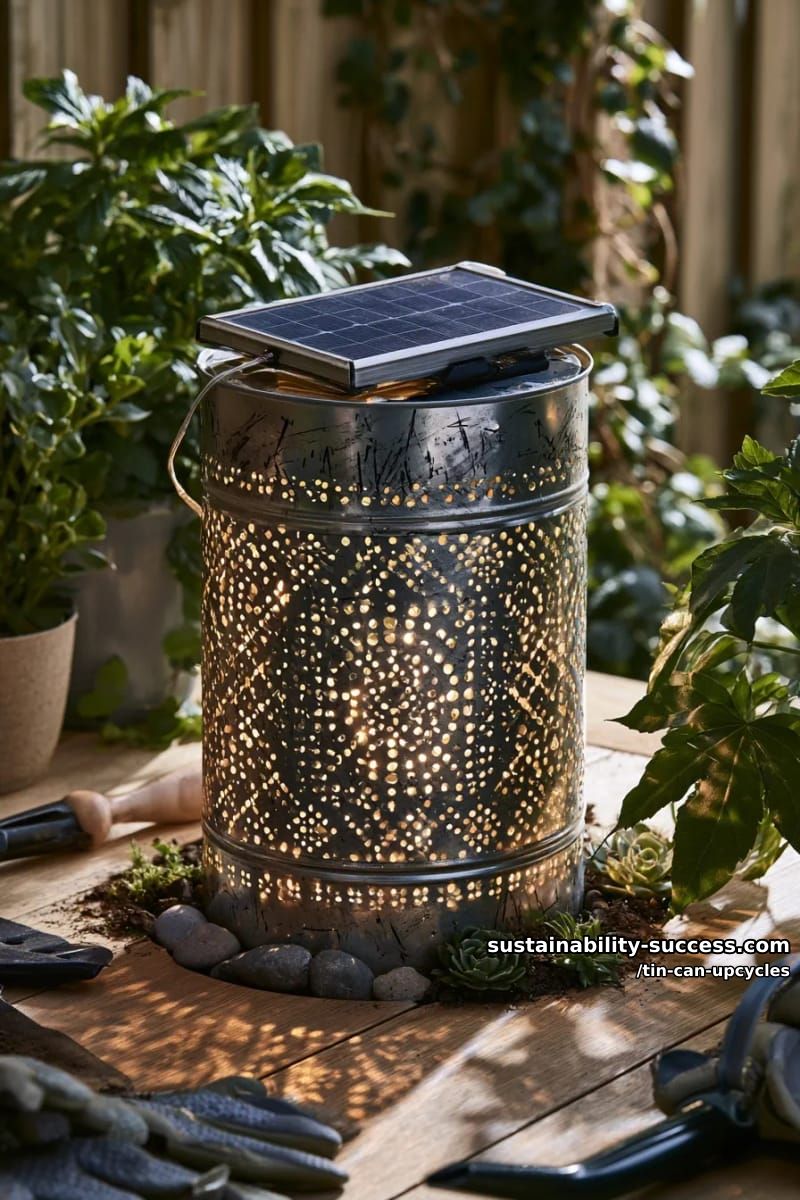
Paint the can matte black outside so the only thing anyone sees is the pattern punched through it. This is the most genuinely off-grid project in the bunch , no wiring, no flame, nothing disposable, just a thrown-out can and a panel that recharges off the afternoon.

10. Embossed tin can vase sleeve

Here’s the one that surprised me. Instead of punching all the way through, push the pattern out from the inside, and you get raised relief , a technique metalworkers call repousse. Work the metal from behind with a stylus over something soft and dots, lines, and petals rise into a pattern on the front, the same logic behind the embossed decorative patterns stamped and punched into traditional Mexican tin nichos and frames. Lay the can wall over a folded towel or a mousepad and trace your design with a dry ballpoint or a clay stylus, pressing hard. Then catch the finished texture in raking side light. The relief pops.

And because the can stays solid, it doubles as a sleeve: slide a small glass jar of water inside and it holds flowers without leaking. Leave the steel raw and rub it with fine steel wool for a pewter sheen , paint just fills in the relief you worked so hard to raise.
11. Numbered tin can advent luminary set

Punch a number into each can instead of a generic pattern and the set becomes an advent countdown , or a row of place settings, if December isn't the occasion. The digit reads cleanest as a cluster of evenly spaced pinholes, with a loose ring of stars around it to keep the number in focus. A run of identical cans in two alternating colors looks deliberate down a long table.

You’ll want a dozen lights going at once, which is exactly the argument for battery tea lights over candles: no relighting twelve flames, no wax, nothing to tip over near a pine garland. A CR2032 cell runs each one for 200-plus hours, so one set lasts the whole season.
12. Citronella patio torch from a #10 can
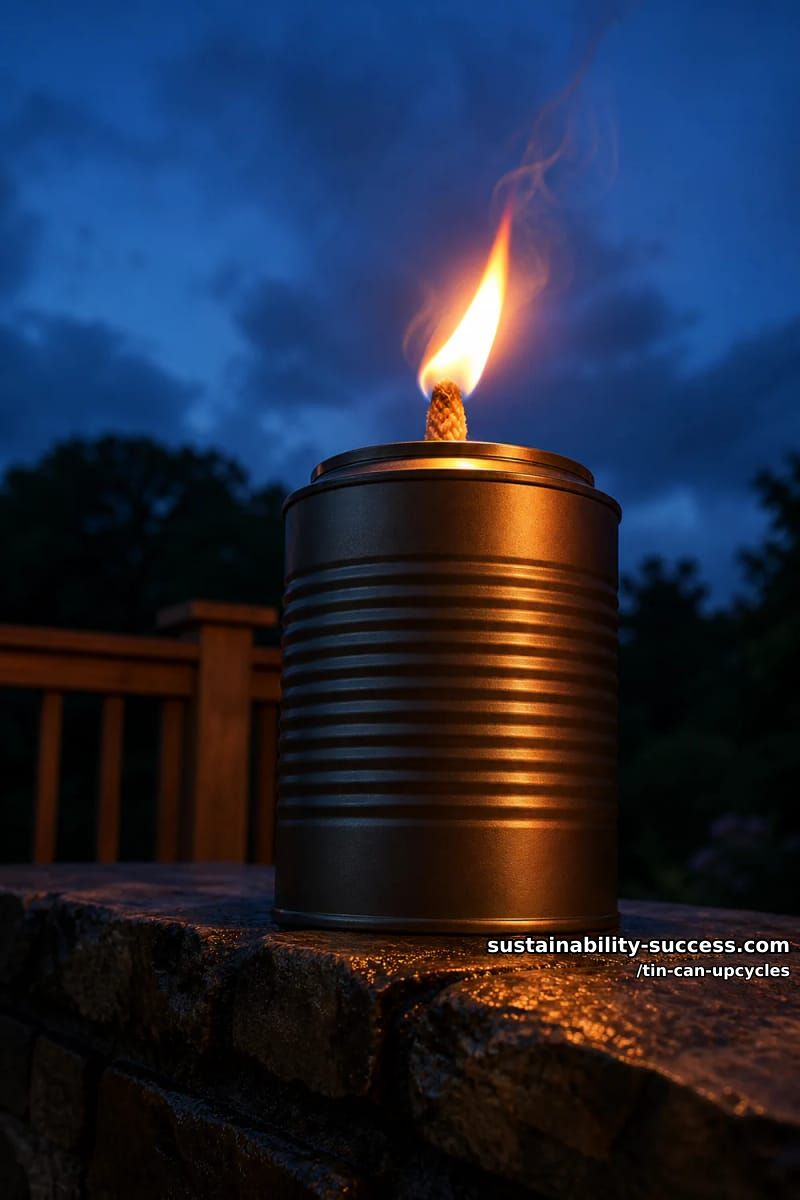
A restaurant-size #10 can holds enough citronella oil to make a real patio torch, not a decorative one. Fit a metal lid with a wick tube through the center, thread a fiberglass torch wick down into the oil, and let it soak before you light it. Paint the outside with high-heat spray , the kind sold for grills and engine blocks , so the finish doesn't blister near the flame. And the wide can sits like a stable base, which is more than a slim tiki torch ever manages on a deck.

Use torch or citronella fuel only , never gasoline or alcohol , and keep the lid sealed around the wick so the oil can’t slosh. Set it on stone or bare ground, a few feet from railings, cushions, and anything overhead. Never leave it burning unattended, and never bring it inside. Snuff it with the metal lid, not by blowing.
Conclusion
Keep one big coffee can by the sink as the holding pen for everything else, and the cans you'll want next month stop going out with the recycling. If you do batch it, knock out the dull prep in one go , strip labels, deodorize, freeze a dozen cans some evening , so the fun part is waiting when the mood hits. Start with the luminary, not the wind chime: a frozen can, a nail, and a paper template teach you the punching rhythm in about twenty minutes, and a file afterward keeps the thing from drawing blood. The chime can wait until you've weatherproofed something once before and know the polyurethane-and-hemp-cord drill, because skip that and it'll sulk through the first wet week and rust-streak whatever sits below it. The cans are free, though. You can afford to wreck a few learning.