
A wine bottle is not a mason jar. The projects that suit it have nothing to do with the chalk-painted, twine-wrapped jar crafts you've scrolled past a hundred times. A narrow neck and a tall straight wall want to be cut, hung, and lit , a different toolkit, and one worth owning. Most of the empties never get recycled anyway. In the United States in 2018, 12.3 million tons of glass were generated and 31.3 percent of it was recycled; the rest went to a landfill, where glass sits, inert, more or less forever.
The twelve ideas below put that glass back to work. They run from a ten-minute soap dispenser to a folk-art tradition with roots in ninth-century Central Africa.
1. Cut one wine bottle into a stacking tumbler set
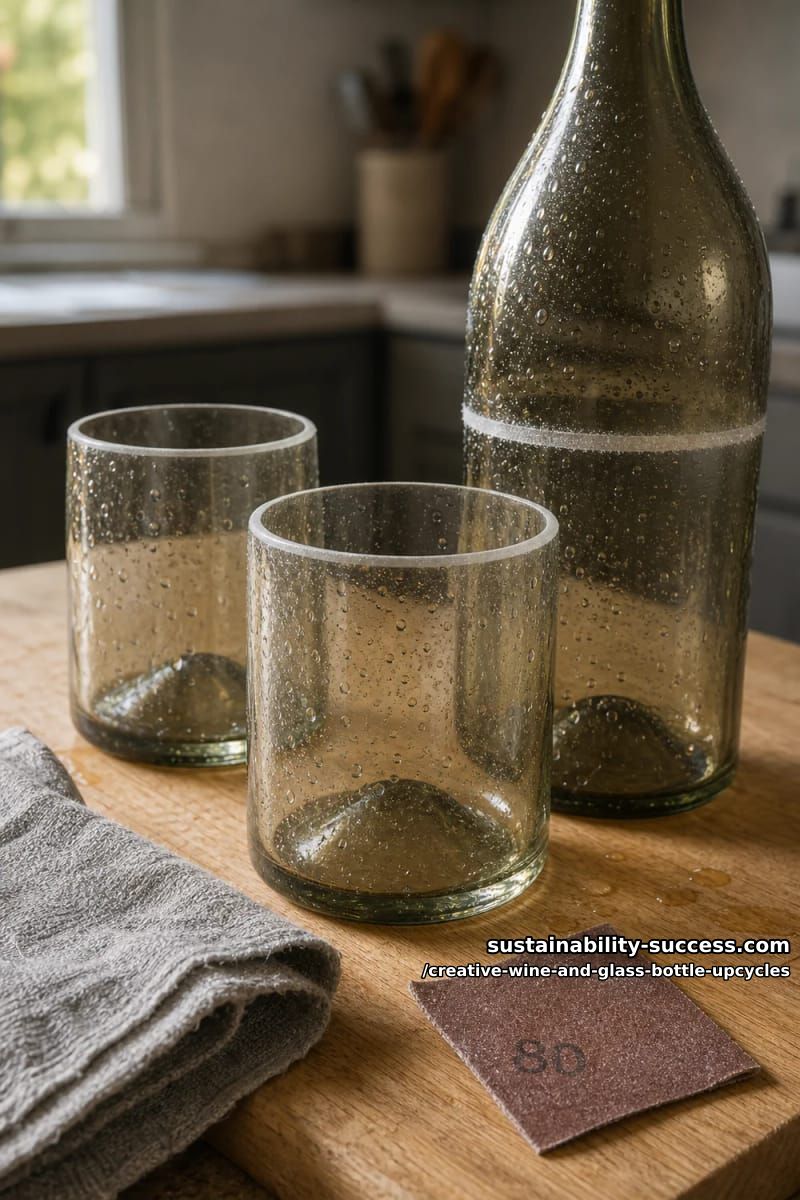
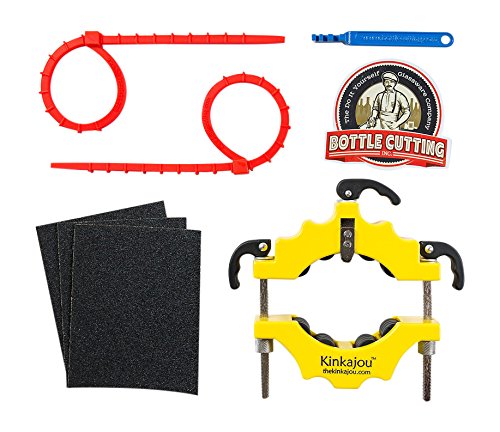
The clean way to behead a bottle is to score one continuous line and then thermal-shock it apart. Run a carbide cutting wheel around the glass for one full turn, clip a separation tie on each side of the score, and pour alternating streams of boiling and cold water onto the line until the glass cracks along it. Thick glass needs more hot-cold cycles than thin. Sand the rim with the included 80-grit, then step up to a finer grit if you want an edge you'd put to your lips. One summer I was convinced you could do all this with a string soaked in acetone and a lighter, the way the internet promised. You can. Badly. The break wanders and the rim comes out chewed.
Do this
- Thick walls win. Bordeaux bottles and heavy sparkling bottles take the thermal shock far better than anything else
- Keep the score in the straight cylindrical zone, away from the shoulder taper
- Run the boiling and ice water right on the score line , not the whole bottle
Avoid
- Thin promotional or screw-cap bottles. They crack where you don’t want them to
- The curved shoulder, where the stress runs off-line
- Skipping the rim sanding is how people cut themselves a week later
A jig that holds the wheel square beats freehanding a $3 glass cutter, where the score skips and the break wanders off.
2. Build a cobalt bottle tree the Kongo way
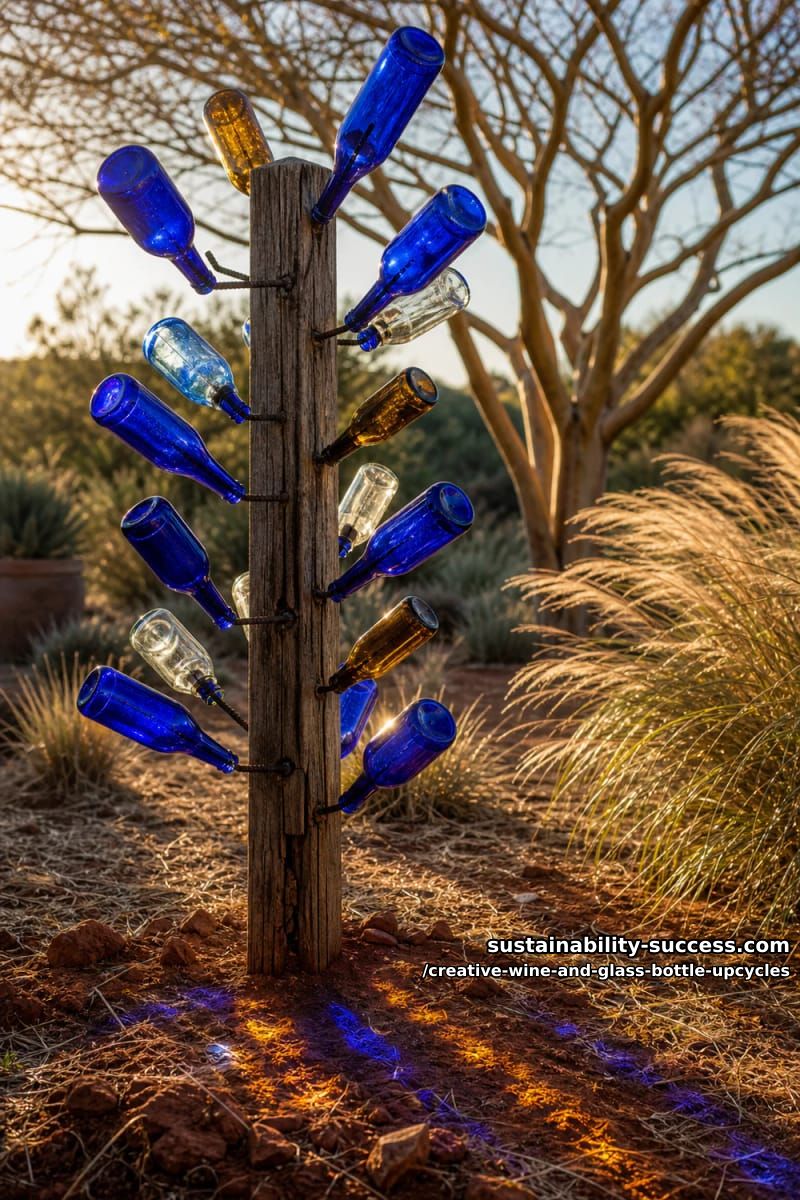
Long before it was garden-center decor, it was protection. The bottle tree is a Kongo-derived tradition that goes back roughly to the ninth century, and it reached America as early as the seventeenth, carried here by the Atlantic slave trade. Enslaved Africans in the Deep South kept it and adapted it: sunlight through the colored glass lures evil spirits inside, where they’re trapped, and the moan of wind across the bottle necks is the spirits themselves. The art historian Robert Farris Thompson traced the practice to the Bakongo people in his book Flash of the Spirit, and there’s a bottle tree in the National Museum of African American History and Culture now. Make one if you like. Just know what you’re echoing.
The build itself is nothing: push bottles onto the cut limbs of a dead crepe myrtle, a cedar, or a wooden pole studded with dowels or nails. The color is not a free choice. Cobalt blue won out, tied to the color of the spirit, and for decades the bottle everyone wanted was the old cobalt milk of magnesia bottle , cheap, everywhere, and exactly the right blue. New cobalt runs $3 to $6 a bottle at a craft store, so drink your way to it with Skyy or Ty Nant first, or go hunting at estate sales.
| Glass color | Where it earns its keep | Why |
|---|---|---|
| Cobalt blue | Bottle tree, window line-up | Traditional spirit color; reads richest in direct sun |
| Dead-leaf green | Tiki torches, garden edging | Most common wine glass; melts into the planting, cheap and endless |
| Clear flint | Fairy-light lanterns, vases | Passes the most light; shows off whatever’s inside |
| Amber | Candle hurricanes, pendants | Warms a bulb or a flame to honey |
3. Turn a green wine bottle into a citronella tiki torch
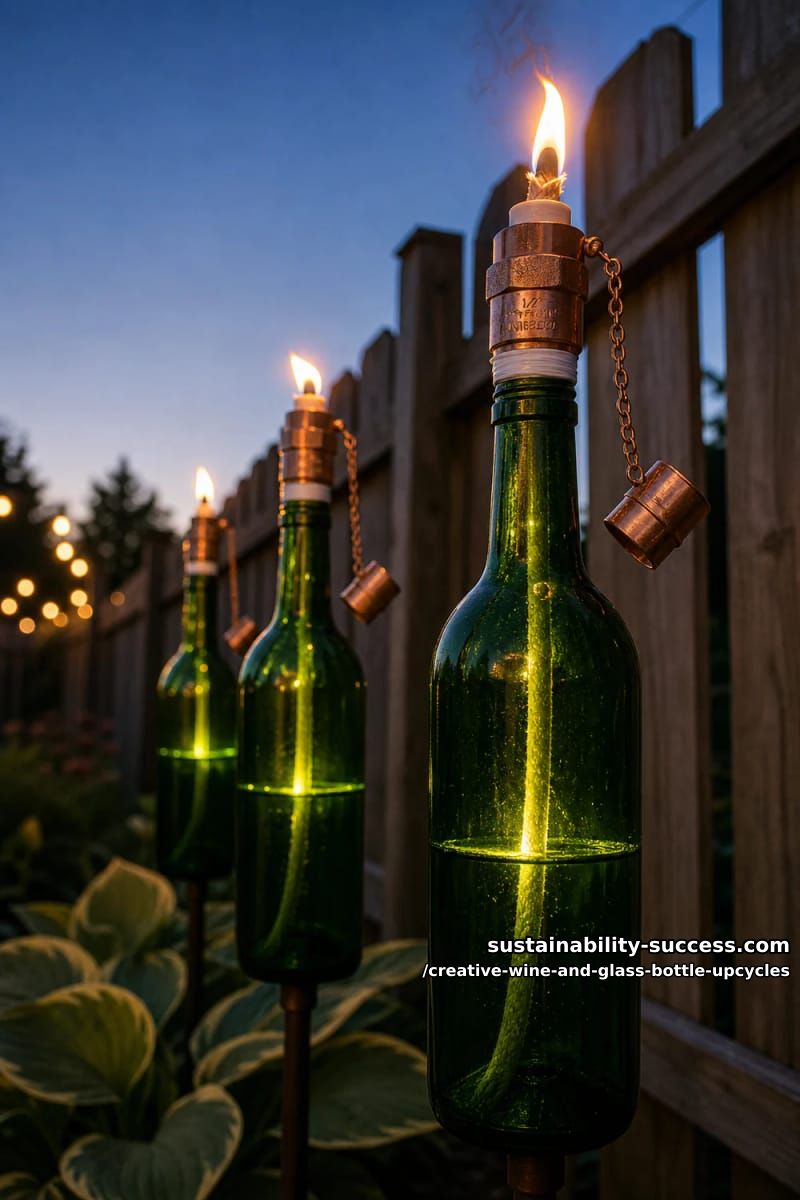
Dollar for dollar, the torch is the best thing on this list, and it earns its keep by keeping mosquitoes off you. Almost any bottle works if it isn't too thin. Fill it with citronella torch fuel and you've got light and bug control in one. The whole build is a plumbing fitting and a wick. Buy the green bottles by the case , pick a wine you'd actually drink, $10 to $15 , because the bottle is the entire look here, and a Two Buck Chuck bottle looks like a Two Buck Chuck bottle.
Drop a bag or two of marbles or small rocks into the bottle so the wick can’t slide through. Wrap a half-inch copper coupling with teflon tape until it presses snug into the bottle mouth, then seat a half-inch fiberglass wick through it. Trim the wick so only 0.25 to 0.5 inch pokes out; any longer and the flame won’t hold. Cap the copper between uses to keep the wick dry, and don’t walk away from a lit one.
4. Hang a row of bottle pendants over the dining table
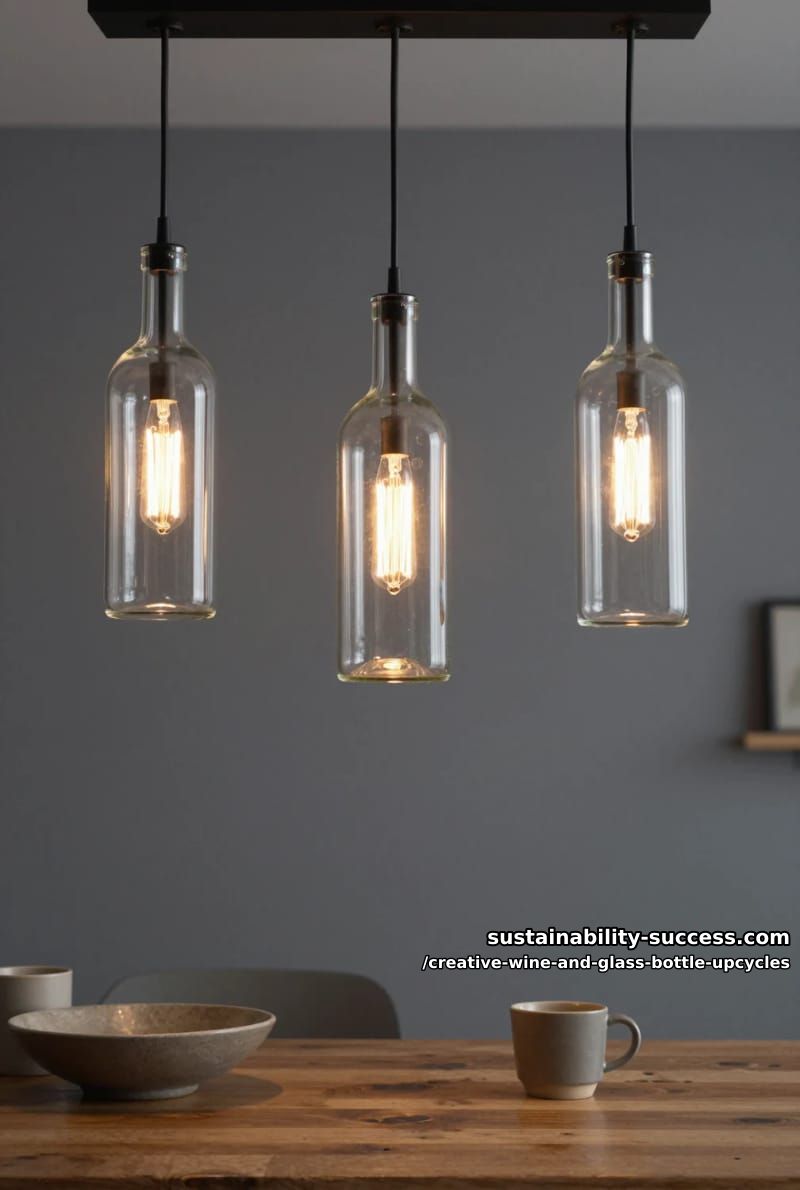
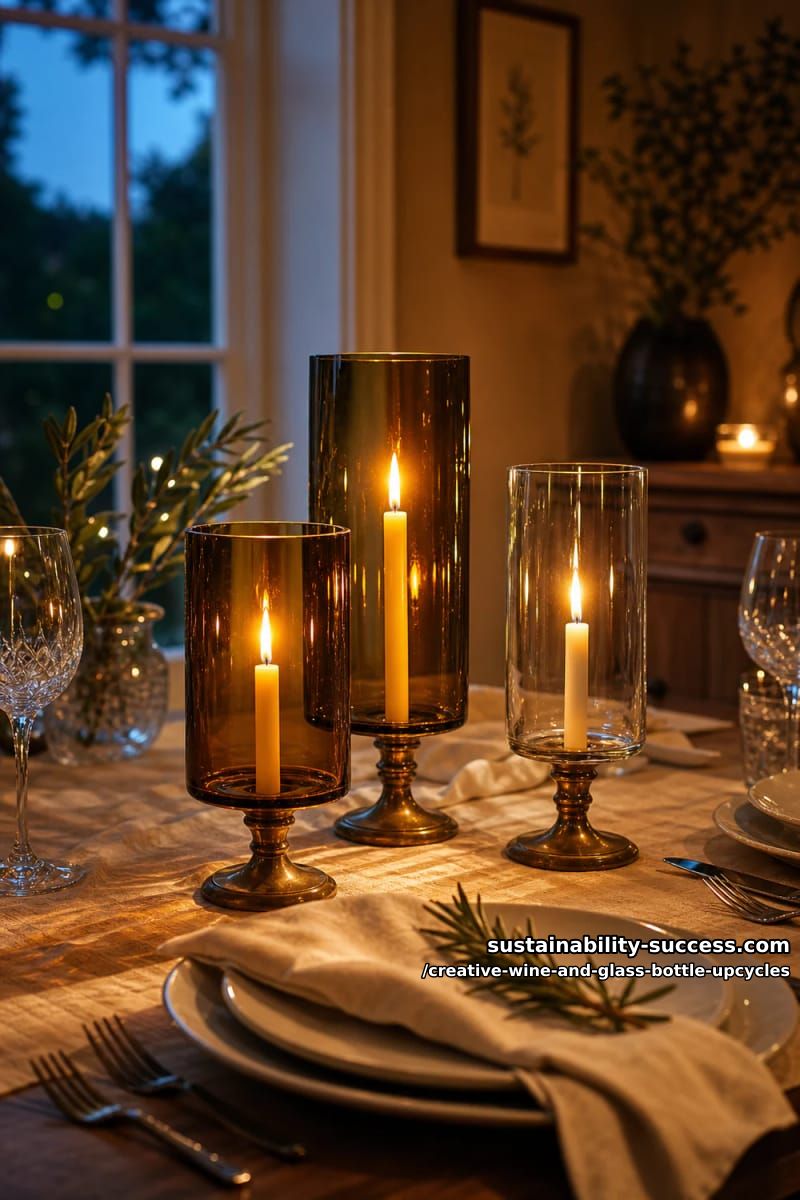
Of everything here, this is the one I wouldn't hand a beginner, because it pulls in wiring and glass hung over people's heads. Cut the base off the bottle (idea 1), feed a pendant cord kit up through the neck, and seat a low-heat LED bulb so the bottle turns into the shade. LED only. A hot incandescent in a sealed glass tube is a crack waiting to happen, and a cracked bottle over the dinner table is a bad night.
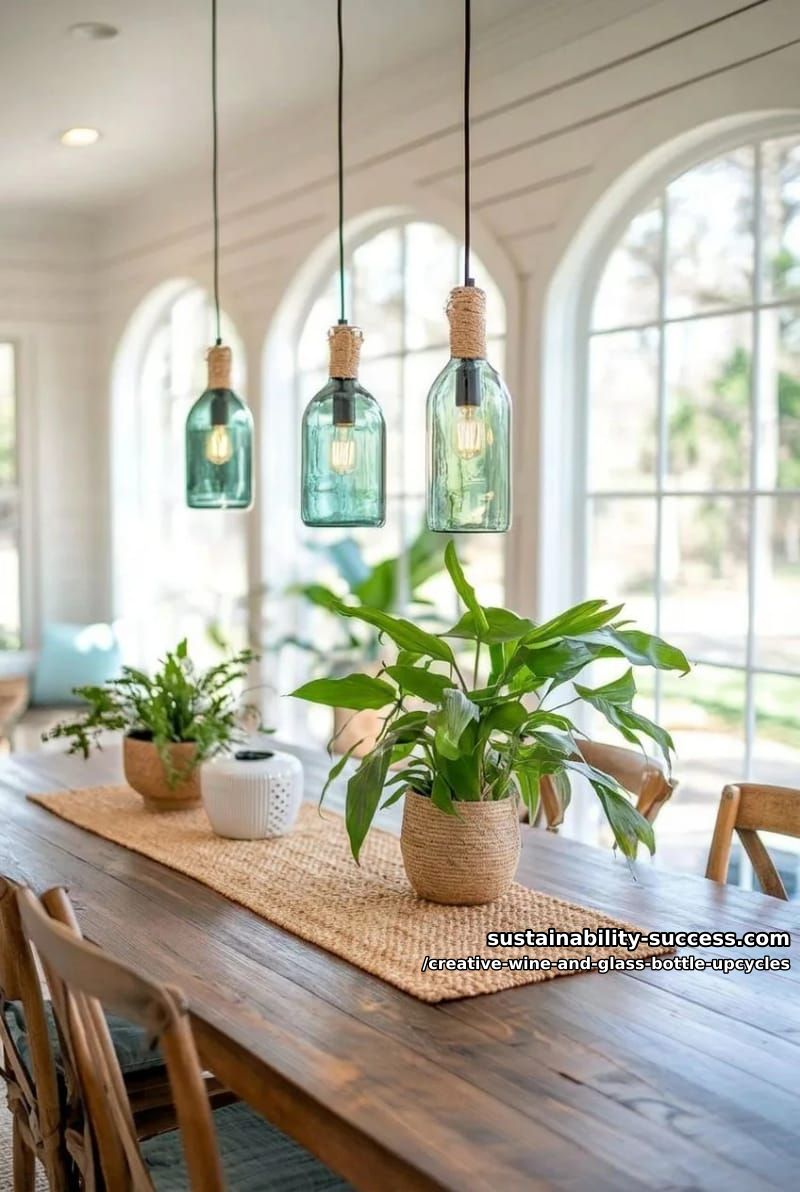
The cord hole is where most people shatter the bottle. Use a diamond hole-saw bit, keep the glass wet the whole time so it stays cool, run the drill slow, and let the bit cut instead of leaning on it. If the wiring end spooks you, stop there and let an electrician hang the cords. No shame in doing the glass yourself and outsourcing the volts.
5. Drop cork fairy lights into a clear bottle lantern
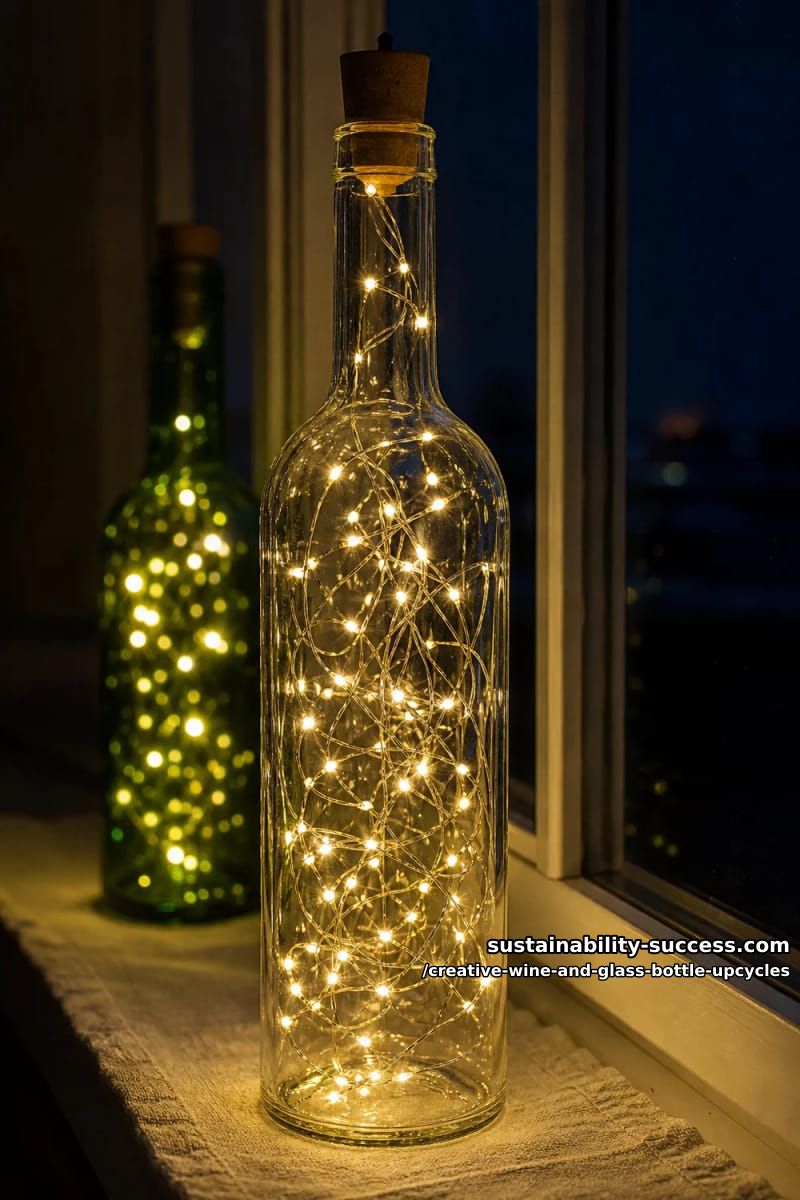
Here's the no-risk, no-tools way in: no cutting, no drilling, no flame. Feed a string of cork-topped LED lights down into any clear or pale bottle and flip the switch. A typical set is 20 LEDs on bendable silver wire, run off three included LR44 button batteries, the cork sized for most wine, whiskey, and beer bottles. The wire is low voltage, so it stays cool to the touch, and the strands are IP44 rated , a cluster of them works on a covered porch as happily as on a bedroom shelf.
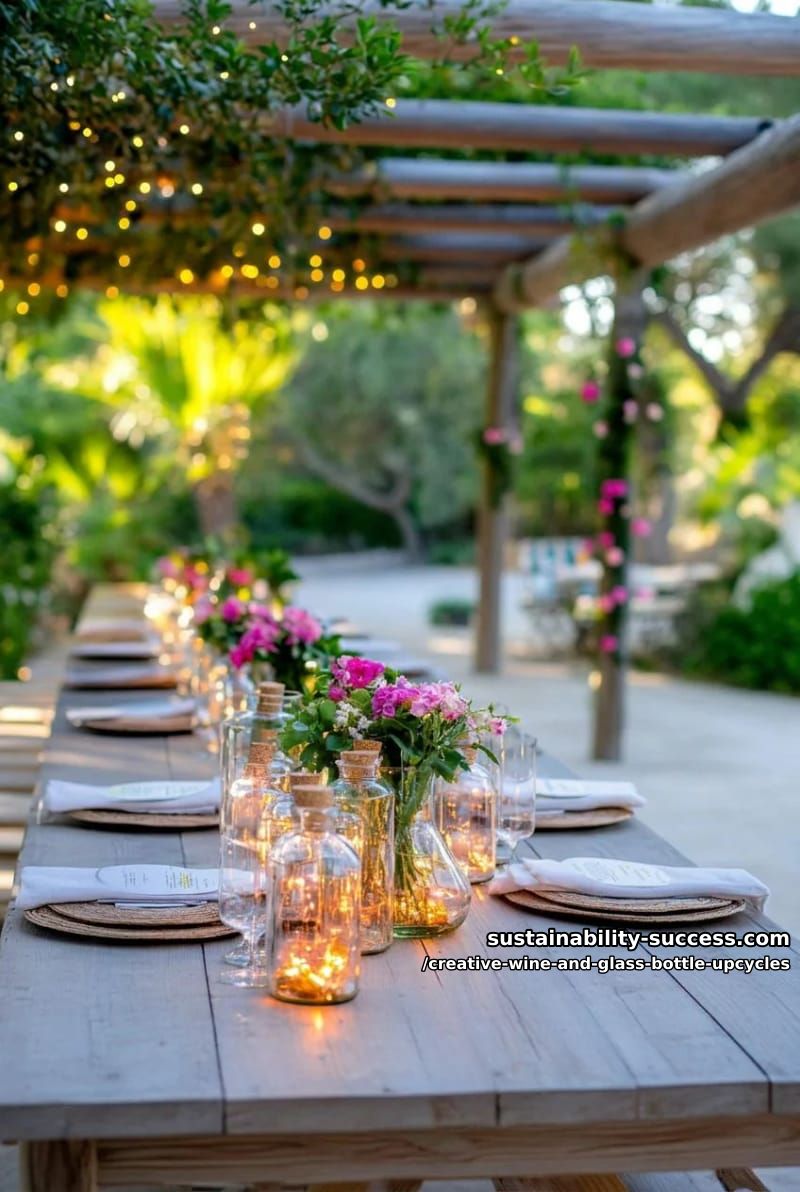
Clear glass throws the most light; a frosted or etched bottle (idea 8) softens it to a glow. Group three bottles at different heights instead of lining up matched ones. And skip the multicolor sets unless you're doing a kid's room , warm-white reads as candlelight, rainbow reads as dorm.
6. Cut a hanging bottle planter that waters itself
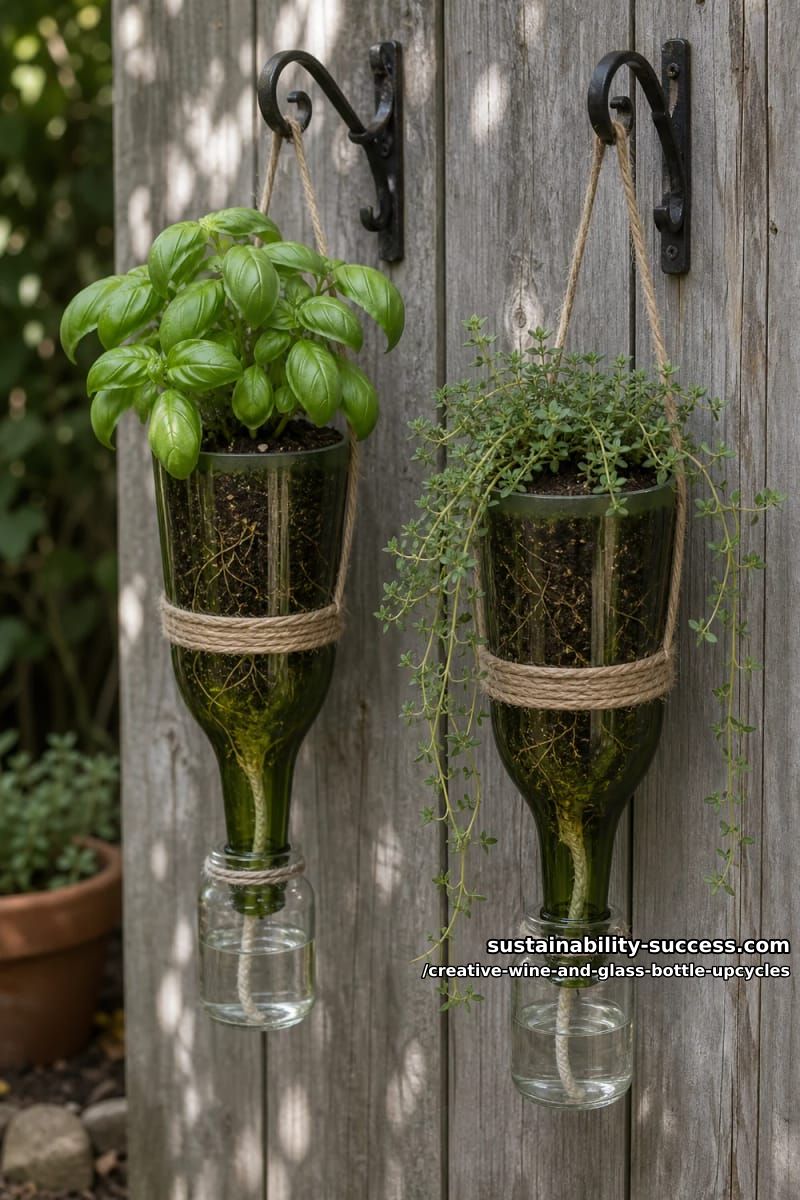
Flip a cut bottle over, run a cotton wick down through the neck into a water reservoir, and capillary action does the rest , a passive self-watering planter. It's the same logic as the olla, the buried unglazed clay pot that's watered North African and Mexican gardens for centuries, except here the reservoir is a little jar hanging under the bottle instead of a pot sunk in the ground. Herbs that want steady moisture , basil, mint, parsley , love it. Succulents will rot.
A three-bottle herb wall by a kitchen door
3 cut wine bottles, jute twine, cotton wick, three small catch jars
Figure nothing for the bottles and somewhere around $8 to $12 total for twine, wicking cord, and potting mix, assuming you already own the cutter from idea 1. The reservoir is what buys you slack: a half-cup of water in each catch jar keeps basil going three to four days in summer shade, so the wall survives a long weekend with nobody on watering duty. Top up the jars, not the soil, and the roots pull what they need.
7. Cap a bottle with a pump for oil or dish soap
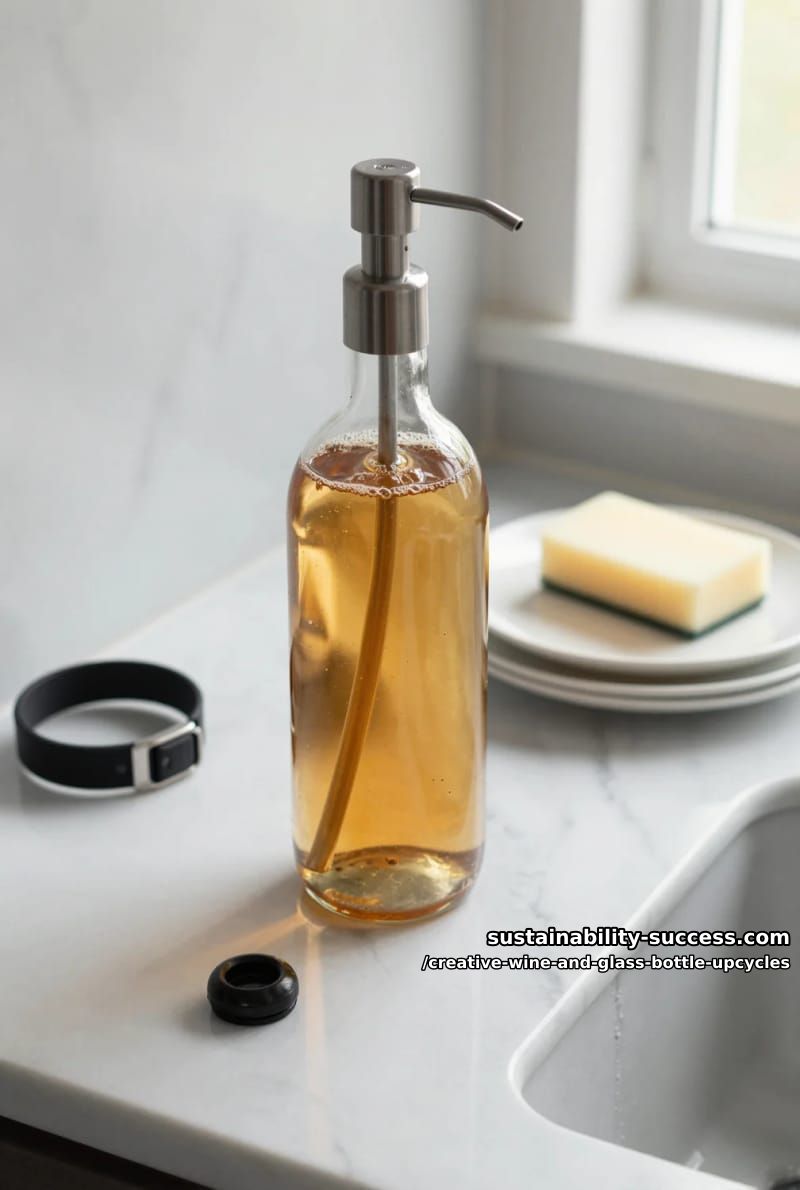
A minute, maybe less: screw or glue a metal pump head onto a bottle, fill it with dish soap, hand soap, or oil, done. The only catch is the neck. These pumps fit standard one-inch threaded bottlenecks; a corked wine bottle has no threads, so you glue the included collar ring onto the mouth and thread the pump into that. Quick test , if the cap off a two-liter soda bottle screws onto your bottle, the pump goes straight on without the collar. Olive oil in a tall wine bottle with a slim spout beats the sticky supermarket jug, and a Pellegrino bottle of dish soap looks better at the sink than anything Method charges $4 for.
You can also decorate the bottle with some floral motives!
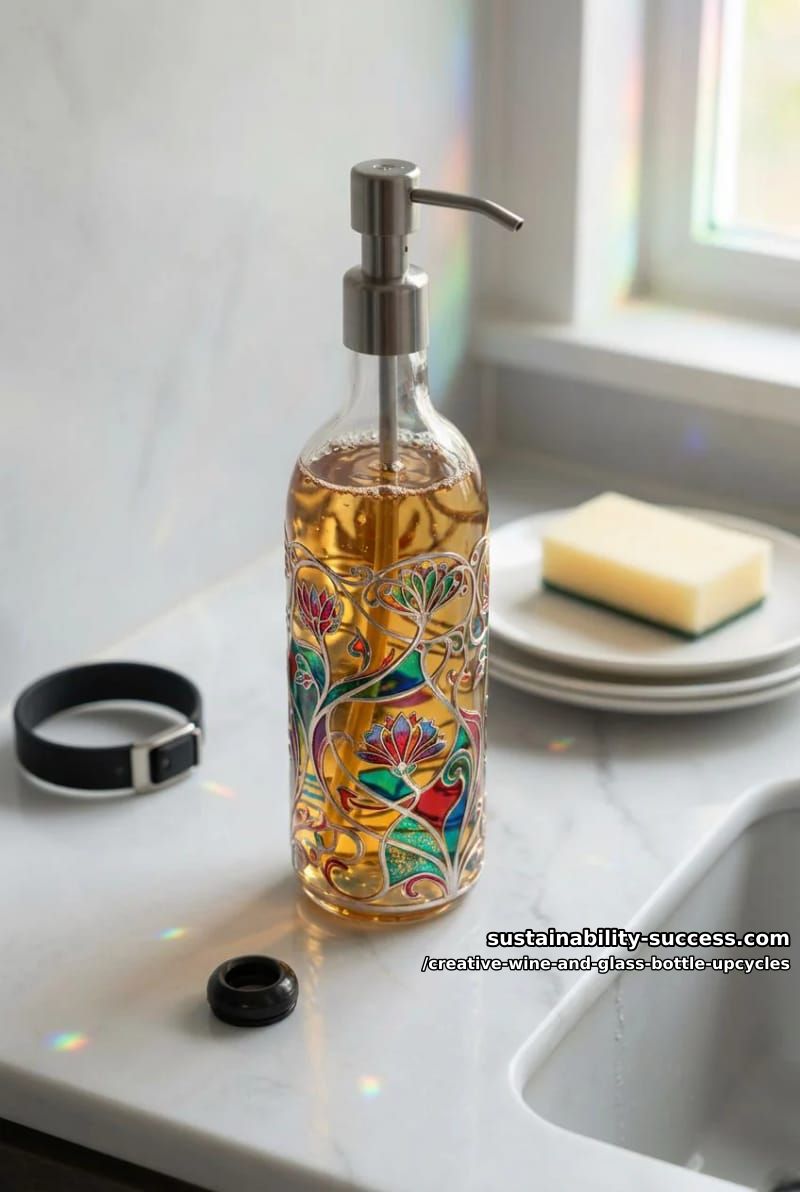
8. Etch a frosted monogram into a bud vase
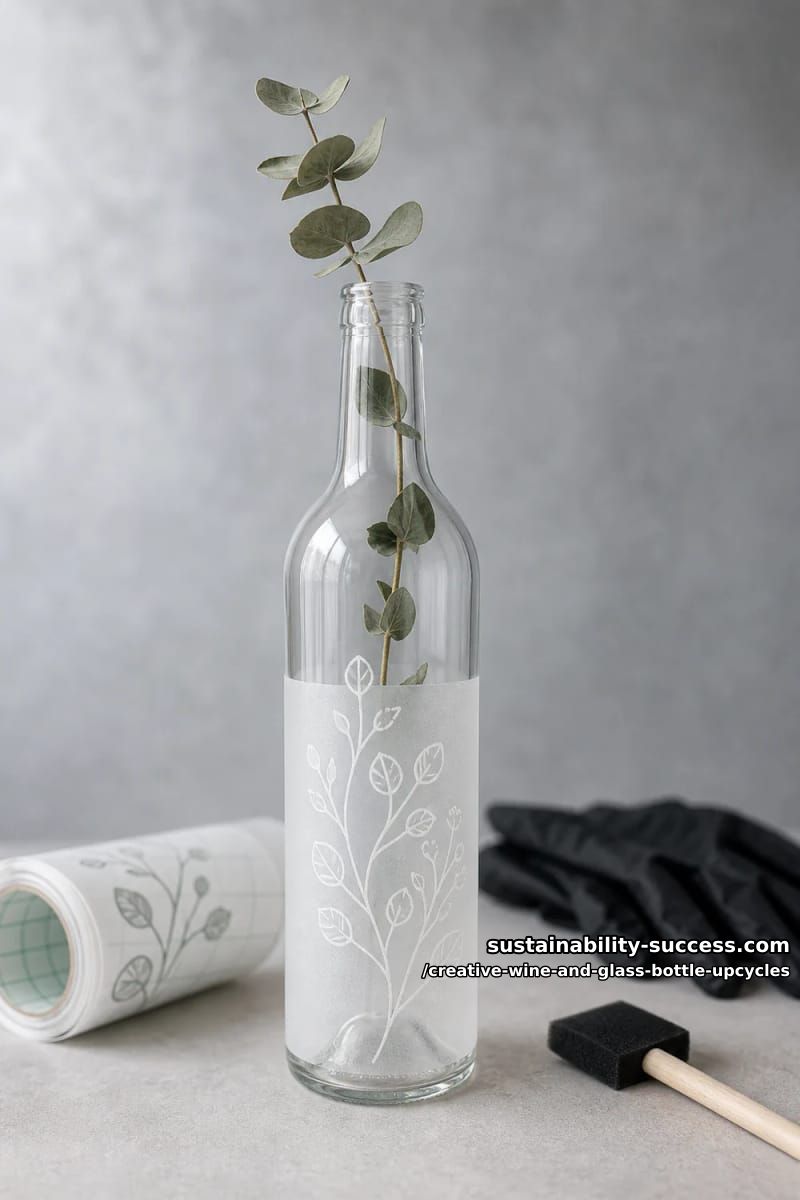
Etching cream bites a shallow, permanent frost into the glass, so a stencil and five minutes is the difference between a deliberate object and an obvious reused empty. Press down a sticky-backed stencil, brush the cream over it, wait five to ten minutes, and rinse it off , a fine layer of glass goes with it. Cut your own stencil from contact paper: a monogram, a single line-drawing leaf. Keep the etched patch in the bottom third and the bottle still serves as a vase or a fairy-light lantern, the frosting softening the glow.
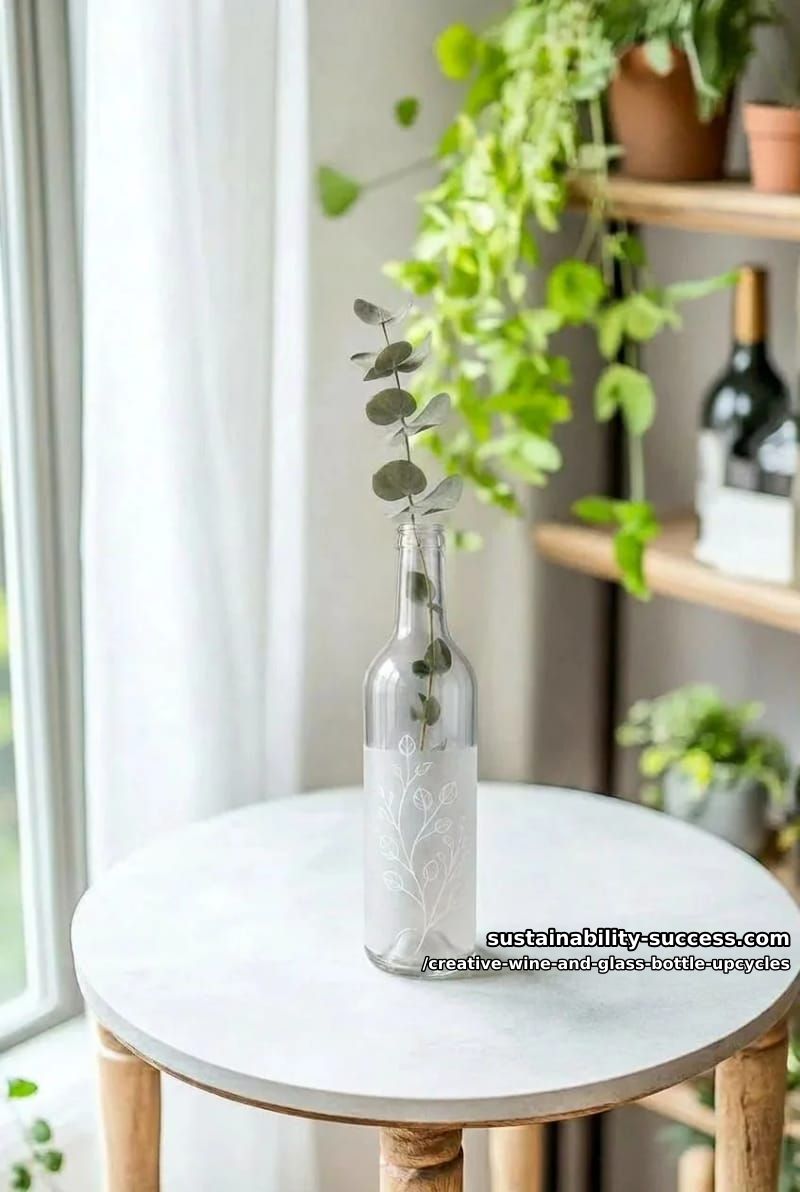
Armour Etch contains chemicals that burn skin, so wear gloves and eye protection. It won’t touch Pyrex, tempered glass, acrylic, or plastics. Wine bottles are ordinary soda-lime glass and etch fine , but test a hidden patch first, and work over a sink with the water running, never over a closed drain.
9. Edge a garden bed with bottles, necks down
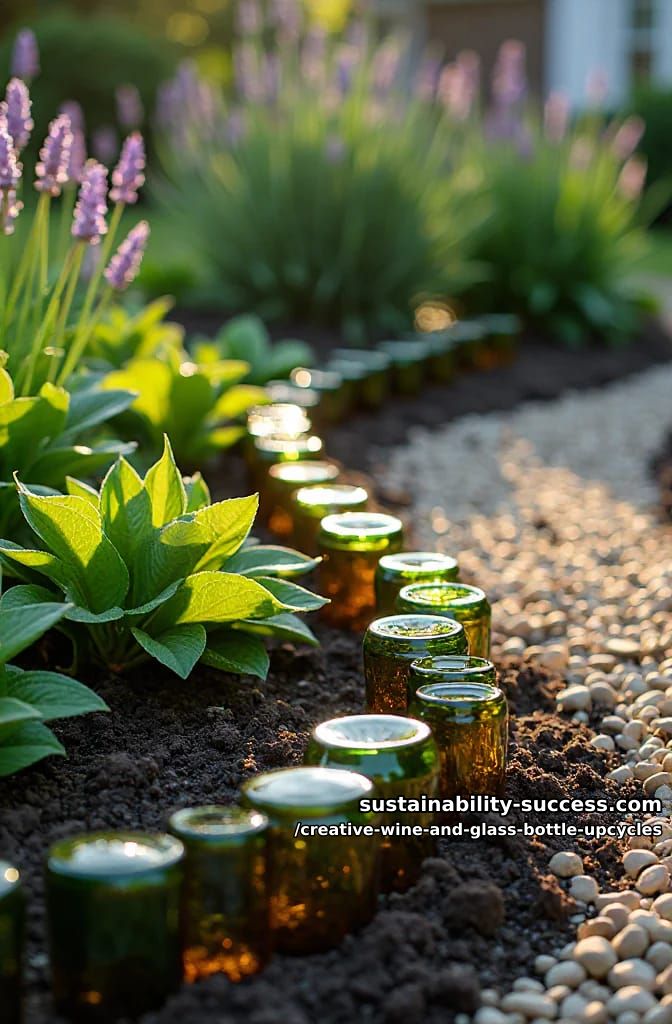
Bury wine bottles neck-down in a trench and you've bought a low, glossy, permanent bed border for the cost of a shovel and an afternoon. It's an older trick than it looks. People have lined flower beds with colored bottles for ages , a thrifty cottage-garden habit you'll find in folk gardens across the South and in Victorian kitchen gardens. Sink each bottle about halfway so only the rounded bottom shows, pack the soil tight around the necks, and tip a whole run at a slight angle for a scalloped edge.
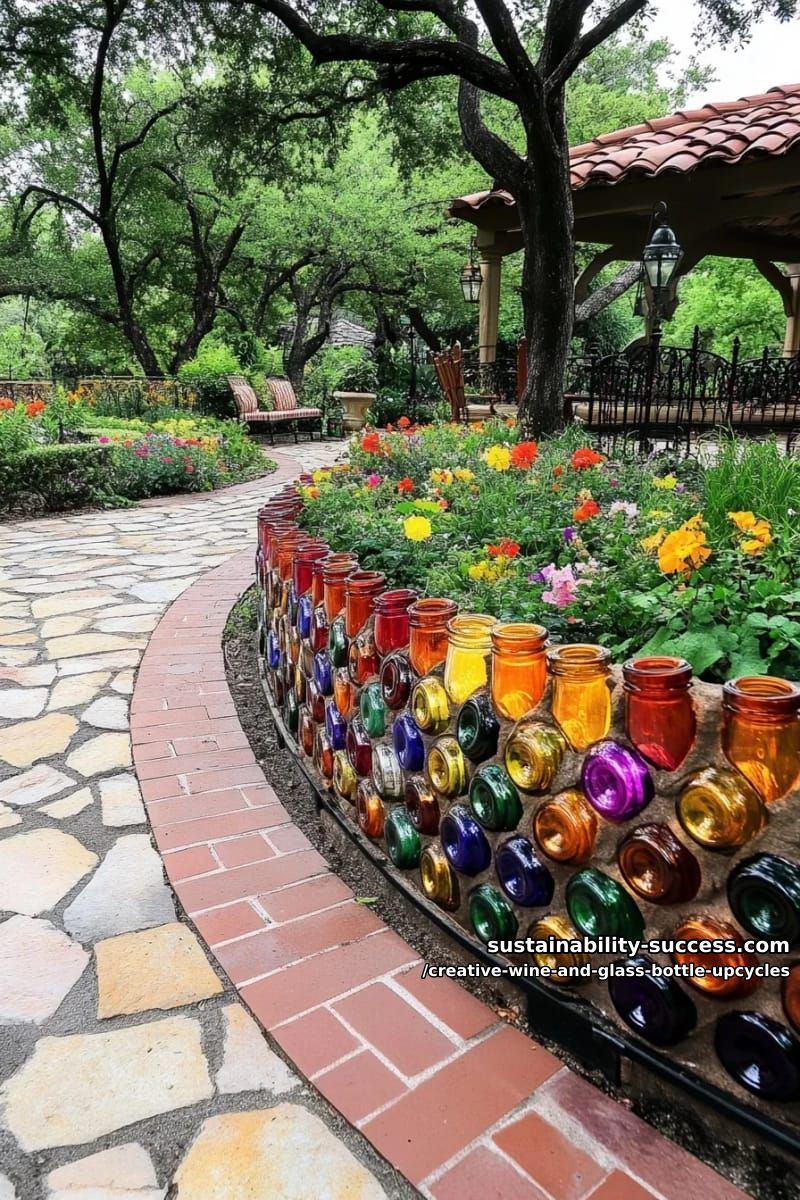
Green and amber bottles look more grown-up than the multicolor borders online, which look like a craft-store accident. Plan on one bottle every four inches , a 20-foot border swallows about 60 of them. Start hoarding in January for a spring install, or pool the collecting with a neighbor.
10. Feed hummingbirds from an inverted bottle
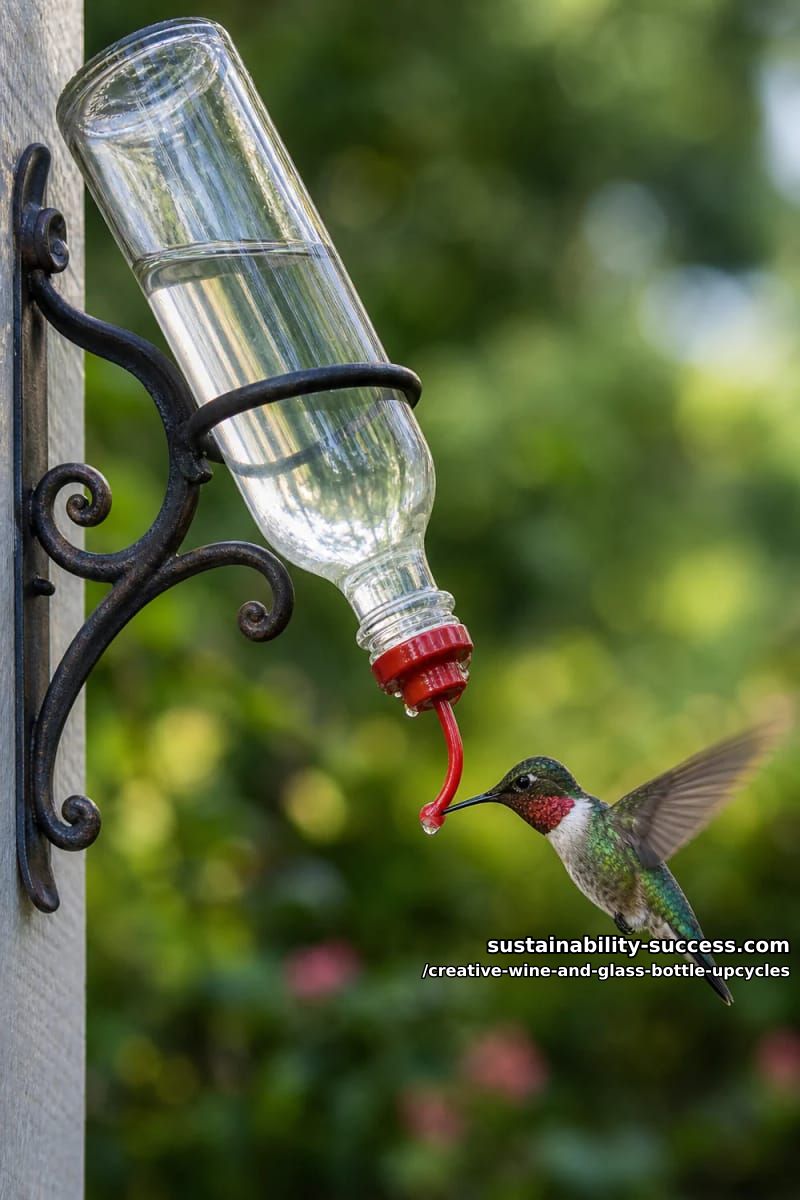
Invert a bottle with a feeder stopper and you've got a high-capacity hummingbird feeder that outlasts the little store dishes between refills. The hardware is a rubber stopper with a feeding tube, a few dollars, pressed into the mouth and hung nose-down from a bracket. Mix the nectar yourself , one part plain white sugar to four parts water, no red dye, which birders consider pointless at best. Clean and refill every two to three days in hot weather so it doesn't ferment. That's the chore people skip, right before they wonder where the birds went.
11. Slip a cut-bottle hurricane over a taper candle
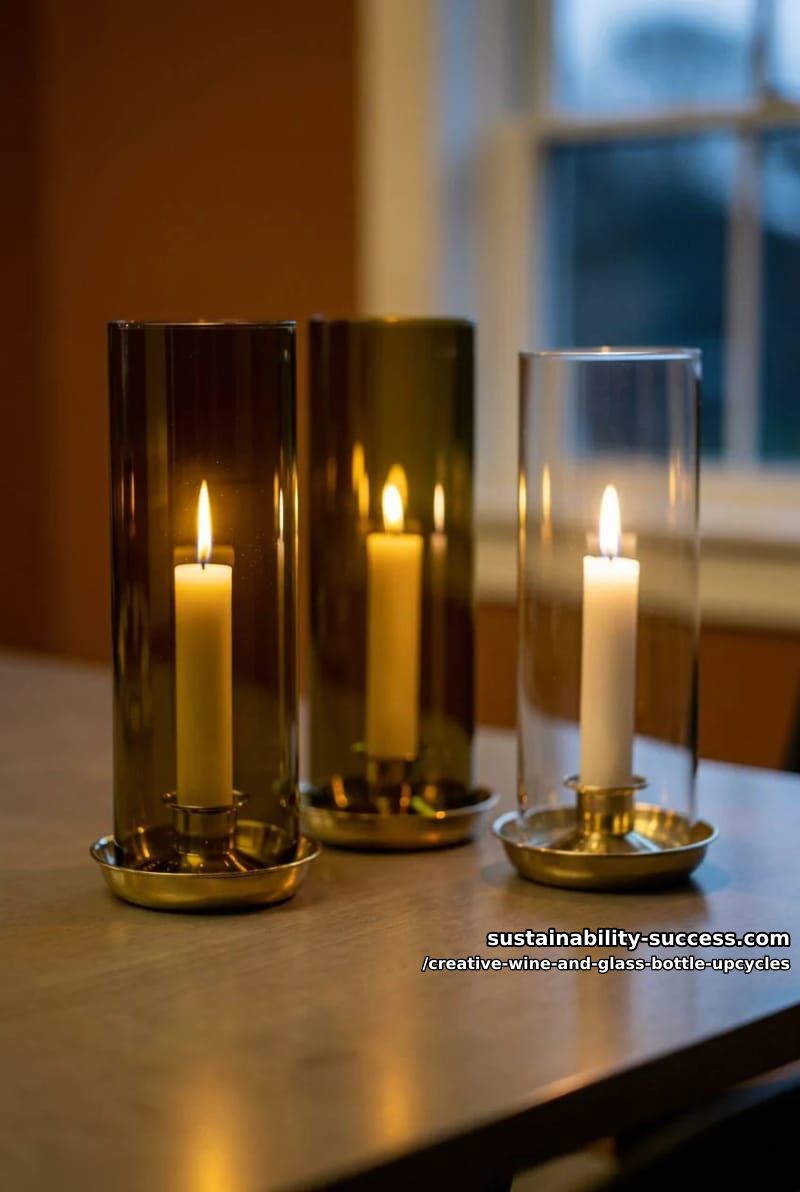
Cut both ends off a bottle and you're left with an open glass cylinder , a hurricane sleeve to keep a taper flame from guttering in a breeze on an outdoor table. It's idea 1 again, two cuts instead of one, and more forgiving, because nobody puts a lip to this rim; the sanding only has to be safe to handle. Amber throws the warmest light. Clear glass vanishes and hands everything over to the flame. Set the cylinder over a low brass or ceramic holder so the taper sits centered, and keep at least an inch between the glass and the flame's tip. On a still evening outdoors this beats a $30 store hurricane, and you can cut six for the price of sandpaper.
12. Fill narrow bottles with everything except flowers
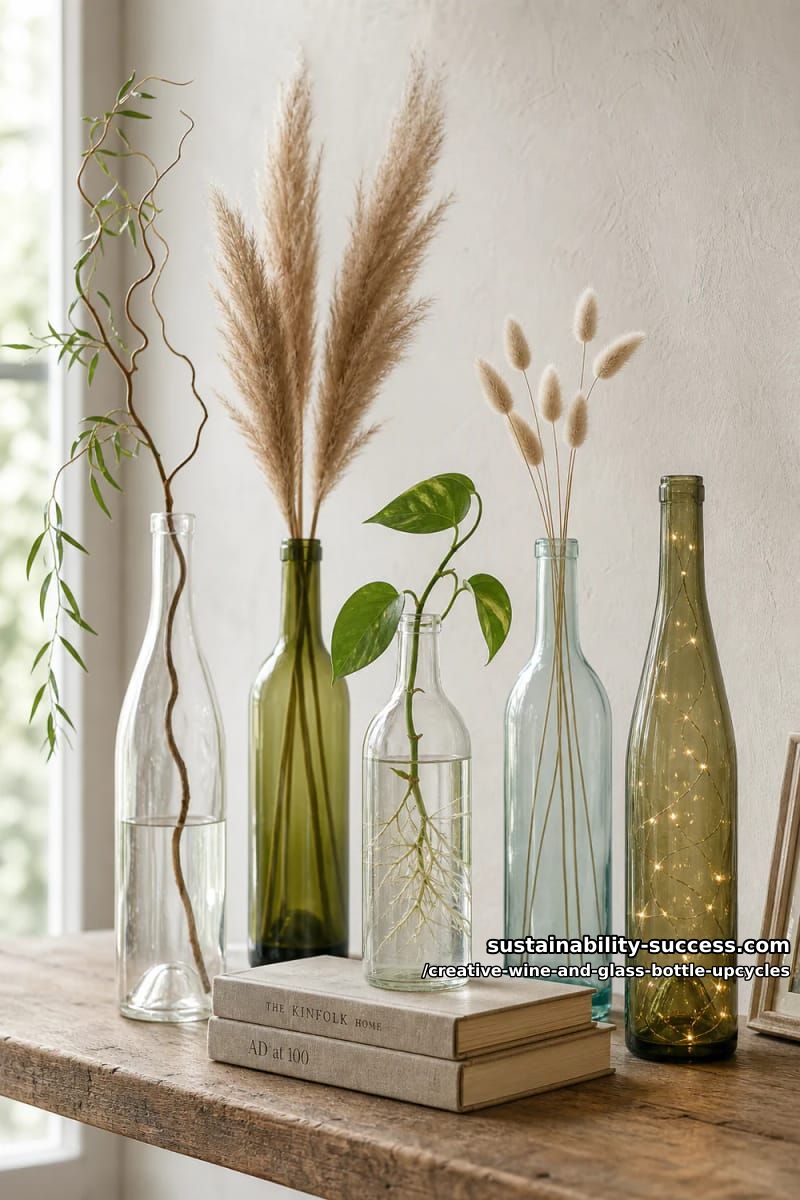
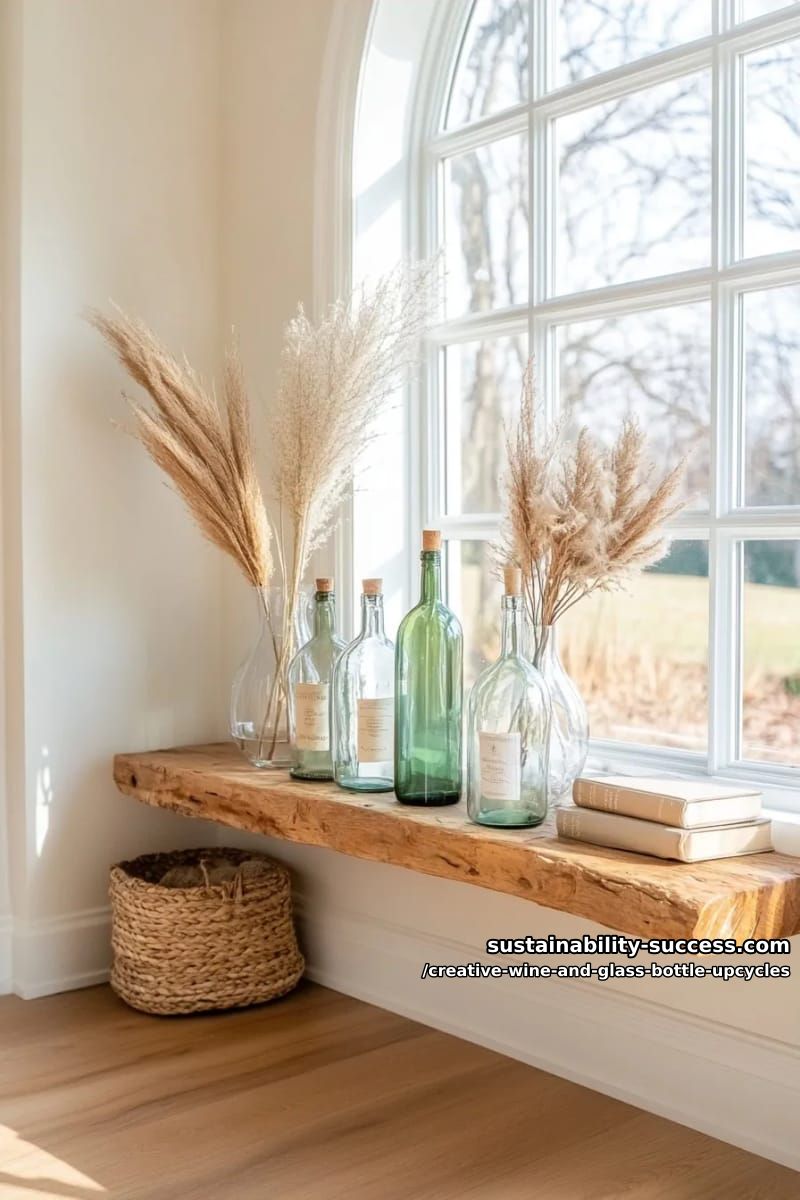
A narrow-neck bottle beats most things sold as vases, because the tight mouth props a single branch upright with no frog and no floral foam. Skip the supermarket bouquet. A curling willow branch, three dried pampas plumes, a fan of bunny-tail grass, a fresh herb cutting rooting in water , all of them fit the proportions better than a fistful of carnations ever could. The propagation trick is the sly one: in a clear bottle you can actually watch a pothos or monstera cutting push out roots, which is decor and a free plant at once. Cluster an odd number of mismatched bottles at different heights and it looks intentional. Match them all and it looks like you forgot to take out the recycling.
Conclusion
Buy the bottle cutter. It's the one tool that pays for itself here, and almost everything else is cheap hardware you add to a bottle that was free. The other habit worth building costs nothing: sort the empties by color while you're drinking them, not in a panic the night before, and keep any cobalt you stumble on in its own stash, because that blue is the hard one to find and the one a bottle tree actually wants. Glass can be recycled many times without losing its quality , that's the case for the bin. Keeping a few bottles out of it is the case for everything above. One warning I'll add only now: a shelf of cut, etched, light-filled bottles fills up faster than you'd think, and eventually you do have to let the recycling truck win a round.