
A decent vintage suitcase costs less than a throw pillow at most flea markets, and the majority of them end their second life stacked in a corner as "decor," holding nothing and going nowhere. The twelve conversions below are the ones I'd actually keep in my own house: a few are a Saturday afternoon with a screwdriver, two need real woodworking, and one of them I got badly wrong the first time, which I'll get to. Prices throughout assume you thrifted the case and bought only the hardware.

Pick the right case before you cut anything
Not every pretty suitcase survives being turned into furniture, and the difference is structural, not cosmetic. Here's what holds up for what, and the one category I'd walk past.
| Case type | Good for | Watch out for |
|---|---|---|
| Hard-shell vulcanized fiber (mid-century) | Legs, tables, pet beds, wall shelves | Corners can crack if dropped; otherwise the workhorse |
| Full leather / steamer trunk | Drinks cabinet, statement pieces | Heavy, runs $60 to $150+, straps often dry-rotted |
| Tweed or fabric-covered | Light wall decor only | Stains, weak frame, never weight-bearing |
| Aluminum / metal | Planters, industrial display | Hard to drill cleanly, pricier to find |
| New “decor” repro cases | Skip them | Too light, hollow, hardware glued on not riveted |
That last row is a real recommendation, not snobbery. The reproduction stacks sold new at HomeGoods and on Amazon as "decorative vintage suitcase sets" are hollow and lacquered, the latches are decorative, and a hairpin leg screw will spin uselessly in the shell. Buy a real one with some scuffs.
1. Vintage suitcase side table on hairpin legs
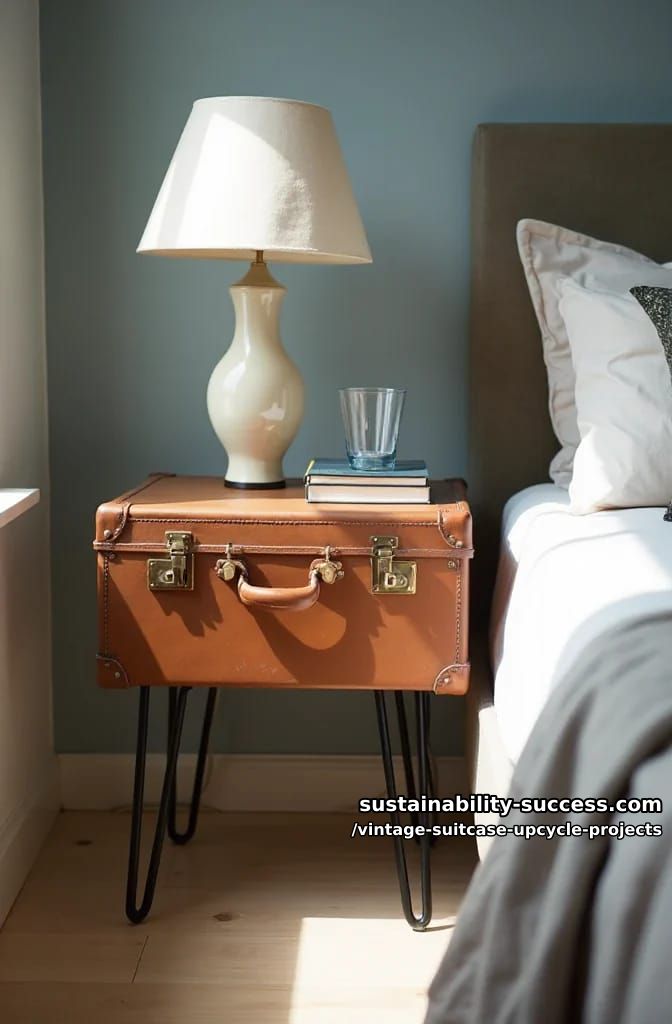
A flat-lidded hard-shell suitcase screwed onto a set of 18-inch hairpin legs gives you a nightstand at roughly 26 inches without a single joint to cut. The catch is the shell itself: it's too thin to hold a screw. You cut a piece of half-inch plywood to match the base, glue and screw it inside the bottom, then mount the legs into the plywood so the threads bite something solid. I used to skip the board and drive legs straight into the case bottom. Two of them tore loose inside a month, and one took a chunk of the original leather with it.
Bedroom nightstand from a 24-inch case
One thrifted hard-shell, finished height about 26 inches
Shopping list
| Qty | Item | Spec | Price |
|---|---|---|---|
| 1 | Vintage hard-shell suitcase | flat lid, 22 to 26 in | $10 to $25 |
| 1 | Hairpin legs, set of 4 | 18 in, black steel | $20 to $40 |
| 1 | Plywood mounting board | 1/2 in, cut to base | $6 to $12 |
| 1 | Wood screws + felt pads | assorted | $5 to $8 |
| Total | $41 to $85 | ||
Prices are approximate ranges as of June 2026; verify before purchase.
Eighteen inches is the sweet spot for a nightstand-height case, and these come pre-drilled so you’re not improvising the hole pattern.

2. Upright steamer trunk drinks cabinet
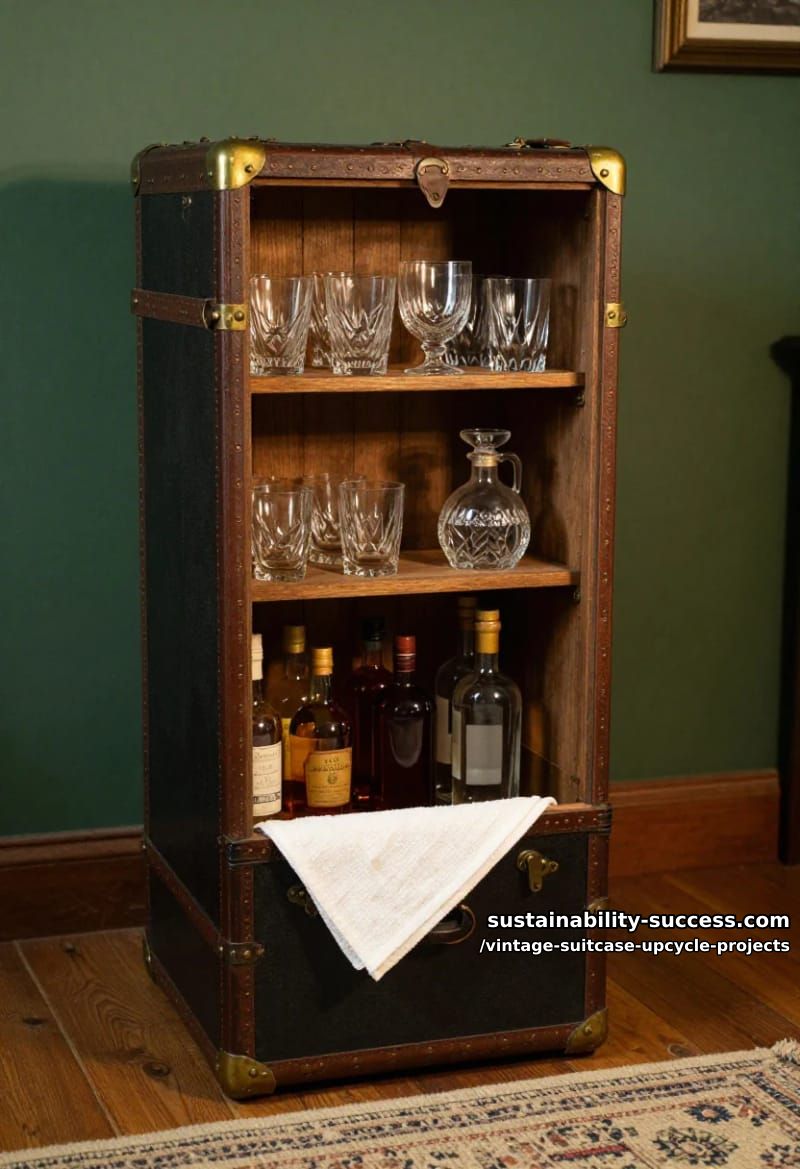
Stand a wardrobe-style steamer trunk on its short end, open the lid like a door, and the hollow interior becomes a vertical bar: bottles standing in the lower half, glassware on a shelf up top. Full leather and canvas trunks are the right candidate here because they have the depth and the weight, but expect to pay $80 to $150 for a sound one, and check the leather pull-straps haven't gone to powder. The glass-fronted "bar trunks" sold flat-pack on Wayfair are luggage cosplay; you can build a better one for a third of the price.
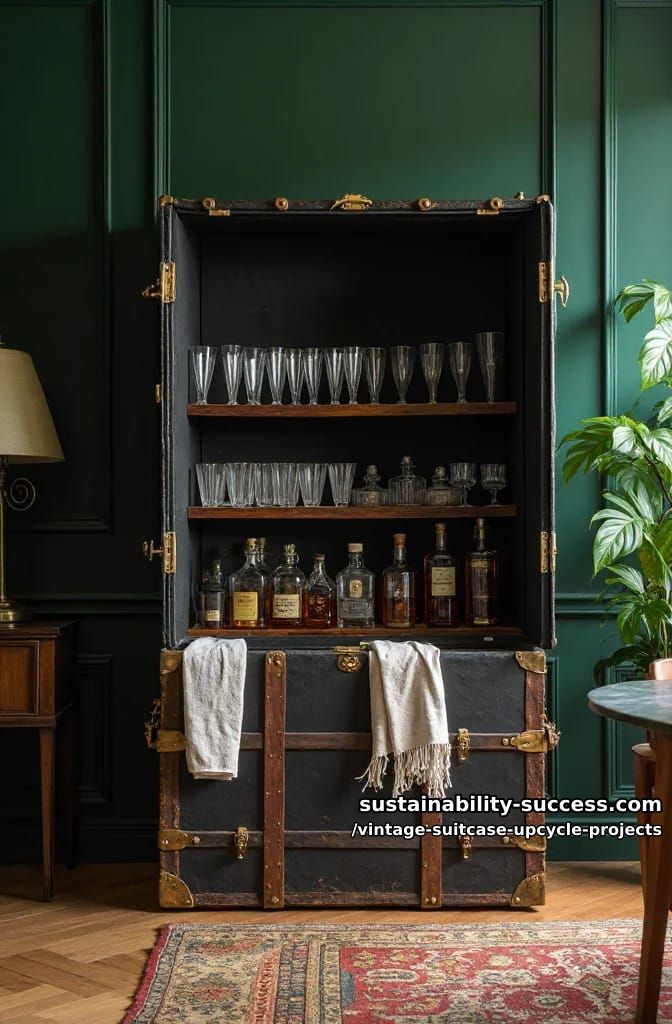
Stand the trunk on its sturdiest end and confirm it doesn’t rock before anything else.
Add one fixed horizontal shelf inside, cut from 3/4-inch pine, screwed into cleats glued to the interior walls. This separates bottles from glasses and stops the whole inside from being one cavern.
Anchor it. A loaded upright trunk is top-heavy. Run an L-bracket from the back into a wall stud, the same hardware you’d use to keep a bookcase from tipping.
3. Wall-mounted vintage suitcase shelf
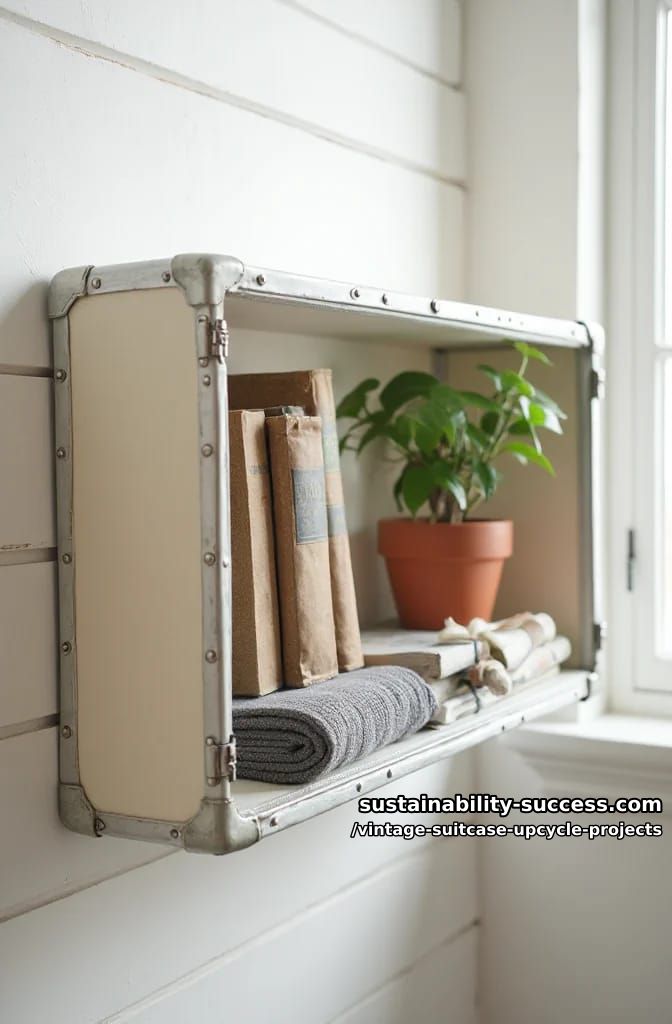
Cut a suitcase through its depth and the bottom half becomes a shallow wall box for paperbacks or a trailing plant. Mount it on a French cleat or screw the back panel directly into two studs, because anything anchored only to drywall will eventually pull out under the weight of books. Keep the load under about 12 pounds.
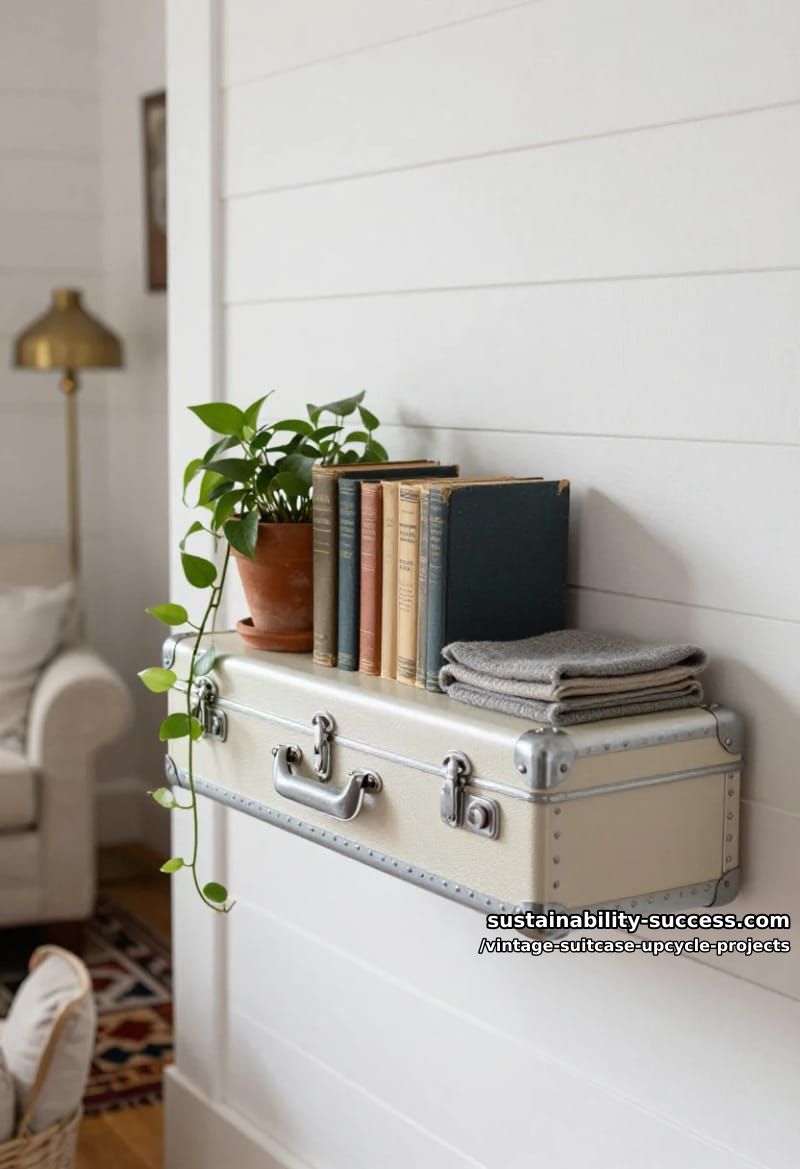
Use hard-shell, not fabric. A tweed case looks the part but the cover delaminates from its frame the moment you load it. And here's something I can't fully explain: the cheap vulcanized-fiber cases hold a cleat better than the handsome old leather ones, even though the leather feels sturdier in your hands. Something about how the fiber board takes a screw. I just build the shelves out of the ugly ones now.
4. Vintage suitcase pet bed
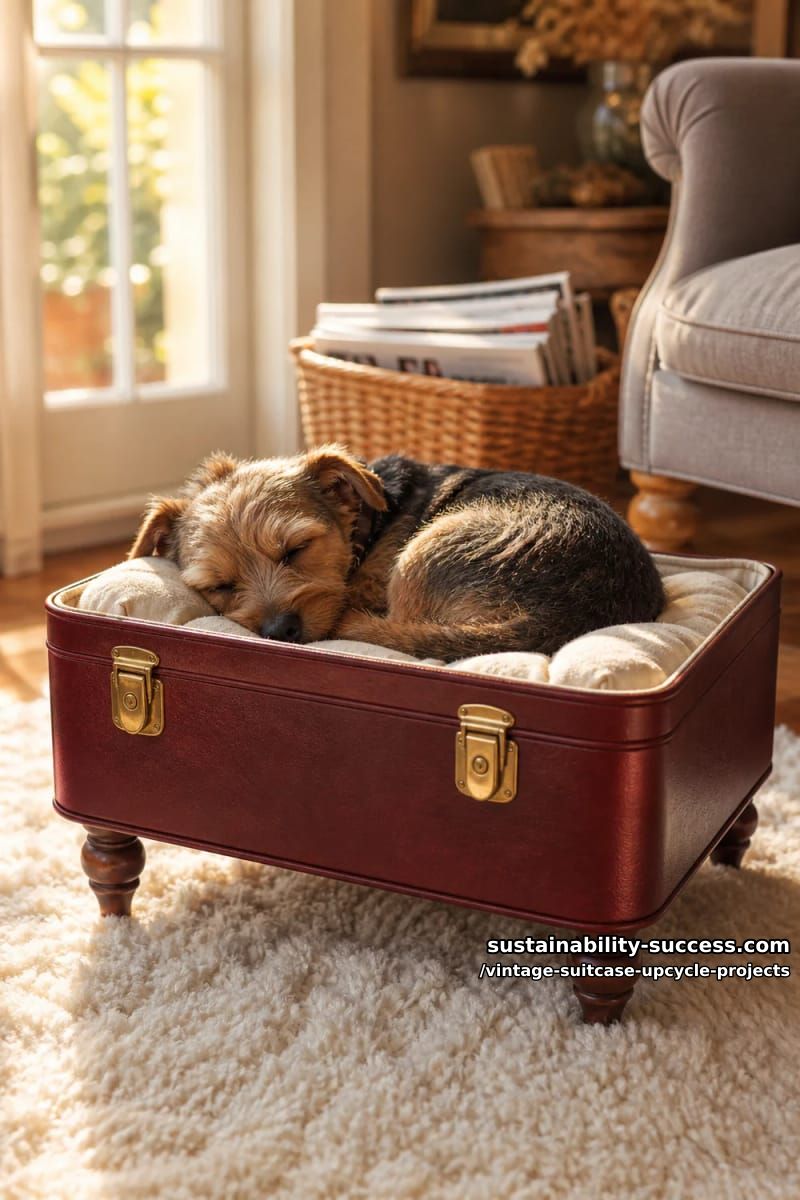
A low-sided train case, or the bottom half of any hard-shell, takes a standard 19-by-13 crate pad and becomes a cat or small-dog bed for the cost of the cushion (figure $15 to $35). Screw four short turned feet to the base to lift it off cold floors and it stops looking like a box on the ground. The animals don't care about the feet; the room does.
Do this
- Pick a smooth-lined case with a low front lip for easy entry
- Wash or replace the original lining before any pet uses it
- Remove or fully fold-back the lid so it can’t swing shut
Avoid
- Cases that smell of mothballs or mildew, the lining traps it
- Crumbling fiber interiors, your pet will ingest the flakes
- Loose interior staples or sharp metal trim at the opening
5. Stacked suitcase tower with hidden storage
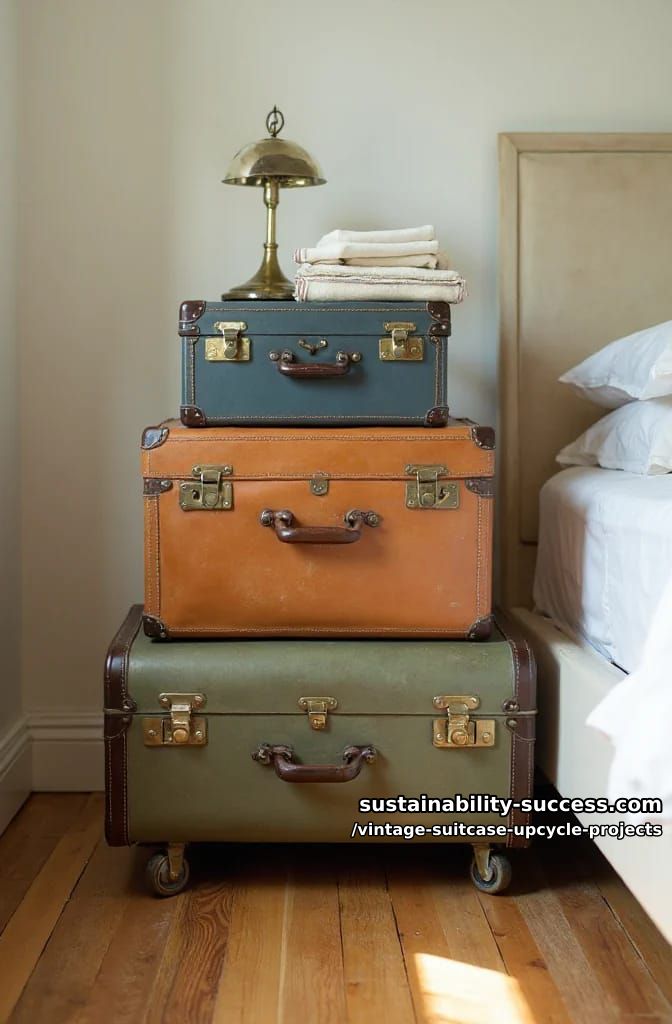
Three graduated cases stacked largest-to-smallest and bolted together give you a bedside tower where the top lid still opens for storing linens or the things you don't want guests to see. Run carriage bolts down through the stack so it reads as one piece, not a leaning pile. A small stack like this costs you only the price of three thrifted cases, roughly $30 to $60 total.
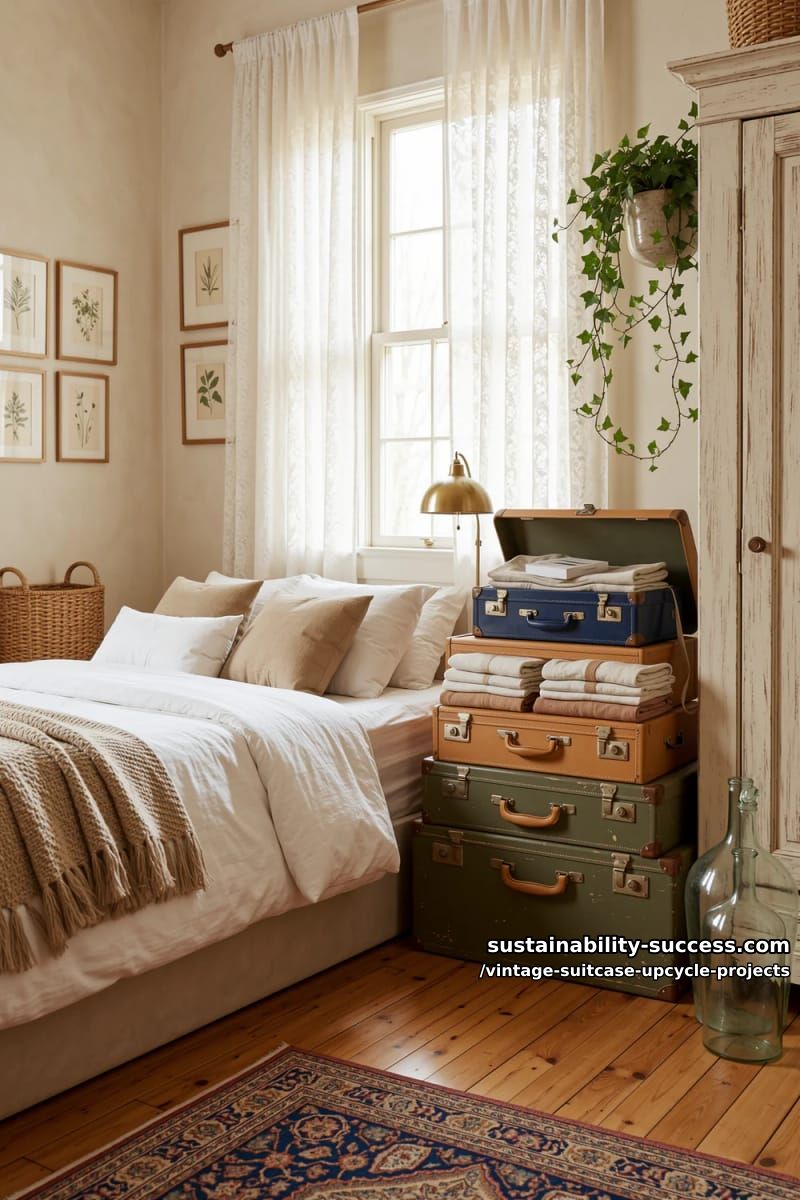
Skip the casters. Every blog tells you to add wheels to a suitcase stack, and a rolling tower racks side to side until the bolted joints loosen and the lids stop closing flush. A stationary stack stays tight for years. If you need it to move, lift it.
A tall stack is genuinely tippy, especially with a child or a large dog in the house. Weight the bottom case (a paving slab or two laid flat inside works) or strap the back to a wall anchor. Don’t put the heaviest contents in the top case.
6. LED-lit vintage suitcase display cabinet
Mount the open bottom of a suitcase on the wall, drop in a thin glass or plywood shelf, and stick a battery puck light under the lid to make a lit curio nook with no wiring and no outlet nearby. The whole point is that it glows in a dark corner, which is where these usually end up, so go with a warm-white light rather than the color-changing kind unless you're decorating a teenager's room.
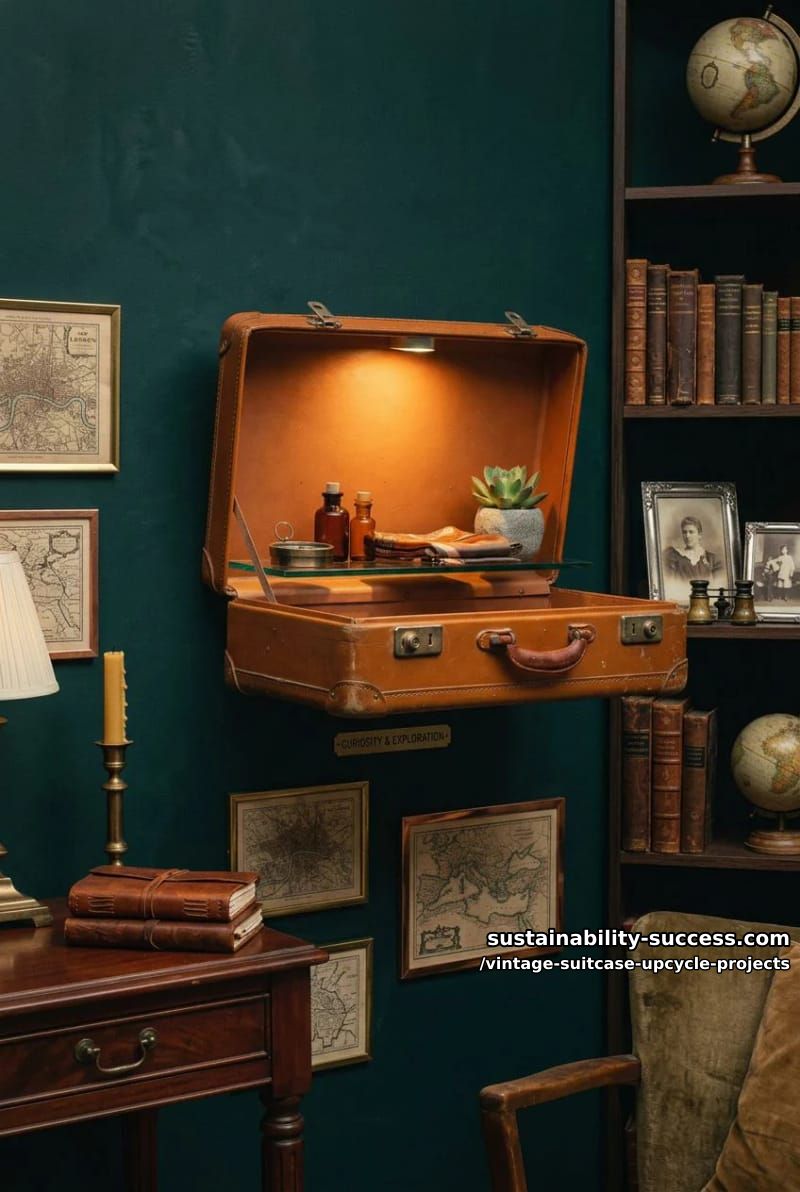
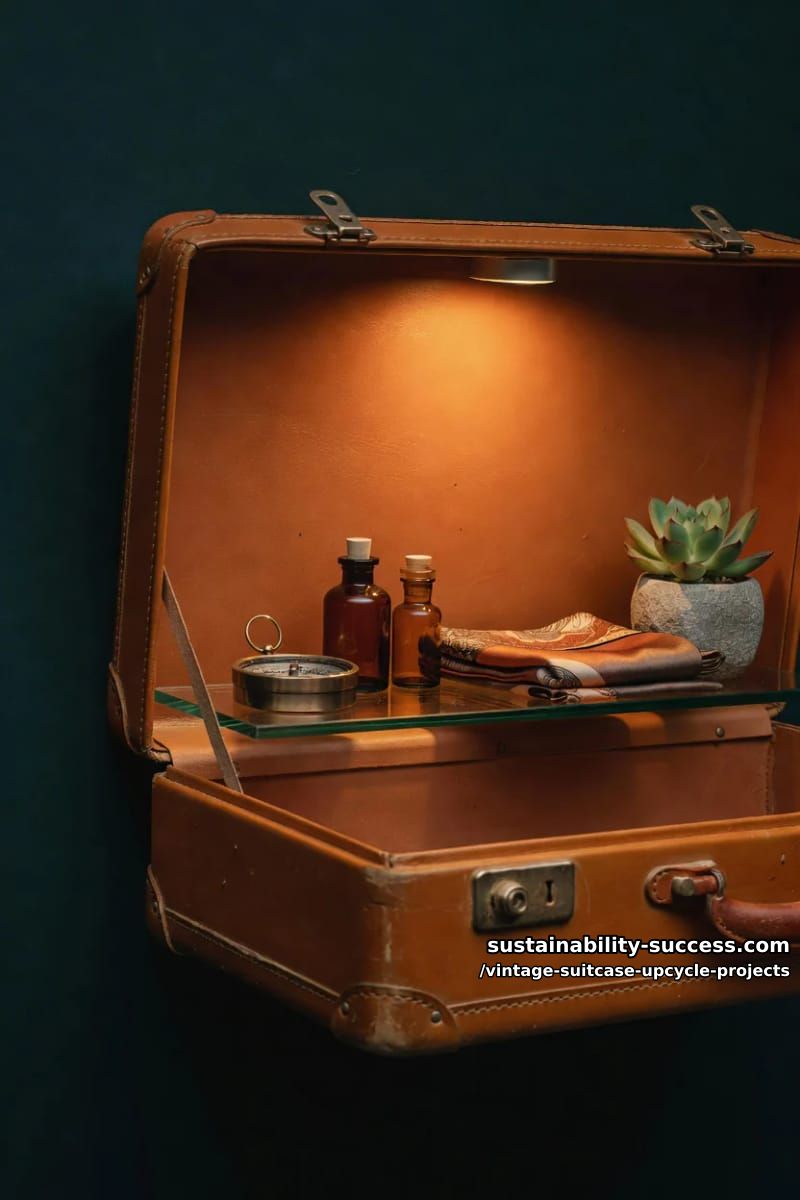
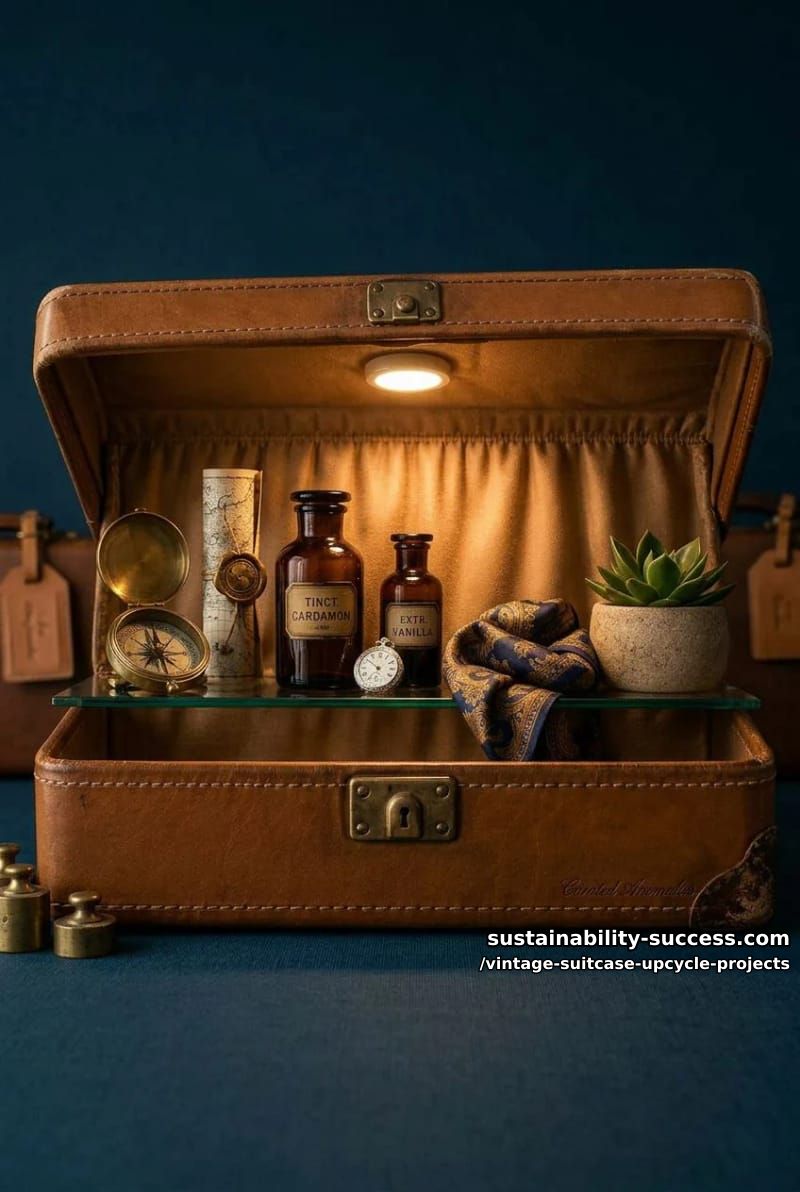
Adhesive backing means no screws into the lid, and the tap-on switch sits right where your hand lands when you reach in.

7. Fold-down suitcase vanity with mirror
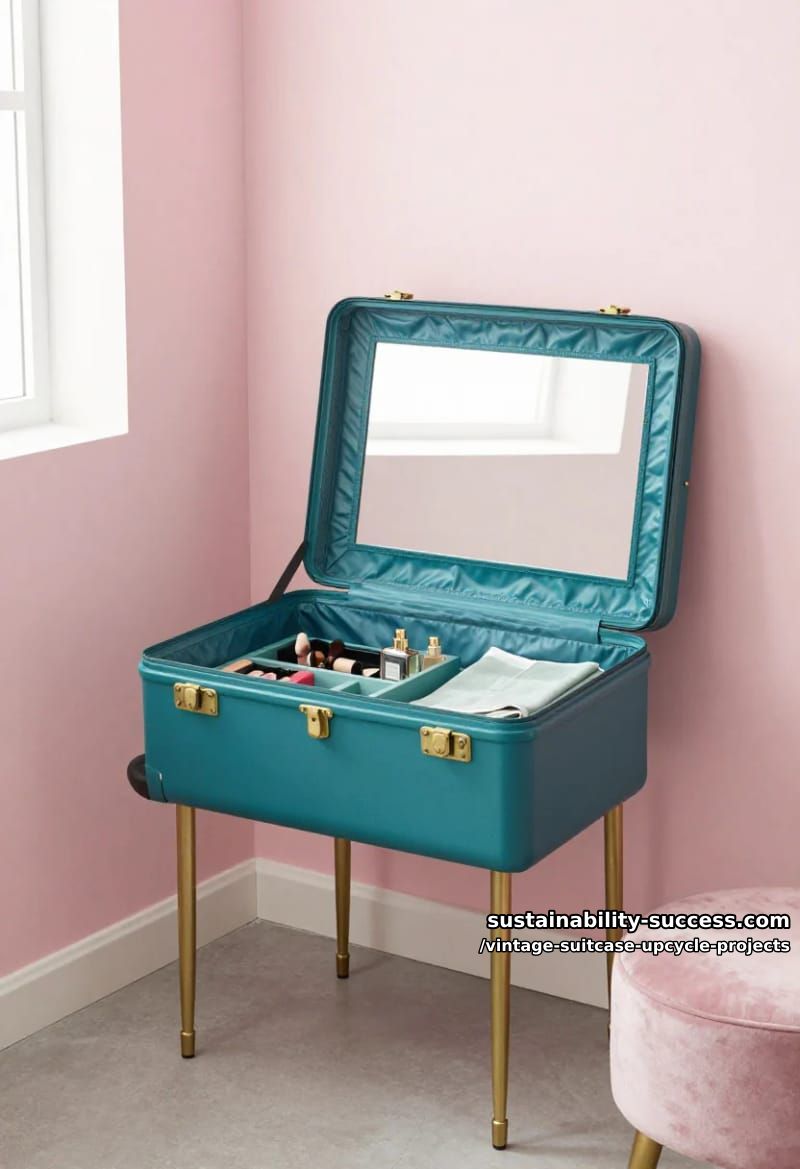
A suitcase on slim legs, lid hinged back with a mirror set inside it, folds shut into a flat box and opens into a makeup station. Vintage train cases are the natural starting point since some came with a mirror already mounted. Line the interior with peel-and-stick contact paper and drop in a cutlery-tray-style organizer for brushes; the whole conversion runs under $30 if the case and the mirror were thrifted.
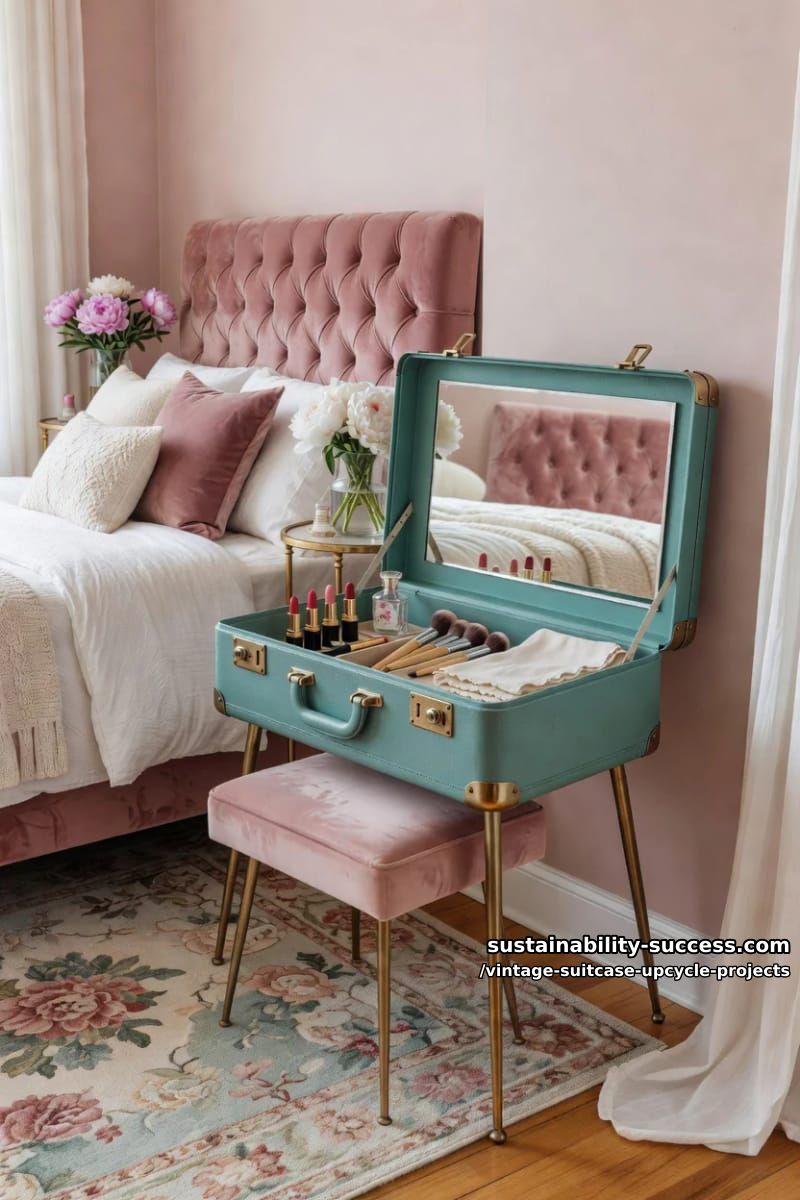
People ask whether the mirror stays put. Use mirror mastic, the gummy adhesive sold for exactly this, not a hot glue gun, and it holds for years. Hot glue lets go the first warm afternoon.
If the original leather is too cracked to live with, paint it. The chalk-style paints (Dixie Belle, Annie Sloan) grip the old surface without primer, and a sage or teal finish photographs the way the painted-suitcase vanities all over Pinterest do. Leave the latches and corners bare metal so it doesn't read as plastic.
8. Vintage suitcase coffee table
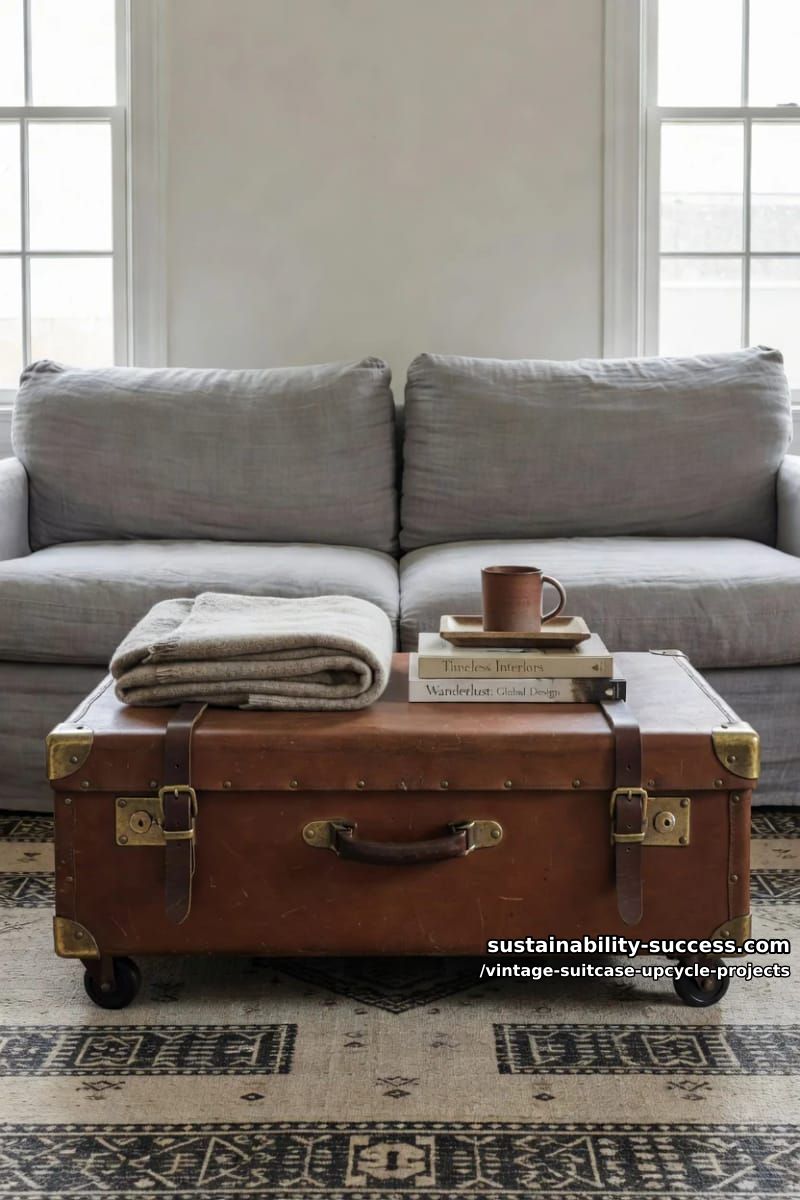
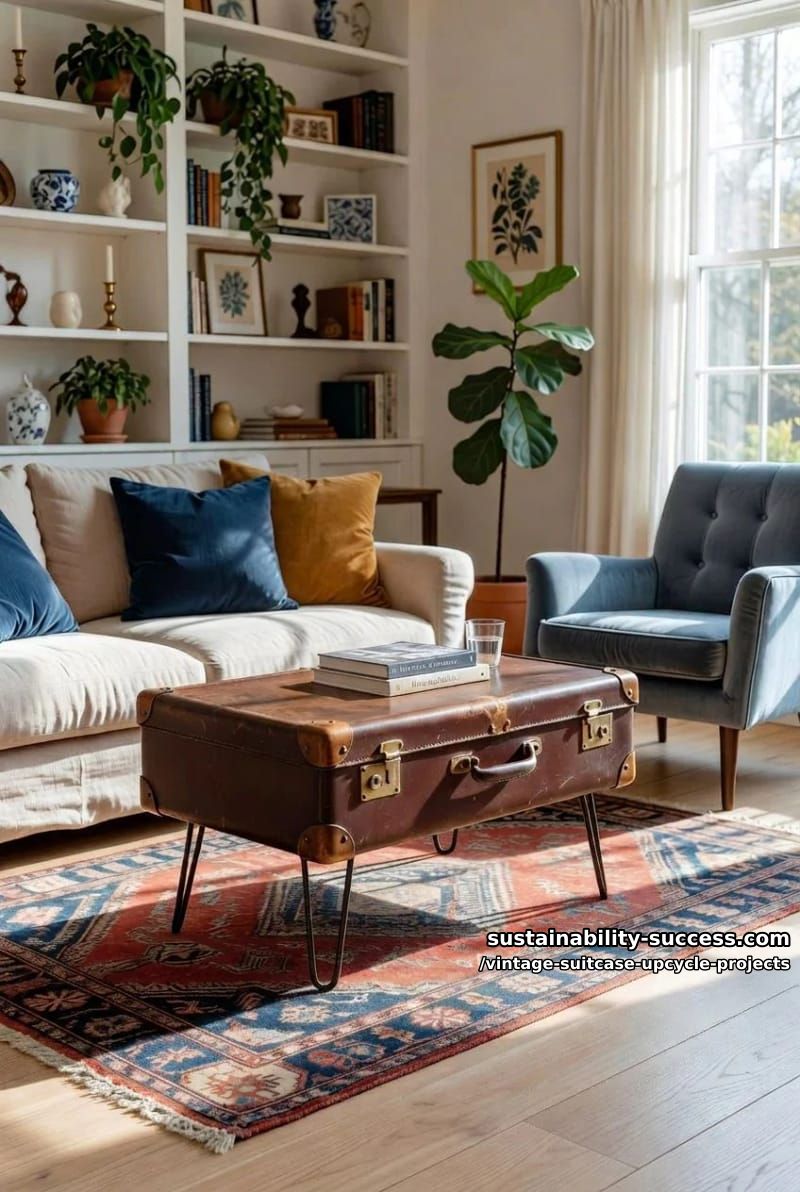
A large checked-size case (the 28-inch kind) on short tapered legs or locking casters lands at around 18 inches, which is sofa-coffee-table height, and the lid lifts for blanket storage you never see. Reinforce the base the same way as the side table, with an interior plywood board, because a coffee table takes more abuse than a nightstand.
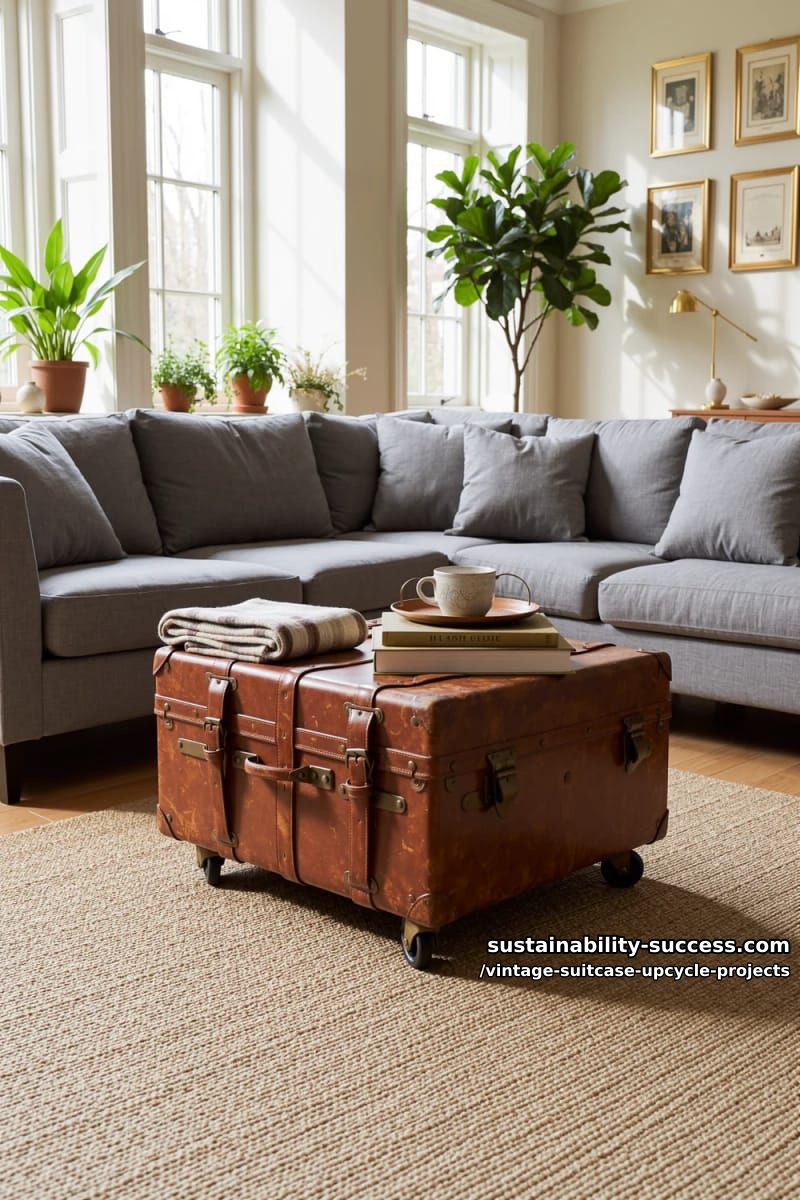
Granted, leather dents if you set a sweating glass on it for a year, so I'd cut a piece of glass to sit over a lid I actually use. Some people hate the glass-over-leather look and call it fussy. I'd rather have the case than a ring-stained antique by next spring.
9. Campaign-style suitcase writing desk
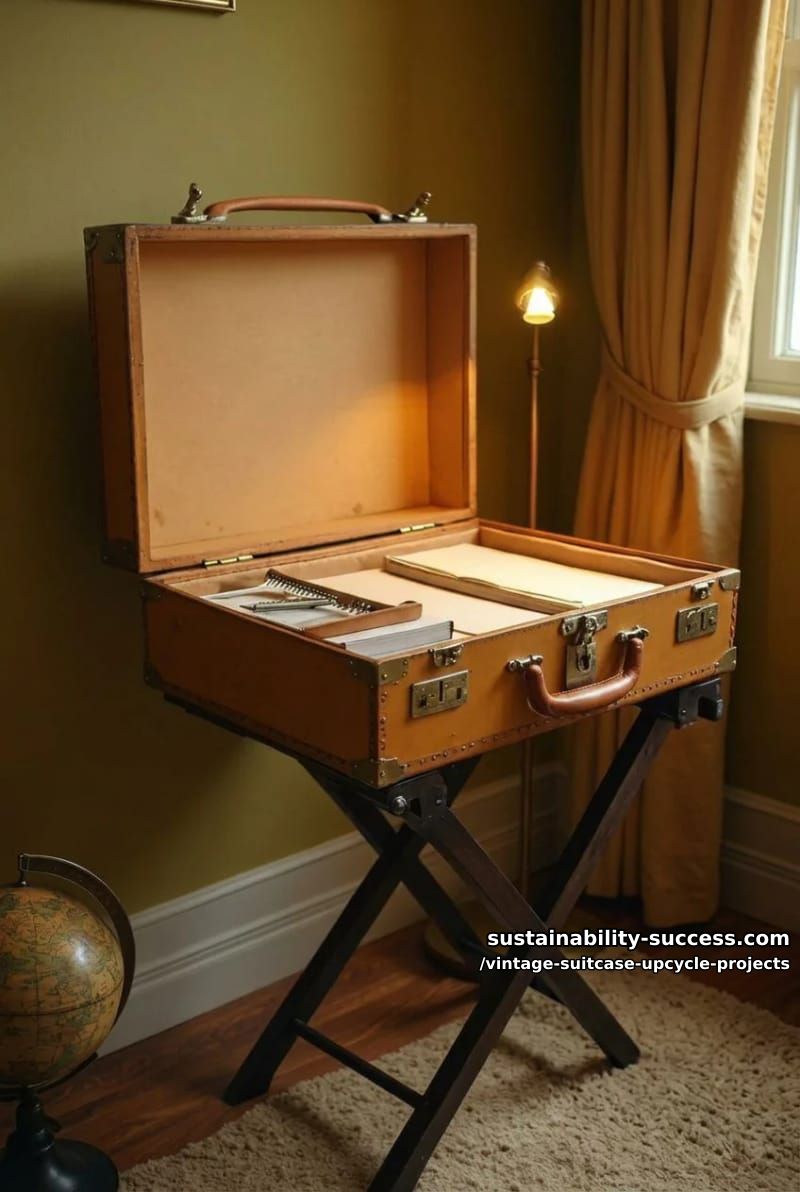
Set a suitcase on a folding campaign luggage rack and prop the open lid back, and you have a writing desk that collapses flat against the wall when you're done. The base holds paper and pens, the lid serves as the surface or a backboard, and the wooden rack does the structural work so you're not building legs at all.
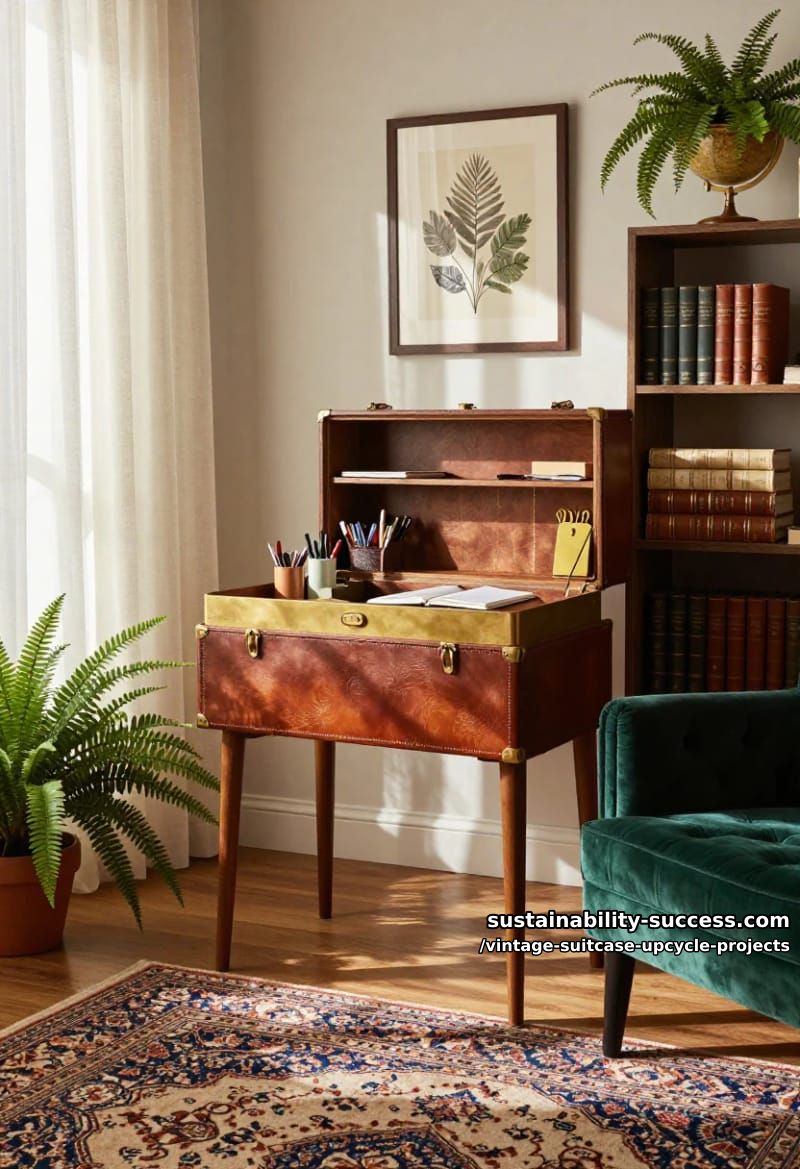
This is the niche one. It suits a small apartment or a guest room more than a working office, since the writing surface is shallow and there's no laptop room. The vintage-campaign-desk look (think the dark stained folding racks in old colonial-revival photographs) is what you're after, and the racks themselves turn up at estate sales for $20 to $40. I don't know that I'd recommend this as your first project, but it's the one guests always ask about.
10. Upholstered suitcase storage ottoman
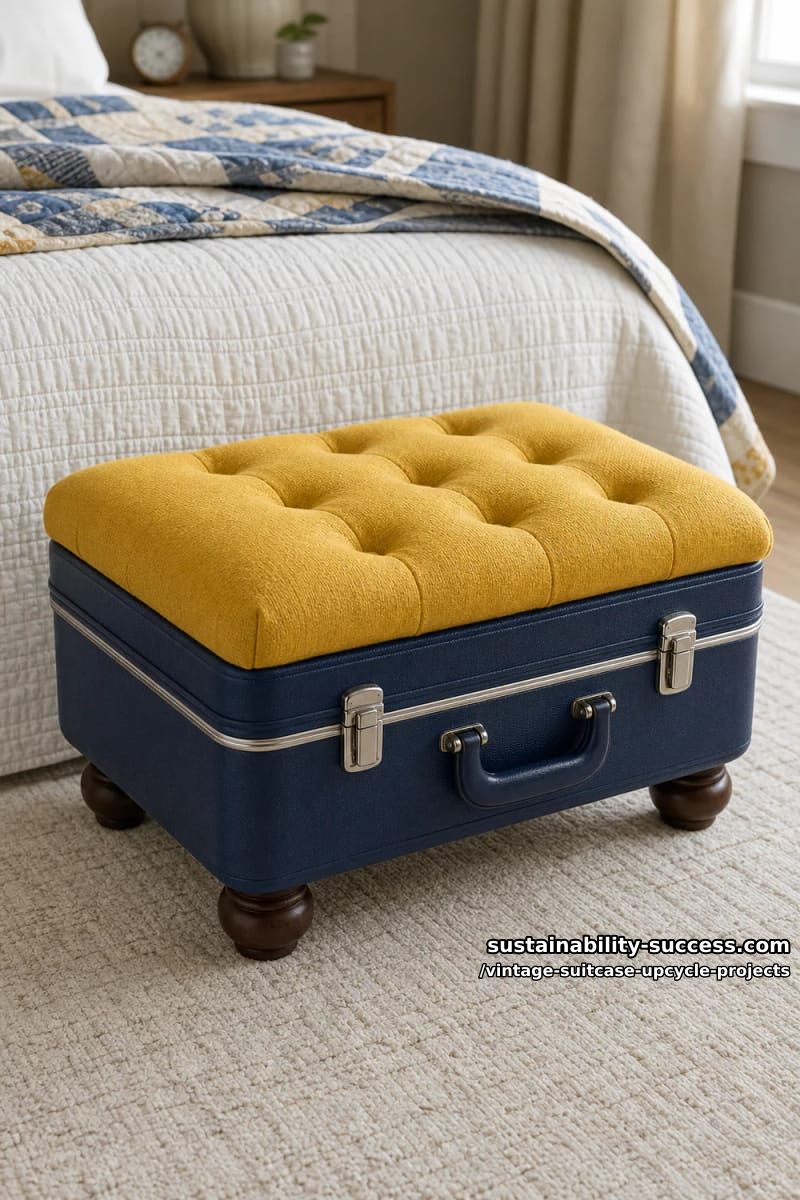
Glue two inches of high-density foam to a suitcase lid, wrap it in batting and fabric, staple it underneath, and the case becomes a storage ottoman with shoes or blankets hidden inside. Add a long piano hinge along the back so the padded lid lifts cleanly, and four bun feet to raise it off the floor. Foam and fabric run $20 to $40 depending on how nice you go.
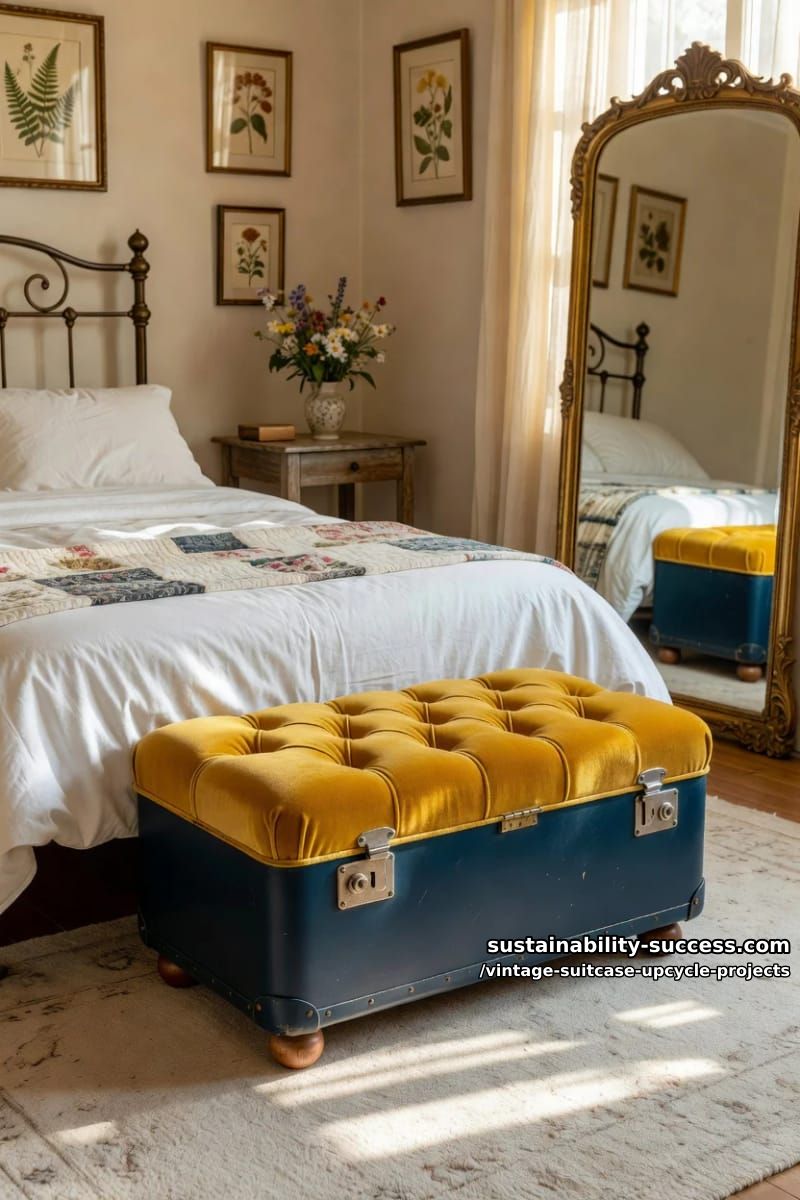
Only do this with a hard-shell. A fabric or tweed case will fold the first time someone sits down hard, and you'll have a person on the floor and a ruined suitcase.
11. Vintage suitcase garden planter
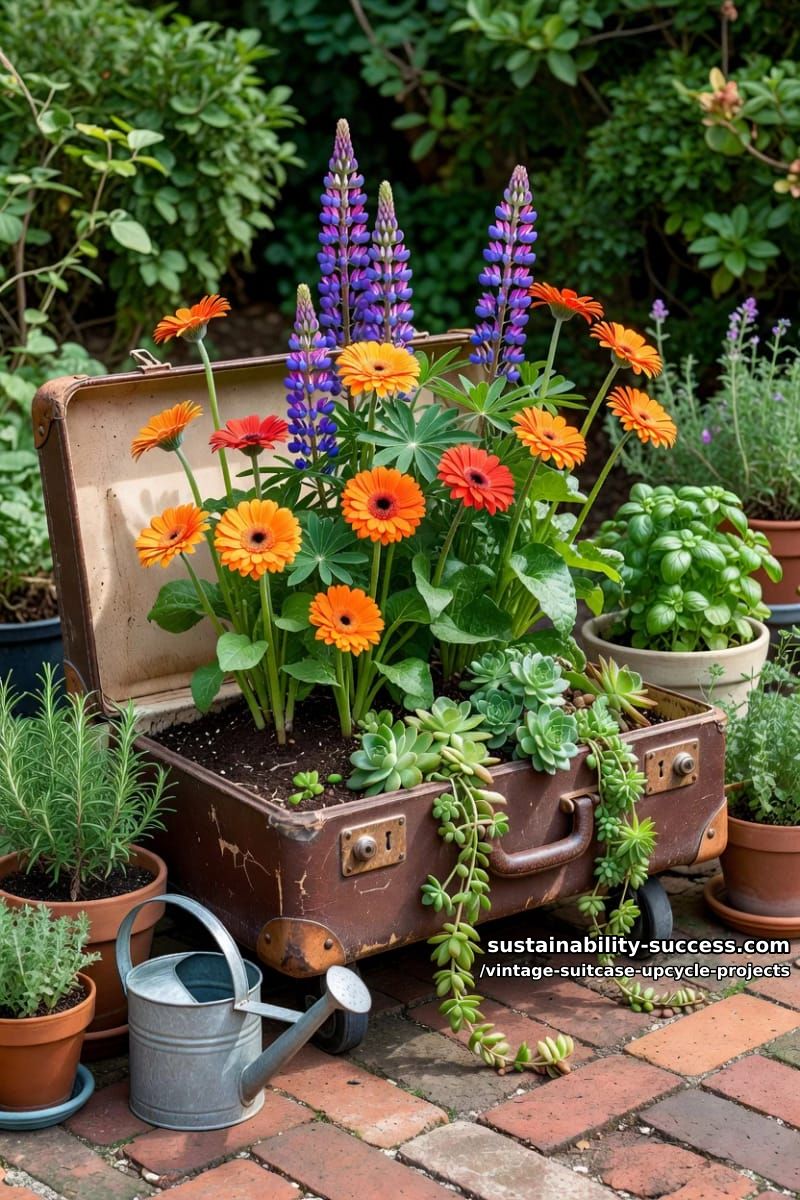
A hard-shell or metal case with drainage holes drilled through the base and a plastic liner inside becomes an outdoor planter that flowers spill out of. This is the project I got wrong: my first one was a handsome leather case, and it was a sodden mess by the end of one summer. Leather and cardboard-core cases are not for outdoors, full stop.
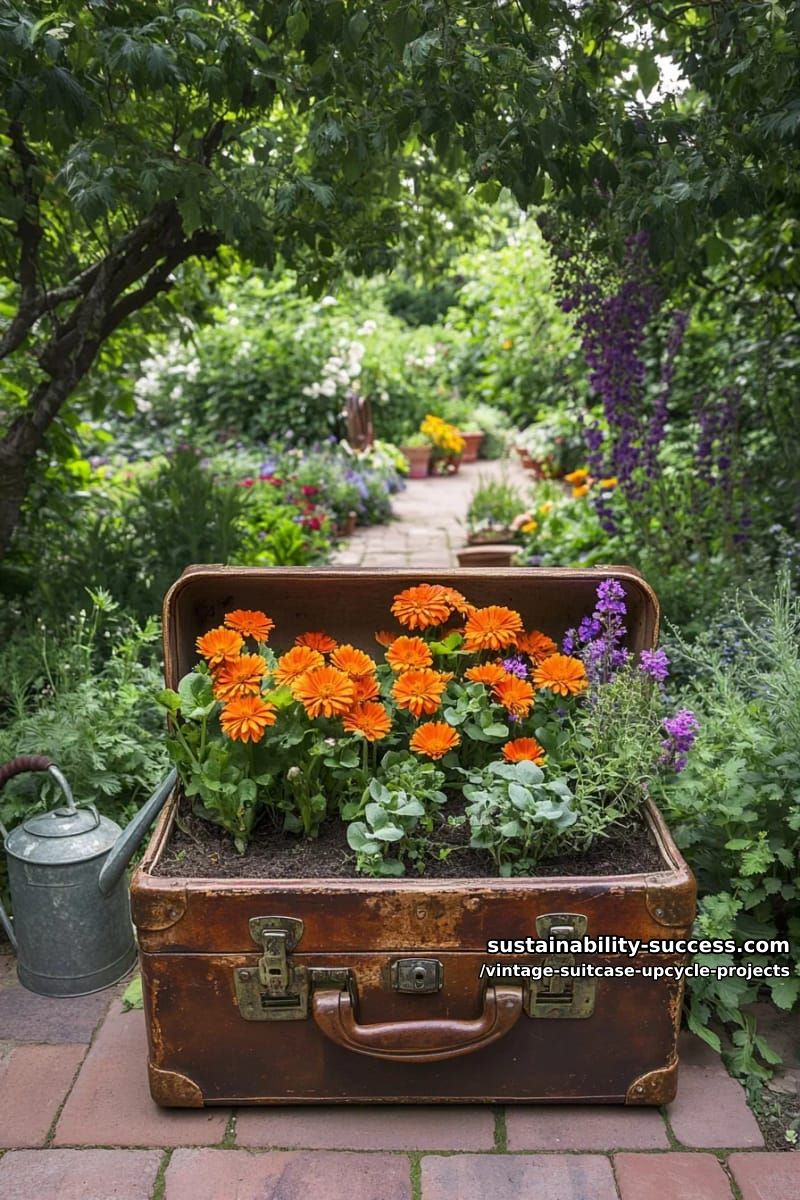
Leather, tweed, and fiberboard-core suitcases rot, swell, and delaminate within a single rainy season. For an outdoor planter use vulcanized fiber, aluminum, or a metal case, drill several drainage holes through the bottom, and line the inside with cut-to-fit pond liner or heavy plastic. Indoors, where it stays dry, a leather case is fine as a cachepot if you keep a separate nursery pot inside it.
12. Wall-mounted suitcase entryway station
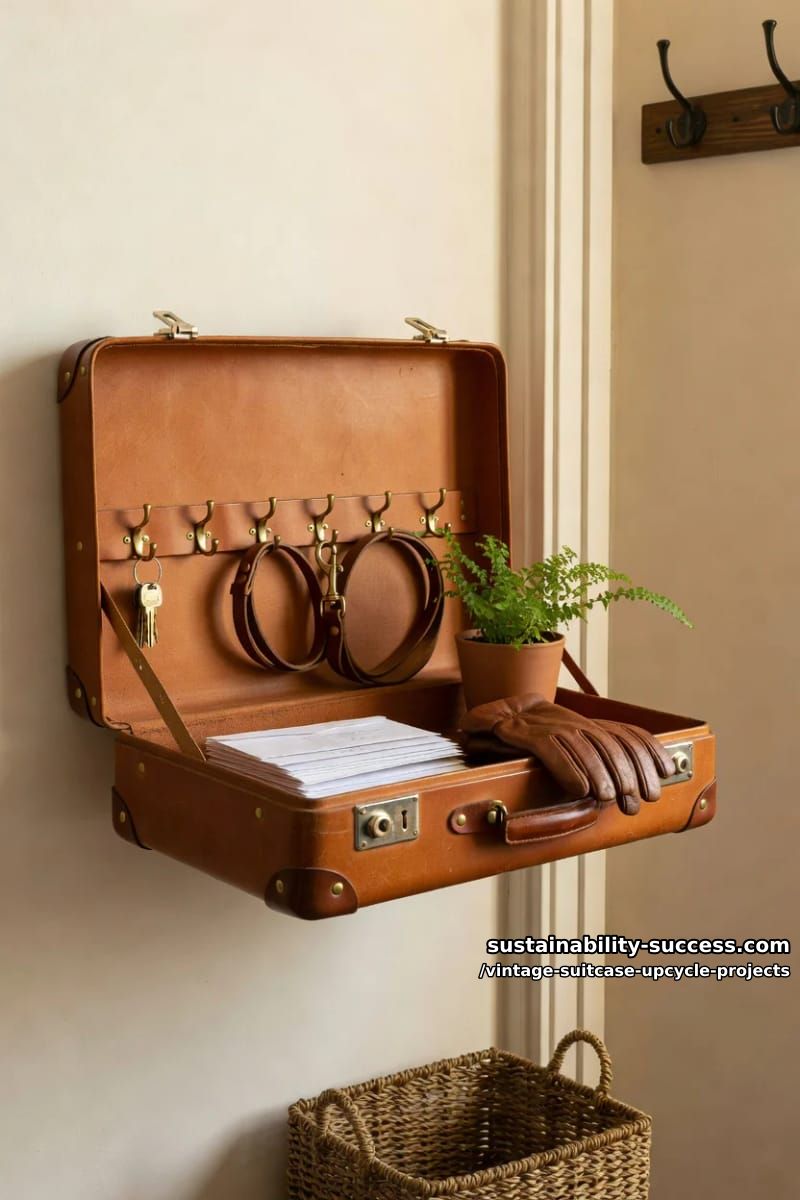
Mount an open suitcase vertically by the door, lid flat against the wall as a backboard, and screw a row of cup hooks into the lid edge for keys and a leash while the base catches mail and gloves. It does what a wall organizer does, but it's the first thing people comment on when they walk in. Total cost is the case plus a $4 pack of brass hooks.
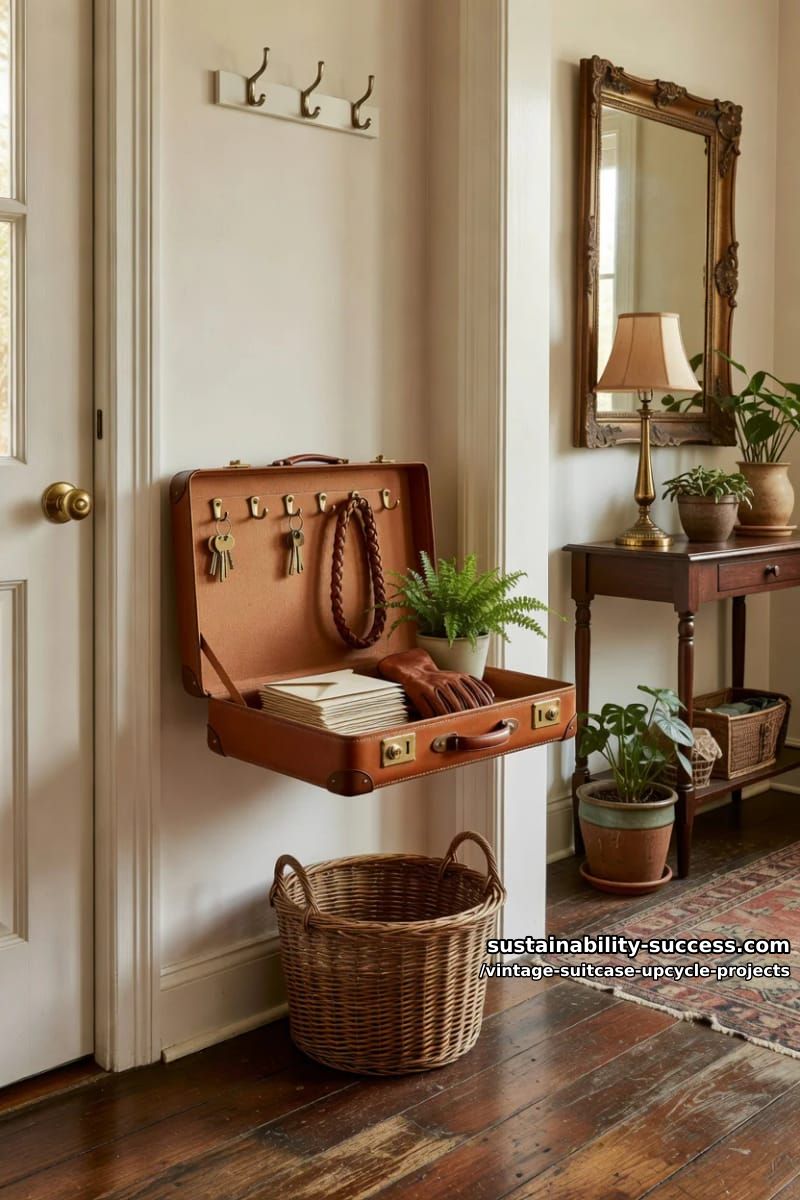
Mount it into studs or use heavy-duty drywall anchors rated for at least 25 pounds, since a daily-use catchall ends up holding more than you think. Keys, mail, sunglasses, the odd parcel slip. It adds up.
Conclusion
If you're buying one case to start with, get a flat-lidded hard-shell in the 22-to-24-inch range. It can become the side table, the pet bed, the wall shelf, or the lit display cabinet, and you'll know within an afternoon whether you actually enjoy this or whether you just liked the idea of it. Leave the leather steamer trunk and the drinks cabinet for later; they cost the most, weigh the most, and are the hardest to undo if you change your mind. And whatever you build, resist the urge to sand it back to bare and refinish it. A stripped-and-restored case looks like a reproduction, and reproductions are cheaper to buy new.