
Most zero waste gift guides are a shopping list wearing a hemp shirt: bamboo cutlery sets, stainless straws, a "starter kit" of things nobody asked for. The waste in that case is the gift itself. Everything below is made at home, mostly from material already in your kitchen, and every one of them is either used up or replaces something the recipient currently throws away.
That second test matters more than the first. A handmade object that gets stored, not used, is just clutter you gave someone for free, and the sugar scrub in a jam jar is the classic offender. So the eleven ideas here are sorted by what they do rather than what they look like on a table.
Three of them need lead time. Citrus vinegar wants a fortnight in the cupboard, dried starter wants a day or two on the counter, and orange peel wants five hours in a low oven. Start those before you touch the rest.
Made from what was already heading for the bin
1. Dried orange peel star garland

Cut the stars before you eat the orange. Peel it in wide panels, press a small cookie cutter through the rind, and you get a garland out of the part that normally goes in the compost, with the fruit still intact for breakfast. Dry the shapes at 170F to 200F for three to five hours, flipping every half hour or so. Any hotter and they brown instead of drying; the colour is the whole point, so err low and be patient. A dehydrator at around 130F does it more evenly overnight if you own one.
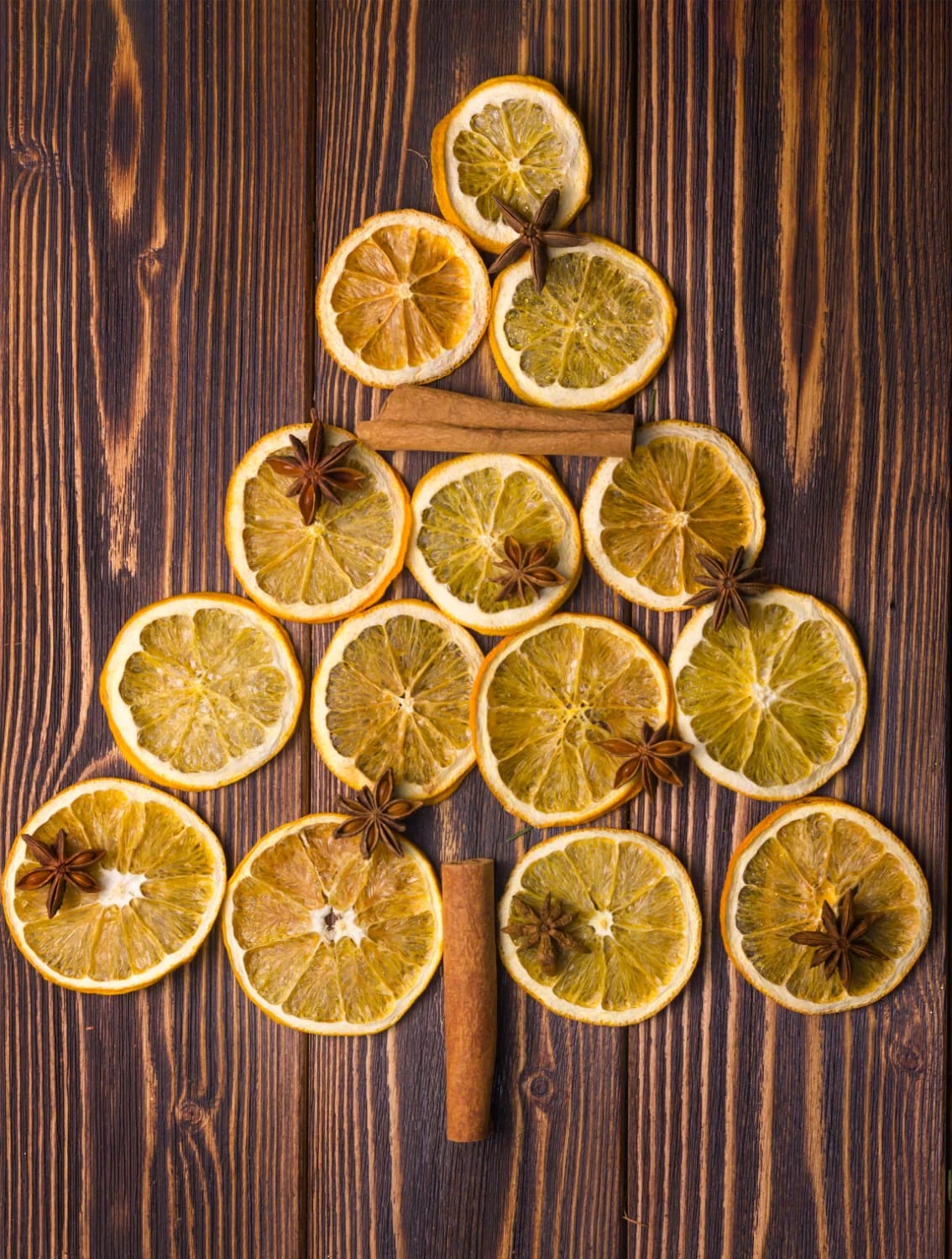
Whole slices, cut an eighth to a quarter inch thick, are the version everyone photographs, and they do look better lit from behind on a window. Stars travel better. They are lighter, they do not tear at the string hole, and they post flat in an envelope with a length of jute twine, which makes them the rare handmade decoration you can actually mail. Stored airtight, both keep for years.
2. Citrus peel vinegar cleaner

Pack a jar with the peels from a week of clementines, cover them with plain white vinegar, and leave it in a dark cupboard for two weeks. The d-limonene in the rind is what cuts grease, and the citrus takes the edge off the vinegar smell without hiding it. Strain, decant into a swing-top bottle, and give it with a note saying to dilute one to one with water.
Use a plastic lid while it steeps, because vinegar corrodes a metal canning lid from the inside. Two things belong on the gift tag: it is not a disinfectant by CDC standards, and it will etch marble, granite, and other natural stone, so it stays away from those counters and off unsealed hardwood.
3. Napkins dyed with avocado pits and onion skins
This is the one people are surprised by, because avocado pits and skins do not give you green or brown. They give you pink, somewhere between blush and salmon depending on your water and how long you simmer. Onion skins, saved in a paper bag on top of the fridge until you have a decent handful, give yellow and gold. Between them you can dye a set of thrifted cotton napkins in an afternoon using nothing but kitchen waste and a pot you never cook in again.

The technical part is the mordant, and it is where most first attempts go wrong. Cotton and linen are cellulose fibres, so they take natural dye far less readily than wool or silk, and vinegar will not fix that. Vinegar is a colour modifier, not a mordant. Use alum, roughly 10 to 15 percent of the dry weight of the fabric, dissolved in hot water; on cotton specifically, aluminium acetate grips better, or you can pre-treat with a tannin such as sumac before the alum bath.
You can buy a pound of Organic Cotton Plus alum mordant (aluminium sulfate, 1 lb) and it will outlast several Christmases of this.
One counterintuitive result worth knowing before you commit: the mordant changes the colour, not just the fastness. Rosemary and Pines Fiber Arts ran alum-mordanted and unmordanted skeins side by side in the same avocado bath and the unmordanted ones came out dusty pink while the mordanted ones went peach and apricot. So if pink is what you want, mordant lightly and accept that it will fade faster. Onion skins go the other way, keeping their yellow with alum and shifting to grey-olive if you drop a rusty nail in the pot. Anne-Marie Bonneau, the Zero-Waste Chef, took this further and dyed cotton produce bags with avocado pits, then used the bags as Christmas wrapping and collected them back after the presents were opened, which is the whole idea folded in on itself.
Reusables that actually retire something disposable
4. Beeswax food wraps
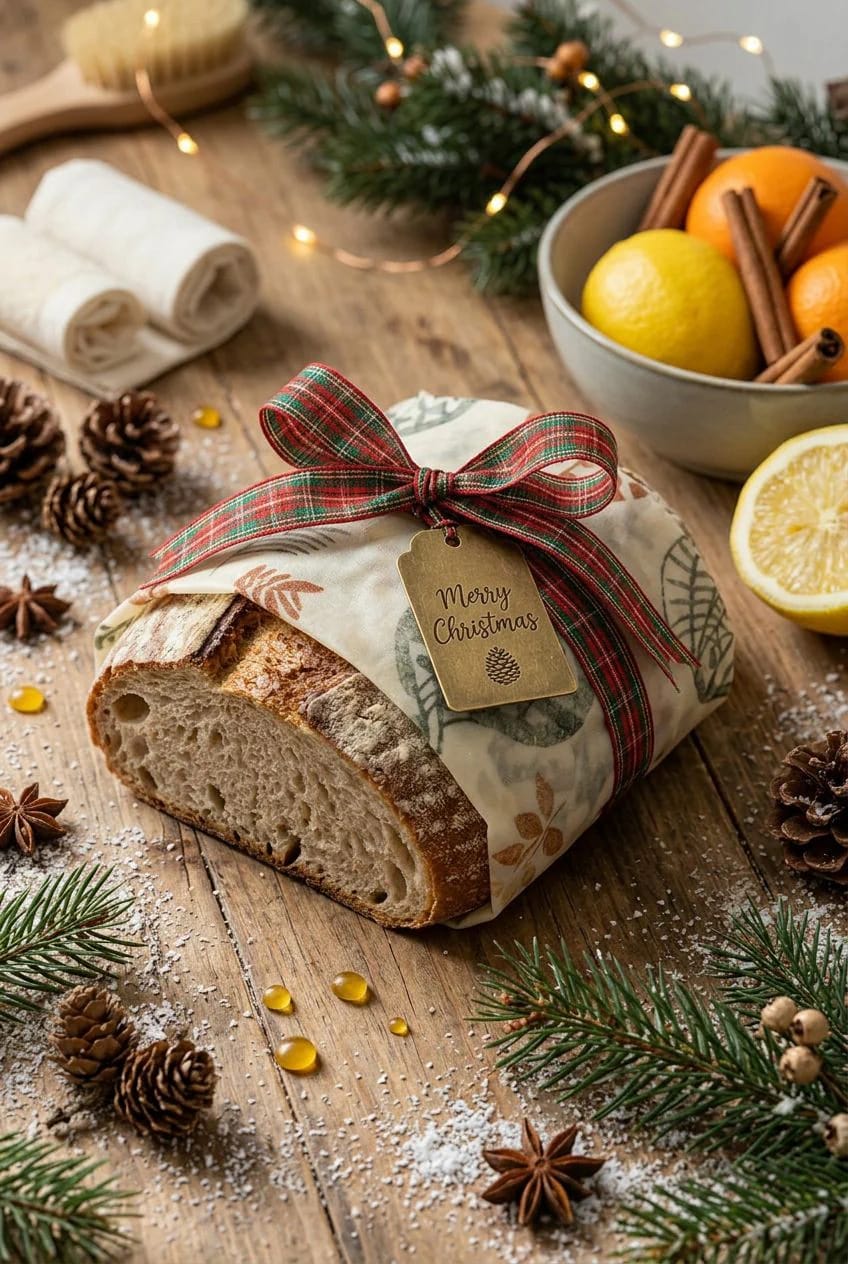
The ingredient that decides whether these work is pine rosin, not the wax. Beeswax alone gives you a stiff waxed cloth that will not cling to a bowl rim or to itself; rosin is the tack. Recipes disagree wildly on how much, anywhere from eight parts wax to one of rosin up to a two-to-one ratio, and the disagreement is real rather than sloppy: more rosin means better cling and a wrap that feels sticky in the hand. Start at about four parts beeswax to one part powdered rosin by weight with a spoonful of jojoba oil for pliability, test one, and push the rosin up if it will not seal.
Use quilting-weight 100 percent cotton, never a polyester blend, which melts rather than absorbing. Materials work out to roughly $1.50 to $2 per wrap when a retail three-pack runs $18 to $35, and a wrap lasts six to twelve months before it needs re-waxing. I could not find a reliable figure for how many times a cloth can be re-waxed before the weave gives up, so treat the refresh as a couple of rounds and no promises. What these do not do is replace a sandwich bag; they replace cling film over a bowl, and anyone who tells you otherwise has not tried to carry one in a backpack.
A pound of Beesworks yellow beeswax pellets (1 lb, triple filtered) covers a dozen wraps with wax left over for the fire starters further down.
5. Crocheted cotton dish sponges
Use 100 percent cotton yarn and nothing else. Acrylic will not absorb water and it will weld itself to a hot pan, which is a fast way to have your gift thrown out in January. A set of three, worked as simple squares, replaces the yellow plastic sponge that gets binned every few weeks; they go through the washing machine and can be boiled.
For scrub, work a strip of nylon netting salvaged from an old produce bag into the last round of one of them. That one square handles baked-on things. The soft ones handle everything else, and neither will save a badly burnt pan, so keep the brush.
6. Bread and produce bags from an old pillowcase

One worn-out cotton pillowcase yields two produce bags and a long bread bag, and the hemmed opening is already done for you. Sew French seams so there are no raw edges to fray in the wash, add a twill-tape drawstring, and the whole set takes an evening. If you dyed napkins earlier, dye these in the exhaust bath while it is still warm; they come out a paler version of the same colour and the set looks deliberate.
Be honest on the tag about the bread bag. Cotton keeps a crust crisp where plastic turns it leathery, and it also lets the loaf go stale faster. For a sourdough eaten in two days that is the right trade. For supermarket sliced bread it is not, so give the bag to the person who bakes.
Gifts that get used up
7. A dried sourdough starter with a rehydration card
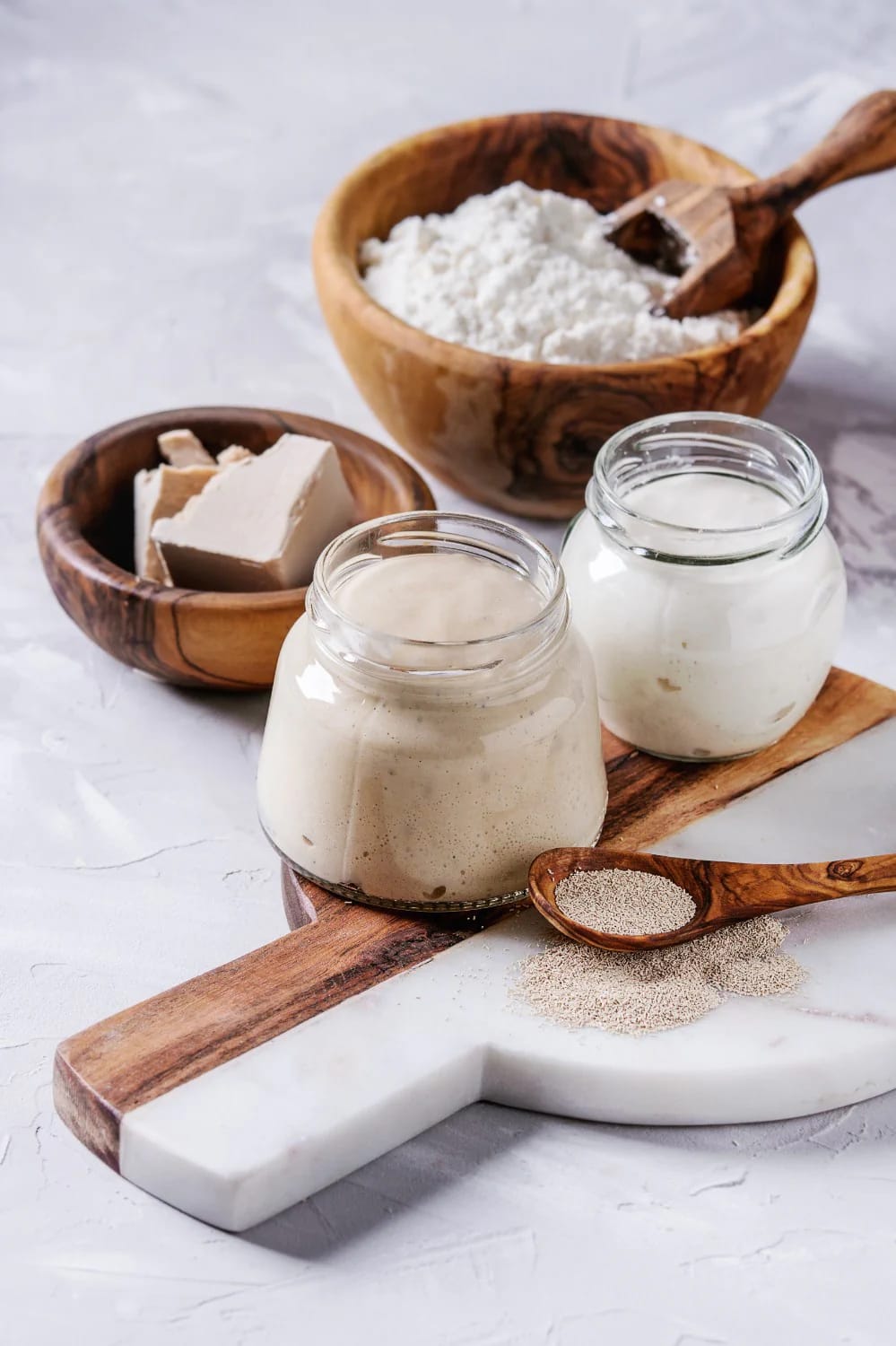
Do not give someone a live jar of starter unless they have asked for one. You are handing them a pet with a feeding schedule, in the week of the year when they have the least capacity to look after it. Dried flakes solve that: they are dormant, they keep for years in a sealed jar, and the recipient can start whenever January guilt kicks in.

Feed your starter, wait until it doubles, then spread a thin layer on parchment and leave it on the counter for 12 to 48 hours until it snaps rather than bends. Keep it away from real heat, since the culture is a living thing and a hot dehydrator will kill it. Five to ten grams is plenty to gift. Write the revival steps on a card, because a jar of beige flakes with no instructions is a riddle, not a present, and King Arthur Baking’s method for putting a starter on hold is the version to crib from.
8. A garden herb tea blend in a salvaged tin

Build it around one dominant leaf and two supporting notes: mint with lemon balm and a little dried orange peel from the garland offcuts, or chamomile with mint and a few crushed fennel seeds. Leaves want a heaped teaspoon per cup, which is more than people expect, so say so on the label.
Pack it in an opaque tin rather than a clear jar. Light degrades the oils, and a home-dried leaf loses most of its character within a year anyway. Skip the wellness claims on the tag; it is tea, and pretending otherwise is how a nice gift starts sounding like a supplement ad.
Wax, fire, and thread
9. A candle poured from salvaged wax stubs
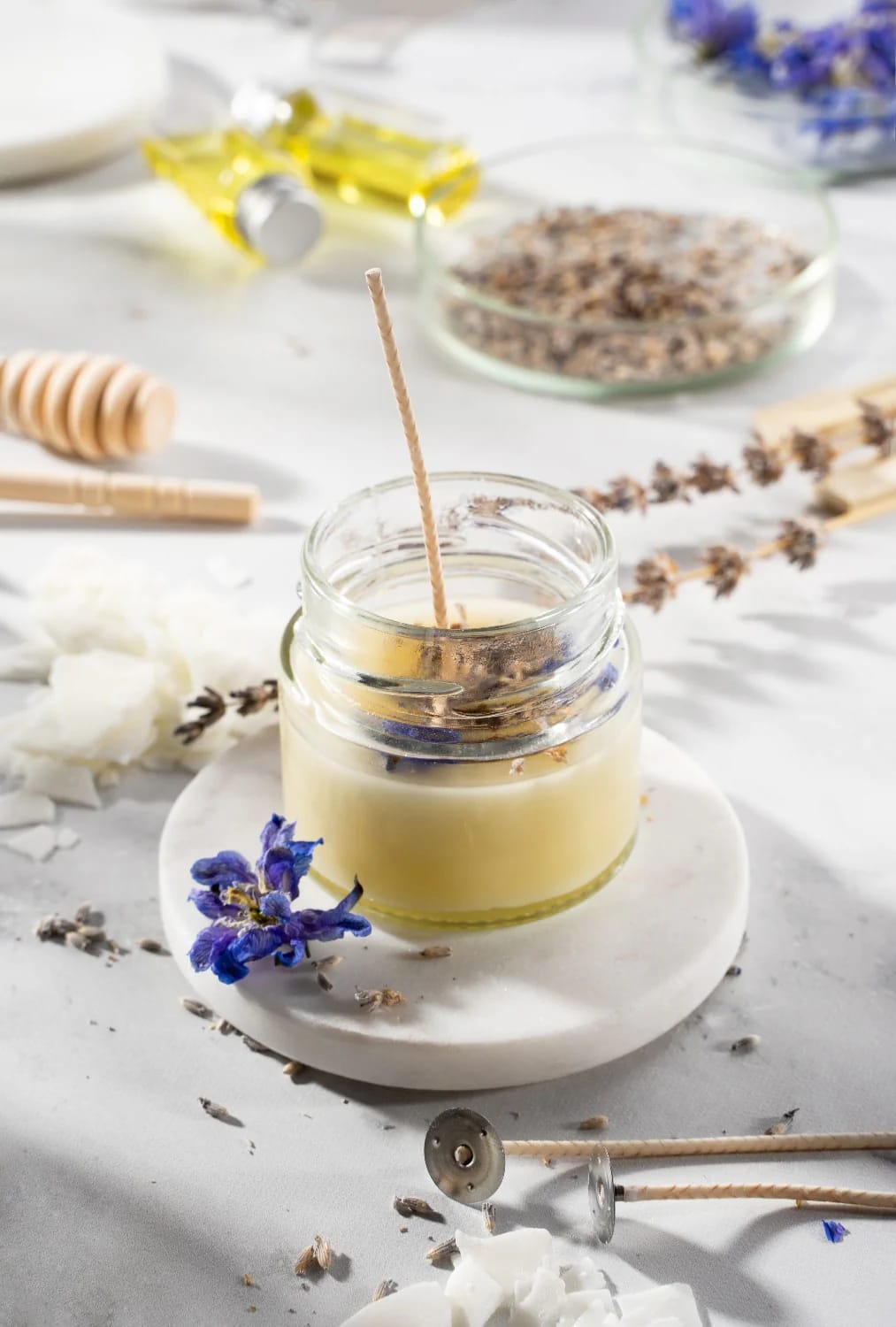
Every finished candle in the house has wax left in the bottom, and every tunnelled one has a ring of wax that never burned. Freeze the jar overnight and the plug pops out with a table knife; failing that, stand the jars in a tray of just-boiled water and the wax floats free in an hour. Pick out every old wick tab, because a stray metal disc in the melt is what ruins the new candle.
Melt in a double boiler, never over direct heat. Wax on a naked flame is a chip-pan fire waiting to happen, and the people who have done it once do not do it twice. Two rules decide whether the result actually burns properly: the wick has to suit the diameter of the jar, since an undersized wick in a wide jar tunnels straight down the middle, and beeswax burns hotter than soy, so use sturdy glass such as a jam jar rather than a thin tumbler. Fill to about 85 or 90 percent, let it set, then top with a thin second pour to hide the sinkhole.
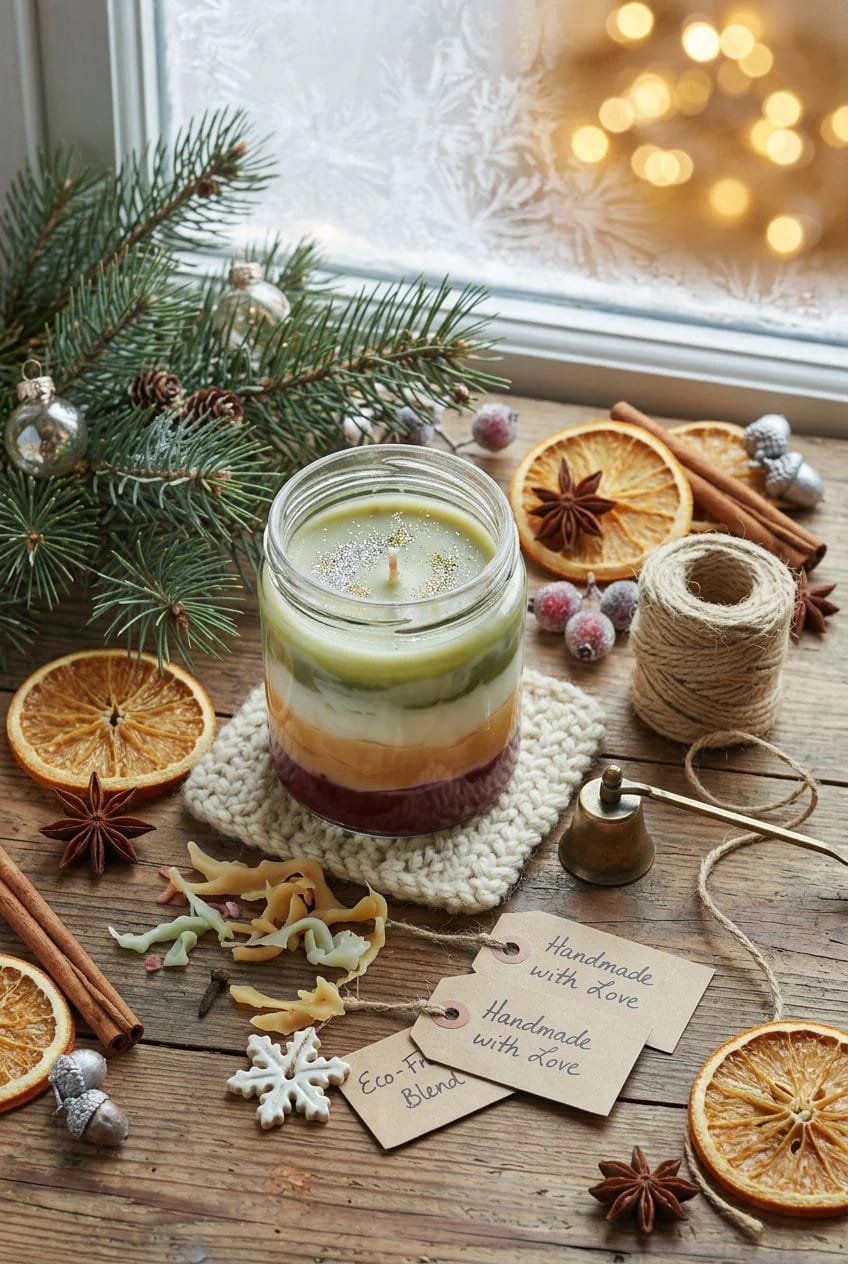
Mixing scented stubs gives you a muddle of competing perfumes, so combine unscented with unscented, or group similar scents together. And resist adding essential oils. They mostly burn off before you smell them and can be a fire risk in quantity, which is a lot of expense for very little scent. Plain beeswax already smells faintly of honey when it is lit, which is the whole argument for using it.
10. Beeswax fire starters in an egg carton
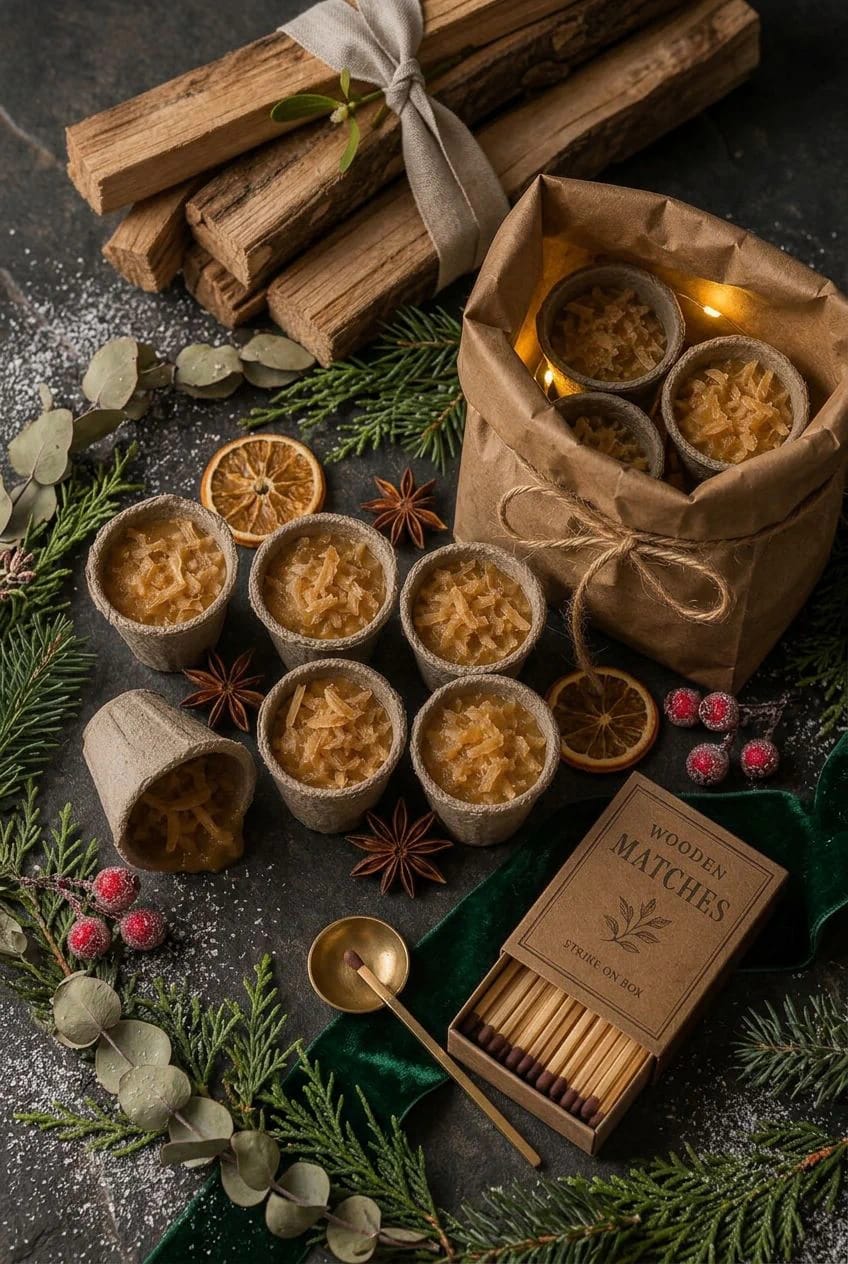
Cut an egg carton into cells, pack each with sawdust or planer shavings, and pour leftover wax over the top. One cell lights kindling on its own and burns long enough that you do not need paper. Give a dozen in a paper bag with twine, which costs nothing and looks better than most things sold as gifts in the hardware shop.
The internet will tell you to use dryer lint. Skip it unless you wash almost nothing but cotton and wool. Lint from synthetic clothing is largely plastic fibre, and setting fire to it in someone's living room is not a zero waste act, whatever the craft blogs say.
11. A visible-mending kit rolled in scrap cloth
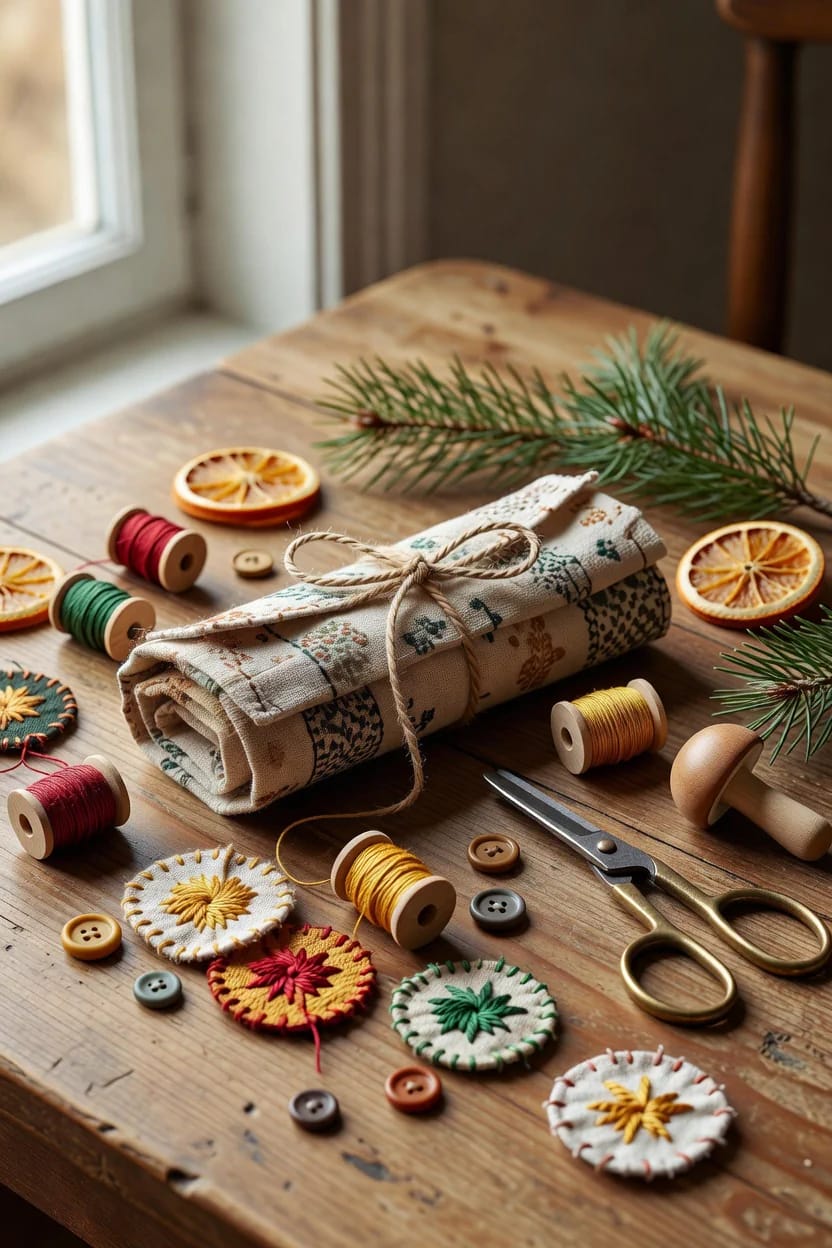
Roll a few darning needles, a darning mushroom (a smooth wooden egg, or an actual egg-shaped stone, or in a pinch an orange), leftover embroidery floss, and squares cut from a worn shirt into a strip of scrap cloth, and tie it with tape. Total cost is close to nothing if your sewing box is already a graveyard of half-used floss.
Tom van Deijnen, who ran the Visible Mending Programme in Brighton and did more than anyone to make a darn something you show off rather than hide, gives one piece of advice worth writing on the tag: match the thickness of the mending yarn to the garment, or go slightly thinner. Thicker yarn makes a stiff patch that pulls at the fabric around it. He has since stepped away from mending altogether and no longer wants to be associated with it, which is a fair reminder that a movement and a person are different things.
The kit only lands if the recipient already has a garment they love enough to save. Give it with one sock already darned in a contrasting colour, so the idea arrives already demonstrated instead of sitting in a drawer waiting for a rainy Sunday that never comes.
Start the vinegar and the starter tonight
The two ideas that need the calendar are the ones people leave until the week before, and then abandon: citrus peels want a fortnight in vinegar, and dried starter wants a day or two to go brittle. Get both going first, dye and wax on a weekend, and leave the orange peel until last so the house smells of it while you are wrapping. If you only make one thing, make the wraps; they are the only item on this list that quietly deletes a product from someone's shopping list forever.