By early December the red-twig dogwood at the back of most gardens has done the one thing it does brilliantly: dropped every leaf and turned its bark scarlet. The hazel has thrown up a season of pencil-straight whips, the grapevine is a tangle of brown cord, and the willow — if you have willow — is carrying a metre of pliable growth on every stem. All of it is free, all of it bends, and almost all of it ends up in a green-waste bag. This is what to make with it instead: eight decorations that use bare wood as the material rather than as a rustic accent stapled onto something else.
One scope note before the pruners come out. Everything here assumes stems from your own garden or a neighbour's, cut with permission — foraging on public land is a different question and often a permitted one. And nothing here involves spray snow, glitter, or gold paint. Bark already has grain, lichen, and colour; burying that under a can of aerosol is the fastest way to make free material look cheap.
Bind a willow wreath instead of buying a foam base
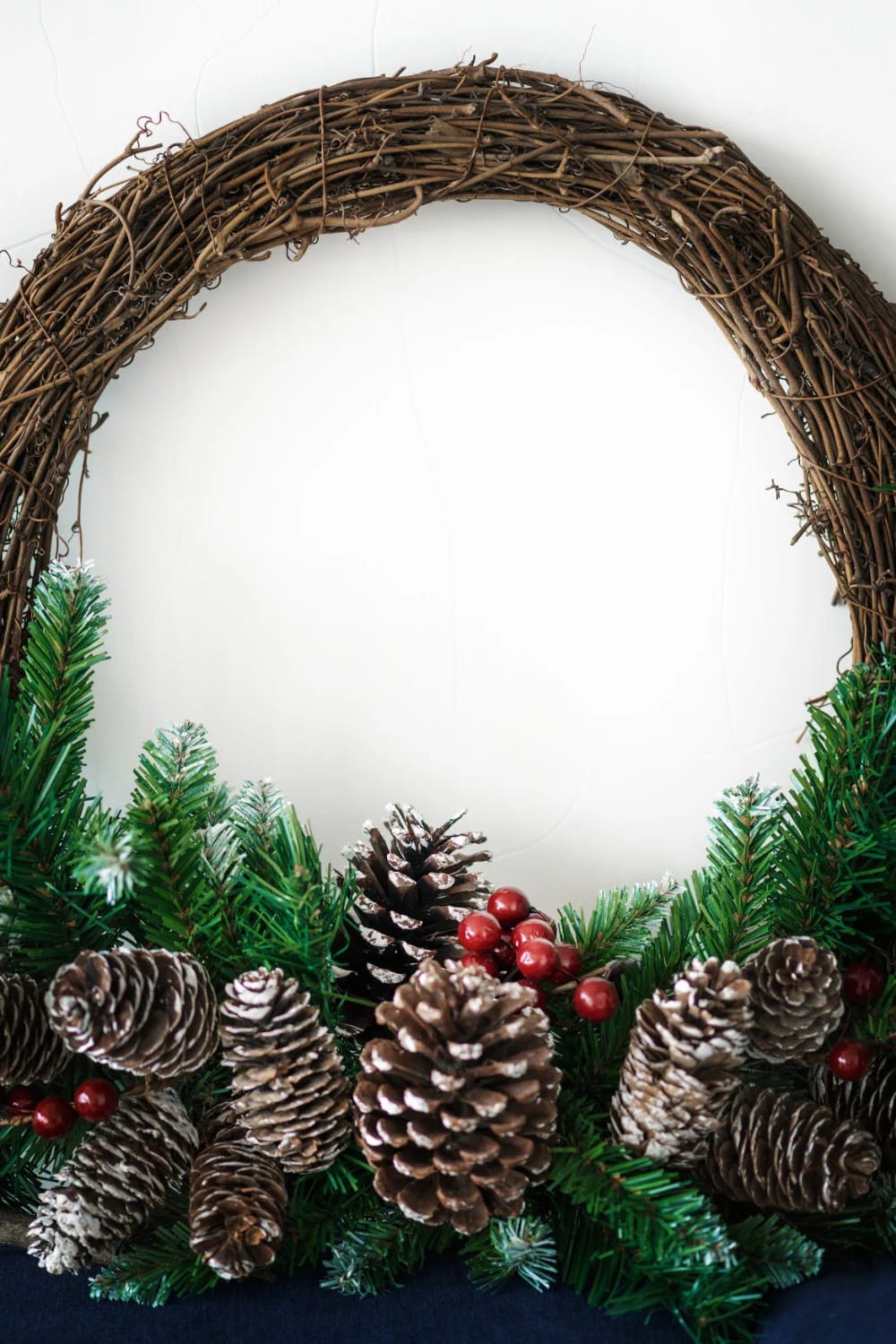
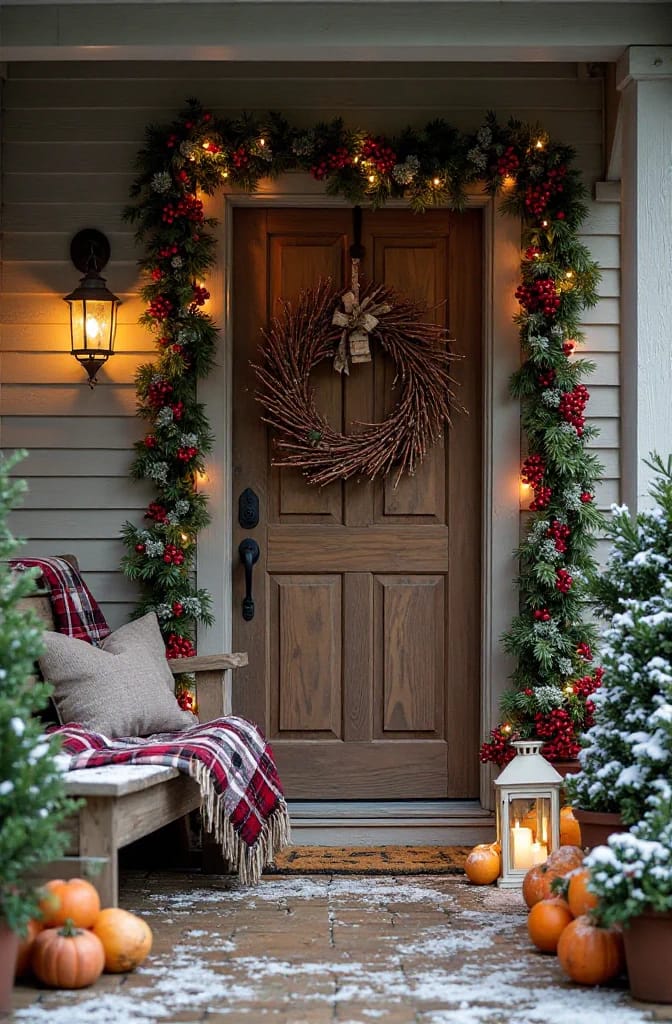
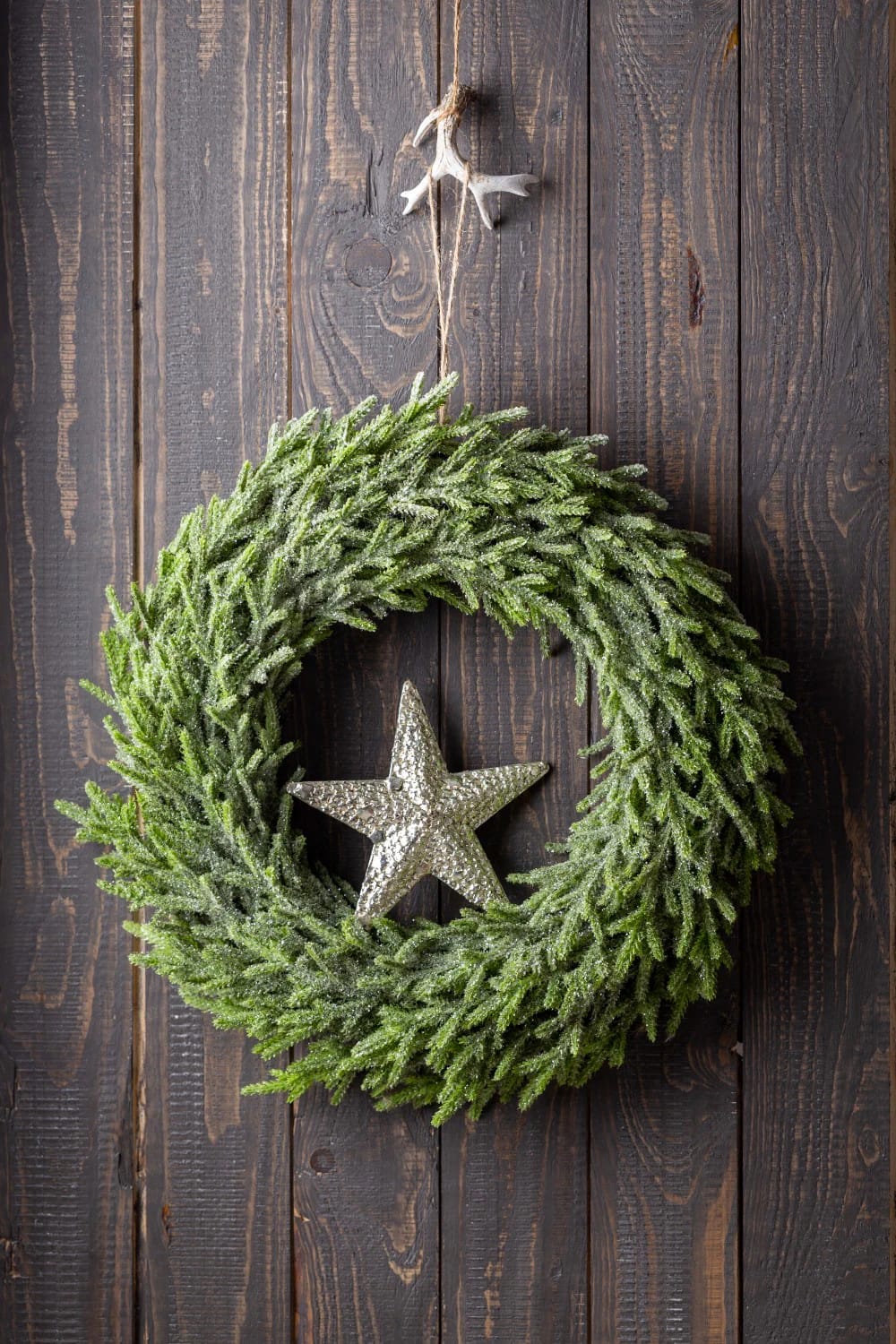
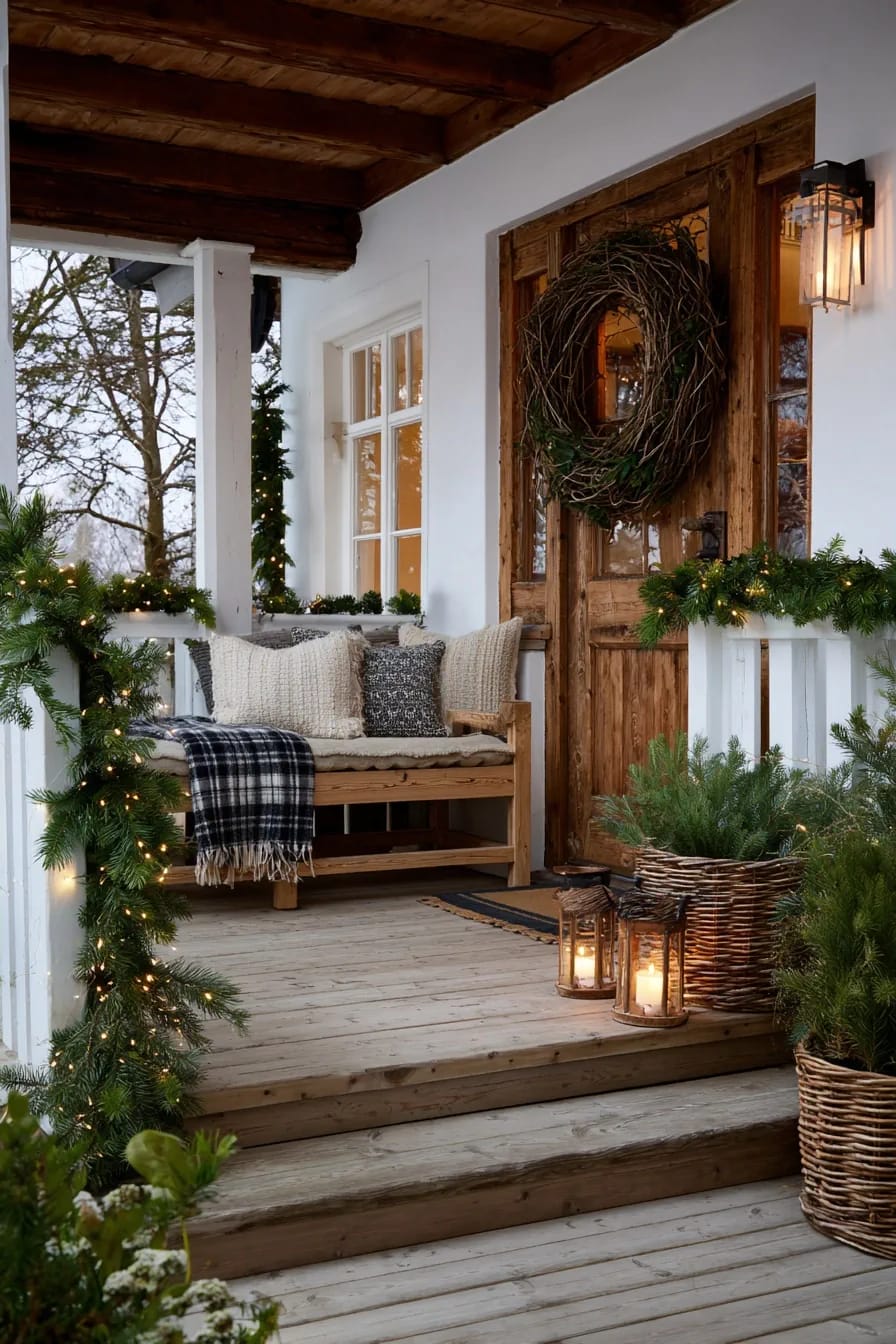
Bend one long whip into a hoop the size you want, hook the ends into each other, then weave five or six more stems through it, adding each a quarter-turn around from the last. That's the whole method. The foam ring, the wire frame, and the pre-made grapevine base sold in every craft aisle exist to solve a problem your hedge doesn't have, and a wound wreath holds its shape through the friction of the stems alone.
Which stems actually bend
Flexibility is a function of sap and thickness, not species romance. Anything much over half an inch at the butt end cracks rather than curves, and a stem cut in October and left in the shed until December will split the moment you ask it to turn a corner. Work them the day you cut them. If you're using stored material, soak it for a few hours first.
| Stem | Bends fresh? | Bark | Best used for |
|---|---|---|---|
| Willow | Yes, the most forgiving of all | Olive to yellow-green, darkening to tan as it dries | Wreath frames, woven stars, spheres |
| Red-twig dogwood | Yes, with a firmer spring-back | Lacquer red on new growth; older wood dulls | Anything where you want the colour to be the decoration |
| Hazel | Moderately; thin whips only | Matte grey-brown, speckled with lenticels | Straight-line work: tree frames, napkin rings |
| Birch | Thin twigs yes, anything thicker snaps | White, papery, peeling | Bundles, upright branches, snowflake arms |
| Grapevine or clematis | Yes, and it holds a coil | Shredding, ropy, cinnamon brown | Bases, spheres, sculptural figures |
Where the wire earns its keep
Wire is for the passengers, not the structure — hips, cones, a bundle of dried hydrangea. Wrapping the whole frame in wire is what makes a homemade wreath read as homemade in the bad sense: you can see the effort. One spool of green paddle wire lasts several seasons and disappears against bark.
22 gauge is the sweet spot: thin enough to hide in the weave, stiff enough to hold a cone that catches the wind on a north-facing door.

Skip pine, spruce, and fir if the piece will hang against a painted door or a wall — the resin transfers and it does not come off easily. Yew is toxic in every part, so it stays out of anything a child or a dog might chew. Wear gloves for ivy; the sap irritates skin. And if you’re tempted to top up your haul on public land, check first: cutting decorative branches from state and national forest is usually a permitted activity, and Minnesota’s DNR, for instance, requires a permit even for birch sticks and boughs.
Hang a branch over the table, not a garland
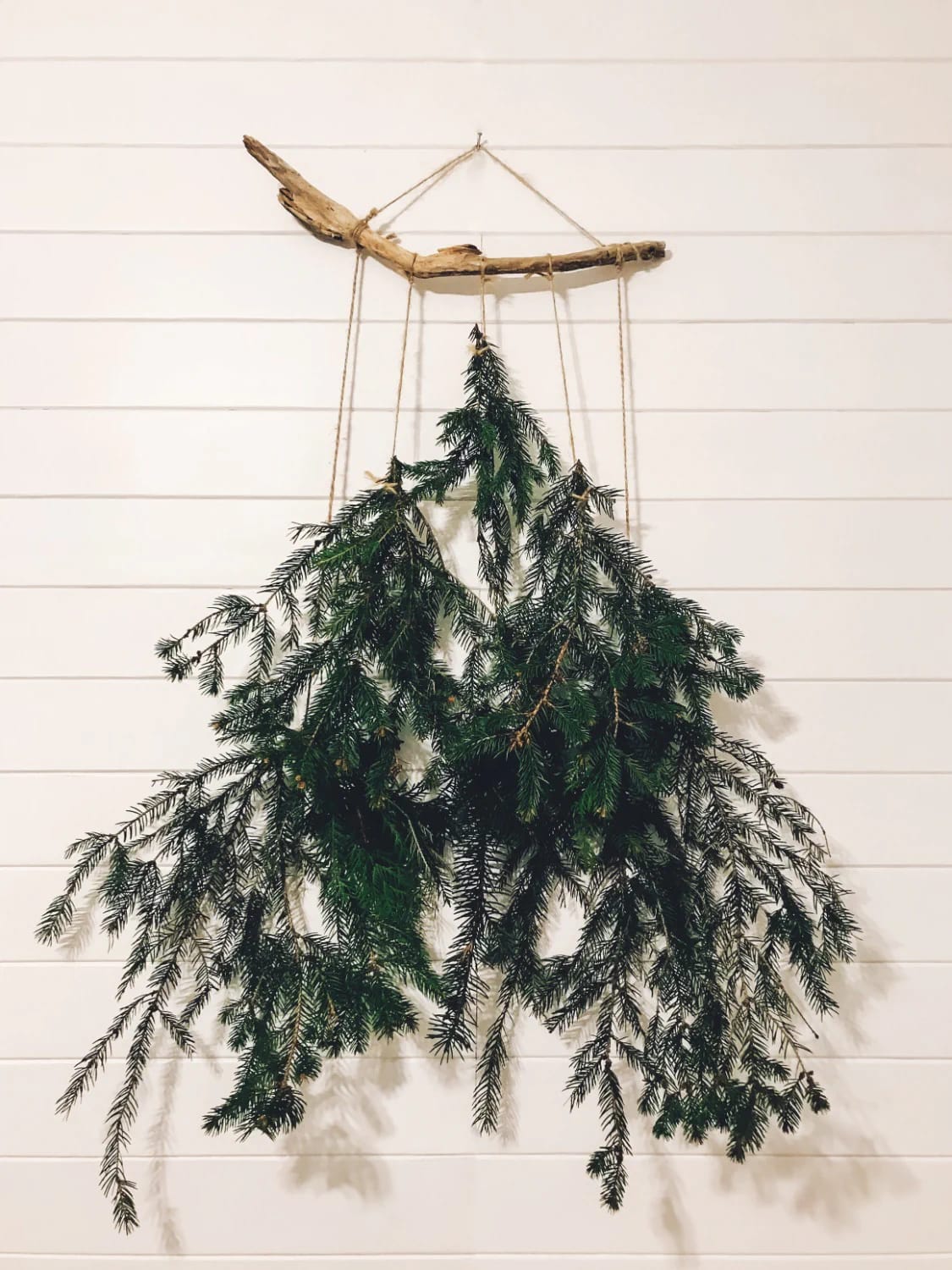
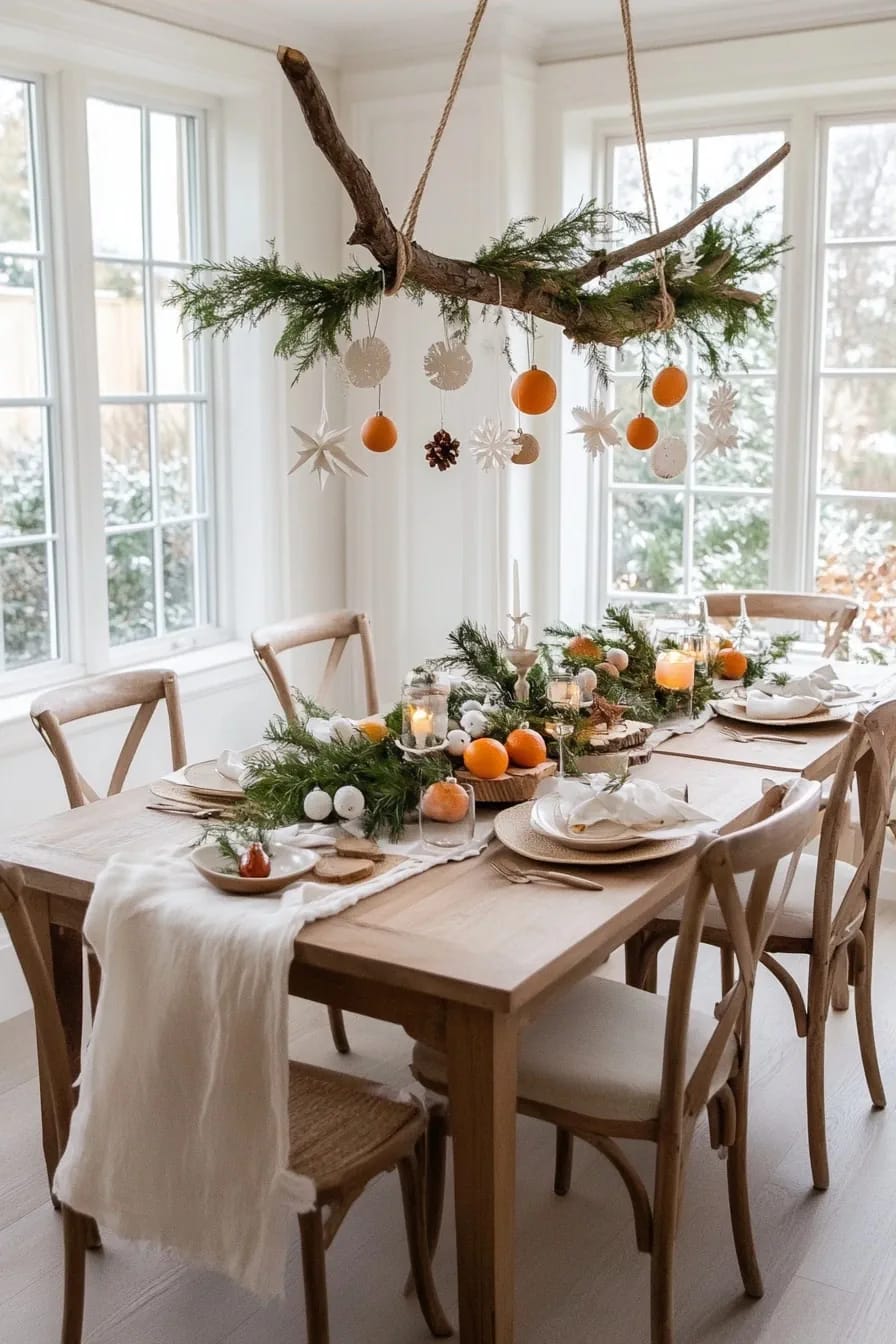
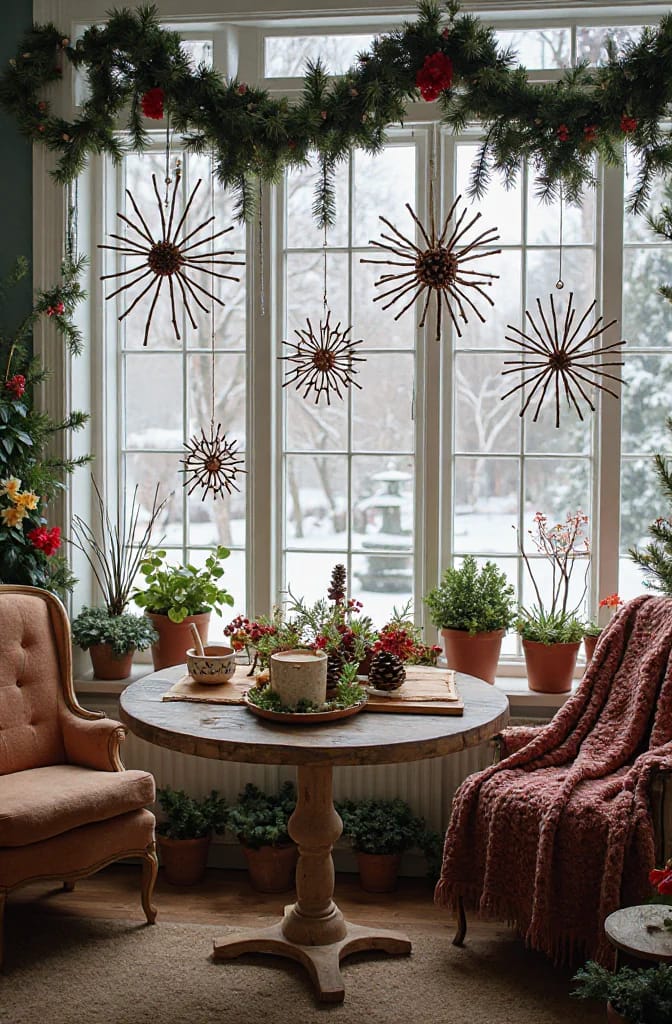
Take one substantial forked branch, suspend it horizontally over the dining table on two lengths of jute, and hang things from it: three small twig wreaths at staggered heights, a few dried seed heads, a single star. It reads as deliberate in a way a store-bought garland never manages, it costs nothing, and it solves the problem of a table too narrow for a centrepiece. Fix the jute to ceiling hooks rather than the light fitting, and hang the branch high enough that people can see each other under it — roughly 30 inches above the tabletop.
Do this
- Pick a branch with a slight curve or a fork; a straight pole looks like a curtain rod.
- Hang objects at three different depths so the eye travels down the composition.
- Balance the weight either side of the two hanging points before you let go.
Avoid
- Real candles anywhere near it. Dry twigs and open flame is a genuinely bad combination.
- Overloading. Five objects on a four-foot branch, not fifteen.
- Fishing line, which sags and glints. Jute holds and reads as part of the material.
Woven twig stars, lashed rather than glued

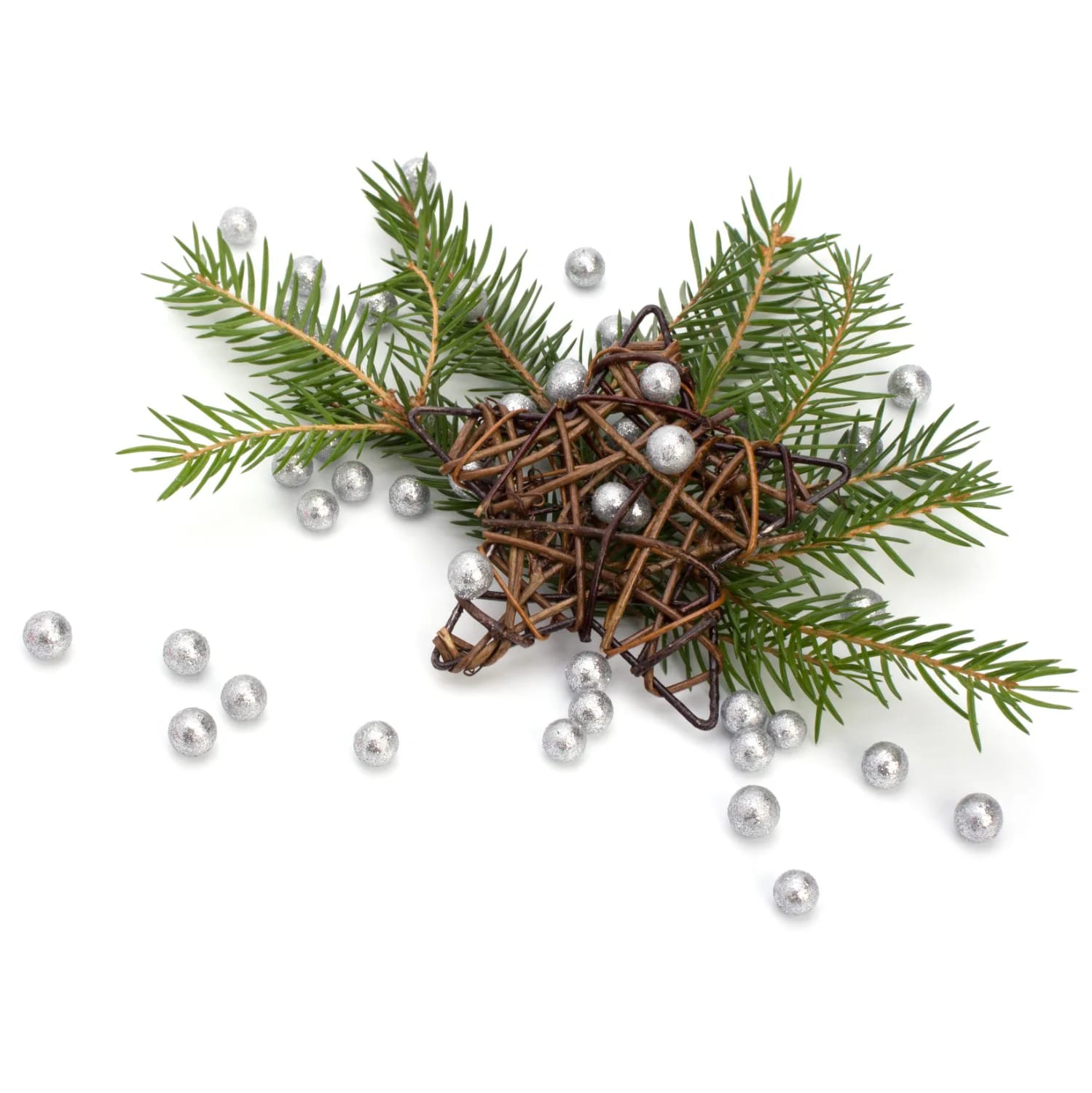
Five straight twigs of equal length, arranged into a pentagram, tied at the five crossings with hemp twine: that's a star, and it's the single best use for the straight hazel and dogwood you'd otherwise throw out. Hot glue is faster and it fails first, because bark shrinks as it dries and the glue lets go of the surface it bonded to. Twine tightens as the wood contracts.
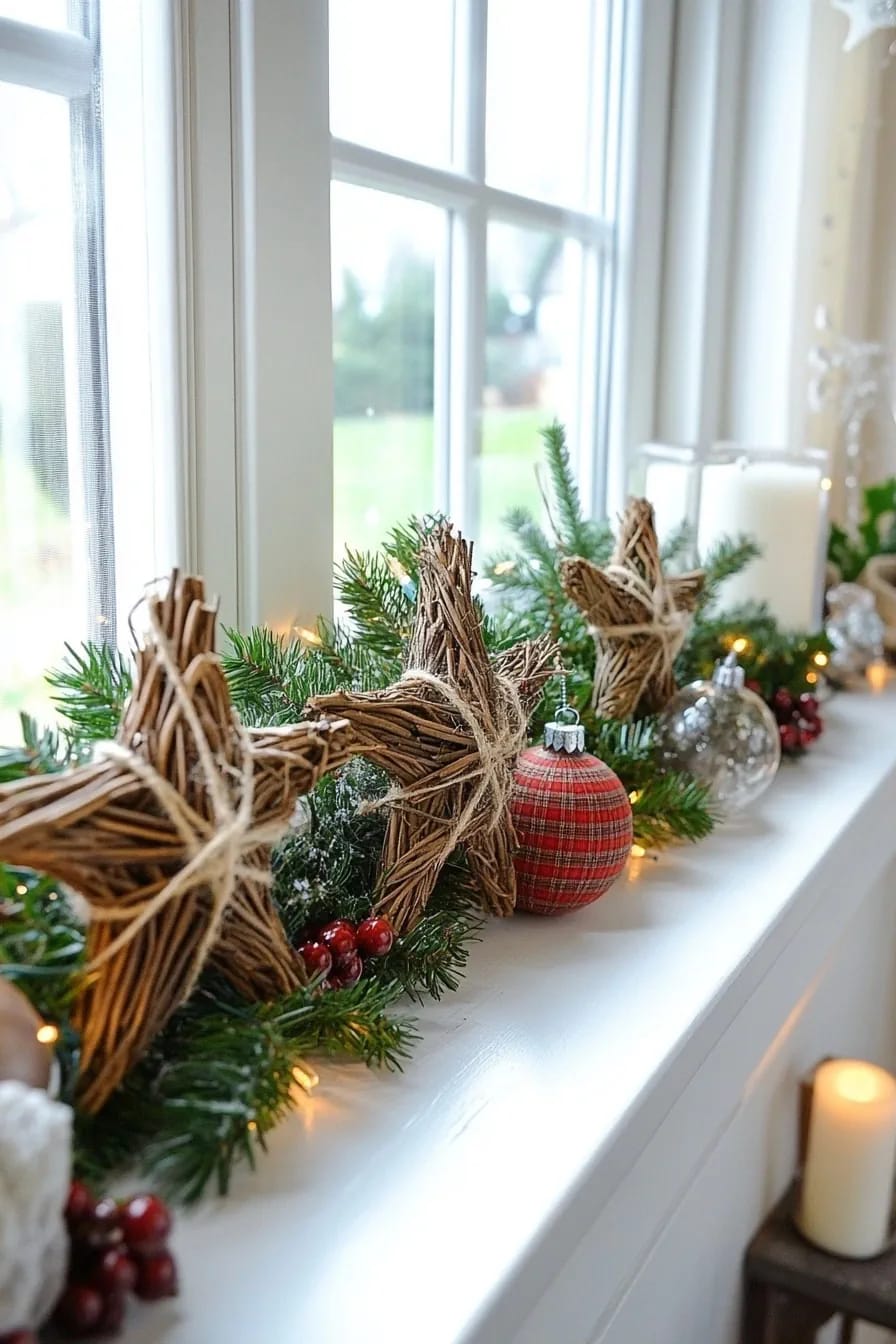
Getting them flat
Lay the twigs out on a table and build the star on the flat surface, not in your hands. Tie loosely at all five crossings before you tighten anything, then go round again snugging each knot; if you fully tighten the first crossing, the other four end up out of plane and the star sits like a shallow bowl on the wall. Trim the tails afterwards, or don't — the protruding ends catch shadow, which is half the appeal of a bare-wood star.
Lighting them without ruining them
A single strand of warm-white micro LEDs on silver wire, threaded once around the perimeter, is enough. These strings run on two or three AA batteries with a timer that gives you six hours on and eighteen off, so the star lights itself at dusk and you never think about it again. What you should not do is wind forty feet of lights around a twelve-inch star — the wire stops being invisible and starts being the decoration.
Anchor the battery pack behind the star with a twist of the same twine, and let the switch face the wall.
Lights4fun 20 warm-white micro LED silver wire string
A tabletop twig tree for the house that doesn't want a tree
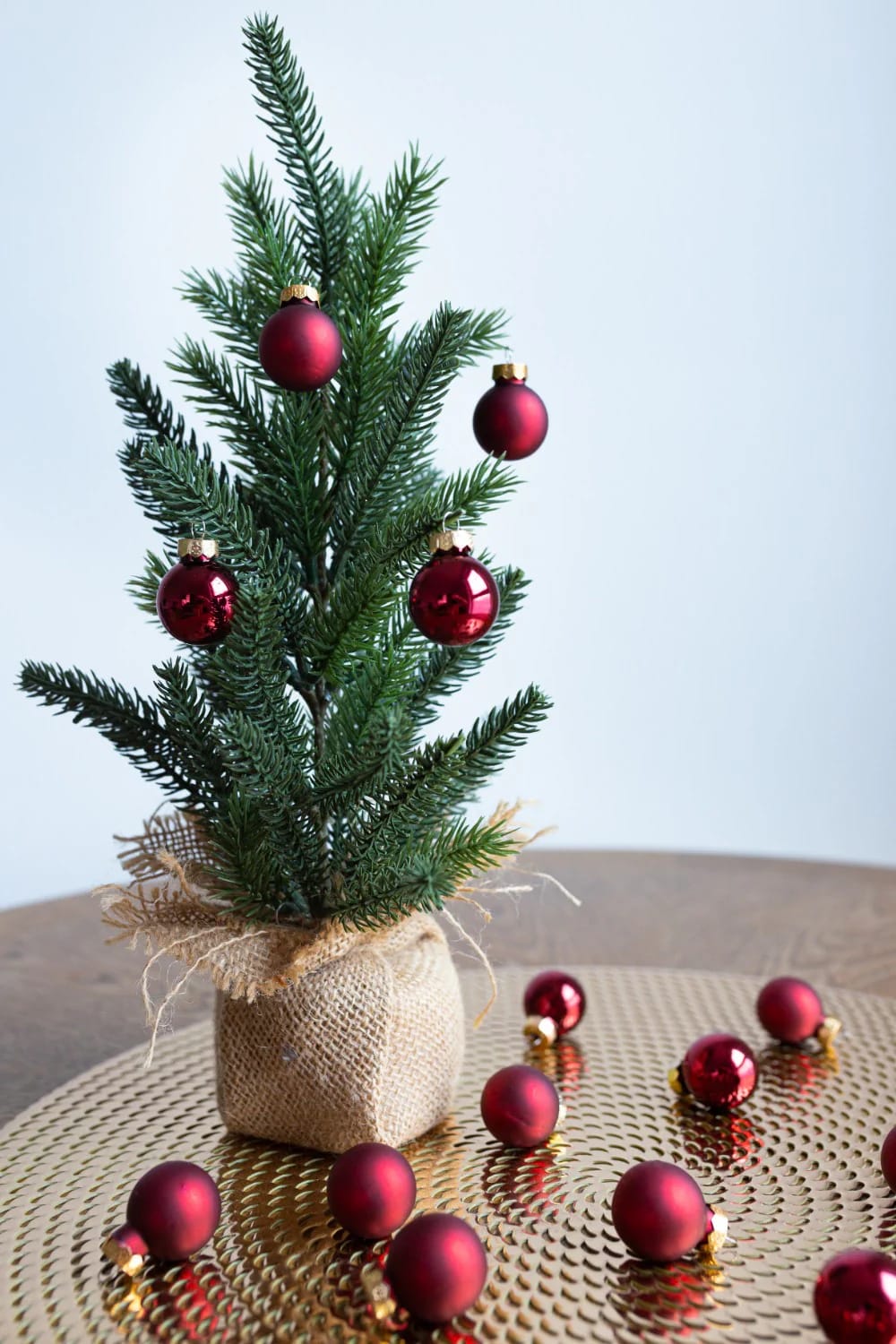
Cut one straight hazel or birch stem for the trunk, then seven or nine cross-pieces in descending lengths, and lash them on at even intervals with twine. Ten inches at the base tapering to two at the top makes a tree about two feet tall — the right scale for a mantel, a hallway console, or a flat with no floor to spare. Set the trunk in a jar of gravel rather than trying to make a base; the gravel is heavy, invisible, and free.
Rose hips and winterberry beat cranberries on a twig hoop
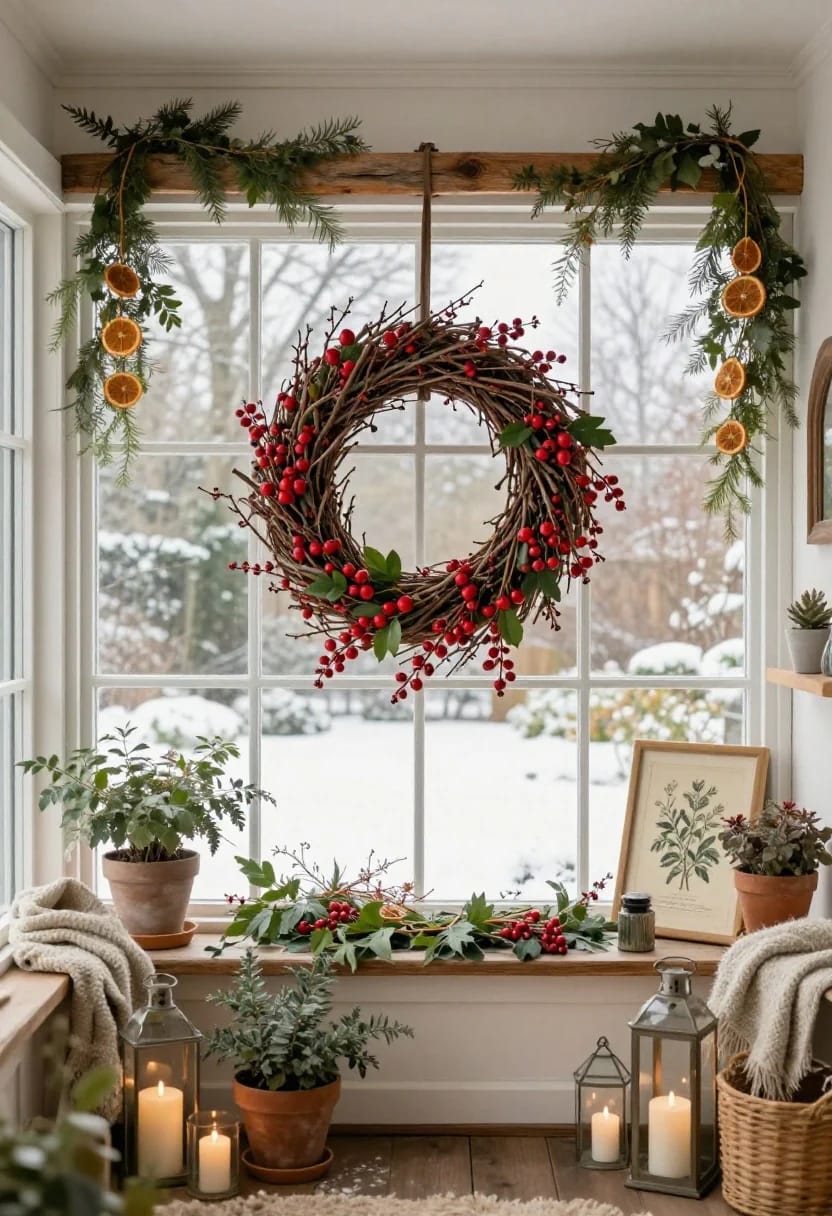
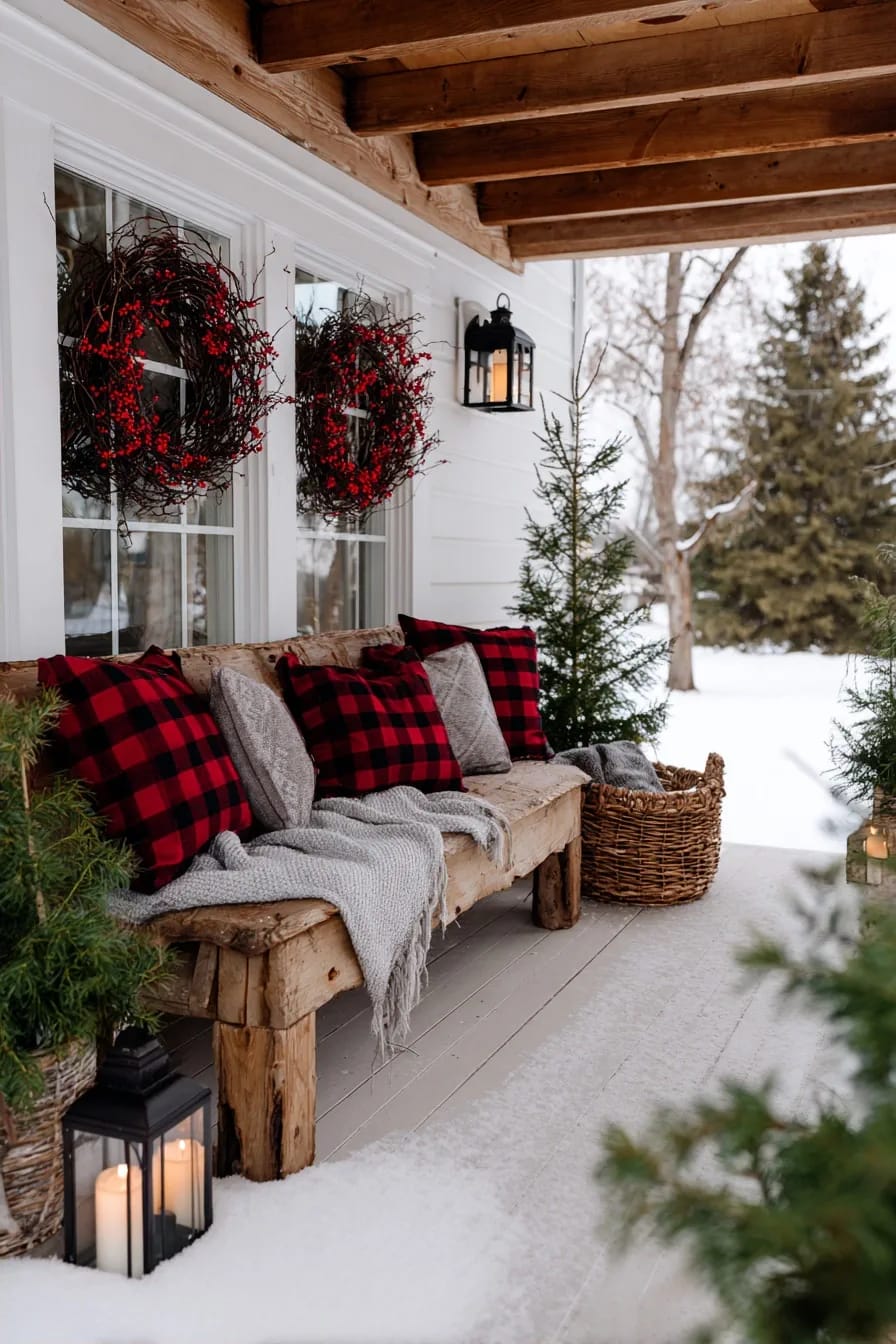
Wire small bunches of rose hips, winterberry, or viburnum onto a bare twig hoop and leave two-thirds of the wood showing. The berry-dense wreath — the one where you can no longer see the frame — is a florist's idea, and it costs you the thing that made the wreath worth making. Three or four clusters at seven, eleven, and two o'clock is plenty.
The cranberry question
Cranberries are the default because they're in every supermarket in December, and I'd still pick hips. Rose hips dry down into a leathery, matte red and hold that colour for months once cut; a fresh cranberry is a bag of water with a skin on it. Granted, the evidence on how fast they go is genuinely mixed — some crafters report cranberry garlands lasting from Christmas to New Year with nothing more than a rinse, others watch them soften within a week or two on a warm mantel. That inconsistency is itself the argument: a decoration whose lifespan depends on how close it sits to the radiator is a decoration you'll be dismantling in the middle of the season.
Stick snowflakes with a pinecone at the hub
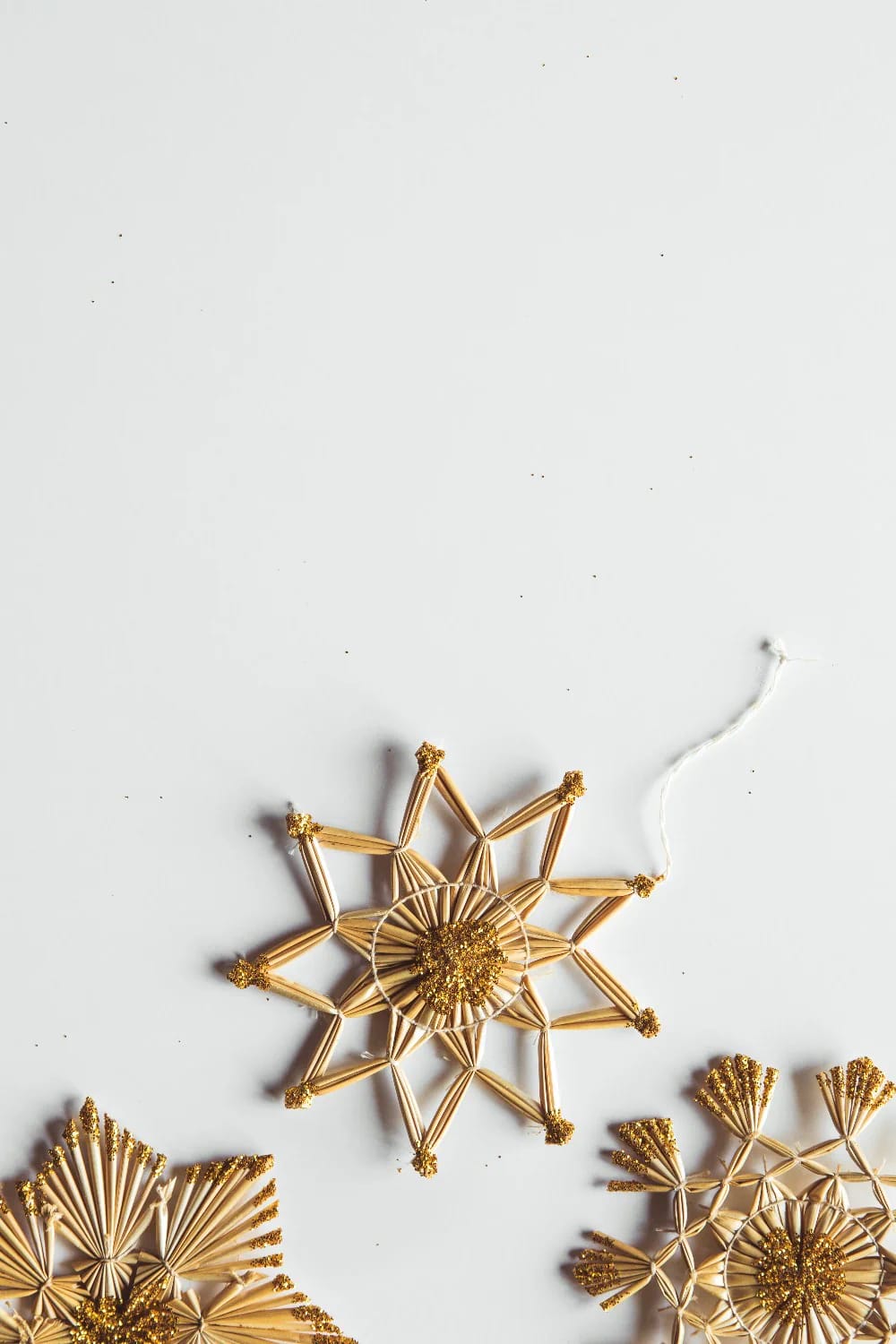
Six short twigs of matched length, crossed at the centre and bound, with a small cone glued into the hub to hide the join — this is the one project on the list that survives being made by a seven-year-old. Cut the arms slightly long and trim them to length afterwards, because eyeballing six equal sticks with secateurs never works. Vary the arms with side-shoots left on and you get something closer to a real crystal than the tidy geometric version.
Vine figures: the strange, good end of twig craft
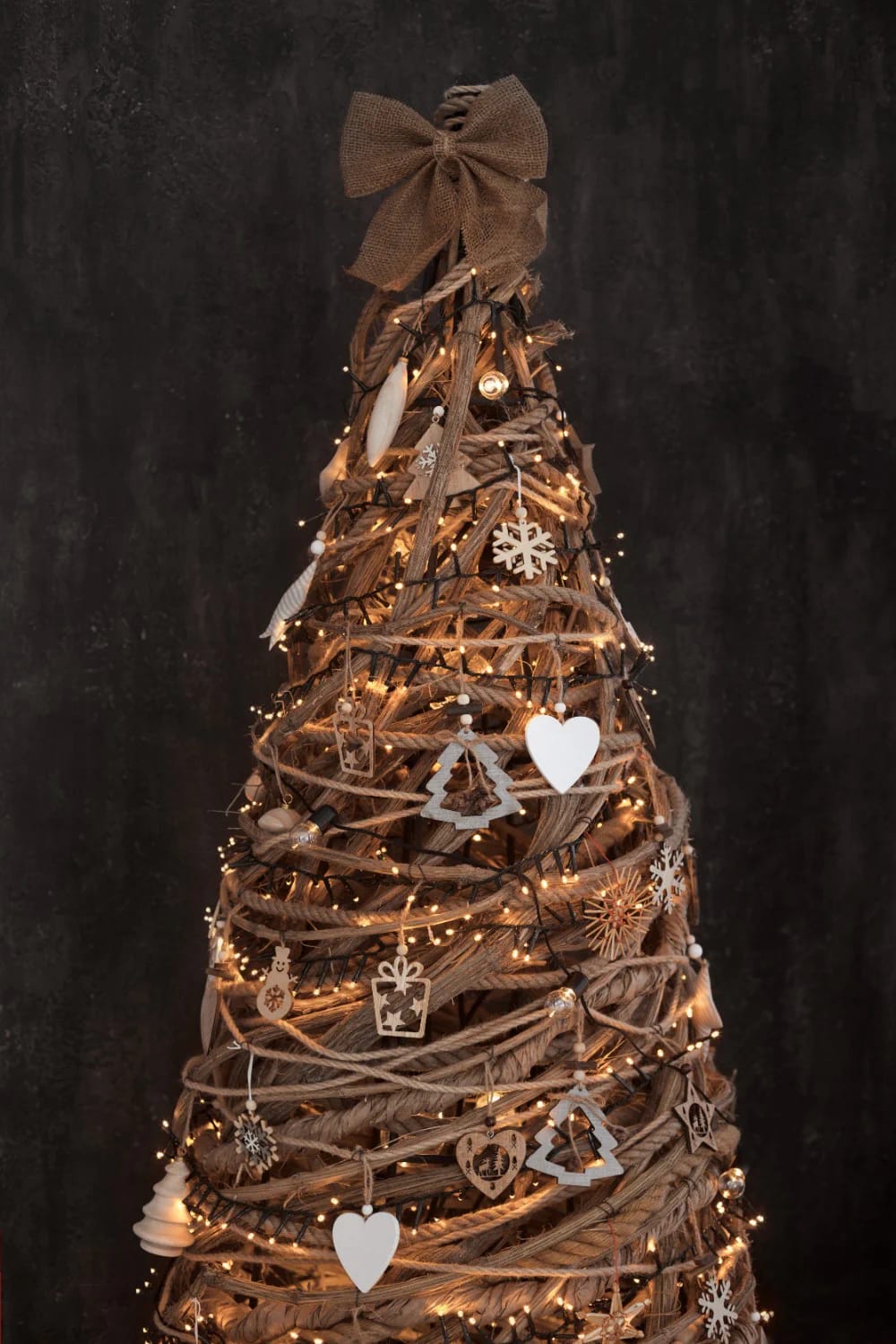
Grapevine holds a coil, and that one property lets you build things twigs can't do: a coiled cone for a body, a smaller coil for a head, two fanned loops for wings. Vine angels turn up all over the handmade market for a reason. They're made from the prunings nobody wants, they cost the price of a length of twine, and at about a foot tall they read as folk sculpture rather than craft-fair filler.
Making the coil behave
Strip the tendrils and leaves first, then wind the vine around a jar or a bottle and leave it overnight; it dries with the curve set into it and stops fighting you. Work fresh vine if you can — cut in December, still supple, it wraps like rope. Anything left in the shed since the summer prune needs an hour in a bucket before it does anything but crack.
Twig napkin rings and place markers, the last of the offcuts
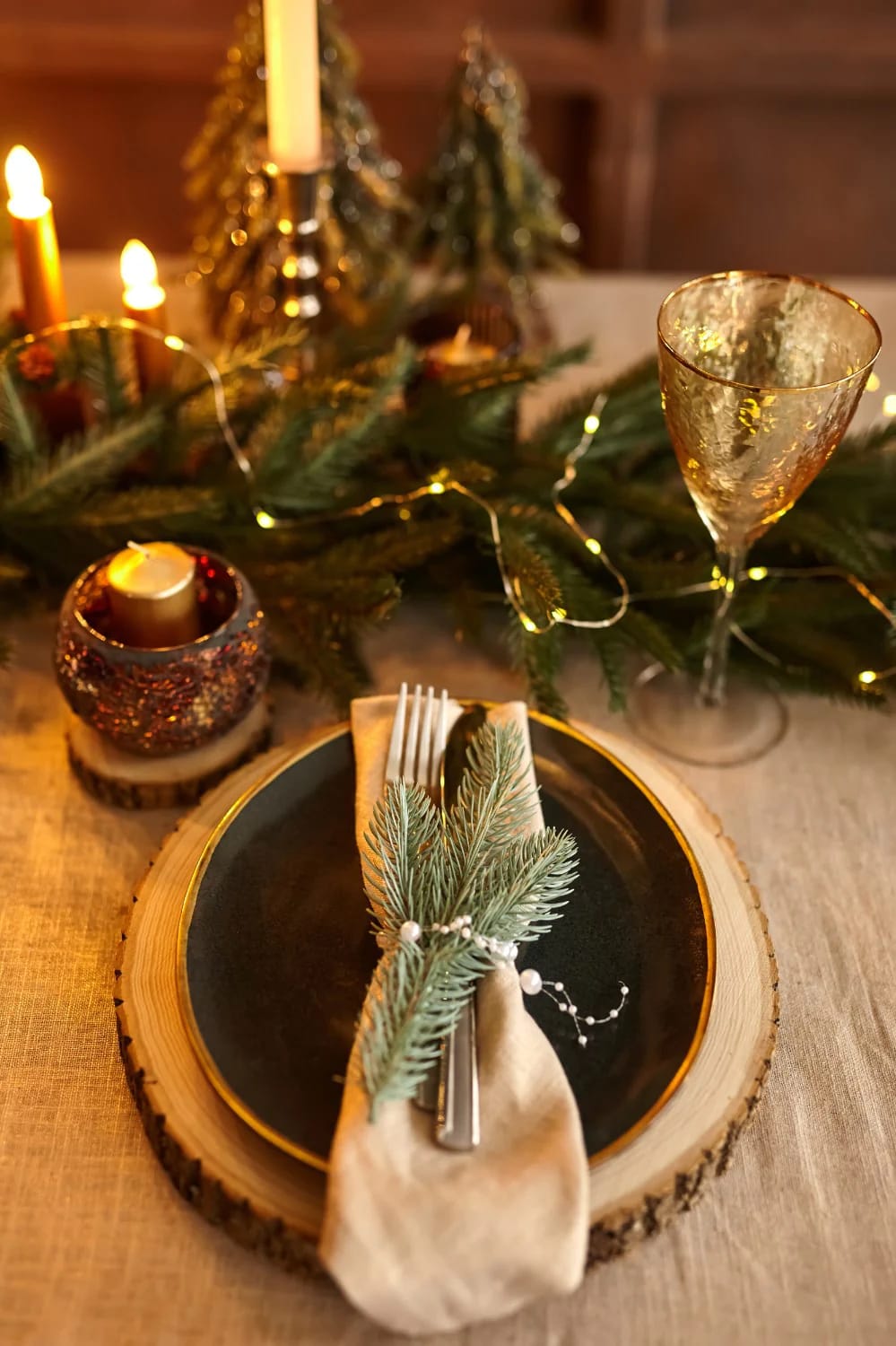
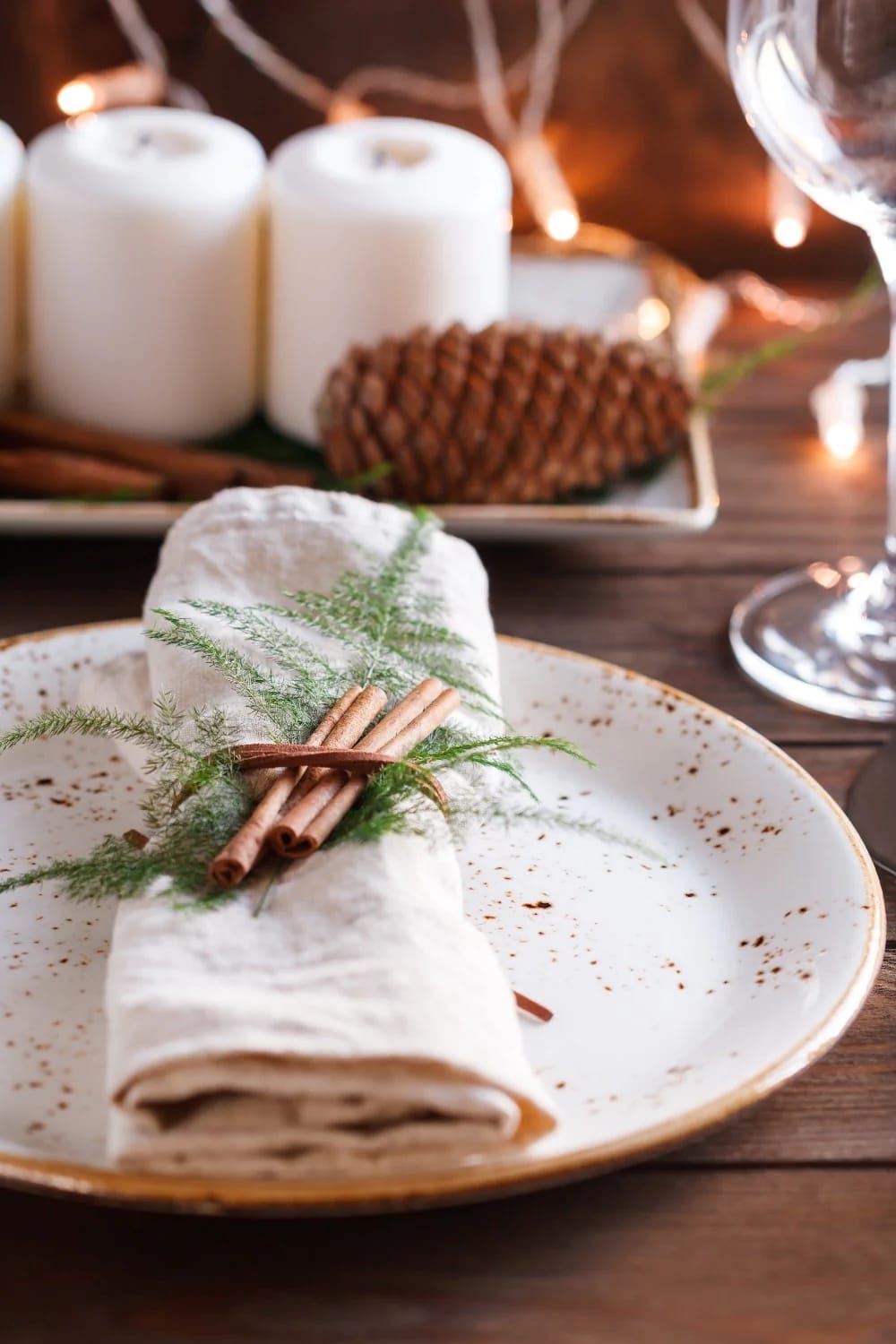
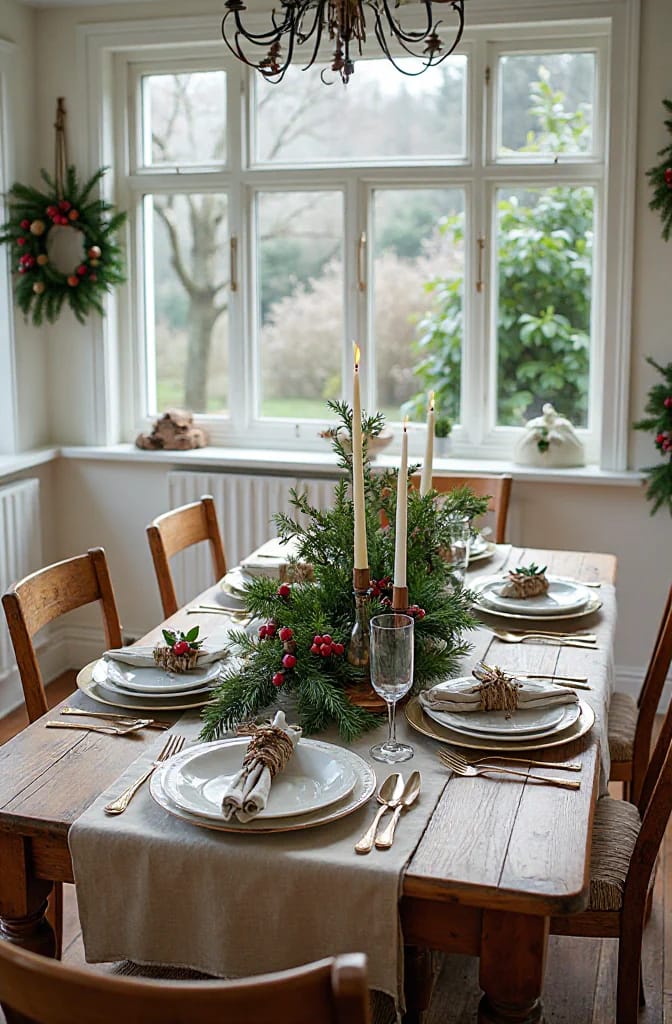
Coil a single thin willow whip twice around a jam jar, tuck the end back through itself, and you have a napkin ring; slip a sprig of hips or a two-inch cutting of dogwood under the coil and you have a place marker as well. Make ten in twenty minutes from the offcuts of the wreath, which is the point — the pile of rejected stems by the back door is exactly the right size for this and nothing else. If you want names on them, write on brown luggage tags in pencil and thread them onto the ring; ink on a tag looks like a wedding, pencil looks like a house.