
A sprig of cedar cut this morning will still be green on the table in three weeks, which is longer than the cut flowers most people buy to do the same job. That is the whole argument for foraged sprigs at each place: they cost nothing, they smell like the season, and the good ones outlast the dinner by a wide margin. The nine settings below are built from what you can clip in a yard, a park verge, or the scrap pile at a tree lot, and each one names the sprig that actually survives a warm dining room versus the one that will shed into the gravy by dessert.

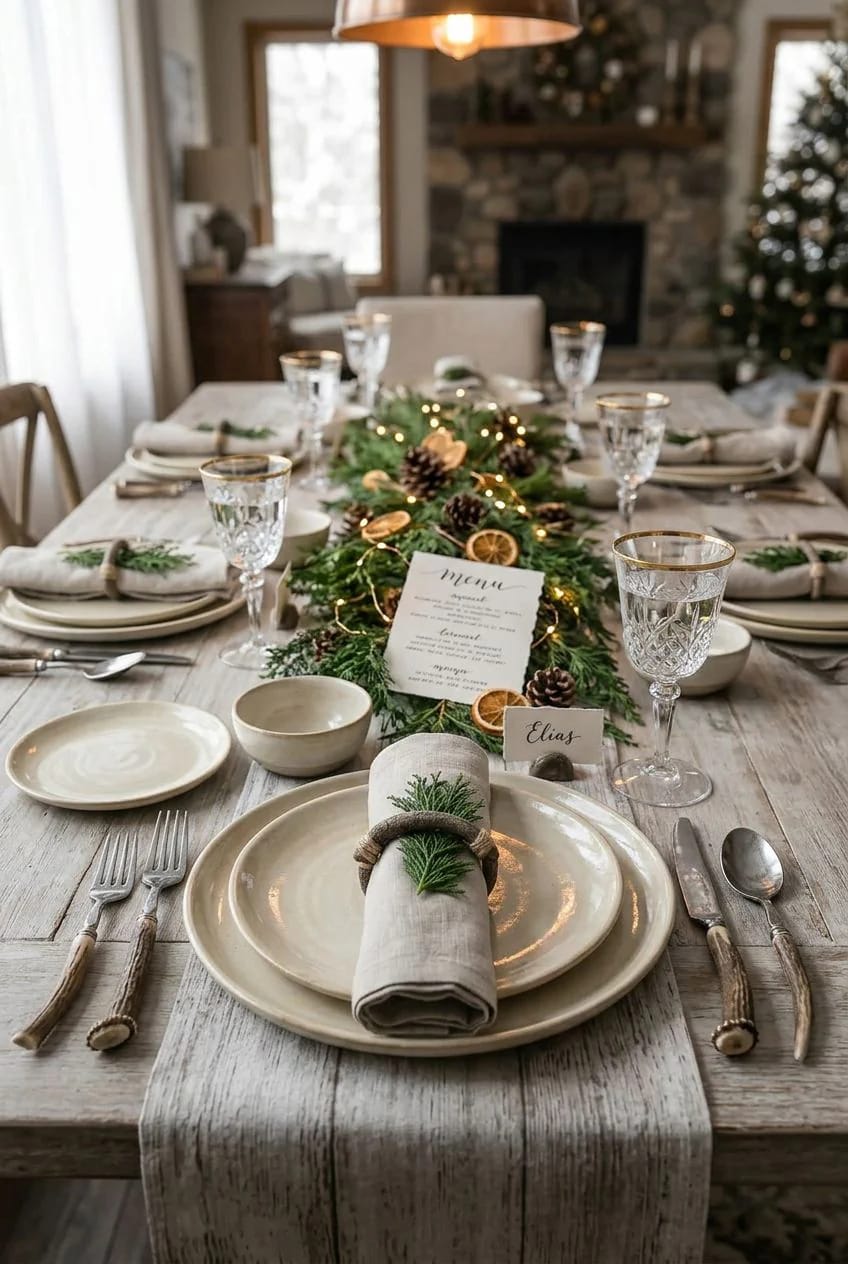
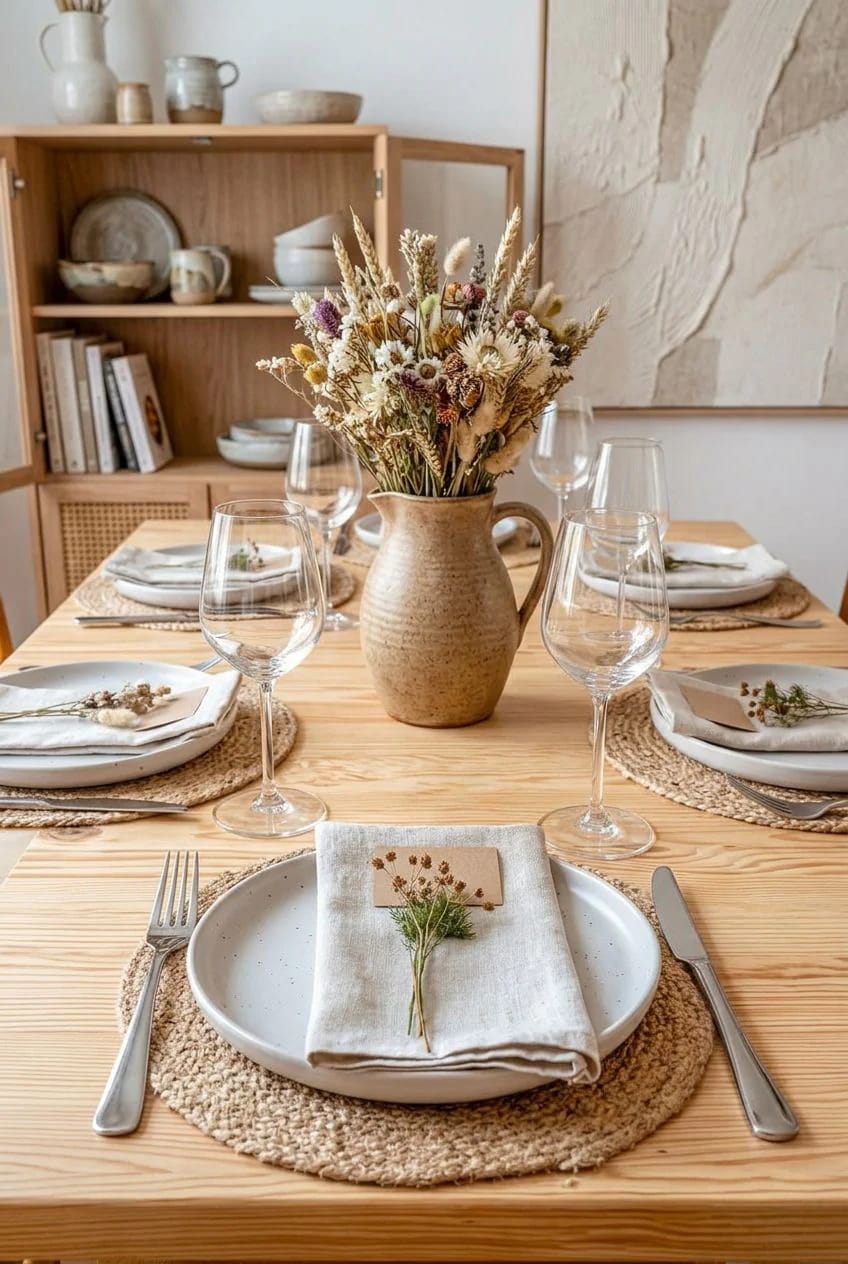
1. Lay one foraged sprig across each folded napkin

One sprig per plate reads more deliberate than a handful, and it is the setting to start with because it is nearly impossible to overdo. Cut a four- or five-inch tip of fir, cedar, or pine, and lay it diagonally across the folded napkin so it points toward the fork. That is the entire idea. The restraint is doing the work; a fistful of greenery at every seat looks like the table caught a cold.

Species matters more than styling here, because these sprigs sit dry all evening. Firs and cedars hold their needles for two to three weeks in a warm room, and Fraser and noble fir in particular cling to their needles even as they dry.

Spruce is the trap: Norway spruce sheds fastest of all the common evergreens, and blue spruce dries out and drops indoors within days, so a spruce sprig cut on the 23rd is bald by the 26th. If you are not sure what is growing along your fence line, the same rule that governs which greenery survives a wreath applies to a place setting, and it is worth reading which yard clippings actually hold up once they are cut before you clip anything for the table.

2. Bind the napkin with a rosemary sprig and a length of twine
Swap the ring for a rosemary sprig tucked under a wrap of jute or butcher's twine, and the napkin gains scent as well as structure. Rosemary is the ideal candidate because it is a herb, not a conifer: it holds its needles for days out of water, it survives being handled, and it releases that pine-and-camphor smell every time someone picks up their napkin. A spool of jute runs about $4 to $8 and wraps forty-plus napkins, so the per-seat cost rounds to nothing.

No rosemary bush handy? A few sprigs from the grocery herb shelf cost a dollar or two, or you can raid the pile of trimmed branches behind any Christmas-tree lot, which are cut off so the trunks fit the stands and are otherwise headed for the chipper. Those free scraps are the same fir and cedar the garden centers sell, and there are more ways to use them than most people realize once you start looking at what a lot’s discarded branches can become.

3. Turn a sprig into a place card instead of buying them

Store-bought holiday place cards are a small, silly expense, and the foraged versions look better anyway. Two approaches earn their spot, and they suit different tables.
The sprig-and-kraft-tag version
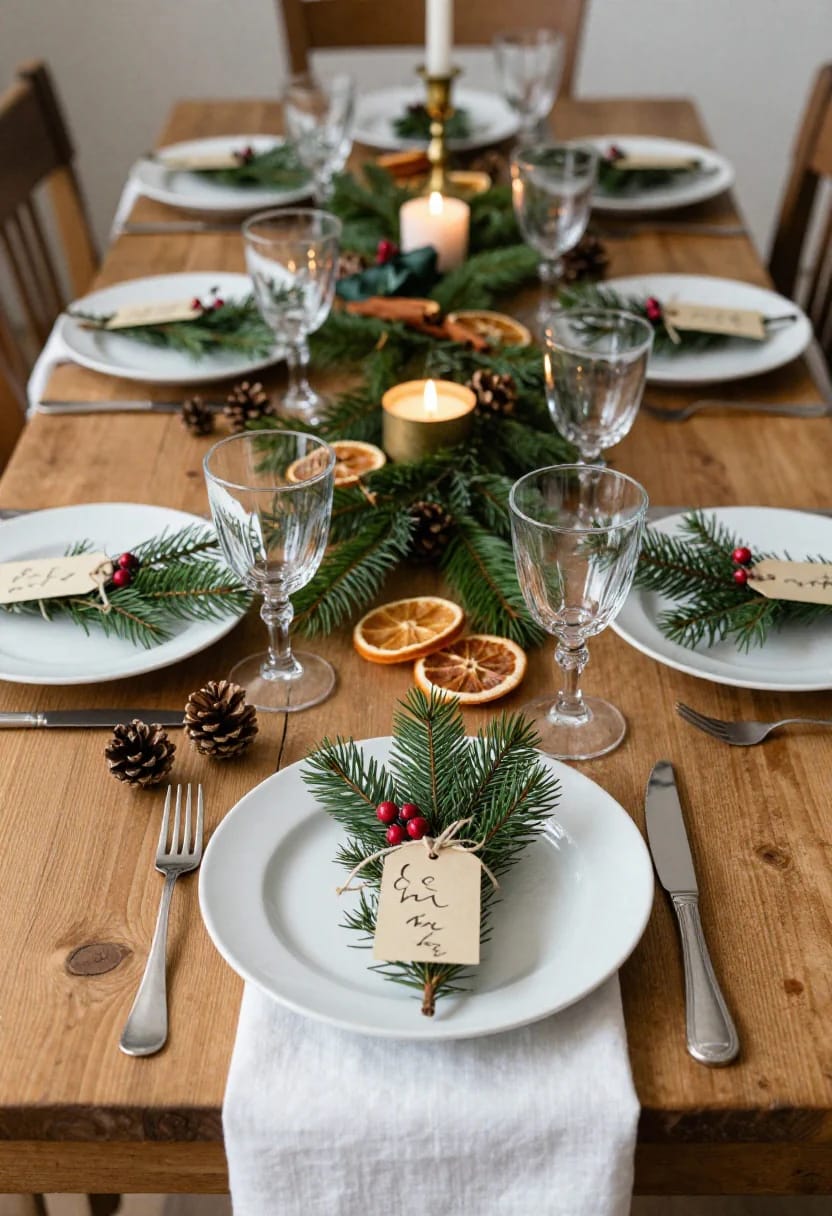
Buy a pack of manila shipping tags (a hundred for around $5), write each name in whatever pen you have, and slide the string of the tag over a short sprig laid on the plate. It takes about a minute a setting and reads clean and modern, especially against a white plate. The one thing to get right is the handwriting, so if yours is a scrawl, draft the names on a spare tag first.
The wood-slice version
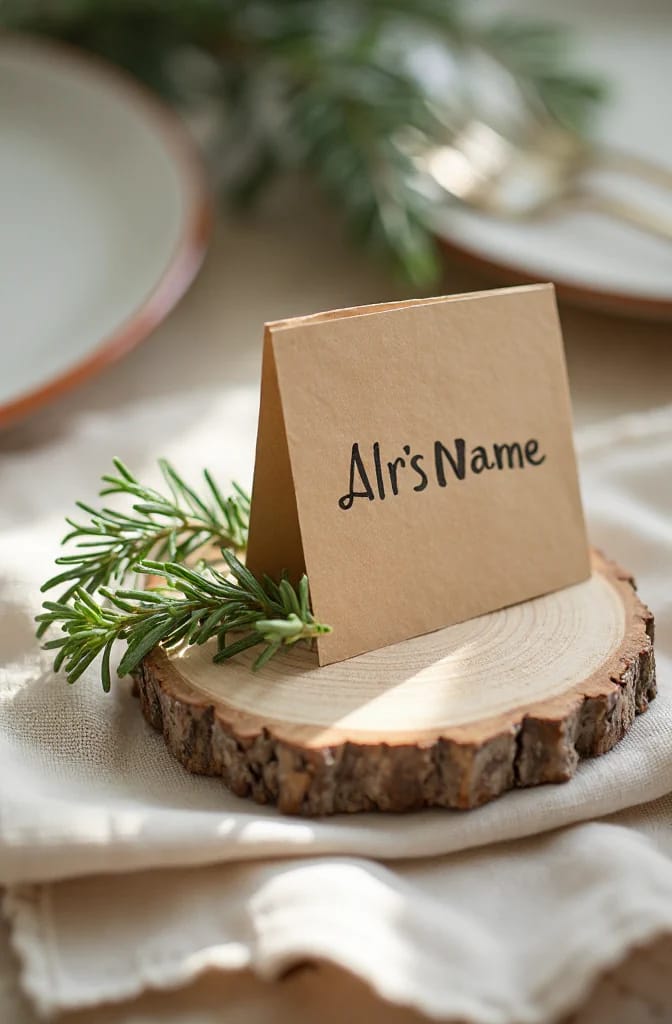
For a rustic table, cut thin rounds off a fallen branch with a handsaw, drill or notch a shallow slot in the top edge, and stand a name card in the slot with a sprig wedged alongside. A single branch yields a dozen holders, and they store flat for next year. This is the version to skip if you have no saw and no patience; the tag does the same job in a tenth of the time.
4. Pair eucalyptus with a dried orange slice at every seat
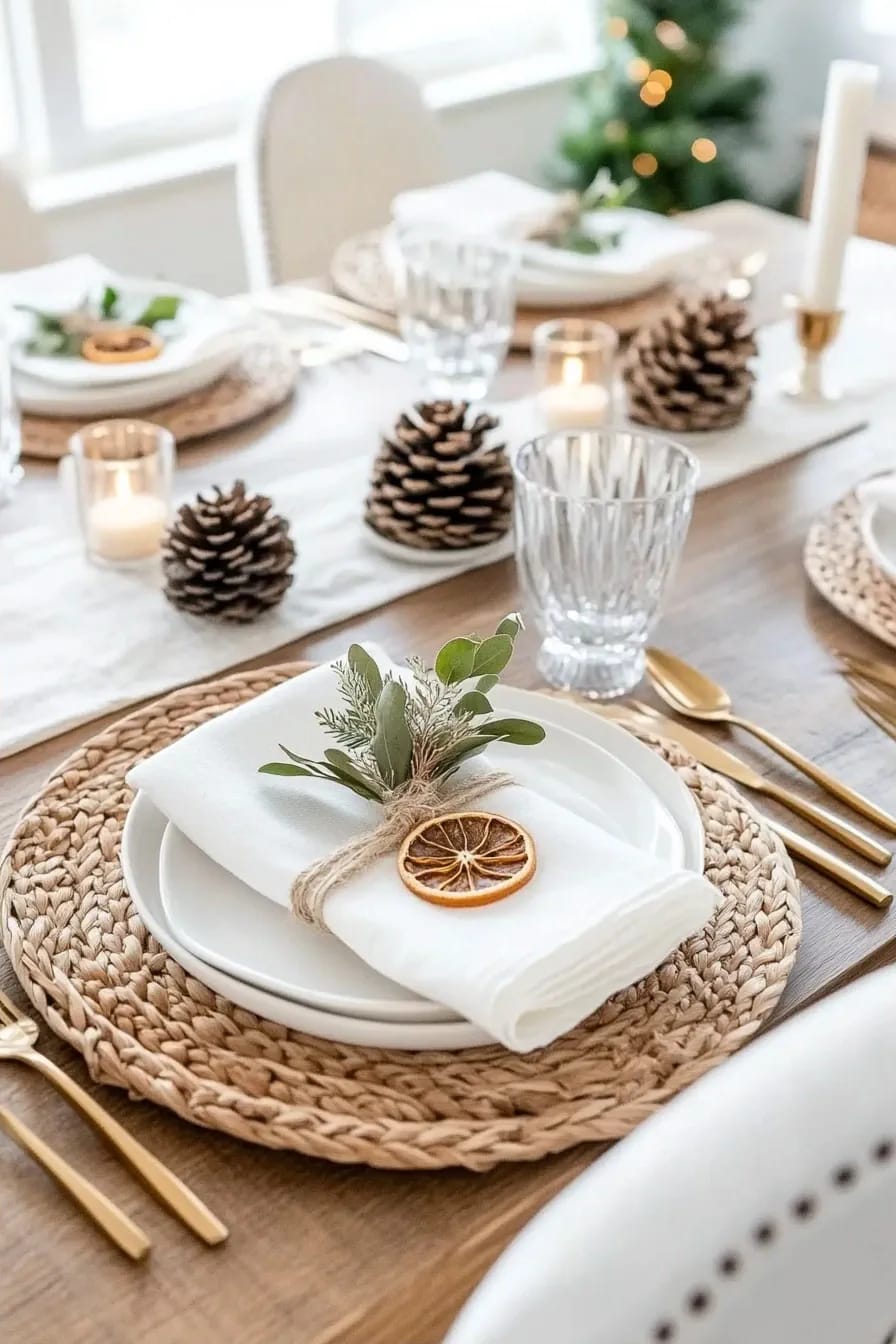
Add a dried orange slice under the sprig and the whole palette warms from cool green to green-and-amber, which is the single easiest way to make a natural setting feel like Christmas rather than a generic winter dinner. Silver-dollar eucalyptus is the sprig to reach for here: it dries beautifully, holds its shape for weeks, and its round blue-green leaves read differently from the needled greens in the settings above, so the table does not look like nine copies of one idea.
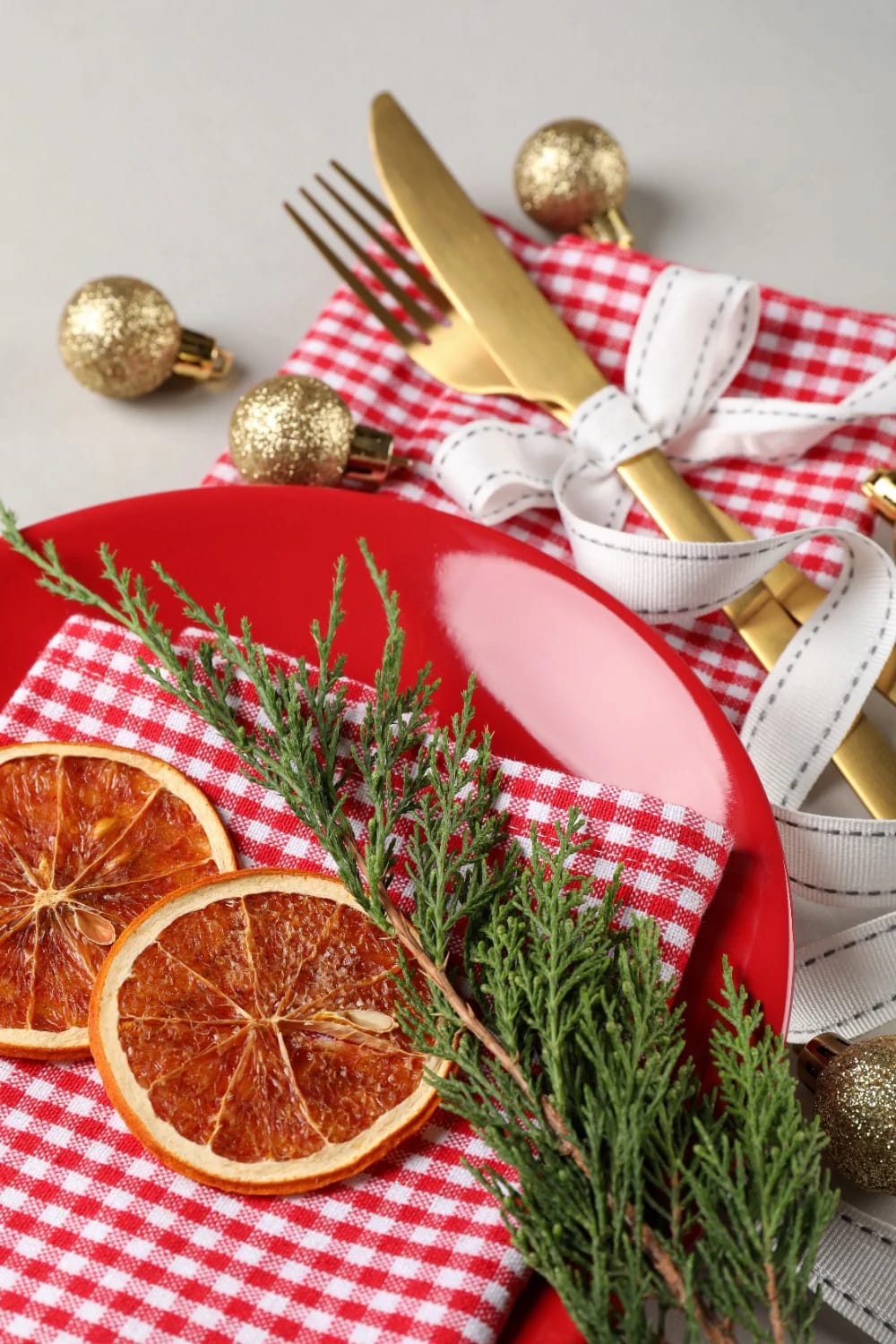
Drying the oranges is the only real work, and it happens days ahead, not on the day. Slice navel oranges about a quarter-inch thick, pat them dry, lay them on a rack over a lined sheet, and bake at a low oven (most people land around 200°F) for roughly three to five hours, flipping every half hour until no part of the slice is sticky or soft. They keep for years, they perfume the kitchen while they bake, and at the end of the season they go on the compost heap. If you get hooked on them, they carry a dozen other jobs around the house, from garlands to gift tags, all of which are covered in these dried-orange decorating ideas. Tie the slice and the eucalyptus together with a scrap of twine, and the setting is done.
5. Stand a single foraged stem in a bud vase at each place
Give every seat its own tiny vessel and you have moved from a flat garnish to something with a bit of height and ceremony, without building a centerpiece. A single stem of eucalyptus, a sprig of berried ivy, or one branch of winterberry in a small bud vase or a slim glass test tube does it. The discipline is the same as in the first idea: one stem, occasionally two, never a bouquet. A jammed vase at every plate blocks sightlines across the table and reads as clutter.

Thrift stores are full of small glass vials and bottles for under a dollar each, and a rack of ten laboratory test tubes runs about $12 to $18 and reappears every December for years. Fill them with water and the stems stay fresh through a long dinner, which the dry settings above cannot promise.
 9 Foraged Winter Greenery Centerpiece Ideas for the Table Nine arrangements for the center of the table, cut from the same yard your place-setting sprigs came from.
6. Bend a bare twig into a napkin ring
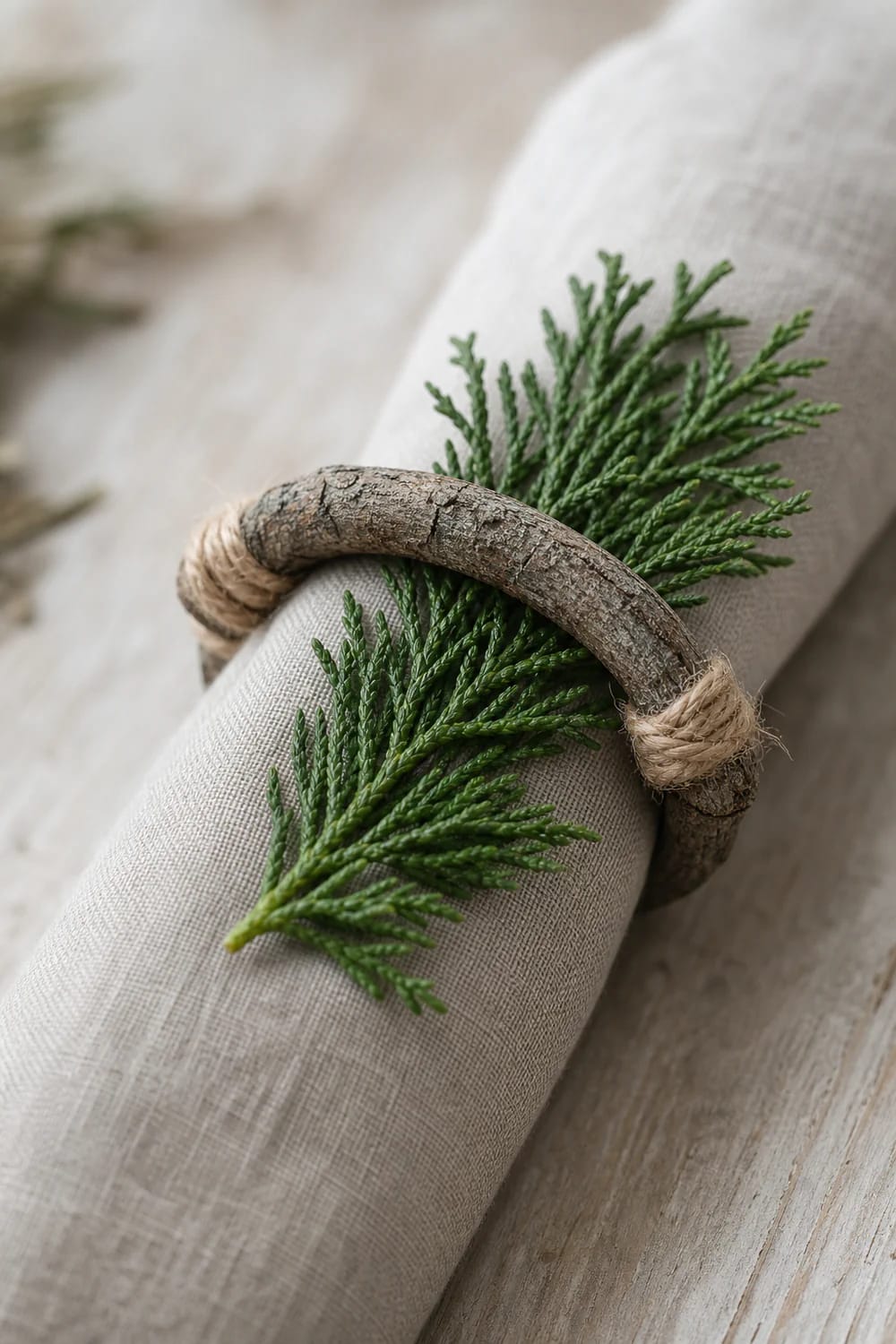
A pliable twig makes a napkin ring for free, and it takes the setting somewhere the bought brass ones never go. Willow, grapevine, and dogwood are supple enough to bend into a circle without snapping; soak a stiffer twig in warm water for an hour first. Wrap the overlap with a turn of twine, tuck a small sprig under the band, and roll the napkin through. Expect one or two to crack while you learn the bend, which is why you cut a few spares.
7. Collar a candle with a low ring of greenery
Set a candle at each place and ring its base with a flat collar of short sprigs, and the light does the rest, catching the greenery and the glassware all evening. Keep the collar low and tight to the table so it sits well below the flame, and use a pillar or a taper in a holder rather than a loose tealight that can tip. Fresh green sprigs, not brittle dried ones, are the ones to circle a live flame.
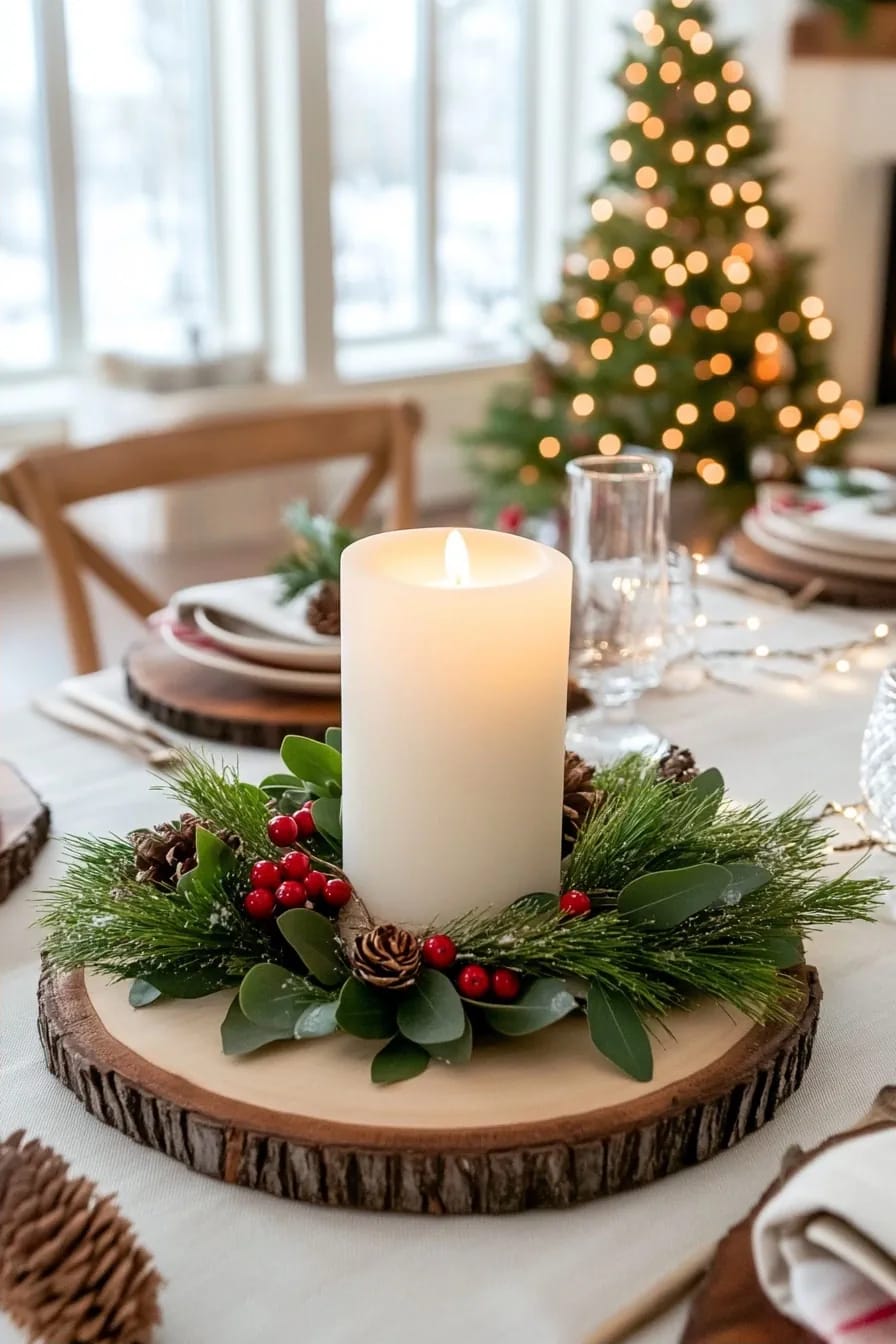

Greenery and open flame need adult attention, and dried foliage is the real hazard: once a sprig has crisped, it lights fast. Keep the collar green and low, never let it climb the candle, and if the table will sit unwatched (kids running past, a long buffet), switch to a flameless LED candle and place the greenery exactly the same way. The look holds; the fire risk does not come with it.
 11 Mason Jar Christmas Centerpieces That Let the Greenery Do the Work Eleven ways to let a few good stems lean over a jar rim instead of cramming it full.
8. Send everyone home with a tied herb bundle
Make the sprig at each seat a bundle the guest takes home, and the place setting becomes the party favor, which is the most useful thing on this list. Tie three or four kitchen herbs into a small bunch with twine, add a tag, and lay it on the plate. It looks like part of the table all evening, then leaves as a scented bundle someone can hang in the kitchen or drop into a stockpot. Nothing goes in the bin.
Stick to herbs you would cook with
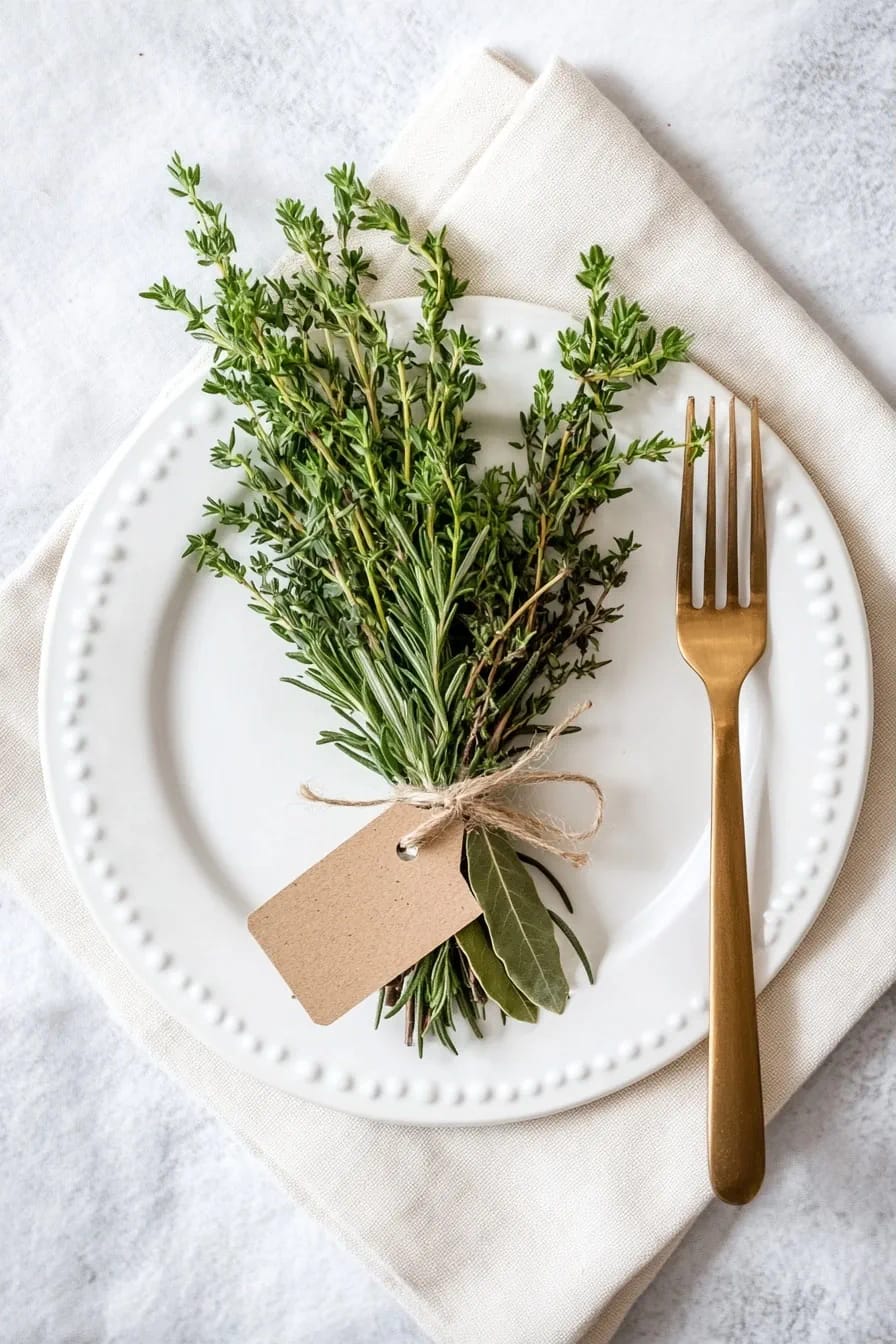
Because this bundle is meant to be handled and possibly cooked with, it has to be food-safe, and this is the one setting where the wrong foraged clipping is genuinely dangerous. Rosemary, thyme, sage, and bay are the reliable four. Yew, which is common in hedges and looks like a soft evergreen, is toxic to people and pets and sheds within a day anyway, so it has no business near a plate; holly berries are toxic too.
Bundle these
- Rosemary, thyme, sage, bay: all food-safe and long-lasting out of water.
- A cinnamon stick tucked in for scent.
Keep off the plate
- Yew, holly berries, mistletoe, and anything you cannot identify with certainty.
- Boxwood indoors. The common green varieties smell like cat urine, which no one wants near dinner.
The tag is what turns it into a favor
Write the guest's name on one side (so it doubles as the place card) and a two-word note on the back, something like "roast potatoes" or "for tea." That small instruction is what makes people actually keep and use the bundle instead of leaving it on the chair.
9. Skip evergreen entirely and set the table with seed heads

For an apartment with no yard, a warm region with no conifers, or anyone who just wants a quieter table, dried seed heads and grasses do the whole job and never drop a needle. Poppy pods, teasel, dried hydrangea, love-in-a-mist, and ornamental grasses bring a bleached, matte texture that a glossy evergreen cannot, and they last indefinitely. The palette shifts from green to a range of tans and faded sage, which suits a neutral or minimalist room better than pine ever would. Most of this is out along roadsides and in dormant flower beds all winter, and the same eye that finds it works for other projects too, like a garland made from whatever is already out there.
Assemble any of these the morning of the dinner, not the night before. Cut fresh greenery a day ahead if you can, give the stems a long drink in a bucket of water overnight, then mist everything once it is on the table; a warm room pulls moisture out of cut sprigs fast, and that head start buys you crisp needles through dessert instead of a shower of them.
If I had to drop one idea, it would be the bud vase at a big table. It is charming for six but fussy and space-hungry for twelve, and that is exactly when a plain sprig across the napkin looks best anyway. And whatever you do, keep the spruce off the plate; it will end up in the mashed potatoes.
The nicest part is the cleanup. When the plates clear, the greenery, the orange slices, the seed heads, and the twine all go straight onto the compost, and the whole table cost about the price of a bag of oranges and a spool of string.
Related Posts
- 9 Foraged Winter Greenery Centerpiece Ideas for the Table
- Foraged Christmas Garland From Your Backyard: 13 Ways to Make One From What’s Already Out There
- 11 Mason Jar Christmas Centerpieces That Let the Greenery Do the Work
- 7 Free Christmas Decorations You Can Make From Evergreen Branches
- 21 Unique Spring Centerpiece Ideas Made With Natural Materials
- 25 Earthy Christmas Decor Ideas for a Warm, Natural Home