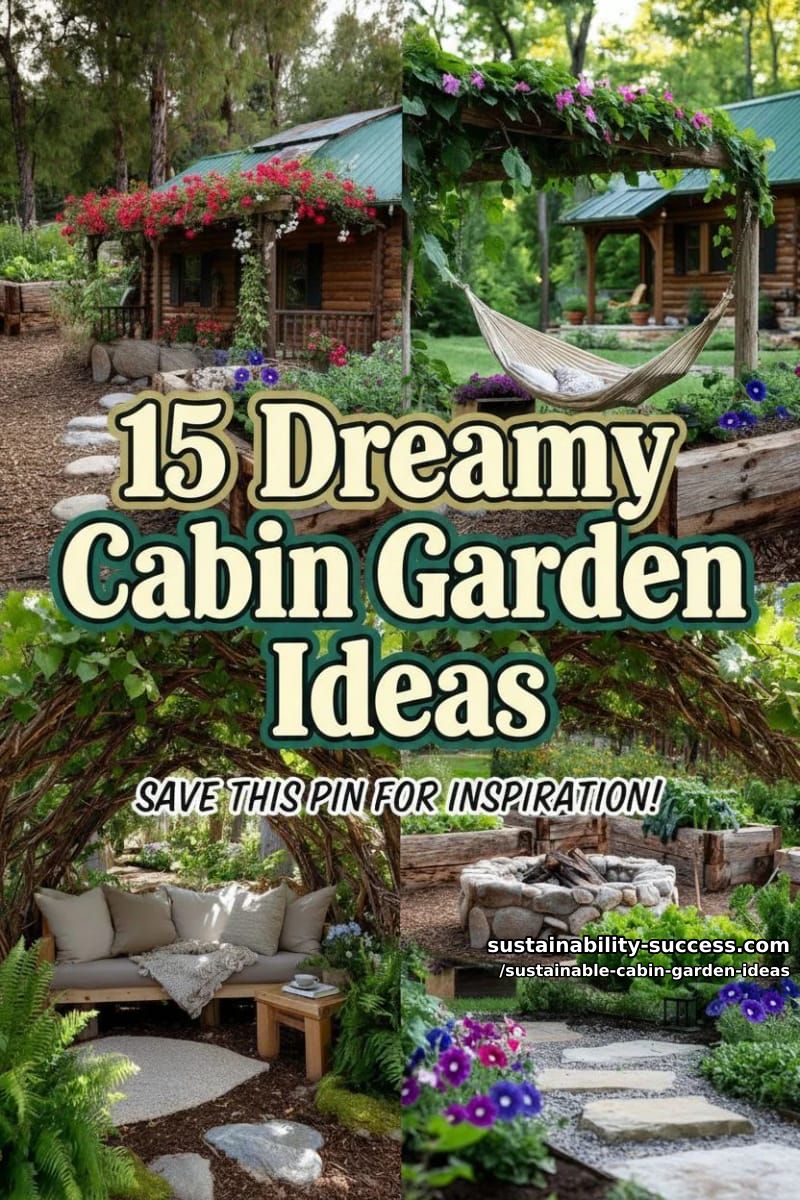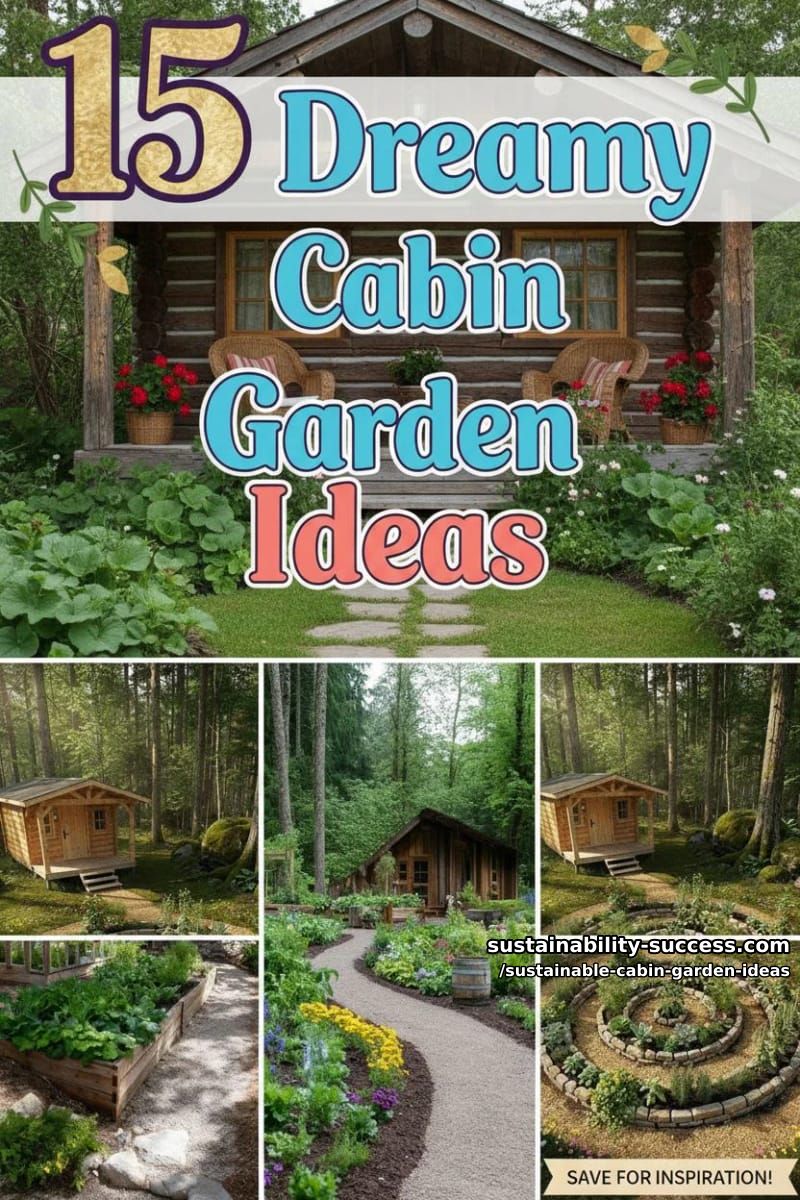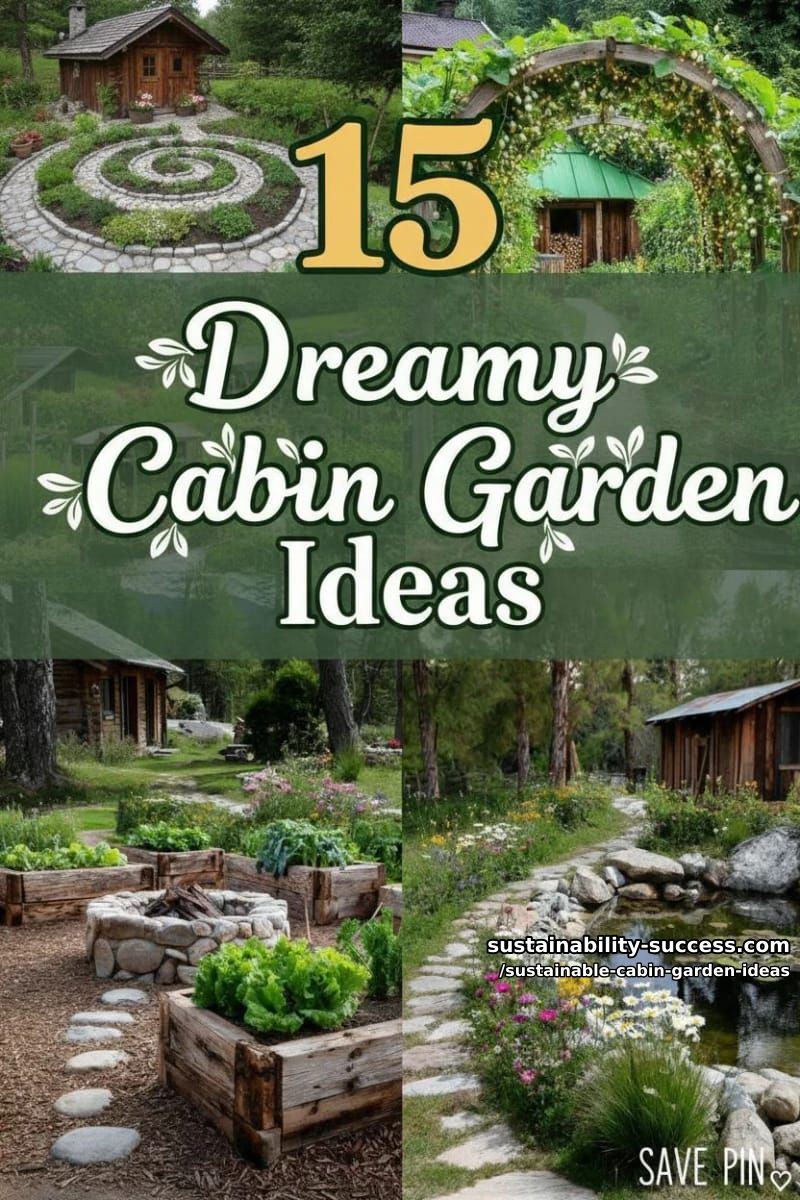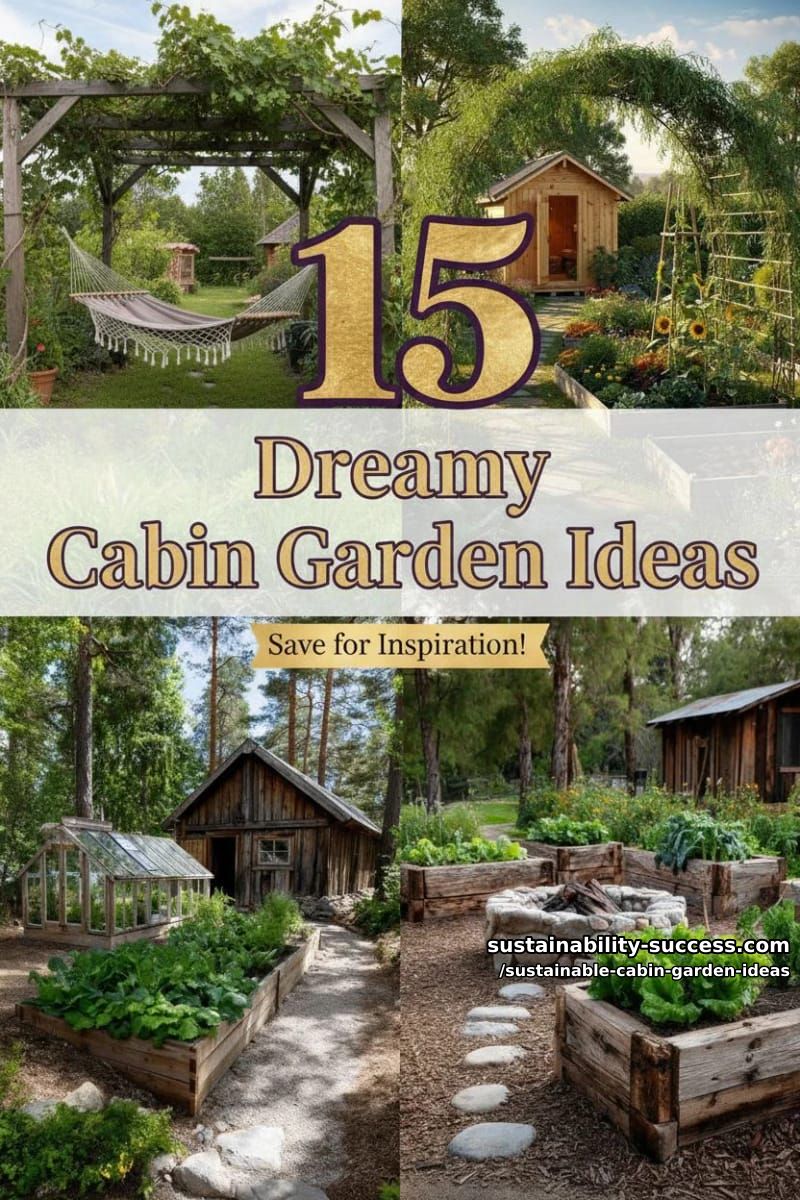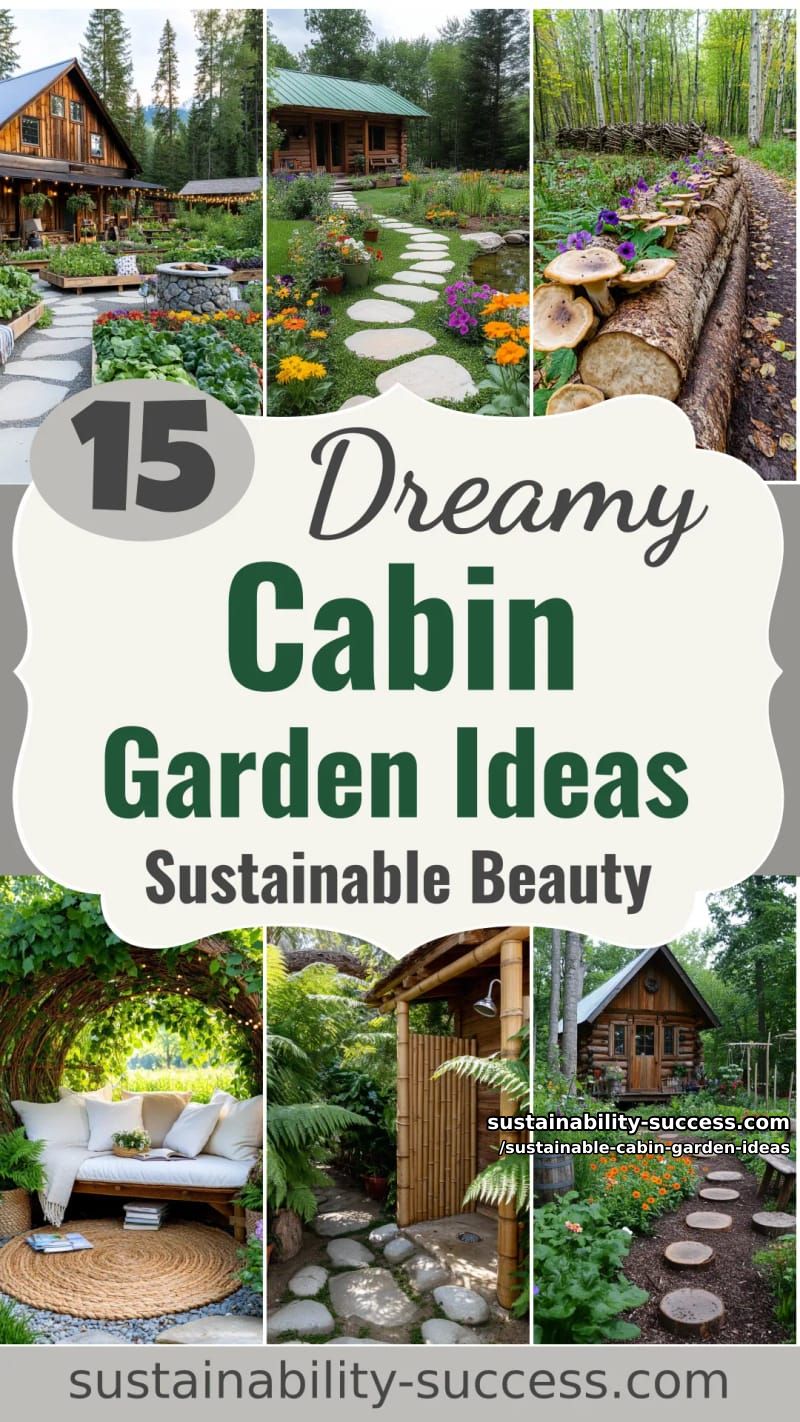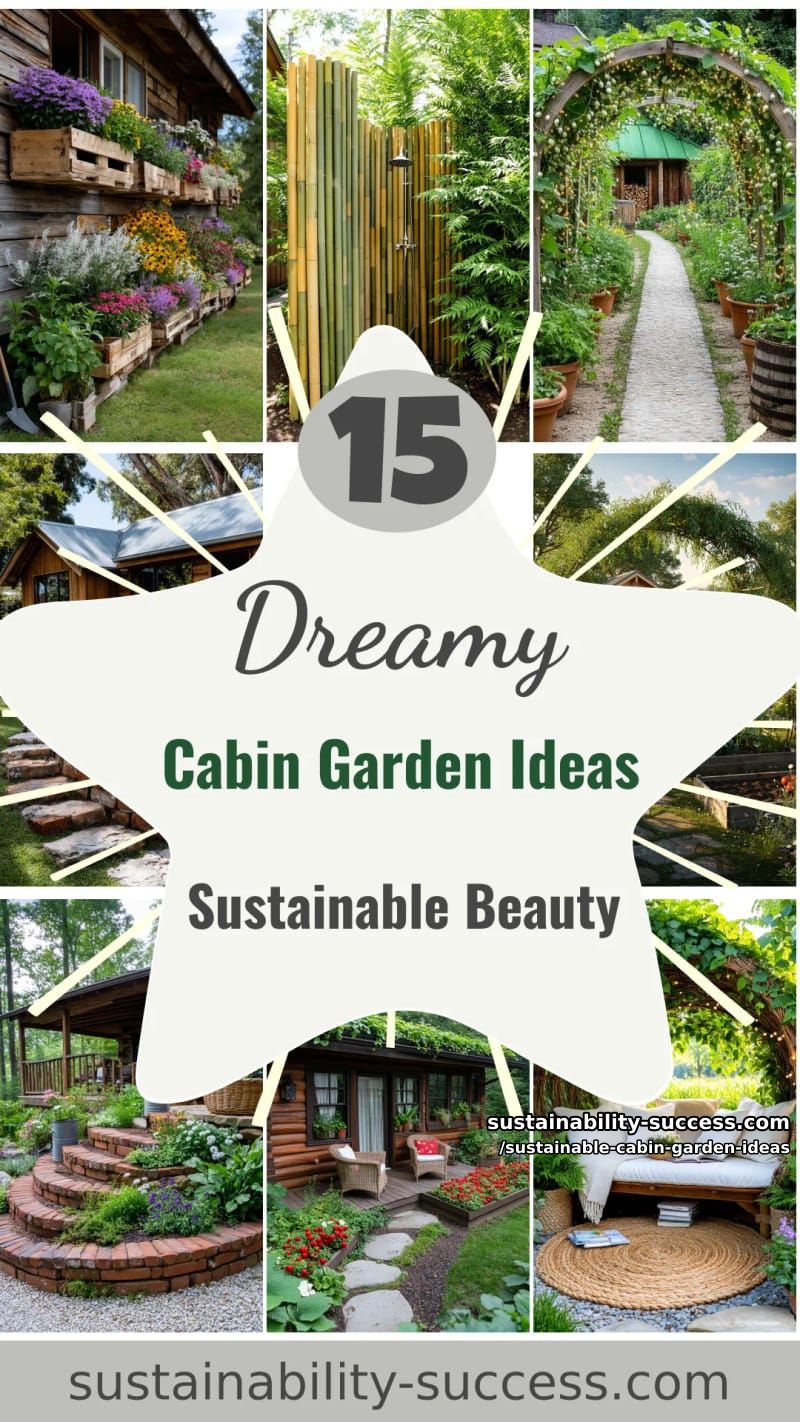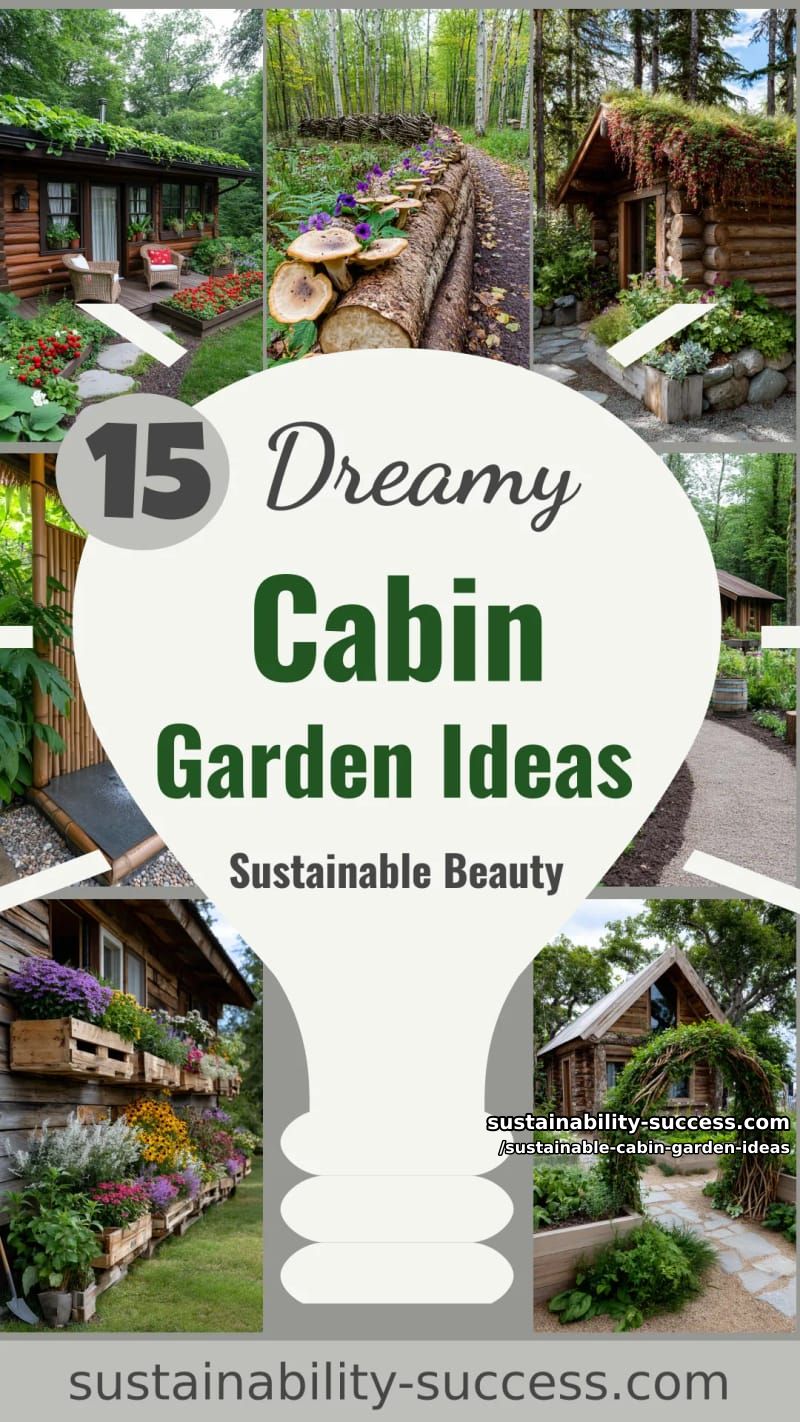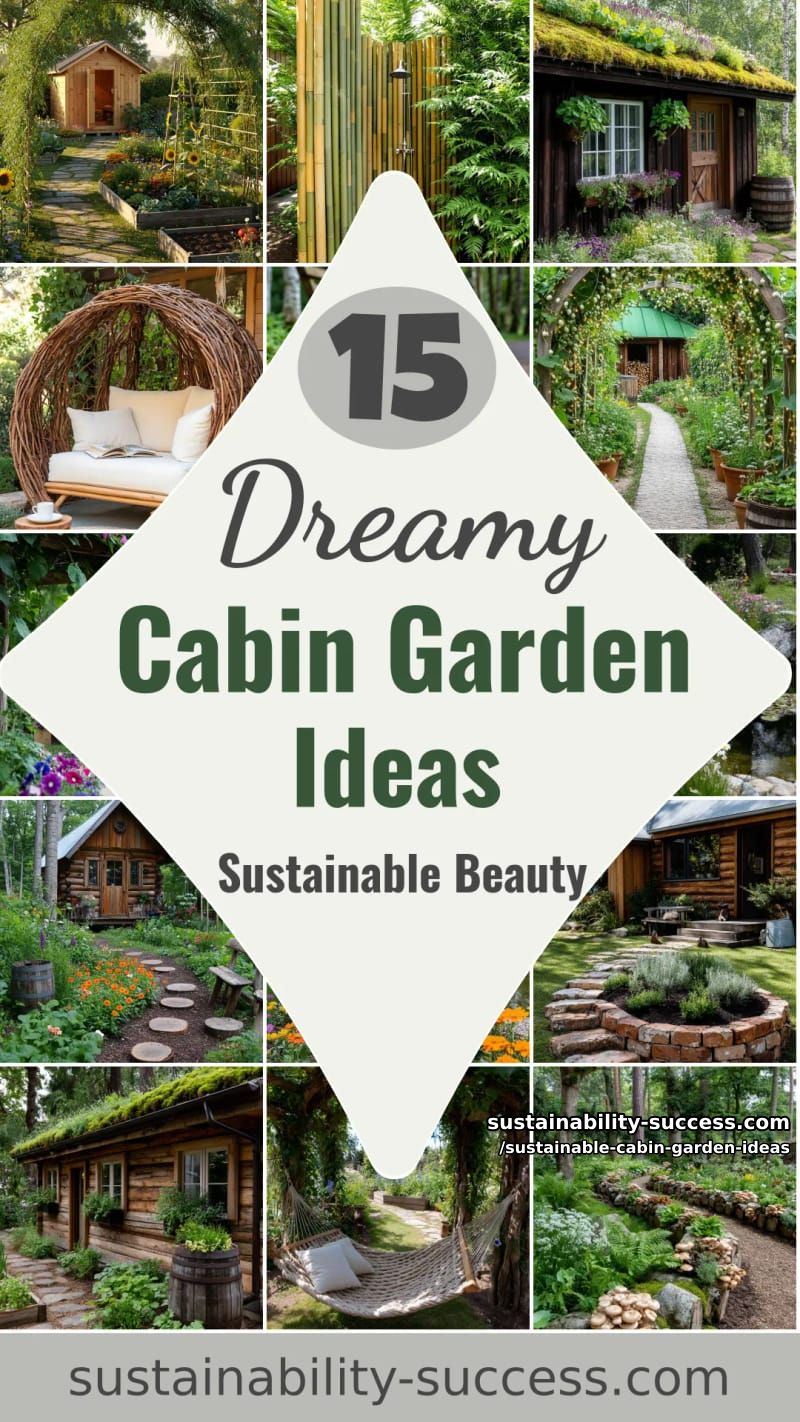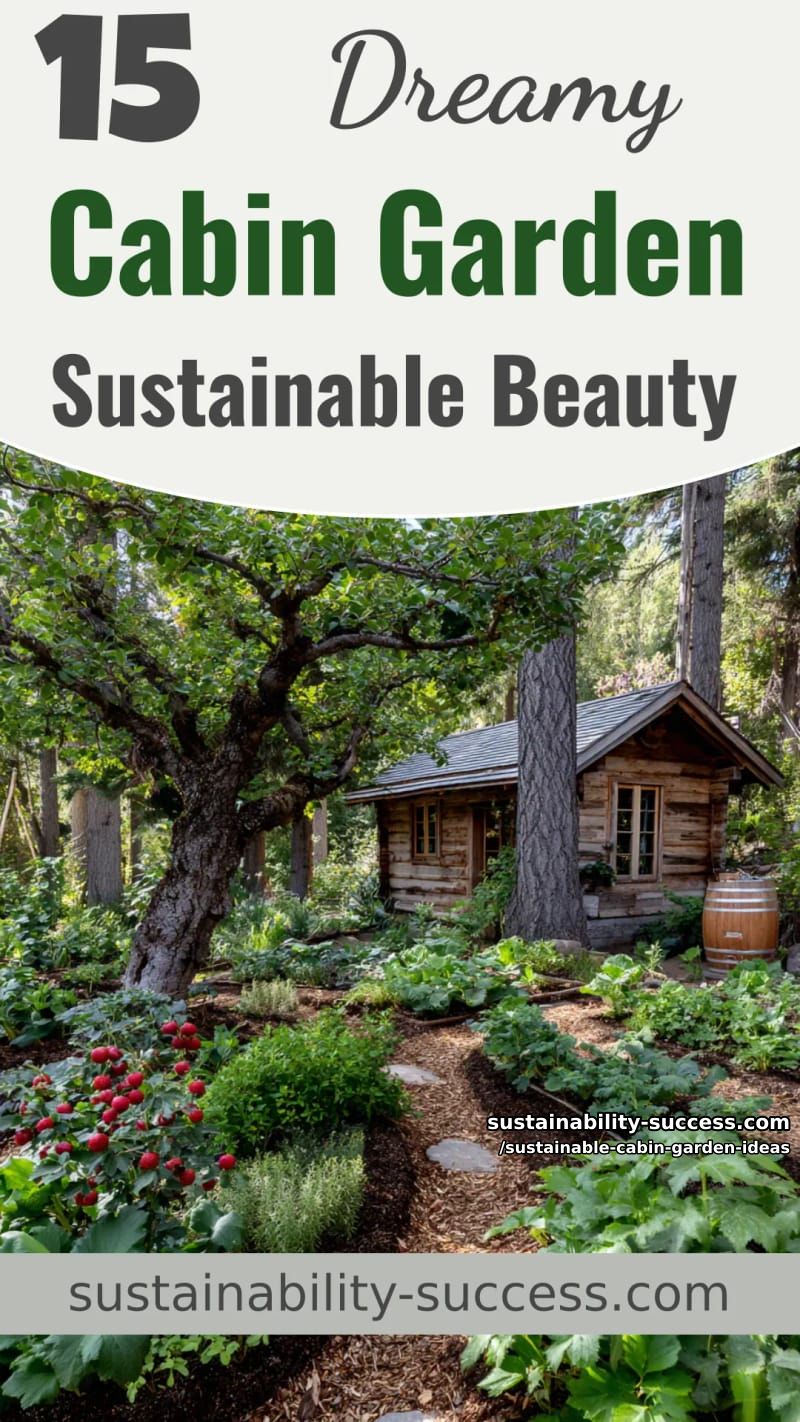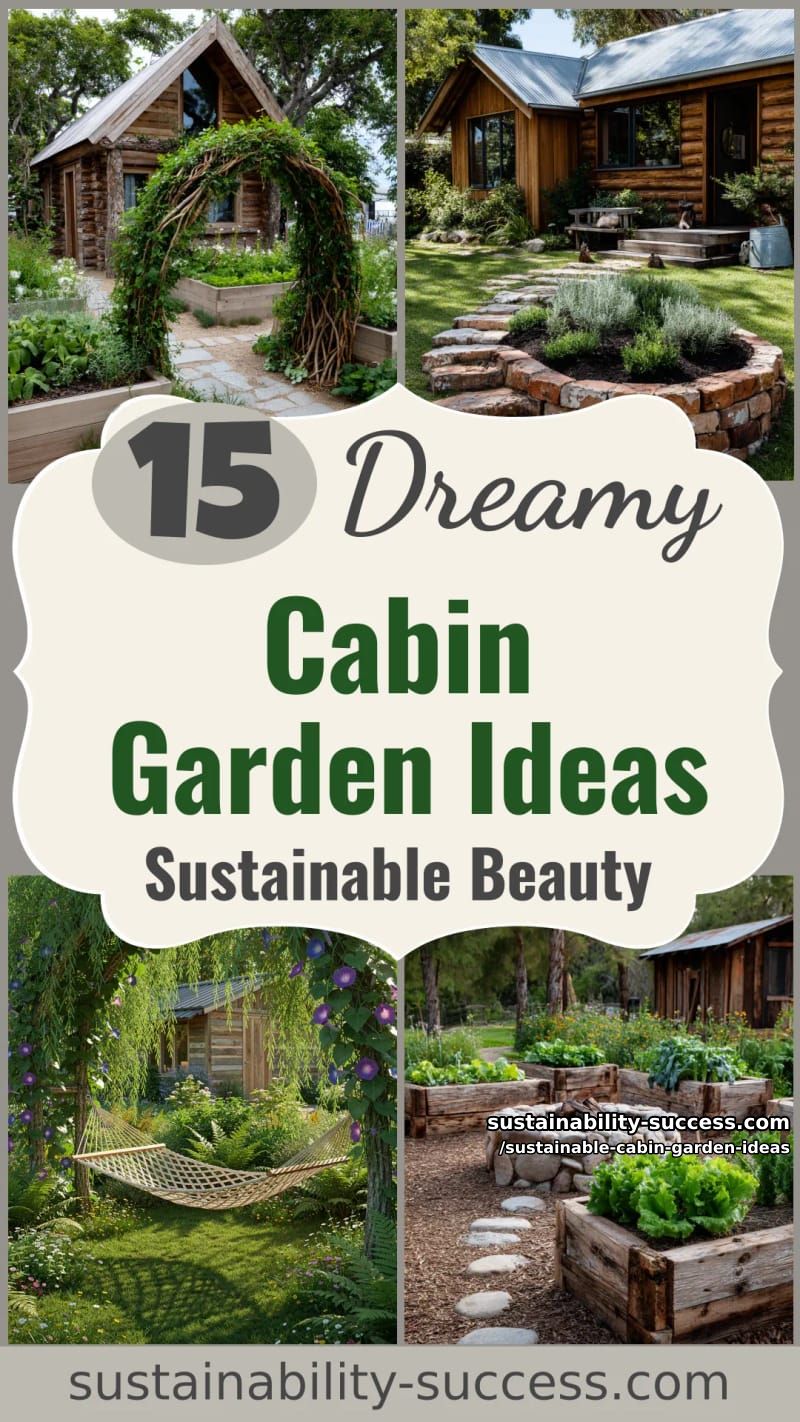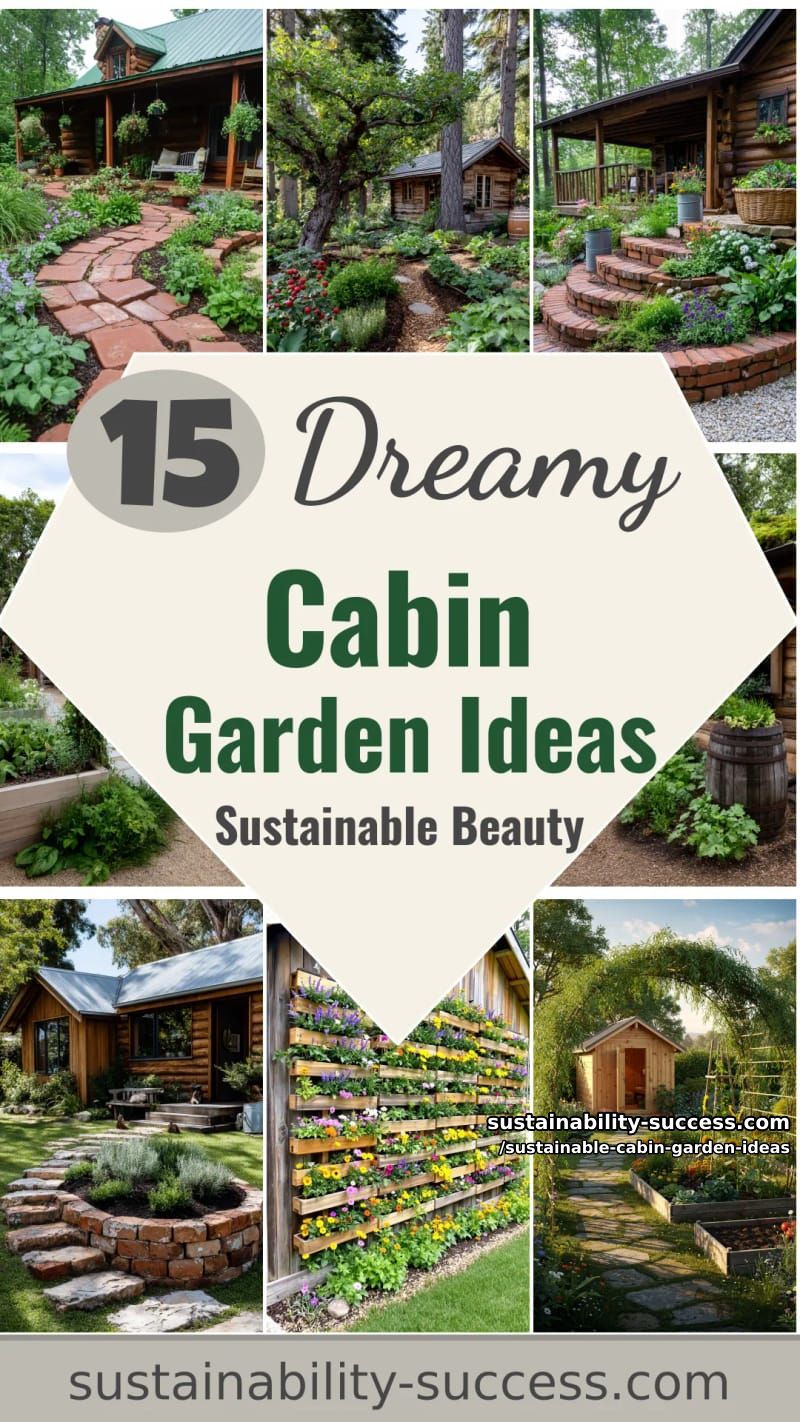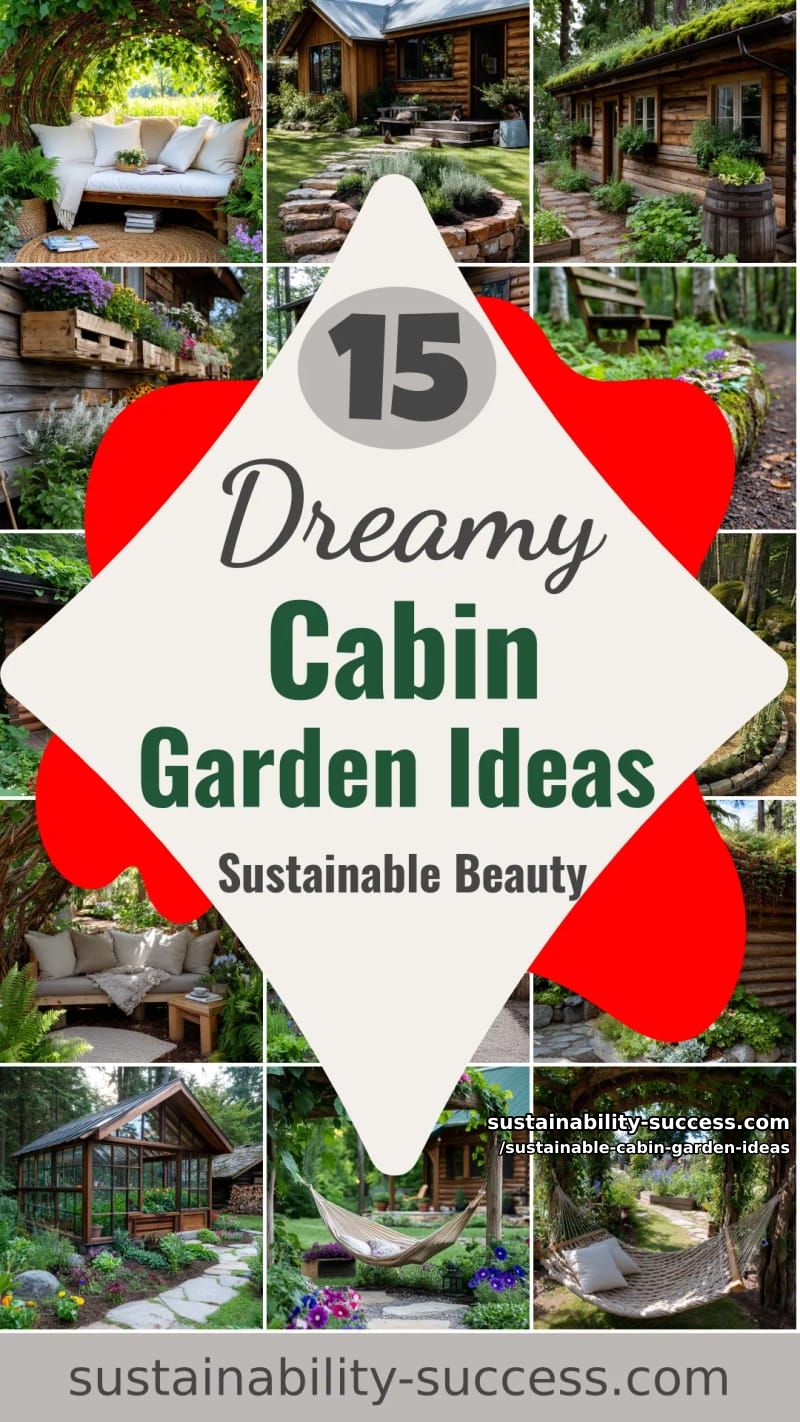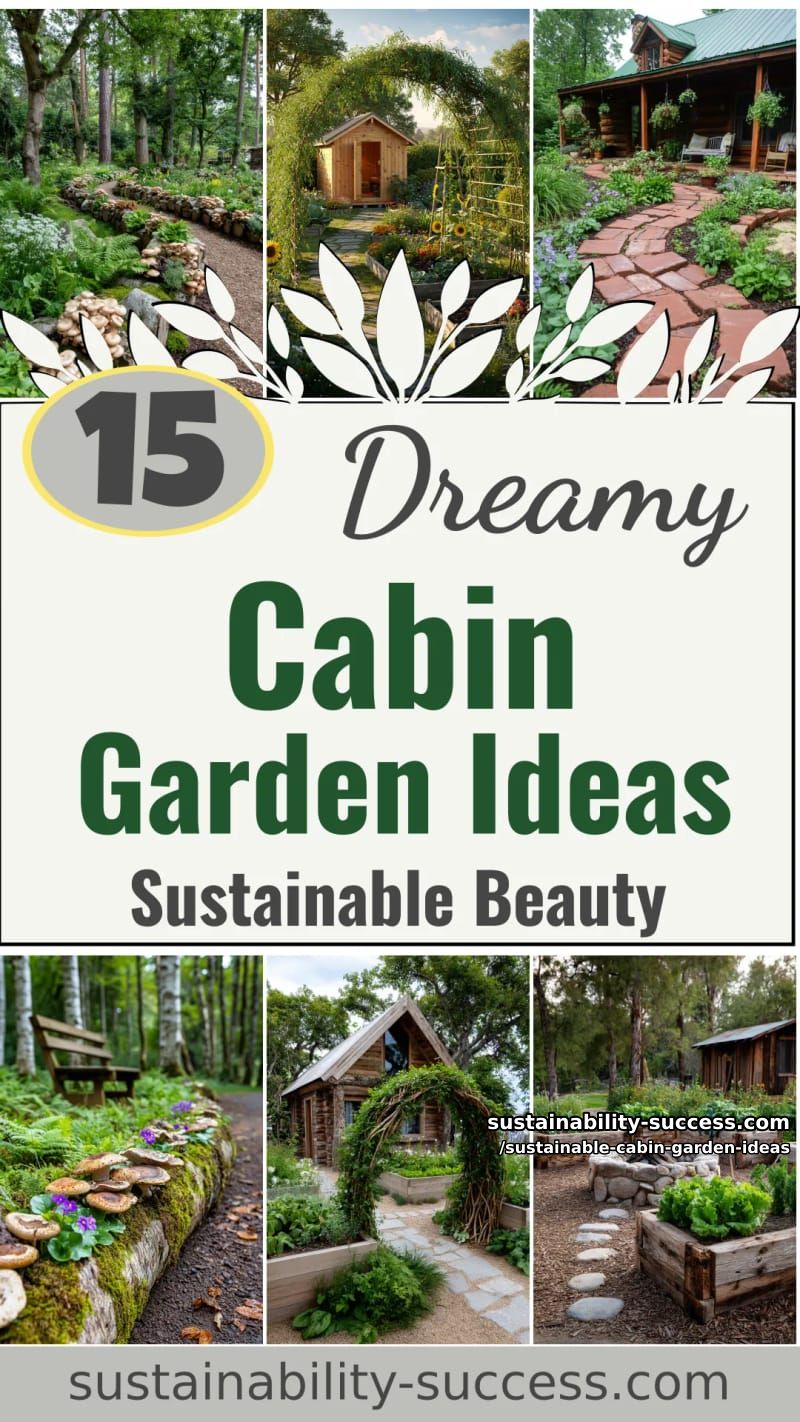
Ever dreamt of a cabin garden that treads lightly on the earth and feels like something out of a storybook? You’re not alone.
Many folks want their outdoor spaces to look good, feel peaceful, and give nature a helping hand.
Sustainable cabin garden ideas don’t ask you to sacrifice charm for eco-friendliness. Imagine sipping coffee under a willow archway or picking strawberries from your roof.
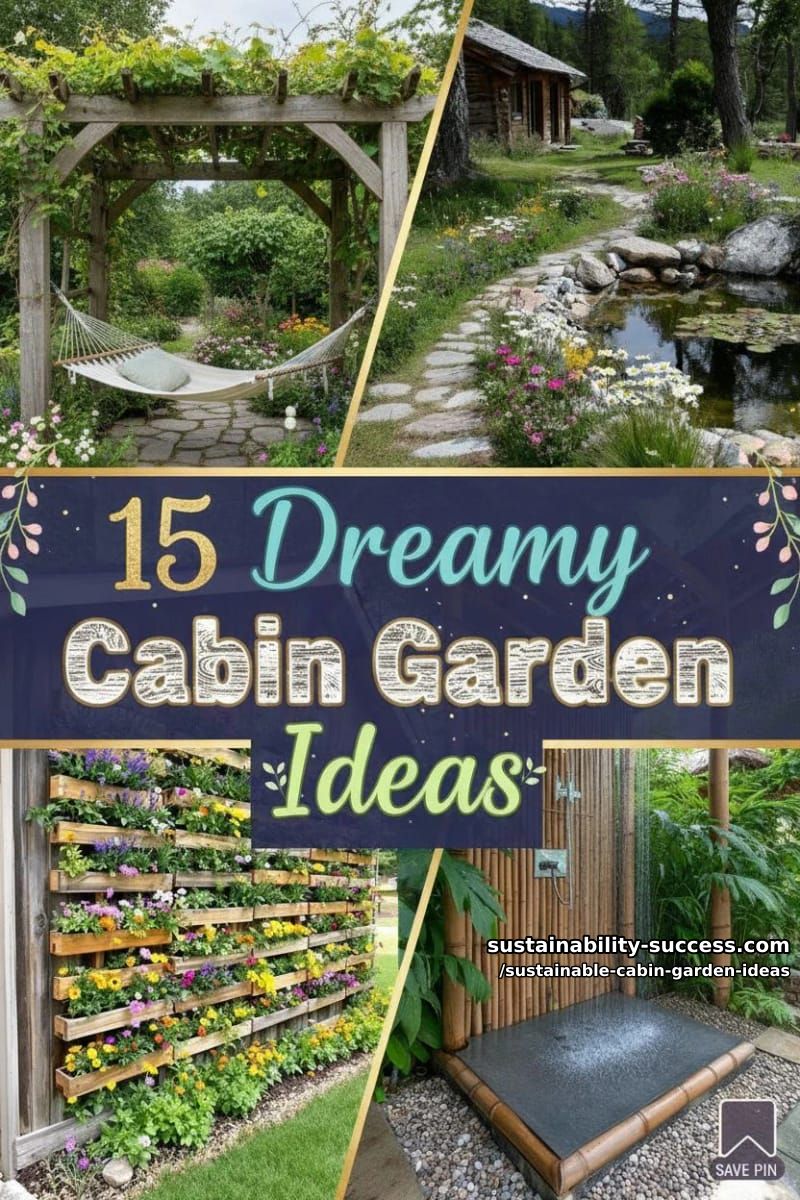
Curious how simple changes can make a big difference? Let’s dig in and get inspired.
1. Living willow tunnel connecting cabin to the garden for a magical entrance
A living willow tunnel brings a fairytale twist to your cabin garden. It grows quickly, providing shade and a sense of wonder. Children love dashing through it, and adults appreciate its charm.
But keep in mind, willow needs regular trimming to stay healthy and avoid looking wild.
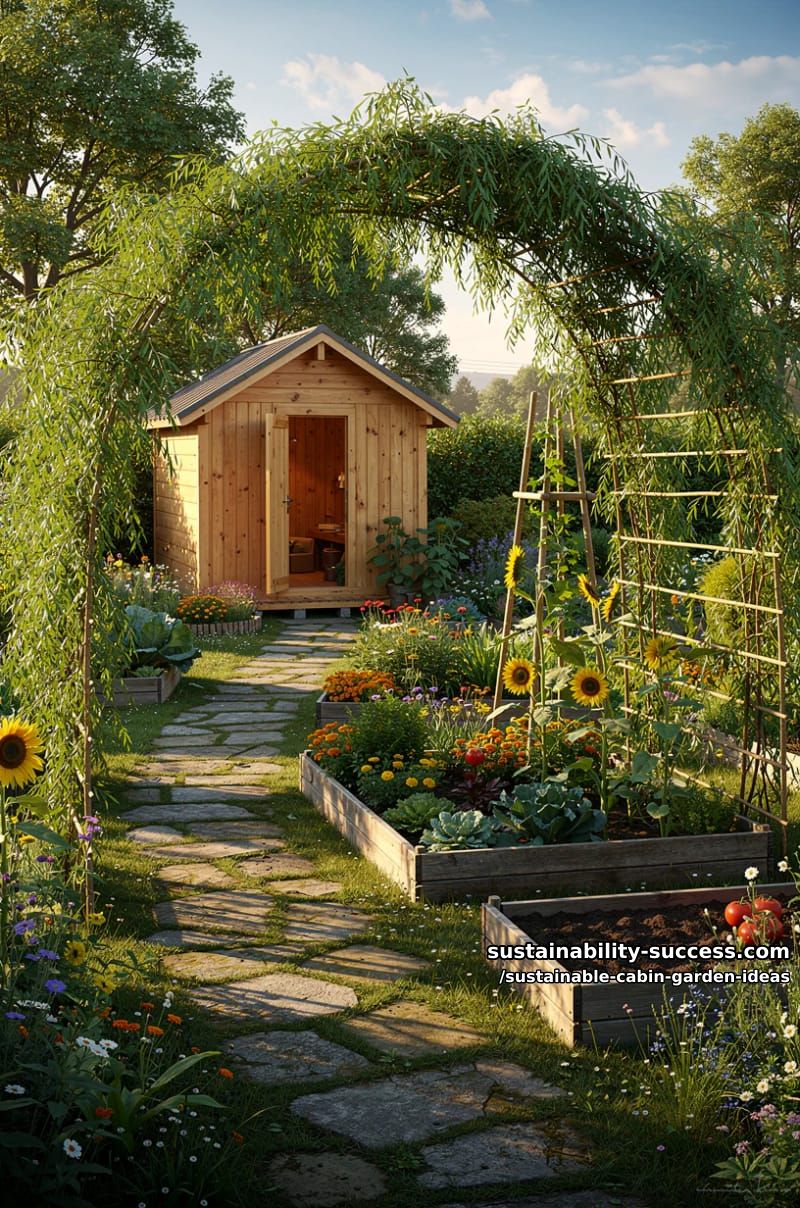
Building one is simpler than it sounds. Plant flexible willow rods in early spring, arching them to create a tunnel. Tie them together at key points.
Water often at first and watch as the tunnel thickens each season. It's a green entrance that feels straight out of a storybook.
2. Rainwater-harvesting moss roof with edible herb pockets above cabin windows
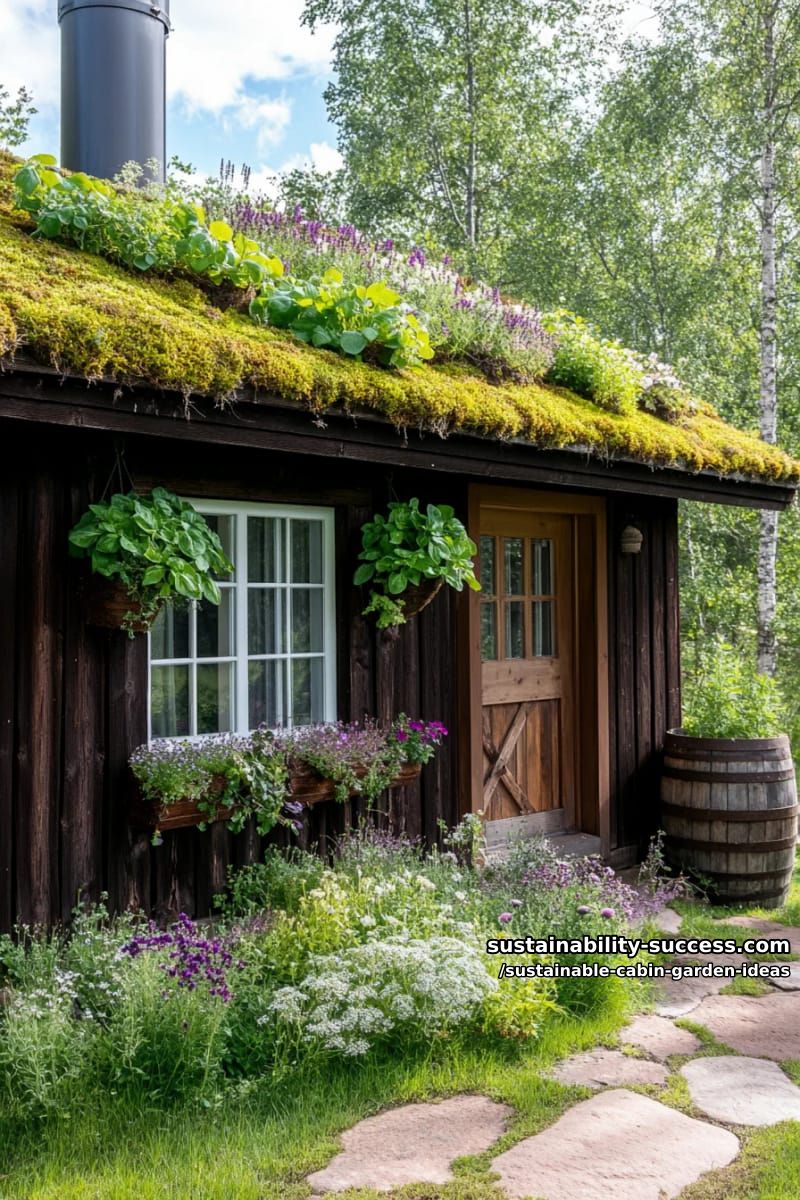
Imagine a moss-covered roof that drinks up rain, stores it, and cools your cabin naturally. Above each window, small pockets of basil, mint, or thyme thrive, watered by the collected rain.
This setup saves water, cools the home, and keeps fresh herbs within arm’s reach for cooking.
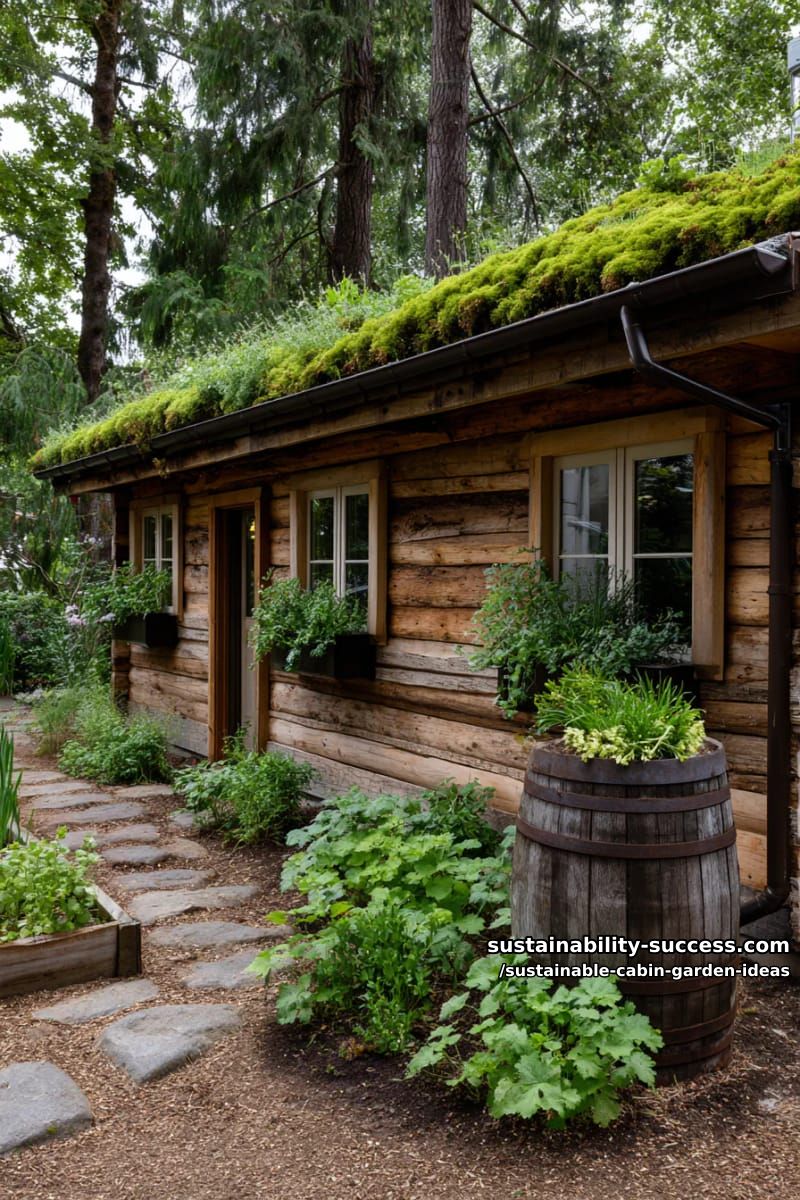
While the system is simple and eco-friendly, it does require regular upkeep. Moss needs occasional trimming to prevent overgrowth. Herb pockets benefit from good drainage and periodic replanting.
Still, the payoff is fresh herbs, lower water bills, and a home that looks like it’s right out of a fairy tale.
3. Spiral permaculture bed winding from cabin porch into woodland edge
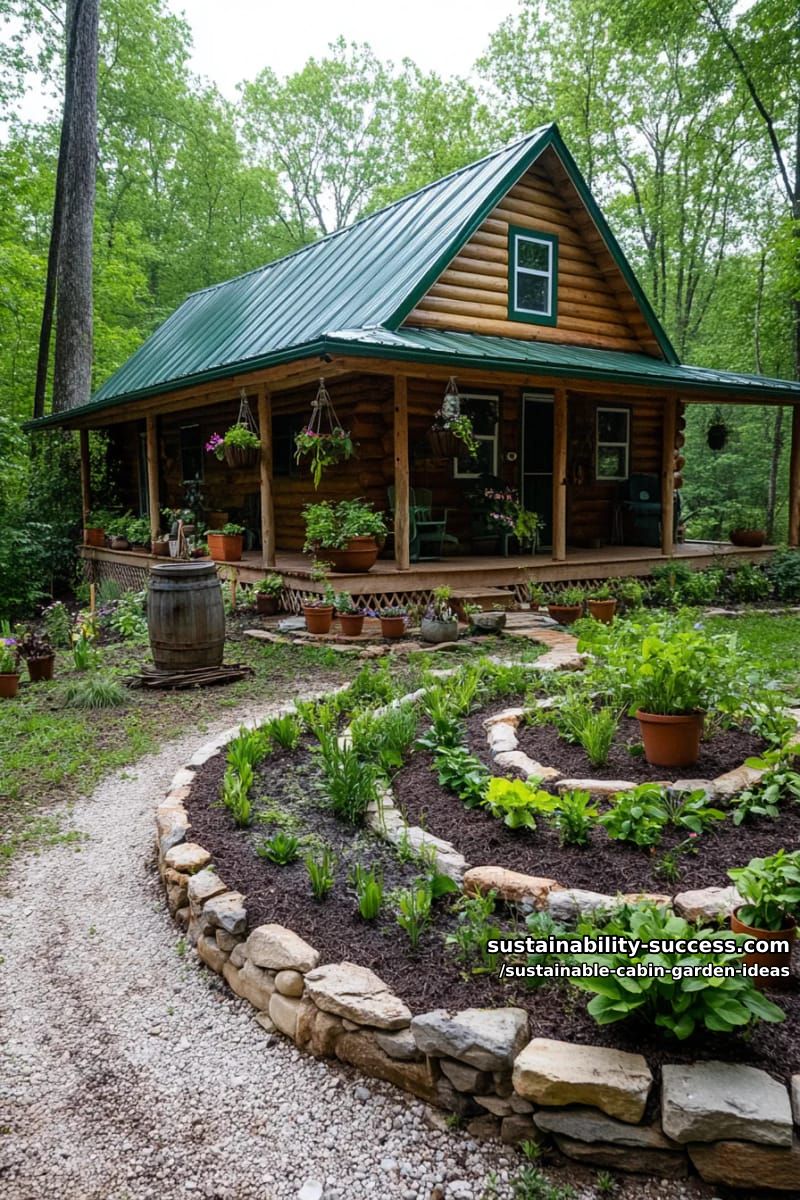
Imagine stepping off your cabin porch onto a spiral garden bed, each turn offering new herbs, veggies, or flowers. This shape lets you pack more plants into less space, reducing weeding and watering.
Spirals also make gardening feel playful, kids love tracing the path, and adults find it soothing.
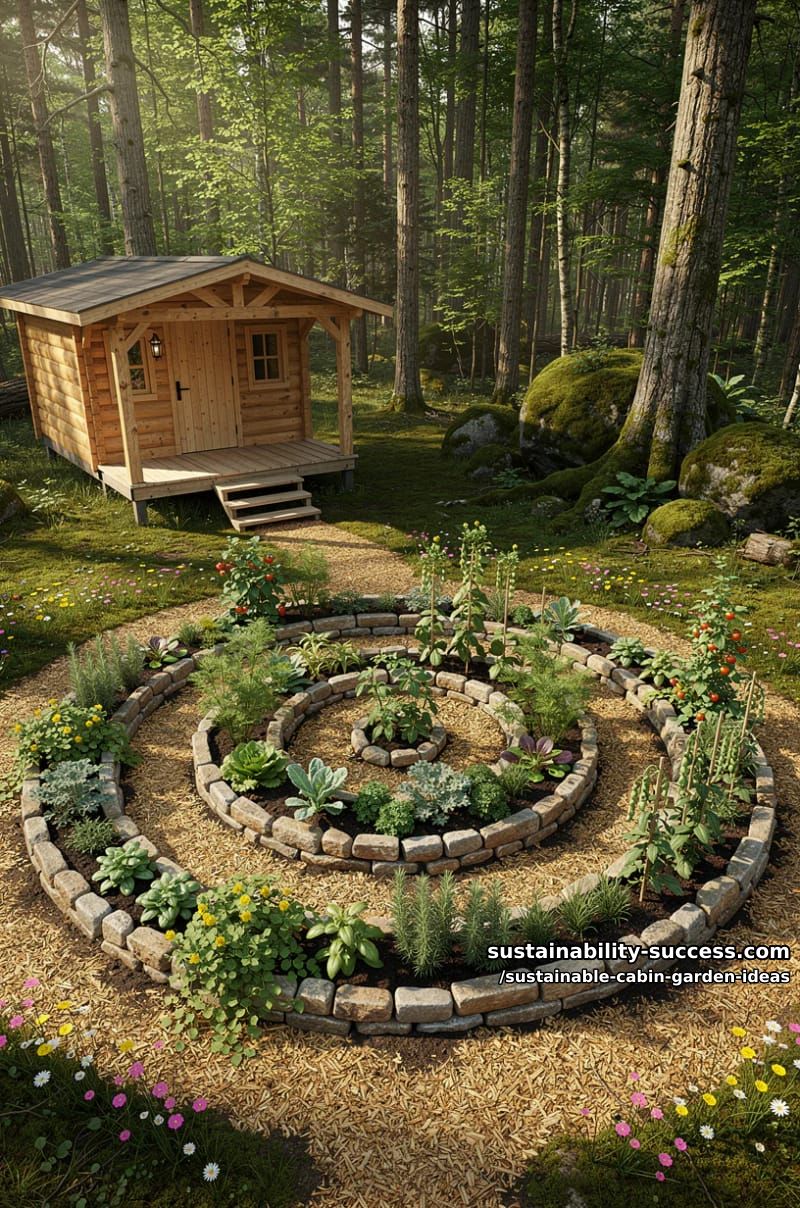
Building this spiral can start with simple rocks or logs marking the edges. As you plant, put sun-loving crops at the top and shade-tolerant ones near the bottom, where trees cast their shadow.
Watch for slugs, though, the moist, shaded base can invite them. A spiral garden marries beauty with practical food production.
4. Sunken greenhouse using recycled windows beside rustic wooden cabin
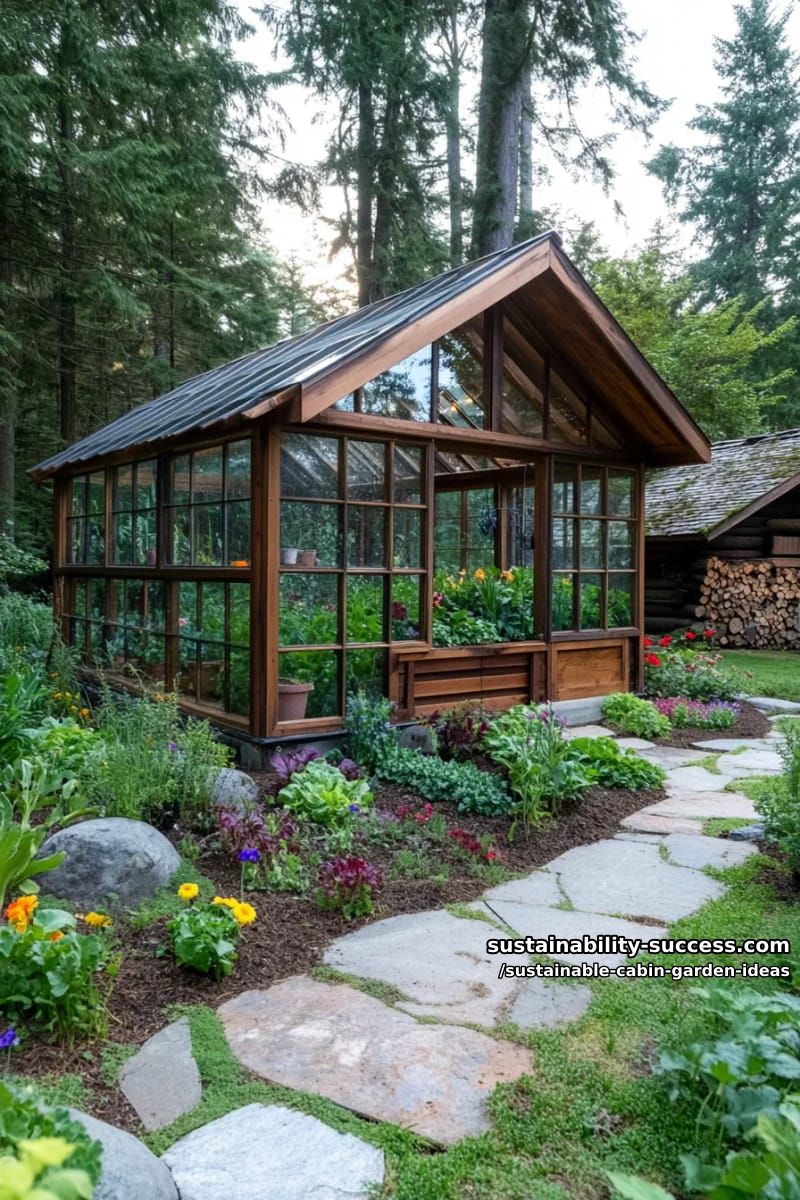
Imagine a sunken greenhouse, built with old windows, right next to your weathered cabin. This setup keeps plants warm with earth insulation and adds a quirky charm.
Old windows can be sourced for free or cheap, check local listings or ask neighbors. Why let glass go to waste?
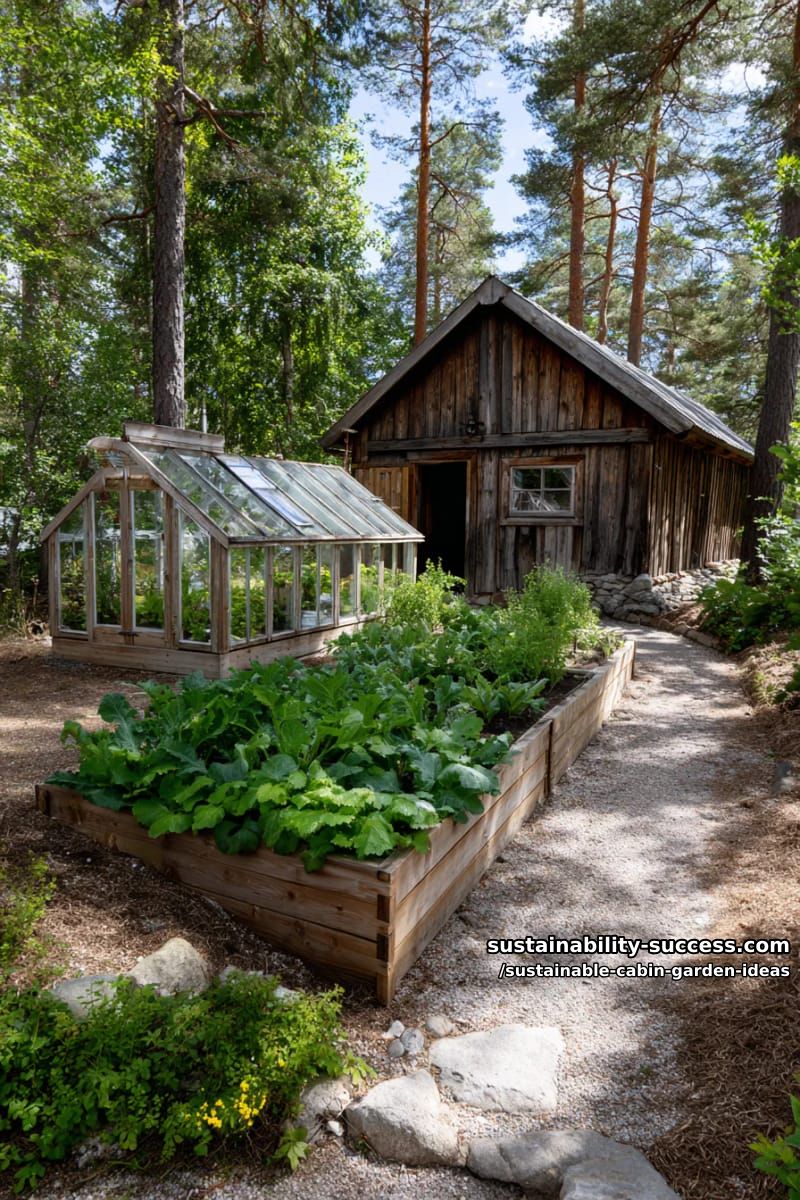
A sunken greenhouse offers more than just extended growing seasons. It blends into the landscape, saving space and reducing wind exposure.
Maintenance may require occasional sealing of window frames, but the savings on heating and the satisfaction of reusing materials outweigh minor fixes. Ready to get your hands dirty?
5. Wildflower meadow with stone stepping path circling a mini garden pond
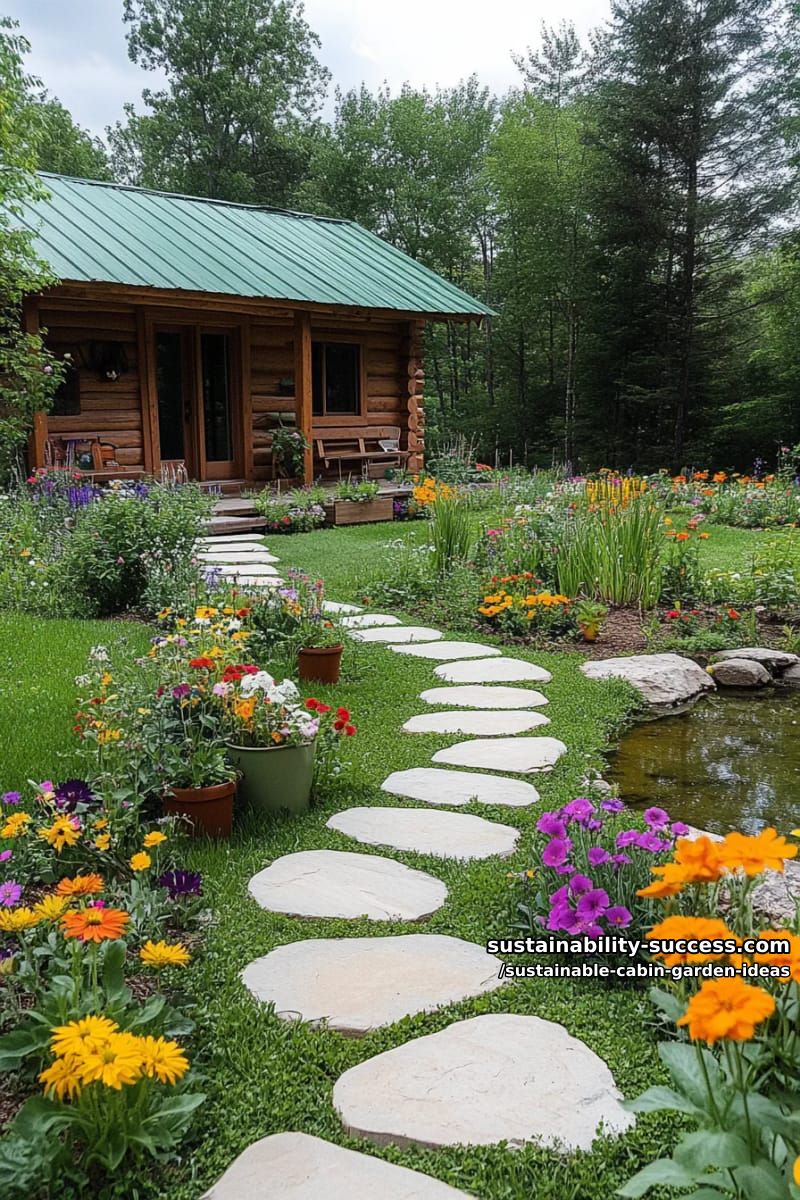
Imagine stepping onto a winding stone path, surrounded by bursts of wildflowers dancing in the breeze. This setup isn’t just pretty; it attracts pollinators and encourages biodiversity.
A tiny pond in the middle supports frogs and dragonflies. Maintenance is surprisingly low, just occasional weeding and topping up water.
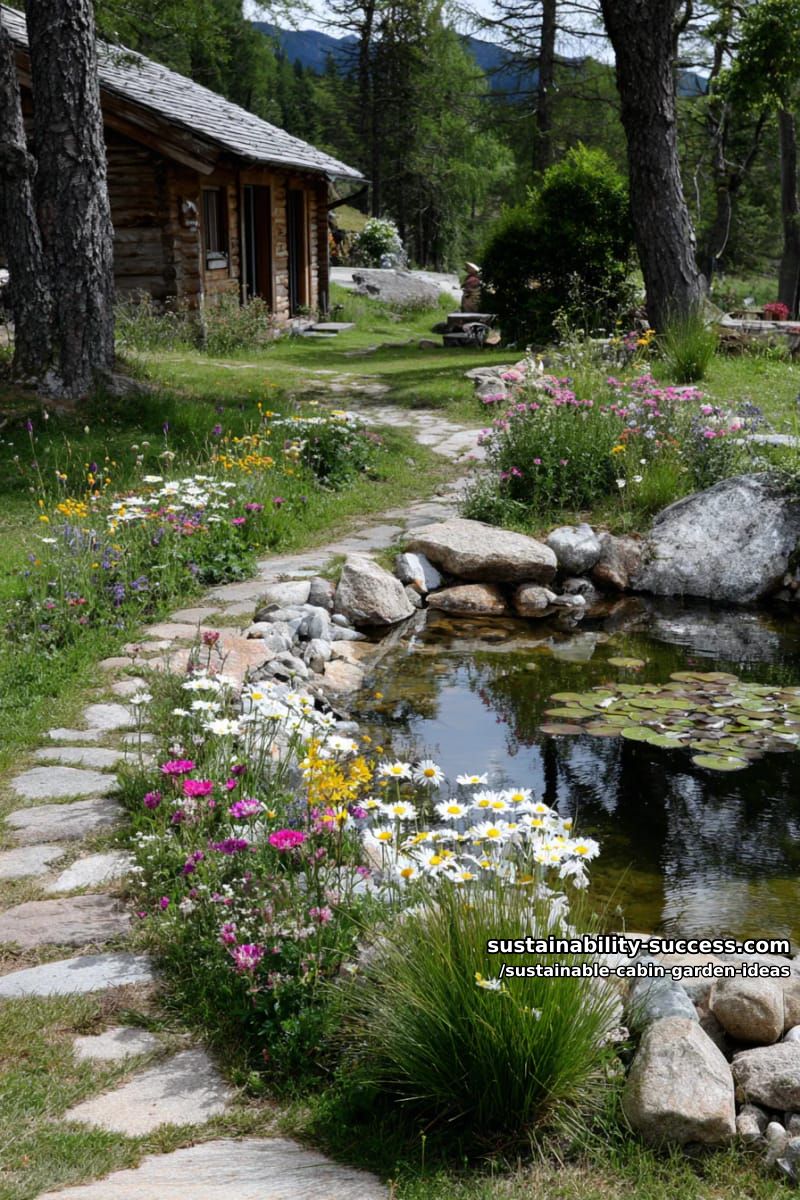
Yet, wildflower meadows can initially look messy to some. The stones help organize the space and guide visitors, but the look isn’t for those who crave manicured lawns.
Still, if you value wildlife and want a patch that almost takes care of itself, this idea is a clear winner.
6. Vertical pallet gardens covering one cabin wall with pollinator-friendly blooms
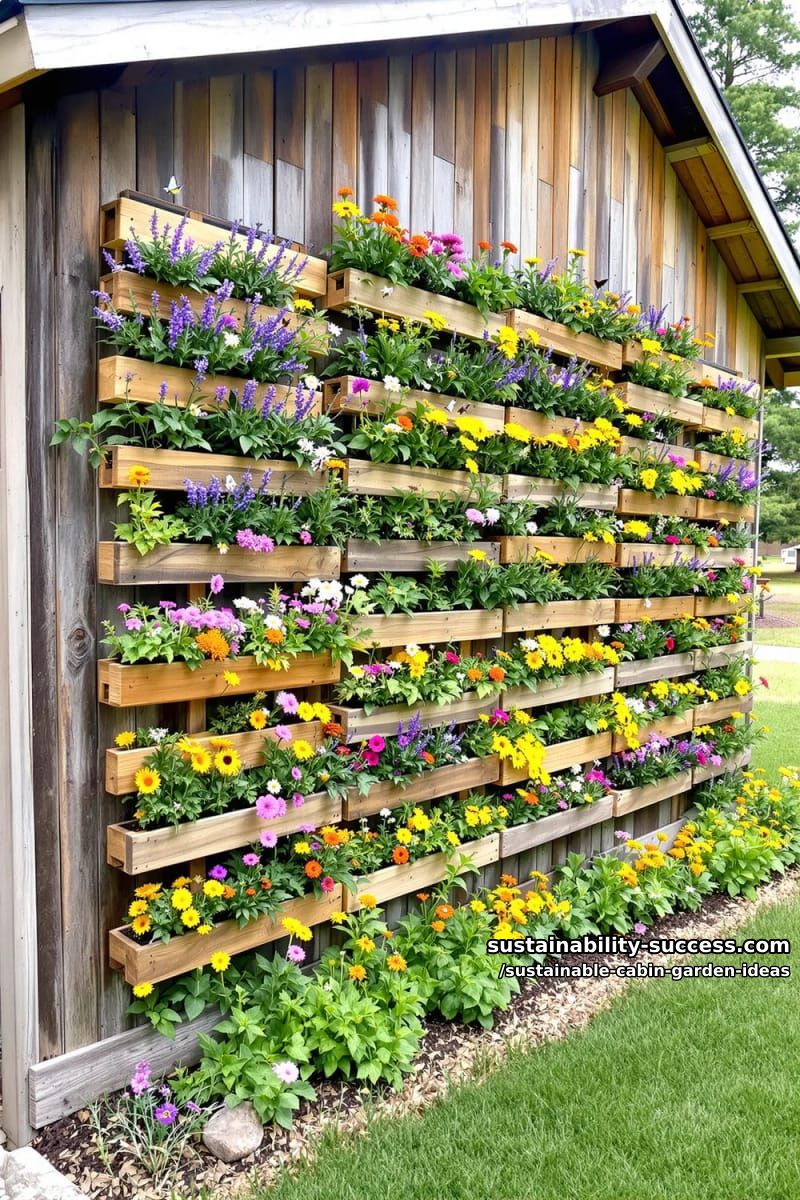
Imagine a cabin wall transformed by a vertical pallet garden, bursting with color and alive with bees and butterflies. Old pallets are easy to find and can hold soil and plants securely.
Choose native flowers like coneflowers and black-eyed Susans to attract pollinators, making the space both useful and beautiful.
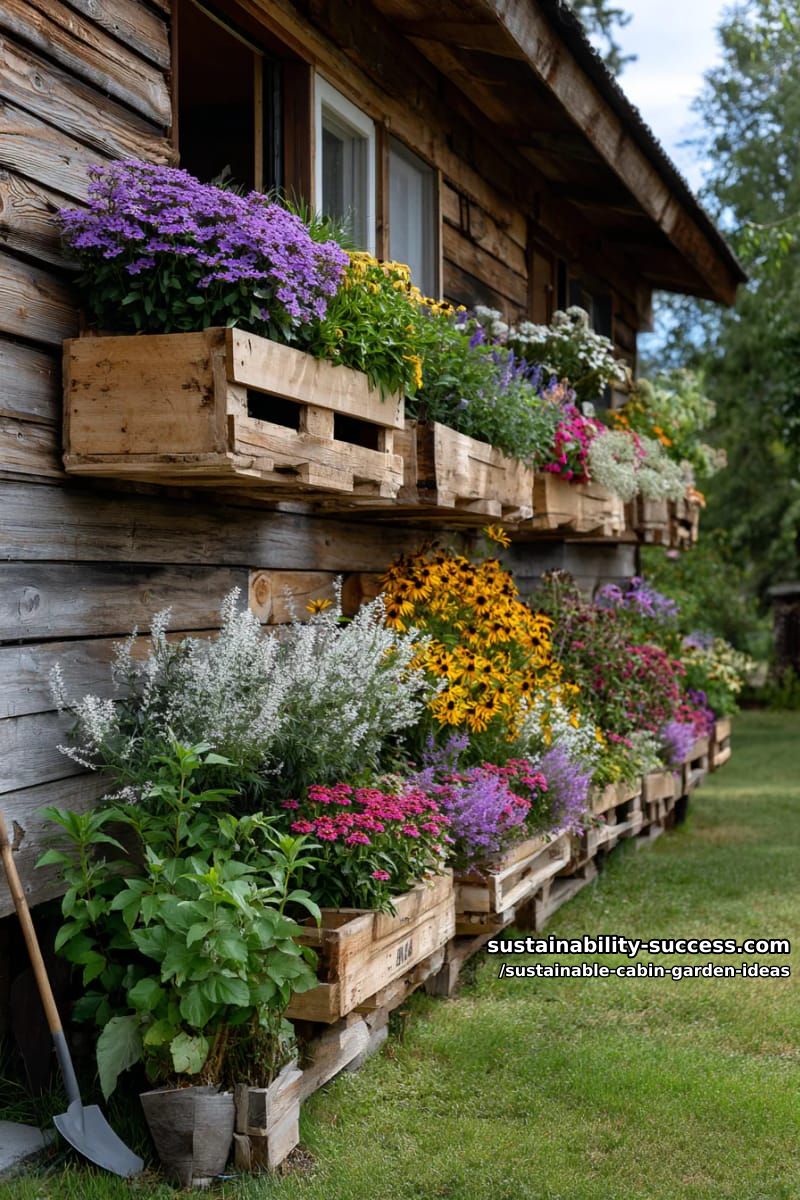
A vertical garden saves ground space, which is perfect if your cabin sits on a small plot. But beware, pallets need occasional weatherproofing, and watering can be tricky.
Tuck herbs or wildflowers into pockets, and watch pollinators visit daily. Who knew a cabin wall could offer so much life?
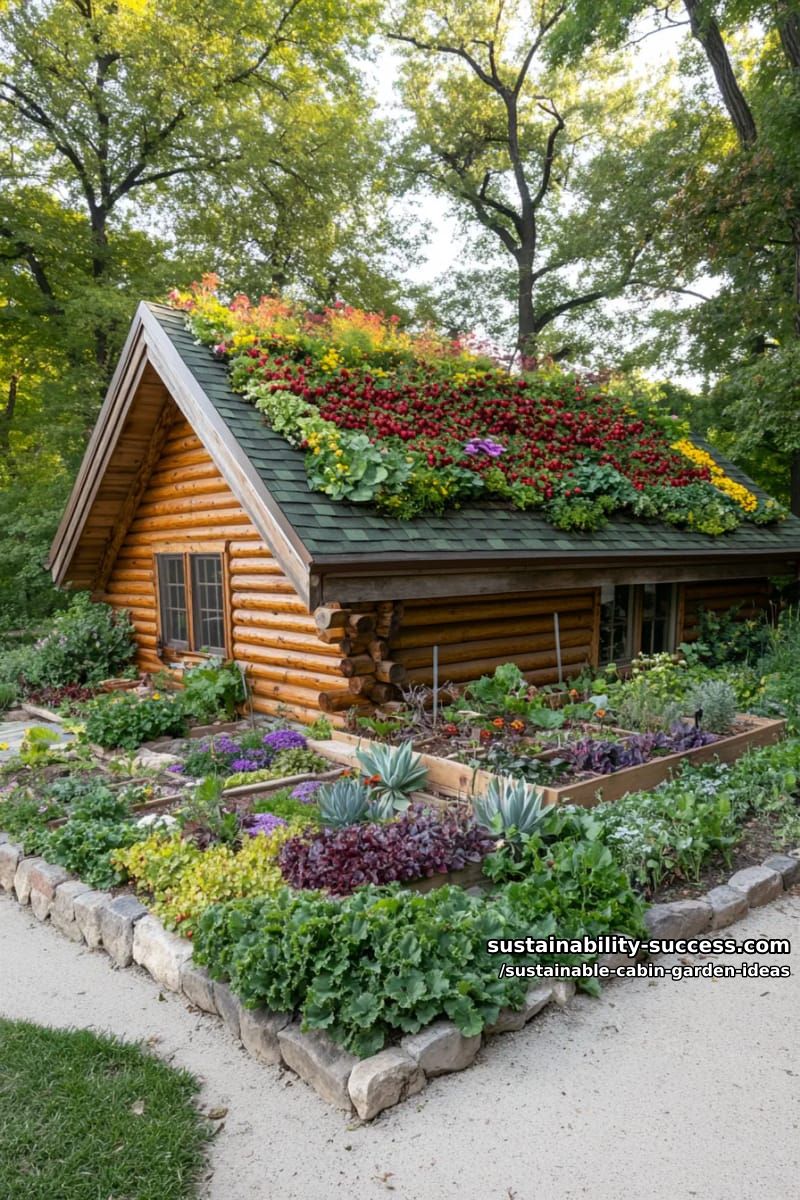
7. Log cabin with green roof overflowing with strawberries and succulents
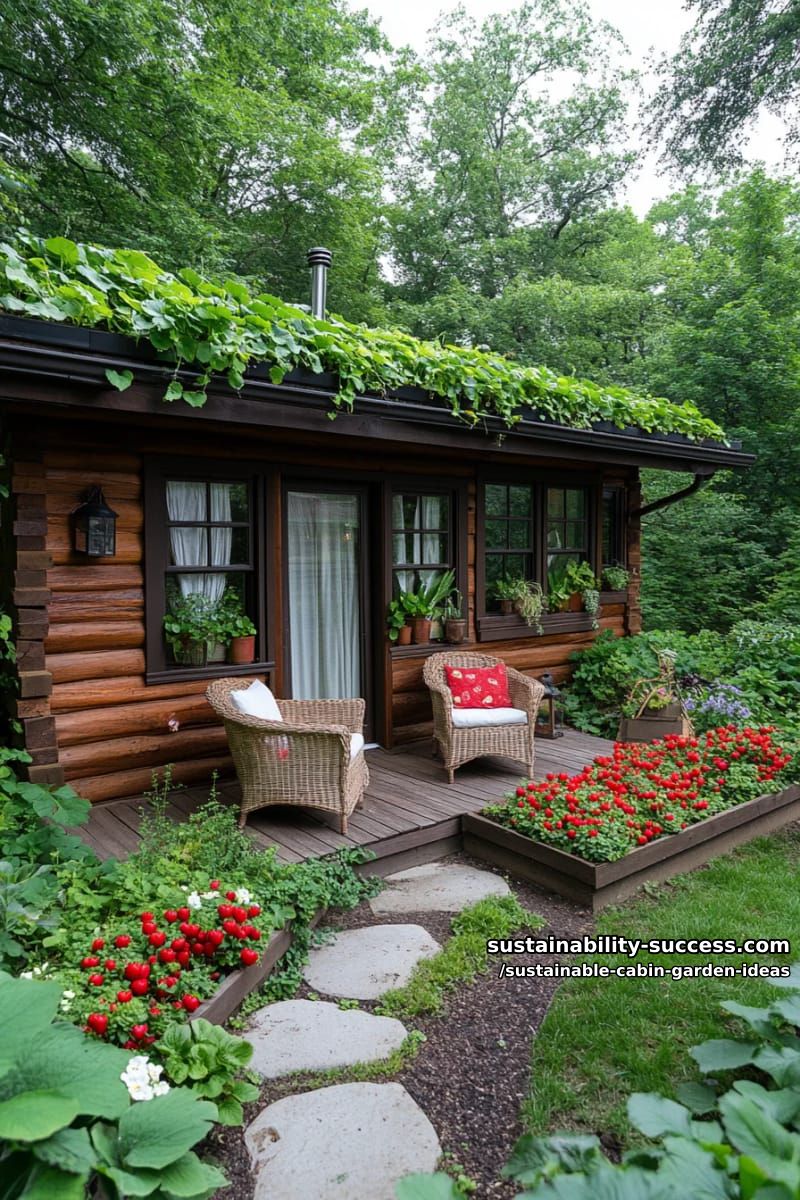
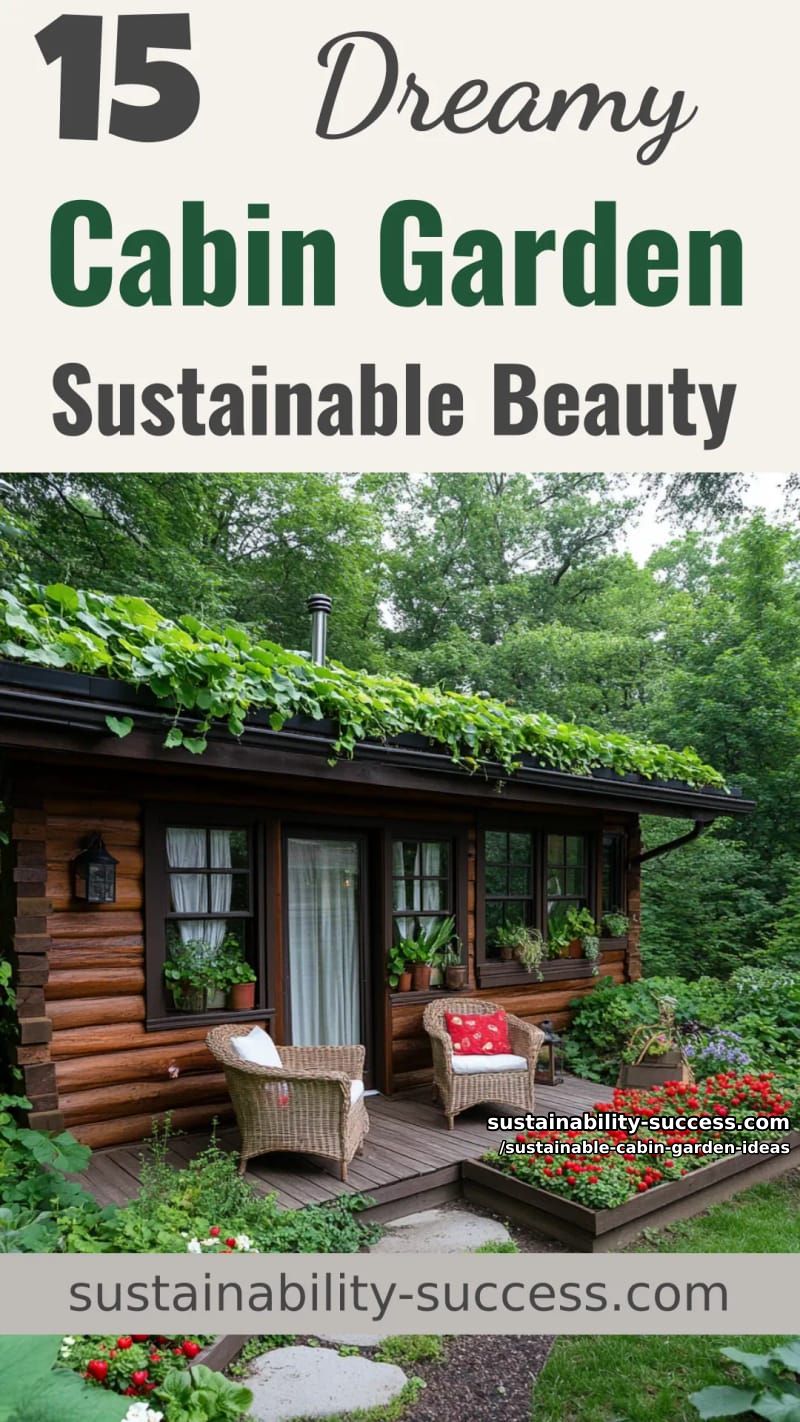
Imagine a log cabin crowned with a living roof, bursting with strawberries and succulents. This approach cools the cabin naturally, attracts pollinators, and turns wasted roof space into a productive mini-garden.
Hungry? Pluck sun-warmed berries right above your head. It’s as practical as it is whimsical.
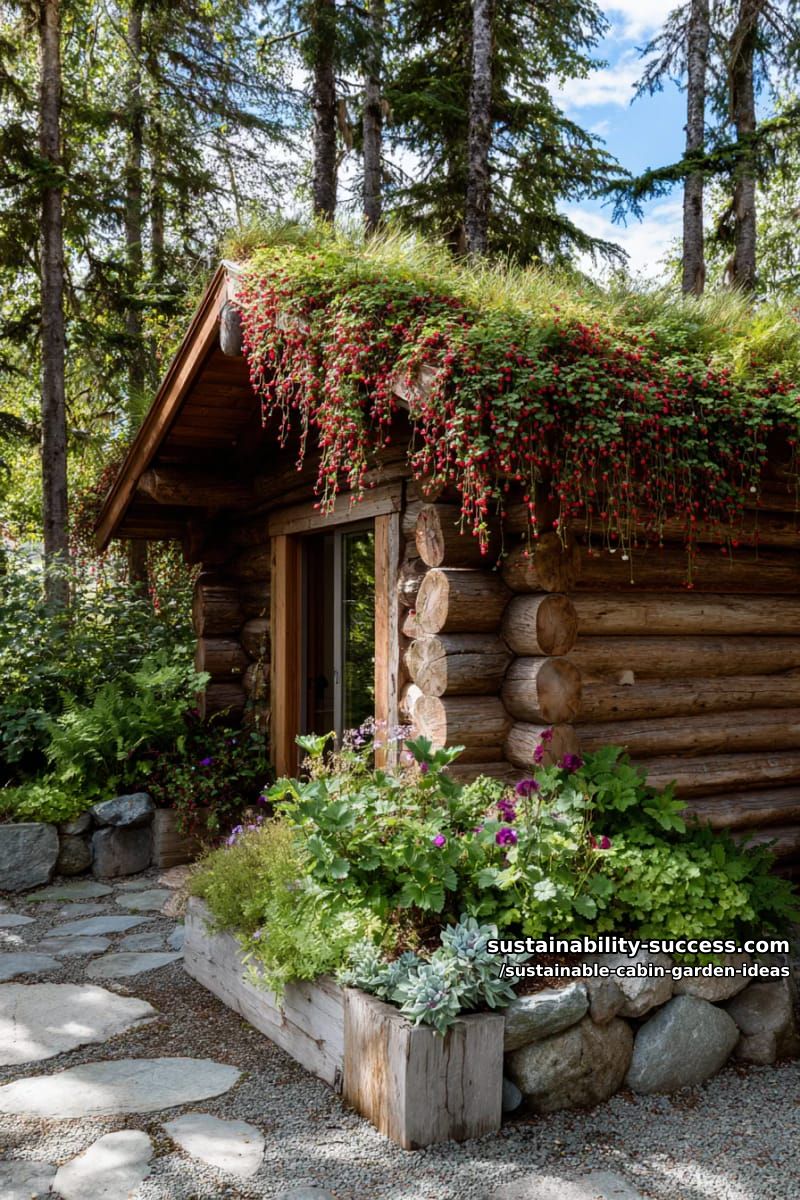
However, green roofs demand some upkeep. Strawberries need full sun and regular watering, while succulents prefer drier soil. Mixing the two? Use containers or separate patches to meet each plant’s needs.
Still, the benefits, fresh fruit, insulation, and a view that beats plain shingles, make the effort worthwhile.
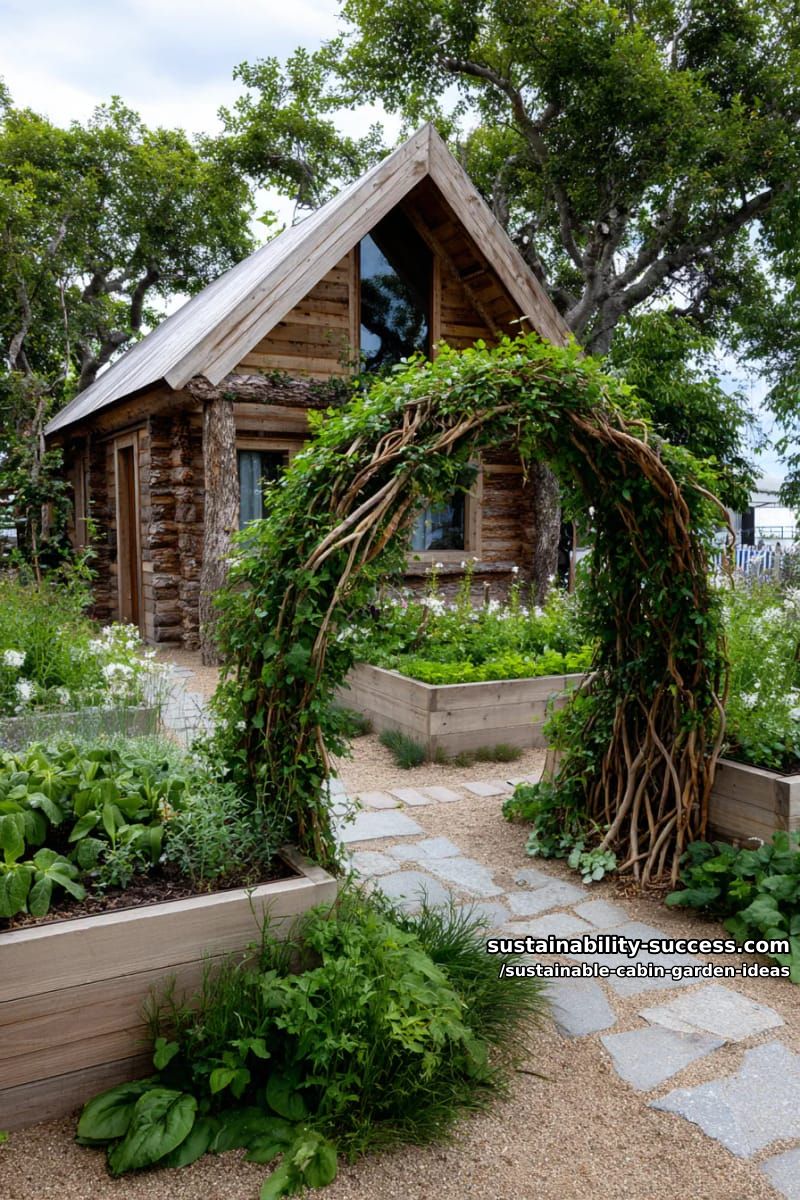
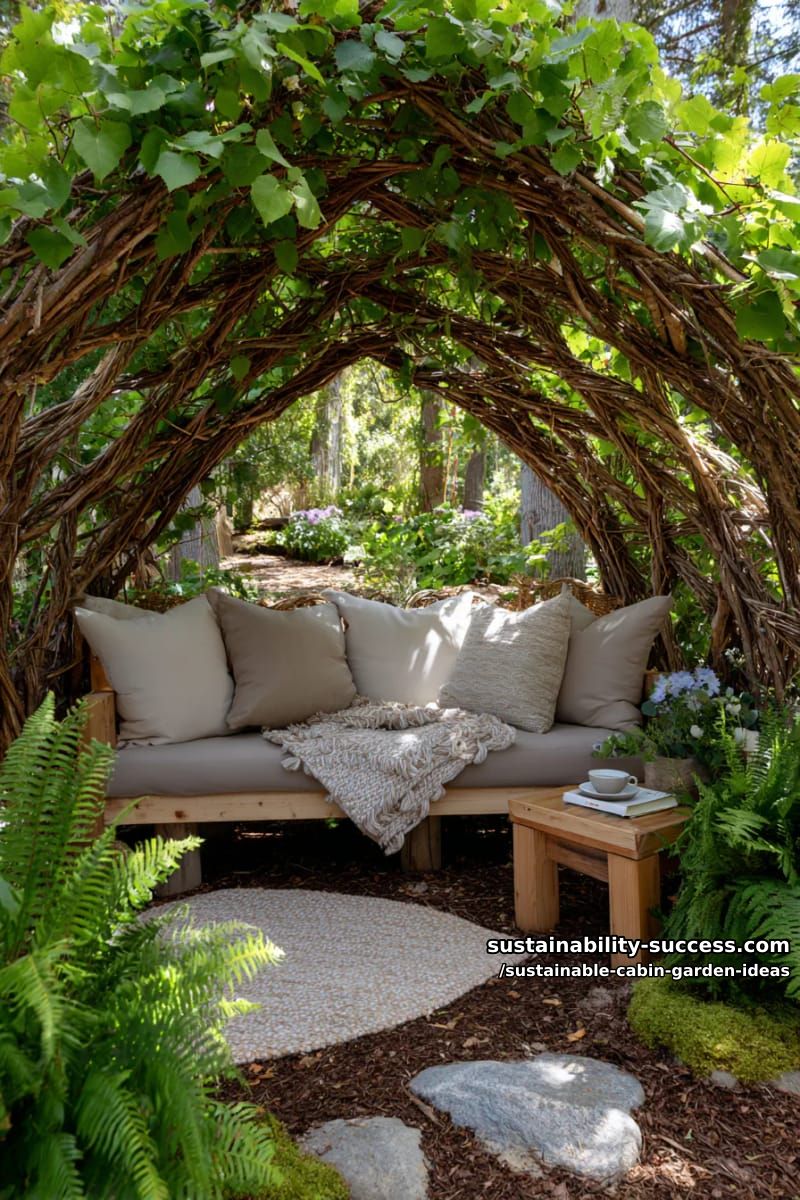
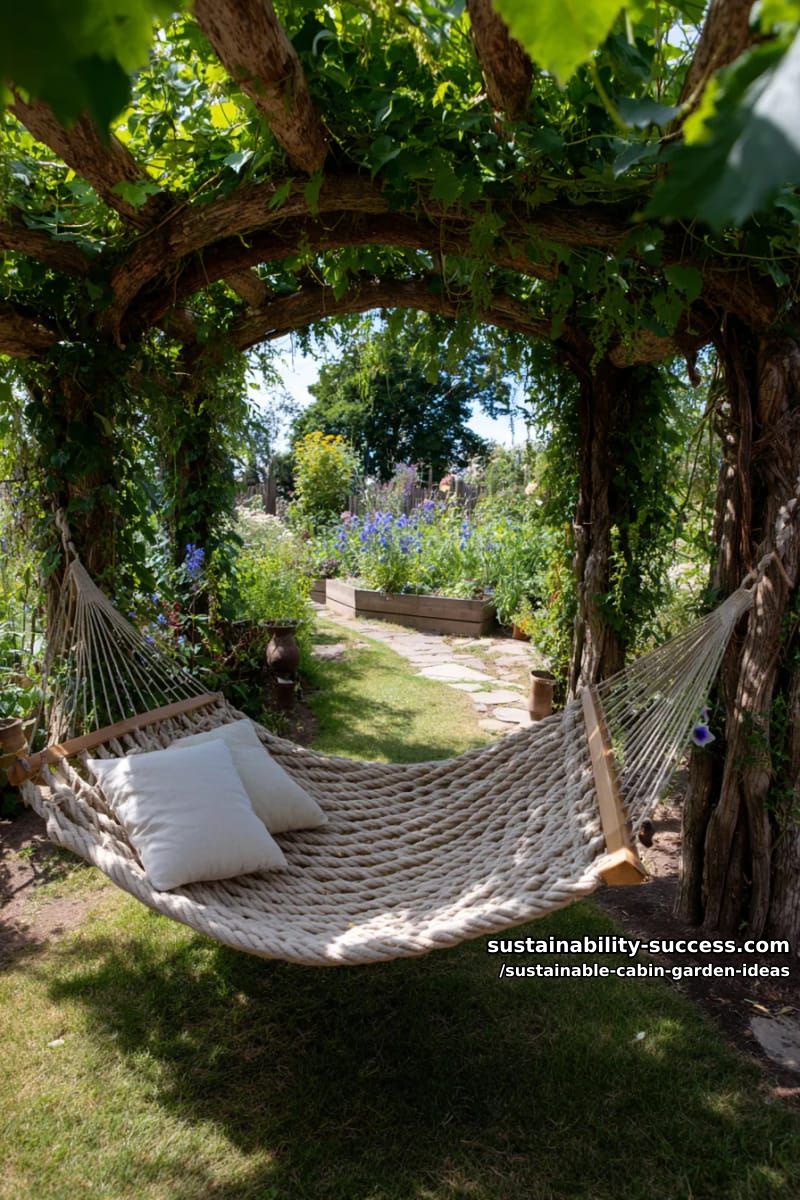
8. Cozy reading nook hidden inside a living twig-and-vine dome
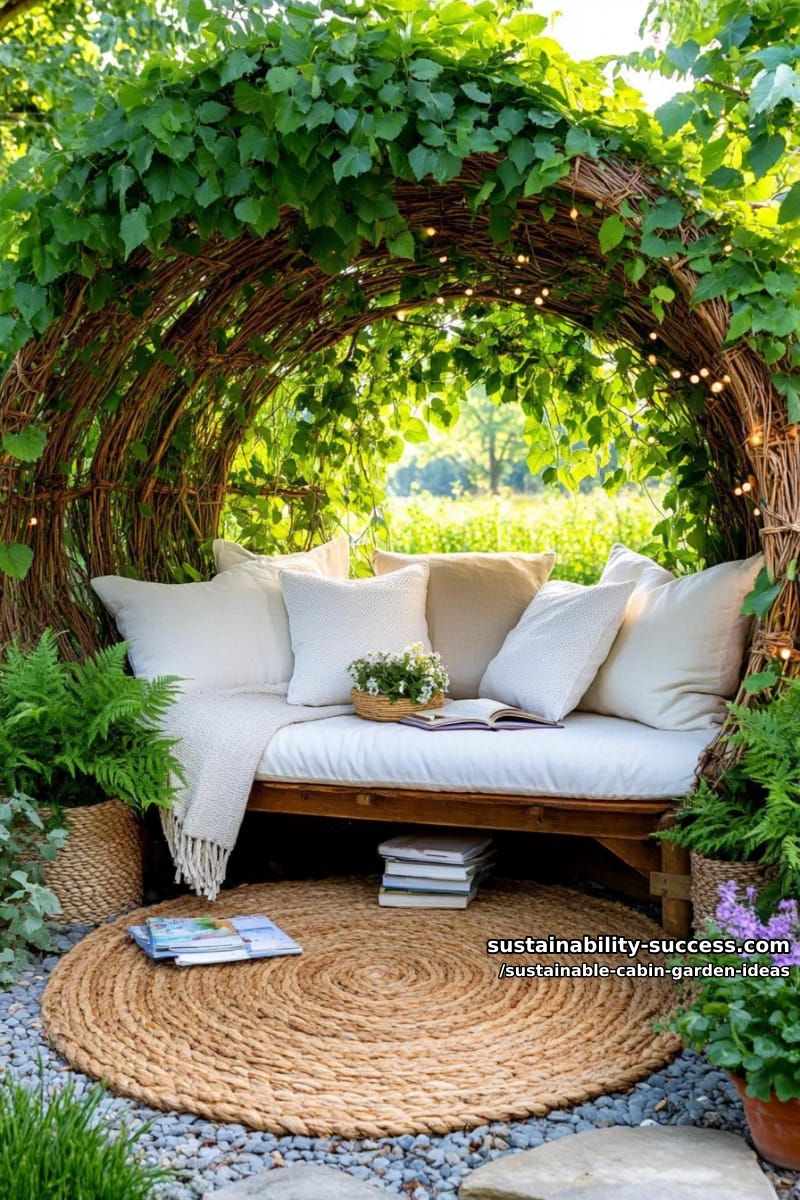
Imagine curling up with a book inside a dome made of living twigs and vines. This isn’t just visually appealing, it’s practical. The dense greenery muffles outside noise, offering privacy and peace.
Building one is simple: weave flexible branches over a frame, then train climbing plants to fill the gaps.
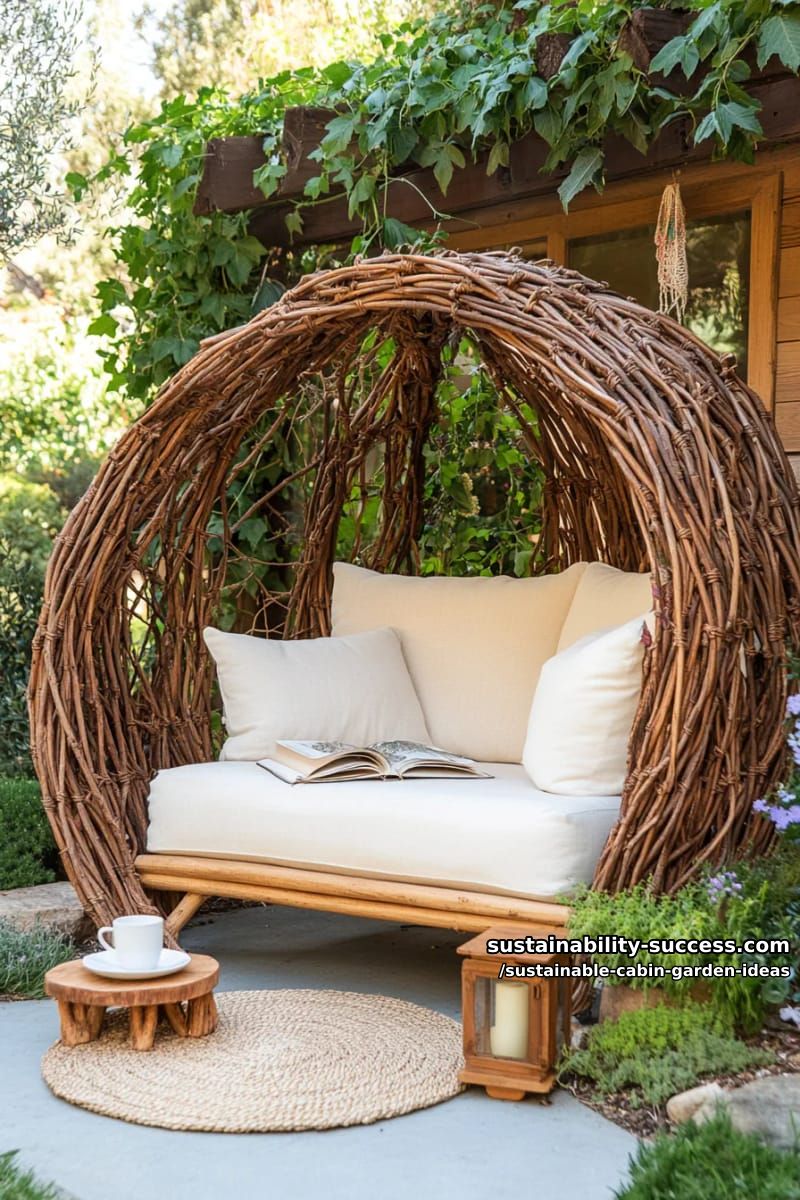
Some may worry about upkeep. Regular pruning keeps it healthy and prevents overgrowth. Add a waterproof cushion, and you’ve got a retreat that’s both eco-friendly and enchanting.
Why settle for a standard bench when you can enjoy your stories surrounded by nature’s own architecture?
9. Raised veggie beds made from reclaimed timber surrounding a fire pit
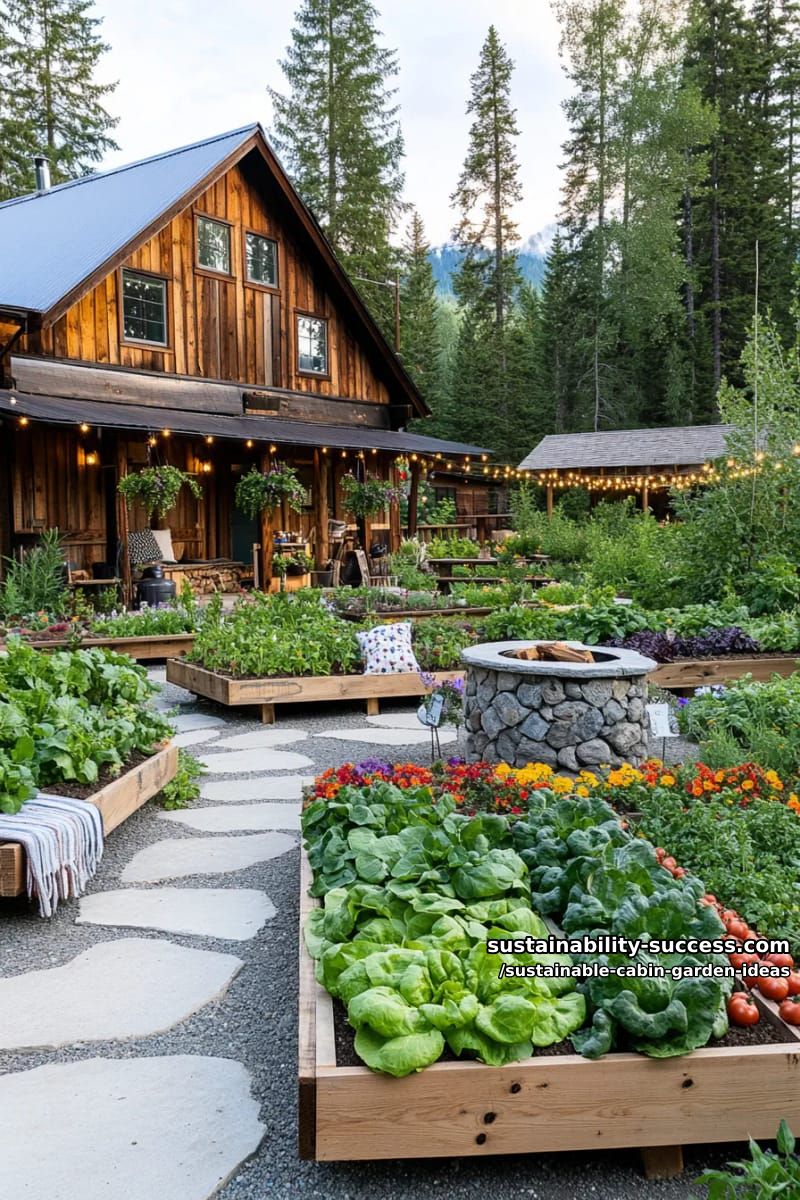
Raised veggie beds built from old timber add personality and sustainability to your garden. Reclaimed wood isn’t just eco-friendly; it’s often free if you ask around.
Imagine gathering fresh greens before roasting them over your fire pit with friends, practical, meaningful, and downright delicious.
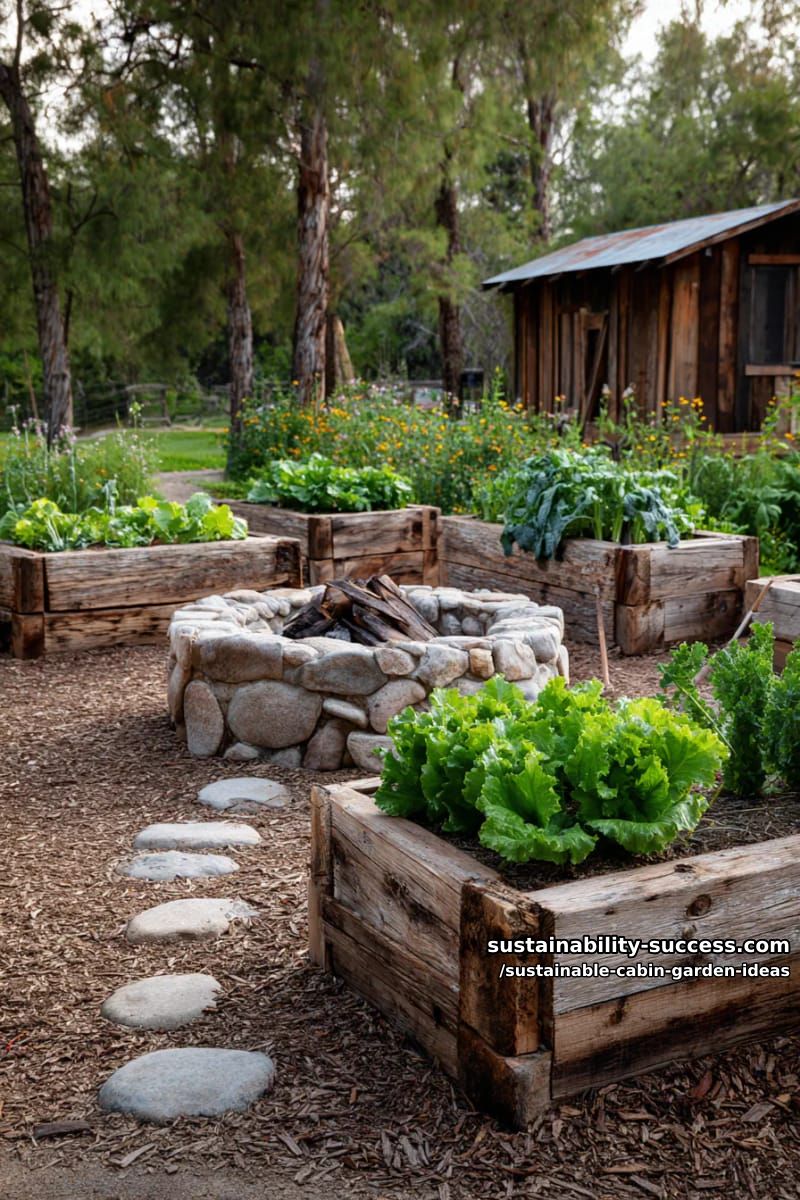
Still, it’s wise to check your timber for rot or old paint. Not all reclaimed wood is safe for food crops. Seal untreated wood with natural oils, or line beds with food-safe material.
With a little planning, you’ll have a gorgeous setup that’s both functional and planet-friendly.
10. Solar-powered fairy lights woven through trellis arch of climbing beans
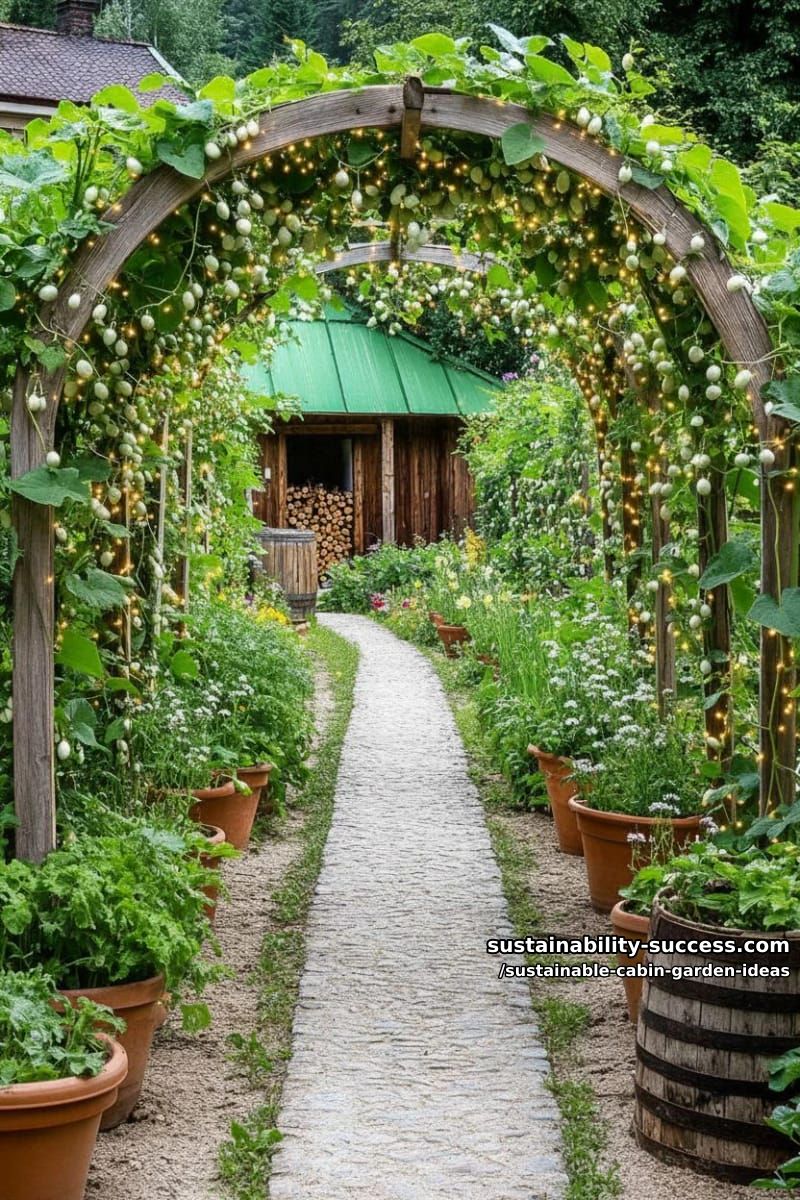
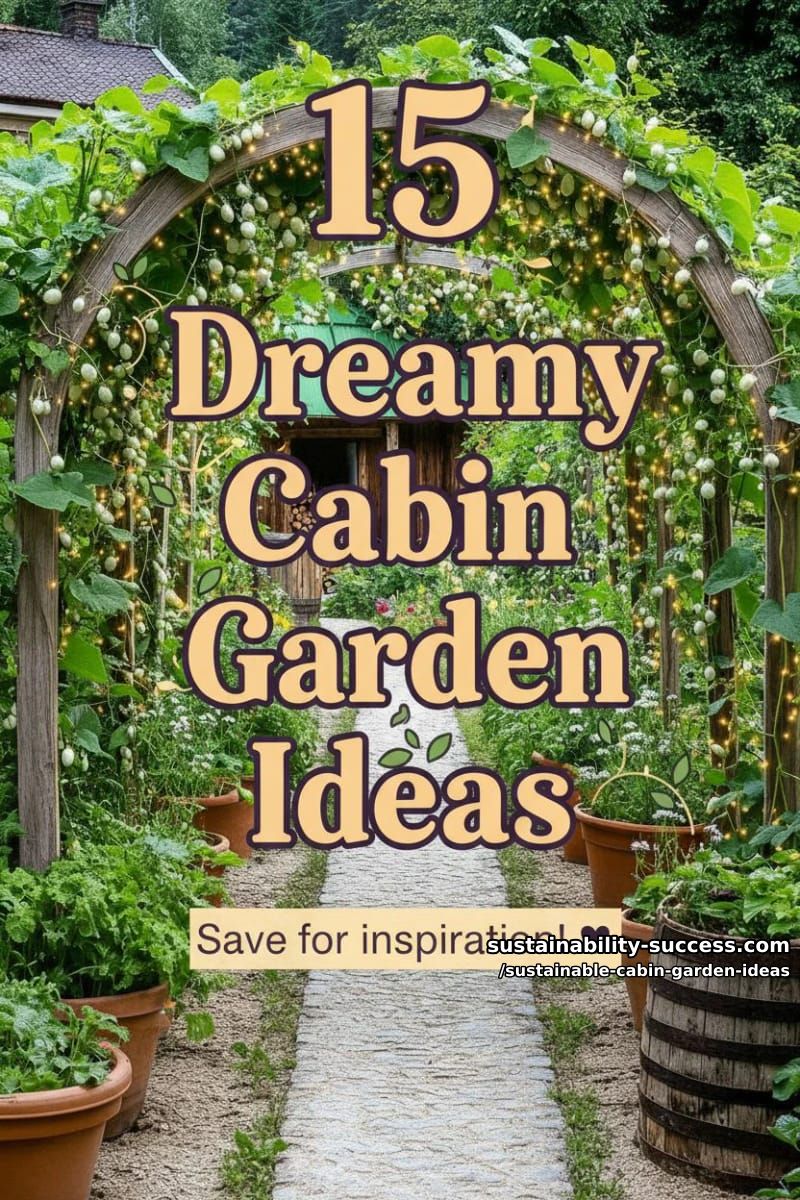
Stringing solar-powered fairy lights through a trellis arch filled with climbing beans creates a magical outdoor spot. These lights are easy on your energy bill and simple to install.
Imagine soft glows among the leaves while you pick fresh beans at dusk, practical and enchanting without fuss.
Solar lights depend on sunlight, so placement matters. Choose a trellis spot that gets good daylight. On cloudy days, brightness may drop, but the cozy twinkle still brings charm.
Compared to plug-in lights, solar options save money and reduce waste, making them a smart choice for any eco-friendly cabin garden.
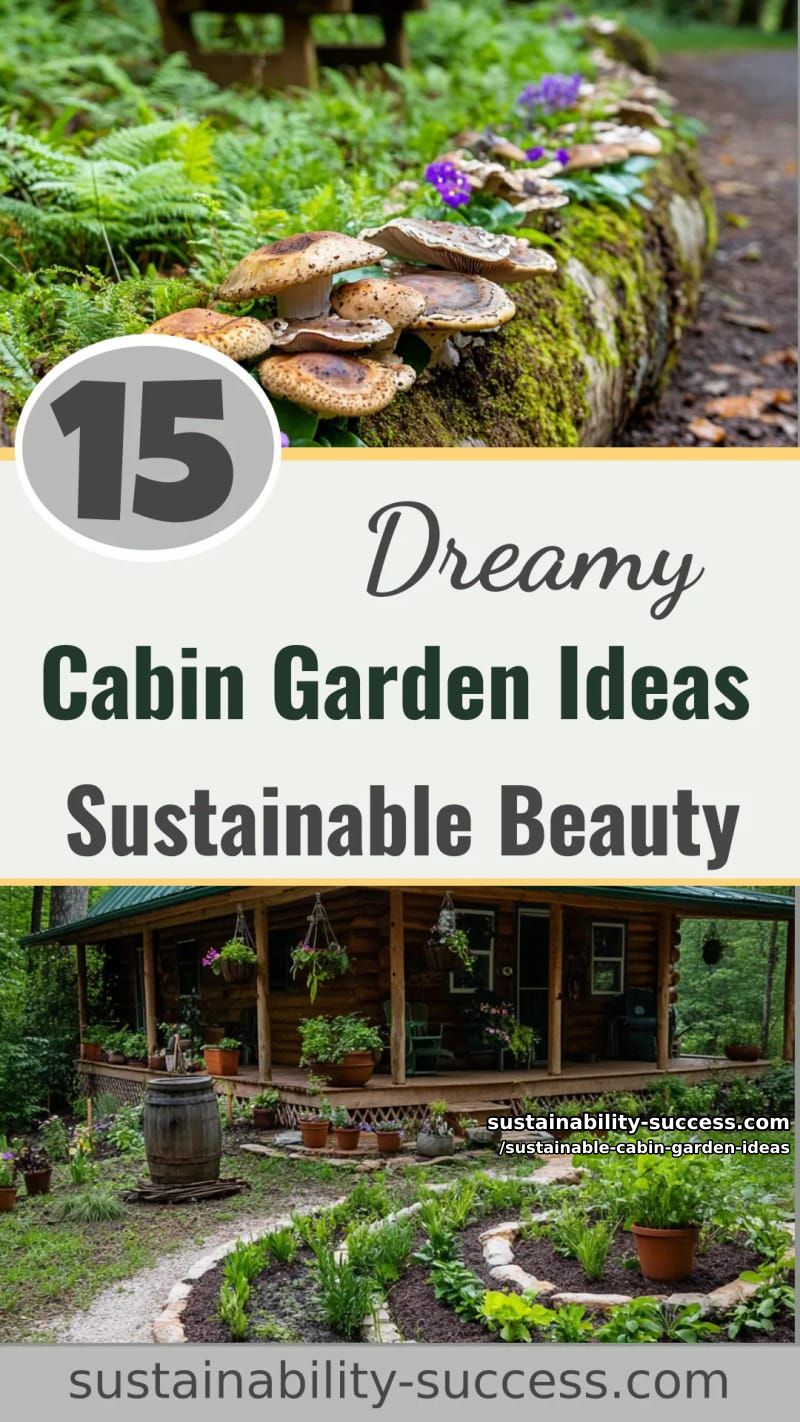
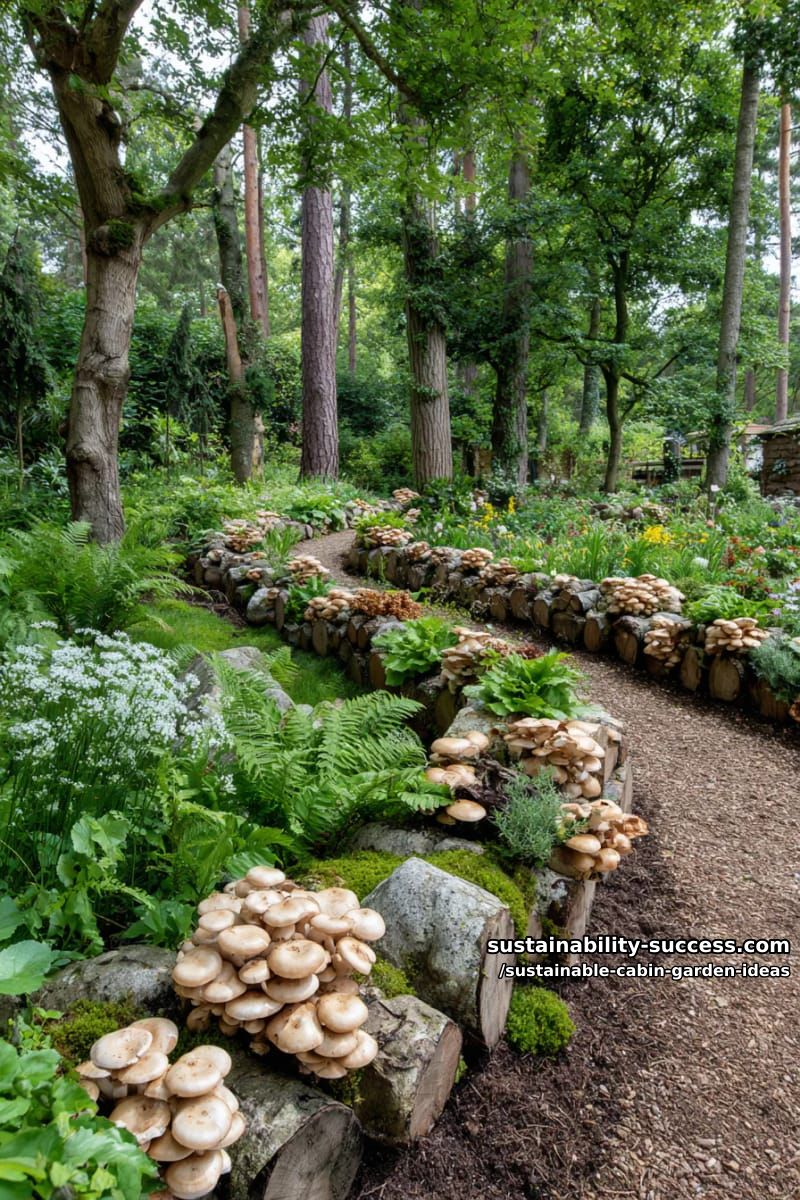
11. Mushroom log stacks forming a shady edible border along the woodland path
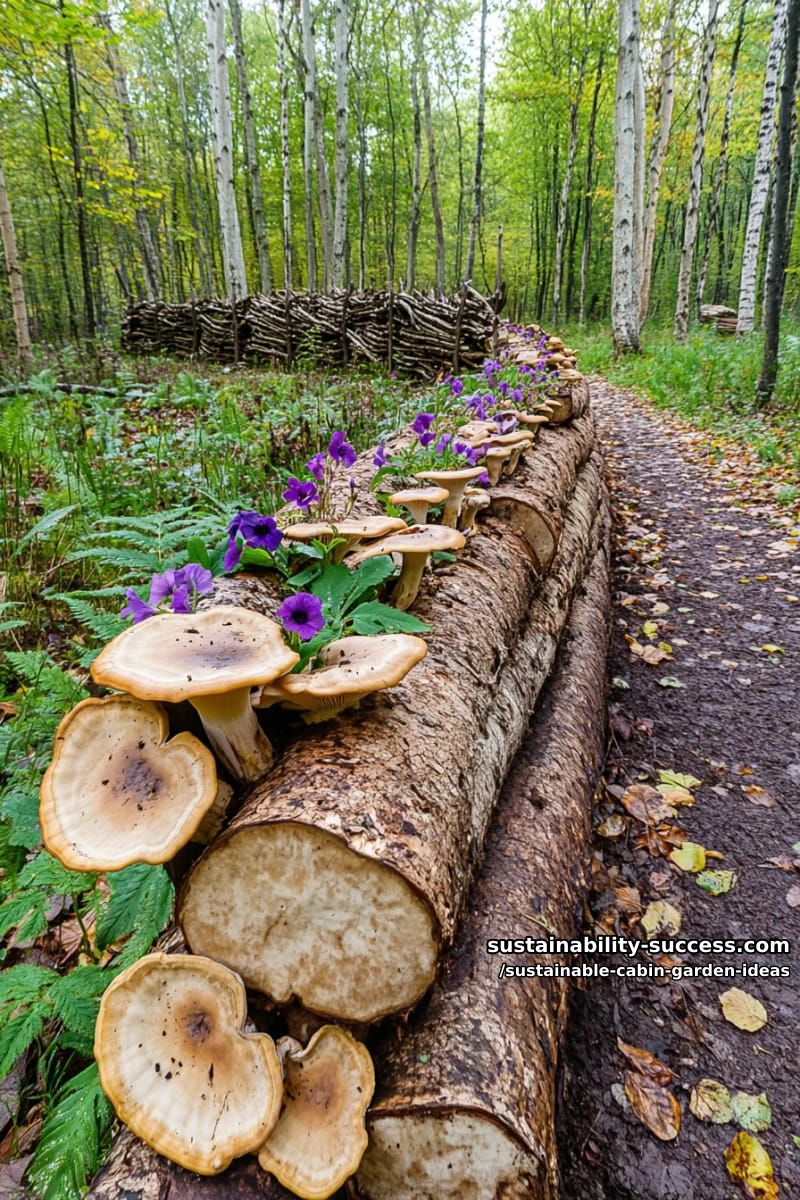
Stacking hardwood logs along a woodland path creates natural shade while inviting tasty mushrooms to grow. Shiitake and oyster varieties thrive on oak or maple.
This low-maintenance setup offers fresh, organic mushrooms and a rustic border. It’s practical, affordable, and turns a simple walk into a forager’s delight.
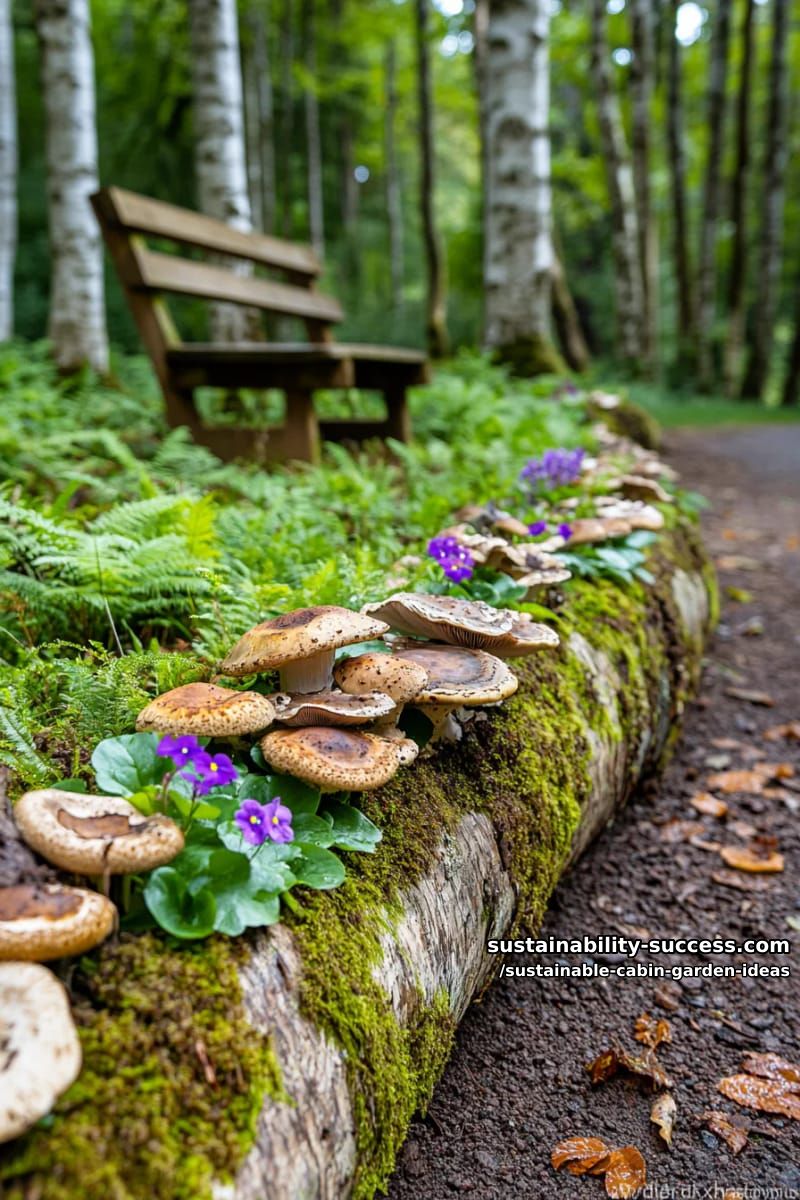
However, patience is key. Mushrooms may take months to appear, and proper moisture keeps them happy. Some critters might also sample your harvest before you do.
Still, it’s hard to argue with the blend of beauty, food, and ecological benefit this living border provides.
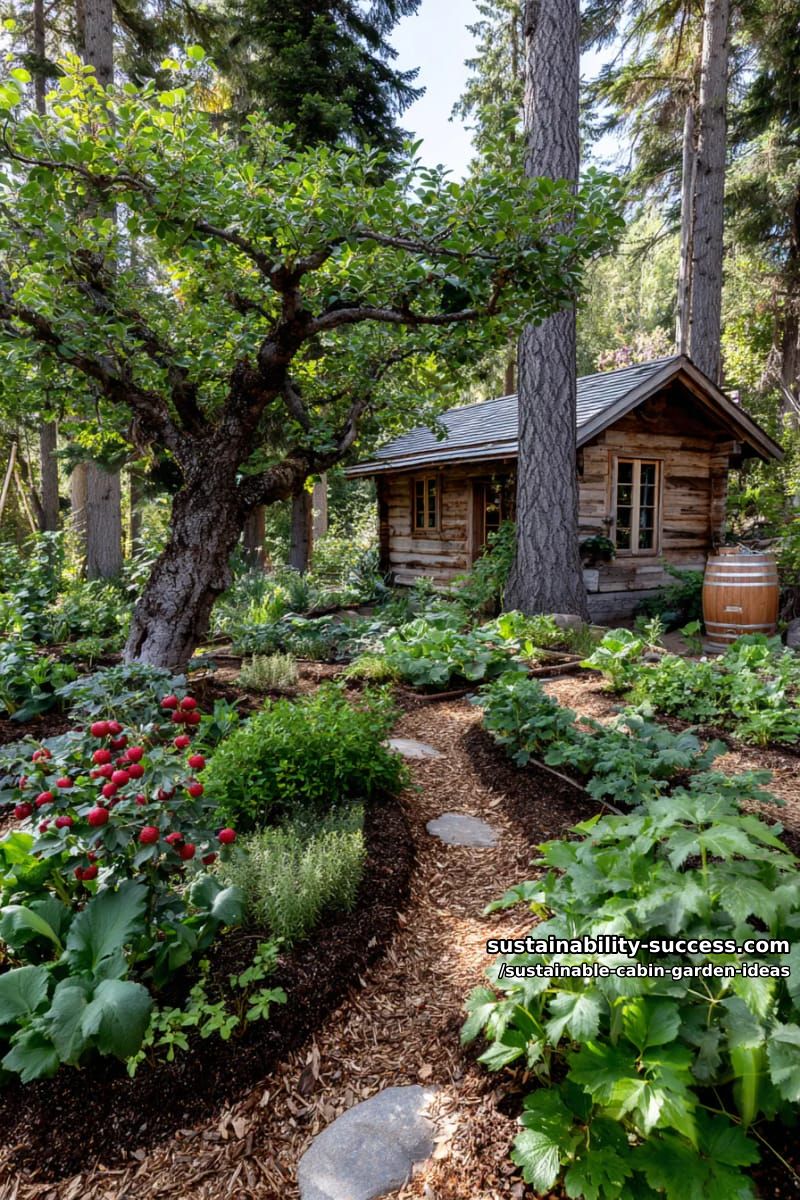
12. Forest garden with fruit trees, berry bushes, and companion plantings
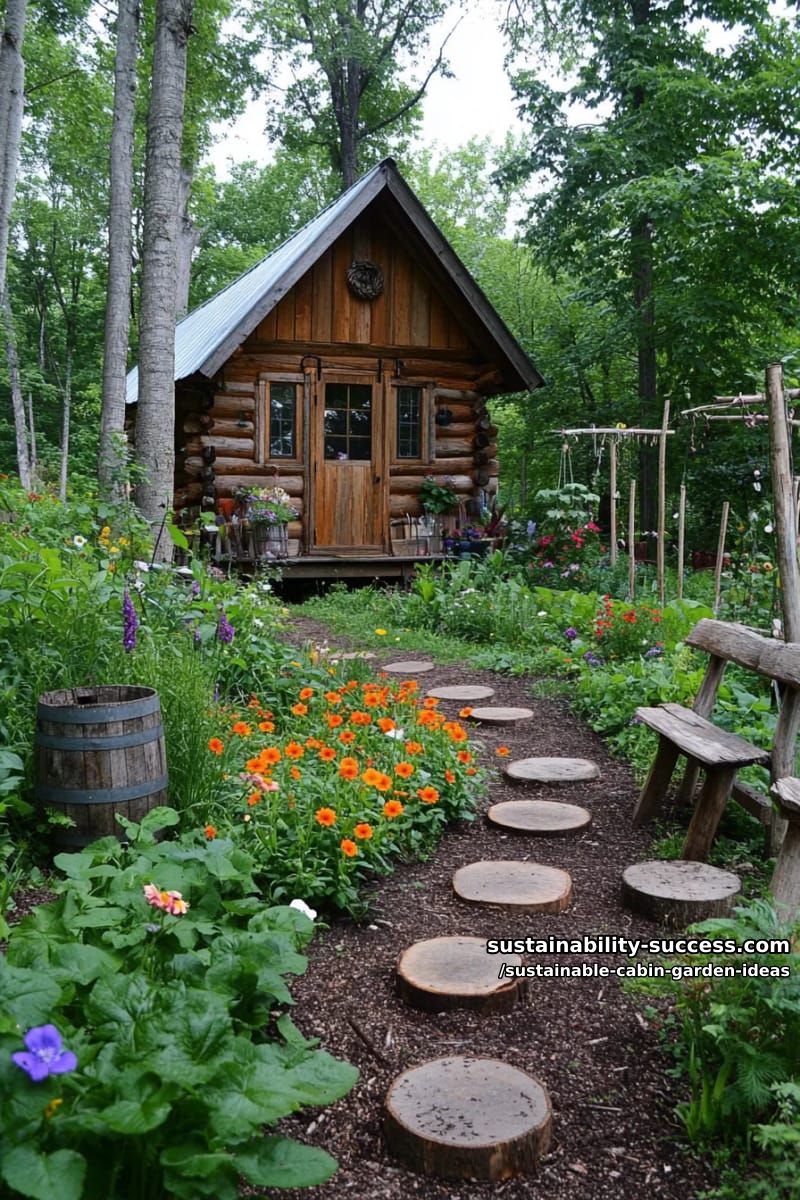
A forest garden blends fruit trees, berry bushes, and companion plants, mimicking a natural woodland. This approach maximizes space and boosts biodiversity. Imagine apples hanging above raspberries, with herbs like chives thriving below.
Each layer supports the next, creating a low-maintenance, productive ecosystem that keeps pests in check.
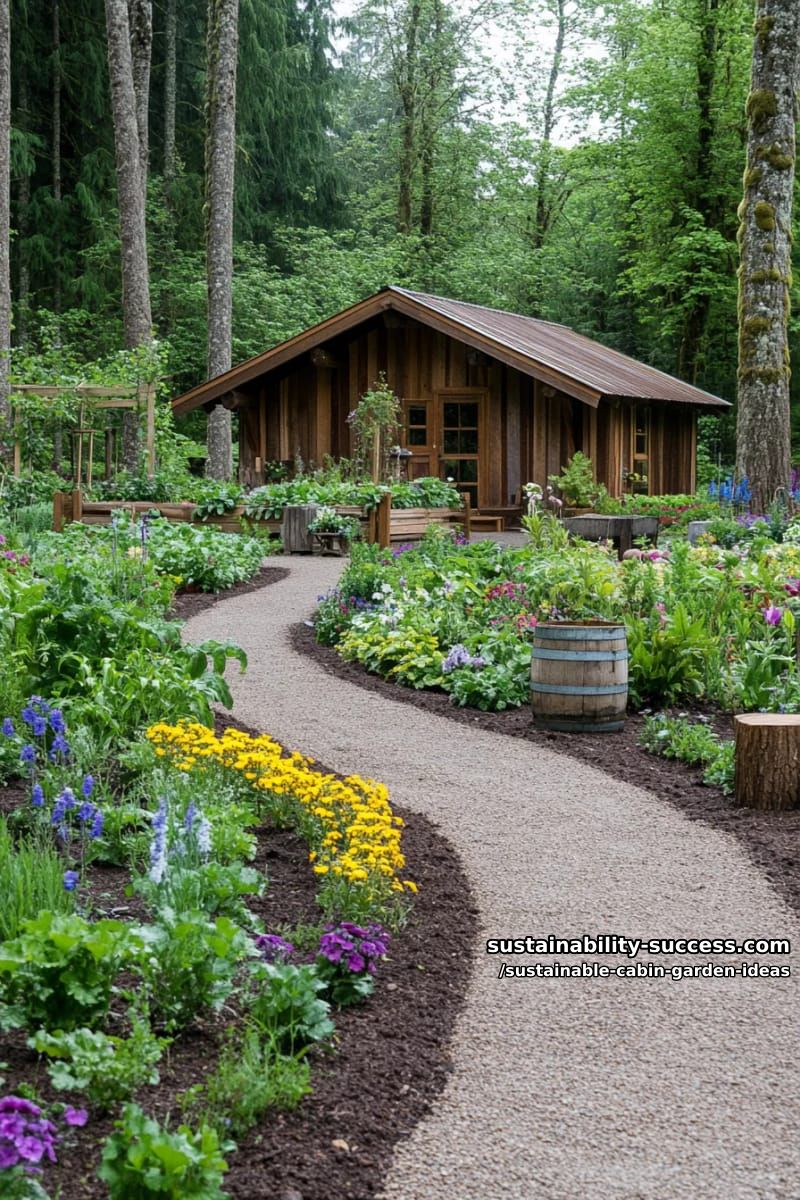
While forest gardens can take a few years to mature, patience pays off. Start with hardy fruit trees and native berries. Add nitrogen-fixing plants, such as clover, to enrich the soil.
Curious about weeds? Dense ground cover like strawberries helps crowd them out, reducing your workload and increasing your harvest.
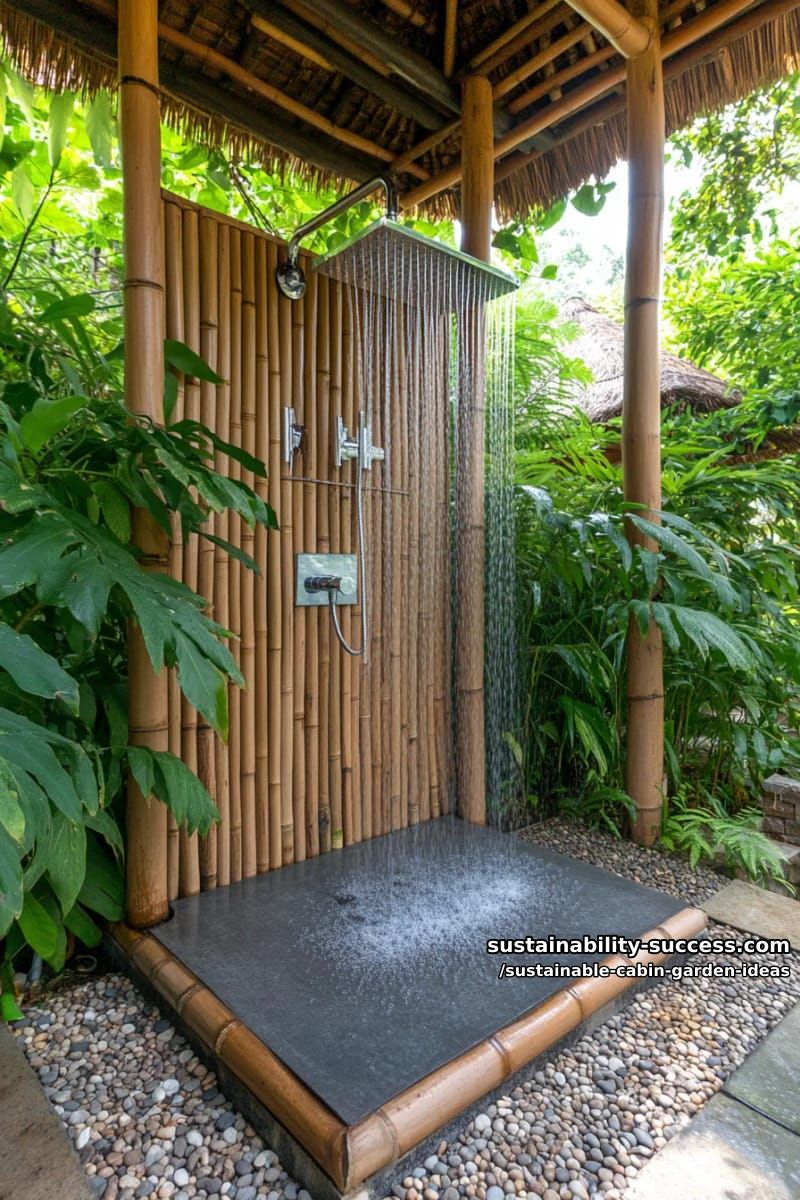
13. Outdoor shower built from bamboo and surrounded by privacy ferns
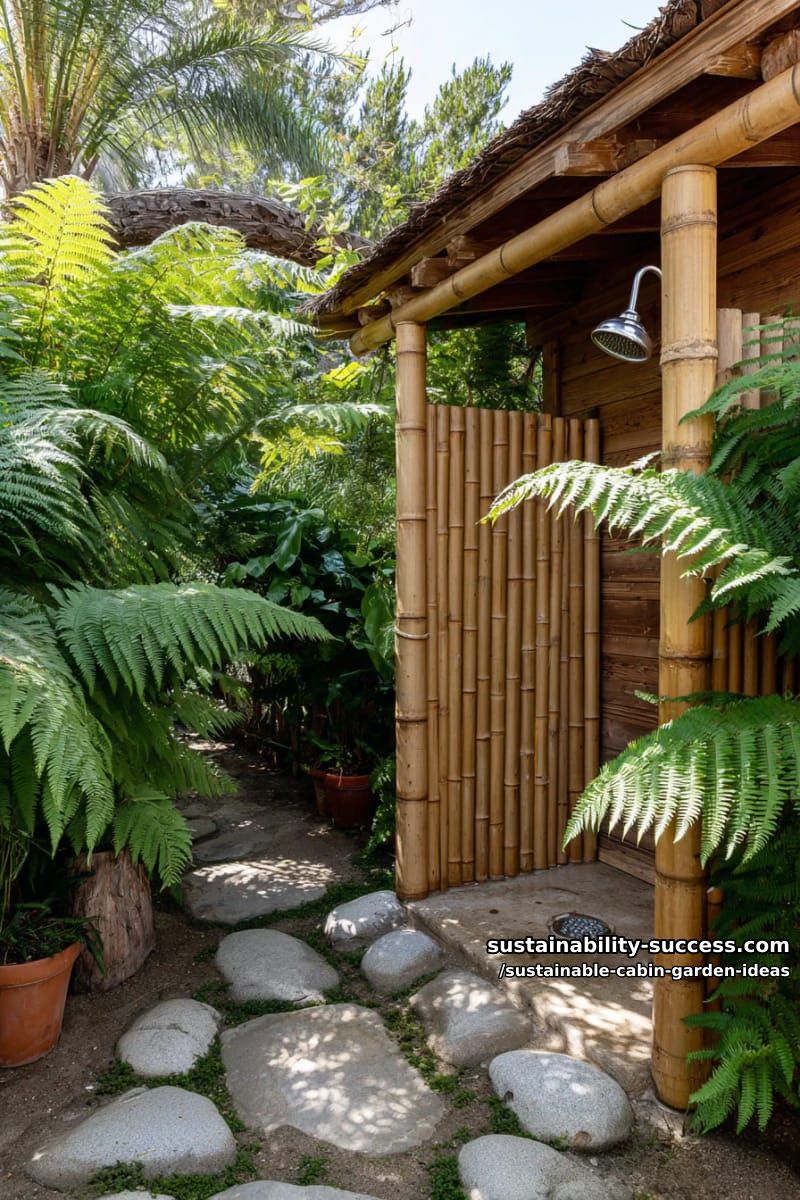
Imagine rinsing off under a simple bamboo shower, with the gentle sound of water blending with rustling ferns. This setup isn’t just eco-friendly; it creates a private oasis using fast-growing, renewable materials.
Bamboo resists rot, while ferns thrive in dappled shade, both perfect for off-grid garden spaces.
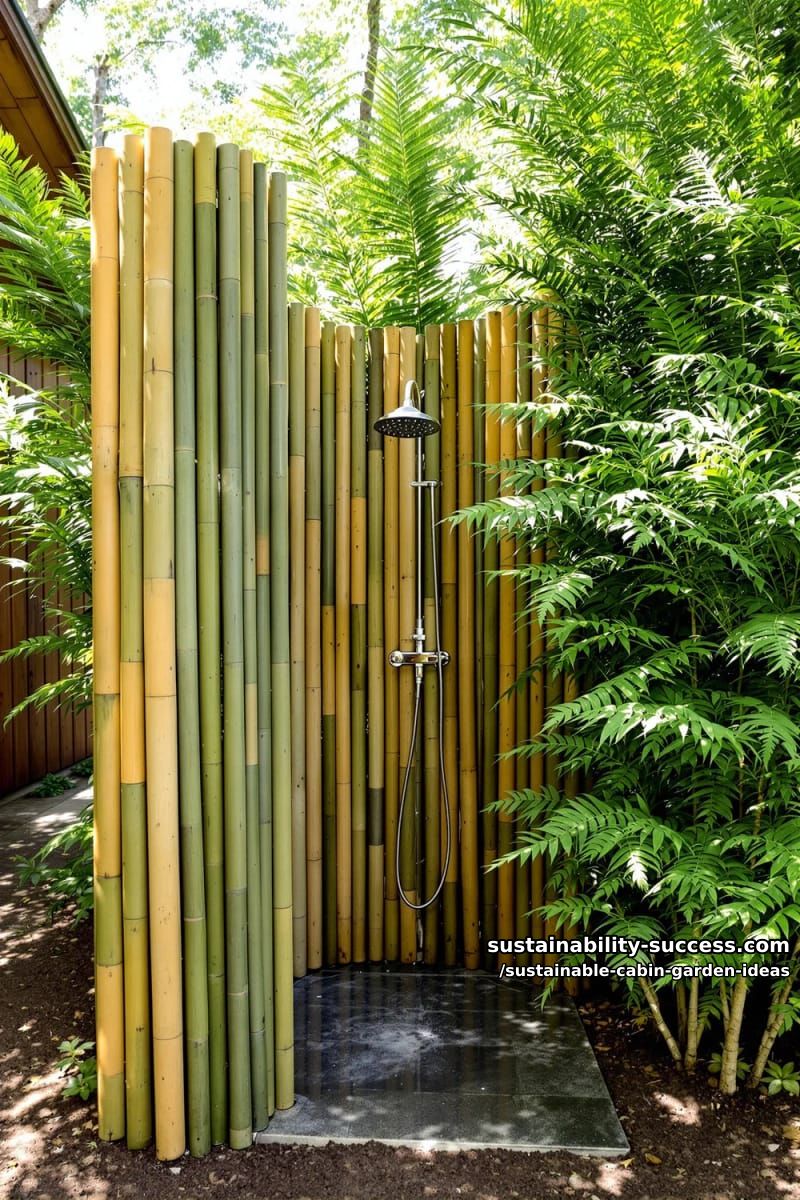
Building this shower is straightforward. Secure bamboo poles for structure, then plant tall ferns around the edges for a living curtain. Want more privacy? Add a few tall grasses or native shrubs.
Maintenance is low, but regular trimming keeps the space lush and inviting. Simple, green, and surprisingly affordable.
14. Reclaimed brick spiral herb garden at the entrance to the cabin
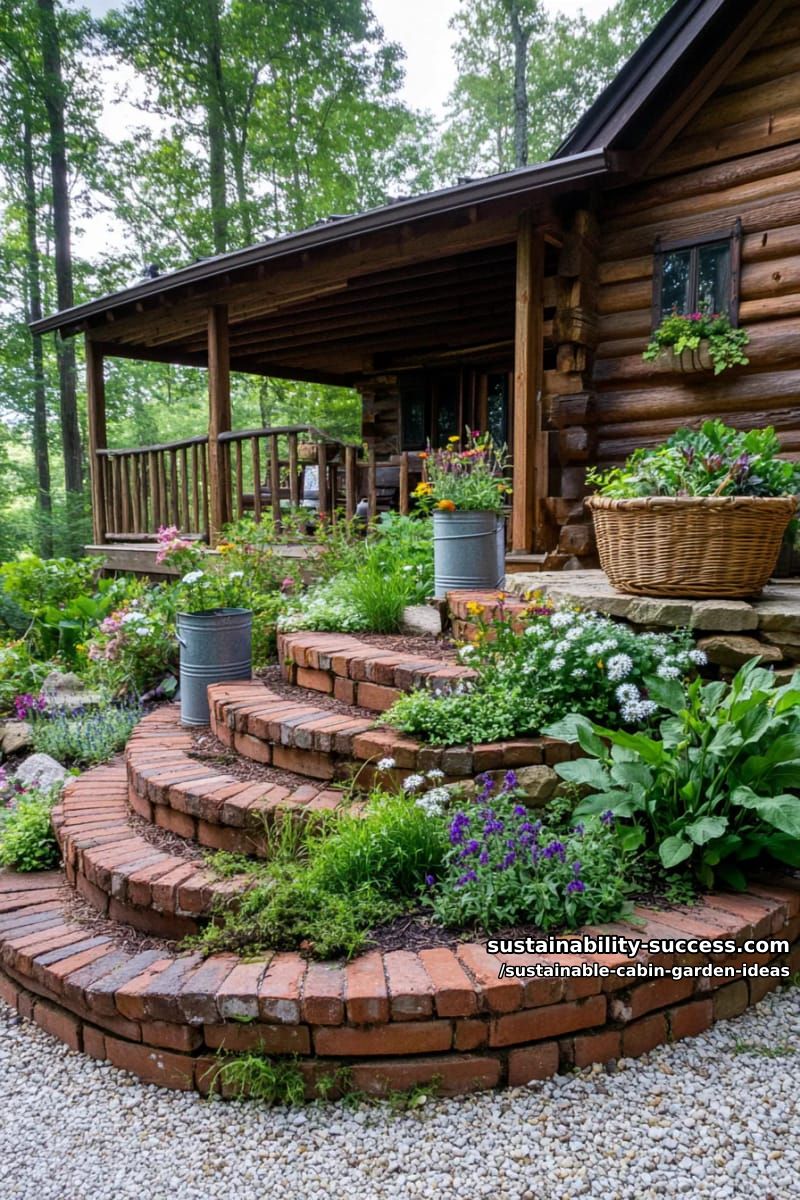
Reclaimed brick brings character and history to your cabin entrance while keeping waste out of landfills.
A spiral herb garden made from these bricks doesn’t just look charming, it maximizes space, letting you grow more varieties in a tight footprint. Imagine grabbing fresh basil right as you step inside.
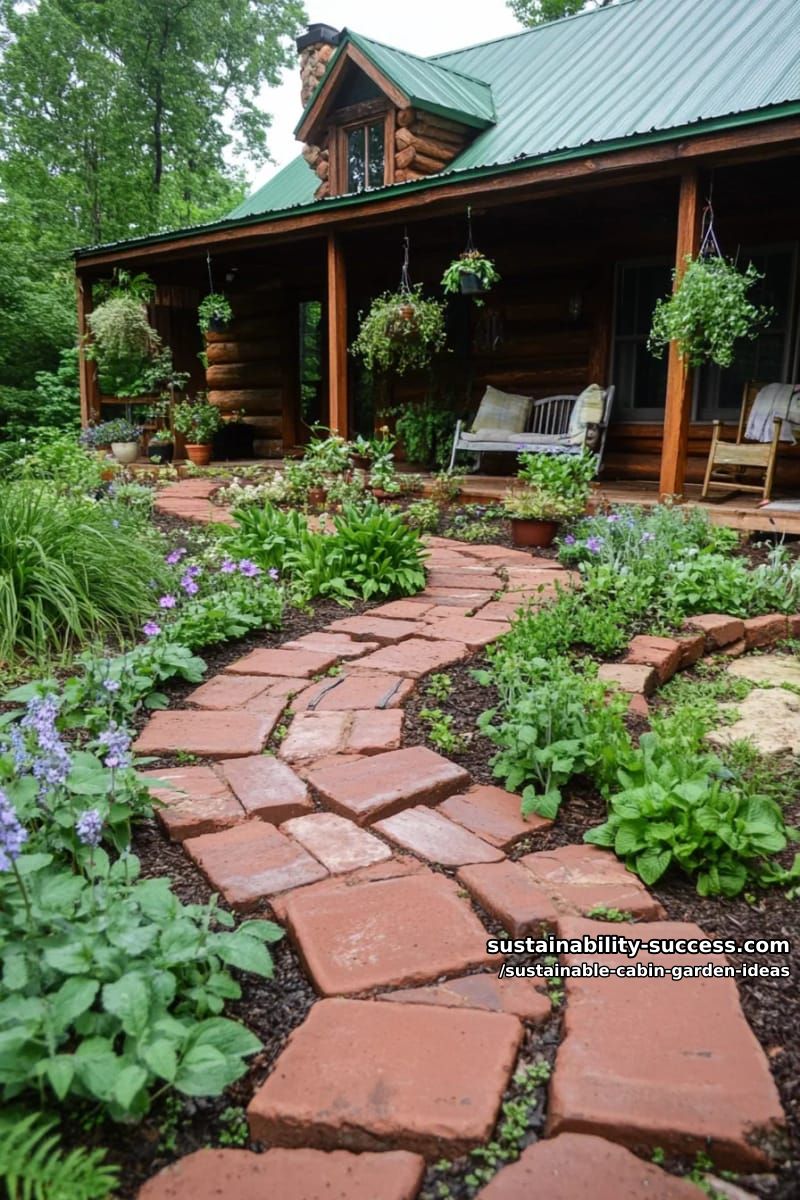
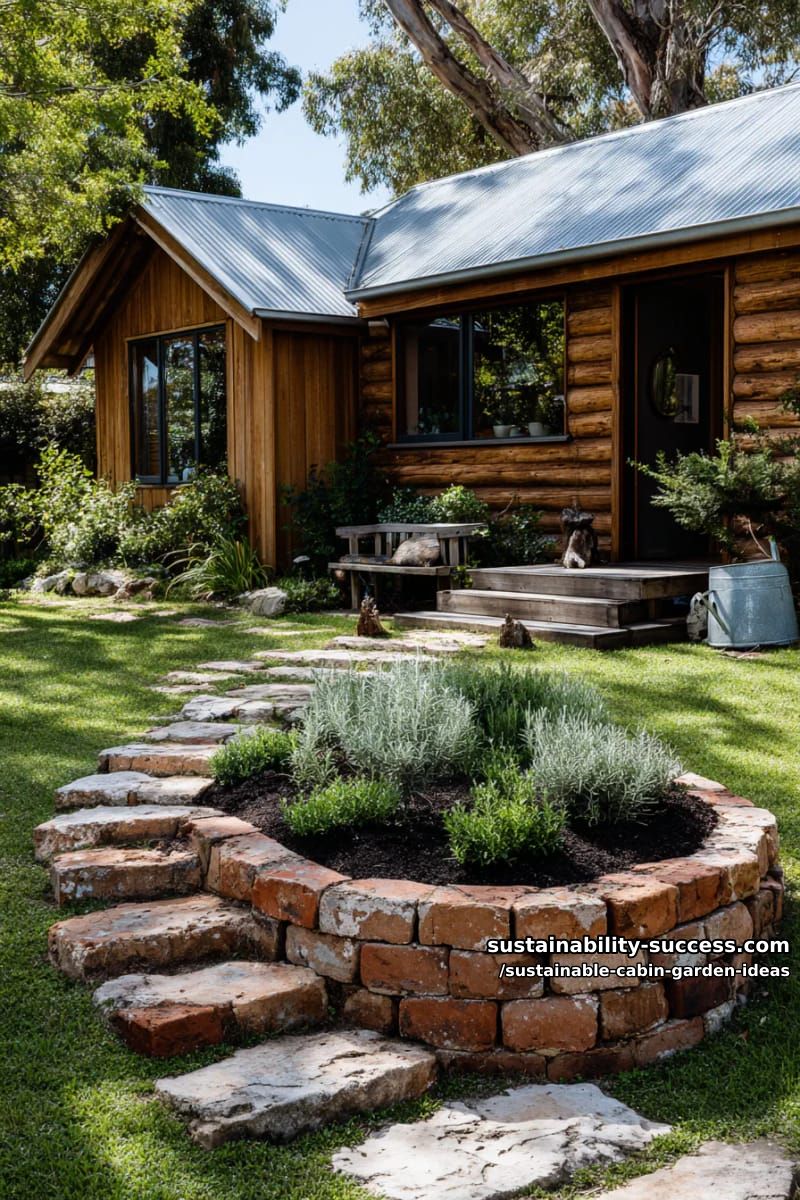
Building the spiral is simple. Start with a circle of bricks, stacking them higher as you wind inward. This shape creates microclimates, parsley thrives at the bottom, while rosemary likes the drier top.
Maintenance is minimal, but keep an eye out for weeds sneaking between bricks.
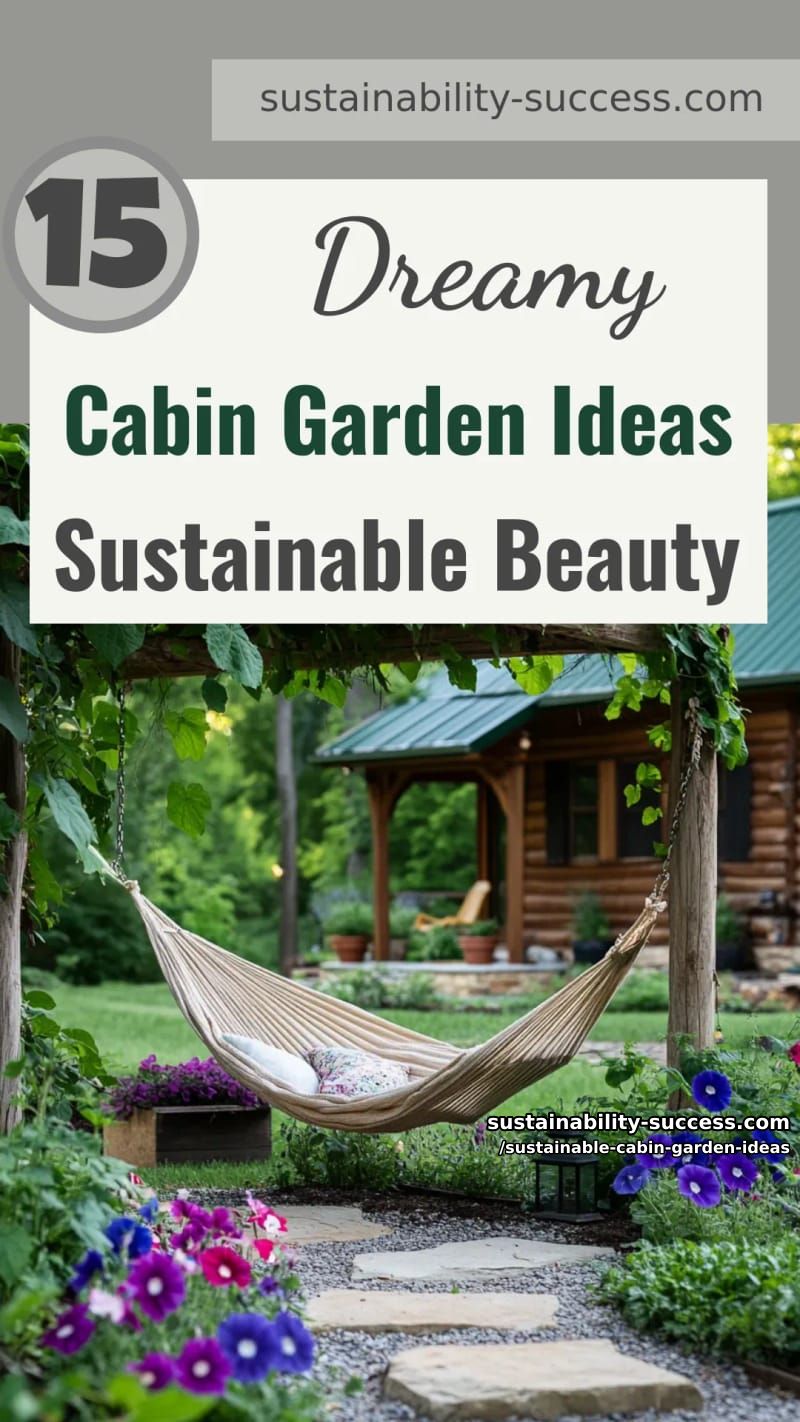
15. Hammock corner under a natural willow arbor entwined with morning glories
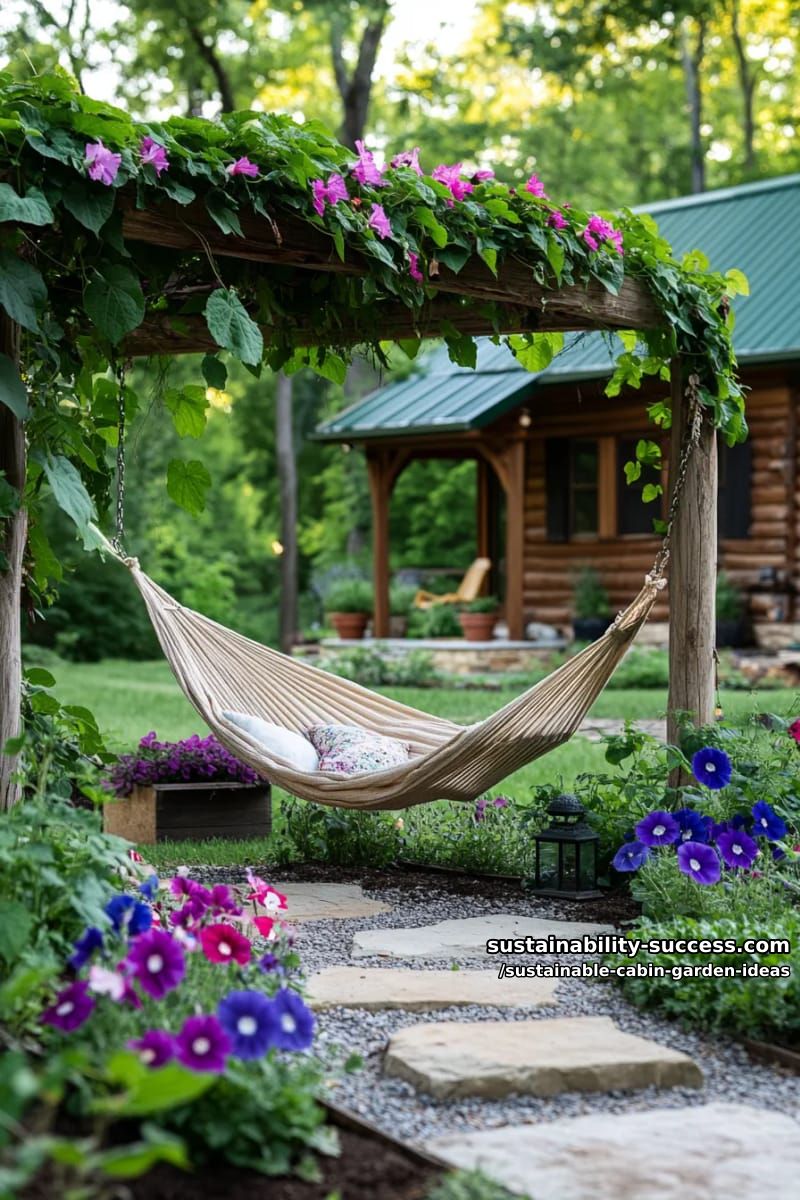
Imagine a hammock corner shaded by a willow arbor, its slender branches forming a living roof. Morning glories twist upward, painting bursts of blue and purple.
This setup cools naturally, draws pollinators, and provides a calm spot for reading or napping. Minimal fuss, maximum relaxation.
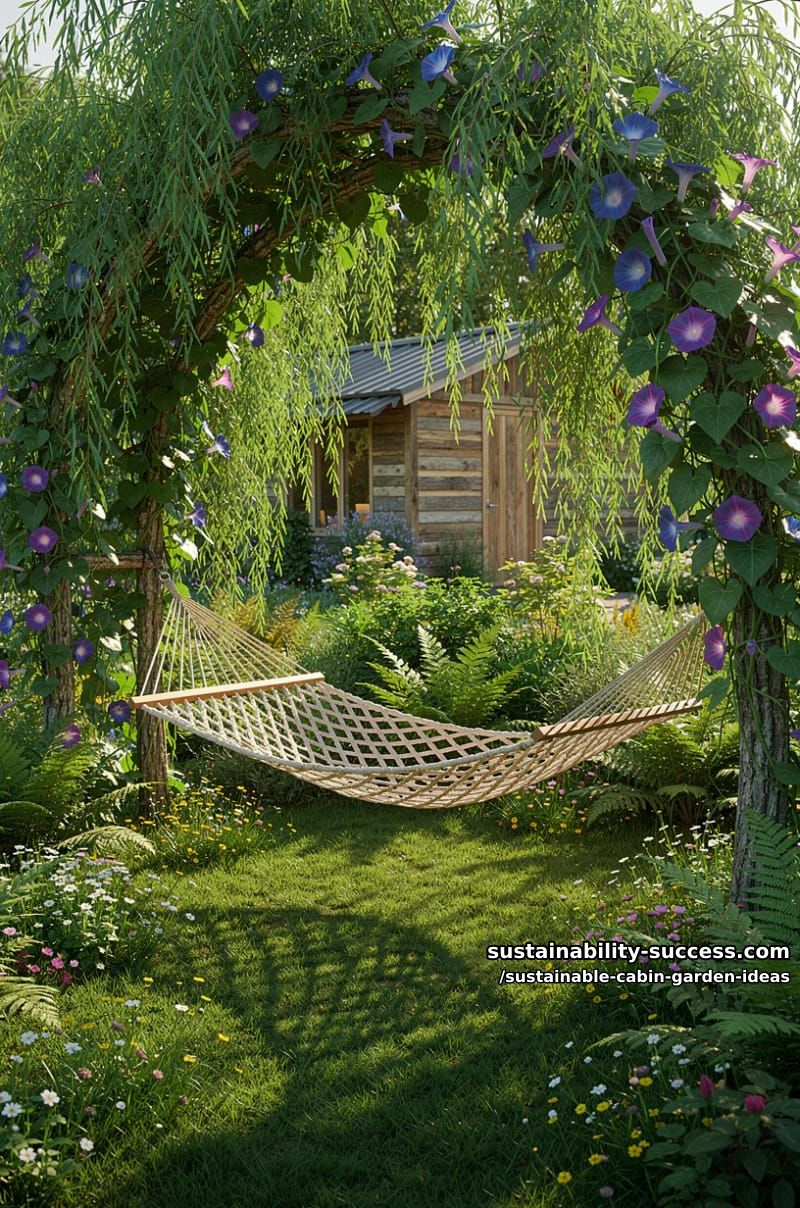
Yet, willow arbors require regular pruning. Morning glories can be invasive if left unchecked. Keep clippers handy and set boundaries. Still, the rewards, a living hideaway that changes with the seasons, far outweigh the hassle.
Who needs fancy outdoor furniture when nature can do the heavy lifting?
Conclusion
Embracing these Sustainable Cabin Garden Ideas transforms any space into a haven for both people and wildlife.
Imagine sipping tea under a moss roof, or grabbing a handful of strawberries from your own green roof. Nature rewards every thoughtful effort.
Start small, maybe a pallet garden or mushroom logs. Add solar lights or a hidden reading nook. Every step brings more color, flavor, and life.
Ready for dirt under your fingernails and a smile on your face? Your eco-friendly cabin paradise awaits.
Related Posts
- Sustainable Garden Decor Ideas
- Upcycled Garden Ideas
- Small Garden Decor Ideas
- Eco-Friendly Garden Art
- Eco-Friendly Herb Garden Ideas