
Streaming killed the CD. Most of us are left with a spindle of dead discs and a low-grade guilt about the landfill. This list treats them as raw material for one property and one only: the rainbow they throw when light hits the stamped data spiral. Every project here cuts or peels or shatters the disc instead of preserving it, because the iridescence survives in fragments just fine, and a jar of shards beats a stack of coasters nobody plays. Ahead: the physics of why it works, a quick guide to which discs give the densest color (DVDs win), and the one sealing step that keeps the shine from washing off the first time it rains.

1. Edge-to-edge shard suncatcher panel for the window
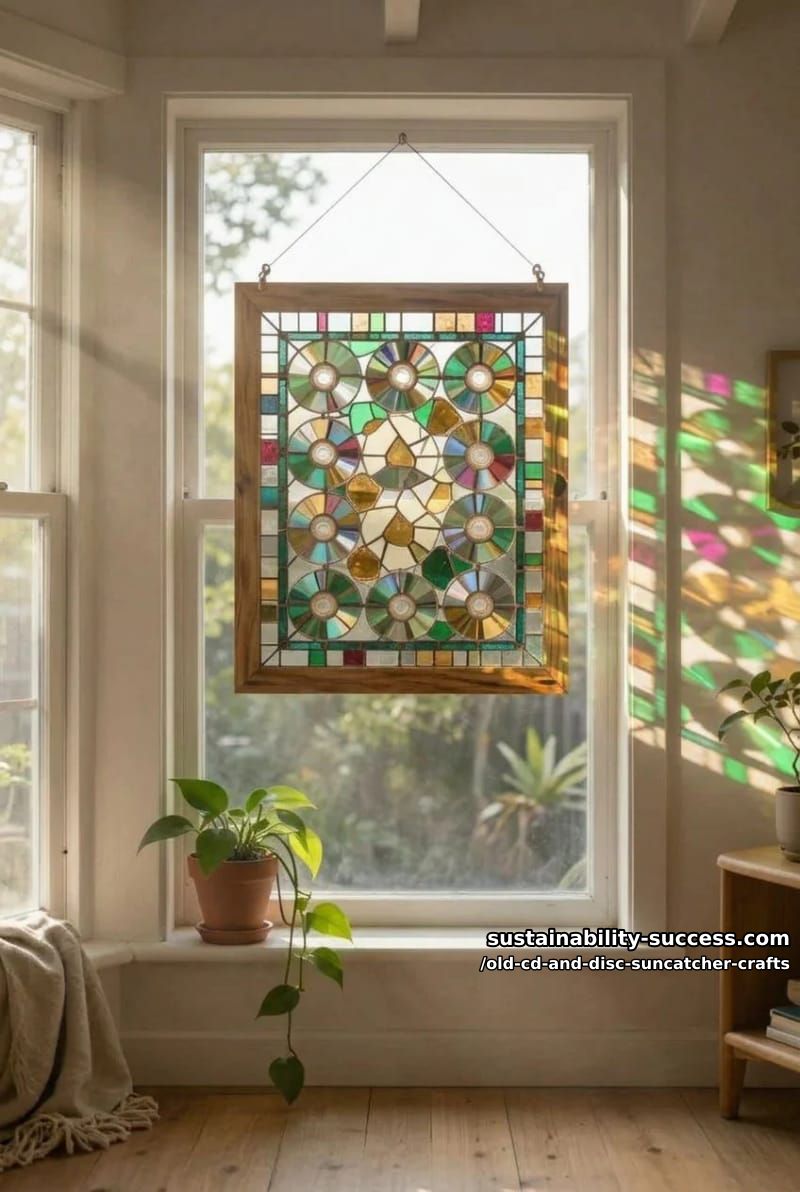
Glaze a salvaged single-pane picture frame with snipped disc fragments, mirror-side out, and it throws colored light across a room the way a leaded window does. It costs almost nothing. Thin CD-Rs cut straight with a sturdy kitchen scissors. Thicker pressed discs and DVDs crack unless you warm them first with a hair dryer or heat gun, then peel the two plastic layers apart to lift off the reflective film. Lay the pieces on the glass with clear-drying tacky glue and leave hairline gaps, so the backlight reads as lead lines. Then hang it where the sun actually travels , an east window for a hard band of color at breakfast, a west one for the long late-afternoon burn.
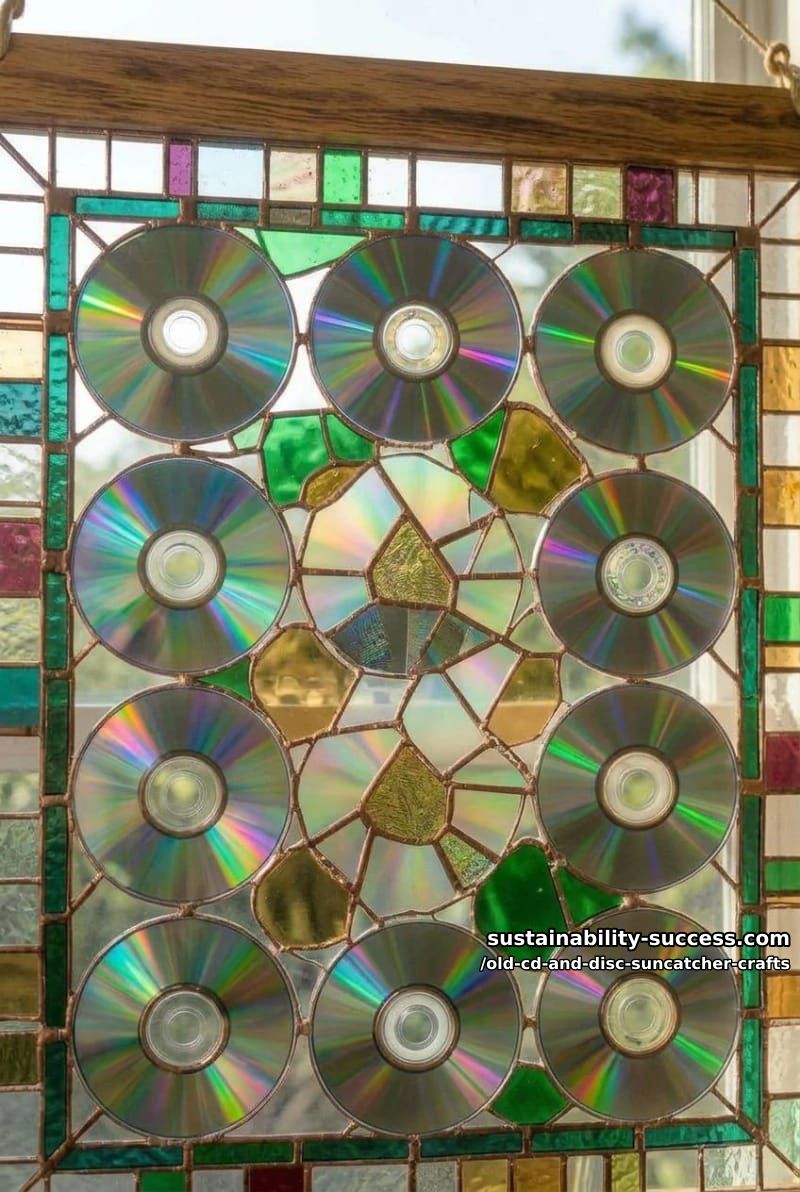
Here's what nobody warns you about until it happens. The colored layer on a peeled disc is basically loose foil; a damp cloth or even a humid window will lift it right off. So seal the finished panel with clear acrylic spray, or a thin coat of glossy Mod Podge, before it goes up. And mind the weight: a frame bigger than about 8 by 10 inches gets heavy enough that a single dollar-store suction cup will creep down the glass by noon.
A CD isn’t colored. The face is a mirror stamped with a spiral of data pits spaced about 1.6 microns apart , just wider than a wavelength of visible light, which runs 400 to 700 nanometers. That regular spacing works as a diffraction grating, bending each wavelength to a slightly different angle, and white light leaves the surface split into its colors.
DVDs pack their tracks tighter, around 0.74 microns, so their color is denser and shifts faster as you tilt them. Blu-rays are tighter still at 0.32 microns, but a hard coating mutes the effect. What this means for crafters: DVDs out-sparkle CDs, and the color lives in the stamped surface rather than any dye, so a sealed shard won’t fade.
A 1-pound-rated cup won’t slither down the glass by lunchtime the way the bargain-bin ones do.

2. Spinning bird-scare discs for the vegetable bed
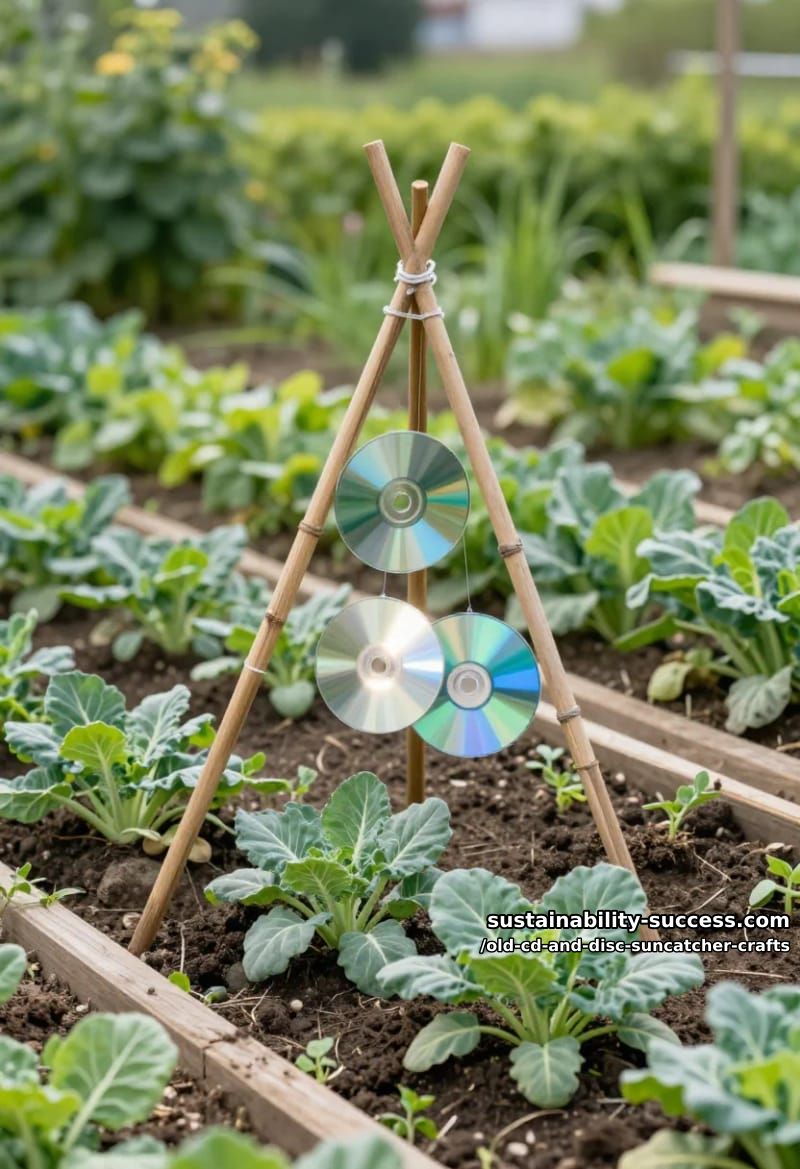
This is the one project on the list that needs no cutting at all. Hang whole discs from a bamboo cane or a low branch over your seedlings and the same property that makes them craft material turns into pest control. Garden writers and nursery people keep recommending it because it actually holds up. The unpredictable flashes off a spinning disc read to a bird as movement it can't parse, and it decides your peas and beans and brassicas aren't worth the risk.
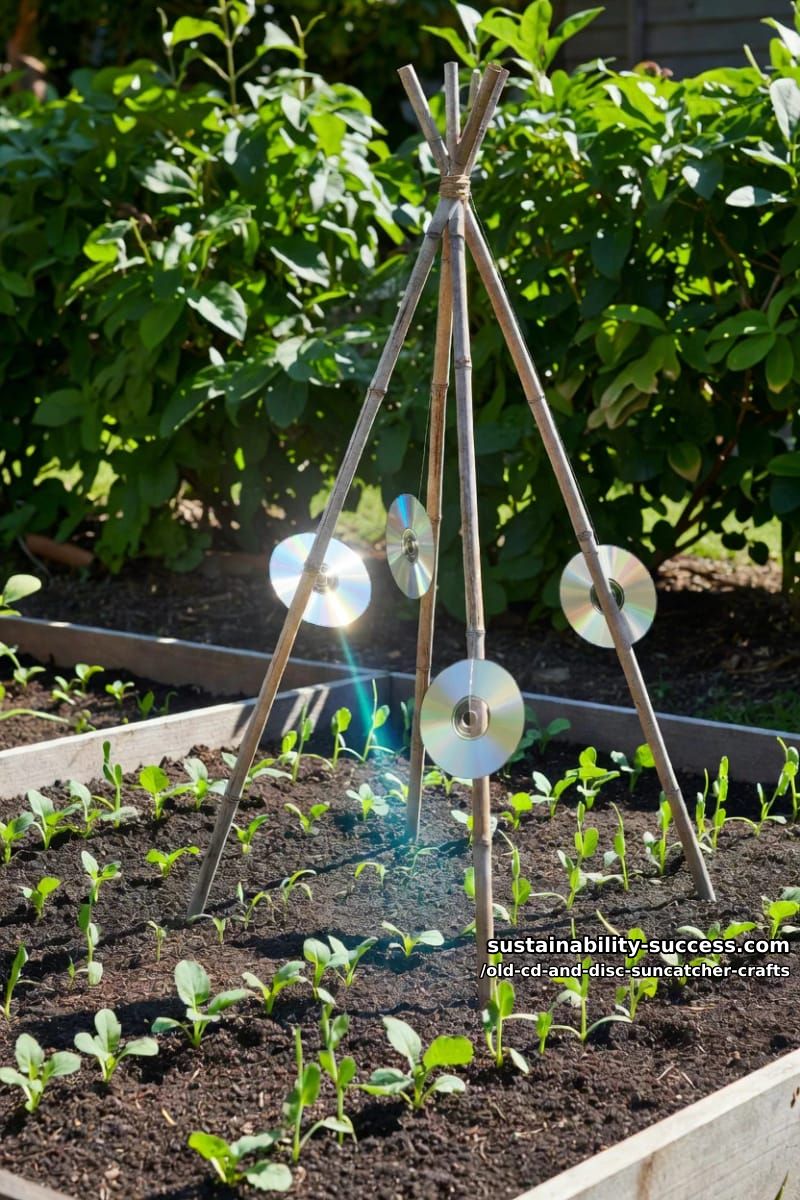
Spin is the whole thing , it's what separates a working bird-scare from a sad coaster hanging dead in the still air. Don't thread the line through the center hole. Drill a small one near the outer rim instead. Off-center, the disc grabs every bit of breeze and turns fast, flashing constantly rather than hanging motionless on a calm afternoon. Pair two of them back to back, mirror sides out, so there's never a dull label side pointed at the very bird you're trying to spook.
Then move them every couple of weeks. Birds habituate to anything that stays put , it's why the plastic owl on your neighbor's porch stopped fooling anyone years ago. And don't get carried away and string up forty of them. Morris Hankinson of Hopes Grove Nurseries makes a point worth keeping: a garden scrubbed of every bird is a worse garden, because the pollinators and slug-eaters leave with them. Guard the high-value rows and let the rest of the yard stay hospitable.
3. A disco ball built from CD wedges
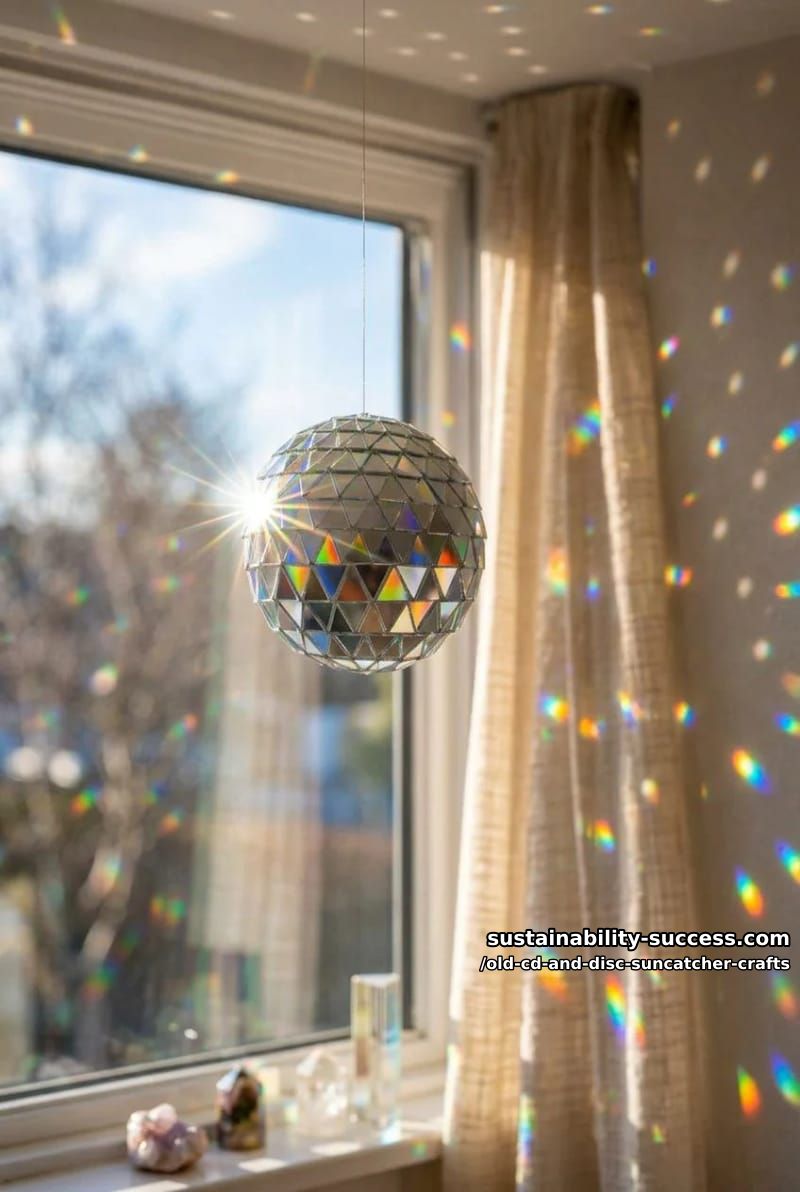
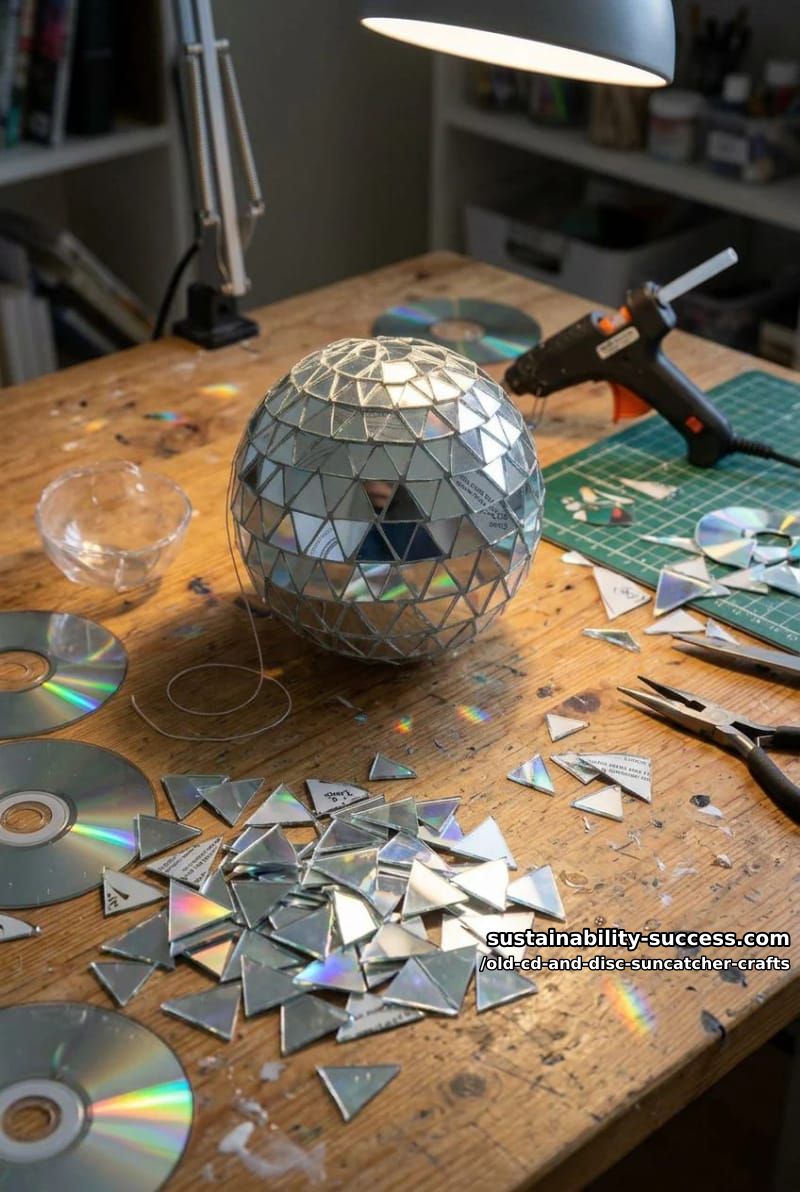
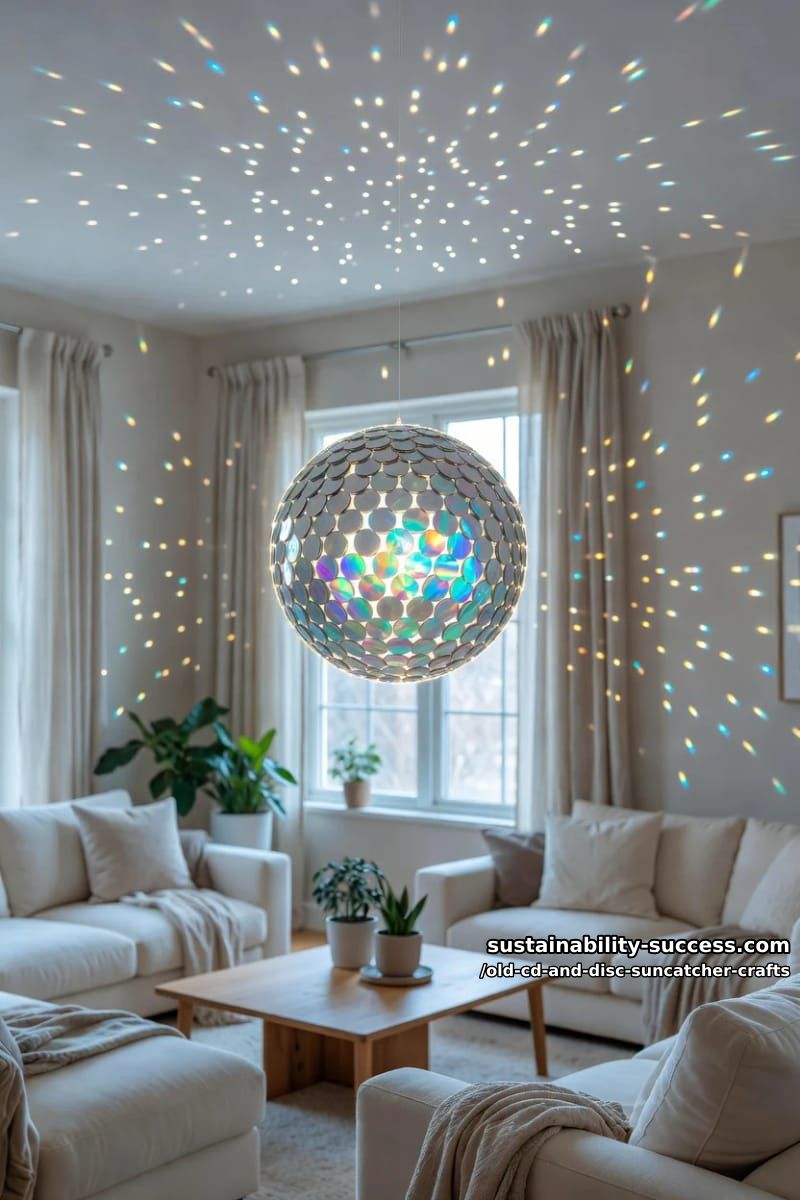
Cover a foam sphere in overlapping disc wedges and you get the mirror-ball look event stylists charge real money for , out of a craft-store ball and a stack of discs headed for the bin. Cut each disc into small triangles, mirror side up, and shingle them from the crown down so every row laps the one below like fish scales. The curve means a lot of trimming. That's just how it goes. A 6-inch foam sphere runs about $8 to $16 and eats roughly a dozen discs' worth of wedges.
Hang it in a sunny window, give it the occasional nudge, and it scatters moving coins of light across the ceiling , the whole reason to make one rather than buy a glass mirror ball that shatters the first time the cat gets to it. Skip school glue. The wedges sit on a curve and want to pop off as the glue shrinks, so you need something stronger. A Smoothfoam 6-inch craft foam ball makes the best base; it’s denser than the flaky white stuff and won’t crumble under the pins and glue.
Do this
- DVDs and DVD-Rs first , tighter tracks, denser color.
- Silver-faced CD-Rs give you a cooler, mirror-bright finish.
- Peel thick discs into two layers before you cut, so they don’t crack.
- Hoard the gold-tinted archival discs for anything warm-toned.
Avoid
- Anything with a paper label glued on; the dull side shows through.
- Discs scratched to death , deep gouges kill the reflection.
- Mini-CDs and odd shapes are useless when you need flat, tileable pieces.
- Blu-rays for the big builds. The coating mutes the color, and they’re worth more left intact.
4. A clinking shard mobile for a breezy window
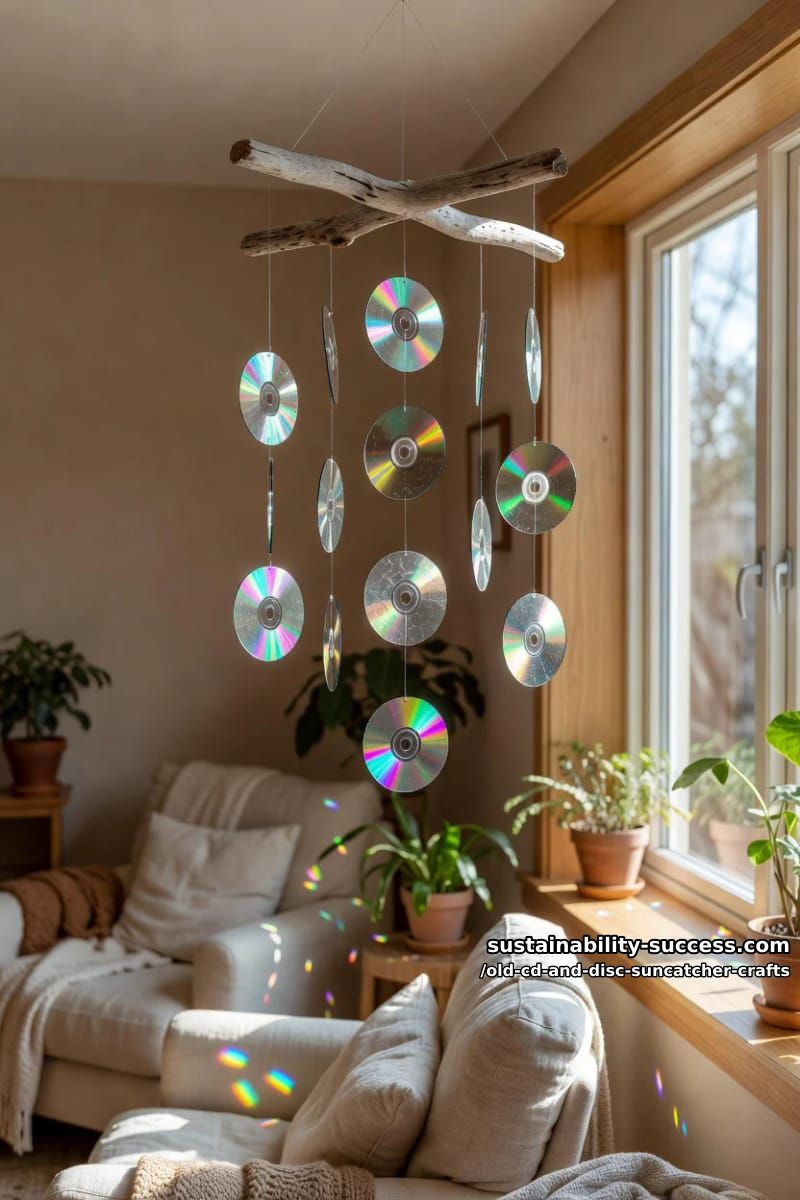
Thread a dozen shards onto clear monofilament, hang them at staggered lengths from driftwood or a wooden embroidery hoop, and you've got a mobile that walks colored light around the room whenever the window's open. Punch a hole in each shard with an awl or a heated needle, knot the line, stagger the drops.
This is where a mobile beats a flat framed piece: diffraction color only shows at certain angles, and the slow constant turning means some shard is always catching the sun while the rest go dark. Clear 0.4 to 0.8 mm monofilament disappears against the light and holds far more than a few grams of plastic.
Heavy enough to hold spinning shards, thin enough that the pieces look like they’re floating mid-air.

5. A mosaic planter that flickers in the border
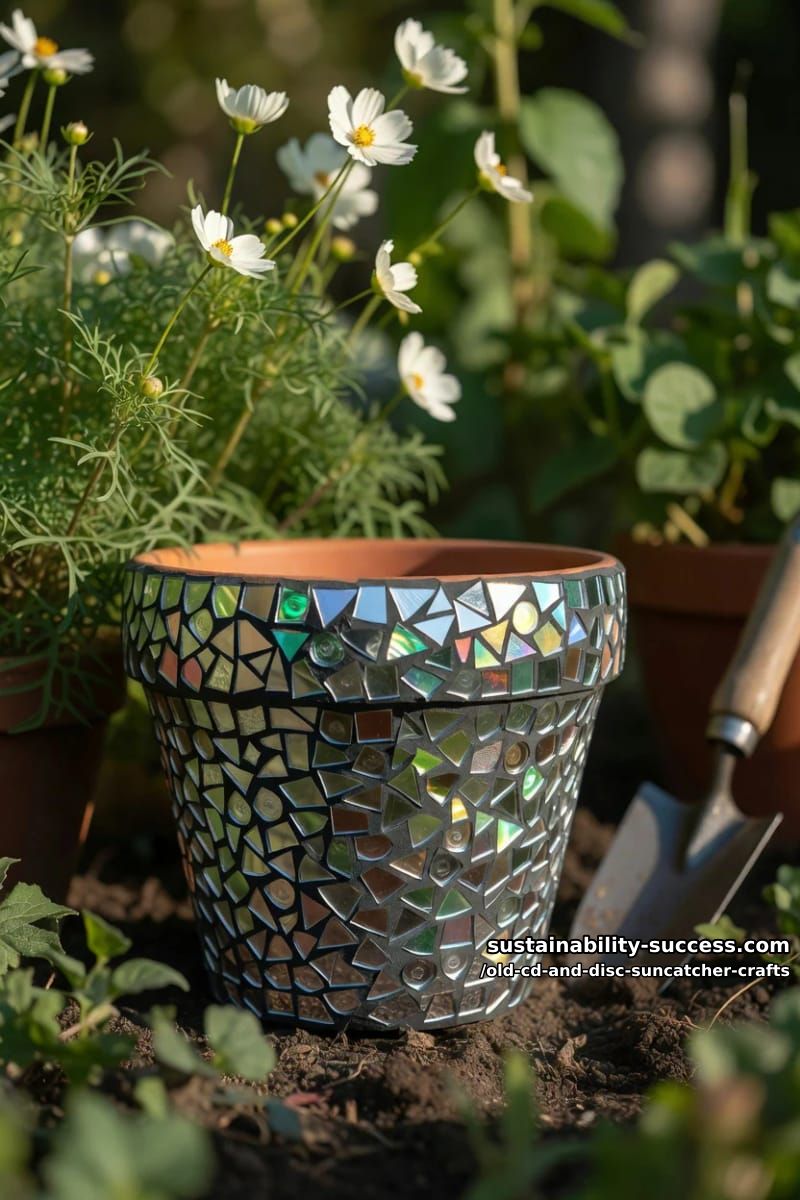
Tile a plain terracotta pot in disc fragments and it flickers among the foliage like water catching light, turning a $4 nursery pot into something that looks deliberate. Snip the discs into smallish, roughly even pieces and glue them on mirror-side out with a weatherproof adhesive like E6000 clear craft adhesive, leaving gaps for grout. Grout, then wipe the haze back with a damp sponge.
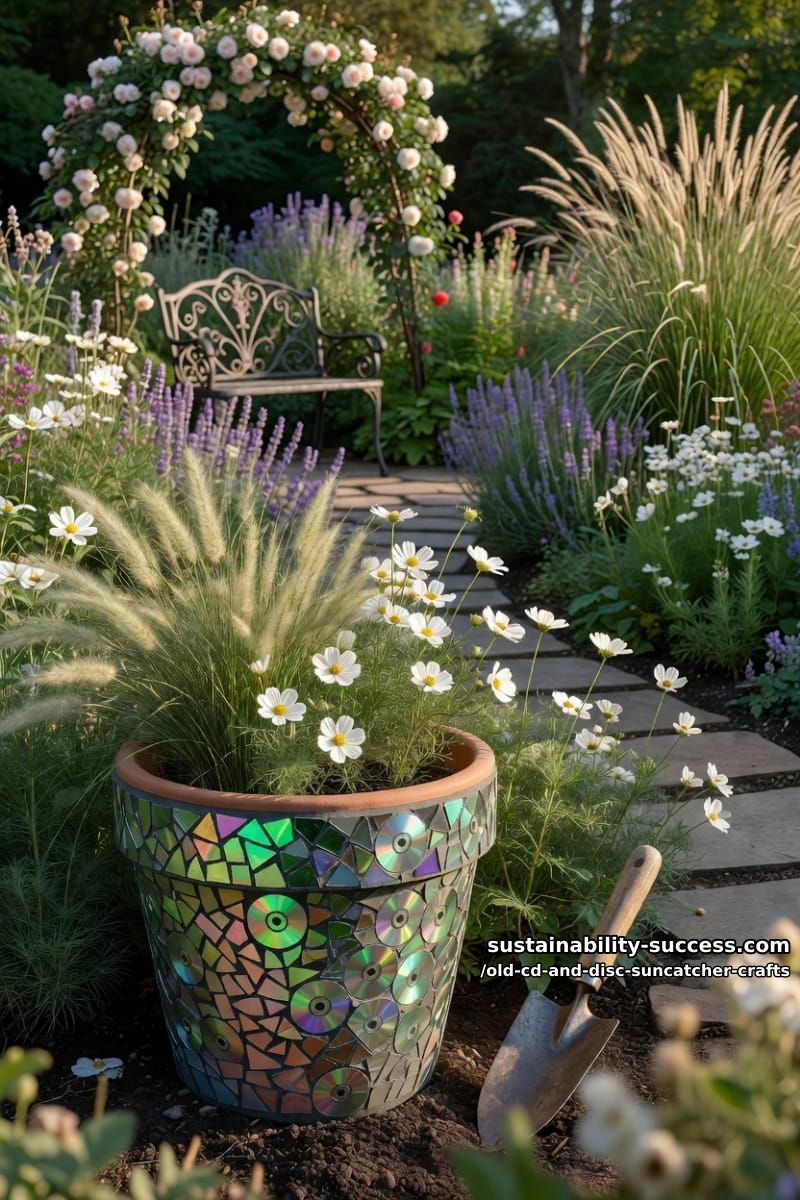
Glue choice is the whole game, because terracotta breathes moisture and rides the freeze-thaw cycle all winter if you leave it out. School glue and most hot glue have let go by spring. E6000 stays flexible and holds through the wet. Seal the colored film before you grout , same loose-foil problem as the window panel , or the grout water strips the shine right off as you drag it across. And in a hard-freeze climate, call this a summer piece and bring it in: the mosaic survives, but the terracotta underneath spalls.
6. Faux stained-glass suncatcher with liquid leading
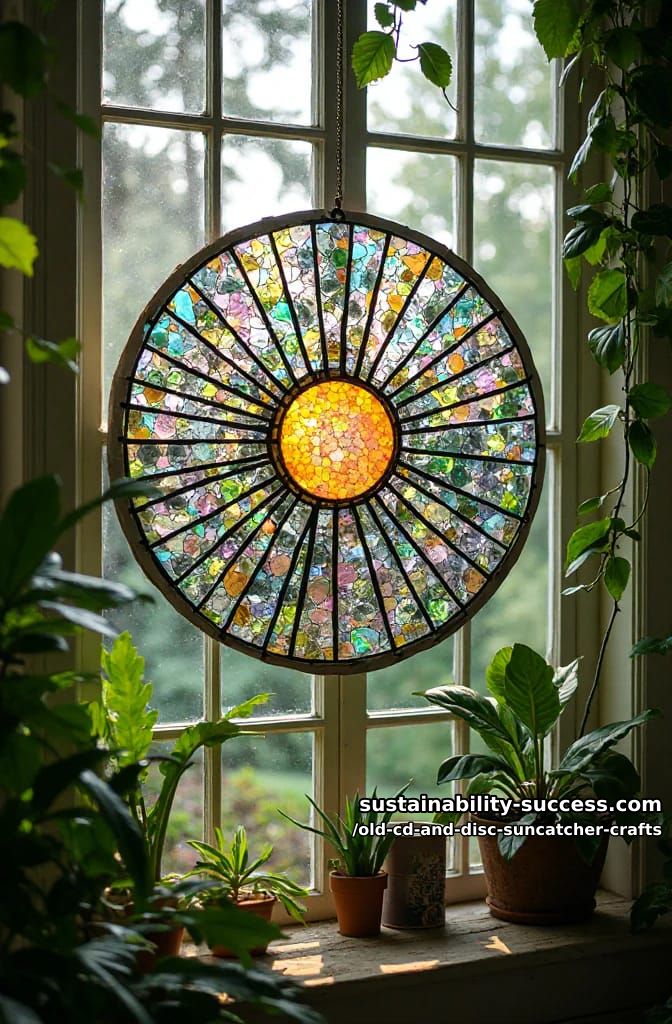
Pipe black liquid leading onto a glass or acrylic round in a simple design , a flower, a sunburst, a plain grid , let it set, then fill each cell with disc fragments instead of glass paint. You get the lead-line look of real stained glass without ever touching a soldering iron. The raised leading hides the cut edges and turns a loose mosaic into something graphic and paneled.
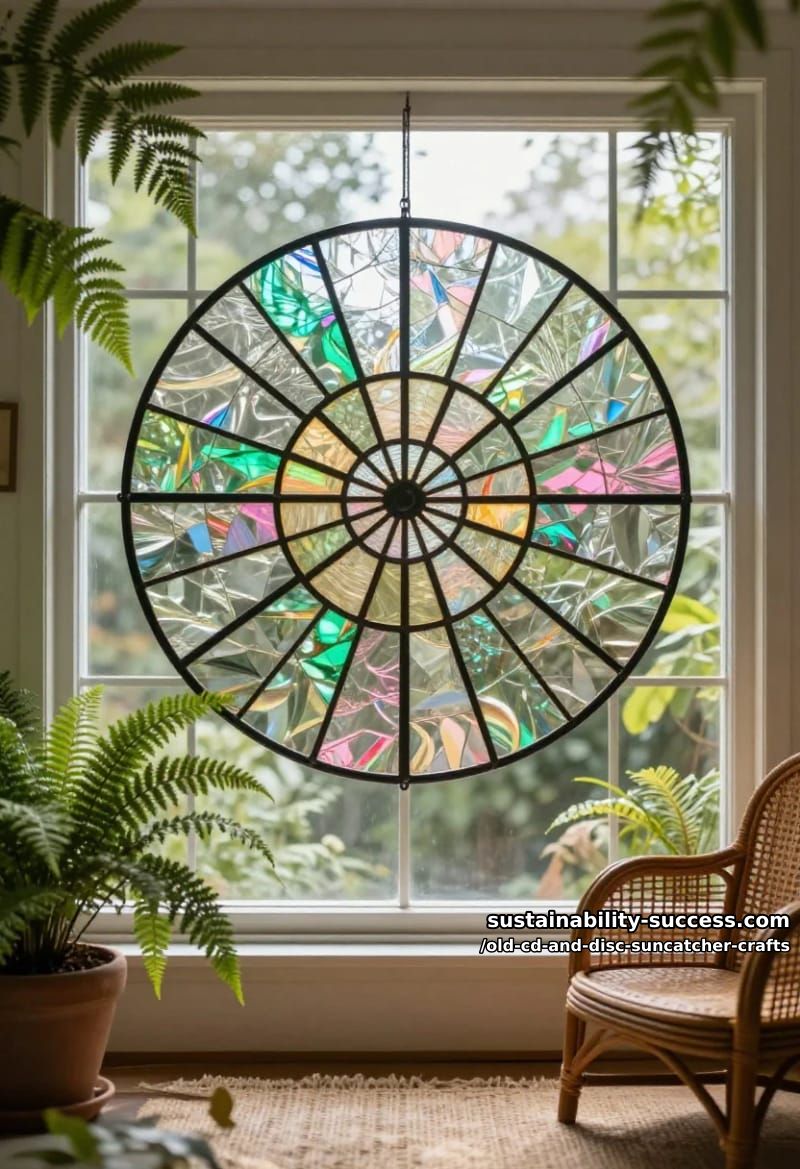
Plaid's Gallery Glass leading is the usual product. A 2-ounce bottle lays down roughly 36 feet of line, and the 8-ounce bottle is the better deal if you're doing several panels. Two warnings from people who've used it. It's water-based and not rated for outdoors, so keep this to indoor windows. And it takes a genuinely hard squeeze , if your hands tire easily, work in short sessions.
The black leading lines do the visual heavy lifting; the disc shards just fill the gaps between them.

7. Statement earrings and pendants from disc offcuts
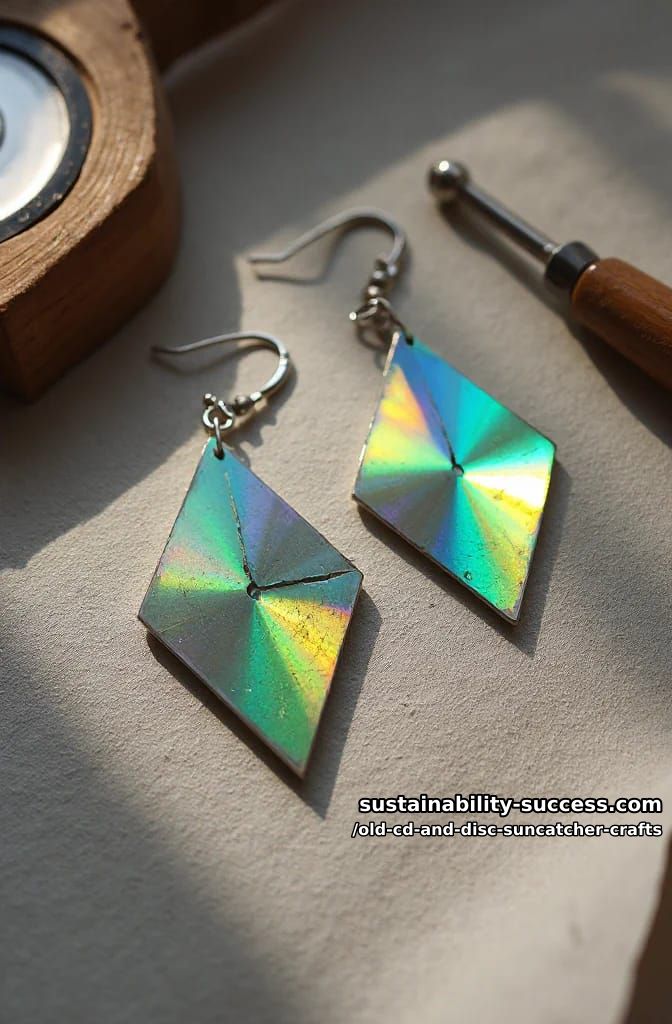
Save the offcuts , this is the project I'd push hardest. The slivers too small to tile make the best earrings, because a half-inch disc triangle weighs almost nothing and throws color with every turn of your head. That's more movement than most cut-glass costume jewelry will ever give you. Cut clean geometric shapes: diamonds, slim bars, small circles punched out with a leather punch. Then wet-sand the edges on fine sandpaper until they're smooth enough not to snag on hair or skin.
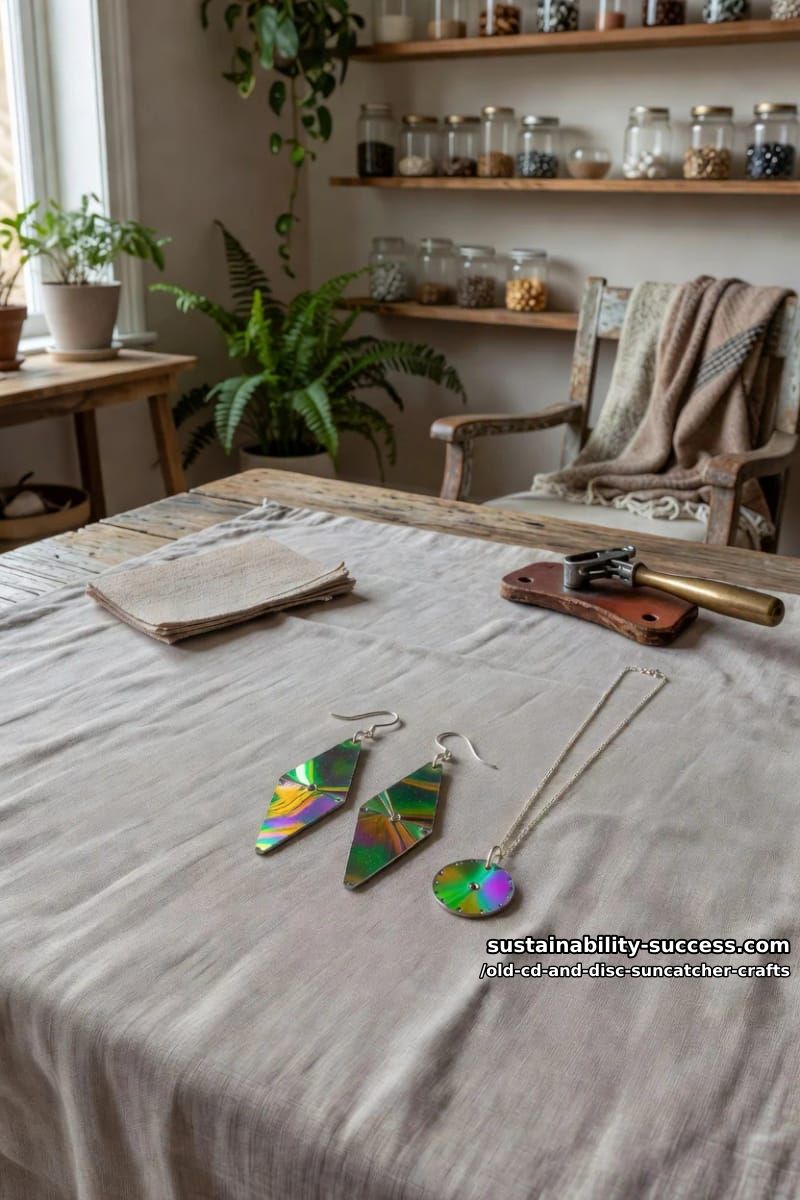
There are two ways to finish. Glue a shard into a flat bezel cup with E6000 and add an ear wire, or drill a tiny hole at one end, thread a jump ring, and let the bare shape swing. I prefer the bare version , it shows more edge, more color , but the bezel reads more finished, and it caps the foil layer, which matters on something you'll handle every day.
Skip the pre-made "CD jewelry" kits sold online. Almost all of them laminate the shards under thick resin, which flattens the exact color shift you went there for. Cut your own from a DVD and you get denser spectra plus the freedom to match a shape to the person wearing it. A light coat of clear sealer keeps daily wear from peeling the film.
8. A garden gazing globe wrapped in shards
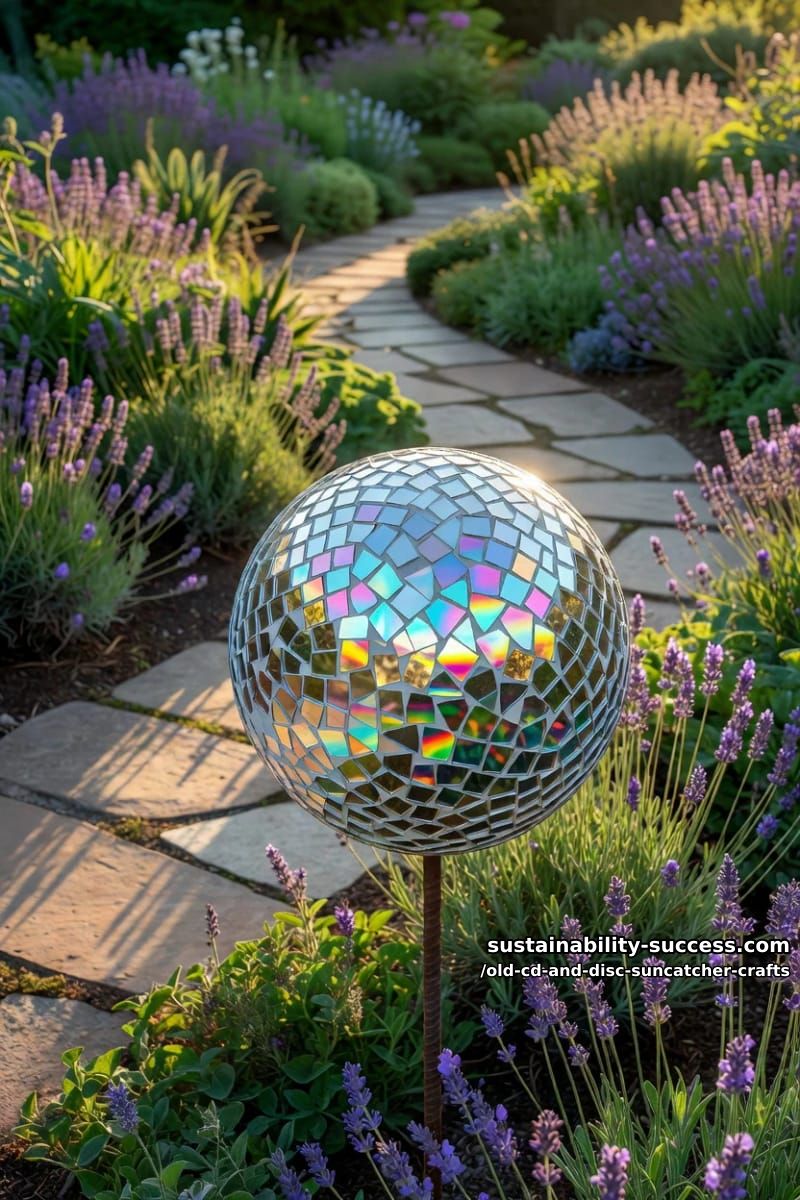
Cover a thrift-store bowling ball in disc fragments and you've made a gazing globe for the cost of the ball , against $40 to $80 for a blown-glass one at the garden center. A bowling ball is the right base outdoors. It's already weatherproof, it's heavy enough to stay put in wind, and the finger holes give you a spot to seat it on a pot or a length of rebar. Tile it like the disco ball with smaller pieces for the tighter curve, then grout and seal against the weather.
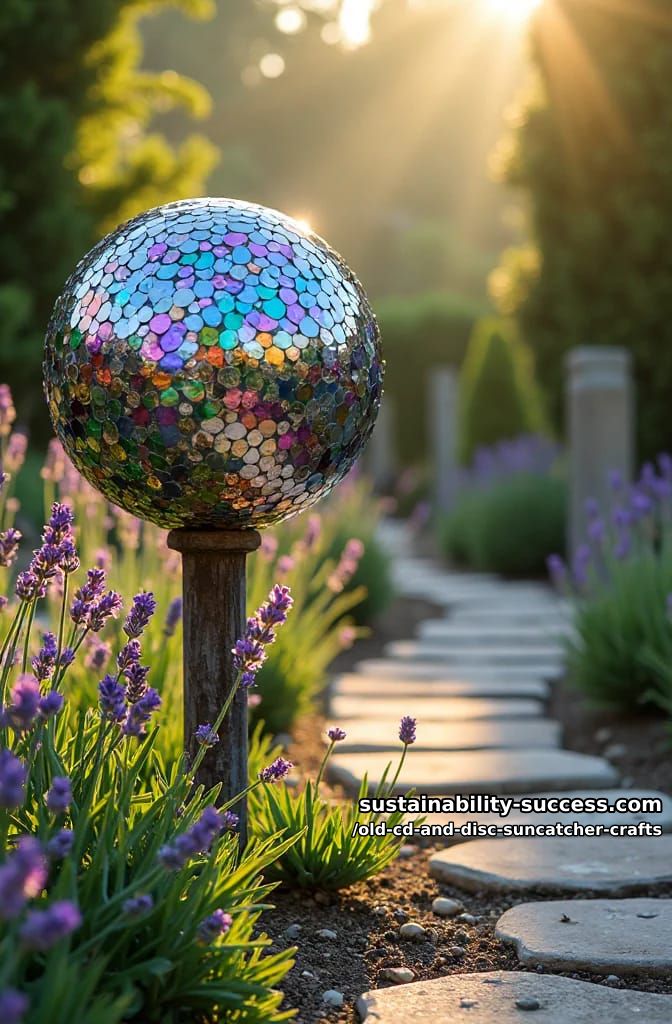
Diffraction color shows up only when the light, the surface, and your eye line up just so. A flat mosaic gives you its full range only as the sun crosses the sky or as you walk past it. A curved surface offers every angle at once , somewhere on a sphere, a patch is always hitting that sweet spot , so a gazing globe looks colorful from where you’re standing without anything needing to move. Flat panels wait on motion or a traveling sun. Round ones bring their own.
9. A mosaic mirror frame for an entryway
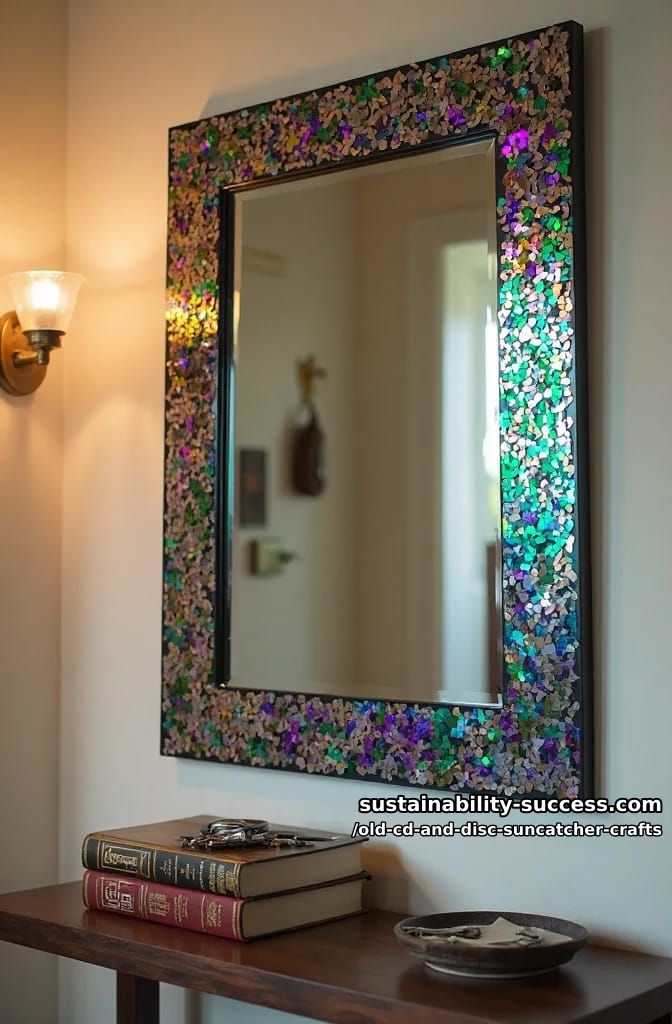
Tile the flat frame of a cheap mirror in disc shards and the glass throws back every colored fleck around it, doubling the effect , a lot of payoff for a $10 builder-grade mirror and one afternoon. Tape off the mirror glass, work the shards over the frame mirror-side out, grout in a dark color so the bright pieces pop against it, and pull the tape before the grout fully cures.
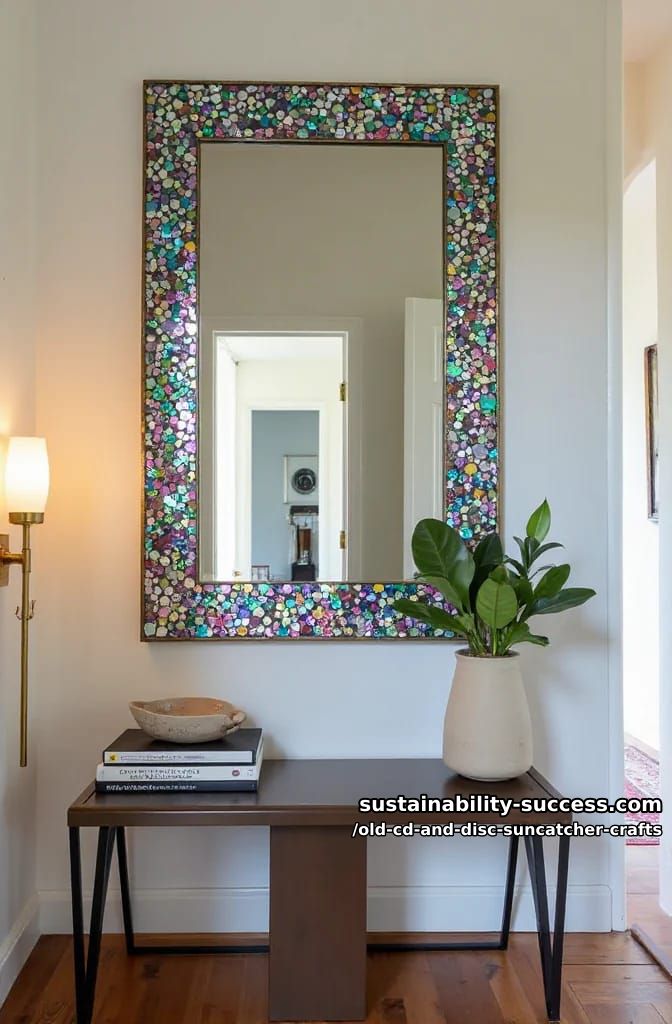
The reflective layer on a cut disc is loose metallic film. Drag wet grout across an unsealed shard and it smears and lifts the color, and you’re left with dull grey plastic and a wasted afternoon. Brush a thin coat of clear acrylic sealer or glossy Mod Podge over every shard and let it dry all the way before you grout. This is the single most common way CD mosaics get wrecked, and it stays invisible right up until the grout goes on.
Dark grout, not white. White against mirror-bright shards reads busy and washes the color out. A charcoal or near-black grout frames each piece and makes the diffraction read like inlay.
10. A kid-friendly shard butterfly suncatcher
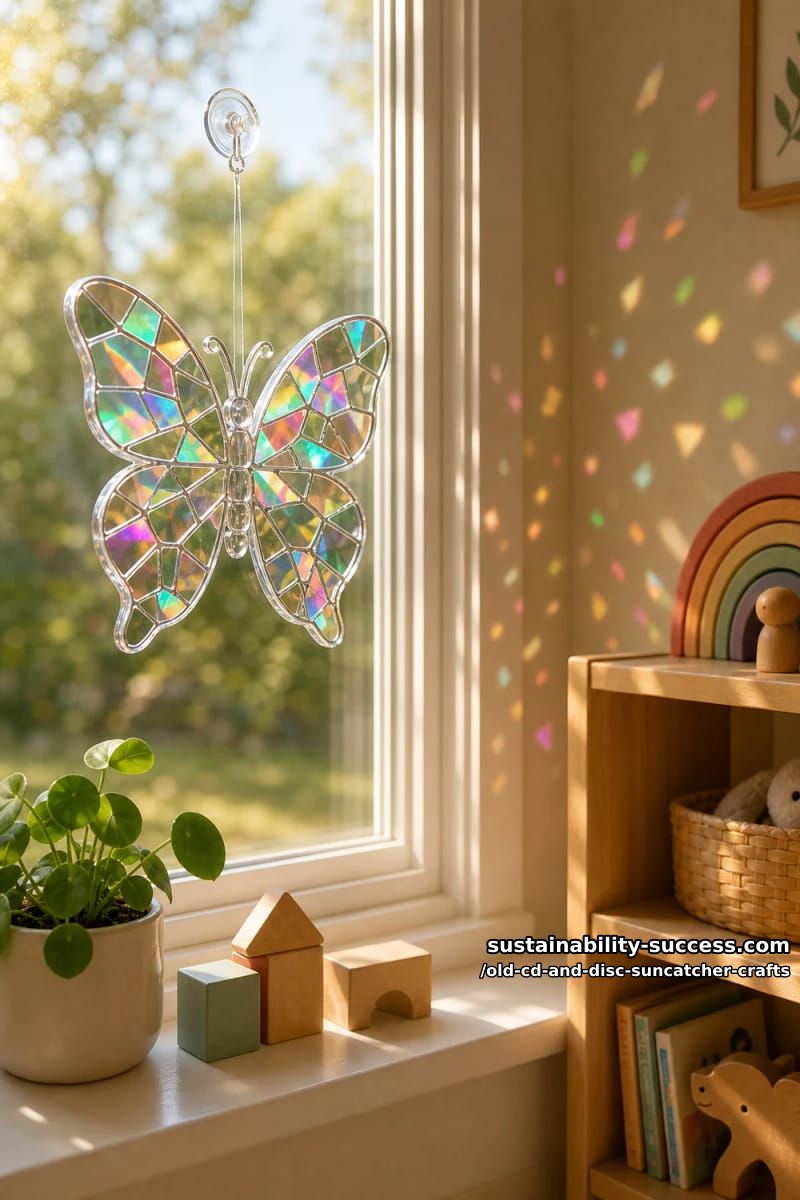
Cut a butterfly or a simple flower silhouette from cardboard or clear acrylic, hand it to a kid with a pile of disc pieces, and you've got a craft that's genuinely theirs , with one real caveat about edges. Round the pieces yourself first. A few minutes with scissors takes the points off the bits that do the damage.
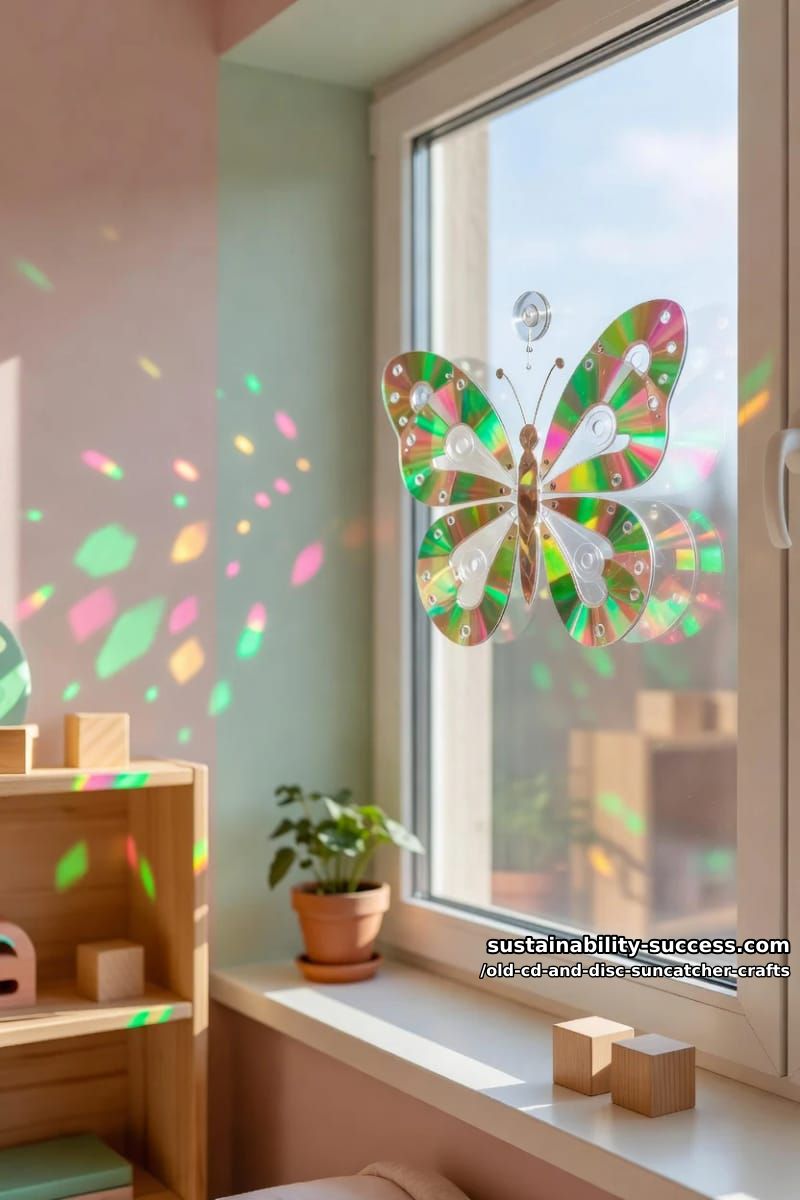
Snipped disc edges aren’t glass, but press a pointed piece down hard and it’ll draw blood, and the plastic can splinter. So do the cutting yourself, round the corners with scissors or a quick pass on sandpaper, and keep loose pieces away from kids under about six who still put things in their mouths. Once the shards are blunted and glued down, the finished suncatcher is fine for small hands.
Give a kid a pre-drawn shape to fill, mirror-side up, and they'll pack it denser and brighter than any freeform scatter. Hang the butterfly in a bedroom window on a suction hook and the morning sun throws colored spots that crawl across the wall as the day moves , the part that actually delights a six-year-old.
11. Iridescent icicles and snowflakes for winter windows

Cut discs into long tapering slivers and hang them in a tight cluster: icicles that flash cold color against a winter window, and a holiday ornament that costs nothing while reading more modern than red-and-gold everything. The fold-and-cut snowflake trick won't work on stiff plastic, so for snowflakes cut six identical slim shards and glue them into a radial star.
Plain CD-Rs lean silver-blue, which fits a winter palette better than the warm gold of archival discs. Strung along a window frame on monofilament, a row of clusters doubles as the bird deterrent from section two , two jobs through the cold months.
Strips cut from pressed-foil discs tend to curl as you snip them , internal stress in the plastic , but a quick pass with a hair dryer relaxes them flat. On a tree they catch the lights far better than matte ornaments, scattering little spectra across the branches.
12. A mosaic house number plaque for the porch
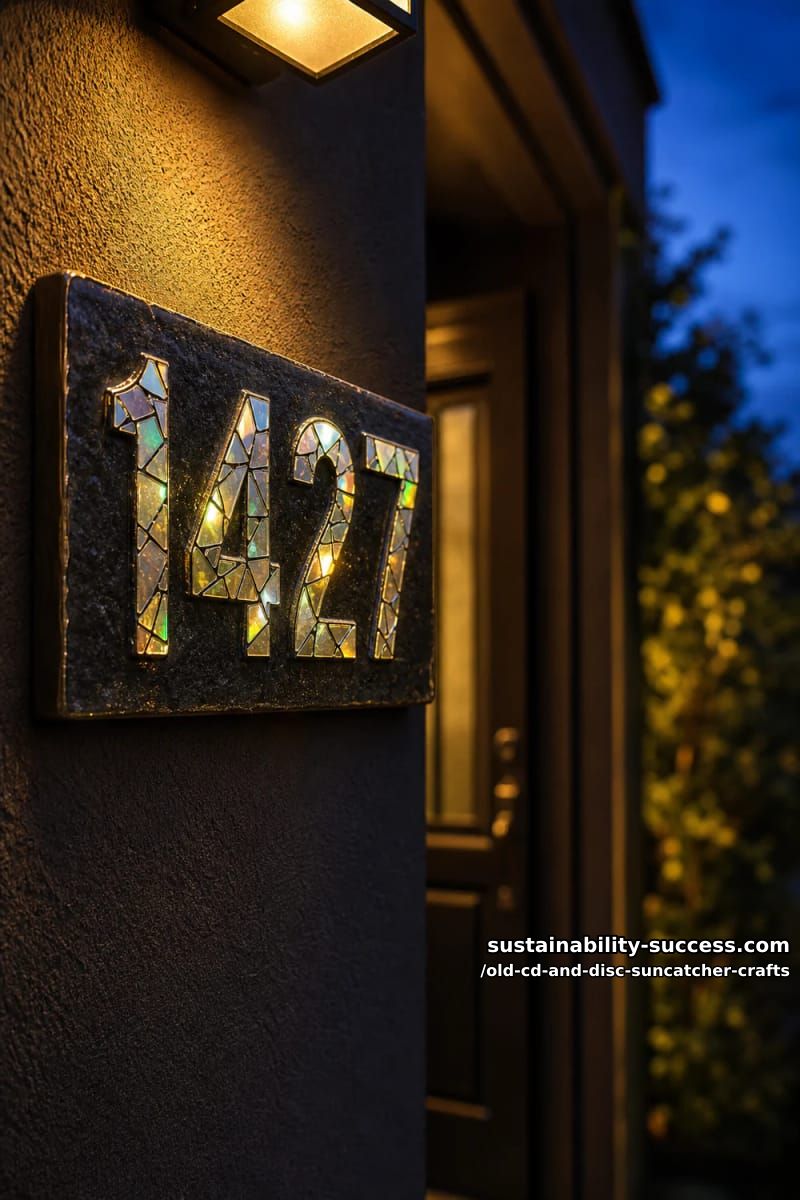
Lay your house numbers out on an exterior-grade board or a slate offcut, tile the digits in disc shards, and you've got an address marker that flares whenever headlights or the porch lamp catch it , which genuinely helps anyone hunting for your door after dark. Cut the digits straight from the disc film for crisp edges, or fill stenciled number shapes with small fragments.
Outdoors, it all rides on weatherproofing. Mount on cement board or sealed exterior plywood, set the shards in the same flexible weatherproof adhesive from the planter, grout, then finish with an exterior clear sealer or a thin pour of outdoor resin so UV and rain can't lift the film. In a coastal or hard-freeze spot the resin topcoat isn't optional. Skip it and freeze-thaw works its way under the foil until the whole thing clouds over.
Conclusion
The seal rule is the one I'd tattoo on the back of your hand: clear acrylic or Mod Podge over the colored film before any water, grout, or weather touches it. I learned it the expensive way, with a planter that went from rainbow to grey plastic the moment I dragged grout across it. If you've never cut a disc, the bird-scare spinners need no cutting and quietly train you to start hoarding discs instead of binning them. And if all you've got is a stack of music CDs but you actually care about color, spend a few dollars on a spindle of DVD-Rs. The tighter tracks throw denser spectra, and once you've seen the difference you won't go back.