
A soda can tab is high-grade aluminum. Non-magnetic, paint-free, recyclable without end, which is the whole reason upcycling them beats letting them pile up in a drawer. The scrap value is a joke. It takes somewhere between 1,100 and 1,500 tabs to make a single pound, and a pound is worth well under a dollar, so a jar of tabs is worth far more woven than sold. The twelve projects here run from a bead-and-wire tab man (one tab, ten minutes) up to a 4-in-1 chainmail cuff that eats thirty, with a fish-scale purse, a pendant lamp, and a dice pouch in between. For each one I've flagged the single technique detail that decides whether it survives a year of use.
Four techniques cover almost everything. Pick the one that matches what you're making before you start snipping.
| Technique | What it needs | Tabs to start | Suits |
|---|---|---|---|
| Bead and wire | 22 to 24 gauge craft wire, seed or pony beads | 1 to 3 | Figures, charms, keychains, insect bodies |
| Jump-ring chain | Open jump rings, two pliers, a clasp | About 12 | Simple bracelets, zipper pulls |
| 4-in-1 weave (snip the tab) | Wire cutters, two needle-nose pliers | 20 to 30 | Chainmail cuffs, scale-mail, dice pouches, belts |
| Crochet | A 1.75 to 2 mm hook, metallic thread | 30 and up | Purses, ornaments, flowers, anything that should drape |

1. Bead-and-wire tab man keychain
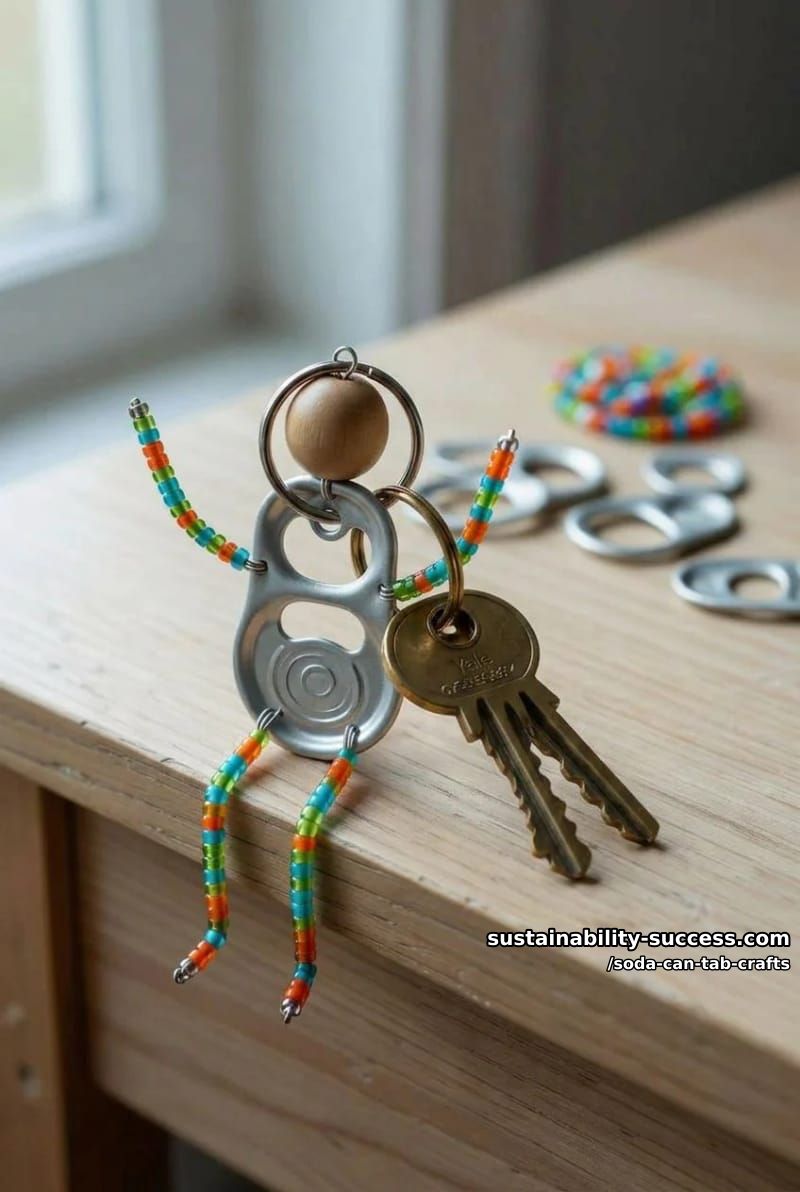
One tab for the body, a bead for the head, and beaded wire bent into arms and legs, all finished with a split ring so it clips to a bag or a keyring. Here's the part that decides whether your figure holds its pose or flops over: thread the wire down through both of the tab's holes and twist it off at the back. That anchors the limbs against the metal instead of letting them pivot loose. This is the one blowing up on TikTok under "soda tab guy" and "can tab friends," and once you've got beads on hand it costs pennies.
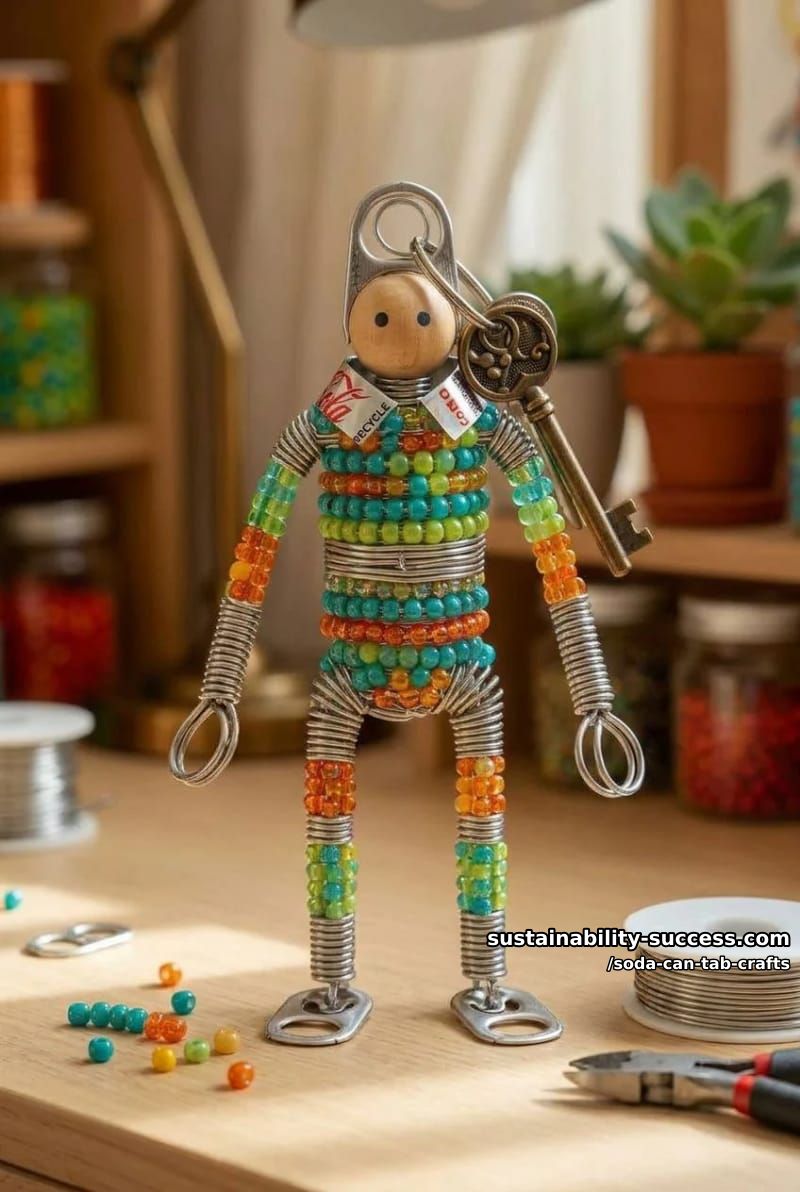
- String the head and torso: run a 10-inch length of 24-gauge wire through a large bead, then down through the tab’s upper hole.
- Add arms and legs: bead two short lengths of wire, twist them onto the waist, the tab’s lower bar, and bend tiny feet and hands at the ends so nothing slides off.
- Cap it: a split ring through the upper hole, and he’s wearable.
Pony beads give you a chunky, cartoonish guy; size-11 seed beads make something finer. The personality lives in the beads, not the tab, so this is the project for raiding that jar of random leftovers nobody knows what to do with.
2. European 4-in-1 chainmail tab cuff
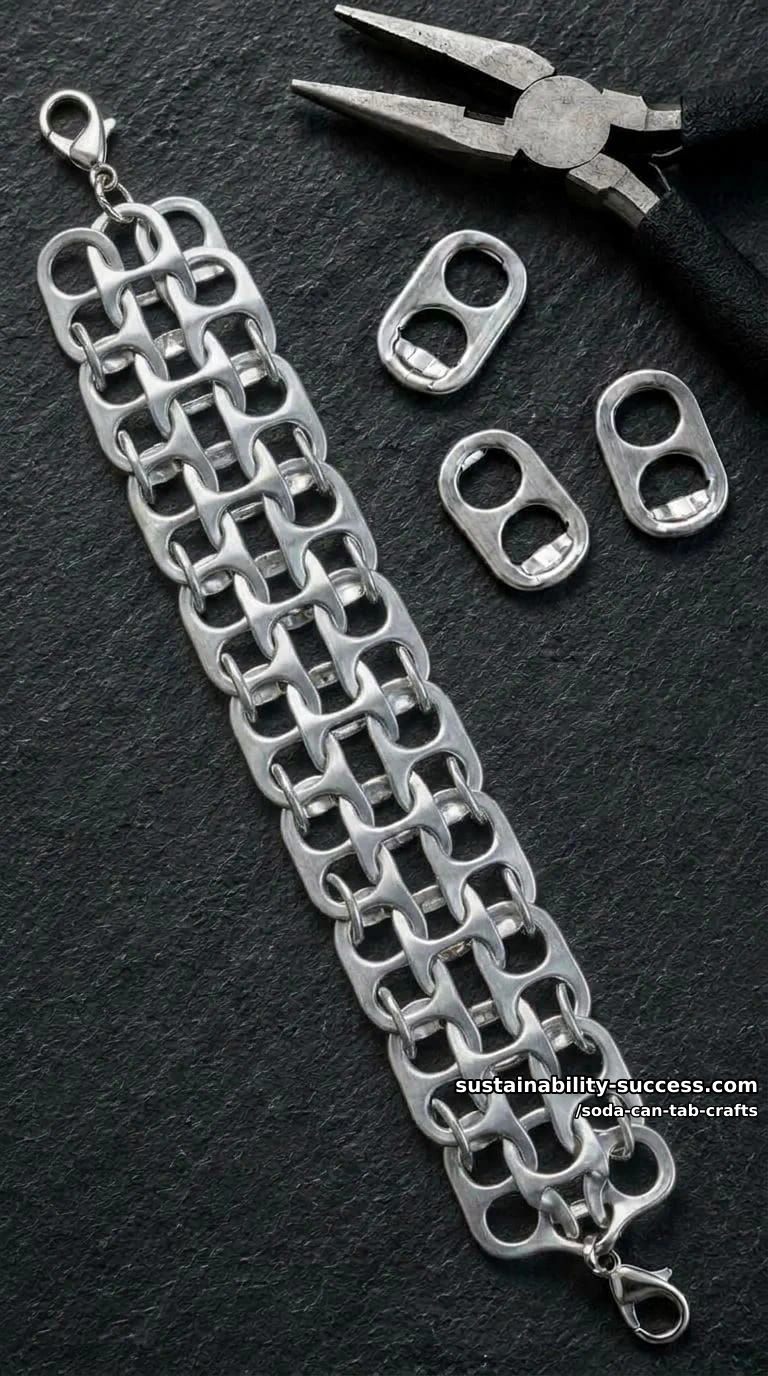
Of everything here, the cuff is the one I keep coming back to. A 4-in-1 cuff is a band where you snip each tab on one of its doubled loops so it opens like a split ring, then relink it through four of its neighbors. Plan on 20 to 30 tabs for an average wrist. It's the woven-metal look people picture when they say "tab chainmail," and once the rhythm clicks, snip, link, close, it goes faster than it has any right to.
Bend each tab into a slight arch over its thicker doubled loop, the end that once anchored it to the can.
With wire cutters, snip through only one layer of that doubled loop. Now the tab opens and closes like a split ring.
Thread an opened tab through the lower loops of four neighbors and close it. That single connector is what makes the band sit flat instead of corkscrewing.
Nearly every tutorial tells you to join tabs with 5mm jump rings. Ignore that. I spent an evening forcing 5mm rings through doubled tab loops before I'd admit they simply do not fit two layers at once. Go up to 6 or 7mm if you want rings for the clasp and edge binding, or skip them and link tab-to-tab as above. A starter pack of bright aluminum rings in mixed sizes lets you practice the weave with metal that matches your tabs instead of fighting them.
A size sampler in matching aluminum, so your clasp ring doesn’t show up looking like it came from a different bracelet.

3. Crocheted fish-scale pop-tab purse
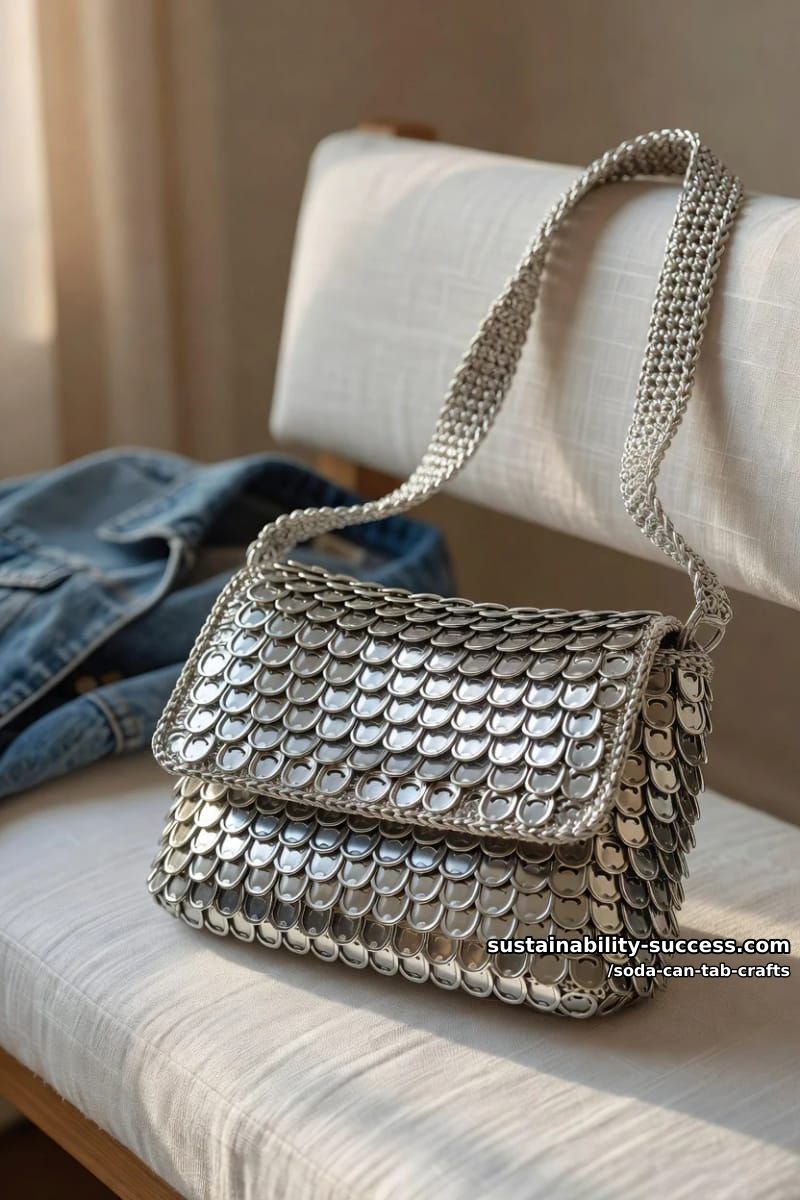
Crochet joins the tabs with thread looped through their holes, and that's exactly why the purse drapes like soft armor instead of standing up in a stiff panel. It's also the most durable tab object on this list. Thread flexes more or less forever; aluminum you bend and rebend eventually fatigues and snaps. One crocheted flower motif runs about 32 tabs. A full clutch climbs into the hundreds.
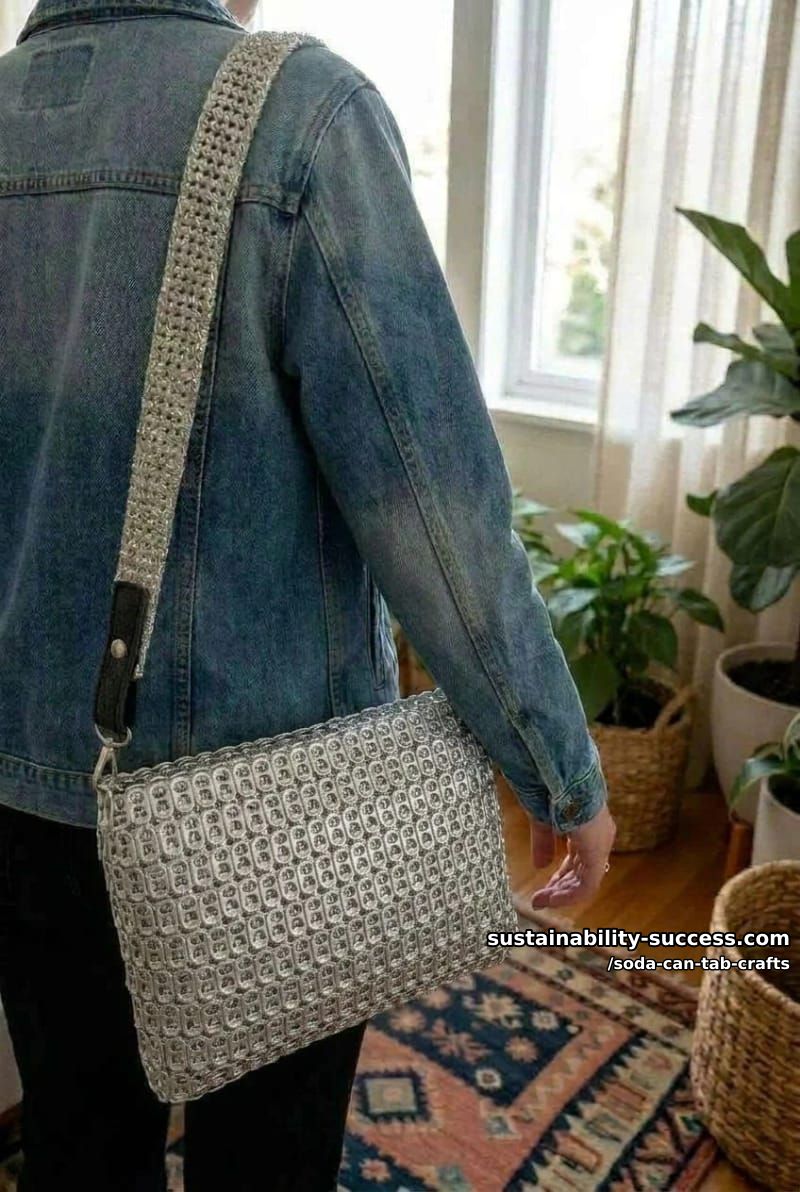
This one has a real pedigree. Escama Studio works between San Francisco and Brazil, and “Escama” is Portuguese for fish scales, which is exactly what a field of crocheted tabs looks like up close. The bags are made by fair-trade women’s collectives in the satellite cities ringing Brasília. The original Socorro design has been featured at the Museum of Modern Art, and the studio grew from 12 artisans in 2004 to well over 100. If you’d rather back the collective than crochet several hundred tabs yourself, an artisan-made bag runs roughly $60 to $110.
4. Iridescent soda tab beetle
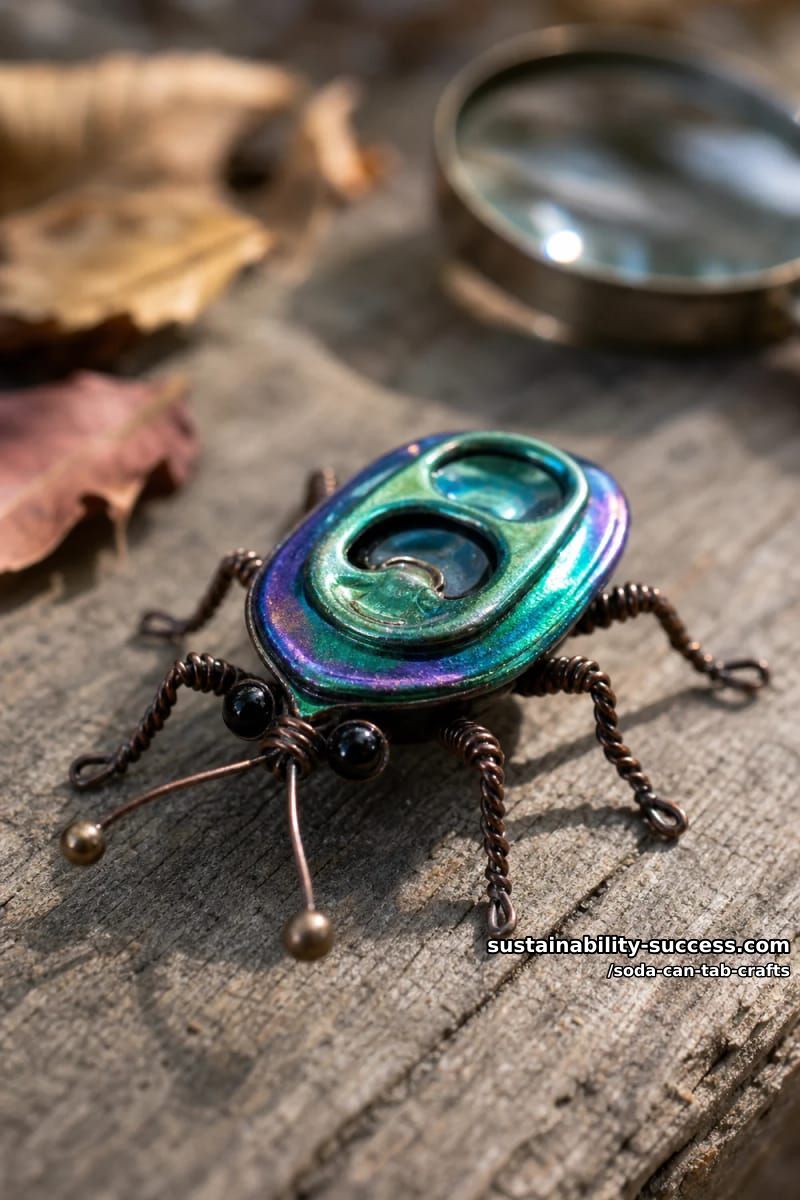
The beetle is one tab for the domed wing case and twisted wire for the legs and antennae. Bend the tab into a shallow curve so it reads as a rounded back rather than a flat disc. The Soda Tab Beetle gets saved and pinned all over this niche, and the reason is simple: it's small, it's fast, and it looks far more involved than it actually is. Paint the tab with iridescent enamel nail polish for that shifting scarab green, cheaper than craft enamel, and it dries hard.
Glue a pin back behind the shell and you've got a brooch. Epoxy a small magnet instead and it lives on the fridge. Two seed beads on a doubled wire make the eyes, and 24-gauge wire is stiff enough to hold six bent legs without sagging. Want a whole swarm? Batch-paint a dozen tabs at once and assemble them in front of the TV.
5. Scale-mail shoulder panel for cosplay
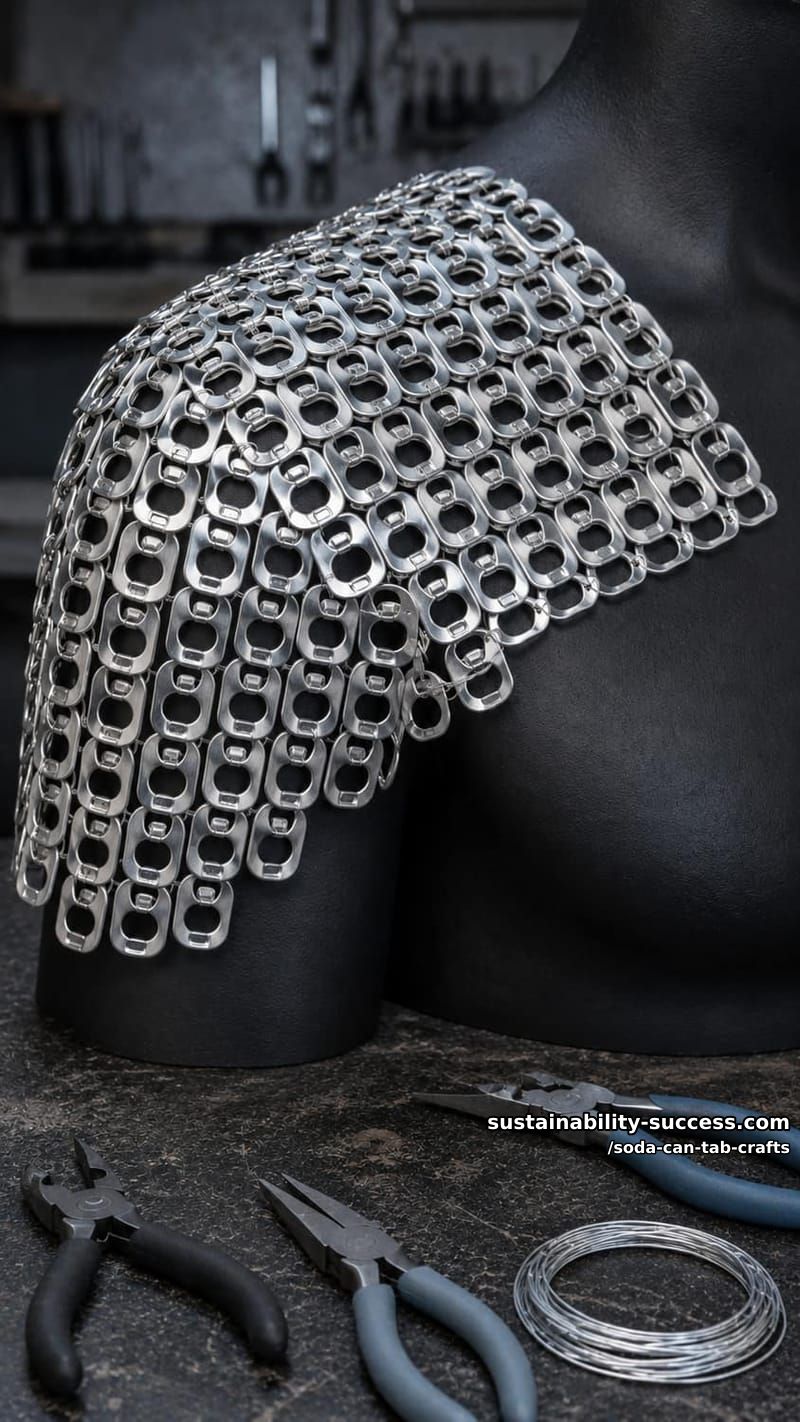
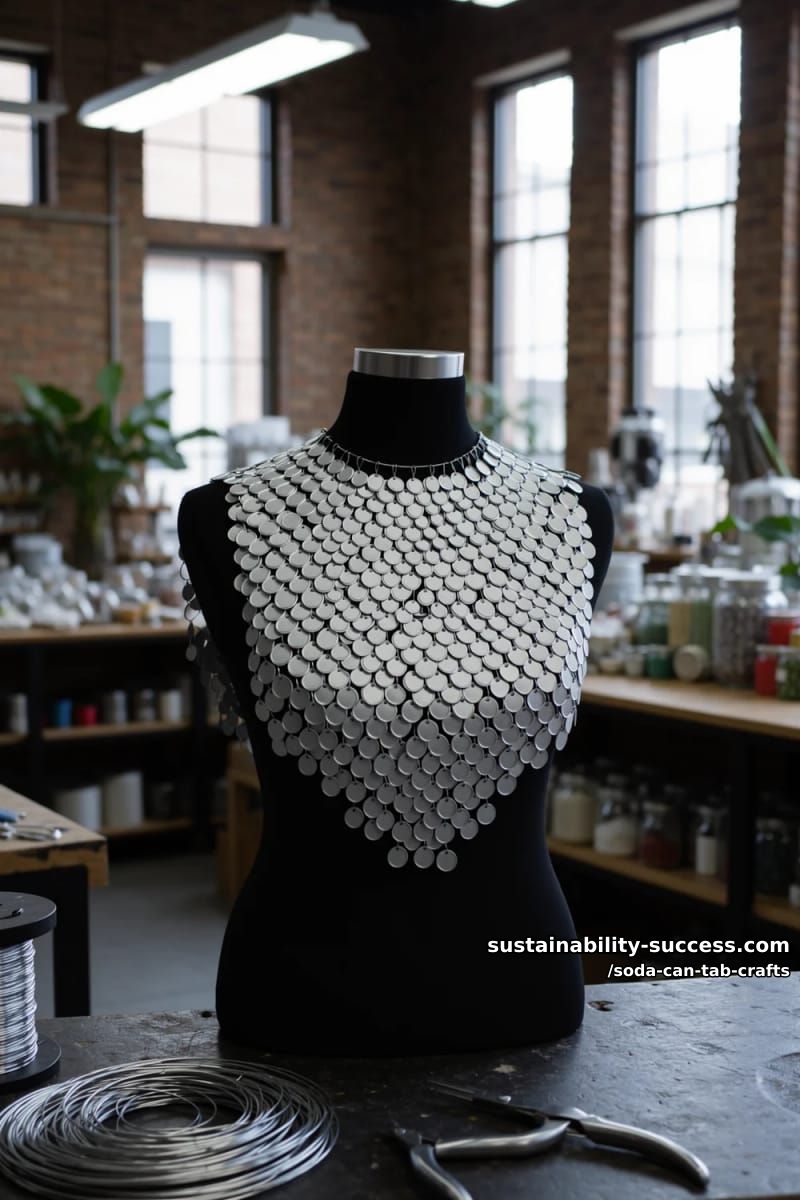
Scale-mail overlaps tabs in rows so each one hides the join beneath it. The result moves with the body, which is what you want in a costume pauldron or collar. You'll need two pairs of needle-nose pliers, one to hold, one to work, and you will be grateful for both somewhere around tab two hundred. A shoulder panel runs a few hundred tabs. A full vest in the European 4-in-1 weave can pass 4,000.
A size sampler in matching aluminum, so your clasp ring doesn’t show up looking like it came from a different bracelet.
Glued scale-mail falls apart. The bond shears the first time the panel flexes, so wire every single scale, no matter how confidently a Pinterest tutorial swears hot glue is fine. Each snipped edge is sharp enough to catch skin and thread, file it or fold it under before the thing ever touches a costume. The payoff is real, though: a panel of several hundred tabs weighs next to nothing, because it’s all aluminum and not steel rings.
6. Tab-and-bead chandelier earrings
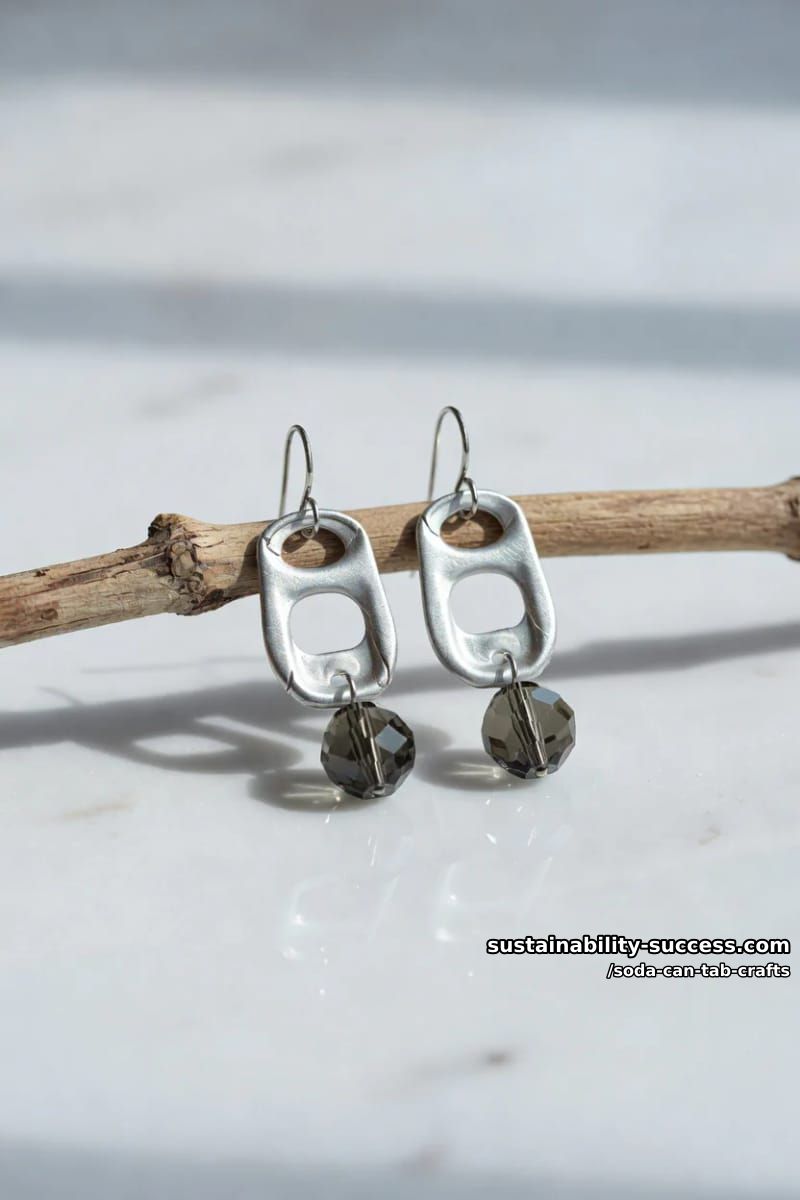
A polished tab on a fish-hook ear wire, with a bead through the lower hole so it swings. Use hypoallergenic surgical-steel or sterling wires, raw nickel turns a lot of earlobes red, and this sits against skin all day. One tab per ear. Stack two or three and the weight starts tugging on the piercing.
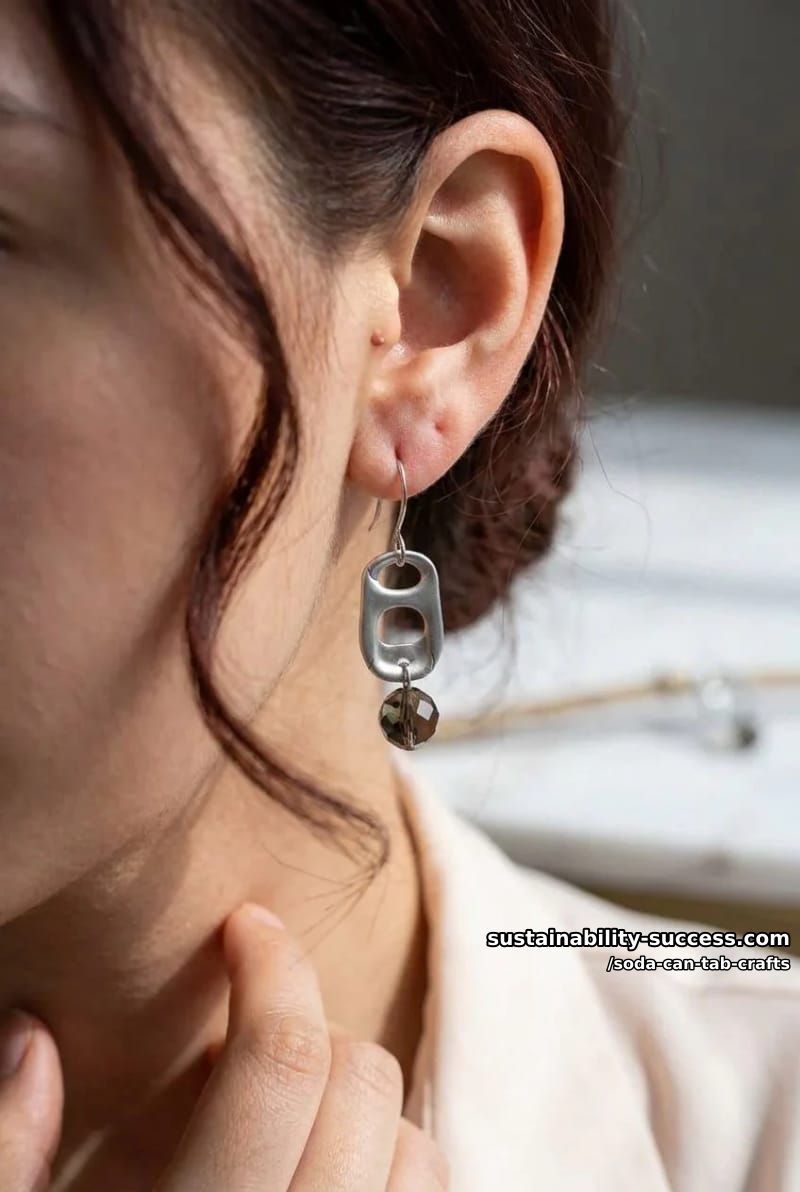
A bag of hypoallergenic stainless steel fish-hook ear wires runs a few dollars and makes a couple dozen pairs. Buff each tab first, the brushed-then-shined contrast is the whole difference between jewelry and litter on a hook.
7. Pop-tab pendant lampshade
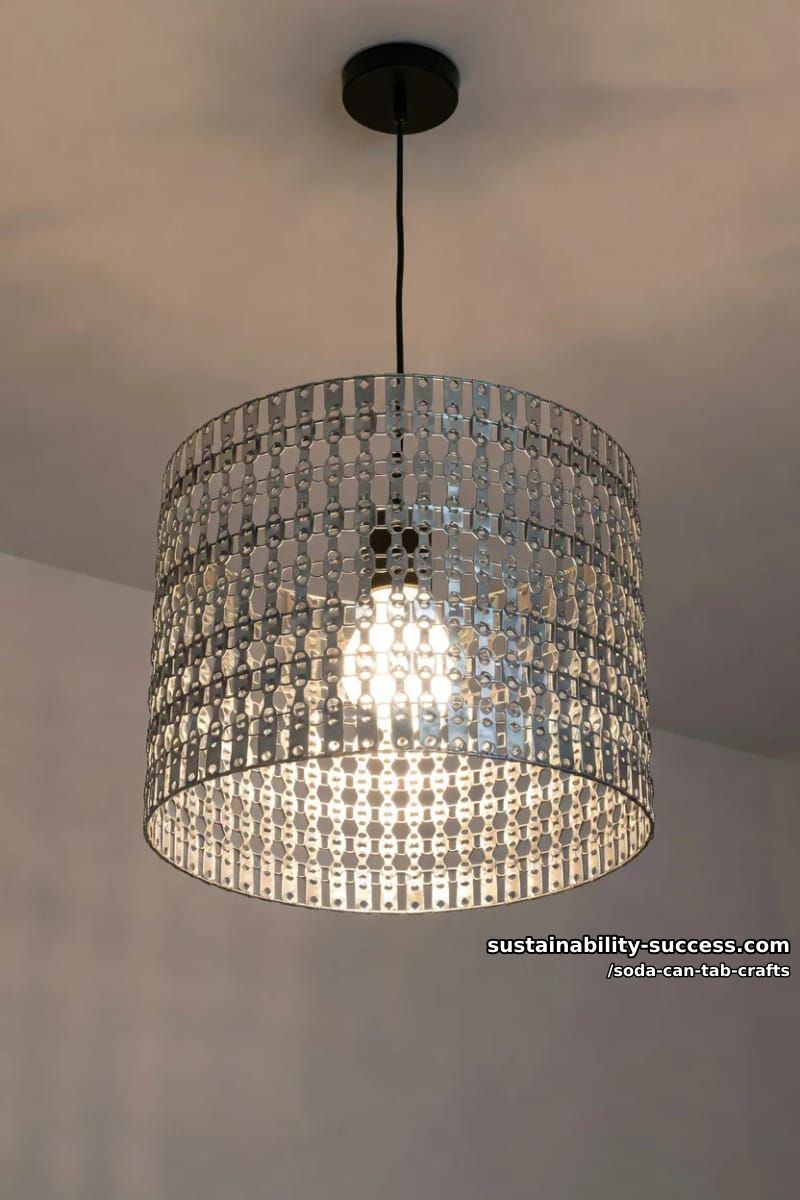
Hundreds of linked tabs wrapped into a cylinder or dome around a wire ring; lit from inside, the shade throws a grid of tiny shadows across the ceiling. Build it on the wire frame of a dead lampshade you'd otherwise toss, that's what keeps the project in upcycle territory rather than just buying a frame. Save colored tabs off energy drinks if you want flecks of color in the mesh.
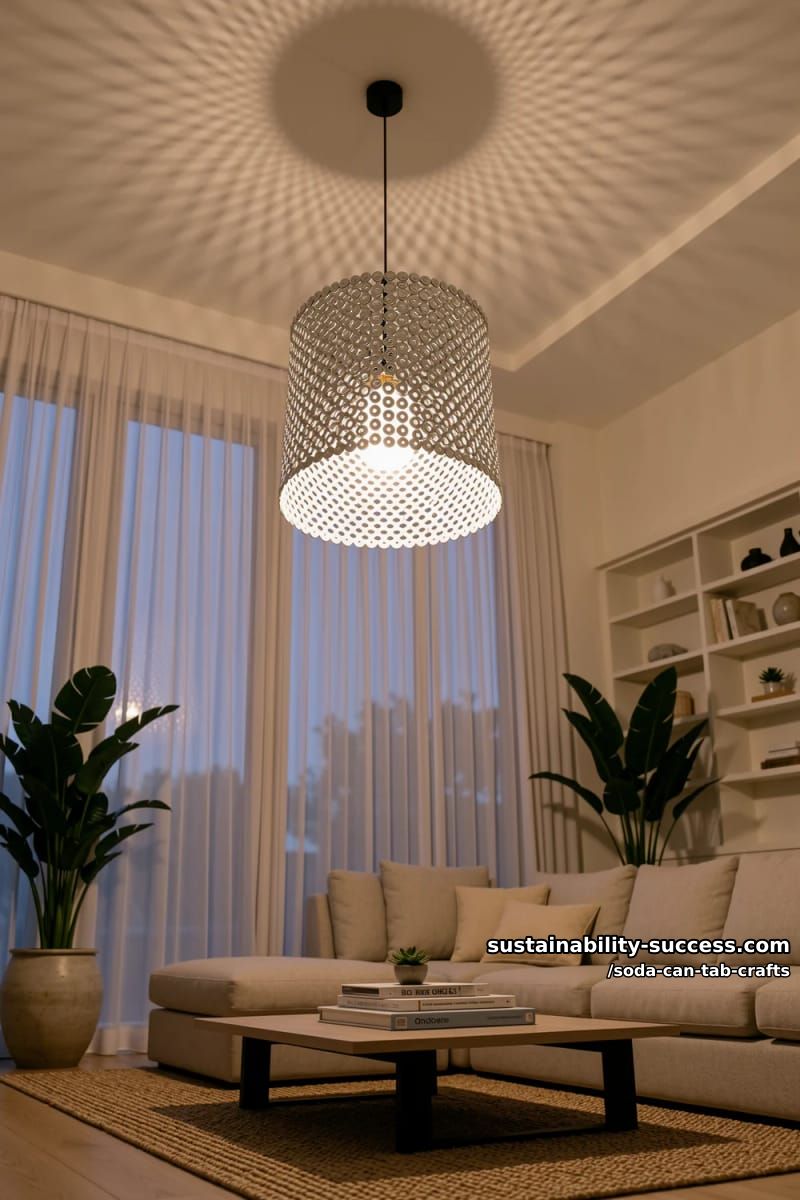
One rule, no exceptions: fit an LED bulb, never an incandescent. Aluminum inside an enclosed shade traps heat. An LED runs cool; a hot filament bulb turns your decor into a burn risk. The project itself is slow going, more linking than thinking, which makes it ideal for an evening when you want your hands busy and your brain off.
8. Tab mosaic picture frame
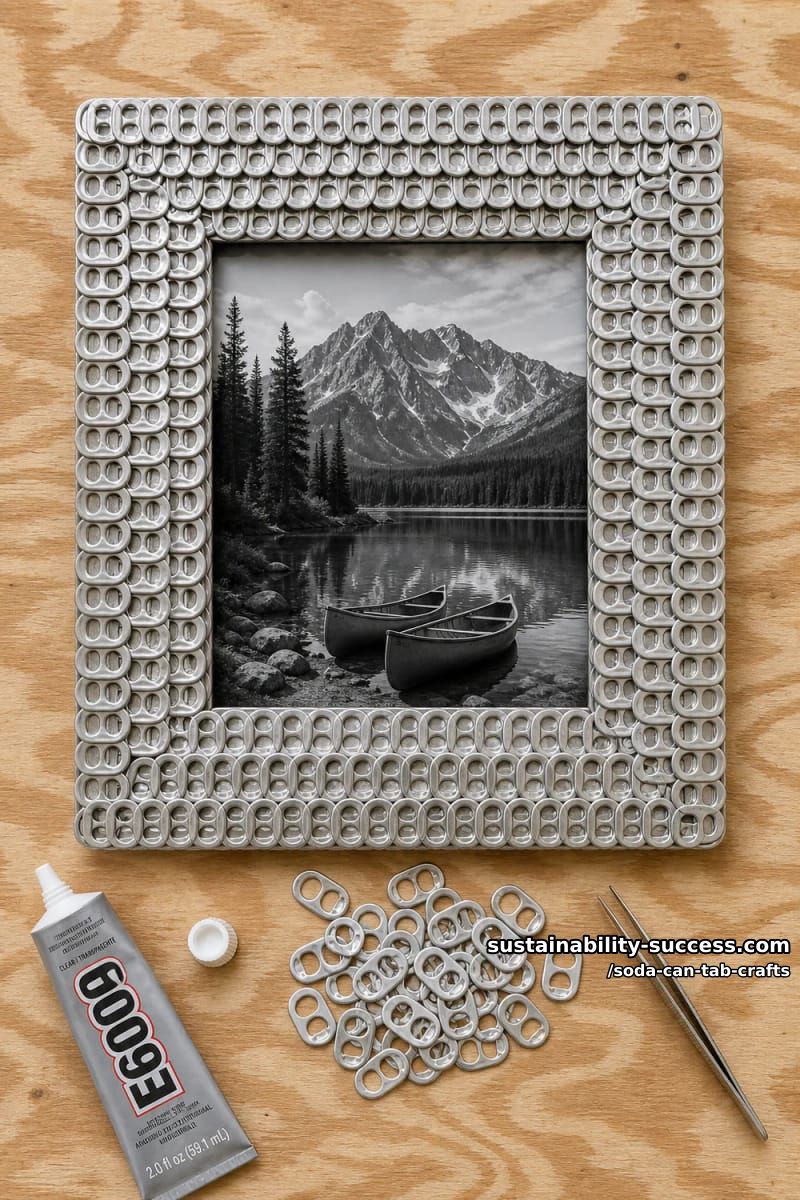
A plain wood or cardboard frame faced with overlapping tabs glued in rows. This is the one that finally drains a hoard, a 5×7 frame swallows roughly 150 to 300 tabs, depending on how much you overlap. Shiny side up, one row at a time from the bottom edge, and use E6000 or a hot-glue gun, because school glue won't hold metal to wood. Finish with a clear matte spray to keep fingerprints and oxidation off.
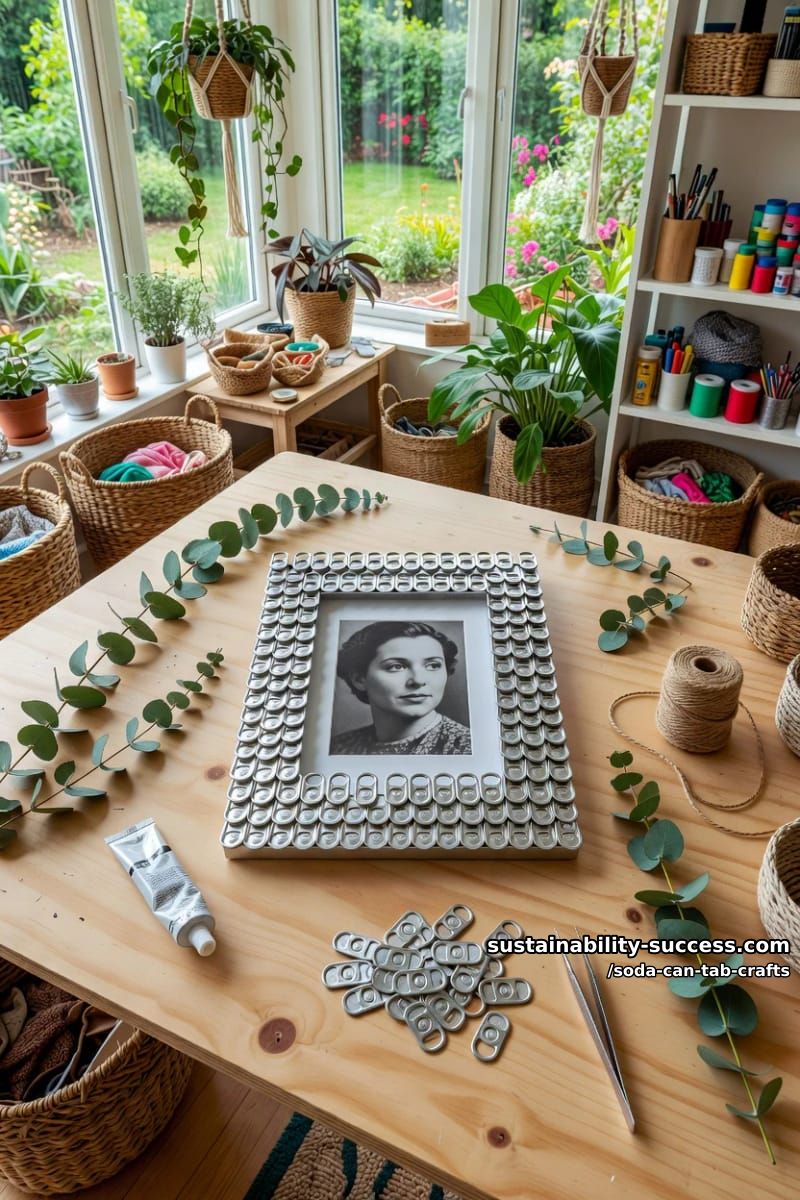
This is usually where people run out of tabs. No recycling bin or thirsty office to raid? You can buy them by the thousand.
A size sampler in matching aluminum, so your clasp ring doesn’t show up looking like it came from a different bracelet.
9. Chainmail dice pouch
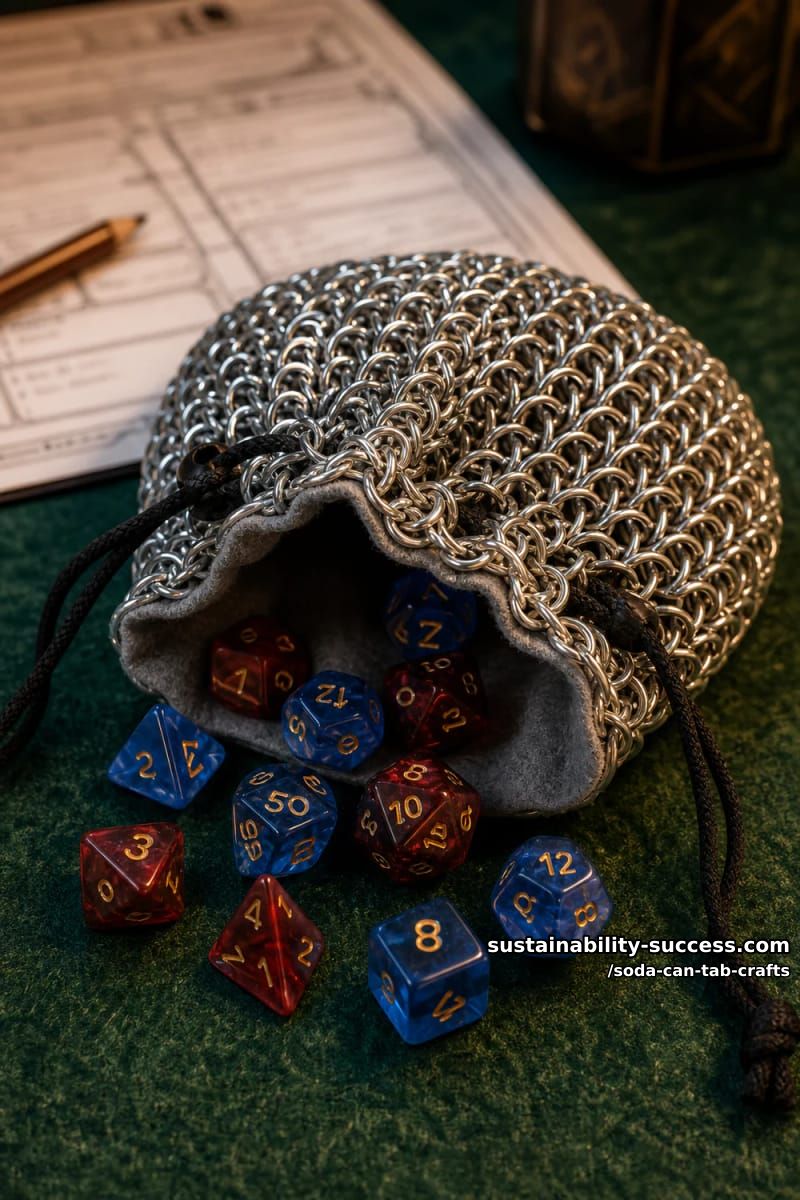
A small 4-in-1 pocket woven into a cup shape and gathered shut at the mouth with a cord, the flex project if you already play tabletop games. Line it with felt. This part isn't optional: bare aluminum mesh chews up the painted faces of nicer dice, and a square of grey felt stitched inside fixes that for pennies. Figure 200 to 400 tabs, depending on how big a fistful of dice you haul around.
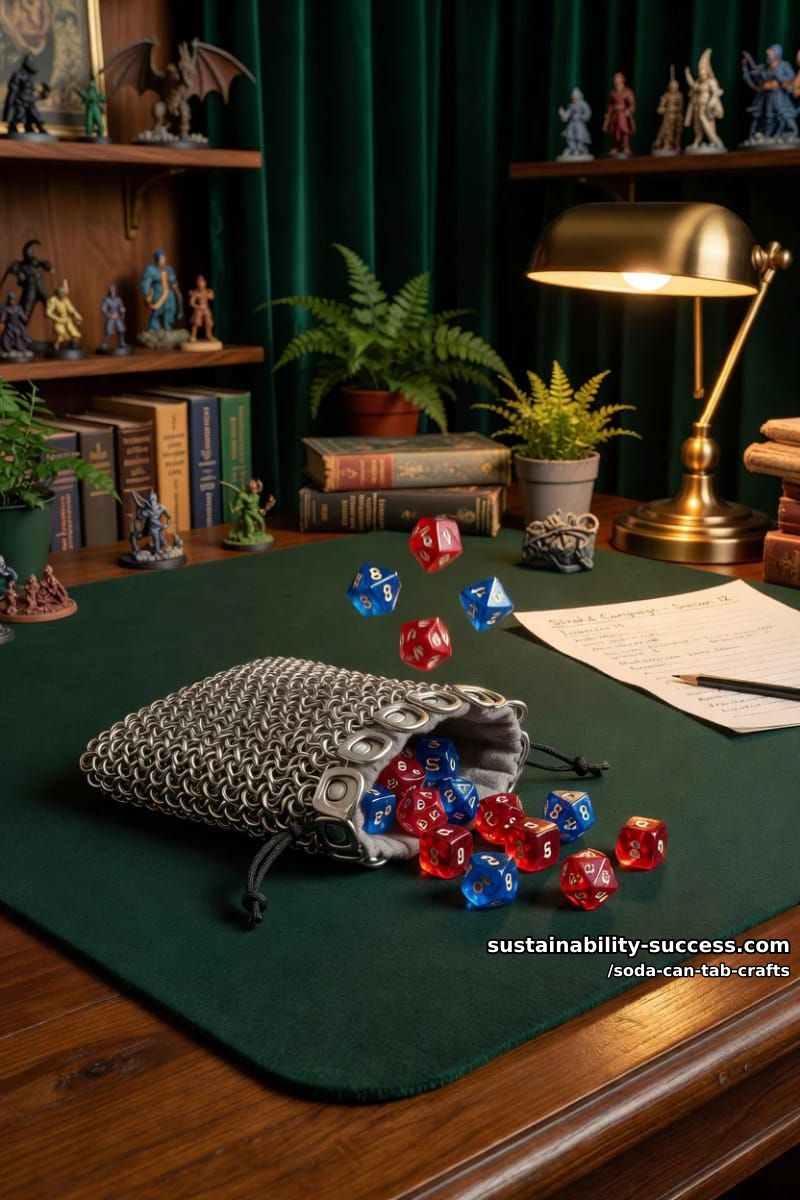
It's the same weave as the cuff back in section two, only closed into a tube and rounded off at the base by dropping a tab from each row. If you can make the bracelet, you can make this. It just looks like a bigger commitment because, well, there are more of them.
10. Crocheted pop-tab star ornament
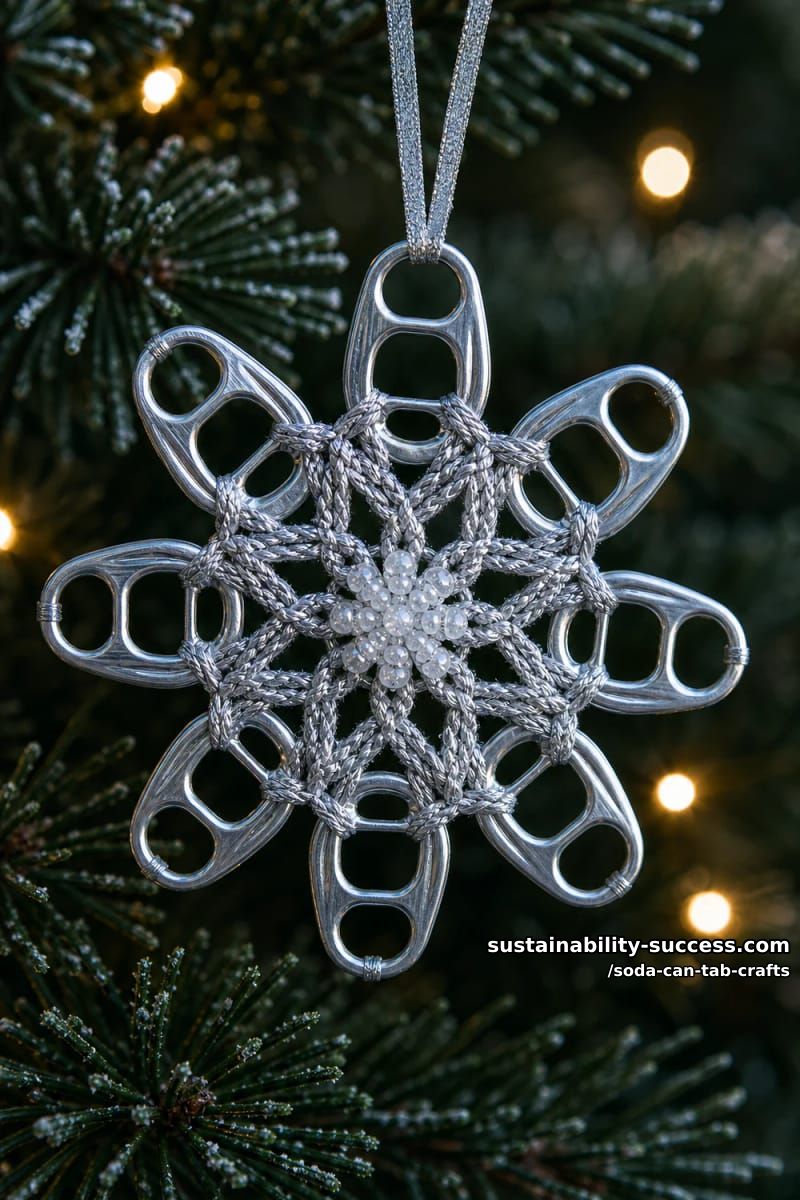
A flat crocheted motif with the tabs radiating out from a center, hung on a ribbon. Same loop-through-the-hole crochet as the purse, but tiny, around 8 to 12 tabs per star, so it's a sane way to learn the stitch before you commit to a whole bag. Lion Brand's silver lamé thread is the usual choice; the metallic ply disappears into the aluminum.
Francisca Ribeiro de Souza, Escama's first crochet designer, and the head of the Brazilian collective, makes a holiday version of this exact ornament. A good reminder that the "kid craft" and the museum-shelf object are the same stitch at two different scales. Drop a few seed beads at the center if you want it to catch the tree lights.
11. Woven-tab belt with a thrifted buckle
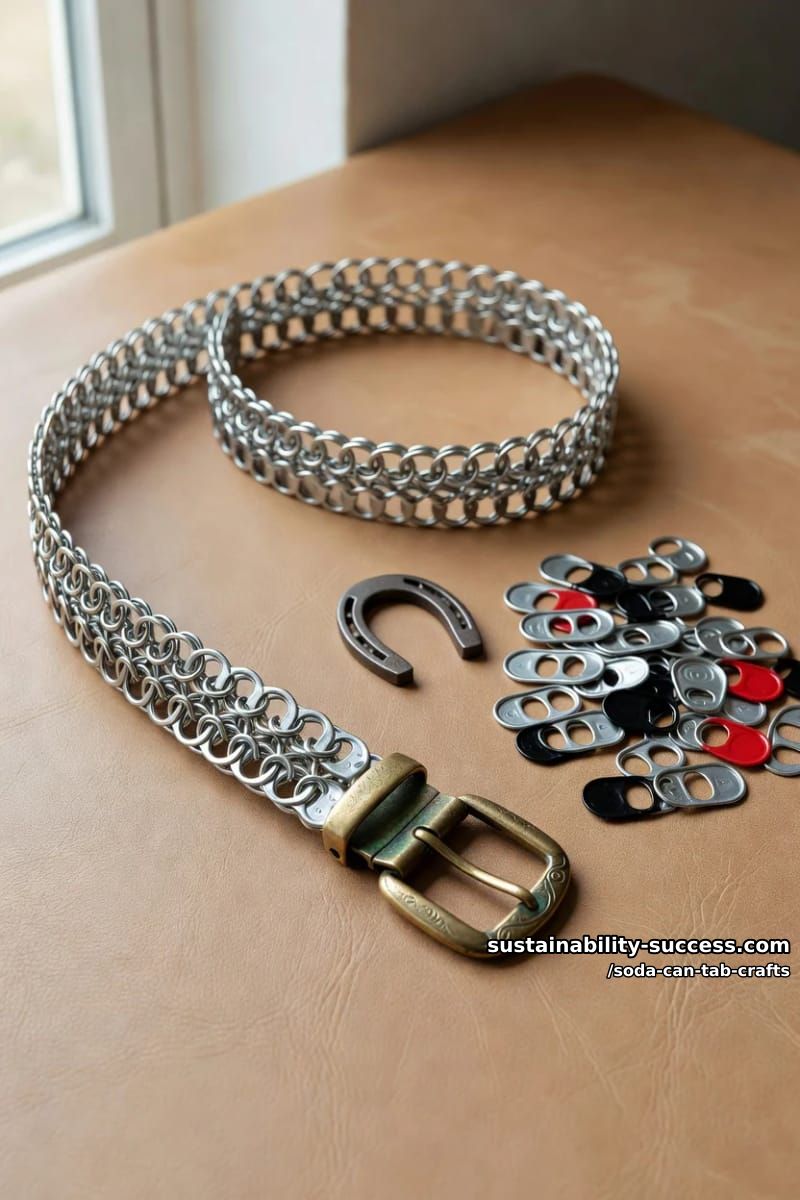
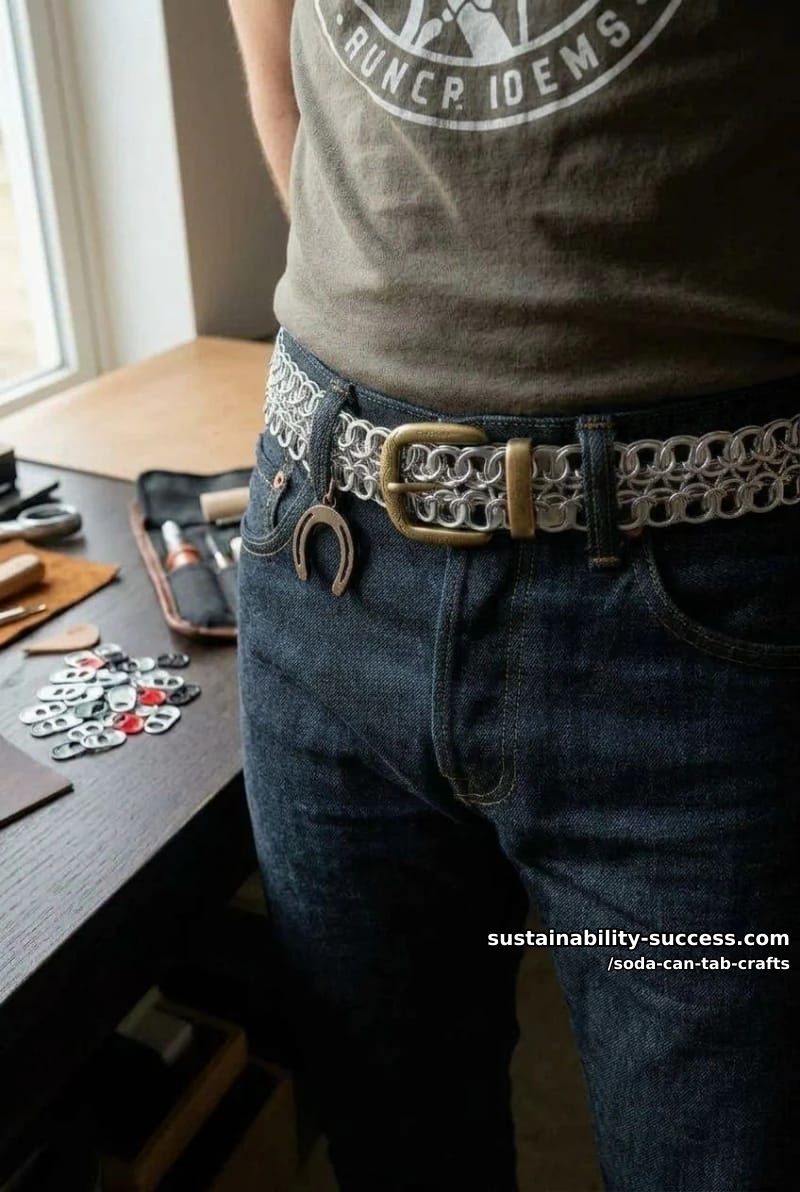
A long strip of 4-in-1 mail, or a softer two-ribbon weave, fastened to a buckle salvaged off a worn-out belt. Match the strip width to the buckle's bar, and weave it a hair longer than your waist, because mail has no give. This is where sorting your hoard pays off. A belt flexes constantly, and the wrong tab will rust or shed its paint at every link.
Do this
- Stick to aluminum soda and beer tabs. They’re non-magnetic and stay clean and uniform.
- Run a magnet over the jar before you start, anything that jumps to it is steel, and steel will rust on you.
- File or fold that snipped edge before weaving so it can’t snag clothing.
Avoid
- Steel tabs off soup and pet-food cans. They corrode, and they’ll stain pale fabric.
- Anything heavily painted or anodized, in a woven piece the coating just flakes off at every flex point.
- And never weave a bent, torn, or half-snapped tab; it weakens the join and pulls loose under tension.
12. Tab wind chime for the garden
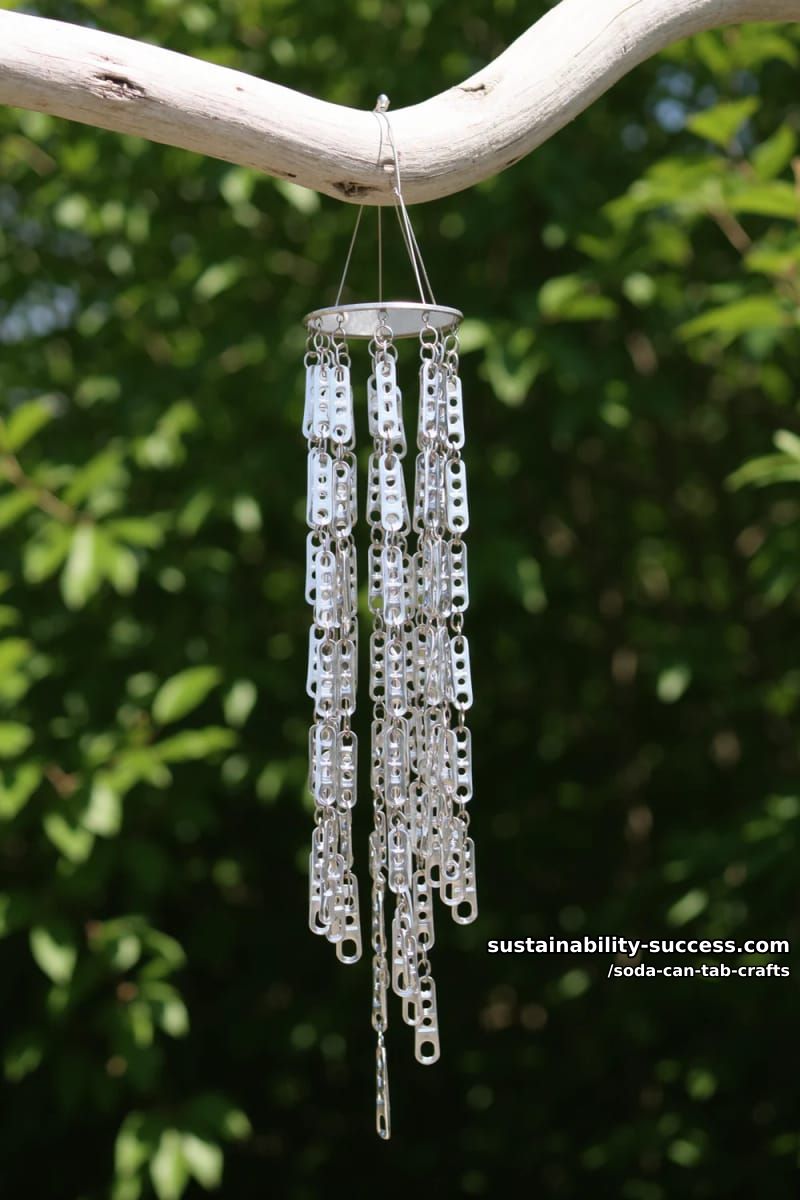
Several vertical strands of linked tabs hung from a ring or a piece of driftwood. The honest pitch: it shimmers more than it chimes. The sound is a faint tinkle, nothing like a tuned metal-tube chime, so hang it somewhere you want flashes of light more than a melody. Aluminum earns its place outdoors here because it won't rust and streak down your siding the way a steel chime does.
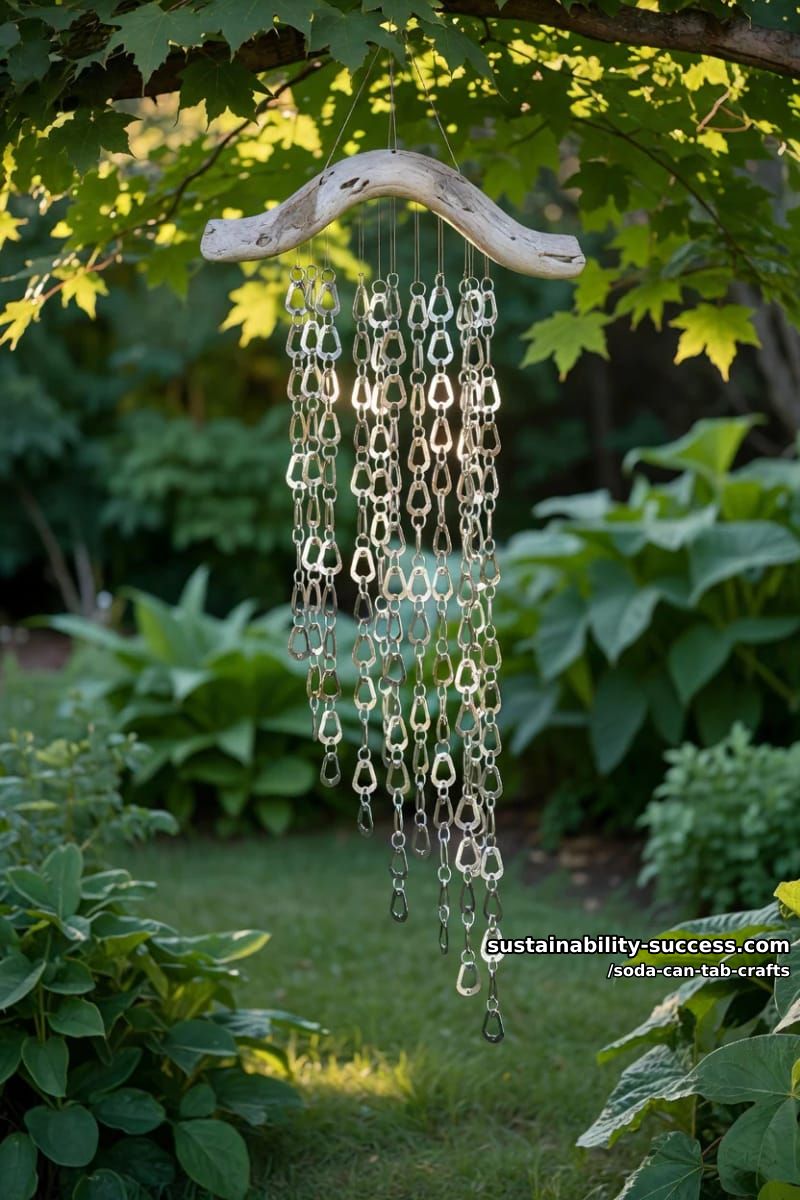
String the strands on UV-stable cord, or link them with jump rings. Cheap nylon line goes brittle and snaps after one season in the sun. Vary the strand lengths so the lowest tabs just brush each other in a breeze, with pieces this light, that contact is the only way you'll get any sound at all.
Conclusion
Start with the tab man if you've never done any of this, it teaches you how the holes take wire, which every other project here leans on. From there, a jump-ring bracelet for linking, then a 4-in-1 cuff before you go anywhere near the dice pouch or scale-mail. File your edges as you go, not all at once at the end; I never remember to, and I always regret it. And recycling that aluminum back into new cans uses about 95% less energy than smelting it from raw ore, according to the EPA, so none of these tabs were headed to waste either way. A woven cuff just keeps the metal in your hands a lot longer than the forty cents a pound a recycler would ever hand you for it.