
Most thrift-flip roundups stop at the paint reveal and never mention that the joint cracks six months later. This set is built around flips that take daily handling: a suitcase that actually holds books, a lamp that gets switched on every night, a dresser that survives a humid bedroom. A few are twenty-minute jobs (the bottle vases, the hardware swap), a couple eat a whole weekend (the sewing-machine console). I've flagged the ones I think are overrated, because not every secondhand piece deserves your Saturday.

1. Mount a vintage hard-shell suitcase as a wall shelf
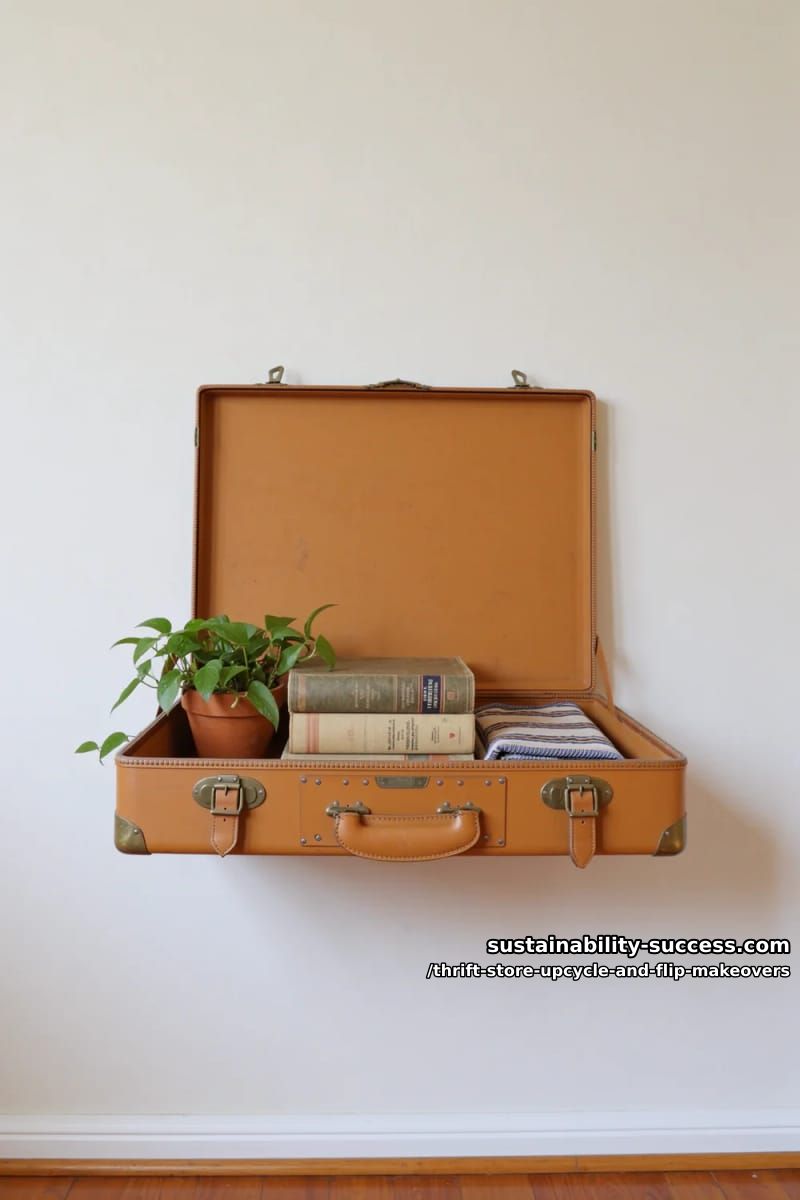
A rigid mid-century suitcase, mounted open against the wall, gives you a deep display shelf for the price of a thrift ticket, usually $6 to $15. Buy for the shell, not the looks: press the corners and the lid hinge. If the case is cardboard wrapped in vinyl (most pre-1960 cases are), it holds paperbacks and a small plant, not a stack of hardcovers. The leather-and-wood steamer cases carry real weight but cost more and turn up far less often.
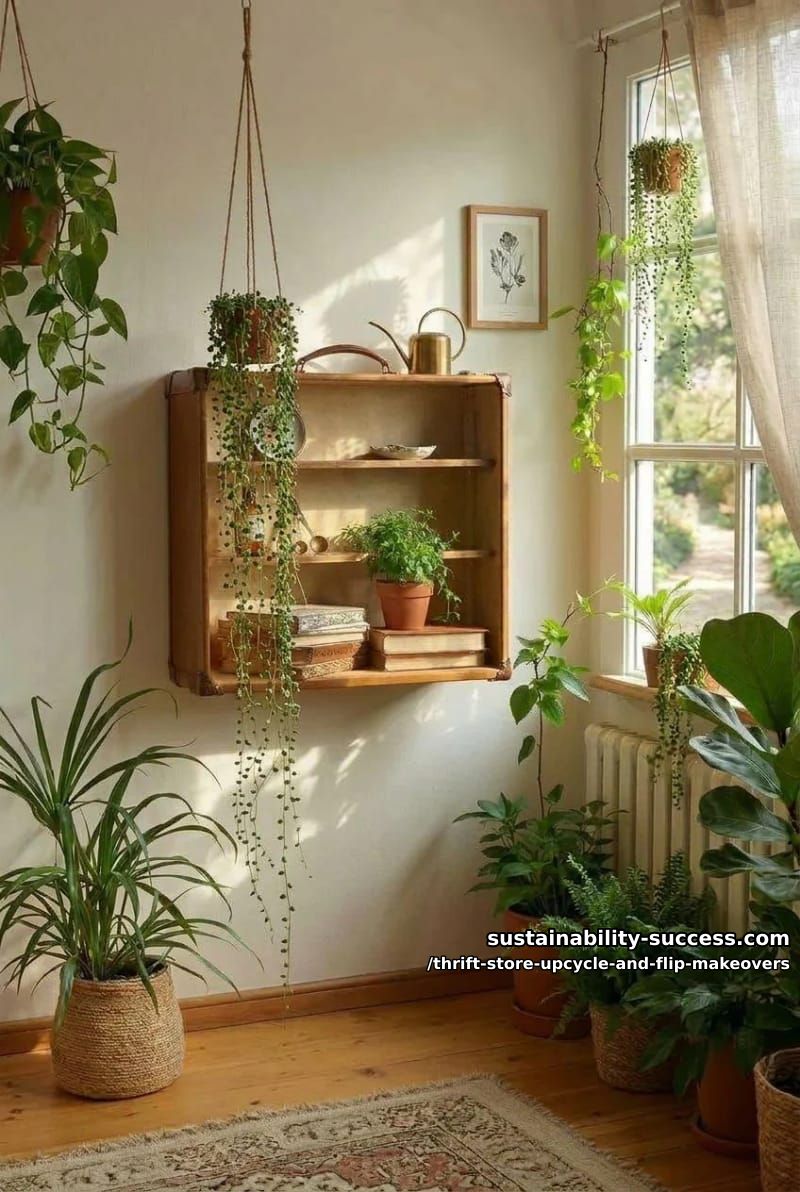
Use a French cleat: screw one half of a 45-degree-cut 1×4 to a wall stud, the other half to a plywood strip glued inside the case back. The cleat carries the load into the stud, not into the case’s thin sidewalls. Cap the load at roughly 10 to 15 lb for a vinyl-over-cardboard case; a wood-framed case takes more. Two drywall anchors alone will pull out the first time someone leans on the shelf.
I don't have a clean test for whether a given case will sag. You press the base flat against the floor, lean on it with both hands, and trust your gut before you put a drill through it.
2. Respray a brass thrift-store lamp in oil-rubbed bronze
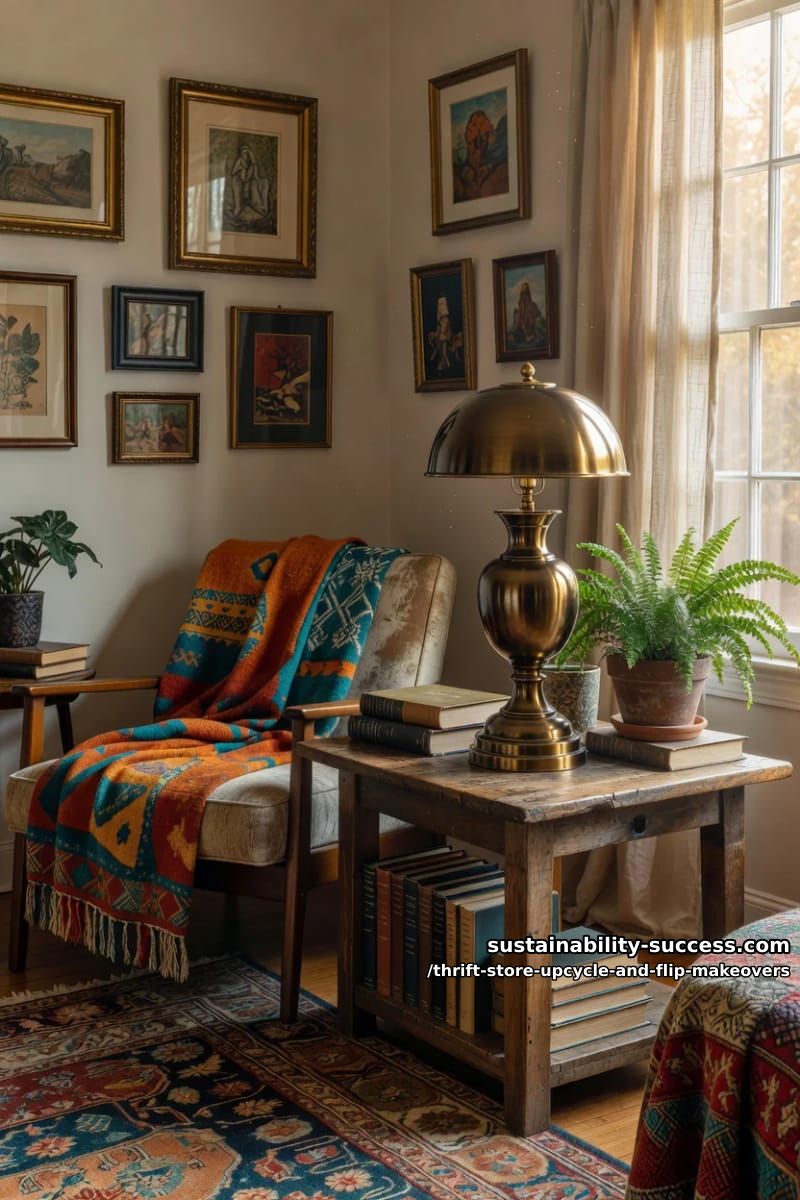
A scuffed 1980s brass lamp becomes a $5 base in a current finish with two cans of spray, but only if the body is solid metal. Heft it. A heavy cast base takes paint and lasts; a hollow plastic-and-brass-plate lamp is landfill within a year, respray or not. Wash decades of hand oil off with a TSP substitute or the paint will fish-eye, scuff the old gloss with a maroon pad so the new coat grabs, then lay down two or three light passes.
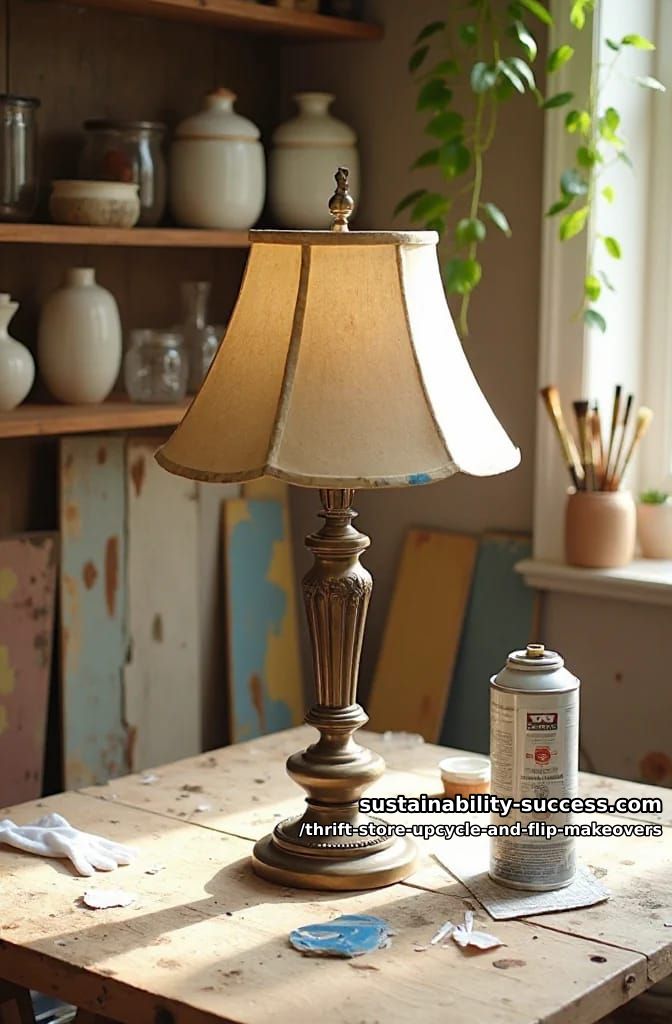
Two light coats hide forty years of scuffs and turn a $4 brass base into something that reads like a lighting-store buy.

Keep the dated shape. The fat ginger-jar profile that looks wrong in brass looks deliberate in matte bronze or flat black, and a $15 linen drum shade from a big-box store finishes it. Rewiring is the part to skip unless the cord is cracked; I rewired a perfectly fine lamp once on principle and lost an afternoon to a switch that wouldn't seat.
3. Color-block thrifted glass bottles into bud vases




Empty wine and oil bottles become a grouped set of bud vases with one coat of color, and the project costs about the price of a single can if you drink at all. The look that works is restraint in count and difference in height: an odd number, three or five, in one repeated hue or a tight family like terracotta and rust and ochre. A full rainbow looks like a kids' craft table.
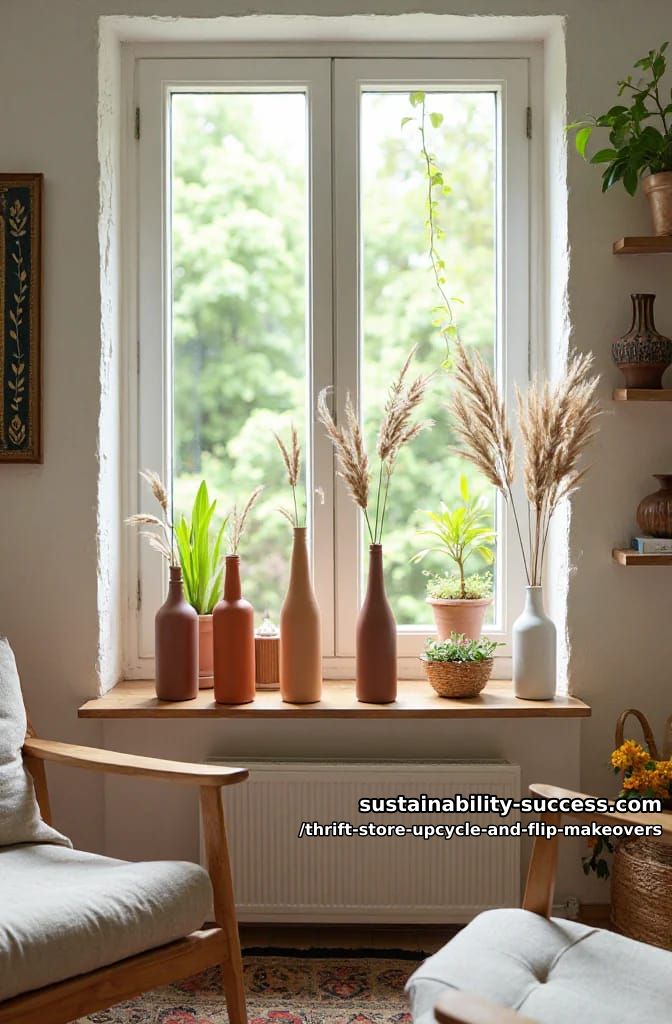
Glass gives paint nothing to grip. Wipe each bottle with rubbing alcohol, then lay down a self-etching or bonding primer before color, or use a paint sold specifically for glass and ceramic. Skip that step and the finish flakes off at the first damp cloth.
Spray gives the cleaner surface; a brush leaves ridges that catch light and read as homemade. For vases that only hold dried stems, ordinary spray paint is fine. For anything you put water in, use a glass-specific enamel or seal the color with a clear coat, because cheap acrylic lifts the moment a drip runs down the outside.
4. Hang old dresser drawers as floating box shelves
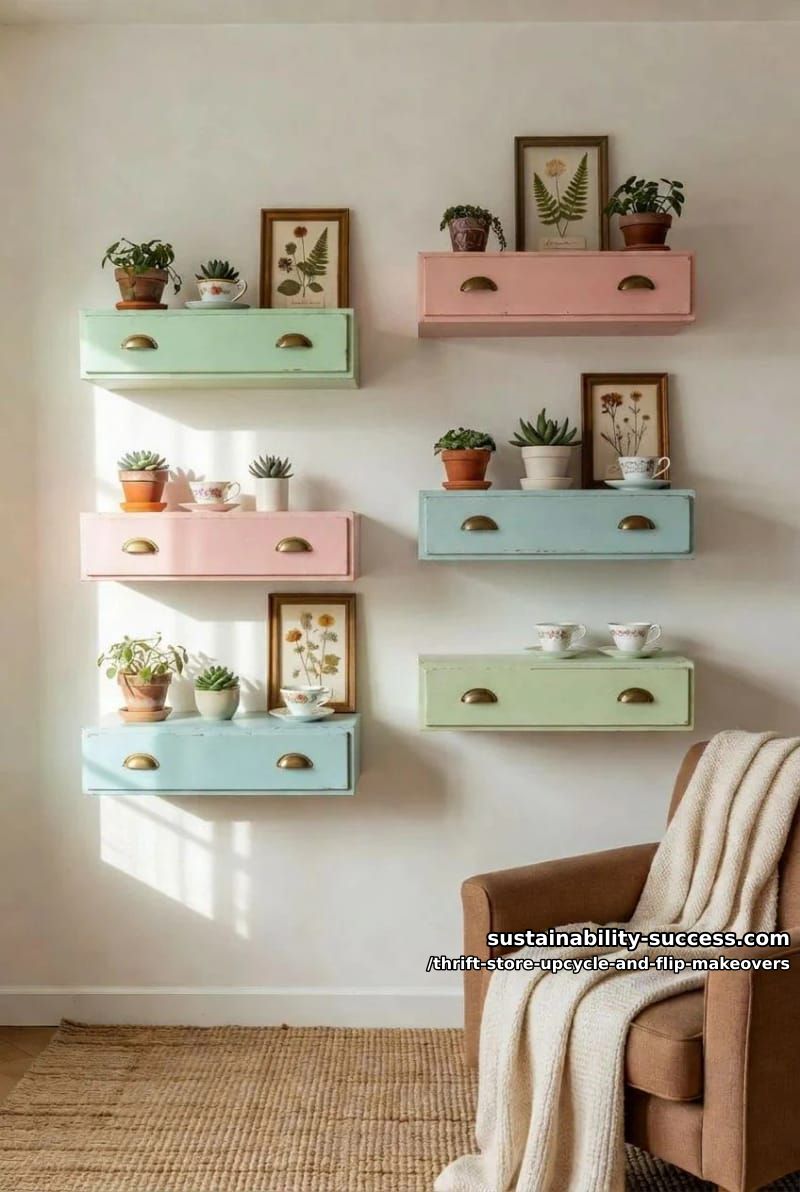
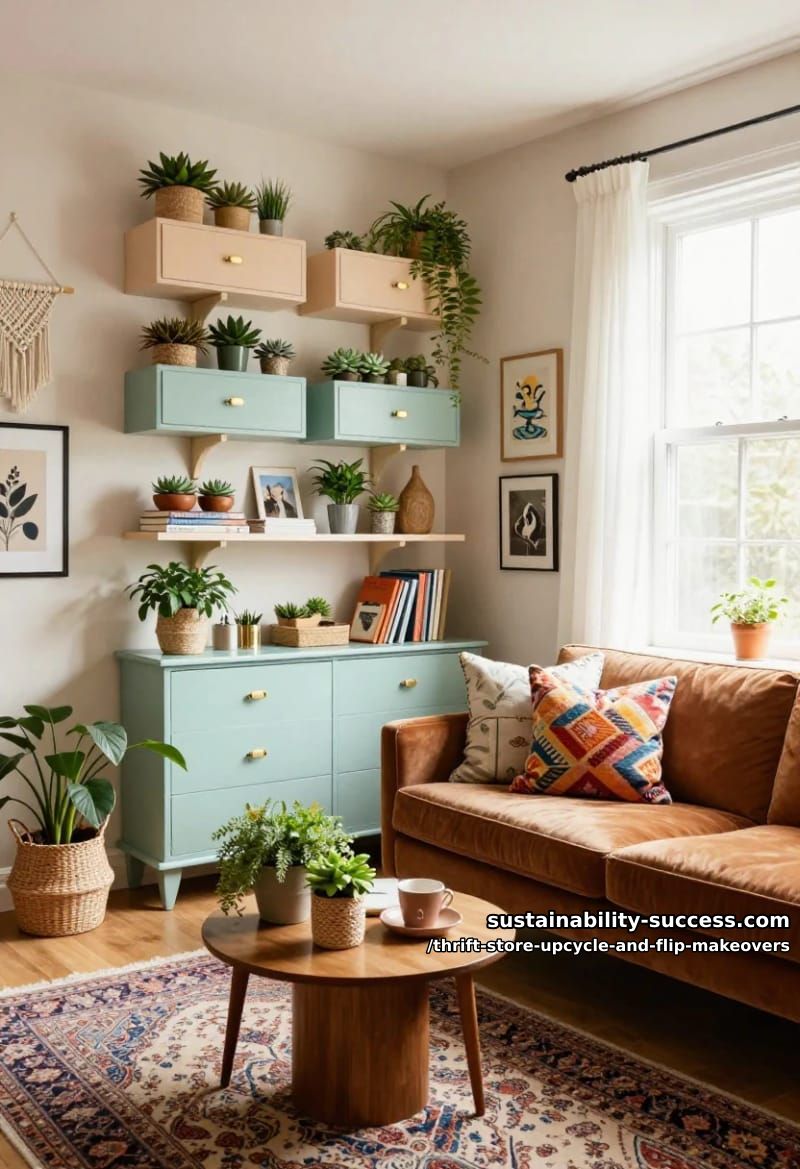
A single orphaned drawer, turned on its side and screwed to the wall, makes a box shelf deep enough for plants, shoes, or a record stack. This is the flip for the dresser carcass nobody wants: the drawers outlive the frame, and one busted $10 dresser yields four shelves. Paint the inside a contrasting color so the cubby reads as deeper, and leave the original pull on the front to use as a hook or a spot for a tea towel.
- Square it up. Pop the drawer out and check the bottom panel is glued and stapled tight; re-staple it if it rattles.
- Find a stud. A loaded box shelf is heavy, so mark at least one stud behind the mounting spot.
- Drill through the back. Two screws into the stud through the thick rear panel, never through the thin side walls.
- Paint, then mount. Color the interior on a table first; cutting in once it’s on the wall is miserable.
These are everywhere now, which is the one mark against them. If you want yours to stand apart, gang three at staggered heights instead of a tidy grid, and keep the fronts mismatched on purpose.
5. Color-drench a solid-wood thrift dresser in one matte tone
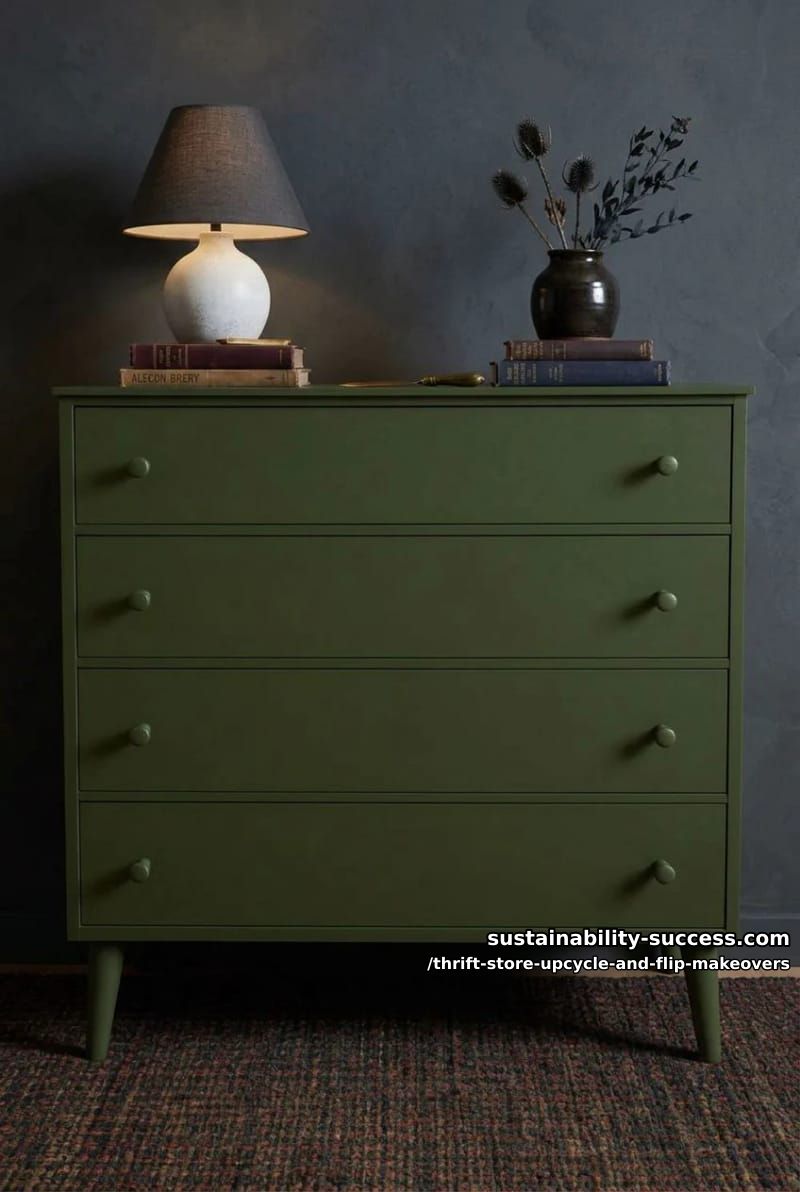
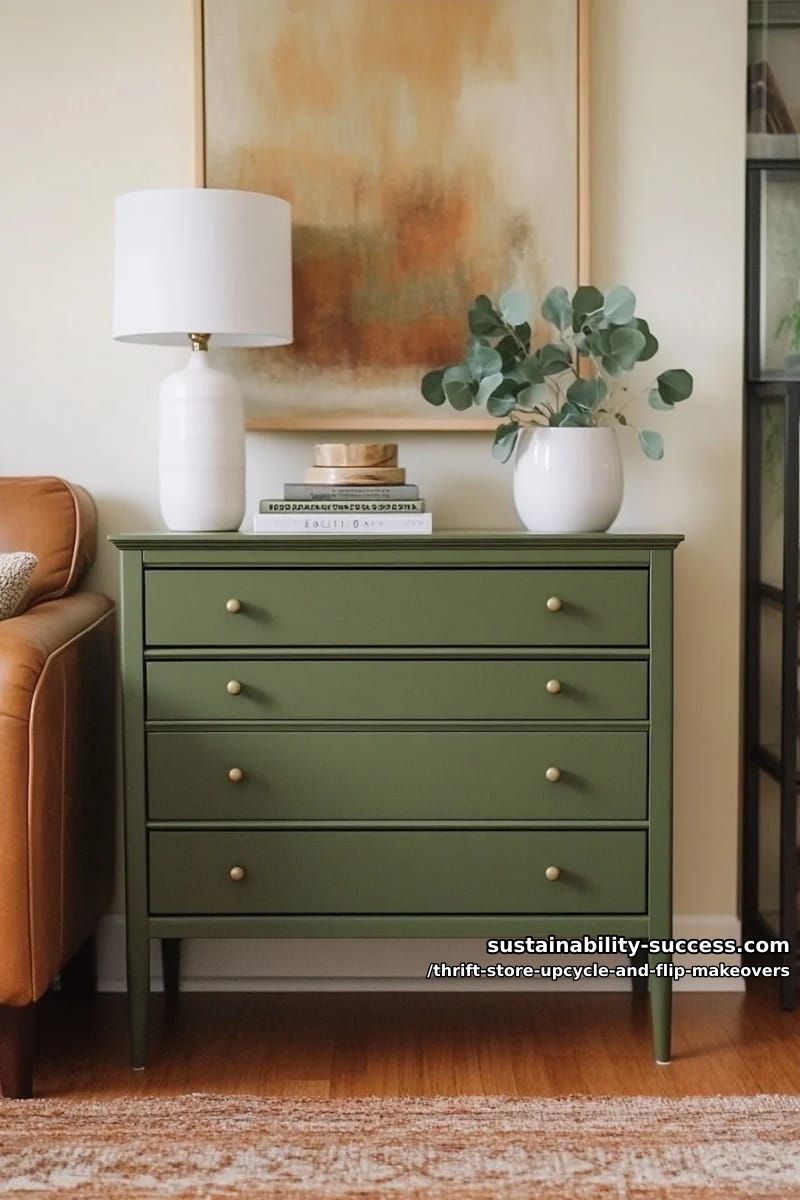
Painting a dresser one saturated color from top to bottom, hardware included, looks more deliberate than the two-tone "white body, wood top" that every flipper defaults to. Pull the color off the room's least flexible thing (the rug, the tile) and go a shade darker than feels safe, because matte furniture reads lighter than the paint chip. Skip the distressing. The chipped-edge, sanded-corner look that was on every board around 2014 now ages a piece faster than its original finish did.
| Paint type | Finish | Prep needed | Holds up on |
|---|---|---|---|
| Chalk paint | Flat, matte | Light scuff sand | Wood and tight veneer; seal high-touch areas |
| Latex enamel | Satin to semi-gloss | Prime, sand glossy spots | Hardest-wearing on tops and drawer fronts |
| Milk paint | Chippy, uneven | Bonding agent on non-porous | Rustic looks and raw wood |
| Spray (Universal / 2X) | Even, thin | De-gloss, prime laminate | Spindles, small pieces, hardware |
One quart covers a small dresser, and the built-in primer lets you skip the step everyone hates.

I waxed every chalk-painted piece for years because the tutorials told me to, and half of them clouded over in a humid bedroom. For anything that gets touched, a water-based matte polyurethane holds where wax goes soft. Real wood and tight veneer both take chalk paint fine; what fails is laminate, the plasticky printed-woodgrain stuff, which needs a bonding primer or the color sheets off in strips. One real caution: if the piece predates the late 1970s and is already painted, assume the old layer might be lead-based and don't dry-sand it, scuff it wet instead.
6. Lace a secondhand wooden bowl into a leather-handled catchall
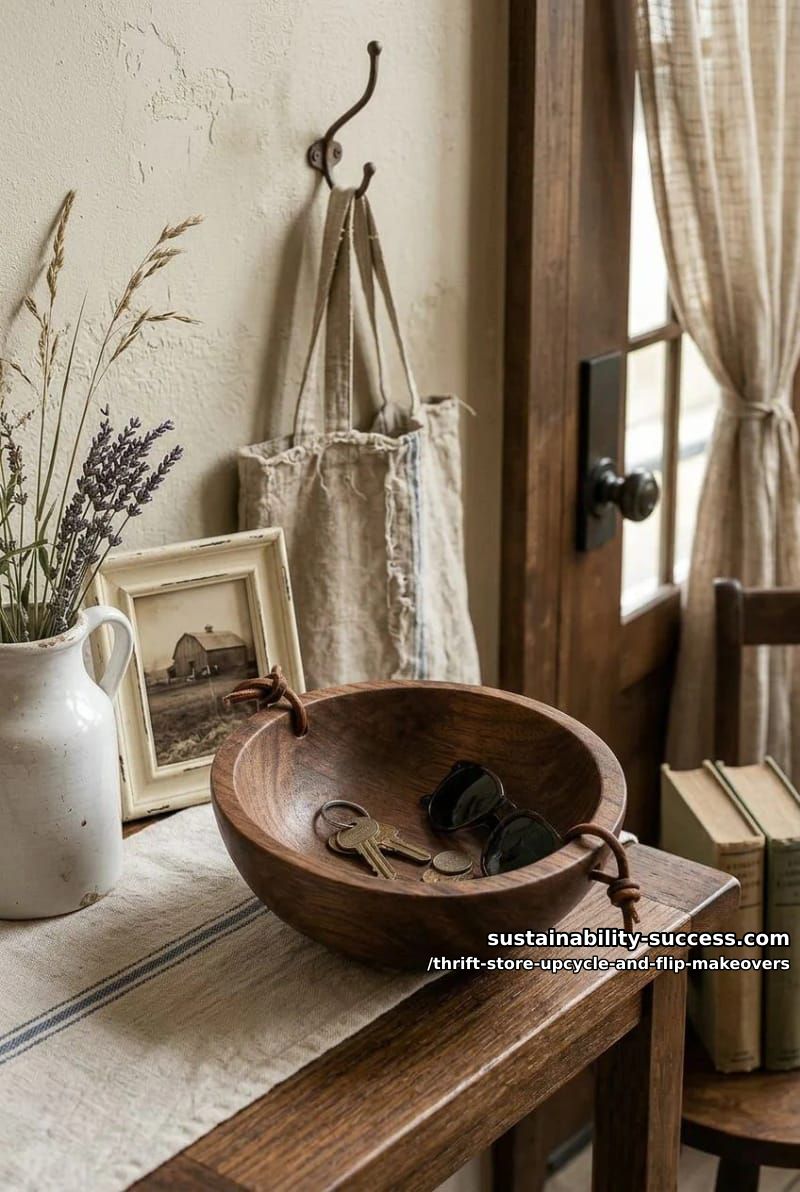
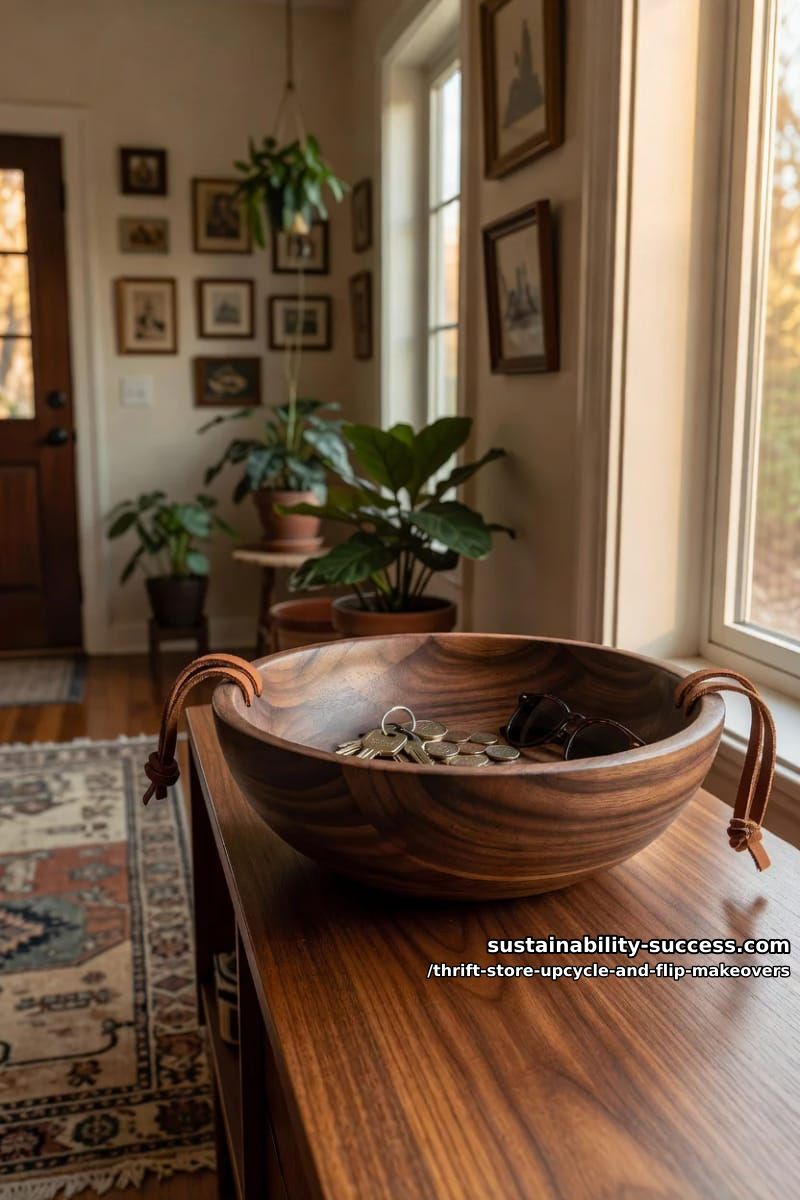
A heavy hardwood salad bowl becomes an entryway catchall with two drilled holes and a loop of leather lace through each side for handles. The find that matters is solid teak, walnut, or acacia, not the lacquered department-store bowls that turn out to be resin or thin-turned rubberwood. Sand off the old food-safe coating, rub in cutting-board oil or paste wax, and the grain comes back without a plasticky topcoat sitting on it.
Do this
- Solid teak, walnut, or acacia: heavy, tight grain, drinks in oil
- A base flat enough to sit still on a table
- Minor surface scratches: they sand right out
Avoid
- Lacquered resin or melamine bowls: oil won’t absorb, so it stays fake-looking
- Cracked or split bowls: the split spreads once the wood dries indoors
- Very thin turned bowls: the drilled hole splits the rim
Leather lace from a craft store runs a couple of dollars; a worn belt off the same thrift shelf works and looks better. I drilled the first bowl's holes too close to the rim and split it, so keep the holes at least a half inch down from the edge.
7. Swap builder-grade pulls for glass knobs on a plain thrift cabinet
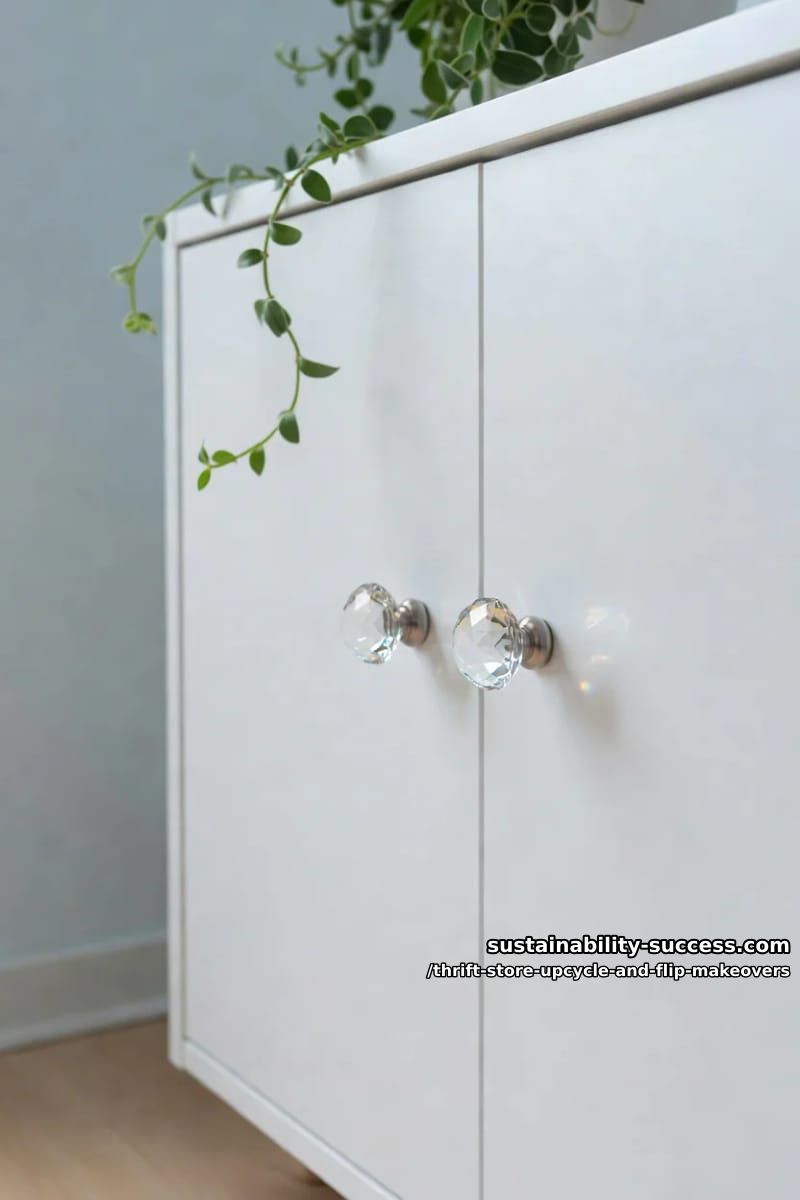
Replacing the hardware on a plain laminate cabinet or nightstand is the highest return per dollar in the whole category: a $4 thrift cabinet plus a set of glass knobs reads custom for under $20 total, no paint required. The thing that trips people up is hole spacing. Knobs use one hole, so you can drill almost anywhere; pulls need the existing holes to match the new pull's center-to-center measurement, or you fill and redrill.
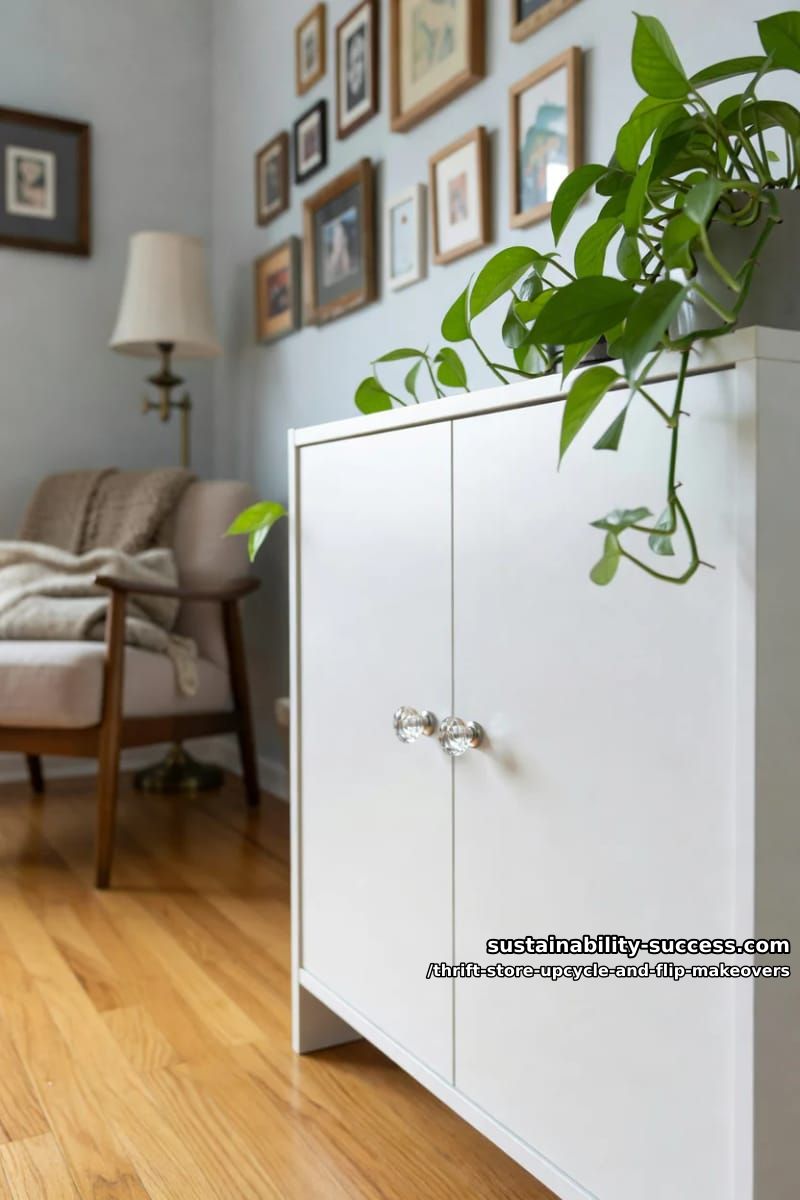

This is also the flip I'd push instead of buying the "distressed vintage" cabinets that land at Pottery Barn for $400 and were built in a factory in 2023. A real secondhand carcass with good knobs has actual age in the wood. Measure your drawer-front thickness first, though: a screw that's too short won't bite, and one that's too long blows out the back panel.
8. Build a console from a cast-iron sewing machine base
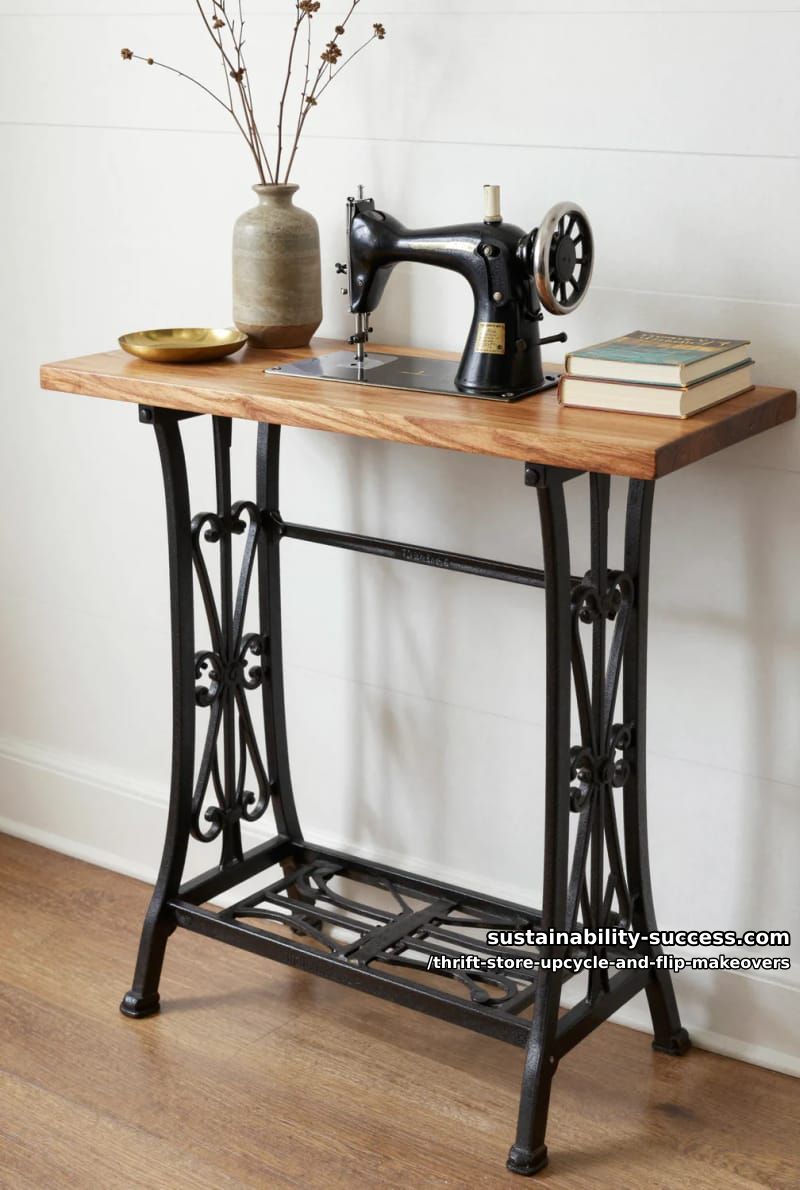
An old Singer treadle base, the cast-iron foot-pedal frame, becomes a narrow console or desk the moment you bolt a top to it. The base is the part you're after here and the iron is usually sound; the sewing-machine head that sits in it is what you sell or store. Estate sales price the whole unit at $40 to $90 across most of the US, less when the wood cabinet around it is rough.
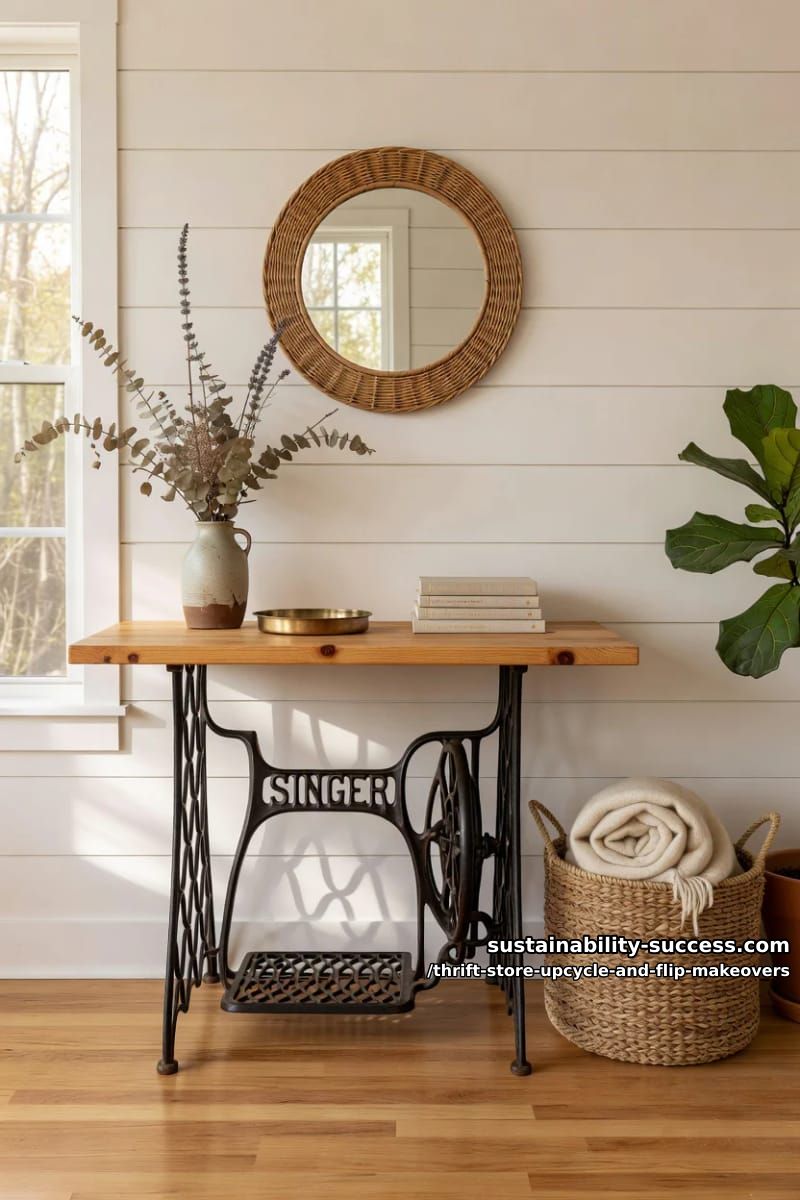
Treadle-base console, 42 inches wide
Reclaimed cast-iron base plus a new wood top
Cut or buy a top a couple of inches wider than the base on each side, drill shallow pilot holes into its underside (not all the way through), and lag-bolt it down through the base’s existing mounting holes. A 42-inch top clears a hallway; go narrower for a bathroom vanity and cut the sink hole before you finish the wood.
Cost breakdown
| Qty | Item | Spec | Price |
|---|---|---|---|
| 1 | Cast-iron treadle base | Estate sale, sound frame | $40 to $90 |
| 1 | Wood top | 42 x 14 in, pine or salvaged panel | $25 to $60 |
| 1 set | Lag bolts and washers | 1/4 in, sized to base holes | $6 to $10 |
| 1 | Finish | Wax, oil, or matte poly | $12 to $20 |
| Total if buying everything | $83 to $180 | ||
Prices are approximate ranges as of June 2026; verify before purchase.
9. Hinge an ornate thrift-store frame onto a recessed medicine cabinet
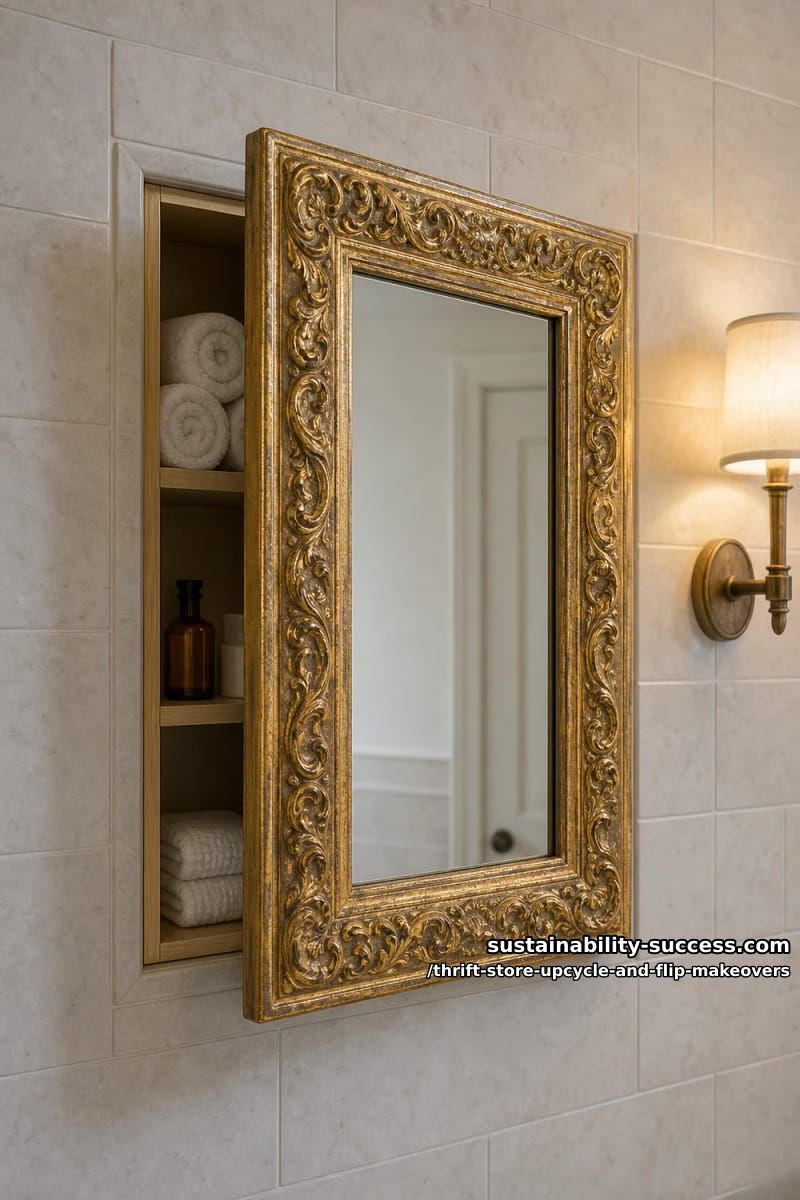
A heavy carved frame can become the hinged door of a recessed bathroom cabinet, so the storage hides behind what looks like a framed mirror. Set a mirror or a sheet of plywood into the frame's rabbet, hinge the frame to a shallow box, and recess the box between two studs in a non-load-bearing wall.
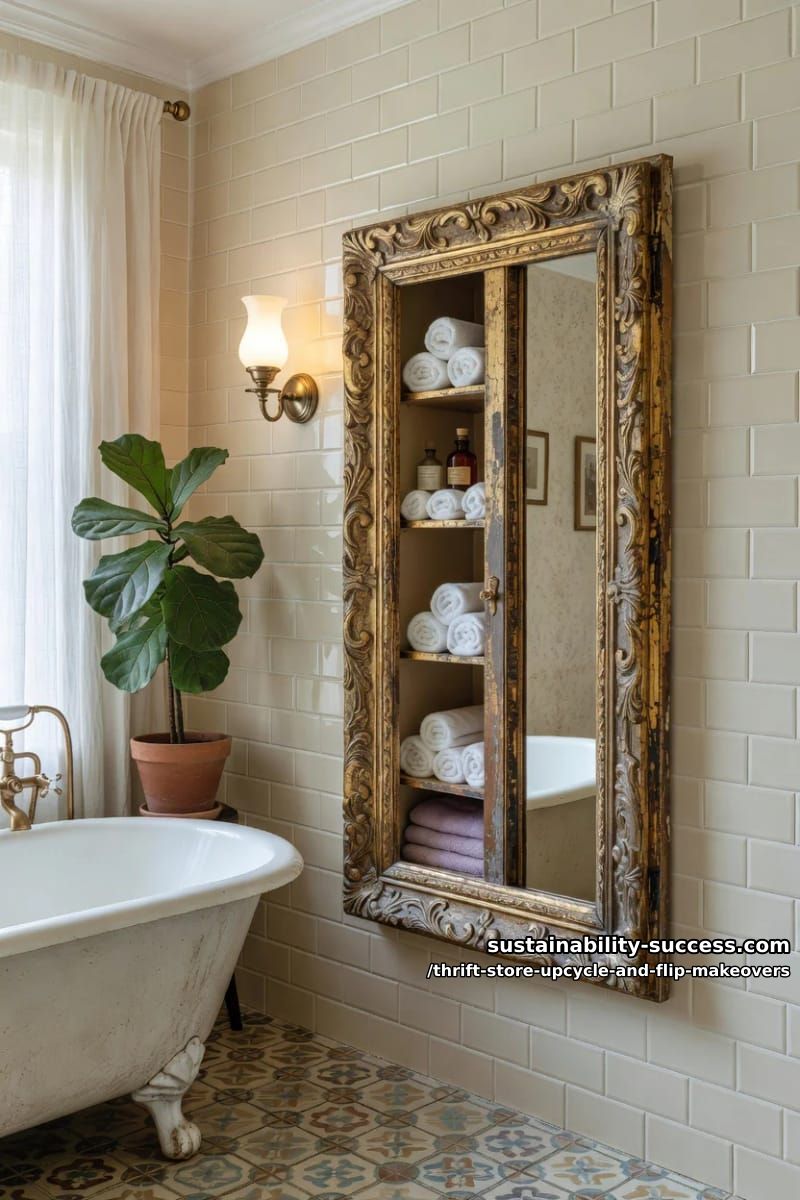
This is the one project here I'd hesitate to call beginner-friendly. Cutting into a wall means knowing what's behind it, and the standard 14.5-inch gap between studs sets your maximum cabinet width. If you rent, or the wall has plumbing running through it, mount the cabinet on the surface instead: build the box proud of the wall, hinge the frame to its face, and skip the cutting entirely.
The frames that work are the chunky gilded or carved ones nobody wants on a gallery wall because they overpower the art. On a cabinet door there's nothing for them to overpower.
10. Stand a hard-shell suitcase on hairpin legs for a side table
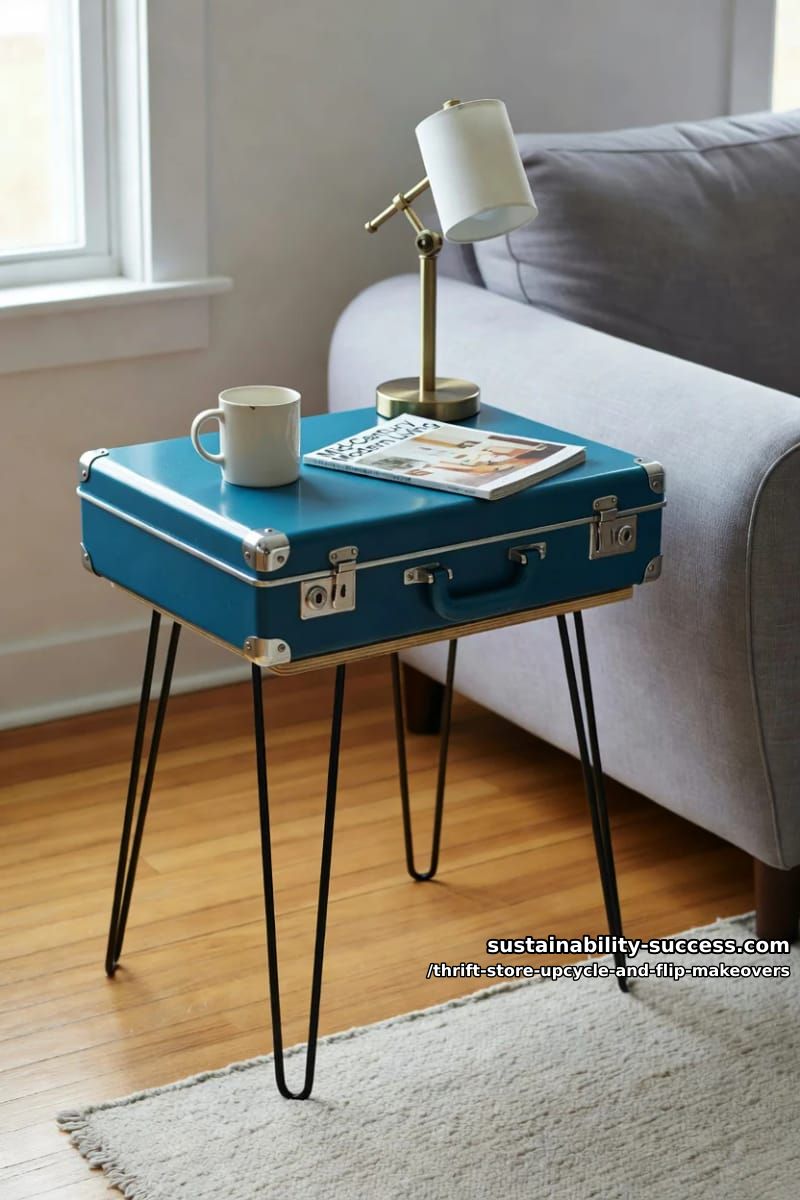
A rigid suitcase bolted to four hairpin legs becomes a side table that stores blankets or board games inside the lid. Hairpin legs are overdone on flat live-edge slabs by now, but on a curved suitcase lid they're the one leg style that doesn't fight the shape. The catch is that you can't drive a leg-plate screw into thin vinyl-over-cardboard, so you need a rigid base for the screws to bite into.
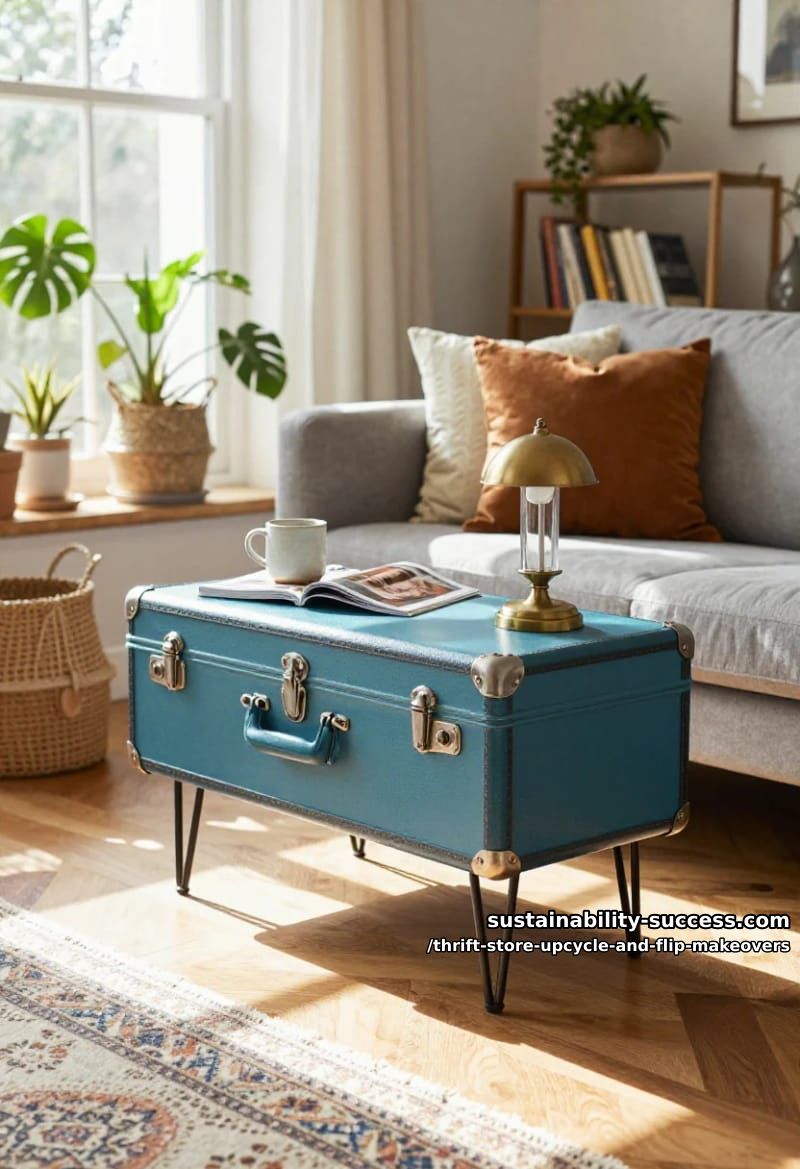
Cut a piece of 1/2-inch plywood to the suitcase’s footprint and glue plus screw it inside the base, driving the screws up through the case bottom into the plywood from underneath. Mount the leg plates to that plywood, not to the case shell. Without the subtop, the first time someone sits on the closed lid the screws tear straight out.

People ask why not just buy a hairpin side table for $60 at Target. You can. But it won't open, and the storage is the entire reason to use luggage instead of a plain box. Keep the legs at 16 inches for a sofa-height table; go taller and you've built a wobbly plant stand.
11. Unify mismatched thrifted jars into a bathroom canister set
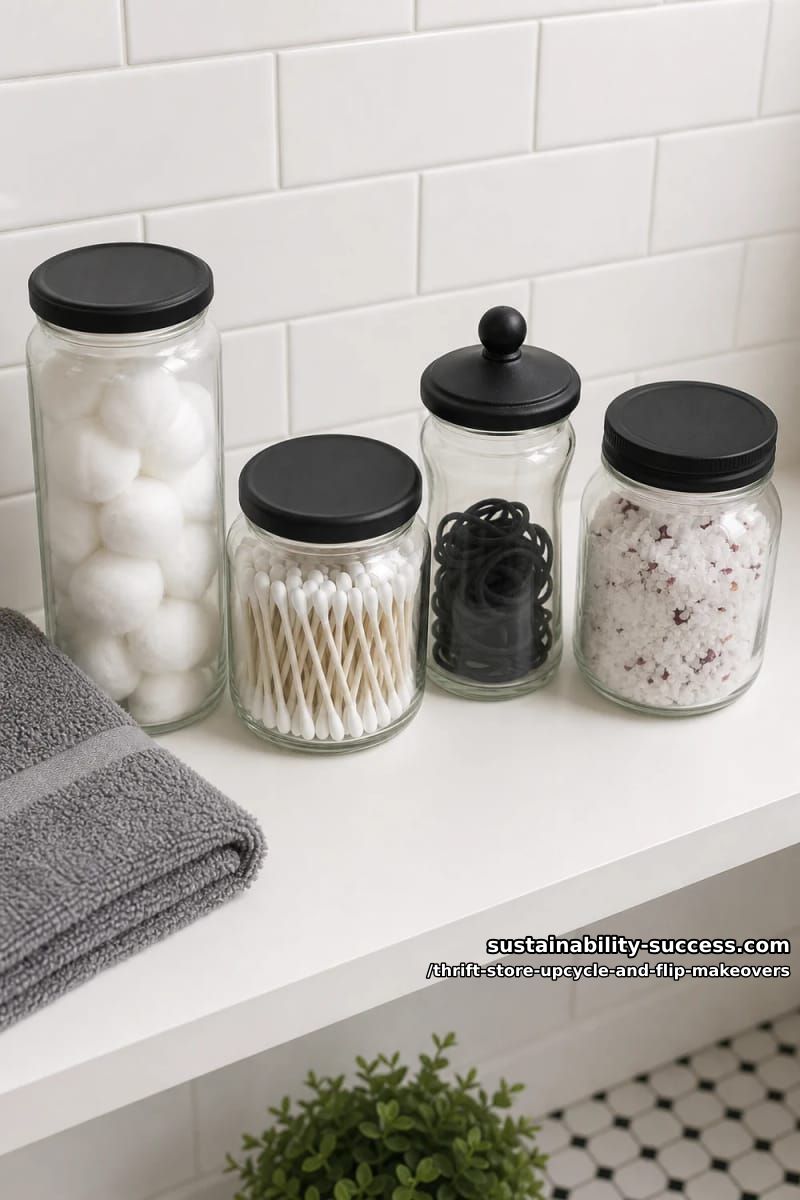
A shelf of mismatched jars, pasta sauce, jam, an old apothecary bottle, turns into a coordinated canister set the moment one element repeats across all of them. The cheapest version: spray every lid the same matte black or brass, leave the glass clear, and the eye reads them as a set despite the different shapes. For roughly $0 if you've been saving jars, you get cotton-ball and swab storage that outclasses the acrylic bathroom canisters at the store.
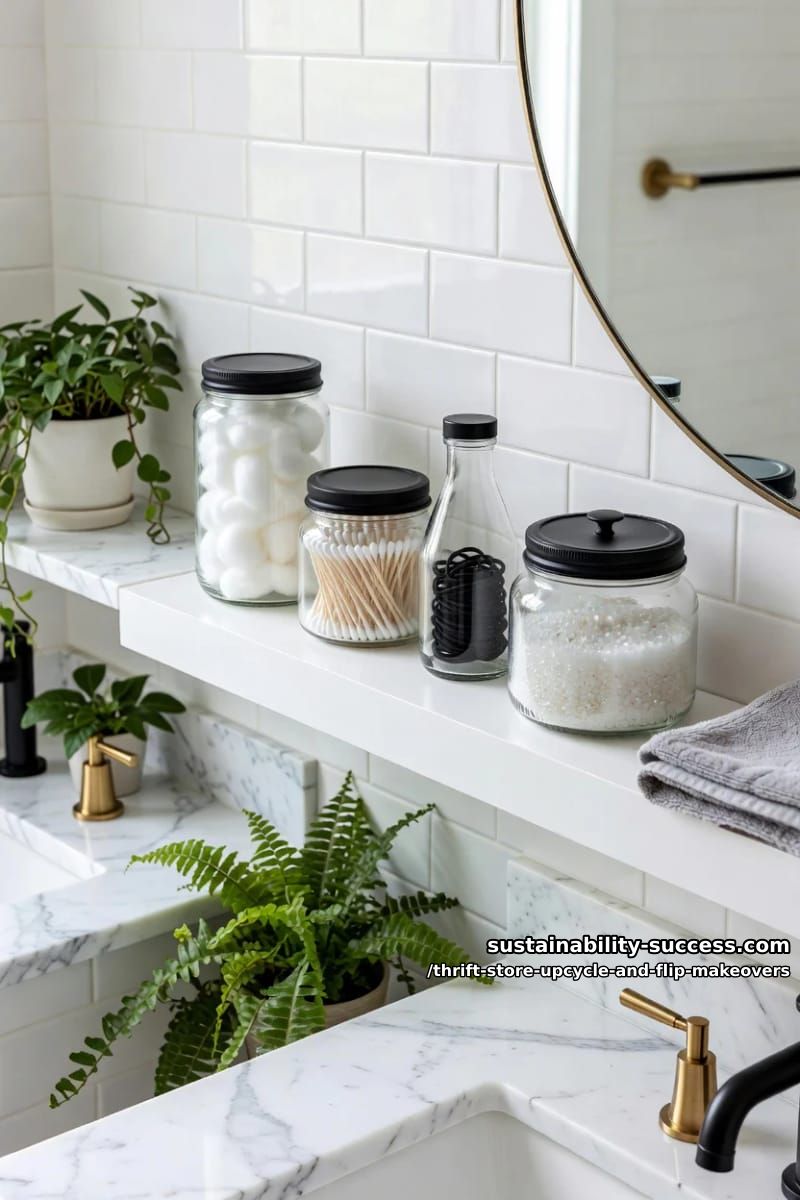
Mismatched objects look intentional when a single feature is identical across all of them. The same lid color, or the same height, or one wrapped band of the same material. Vary everything else freely. The repeated element does the unifying, so you can mix jar shapes as much as you like as long as that one thing stays constant.
Topping each lid with a small cabinet knob is the upgrade that pushes the set from "recycled jars" to something that looks bought. Skip it on the jars you open daily, though, because the knob makes the lid annoying to twist.
12. Convert a secondhand steamer trunk into a lidded coffee table
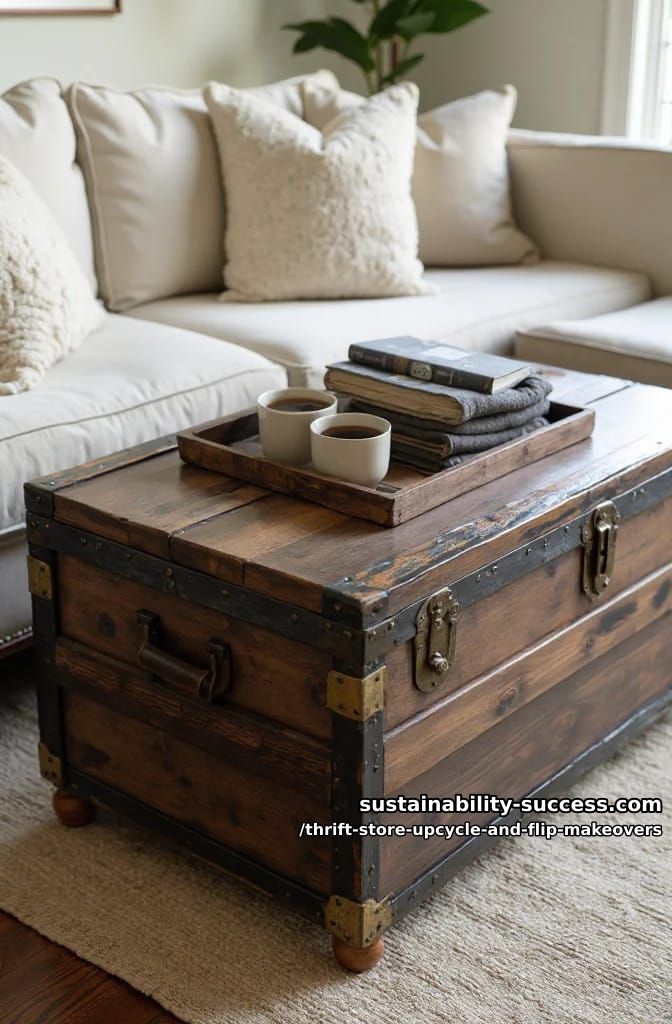
A flat-topped steamer or military trunk works as a coffee table with bulk storage the day you add feet and a lid stay. Domed-top trunks look the part but you can't set a mug on them, so buy flat. Genuine wood-and-metal trunks run $30 to $80 at estate sales, a fraction of the $300-plus reproductions sold new as "campaign style."
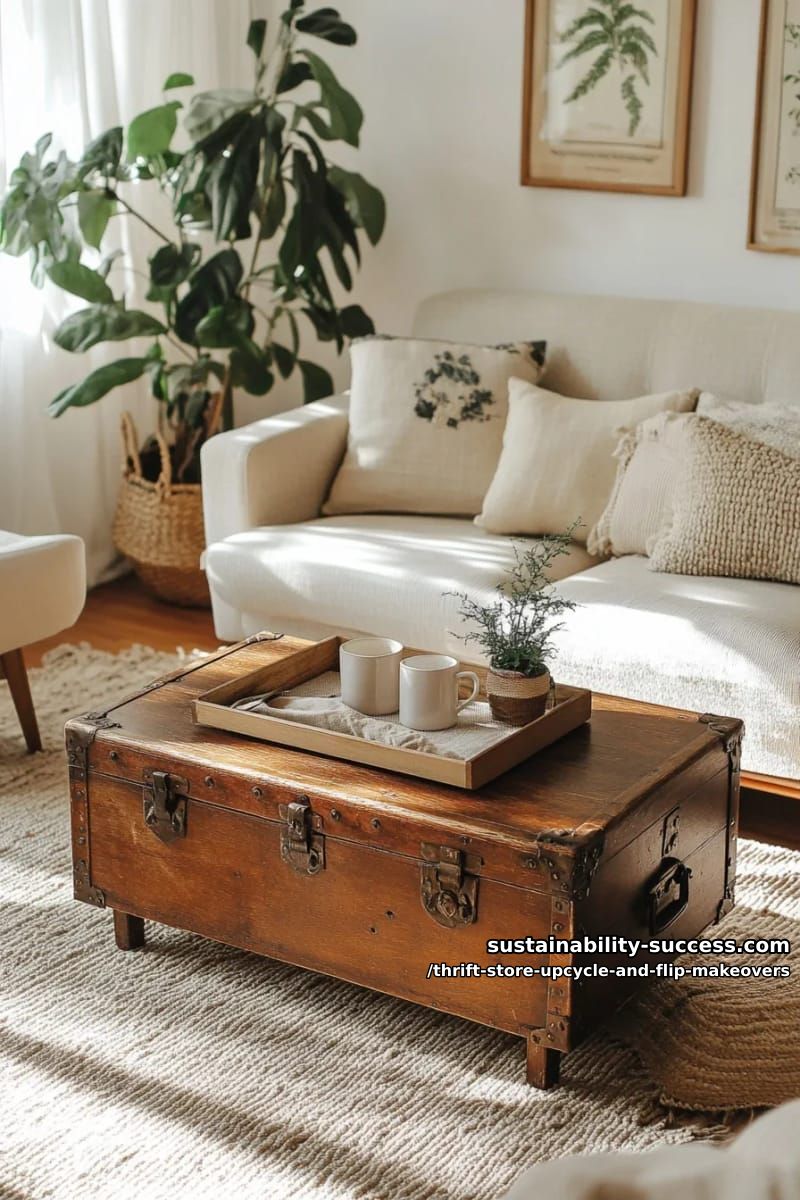
Two fixes make it actually usable. Screw four furniture feet or locking casters to the base so it sits at couch height and stops sliding on the rug, and add a cheap lid-support hinge inside so the heavy lid doesn't drop on a hand reaching in. Line the interior with adhesive felt or fabric if the original paper liner is shedding, which it will be.
I keep extra blankets in mine and a tray on top so nobody actually opens it during a dinner, which defeats the storage but keeps the water rings off the wood. A pane of glass cut to the lid does the same job if you'd rather keep using the inside.
Conclusion
If you're starting this weekend, do the hardware swap or the bottle vases first. They take an afternoon, cost almost nothing, and the quick win is what gets you back to the harder ones. Save the medicine cabinet and the sewing-machine console for after you've botched something cheap and learned how the materials behave, because those two are where a mistake costs real money or leaves a hole in your wall. And a confession: there's a brass lamp base in my garage I've been meaning to respray for two years. Owning the suitcase is easy. Drilling the first hole is the part nobody photographs.