
The usual advice for dressing a long table is to plant one big centerpiece in the middle and call it done. On a table that actually runs eight, ten, twelve feet, that leaves both ends looking like nobody bothered, a lonely arrangement marooned between two stretches of bare wood. A runner of pinecones and candles down the whole length fixes that, and the ten below are ten different ways to run one.
The real constraint on a long table is not decoration, it is sightlines: seat people across a ten-foot span and a tall central arrangement means they spend dinner talking to a floral wall. Everything here either stays low or lifts the flames clear of the greenery so the table still works as a table.
Most of these lean on foraged, natural, or reused materials, with a couple of buy-it shortcuts flagged for anyone who would rather not gather. One caution up front, because it is candles on dry greenery: read the fire note before you light anything.

1. Build the runner on a live evergreen spine, not a strip of fabric
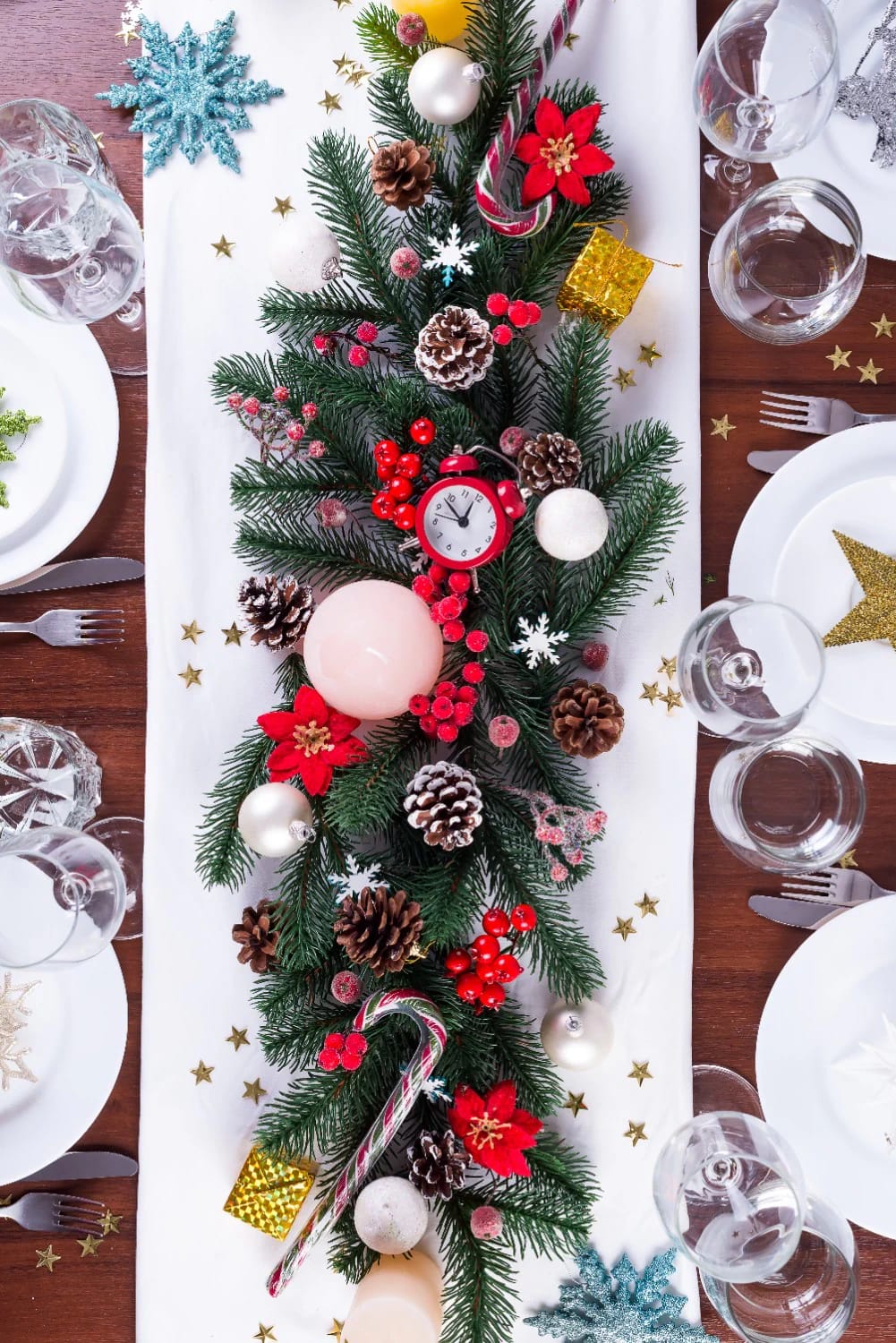
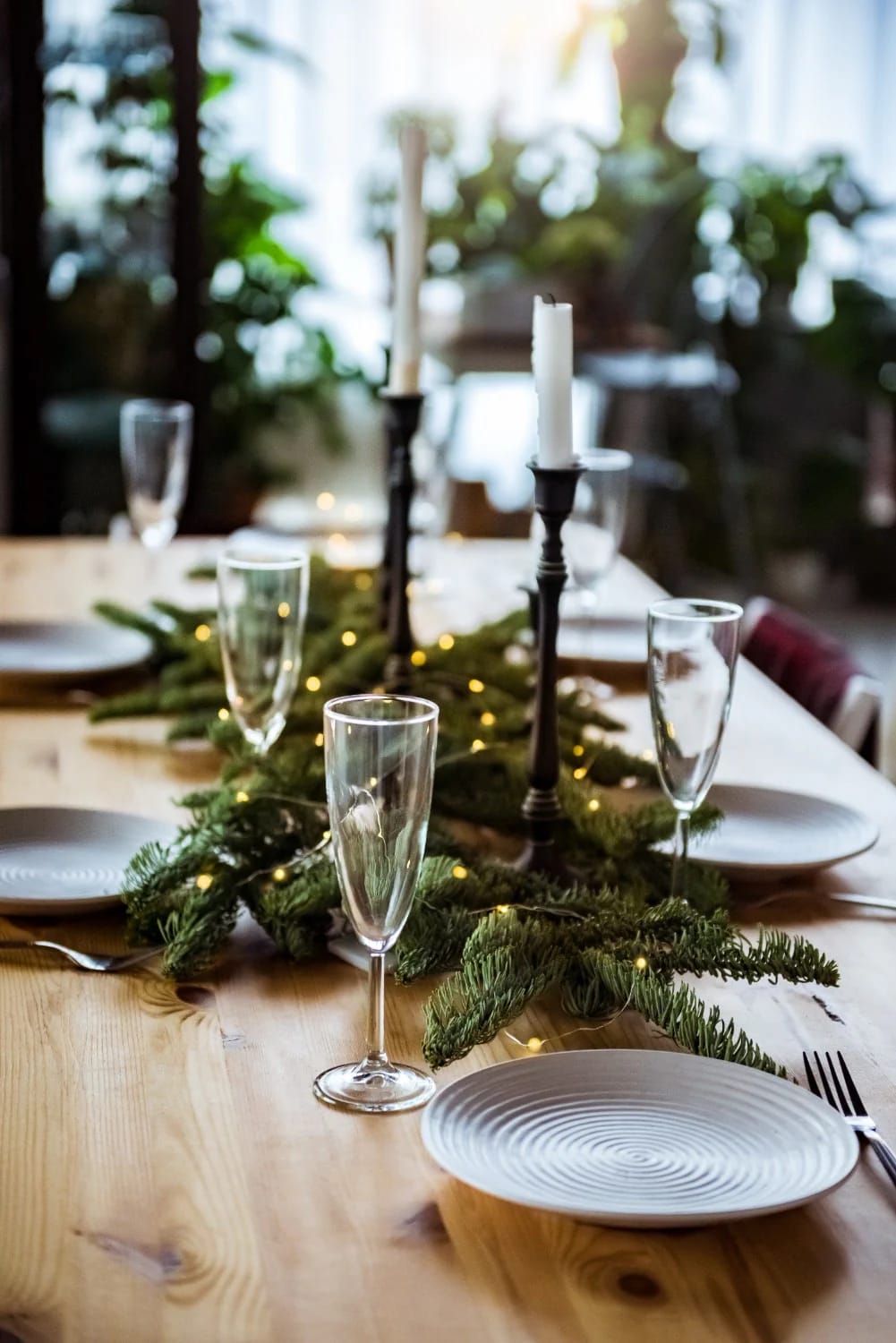
Start with a continuous line of real greenery down the center and let the pinecones and candles nest into it, rather than laying fabric and scattering things on top. A garland base of cedar, fir, or a mix reads as one deliberate line instead of a collection of props, and on a long table that unbroken run is what carries the eye all the way from one end to the other. Cut greens hold better on a warm table than most cut flowers, so the spine stays presentable for the length of a long dinner.
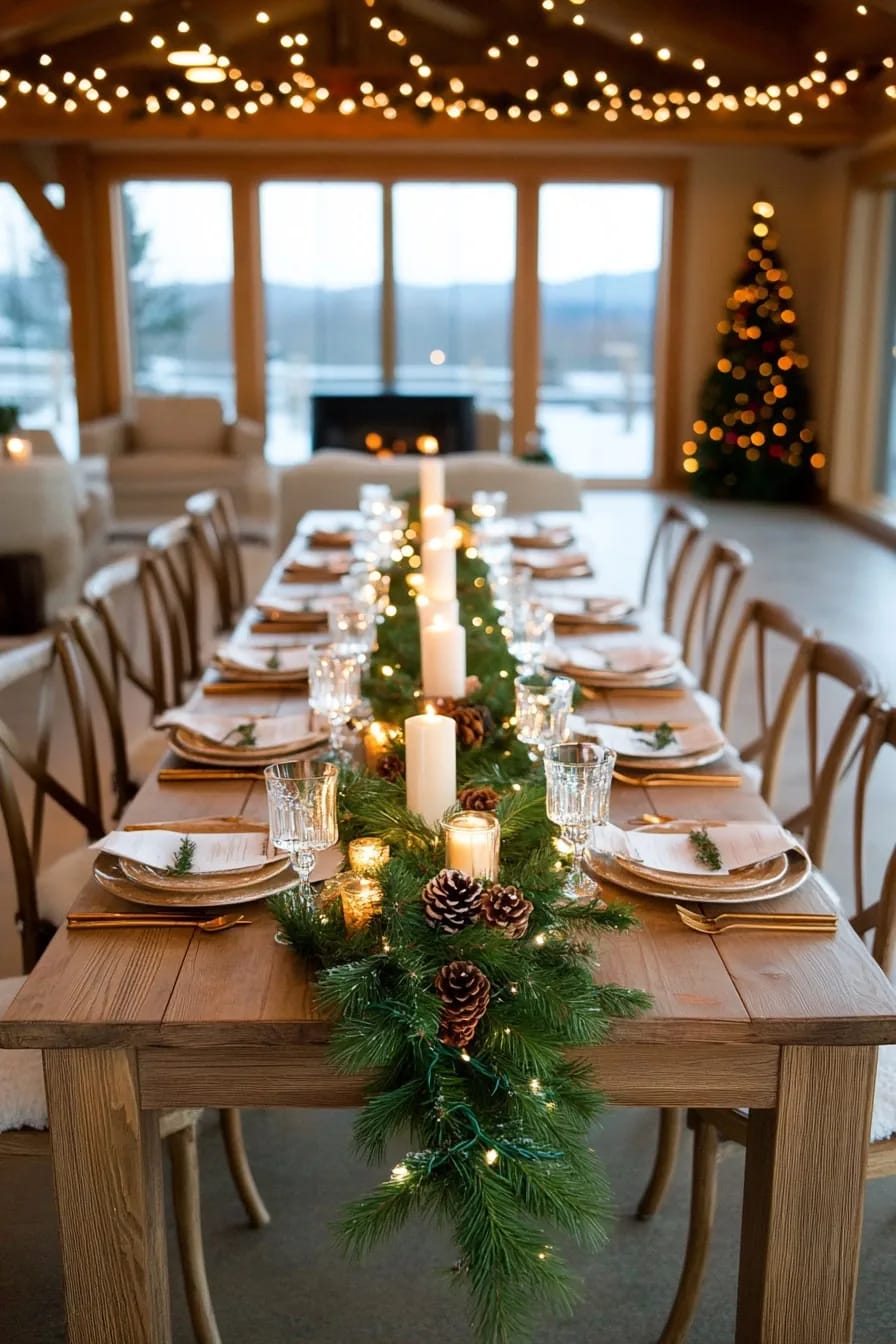
Granted, a full-length garland is more material than most people expect. You can buy a plain base and thicken it, which is exactly the method in this guide to layering pine into a cheap eucalyptus garland until it looks foraged, and the same trick works flat on a table.
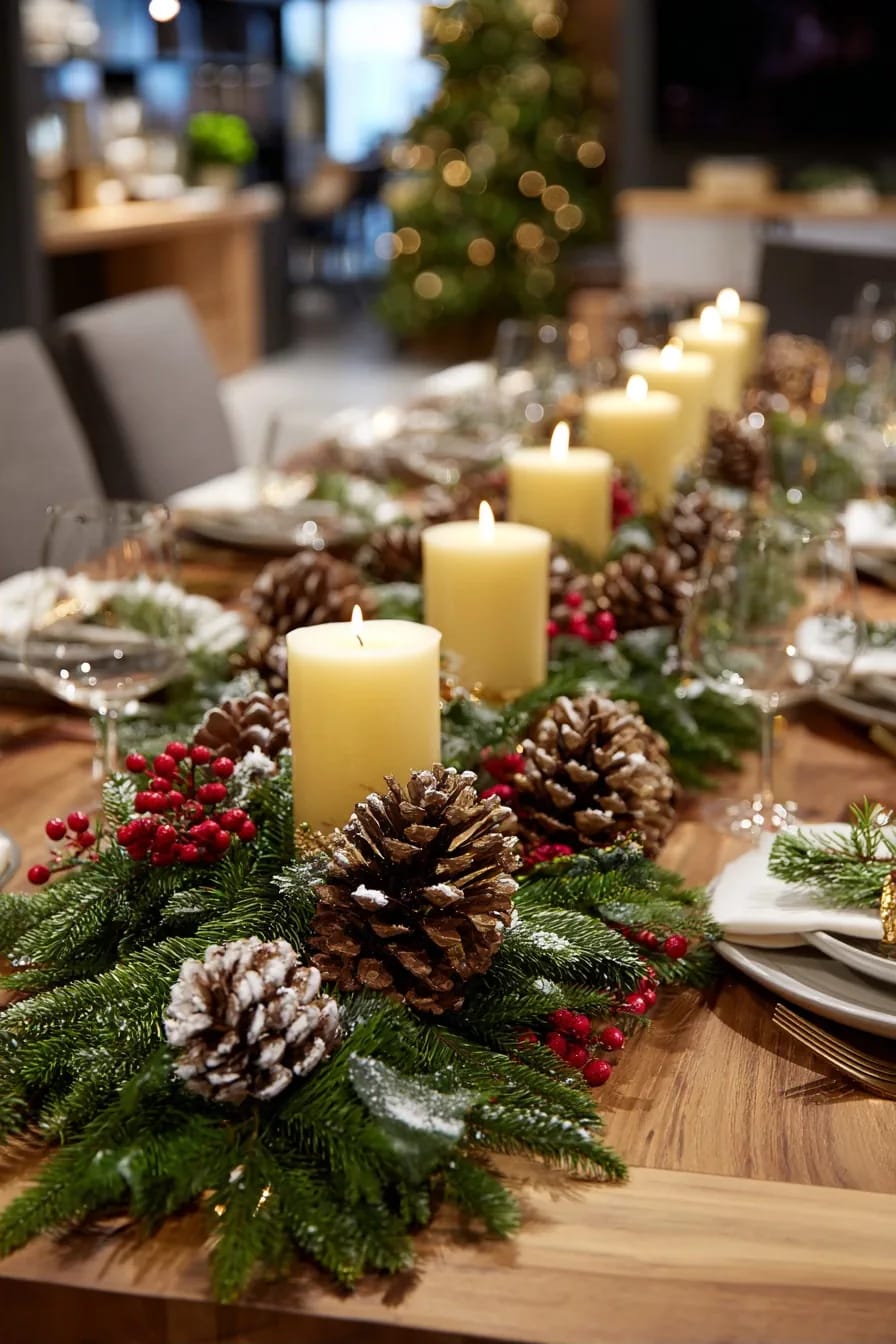
What to lay the spine with
Cedar drapes and hides the mechanics; fir holds a sharper silhouette; a mix of the two plus a little eucalyptus keeps the color from going flat. Skip the faux-fir runners sold as a shortcut (the Pottery Barn version photographs like a car-wash brush), because the whole point of a live spine is that it looks alive.
Anchoring the candles so they don't lean into the greenery
Sit tapers in weighted holders that sit on the table, not pushed into the garland where they can tilt as the greens settle. Nestle the holders so the greenery hides the base but the flame rises into clear air above it.
This is the exact combination fire departments see most in December. Roughly three of every five home candle fires start when the flame is too close to something that can burn, and cut greenery dries out fast on a warm table. Keep every flame at least twelve inches from the greens, never leave a lit runner unattended or burning after people leave the table, and give real tapers a stable, heat-resistant holder. The NFPA’s candle safety guidance is worth two minutes before a holiday dinner. If small kids or pets orbit the table, jump to the floating and LED options below.
2. Raise the candles above the pinecone line so the long table keeps its sightlines
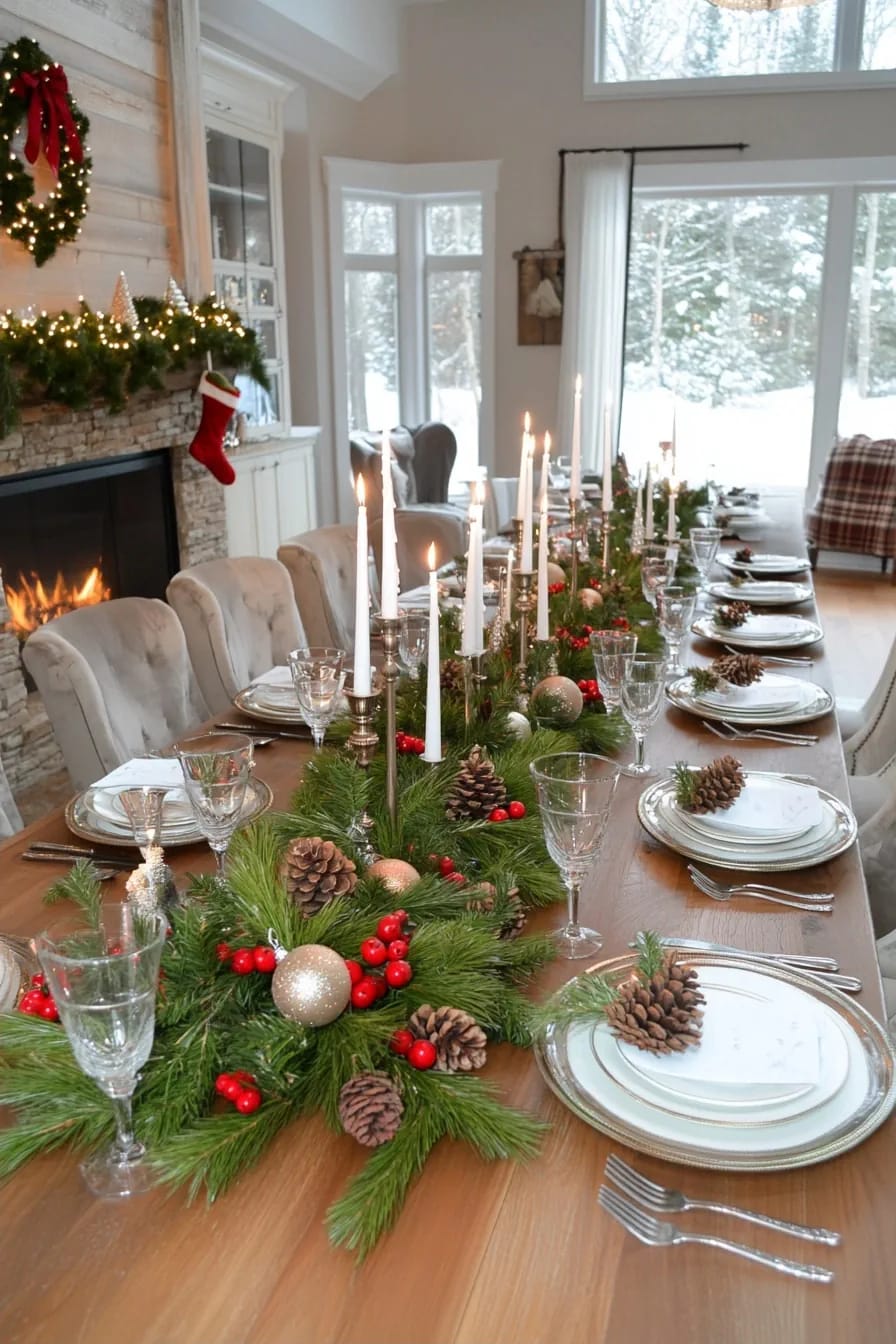
Put the pinecones and greenery low and lift the candles up on holders, so guests see each other over the runner instead of through it. This is the move that makes a runner work on a genuinely long table: the horizontal line of cones stays at tabletop level, the flames float above it on staggered brass or wood candlesticks, and the gap between the two is the sightline. Vary the holder heights so the line has some rhythm rather than reading as a fence.
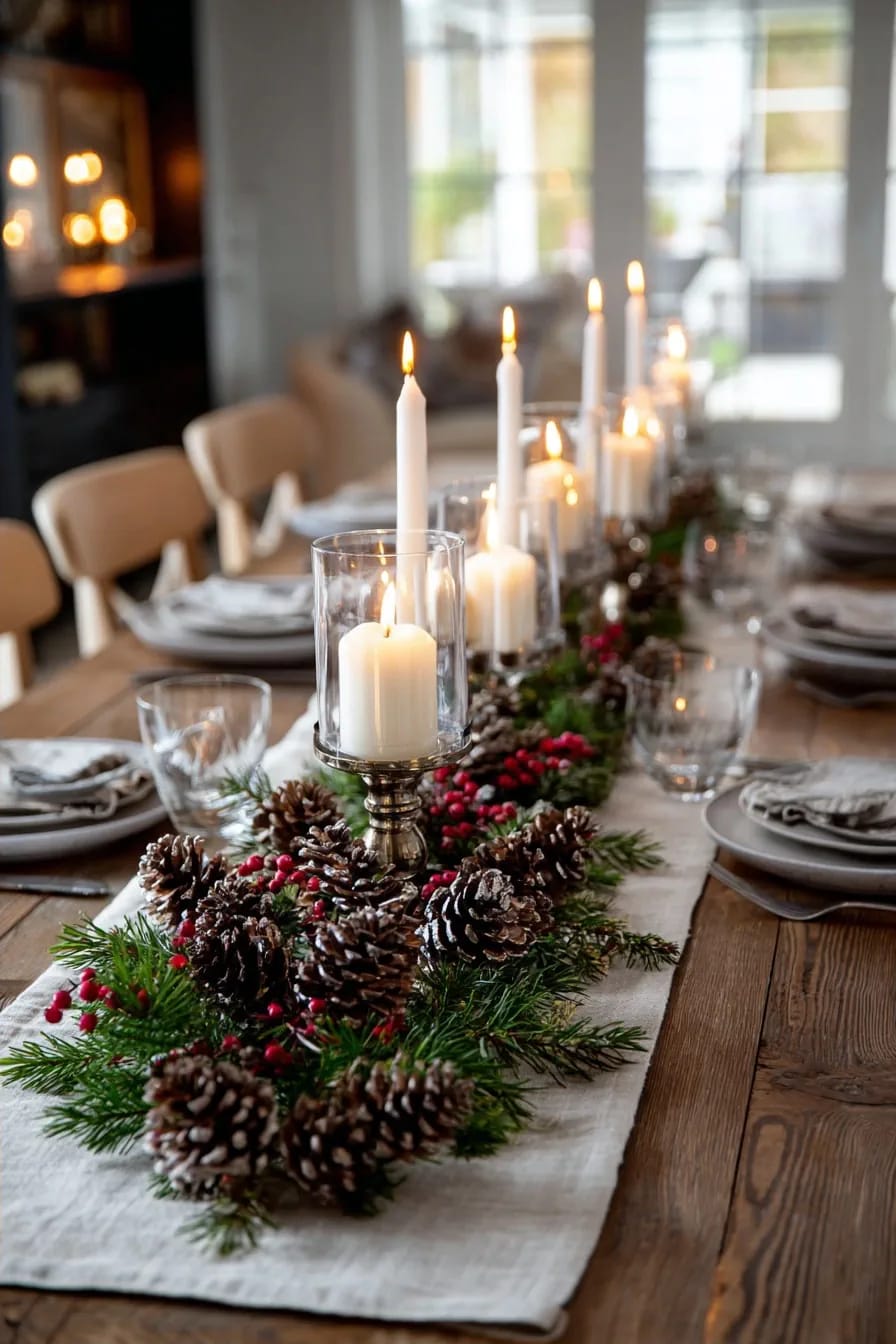
If your table is short enough that everyone can already see across it, a single natural pinecone-and-candle centerpiece may serve better than a full runner, and it is less to build. The runner earns its keep once the table is long enough that a centerpiece would strand the ends.
3. Bleach or frost the pinecones for a neutral runner that reads winter, not woodland

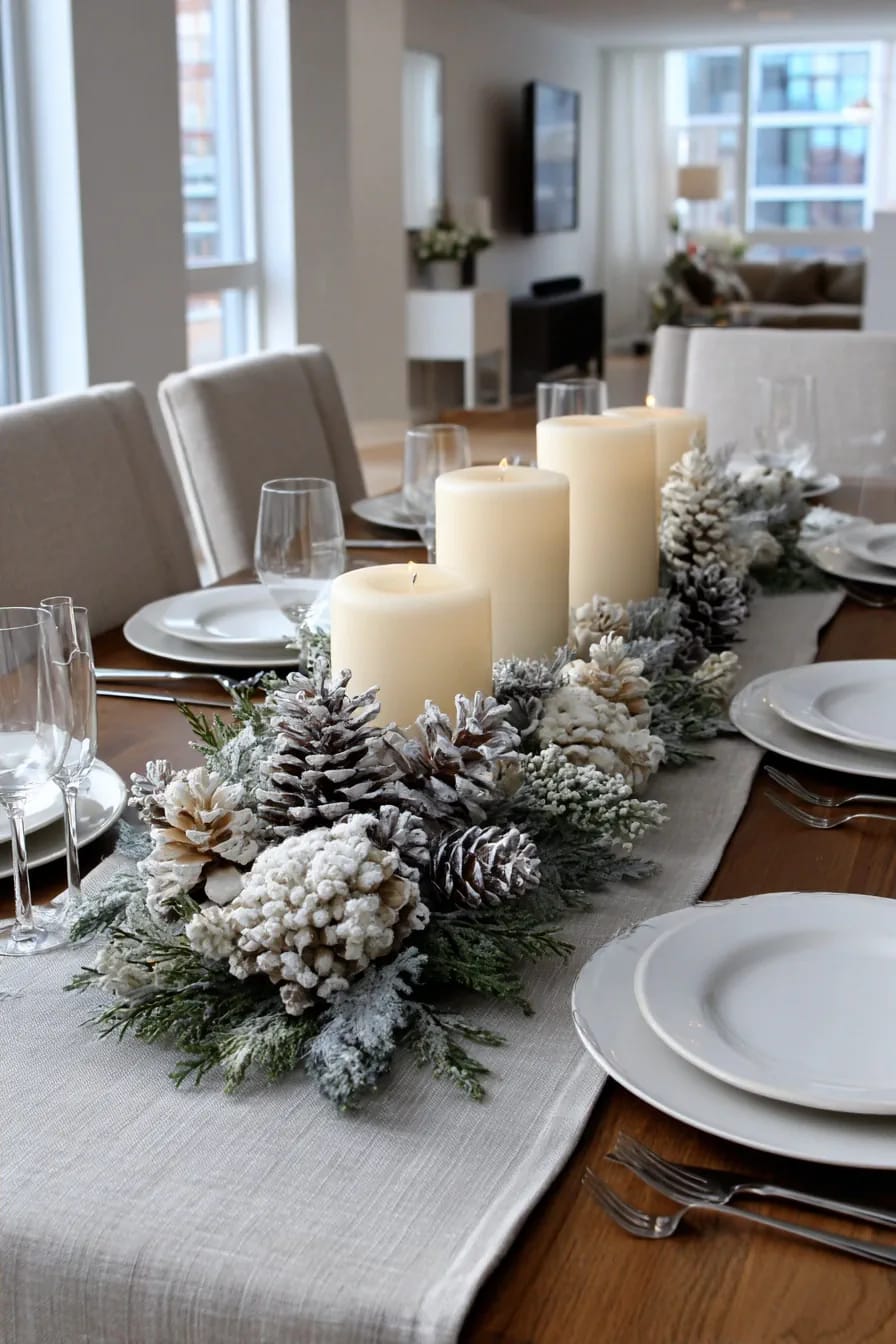
Lighten the cones to ivory or snow-tipped and pair them with cream candles, and the runner shifts from brown-rustic to a pale, Scandinavian winter. Natural brown cones read cabin and lodge; white and frosted ones read frost and birch, which is the look most people mean when they say they want "neutral." A soak in two parts water to one part bleach for about half an hour lifts them toward bone white, or a dry-brush of white craft paint on just the scale tips gives the snow-dusted version.
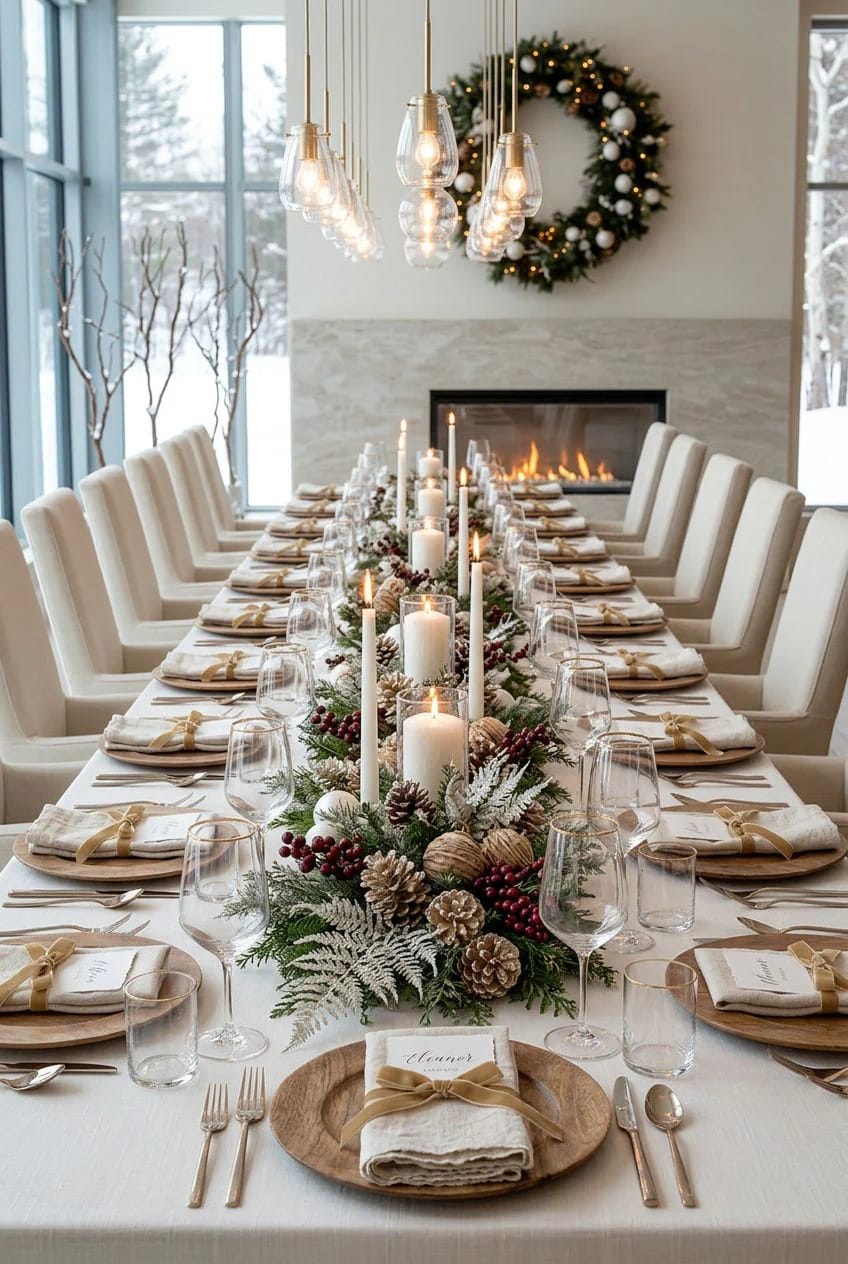
Not in the mood to bleach anything the week of the party. A bag of snow-tipped pine cone picks with wired stems drops straight into the greenery, and the wired stems mean you can seat them at any angle without them rolling off.
4. Float the candles in glass so an unattended long table stays safer
Set a row of glass cylinders down the runner, each holding water, a floating candle, and a small cone or a sprig underneath, and the whole line of flame lives inside glass. The point is not just the look, though the doubled glow through water is worth it: the flame is contained, which matters most on a long table where the far ends sit outside easy reach and a knocked taper is a real possibility. Vary the cylinder heights so the runner does not read as a straight row of identical jars.
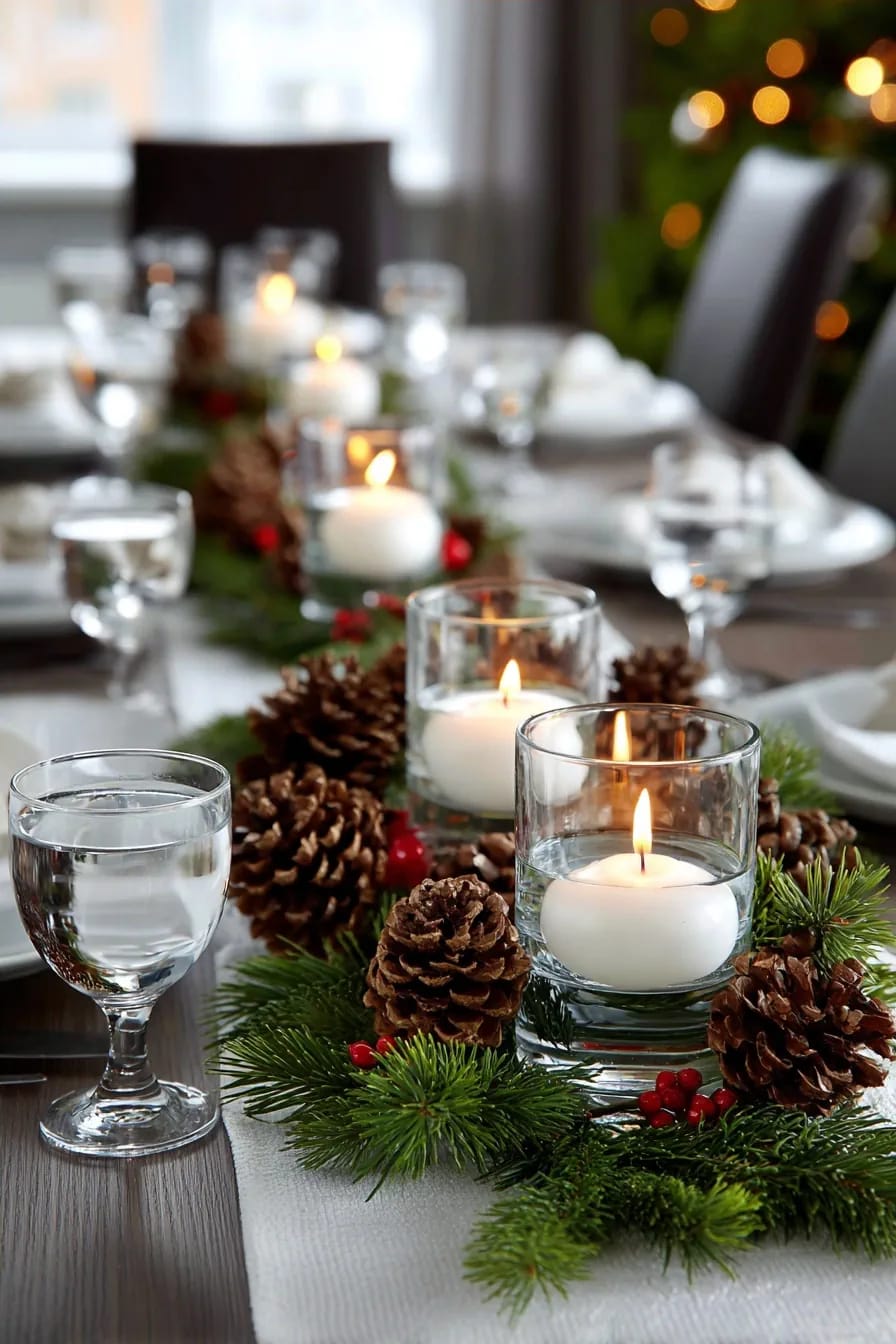
A set that pairs the cylinders and the floating candles together, so you are not sourcing glass and wax separately the week of the party.
Yummi 36-piece floating candle and cylinder vase set, ivorySalvaged jars work just as well and cost nothing, and the shape of the glass changes the light more than the candle does, which is the whole argument in this piece on which recycled jars actually throw good light.
5. Forage the whole runner and spend nothing but an afternoon
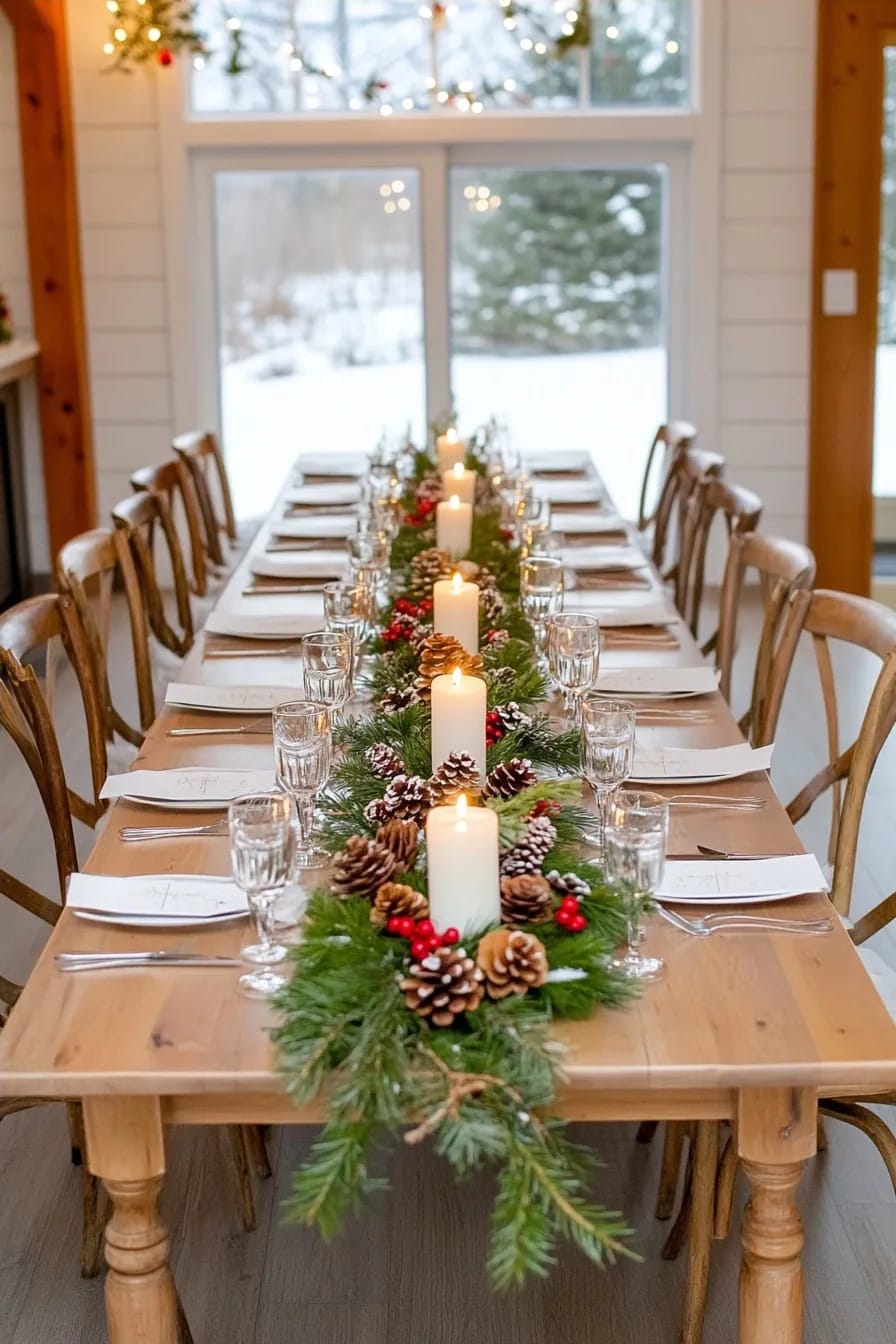
A long runner is where foraging pays off most, because buying enough greenery and cones to cross a big table adds up fast and the woods hand it to you for the price of a walk. Cut a few fir or spruce branches, gather cones off the ground, add a bare branch or two for the spine, and you have the makings of the entire center of the table. On this site that is more or less the house position: the yard version usually looks better than the store version anyway.
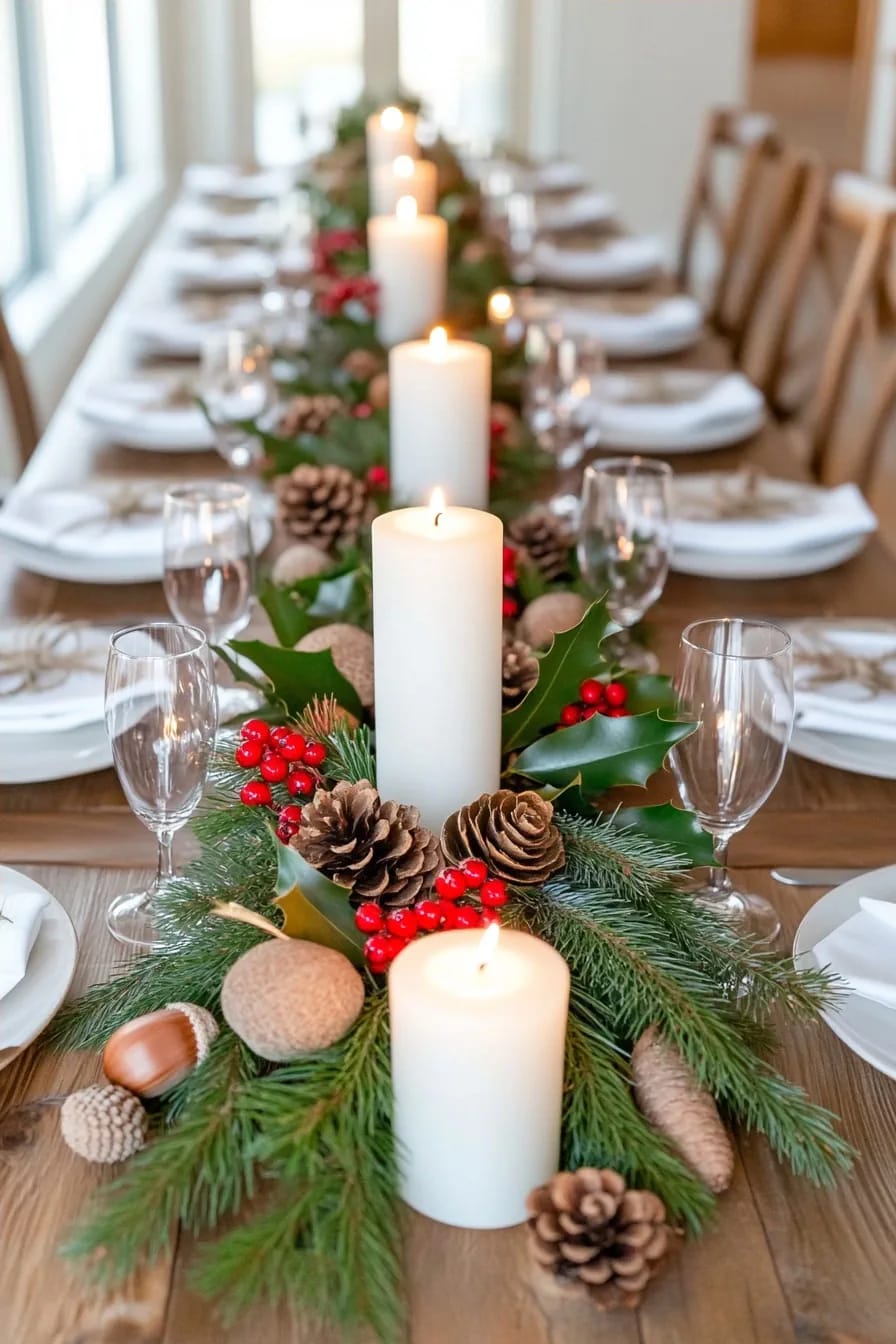
Which cones are worth picking up
Take the open, dry ones, not the sappy green ones still sealed shut; the open cones are done growing and behave indoors. Bigger cones anchor the runner and small ones fill between candles, so grab a range of sizes rather than a bag of matching ones.
Bake them before they come indoors
Cones off the ground carry sap, dirt, and the occasional resident, so a low bake sorts all three at once. Set them on a foil-lined sheet at around 200 to 250°F for roughly 30 to 45 minutes, checking every 15 minutes; the sap melts to a clear glaze, the scales open, and any bugs are gone. Larger cones want the longer end of that. Keep the temperature low, since cones will scorch if the oven runs hot.
 9 Foraged Winter Greenery Centerpiece Ideas for the Table Nine arrangements that start with cedar, fir, and other cuttings you gather yourself instead of buying stems.
6. Skip the fabric runner and use a raw wood plank or a mirror strip
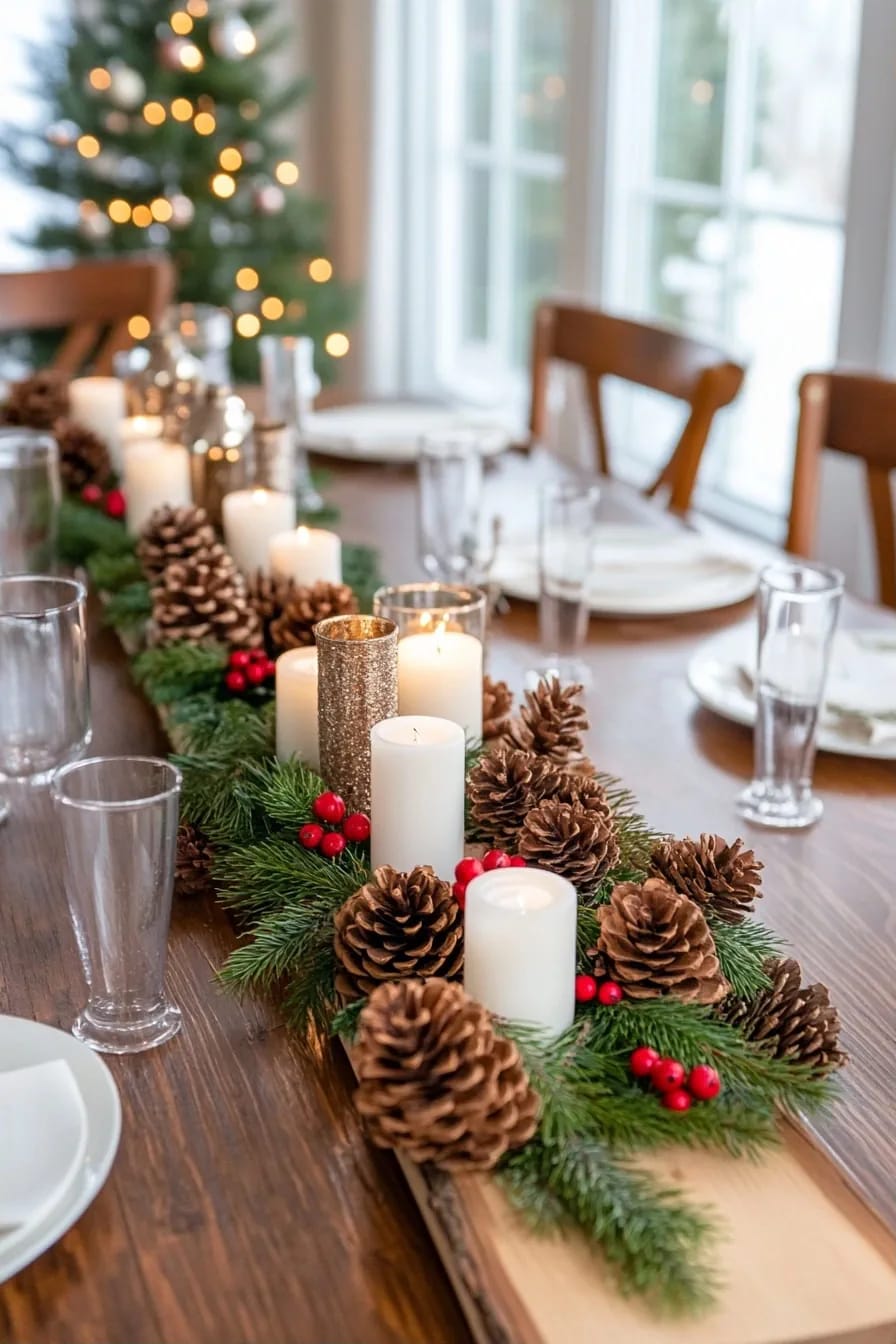
Lay a raw-edge wood plank or a strip of mirror down the center and build the pinecones and candles on that instead of cloth. A live-edge board gives the runner a defined spine and a bit of height, protects the table from wax and water, and reads more considered than a length of hemmed fabric. A mirror strip does the opposite job: it sits flush and quietly doubles every flame, which on a long, dim table effectively multiplies your candle count for free.
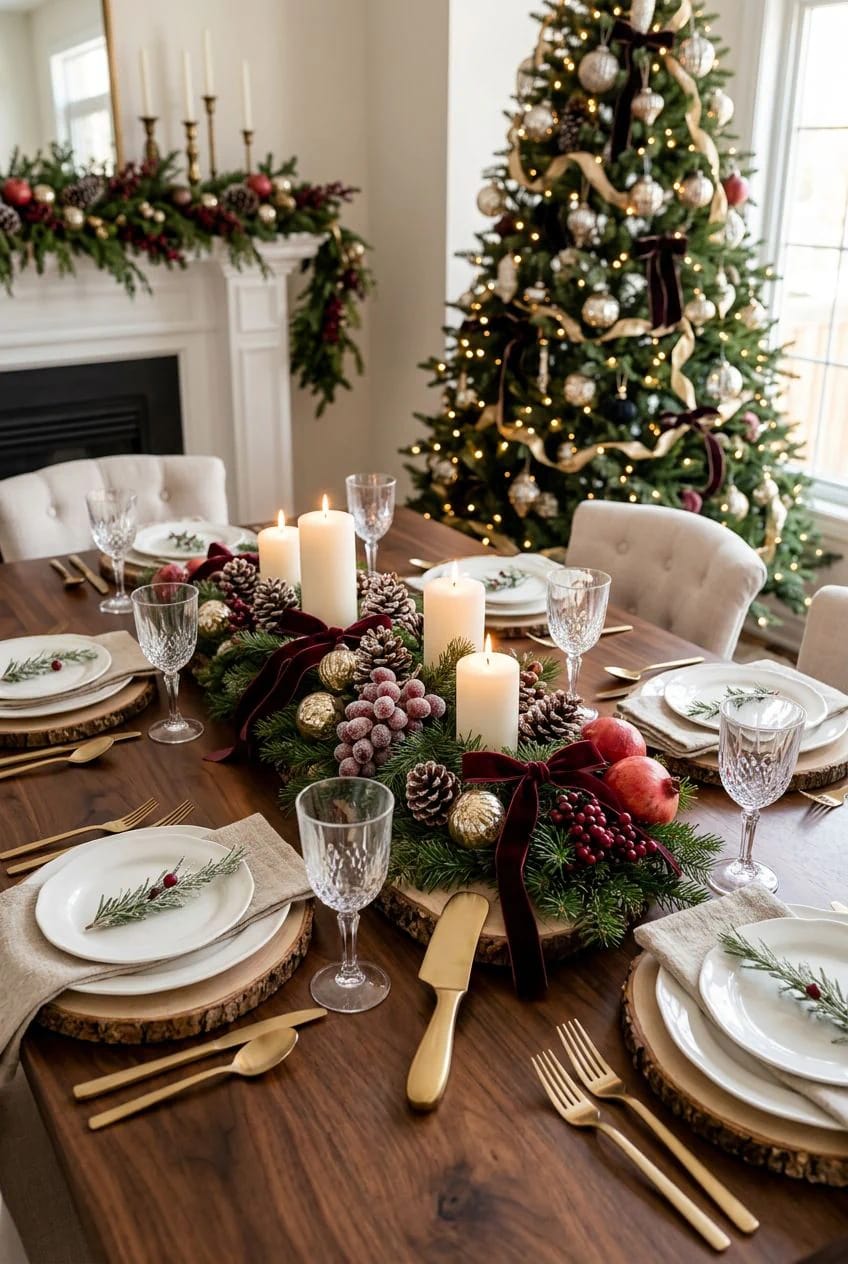
Fair warning that a mirror shows every drip and crumb, so it wants a wipe between courses. I would put the budget into the candles and a decent board and let the mirror be the cheap-glass trick it is.
Here is a quick way to size the whole thing before you cut a plank or gather a single cone.
Long-table runner planner
Rough amounts for a pinecone-and-candle runner, based on your table length.
Estimates only, rounded. Add candles and cones to taste, and keep flames a foot clear of the greenery.
7. Anchor a burlap runner with pillar candles and tight pinecone clusters
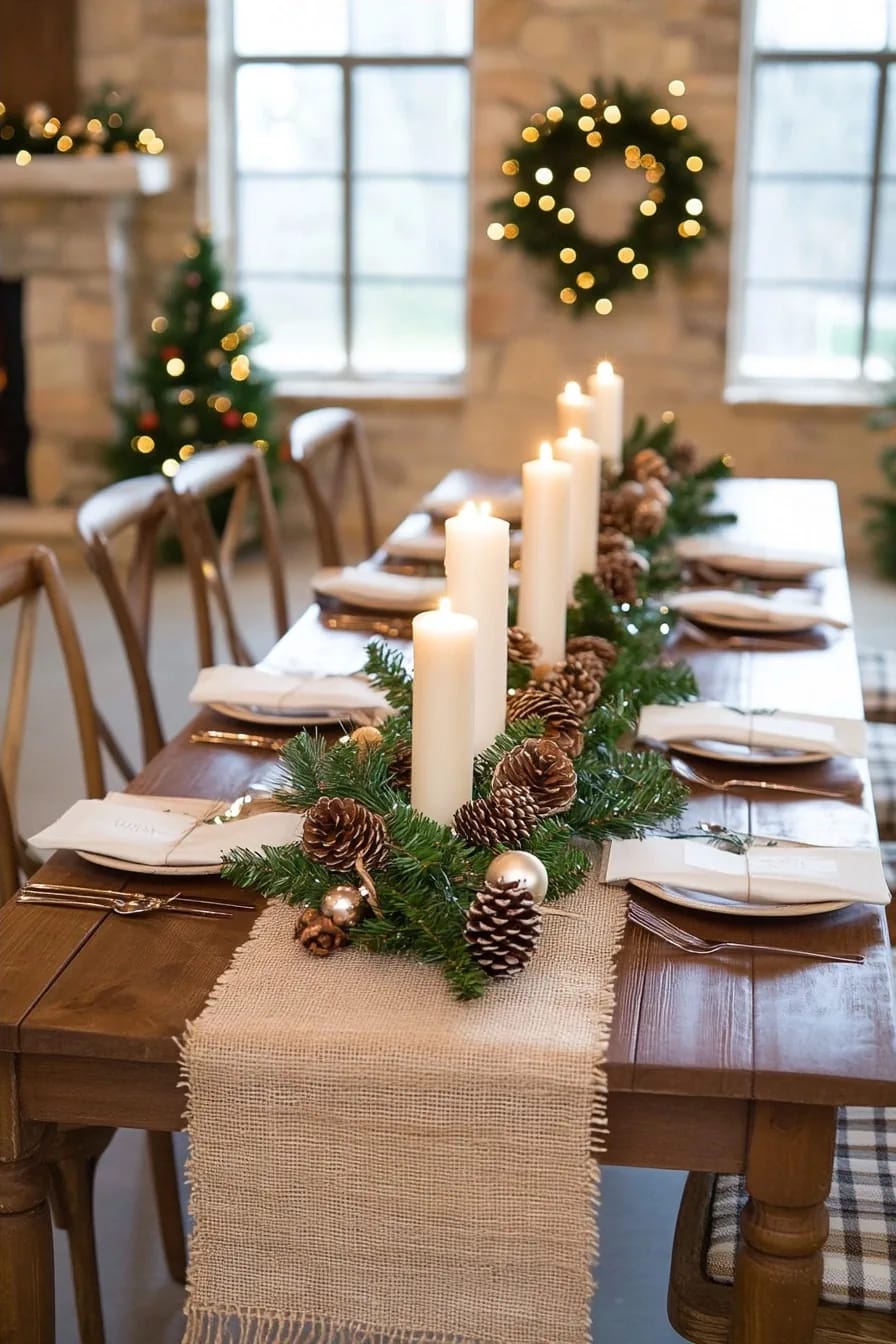
For the farmhouse look, run a length of burlap and weight it with squat pillar candles and cones packed tight at each base, so the flame sits low and the cones do the filling. Pillars read heavier and steadier than tapers, which suits burlap's coarse texture, and clustering the cones instead of scattering them keeps a wide table from looking sparse. A few stems of red winterberry are the one hit of color this version wants.
Cut the burlap a foot shorter than the table so the ends do not dangle into anyone's lap, and hem or fray the edges on purpose rather than leaving a raw factory cut.
8. Stud the pinecones with cloves and swap in beeswax so the runner smells like December
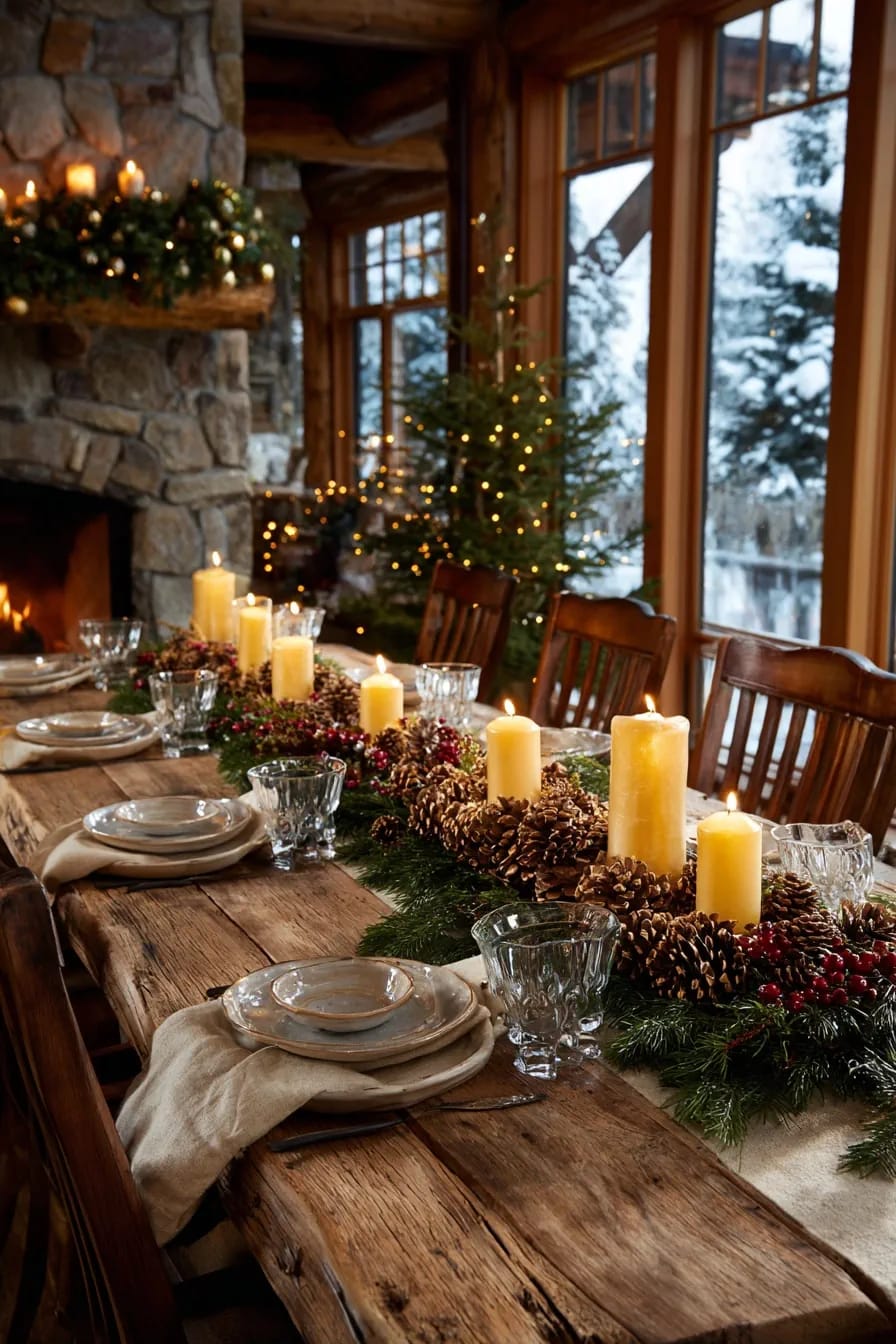
Push whole cloves between the cone scales and use beeswax candles instead of paraffin, and the runner starts working on scent, not just looks. Beeswax burns with a faint honey smell, the cloves and a few dried orange slices add the mulled note, and the warmth off the flames lifts all of it down the table. It is a small change that does something no amount of styling can.
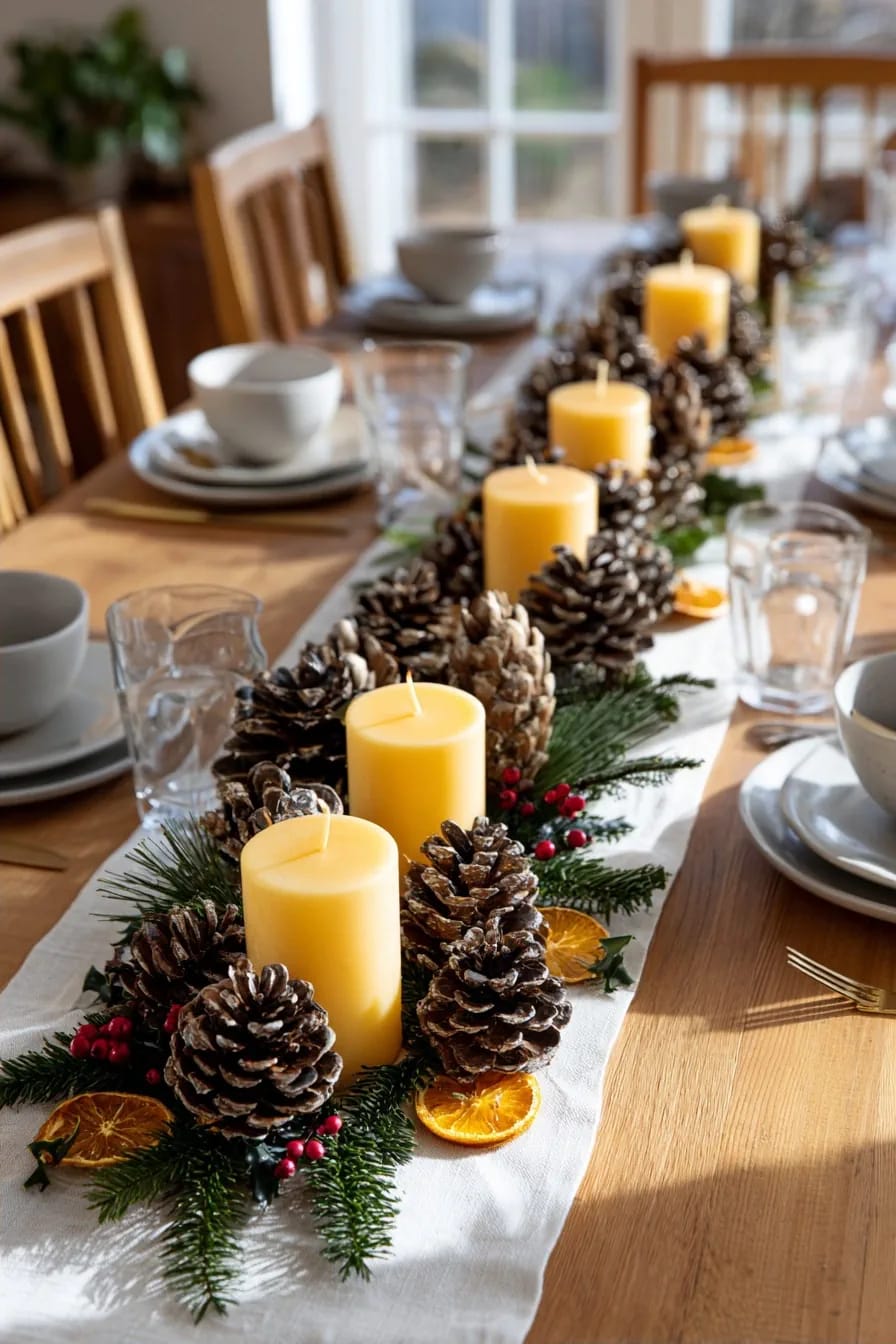
9. Use LED tapers when real flames down twelve feet aren't realistic
Run flameless LED tapers down the center when real flames across a twelve-foot table are a supervision problem rather than a look. Good LED tapers with a moving wick read as real from across a table, and on a long run they solve the two things open flames make worst: the far ends nobody can reach to light or snuff, and a room full of people not watching the middle of the table all night. Set them on timers so the whole line lifts at once.
Real-wax shells and a flickering 3D wick, with a remote so you are not reaching across the table to switch a dozen candles on and off.
Homemory 9.6-inch real-wax LED flameless taper candles with remote timer| Candle type | On a long run | Reach and burn | Safety | Rough cost |
|---|---|---|---|---|
| Taper | Height and elegance, best lifted on holders | Burns down in 2 to 4 hours, needs relighting on a long dinner | Open flame, wants weighted holders | $ to $$ |
| Pillar | Low, steady mass that suits burlap and wood | Long burn, drips less | Open flame, stable base helps | $$ |
| Floating (in glass) | Contained glow, doubled through water | 8 to 10 hours per candle in most sets | Flame inside glass, the safest real-flame option | $$ |
| LED taper | Reads real from across the table, reaches the far ends | Runs all night on batteries or a charge | No flame, fine around kids and pets | $$ to $$$ |
10. Break one long runner into three vignettes on a banquet table
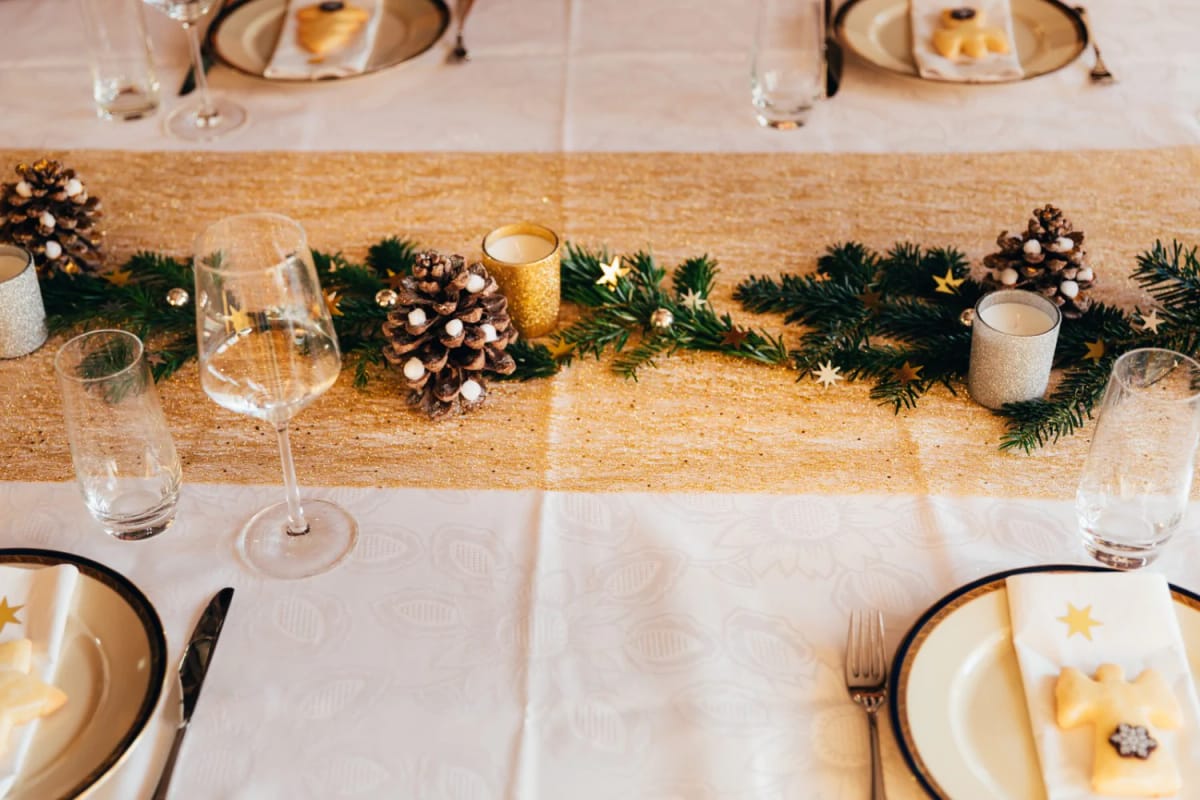
On a banquet table, three or four separate pinecone-and-candle groupings often beat one unbroken runner. A solid twelve-foot line of greenery looks impressive in a photo and then fights you all through dinner, with nowhere to land a platter and no gaps to pass anything across. Breaking it into vignettes keeps the rhythm down the table while opening up the working room a long table actually needs.
Where to put the breaks
Center a grouping between each pair of facing seats and leave the gaps over the joins and the serving zones. Space them the way you would a row of mason jar centerpieces, evenly but not rigidly, so the eye reads a repeating beat rather than a measured grid.
Leaving landing room for the food
Keep at least one clear stretch wide enough for a roasting dish, and do not let any grouping creep past the width of the place settings. The food is the reason for the table; the runner works around it, not the other way round.
Do this
- Keep the cones and greenery low, or lift the candles above them, so people can see across a long table.
- Vary candle heights along the run; a single flat line reads like a fence.
- Leave clear gaps for platters, elbows, and the pass.
- Run the greenery a touch wider than the candles so nothing looks stranded.
Avoid
- One tall arrangement dead center, which strands both ends of a long table.
- Packing the whole length solid. Plates need somewhere to go.
- Runner ends dangling into laps and knees. Cut it short.
- Matching every candle to the same height.
If you build only one thing from this list, make it the greenery spine and lay it first, before a single cone or candle goes down, because everything else keys off that line. Set your holders and raise the flames next, and if the table is long enough that the far ends live in the dark, drop a pair of LED tapers down there where nobody will be relighting all night.
Related Posts
- 15 Natural Christmas Centerpiece Ideas for a Festive Table
- 9 Foraged Winter Greenery Centerpiece Ideas for the Table
- 15 Natural Centerpieces for Your Winter Table
- How to Make a Eucalyptus and Pine Christmas Garland for a Natural Mantel
- 11 Mason Jar Christmas Centerpieces That Let the Greenery Do the Work
- 11 DIY Cork Reindeer Christmas Ornaments for a Rustic Tree