
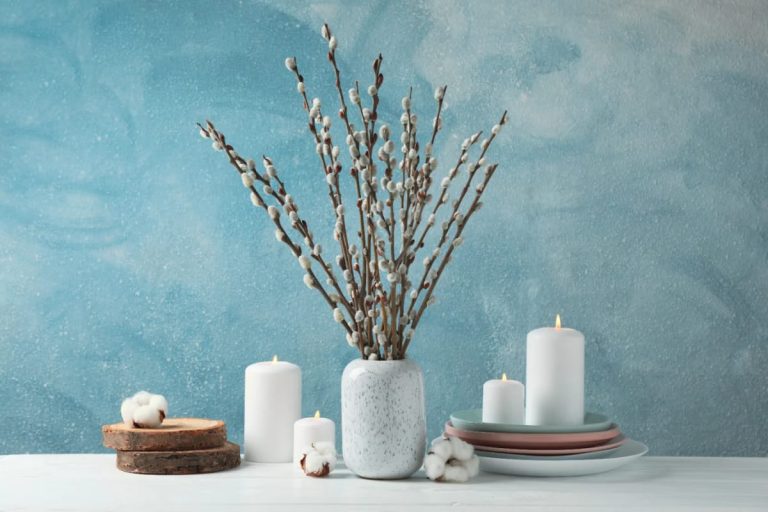
Almost every guide to branch centerpieces tells you to paint the branches white and hang something off them. That turns a January table into a shrunken Christmas tree, which is the one thing a room does not need on the sixth of the month, when the real tree has just gone out to the curb. Every arrangement below leaves the wood alone, because bare is the entire proposition — the grey bark, the awkward fork, the twig that goes the wrong way.
January is also the month with no material. Nothing is blooming, the greenery you cut in December has gone brittle, and the shops have moved on to Valentine's red. What you do have is a yard full of dormant wood and a windy week that knocks half of it down for you.
The twelve ideas run roughly from flat-on-the-table to overhead, with the cheapest ones scattered through rather than saved for the end. One of them takes three weeks to finish itself, so read that one before you decide what you are doing this weekend.

Run the branches low along the table, not tall out of a vase
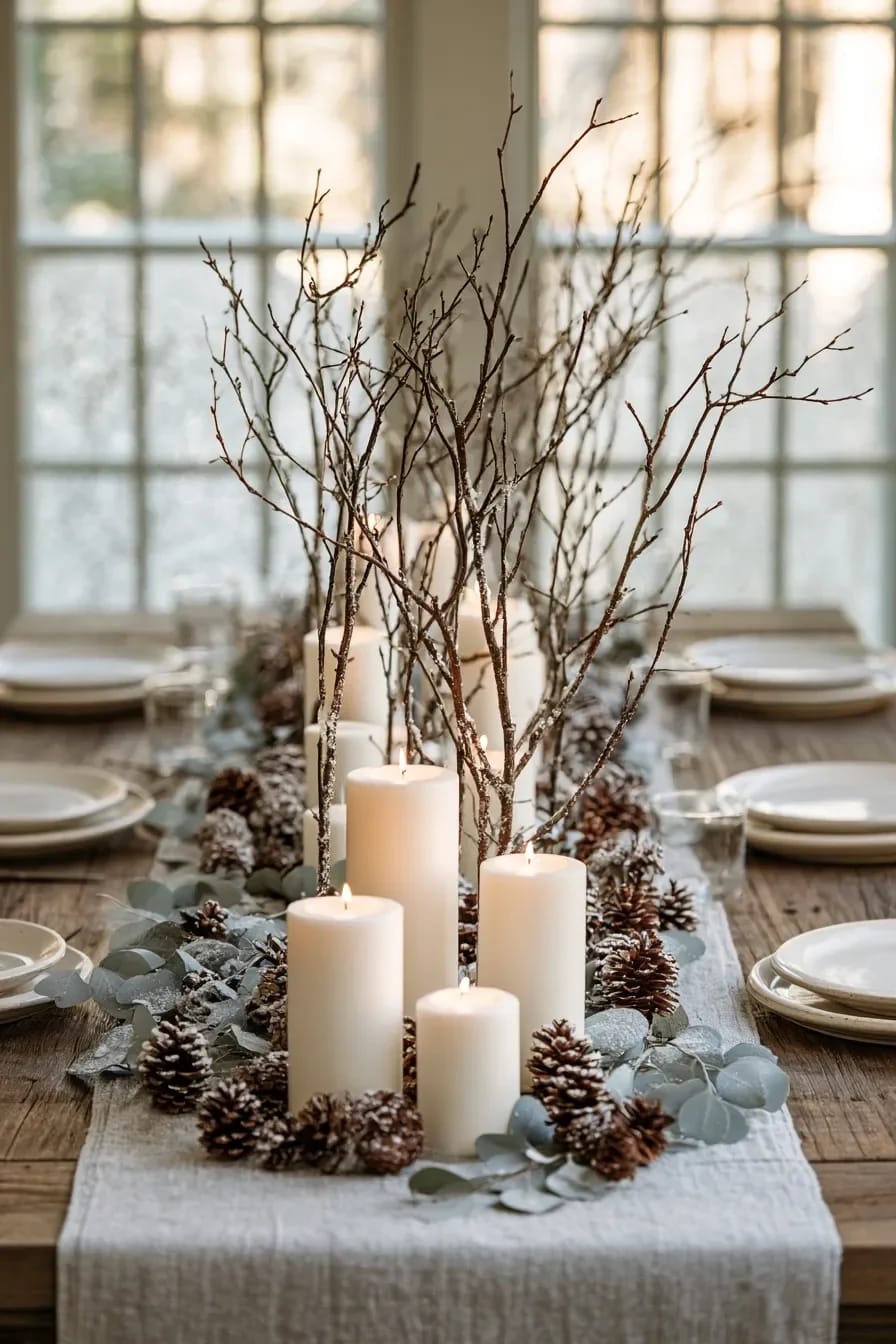
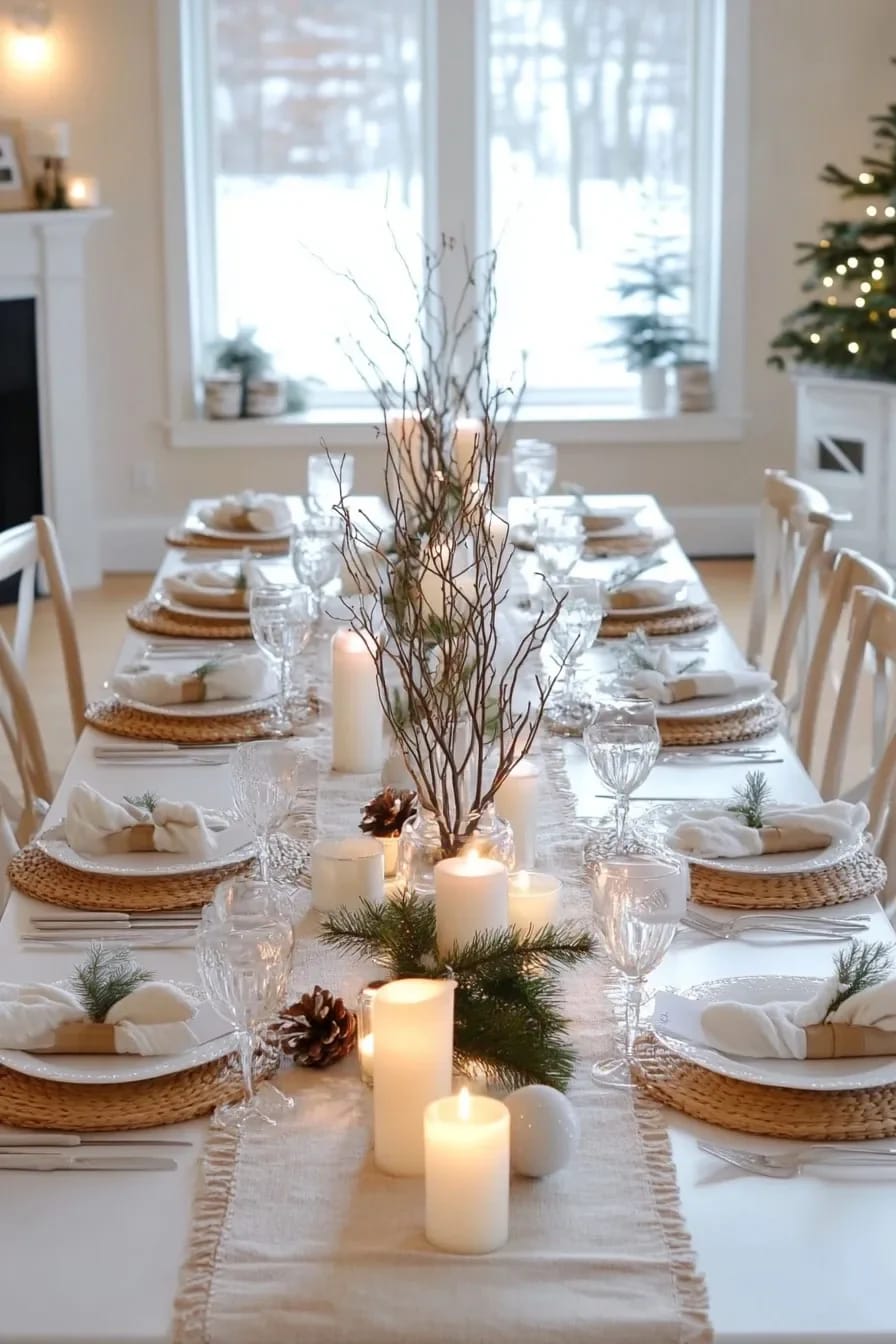
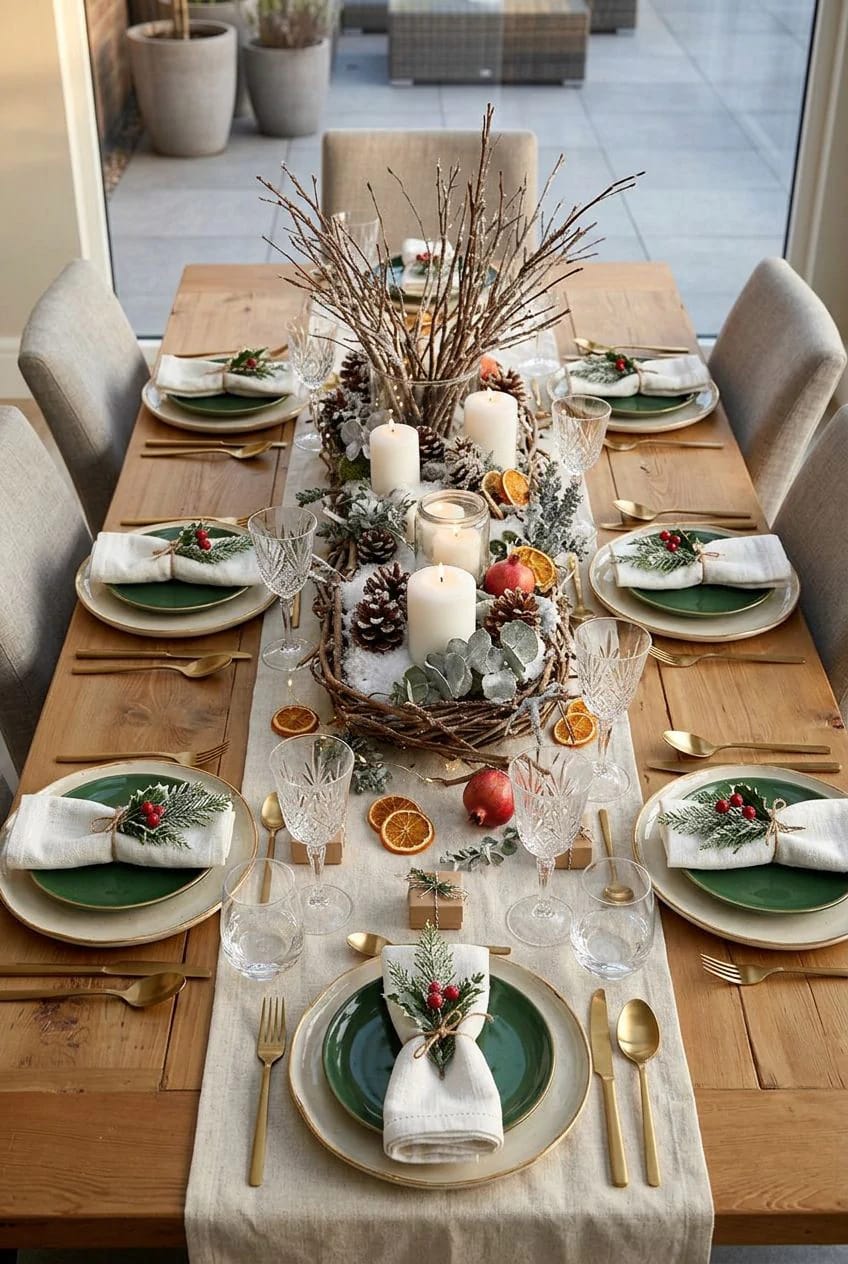
Lay the branches flat and you get a centerpiece people can actually eat around. The tall vase of twigs photographs well from a step ladder and fails at the only test that matters, which is whether the person opposite you can be seen. Three or four branches laid end to end down the middle of the table, overlapping slightly so the line is unbroken, does the same visual job at a height nobody has to lean around.
Use branches with genuine side growth. A straight stick reads as a stick; a limb with two or three lateral twigs coming off at odd angles reads as an arrangement, because the eye follows the branching. Cut the thick ends at a slant so they sit low instead of rolling.
What to lay them on so it reads as deliberate
Bare wood on bare wood disappears. The branches need a strip of something underneath — a length of unbleached linen, a plank of rough-sawn pine, a narrow mirror, a runner of loose-woven jute — and the strip should be narrower than the branch line so a little of it shows on either side. Mirror is the interesting one here: it doubles whatever candlelight you put on top of it, which matters in a month where dinner happens in the dark. If your table seats ten or twelve rather than six, the spacing problem changes entirely and a single centered arrangement stops working.
Where the height cutoff actually falls
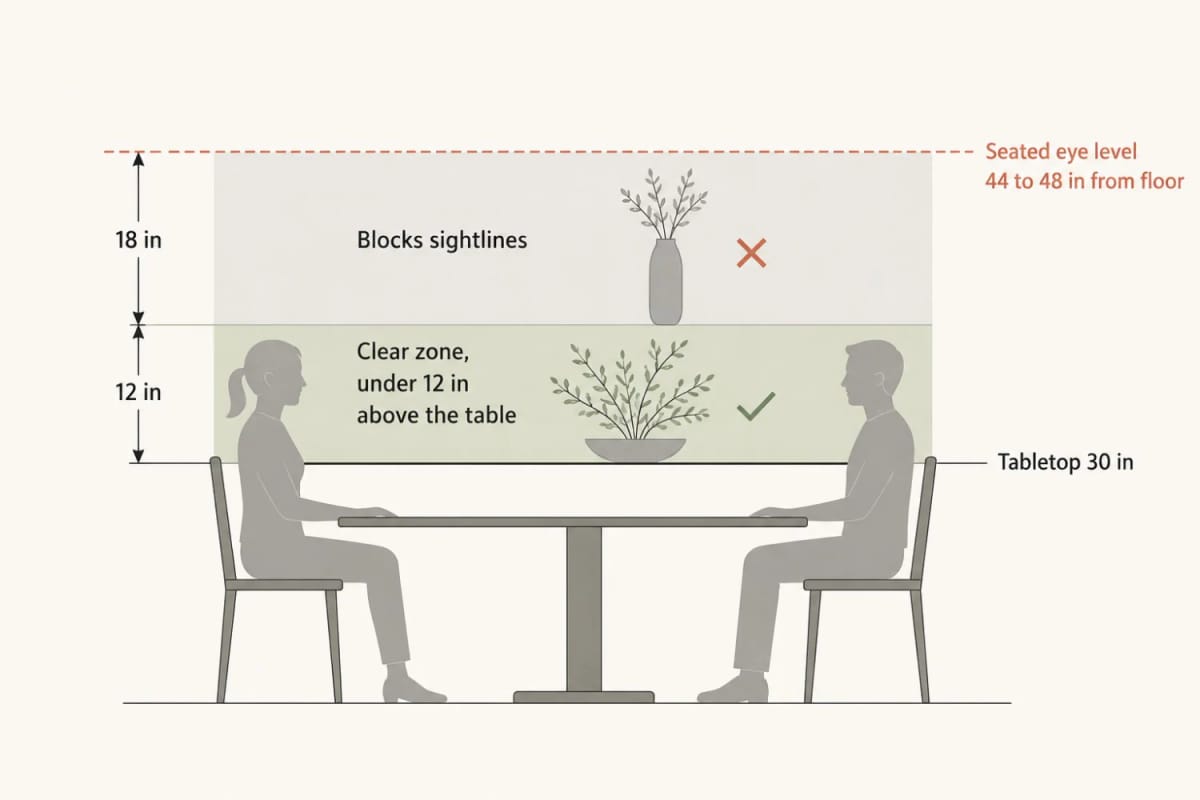
A dining table is about 30 inches high, and a seated adult's eye lands somewhere around 44 to 48 inches off the floor. That leaves roughly 12 inches of working height before an arrangement starts cutting across faces, and a low branch line uses maybe four of them. It is also why the tall version works fine on a hall console or a sideboard, where nobody is sitting behind it — put the vase there and keep the table flat.
Dry branches lying between pillar candles are kindling with good styling. Bare wood cut this winter still holds moisture and is fairly forgiving; branches that have been sitting in a garage since last year are not, and neither is anything you have coated in hairspray, glitter glue, or artificial snow. Keep at least four inches of clear table between a flame and the nearest twig, use candles in holders rather than resting on the linen, and pull the runner apart before you leave the room.
One forked branch in a heavy vessel beats a fistful of twigs
The single-branch version is the hardest to get wrong and the one most people skip because it looks like not enough effort. Find a limb with one strong fork, put it in a vessel that weighs more than it does, and stop. Oak and manzanita hold their shape; anything that has been on the ground long enough to go soft at the ends will droop within a week.
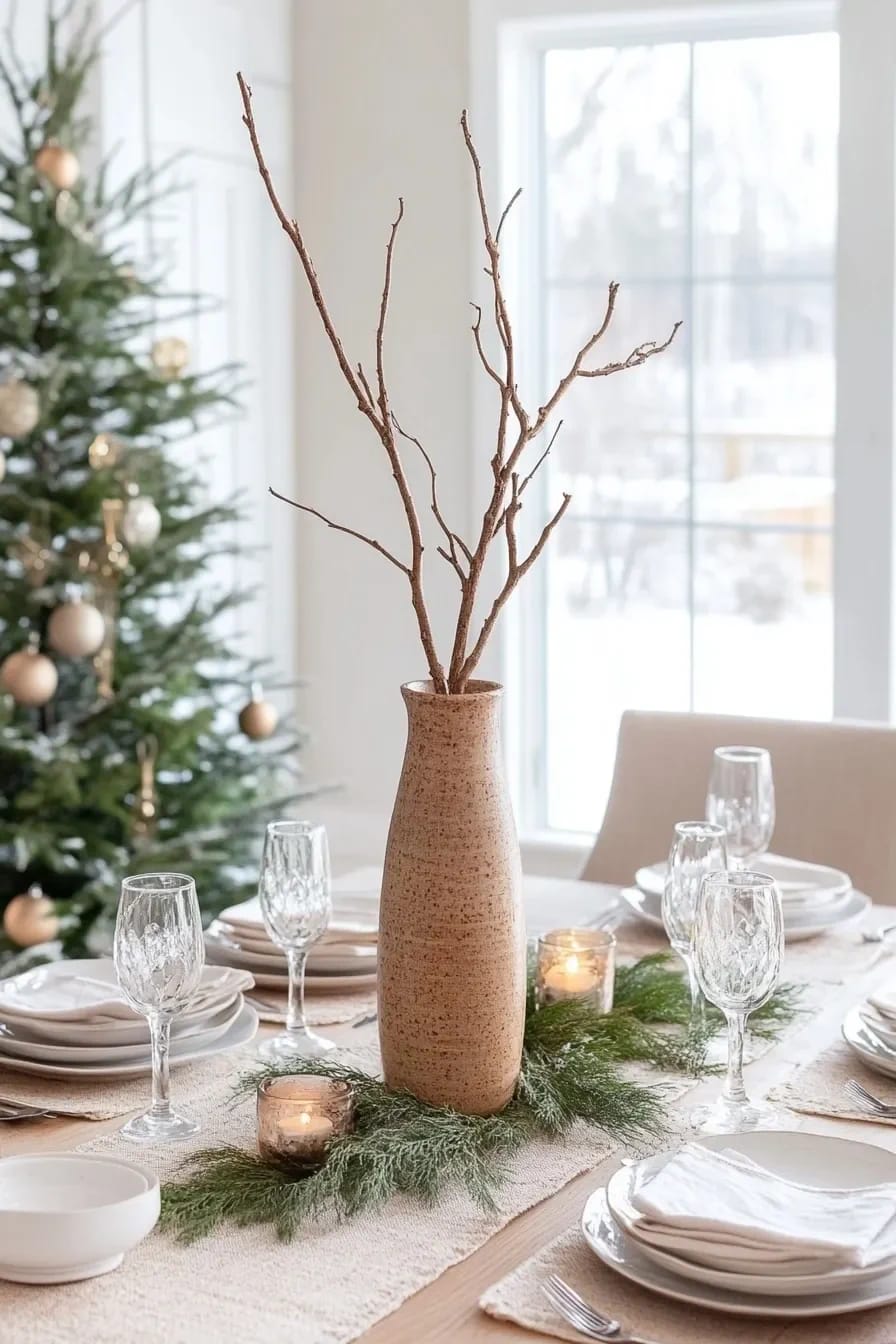
Fill the base with pea gravel rather than florist foam. Foam crumbles, holds nothing heavy, and has to be thrown away; gravel weighs the vessel down, holds the angle you set, and lets you swap the branch out in March without starting over.
Sink bare twigs under floating candles for a low winter centerpiece
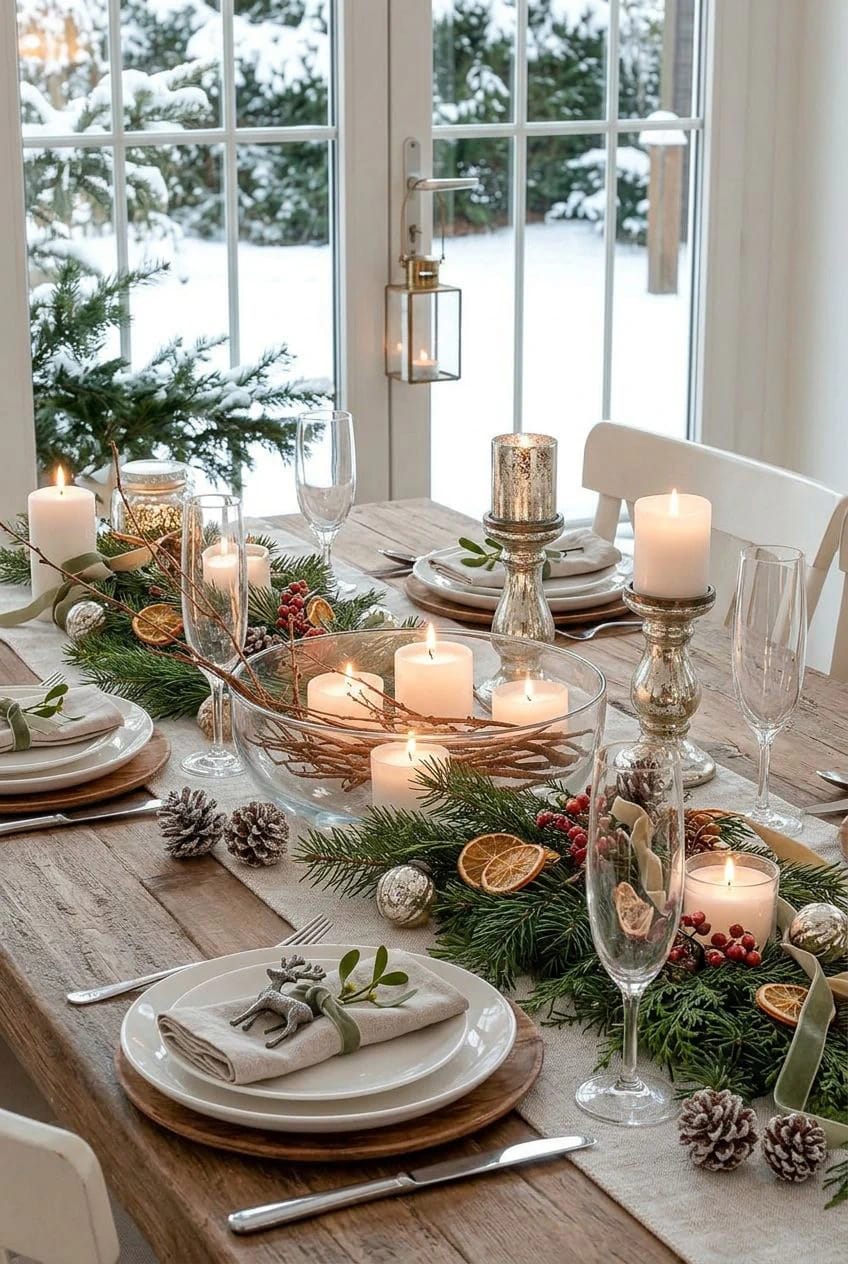
Water makes bare wood look intentional. Submerged twigs go darker and slightly glossy, the bowl magnifies them, and floating candles above the surface throw moving light down through the whole thing. It is the one arrangement on this list that improves after dark, which in January is most of the time you are at the table.
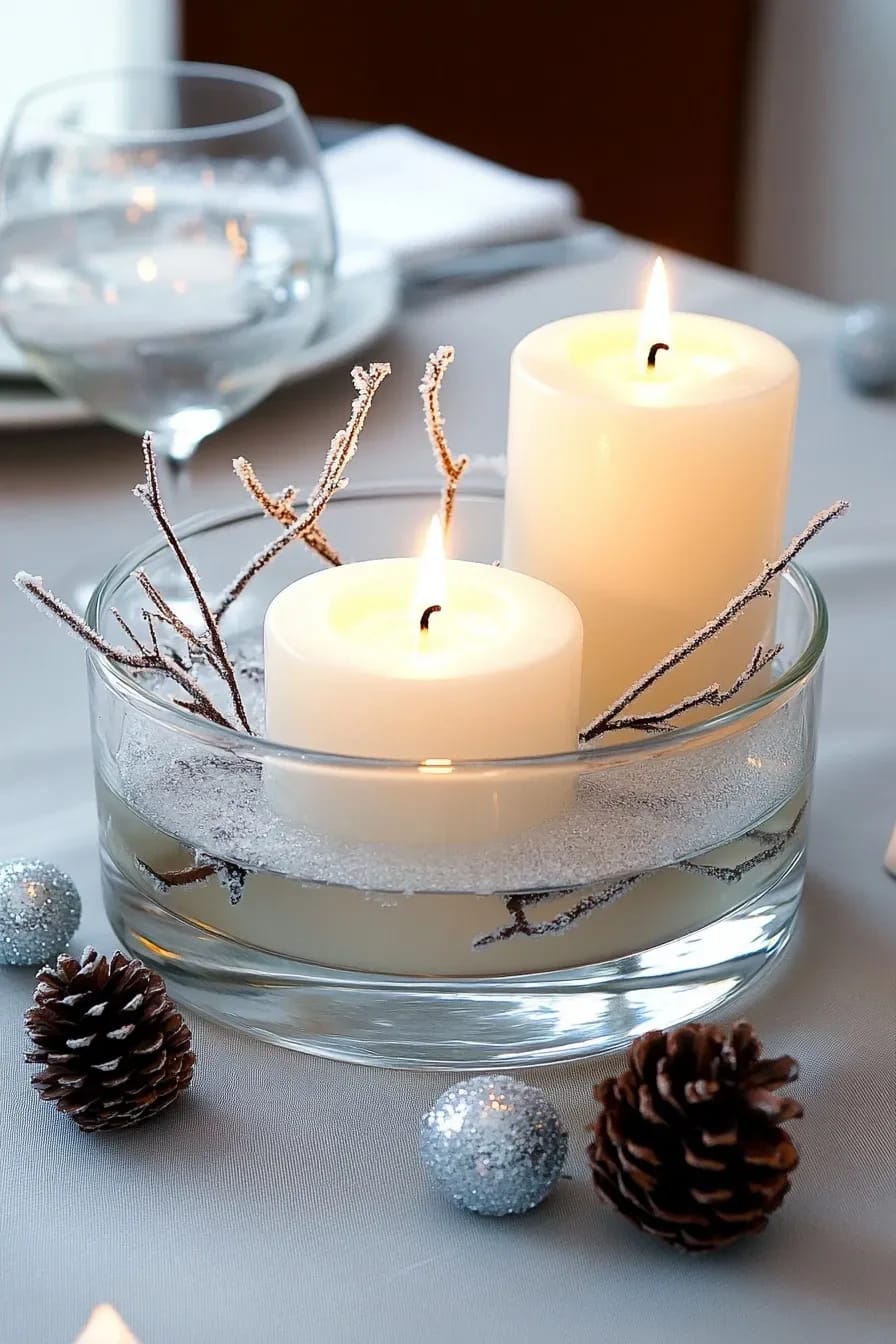
Twigs float, so they need pinning: two river stones laid across the ends will hold them flat, and the stones read as part of the arrangement rather than as hardware. Keep the water at about two inches. Deeper and the twigs sit too far from the flames to catch any light; shallower and the candles ground out on the wood.
Birch logs give the branches a base that isn't a vase
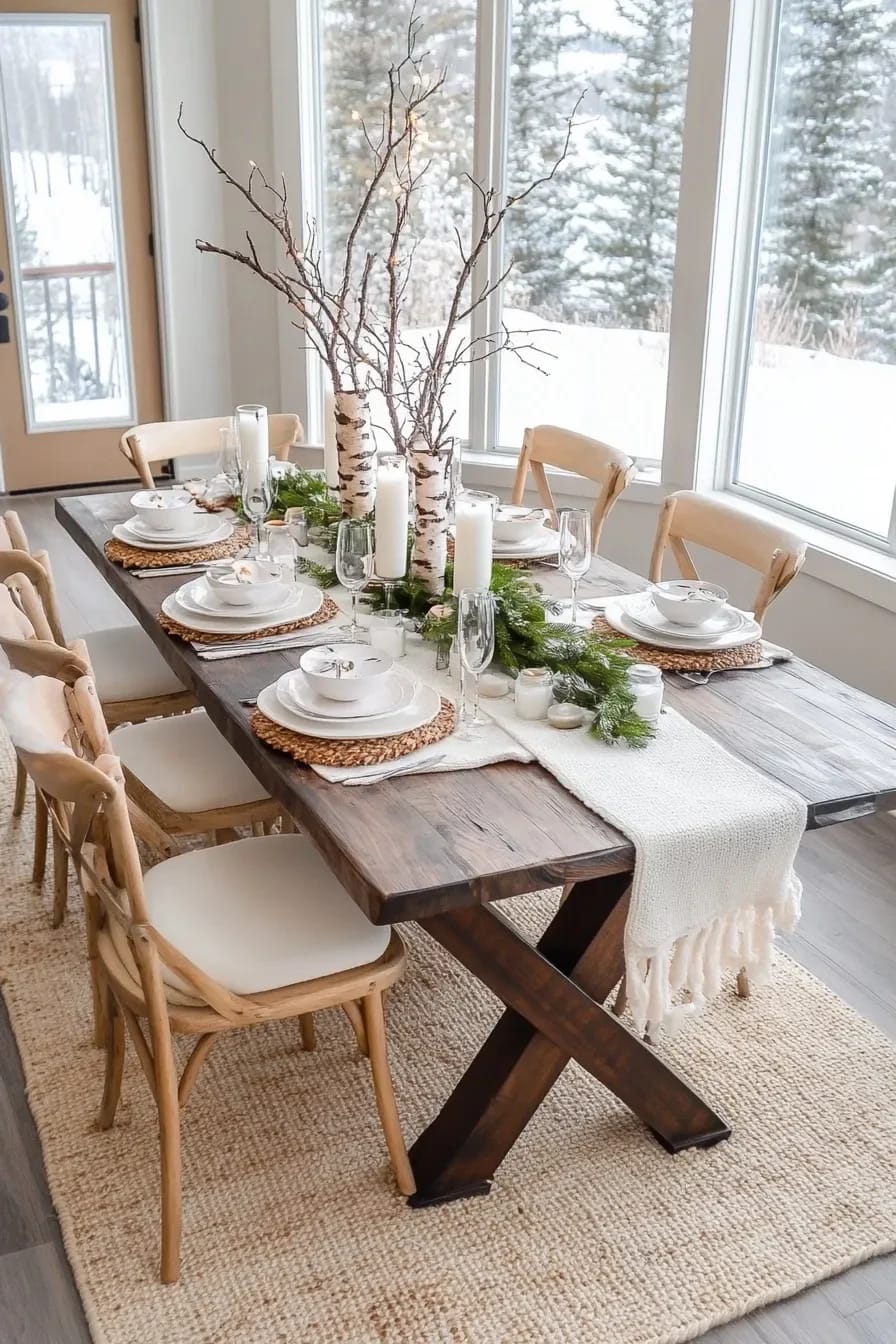
Two or three log rounds, cut ends facing up, give the branch line a physical anchor and a second texture. White birch bark against grey twig bark is the pairing that carries a table with no decoration on it at all, and it belongs in the same family as the other natural materials that hold a winter table together without anything shiny. Rounds of 3 to 5 inches across sit stable; anything narrower rolls.
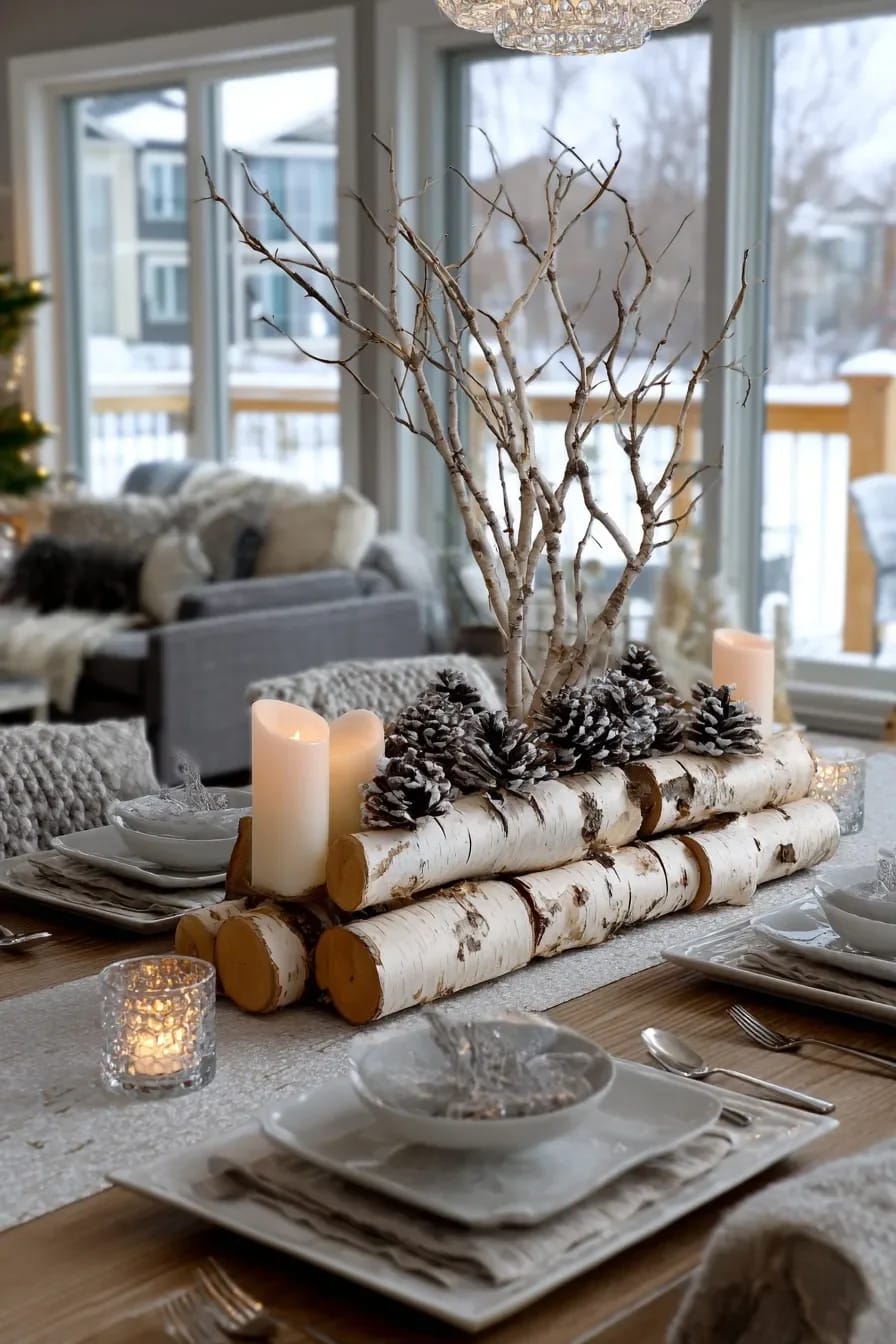
The upgrade is a drill. A 7/8 inch spade bit sunk about an inch into the cut face takes a standard dinner taper, so the log becomes a candle holder and the branches lean against it. Drill from the flat face on a scrap board, not on the table, and go slow through the bark or it tears out around the rim.
One red-berried stem carries all the color a January table needs
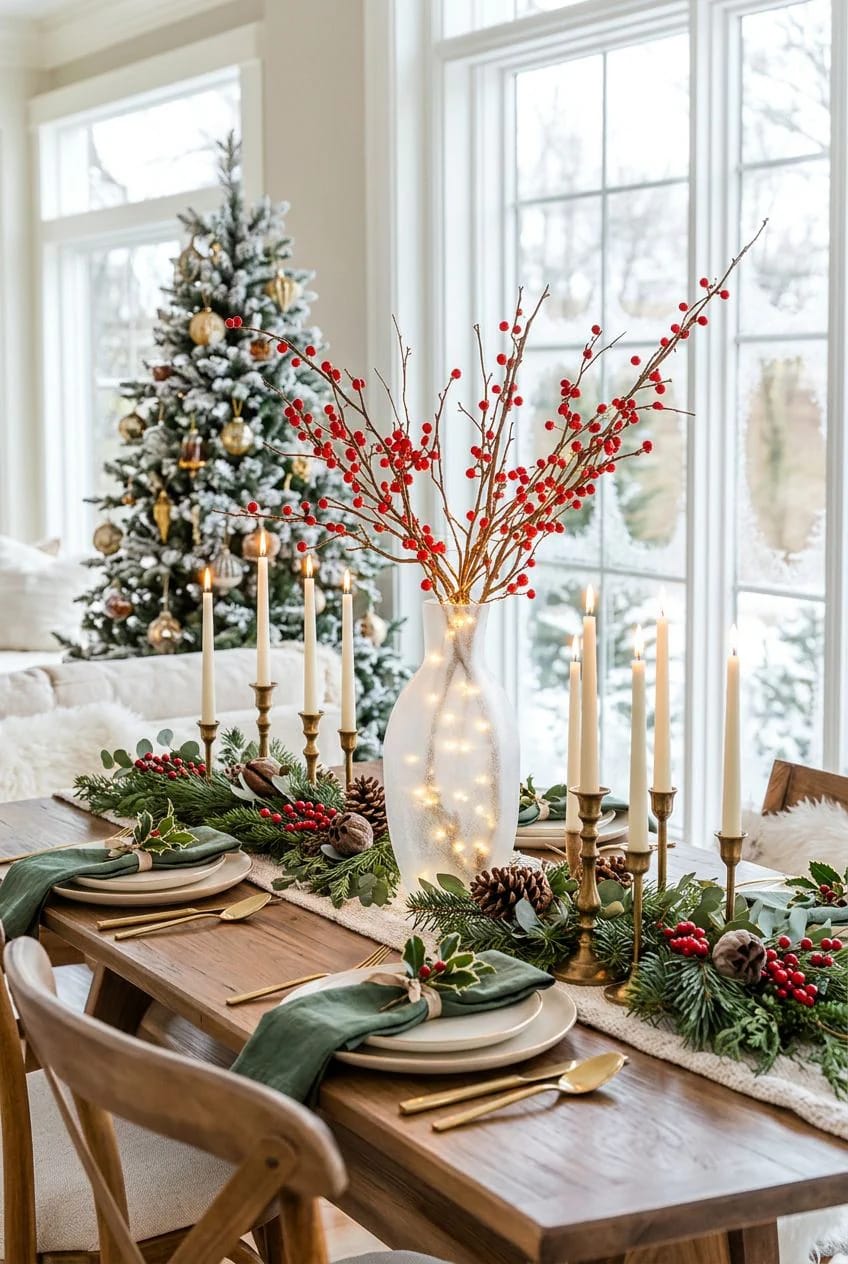
Winterberry is the one to look for, because it drops its leaves and keeps its fruit, so you get red beads on bare grey wood rather than red beads buried in foliage. Rosehips do the same job with a duller, more orange fruit and a stem that fights back. One stem is the dose. Three turns the table Christmassy again, and you have just spent a fortnight dismantling that.
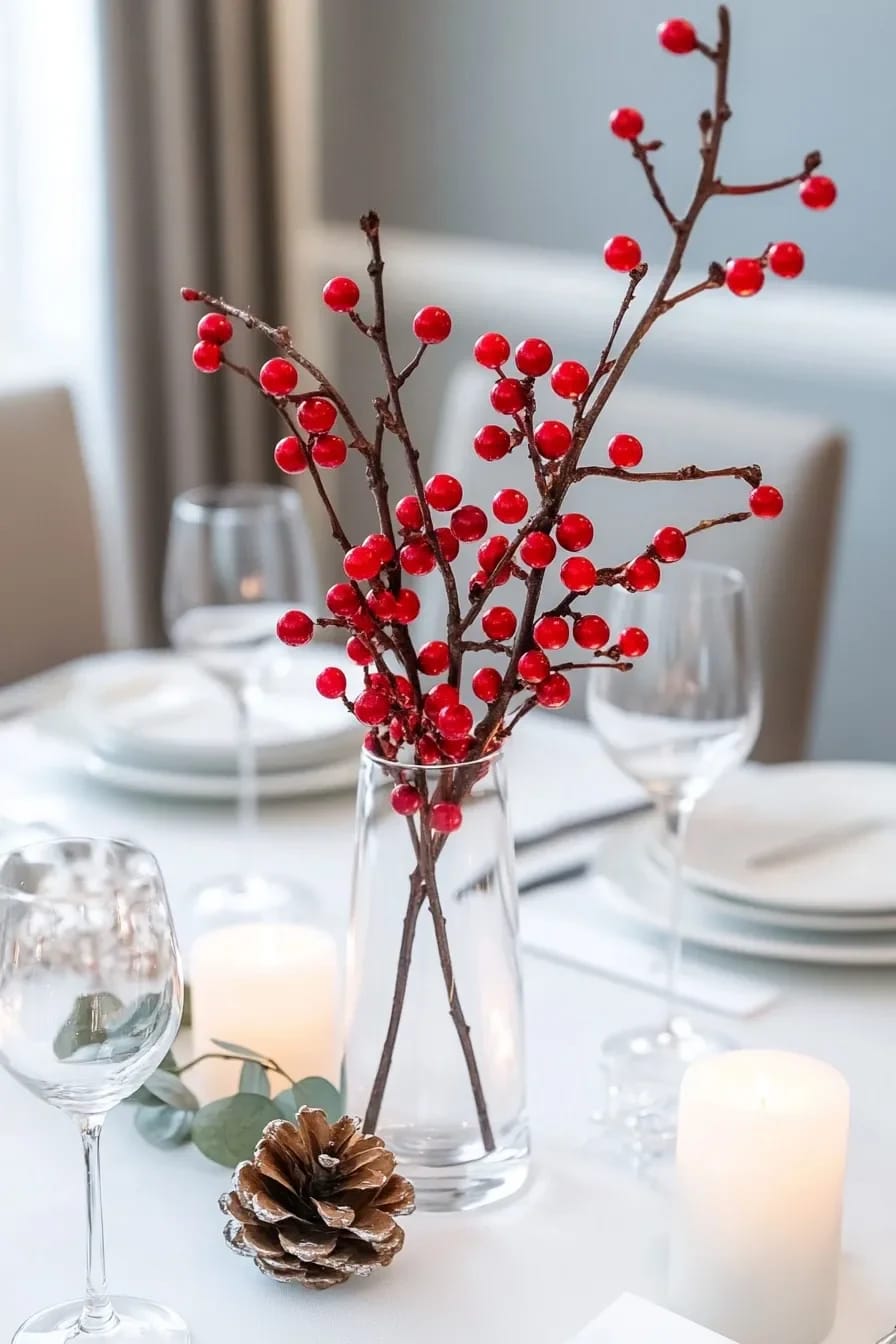
On faux stems, which is what most people end up buying: the giveaway is that every berry is the same size. Real winterberry runs uneven and slightly wrinkled by January, and the good faux versions cost more than the branch is worth. If you want the fuller look instead, berries share a vase with roses and pine perfectly happily in a proper winter arrangement — it is just a different article’s table.
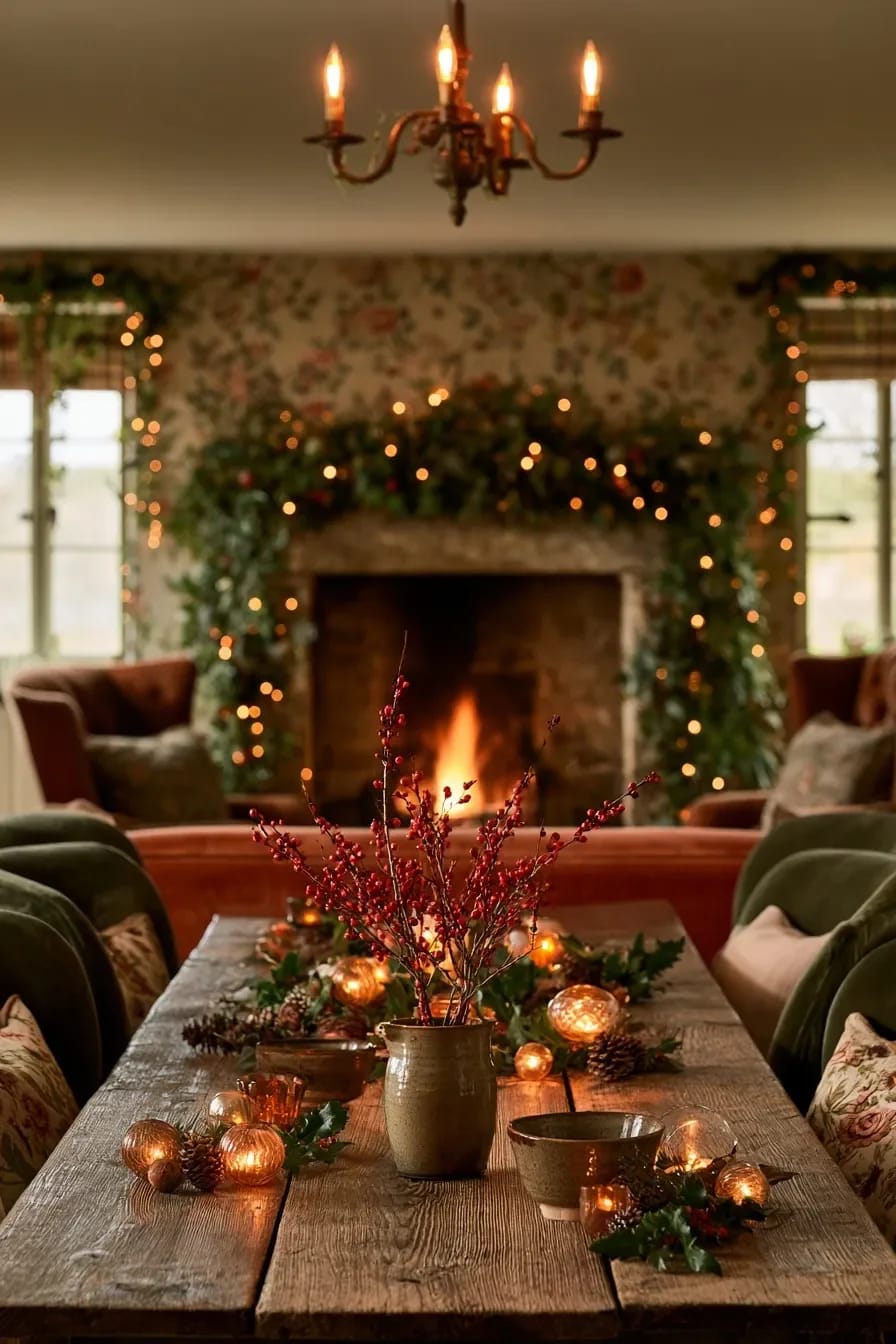
Wire dried hydrangea heads onto the branches instead of buying filler stems
Hydrangea heads left on the shrub through autumn dry to a papery bronze and stay that way for years, and they attach to a bare branch with about six inches of thin florist wire. This is how you get volume into a branch arrangement without introducing a second plant that reads as fresh and dies in four days.
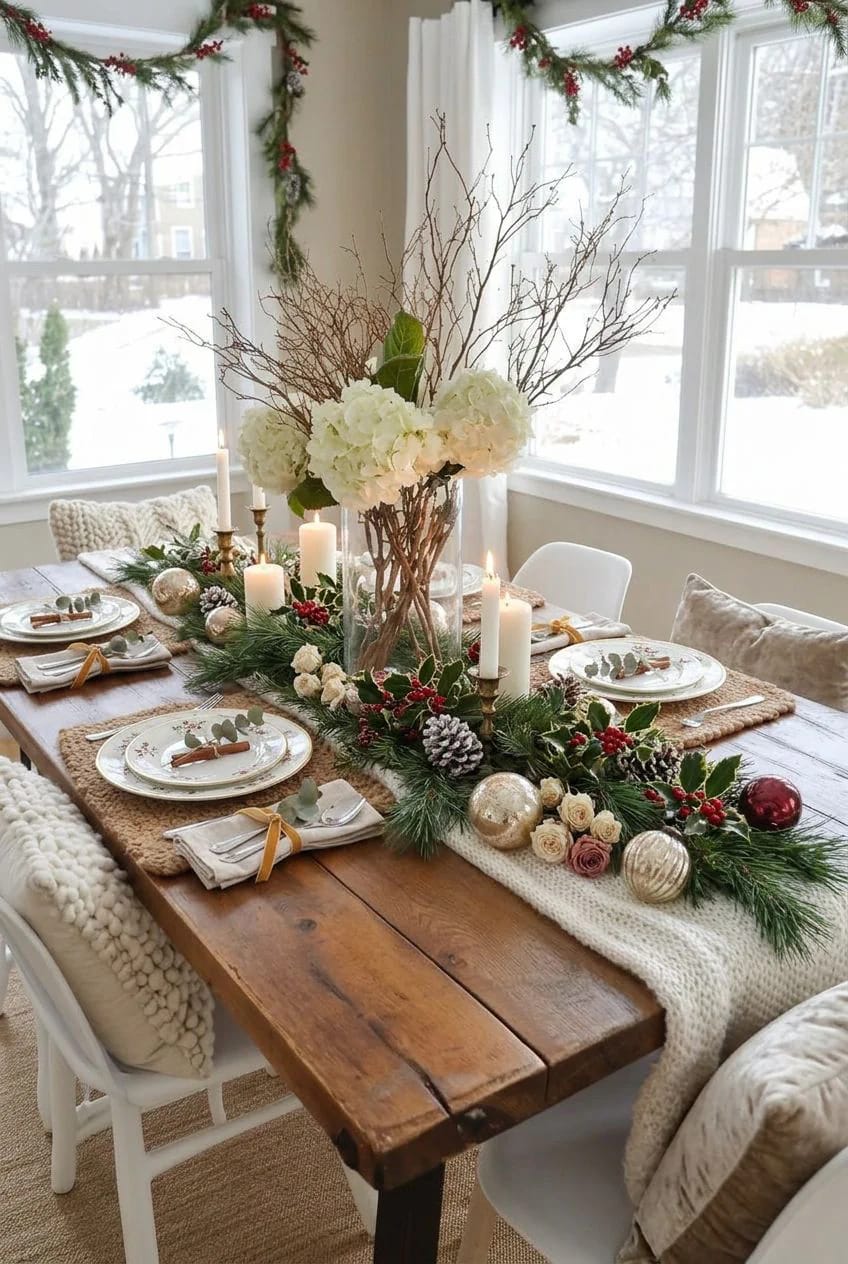
Two or three heads, wired at different heights and all on the same side of the branch, look like the plant grew that way. Six heads spaced evenly look like a garland. Wire the stub of stem to the branch rather than the flower head itself, and bend the wire tail back under so it does not catch a sleeve.
 9 Foraged Winter Greenery Centerpiece Ideas for the Table Nine arrangements built from cut cedar and whatever else the yard gives up, with how long each one actually lasts indoors.
Hang the branch above the table when the table is too small to hold one
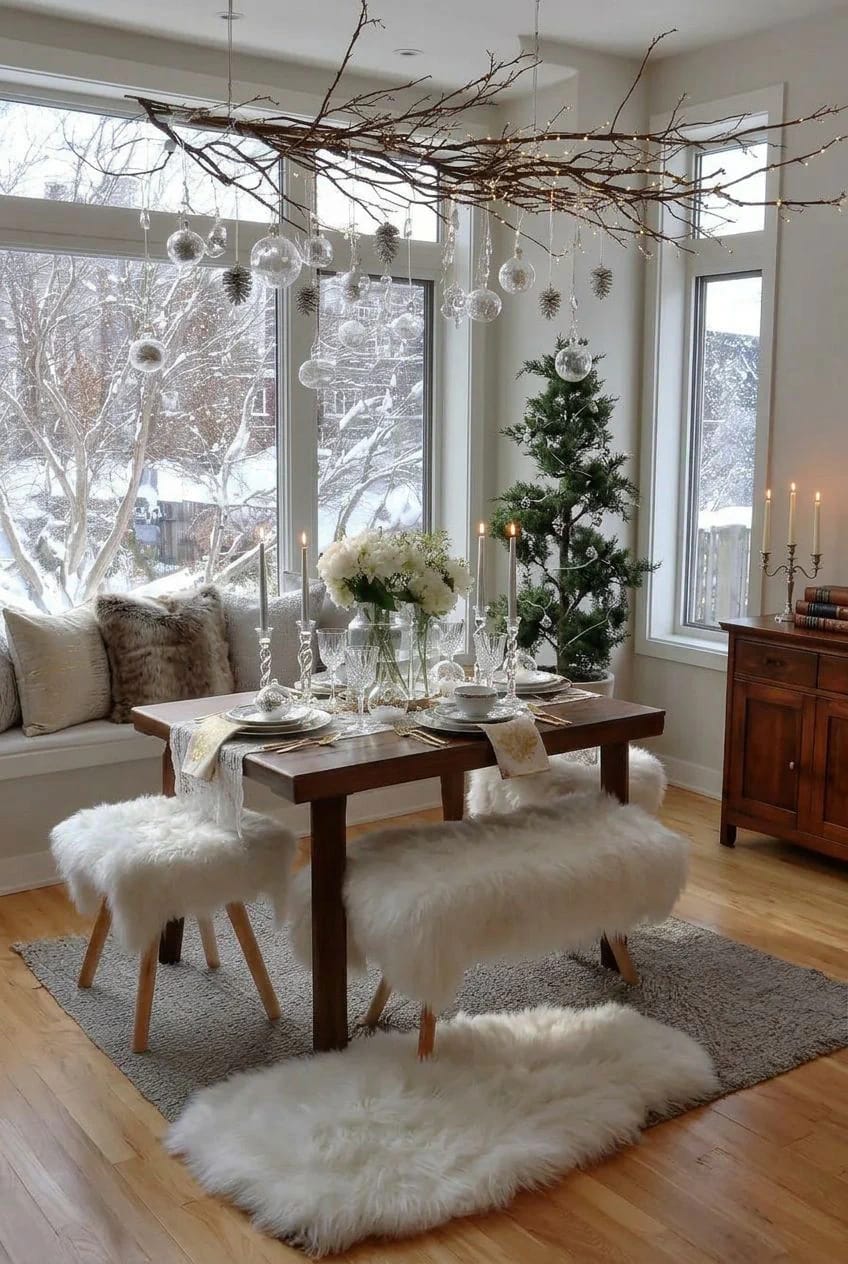
Suspending the branch frees the entire tabletop, which is the whole argument on a table that seats two and also has to hold a laptop most of the week. Fishing line and two small ceiling hooks are enough for anything up to a couple of pounds. Leave 24 to 30 inches of clear air above the table so nobody stands up into it, and hang the branch slightly off center rather than dead middle, because dead middle reads as a light fitting that lost its shade. The same constraint gets a fuller treatment in the question of where a branch actually goes when your whole apartment is one room.
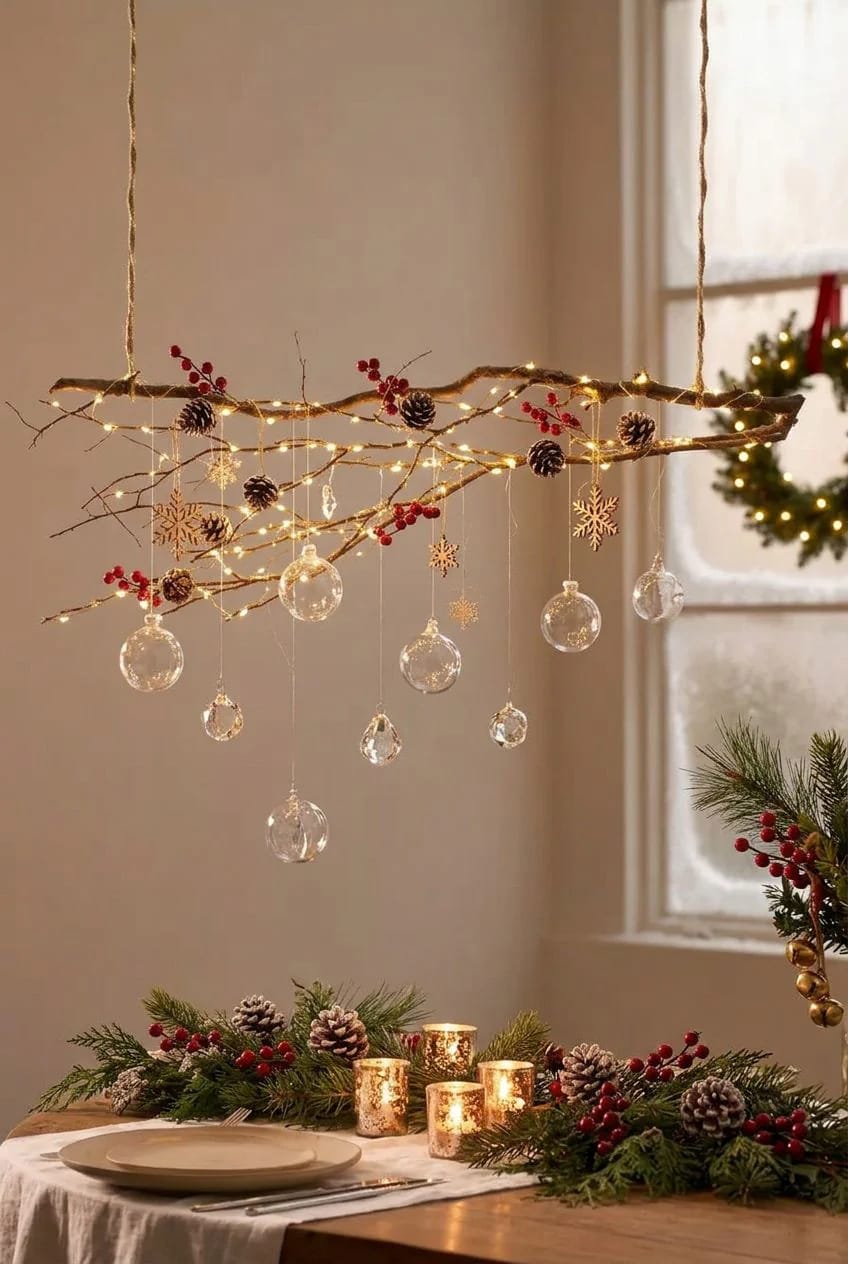
Grow salt crystals on the twigs instead of reaching for glitter
This is the honest version of the white sparkly branch, and it looks nothing like the spray-can version. Twigs suspended in a hot saturated borax solution come out overnight furred in hard, faceted, faintly translucent crystals that catch candlelight from a distance and hold up to being looked at closely. Glitter does the opposite: convincing in a thumbnail, obviously plastic across a dinner table, and it gets into the grain of the table for the rest of the year.
Borax and epsom salt do not give the same result
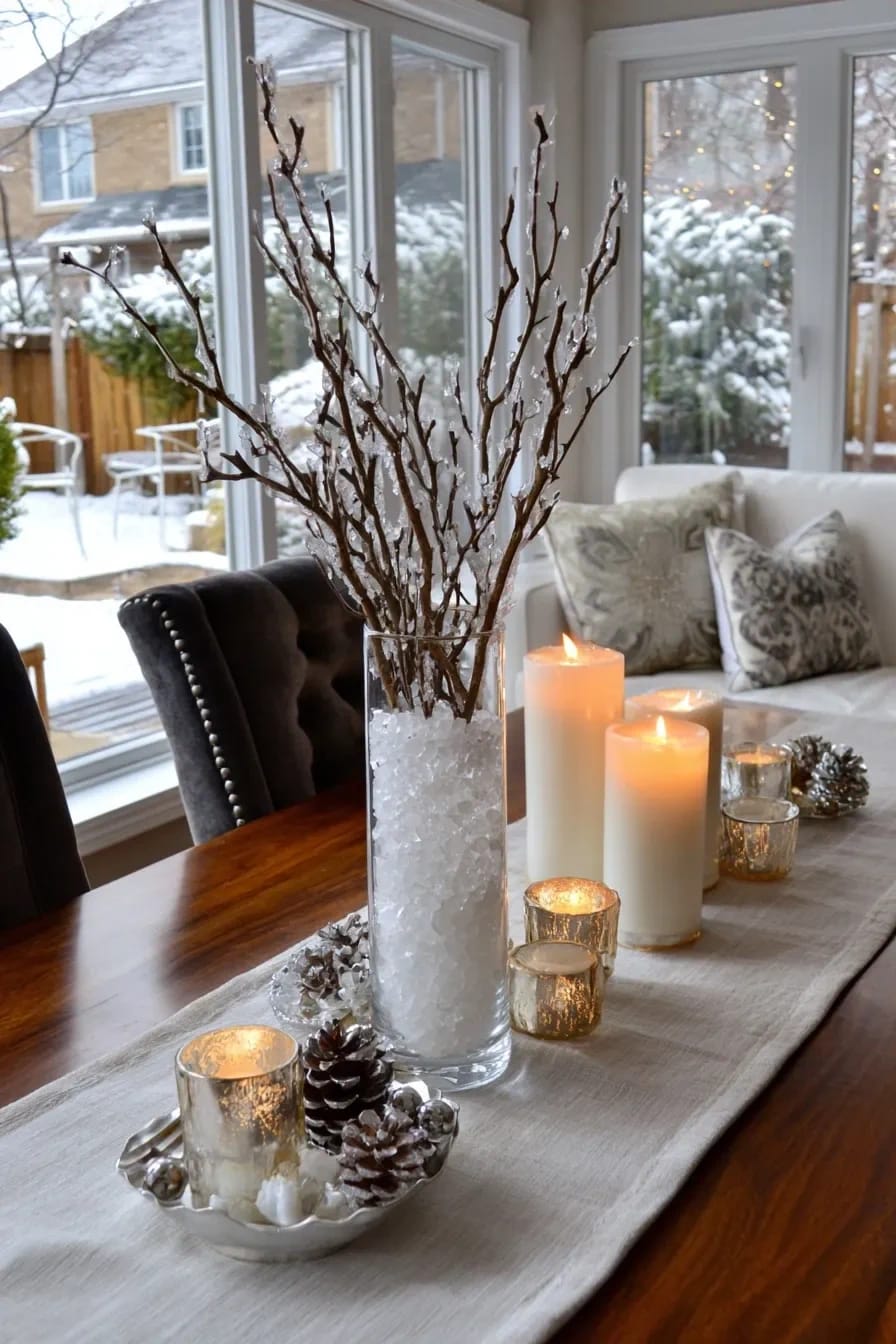
Borax gives chunky angular crystals; epsom salt gives a finer coating that reads more like hoarfrost than like ice. Either way the method is the same: dissolve as much as the water will take, roughly three tablespoons per cup of boiling water for borax, suspend the twigs from a skewer so they hang clear of the sides, and leave it overnight while the solution cools. Warm room, slow cooling, bigger crystals.
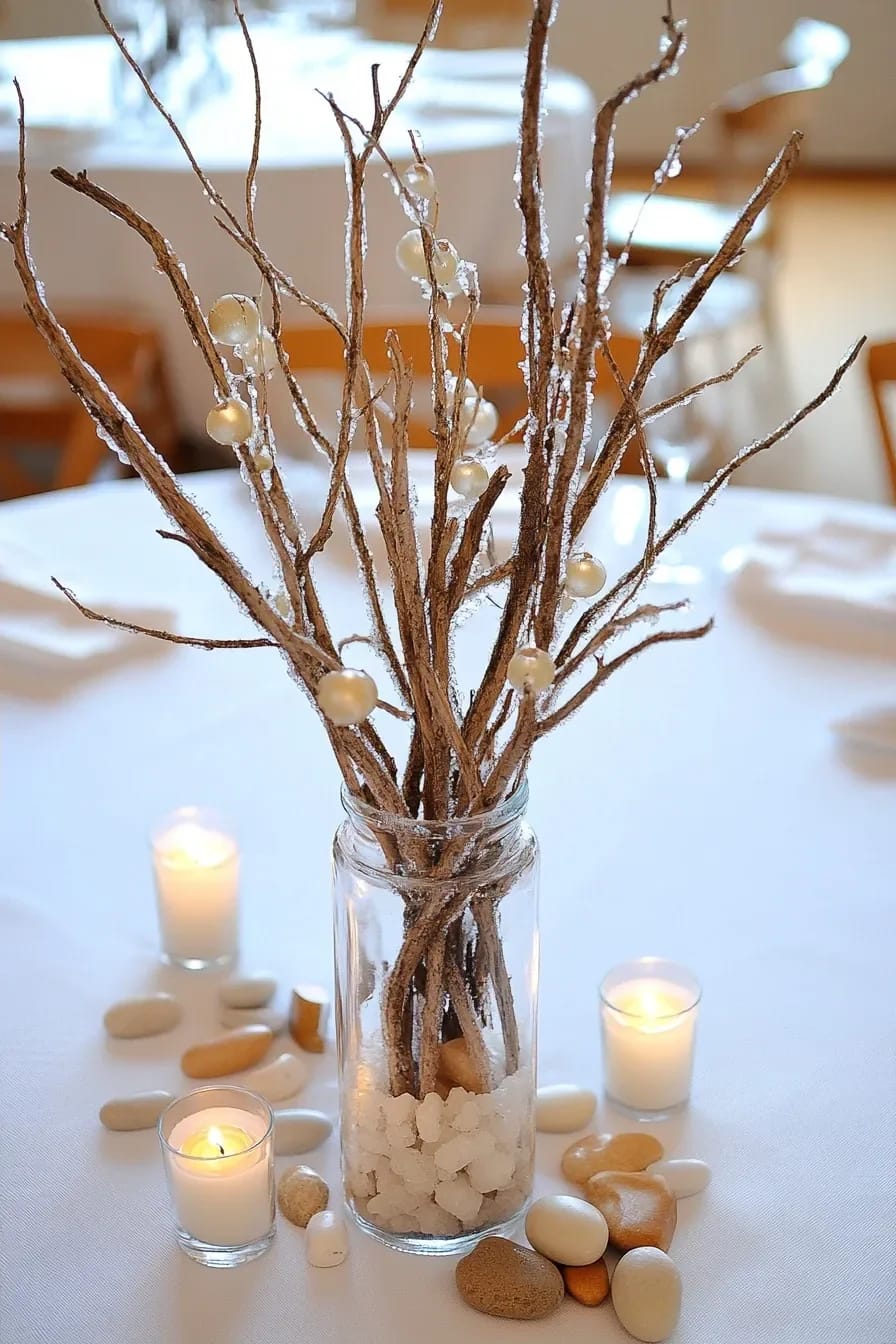
Two things worth knowing before you commit an evening. Borax is not food-safe and should not be within reach of children or a cat that drinks out of jars, so this arrangement lives on a table nobody grazes at. And I have not found a reliable way to stop the crystals shedding once the twigs get handled — expect a scatter of white grit on the runner by the second week, and plan on the twigs being a one-season object.
Cut forcing branches in January and the centerpiece finishes itself
Cut the right branches now and they will flower on your table in one to three weeks, which turns an arrangement into something the household checks on daily. Spring-flowering trees and shrubs set their buds the previous summer and then need roughly six weeks of cold before they will respond to warmth, so by January that requirement is met almost everywhere it gets properly cold.
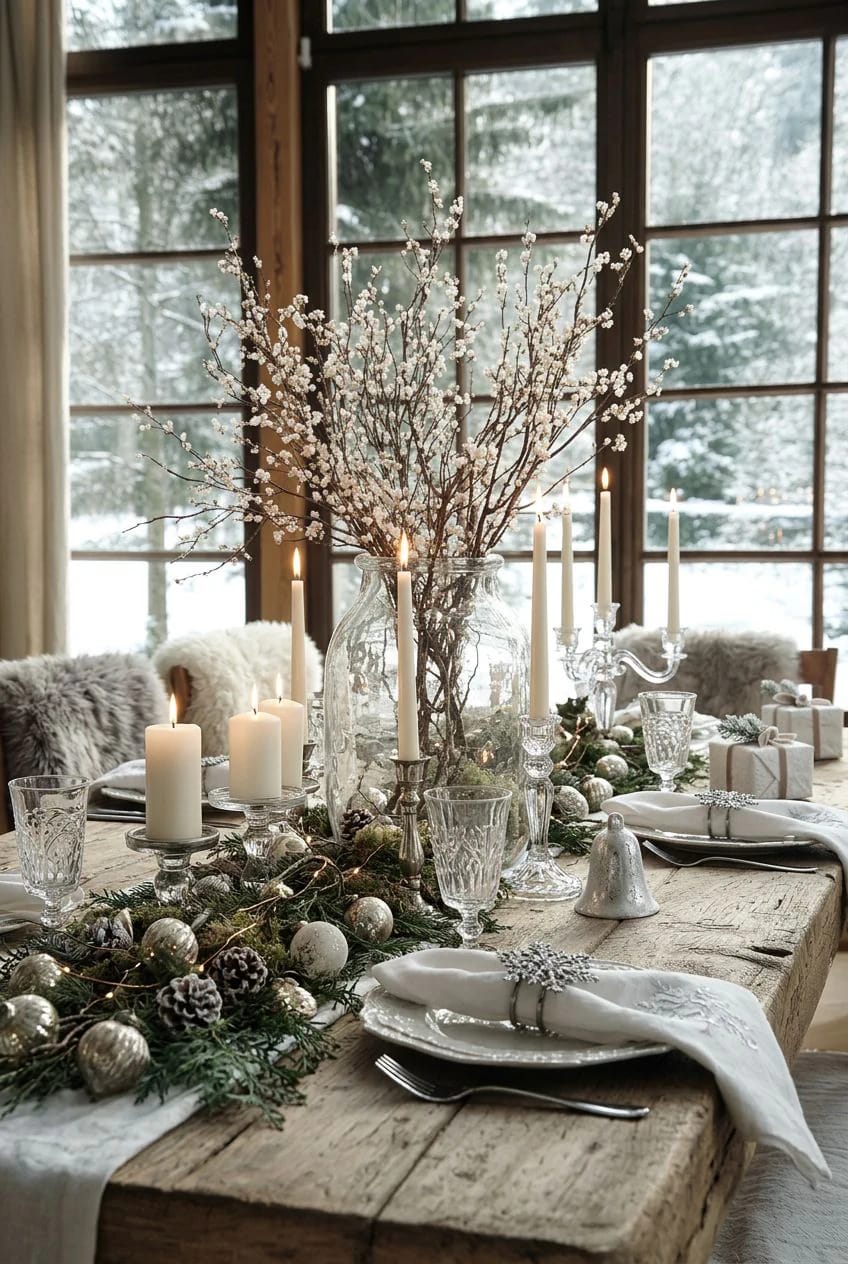
Forsythia and witch hazel are the January cuts, both quick, and pussy willow is close behind at one to two weeks. Flowering cherry, plum and magnolia want longer indoors, in the region of four to five weeks, so cut those knowing you are decorating for late February rather than for Sunday. Once these open, the arrangements that take over when things are genuinely blooming are a different exercise altogether.
Which buds are worth cutting
Flower buds are fat and rounded; leaf buds are narrow and pointed. Cut a branch covered in the pointed kind and you will get a nice green twig and no flowers, three weeks from now, with no way to tell in the meantime. Take stems from the top of the shrub where buds sit closest together, make the cut on a slant one to two feet from the tip, and choose branches whose removal improves the plant's shape, since this is winter pruning either way.
The water routine that decides whether they open
Change the water every couple of days and top it up between changes, because branches transpire hard once they wake and a vase can drop an inch overnight. Keep them out of direct sun and away from a radiator; a bright, cool room opens them slowly and the flowers hold longer. Pussy willow is the exception to all of it. Fine Gardening's advice is to empty the vase completely once the catkins are full and furry, since stems left in water will root and drop their buds, and dry catkins then last more or less indefinitely.
Clad a plain glass vase in twigs for a branch centerpiece that costs nothing
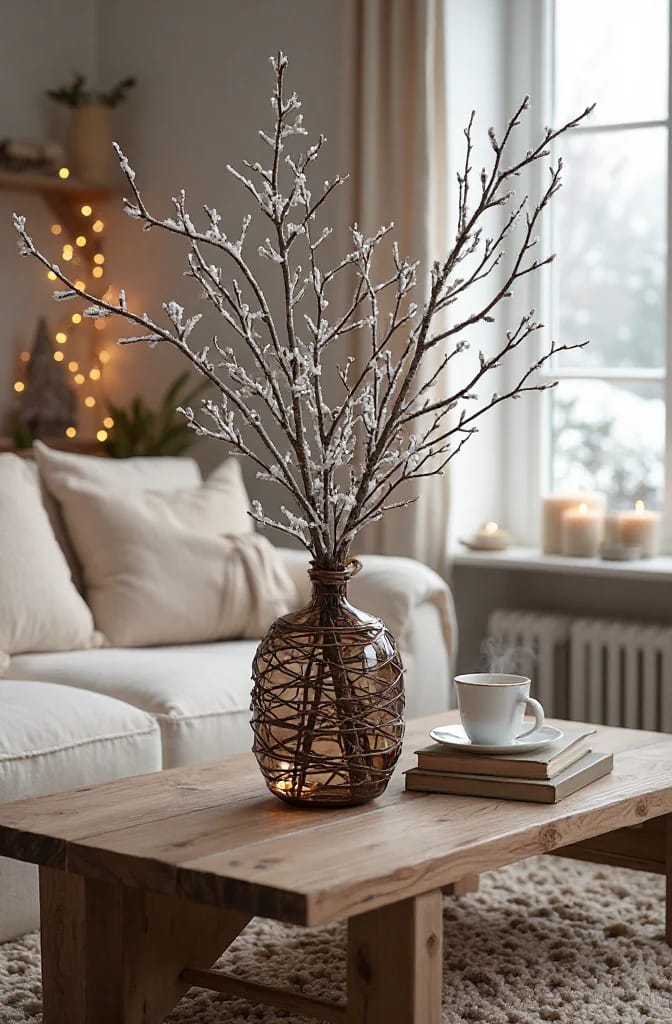
Cut twigs to the same length, stand them upright around a plain glass tumbler held in place by two rubber bands, then wrap twine over the bands and pull them out. The trick is cutting the twigs about half an inch shorter than the vase so the rim shows as a clean line above the wood; flush-cut twigs look like a bundle of kindling. It is the same instinct behind building a twig campfire inside a pebble candle holder, where the found material becomes the object rather than a decoration stuck onto one.
Weave warm fairy lights through the branches rather than around them
Copper wire micro-lights threaded through the interior of the branch structure look like the branch is lit from inside. Wound around the outside in coils, the same string reads as a wrapped porch railing. Push the wire in and out along the length of each twig, let some of it sag between limbs, and accept that the wire is visible; it is thin enough to disappear at two feet away.
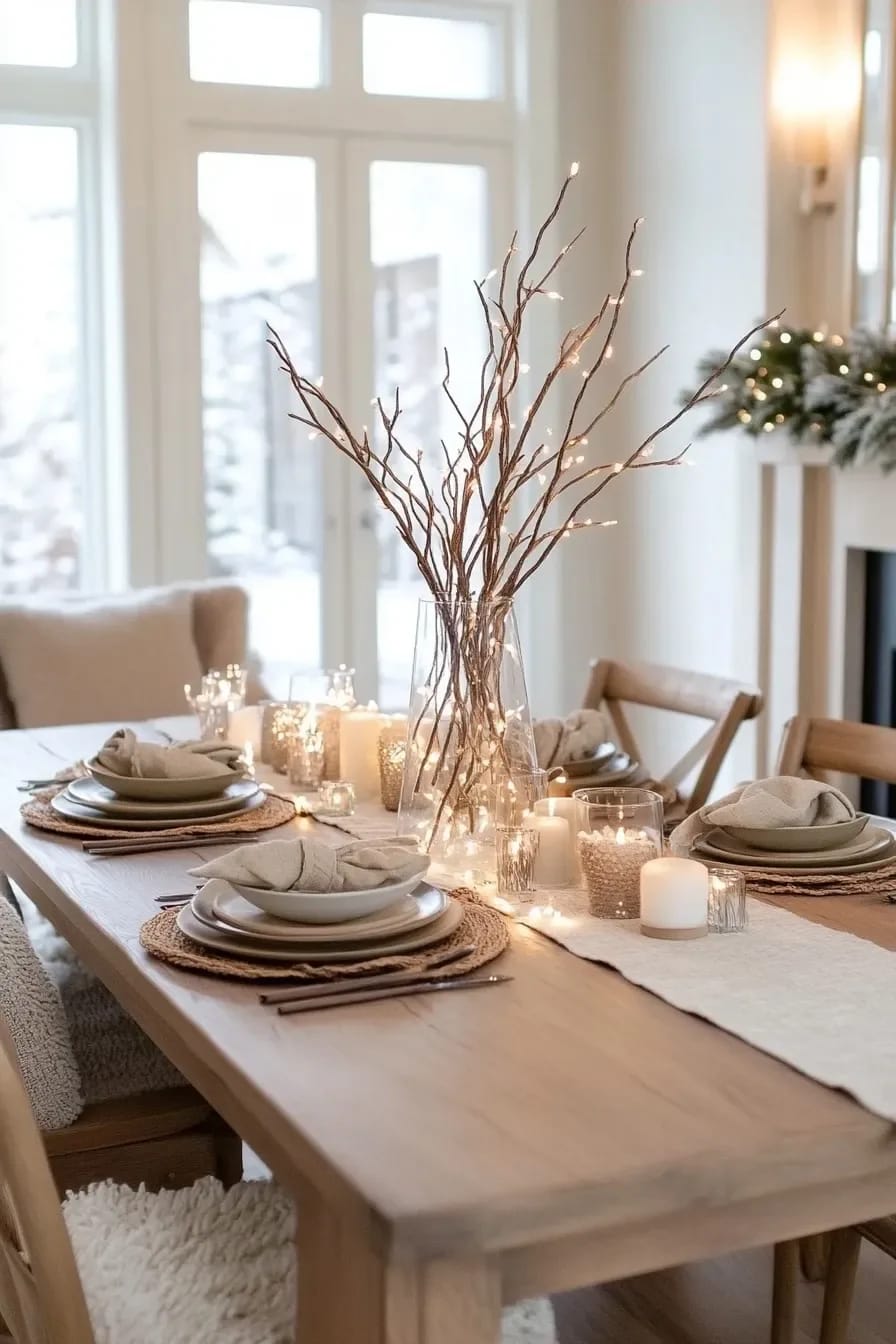
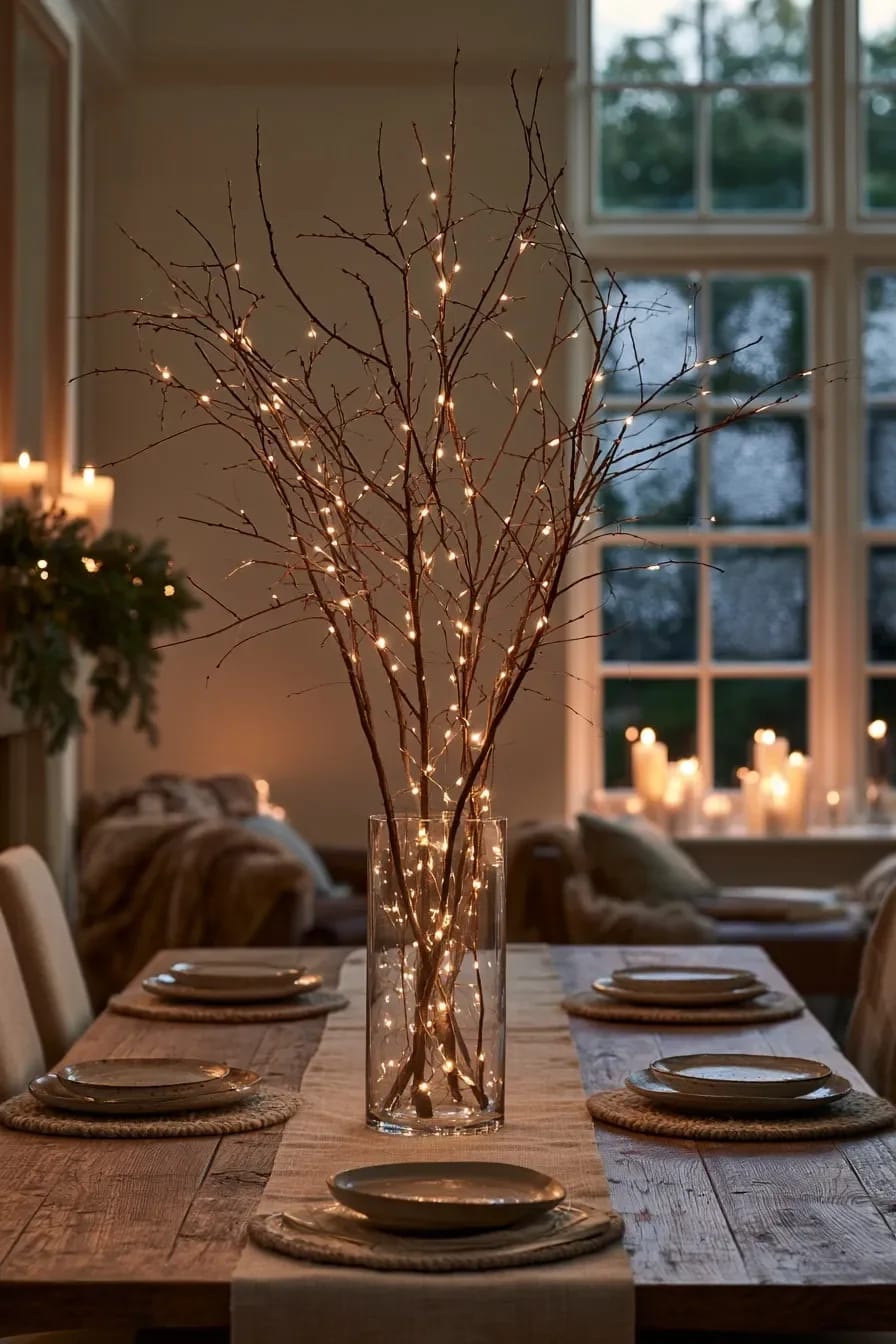
Colour temperature decides everything here. Warm white in the 2200K to 2700K range matches candlelight; anything at 4000K and above turns the branch blue-grey and the room clinical, and most of the cheap strings sold as "cool white" sit up there. Battery packs are the other tell: the flat CR2032 type hides in a vessel, while a chunky AA box has to be taped under the table or trailed off the edge, at which point everyone can see it.
 13 Winter Decor Ideas That Stay Up After Christmas What to put on the mantel, the shelves and the console once the tree has gone and the room looks robbed.
A line of bud vases, one twig each, for a table too narrow to hold an arrangement
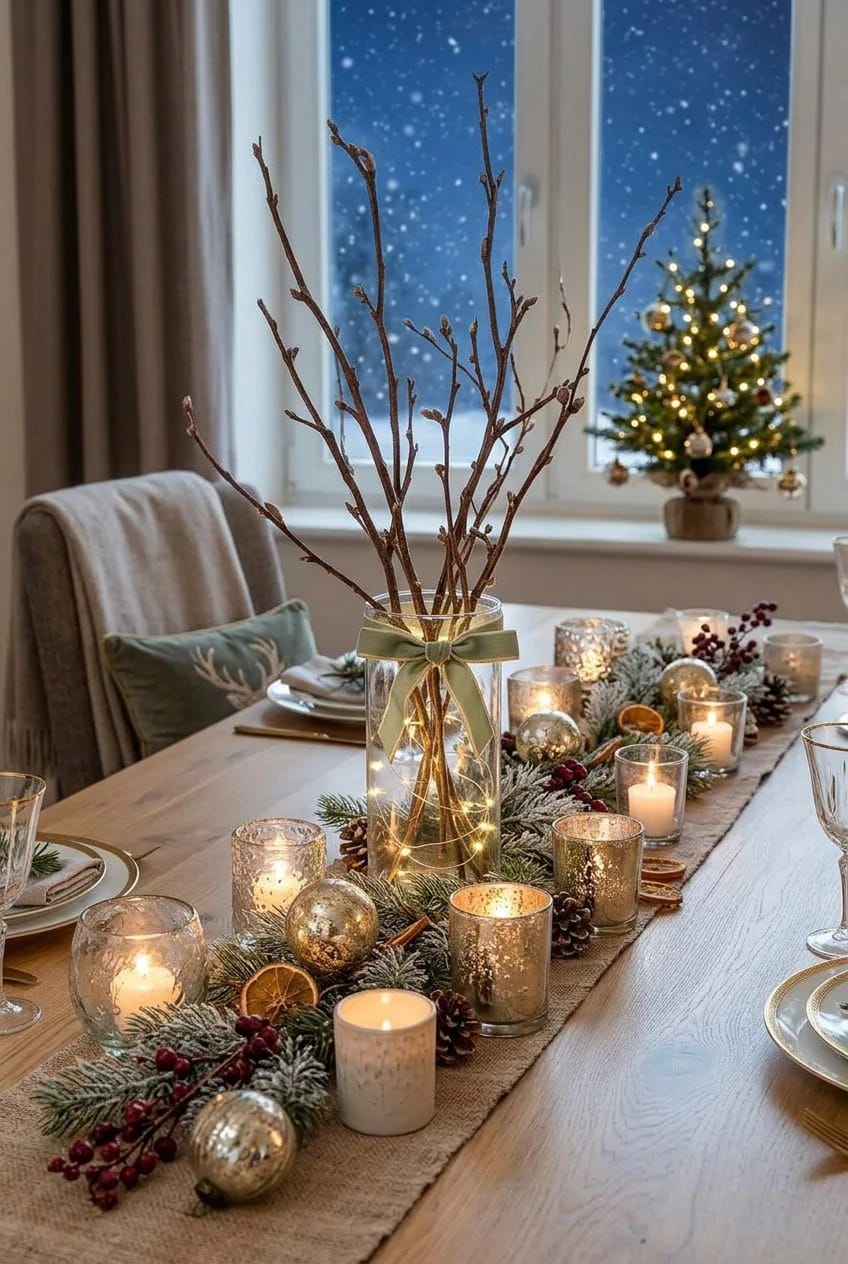
Five or seven small vessels spaced eight to ten inches apart down the middle carry a narrow table better than one arrangement does, because the eye keeps moving and nothing has to be shifted to pass a dish. Vary the heights and use an odd number. Nothing needs to match, which is the point: the squat pasta jars and yogurt pots already sitting in your recycling hold a single twig as well as anything you would buy, and if one gets knocked over during dinner you have lost a jar.

Renters, this is also the version that packs into a shoebox.
If you are doing more than one of these, cut the forcing branches first, this weekend, before anything else. Everything on this list is a same-afternoon job apart from that one, and forsythia cut on a Saturday in mid-January is what is flowering on the table when the crystal twigs have started shedding and you have got bored of the runner.
The arrangement that photographs best is the low branch line down the middle with candles between the limbs. The one that is still going in April is the single forked branch in the gravel-weighted vessel, which asks nothing of you at all and quietly stops being a winter object somewhere around the second week of March.
When the evenings finally get light again, pull the fairy lights out of the twigs and leave the branch exactly where it is. It stops reading as winter decor the moment the lights come off, which saves you having to find something to replace it with.
Related Posts
- 9 Foraged Winter Greenery Centerpiece Ideas for the Table
- 15 Natural Centerpieces for Your Winter Table
- 21 Unique Spring Centerpiece Ideas Made With Natural Materials
- 15 Natural Christmas Centerpiece Ideas for a Festive Table
- 11 Mason Jar Christmas Centerpieces That Let the Greenery Do the Work
- Natural Christmas Place Settings With Foraged Sprigs: 9 Ways to Set the Table