
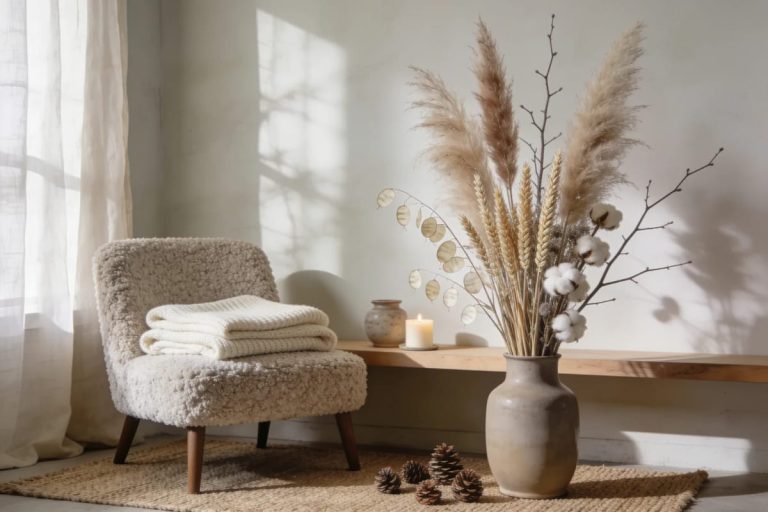
Walk past most dried arrangements on the second weekend of January and the problem announces itself in one word: orange. Rust strawflower, wheat gold, oak leaf, the whole harvest palette that looked right in November now reads as decor nobody got around to taking down. Seedheads and pampas are the way out, because their shapes are architectural rather than seasonal and their color range runs from bone to near-black. What follows is eleven ways to build one, including how far to cut the plumes, which palette survives a north-facing room, and the single green stem worth keeping in the mix.
Cut the pampas down before it goes in the floor vase
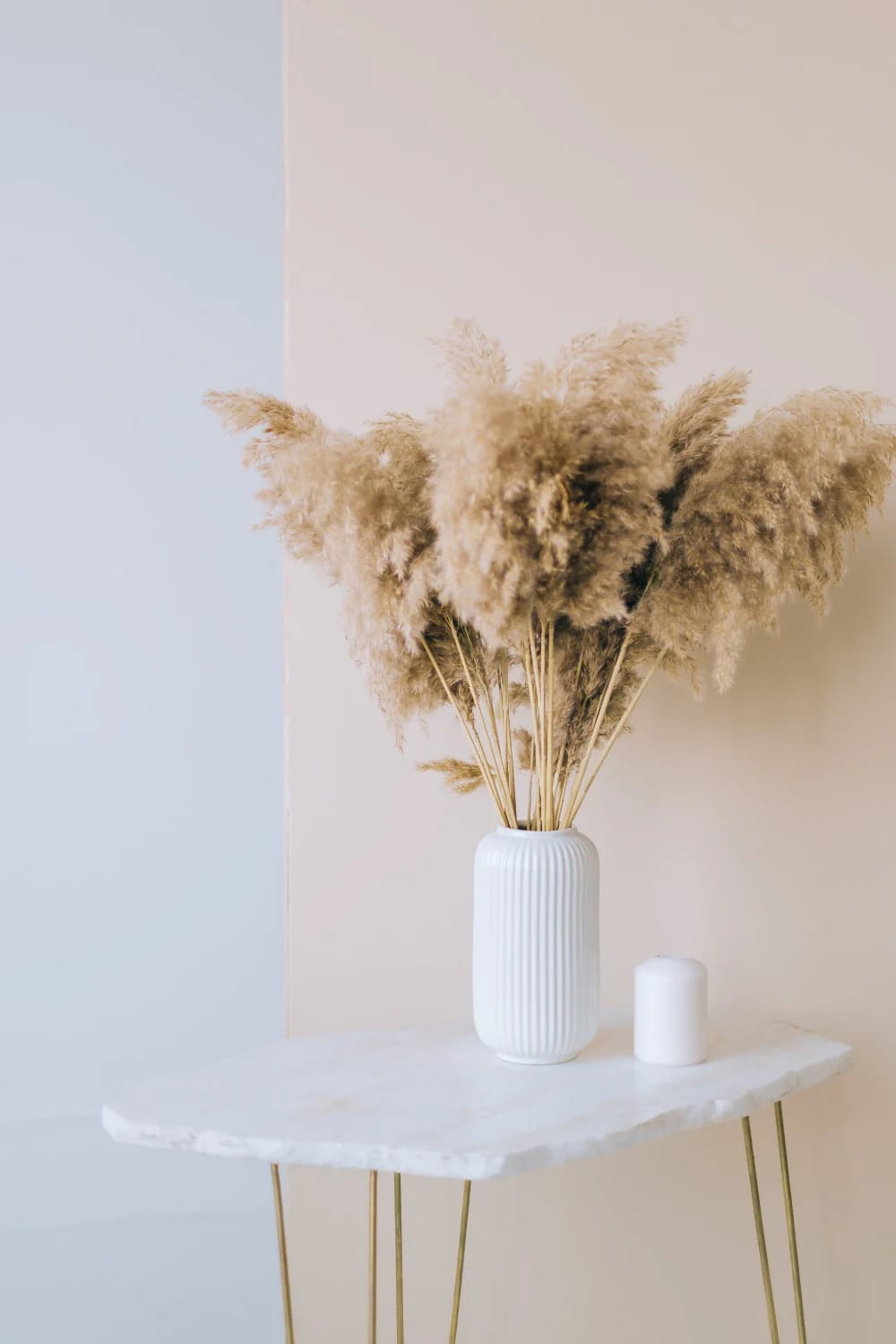
Cut it, and cut it more than feels comfortable. Bulk pampas ships at 40 to 55 inches because that photographs well in a warehouse, not because a room with eight-foot ceilings wants a plume finishing at head height. In a floor urn the plumes should break somewhere between your hip and your shoulder, which for most people means taking six to twelve inches off the bottom of every stem with sharp secateurs, cut on a slant so the stems wedge rather than slump. The offcuts are not waste; a handful of bare pampas stalks with the fluff stripped makes a better filler than anything you would buy for the job.
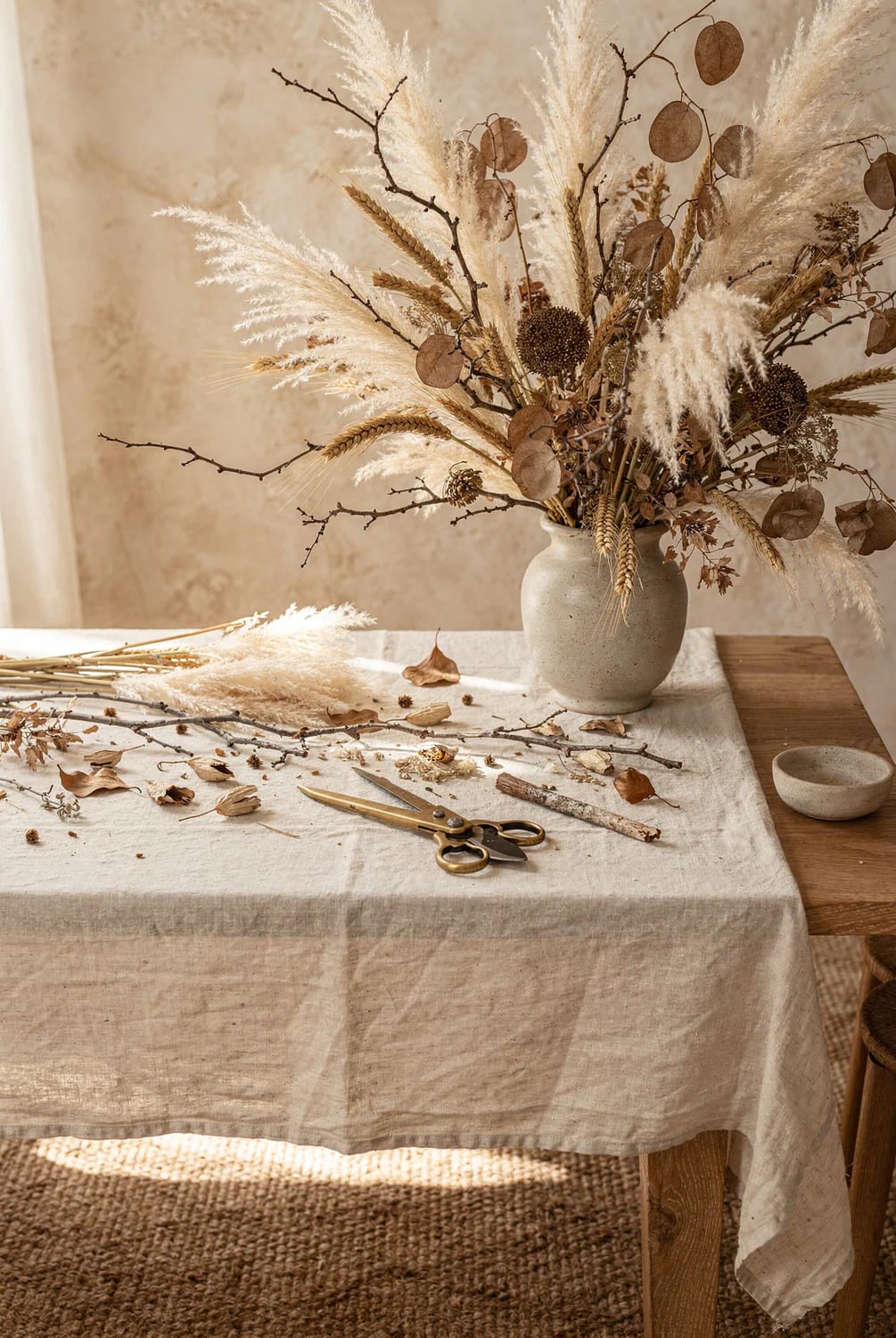
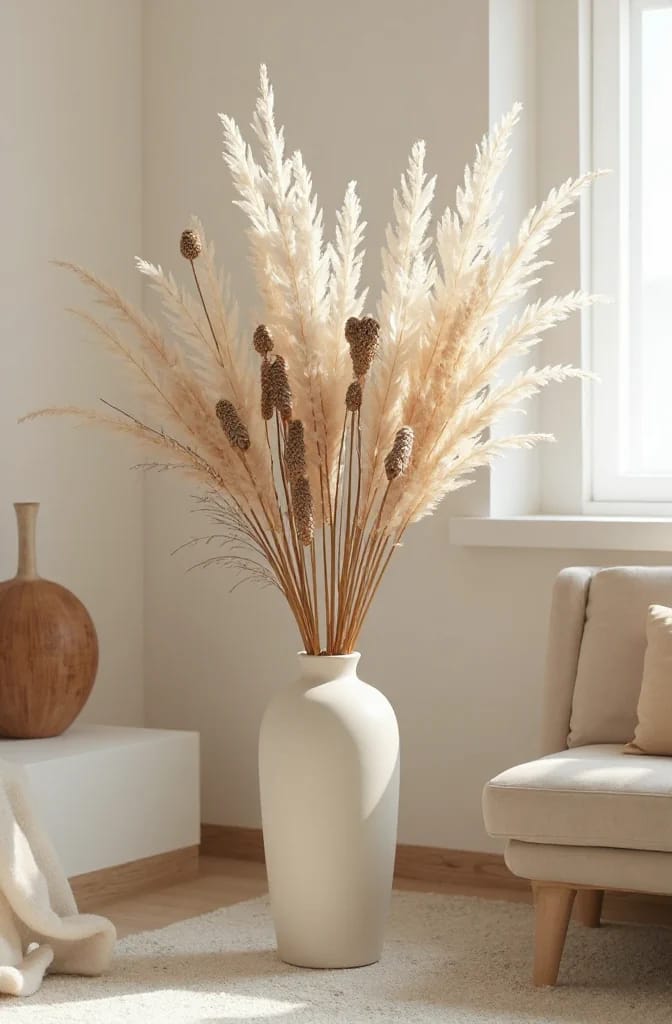
Shake each bundle hard, outdoors, before it comes near a rug. Sellers are unusually honest about this in their own care notes: several instruct you to leave the stems in sun for two or three hours to open the plume, warn that some shedding is normal, and tell you plainly to keep the whole thing away from any flame. Take the last one seriously, because dried grass near a candle is not a design problem.
Twenty-four stems at 51 to 55 inches gives you enough length to cut down twice and still fill a floor urn, which the 10-stem packs never do.
Koyal Wholesale 51-55 inch dried pampas grass in natural cream, pack of 24The best winter seedheads are already dead in a ditch near you
Teasel, curly dock, wild carrot, mullein spires, phlomis whorls, the brown skeletons of goldenrod: all of it is standing dead by December, all of it is free, and all of it holds structure better than anything sold as a dried bunch because it dried standing up in the wind. This is the section that changes what your arrangement costs. A bundle of florist teasel runs about what a takeaway lunch costs; a walk along a hedgerow with secateurs and a canvas bag costs nothing and gets you stems nobody else on your street has. If you want the wider version of this habit, our guide to making things from flowers you gather rather than buy covers the spring end of the same practice.
Worth cutting
- Teasel, once the cone has gone grey-brown and hard. Wear gloves.
- Curly dock, cut when the seed clusters are rust-dark and still tight on the stem.
- Wild carrot, taken when the umbel has folded into its cupped bird’s-nest shape.
- Mullein. The spire is a vertical line, which is the thing most dried arrangements lack.
- Any grass with a papery seed head that has already gone matte rather than glossy.
Before it comes inside
- Shake it out at the door. Field-cut stems carry spiders, seed and chaff.
- Stand the bundle loose in an empty bucket somewhere dry for a week; damp stems mould in a warm room.
- Strip the lower leaves. They shrivel and go translucent while the seedheads stay handsome.
- Hairspray from about a foot away for anything that looks ready to shatter.
Cattails look like the perfect winter stem and will detonate into a cloud of fluff on your floor in about six weeks, usually in February, usually all at once. Hairspray delays it and does not prevent it. Separately, do not cut and carry seed-bearing stems of anything invasive in your area: pampas grass itself is listed as an invasive plant in California and along parts of the Gulf Coast, and phragmites is a problem across much of the north. Cutting on protected land or a nature reserve is off the table regardless of the species.
Keep a dried seedhead centerpiece under eye level
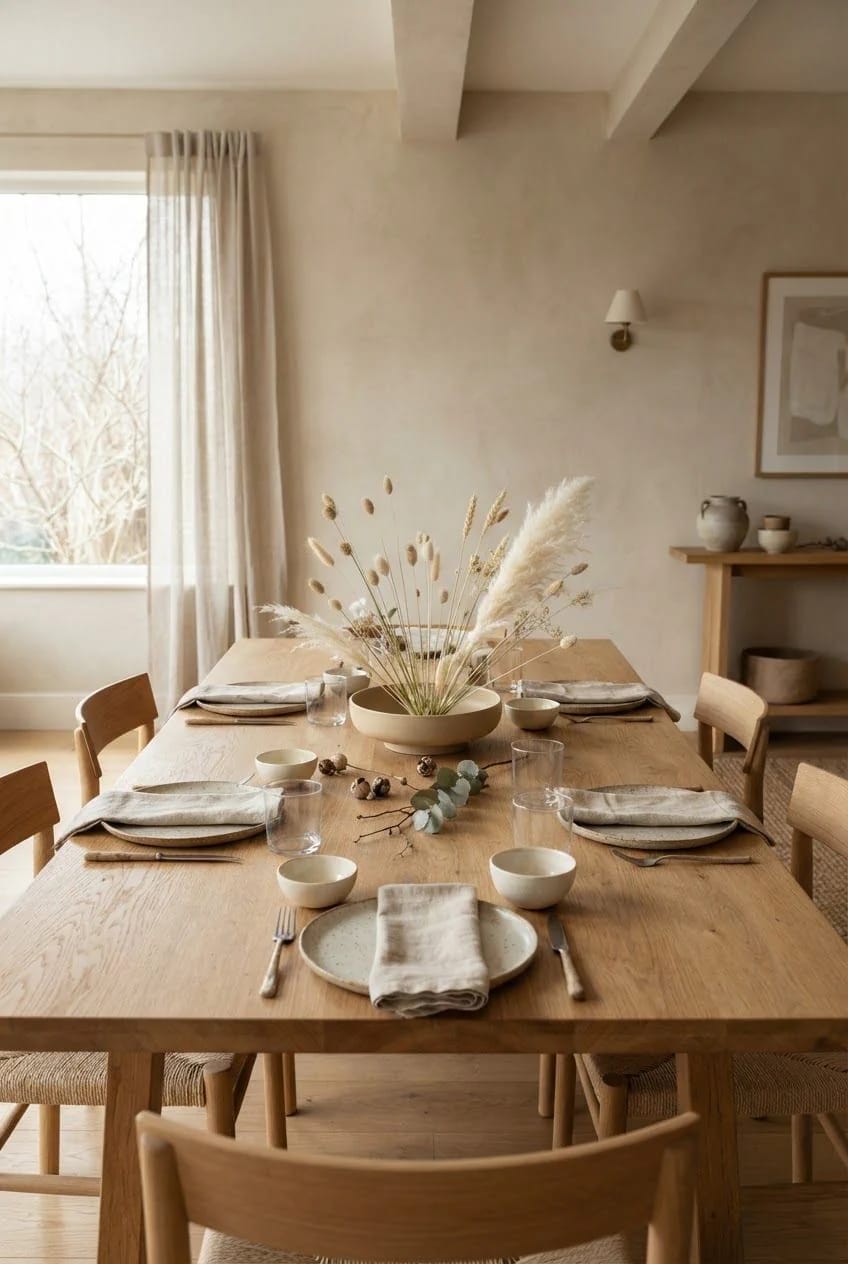
Twelve inches is the ceiling for anything sitting between two people at dinner, and dried stems break that rule more often than fresh ones do because nobody thinks to trim them twice. Build it in a shallow bowl or a low cylinder, cut the seedheads to sit just clear of the rim, and let the widest thing be the horizontal spread rather than the height. The alternative is to go the other way entirely and put a tall, narrow, almost bare arrangement in the middle, thin enough to see through. There is no workable middle. The same sightline logic applies to a table centerpiece built from foraged winter greenery, and it is the reason so many dining tables end up with something nobody can talk across.
Bleached pampas beats natural brown in a north-facing room
In a room that gets no direct sun, natural brown pampas goes flat and slightly dirty by three in the afternoon; bleached cream keeps a visible edge; dyed black holds its shape as a silhouette. That is the whole decision, and it depends far more on your window orientation than on your furniture. South-facing rooms can carry the natural browns because there is enough light to find the grain in them. North-facing rooms need the contrast built in. Our wider roundup of winter floral arrangements covers the fresh-bloom end of that same problem.
| Palette | Reads as | Weakness | Best room |
|---|---|---|---|
| Natural brown | Field, hedgerow, late autumn | Goes muddy in low light; closest to the leftover-October look | Bright south or west light |
| Bleached cream | Snow light, winter, quiet | Yellows over two or three years near a sunny window | North-facing, grey-walled |
| Dyed black or charcoal | Graphic, deliberate, not seasonal at all | Dye transfers if the stems get damp | White or pale plaster walls |
Do this
- Hold the whole arrangement inside two tones plus one accent.
- Mix textures instead of colors: a papery umbel next to a spiny teasel next to a matte plume.
- Let the vessel carry the color if you want any. A green-glazed jug does more than a green stem.
Avoid
- Rust, burnt orange and gold together. That is a Thanksgiving palette wearing a different hat.
- Preserved stems that have been dyed to enhance color, unless the room is dry. Sellers’ own care notes say to keep them away from moisture, and they mean it.
- Glitter or artificial snow on dried grass. It never comes off.
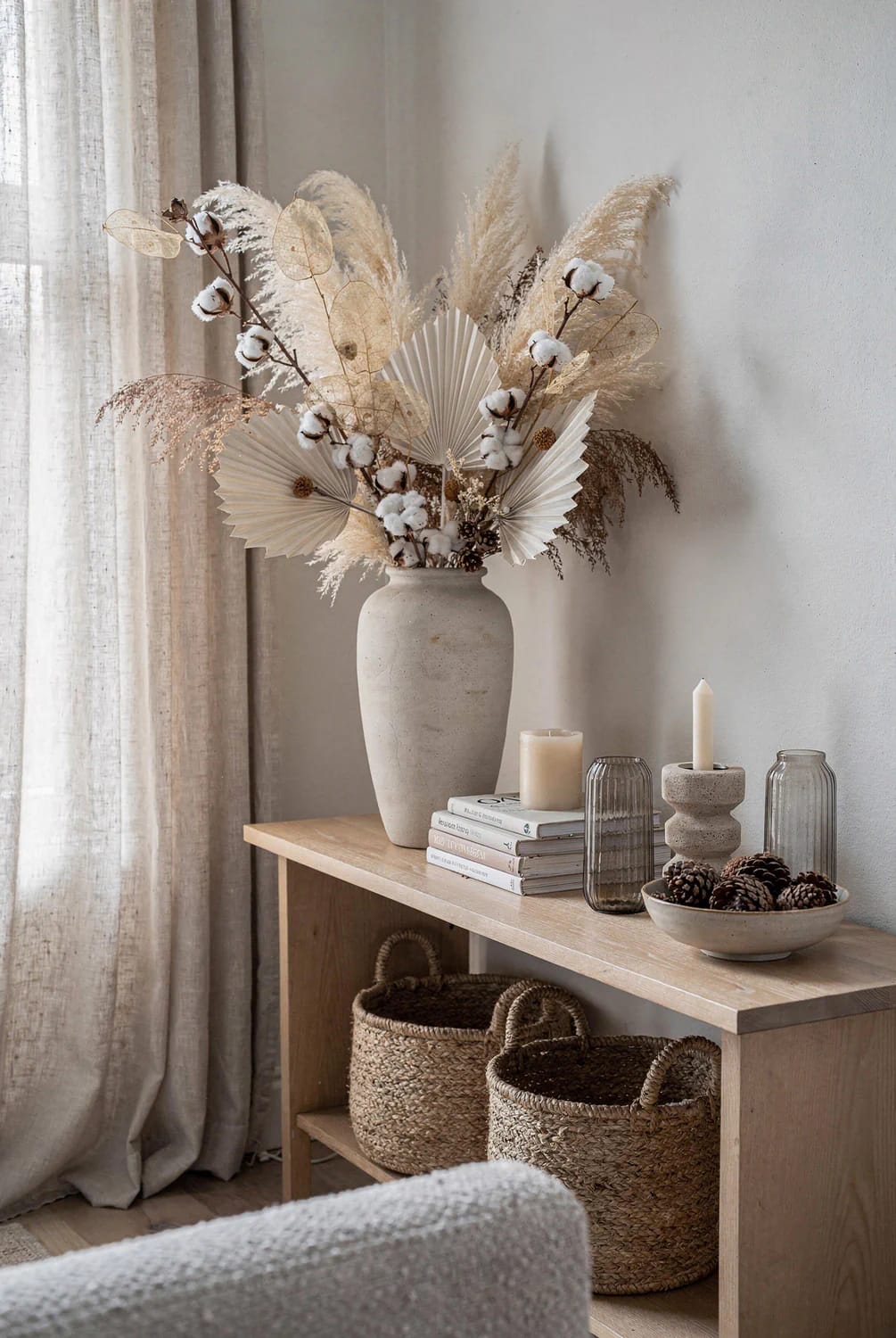
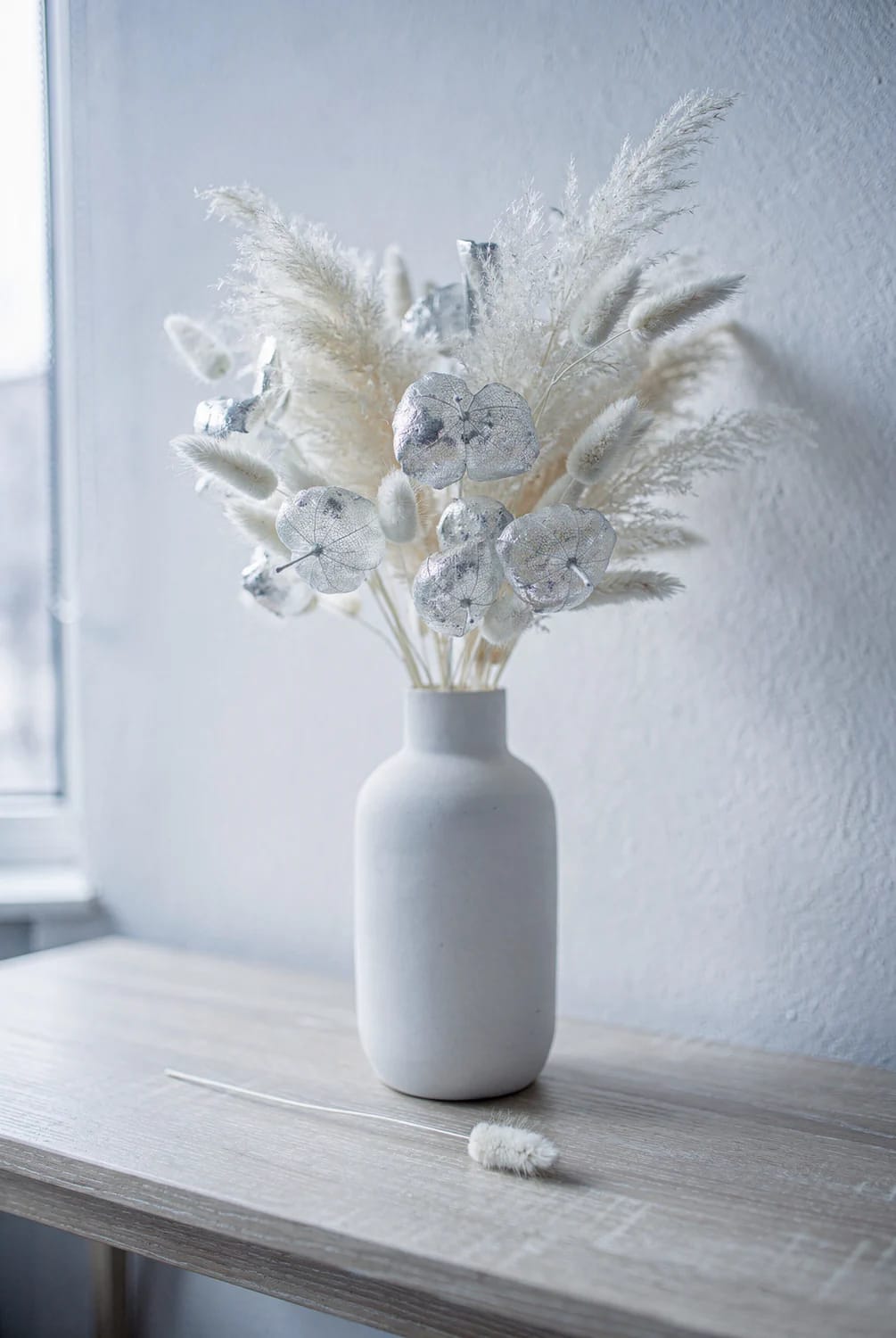
One thing worth saying plainly: bleached pampas is not a neutral. It is a strong pale cream that will read yellow against a cool grey wall and white against a warm one. Hold a stem up before you commit to twenty of them. If you are working the ivory route, an 85-stem assortment of white pampas, bunny tails and natural reed grass gives you three textures in one bag, which matters more here than quantity does.
Poppy and nigella pods do more in five bud vases than in one arrangement
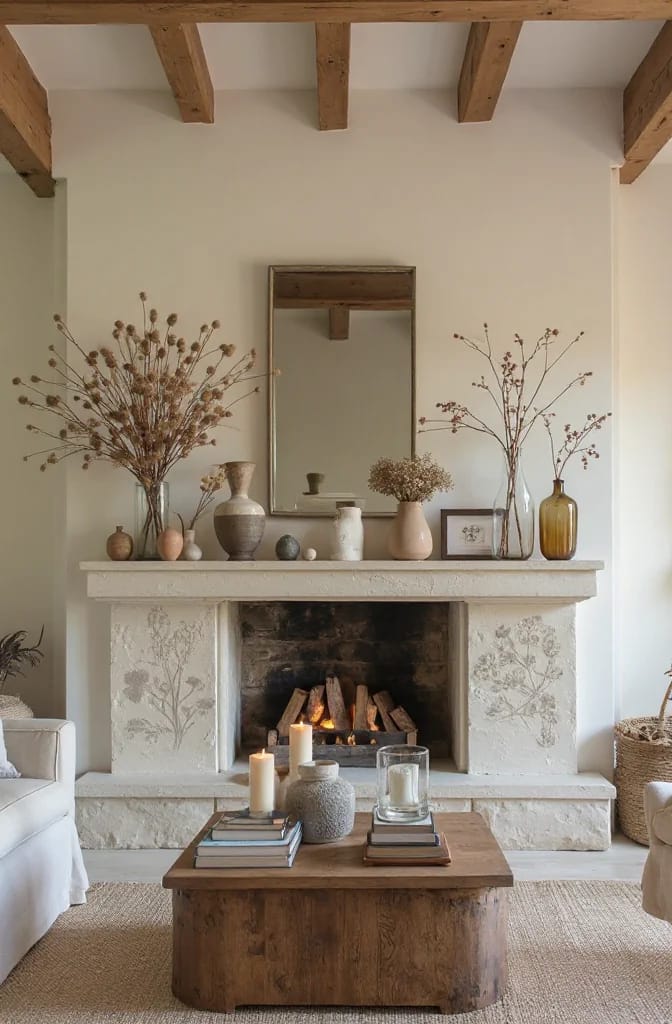
Break the arrangement apart. A poppy seed pod is a small sculptural object with a lid and a fluted rim, and it disappears entirely when you bury it in a mass of grasses; give it one bottle to itself on a mantel and it becomes the thing people pick up. Five mismatched bud vases, uneven spacing, one or two stems each, is a five-minute job and it survives being knocked by a cat far better than a tall vase does. Short stems are the constraint, which is why a bundle of 17-inch short pampas works better here than anything sold as tall.
 19 Natural Dried Flower Arrangements Brimming with Elegance Nineteen year-round arrangements where petals and color are allowed back in.
A wall vase gets the dried arrangement out of a small apartment's way
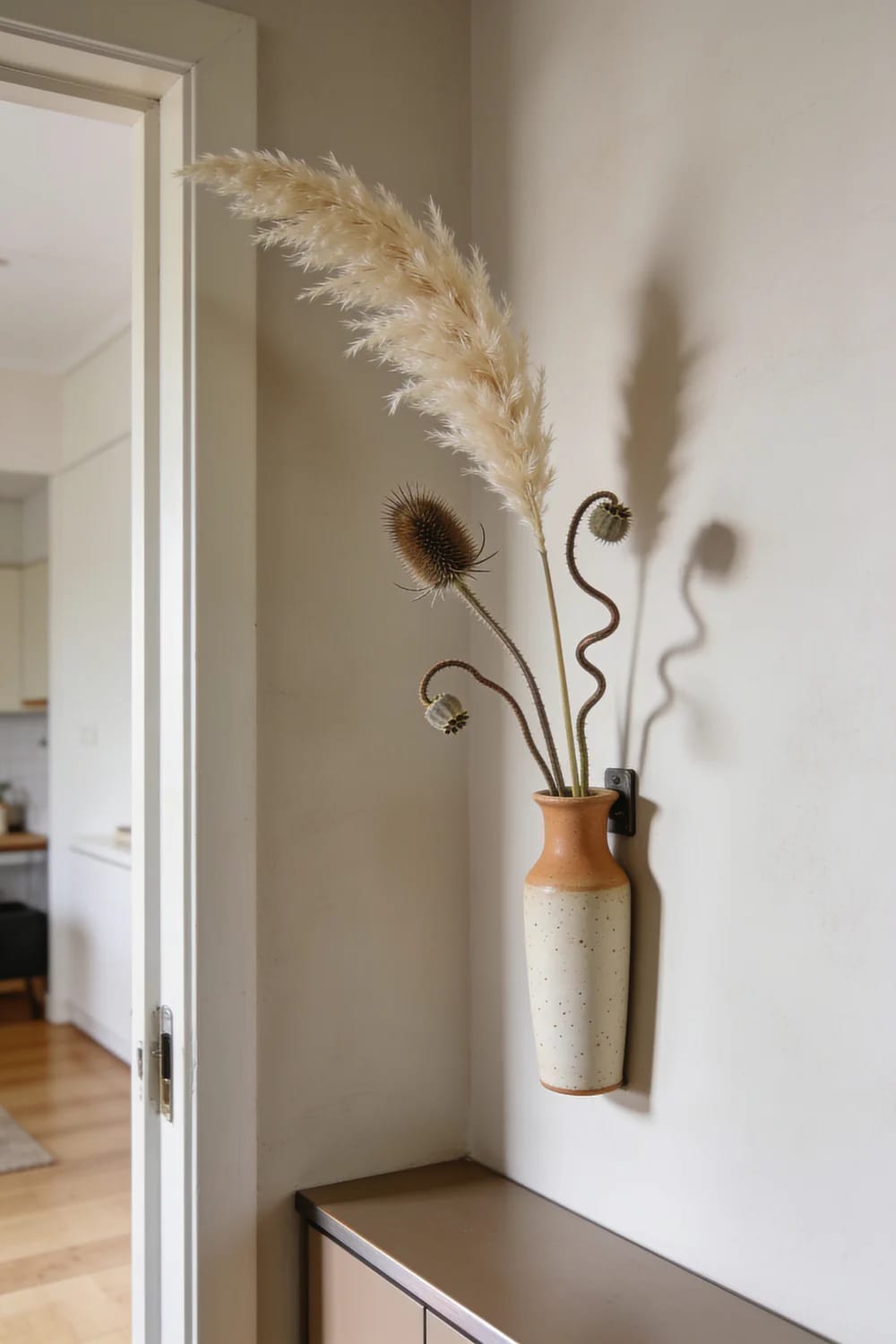
Dried stems are the only arrangement that works mounted on a wall, because there is no water to spill and no weight to speak of. In a studio or a narrow hallway that solves the real constraint, which is horizontal surface, not floor space. Renters can hang a ceramic wall pocket on a heavy-duty adhesive hook rated for a couple of pounds and take it down at the end of the lease without patching anything.
Preserved eucalyptus is the only green a dried winter arrangement needs
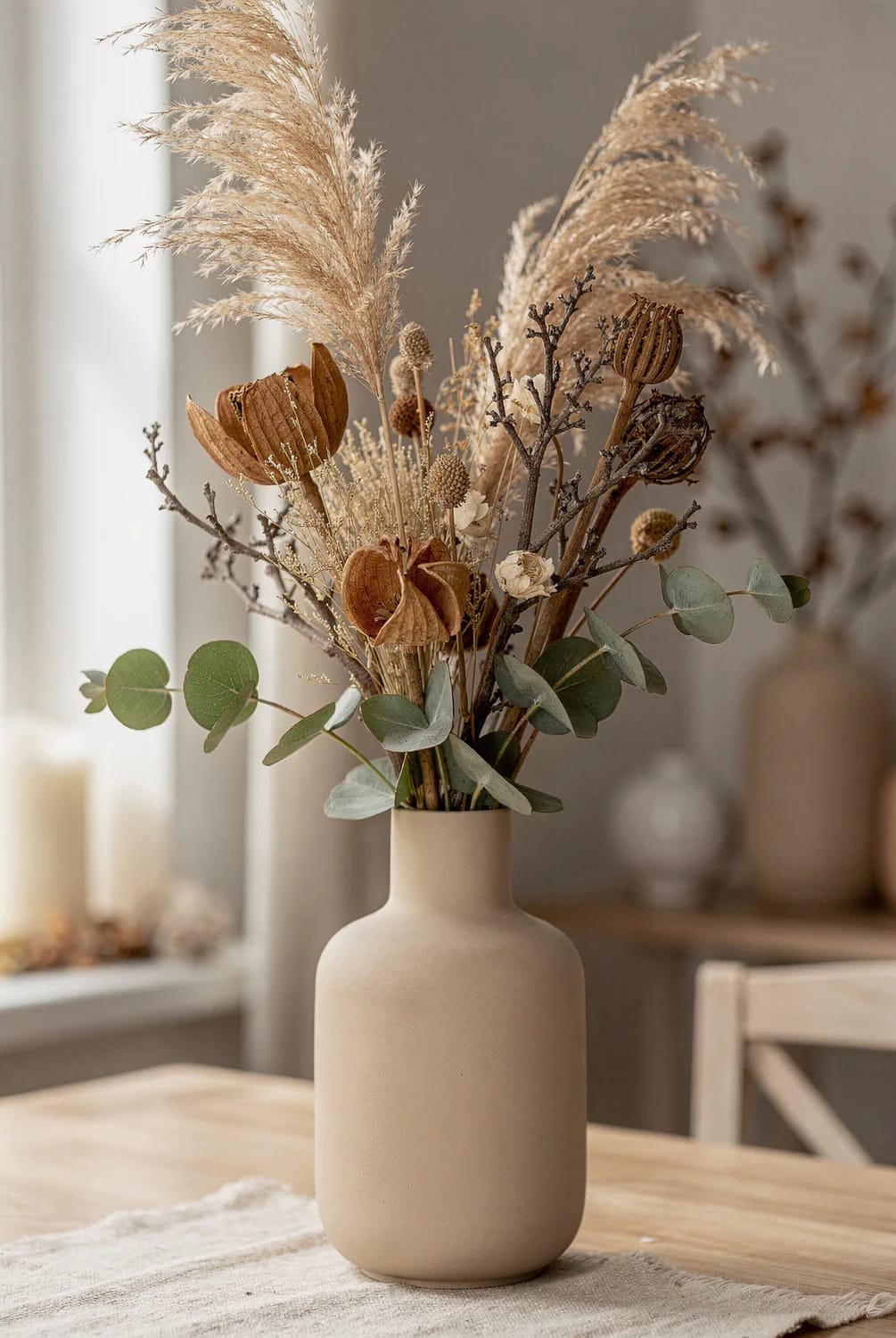
Preserved silver dollar eucalyptus is the exception to the no-green rule, because glycerine-preserved stems stay pliable and hold a grey-green that sits against bone and taupe instead of fighting them. Dried eucalyptus, by contrast, goes brittle and the leaves snap off at the stem within a season. The distinction is worth checking on the label: preserved and dried are used loosely by sellers and they are not the same product. Keep the eucalyptus low, near the rim, with the grasses rising well above it. Six stems is usually enough for a jug that takes twenty dried ones.
Preserved rather than dried, so the leaves bend instead of shattering when you push them into a packed arrangement.
20-stem preserved dried eucalyptus bundle, 17 inch branches
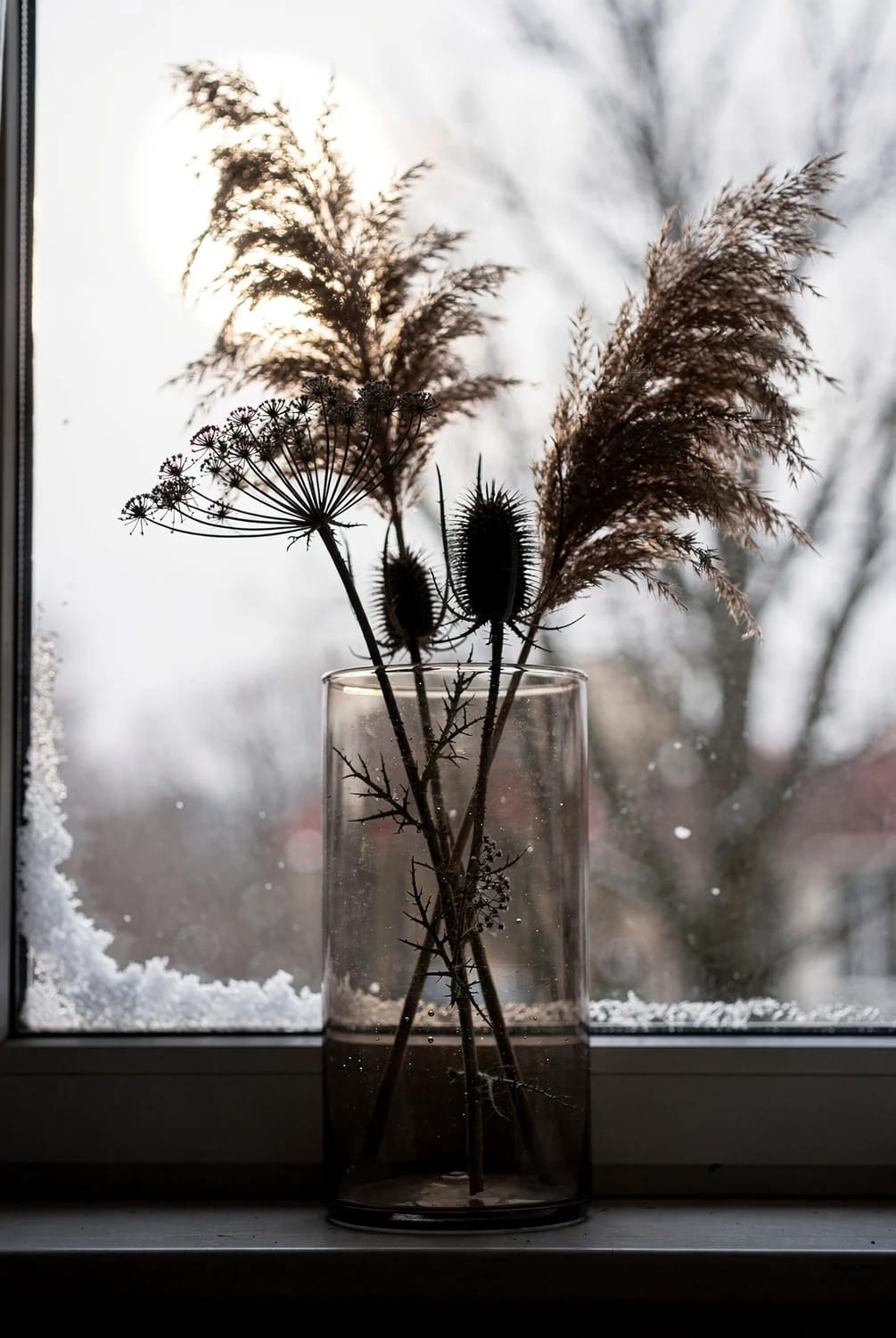
Put the seedheads where the low winter sun gets behind them
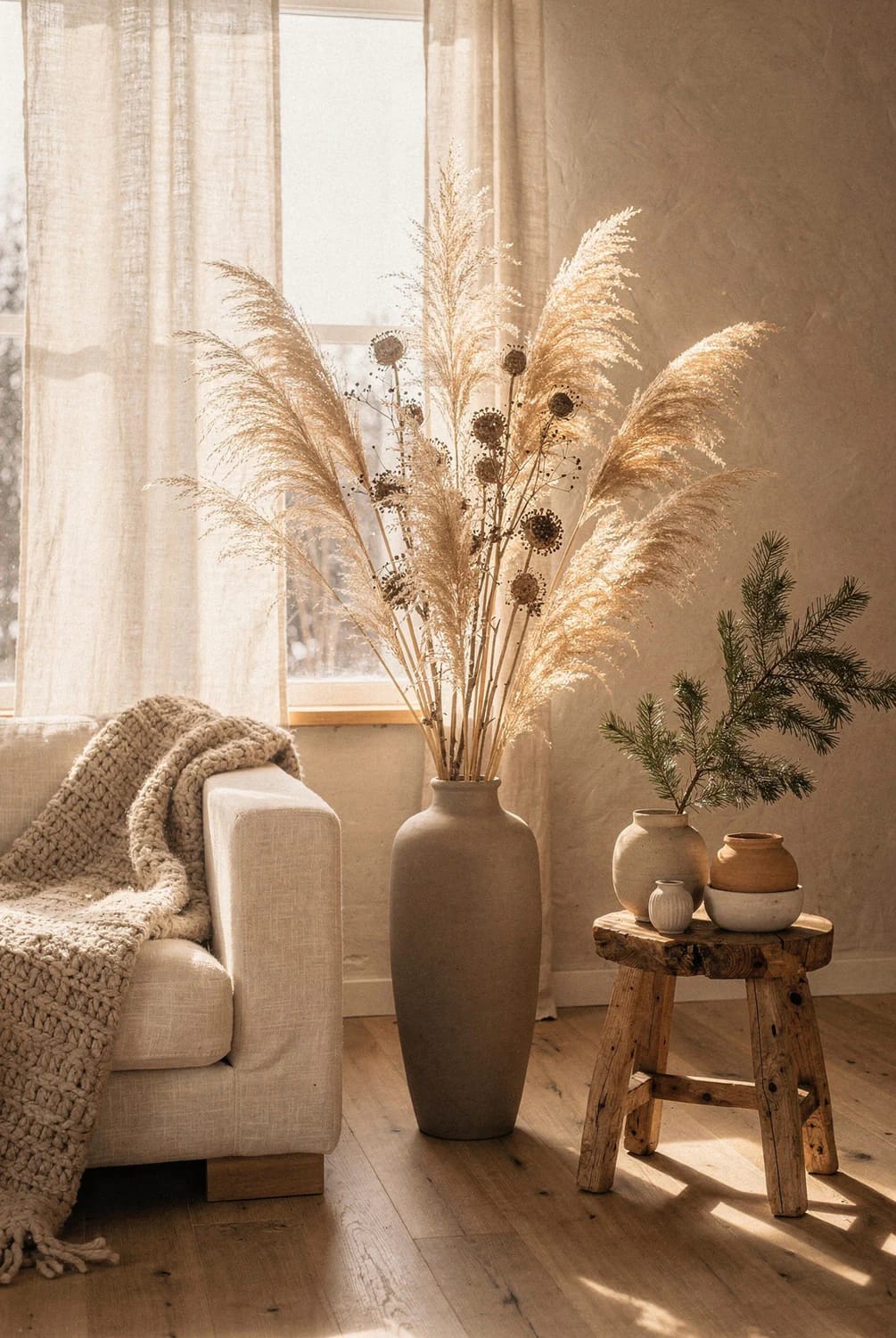
Sidelight flatters fresh flowers and does almost nothing for dried ones. Backlight is what makes a seedhead legible, because the interesting part is the fibrous edge, the loose seed and the spines, and none of that shows until light comes through it. A south or west sill in January puts the sun low enough to do this for two or three hours a day. The same trick is what makes a bare branch centerpiece work in the same month.
Hang the bundle upside down and leave it there
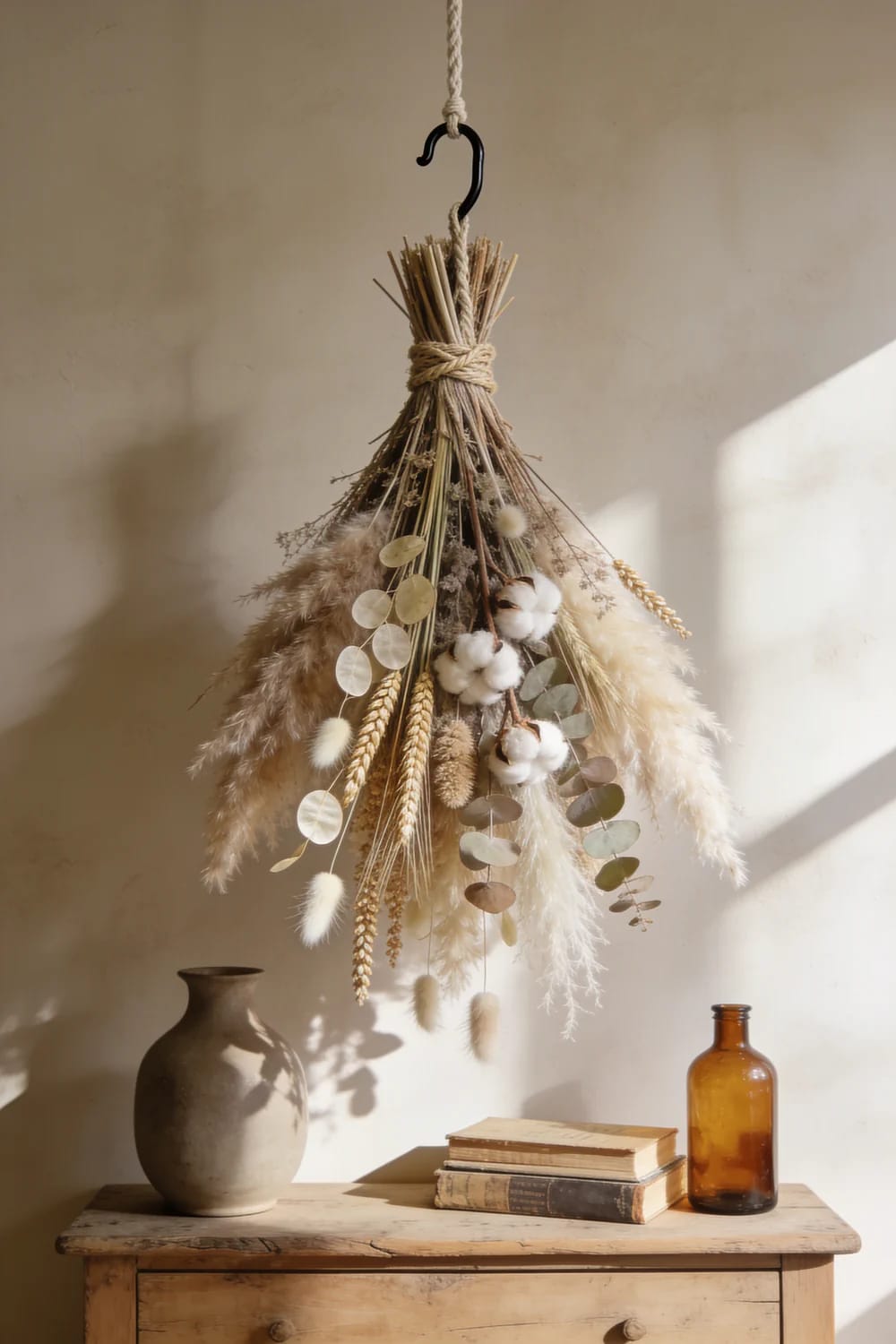
Skip the vase. A bundle tied with jute and hung from a beam hook or a wall peg reads as deliberate rather than as something drying, provided you fan the stems into a rough cone rather than leaving them in a tight cylinder. It also solves the shedding problem, since anything that falls lands in one predictable spot. Nail one to the back of a kitchen door and it stops being decor and starts being the room.
 15 Natural Centerpieces for Your Winter Table Fifteen table setups built from moss, cones, berries and other things that were outside last week.
Near-black seedheads against a pale wall read winter, not autumn
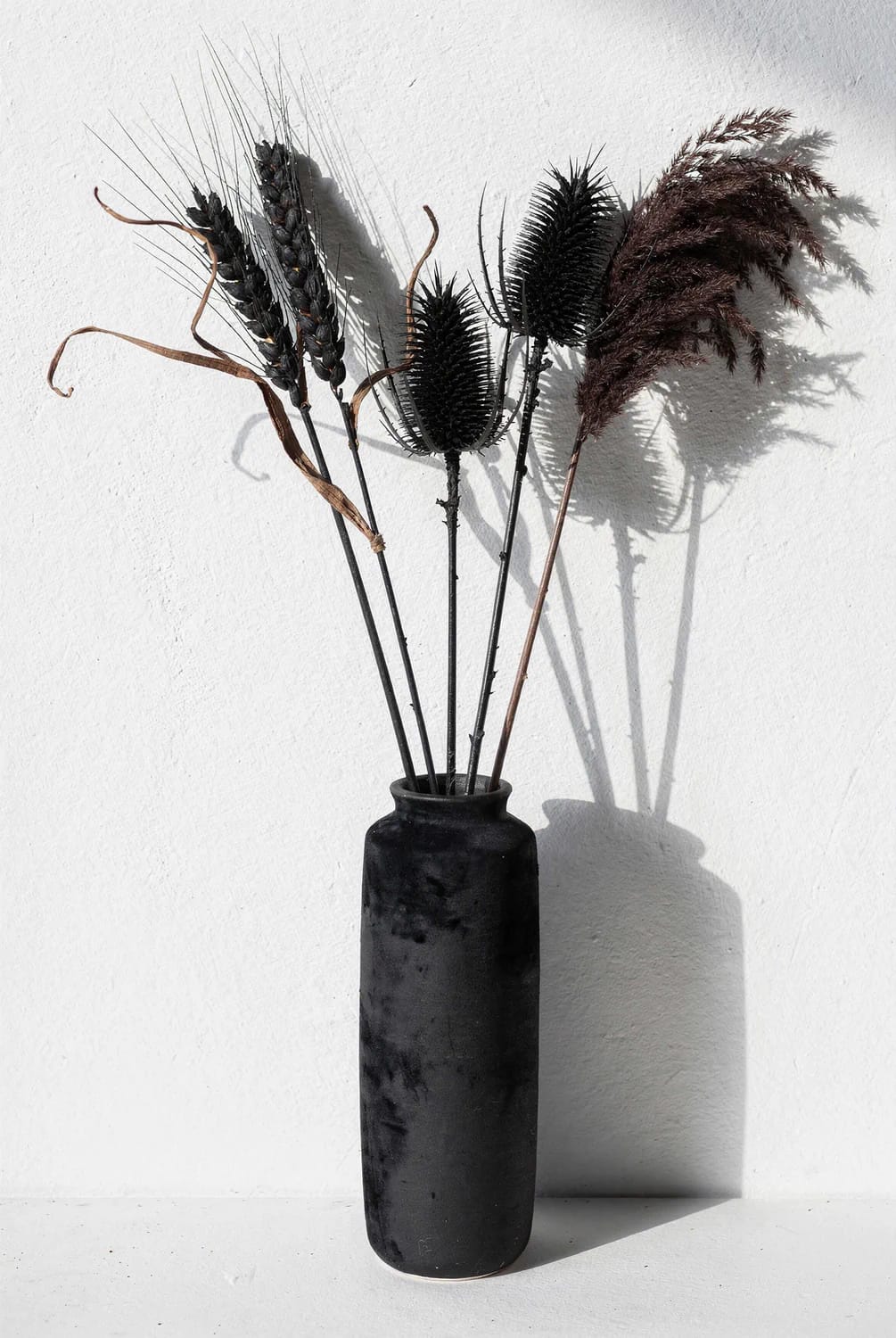
This is the most graphic thing you can do with dried stems and it is where the fewest people go, because black dried flowers look severe in a shop and read as drawing rather than decor once they are against your own wall. Six stems is plenty. Keep the vessel dark too, so the eye reads one continuous vertical mark. The related move outdoors, using the dark bark you already have, is covered in our piece on twig decorations cut from the garden.
A seedhead wreath still looks intentional in March
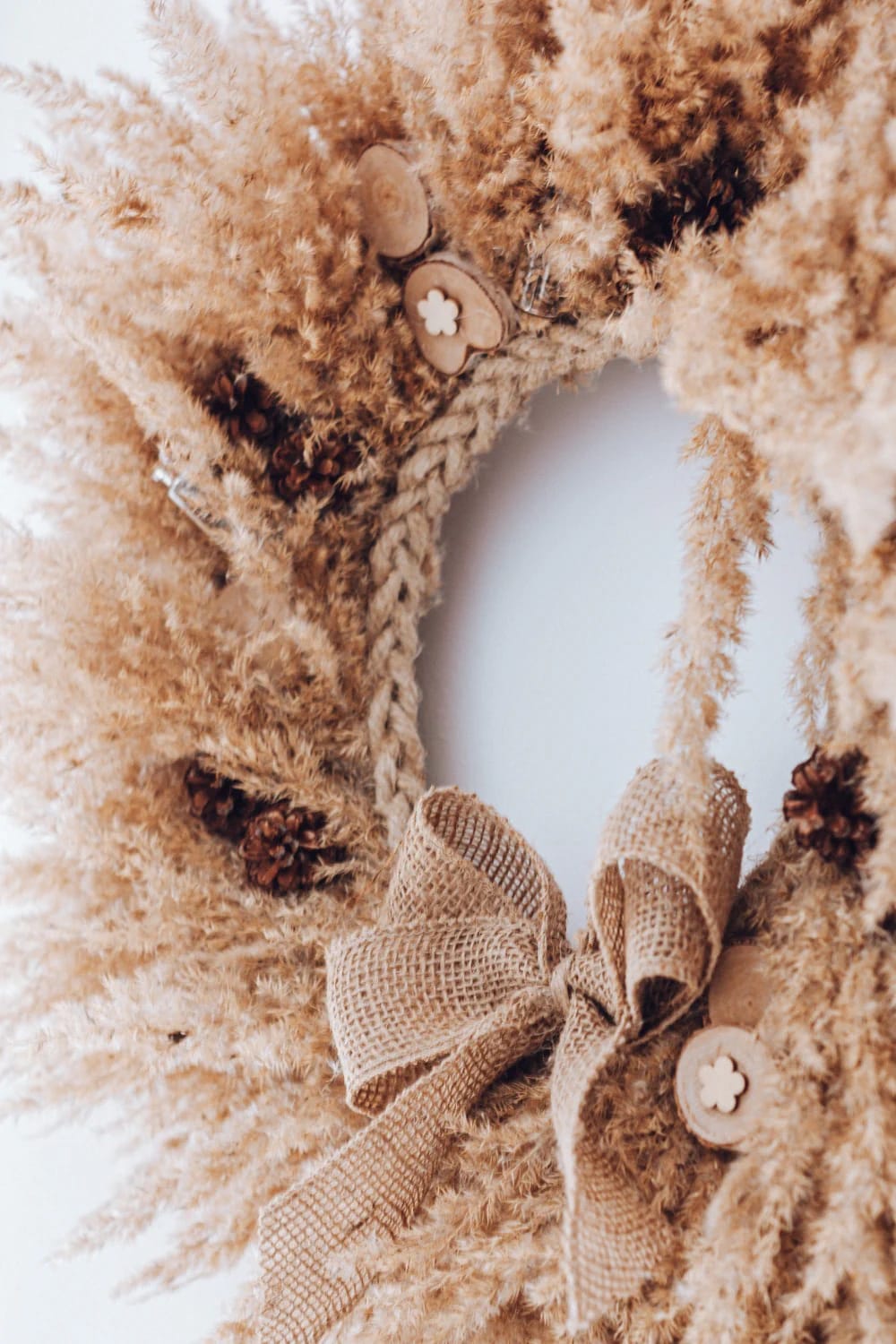
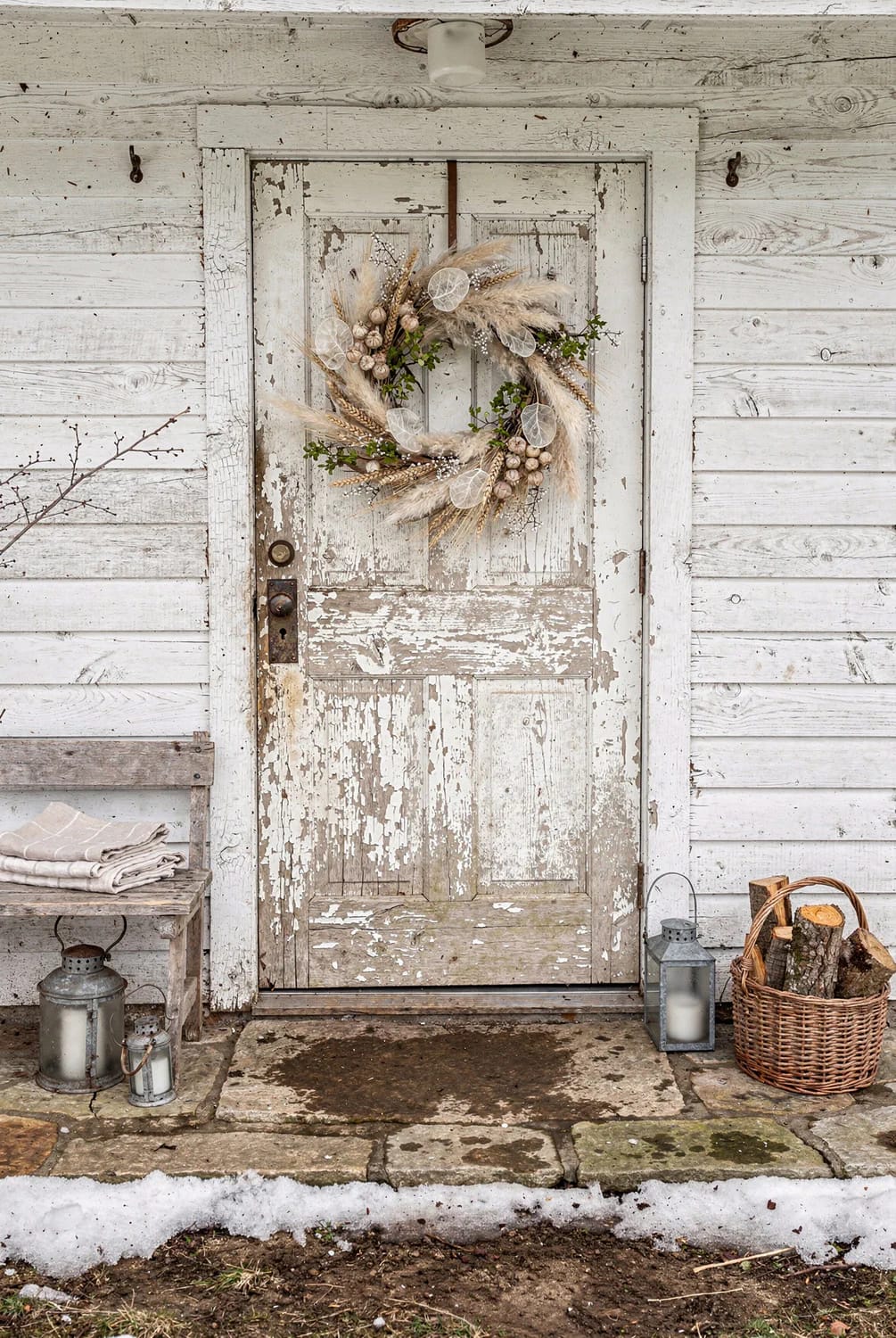
An evergreen wreath has a shelf life measured in weeks and a seedhead wreath does not, which is the entire argument for making one. Build it on a bare copper or steel ring rather than a straw base, lay every bundle in the same direction so the ring reads as a spiral rather than a hedge, and bind with fine brown florist wire instead of hot glue, because glue fails on hollow stems within a season. Wild carrot, small teasel, flat yarrow plates and poppy pods are the four that hold their shape best. Leave the ribbon off entirely; a bow is what turns it back into a Christmas object. If you would rather do the fresh version first, our greenery wreath from yard clippings walks through the binding technique on a base you can reuse for this one in January.
If you are starting from nothing, do the palette edit before you buy a single stem: pull every rust and gold thing out of what you already own, decide from your window orientation whether you are going bleached or natural, and only then work out scale. Getting that order wrong is how people end up with forty inches of brown pampas in a north-facing hallway and a vague sense that something is off.
Related Posts
- 19 Winter Floral Arrangements for a Dreamy Season
- Bare Branch Winter Centerpiece Ideas for a January Table
- 9 Foraged Winter Greenery Centerpiece Ideas for the Table
- 15 Natural Centerpieces for Your Winter Table
- 15 Upcycled Front Porch Decor DIYs for Winter
- Dried Cranberry Garland for a Rustic Mantel: Ideas That Survive Past New Year