
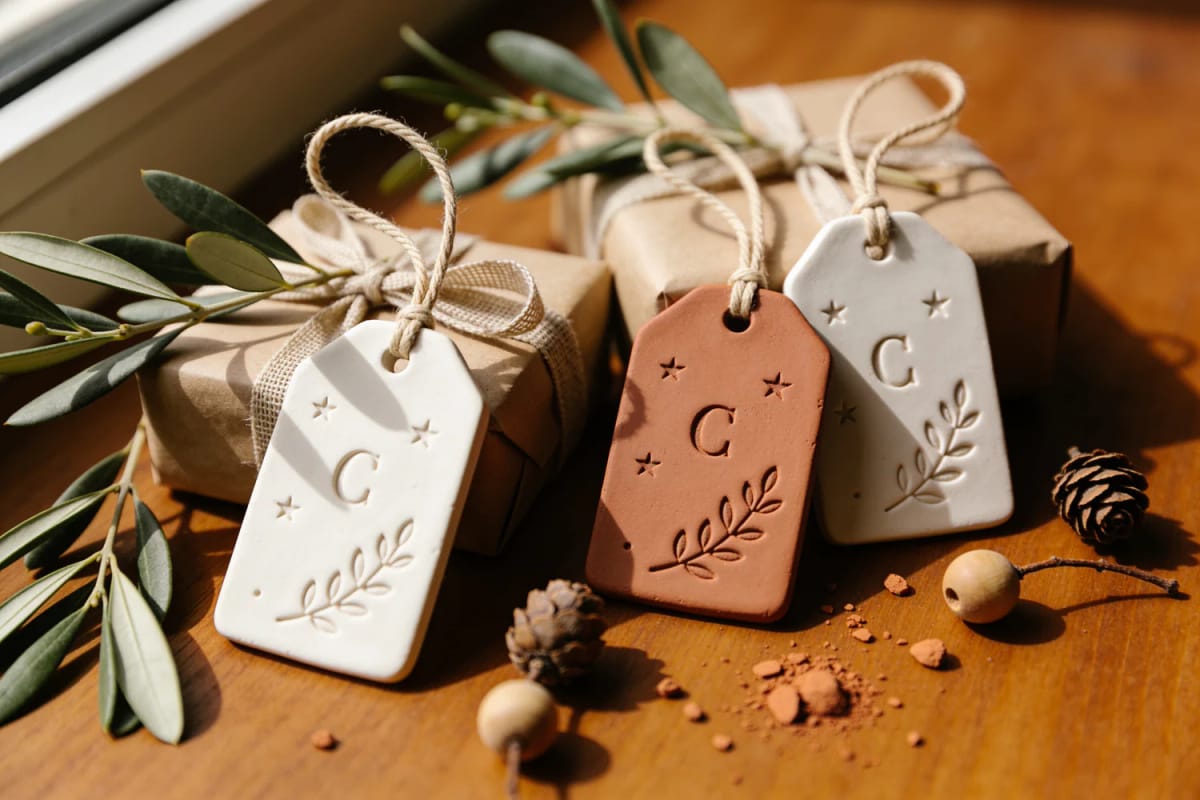
Air-dry clay loses between five and ten percent of its size as it dries, and it shrinks around the hole you punched as readily as it shrinks everywhere else. Punch that hole a full quarter inch wide and the rest of this project forgives almost everything else you do to it. The thirteen stamped clay gift tags below all come out of one block of clay and a spool of natural twine, and each one does a different job: one gets pushed into a seed tray, one hangs on the tree in January, one has no lettering on it at all.
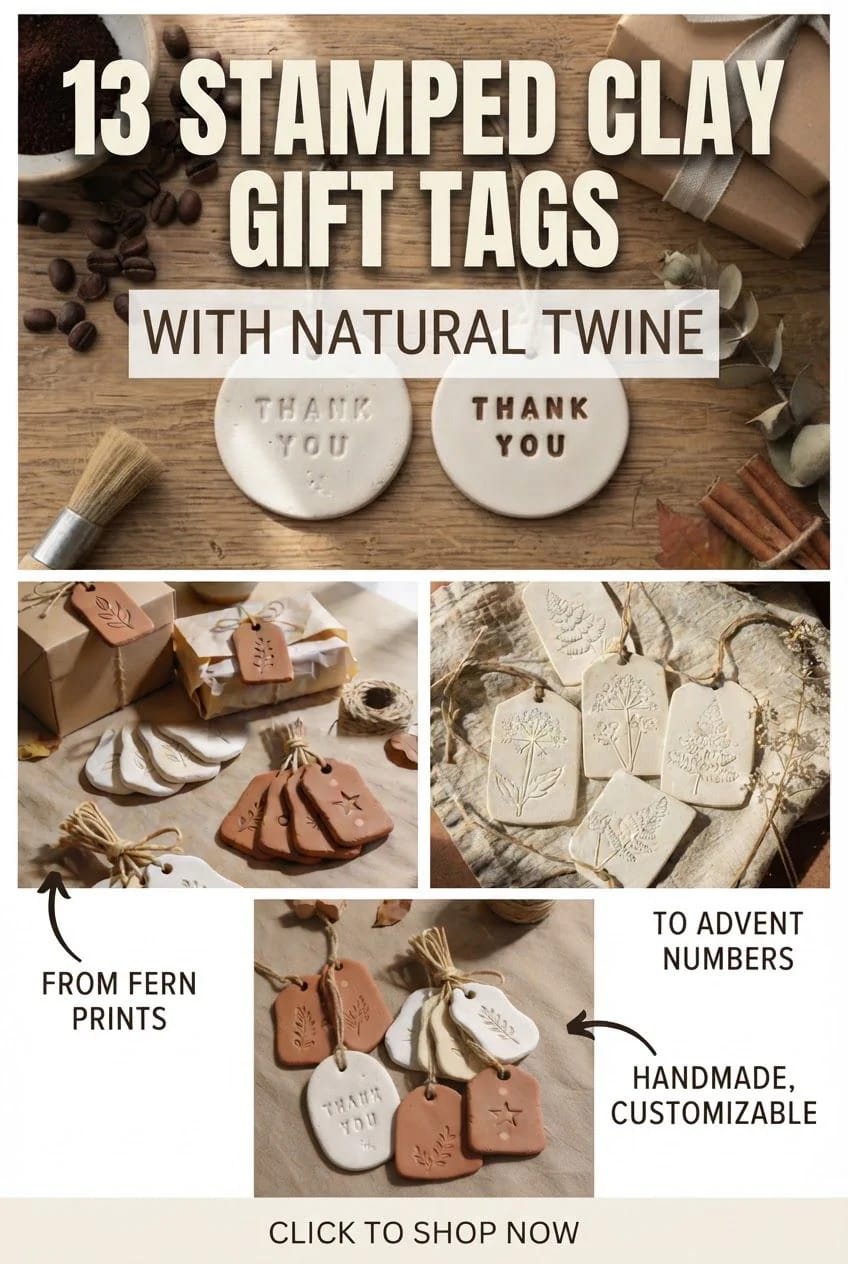
1. Alphabet-Stamped Clay Name Tags That Stay Legible When Dry
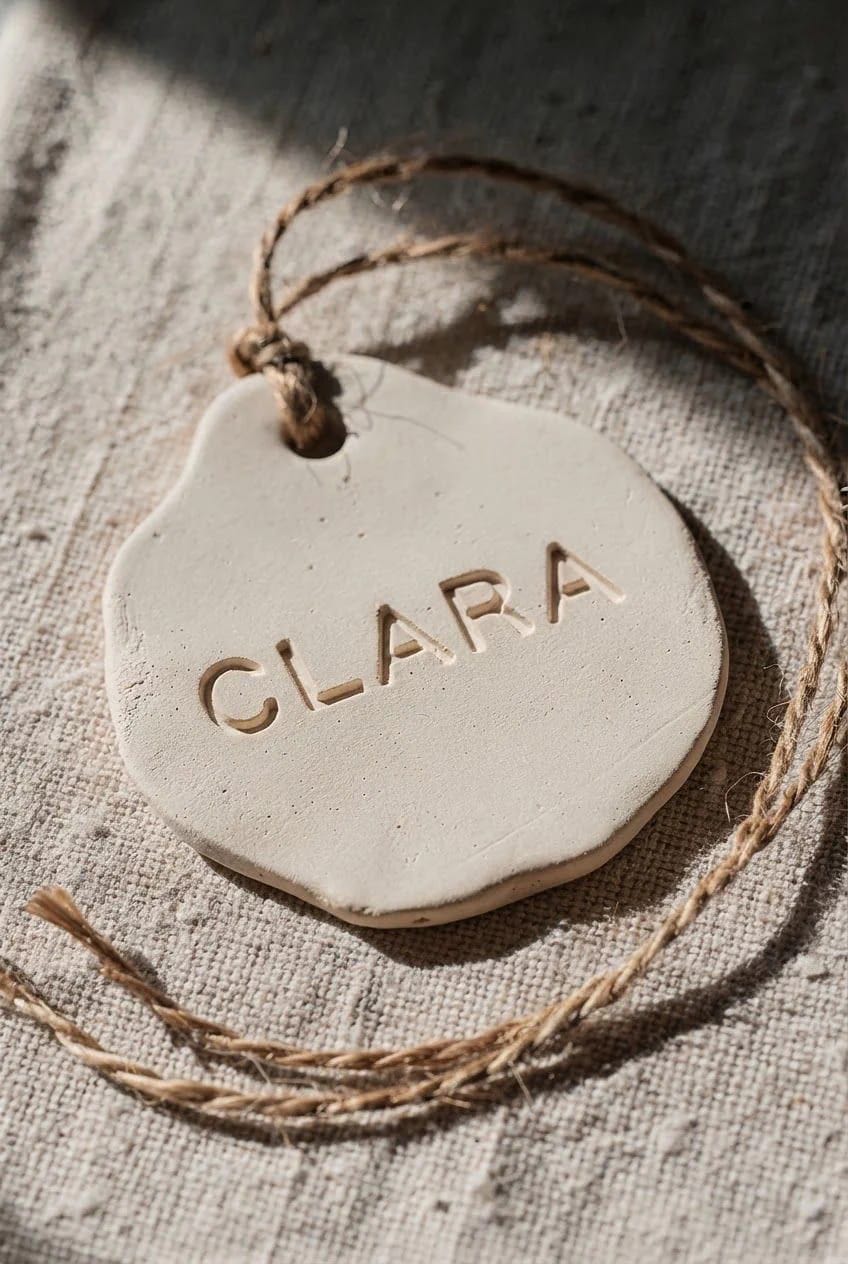
Stamp deeper than looks right. An impression that reads crisply in wet clay softens as the piece dries and pulls in on itself, so the tasteful, restrained pressure that feels correct at the time gives you a tag you have to tilt toward a lamp. Press each letter straight down until the shoulder of the stamp almost meets the clay, and resist rocking it, because rocking widens the top of the cut and rounds off the edge that holds the shadow.
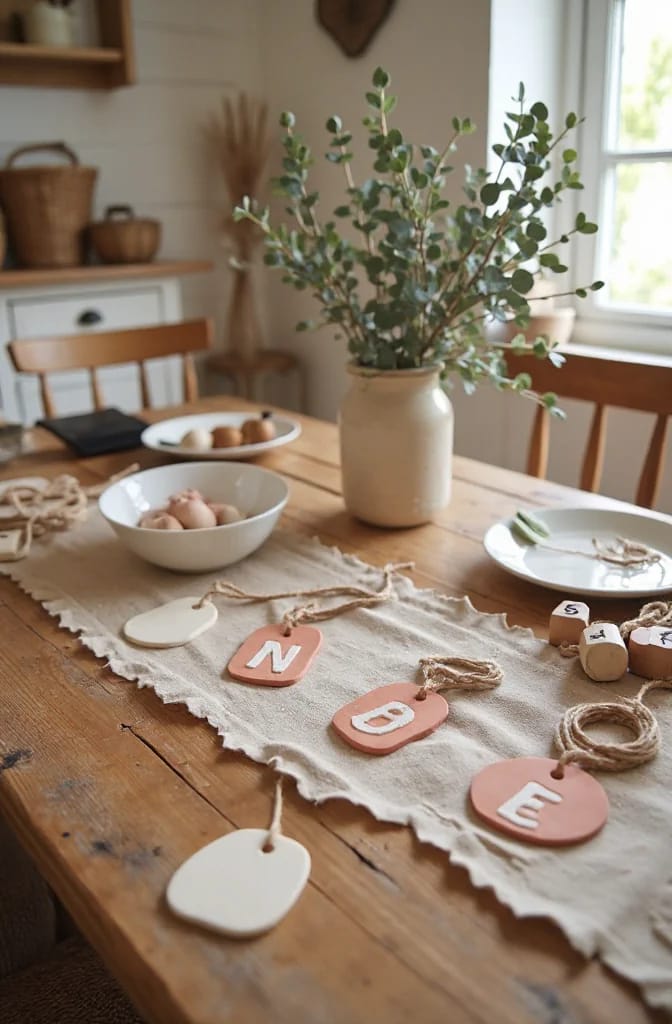
Roll the slab to about a quarter inch, using two wooden rulers either side of the clay as depth guides. Thinner than that and hard letters punch through as raised bumps on the back; much thicker and the tag hangs heavy enough to tear the paper it is tied to.
The 3mm size is the one that suits a two-inch tag. The 6mm sets look bold in the listing photo and then eat a whole tag on a five-letter name.
ImpressArt Basic Bridgette 3mm uppercase letter stamp setSpacing is the part nobody mentions. Letter stamps carry no guide rail, so a hand-stamped name drifts uphill by the fourth character unless you score a faint line into the clay first and rest the base of each stamp on it.
2. Fern and Cow Parsley Imprint Clay Tags
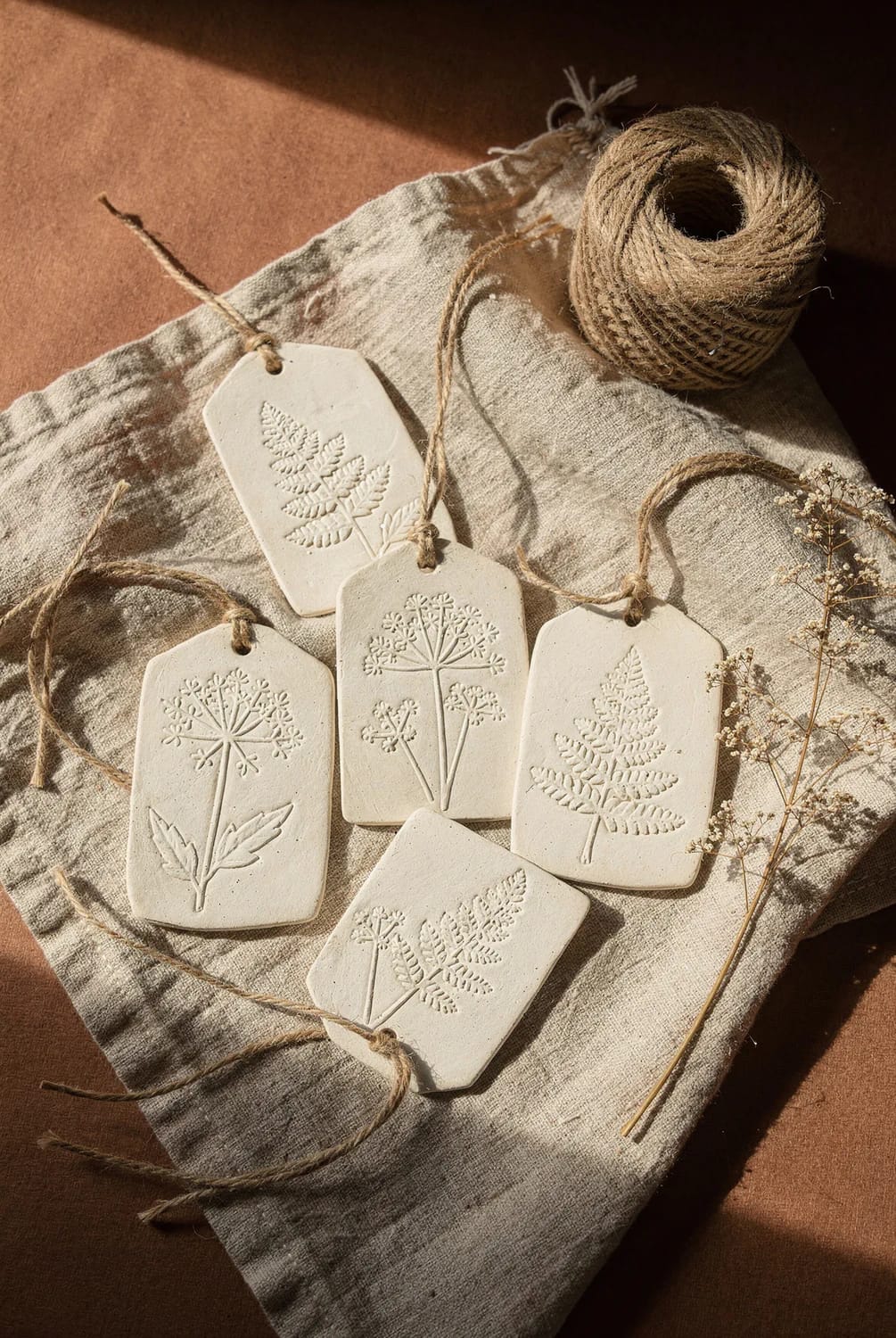
Lift the plant off while the clay is still wet. A frond left in place dries at a different rate from the clay around it and stains the recess brown as it breaks down, which is the entire reason pressed-botanical tags have a reputation for looking like a school project. Peel it away within a minute of rolling and you keep the vein pattern with none of the residue. The same lift-and-peel method scaled up to hanging ornaments covers what changes when the piece gets bigger than a tag.
Flatten the material first. Fern, cow parsley and anything with a woody stem want a night under a heavy book, or the stem prints a trench through the middle of the tag while the fine leaflets barely register at all.
| Clay | How the stamp holds | Water | Suits |
|---|---|---|---|
| White air-dry | Crisp edges, but the shadow is faint on a pale surface | Softens if it gets properly wet | Kraft parcels, advent sets, jar tags |
| Terracotta air-dry | Reads from further away, the impression darkens naturally | Not waterproof | White and grey paper, tree tags |
| Polymer, baked | Holds the finest lettering of anything here | Waterproof once cured | Tags under an inch |
| Stoneware, studio fired | Glaze pools in the letters and softens them slightly | Fully weatherproof | Plant markers, keepsakes, anything outdoors |
3. Clay Gift Tags That Become Plant Markers
Make the tag long enough to bury and it earns a second life the moment the wrapping comes off. Five inches with a tapered lower end goes straight into compost without a stake, and stamped herb names sit well above the soil line where you can still read them in July.
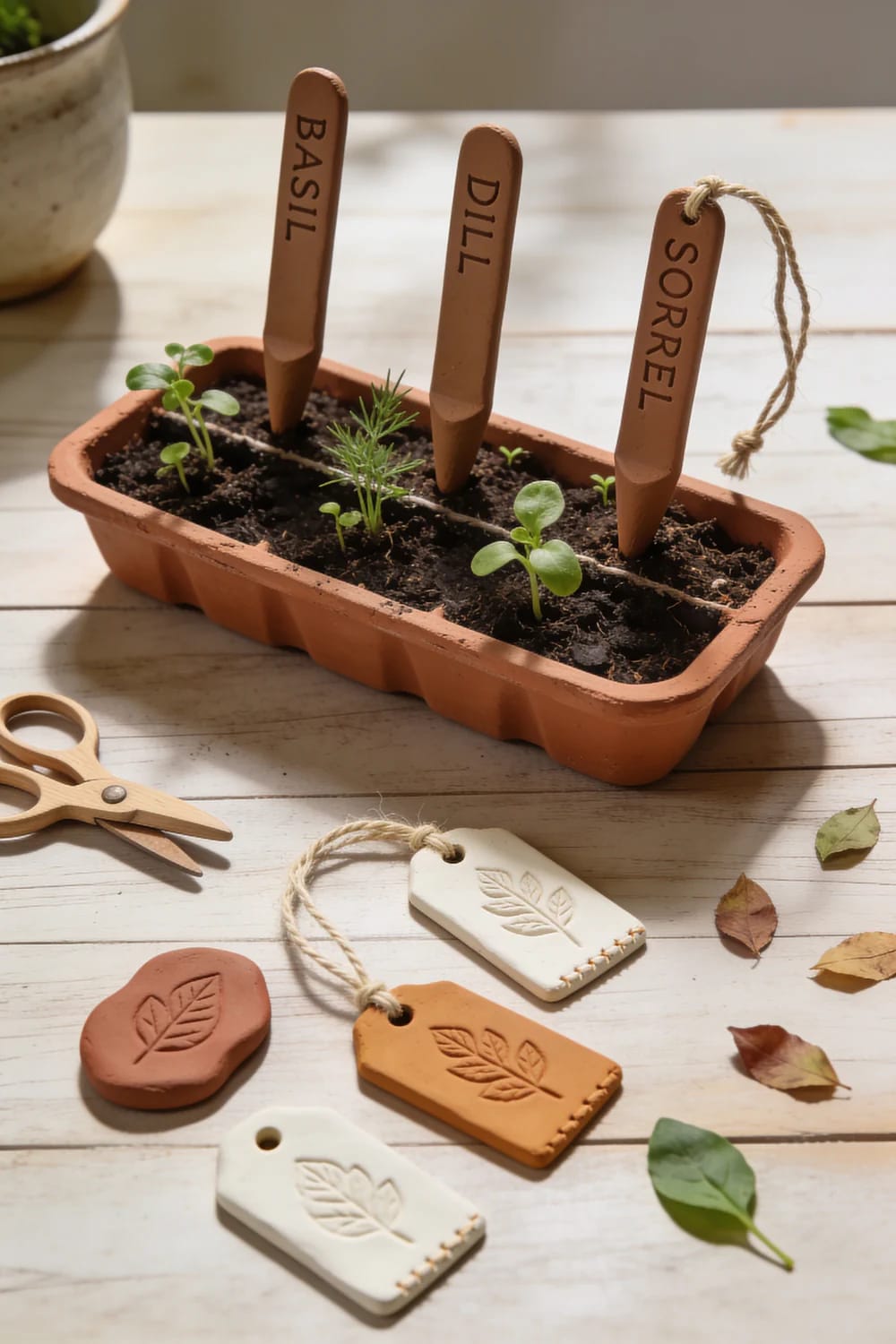
Be honest with the recipient about what they are holding, though. Air-dry clay is not waterproof and no sealer available to a home crafter makes it so; an unsealed marker in a pot that gets watered twice a week will go chalky at the base within a season and snap. For a gift that has to survive a whole growing year, this is the one idea on the list worth taking to a studio for a bisque firing, and it slots neatly alongside the low-waste herb growing setups we have covered before.
4. Stamped Clay Heart Tags for Wedding Favors and Place Settings
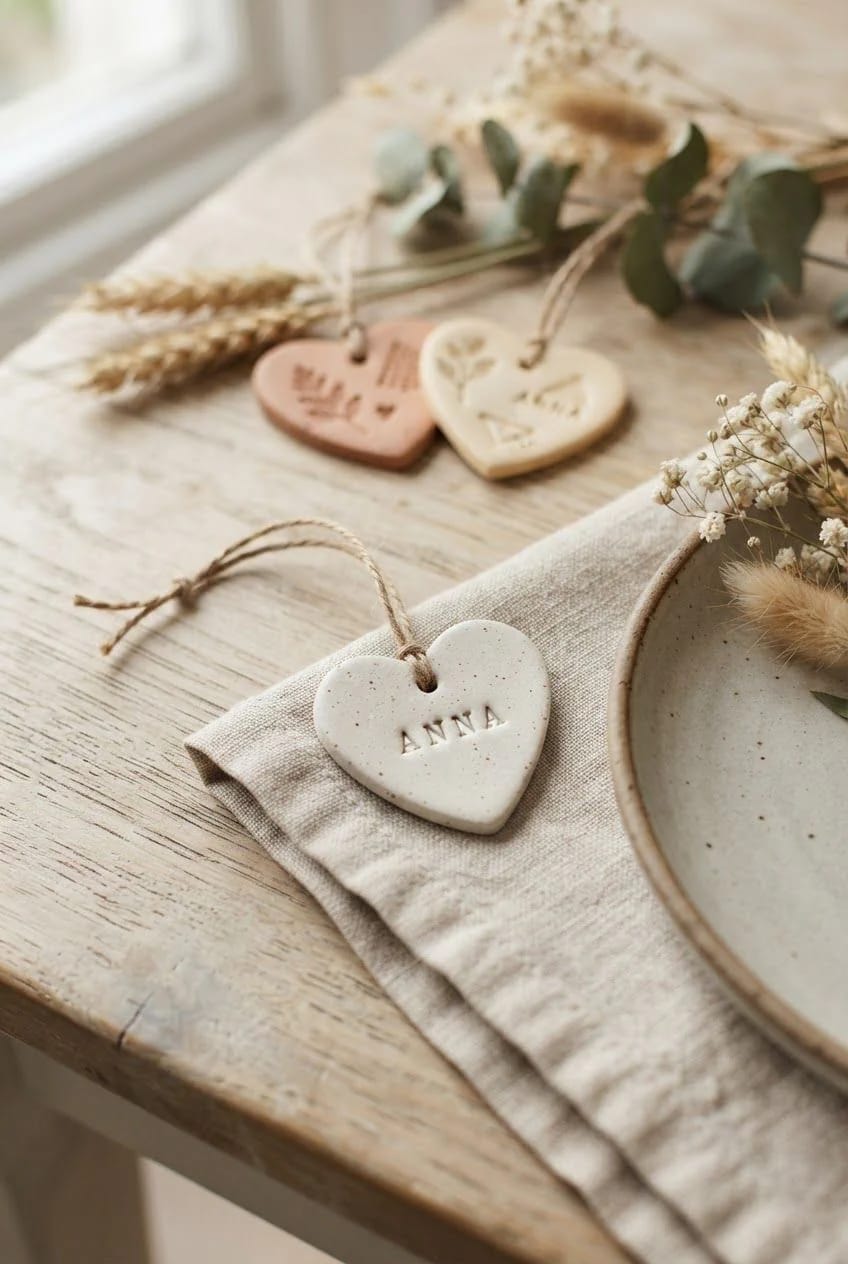
A stamped heart does two jobs at once: it seats the guest and it labels the favor, which means one object instead of the usual three per place setting. Cut them at about an inch and a half across, no bigger, or they stop reading as a tag and start reading as a coaster.
Leave the jute untied. It looks unfinished on the table and that is the point, since the guest then threads it onto a key, a jar, or a bag on the way out rather than binning a knotted loop. Reckon on roughly fifteen to twenty cents of clay per guest at current air-dry prices, which for a hundred-person wedding is the cheapest line on the whole stationery budget.
 Brown Paper and Twine Christmas Place Cards That Don’t Read as Gift Tags Thirteen paper-and-twine cards that sit up on a table instead of lying flat like a parcel label.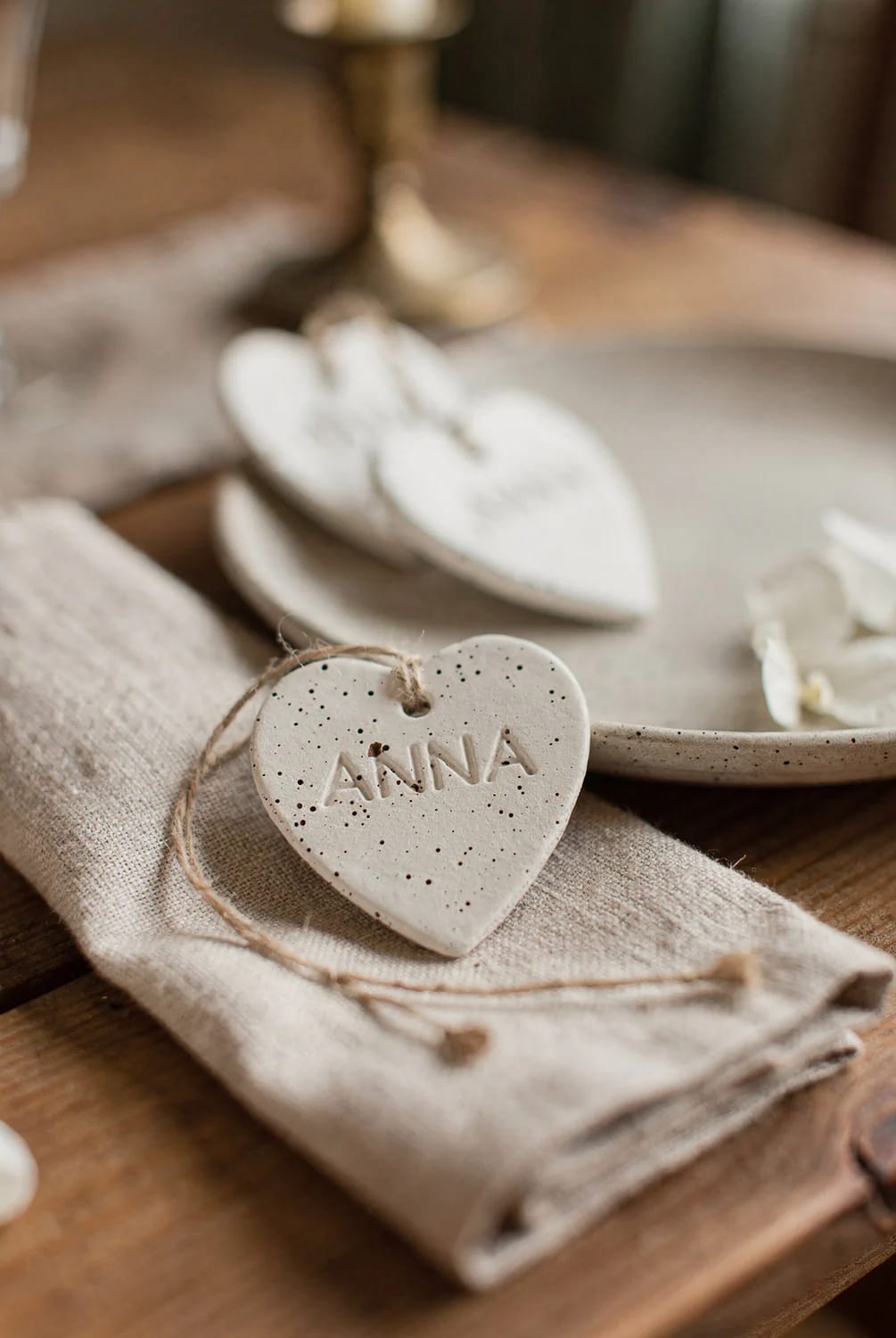
5. Numbered Clay Advent Tags, 1 to 24
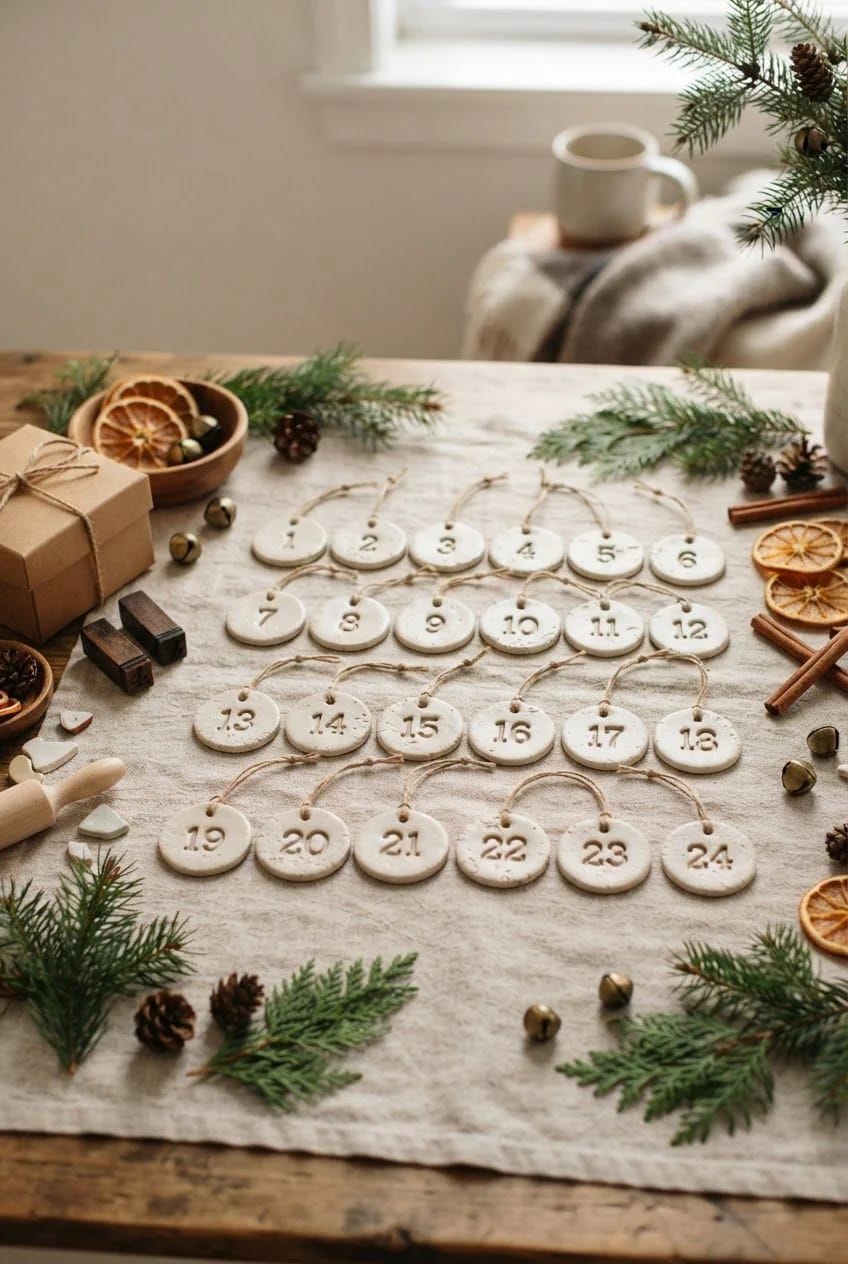
Buy the number stamps rather than improvising from letter sets, because a 1 built from a lowercase l is obvious the moment it sits next to a real 11. Two-digit numbers also need planning: stamp the second digit first, working right to left from a centred mark, and the pair stays balanced instead of sliding off the edge.
Store the finished set in an egg carton. Twenty-four thin discs stacked in a tin chip each other by the second December.
6. Marbled Two-Tone Clay Gift Tags
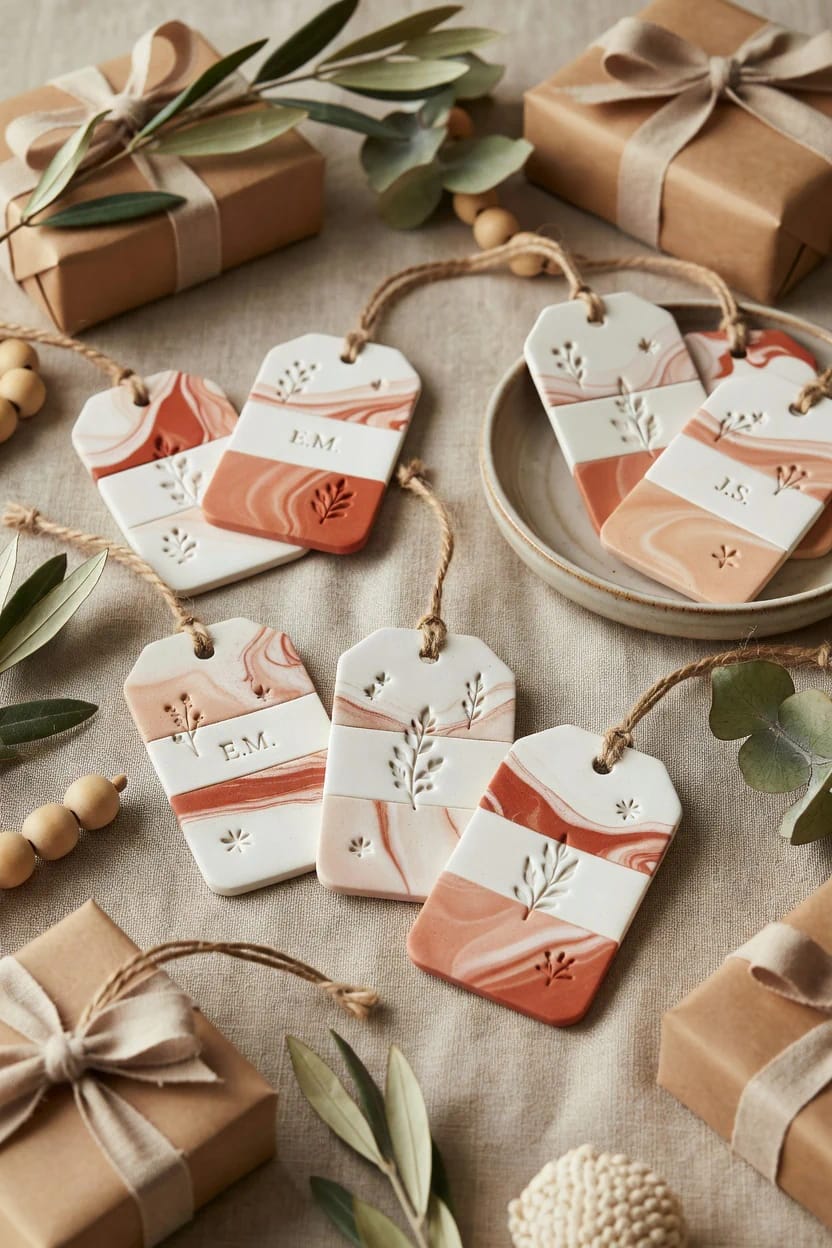
Fold twice and stop. Marbling white and terracotta clay is a two-fold operation, maybe three, and every fold past that walks the pattern toward a uniform dull pink that looks like a mistake rather than a choice. Cut your tags from the middle of the rolled slab where the bands are widest and laziest.
Do this
- Two colours. Three is where it turns to mud.
- Roll in one direction only, so the bands stretch out long instead of scrambling.
- Position the stamped word entirely on one colour, ideally the paler one.
- Re-roll offcuts separately and use them for the jar tags in section seven, where a busier pattern is no loss.
Avoid
- Kneading. Marbling is folding, and the two are not the same motion.
- Stamping across a colour boundary, which makes half the word vanish.
- Sanding the dry surface, because the pattern is only about a millimetre deep and sanding takes you through it.
7. Little Clay Tags for Jam and Chutney Jars
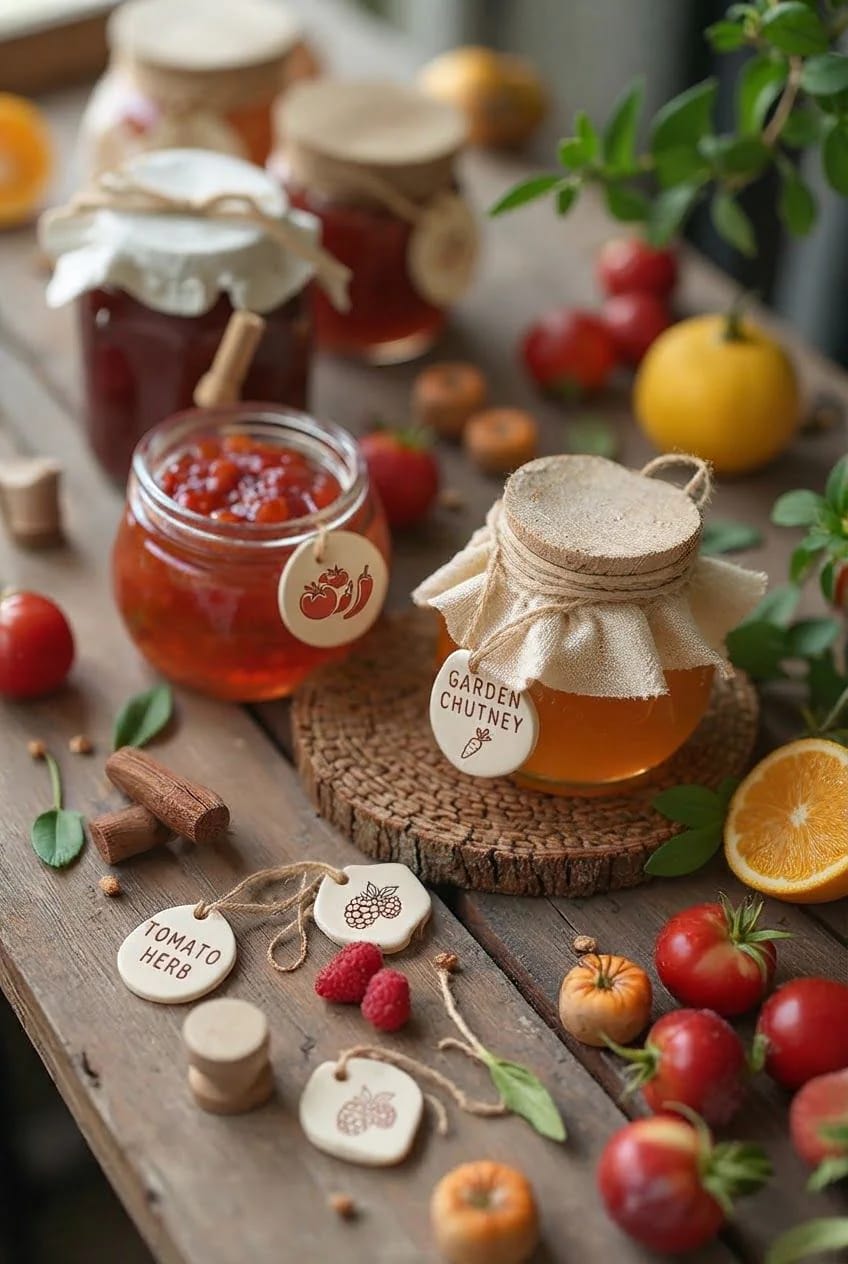
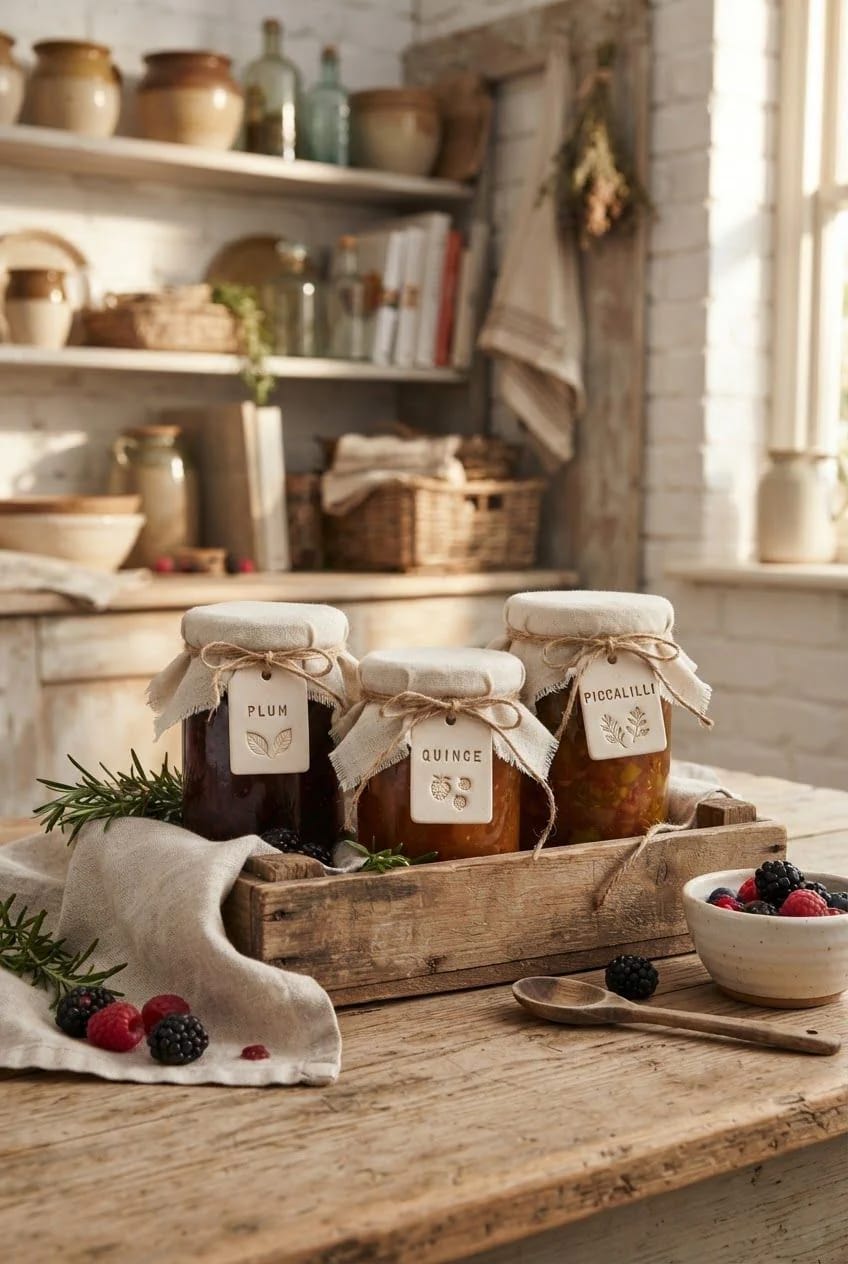
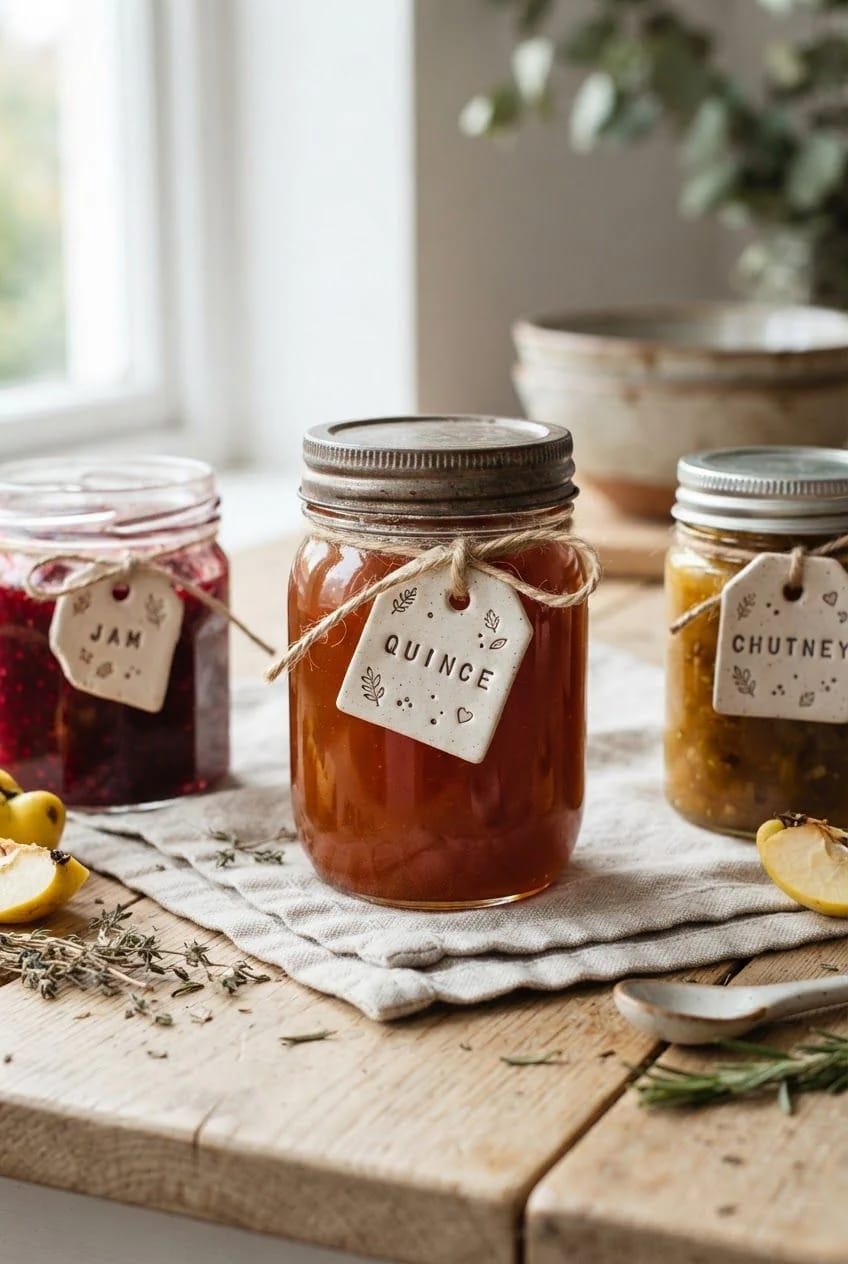
Tie the tag to the neck, never to the lid. The lid comes off within a week of the jar arriving and a tag glued or tied to it goes into the dishwasher with everything else; a tag on the neck stays with the jar until the jar is empty, which is when the recipient reads it again and remembers who made it.
Scale down hard here. One inch across, a quarter of the mass of a parcel tag, and the whole thing rides on the jute rather than dragging the fabric cover sideways. These are also the easiest thing on this list to make in a batch of forty, which is why they turn up in most of our low-waste homemade gift rounds as the finishing touch on something edible.
8. Lace and Linen Texture Clay Tags With No Lettering
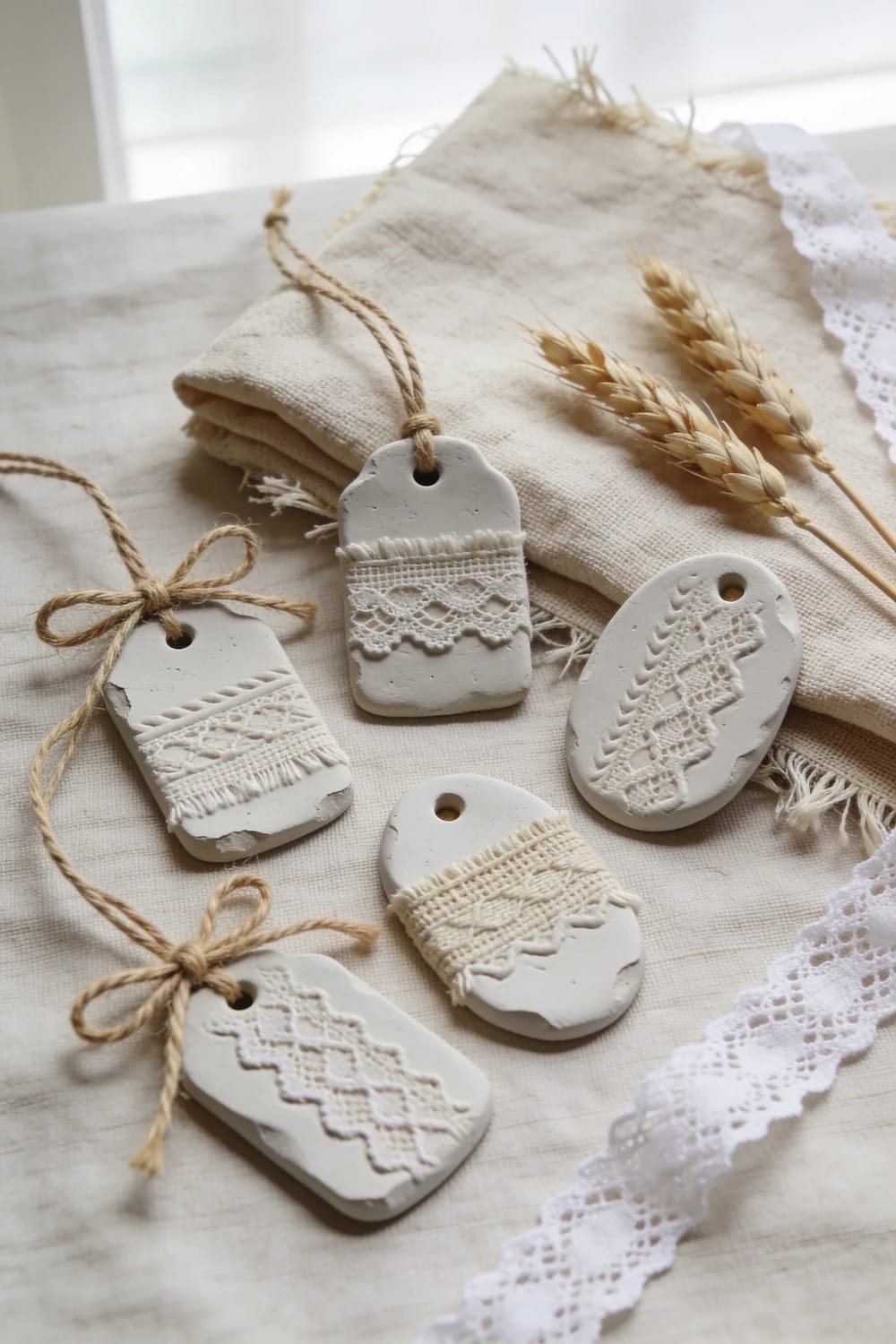
The most useful tag in a set is often the one with nothing written on it. A blank tag pressed with a scrap of old cotton lace or an open-weave linen scrim goes on any parcel regardless of who it is for, which means you can make thirty in an afternoon in November and not commit to a single name until the day.
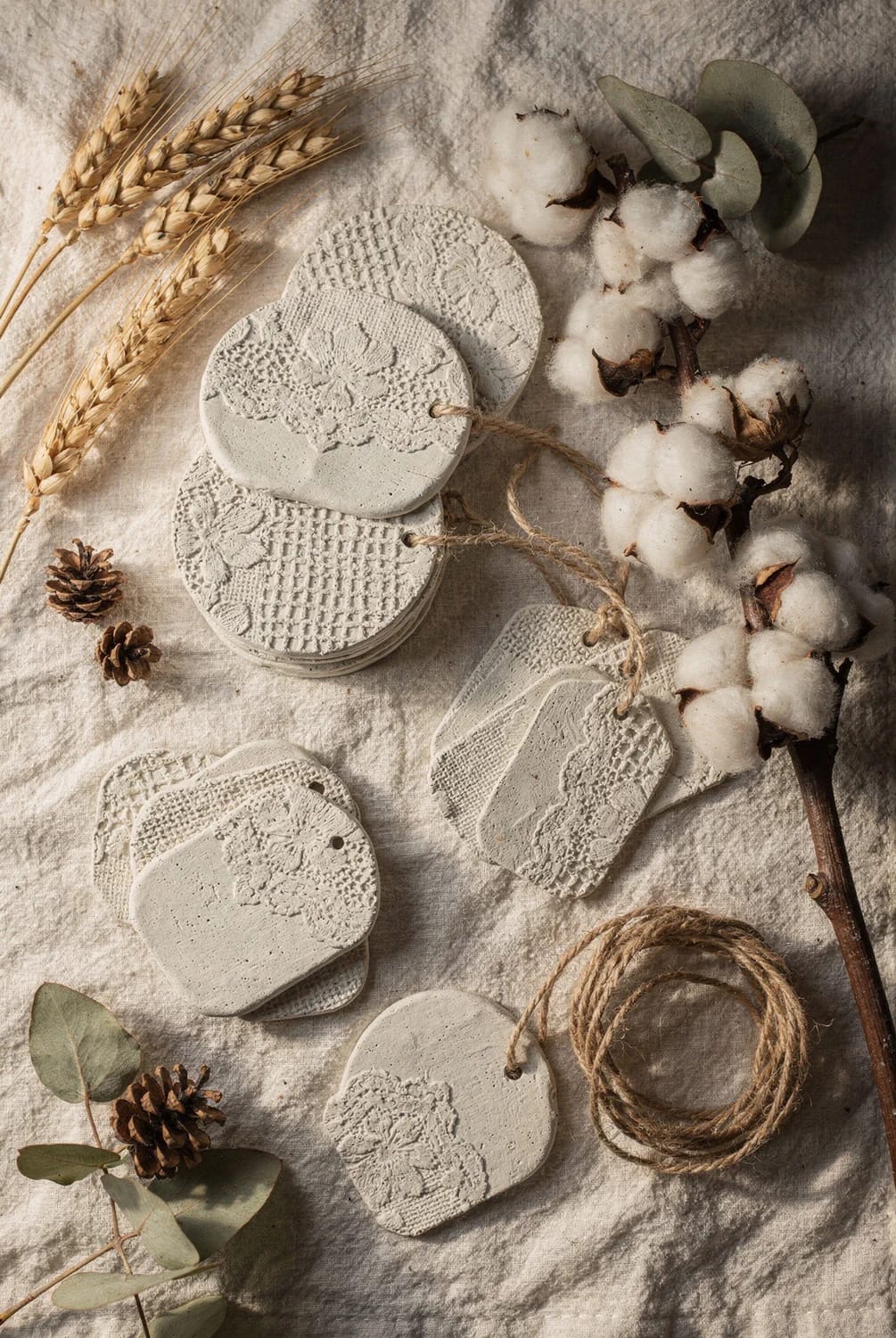
Texture wants a harder press than lettering does, and a rolling pin run once over the fabric gives a shallower result than pressing the fabric down with the flat of a book and leaning on it. Coarse weaves work better than fine ones: cane webbing and hessian print legibly, while a fine Swiss dot barely shows once the clay has shrunk.
9. Cut-Out Initial Clay Tags Where the Letter Is the Hole
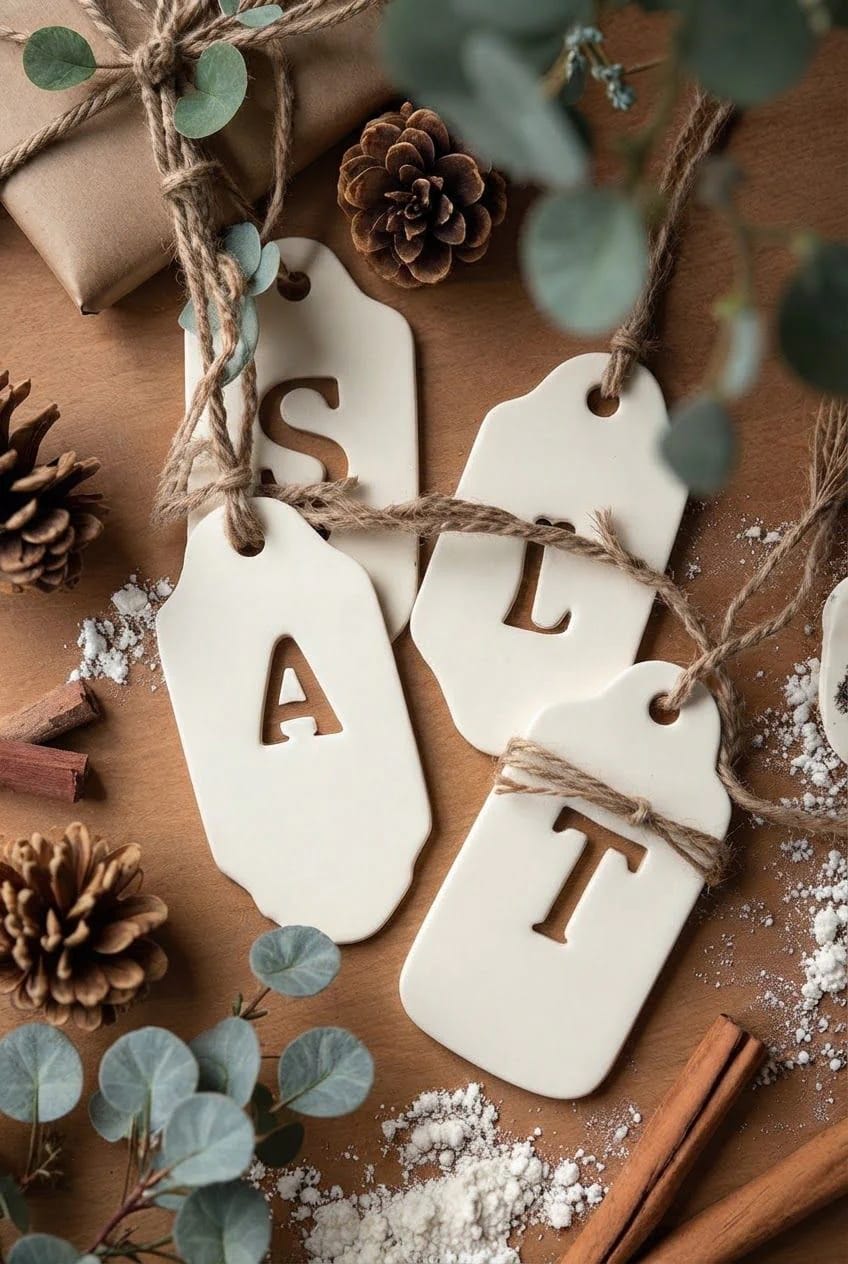
Cut the letter all the way through and the paper underneath becomes the ink. It reads beautifully on a dark parcel and almost not at all on a pale one, so this is a wrapping decision as much as a clay decision. L, T, I, J and M are the easy ones; anything with a floating centre needs a bridge left in, and B, O and R are more trouble than they are worth at tag scale.
A cut-out letter leaves narrow bridges of clay, and clay shrinks unevenly around a void. Dry these flat between two sheets of plasterboard or two ceramic tiles with a light weight on top, turning them at twelve hours, or the bridges pull, curl and split. The same applies to any tag under a quarter inch thick, and it applies double in a humid kitchen, where a batch left on a windowsill can still be damp inside after three days.
10. Terracotta Clay Tags Belong on White Paper, Not Kraft
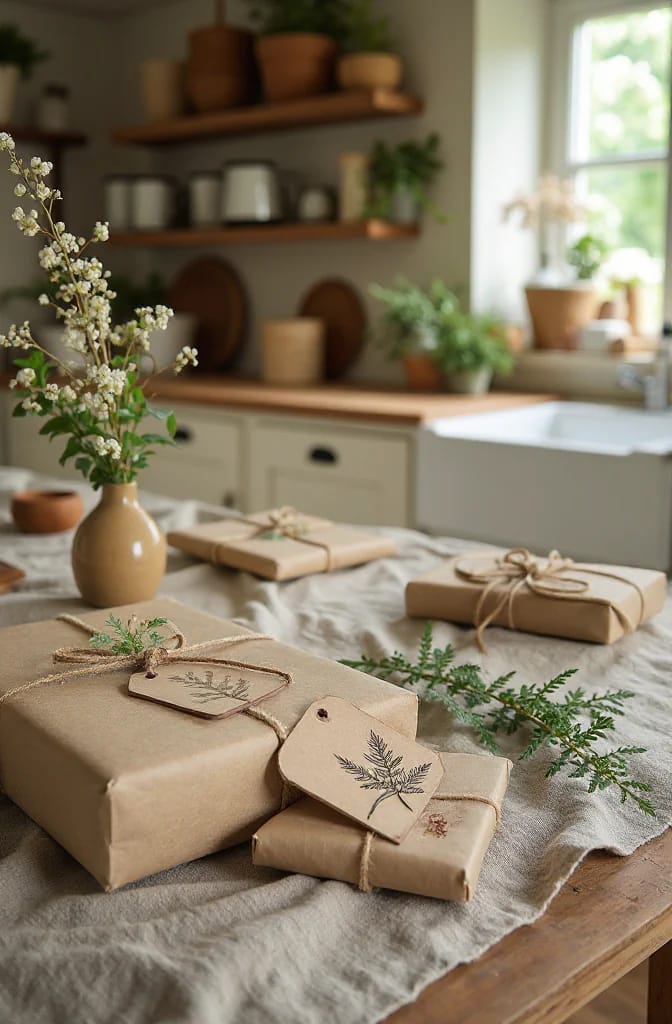
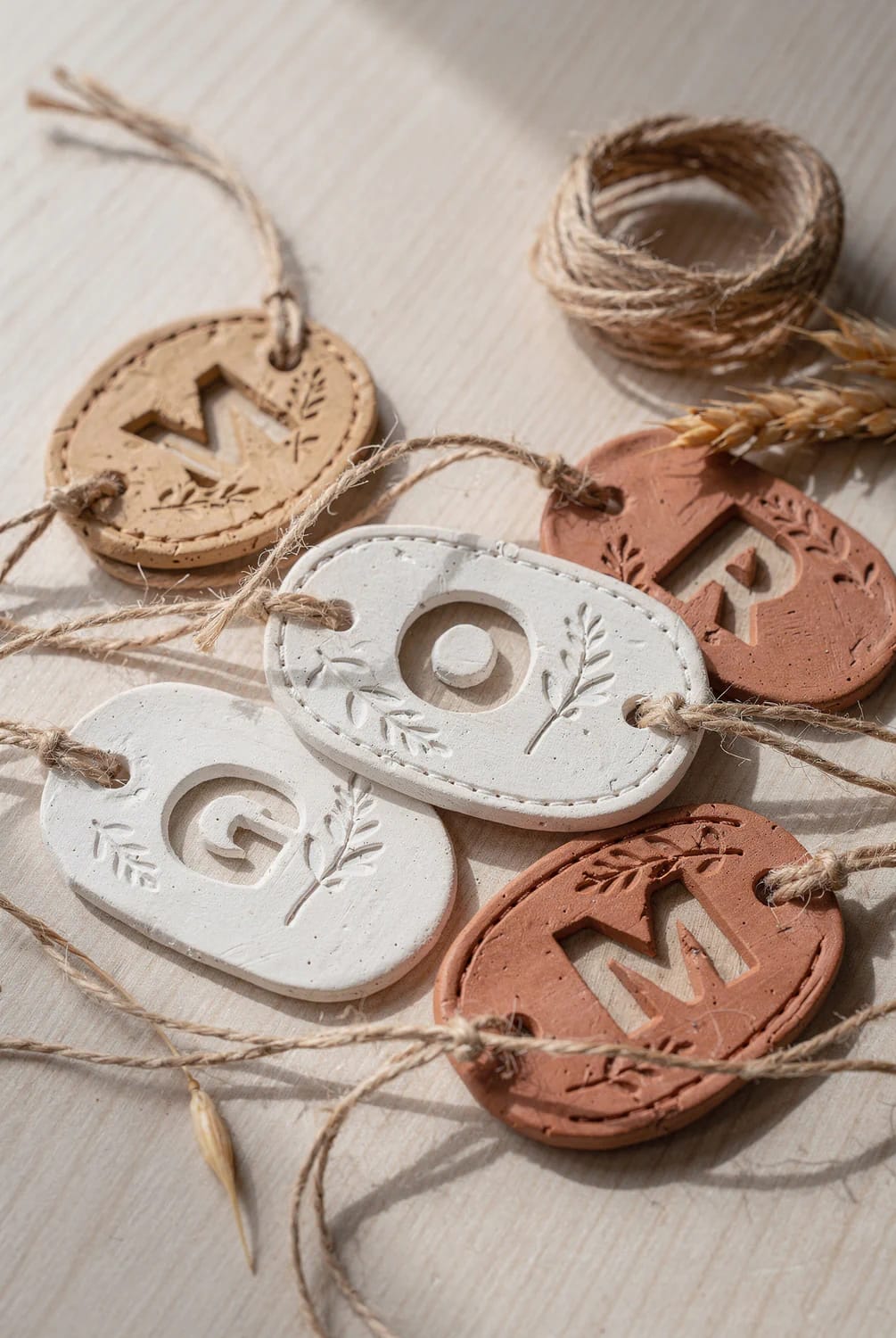
Terracotta clay on brown kraft paper is one warm brown too many. The two sit at almost the same value and temperature, so the tag stops being an object and becomes a slightly darker patch on the parcel, and every bit of shadow you worked to get into the lettering disappears. Put terracotta against soft white, warm grey, or a deep green paper and it does exactly what you hoped.
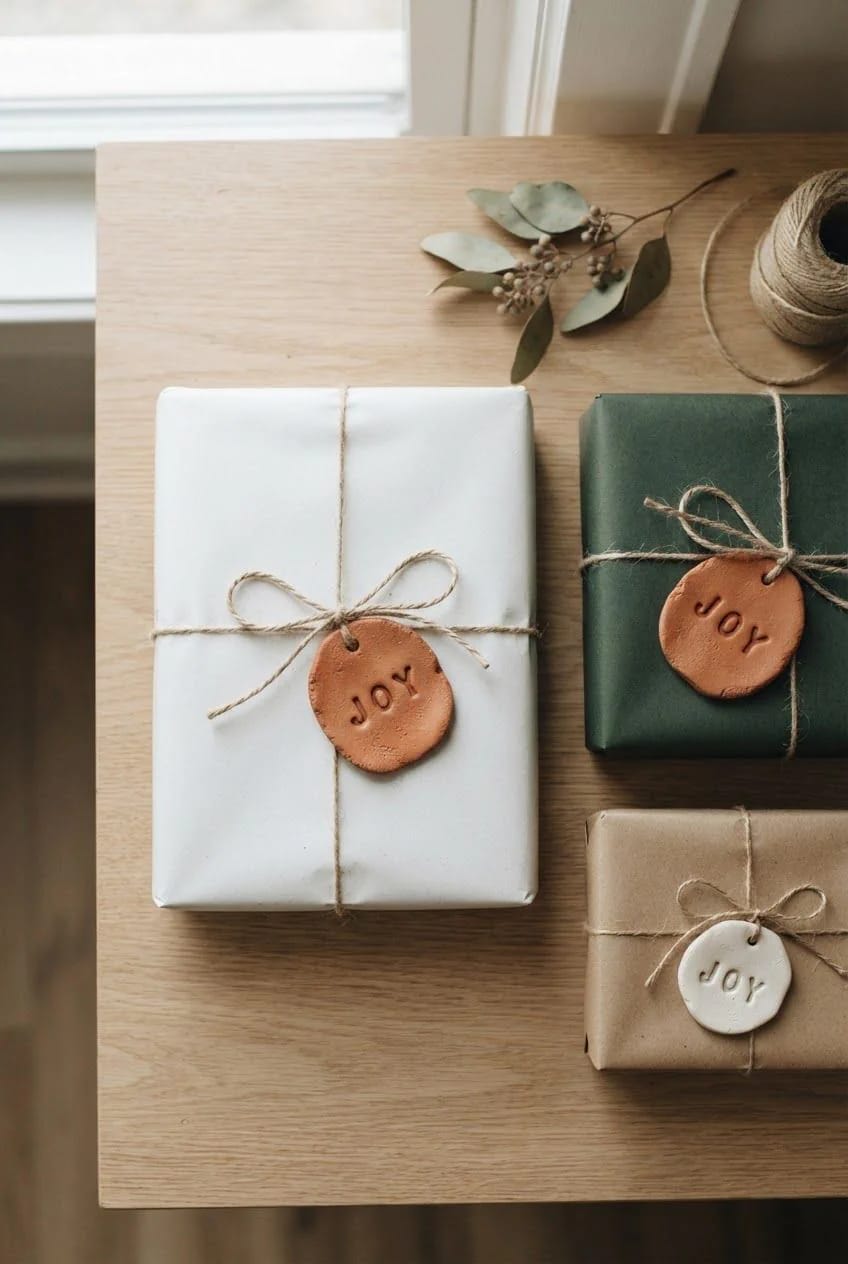
Kraft paper wants the opposite: an off-white or grey-speckled clay, where the value gap does the work and the jute reads as the mid-tone between the two. This is also the argument against sealing anything with a gloss varnish, since gloss bounces light straight out of the impressions and flattens the lettering you spent the afternoon getting right. A matte wax, or nothing at all, keeps the chalky surface that makes the shadow legible. The same reasoning runs through our terracotta ornament guide, where the difference between real terracotta and tinted white clay under a string light is even more obvious than it is on a parcel.
A genuine natural-earth terracotta rather than white clay with pigment stirred through it, which matters because tinted clay goes pale and pink at every cut edge.
Activa Supreme air-dry clay in terracotta, 3.3 lb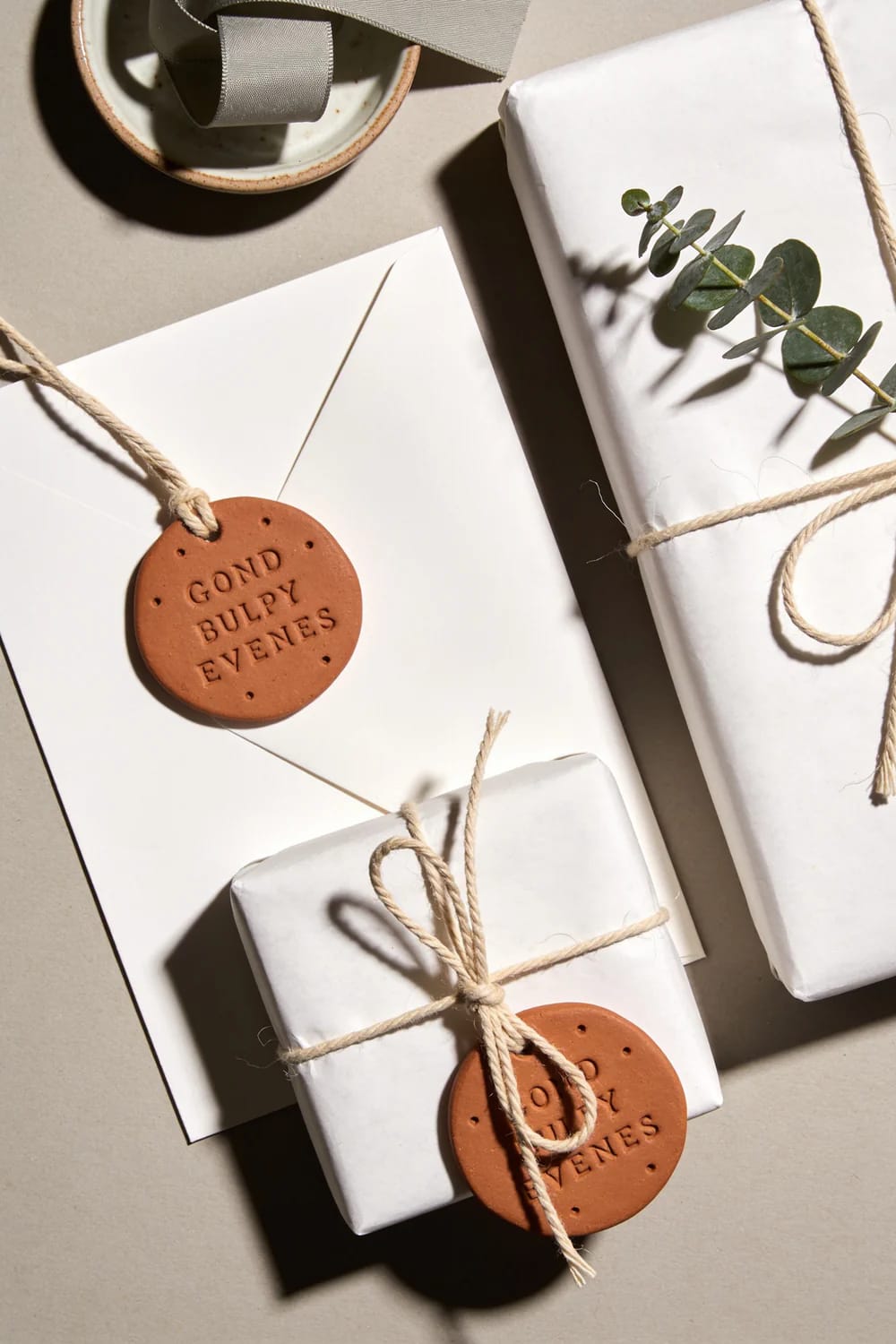
11. Coffee-Rubbed Lettering for Clay Tags You Can Read Across a Room
Rub something dark into the letters and wipe it back off the surface. This is the single change that takes a stamped tag from readable-at-arm's-length to readable-from-the-doorway, and it costs nothing: a teaspoon of instant coffee in a tablespoon of water, worked into the impressions with a fingertip and cleaned off the flat with a barely damp cloth.
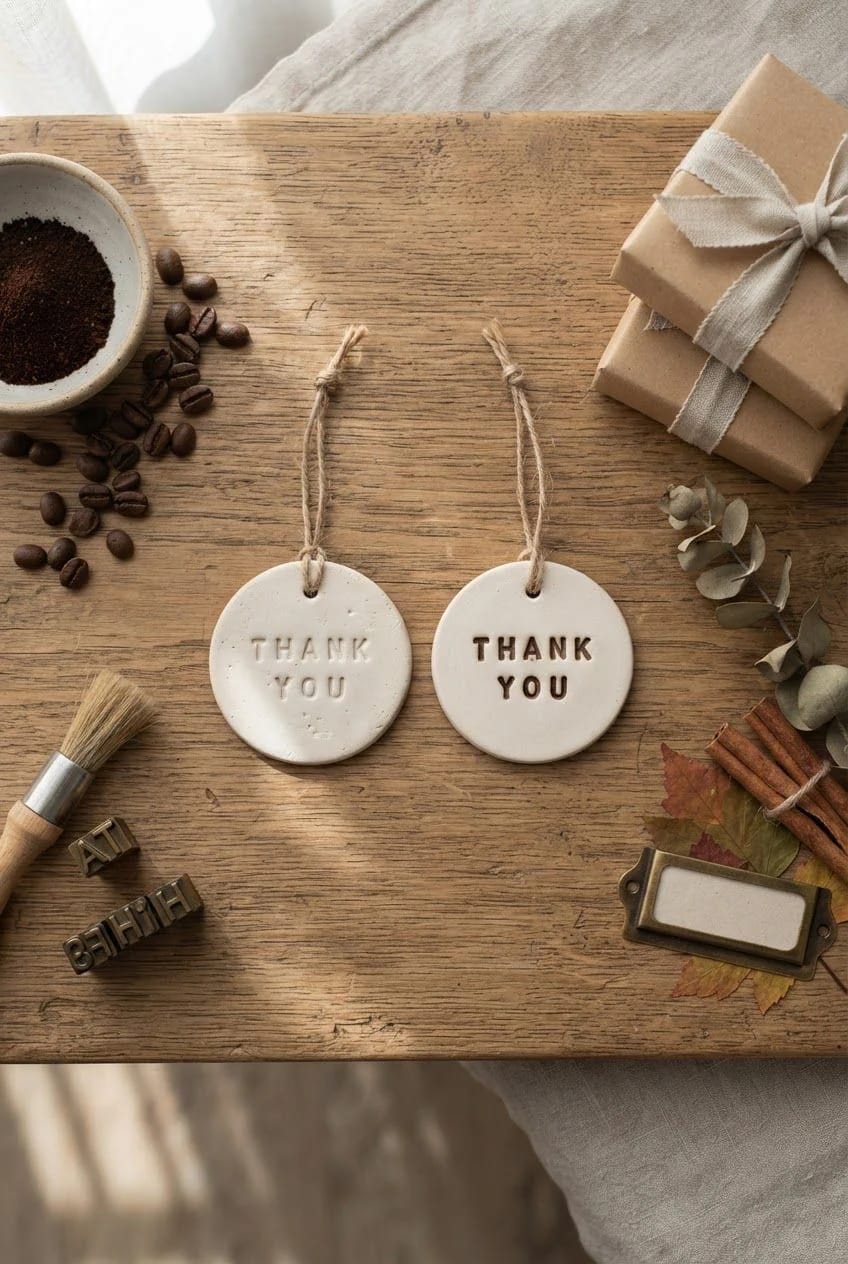
Wait until the clay is bone dry. On damp clay the coffee wicks sideways into the body and you get a brown halo around every letter that no amount of wiping removes. And be straight with yourself about longevity: coffee fades in direct sun over a year or two, so for a keepsake tag that will sit on a shelf, thinned burnt umber acrylic wiped back the same way holds its colour and looks near enough identical.
12. Clay Gift Tags That Stay on the Tree Afterwards
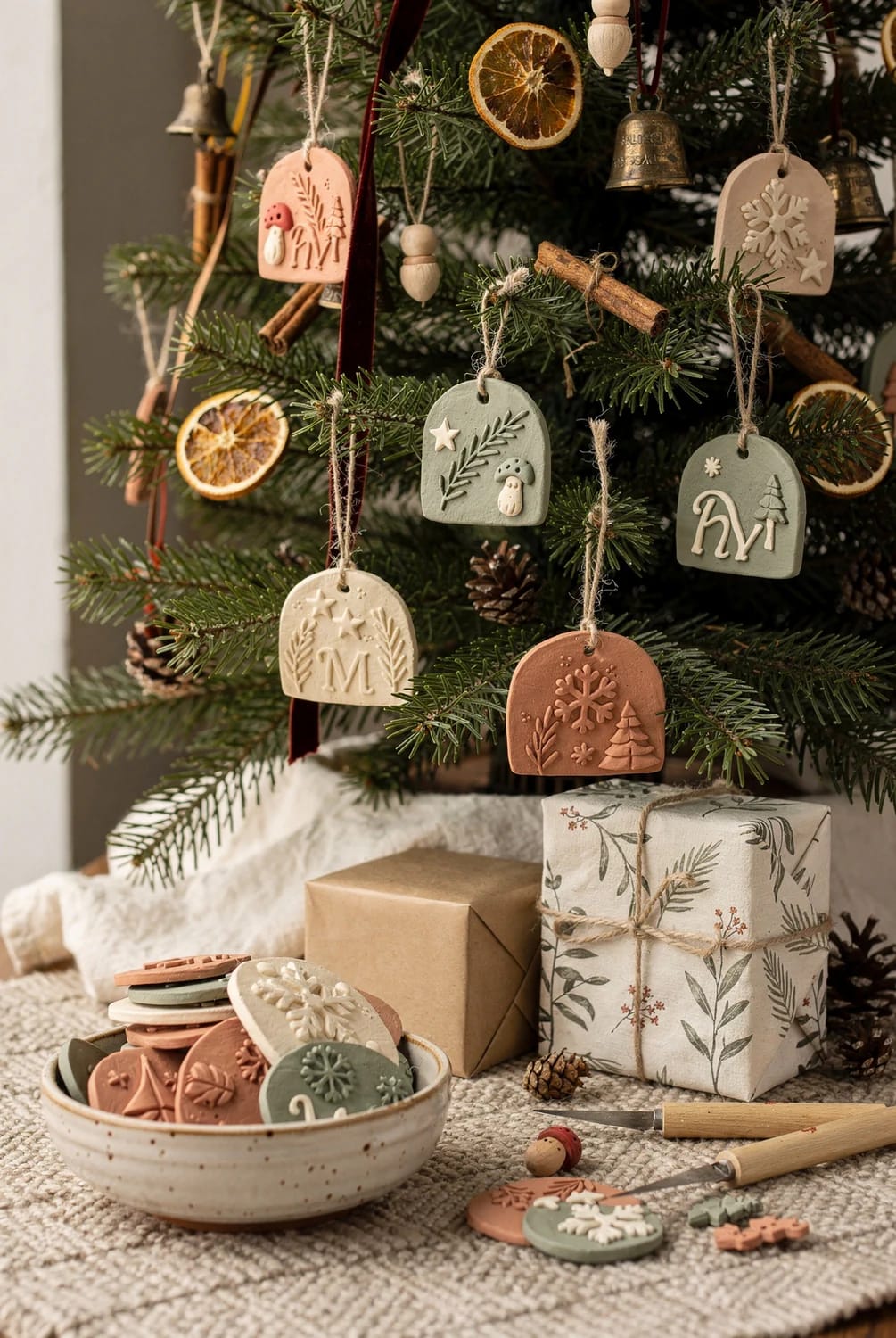
Stamp the year on the back and the tag stops being packaging. That one extra strike is what gets it kept, because a tag with 2026 on the reverse goes into the ornament box in January instead of the recycling, and by the time there are eight of them the tree is carrying a record of who gave what.
Cut the twine at ten inches rather than six, so the loop hangs the tag clear of the needles where it can turn. Three-ply jute holds a loop shape better than the softer two-ply sold for baking, and a G2PLUS 3mm three-ply natural jute twine spool, 328 feet covers a whole Christmas and most of a wedding. If the branch itself is the decoration you are after, foraged twig arrangements from the garden take the same tags without any tree involved at all.
13. Bundles of Mini Clay Tags for Hostess and Teacher Gifts
Twenty small tags tied with a length of jute is a better gift than most things under ten dollars, and it is the one on this list you can make entirely from offcuts. Mixed shapes, mixed clays, no lettering, so the person receiving them decides what each one says.
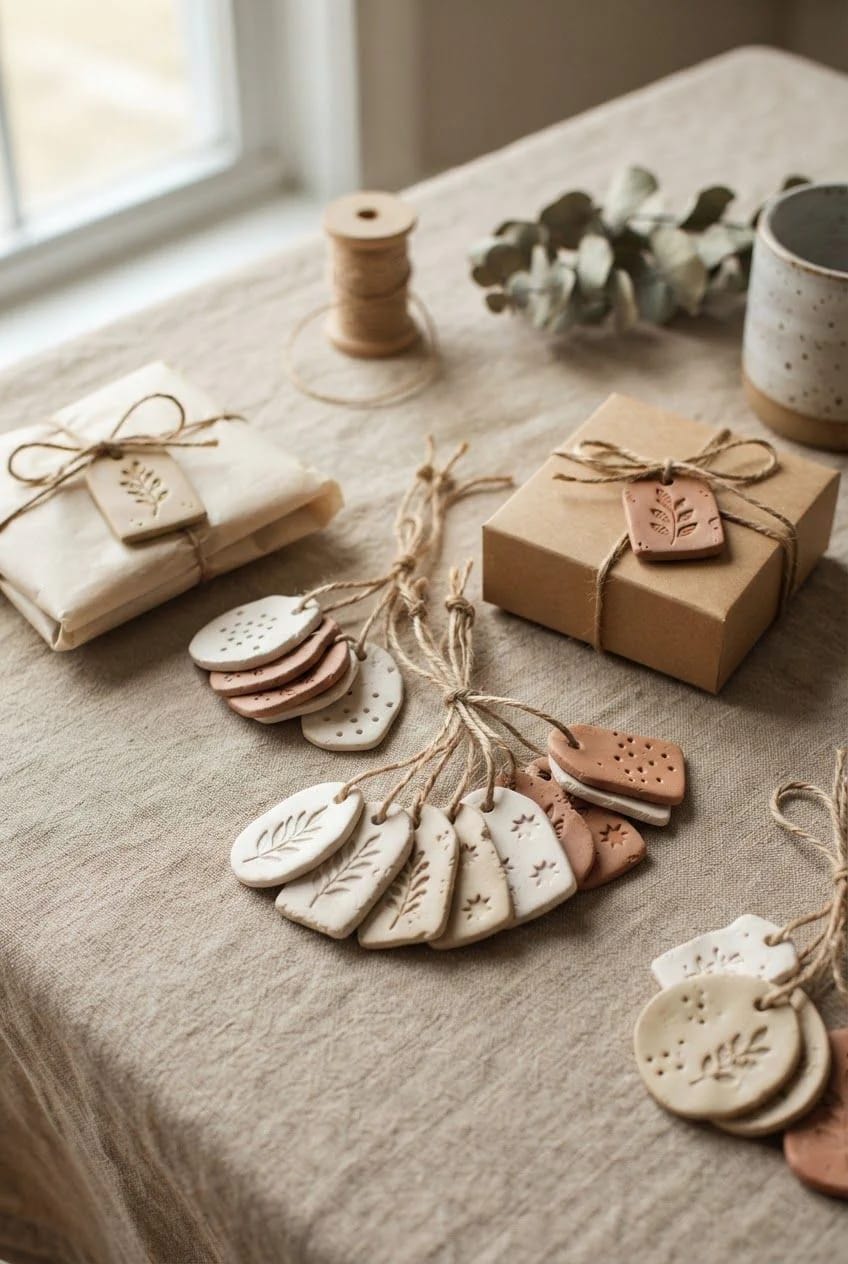
A standard 2.2 lb block is more clay than the block looks. Rolled to a quarter inch, it works out at roughly 590 cubic centimetres, and a tag measuring four by two and a half centimetres takes about five of those, so even allowing generously for offcuts you re-roll and pieces that crack, one 2.2 lb block of DAS white air-hardening clay yields somewhere near eighty tags. Buying the same quantity ready-made in card would cost several times as much and last one opening. It is the sort of arithmetic that quietly underpins most plastic-free homemade Christmas gifts.
A twenty-tag hostess bundle
One evening, one block of clay, a spool of jute, no kiln
Clay for twenty one-inch tags comes to about a quarter of a 2.2 lb block, so roughly $3 of the $10 to $14 the block costs. Add maybe 40 cents of jute from a spool that runs $6 to $9 and covers hundreds of tags. The letter stamps are the only real outlay at $20 to $30, and they are a one-time purchase you will still be using in ten years. Marginal cost per bundle after the first: under $4, and about ninety minutes of hands-on time, most of which is waiting for the slab to firm up enough to cut cleanly.
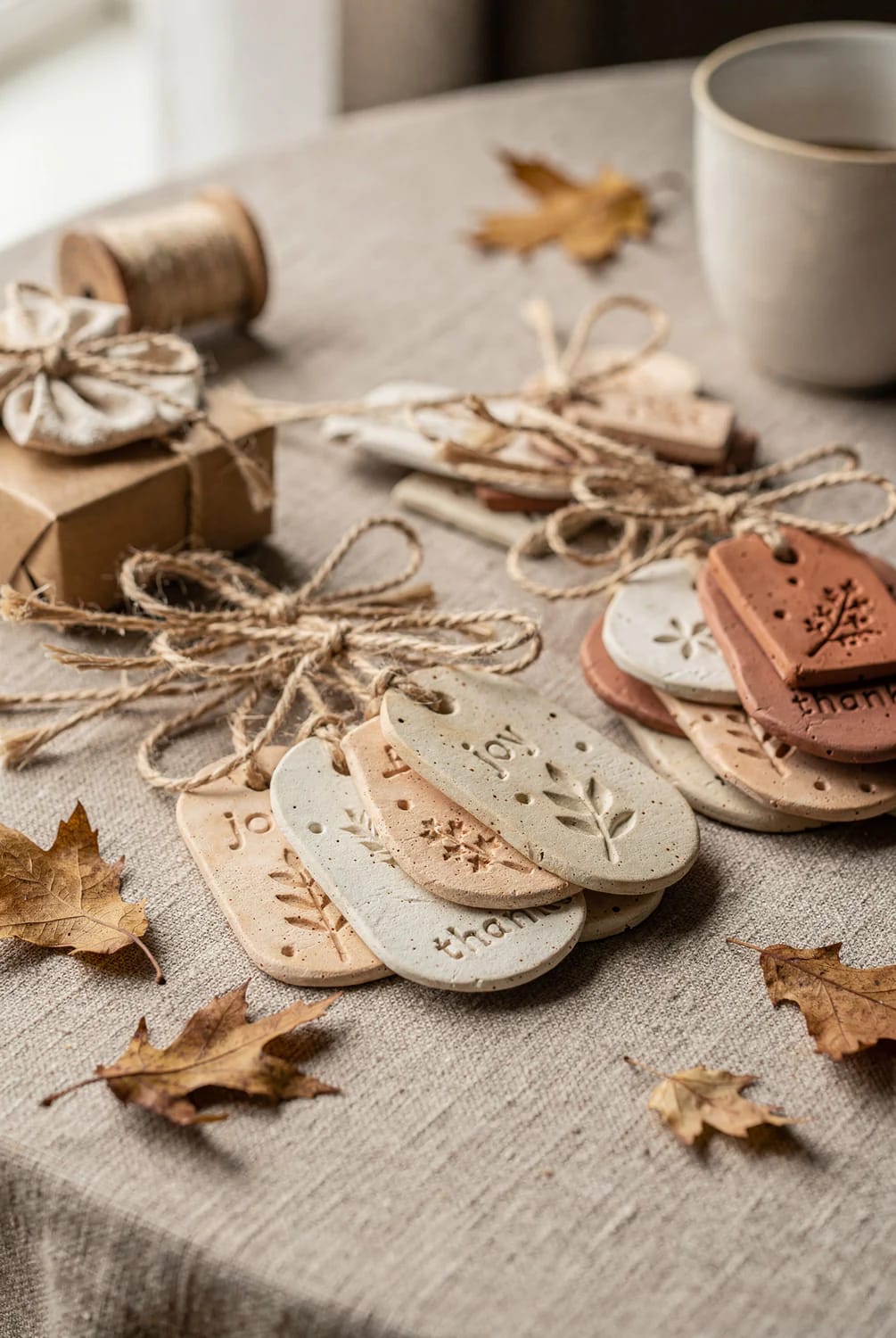
Roll, cut and punch everything in one session, whatever mix of the thirteen you are making. The clay behaves consistently for about an hour and then starts to skin over, and a slab that skins is a slab whose stamped letters crack at the edges. Stamping is the part to slow down for; cutting is the part to get through.
The one thing I could not pin down anywhere reliable is how long an unsealed air-dry tag actually survives outdoors. Every figure quoted online is somebody's guess, and they range from one wet week to a couple of years. So treat section three's plant markers as either a fired object or a single-season one, and say so when you hand them over.
And cut the twine longer than you think, on all of them. Ten inches, not six. A tag that can turn on its loop shows both faces, which is the only reason stamping the year on the back is worth doing at all.
Related Posts
- Brown Paper and Twine Christmas Place Cards That Don’t Read as Gift Tags
- 13 Seed Paper Christmas Ornaments You Can Plant in Spring
- Air Dry Clay Ornaments With Pressed Fern and Leaf Imprints
- 15 Natural Easter Wreaths For Front Door Using Moss, Twigs & Beautiful Earthy Textures
- 15 Unique Nature Inspired Spring Crafts
- 11 DIY Cork Reindeer Christmas Ornaments for a Rustic Tree