
Glass melts down and reforms forever with no loss in quality, one of the very few materials that can make that claim. And yet Americans recycle only about a third of what they throw out, and the rest, once it’s buried, sits there for thousands of years ( EPA put the 2018 rate at 31.3%). So a clean jar in your cabinet has already dodged the landfill once.
The twelve projects below run from a five-minute frosted lantern to a sealed terrarium that goes years without water, with a salsa jar cut down into a glass you'd actually drink from somewhere in between. A few lean on older tricks, broken-crockery mosaic and a Venetian paper technique, that leave the jar looking like anything but the packaging it started as.
1. Frosted fairy-light jar lantern
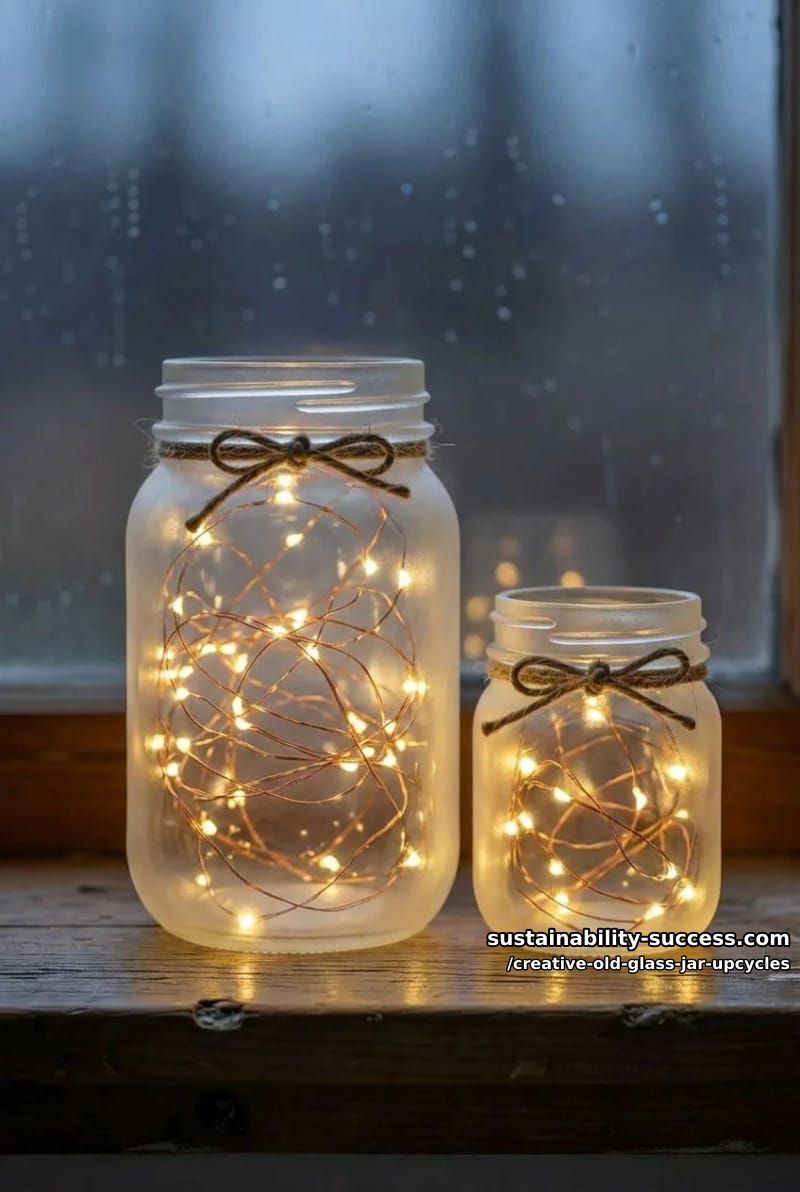
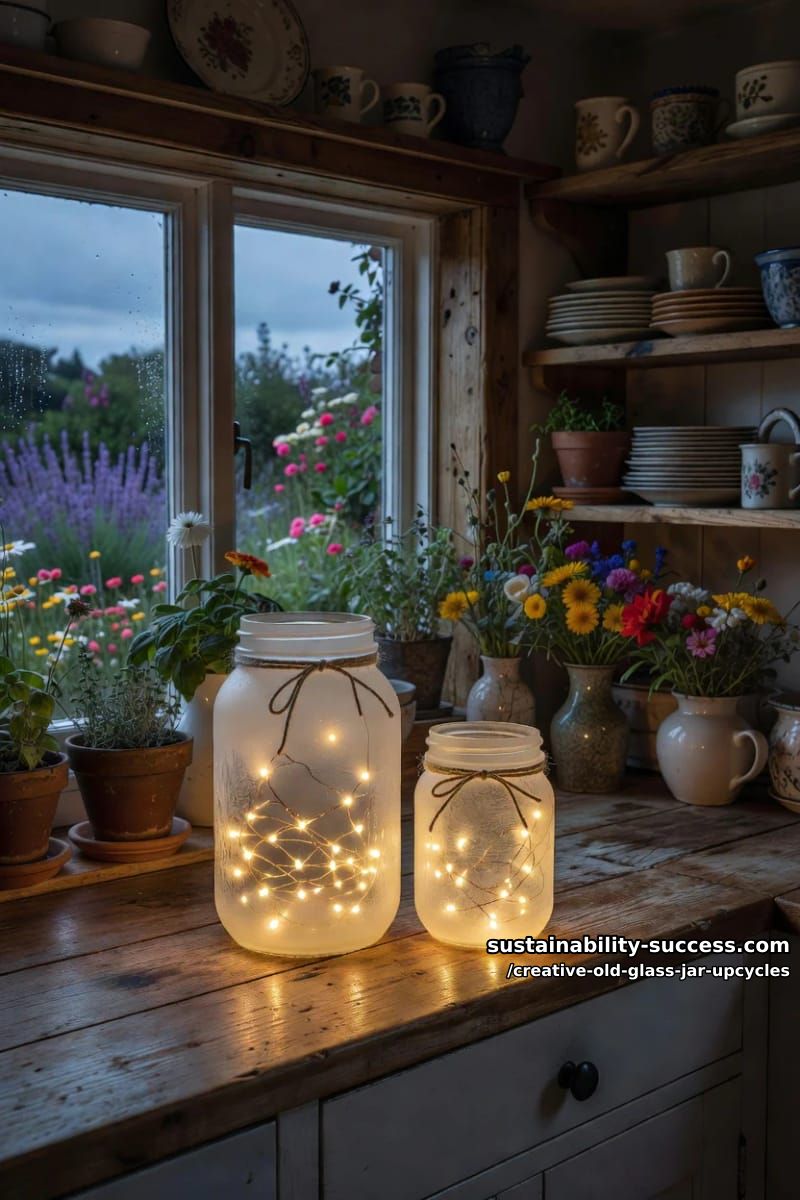
Coil a warm LED string inside a frosted jar and you get a firefly glow without the science-fair look. The frosting matters more than the lights. Clear glass puts the wire and the battery box on full display; a matte surface scatters all of it into one even wash. There are three ways to frost it, and they don't cost the same or behave the same.
| Method | Cost | Finish | Watch for |
|---|---|---|---|
| Epsom salt + Mod Podge | About $10 | Sparkly, crystalline, slightly raised | Not waterproof; indoor only |
| Etching cream (Armour Etch) | $15 to $22 | Permanent, smooth, true frost | Caustic; gloves and ventilation |
| Frosted glass spray (Rust-Oleum) | $8 to $12 | Even, opaque, fast | Needs two thin coats or it streaks |
Don't bother with cheap acrylic craft paint on the outside. I used to suggest it, then watched it chip at the first damp wipe and peel off in sheets inside a month. For the light, a battery copper-wire strand more or less disappears into the frosting, which the chunky plastic-bulb kind never does, and a 7-foot strand runs off a coin cell you can hide under the lid.
Coin-cell copper wire that vanishes into frosted glass, so you get the glow and none of the plumbing.

2. Pique assiette mosaic votive jar
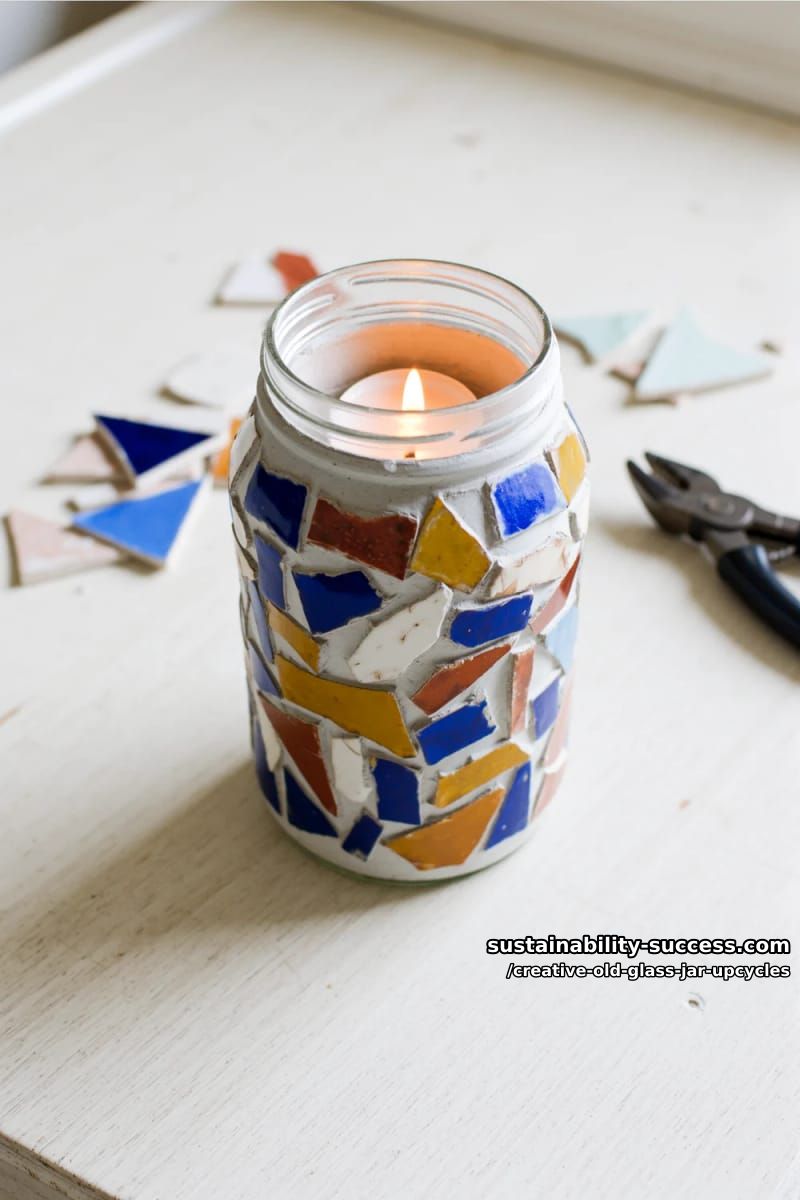
This is broken crockery turned into a votive, and the craft long predates your recycling bin. The Catalans call it trencadís, the shard mosaic Antoni Gaudí ran across Park Güell, and the French call it pique assiette, literally the plate-scrounger's technique. You glue chipped tile, china, and stained-glass offcuts to the outside of a short jar, grout the gaps, and drop a tea light inside so the translucent pieces catch fire. Set that next to the spray-painted "mercury glass" votives Pottery Barn sells for around $20, which are just jars wearing a coat of paint.
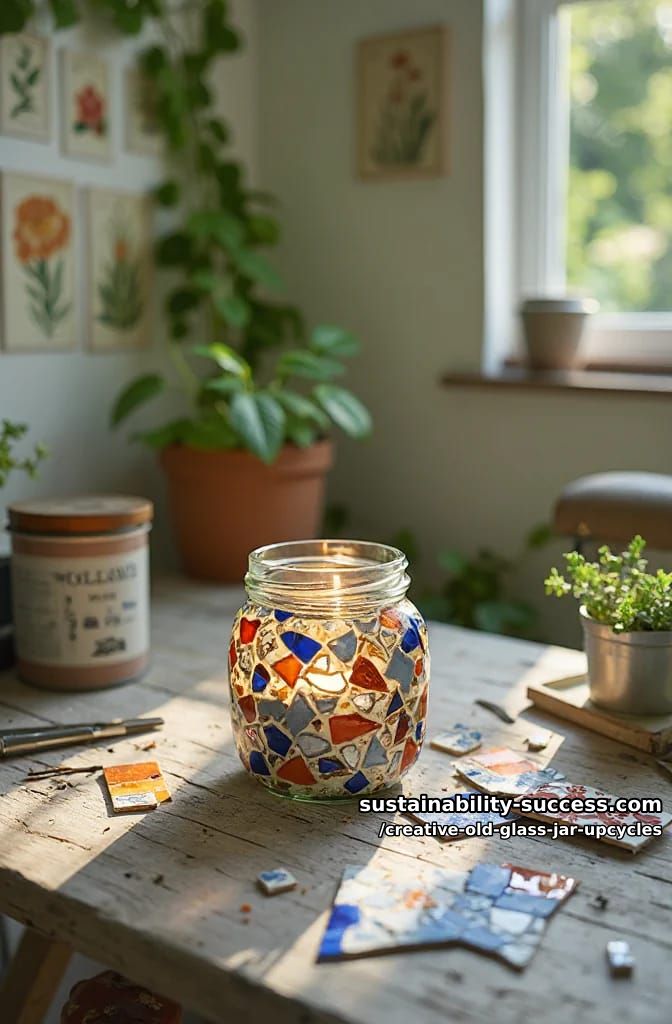
A small bag of sanded grout runs $8 to $15 and covers several jars. Shape the shards with wheeled tile nippers, which crunch glass and ceramic into rough triangles instead of shattering them outright.
Goldblatt wheeled glass and ceramic tile nippers (2-piece set)3. Sealed-jar terrarium (the one you never water)
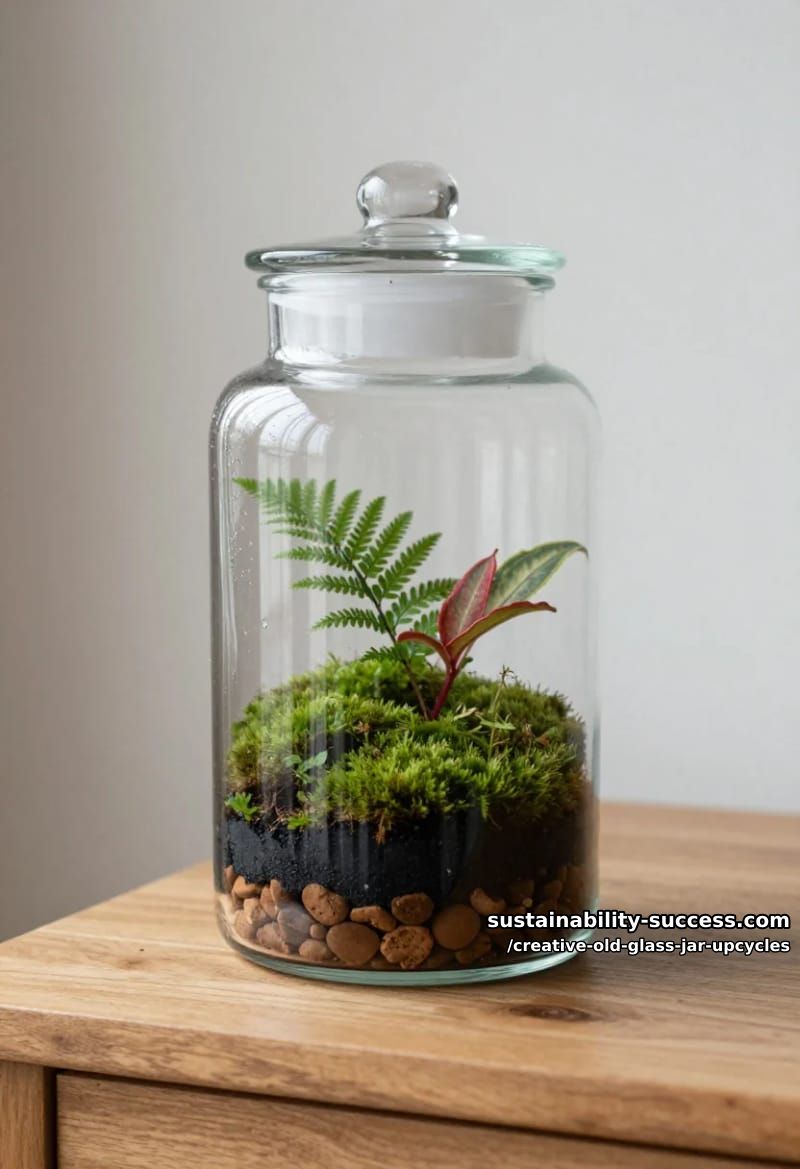
A sealed jar terrarium is a closed loop, and that’s the whole magic of it. The plants transpire, water beads on the glass and rains back down, and the thing waters itself for months, years even, if you build it right. David Latimer’s bottle garden has been sealed since 1960 and was opened to water exactly once, in 1972. Read that again. What people get wrong is the build order, and that’s the source of nearly every mold-and-rot question that lands in my inbox.
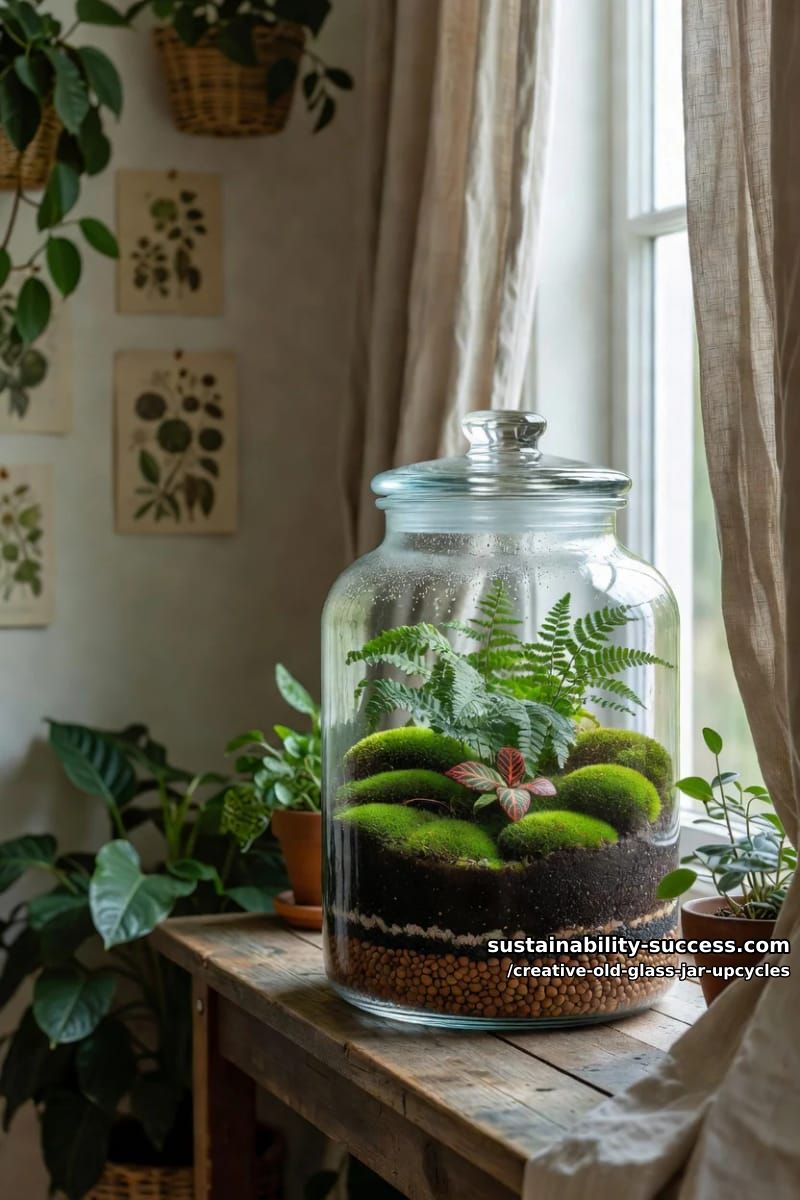
Drainage first: 1 to 2 inches of clay pebbles (LECA) or gravel, so roots never stand in water.
Mesh: a thin barrier that keeps the substrate from sifting down into the drainage.
Charcoal: a thin layer to filter the trapped air so it doesn’t go sour.
Substrate: 2 to 3 inches of terrarium or potting mix for the roots.
Plants and moss go in, then the lid seals.
Stick to humidity lovers: fittonia, baby's tears, button fern, cushion or sheet moss. Succulents and cacti will rot in that swamp inside a few weeks. And buy a real bag of horticultural charcoal, because it's the layer the cheap kits skimp on, and one bag lasts across many builds.
Perfect Plants horticultural charcoal for terrariums (24 oz)4. Pincushion built into a canning-jar lid
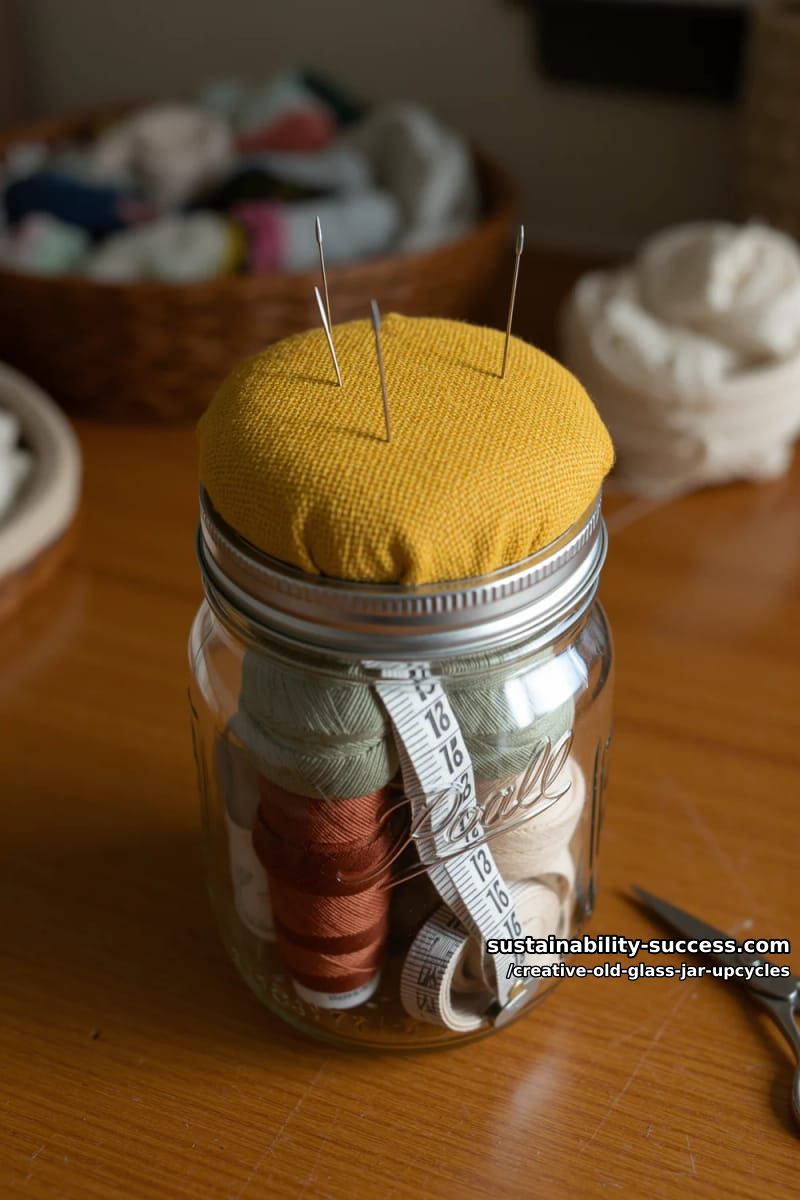
The flat canning disc turns into a pincushion and the jar beneath holds the rest of the kit, so it reads as one object on the shelf. Wide-mouth Ball or Kerr bands work because the recessed disc gives the stuffed cushion something to seat against.
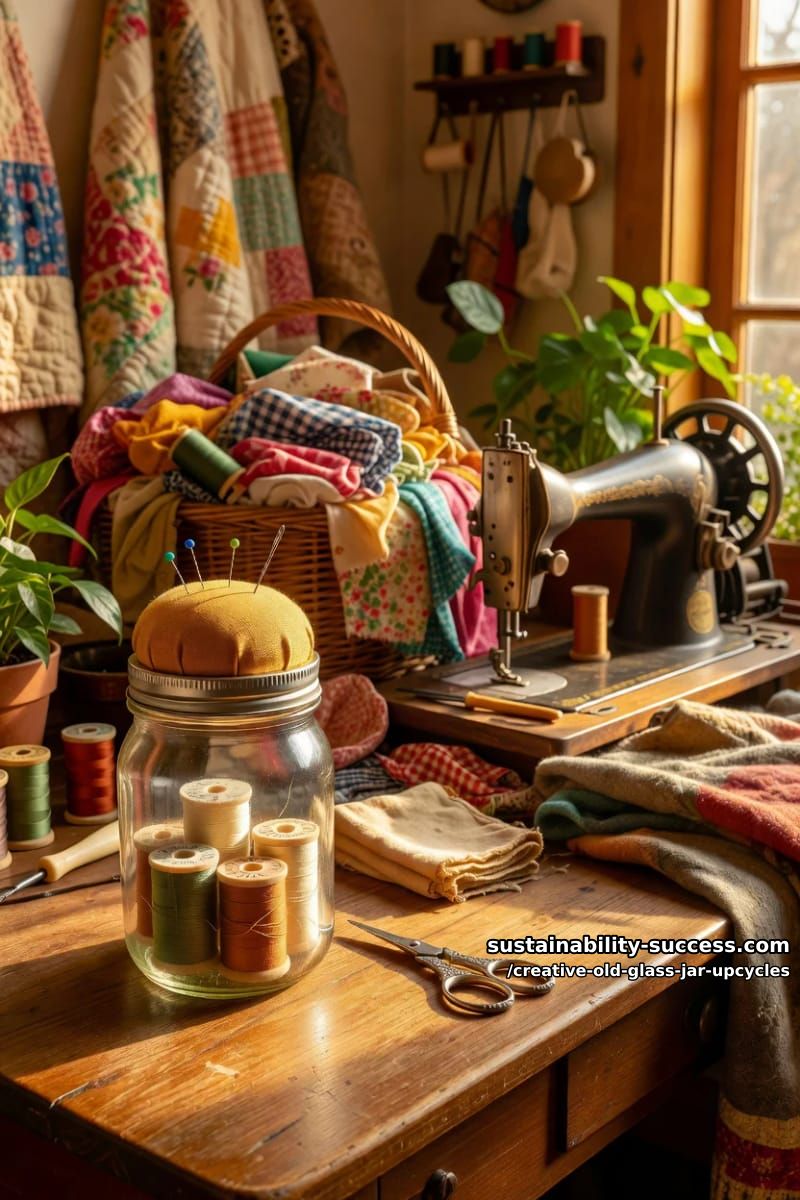
- Cut a fabric circle roughly twice the diameter of the lid.
- Stuff it into a tight dome with wool roving or felt scraps and gather the edges.
- Hot-glue the gathered fabric into the underside of the metal band, around the flat disc.
- Screw the band onto a jar filled with thread, buttons, and a tape measure.
Use wool or felt, not polyester fill. The bit of lanolin left in wool keeps pins and needles from rusting. Made from scrap, this one costs nothing, and it's a better gift than most of what you'd buy instead.
5. Jar propagation station for cuttings
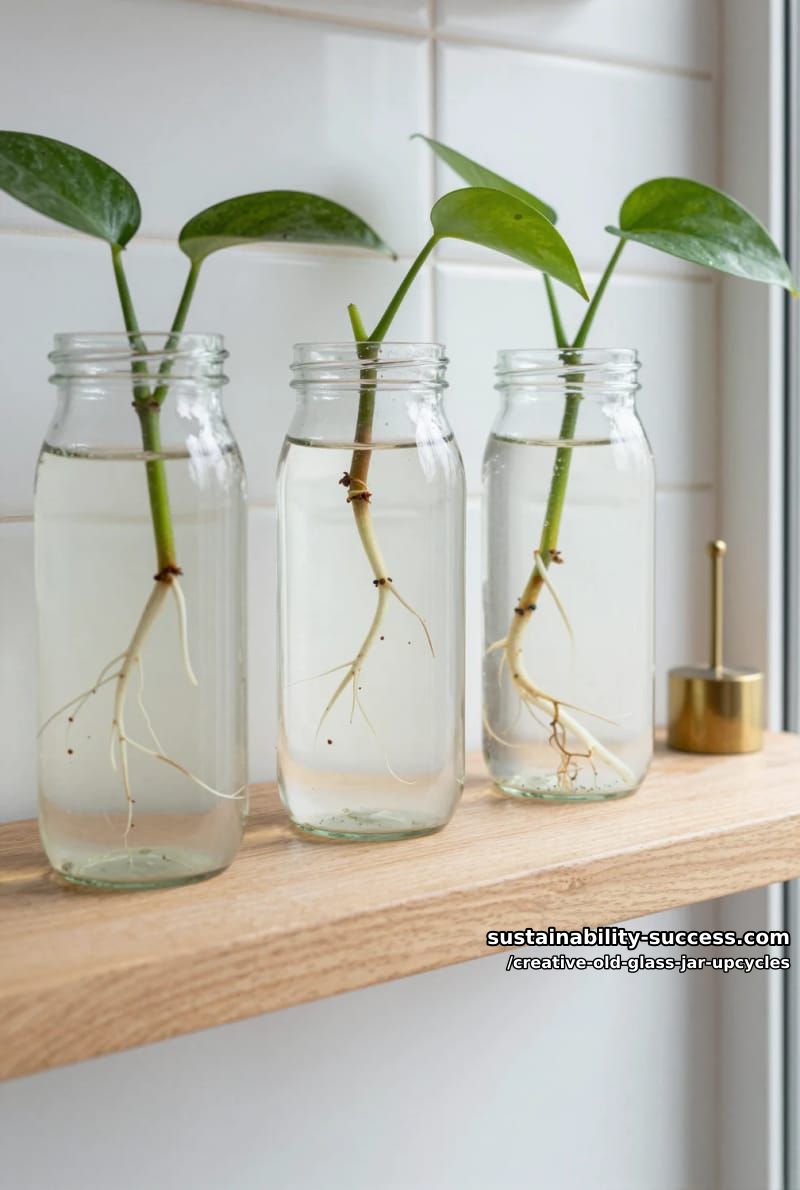
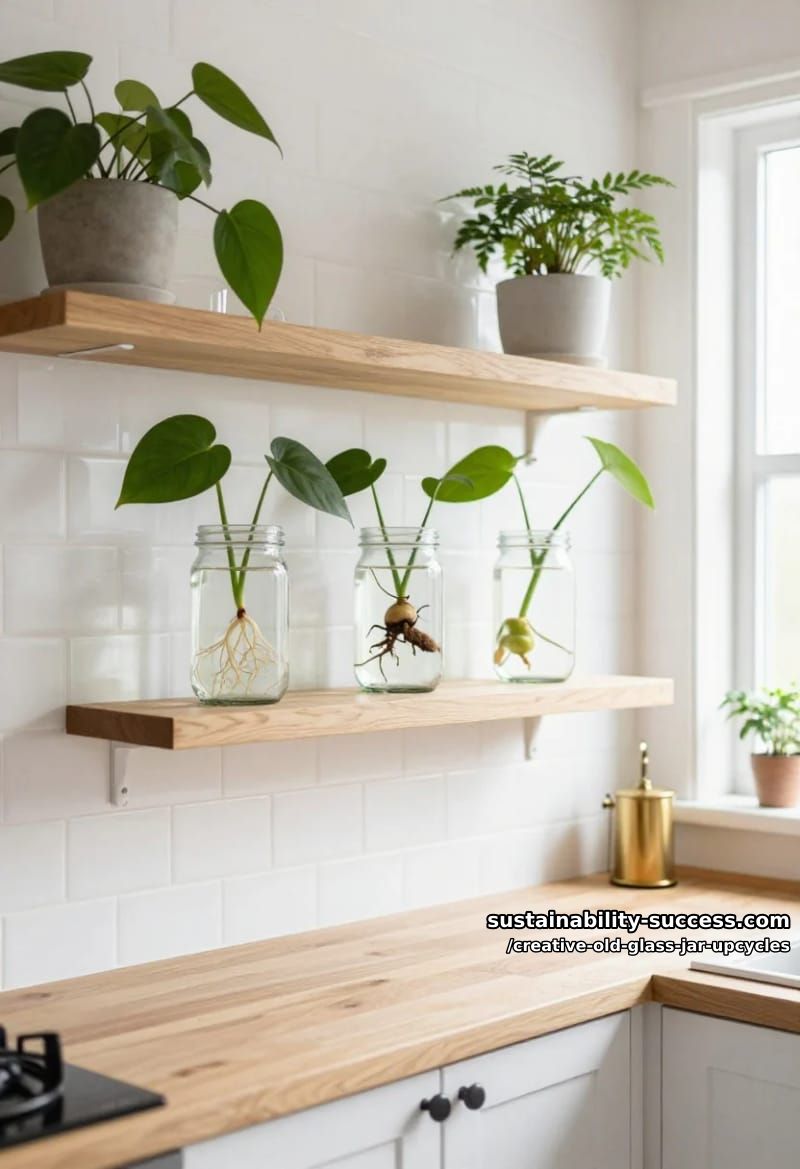
A propagation station is nothing more than a jar of water rooting cuttings on a windowsill, and the only real skill is knowing what roots in water and what just turns to slime. Swap the water weekly, keep the jars in bright indirect light, and roots show in two to four weeks. Clear glass is the whole point: watching the roots thicken is half of why anyone does this.
Do this
- Pothos, monstera, and philodendron all root fast from a node
- Coleus, mint, basil , days, not weeks
- Cut just below a node, since that’s where the root cells live
Avoid
- Succulents in water. They rot instead of rooting
- Fuzzy-leaved things like African violet, which mush at the stem
- Topping off cloudy water instead of replacing it, which is how you end up farming algae
6. Waterless snow globe jar
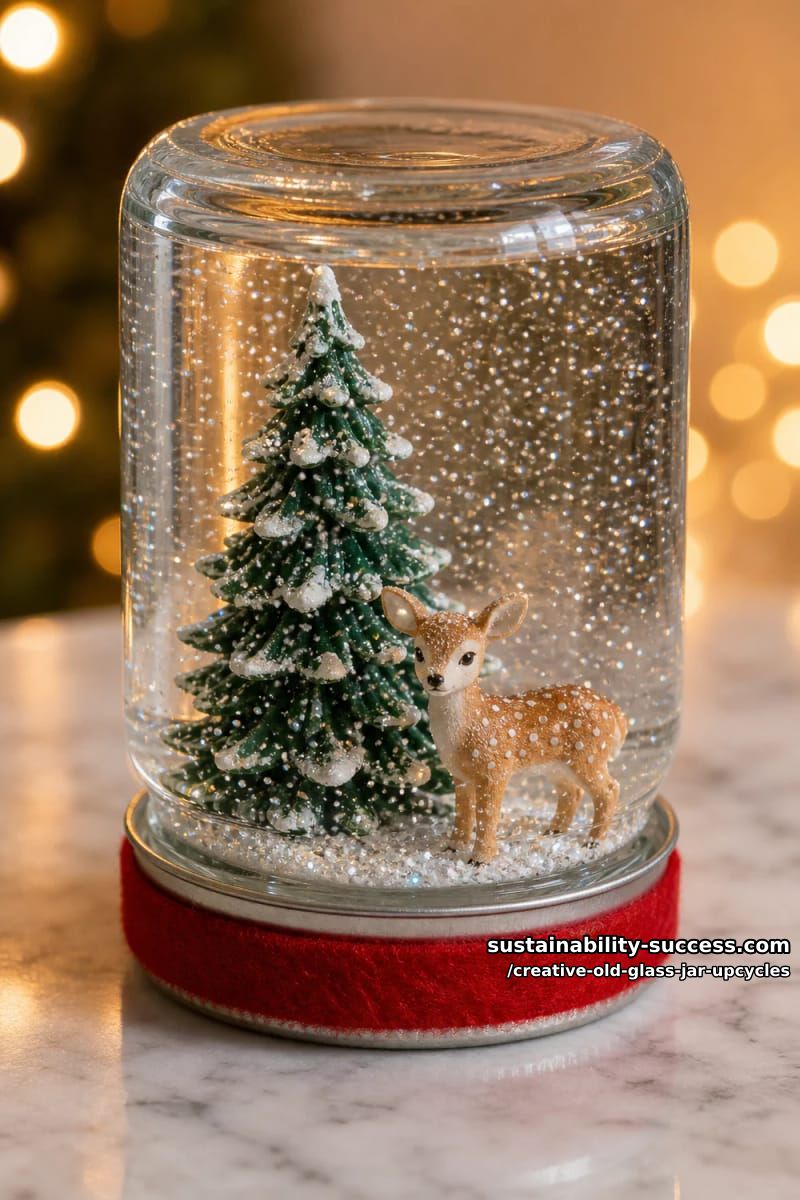
A snow globe jar keeps its trick in the lid. The figurine glues to the inside of the lid, the jar fills with liquid, and you flip the whole thing so the lid becomes the base. Pick a sealed plastic or glazed-ceramic figurine, because anything painted with water-based paint will bleed a colored cloud into the water by week two.
Distilled water with a few drops of glycerin slows the glitter so it drifts down instead of dropping like sand. I filled my first few with tap water and could never work out why they clouded over in a week. It's the minerals. Seal the lid with E6000 or marine epoxy, about $5 to $9 a tube, and let it cure all the way; hot glue gives out underwater, and you'll find the figurine floating loose by morning.
7. Punched-tin lid luminary
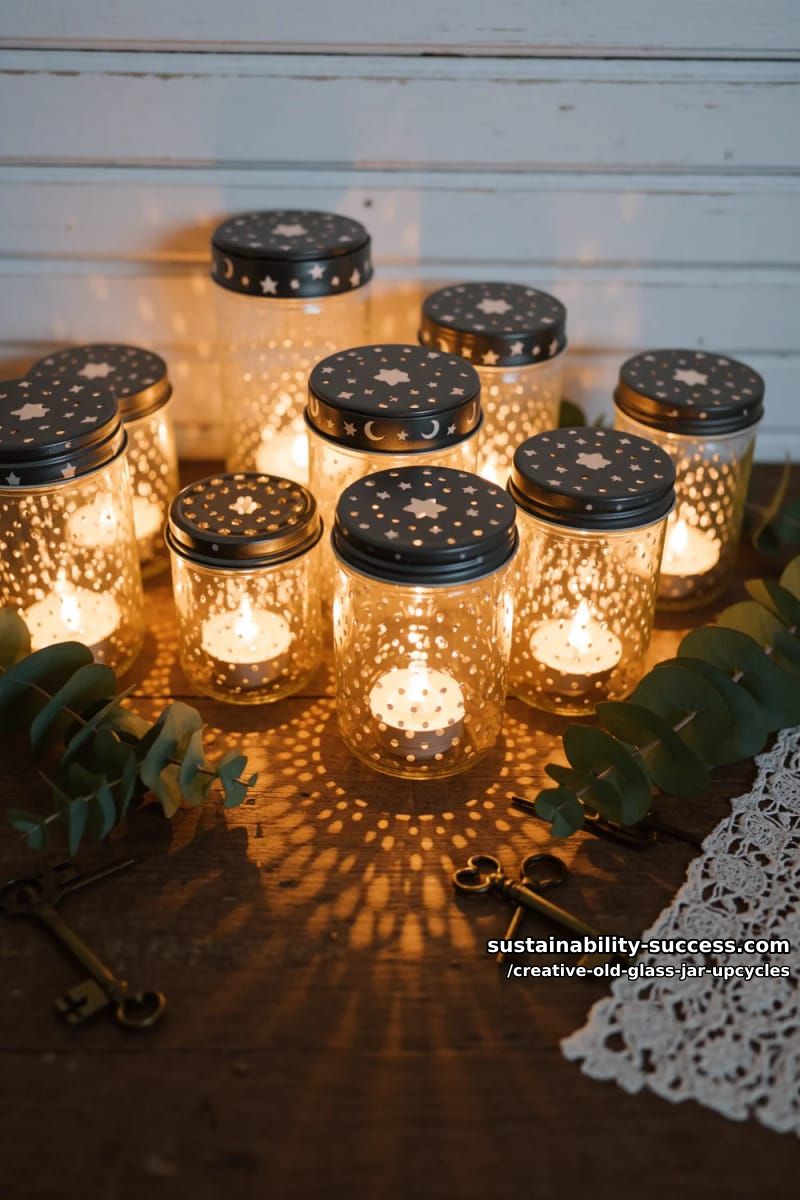
Punch a pattern into the flat metal lid and the light inside leaks out as a scatter of pinpoints, the same idea behind hojalata, the Mexican punched-tin folk craft you see all over Oaxaca and San Miguel de Allende. The glass body glows on its own; the pierced lid throws a freckle of dots onto the ceiling.

- Draw a simple radiating or star pattern on the metal disc with a marker.
- Back the disc with scrap softwood so it won’t bend.
- Punch each dot with a nail or awl and a few hammer taps, varying the nail size for denser detail.
- Drop a battery tea light inside and seat the punched lid on top.
Use a battery tea light, about $1 each, not a real flame. A metal lid over an open candle gets hot enough to scorch a shelf, and the glow looks identical coming through the holes.
8. Hanging jar herb planter
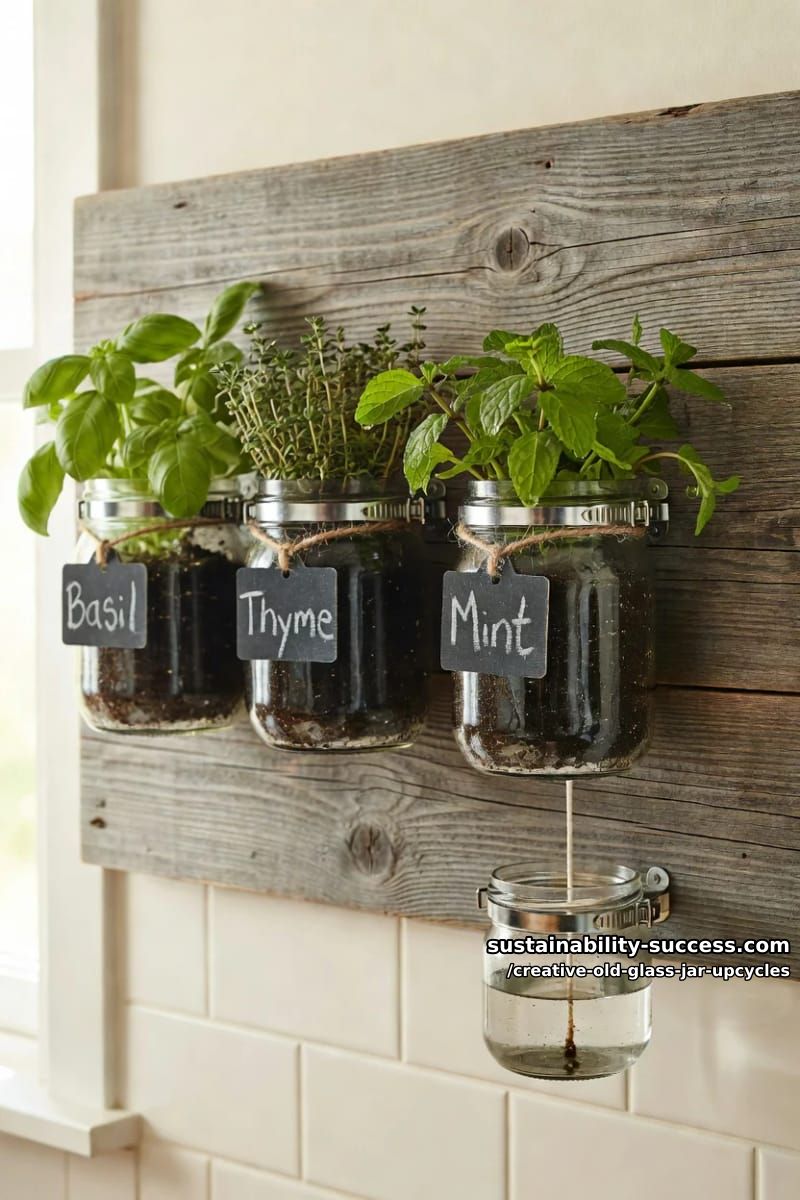
Mason jars clamped to a board give you a wall herb garden in a galley kitchen with no counter to spare. Hose clamps or pipe clamps, about $1 to $2 each, screw to a reclaimed board and cinch around the jar necks so the jars lift right out for watering at the sink.
Three-jar kitchen rail
24-inch reclaimed board, three wide-mouth pint jars
Reclaimed board, free from a pallet or the offcut bin. Three hose clamps, around $5 total. Three jars you already have. A handful of potting mix and three nursery herbs at roughly $4 each. Call it $20 for a planter West Elm would style at five times that, minus the holes you’d drill in your wall studs.
Drainage is the weak spot, since glass has no holes. Put an inch of pebbles in the bottom and water with a light hand. Or thread a cotton wick down through the soil into a small reservoir jar below, and it'll sip on its own while you're away.
9. Hanging jar bird feeder
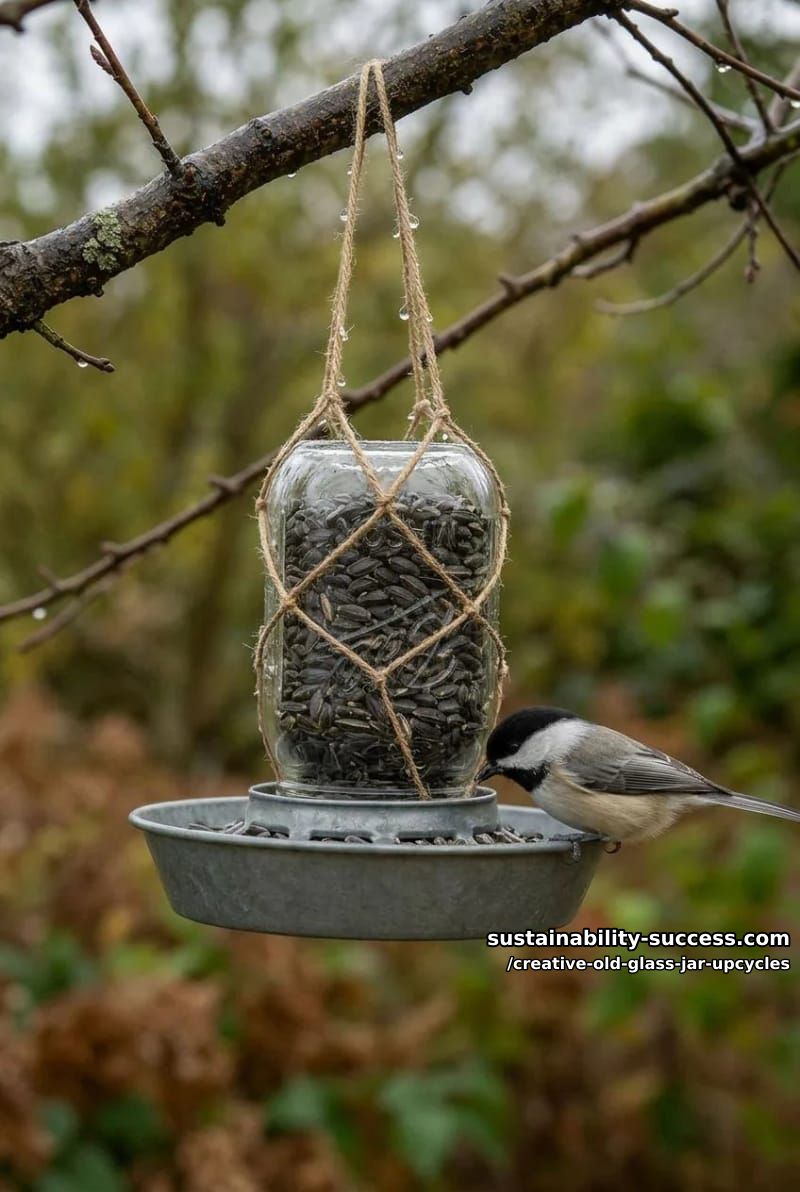
Screw a mason jar neck-down into a galvanized poultry-feeder base, sold for $6 to $10, and you've got a gravity feeder: seed drops into the tray as fast as the birds clear it. The clear jar tells you at a glance when it's time to refill, which the opaque plastic feeders never do.
Hang it where you can watch it but the cats can't reach it, and fill it with sunflower hearts or nyjer rather than cheap mixed seed, most of which ends up scattered and sprouting under the feeder. Black-oil sunflower draws the widest range of songbirds.
Wash it in hot soapy water every couple of weeks. Damp, crowded feeders spread disease through finch populations, and at least the glass makes the grime easy to spot.
10. Decoupage jar vase
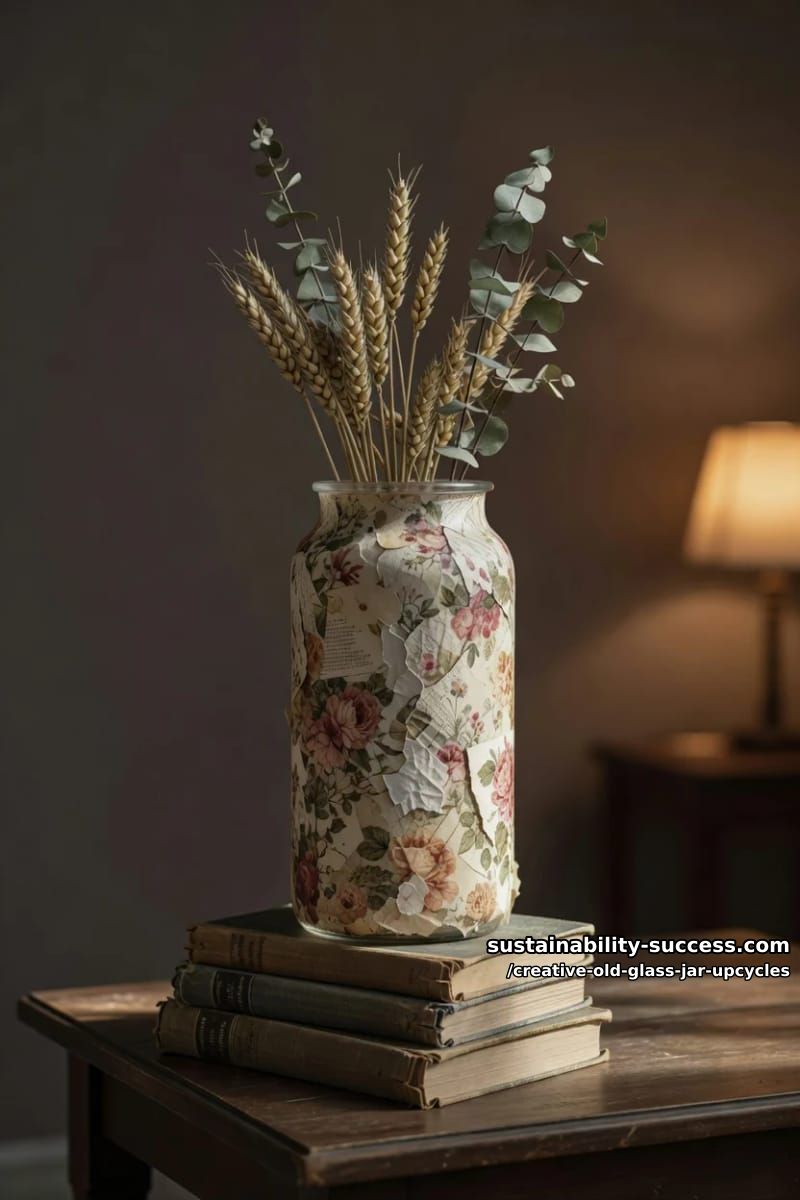
Decoupage wraps a jar in cut paper, sealed under coat after coat of glue, until it stops looking like glass and reads as a solid vessel. Eighteenth-century Venetians had a name for the dressed-up version, lacca povera, or arte povera, faking expensive lacquered chinoiserie with scissored paper and varnish when they couldn't afford the imported lacquerware.
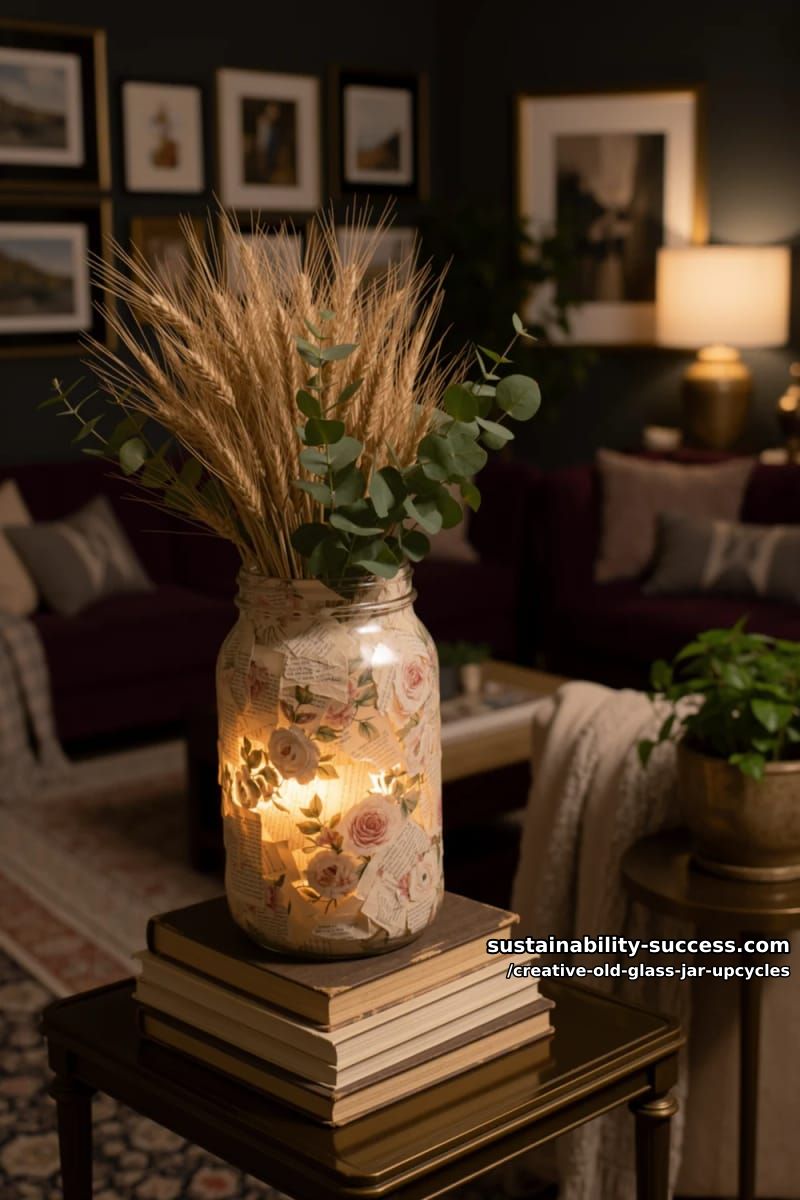
Mod Podge, $8 to $13 a jar, is the modern stand-in. Thin the first coat slightly with water so the paper lies flat, brush from the center outward to push out wrinkles, and finish with two clear topcoats so the whole thing wipes clean. Torn edges beat cut ones, because the feathered paper fiber disappears under the glue instead of leaving a visible ridge.
11. Cut-glass jar tumbler
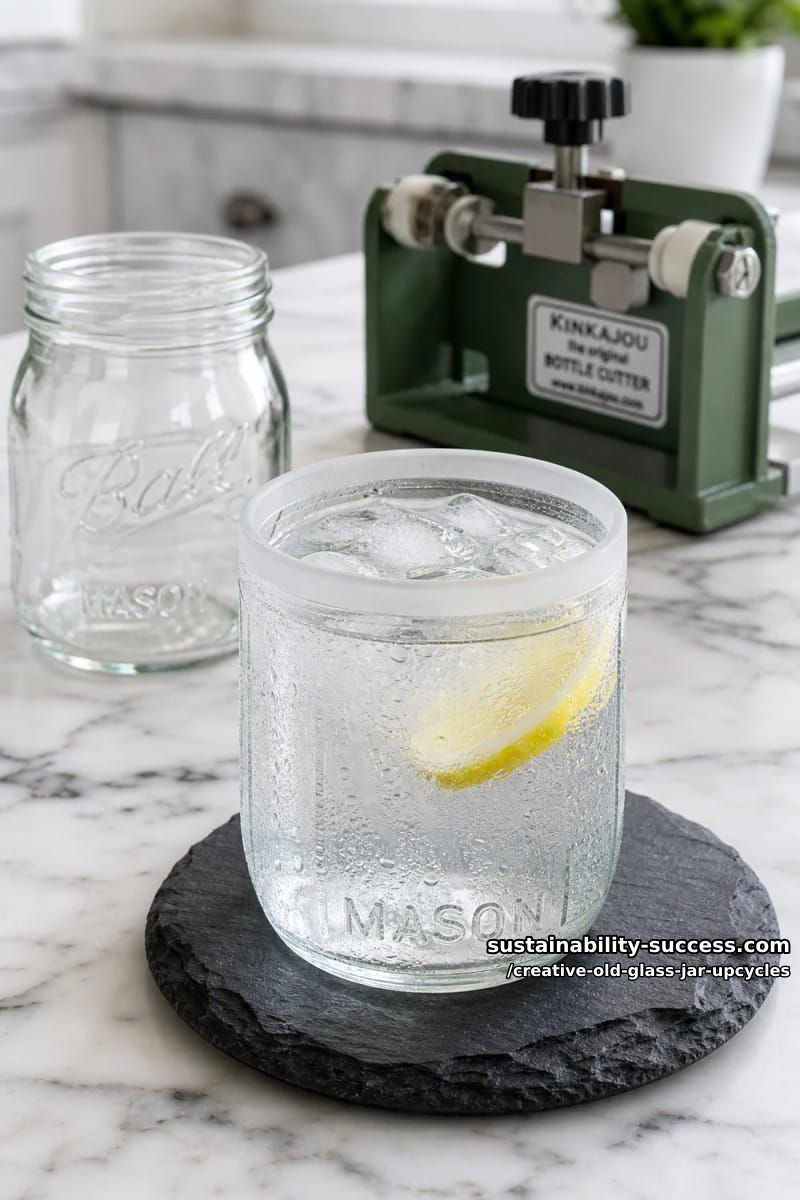
Cut a jar down, sand the rim smooth, and you've got a drinking glass or a clean-lipped vase, the move that turns a throwaway salsa jar into something you'd actually set on the table without apology. It comes down to a score line followed by a thermal shock that runs a crack right along it.
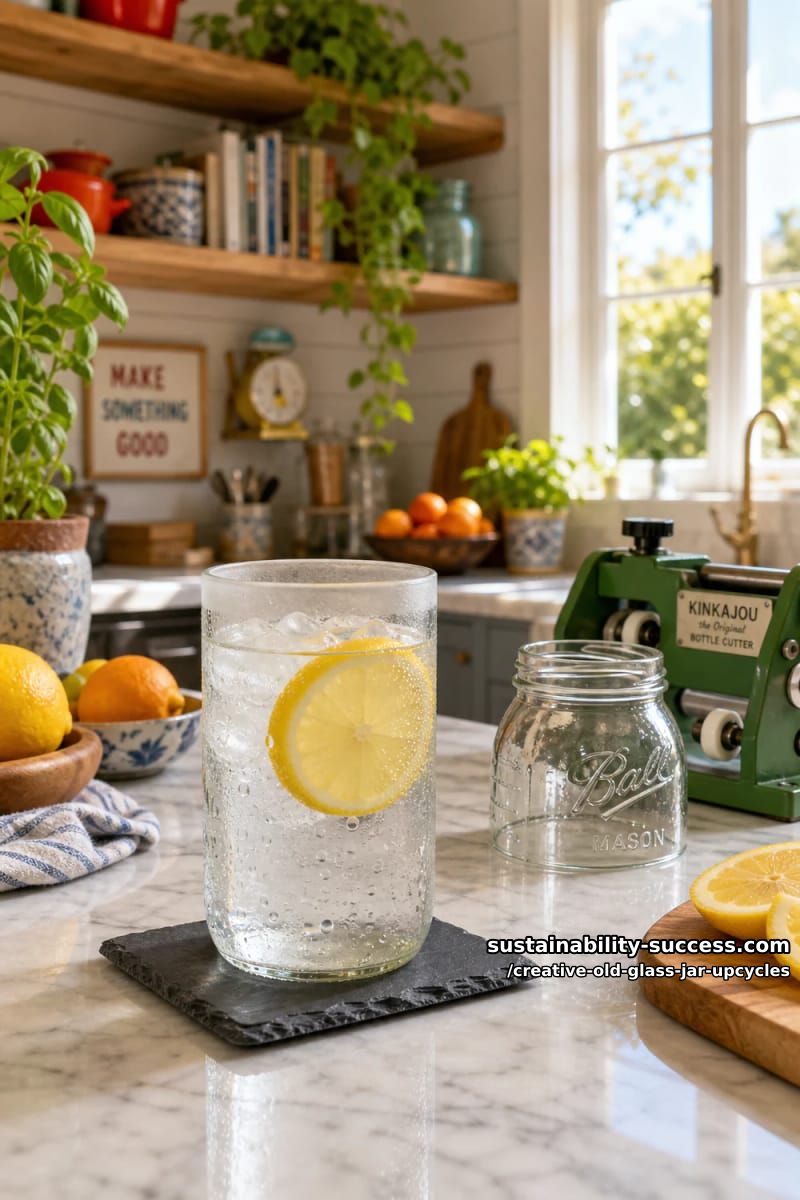
- Score one clean line around the jar with the cutting jig. A single pass, and no going back over it.
- Shock the line, alternating near-boiling and ice water, until the glass parts along the score.
- Sand the cut edge with wet 120-grit, then 220, then 400, until it’s smooth enough to put to your lip.
Wear cut-resistant gloves and don't hurry the sanding, because an under-sanded rim will slice a lip. Stick to round, smooth-sided jars. Square jars and embossed lettering throw the score off and crack where they please.
12. Solar firefly jar for the garden path
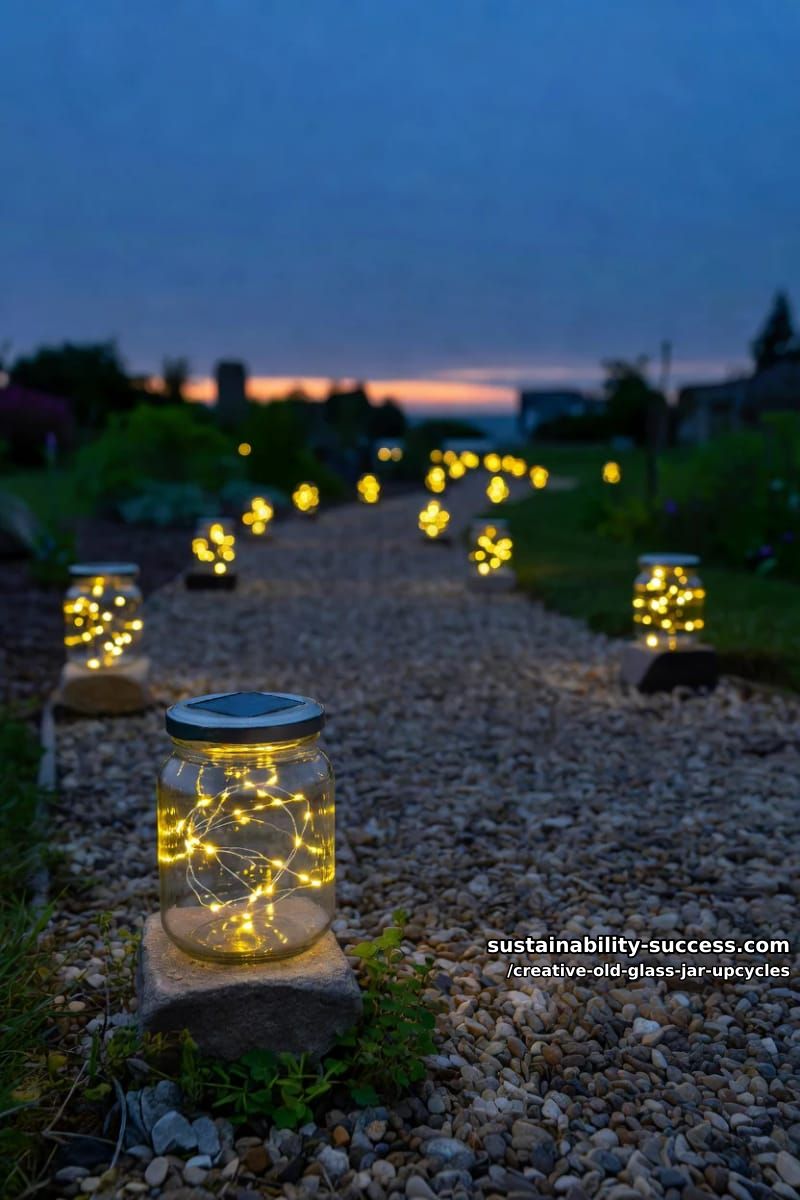
Swap a jar's lid for a solar one and the path lights itself off sunlight, with no wiring to bury and no batteries to swap for a couple of years. Solar lid inserts, $16 to $25 for a multipack, drop a small panel and a coil of warm LEDs into a standard lid ring that fits regular-mouth jars.
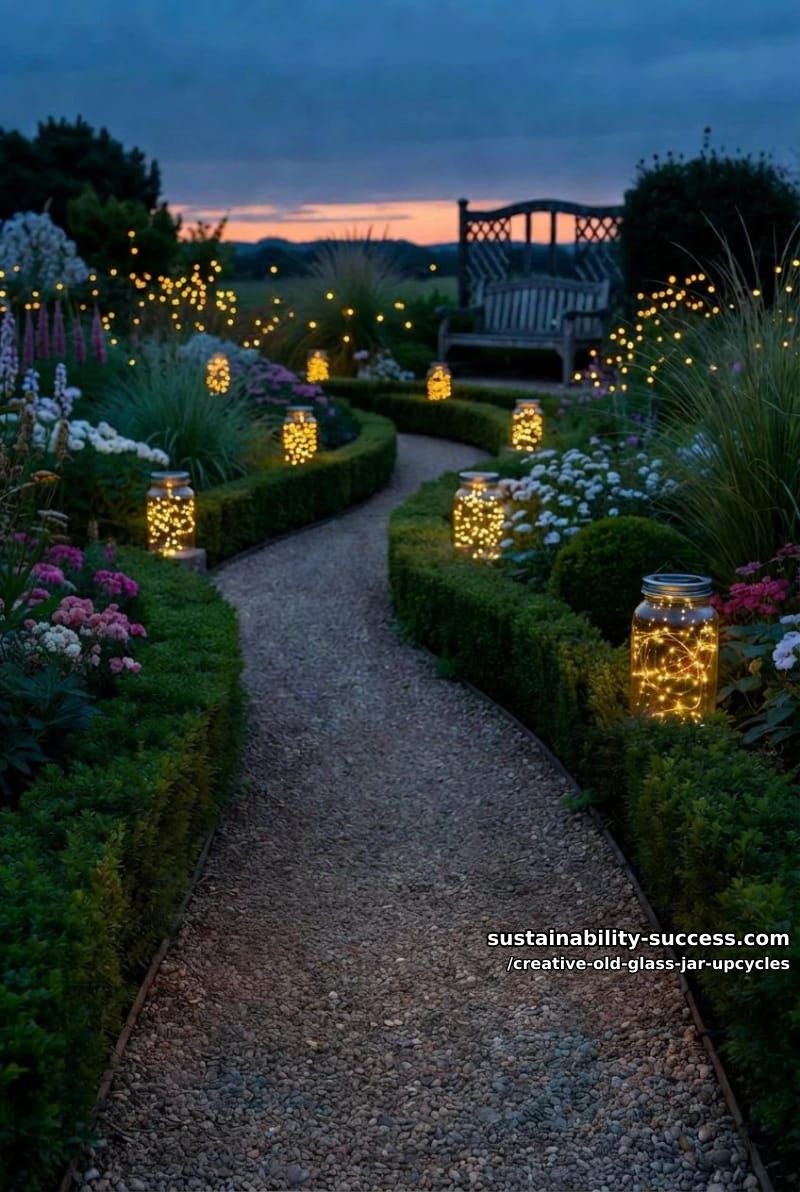
They charge in 6 to 8 hours of sun and run 8 to 12 hours after dark, switching on by themselves at dusk. Fill the jar first with sea glass, river pebbles, or a few sprigs of dried lavender so the light refracts instead of just sitting in an empty jar, then set them on fence posts or down a walkway.

Conclusion
The salsa jar cut down into a tumbler is the one I'd point a beginner away from, at least at first. If you're starting cold, the frosted lantern and the propagation station ask for nothing but jars and patience, so begin there. Save the cut-glass tumbler and the punched-tin lid for after you've bought the bottle cutter and built a little nerve, since both reward a steady hand and punish a rushed one. One honest caveat on the terrarium: "years without water" holds up, but only if you nail the build order and then leave the lid alone instead of opening it to fuss, which is harder than it sounds. When you go jar hunting, grab the wide-mouth Ball jars for anything you fill or plant, set the squat salsa and jam jars aside for votives and cutting, and don't toss the lids. Half these projects live in the lid.