
Paper covers what paint only advertises , a scratched dresser top, a laminate cabinet, the water ring on a thrift-store tray. Decoupage has been the fix for all of it for centuries, from the 18th-century Venetian workshops that glued cut engravings onto furniture to fake lacquer, down to the rice-paper dressers filling Pinterest this week.
The twelve projects below trade the paintbrush for mulberry sheets, cocktail napkins, and damask offcuts. They run from a five-minute switch plate to a headboard cut from one board, and a few of them ignore the rules every tutorial repeats.
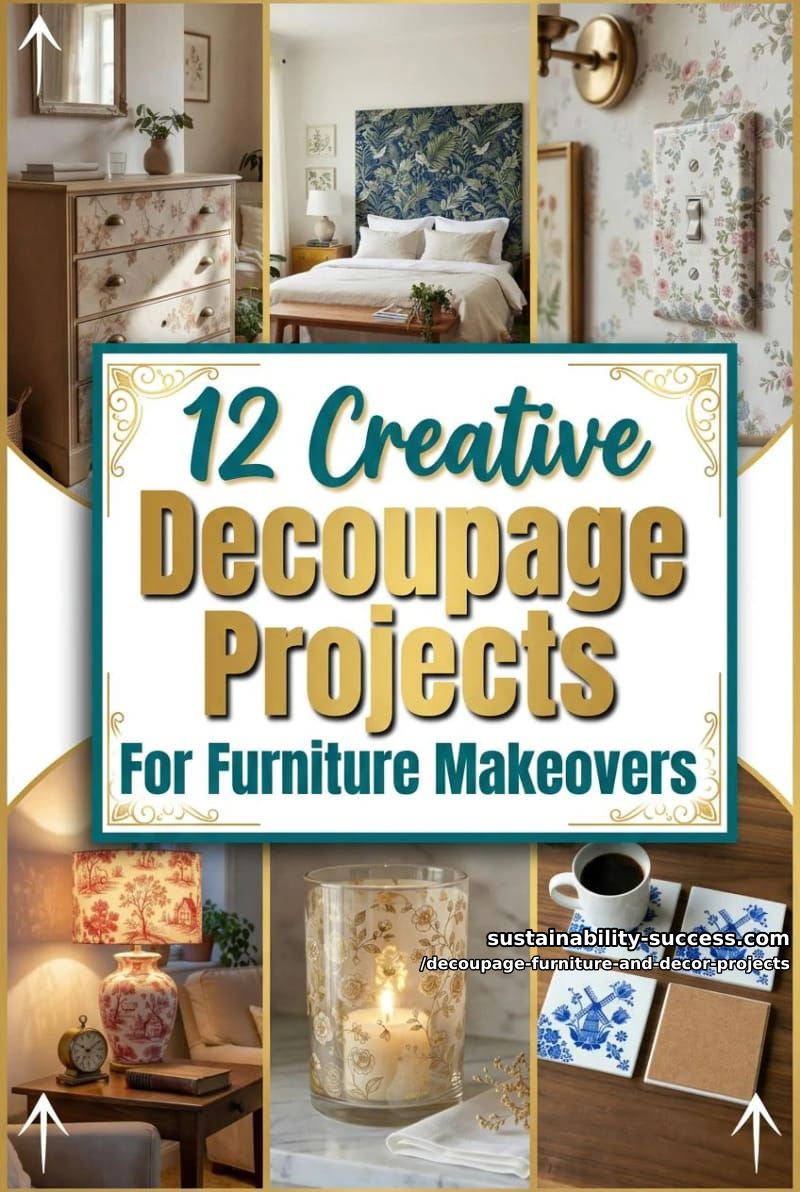
1. Faded floral rice paper dresser
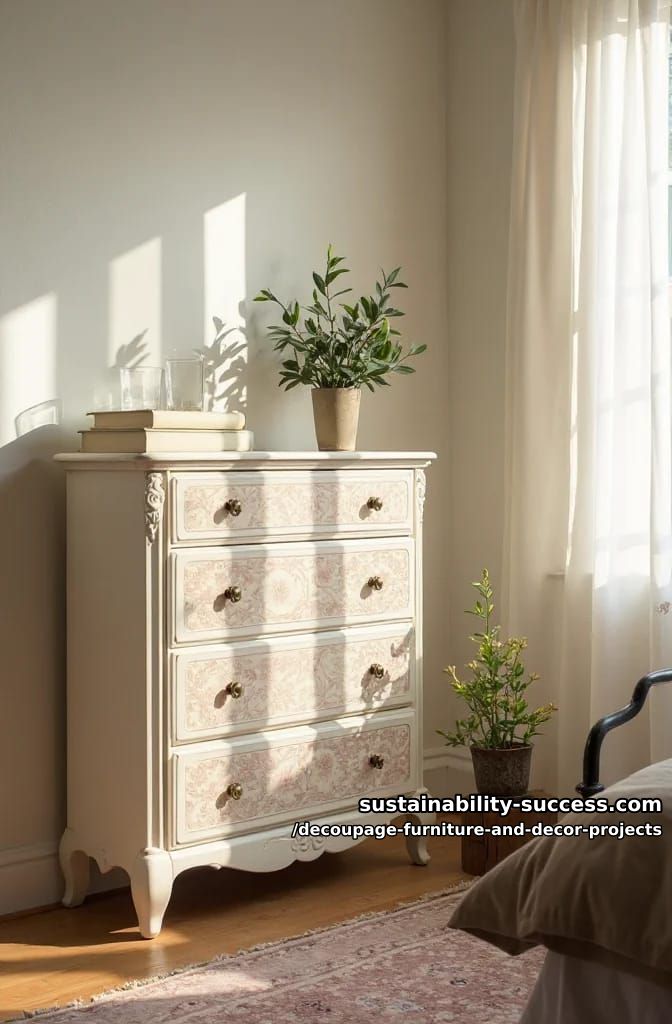
Rice paper sinks into the paint instead of riding on top of it. That’s the whole reason a $20 pine dresser can pass for something inherited instead of stickered. The sheets are thin mulberry fiber, and they need nothing but your topcoat to go down: brush a wet coat of clear sealer onto the painted drawer front, lay the paper into it, seal over the top. This rice paper is sheer and porous and easily sticks to furniture using any regular topcoat, so no extra Mod Podge or separate gluing product is required.
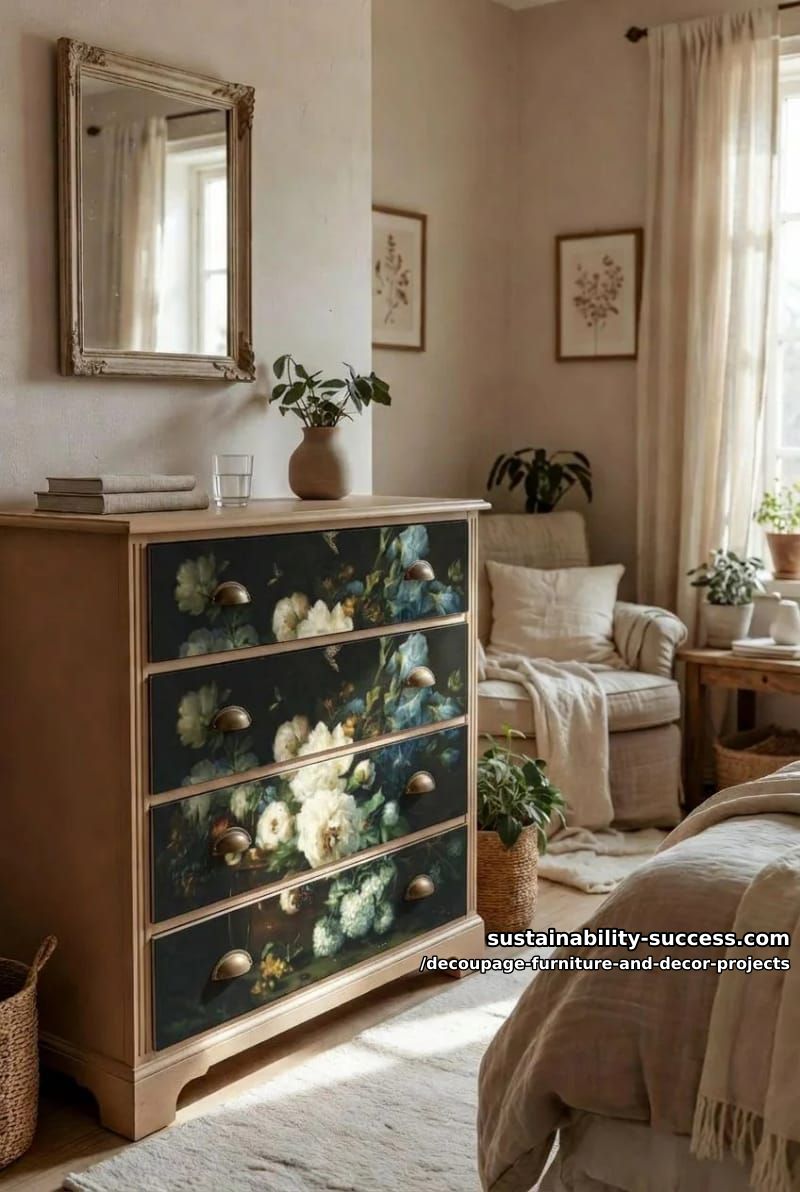
The step everyone rushes is the waiting. Chalk paint feels dry within an hour and stays soft underneath for two more days; lay paper on it too early and the trapped moisture wrinkles the entire front. Allow at least 48 hours for paint to fully cure before applying the decoupage, and longer in cold conditions. This is the kitchen-table version of the look the Venetians spent fortunes faking in the 1720s. Their lacca povera glued cut-out paper prints onto prepared, painted wood and varnished over them to imitate the more expensive lacquered surfaces coming out of Asia, and it reached its peak in Rococo Venice.
Mulberry-bark sheets that lie down with topcoat alone — no gluey learning curve for a first try.

2. Blue-and-white napkin serving tray
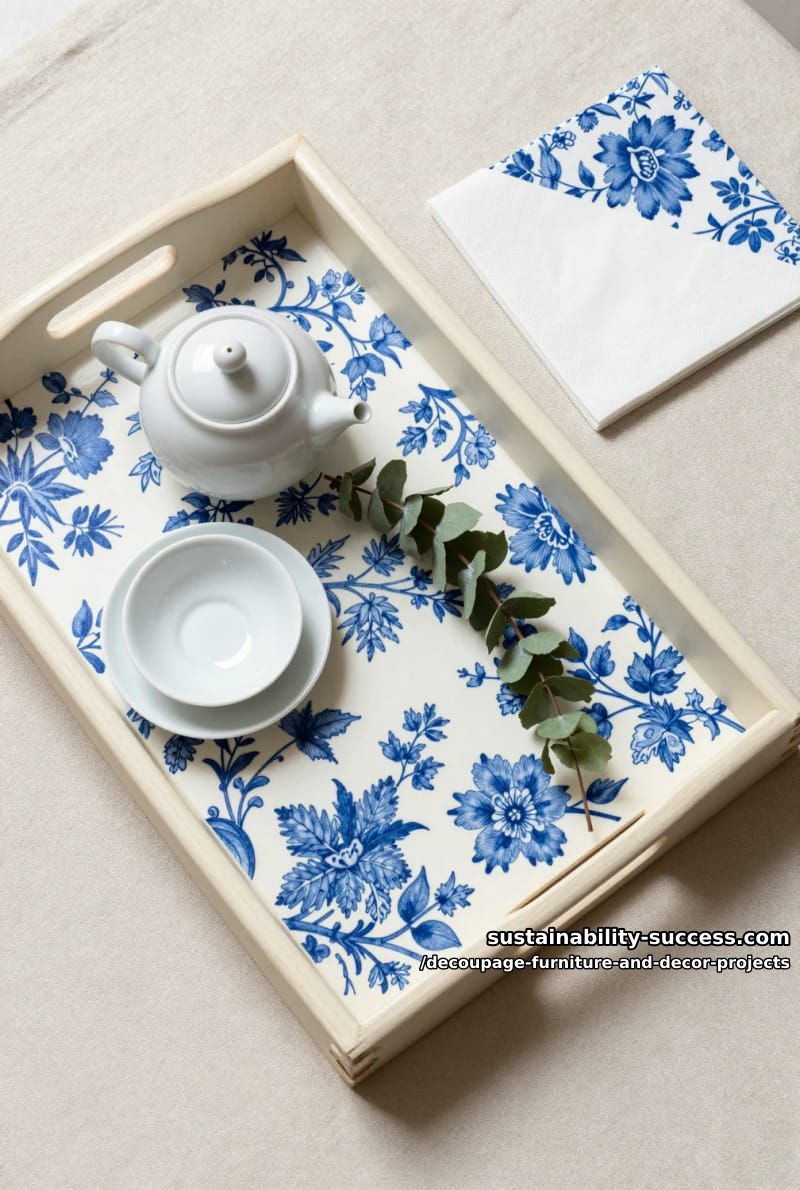
For under a dollar, a paper cocktail napkin turns a plain wooden tray into something with a pattern , but only the printed top layer ever touches the wood. Cocktail napkins are pressed from multiple plies, so peel off the blank white backing layers and decoupage just the tissue-thin printed sheet; regular printer or scrapbook paper is thicker, is not made for this, and bubbles up instead. Leave the white backing on and it dulls your colors, too.
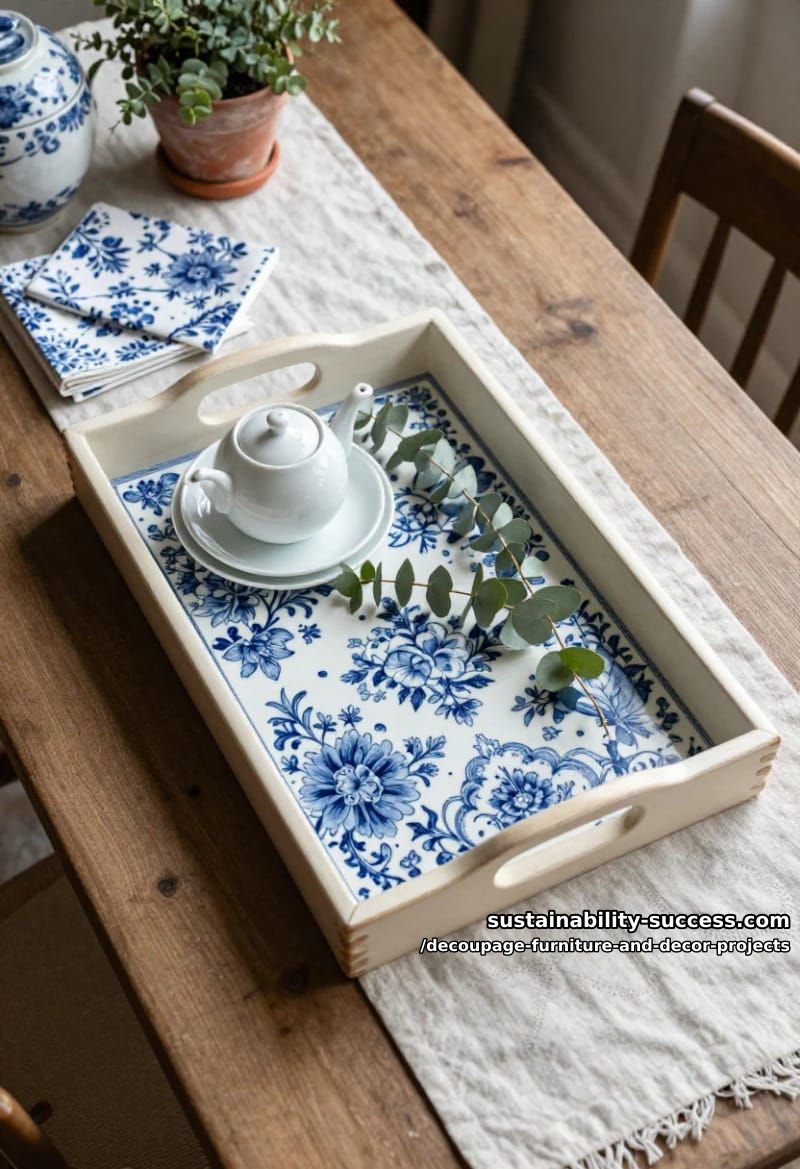
Finish matters more here than most people admit. I sealed trays with matte Mod Podge for years because I liked the flat look , then a guest parked a hot mug on one and the ring went straight through. A tray is a working surface. Finish it with something built for the job and skip anything labeled matte on top.
Do this
- Rice paper on big flat panels , it lies down seamless.
- For curves and small items, three-ply napkins peeled down to the printed sheet.
- Wrapping paper is a gamble. Some bubbles, some lies flat, so test a scrap before you trust a whole roll.
Avoid
- Printer or scrapbook paper. Too thick; it traps air and ridges up.
- All three napkin plies at once , the white layers dull the print and pad it out.
- Newsprint and magazine pages under a glossy seal, where the ink can bleed grey.
For a starter stash, this 36-pack of blue-and-white chinoiserie decoupage napkins gives you nine repeating prints , enough to test on small pieces before committing to anything big.
3. Damask cabinet door panels
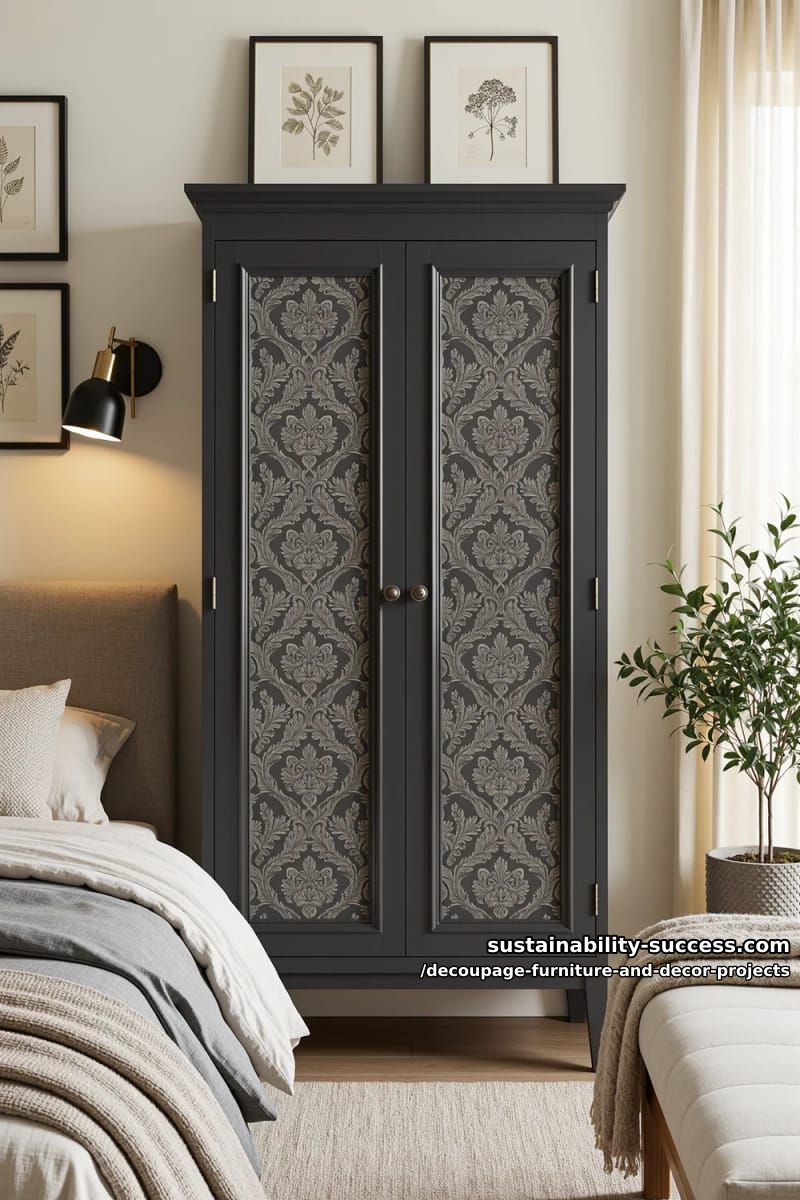
Cover only the recessed door panels, paint the frame around them, and the cabinet's own molding turns into a picture frame for the pattern. This one move is what separates decoupage that looks deliberate from decoupage that looks like contact paper. Most of those wrapped-top-to-bottom pieces online have buried the furniture under the pattern , too much of one idea, nowhere for the eye to rest.
Damask reads formal, so give it a piece with real lines , a panel door, a bow front, some carving. The 18th-century armoires that kicked all this off were framing the pattern in exactly the same way. Back then the cut-out images were commercially printed sheets, often colored by hand, and much of the careful cutting was done by upper-class women in craft circles, the same social ritual as needlepoint.
Paper the flat or recessed field only and let the existing molding, beading, or door inset do the bordering. That contrast between papered panel and painted frame is what keeps the piece reading as furniture instead of a wrapped box.
4. Vintage botanical stair risers
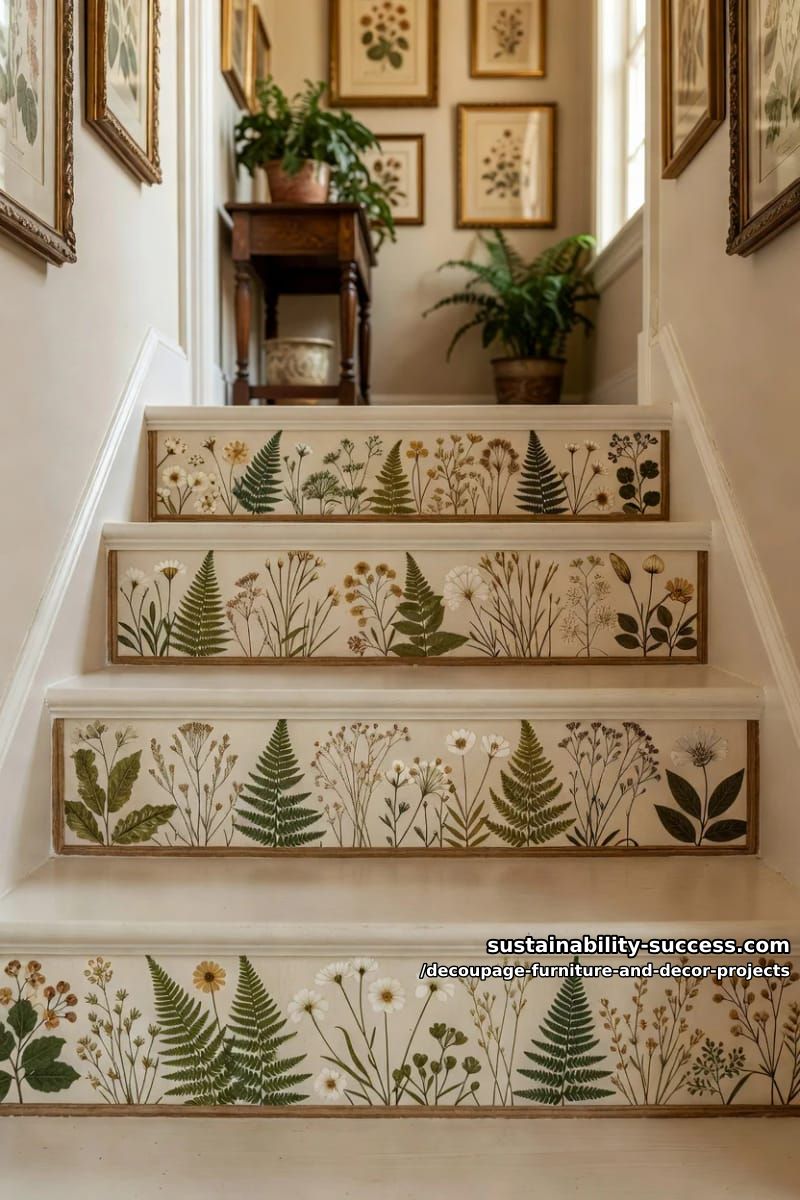
Stair risers wear patterned paper like a row of framed prints you happen to climb. A riser is vertical and nobody touches it, so the finish holds for years. Run a different botanical print up each step, or one repeating pattern up the whole flight, then seal with two thin coats of matte until it sinks into the wood. Cut each sheet a hair oversized and trim it flush to the tread with a craft knife once the sealer grabs.
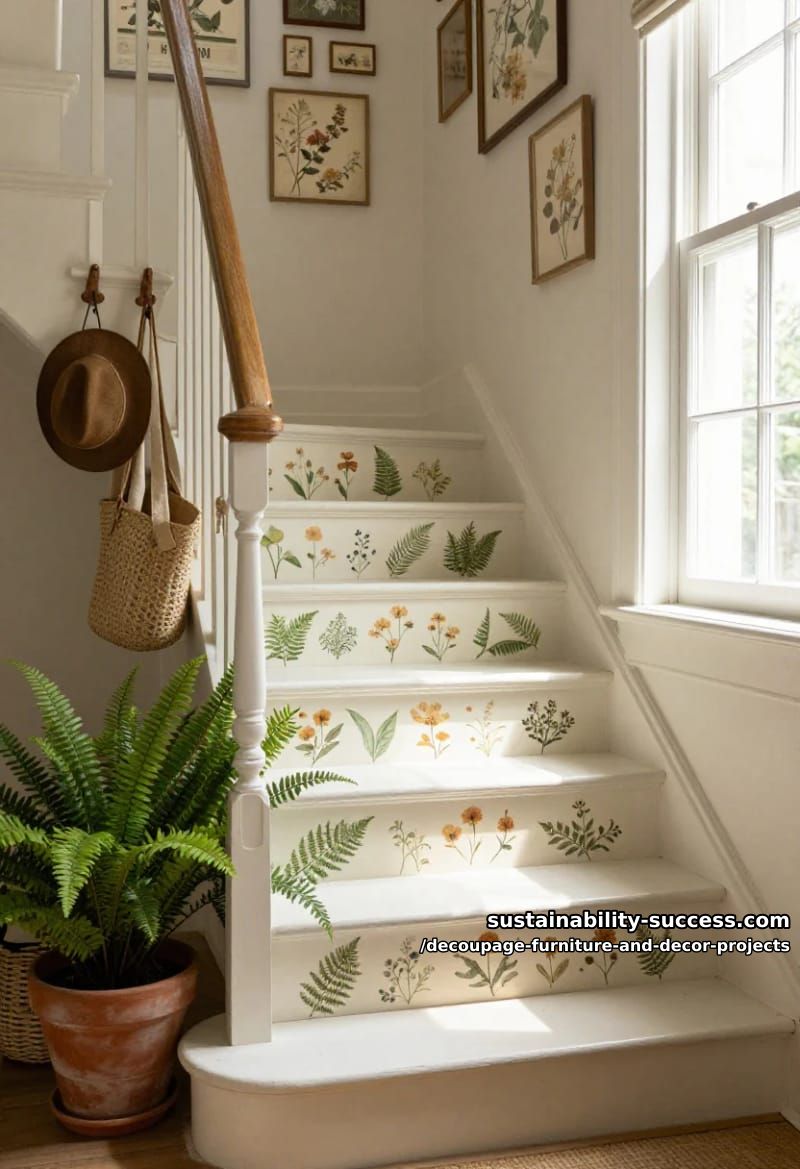
Renting complicates things, since decoupage is meant to be permanent. The honest workaround: cut self-adhesive wallpaper to riser size instead of gluing paper down, so it peels off clean when you go, and save the real thing for a staircase you own. Test one riser before you commit to thirteen.
Refreshing a 13-step staircase
Standard flight, risers roughly 7 inches by 36 inches, papered and sealed
Approximate cost
| Qty | Item | Spec | Price |
|---|---|---|---|
| 6 | Decoupage rice paper or wallpaper | large A1 floral or botanical sheets | $4 to $8 each |
| 1 | Clear matte sealer | 16 oz, water-based | $12 to $16 |
| 1 | Foam brush set | 1 to 2 inch applicators | $6 to $10 |
| 1 | Craft knife and blades | snap-off, for flush trimming | $5 to $9 |
| Total | $47 to $83 | ||
Prices are approximate ranges as of 2026; verify before purchase.
5. Toile lampshade that prints the wall
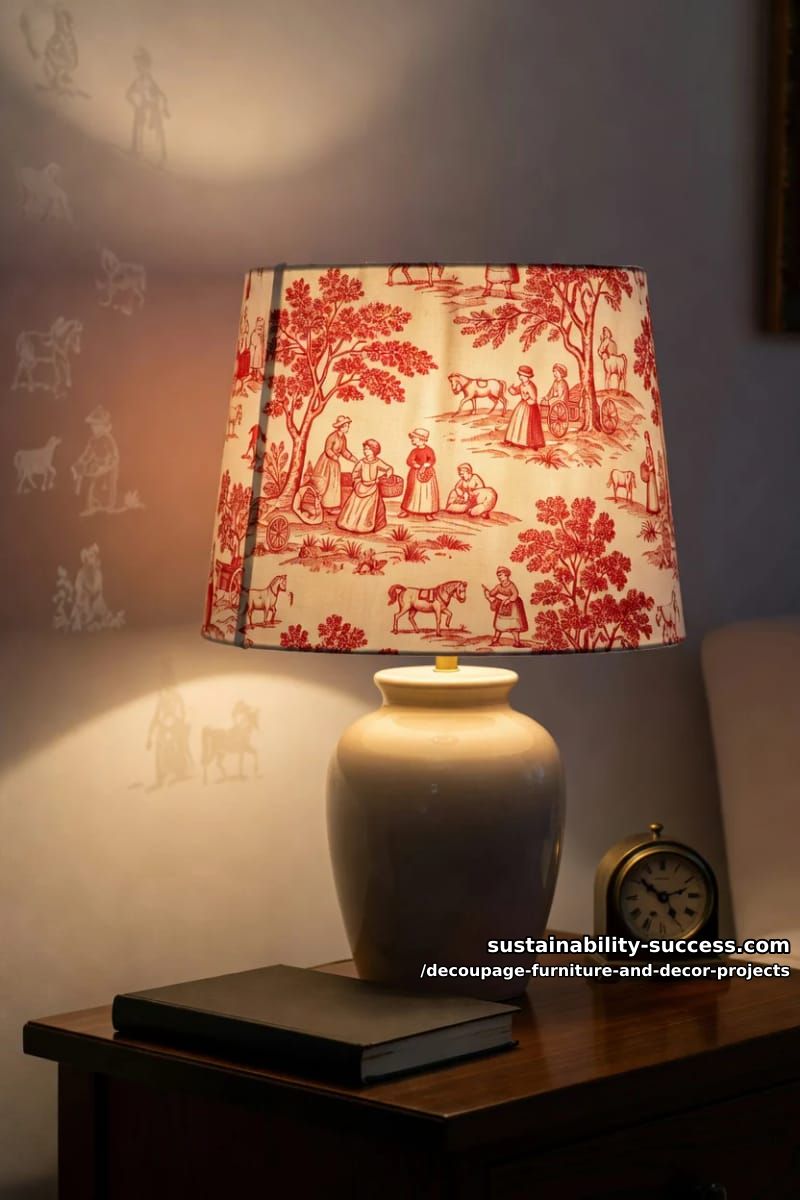
A paper-wrapped lampshade prints its pattern across the wall when the lamp's on , but swap in an LED bulb before you wrap a thing. Pick a translucent paper or a thin printed tissue so light actually passes through. Hold a sheet up to a bulb in the store; you'll know in two seconds whether it glows or just blocks. Glue with a thin, even medium, or you'll get cloudy patches where the light reads every brushstroke.
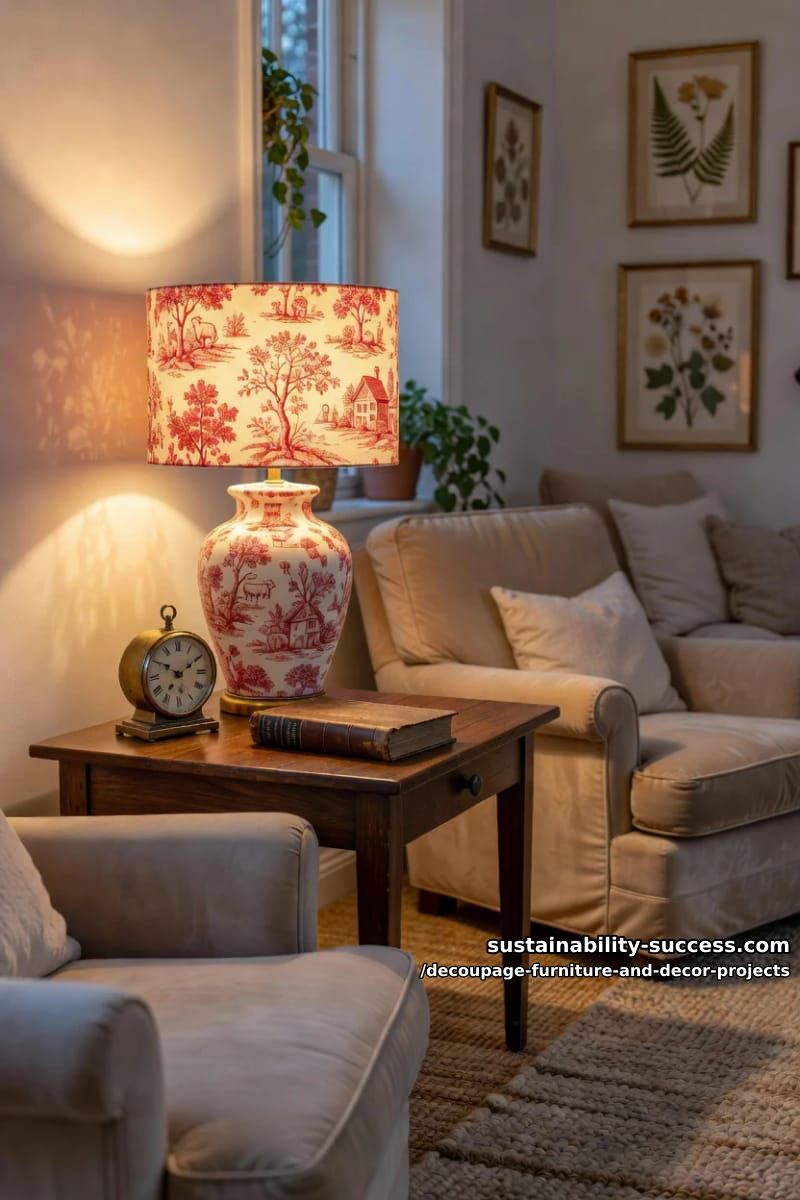
Incandescent and halogen bulbs run hot enough to scorch paper and soften adhesive. Stick to a cool-running LED, keep paper off the metal harp and anything close to the bulb, and never wrap a shade so small the bulb crowds the paper. Get this one wrong and it’s a fire risk, not just an ugly finish.
6. Fern-print terracotta pots for a covered porch
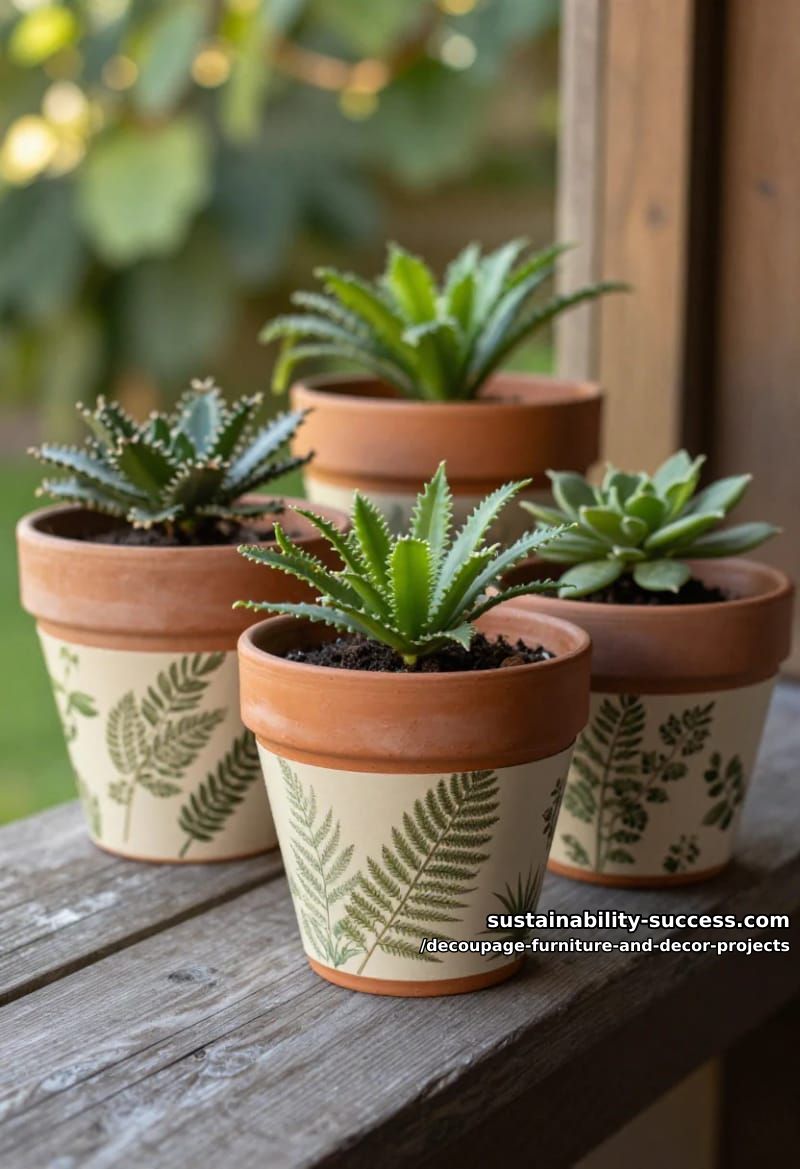
Terracotta is basically a sponge, so an outdoor project lives or dies on the sealer rather than the paper. Prime the bare pot first or the clay drinks your medium straight out of the paper. Mod Podge Outdoor works on terra cotta and holds up in sheltered outdoor spots, but the label is clear that it is water-resistant, not waterproof, so these belong under an eave or on a covered porch rather than out in the rain.
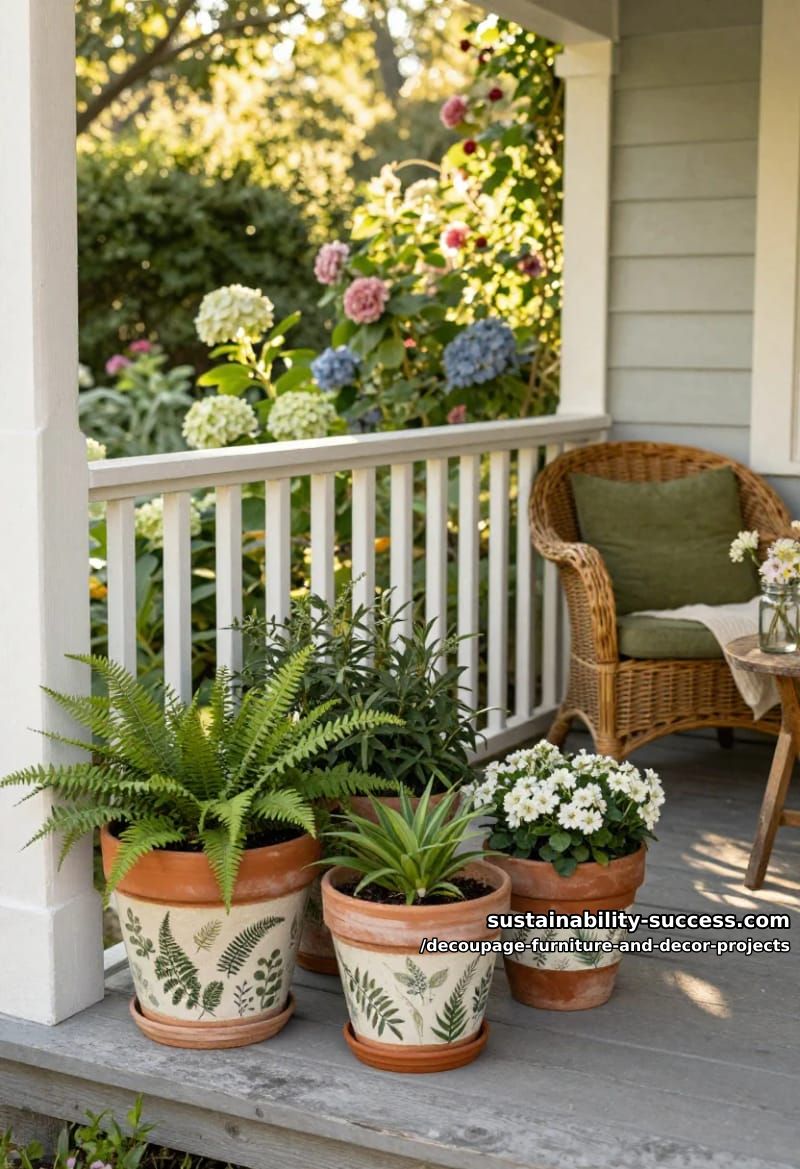
The paper happens to be a quietly sustainable pick. Mulberry rice paper is made from bark, so no trees are felled, and paper mulberry grows fast on little water and few pesticides. Pair it with a thrifted pot and the whole thing is repurposed top to bottom.
For anything that lives outside, grab Mod Podge Outdoor, 16 oz instead of the standard formula.
7. Reverse-decoupage glass hurricane
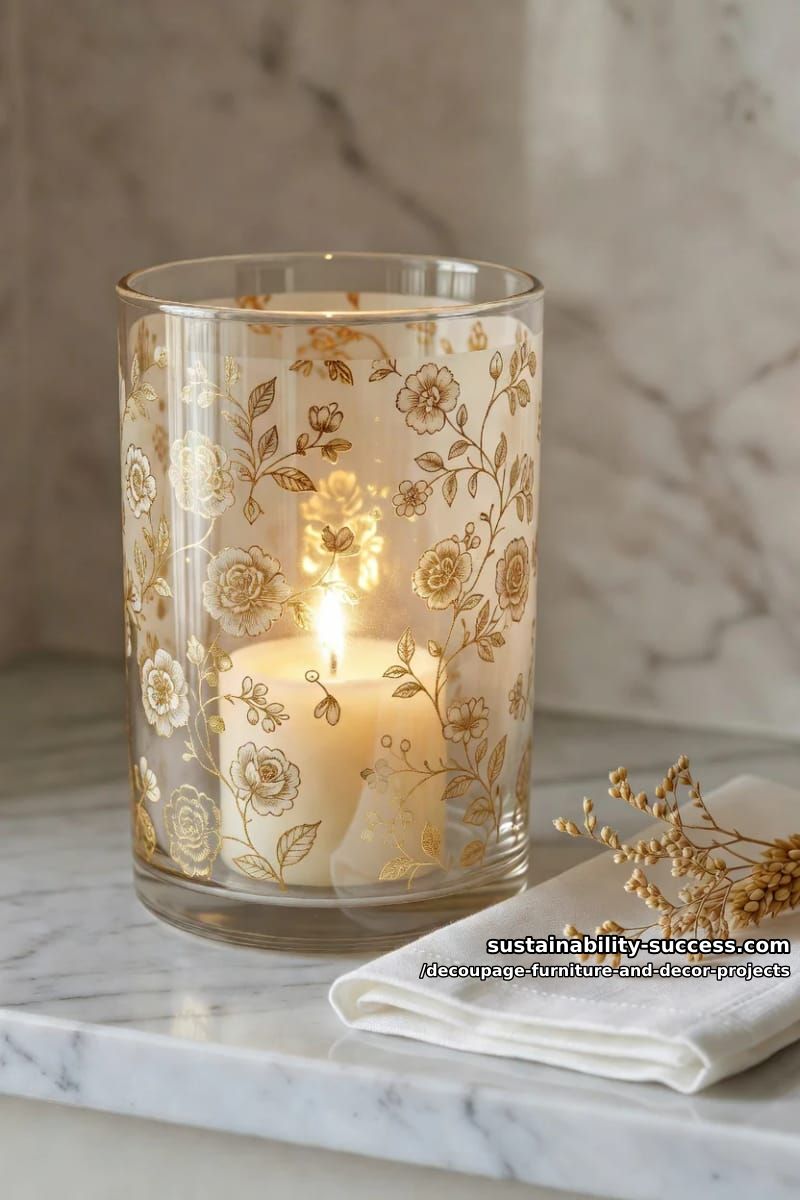
Reverse decoupage runs the layers backward. You glue the paper face-down against the inside of a glass vase or hurricane, so the glass becomes the smooth glossy surface and the pattern shows through from behind it. The front then looks like painted or printed glass , no paper texture, nothing to pick at, which is exactly why it survives on something people keep picking up.
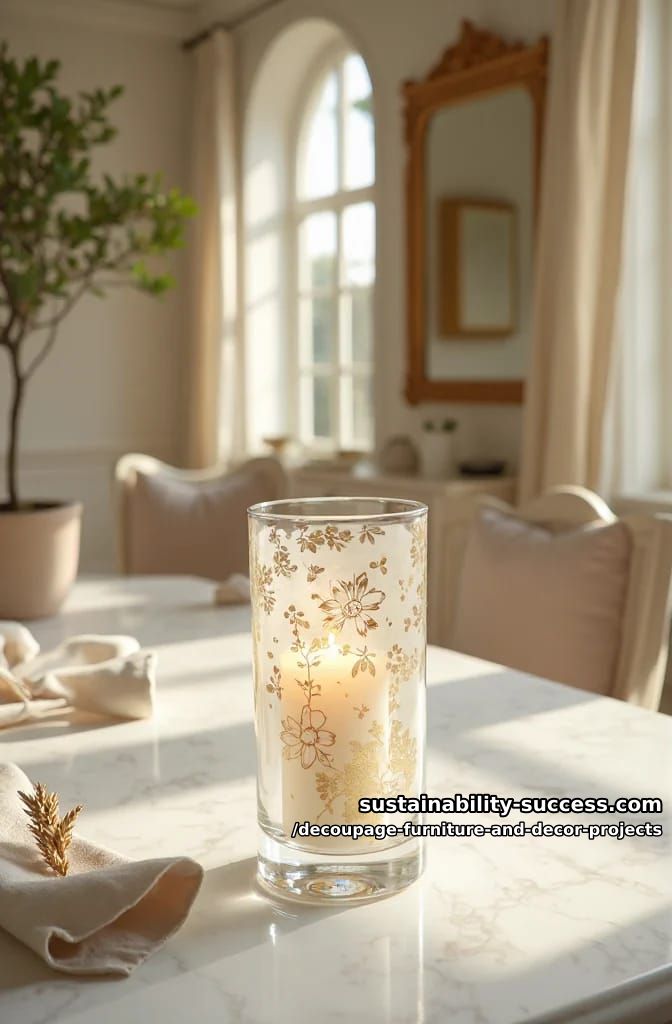
One catch trips everyone up at least once: anything with text or a one-way image reads mirror-reversed from the front. Flip your lettering before you mount it, or just stick to symmetric florals where it doesn't matter.
Glass surface: the finished face you look through, kept clean and grease-free.
Printed side of paper: pressed face-down into a wet coat of medium against the glass.
Back of the paper: now facing the inside of the vessel.
Sealing coat: brushed over the paper back to lock it down and hide the seams.
8. Decoupaged drawer interiors and sides
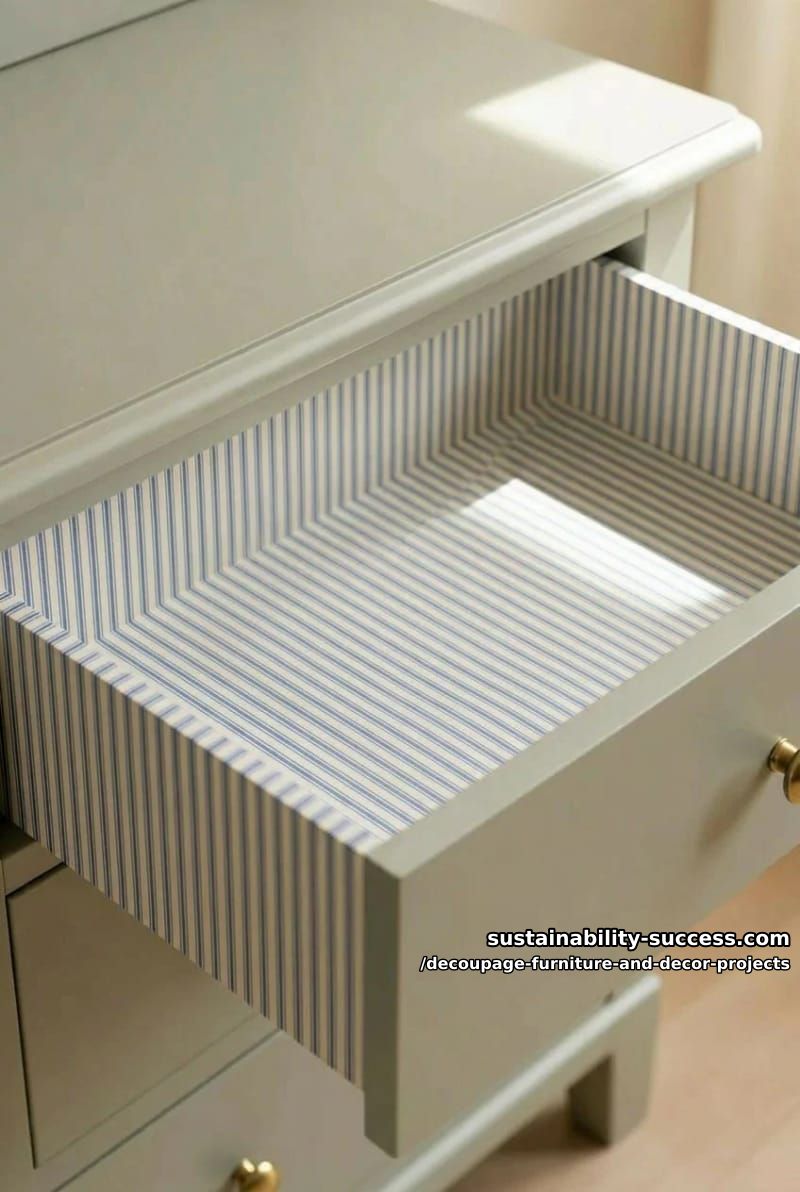
Line the drawer bottoms and inner sides with ticking stripe or marbled paper, and a plain dresser turns custom the second a drawer slides open. Furniture artists treat the drawer sides as the surprise detail clients remember, but the rule is to skip it on any drawer that rubs or sticks, because paper plus friction equals a jam. Wax the runners after sealing and they’ll glide.
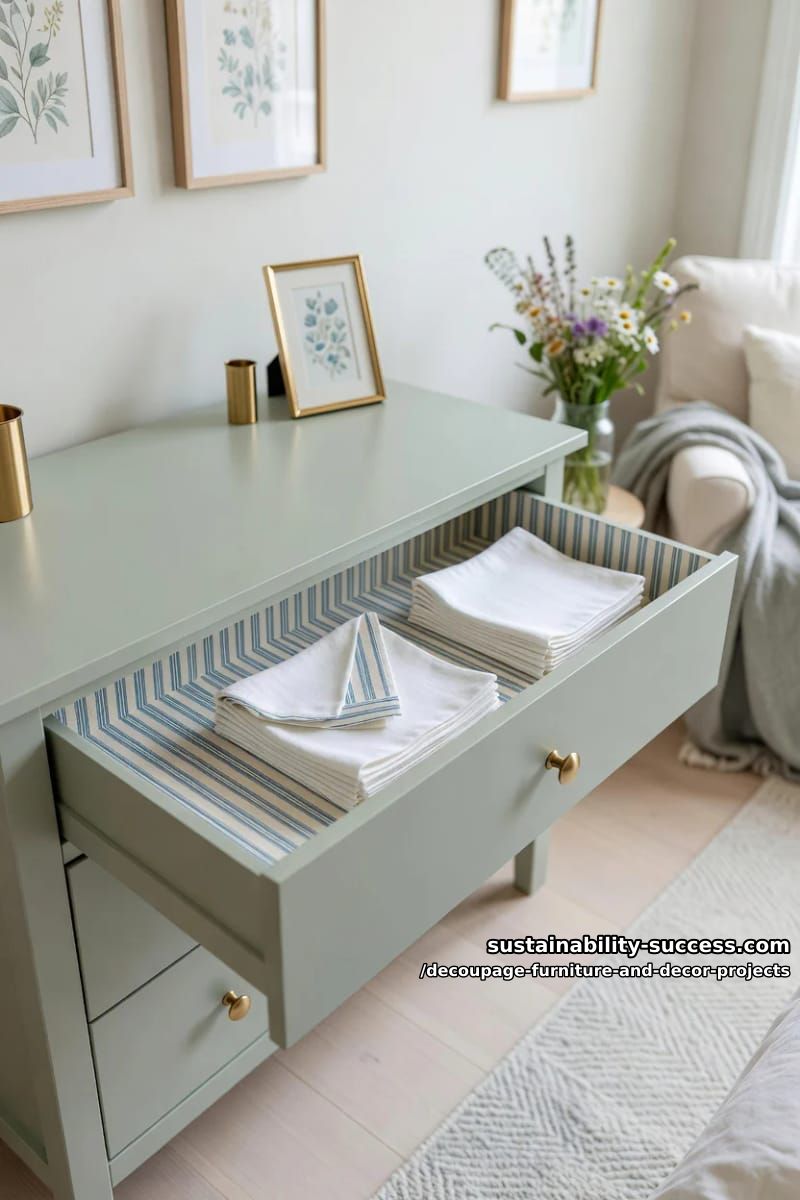
Cheapest upgrade on the list. One sheet covers several drawers, and it's a flat, hidden surface, so any mistakes stay your secret.
9. Delft ceramic tile coasters
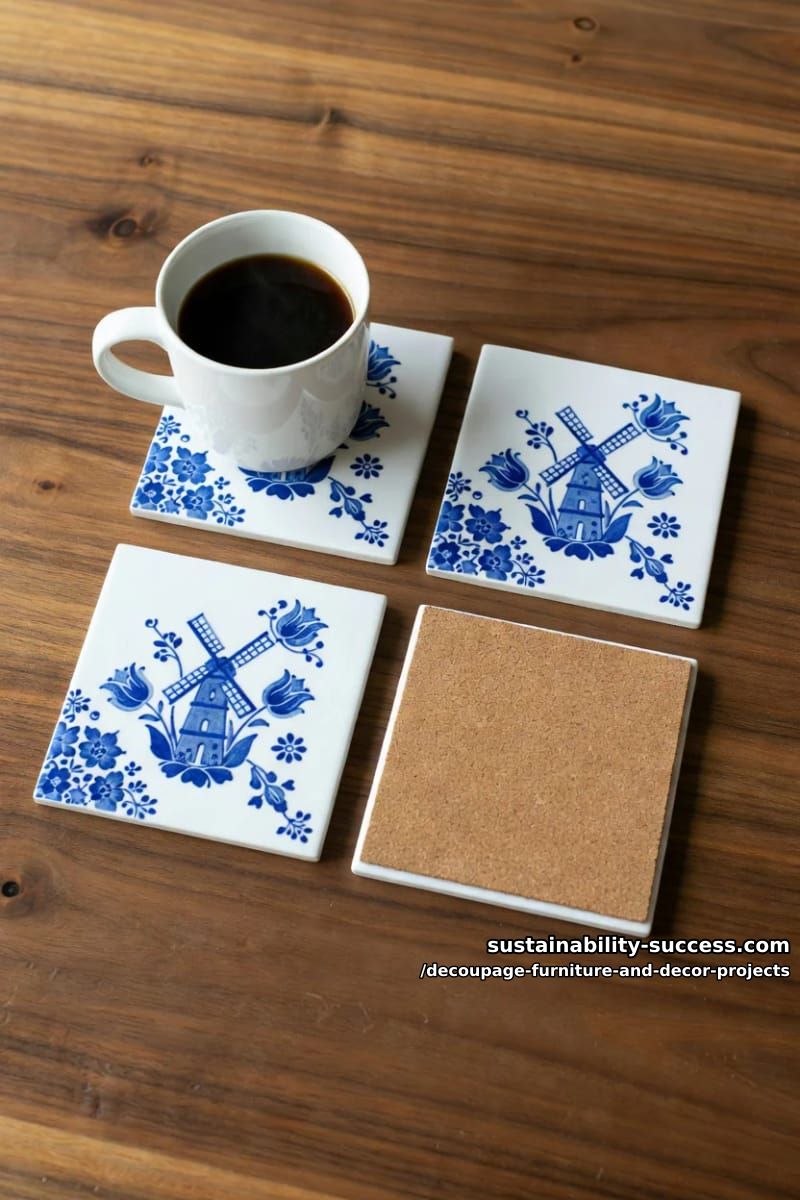
Blank four-inch ceramic tiles and a napkin cutout make a set of coasters for pennies apiece , but a hot mug peels the paper right up unless your sealer is rated for heat and water. Mod Podge Dishwasher Safe is formulated for glass and ceramic, and once fully cured it stands up to washing and handling, which is exactly the abuse a coaster takes. Glue a cork pad to the back so the tile doesn’t scratch the table.
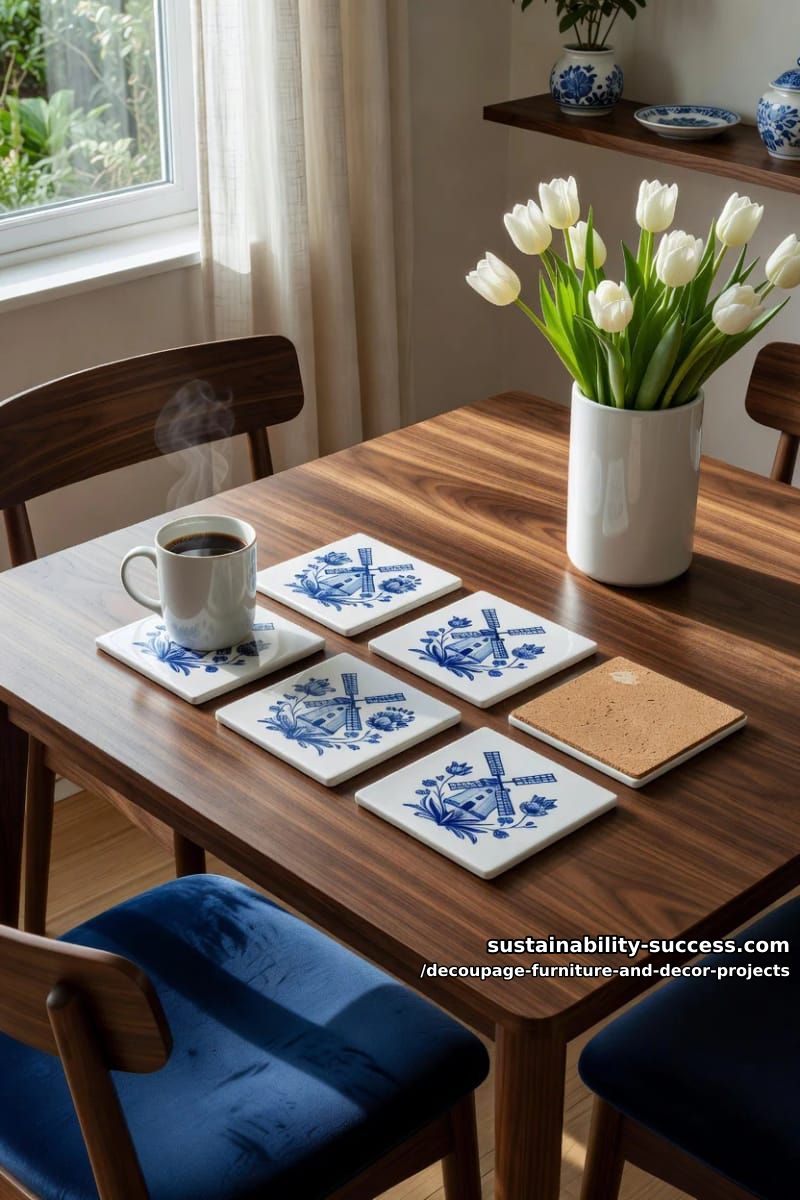
Different surfaces want different sealers. Use the wrong one and that's your project failing six months in. The short version:
| Surface | Sealer to use | Why |
|---|---|---|
| Dresser, cabinet, table base | Hard Coat (satin) | Built for highly trafficked surfaces like furniture and frequently touched pieces. |
| Coasters, trays that meet drinks | Dishwasher Safe (gloss) | Made for glass and ceramic; cured finish handles water and washing. |
| Covered-porch pots and planters | Outdoor | For sheltered outdoor use; water-resistant but not waterproof. |
| Lampshades, wall panels, low-wear decor | Matte | Disappears into the paper with no glare; not for working surfaces. |
Start with a stack of COYMOS 4×4 blank ceramic tiles with cork backing pads and you’ve got enough for several gift sets.
10. William Morris headboard panel
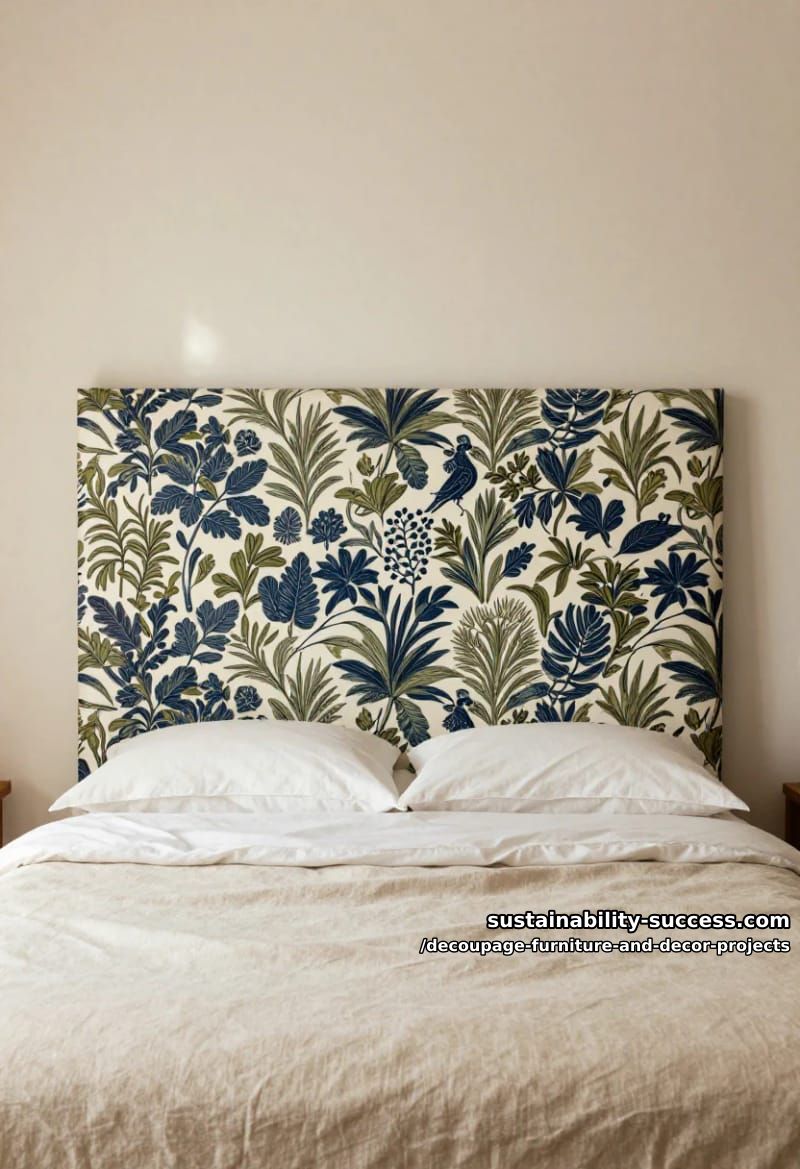
Cut a sheet of plywood or MDF to the width of the bed, paper it in a large-scale print, hang it on a French cleat: that's a headboard for the cost of the board and the paper. Go big with the repeat. Small florals disappear behind pillows and read as clutter; a sprawling William Morris foliage pattern holds the wall even with half of it hidden.

If one width of paper won't cover it, butt the pattern at the seams and match the repeat the way you'd hang wallpaper, then seal the whole face matte. Round or bevel the corners before you paper , no sharp points to catch and lift later.
11. Marbled-paper bookcase back
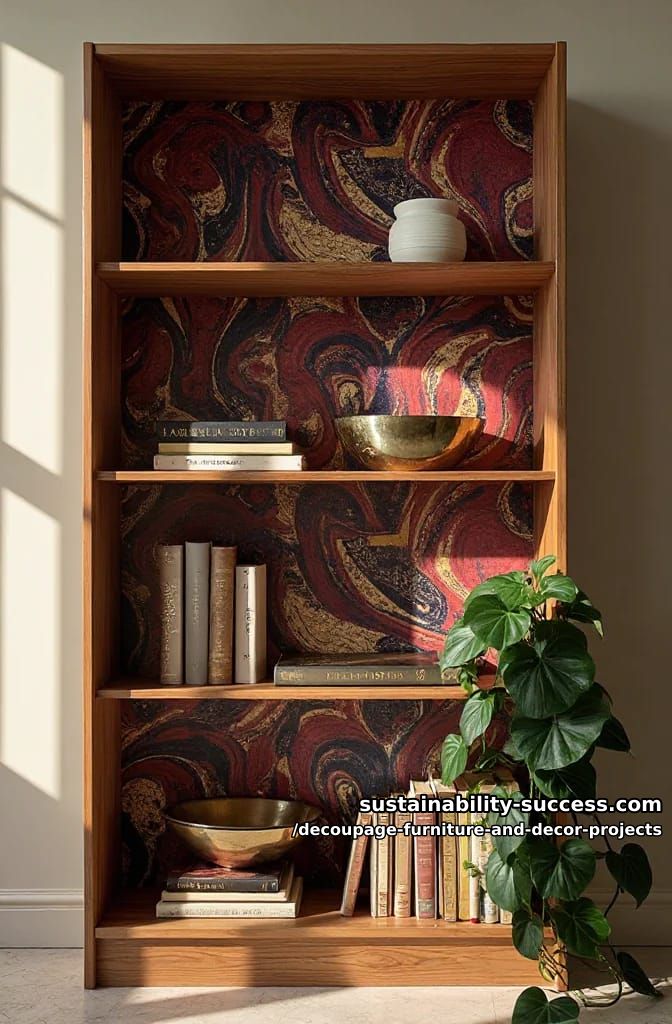
The back panel of a bookcase is the highest-impact, lowest-effort decoupage in the house , flat hardboard nobody ever lays a finger on. On most flat-pack shelves, the IKEA Billy included, the thin back board pops right off, so you lay it flat on a table, paper it, seal it, screw it back on. Marbled paper glimpsed between the books does more for a plain bookcase than paint ever could.

Renting? Paper the back of a freestanding shelf instead of the wall, and the whole thing leaves with you.
12. Floral switch plates and outlet covers
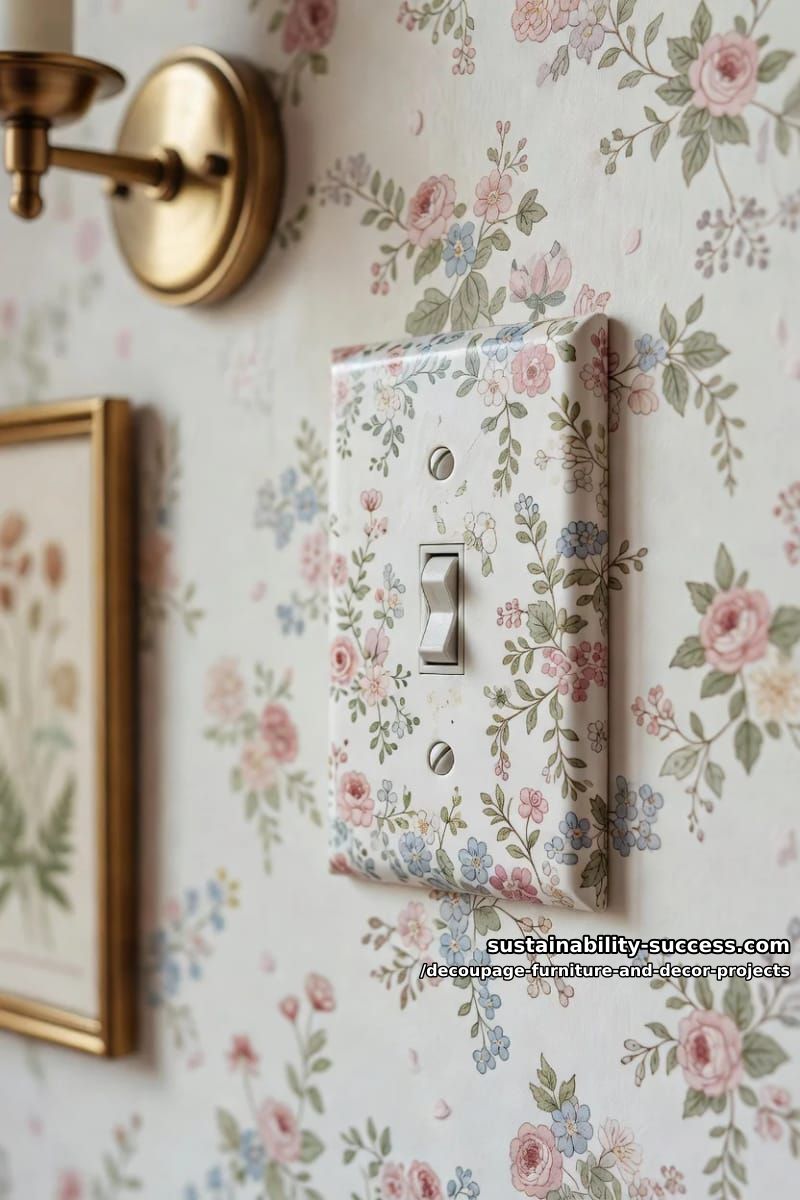
A switch plate takes ten minutes and a scrap of paper. Match it to the room's wallpaper or curtain print and you've made the detail people notice last and remember longest. Unscrew the plate, work on it off the wall, wrap the paper around the edges and seal, then cut the screw holes and switch slot back open with a craft knife once it's dry. Don't paper over the openings blind and expect to find them again.
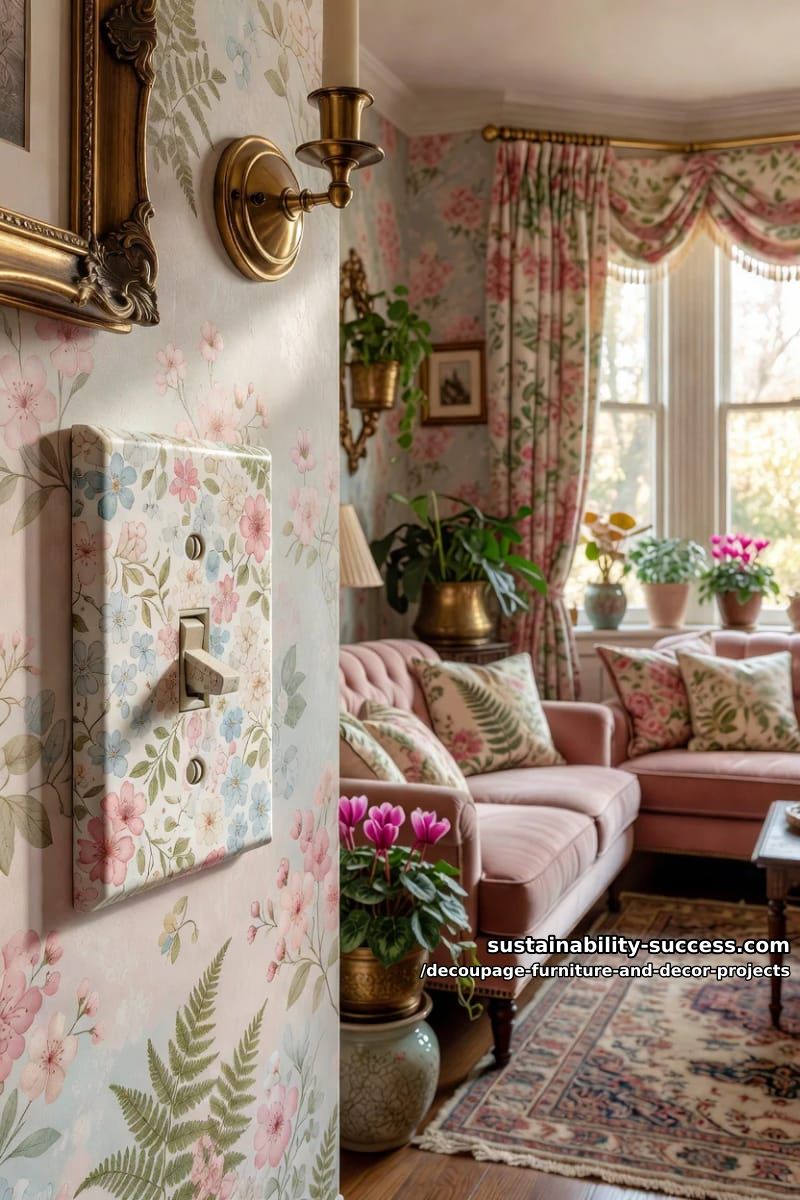
Kill the breaker before you unscrew anything near a switch or outlet, and let the plate cure fully before it returns to a wall fingers hit every day. Smallest project here, and the one most likely to get a guest asking where you bought it.
Conclusion
Start with a switch plate or a single tray. In an afternoon it’ll tell you whether you actually like the fiddly part , chasing bubbles out toward the edge, trimming one clean line , before you hand over a whole dresser to it. Rice paper is also less than half the price of furniture transfers, so it is a cheap way to find out.
The one thing no trick speeds up is cure time. Mod Podge needs roughly 28 days to fully harden, even though it feels done in a day, so keep drinks off a fresh tray and weight off a new tabletop for a few weeks. One more thing I’d say plainly: don’t paper a dining table you eat at every night. That surface wants a real wood finish, not a sealed sheet, however good the damask looks under glass.