
A shared desk in a neutral office is engineered to belong to nobody, which is exactly why a few reversible moves read so loudly. This is decorating under a constraint: nothing that drills, nothing that pulls paint, nothing facilities can write you up for, and ideally nothing you bought new when a clean soup tin would do. The ideas below lead with the look (one committed color, a corkboard you actually rotate, a backdrop instead of a lone poster) and treat the pen pot as an afterthought. Most of it lifts off in an afternoon, so the personality is yours and the deposit, or the audit, stays intact.
Every choice here should be judged by how it comes off, not just how it goes on. If a method leaves a hole, a grease shadow, or a strip of lifted paint, it fails, no matter how good it looks for the year you sit there. Reversibility is the whole game in a space you do not own, and it happens to be the lower-waste path too, since reusable decor moves desks with you instead of going in a bin.
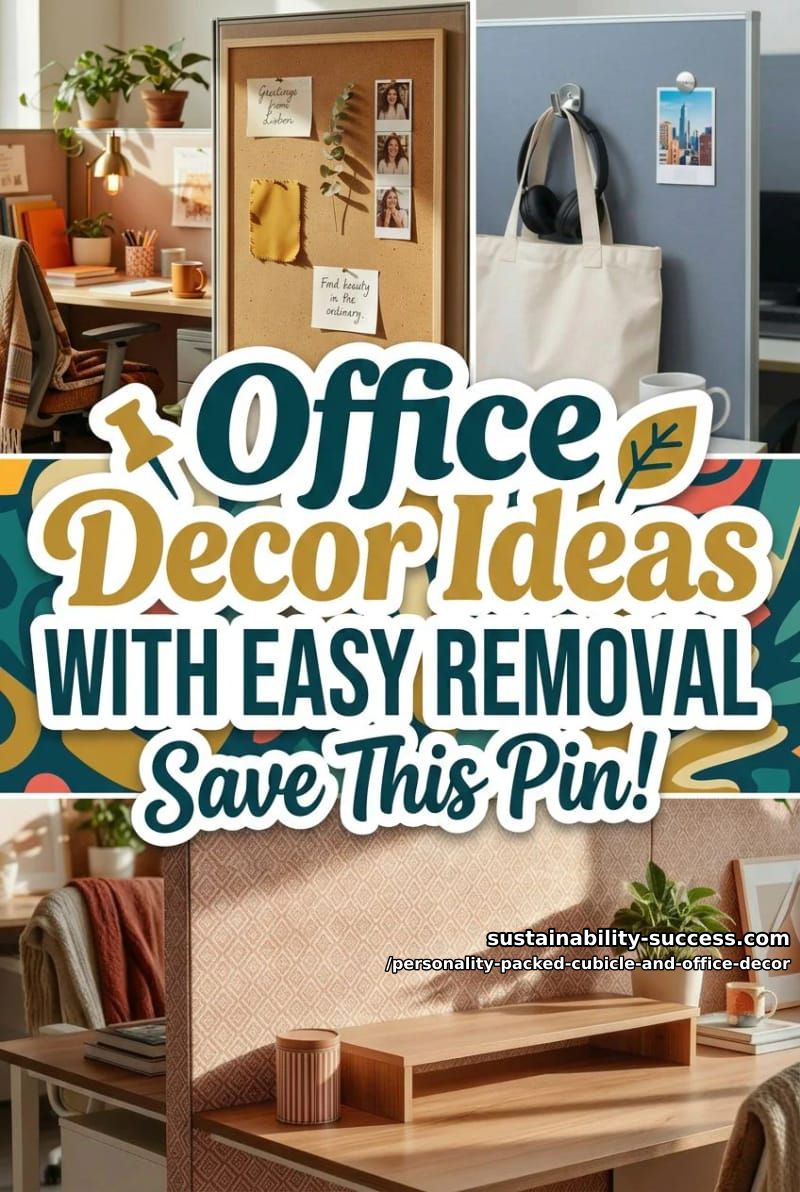
1. Commit to one saturated color, not a scatter of accents
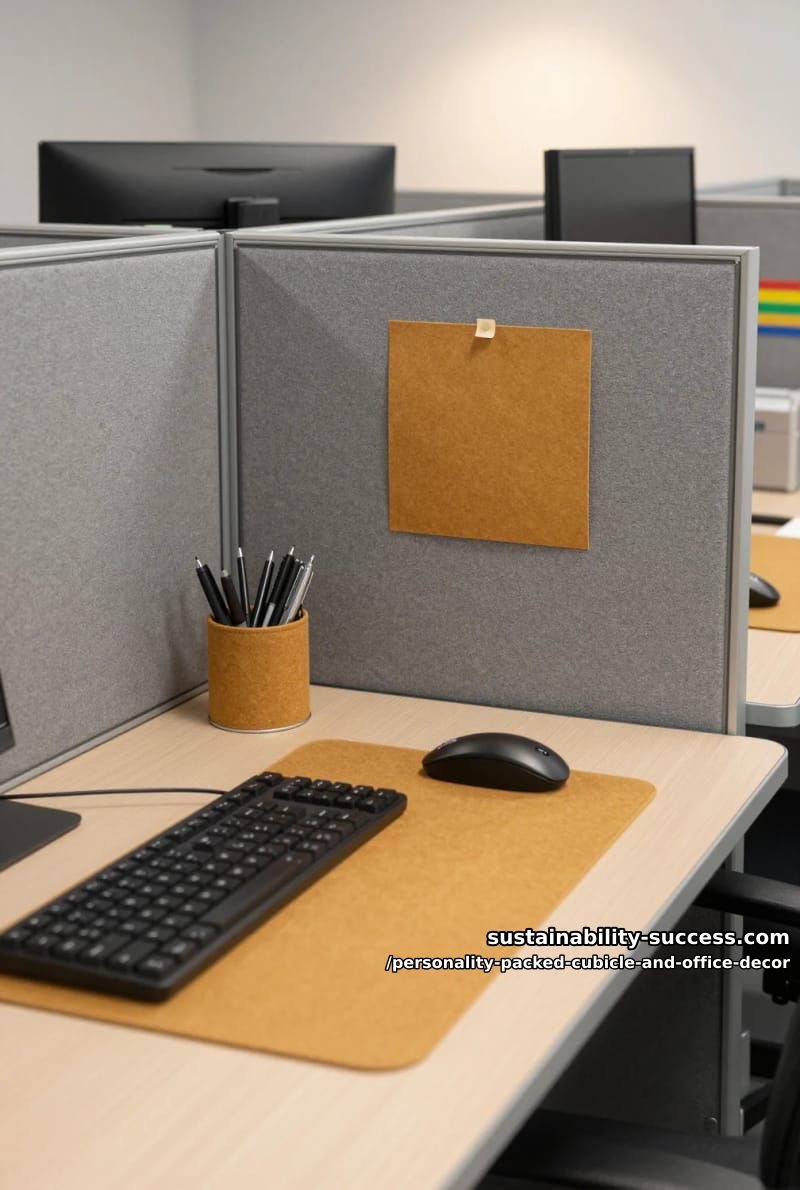
Pick one saturated color and repeat it in three spots, then stop. A beige cubicle with five unrelated accent colors does not read as expressive, it reads as a stock photo of a workspace. One color used with discipline reads as a decision someone made.
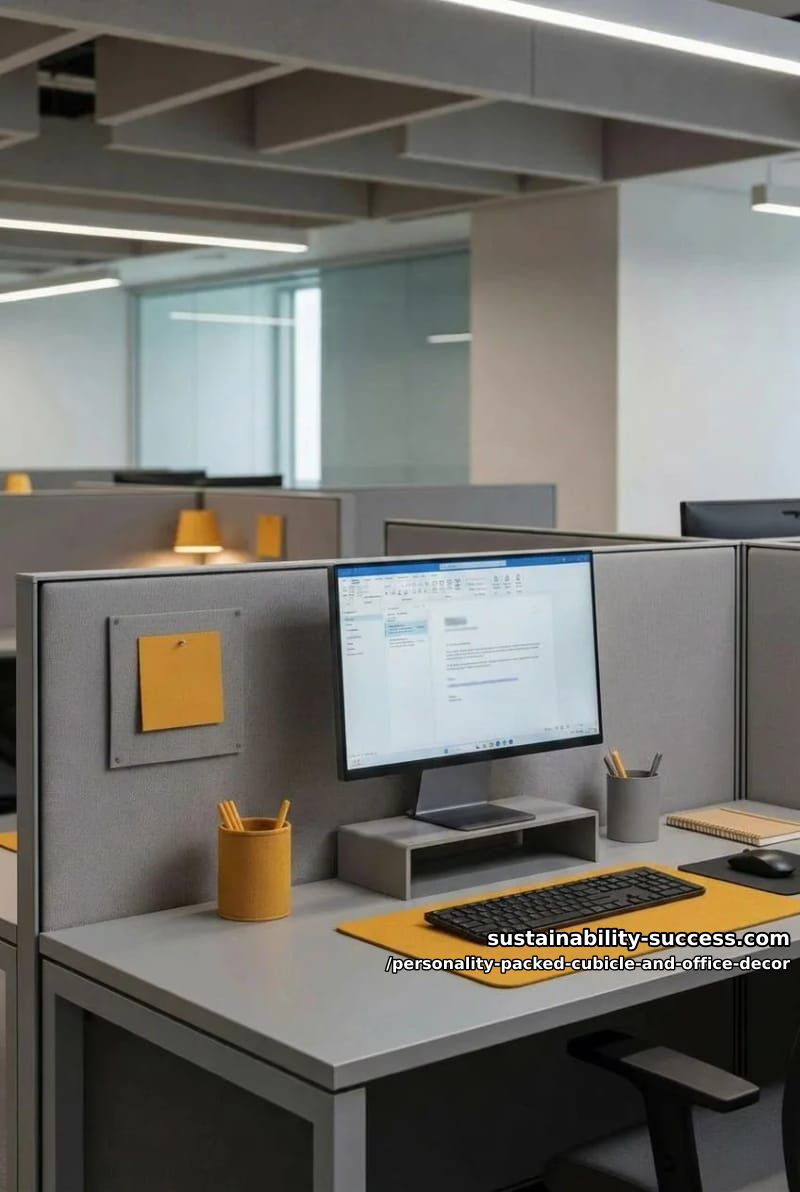
Pull the color from something you already own and like (a mug, a notebook cover, a scarf you keep at your desk in winter) so the palette costs nothing and feels personal rather than chosen off a trend page. Carry it across a desk mat, a wrapped tin, and a single pinned card. The motivational-quote-in-five-fonts look is the fastest way to disappear into the gray.
2. Fabric-wrap your tins and jars instead of buying desk organizers
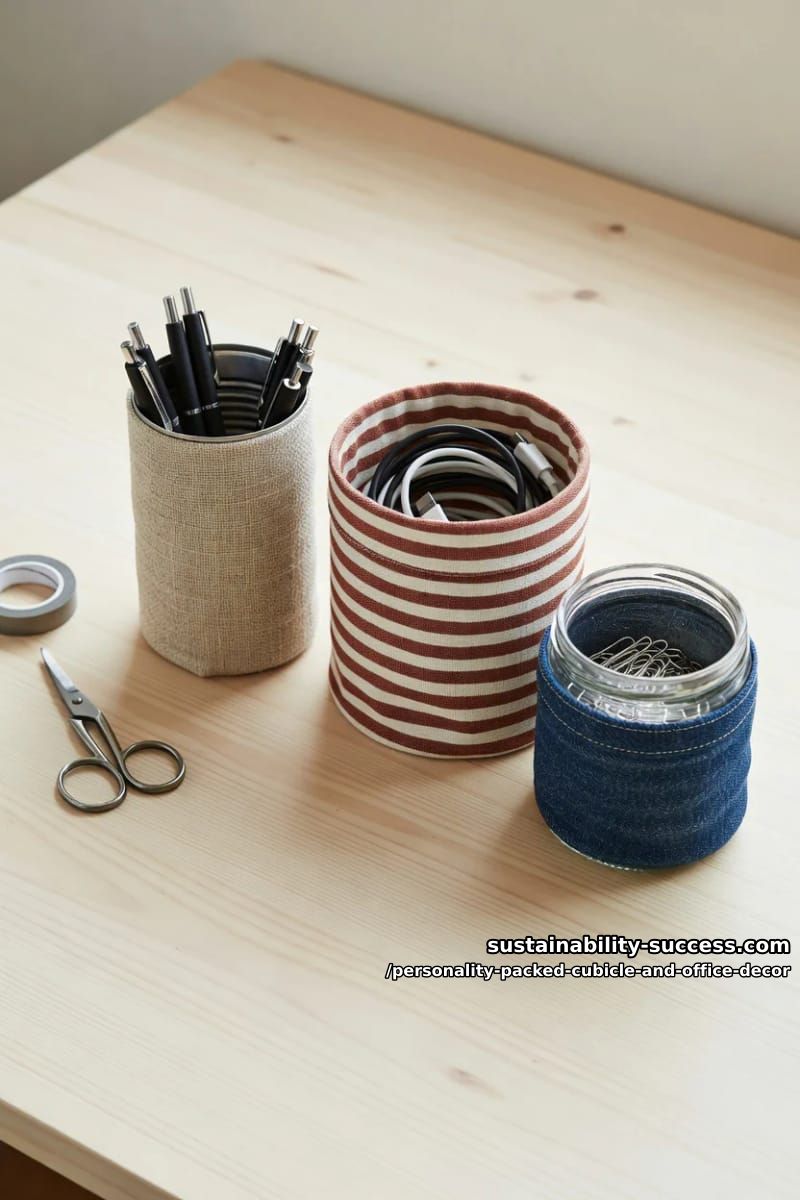
Wrap clean tins and jars in fabric remnants and you get organizers that match your palette for free, instead of a row of black mesh caddies that came in a five-pack. A standard soup can holds pens, a coffee tin swallows the charger-cable nest, a squat jam jar takes paperclips and binder clips.
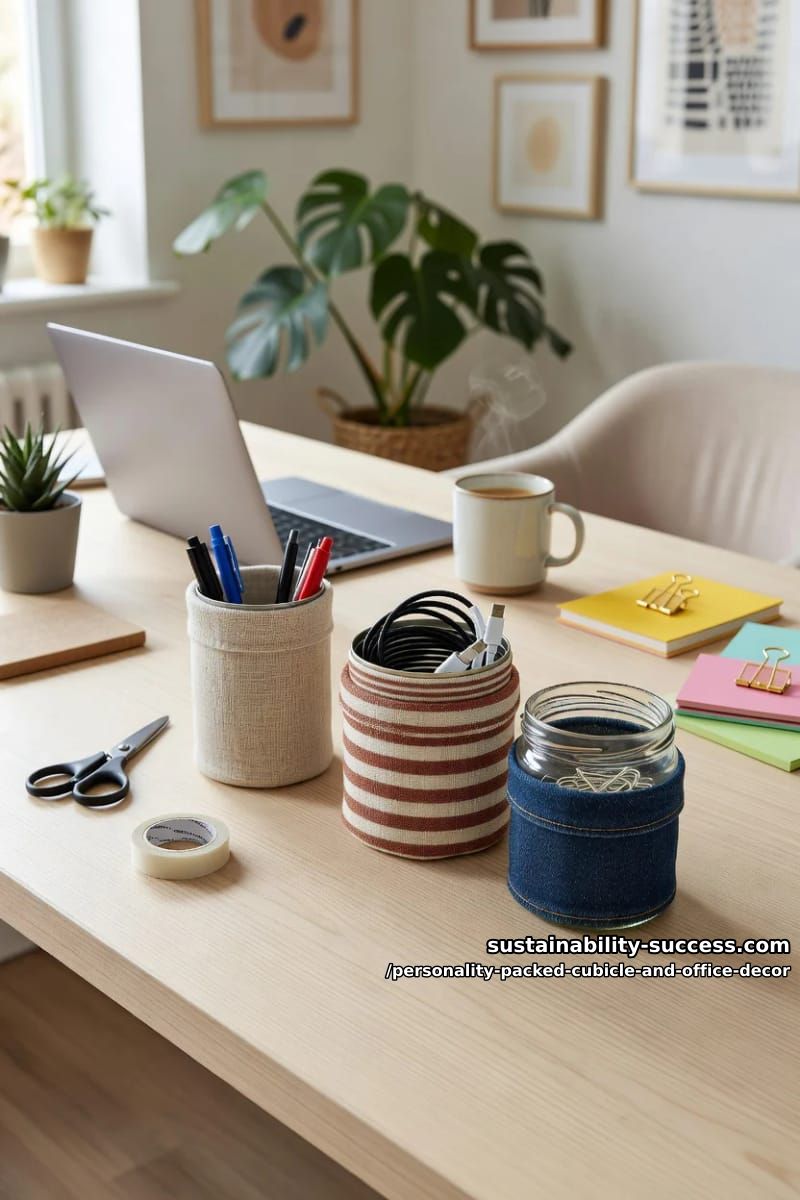
The one step worth doing carefully: fold the raw top edge of the fabric down inside the rim before you tape it, so the lip looks finished rather than frayed. No sewing, just double-sided tape or a thin smear of Mod Podge. Use linen or cotton offcuts rather than craft felt, which pills within a month and gives the whole thing a school-project look.
3. Magnets, not adhesive, on a steel cubicle wall
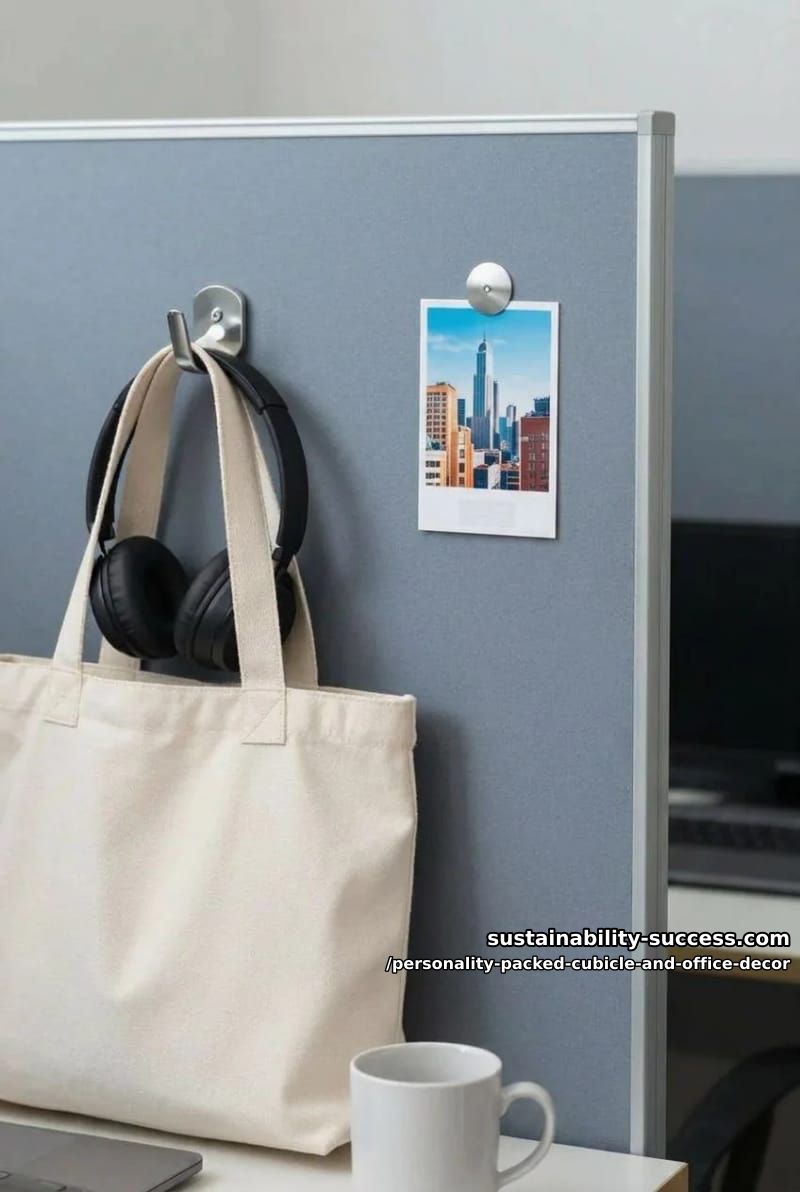
If your cubicle panel has a steel core under the fabric, and a lot of them do, magnets hold your decor with zero residue and zero holes. Test it in two seconds with a fridge magnet before you buy anything. Neodymium cubicle hooks rate around 20 to 30 pounds when the pull is straight out from the surface, far less when something hangs and shears sideways, so hang a tote or headphones, not a winter coat.
A ten-pack of coated neodymium hooks sized for office partitions, so you can hang a bag on one and use the rest as flush magnets for pinning art flat to the panel.
DIYMAG 30 lb neodymium magnetic cubicle hooks, 10 packOne caution worth taking seriously: keep strong neodymium magnets a hand's width away from external hard drives, hotel-style keycards, and the magnetic strip on badges.
4. Build a corkboard gallery you actually swap out
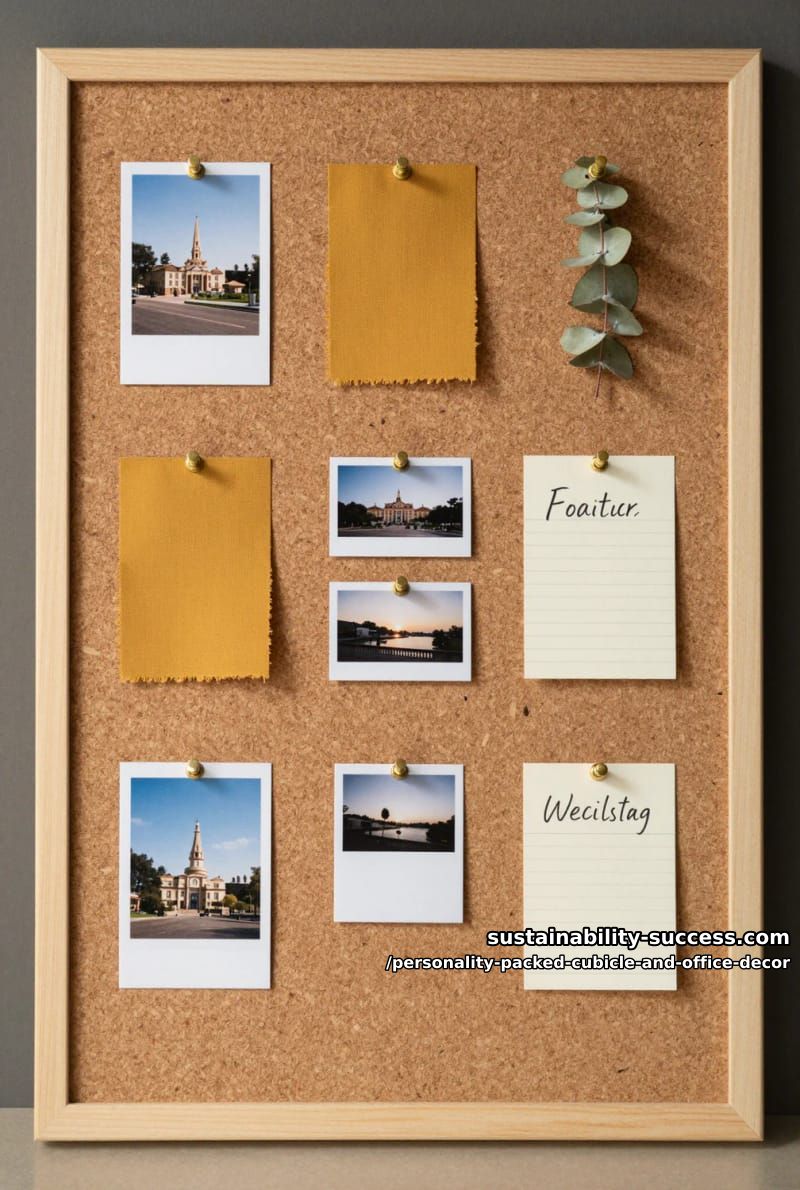
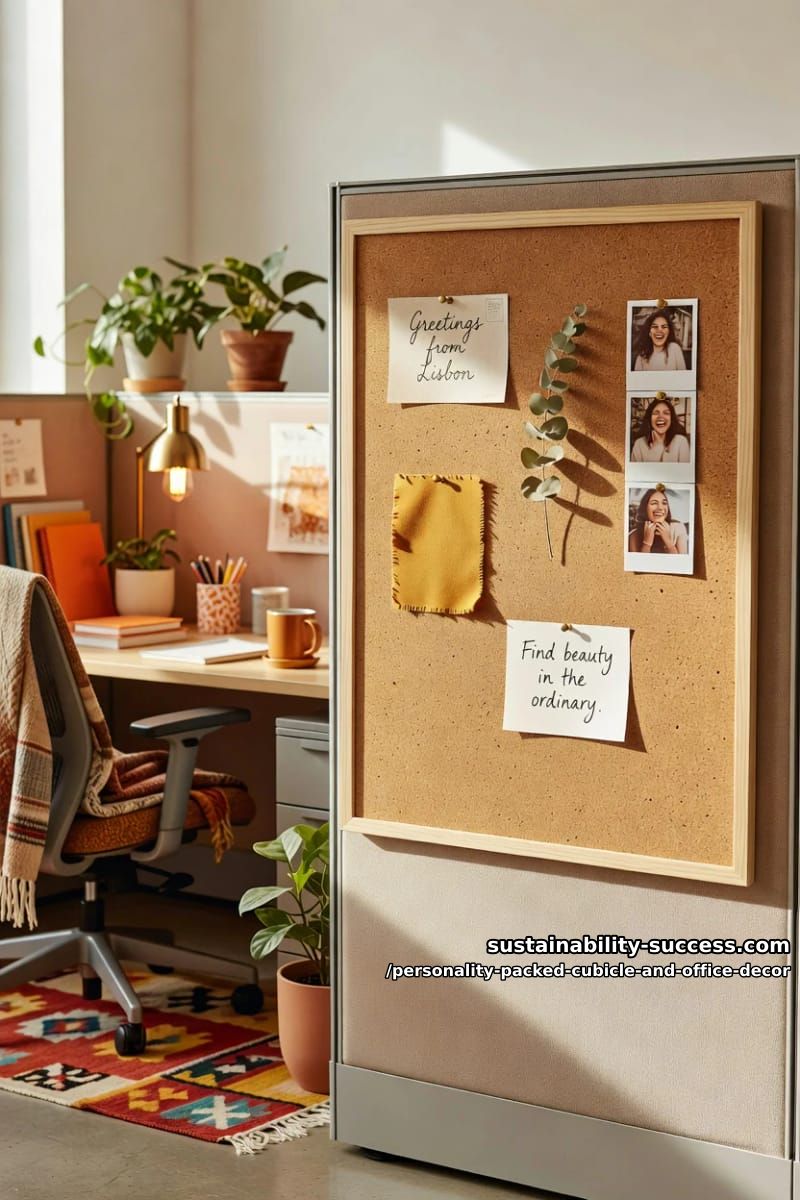
A corkboard earns its slot because it is the one surface meant to change weekly, and changing it is the entire point of having it. Lean a thrifted framed board against the panel, or build a small grid from 12-inch self-adhesive cork tiles, then curate hard: an odd number of items, mixed textures, real spacing between them. A wall of identical Instagram prints in a tidy grid looks like a dentist's waiting room.
5. Peel-and-stick the backdrop, not just a poster
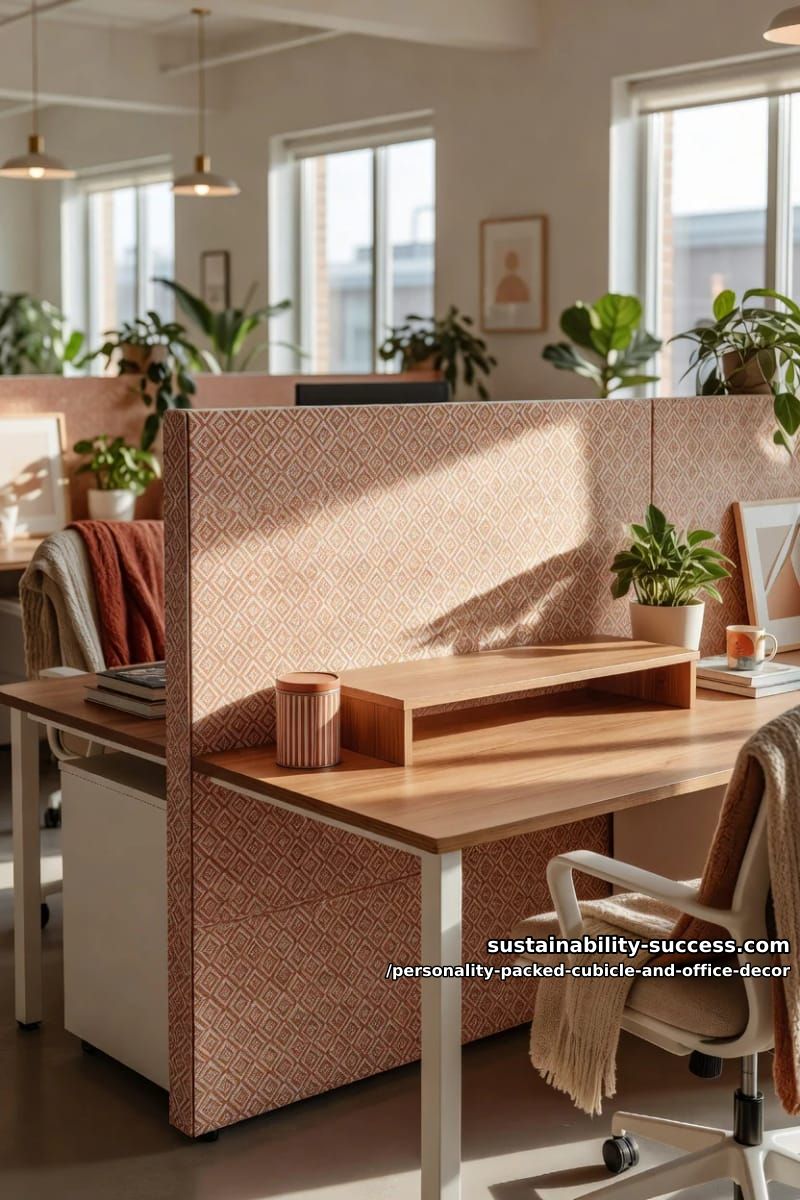
Covering the whole panel with removable wallpaper buys you the single biggest visual change per dollar in this entire list. One roll wraps a typical cubicle for roughly $30 to $40, and on a smooth laminate end-panel it peels back off clean when you leave. NuWallpaper and Tempaper are the reliable mid-price options; Spoonflower is where you go if you want a specific pattern and will pay for it.
Two honest limits. It grips smooth, hard surfaces, so it works on laminate uprights and metal end-caps but sulks on the fuzzy fabric panels (test a strip in a corner first). And cheap rolls can lift at the seams in a warm office, so press from the center out and burnish the edges.
| Method | Roughly holds | Best surface | Comes off clean? |
|---|---|---|---|
| Neodymium magnets | 20 to 30 lb (straight pull) | Steel-core panel | Yes, instantly, no residue |
| Command-style strips | 1 to 5 lb by size | Smooth laminate, painted metal | Yes, if you pull straight down slowly |
| Fabric cubicle pins | A few sheets of paper | Fabric-covered panel | Yes, leaves a pinhole in fabric only |
| Tension rod | Light curtain or fabric | Between two uprights | Yes, nothing attaches at all |
| Peel-and-stick paper | Itself | Smooth laminate, metal | Usually, on hard surfaces; test first |
6. Hang denim wall pockets for the stuff with no home
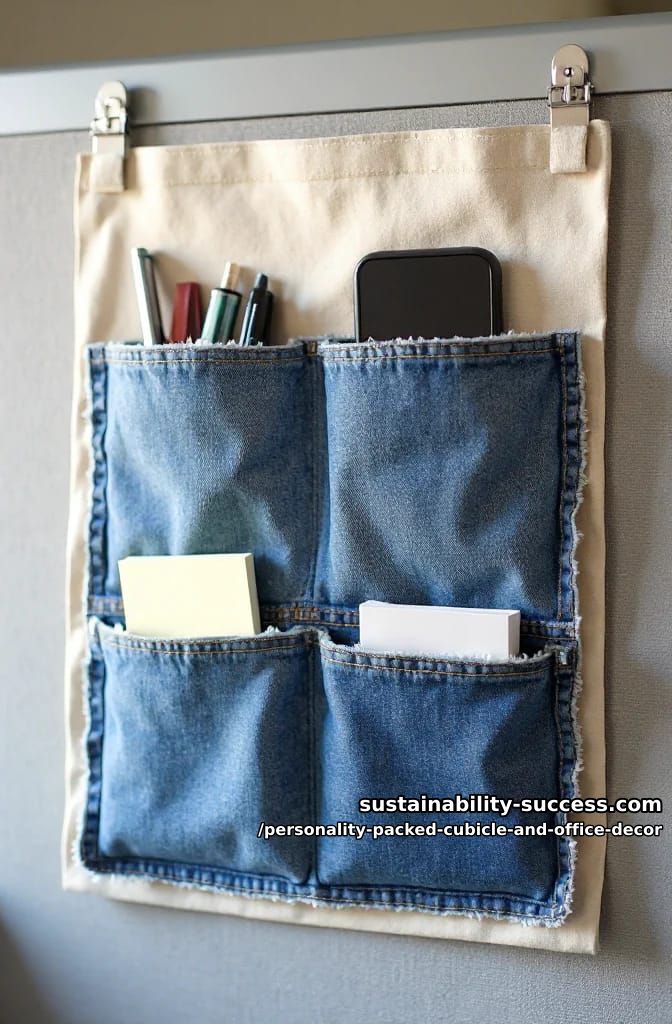
Stitch a few old jeans pockets onto a canvas or felt backing and hang it for the pens, cables, and sticky-note pads that otherwise colonize your desktop. It holds the same things a store-bought acrylic wall file holds, except it does not look like a hospital chart holder bolted to the wall.
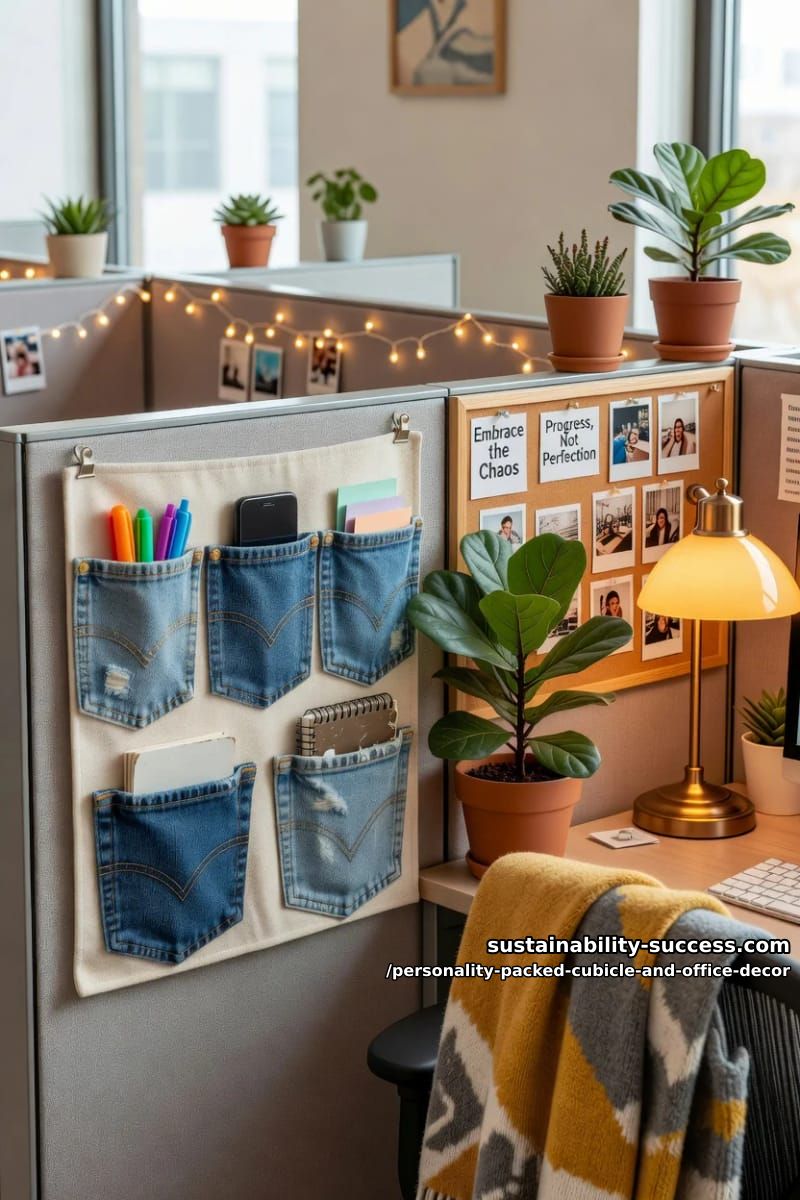
Attach the backing with the same cubicle pins or magnets from earlier, depending on your panel. If you cannot sew, fabric glue along three sides of each pocket holds fine for light objects; just leave the top open.
7. Turn the monitor riser into a display shelf
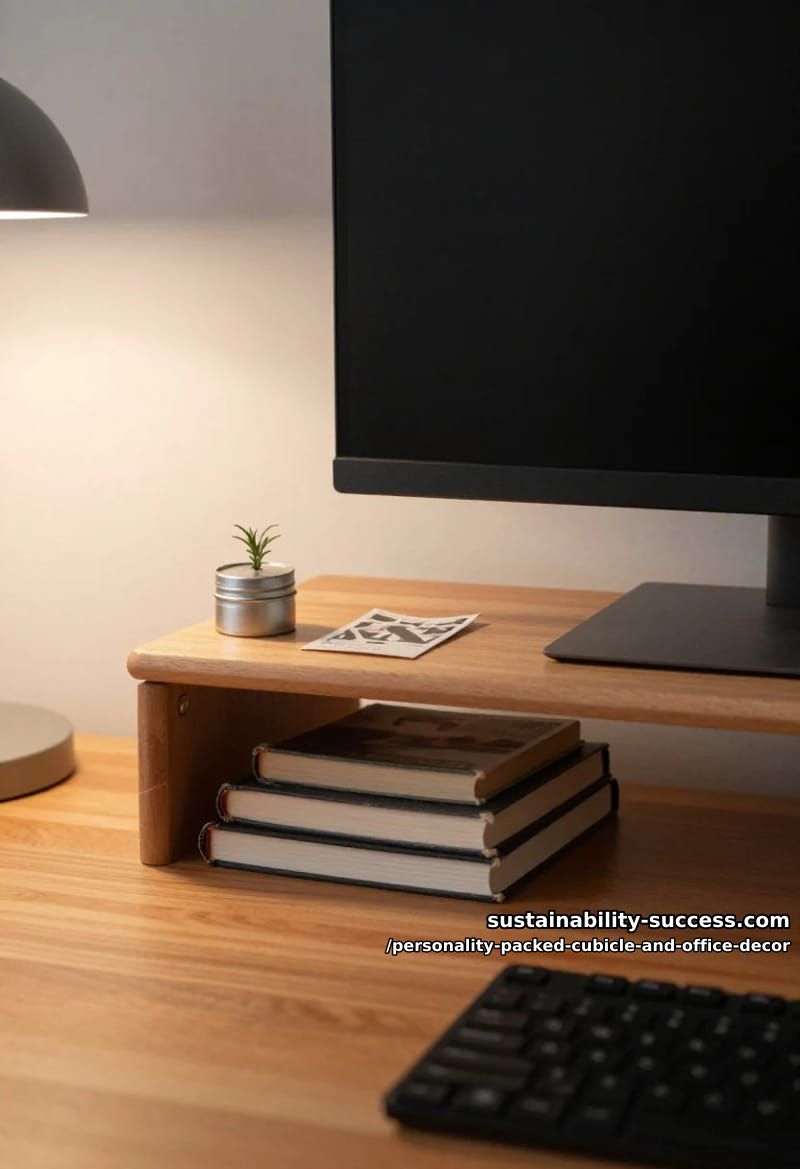
The riser is also a narrow shelf, so style the few inches of real estate under the monitor instead of leaving it as dead space. A stack of two or three secondhand hardbacks raises the screen for free and says more about you than a plastic stand; a bamboo riser does the same job if you want drawers.
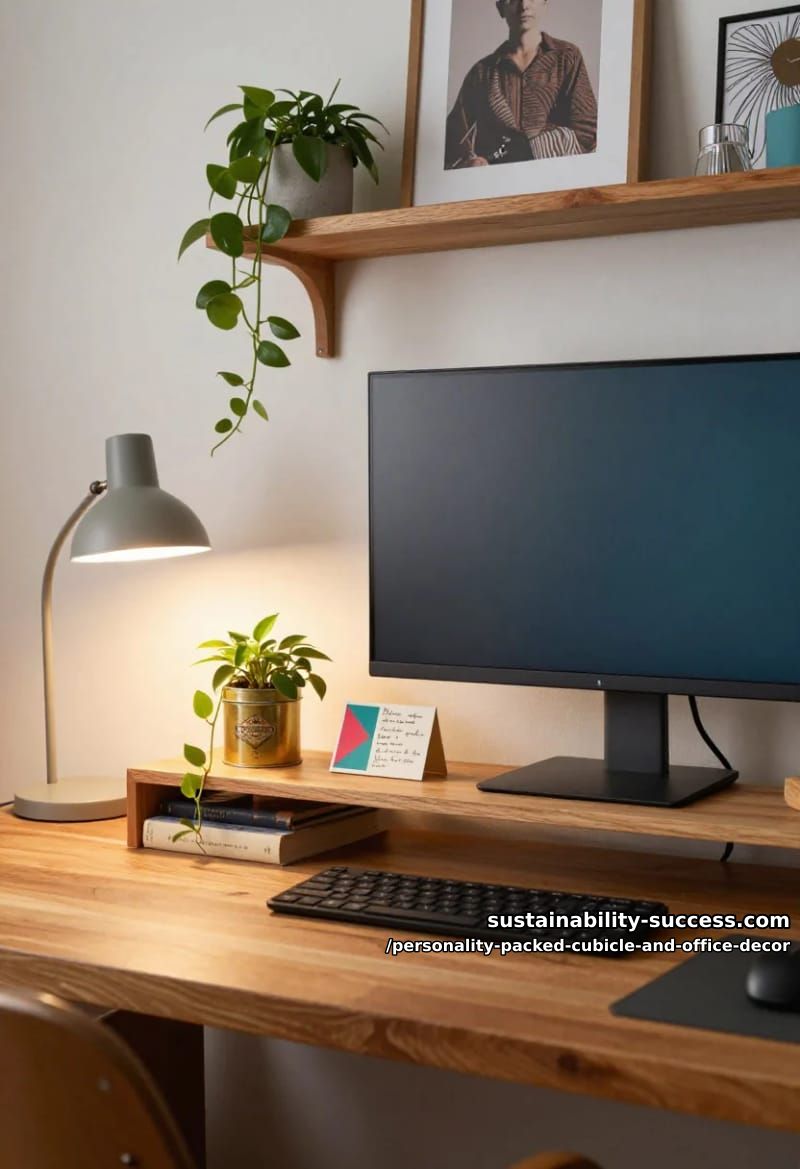
Keep what sits there small and few: one tin with a cutting in water, a leaning postcard, maybe a tiny brass object. And mind the ergonomics while you are at it, the top of the screen wants to land near eye level, which is usually higher than people set it.
This is the one spot where the floating-monitor-arm crowd loses something, because they trade away a shelf they would have used every day.
8. Use no-drill hooks for one trailing plant, not five
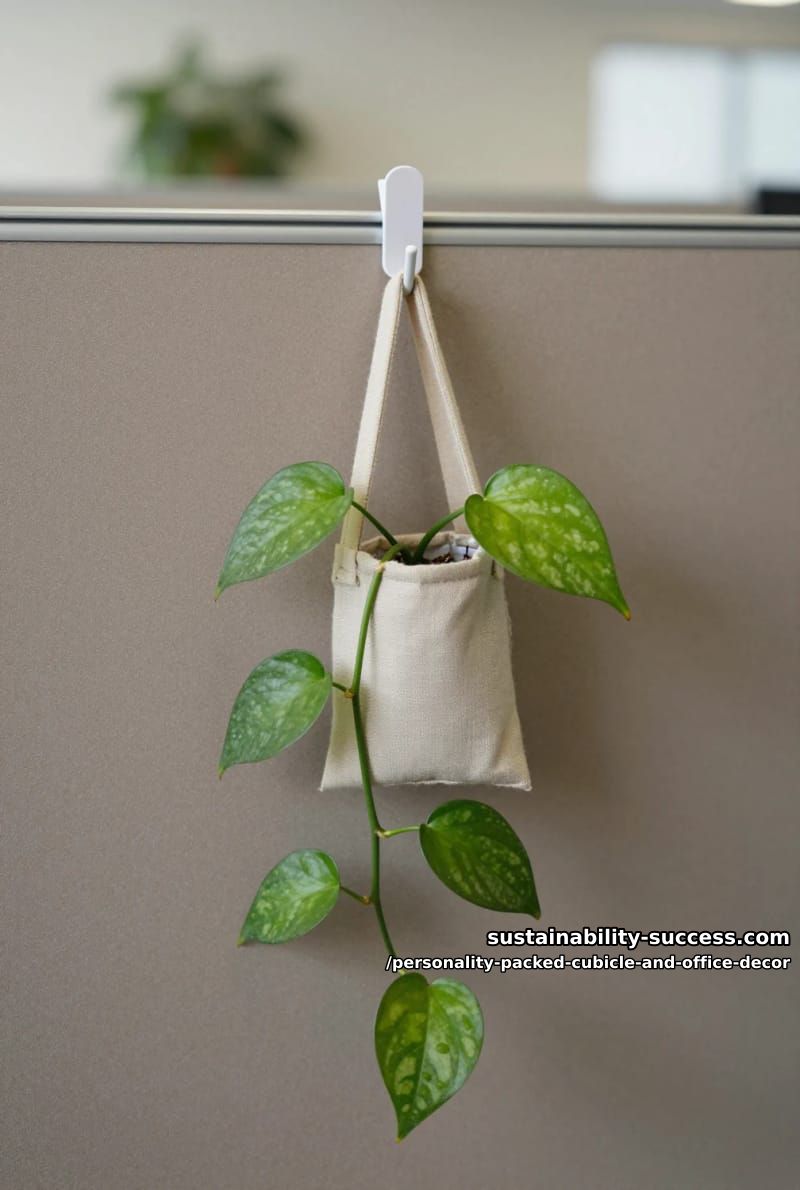
One pothos in a wrapped tin, hung where its vines can trail, beats the five-plant jungle that quietly dies under fluorescent light. Stick to the survivors that tolerate low light and erratic watering: pothos, a ZZ plant, a snake plant. Adhesive hooks handle the weight easily, with Command's line rated 1 pound for small, 3 for medium, 5 for large, and a note worth heeding to wait seven days after any repaint before sticking.
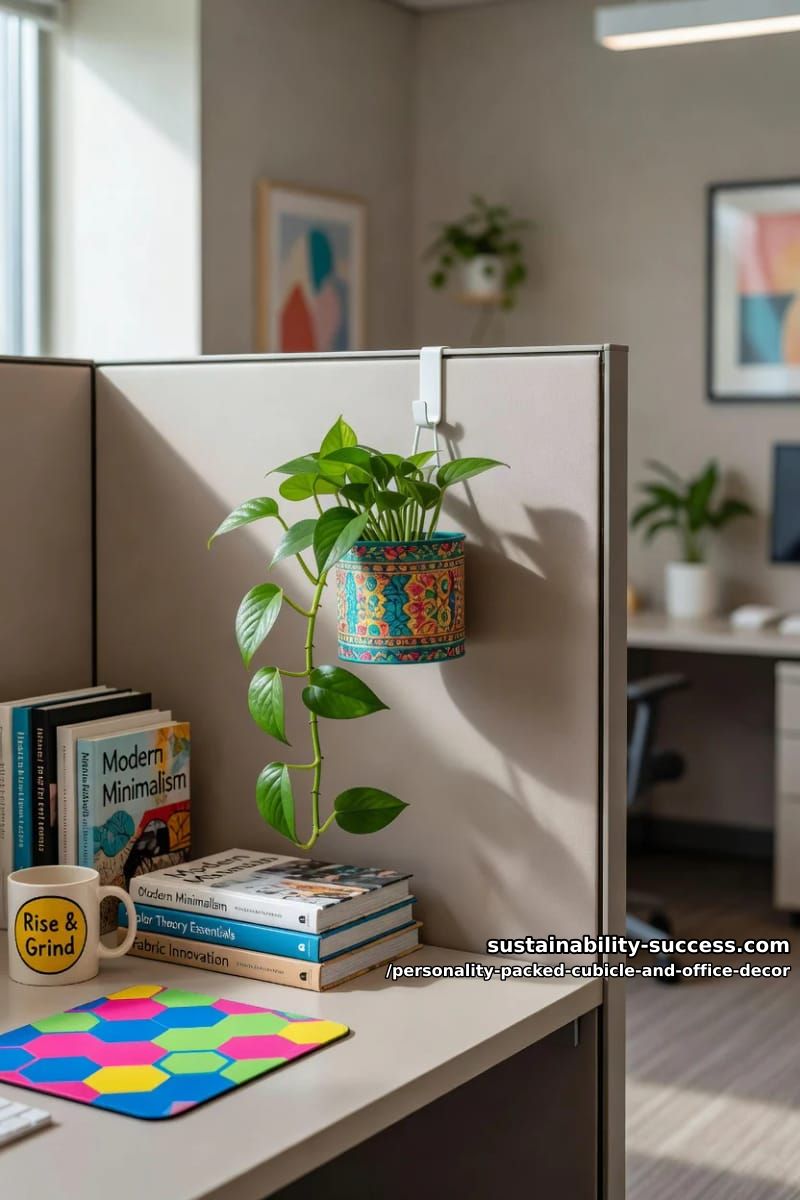
Adhesive hooks fail for predictable reasons, and a tin of soil hitting your keyboard is a bad way to learn them. They will not bond to a dusty or textured surface, so wipe the spot with rubbing alcohol first. They slowly creep in a hot office near a sunny window. And they cannot do shear loads well, so a hook meant to hold a light object from below will peel if you hang real weight off it sideways. Stay under the rated number and give it an hour before you load it.
9. Kill the overhead glare with a single warm lamp
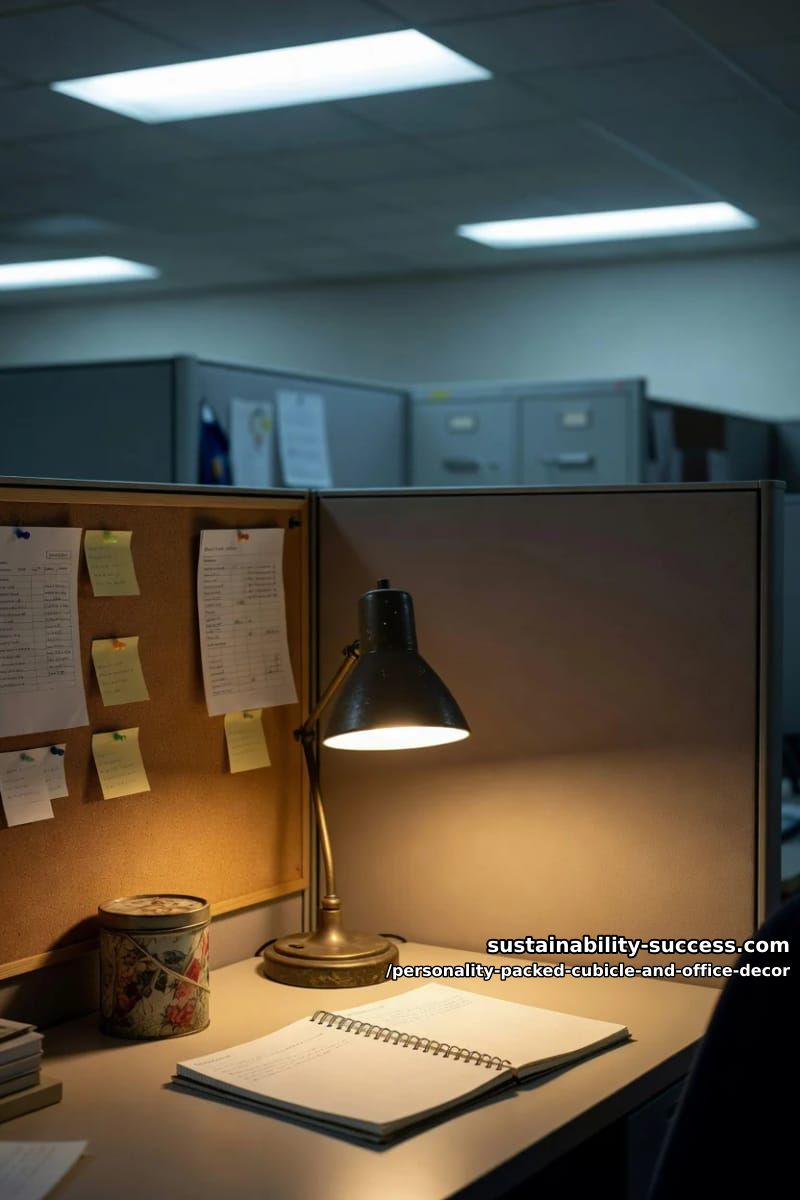
Adding one small lamp with a warm 2700K bulb does more for the feel of a desk than any object you put on it. Office ceilings run cool, somewhere around 4000 to 5000K, which is fine for spreadsheets and flattening for everything else. A warm pool of light in your immediate few square feet reads as home in a way that is hard to articulate and easy to feel.
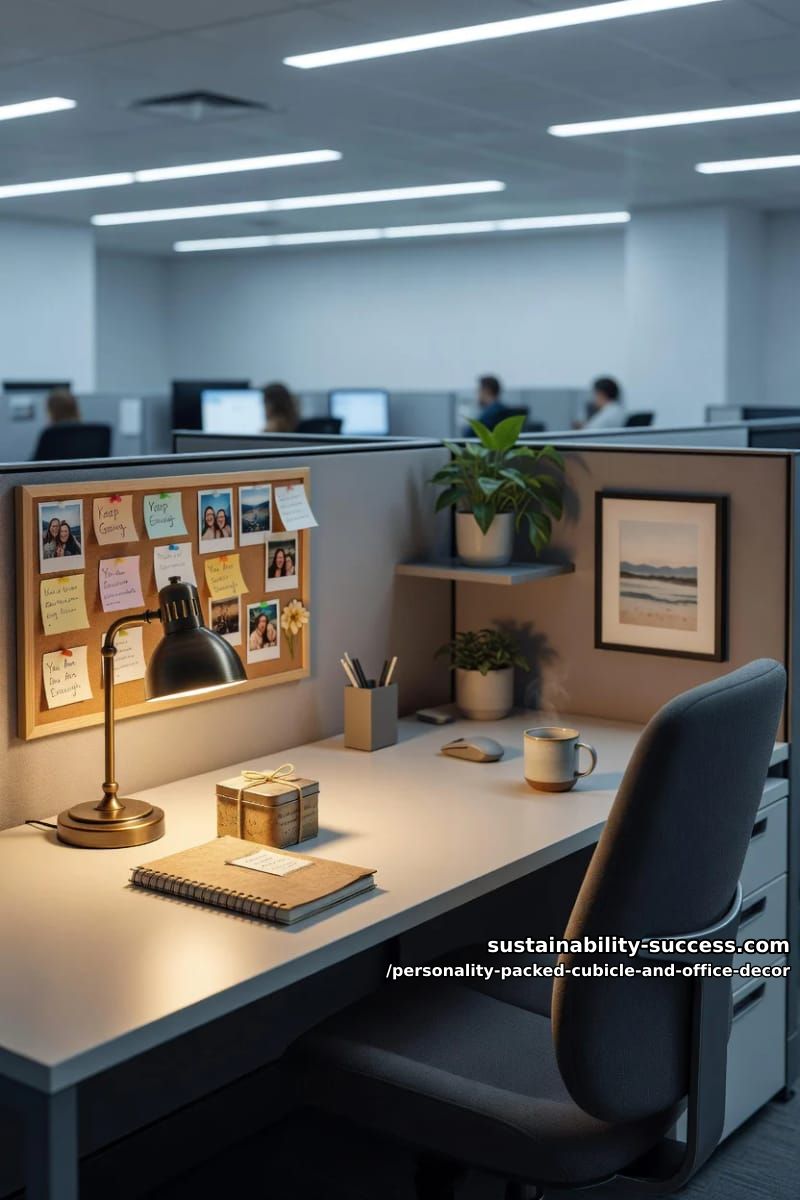
Thrift the lamp, it does not matter what it looks like switched off, then put a warm LED bulb in it and angle it as task light over whatever you actually look at. Skip the color-changing RGB strips unless you want the desk to read as a gaming setup rather than a person who works there.
Granted, this only works if your cubicle has an outlet you can reach, which not all do; a small battery or USB lamp covers that case.
10. Layer in one secondhand textile to soften the hard surfaces
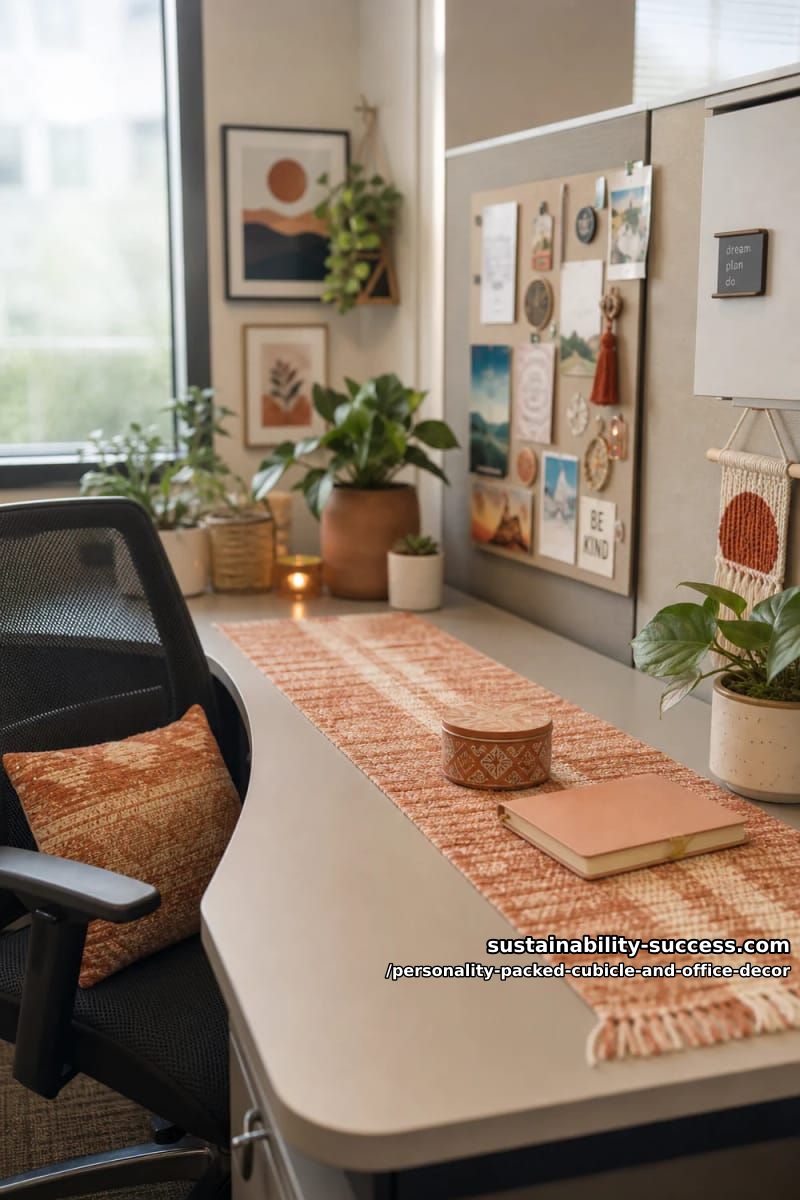
A cubicle is laminate, plastic, and powder-coated metal, all of it hard, so one fabric layer does disproportionate work. A thrifted table runner across part of the desk, a flat cushion on a punishing task chair, or a small throw over the chair back is enough; you are softening, not redecorating a living room.
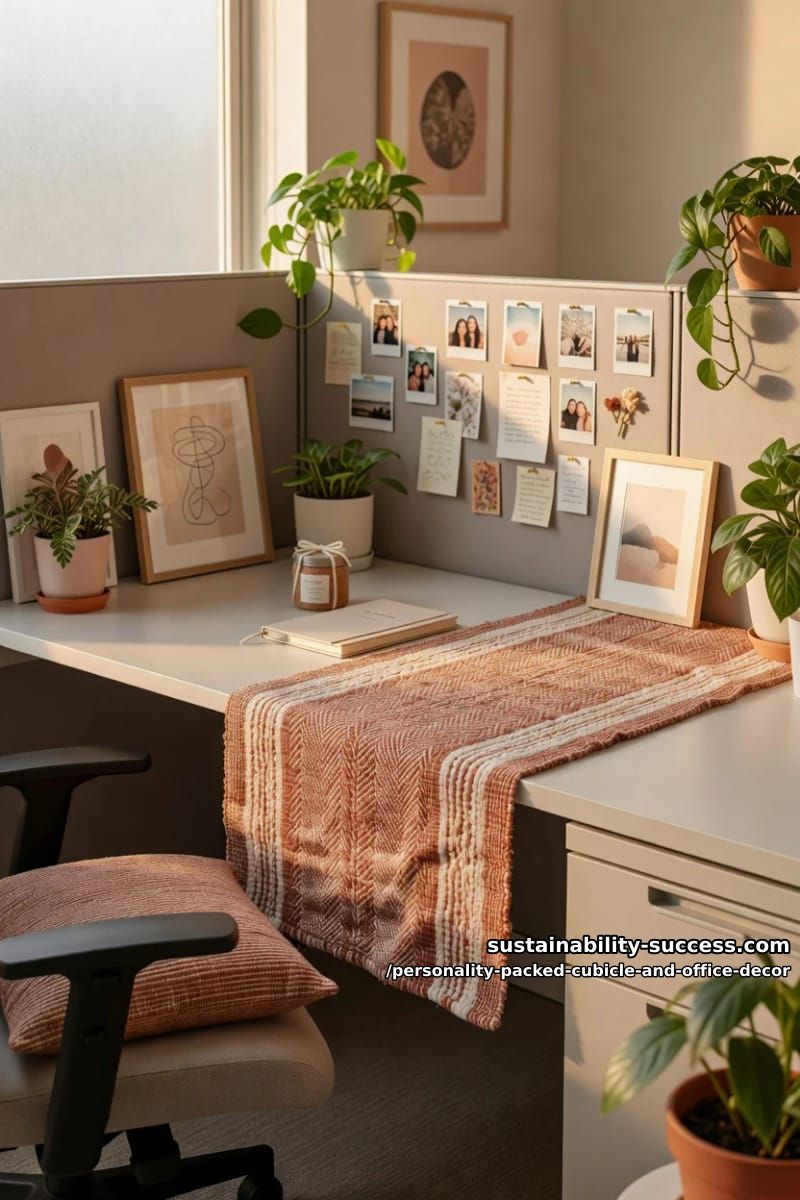
Estate sales and the linens bin at Goodwill are where the good textures hide for a couple of dollars, and buying them used keeps the whole project firmly in reuse territory rather than fast-decor.
The under-$100 weekend cubicle kit
A standard fabric-and-laminate cubicle, nothing drilled, everything reversible.
This is the version I would actually buy if I were starting Saturday morning with an empty desk and a real budget. The tins are free, the runner is thrifted, and the wallpaper does most of the visible lifting.
Shopping list
| Qty | Item | Spec | Price |
|---|---|---|---|
| 1 | Removable wallpaper roll | Covers one cubicle panel | $25 to $40 |
| 1 | Magnetic cubicle hooks | 10-pack neodymium, if panel is steel | $12 to $18 |
| 1 | Self-adhesive cork tiles | Set of four 12-inch tiles | $12 to $20 |
| 1 | Warm LED bulb | 2700K, for a thrifted lamp | $3 to $8 |
| 1 | Secondhand table runner | Thrifted, woven | $3 to $10 |
| 3 | Food tins and a jar | Upcycled, wrapped in fabric scraps | Free |
| Total | $55 to $96 | ||
Prices are approximate ranges as of June 2026; verify before purchase.
11. Hang a tension-rod fabric panel across the open side
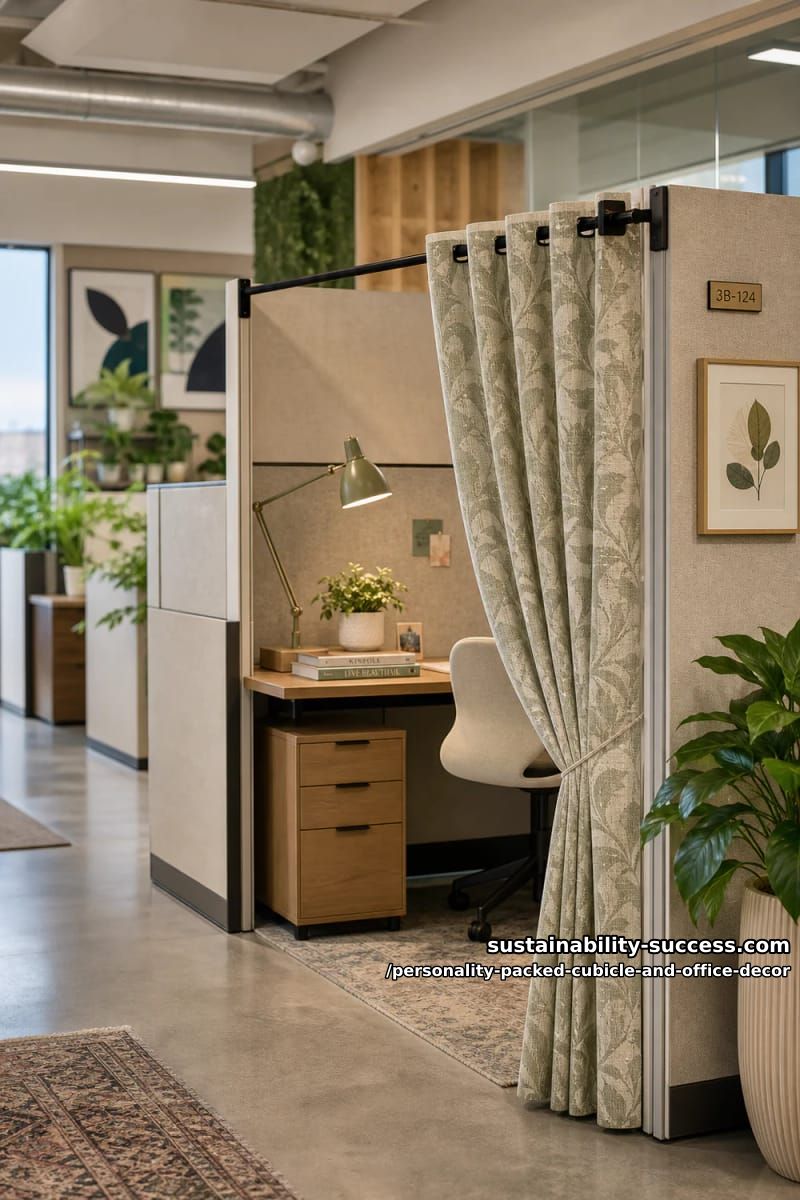
For a sliver of privacy and a big hit of color, hang a curtain panel across part of the open side on a tension rod or a pair of no-drill curtain hooks. A thrifted curtain or a length of fabric you like does the job, and it pulls back when you want to look approachable.
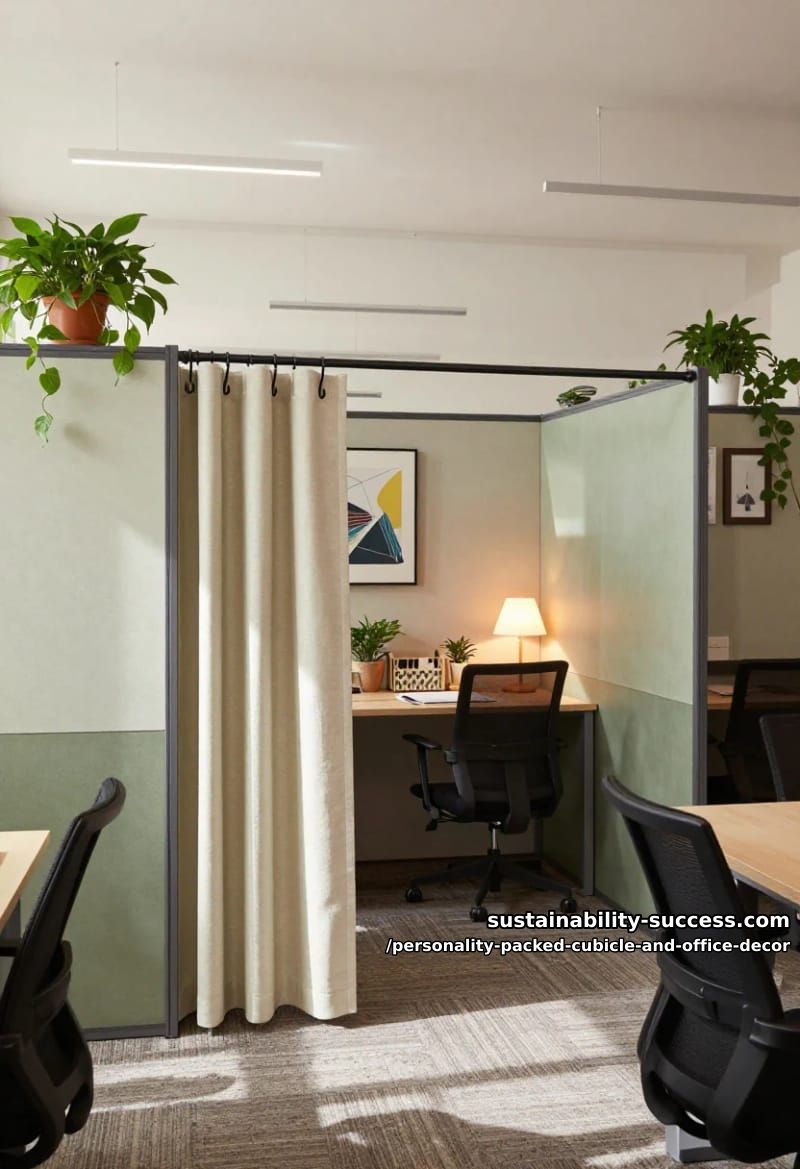
One reality check before you do this: some offices have rules about blocking sightlines into a cubicle, so a half-panel that softens the corner is safer than a full curtain that seals you off and gets a polite email from facilities.
Conclusion
If you only do two things, cover the panel with removable wallpaper and commit to one color; those two changes alter the whole read of the desk before you have hung a single object. Save the plant for last, after you have learned how warm your cubicle gets by the window, because that is the thing most likely to die or peel its hook off the wall. I have over-decorated a board before and watched it tip from personal into visual noise within a month, so the editing is as much the work as the adding. Everything here was chosen so it lifts off in an afternoon, which means you can also just take it down, look at the bare gray for a day, and start again.