

Tired of plain grass and thirsty shrubs swallowing up your weekends and water bill? Front yard native plant gardening ideas offer a breath of fresh air, no green thumb required.
These gardens work smarter, not harder, blending beauty with practical, low-maintenance charm.
Wondering if your yard can really make a difference? Native plants welcome butterflies, birds, and neighbors’ compliments. They thrive in your climate, shrug off pests, and rarely beg for extra water.

Ready to trade in your mower for a garden bench? Let’s get growing.
1. Colorful wildflower meadow path bordered by native grasses and stones

Imagine strolling a path framed by bursts of wildflowers and tufts of native grasses, all highlighted by rugged stones. This setup draws pollinators, needs little water, and cuts mowing to nearly nothing.
Why stick to plain turf when a living mosaic offers movement, color, and easy care?

A few key tips make this approach work. Choose meadow flowers adapted to your region, like coneflower or black-eyed Susans, and blend in soft native grasses. Space stones irregularly for a natural look.
While weeds sneak in at first, regular hand-pulling helps your meadow outcompete them.

2. Curving garden beds featuring region-specific drought-tolerant natives and boulders

Consider shaping your front yard with curving garden beds. This approach creates a natural flow and softens hard lines. Select drought-tolerant native plants like California poppies or purple coneflower.
These thrive with little water and attract pollinators. Nestling boulders between clusters adds contrast and keeps maintenance low.

Curves make mowing easier and reduce soil erosion. Boulders also act as focal points, breaking up monotony. However, placing them takes muscle and planning, don’t just drop them randomly.
For best results, group plants by water needs, and mulch well to retain precious moisture. Your neighbors might even get inspired!
3. Butterfly and bee haven with native flowering perennials in layered heights

Planting native flowering perennials in your front yard helps butterflies and bees thrive. Think of tall coneflowers in the back, medium-height black-eyed Susans in the middle, and low-growing wild geraniums upfront.
Not only do these plants feed pollinators, but their changing blooms keep your yard lively all season.

Maintenance is a breeze compared to exotic species. Native plants often need less water and fewer chemicals. However, some neighbors may not appreciate the wild look.
A neat border or mulch path can win skeptics over, while still giving bees and butterflies a five-star buffet.

4. Modern design with geometric mulch paths and clumps of native shrubs

Geometric mulch paths slice through green space like a well-planned city grid, creating both visual order and practical walkways. Native shrubs grouped in small clusters break up the lines, adding depth and texture.
This approach saves water, supports pollinators, and makes mowing obsolete. Who misses sweaty afternoons pushing a mower?

But don’t expect a rigid look, native shrubs can surprise you with bursts of bloom or unexpected shapes. Maintenance is lower, but weeds sometimes sneak in between mulch lines.
Still, the payoff is a front yard that feels deliberate yet alive, mixing structure and wildness in a way neighbors will envy.
5. Lush border of native wildflowers interspersed with ornamental grasses

A border packed with native wildflowers and ornamental grasses looks stunning and supports pollinators. Picture bright coneflowers paired with swaying little bluestem.
This combo needs less water and shrugs off pests, making maintenance easier. Why settle for bland shrubs when you can have a living tapestry that changes every season?

Some worry native gardens look messy. Keep things tidy by grouping taller grasses at the back and using stone edging. Mix textures and bloom times for nonstop color.
Letting a few seed heads remain offers winter interest and feeds birds. This approach balances beauty, order, and real ecological benefits.
6. Minimalist front yard with mass planting of native grasses and river rocks

Minimalist front yards shine when you let native grasses take the stage. Mass planting creates texture and motion, especially when a breeze rolls through. Add river rocks for contrast and low maintenance.
You’ll cut back on watering, mowing, and chemicals. Wildlife, like bees and birds, will thank you.

Some might grumble about the “messy” look, but smart design silences critics. Keep lines crisp with edging or a simple stone path. Stick to a handful of grass varieties, less really is more.
This style suits busy homeowners who want beauty without fuss or constant upkeep.

7. Pollinator-friendly native plant clusters around mailbox and walkway

Planting native, pollinator-friendly clusters by your mailbox and walkway doesn’t just look sharp, it brings bees and butterflies right to your doorstep. Try mixing black-eyed Susans, coneflowers, and milkweed for a lively patch.
These picks thrive with little fuss and support local wildlife.

No need for endless watering or fertilizer. Native plants adapt to your soil, weather, and pests. Kids will love spotting hummingbirds while you get fewer weeds.
Just be ready for a bit of trimming now and then, since healthy clusters can spread fast. Isn’t it time your front yard pulled double duty?
8. Rain garden depression filled with moisture-loving native species

A rain garden depression catches runoff, reducing erosion and soaking water where it falls. Plant blue flag iris, swamp milkweed, and cardinal flower, they thrive in soggy ground.
These natives attract pollinators and add color. Imagine fewer puddles and more butterflies. Why mow mud when you can grow a mini wetland?

Maintenance is easy, but it takes patience. New plants need weeding and watering for the first year. Once settled, the garden mostly handles itself. Heavy rain? No problem.
Your yard just got smarter and prettier, while helping local wildlife at the same time.
9. Front yard prairie style using tall native grasses and colorful echinacea

Prairie-style front yards burst with personality by combining tall native grasses and echinacea’s bold blooms. Switchgrass and bluestem add movement and privacy, while echinacea throws in splashes of pink and purple.
This combo attracts pollinators and needs less mowing, less weekend sweat, more time enjoying lemonade on your porch.
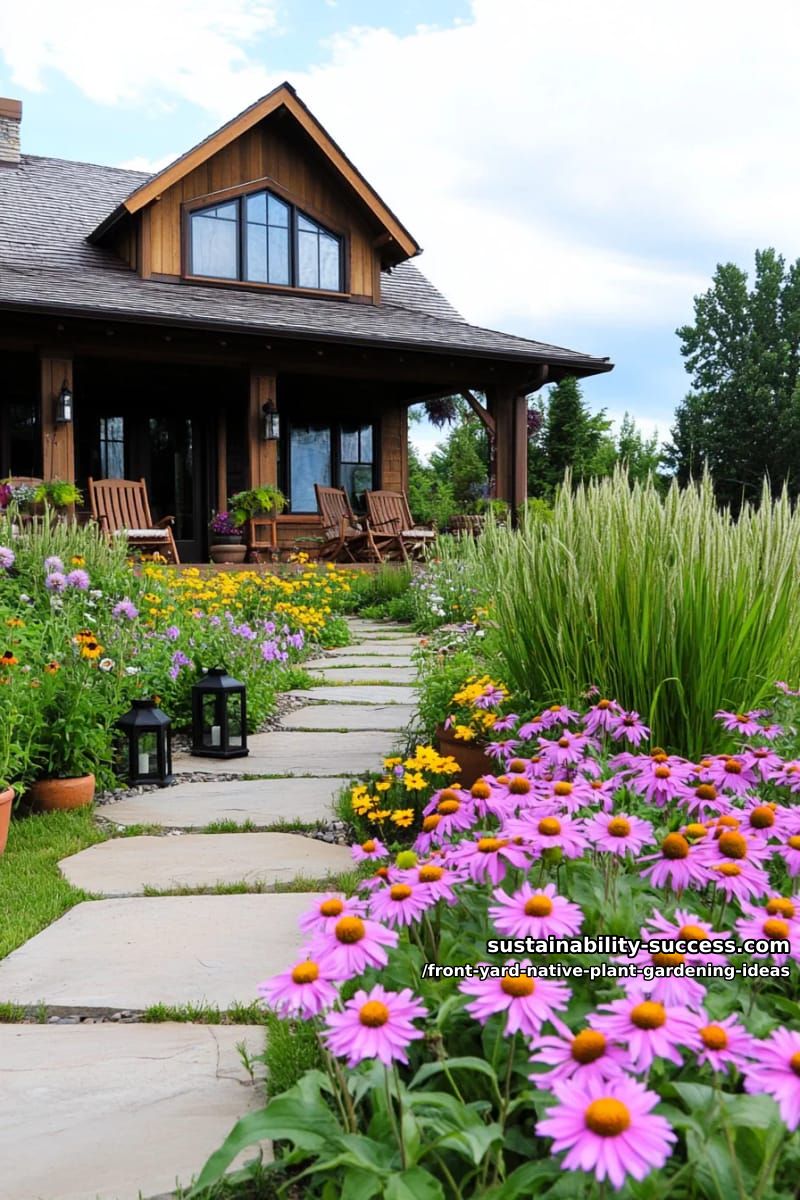
Some neighbors might miss a traditional lawn, but prairie gardens cut down on water use and chemical treatments. Over time, grasses and flowers fill gaps, reducing weeds and maintenance.
Want instant curb appeal? Mix in mulched paths or rustic boulders. Prairie style isn’t just eco-friendly, it’s a conversation starter.

10. Native plant island beds surrounded by decorative gravel and driftwood

Imagine a front yard where native plant island beds sit like green oases, each one ringed by decorative gravel and weathered driftwood.
This approach keeps maintenance low, cuts back on watering, and prevents weeds. Plus, the gravel and driftwood add texture and contrast to the soft foliage.

Some might worry these gardens look messy or sparse. Done right, though, they spark curiosity and blend beauty with practicality. Try arranging driftwood as natural sculpture or edging.
Group plants by height or color for visual interest. It’s a landscape style that’s both resourceful and striking.
11. No-lawn landscape with sweeping native groundcovers and sculptural succulents

Trade your traditional lawn for sweeping native groundcovers that hug the earth and burst with color in every season.
Picture masses of creeping thyme or blue grama grass, which need little water and invite pollinators. These plants thrive without constant mowing, freeing up your weekends and cutting your water bill.

Mix in sculptural succulents like agave or yucca for dramatic flair and structure. Their bold forms catch sunlight and create natural focal points.
Be mindful, some succulents can be prickly or slow to grow, but their drought tolerance and striking looks often outweigh these quirks.
Why settle for ordinary grass when you can have a living tapestry?
12. Cottage garden effect mixing bushy natives with feathery ornamental grass

Mixing bushy native shrubs with feathery ornamental grasses captures a cottage garden vibe while supporting local wildlife. Think kangaroo paw beside lomandra or bottlebrush nestled among poa. The contrast creates movement and texture.
Birds, bees, and butterflies get a banquet, and you get a garden that feels wild but welcoming.

Don’t expect perfect order, this style celebrates a bit of chaos. Some native shrubs can grow faster or spread wider than expected, so a light hand with the pruners keeps things balanced.
Embrace the quirks; no two gardens like this will ever look quite the same.
13. Curved stone edging framing native wildflower explosion near the porch

Imagine a front yard where curved stone edging snakes gracefully, framing an explosion of native wildflowers near your porch. This border keeps blooms tidy, yet never stifles their wild spirit.
It’s low-maintenance, drought-tolerant, and invites pollinators. Who wouldn’t want butterflies dancing right beside their morning coffee?

Still, curved stone edging does need some planning. Stones should sit snugly, so weeds don’t sneak through. Some people find wildflower gardens too “messy” for their tastes.
That’s subjective, though, nature doesn’t always color inside the lines, but it sure knows how to put on a show.
14. Woodland-inspired garden beneath existing trees using shade-tolerant natives

Planting a woodland-inspired garden under mature trees adds layers of interest and brings a peaceful mood to your yard. Shade-tolerant natives like wild ginger, foamflower, and trillium thrive where sunlight is scarce.
Ever tried a patch of ferns? Their frilly leaves create movement even on the shadiest days.

One challenge is dry shade. Established tree roots hog moisture, leaving little for new additions. Try mulching with leaf litter and watering deeply but not often, think of it as mimicking a forest floor.
Blending in logs or rocks can also boost habitat for pollinators and birds.
15. Small yard focal point with a native wildflower “mini meadow” in center

Who says a small yard can't make a big statement? Planting a native wildflower “mini meadow” smack in the center draws eyes and bees alike.
Even a five-foot circle of black-eyed Susans, coneflowers, and milkweed can spark conversation and support pollinators. Forget boring lawns, nature steals the show.

Maintenance is simpler than you might think. Once established, native wildflowers demand less water and fewer chemicals. You’ll skip endless mowing, too.
Sure, the first year may look a bit scruffy, but patience pays off with vibrant blooms. Why not let your front yard stand out and help local wildlife at the same time?
Conclusion
Ready to give your curb appeal a boost? These front yard native plant gardening ideas don’t just look good, they’re practical, save water, and attract pollinators.
Even a small project, like a wildflower cluster by the mailbox, makes a visible difference.
Pick one design or blend several. Start with a single garden bed or swap out thirsty turf for tough native grasses. Your yard will soon buzz with life and color.
Isn’t it time your front yard worked as hard as you do?
Related Posts
- Sustainable Garden Decor Ideas
- Eco-Friendly Garden Art
- Eco-Friendly Herb Garden Ideas
- Small Garden Decor Ideas
- Upcycled Garden Ideas


