
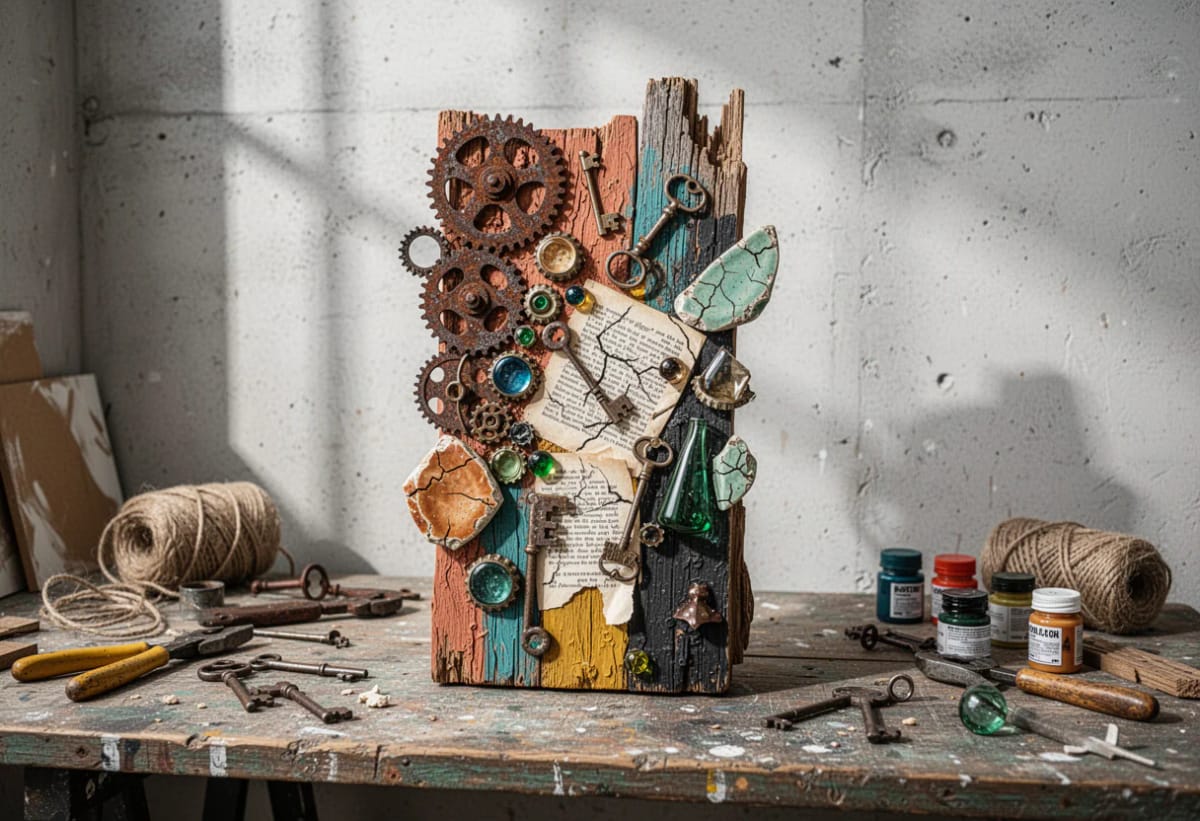
A steel food can is worth less than a cent at scrap price and still smells like the inside of a recycling bin after two rounds of dish soap. That is the raw material junk art is built from: objects whose only remaining value is their shape, their color, or the way they take a drill bit. The ten pieces below are buildable at a kitchen table or on a driveway, and every one of them runs on a drill, a hacksaw, and a vise, which together cost under $60 new and about $20 at a flea market.
Two things separate this from the recycled-craft roundups you have already scrolled past. Nothing here gets painted to hide what it used to be, so a spoon stays a spoon and a circuit board stays a circuit board, and every piece has to survive being walked around rather than just photographed flat. If you want a bottle-cap flower glued to a picture frame, this is the wrong list.
Cutlery, Cans, and Caps
1. A Silverware Egret, Bent Cold in a Vise
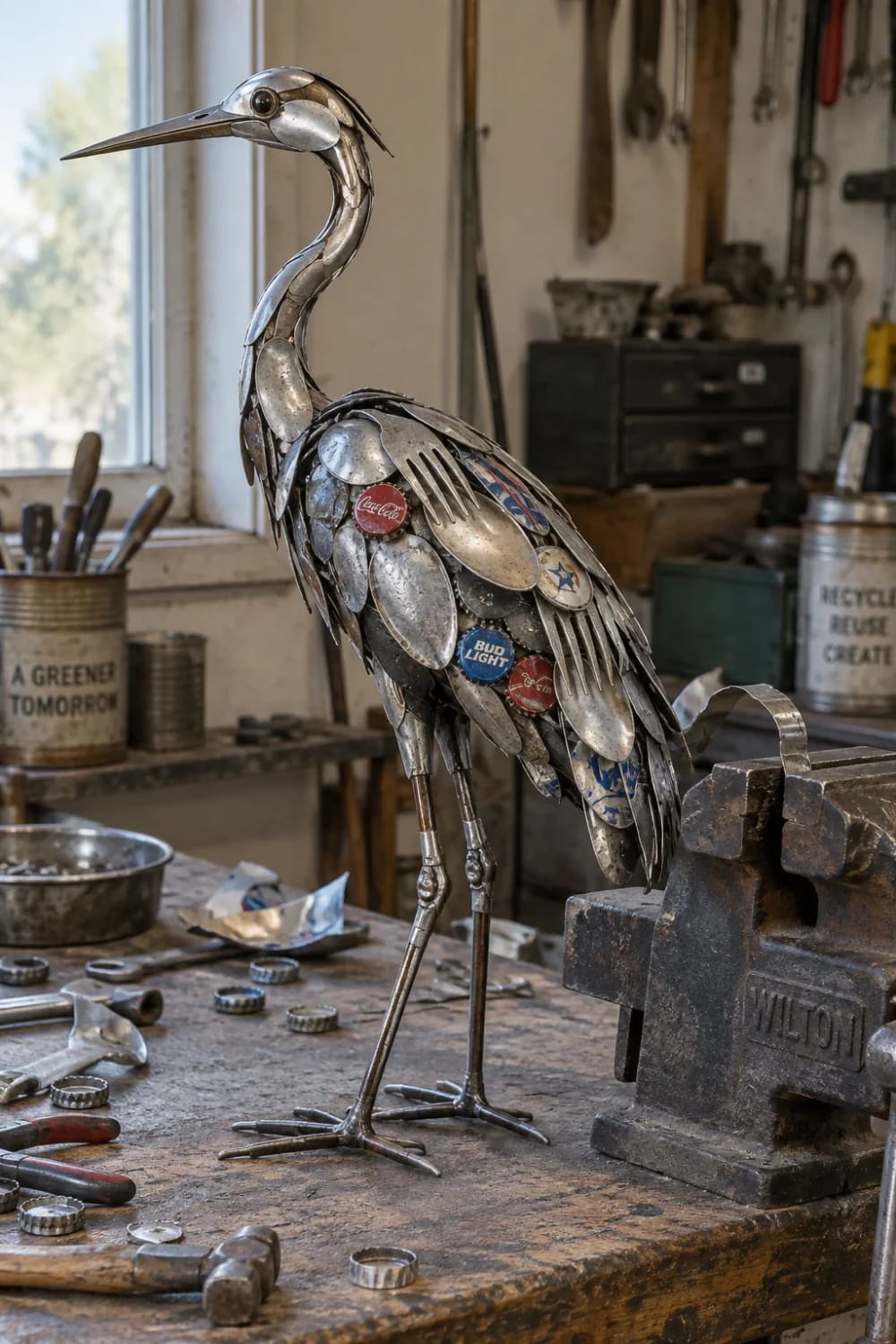
Start with the neck, because it decides whether the bird reads as a bird. A serving spoon becomes the head and neck in one piece if you bend the handle in a smooth arc, working it in a vise a few degrees at a time rather than trying to force the whole curve at once. Stainless work-hardens as you bend it, so a second pass over the same spot is where most of these snap.
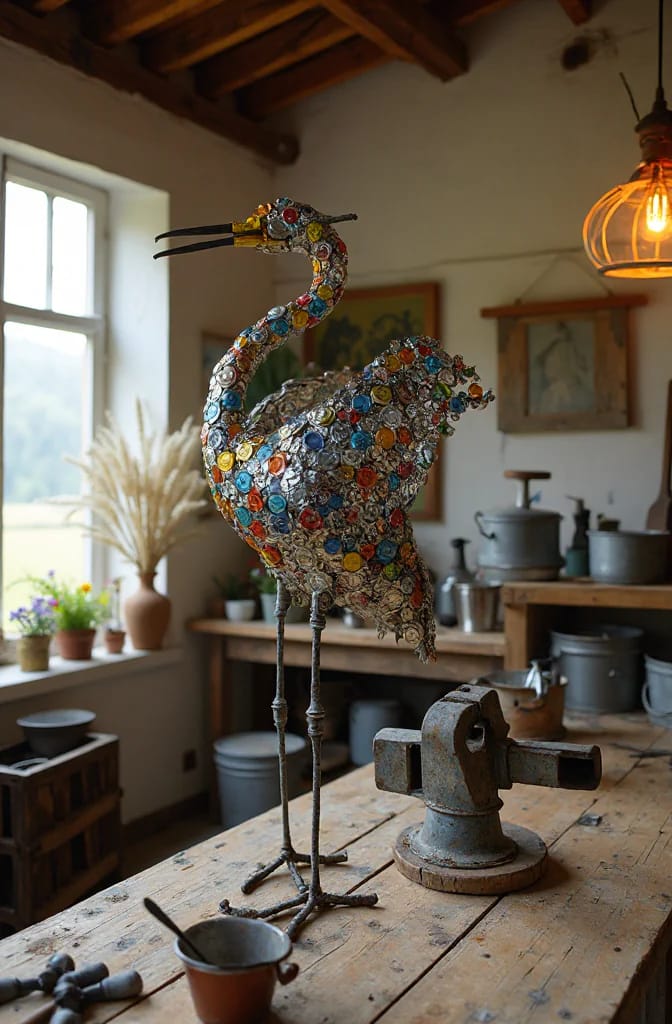
Nobody welds this. Forks flatten under a hammer and get riveted or wire-wrapped to a 12-gauge galvanized wire armature, which means the whole bird can be built with a drill, a hacksaw, and a bench vise on a kitchen table. (Yes, the people on YouTube with a TIG setup make it look faster. They also make it look like a job.)
The trick that separates a bird from a pile of cutlery is the tail: four forks flattened and fanned behind the body, tips up, each one rotated a few degrees further than the last. Hunt the mismatched patterns. A set of twelve identical spoons from one thrift bin costs about what a single lot of mixed flatware costs online, and the mixed lot gives you three different handle shapes to use as feathers, ribs, and legs.
If you want to see how far scrap metal goes past birds before you commit to a scale, the site’s roundup of recycled metal art runs from welded horses to cut-steel faces and is a faster education in proportion than anything you will get from a single egret.
2. A Tin Can Robot With Jar-Lid Joints

The reason most tin can robots look like a stack of cans is that they are a stack of cans: glued, not jointed. Drill 3/16 inch holes through the can walls and run machine screws with nuts and washers through them, and the limbs actually swing. A one-quart paint can is the torso, a 28-ounce tomato can is the head, and the lids from a dozen pasta sauce jars become the chest plate and the feet.

Cutting is where the project is won or lost. Household scissors will chew the sheet metal into a ragged spiral, and the burr they leave is worse than the cut. Midwest MWT-6510C offset aviation snips take a clean curve and leave a short enough burr that two passes with a file finish the edge. Cut the top and bottom off first, then split the cylinder down one side and flatten it, so you are working a flat sheet instead of fighting a rolling can.
The joints are what sell it. Bolt the upper arms through the torso with a nylon washer on each side so the metal does not gall, and leave every nut a quarter turn loose. Pop tabs are the best small brackets in the house for this: a tab bent at ninety degrees makes a shoulder, a hip, and a wrist in the same afternoon. If you want a smaller project to practice the same bending on, the site’s soda can tab crafts start at bracelet scale and go up from there.
A freshly cut can edge is a razor that does not look like one. Deburr every cut with a file or 120-grit paper before you handle the piece again, wear a cut-resistant glove on the hand holding the sheet, and never torch a zinc-coated can indoors: the coating gives off metal fume fever at temperatures well below the melting point of the steel underneath.
3. A Bottle Cap Sunflower That Reads From Across the Room
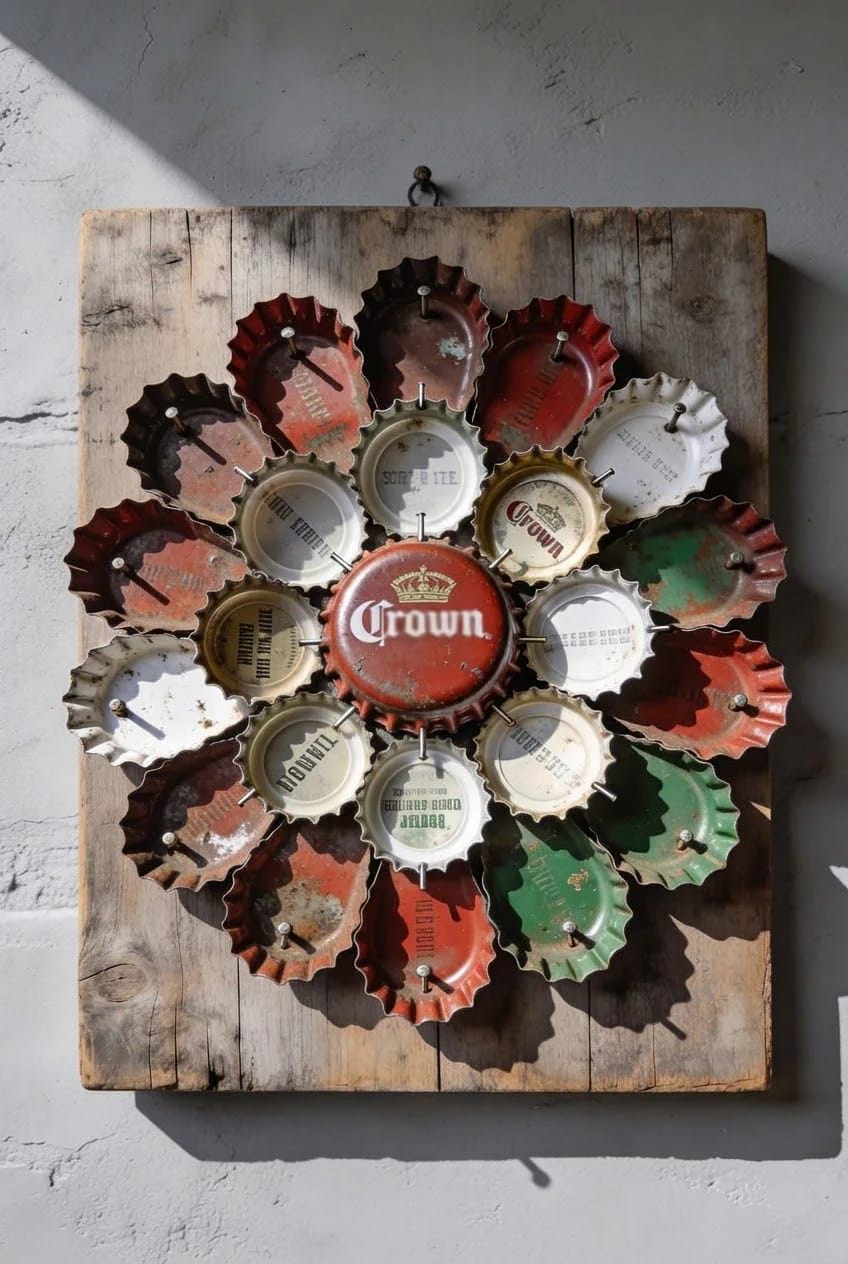
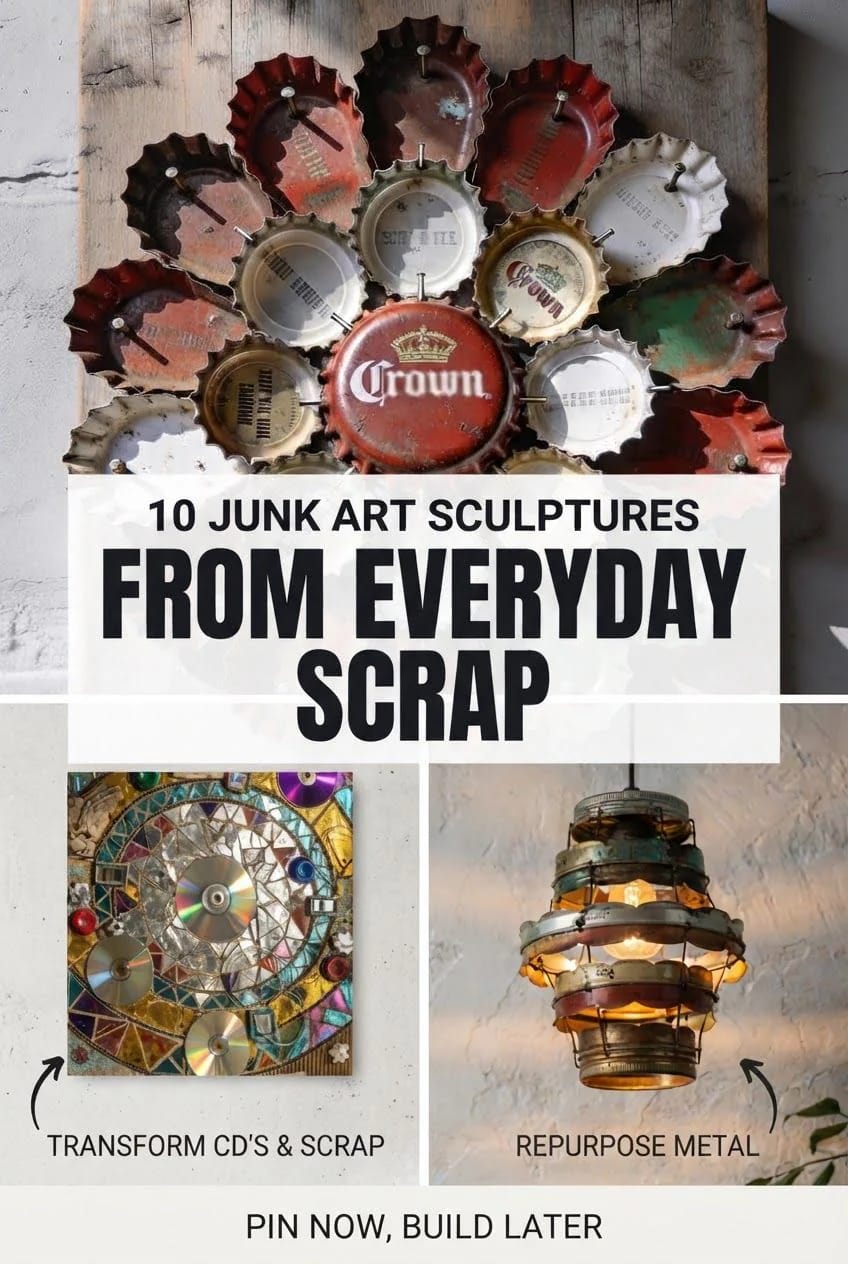
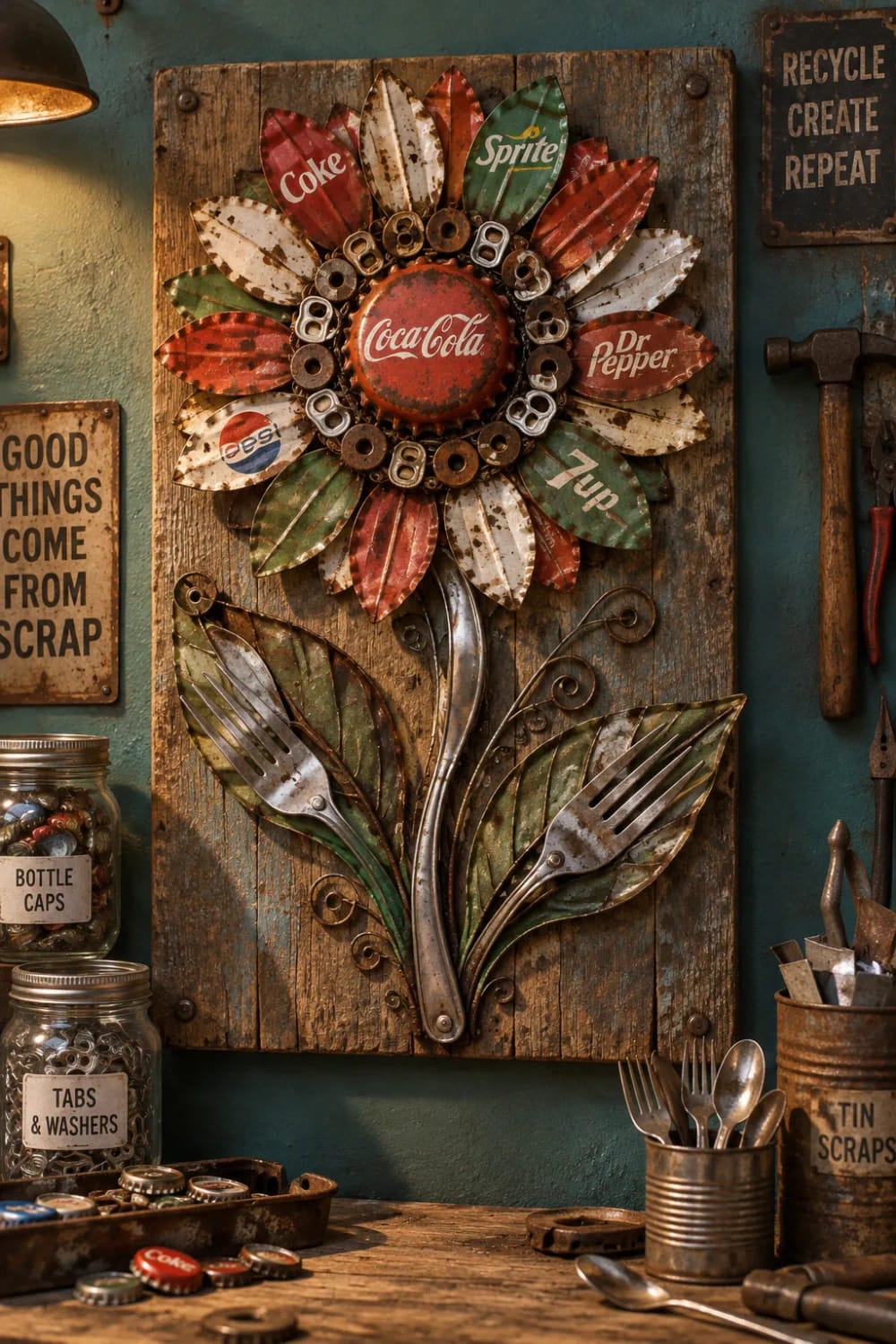
Flat caps are what make this work, and a hammer is the whole tool list. Lay each crown cap face down on a scrap of plywood and strike it once in the center with a ball-pein hammer, then turn it over and open the crimped skirt with a second light tap; you want a shallow dish, not a pancake. Overlap two rows of petals around a domed cap for the center, mount the flower on a 1×6 board cut to a square, and hang it where the light hits the metal at an angle. One sunflower takes about eighty caps.
| Scrap | Where it comes from | What it is good for | Tool it demands |
|---|---|---|---|
| Crown caps | Bars, bottle shops, home brewing | Petals and scales that stack | Ball-pein hammer |
| Steel food cans | The kitchen, every week | Flat panels, bodies, lantern housings | Aviation snips |
| Stainless flatware | Thrift bins, estate sales | Curves, ribs, feathers, legs | Bench vise and hammer |
| Rigid plastic 5 | Takeout lids, pill bottles, yogurt tubs | Relief work with real depth | Craft knife |
| Circuit boards | Dead routers, printers, old handsets | Flat faces with built-in pattern | Hacksaw and drill |
4. A Plastic Spoon Rosette Around a Thrifted Mirror
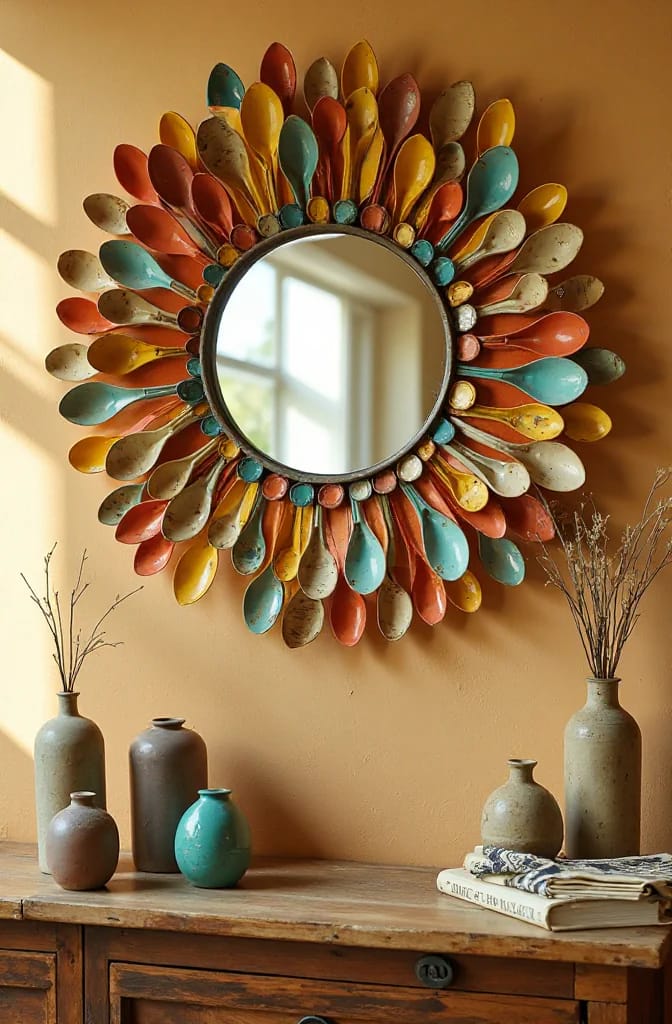
Hot glue is the reason most junk art looks like junk. It fails on molded polystyrene, which is what disposable spoons are, and it fails slowly, so the piece looks fine on the day you photograph it and sheds petals by the second summer. Score the handle end with a craft knife, use a solvent adhesive or a two-part epoxy, and clamp each ring while it cures.
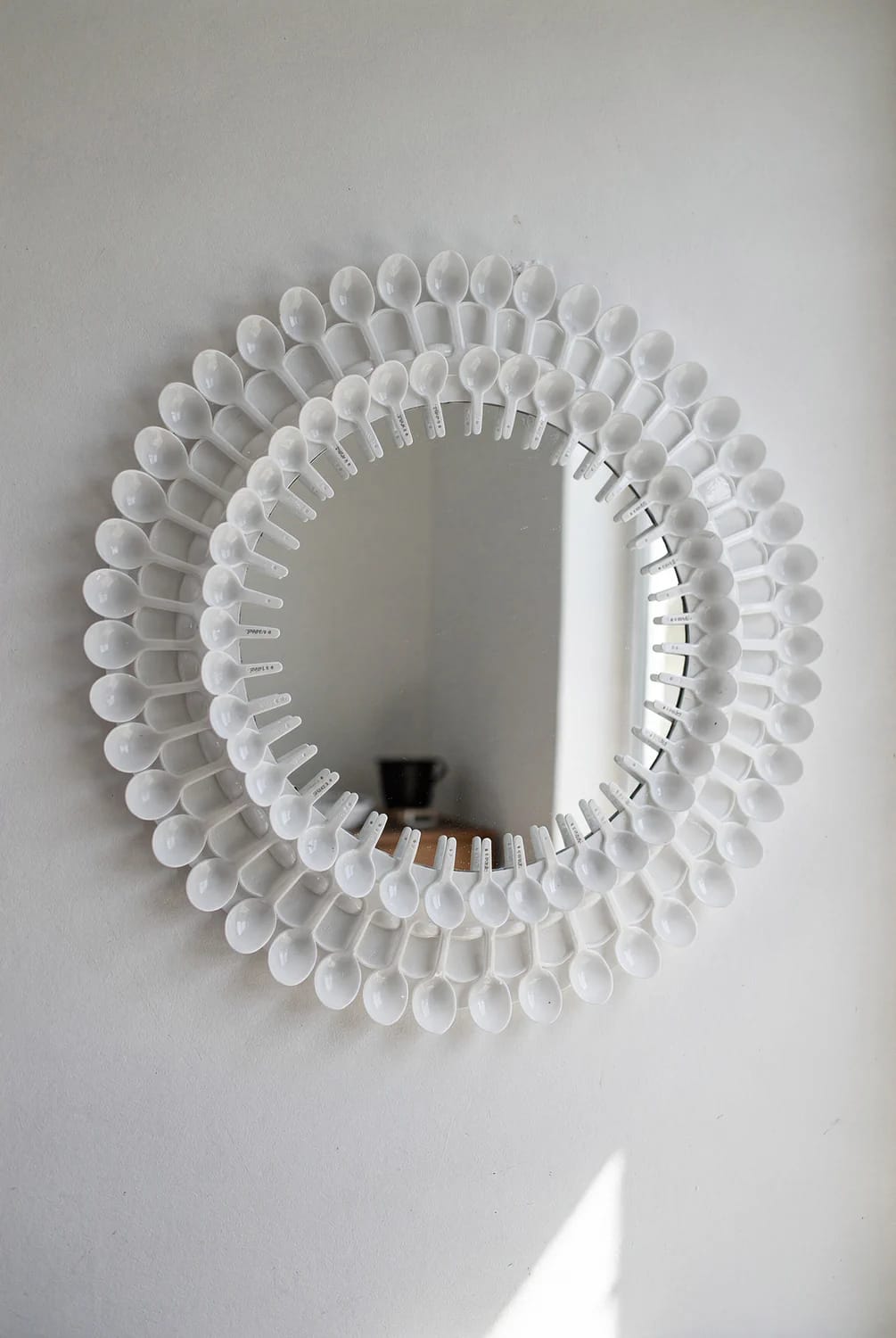
Granted, the geometry is simple enough to do by eye. Cut every handle to the same two inches with a pair of side cutters, lay the first ring dry with the bowls facing out, and overlap the second ring by half a spoon so the tips cover the gaps in the row beneath. Leave three quarters of an inch of clear space inside the innermost ring, so the glass sits in front of the plastic rather than through it.
A solvent-based craft adhesive that grips molded polystyrene and cures slightly flexible, so a loaded ring does not pop off the backing board.
E6000 clear craft adhesive, 3.7 oz tubeFlat Work for the Wall
5. A CD Mosaic Panel That Throws Color When the Light Moves
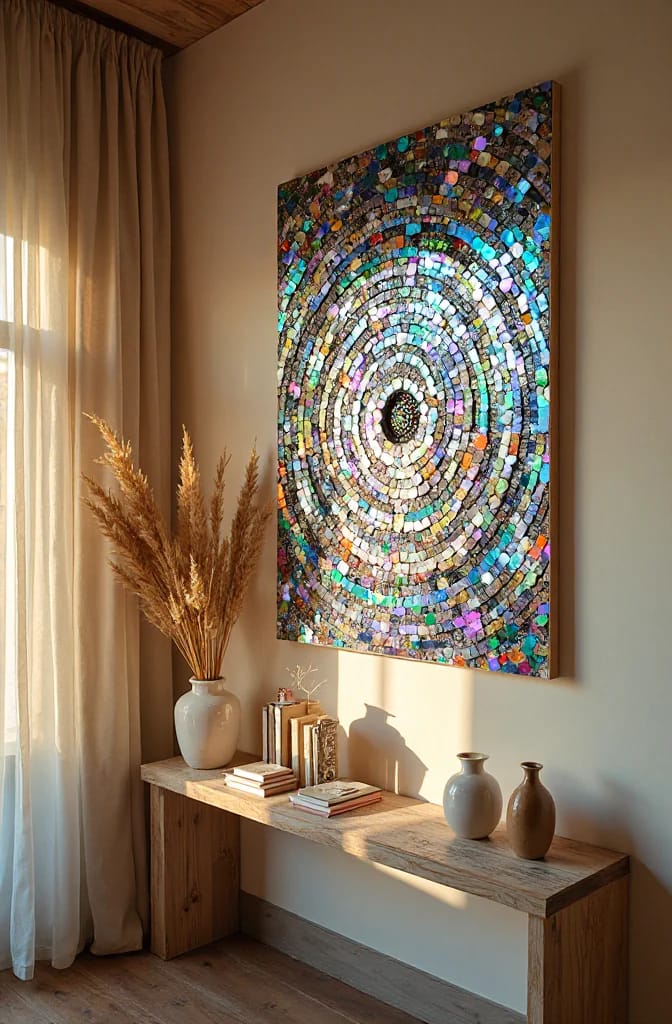
Snap them, do not cut them. A CD is a polycarbonate disc with a vapor-thin aluminum layer, and any blade you use on it will skid. Warm the disc in hot tap water for a minute, lay it on a cutting board, and break it with a pair of tile nippers or the business end of a hammer, working from the edge inward. Keep your eyes covered, because the shards fly.
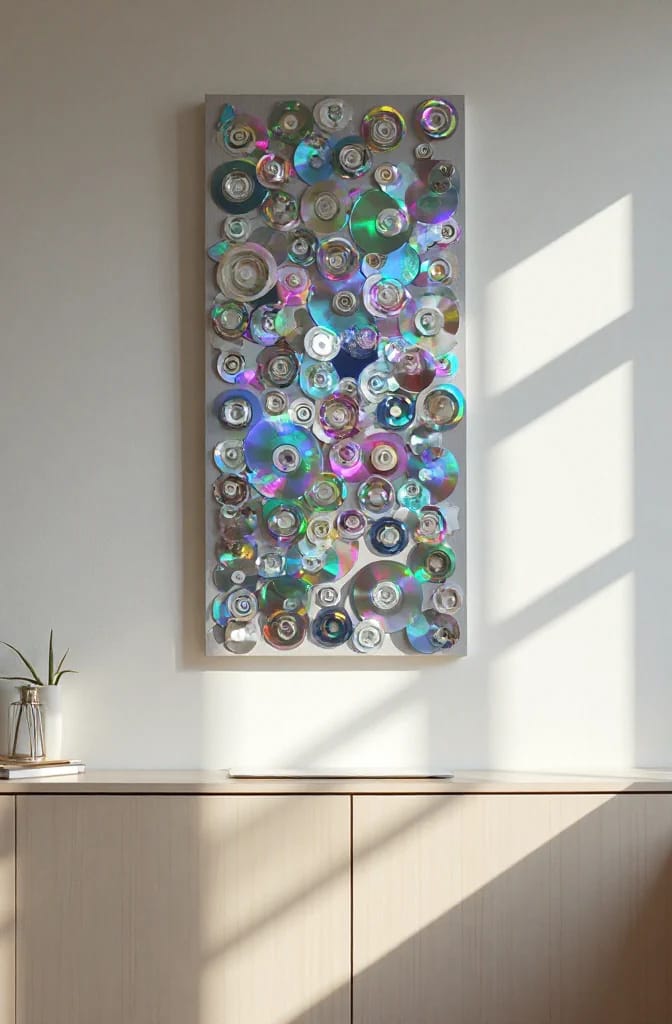
Sort the shards into three piles before you glue anything: full quarters, half-inch fragments, and the fine glitter that will end up in your sock. The pattern only reads if the pieces are sized to their position, with big shards in the middle of the panel and the small ones filling the edges where the eye is not looking. Leave a sixteenth of an inch between pieces for grout, or the panel will look like a mirror instead of a mosaic.
Water-based glue will lift the aluminum layer off the plastic within a season, so use epoxy or a solvent adhesive, and back the whole thing with quarter-inch plywood screwed to a cleat. If you want a smaller, faster version of the same material, this collection of disc suncatcher crafts from old CDs covers mobiles and window shards that hang rather than sit.
6. A Salvaged Plastic Relief With Real Depth

Rigid plastic number 5 is the one to hoard, because it takes a knife edge, a heat bend, and sandpaper without going chalky. The small stuff is the interesting stuff: pill bottles, bottle caps, yogurt lids, and the caps off spray cans are all screened out of the recycling stream at the material recovery facility, which is a polite way of saying they go to landfill because they are too small for the sorting equipment to catch.
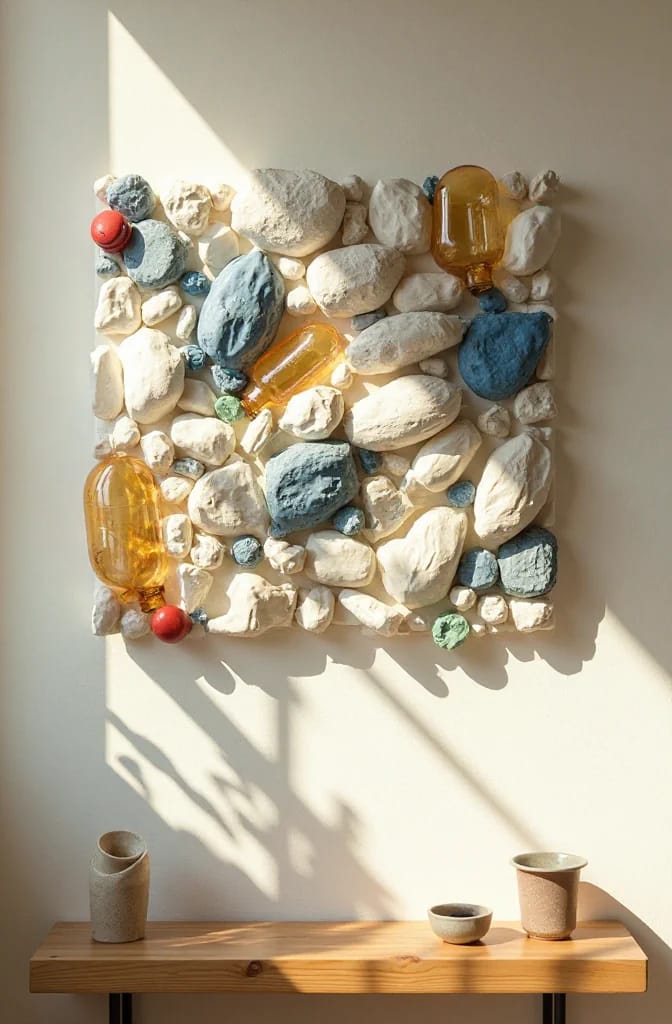
That said, the layering order is what makes or breaks the panel. Build it back to front and overlap each layer by about an inch, so no seam runs straight through the composition. Start with the largest flat pieces as the ground, then work down in size until the smallest caps sit closest to the viewer, which is what gives the relief its depth. Thin-walled containers get a coat of primer on the back only, so the front keeps the printed label and the original color. This set of crafts with old pill bottles shows what the same pieces do at a much smaller scale.
7. A Rolled Newspaper Screen That Reads as Woven Cane
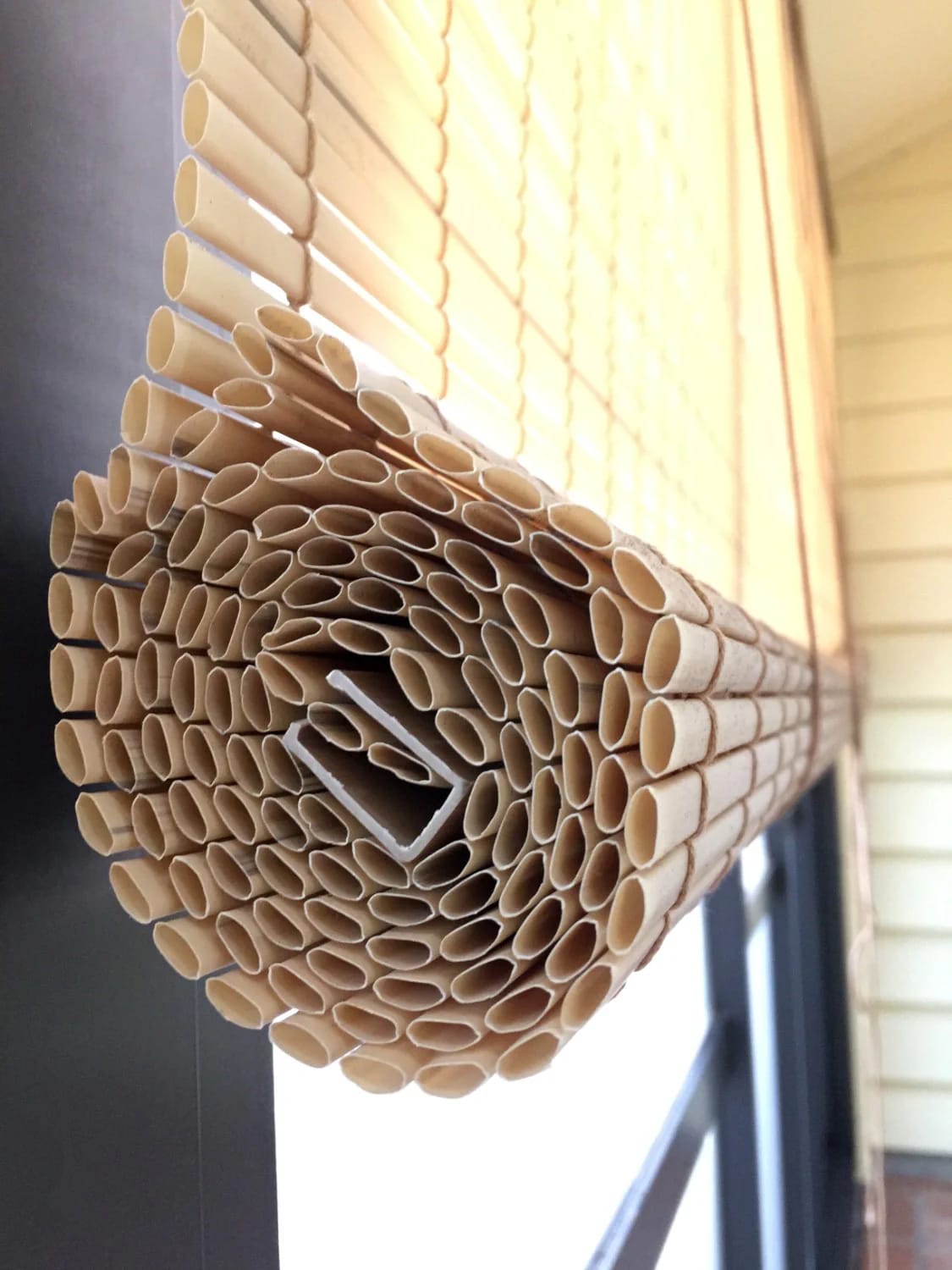
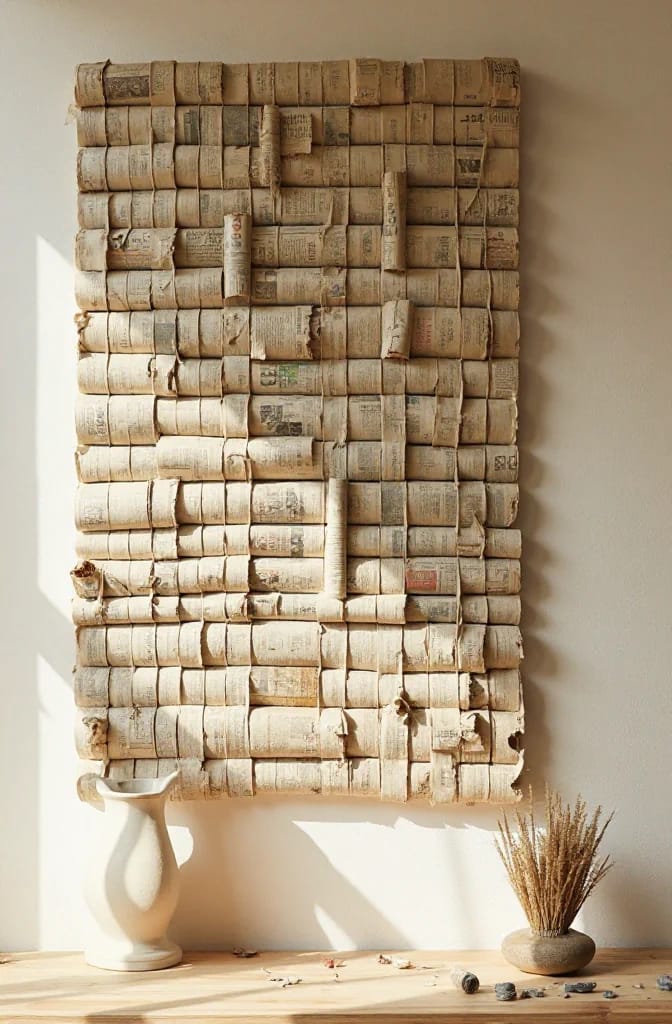
Roll each broadsheet page around a quarter-inch dowel, glue the last turn, and slide the dowel out: one hollow reed, about the stiffness of a pencil and the color of old paper. Roll forty of them, chop them to a single length in a miter box, and frame them edge-up in a 1×2 frame so the open ends face the room. Two coats of clear matte sealer keep the paper from yellowing at the window, and the finished screen gives a plain wall the charm of a cane blind from three feet away.
 31 Creative Art Projects Using Recycled Materials: Eco-Friendly Creations for Artists Thirty-one projects sorted by material, from cardboard relief to bottle-cap panels, if you want a wider menu before you pick your next build.
Figures, Lamps, and the Long Builds
8. A Junkyard Dog From Wrenches and Springs
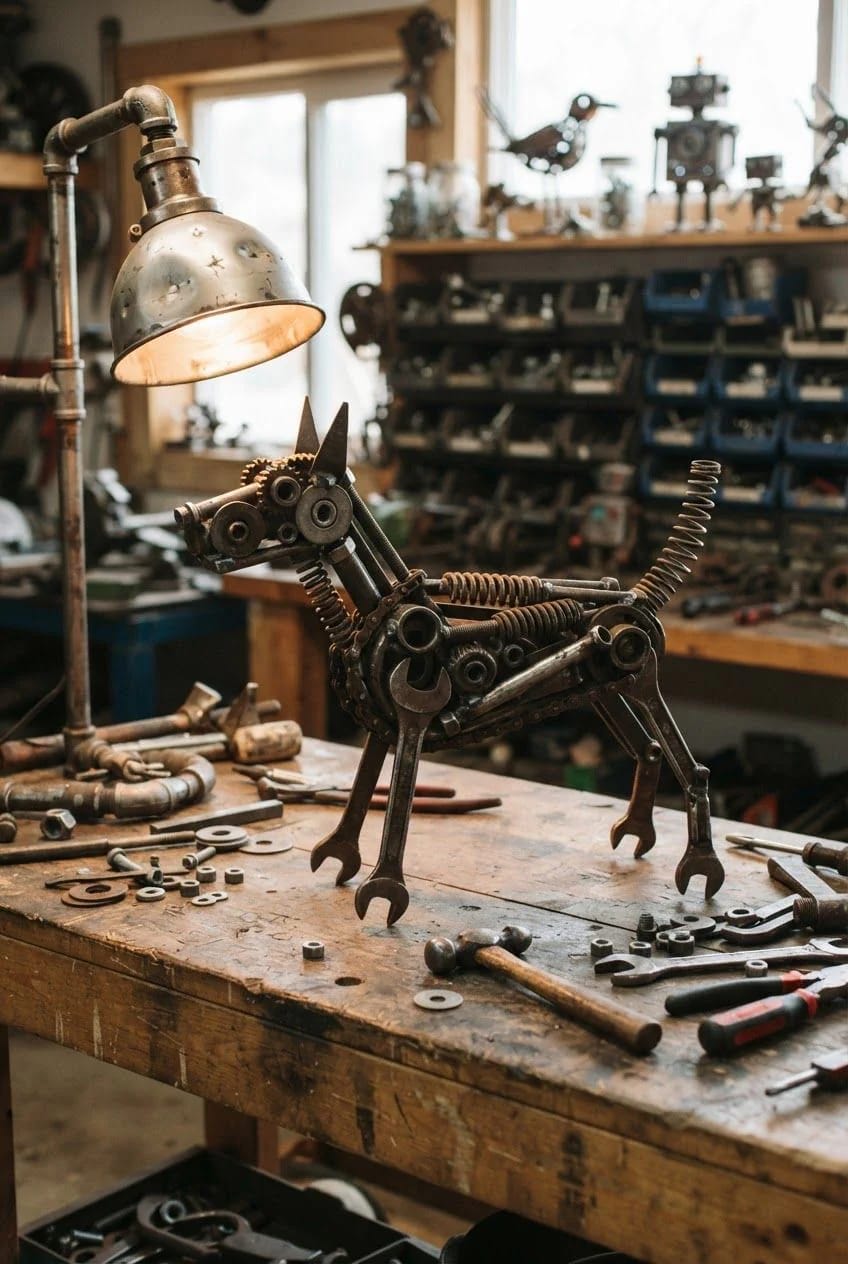
A dog is the easiest animal to build out of tools because the silhouette is mostly legs and a head. Open-end wrenches make the legs, a coil spring from a garage door makes the neck, and two sockets set into a scrap of plate read as eyes from ten feet away. Lay the whole outline flat on the driveway in chalk first, at full size, and move the pieces around until the proportions look right before you drill anything.
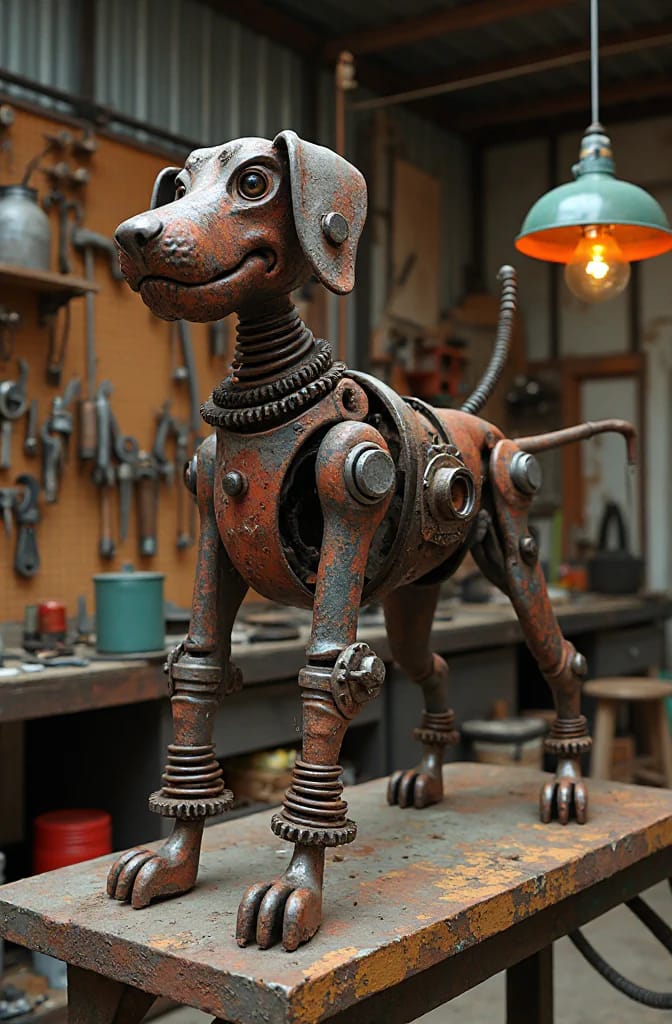
Bolting and tapping beats welding here. Drill, tap, and run a bolt through each joint, and the piece comes apart for transport, which matters more than you think: a forty-pound dog does not fit in a hatchback once it is welded into one rigid shape. Nobody's junk art got better because they bought a MIG welder.
Rust is the finish, not a failure. If your scrap is too clean, a vinegar-and-salt wash will force a patina in a day, and a clear coat over the top arrests it wherever you want it to stop. The same approach scales up to the outdoor builds in this set of upcycled garden sculpture ideas, where weather is part of the material list.
9. A Jar-Lid Pendant Lamp
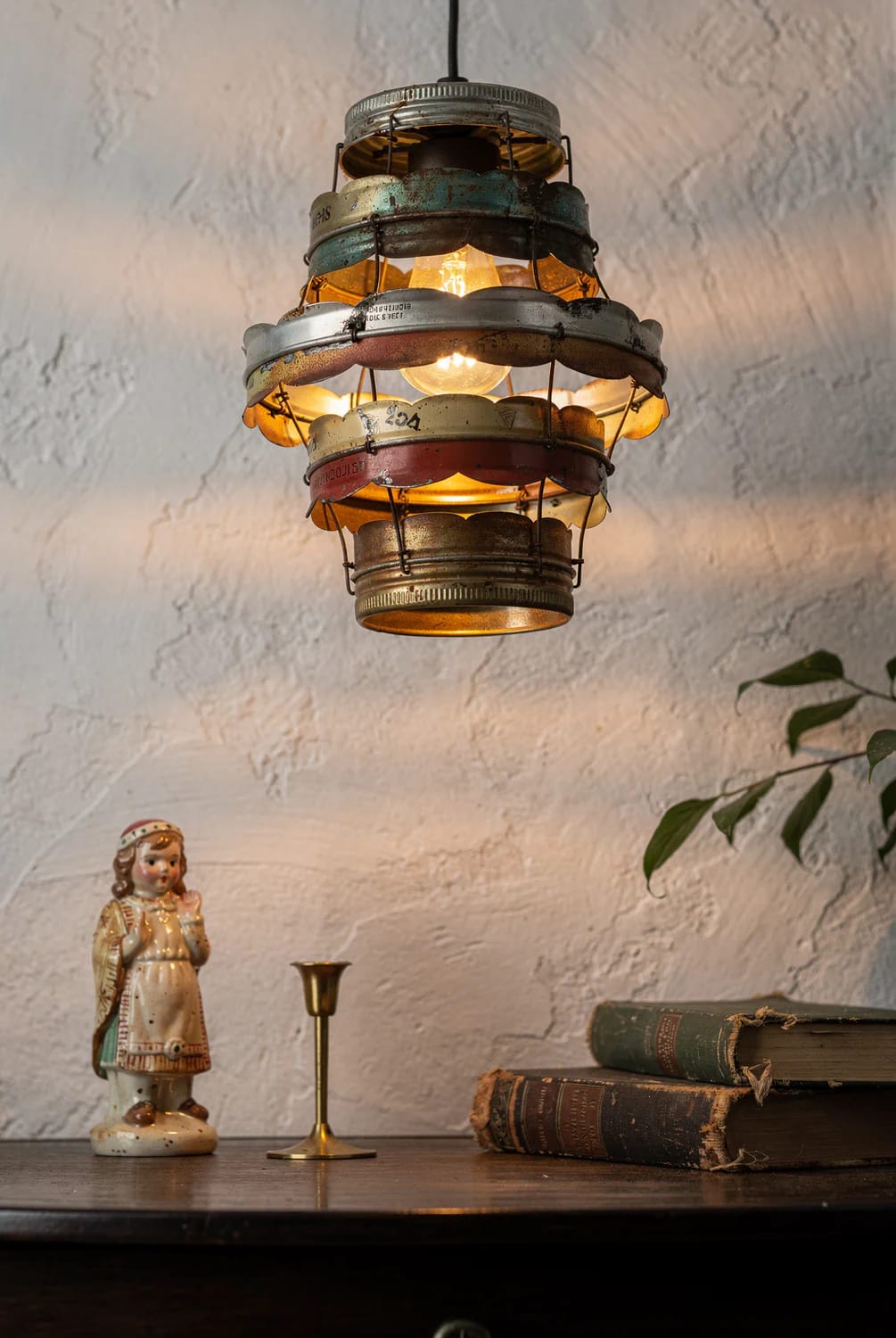
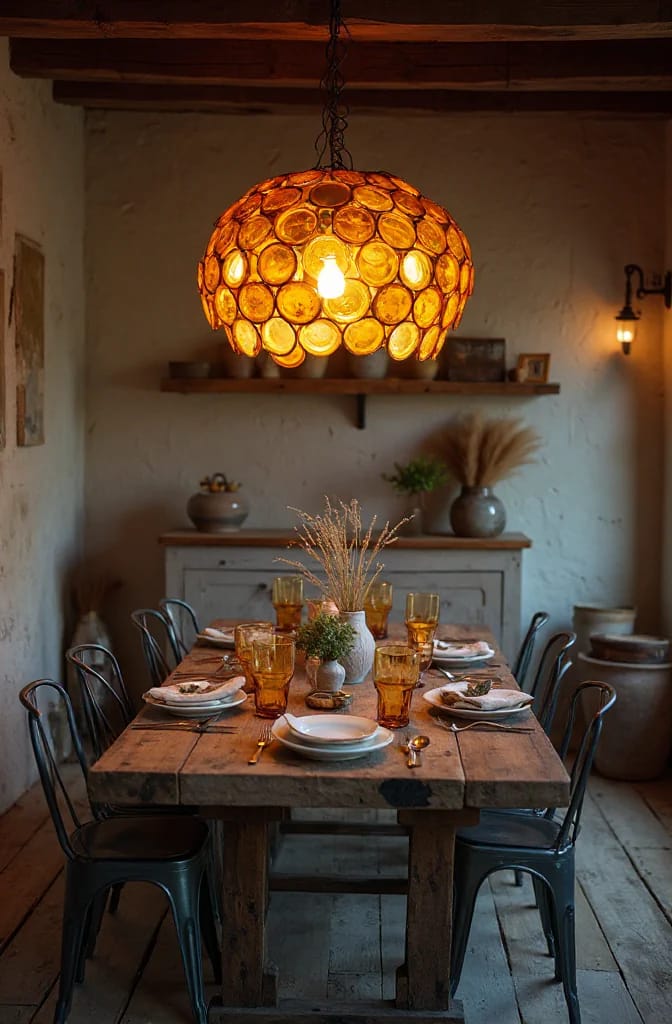
Granted, a coffee can is already a chimney, which is why this one is easier than it looks: drill a 3/8 inch pattern of holes in the sides of a large can, keep the top third solid, and hang the whole thing from a porcelain socket rated for the bulb you are using. A 60-watt-equivalent LED keeps the metal cool enough to touch. Jar lids become the diffuser ring under the can and the ceiling plate above it, and the light that comes out is patterned rather than flat, so the corner it hangs in gets noticeably cozier.

10. A Circuit Board Clock That Still Tells Time
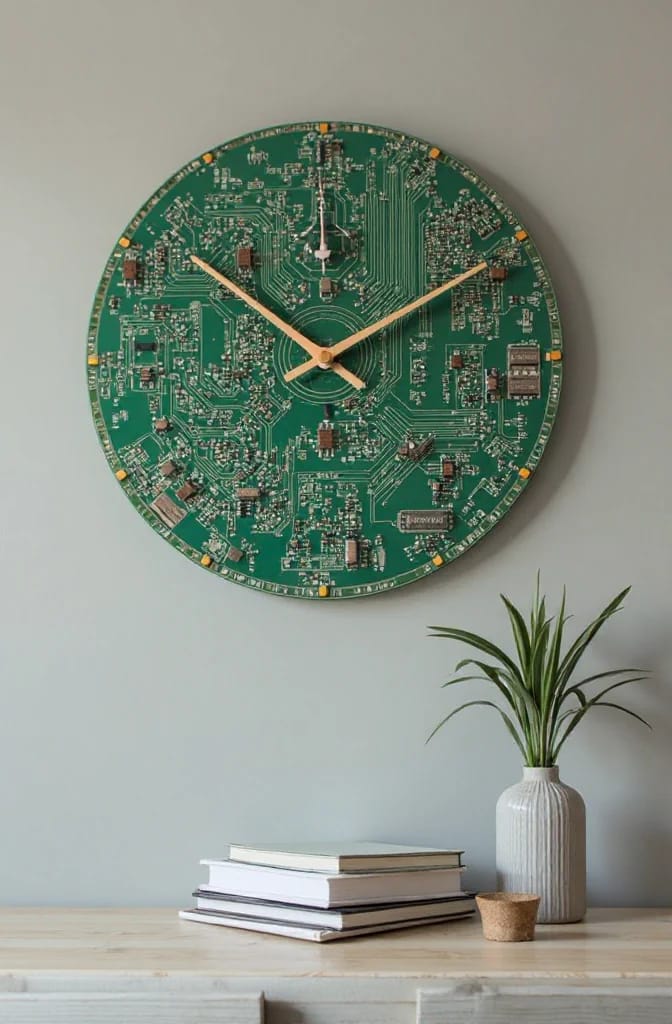
Dead routers and inkjet printers are the best source, because the main board is large, flat, and full of pre-drilled holes you can use as mounting points. Look for a board with a big unpopulated patch in the middle: that bare area is where the clock movement goes, and a board crowded with tall capacitors will not let the hands sweep. It is also the one piece on this list with a market, so the site’s upcycled crafts to sell is worth reading if you want the pricing side of the same work.
A high-torque quartz movement with a long shaft and a full set of hands, which is what a board this heavy needs to keep the minute hand moving.
6-pack high-torque quartz clock movement kit with handsMeasure the board before you buy anything: the shaft has to pass through the board, a washer, and a nut with about a sixteenth of an inch left over, and most standard movements are too short for a board with a thick solder side. A hacksaw will shorten a shaft, but only once, so measure a dead router's board first and cut to that number. Hang it, set the time, and check that the minute hand clears the tallest capacitor by a hair before you walk away. That clearance is the whole difference between a clock and a very expensive wall panel.
Related Posts
- 15 Innovative Recycled Furniture Ideas for Your Next DIY Project
- 31 Creative Art Projects Using Recycled Materials: Eco-Friendly Creations for Artists
- 15 Unique Spring Crafts Made from Recycled Materials
- 15 Upcycled Garden Art Ideas to Try This Season
- 15 Upcycled Garden Sculpture Ideas For A Unique Outdoor Decor
- 27 Inspiring Recycled Metal Artworks to Unleash Your Creativity